There are lots of things happening in the gallery this month. There's the Keepsakes Project Workshop this saturday, and curator of costumes and textiles, Elen Phillips will also be giving behind the scenes tours of the Museum stores. It is essential that you book in advance for the tours (which will also be held the week after on the 16th too) as spaces are limited.
As usual, the art cart will be in the gallery during October half term. From Saturday 23 until Friday 29 of October we will be making things to do with Keepsakes to tie in with the exhibiton, and then on the 30th and 31st we will be making something spooky for Halloween.
One of the most popular displays at the National Roman Legion Museum is a stone coffin that contains the skeleton of a Roman man. The coffin also contains the remains of grave goods that he would need for their next life, including the base of a shale bowl and fragments of a glass perfume or ointment bottle.
The coffin was found in 1995 on the site of a Roman cemetery just outside Caerleon. The cemetery is now part of the Caerleon Campus in the University of Wales, Newport. It has been on display in the National Roman Legion Museum from 2002, however in Summer 2010 we started working to redisplay the coffin in a fashion that is closer to its original form thanks to funding from the Friends of Amgueddfa Cymru – National Museum Wales.
Made from a solid block of Bath stone, the coffin dates to about 200AD. Since it is around 1800 years old the coffin wouldn’t be able to support the weight of its original lid which is in 2 large pieces. The sides and base of the coffin are being reinforced and the lid will sit on top of a Perspex cover with enough of a gap so that you can see the skeleton inside.
Further work will be done to find out more about our Roman man, who was about 40 when he died. Thanks to funding from the Roman Research Trust, Isotope analysis will be carried out on his teeth which should tell us where grew up and what sort of food he ate. We will also be trying to reconstruct his face so that we can produce a painted portrait of him using the same materials and techniques used by the Romans.
Follow our progress as work proceeds over the next year.
We aim to complete the redisplay by the end of 2011 when you will be able to come face to face with the past!
Step 1
The coffin, skeleton and grave goods have been on display since 2002.
In that time it has become one of the most popular exhibits in the gallery.
Step 2
Gaps in the coffin allowed visitors to push things into the display.
These are some of the things we found, not exactly the sort of thing our Roman would like to take to the next life.
Step 3
Work begins. First the skeleton and grave goods have to be removed and stored safely.
While off display the skeleton will undergo further investigation in an attempt to find more about the man buried in the coffin.
Step 4
All modern materials added to an object must be reversible. This makes it easier to remove restoration without causing damage to the original artefact.
Here a reversible barrier is being painted onto the coffin. This will separate the original stonework from the material used to fill gaps and level the rim.
Step 5
Even the most awkward places have to be reached!
Step 6
The lid of the coffin must have a level surface to sit on!
Unfortunately much of the original rim of the base has eroded so with the aid of foam, double-sided tape and the glass top of the original display as a guide, we hope to establish a new level for the coffin rim.
Step 7
Layers of foam were stuck to the flat glass top. When the highest part of the coffin was reached this line was used as the level for the new rim.
Step 8
Now for the fun bit� mixing up the fill material.
This material must work like a putty and set hard when dry. Also be safe to use in the open gallery and similar in colour and texture to the original Bath stone.
We went for a mixture of air-drying clay, sand to reduce shrinkage and give texture. Acrylic paint for colour and extra bonding. This was a bit of a messy job and it took a while to get the mix right!
Step 9
Once the mix was ready the gap between the foam and the edge of the coffin was filled.
Step 10
Being careful not to get excess fill material all over the stone.
Step 11
Looks good, let�s hope the fill dries without to much shrinkage.
The colour of the fill is a bit light, not as golden as the original Bath stone. The Roman quarry for the stone is believed to be south of the ancient City of Bath. The stone is soft and easily carved when wet, but becomes hard on drying.
Step 12
Inspecting the days work! Hopefully when the glass and foam is removed the fill will be nice and level.
Step 13
The gaps in the side of the coffin have to be filled to prevent access to the skeleton once it is put back on display.
Step 14
The glass top and foam are removed and the new rim revealed. The fill has dried much lighter than expected so will have to be painted to make it less obvious.
Most of the fill will be hidden by the lid which extends over the edge and down the side. This overlapping edge use to rest on a ridge that ran round the top of the coffin base.
Remains of this ridge can still be seen on the right hand-side of the image just below the fill.
Step 15
The coffin was unearthed by a mechanical digger, which broke it into several sections. Most of the pieces were retrieved, but one area was so badly damaged no pieces survived.
Instead of filling the gap to complete the side, we decided to install a viewing window so small visitors to the museum can still get a good view of the skeleton inside.
Step 16
The coffin is extremely heavy and could not be moved out of the gallery safely. Therefore, all conservation work has to take place in the gallery, which has been quite challenging at times.
If you are visiting and see us there, come over and say hello, we are happy to answer any questions about the project.
I've just come back from talking to people who are in the process of applying to go to Africa with ILO next year - Cohort 2, as they're called (I'm part of Cohort 1). It was really enjoyable, there was such a positive buzz of anticipation I felt quite uplifted afterwards. It was also a useful process, as I had to reflect on the whole application and preparation process and all it entails - which is a lot, as it happens. From sending off my application form to sending off for my visa, it's already been a journey, before I even get on the plane.
I've had to think about things like the NGO culture and the housing support sector in Zambia, cram up on branding issues for not-for-profits - so often seen as a low priority - set personal objectives, make contacts ... will I even remember to pack?
Luckily for me John was there, who's only just returned from Zambia, bless him. He talked about the practical things that I guess will make such a difference when I'm there, like getting around, Zambian tv (he says to take a radio), that shops in Lusaka ignore sell by dates, the fact that it's dark at 6pm and, apparently, going to start raining on 24 October.
I was already feeling pretty lucky - about my assignment, the location, the accommodation - and now I get to benefit from John's experience too. We're meeting up soon for lunch, so that he can pass on his wisdom; and some left-over mosquito repellent, some currency, and a sim card.
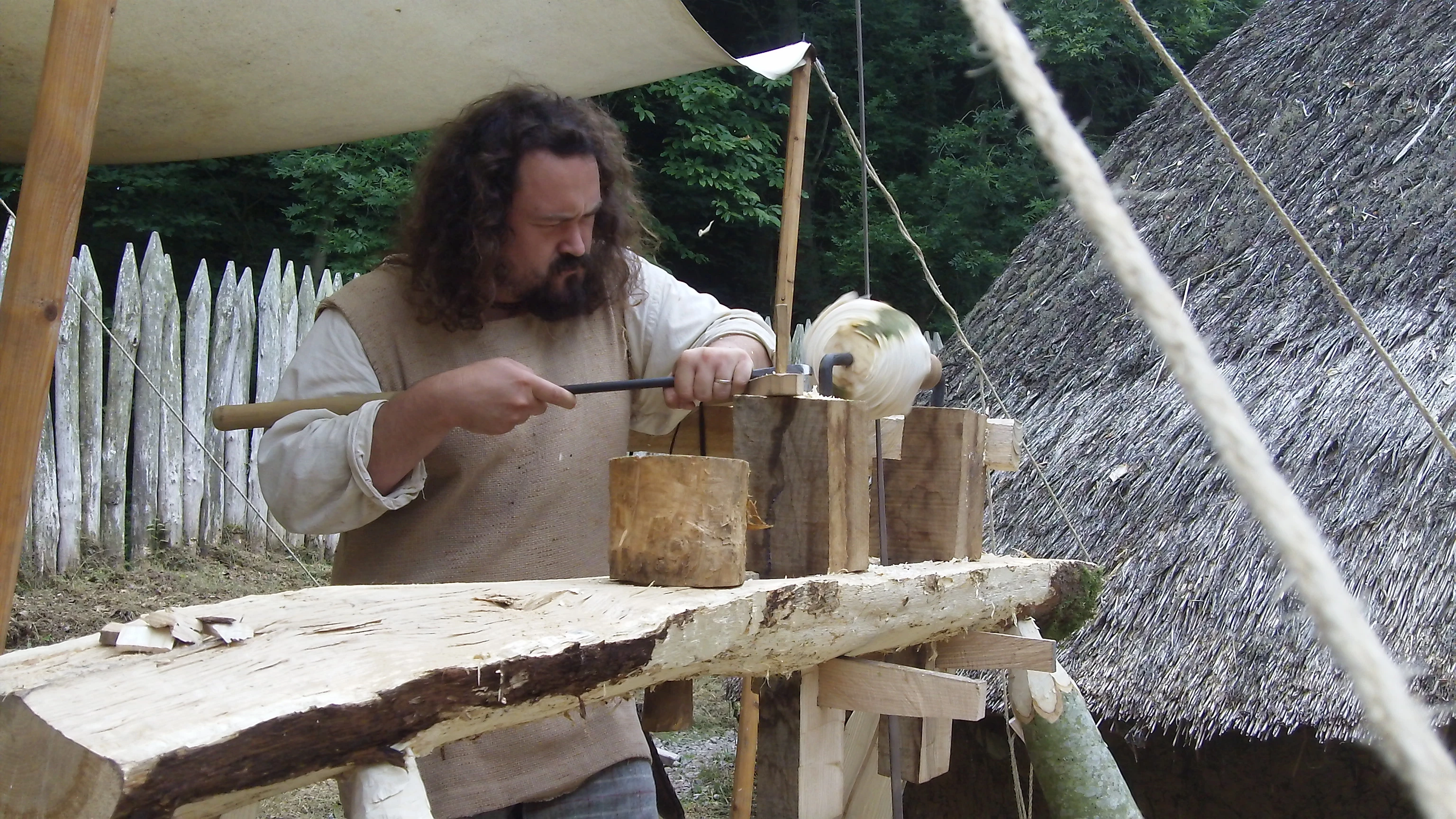
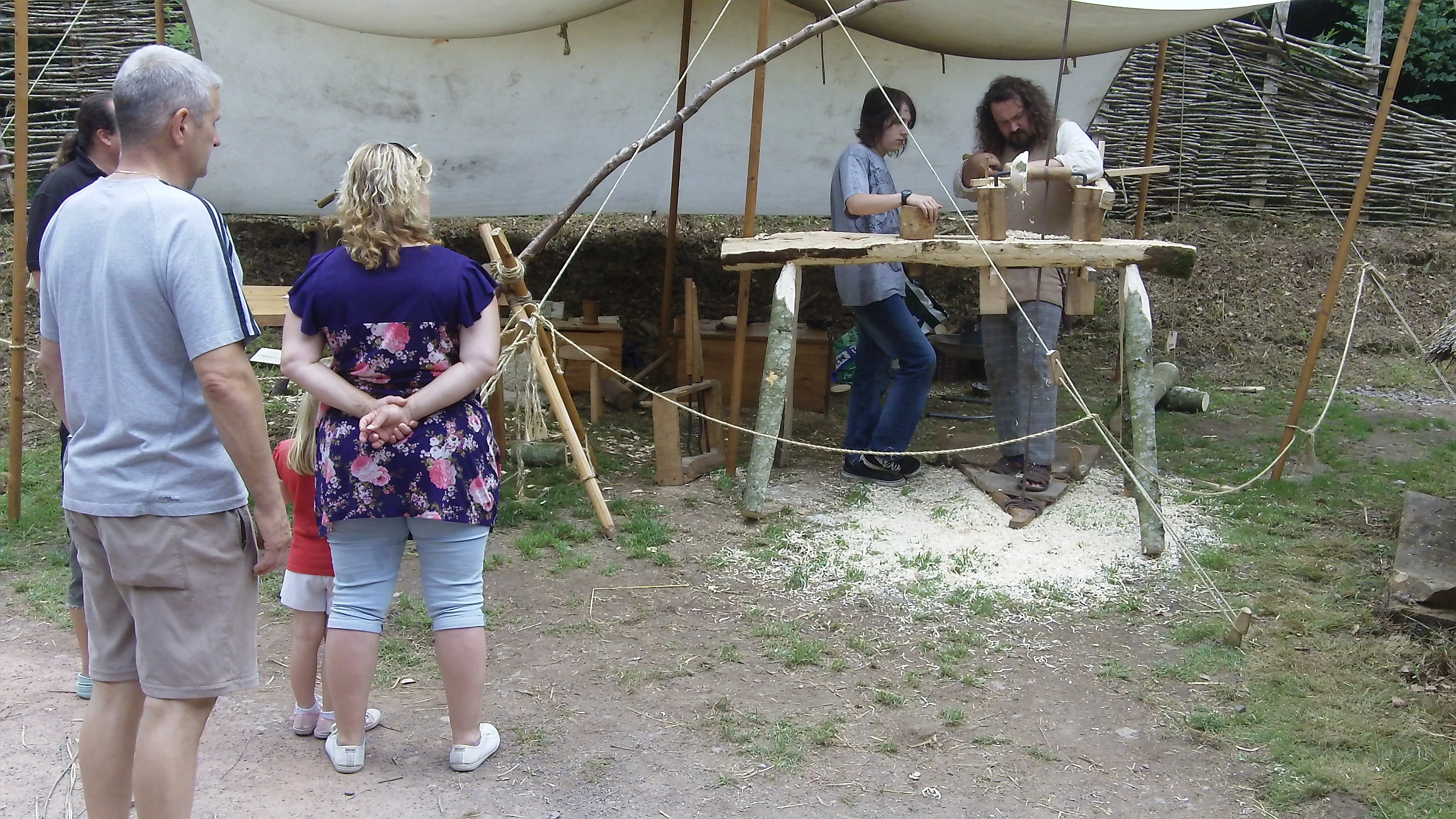
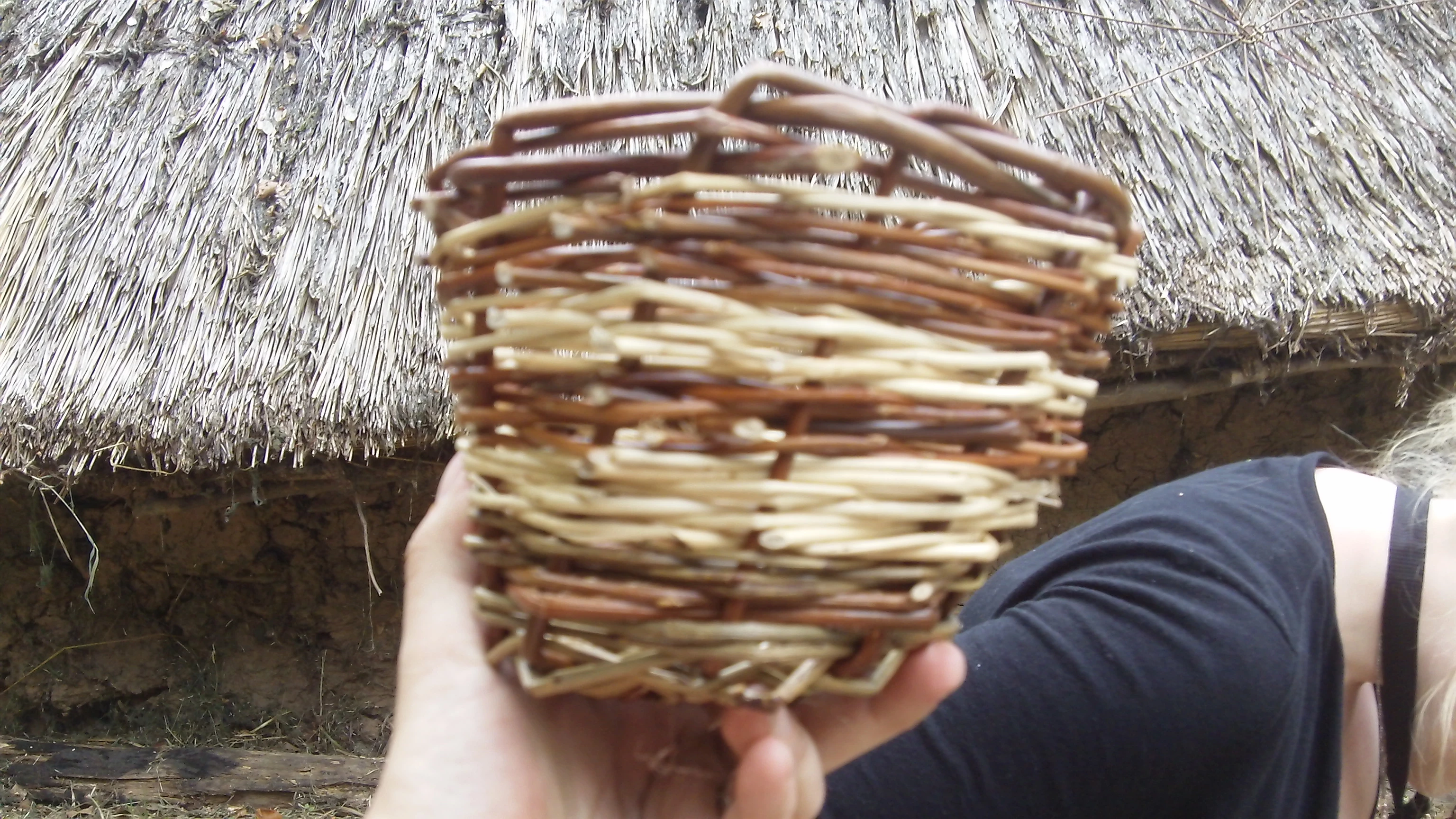
Over the past weeks I've been busy learning new skills. Paul Atkin spent a few days at the Village and showed me how to create my own wooden bowls. He also built a lathe. With the help of our blacksmith and leather worker we hope to start making our own bowls! Helen Campbell has also been over to teach me basket weaving skills. Come and join me over the next months as we prepare for winter.
Find out how we think people in the Iron Age stored plants and food for the winter
8-10 Oct 11.00 - 13.00 & 14.00 - 16.00
Watch me prepare for the winter and come and try your hand at weaving wicker and reed
Amgueddfa Cymru - National Museum Wales has been making preparations to send spring bulbs and pots to 2,621 primary school scientists across Wales, as part of an on-going study into the effects of climate change.
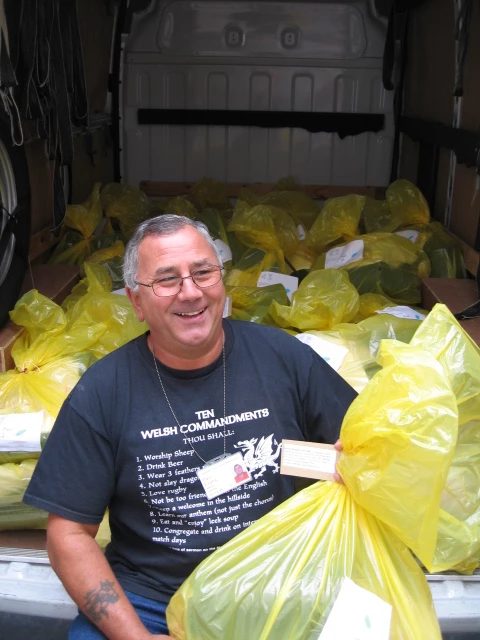
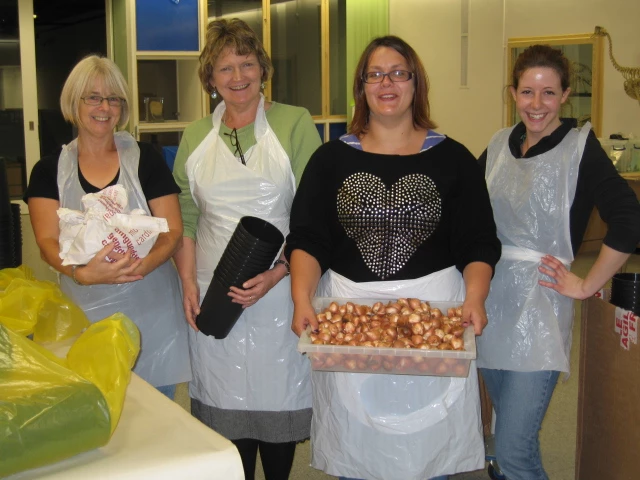
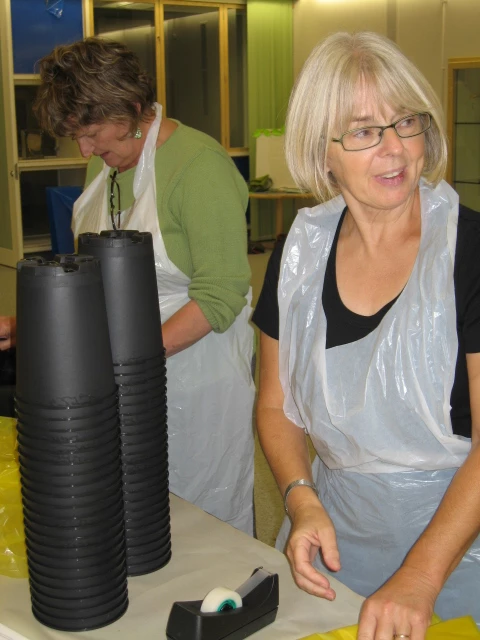
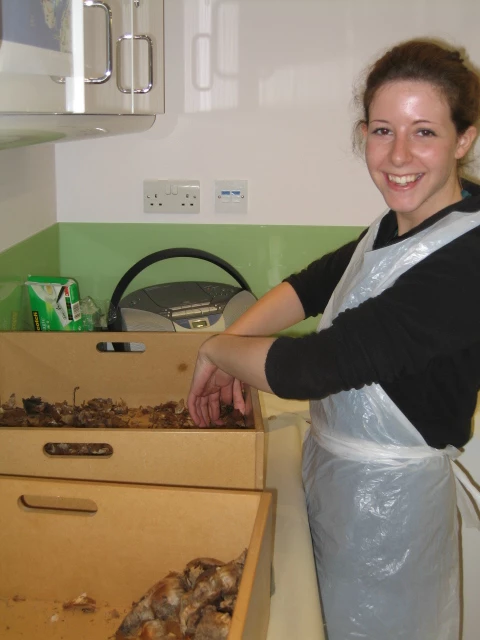
More than 3,000 bulbs were kindly donated by the Really Welsh company and then packed by a super efficient team of volunteers. The bulbs, pots and equipment will enable the schools to record the weather and flowering dates in 70 locations across Wales.
Each school will complete tasks and keep records through the winter and spring term to earn super scientist certificates that are awarded to pupils by the project leader - Professor Plant.
The volunteers thoroughly enjoyed the experience and were happy to help with the logistics of this very worthwhile project, which enables the Museum to share its scientific knowledge with schools all over Wales - no matter how remote.
The most dedicated school will win a trip to a daffodil picking day with the farmers of Really Welsh who grow all their produce within Wales.
This week, van driver, Paul Evans will be delivering the investigation packs across the winding roads of Wales to ensure the schools have their bulbs in time for the big planting day which will take place on the 20th of October. Paul has worked for the Museum loan service for 20 years.