Hello Bulb Buddies,
We are off to a fantastic start this year. With 177 schools and 6,339 pupils taking part in the Spring Bulbs for Schools investigation 2015-16.
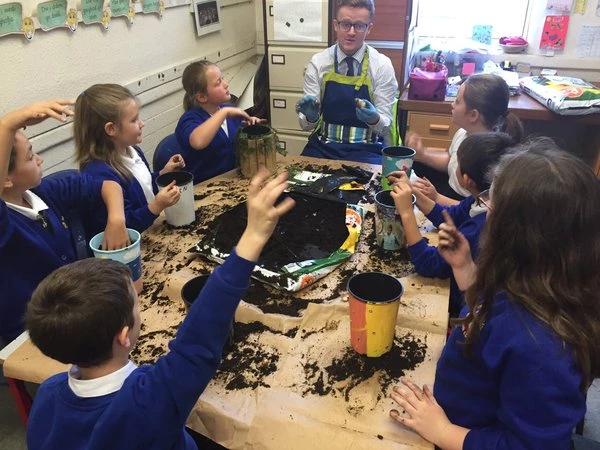
Each pupil taking part has planted their Daffodil and Crocus bulb and labelled their pot. Schools have been using the thermometer and rain gauge provided by the project to take weather readings on days they are in school, and have been uploading their findings to the National Museum Wales website.
You can see the findings so far on the Spring Bulbs project webpage
The results for each participating school are illustrated by graphs. The website has been edited this year to include results from previous years. This means that returning schools can easily see how their data compares to previous years!
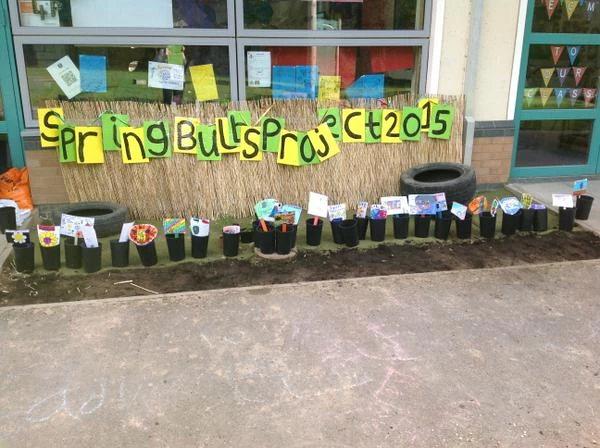
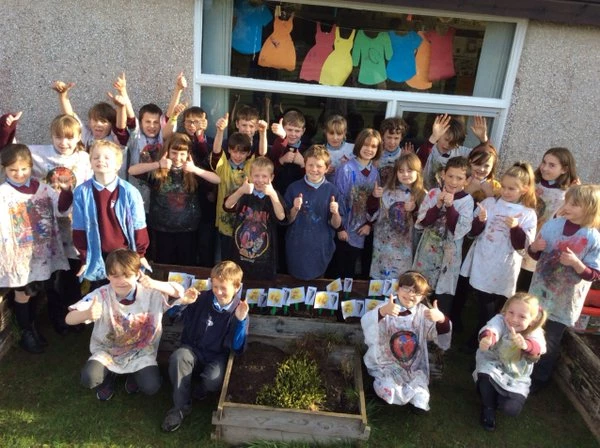
Schools in Wales took part in the Edina Trust’s ‘Planting Day Photo Competition’ for the first time this year. We had some lovely photos sent in by participating schools and it was very difficult to choose just five winners. You can see all of the photos on the Spring Bulb project Twitter page: @Professor_Plant
There have been many interesting questions and comments sent in with the weekly data. Please see below for these and my responses.
Keep up the good work Bulb Buddies,
Profesor Plant
Your questions, my answers:
Stonehouse Primary School: Tuesday was a strange day for weather. It was frosty in the morning but in the afternoon all the children had their coats off because it was so hot. Ysgol Pentrefoelas: Mae hi wedi bod yn gynnes wythnos yma a nin chwarae allan heb ddim cot. Professor Plant: Hello Ysgol Pentrefoelas and Stonehouse Primary. You both noted in the first week of weather records that it had been warm enough to play outside without coats. Aren’t you lucky! Other schools reported lots of rain and frost! It’s interesting that you are both so far apart and that one of you is on the coast (Conwy) and the other is in-land (South Lanarkshire). What strange weather for November! Have you seen that the warm November weather has caused Daffodils to flower in Cornwall! Daffodils flower slightly earlier in Cornwall because it is slightly warmer there, but this variety of Daffodil would usually flower in December and they were a month early! I wonder if our plants will be earlier than usual this year!
School: Hi, I'm unsure as we are recording the amount of rain- do we need to water the plants ourselves? Professor Plant: Hello, thank you for your question. Yes, please do water your plants twice a week if they look like they need it. You won’t need to water them on days where it has rained enough that the soil is moist.
St David's RC Primary School: It was sunny at the start of the week and then the rain came and got heavier and heavier through the week and it was terrible weather for us. We had to stay inside through the rest of the week it was awful weather we had on Wednesday Thursday and Friday. We did not like the weather, did you have good weather where you are or bad weather because we didn't have very good weather it was horrible it was very, very, very boring for us because we had to stay in side for 2 weeks isn't that boring Mr Plant what would you do if you stayed inside for 2 weeks. Professor Plant: Dear St David’s RC Primary, I’m sorry to hear you had such awful weather during the first week of the project. I hope it has improved! I will look at your weather reading now to see! Inside for two weeks! I would probably read lots of books if I had stay indoors that long. There are some things you can read on the Spring Bulbs website. When you are next stuck indoors why not have a look for the ‘Life of a Plant – make your own Origami booklet’ resource on my website!
Severn Primary: We had an INSET day on Monday November 2nd, so we didn't take any readings. It wasn't really 0degrees. Ysgol Mair: On Monday 2nd November we were not in school so have no data but we were not able to record 'no record'. Professor Plant: Dear Severn Primary & Ysgol Mair, I’m sorry you weren’t able to record your inset day. We had a slight blip with the website where the ‘no record’ button wasn’t working. In future please record all days where there are no readings as ‘no record’. Thank you for spotting that readings of 0degrees can affect the results and for letting me know Bulb Buddies!
Betws Primary School: We collected the data for our class. It was warm and sunny at the start of the week. We had a lot of rain on Thursday and Friday. Our bulbs should be happy! Professor Plant: Well done Betws Primary. Keep up the good work.
Castlepark Primary School: P6 were very enthusiastic about keeping track of the temperature and rainfall this week. They felt like real scientists and are ready to show another class how to record the details next week. Professor Plant: Fantastic Castlepark Primary. I’m glad you are learning new skills through the project and that you are having so much fun doing so. You really are Super Scientists!
St. Oswalds V A School: We are worried about having a true reading on a Monday if it has rained over the weekend. Shall we empty the rain gauge Monday morning and take the rainfall measurement as normal? Professor Plant: Hi St Oswalds. That’s a good question, well done for thinking about the effect this has on Monday’s results. The reading on Monday afternoon will include any residual (left over) rain fall from the weekend. Please don’t empty the rain gauge before taking Monday’s reading, as we want the reading to reflect the weather over at least the last 24 hours. Keep up the good work bulb buddies.
Our Lady of Peace Primary School: Hello we had fun planting the bulbs. It wasn't the first time we have planted something. We have planted spider plants in primary 1. Hopefully our plants come up healthy. Good bye. Professor Plant: Hello Our Lady of Peace Primary, I’m glad to hear you enjoyed planting! You sound like experienced gardeners now! Keep up the good work!
Drumpark Primary ASN School: We have had fun taking data. Professor Plant: I’m glad to hear it Drumpark Primary. Keep up the good work!
Biggar Primary School: We are enjoying the experiments. Professor Plant: I’m glad to hear you are enjoying the project Biggar Primary. For more experiment ideas look for ‘Professor Plant’s investigation Ideas’ on the Spring Bulbs website: https://www.museumwales.ac.uk/spring-bulbs/
Maesycoed Primary: A very mild start to the season. Our year group is split into two classes with a different facing outdoor area. We are monitoring the effects the other class experience against our own as we have more sunlight then they do but they are more sheltered. We will let you know if their flowers appear first. Professor Plant: Fantastic experiment Maesycoed Primary! Please do let me know what your findings are and what you learn from them! This also gives you an opportunity to practice averages. As only one reading a day is needed on the Museum website, you could look at the readings taken by each class and work out the average to enter to the website! Keep up the good work Bulb Buddies.
Brisbane Primary School: Our Monday reading is collated over the weekend. We are taking our readings at 2.30pm Mon - Frid. Thank you Professor Plant. Professor Plant: Hello Brisbane Primary, thank you for your up-date. It’s great that you are managing to take your readings at the same time each day, as this helps to ensure a fair experiment. Keep up the good work Bulb Buddies.