Time Travelling in the Archaeology Stores By Aron O’Shea
, 20 May 2026
Since January 2025, I’ve had the wonderful pleasure of helping Archaeology staff at the National Museum Cardiff alongside my fellow volunteer, Jeff. Together, Jeff and I have worked with the amazing Dr Elizabeth Walker, the all-knowing Evan Chapman, and the excellent Siân Iles (who you might recognise from a previous Museum Voices blog). This is a short blog about what we’ve accomplished so far. At the end, I have linked to some additional online material for those who wish to discover more of what is presented here briefly.
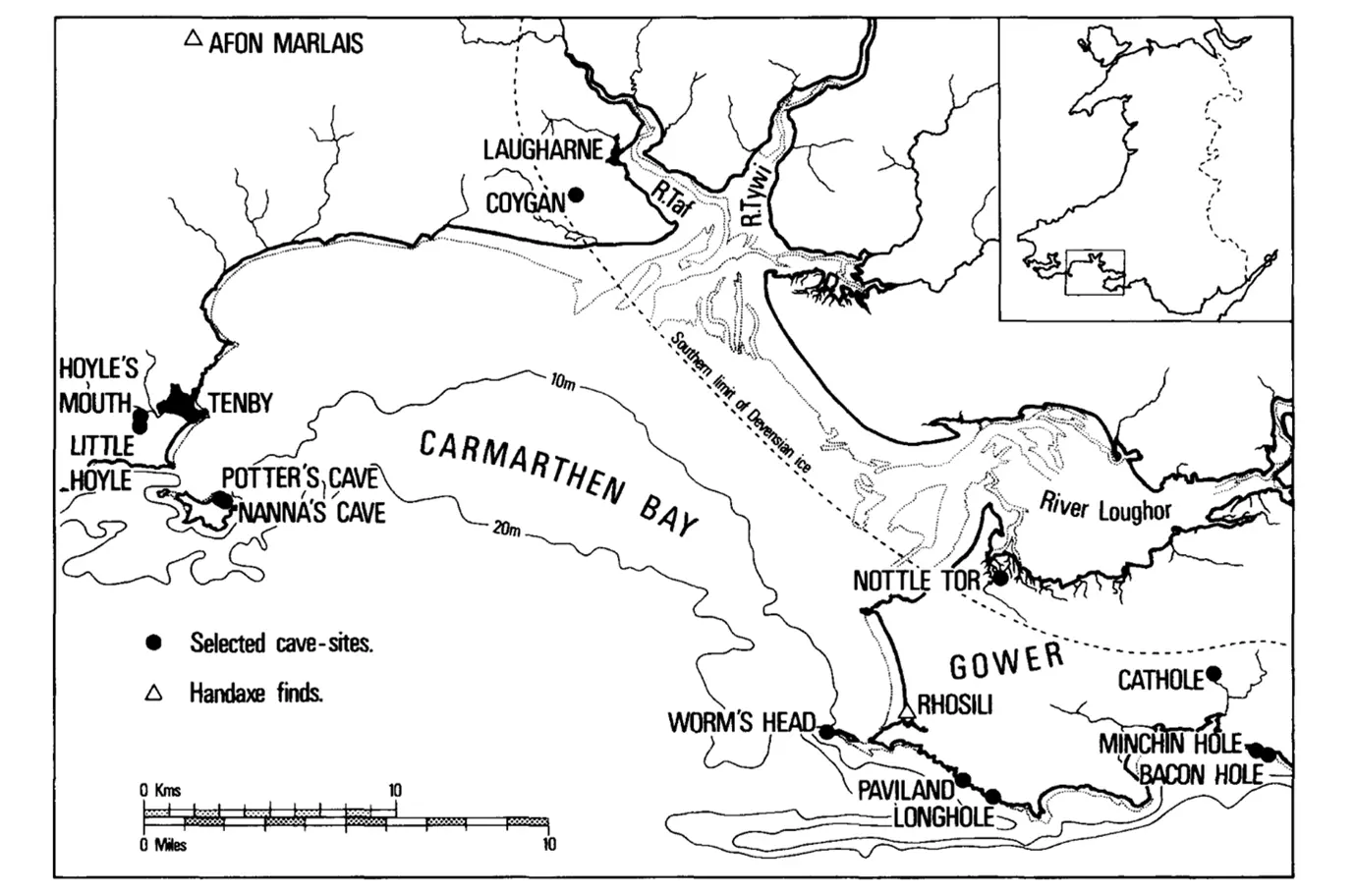
First on our journey through the Archaeology stores is the Stone Age (or the Palaeolithic). Here, Elizabeth introduced us to Coygan Cave, an important Middle Palaeolithic cave site (destroyed by quarrying) near Laugharne, Carmarthenshire.
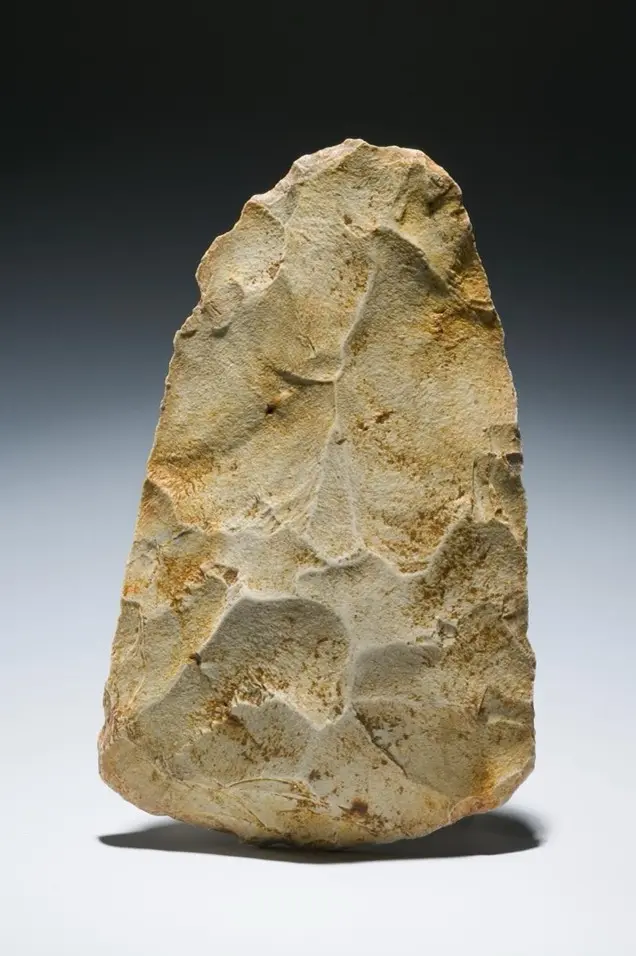
The cave appears to have been used as a den by hyenas for the most part, given the accumulation of large prey animal remains, including those of mammoths, woolly rhinoceros, giant deer, and horse alongside an assortment of small mammals and birds. Remains of some other carnivores were present such as brown bear, wolf, and arctic fox. Equally of note from Coygan are three wonderful examples of so-called bout coupé handaxes, one of which is on display and pictured here.
Elizabeth kindly took the time to explain how stone tools are made (something which I still find mind boggling) and how to spot signs of their use. Previously, the skeletal remains from Coygan were stored in plastic boxes to keep them in their “comfortable” temperature and humidity ranges. Upgrades to the stores’ environmental conditions meant that the remains could be repackaged into archival cardboard boxes, and the plastic containers repurposed for other artefacts. Jeff and I were tasked to work on rehousing the teeth, bones and coprolites (fossilised dung) whilst tracking their new home location and ticking off each bag of remains from a list. All in all, we transferred over 2,000 bags of remains and managed to reclaim a few shelves of storage space! Having not really considered the life (and death) of prehistoric creatures before, it was humbling (and terrifying) to think of the size and kinds of animals with which Neanderthals and modern humans would have cohabited.
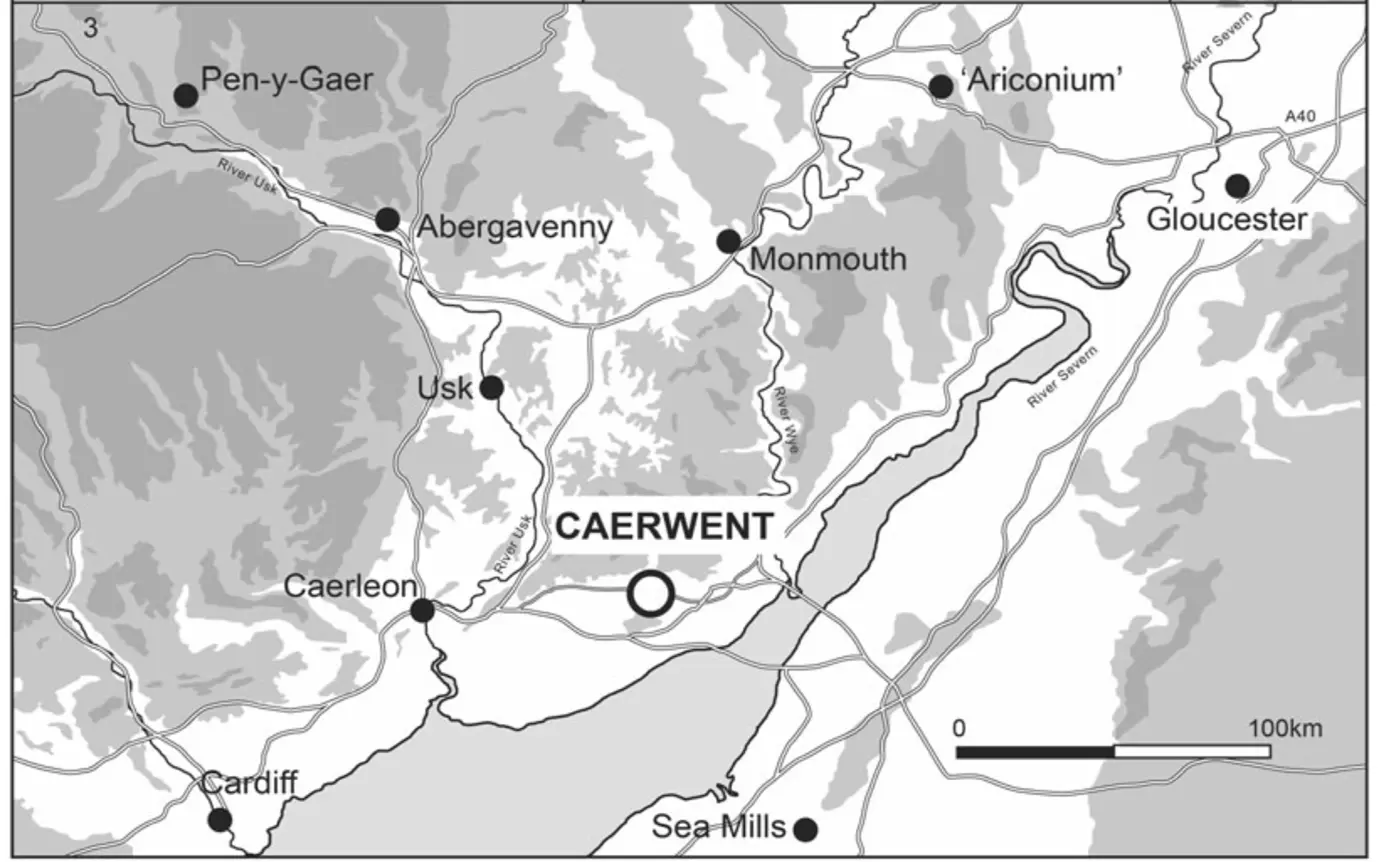
One of our next projects saw us jump forward in time to the Roman occupation of Britain! More specifically, we find ourselves in the Roman city of Venta Silurum, the “market” and administrative capital of the Silures tribe that was established and located in what is now Caerwent.
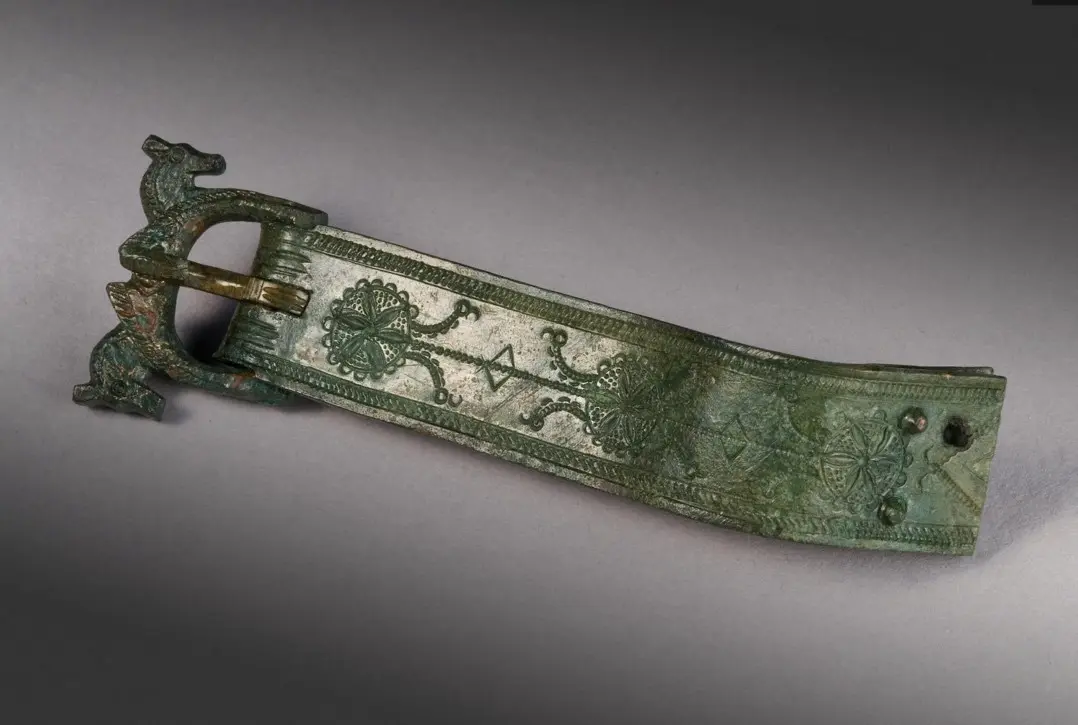
Large portions of the stone city walls and the foundations of some buildings still stand today – visit and see for yourself! Several excavations were undertaken at Venta Silurum, first by the Caerwent Exploration Fund (CEF) in 1899-1913 and later by Amgueddfa Cymru from 1981 to 1995. Amongst the discoveries from the later excavations (missed by the CEF!) was the beautiful copper alloy belt-buckle below, which you can read more about here.
Besides the wonderfully decorative metalwork, the Museum’s excavations of the forum-basilica (local government building with an open-air market) at Caerwent uncovered a veritable hoard of……oyster shells, thought to have been consumed by the government officials. Curator and fountain of knowledge for all things store-related, Evan, tasked us with the job of auditing these oyster shells and sorting them by excavation phase. While the work was dusty, it was a great opportunity to learn about the more civil dynamic between Empire and local tribes which contrasts sharply with the military fortification at nearby Caerleon.
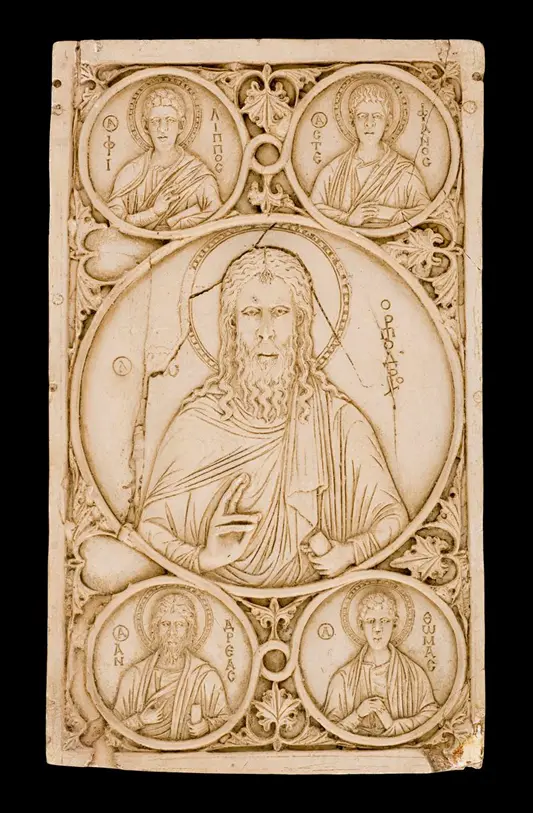
The final highlight in this whistle-stop tour through history lands us in the Medieval period, and to a certain degree at the beginning of the Museum’s collections. Museums have long been places for education and for “showing off” artefacts to which most people have little access; Amgueddfa Cymru, in its early years, was no different. Other than acquiring new and unique artefacts, one way that museums and scholars in the 19th century could display or study artistic or archaeological objects was by replication. A noteworthy example of this practice was the making and sale of plaster copies of carved Medieval ivory objects for example. The skilfully furnished copies were called “fictile ivories”. A recent exhibition by the Courtauld Institute of Art and the Victoria & Albert Museums has also explored this topic, which you can read about (and watch) here. A collection of such fictile ivories had been purchased and catalogued by Amgueddfa Cymru (then the Welsh Museum of Natural History, Arts and Antiquities) and has since been housed within the Archaeology Stores, one example being the panel carving of various saints.
Siân, Senior Curator Collections Development: Medieval, Jeff and I set about scouring the text-only 1902 catalogue of over 130 “ivories” to attempt to match up the descriptions with what we saw in the collection. The reasoning behind this approach was twofold: firstly, to understand which copies were still present in the collections; secondly, to better be able to identify and connect the artefacts to those housed in museums like the V&A and indeed to the original objects from which the replicas were derived. Fortunately, the magic of photography and extensively digitised collections made the work a little easier, as most of the “ivories” and the Museum’s catalogue reference biblical scenes or mythological scenes less known to contemporary audiences (me!). Though a maddening experience of déjà vu and (carefully) rifling through boxes of (sometimes large and unwieldy) casts, I am honoured to have been connected in some small way to part of the early collections of the Museum. The slightly odd-looking faces and unexpected creatures present were certainly a bonus.
Were it not abundantly obvious – I’ve had a fantastic time volunteering with Amgueddfa Cymru. Not only was it a chance to get up close and personal with some incredible artefacts and pieces of Welsh history, but I’ve also met some amazing and kind people in the Museum staff. Everyone from the Security to the Volunteering team, to the Archaeology department have been generous and welcoming. I shall treasure the time spent laughing and learning in the Archaeology stores (and in the break room!).
A very special thanks go to Elizabeth Walker, Evan Chapman, and Siân Iles without whom I would not have had the pleasure of the above-described adventure, nor would I have understood half of what I do now. Thanks also to Jeff for his friendship, support and, especially, his voice in reading out various numbers and coordinates.
Further Reading:
The Museum’s Collections Online database is a great place to find photos of and information about objects!
Prehistory
[ARTICLE] ‘A Day in Archaeology – Sorting out the storeroom’ by Elizabeth Walker
[ARTICLE] ‘The Cave Men of Ice Age Wales’ by Elizabeth Walker
https://museum.wales/articles/1317/The-Cave-Men-of-Ice-Age-Wales/
[ARTICLE] ‘The oldest people in Wales – Neanderthal teeth from Pontnewydd Cave’ by Elizabeth Walker
[VIDEO] Cambrian Archaeological Association Presidential Address 2022 (Elizabeth A Walker): The significance of Welsh Caves to Palaeolithic Archaeology
https://cambrians.org.uk/elizabeth-a-walker-presidential-address-2022/ [Mention of Coygan begins at 27:16]
Roman
[ARTICLE] ‘A Day in Archaeology – The Llantrisant Fawr Hoard’ by Evan Chapman https://www.archaeologyuk.org/resource/llantrisant-fawr-hoard-by-evan-chapman--senior-curator--archaeology-at-amgueddfa-cymru-museum-wales.html
[ARTICLE] ‘Segontium – The Romans in North Wales’ by Evan Chapman
https://museum.wales/articles/1322/Segontium---The-Romans-in-North-Wales/
[ARTICLE] ‘Gelligaer Roman fort’ by Evan Chapman
https://museum.wales/articles/1328/Gelligaer-Roman-fort/
Medieval
[ARTICLE] ‘Medieval Cardiff’
https://museum.wales/articles/1334/Medieval-Cardiff/
[ARTICLE] ‘A Day in Archaeology – Medieval Floor Tiles Project at Amgueddfa Cymru’ by Jennifer Frost (Volunteer)
[ARTICLE] ‘A Day in Archaeology – Medieval Floor Tiles Project at Amgueddfa Cymru: Part 2’ by Siân Iles
Sources:
Aldhouse-Green, S., Scott, K., Schwarcz, H., Grün, R., Housley, R., Rae, A., Bevins, R. and Redknap, M. 1995. ‘Coygan Cave, Laugharne, South Wales, a Mousterian Site and Hyaena Den: a Report on the University of Cambridge Excavations’, Proceedings of the Prehistoric Society, 61, pp. 37-79.
Guest, P. 2022. ‘The Forum-Basilica at Caerwent (Venta Silurum): A History of the Roman Silures’, Britannia, 53, pp. 227-267.