The Caves at Cefn: Tales of strange creatures and evidence of Wales's earliest humans.

The complex of caves found at Cefn, just outside St Asaph in north Wales, has been the focus of much interest over the years. Full of animal bones and home to early Neanderthals , the caves have drawn many notable visitors, including Charles Darwin in 1831.

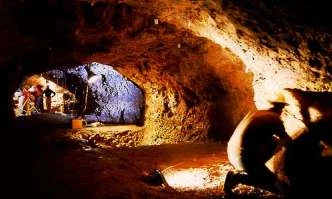
Pontnewydd Cave

Pontnewydd Cave excavations

Pontnewydd teeth

Teeth from Pontnewydd cave

Pontnewydd Cave

Pontnewydd Cave

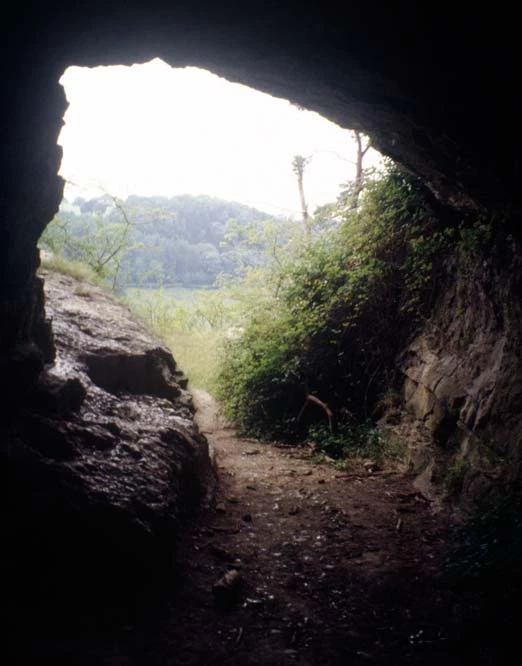
View from Cefn Cave

Cefn Cave looking out

The caves in the parish of Cefn Meiriadog, Denbighshire, have long been places of interest for scientists, artists, poets and antiquarians. The Denbigh to Abergele road once passed through the rock arch beside the River Elwy and many people stopped here to enjoy the beautiful scenery. The antiquarian John Leland wrote about Cefn during the 1530s 'On the farther ripe of Elwy a 3. or 4. miles above S. Asaphes is a stony rok caullid Kereg the tylluaine, i.e. the rok with hole stones, wher a great cave is, having divers romes in it hewid out of the mayne rok.' Writers Thomas Pennant, Richard Fenton and Edward Pugh were among many visitors to the Cefn Caves in the years before 1830.

Bones in the mud

Charles Darwin visited Cefn in August 1831 during a geological tour with Professor Adam Sedgwick. Darwin described the limestone at Cefn and an entry in his notebook observes that Sedgwick spotted rhinoceros bones in mud in the cave; Sedgwick's notes state that a rhinoceros tooth was found. Unfortunately neither commented on the palaeontological significance of the find. Which cave did Darwin visit? Cefn Cave is the more likely, as records of a visit by the Reverend Edward Stanley the following year inform us that landscaping had left 'bones in the mud for the taking' and that many bones were spread as fertiliser on the fields below. Stanley recorded seeing a rhinoceros tooth in the landowner's collection - could this be the tooth found by Sedgwick and Darwin? We shall never know for sure.

Hippopotamus, Rhinoceros and Elephants

Stanley described the landscaping of Cefn and the construction of walks through the valley which involved removing some of the projecting areas of cliff face on Cefn Rocks. A series of gentle steps and staircases were created from the valley bottom and through Cefn Cave. Huge quantities of deposit were removed from the cave to create a single passage connecting the two cave entrances. Stanley excavated within Cefn Cave in 1832. He found bones of straight-tusked elephant,

rhinoceros and hippopotamus of last interglacial age (c. 125,000 years old), and deposits that interested many geologists and other scientists who visited the caves.

Debates about the antiquity of humans and their relation to extinct animals were raging in the learned societies at this time. So an article that appeared in The Times on 20th October 1870 claiming the existence of a strange amphibian living in Cefn Cave caused considerable interest. It called upon naturalists to investigate the survival of an ancient creature in North Wales. The Flintshire Observer for 4th November 1870 told a tale of a living lizard, four feet seven in length and very much like a crocodile which had emerged from the depths of Cefn Cave. This lizard had reportedly been slain by a valiant Welshman, Mr Thomas Hughes, chimney sweep of Rhyl. The tale as retold suggests that the crocodile did not reach Cefn at all: it apparently died whilst a part of a travelling menagerie visiting Rhyl. On learning of this Mr Hughes ingeniously devised the tale of its capture in the cave and having purchased it proceeded to show it as the marvellous lizard of Cefn.

Pontnewydd Cave

In 1872 Professor Sir William Boyd Dawkins visited Cefn and excavated

Pontnewydd Cave . This cave was noted by Stanley as being completely undisturbed when he found it on the valley side a little to the north-west of Cefn Cave. Stanley did not excavate here, but it is believed that the local rector Reverend Thomas, Mrs Williams Wynn (the landowner), and Boyd Dawkins did. In 1874 Thomas McKenny Hughes undertook more extensive work in the cave during which he discovered an exceptionally large human tooth associated with stone tools and animal bones.

The Cefn caves were then largely ignored until the 1940s when the army turned Pontnewydd Cave into a store for landmines and depth charges, building the limestone wall, steel doors and guard chamber, with its coke stove to keep the watchman warm. Cefn continued to be a place people would visit, spending Sundays and Bank Holidays exploring the caves.

In 1978 the national museum commenced a research project investigating the caves of Cefn starting with excavations in the Pontnewydd Cave and later at Cefn. Pontnewydd has become a site of international importance containing the remains of an evolutionary early form of Neanderthal who used this cave some 230,000 years ago.

Today the caves lie on private land belonging to the Cefn Estate and are not accessible to visitors.
The Final Countdown!

Hi bulb buddies,

Time is ticking on and all your weather reports and flower records need to be sent in by Friday 29 March. This means there are only three weeks left to send in you data!

Don’t worry if your flowers have not opened yet, three weeks is a still a long time. Based on the results from previous years most of your flowers will have opened by the end of March.

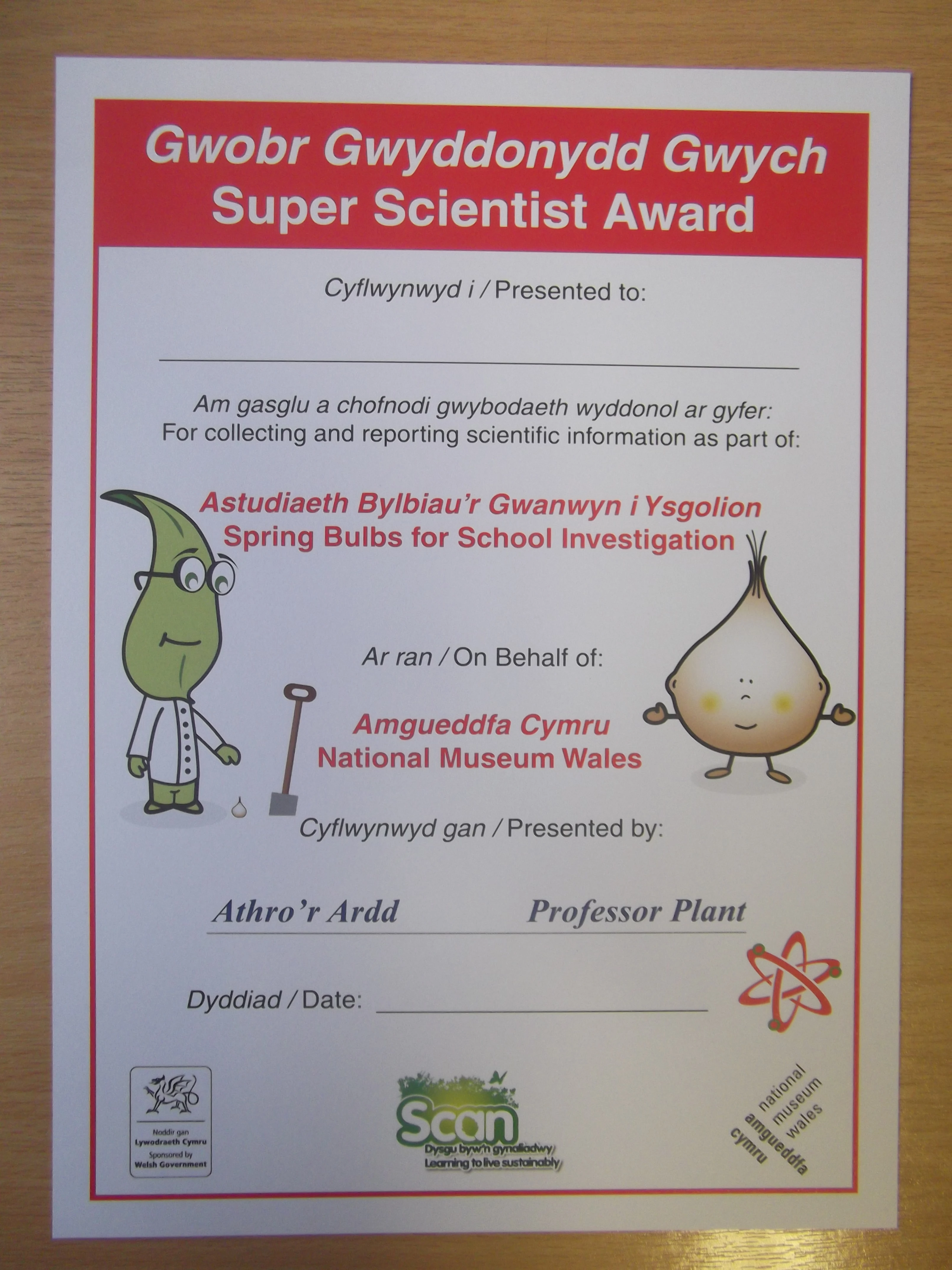
Every pupil whose school has sent in records will be awarded a Super Scientist Certificate like the one in the picture! But there’s more… each of you will also get a very special prize… a Super Scientist pencil! – perfect for recording the results of your experiments. So don’t miss out, remember to send in your records!

Whose flowers have opened this week?

In last weeks blog Ysgol Nant Y Coed was the first school in Wales to report that flowers had opened and this week lots more children at that school have reported flowering too! Gosh Ysgol Nant Y Coed, your flowers are doing very well. I wonder if the sun has been shining more in Llandudno?

Greyfriars RC Primary School in St Andrews, Scotland has also reported crocus flowering and Milford Haven Junior School in Wales has sent in records of a crocus and a daffodil flowering! Well done to both schools.

When your daffodils open remember to get drawing! You can send me your pictures and enter the Daffodil Drawing Competition. I am looking for beautiful pictures but they must also have clear labels which show the different parts of the Daffodil. You can look here to see some wonderful examples of winners’ drawings from previous years.

Your questions, my answers:

Rhydypenau Primary School: We had rain over the weekend, that is why our gauge was full. Prof P: Thank you for the explanation Rhydypenau, that's really helpful!

Ysgol Nant Y Coed: Some of the crocus bulbs have flowered so we're sending that information now too. Prof P: Fantastic news! Thanks for your flowering records.

SS Philip and James Primary School: We really enjoyed doing it and remembered to do it every day, we hope that we can do it again soon. Phil+Jim bulb team Prof P: I am so pleased that you are enjoying it so much – I love recording the weather too!

Henllys CIW Primary: still no flowers. Prof P: It's exciting to see your flowers open, but your report that they have not opened is very valuable scientific information too! It could tell us a lot about how cold it has been this winter or how much sunshine we have had.

St Joseph's Primary School (Penarth): We have noticed that our plants continue to grow but we are keeping a very close eye on them to see which one will flower first - we can't wait! Prof P: I feel the same every morning when I look at my plants too.

Greyfriars RC Primary School: 11 daffodils are in bud. A's crocus is the only one growing but all the other daffodils but A's, why is A's daffodil not growing? Prof P: This is a very good question! I’m sorry that your daffodil is not growing A, you haven’t done anything wrong! I am glad your crocus is growing instead. Sadly we do have a small number of bulbs every year that do not grow, it happened to some of mine last year. The reason it happens is unclear. When a daffodil doesn't make a flower gardeners say that the plant has gone 'blind' - as it has no flower head.

Ysgol Porth Y Felin: we had our holidays on the 11 - 15 week so we'll skip a week. everythings ok there hasn't been much rain and the temperature has been a little high!
from porth y felin. Prof P: Many thanks!

Kilmaron Special School: The school was on holiday on Thursday and Friday. On Wednesday we had very heavy snow and although the rain gauge only had 3mm in it there was almost 6cm of snow by 2pm. The gauge is in quite a sheltered place as we had problems with a pupil seeking it out and emptying it. Prof P: Good idea to move your rain gauge to keep it safe.

Glyncollen Primary School: We hope our flowers open this week as well. Prof P: Fingers crossed!

Kilmaron Special School: Still no signs of our crocus bulbs although the ones planted years ago in our other raised beds are blooming and the ones in the grass next to our raised bed are almost out. Prof P: Keep watching them Kilmaron!

Many thanks

Prof P

The 1st flower records for Scotland and Wales!

Congratulations to Tulliallan Primary School for sending in the very first Spring Bulbs flower records of the year! Tulliallan’s first crocus and daffodil opened only a day apart, with their crocus flowering on 17 January and their first daffodil flowering on 18 January.

As Scotland is further north than England and Wales they generally have colder weather and more snow in winter. This usually means that plants flower later. Last year flowers opened earlier in Wales and England, so it is quite a surprise that our first flower record this year is from Scotland! But that is the wonderful thing about being a scientist – experiments can often have surprising results!

The second school to send in flower records was Ysgol Nant Y Coed in Wales. Three children’s crocuses opened on the same day on 1 March – St David’s Day! These were the first records for Wales – well done Ysgol Nant Y Coed!

I wonder where flowers will open next?

When your flowers open please send me your flower data, you can see where flowers have opened by looking at this map

TOP TIPS:

  1. Every pupil in the class can send in their flower record! All the data that is sent in is used to create an average flowering date for each school. Watch the crocus chart and daffodil chart to see the tables change as the data comes in. It is really important that each pupil sends in their record - so the website can calculate the average flowering date for your school.
  2. Daffodils tilt their heads downwards just before opening. This prevents them from filling with rain after they open.

I would also really love to see photos of your flowers. If you have photos please ask your teacher to email them to me!

My plants here in Cardiff haven’t flowered yet. The bud on one of my crocuses is starting to look a bit purple, so maybe it won’t be long. I can see the flower buds on my daffodils too but they are still green.

Your questions, my answers:

St Nicholas Primary School rain gauge stolen. Prof P: Sorry to hear that St Nicholas Primary. I have put a new one into the post for you, I hope it arrives soon.

Ysgol Y Ffridd Glawiad Dydd Llun yn llawn ers y gwyliau. Athro'r Ardd: Mae'n rhaid ei bod hi wedi bwrw hen wragedd a ffyn yn yr ysgol dros y gwyliau! Diolch am roi gwybod i fi.

Milford Haven Junior School Temp in playground was much colder because of the wind chill factor. Prof P: Brrrr! I hope you were all wrapped up warm when you went outside to play.

Ysgol Porth Y Felin to pp we have a problem with one of the plants. It has creamy browny little things in the pot that look like mini shell pastas. We don't know what they are. ysgol porth y felin. Prof P: Gosh, they sound curious. I wonder if they could be the brownish leaves that protect the plant just before the shoots start to grow? Maybe you could take a photo and ask your teacher to send it to me? I might know what they are if I saw them!

Ysgol Nant Y Coed We have buds on the crocus and daffodils now but none of them have opened yet. The mystery bulb has grown the biggest! Prof P: That’s great news! Keep an eye on them and let me know as soon as they open.

Darran Park Primary Mystery plant has grown quite well the rest of the bulbs are slowly growing. Prof P: Thanks for your plant update Darran Park Primary.

Glyncollen Primary School Many thanks for our new rain gauge. You also sent us a new thermometer but on a slip of paper in the box it said St. Mary's. We were wondering if it was meant for us or should we send it back to you? Can you please let us know. The leaves on our flowers are growing well. Bye for now - Yr.4 Prof P: Oops! I sent out two rain gauges on the same day and things must have got mixed up. Sorry Glyncollen. I have emailed your teacher about the thermometer – thanks for letting me know about the mix up.

Greyfriars RC Primary School Dear Professor Plant, we are a bit confused because only one crocus is flowering and only one daffodil is flowering. Prof P: Congratulations Greyfriars School! You are now the second Scottish School to have flowers! You now need to enter you flower data on to the website to make it OFFICIAL! Remember: You can enter flower data as soon the very first flower opens. You record the date it opened and the height of the tallest part of your plant. Then as each new flower opens you can enter its data on the website too – you don’t have to wait until they are all open. Plants grow at different rates – some grow quickly, some take longer to grow - just like children!  I am sure your other flowers will 'catch up' soon.

Many thanks

Prof P

Climate Week 4-10 March 2013

Hello bulb buddies!

Next week is National Climate Week – a good time to think about climate change, how it affects us and how we can help to take care of the planet.

For the last 150 years scientists in many parts of the world have been measuring temperature and rainfall, just like you are now in your Spring Bulbs investigations! The scientists have seen that temperatures are rising all over the world and that rainfall patterns are changing too.

Warmer weather and more rain might help your crocuses and daffodils to grow… but global warming also means more extreme weather events, such as heavy snow, storms, flooding and droughts!

There have been lots of floods and more snow in the UK in recent years. Last year the Met Office announced that 2012 was the second wettest year on record in the UK and the wettest ever in England.

Many top scientists agree that pollution levels are contributing to global warming, so what can we do to help?

Be energy – efficient! If we use less energy we create less pollution. How? Simple things we do every day can save lots of energy at home or at school. For example: Turning off the TV or computer when you are not using it saves lots of electricity!

Can you think of some other things that you could do to save energy? Maybe you could talk about this in class? You could also have a look at this Global Warming presentation – it has some other ideas for saving energy.

If you are interested in other things you can do for Climate Week then you can have a look the Climate Week website.

Your questions, my answers:

Thorneyholme RC Primary School PP, We were off on Wednesday afternoon, and our mystery blubs are growing.  Prof P: Can you guess what they are yet Thorneyholme or are they still a mystery?

Lakeside Primary Sorry about all the non recorded dates.  Prof P: That’s okay! Sometimes I have to miss a day recording too. Keep up the good work.

Ysgol Capelulo We have not got any flowers yet :(  Prof P: Don’t be sad Ysgol Capelulo, my plants haven’t got flowers yet either… I am sure they will come soon.

RAF Benson Primary School Some our daffodils and crocuses have started growing.  Prof P: That’s great news!

Newport Primary School It has been quite good weather here this week with no rain and some sunshine but the last couple of days have been really cold and quite dull. On Sunday 17th we had an almost spring day and we were all able to get out and have a good time as it was really sunny and felt quite warm.  Prof P: Excellent weather reporting NewportPrimary School! Really detailed, thank you! It has been very cold here in Cardiff too.

Balcurvie Primary School Our big rainfall on Monday was after the half term holiday when it snowed heavily! Great fun for us but not for our poor wee bulbs! Prof P: Sounds like you have been having some extreme weather in Scotland! I am glad you have been enjoying it Balcurvie.

Many thanks

Professor Plant

Species new to Science: Polychaetes from the Falkland Islands

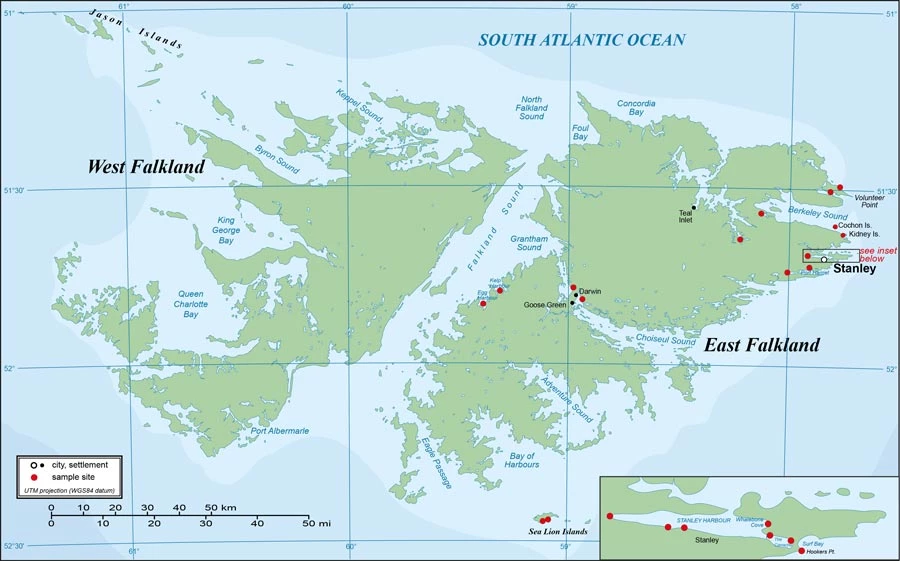
1. Map showing the sample sites around East Falkland with enlarged inset map of locations around Stanley

1. Map showing the sample sites around East Falkland with enlarged inset map of locations around Stanley

3. Two cirratulids found under a rock during a dive

3. Two cirratulids found under a rock during a dive

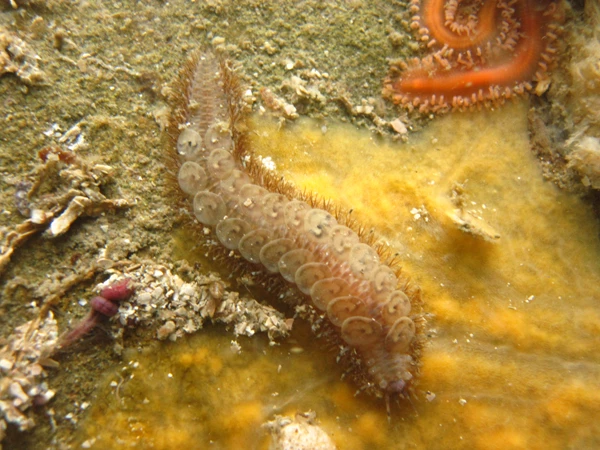
4. Scaleworm (Polynoidae) found under a rock while diving

4. Scaleworm (Polynoidae) found under a rock while diving

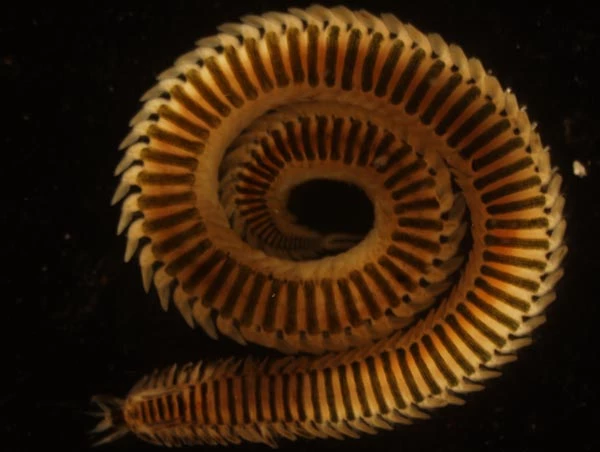
8. Paddleworm (Phyllodocidae) with distinctive black stripes

8. Paddleworm (Phyllodocidae) with distinctive black stripes

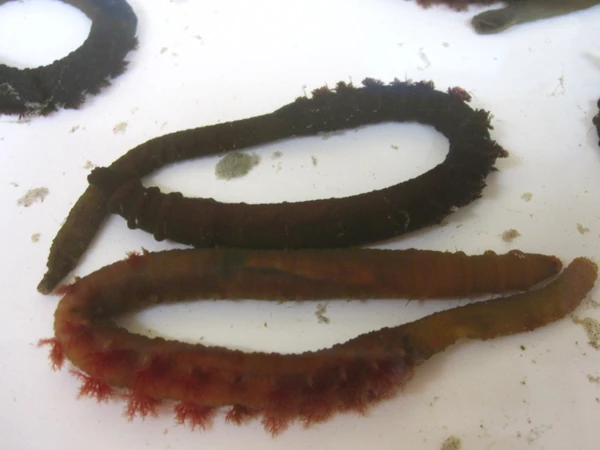
9. Two different species of lugworm (Arenicolidae) from a shore

9. Two different species of lugworm (Arenicolidae) from a shore

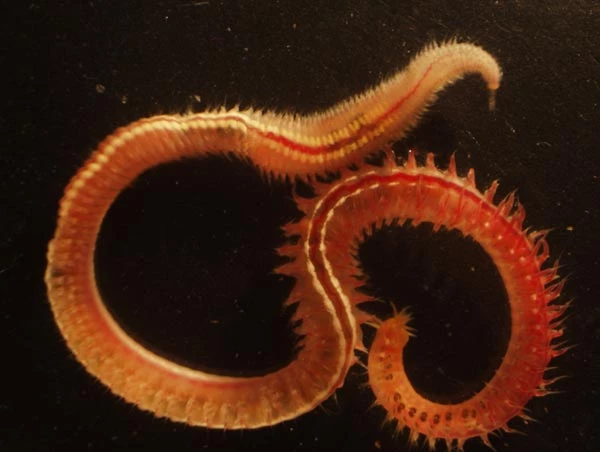
10. A new species of ragworm (Nereididae)

10. A new species of ragworm (Nereididae)

Polychaetes (or bristleworms) are found in nearly every marine habitat on Earth. They are very adaptable and diverse in appearance, and there are currently around 10,000 species described. With increasing environmental pressures on our marine environment it is more important than ever to know what species live where.

Polychaetes from offshore habitats around the Falkland Islands in the South Atlantic have often been sampled as part of Antarctic research cruises. Those from intertidal regions (between high and low tide marks) are conversely not so well known. Some intertidal work was done at the beginning of the twentieth century by a Falkands naturalist, Rupert Vallentin, who sent specimens to taxonomists for identification and research. Since then little has been done.

Teresa Darbyshire, a marine biologist from Amgueddfa Cymru, has been collaborating with the local Shallow Marine Surveys Group to study the polychaetes of the Falkland Islands. Four weeks of fieldwork in late 2011, funded by the Shackleton Scholarship Fund, allowed nineteen different shores to be sampled (Images 1, 2, 6) on East Falkland, the main island of the group. Diving together with the Shallow Marine Surveys Group also allowed offshore sites to be sampled (Image 3, 4, 7).

Fieldwork in the Falkland Islands offered some unusual biological hazards including sea lions investigating Teresa while working underwater, elephant seals creeping up behind her on the shore, and caracaras (birds of prey) trying to fly off with the sample pots! (Image 5)

Features important for their identification such as colour and patterns (Image 8) often disappear or change once polychaetes are preserved ("fixed"). Specimens were, therefore, mostly looked at and photographed live under a microscope. Specimens were also "relaxed" before fixing so that they were less likely to contort and possibly break-up, so making them much easier to identify later on.

Polychaete identification is neither quick nor easy! Different species occur across the world and change according to both habitat and location. Located in the South Atlantic, the Falkland polychaetes are likely to be different from those in the North Atlantic and so their identification is requiring much searching of available literature. To start with, the specimens were first sorted into families (groups of related species). Although not all families exist in all environments, the families recognised from the Falklands also occur in British waters. Each family was then studied in turn, to identify the different species present across all of the sites. It's always easier to identify something if you have many specimens to look at as you may get a range of different sizes, from juveniles to adults, and also specimens in different condition.

Over thirty different families have now been identified from the samples. Two new species have already been found of lugworm (Arenicolidae , Image 9) and ragworm (Nereididae, Image 10). This is surprising as these two groups contain large animals and are generally well known as they are often used by fishermen for bait. It is expected that several more new species will be found as the samples are analysed.

A second visit occurred in 2013 to sample additional locations both on East Falkland and across West Falkland too. Eventually, it is intended that all of these samples together will facilitate the production of a list of the intertidal and inshore polychaetes of the Falkland Islands. This will be of great benefit to all those working to protect the environment of the Falkland Islands as well as polychaete researchers from around the world.