Francis Place (1647-1728)

Francis Place 1678
Francis Place 1678

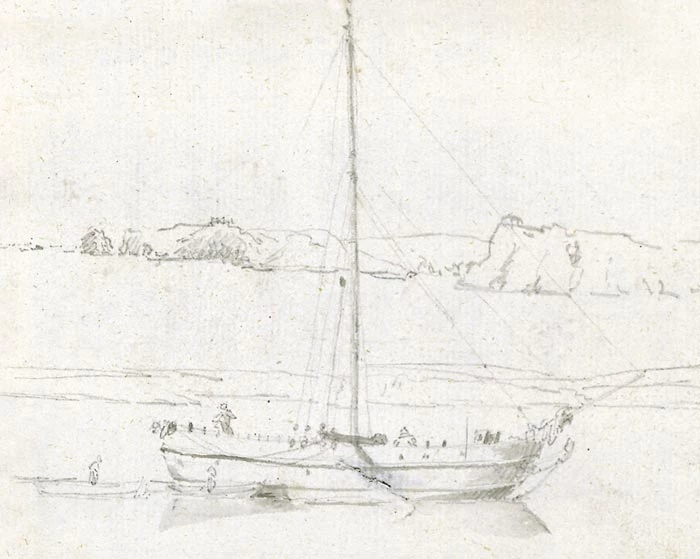
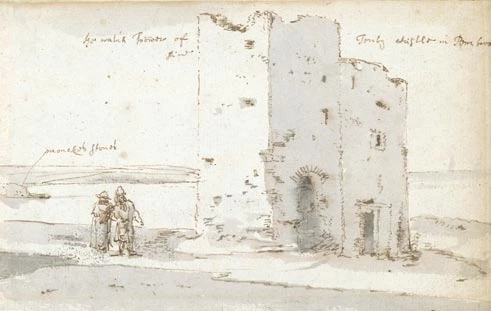
Amgueddfa Cymru has in its collection fifteen views of Wales drawn by Francis Place (1647-1728). Of these, ten are from a single sketchbook. These ten sketches, dated 1678, are the earliest images that the Museum holds of Wales that were drawn on-the-spot. But who was Francis Place?

Francis Place was a Yorkshire man, born into a wealthy family in 1647 and the youngest of ten children. His lawyer father decided that he should follow in his footsteps and at the age of seventeen or eighteen Francis entered Gray's Inn in London to study Law.

However he disliked law and the Great Plague in 1665 gave him his excuse to finish with his studies and return home. A short time later he returned to London and worked with Wenceslaus Hollar, who introduced him to printmaking and print selling in London.

There is some suggestion that Place received some or all of his inheritance before his father died in 1681, and it would have been this that enabled him to follow his passion for art and angling.

Royalty and the age of the Virtuosi

The seventeenth century was the age of the Virtuosi — likeminded men with money and leisure interested in art, science and philosophy, many of whom went on to form the Royal Society in 1660. In the first half of the century only royalty and those closely associated with royalty learned and practised the art of drawing and painting.

Towards the end of the century it began to be taken up by the landed gentry and their sons and daughters. They studied to acquire knowledge, which was very different from those who had to make a living from it. There is evidence that, although ostensibly an amateur, Place was paid for work, particularly early on.

So Place fits in very well with the gentlemen of the time; he had the time and the money and, from what survives of his work, he dabbled in many media including early experiments in porcelain.

He was a member of the York Virtuosi who included Martin Lister, Henry Gyles, Thomas Kirke FRS and William Lodge. It may have been through this group that he earned commissions.

With his fathers money Place travelled far and wide in the UK to sketch and practise the art of angling. We know from correspondence of the period that the sketches at Amgueddfa Cymru were carried out on a tour of Wales and the West Country in 1678. He was travelling with his friend and fellow York Virtuosi William Lodge.

Travelling at this time was not without its dangers as this was the time of the Popish plots, and it is known that while in Wales they both spent one night in jail under suspicion of being Jesuit spies.

Tenby Cliffs

Tenby cliffs original stetchbook

<em>Tenby Cliffs</em> (1678), Francis Place.

and after digital restoration:

<em>Tenby Cliffs</em> (1678), Francis Place.

Dazu and confused: an exhausting but exhilarating journey to China

Having secured the Dazu Exhibition to come to Wales - to venture west for the first time ever - the Museum sent me to China as a facilitator, a friendly face, to meet and greet its people and report back on the full logistics required for transporting these holy artefacts all the way to Cardiff.

This is a diary of memories from the trip:

 The further you travel, the less you know. That line, from Tao teaching, is calling to lay rest my preconceptions.

I reach Dazu late in the evening and after nearly a full day of travelling, cocooned in one small seat after another, happy to have finally finished the journey. My hosts are excited by my presence and have kindly prepared a welcoming dinner. The food arrives as colourful exotic platters, artful dishes with precise garnishes.

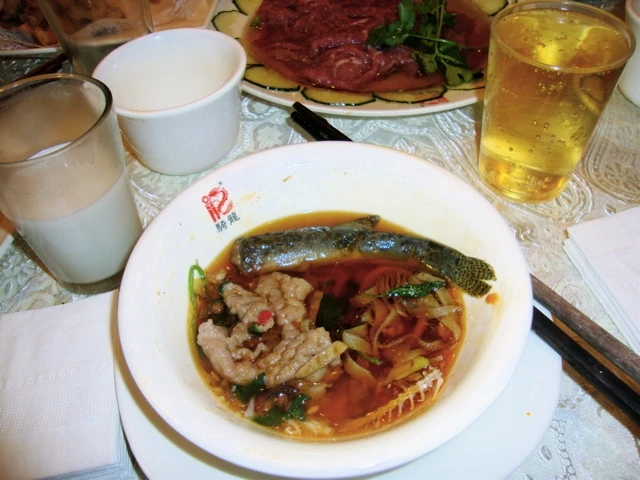
Plate after plate upon a lazy Susan, a magic roundabout of smells and flavours so unfamiliar I feel the need for reckless abandonment. I am coached through each course in descriptive detail. Silk worms, pigs gums and the tail of something! Respectfully I enjoy being the entertainment, the toast of this banquet of curiosities.

The next day and I’m standing at the foot of the mountain, my leather soles on ancient well trodden steps. The summit is hidden by dense foliage and cloaked in a playful mist.

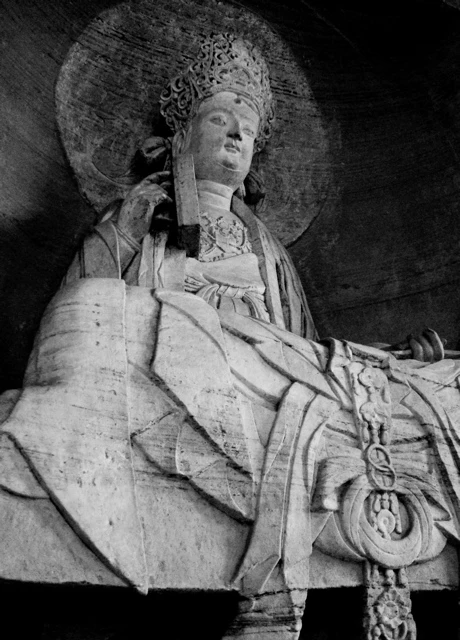
Beishan represents the pinnacle of Chinese rock carvings, familiar images from text books are now images of breathtaking artistic, spiritual realization. These exquisite statues project their majesty from 10 meter high walls in commanding elegance, as another niche reveals graceful scenes in rust coloured sandstone magnificence. Truly a day to remember!

Next morning and it’s time to meet the local media. The smell of a thimble size glass of white spirit liquor goes someway in preparing me for the consumption. I know I have to knock it back. Today I’m the toast of the town, and everyone wants a piece of me.

I start with filming for Chongqing T.V and also make the front page of Dazu's local newspaper. I'm feeling the love. It's difficult to recall the interviews, an almost surreal experience of transcendental fragmented English prose, offered in a wide-eyed excitable manner. I must have said the right things - forged a relationship - as an orderly queue waits to raise another glass of white heat to my lips!

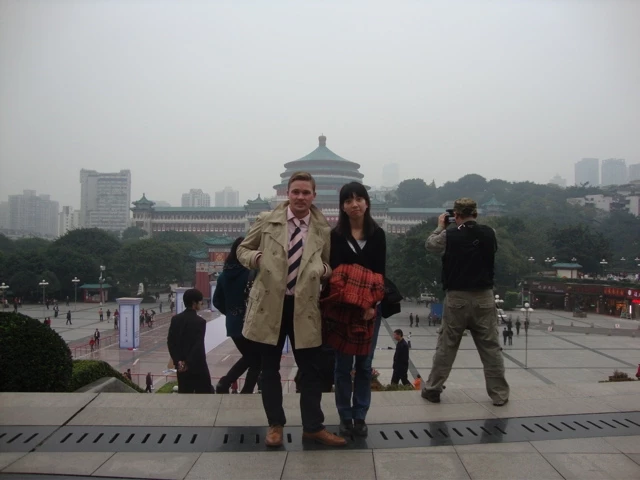
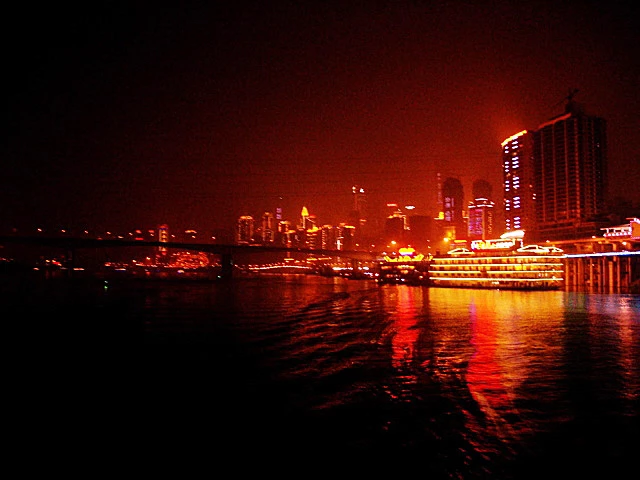
Alas, it’s my last night in China. I’m gazing upon the towering skyline of Chongqing with its ever suppressive fog cast neon rainbows across the Yangzi river. Leaving the busy streets behind, the smell of frying tofu and soot, I watch the city unfold from a packed pleasure cruiser.

The huge creative and commercial upheavals that China is undergoing tell of a transition from hard line politics to economic pragmatism. China and the world have much to gain from Chinese openness. I will leave with a fondness for the country and its people.

Lee Jones, Senior Technician, National Museum Cardiff

Respect the world as your self

The world can be your lodging

Love the world as your self

The world can be your trust.


See more Dazu images on Flickr, keep up to date with Dazu on Facebook and follow us on Twitter @museum_cardiff  #dazuwales

History in living technicolour

It's been a while since I last updated you about the goings on at St Teilo's Church. Things have been quietly ticking away over the winter months, with visitors from all over the world still curious to see the colourful gem in the woodlands at St Fagans.

Misrule

Time, then, for an update! We've got a year full of activities and live displays, all centered around the period between 1500-1700: a must-see for anyone interested in the lives of the Tudors and Stewarts, and the Civil War.

I'll direct you, first, to the St Fagans events list, where you can find out more about each individual event we're holding this year. All events are free of charge, and quite a few of them will be part of our exciting new Creu Hanes/Making History project.

We have been beavering away, working on a very special exhibition to launch the Making History project, and the events will be the cherry on top of a year packed with exciting, user-friendly developments at St Fagans: National History Museum. Some of the best-known historical performers and researchers in the UK will be here throughout the year to bring 1500-1700 to life, in a way that only St Fagans can.

Misrule

I will post a full list of Making History events in due course, but as a taster, I'll leave you with these images. At the top of the post are the Tudor Group, who will be living in Hendre'r Ywydd Uchaf longhouse over Easter, bringing St Teilo's and the surrounding woodland to life. Below, are the Towton Battle boys and their friend, who will be taking part in a gory, smelly and all-round 'orrible festival for children, called Misrule!. We also have Tudor fashion shows, cookery, punishments and much more, coming up. I may as well use this little corner of the web to let you know that there's something very special coming up for anyone interested in the Civil Wars. Keep your eye on this blog and I'll keep you in the loop!

Spring shoots!

Slowly, more and more schools are reporting shoot sightings! Cwm Glas Primary near Swansea have reported a few more shoots but still no sign at St. Mary's Catholic Primary School in Flint.

My daffodils are about 10cms tall now and my crocus have just popped through the soil. Even my mystery bulb is starting to grow and there are buds opening on my garden trees. A true sign that spring is coming!

Take a look at the pictures so you can be sure what bulbs you have growing. Send me some pictures of your shoots or how you collect your weather.

Watch your crocus very carefully now because once they start grow they can flower very quickly. As soon as they flower, send in your record so we can see on the map where the bulbs are opening first.

Competitions. Don't for get we have two fantastic competitions this year. The Daffodil Drawing Competition and the Win a trip competition. I've already recieved some very nice drawings from Bishops Childs Church in Wales School. I look forward to seeing some more from other schools soon...

Weather wise it's been very windy for most of us - so please check that your pots haven't fallen over.

Professor Plant


Happy Chinese New Year!

An article by me, published on the website Waleshome today:

Connecting Cultures

TODAY is the Chinese New Year, and we enter the year of the Rabbit.

Although we have been celebrating the Chinese New Year for a number of years at Amgueddfa Cymru –National Museum Wales, this year is extra special for us as it coincides with the unique exhibition that we are currently hosting at National Museum Cardiff – From Steep Hillsides: Ancient Rock Carvings from Dazu, China. This exhibition has been a coup, not only for Amgueddfa Cymru but also for Wales as these sculptures have never before been seen outside of China. We feel very privileged to have been chosen as the first ever venue to host them outside of their homeland and I’m confident that this free exhibition will be popular with our visitors.

If you have not yet had the opportunity to visit the exhibition, then it is difficult to convey in words just how magical they are. The carvings originate from the steep hillsides of the Dazu World Heritage site near Chongqing, which contain an exceptional series of rock carvings dating from the middle of the 7th century and developed between the 9th and the 13th centuries. The carvings comprise some 50,000 figures in total, and are remarkable for their aesthetic quality, their rich diversity of subject matter, both secular and religious, and the light that they shed on everyday life in China during this period. By a happy coincidence, a few years ago I was lucky enough to visit Dazu and see them for myself. It was an unique experience, and I remember being blown away by them. Obviously, we couldn’t bring all 50,000 figures to Wales, but this exhibition contains superb examples that have become detached from their original setting, along with accurate replicas of some of the most important sculptures still in situ and dramatic large-scale images, to give some idea of what it is like to visit these spectacular places.

Dazu is a real treasure house of Chinese art history and an important expression of Buddhism, Daoism and Confucianism, as well as a fascinating insight into Chinese daily life. I cannot overemphasise how remarkable these carvings are, and certainly, this exhibition would not be out of place at any world-class museum. A question that I have been asked since the exhibition opened has been why was Wales selected as a venue for this stunning exhibition rather than somewhere like the British Museum or the Victoria and Albert? The answer lies in the blossoming relationship between Wales and the Chongqing region in China, which has been led by the Welsh Assembly Government.

The origin of the relationship was a recommendation from Premier Wan Jiabao during his visit to Wales in 2000, which resulted in a Memorandum of Understanding between the Chongqing Municipal Government and the Welsh Assembly Government, agreeing to collaboration and co-operation in a number of areas, which was signed during First Minister for Wales Rhodri Morgan’s visit to Chongqing in March 2006. Since then Wales has welcomed a number of visitors from Chongqing and delegations from Wales have visited Chongqing. The Welsh Assembly Government also funds a schools project, managed by British Council, which links more than 50 Welsh schools with schools in Chongqing. There have been several exchange visits by the schools to Chongqing and to Wales.

This relationship has also extended into culture, and National Museum Wales has established a relationship with several cultural organisations in Chongqing. It is hoped that this exhibition is the first of many such exchanges, which will in future include sending some of our own collections to China. Not only will we be able to continue to showcase Chinese culture in Wales but we will also be able to showcase Wales to the world. Both countries are steeped in history and culture, and it is a fantastic opportunity for us to share our national stories.

Establishing strong links between Wales and China is obviously of great importance to the Welsh Assembly Government, and it was widely commented upon that Wales had been excluded from the itinerary of a recent Chinese trade delegation that visited the UK. But those critics should not despair. I believe that the Welsh Assembly Government is laying the foundations for a successful long term friendship between the two countries, not just a relationship based on business and economics. This exhibition is a small but not insignificant part of that burgeoning friendship which will hopefully evolve over time.