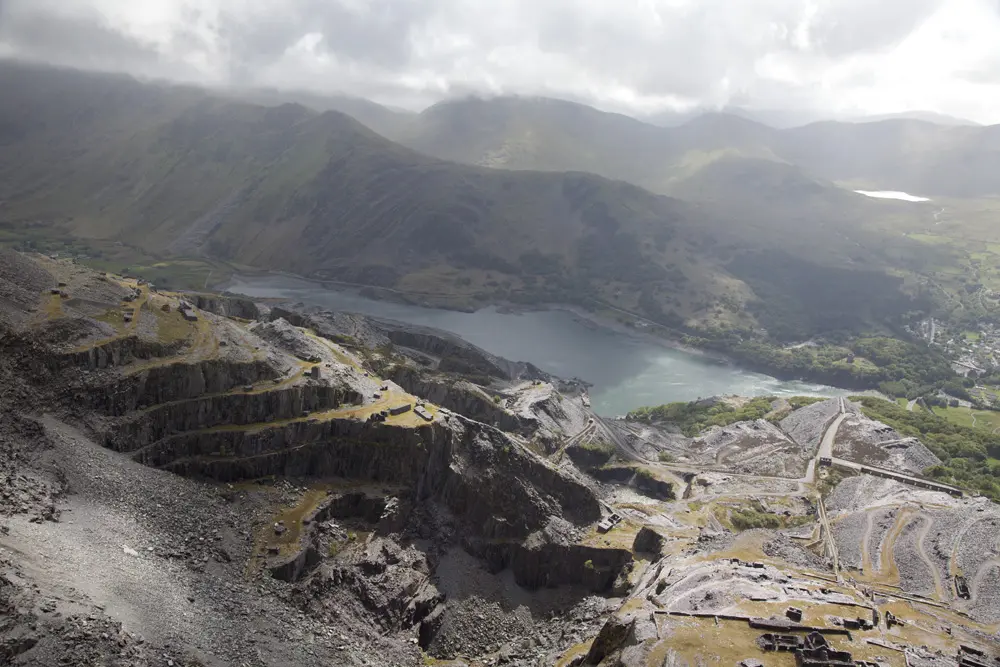
Working in partnership to help repair Una Chloe Ward, 26 January 2026 Una is undergoing essential repairs at Boston Lodge, the engineering works of the Ffestiniog & Welsh Highland Railways. In December and January, a group of volunteers spent a couple of weekends offering their time to help with the task! Una the engine was built in 1905 by the Hunslet company of Leeds and worked at Pen-yr-Orsedd until about 1960, being used mainly to haul wagons of rubble inside the Quarry. Sadly, she failed her safety tests a few years ago and has had to remain out of action since then - much to the disappointment of staff and visitors.This opportunity to help with the repairs has been a part of the collaboration between Ffestiniog & Welsh Highland Railways and the National Slate Museum, as we knew people would jump at the chance to be a part of Una’s story! Over the course of two weekends, several volunteers helped to sand, scrape, clean and prepare metalwork from Una, ready for repainting. This is an essential part of restoring Una and ensuring the steam engine is preserved for future generations, as fresh paint helps protect the metal. "The day I spent working on Una has led to me pursuing the opportunity to volunteer on other projects within the Northwest Wales Slate Heritage Site... I really enjoyed the day" - David, volunteerA big thank you to all those who came and contributed their time on cold winter weekends! It was wonderful to share Una’s story and see everyone’s passion shine through. As work continues with Una, we hope to offer more opportunities for people to engage with the journey! Join our mailing list to ensure you are kept up to date with the latest opportunities: Sign up to the mailing listThe project is funded by The National Lottery Heritage Fund, UK Government via Cyngor Gwynedd as part of the Llewyrch o'r Llechi project, Welsh Government including the Community Facilities Programme, the Wolfson Foundation and The Garfield Weston Foundation and other funders. We are extremely grateful to all our funders for their support.
An exciting new year at St Fagans Ellen Davies, 19 January 2026 January is traditionally a quiet time. The thrill of the festive season has passed, and we all wait eagerly for the end of winter, but it is also a time for new beginnings. At St Fagans, we’re starting the year off with a bang! Over the next few months, you’ll notice lots of activity around the museum while we deliver projects to improve the visitor experience including: Updating the play area Re-roofing St Fagans Castle Revamping Siop Losin and introducing a new range of products An exciting redesign of the shop in the main building Developing a new coffee shop in Gweithdy Renovating the toilet block near Rhyd-y-car Terrace Your visit will be different during this time, and some areas will be closed. We’ll keep you updated with developments as they happen. Thank you for your patience while we undertake this work - we promise you it’ll be worth it! If you’d like to stay up to date with the latest news, you can sign up to our newsletter or follow us on social media.
Winter work in the gardens at St Fagans Elin Barker, Garden Conservator , 9 January 2026 Winter might seem like a quiet time in the gardens, but there's still plenty happening behind the scenes. As the days grow shorter and colder, the gardening team gets to work preparing for the season ahead. Some of the busiest areas are the Castle gardens, where we prune roses and trees, mulch the beds, and cut back the hedges.The castle itself is surrounded by tall, thick yew hedges. These create ‘garden rooms’, small, enclosed spaces with different themes, hidden from one another. This style was especially popular in the Edwardian period. Each space had its own character, and the hedges and walls created a sense of surprise and discovery around every corner.In the past, these hedges were trimmed entirely by hand but thankfully, we now use electric hedge cutters too!We also work on the avenue of lime trees leading to the castle, which were planted in 1901. These are pollarded - a special way of pruning that involves cutting off the upper branches while keeping the main trunk. It’s hard work, but it helps maintain their striking shape and keeps the trees looking much as they would have done over the past century.In the cottage gardens, we begin putting the gardens to bed for winter. This means cutting back spent plants, tidying the beds, and digging over the soil, much to the delight of the local robins, who follow us closely in the hope of finding a worm! We also add well-rotted manure to enrich the soil, helping us grow healthy, strong crops in the year ahead.Another important job is harvesting materials for our Christmas wreaths. Each year, we make traditional wreaths to decorate the doors of our historic houses (you can read more about this in our online article from last Christmas!). To do this, we use natural materials gathered from around the museum grounds.We coppice hazel and willow to make strong, flexible bases for the wreaths. Coppicing is a traditional and sustainable woodland practice, where young stems are cut back to ground level so that new shoots can grow. It was once a common method in Welsh gardens and woodlands. We also use other bendy plants like wisteria and crimson glory vine, which has beautiful curly tendrils that look lovely emerging from a wreath.Even though the flowers have faded, there’s still plenty of magic in the gardens. Frost glitters on the seed heads and stems we’ve left standing to provide food and shelter for wildlife. Bare branches dusted with lichen create beautiful patterns against the winter sky. Red berries glow in the low sunlight. And if you’re lucky, you might even catch sight of a kingfisher swooping low over the ponds through the morning mist.There’s still so much to see and enjoy as we head into winter in the St Fagans gardens.
Archaeologists at National Slate Museum? Chloe Ward, 5 January 2026 I know, archaeology is not something you would automatically associate with the Slate Museum – it’s usually geology! But in December, three volunteers joined us to take part with the archaeological surveying required for the enabling works of the redevelopment project at National Slate Museum, Llanberis.Archaeology Wales were commissioned to survey and record two features at the Gilfach Ddu workshops, where the museum is based. They were recording a post-1970s staircase in the Foundry, and original railway tracks outside in the yard. This surveying is required due to the Gilfach Ddu workshops being a listed building, and to ensure anything changed during the redevelopment project is recorded. The staircase is being replaced with a more accessible and safer design, whereas the railway tracks will be replaced once drainage has been installed beneath them. Three volunteers, Nicola, Donna and Shay, joined buildings archaeologist Emily to draw and photograph these features, creating a permanent record for the future. This provided volunteers with a good base of knowledge of buildings archaeology and how to survey features by drawing and photographing. It also gave a great opportunity to learn about the Slate Museum redevelopment and the improvements being made. DIOLCH Nicola, Donna a Shay! Sign up to the mailing list to hear about any future volunteering opportunities with the Slate Museum:Sign up to the mailing listThe project is funded by The National Lottery Heritage Fund, UK Government via Cyngor Gwynedd as part of the Llewyrch o'r Llechi project, Welsh Government including the Community Facilities Programme, the Wolfson Foundation and The Garfield Weston Foundation and other funders. We are extremely grateful to all our funders for their support.
Lighting the Way: The Next Chapter of the Weston Hall Dafydd Newton-Evans, 19 December 2025 Change is coming to the National Waterfront Museum. You may have already notice small changes around the museum. But the Weston, Hall, the museum’s vast modern heart is about to be reimagined as the beating centre of a bold new story about Wales and its ever-evolving relationship with the sea. Wales’s maritime heritage is so much more than ropes, anchors, and model ships. Therefore, our vision for the Weston Hall is far more dynamic – a space that aims to inspire, surprise and spark conversation. A place where the stories of people, trade, migration, innovation, culture and sanctuary meet at the water’s edge.A Beacon RebornOne of the first objects that will capture your eye as you enter the museum will be a magnificent lighthouse optic, dating back to the mid 19th century.For decades, this great glass giant has rested in storage, its prisms silent and still. Now it will rise again, radiant and alive, transforming into a symbol of hope and renewal. Each day, visitors will be able to watch as the intricate mechanism is wound – a ritual that will power the optic to spin and shine. It won’t just illuminate the hall with its light, but it will also illuminate with meaning. The optic will represent the lives spent at sea and the safety Welsh lighthouses provided. Here at the National Waterfront Museum, it will also stand as a beacon of sanctuary, reflecting the museum’s status as a Museum of Sanctuary and our commitment to being a welcoming space for everyone. From this point, visitors will be invited to journey deeper, into the heart of Wales’s maritime heritage and the people whose lives it shaped. A Journey Along the RailsStepping further into the Weston Hall, and you’ll encounter something unexpected: a restored Rhymney Railway covered van, and the only surviving example from over 300 covered vans owned by this Welsh railway company. It will once again be poised on the original tracks that still cut through the museum floor. To bring the story of our historic home alive, the railway van will be used to interpret the trade handle by the warehouse, and to provide context for the colonnade and its integral railway tracks set into the floor. When it takes its place in the Weston Hall, it will stand as a reminder that Wales’s connection with the sea doesn’t start at the shoreline, but with the industry and innovation that dominated the Welsh landscape and communities from North to South. Art on the HorizonFrom the old to the new, our exciting art commission will soon rise into the air, to be unveiled in early spring 2026. Suspended from the roof of the Weston Hall, this remarkable piece by Jacqui Symons will interpret Wales’s connection to the sea through creativity and emotion. It will challenge visitors to look at familiar waters with new eyes.Jacqui Symons was the successful artist from over 30 submissions of inspirational and creative concepts and ideas, and we cannot wait to see the vision transform from paper to reality. Shaping the Story TogetherThe transformation of the Weston Hall marks the beginning of a new voyage for the National Waterfront Museum. So, make sure you join us on the journey, watch the carriage roll into place, be there when the waves of creativity rise and discover the stories of the sea and the people shaped by its tides.