Departing Director General of Amgueddfa Cymru - National Museum Wales reflects on the future of culture in Wales

Michael Houlihan, the departing Director General of Amgueddfa Cymru – National Museum Wales, reflected on his time as head of the organization by delivering a lecture at National Museum Cardiff on Wednesday 14 July 2010.

After seven years in this key role, Mr Houlihan will be leaving in the coming weeks to take up his new post as Chief Executive of the Museum of New Zealand Te Papa Tongarewa. Amgueddfa Cymru – National Museum Wales announced earlier this week that David Anderson, Director of Learning and Interpretation at the Victoria and Albert Museum, has been appointed as his replacement.

To read the lecture in its entirety, please click here
Fossil Reptile from South Wales

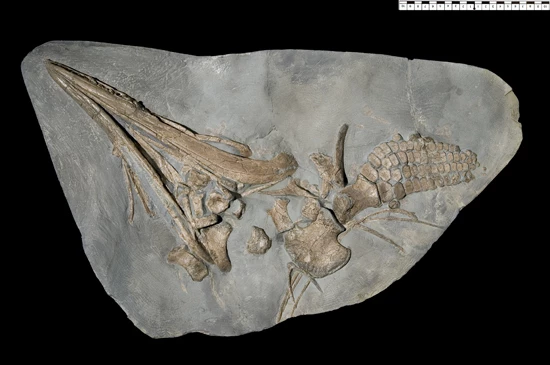
The remains of the ichthyosaur after preparation for display

The remains of the ichthyosaur after preparation for display

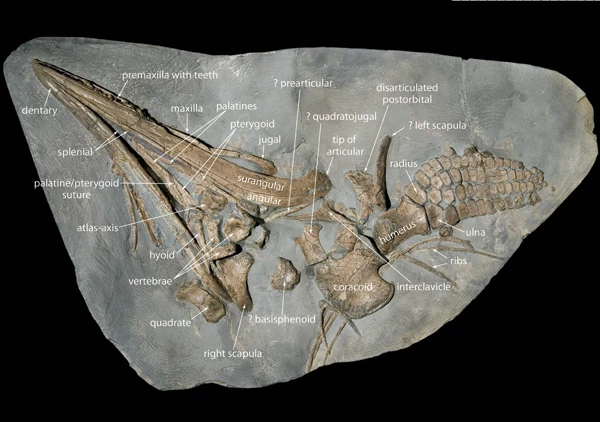
Specimen complete with labels showing bone names

Specimen complete with labels showing bone names

In 2009, the Geology Department at Amgueddfa Cymru acquired a new Welsh ichthyosaur skeleton found preserved in the cliffs on the South Wales coast.

Two hundred million years ago, in the early Jurassic period, south east Wales was covered by a warm shallow sea, teeming with life. One of the major predators within these waters was the ichthyosaur, an extinct marine reptile that looked similar to dolphins. These animals could reach over 15m in length, and preyed upon small fish and other marine animals such as ammonites and belemnites.

The fossil was discovered several years ago preserved in the cliffs at Penarth, near Cardiff and acquired by Amgueddfa Cymru for public display. To prepare the specimen for display, hours of delicate, skilled work had to be undertaken to carefully remove the rock covering the preserved reptile bones.

Rare fossils

Individual ichthyosaur bones and teeth are relatively common fossils in South Wales, Dorset, and Somerset, as well as parts of the Midlands and Yorkshire, but complete or partially complete skeletons are rarer. The specimen discovered at Penarth includes the underside of the head and one of its paddle-like limbs, as well as part of the shoulder blade and several ribs.

After it died the animal would have been buried in the sediment on the sea bed, preventing it from being completely scavenged by other animals.

This skeleton will help in our understanding of Jurassic life in Wales. To find out more about ichthyosaurs and life in the Jurassic period visit the Evolution of Wales exhibition at the National Museum Cardiff.

Spring Bulb for Schools

Investigation Results 2006-2010

The ‘Spring Bulbs for Schools’ project allows 1000s of schools scientists to work with Amgueddfa Cymru-National Museum Wales to investigate and understand climate change.

Since October 2005, school scientists across Wales have been keeping weather records and noting when their flowers open, as part of a long-term study looking at the effects of temperature on spring bulbs.

See Professor Plant's reports attached or download the spreadsheet to study the trends for yourself!

Many Thanks

Professor Plant

Art Club

Thanks to everyone who came to our brand new art club. We were looking at nature and printmaking and made some beautiful pictures with potato prints, leaf prints and leaf rubbings.

Our next art club is on saturday 4th September from 2pm until 3.15pm, places must be booked in advance so please phone our education department on 029 2057 3424 as soon as possible.

Art Club allows families to spend more time exploring different art and craft techniques, the September art club will continue to look at nature, but i haven't decided exactly what we'll be doing yet!

Meanwhile, our regular drop-in summer art cart sessions will be running throughout August... more information to come.

Bioblitz at Bishop's Wood Local Nature Reserve

Ben Rowson reports on a recent Bioblitz day:

On 22 May, "Bioblitz" species recording events were taking place nationwide. I led a snail and slug search as part of Swansea City Council’s Bioblitz at Bishop’s Wood Local Nature Reserve (Caswell Bay, Gower). We found several species, a few of which I’m now checking the identity of at the Museum, although there must be many others present in this old woodland. I suspect the dry weather is to blame for the slim pickings, showing the importance of timing and return visits. Always nice to see the "land winkle" Pomatias elegans though, and several people were surprised to discover just how tiny the adult "dwarf snail" Punctum pygmaeum is. At 1.5 millimetres, more than 10,000 would fit in a matchbox!