They say Rock 'n' Roll is hard on the knees...

... if that's the case, 'they' should try being a Learning Interpreter of Late Medieval History!

No, but seriously: we've had a blast (if that's the right word) up at St Teilo's Church this week, and we haven't finished yet! We'll be performing a lost play, called Y Gwr Cadarn, tomorrow, at 11.30 and 14.00. Anyway, the re-enactment of the Tudor service went well, with participants from all over the world taking part.

The service was 'iterated' (i.e. the sacred words and songs recited) three times, and was also filmed. Keep an eye on this 'ere blog for video updates in the very near future.

Yesterday was particularly special, as members of the public attended the service - some from the area where the church was originally built, near Pontarddulais. Others were practicing Catholics, who, while familiar with some of the rites, were surprised at how moving an experience it was, especially in the presence of the murals.

I was in my Tudor costume, not for show, but to see how comfortable it would be to participate in a Tudor service in an appropriate costume (i.e. one with a wooden corset). There was at least 20 minutes of prostrate kneeling - that's on your knees, with your nose as close to the floor as possible - in the ritual. I felt that I should enter into the spirit of things (no pun intended) to get the most out of the experience. It was, to my surprise, much more comfortable in Tudor costume than in my civvies. Margery Kempe, a woman whose devotional practices were recorded in the 15th Century, describes how you can roll up the front of your dress to create a kneeling cushion. It worked to a degree, but I'm still nursing bruises!

Shortly after the service finished, we were beseiged by a pensioners' trip from South East London. The solemn atmosphere created by the chanting and kneeling was replaced by an impromptu rendition of 'We'll keep a welcome in the hillside'. It was very, very surreal and I may have got a bit too excited - I caught it all on camera, so maybe I'll try making a mashup of both films!

In all seriousness though, The 'Reconciliation of Penitents' was a very moving service, which served in the past to welcome sinners who had been excluded from the community back into the Church. All the clergy, students, singers, academics and anthropologists involved made a huge effort, and I hope they learned as much as I did from the experience. After a short break from all things Tudor (aka a trip to Barry Island), we will be discussing how we can use the footage and audio of the service. What would you like to see?

When tea-drinking was a fashionable, expensive habit

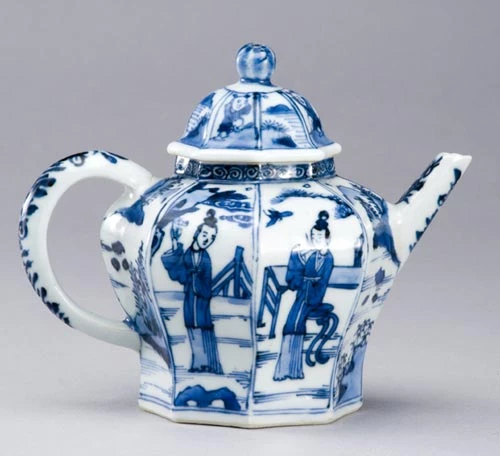
Chinese porcelain teapot, c. 1700-20

Figure 1: Chinese porcelain teapot, c. 1700-20

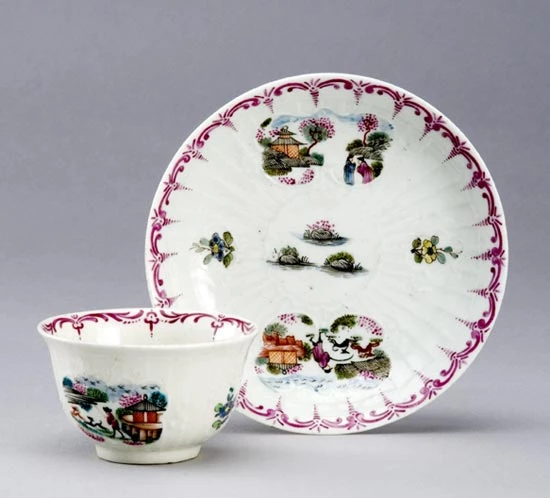
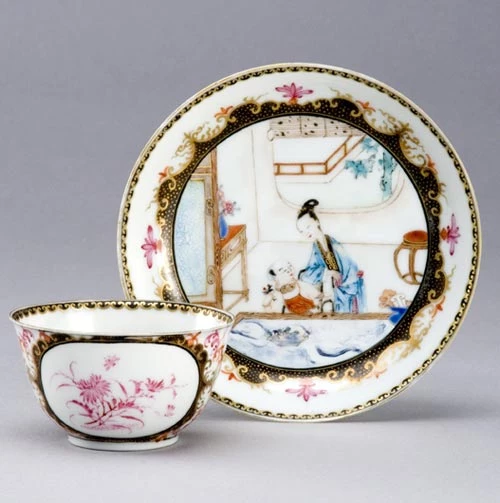
Chinese tea bowl and saucer, c. 1760-70

Figure 2: Chinese tea bowl and saucer, c. 1760-70

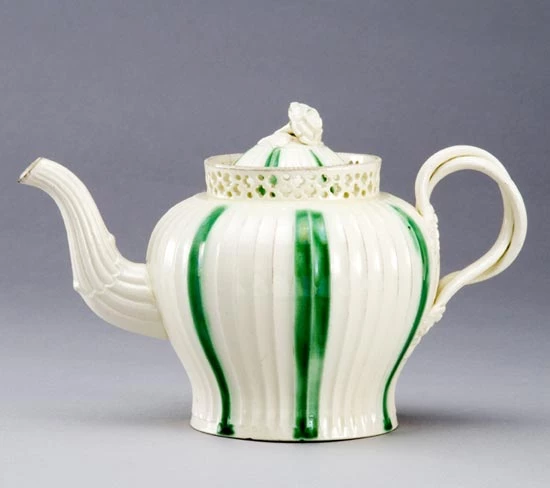
Creamware teapot, Leeds Pottery, c. 1775

Figure 3: Creamware teapot, Leeds Pottery, c. 1775

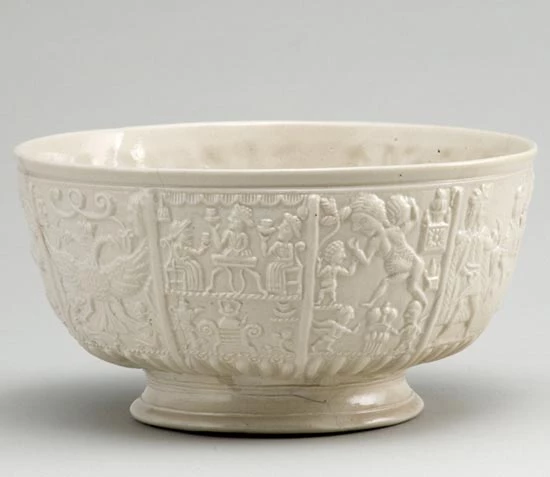
Slop bowl, Staffordshire, 1740s

Figure 4: Slop bowl, Staffordshire, 1740s

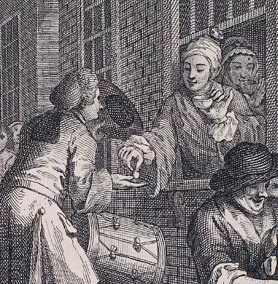
Detail of William Hogarth, 'Industry and Idleness: The Industrious 'Prentice Married', 1747

Figure 5: Detail of William Hogarth, 'Industry and Idleness: The Industrious 'Prentice Married', 1747

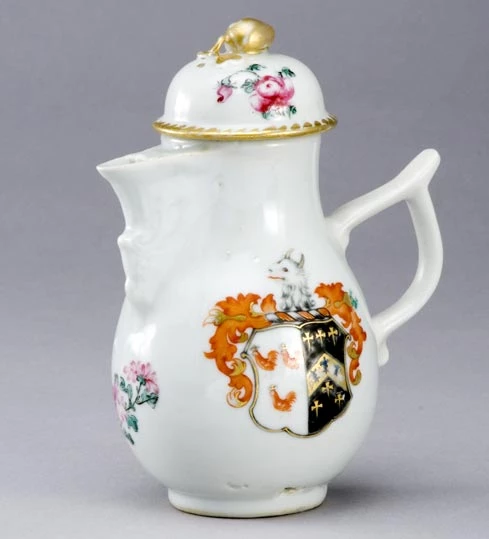
Cream jug, Chinese porcelain, c. 1771.

Figure 6: Cream jug, Chinese porcelain, c. 1771. Part of a tea service made for Penry Williams (1714-1781) of Penpont, Brecon

Porcelain tea bowl and saucer, Worcester, 1755-8

Figure 7: Porcelain tea bowl and saucer, Worcester, 1755-8

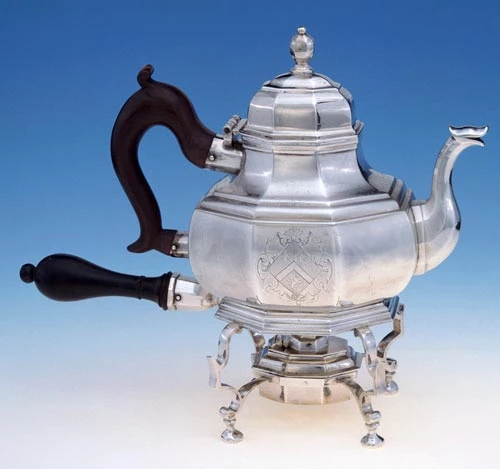
Tea kettle, stand and spirit lamp by Robert Watts, 1711-12.

Figure 8: Tea kettle, stand and spirit lamp by Robert Watts, 1711-12.

In the eighteenth century tea-drinking was a highly fashionable activity for the wealthy upper classes.

Tea was first imported into Britain from China in the mid-seventeenth century by the East India Company. At first it was considered as something of a novelty and was promoted for its health-giving properties.

Green tea

The most common tea was bohea, a type of black tea, but green tea was also popular. At first it was drunk weak and without milk, after the Chinese tradition. Later, milk or cream and sugar were added.

Teapots and (locked) teachests

Only the wealthy could afford tea. It was kept in locked teachests that were controlled by the lady of the house. Domestic servants received a tea allowance as part of their wages.

The eighteenth century saw an explosion in tea-related consumer goods, and there are many fine examples in the applied art collection at Amgueddfa Cymru. At first these were made from very expensive materials, particularly imported Chinese porcelain and silver (figs 1 & 2). Later, the production of cheaper ceramics and silver plate allowed the middle classes to follow the fashions of the very wealthy (fig. 3).

Drinking tea became more commonplace in the late eighteenth century. The abolition of import duties in 1784 meant it became recognized as an important part of the diet for the poor.

Taking afternoon tea

Entertaining friends by hosting afternoon tea was an important part of women's lives. The selection of objects for the tea table was crucial. Visiting England in 1784, the Duc de Rochefoucauld commented that tea drinking provided "the rich with an opportunity to display their magnificence in the matter of tea-pots, cups and so on" (cited in Clifford 1999: 161).

Guests were expected to conform to certain modes of behaviour and good manners, which included sticking to polite topics of conversation such as the arts, theatre and music.

Tea bowls

For most of the eighteenth century tea was drunk in the Chinese style, from a bowl without a handle. These were also known as "tea dishes" or "basons". A wonderful slop bowl, which was used at the table for rinsing dregs from used tea bowls, depicts three women enjoying tea together (fig. 4). The bowls are usually shown being held with the fingers at the rim and thumb under the base (fig. 5).

Chinese exports

Chinese porcelain teapots and bowls were exported along with the tea. They were prized for their translucency and white surface and were collected fanatically.

Chinese porcelain manufacturers began to make tea-related objects purely for the European market, such as teapot stands, milk jugs, sugar basins, spoon trays and slop bowls (figure 6). Once they had uncovered the secrets of producing porcelain, Chinese teawares were widely reproduced by Continental and English factories (fig. 7).

Kettles and urns

Teapots were filled by hot-water kettles on grand stands or smaller table-top versions, with burners to keep the water hot (fig. 8). The kettles were eventually replaced in about the 1760s by tea urns heated by charcoal burners and, from the 1770s, with heated iron bars that slotted into a "sleeve" inside the urn (fig. 9). These "tea kitchens" or "tea fountains" allowed people to help themselves at less formal gatherings such as breakfast. The most elaborate examples also had additional urns for coffee and hot water.

Moral and physical decline

Eighteenth-century attitudes towards tea-drinking were quite mixed and contradictory. The obsessive collection of teawares was criticised by social commentators, with women being the most frequent target. Furthermore, afternoon tea was often claimed to be no more than an opportunity for women to spread malicious gossip or boast about themselves. A satirical poem, The Tea-Table, by 'Moses Oldfashion' was published in Mist's Weekly Journal in 1722:

"...Chief Seat of Slander! Ever there we see
Thick scandal circulate with right Bohea.
There, source of black'ning Falshoods! Mint of Lies!
Each Dame th'Improvements of her Talent tries,
And at each Sip a Lady's Honour dies".

Although at first tea was thought to have many health benefits, some commentators began to fear its popularity could cause physical decline. In 1753 Mr Andree described the dangers of "intemperate", excessive tea drinking, describing it as "pernicious", worsening epilepsy and causing hysteric fits. He also tells of a young girl who had been eating tea for a number of weeks, causing her to suffer facial palsy and convulsions (fig. 10).

Thankfully, these objections did not diminish the British public's desire for tea and it has remained an important part of daily life. Although tea-drinking today is generally a far less formal affair than during the eighteenth century, it continues to be enjoyed and shared by millions of people everyday.

References

Andree, John. Cases of the epilepsy, Hysteric Fits, and St. Vitus's Dance, with the process of cure: interspersed with practical observations. To which are added, cases of the bite of a mad dog, and a method that has been found successful. The second edition, with emendations and additions in the introduction, and some new cases and Inspections of Dead Bodies (1753). London: printed for W. Meadows and J. Clarke, in Cornhill. Eighteenth Century Collections Online. Web. 12 Jan 2010. http://galenet.galegroup.com/servlet/ECCO

Clifford, Helen. 'A commerce with things: the value of precious metalwork in early modern England', in M. Berg and H. Clifford (eds.) (1999) Consumers and Luxury: Consumer Culture in Europe 1650-1850, pp. 147-169. Manchester: Manchester University Press.

Oldfashion, Moses. 'The Tea-Table', in (author unknown) A collection of miscellany letters, selected out of Mist's Weekly Journal (1722): 224-227. London: printed by N. Mist, in Great Carter-Lane. Eighteenth Century Collections Online. Web. 12 Jan 2010. http://galenet.galegroup.com/servlet/ECCO

Article author: Rachel Conroy. Assistant Curator - Applied Art

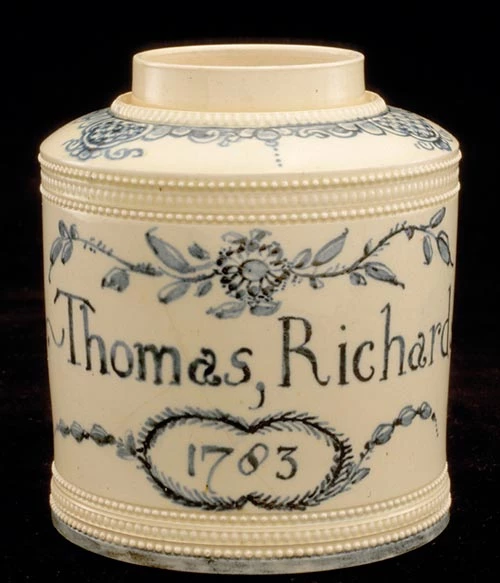
Tea jar or canister, Swansea, 1783

Figure 10: Tea jar or canister, Swansea, 1783

Tea jar or canister, Swansea, 1783

Figure 10: Tea jar or canister, Swansea, 1783

Art Club

Sun prints! They are such fun to make and really beautiful too. We'll be making some on the 3rd July at our new art club

The chicks are flying!

Well, it's all been happening in the last few weeks!  

As you know from the last post, we lost one of the four original chicks around 23 May. On Saturday 29 May it was a rainy day and so we limited the event to the Museum. Then, at about 12.20 a lady rushed into the Museum to say that some people outside near City Hall had found a chick on the pavement and were "kicking" it to make it fly off. James and I rushed outside to see what was going on and there was a chick on the road, surrounded by people. It obviously had jumped the nest a bit too early, as it couldn't fly yet.  

So we contacted Adrian Williams, local falconer who we're consulting with, who came down to check it over. He said it was fine, just a bit underweight. James and Adrian took the chick back to City Hall roof where the chick was placed just under the clock tower. By the bank holiday Monday, the bird had made it back onto the tower, but not to the nest. 

In the week or two after we have only ever seen two juvenile birds at one time, so it looks as if the third one did not get enough food from its parents and was out-competed by its siblings. Sad news. 

However, the remaining two are now flying! They're coming up against their own challenges as the gulls try to mob them as they practice their flying skills, but it doesn't seem to be deterring them from making significant progress. They're beginning to look quite adept, so do come down and see us soon, as we'll be seeing some aerial acrobatics as the young birds get taught their hunting skills by the adults.  

Sarah Lewis

Latin Service at St Teilo's Church: An Invitation

A medieval Latin service will be held at St Teilo's Church next week.
Numbers are very limited so let me start off by encouraging anyone interested in attending to ring our education booking office on (029) 20 57 3424 to reserve a place. It will take place on the 24th of June, at 11.00.

It will be the first Latin service to take place in St Teilo's Church since it was moved 50 miles down the M4, from near Pontarddulais, to the Museum. Part of a wider conference exploring worship in the Middle Ages, the service will be open to the public, but booking is absolutely essential. The conference is a meeting of experts from around the world, who study the nitty-gritty of everyday life, Latin texts, architecture, archaeology and visual history, to build a fuller picture of what life was like over 500 years ago. We will be testing their theories out, and you are welcome to come and help us!

In a way, the performance will help us at the museum to see whether our reconstruction of the Church - a lengthy process of research, archaeology and good ol' Vitamin Compromise - is right. We'll also be able to help researchers to see whether current theories about the performance of liturgy actually work when you try them out. We've yet to find a real Tudor priest we can phone to check these things out: so the only way to learn, really, is by trial and error. That's until I find a flux capacitor in the collection somewhere, obviously.