Thousands of young scientists study climate change

National Museum Wales is working with 3,600 young scientists to investigate and understand climate change.

Over the past few weeks bulbs and pots have been delivered to schools and home educators all across Wales - ready for the big planting day on the 20th October. Some schools have sent in some lovely pictures and reported on how excited the children are to be taking part.

From now until the end of March 2010 each young scientist will be recording the weather and flowering dates of their Daffodil and Crocus bulbs as part or a long-term study looking at the effects of temperature changes on spring bulbs.

The study started in 2005, and will hopefully continue for many years to come. To see the results so far or to sign up for next year please visit

Spring Bulbs for Schools

Each pupil will work through Professor Plant's tasks to be awarded a Super Scientist Certificate and the most dedicated school will win a trip to the Really Welsh Daffodil Farm and Kenfig Nature Reserve. The Really Welsh company kindly donated all the daffodils for this experiment - which are grown in good Welsh soil at Kenfig, near Bridgend.

Watch this blog to see some of the schools reports & observations - or watch the picture diary in the spring.

If you are taking part and would like to send Professor Plant a question - then please get in touch. Professor Plant would love to hear from you.

A 'must see'

Rembrandt's painting of Catrina Hooghsaet has gone on display at National Museum Cardiff today until the 21st of March next year. We're delighted to have it here, and are very grateful for the loan from Penrhyn Castle in North Wales. It's a special opportunity for the museum, and I'm sure it will be a popular attraction.

First Minister Rhodri Morgan has described it as a real coup for Cardiff, stating: "Rembrandt is a towering figure in the history of art. Next to having the Mona Lisa on loan, I cannot think of any better ‘must see' attraction that we could possibly have in the National Museum." Well, that's one satisfied visitor. Make sure you come along to see it for yourself!

National Poetry Day 2009 at Big Pit

On National Poetry Day in October 2009, Big Pit’s poet-in-residence Mike Jenkins encouraged visitors to contribute to a ‘BIG Big Pit poem’. The theme of National Poetry Day was ‘Heroes and Heroines,’ and contributors wrote about the heroic people who worked in difficult conditions and jobs in coal mines.

Contributions came from 3 schools: Goetre Junior School, Merthyr, Queen Street Primary School, Abertillery and Oldbury Wells High School in Shropshire. Mike awarded a signed copy of his children’s poetry book ‘Poems for Underage Thinkers’ to the junior classes for their inspired efforts.

Adult poets were:

Mike Tanner from Blaenavon, Justin Hamilton from Kilbirnie, Derek Edmondson from Woodford, and Mr and Mrs Gilbert from Little Witcombe, as well as Big Pit staff.

Find out more about Mike’s award-winning poetry and prose by visiting his website: www.mikejenkins.net.

BIG BIG PIT POEM
A communal poem created at Big Pit on National Poetry Day 2009

Underground what will we see?
Underground is dangerous
Ponies hauled dram after dram 
Thrusters and hurriers pushing tram after tram 
Pickers hitting as hard as they can 
Children crying and crying.
The canary was a warning.
Lots of water on the ground
It was leaking into the pit 
Getting deeper and deeper.
It was dark like night when the lights went out,
It was scary. Slippery like water.
The cage went fast then slow. 
Down the pit there were tracks.
Struggling by the light of lamps. 
The axes and sledgehammers were dirty as muddy water.
Some were very old.

The men were heroes because they worked twelve hard hours.
The fireman who risked himself to save his workmate’s face,
After a fall, threw himself down to protect his friend.
The horses were heroes because they saved people.
Masks protected the ponies’ faces, some of the ponies died.
Seventy two worked down the mine.
Many of them became blind.
The miner had to pull the drams. 
The girls were heroines because they helped.
Dad and son worked side by side 
Deprived of sunlight from day to day.
Some men died.
Some men cried. 
Coughing up black dust 
Working like navvies from dawn till dusk.
Mothers sad when there was an explosion.
A message home when there’s no hope left
Scratched into a bottle.
Day and night death always occurred.

But everyone pulled together
Washing away the day’s toil. 
A hot bath, joke and a laugh.
To the hole in the wall, have a fag
Desperate for that first drag.

Figures hunched against the driving rain
Thirsting for the hoppy nectar 
To soothe away the pain.

Halloween Art Cart

The Art Cart will be running from Saturday 24th until Friday 30th October. Come and make something creepy! All activities free and run from 11 until 1 and 2 until 4.

Sir William Reardon Smith (1856-1935)

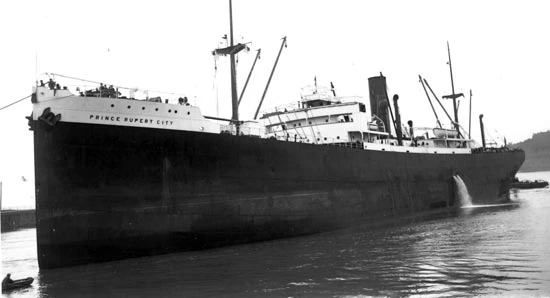
black and white photo of the tramp steamer <em>Prince Rupert City</em>

The tramp steamer Prince Rupert City, a typical Reardon Smith vessel of the inter-war years.

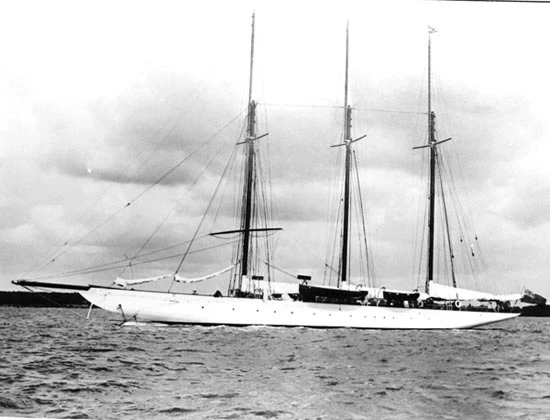
The sail training yacht Margherita

The sail training yacht Margherita, on which Reardon Smith apprentices gained experience of seafaring under sail.

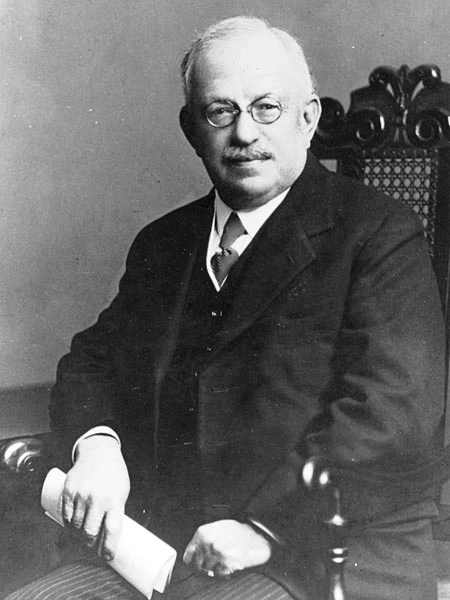
Sir William Reardon Smith, Bart., 1856-1935.

Sir William Reardon Smith, Bart., 1856-1935.

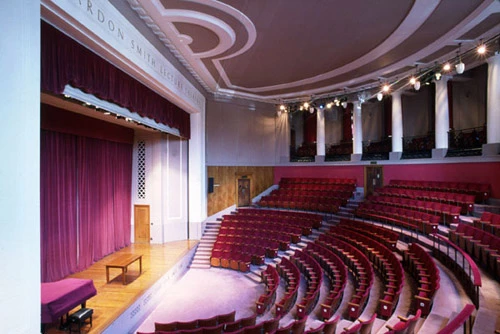
The Reardon Smith lecture theatre at the National Museum

The Reardon Smith lecture theatre at the National Museum Cardiff, inaugurated in 1932.

Most museums can acknowledge a great benefactor without whom their histories would have been very different; in the case of Amgueddfa Cymru, that person was Sir William Reardon Smith.

During his terms as the Museum's treasurer (1925-28) and president (1928-32), Sir William Reardon Smith utterly transformed the Museum's faltering finances and oversaw the completion of National Museum Cardiff's splendid east wing, which forms an integral part of Cardiff's unique civic centre.

Reardon Smith was not Welsh by birth; he was born to a seafaring family in the north Devon coastal village of Appledore on 7 August 1856.

Cabin boy

When Reardon Smith was 3 his father died when his schooner sank in a storm off Burry Port. Nevertheless, by the time he had reached his early teens he was a cabin boy on similar local vessels engaged in the coasting trades of the Bristol Channel. He later served on sailing ships carrying railway lines to the USA and copper ore Chile.

Captain Reardon Smith

Aged just 22, he served as captain of a number of sailing ships and steamers, mostly owned by the famous Scottish shipping company Hugh Hogarth of Glasgow, until he left the sea in 1900 and moved to Cardiff with his wife and family.

In 1905 he embarked on what would become his life's work when he promoted a company to acquire and operate a new steamship, the City of Cardiff. The venture prospered, and by the outbreak of the First World War he owned 9 tramp steamers, all working in the export of coal from south Wales.

Despite a number of losses to submarines during the war, Reardon Smith continued to expand his fleet, and by 1930 he controlled no fewer than 35 ships.

Sir William

Sir William was created a baronet in 1920, and became increasingly involved in philanthropic activities. In 1921 he established the Reardon Smith Nautical School; four years later he acquired a large yacht, the Margherita, to serve both as training vessel and family yacht.

He gave generously to the Cardiff Royal Infirmary and towards the cost of a new hospital at Bideford, and also endowed the chair of geography at Exeter University, which still bears his name.

However, the object of his greatest generosity was the National Museum of Wales. Between 1915 and 1935 he and his wife Lady Ellen donated something in the region of £150,000.

In addition to his personal donations, he also worked tirelessly to raise funds from elsewhere. In recognition, the new lecture theatre built as part of the Museum's east wing in 1932 was named the Reardon Smith Lecture Theatre.

Sir William died on 23 December 1935 after a brief illness. His success as a shipowner was equalled only by his exceptional generosity. By preferring to spend his fortune on improving the lives of others rather than indulging himself, he ensured that many present-day inhabitants of both south Wales and the West Country still owe him a debt of gratitude.

Article by: David Jenkins, Senior Curator of Industry