Goddess update...

Dibyendu Dey and Purnendu Dey have been working hard in Oriel 1 and a great deal has been accomplished in the last couple of days. The hay structures of Durga (along with the lion she is sitting on and the buffalo demon), Ganesh, Lakshmi, Sarasvati and Kartikeya are pretty much complete and Sarasvati even has the beginnings of her musical instrument! ('m not sure at the moment if it's a sitar or a veena, but will let you know!)


Visitors to the gallery have been enjoying watching the artists at work and Anuradha Roma Choudhury, the interpreter for the project, is on hand to chat to everyone about the work and the iconography behind it. Make sure you come by and have a look!


The artist Dibyendu Dey weaving wire and hay to form a head

The artist Dibyendu Dey weaving wire and hay to form a head


Kartikeya


Lion


The Goddess Durga, her lion, and the buffalo demon formed from straw and wire

The Goddess Durga, her lion, and the buffalo demon formed from straw and wire


Ganesh


Ganesh


ganesh head (detail)

Ganesha

I have now been informed that 'Ganesh' should be spelt with 'Ganesha', so please accept my apologies!


Ganesha has four arms and the head of an elephant, with those big elephant ears enabling him to hear the needs of his people. The multiple arms demonstrate Ganesha's immense power and ability to perform several acts at the same time. This deity brings good luck and clears all obstacles and is therefore worshipped before important events and rituals.


If you look at the picture below you will see that Dibyendu Dey and Purnendu Dey have now covered the straw structure with clay and the image of Ganesha can be clearly seen. He is looking truly impressive!


More Goddess!

Here are some more photos of the work so far!

Ganesha's body formed by tying hay to a wire frame

Ganesha's body formed by tying hay to a wire frame

Making a Goddess

For the next two weeks in Oriel 1 in St Fagans we are thrilled that Purnendu Dey and Dibyendu Dey (two artists from India) will be creating an image of the Hindu Goddess Durga. I’ll be keeping you up to date of the making of a Goddess with photographs and a daily report, but, of course, it’s always better to come and see the work for yourselves. The artists are working all day at the museum, but there will be opportunity for you to talk to them and the interpreter (and get a closer look) between 11.30 and 12.30 and 2.00 and 3.00 every day. For more information please have a look at the museum website.

Purnendu Dey and Dibyendu Dey only started work yesterday, so it’s all been preparatory work so far: the wooden backdrops have been built and paper is being soaked. Have a look at the photos below to see what’s happened so far!

The artists go shopping for supplies
measuring the wood for the backdrops
papier mache

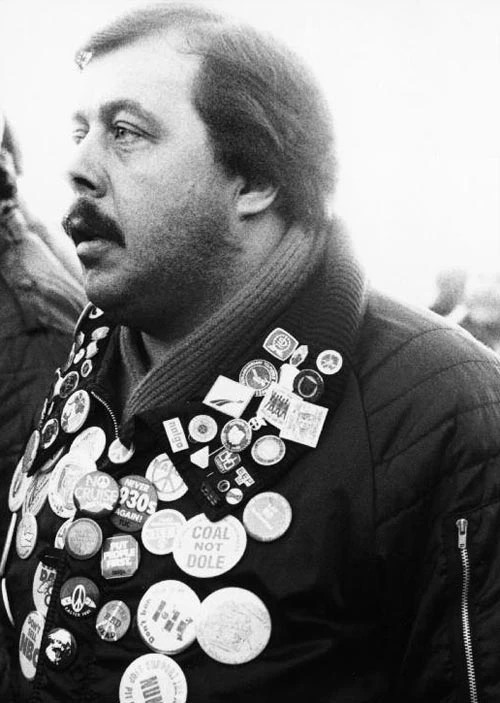
The Miners Strike of 1984

National Coal Board

On 1 March 1984 the National Coal Board announced that it planned to close 20 coal mines with the loss of 20,000 jobs. The year-long strike that followed changed the political, economic and social history of Wales forever.

"The miners in south Wales are saying — we are not accepting the dereliction of our mining valleys, we are not allowing our children to go immediately from school into the dole queue — it is time we fought!"

Emlyn Williams, President, NUM, South Wales Area

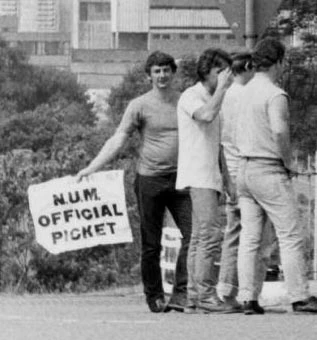
Picketing and demonstrations

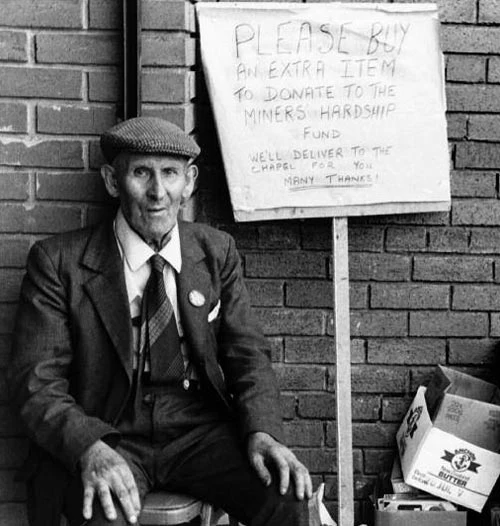
The majority of Welsh miners initially voted against a strike but later played a major part in picketing and demonstrations. Miners' wives rose to the challenge of supporting their men by raising funds and organizing food distribution, but were also active on picket lines and marches.

Although Wales did not suffer the picket line violence seen in some other British coalfields, Welsh miners were killed on picket duty and carrying out colliery safety work and a taxi driver was killed as he took a strike-breaker to work.

"We had to fight the enemy without in the Falklands, but we always have to be aware of the enemy within, which is much more difficult to fight and more dangerous to liberty."

Margaret Thatcher, Prime Minister

Collecting stories

There were rights and wrongs on both sides of the dispute and great pains have been taken to try to collect stories from each side. The passions aroused by the strike have made this a difficult task, for even now some participants are reluctant to allow their stories to be told.

This, and the fact that the majority of the stories were collected from Wales, where only a small percentage of the workforce returned to work during the strike, makes it inevitable that one view should seem to predominate. If stories had been collected elsewhere it is quite possible that the opposite view would dominate.

An objective and balanced history of the miners strike will one day be written but the pages that follow present the stories of some of the men and women whose lives were touched by what today has simply become known as... The Strike.

This article forms part of a booklet in the series 'Glo' produced by Big Pit: National Mining Museum. You can download the booklet here