Arthur the Arthropleura Lucy McCobb, 23 March 2022 Who is Arthur the Arthropleura? Arthur is a model of the biggest invertebrate that has ever lived on land, a millipede-like creature called Arthropleura. Where did Arthur the Arthropleura come from? The model was originally on display in Kew Garden’s Evolution House but when the space was dismantled in preparation for the HLF funded restoration of the Temperate House, it was no longer needed and Kew kindly donated it to Amgueddfa Cymru – National Museum Wales. The Arthropleura model was in need of some substantial conservation work when it arrived at Amgueddfa Cymru – National Museum Wales. It had been on open display for many years in a glass house alongside living plants and was damaged and rusty. The humid display environment had caused the surface paint to flake away and several spiders and snails had taken up residence on the underside of the model! Arthur the Arthropleura before conservation The first job was to give the model a good wash with hot soapy water and remove the dirt and cobwebs! Arthur the Arthropleura has a bath Then all the flaking paint was scrubbed off, the damaged areas on the legs and head were rebuilt with an epoxy putty and the surface textures recreated. The nuts and bolts of the removable antennae had rusted together, so the metal parts were replaced with new stainless steel threaded rods. Once the repairs were complete the model was carefully painted with acrylics and then coated in a durable varnish, making it once again suitable for public display. Arthur the Arthropleura after conservation Who named the Arthropleura - Arthur? Some of the Natural Sciences staff had become rather attached to the impressive 1.5m long millipede model whilst it underwent conservation work in the lab and named it Arthur the Arthropleura. We have also had fun with Arthur; he has “escaped” and been on the run around the museum galleries! Arthur the Arthropleura visits the Impressionists We posted pictures of his adventures on the @CardiffCurator Natural Sciences Twitter account and had a fantastic response from our followers. Arthur the Arthropleura is now a social media star and is a really wonderful addition to our collections! What did Arthropleura look like? Arthropleura looked a lot like millipedes do today. It had a long, narrow body made up of lots of segments, and its back was covered in hard plates. On the underside of the body, there were lots of pairs of jointed legs, around 8 pairs for every six body segments, which is similar to the number of legs modern millipedes have. Recently, palaeontologists realised that what they had previously thought was the head of Arthropleura, is actually just the front segment of its body. The head was tucked underneath this segment, just like it is in millipedes today. So our model Arthur is a bit out-of-date, and he shouldn’t be looking straight ahead quite as much as he does. How big was Arthropleura? There are two types of evidence that tell us how big Arthropleura was. Fossils of the animal’s body, or parts of it, have been found in Germany, Belgium, France, the Czech Republic, and the U.K., but these are relatively rare. More common are fossils of the long trackways made by the many feet of the Arthropleura as it scuttled over damp ground. Its fossilised footprints are known from the USA, Canada, Germany, France and Scotland. Measuring the trackways tells us how wide the animals that made them must have been, and we can calculate from that how long the animals likely were. Arthur the Arthropleura next to a fox for size Some places have several trackways in different sizes, showing that different sized (and probably aged) Arthropleuras were moving around in that area. The widest trackway known is 50cm wide, and the biggest Arthropleura is estimated to have been over 2m long. Where did Arthropleura like to live? Arthropleura fossils and trackways have been found in various locations that would have been fairly close to the equator 300 million years ago, including modern-day North America and the U.K. Many of the first fossils were found in roof shales overlying coal seams, so it was thought for a long time that the giant creepy-crawlies just lived in humid coal swamps. Since then, evidence of Arthropleura has been found from a wider range of environments, including footprints walking along drier river banks. It appears that they felt at home in a variety of landscapes with some vegetation cover. Would Arthopleura have eaten me? We can’t be certain what Arthropleura liked to eat, because its mouthparts have never been found in any fossils. However, if it did have tough, strong jaws for biting prey with, they would probably have survived and become fossilised. That may be circular reasoning, but there are other reasons why we think it probably ate plants rather than meat. An Arthropleura fossil was found in Scotland in 1967, which had the remains of plants called giant clubmosses in the area where its gut would have been. It’s possible that the fossils were just preserved together by accident, so we can’t be certain the plants were actually Arthropleura’s last meal. However, if its diet was similar to that of modern-day millipedes, it is likely to have lived on plant remains, seeds and spores. Which other animals did Arthropleura share its home with? If you looked around at the animals that shared Arthropleura’s world, you would see a very different view of life from today. There were no birds or mammals, because they hadn’t evolved yet. Scout around for our nearest relative, and you would eventually spy, lurking in the water, a large, squat amphibian called Eryops. Animals with backbones were yet to gain a dominant foothold on dry land. Instead, creepy-crawlies accounted for most of the life you would have seen around you. There were large cockroaches (up to 9cm long) scuttling around, and spider-like creatures that would fill the palm of your hand. These weren't exactly like modern spiders - their fat bodies were divided up into segments rather than consisting of a single rounded piece, and they hadn't yet evolved the ability to spin webs - but they were well on their way to becoming the arachnids we see today. fossil of a primitive spider-like creature (Maiocercus celticus) The air would have been filled with a distinct hum from the most awesome animals around – huge dragonfly-like insects called griffinflies, whose wingspans could exceed 70cm. Griffinflies were among the top predators of their day, and were some of the first creatures on Earth ever to fly, around 150 million years before the first birds took to the wing. Even our amphibian kin Eryops had to share its home with arthropods; horseshoe crabs that also liked to divide their time between dry land and water. Why don’t we get such huge invertebrates on land today? The Carboniferous Period, around 300 million years ago, was undoubtedly the era of huge invertebrates. At that time, giant Arthopleura, the biggest creepy-crawly that has ever lived on land, was joined by large cockroaches, arachnids and dragonfly-like insects. How was that possible, and why don't we see invertebrates as big as Arthur today? Our atmosphere has around 21% oxygen. The evidence suggests that 300 million years ago, oxygen levels approached 35%. That would have made a huge difference to the amount of energy that insects and other arthropods could generate. Insects and millipedes don't have lungs to actively breathe in air like we do. Instead, their exoskeletons have lots of tiny tubes passing through them called spiracles. Oxygen diffuses in through the tubes from the outside into a blood-filled cavity, from where it gets distributed around the animal's body, fuelling everything it does. More oxygen available meant more fuel, which enabled creepy-crawlies to grow bigger, and which would have been especially important in generating enough energy to get large flying insects off the ground. Such giants could not get airborne under today's atmospheric conditions. Arthur in one of his natural habitats, the coal swamp in our Evolution of Wales gallery Oxygen levels aside, there are mechanical limitations to having an exoskeleton, which make it unlikely that such large invertebrates could exist today. In order to grow bigger, all arthropods need to moult off their old exoskeleton and grow a new larger one. There is a period of time after moulting when the new exoskeleton is soft, and the arthropod must wait for it to harden before it can carry on with its normal life. Not only is this a dangerous time when the animal is vulnerable to predators, but it places a limit on size – if the exoskeleton becomes too big and heavy, it risks collapsing under its own weight. That is one reason why the largest arthropods today live in the ocean, where the water helps to support their weight. There is also a limit on how big creepy-crawly legs can get, as the bigger they get, the thicker the cuticle they're made of becomes. They can only get to a certain size before the thick cuticle doesn't leave enough room inside for the muscles needed to operate the legs. Another factor allowing Arthur and others to grow so huge may have been the lack of large vertebrate predators. For a variety of reasons, it just isn't possible for such giant creepy-crawlies to exist today. Lucy McCobb, Caroline Buttler & Annette Townsend Glossary: Arthropod – an invertebrate animal with a hard exoskeleton and jointed limbs. Invertebrate – an animal without a backbone. Exoskeleton – a tough outer skin, which provides support and protection to animals without an internal skeleton.
Raglan Castle 22 March 2022 Raglan Castle is one of the finest late medieval buildings in the British Isles and, although now ruined, it remains a striking presence in the landscape of south-east Wales. Where is Raglan Castle? Raglan Castle is located just north of the village of Raglan in the county of Monmouthshire, off the A40 between Monmouth and Abergavenny. For details on how to visit, see Cadw’s webpage. When was Raglan Castle built? Much of what remains at Raglan dates from the 15th century, the period of the Wars of the Roses and the rise of the Tudor dynasty, though there is believed to have been an earlier, Norman motte-and-bailey castle on the site. The hexagonal Great Tower is the most impressive of the buildings from this period, dominating the two courtyards of the castle. The Great Tower. An impressive self-contained fortress-cum-residence which lies outside the circuit of the castle's curtain walls. Image: Cadw (Crown copyright). The castle as it stands today was built in three main phases. The first phase of building in the fifteenth century included the hexagonal, five-storey Great Tower, which was surrounded by a moat and, when it was originally built, could only be accessed from inside the castle via a drawbridge. The second phase, built by Sir William Herbert, the first Earl of Pembroke, added sumptuous apartments. Finally, the castle was transformed into a mansion by the Earls of Worcester in the 16th century. The Great Gatehouse, Raglan. Built between 1460 and 1469 the gatehouse was designed to impress and intimidate visitors with its arrays of gun loops, machicolations, portcullises and doors. Image: Cadw (Crown copyright). Who built Raglan Castle? There is some controversy over who built the first phase of the castle; it was built either by William Herbert, the first Earl of Pembroke, or his father, William ap Thomas, who had purchased Raglan in 1432. William Herbert was a key figure in the politics of the late 15th century. During the Wars of the Roses he supported Edward IV. The reward for his loyalty was considerable, providing him with the title Earl of Pembroke, and sufficient resources to convert Raglan into a palace-fortress. Earl William's success was, however, to be short-lived. In 1469 he was captured by Lancastrian supporters at the Battle of Edgecote and put to death. The Herberts retained control of Raglan until 1492 when it passed to the Somerset family. William Somerset, the third Earl of Worcester (1526–1589), was the first of his family to significantly alter the castle's buildings. Reconstruction of Raglan Castle, about 1620, showing the formal gardens that existed in the castle's heyday. Image: Cadw (Crown copyright). He focused his efforts on upgrading the quality of the hall and service ranges to meet the social expectations of his time. He also established the gardens, including a series of walled terraces, an artificial lake, a fountain, flower beds and herb gardens. The Herberts retained control of Raglan until 1492, when it passed to the Somerset family. William Somerset, the third Earl of Worcester (1526–1589), was the first of his family to significantly alter the castle's buildings. The third Earl focused his efforts on upgrading the quality of the hall and service ranges to meet the social expectations of his time. He also established the gardens, including a series of walled terraces, an artificial lake, a fountain, flower beds and herb gardens. Reconstruction of life at Raglan Castle in the 16th century, at the time of the Third Earl of Worcester. Image: Cadw (Crown copyright). What happened to Raglan Castle? By the middle of the 17th century, Raglan's fortunes were at their peak. It had achieved a level of sophistication and opulence that only the greatest country houses could match. However, the English Civil War was to change all this. In 1642, the fifth Earl of Worcester declared his support for the Royalist cause, offering considerable financial support to King Charles I. This was to make Raglan a target for Parliamentarian forces, which subsequently besieged the castle in June 1646. Its defenders held out during the summer, but by mid-August the Parliamentarians had moved their siege works to within sixty yards of the castle. Its defenders surrendered on 19 August. After it was captured, the castle was deliberately made useless for defensive purposes, a process known as ‘slighting’. This is when the gigantic hole was torn through the Great Tower. In the years that followed Raglan was abandoned and left to decay, becoming a convenient source of building material and a picturesque tourist attraction. Today this decay has been halted and the building conserved through the work of Cadw and its predecessors. The ivy-covered Main Gatehouse, photographed by Sir Thomas Mansel Franklen (1840–1928) Who owns Raglan Castle? Raglan Castle is still owned by the Somerset family, who became Dukes of Beaufort in 1682. In 1938 it was put in the care of the Ministry of Works, and it is now looked after by Cadw. Which films have used Raglan Castle as a backdrop? Raglan Castle appeared in Terry Gilliam’s film Time Bandits (1981), where it stood in for an Italian castle under siege in the Napoleonic Wars. Background reading Raglan Castle by J. R. Kenyon. Published by Cadw (2003). The decorated floor tiles from Raglan Castle Cadw listing Coflein listing (Royal Commission of Ancient and Historical Monuments of Wales) Header image adapted from Raglan Castle by Steve Slater, CC BY 2.0
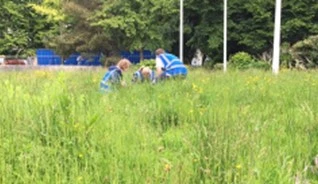
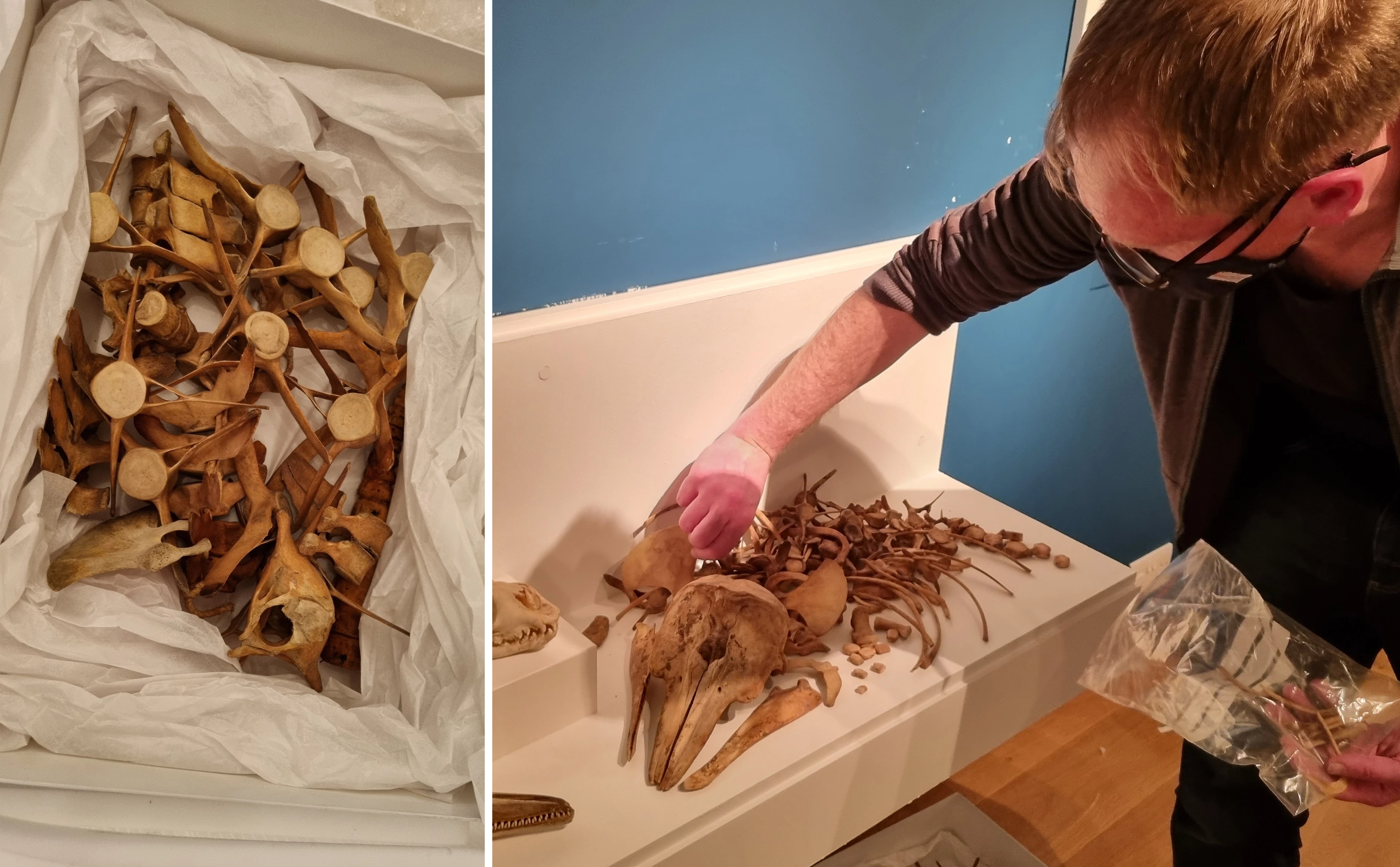
Sheep Farming In The Past Meredith Hood - PhD student Zooarchaeology, 22 March 2022 What is my project about? Hello! I’m Meredith, a PhD student working at Cardiff University and Amgueddfa Cymru. I am a zooarchaeologist, which means I study animal remains from archaeological sites to find out more about the relationship between humans and animals in the past. So, Lambcam seemed like a great opportunity to share a little bit about my project, and how we can learn about sheep farming in the past! For my project, I am studying the animal bones from the site of Llanbedrgoch on Anglesey. This was an early medieval settlement, occupied from the 5th to 11th centuries AD. Archaeologists recovered over 50,000 pieces of animal bone from Llanbedrgoch, which will provide a really valuable insight into farming practices and diet at this time. You can read about my research in a little more detail here. Volunteers washing animal remains from Llanbedrgoch. ©Amgueddfa Cymru-National Museum of Wales. I am currently recording all the bones into a database and trying to identify what animals they came from. This can be tricky, particularly when the bones are very broken. Sheep bones can also be an extra challenge to identify as they look extremely similar to goat bones! Recording animal bones in the bioarchaeology laboratory at Cardiff University. (Photo: Meredith Hood) How can we find about sheep farming in the past? Sheep remains can tell us lots of information about how sheep were farmed and used in the past. For example, we can estimate the age at which a sheep died by looking at how worn their teeth are, or whether their bones have fused. Sheep that were kept for a long time as adults may have been used for their wool or milk. A modern sheep mandible/jawbone (top) compared to an early medieval fragment of a sheep jawbone from Llanbedrgoch, Anglesey (bottom) (Photo: Meredith Hood) Two sheep humeri (upper arm) bones. The bone on the left is from a juvenile, and the bone on the right is from an adult. (Photo: Meredith Hood) We can also look for things such as butchery or burning marks on bones which might tell us that lamb or mutton was eaten. Certain body parts, like the pelvis, can tell us the sex of the sheep, which can suggest whether breeding might have taken place on a site. Part of a sheep metatarsal showing black burning marks. (Photo: Meredith Hood) What do we know about sheep farming in early medieval Wales? Unfortunately, animal bones from early medieval Wales haven’t survived very well in the soil. But from archaeological sites where they have survived, it appears that sheep were predominantly being kept for their secondary products like wool and milk. Historical texts can also give us some clues. Law texts surviving from the 13th century which have been attributed to Hywel Dda (a 10th century king) describe, for example, how much sheep were worth (‘One Penny is the worth of a lamb whilst it shall be sucking’1) and that ‘fat’ sheep should be given to the king as render payments. The large number of bones from Llanbedrgoch is really exciting and should provide us with more information about early medieval Welsh sheep farming, so watch this space! Illustration of sheep from the Laws of Hywel Dda, mid-thirteenth century. From: Peniarth MS 28 f. 25 v. (Image: Llyfrgell Genedlaethol Cymru – The National Library of Wales, Public Domain) [1] Owen, A. (1841). Ancient Laws and Institutes of Wales. London, p.715
A Shell Enthusiast's Dream - The Phorson Collection Ellie Parry, 21 March 2022 Hello! I’m Ellie, an undergraduate from School of Biosciences at Cardiff University (School of Biosciences - Cardiff University), completing a Professional Training Year as part of my undergraduate degree. I’ve spent the last few months at National Museum Cardiff working in the Natural Sciences department in Mollusca, spending my time aiding in the research conducted by curator Anna Holmes (Staff Profile: Anna Holmes | National Museum Wales). The project I’ve been involved in is to identify common British post-larval bivalve shells. This is important because there is very limited information available for identification of these species at post-larval stage, so the aim of this research is to provide a taxonomic tool for fisheries and other similar organisations to be able to identify these juvenile bivalve shells at a species level. So far, my main task has been imaging specimens from within the Museum collections, which contain an impressive number of shells with some dating back as far as the early 1900’s. A common cockle, Cerastoderma edule, spanning just over 1mm in width, from the Phorson collection at National Museum Wales in Cardiff. One particular part of the collections I have been lucky to study, and one found to be most useful to the project, is the Phorson collection. This collection consists of thousands of miniscule specimens, ordered by size and species, glued onto small pieces of black card. This collection is by far the most impressive I have yet seen, with the larger of the specimens on these size series slides all withinaround 6-8mm, so you can only imagine the time and effort that Ted Phorson himself spent ensuring his collection was to the utmost perfection. The collection itself was organized and curated by another student, Theodore (Curation of a British Shell Collection | National Museum Wales), a few years ago, who wrote about his time in the Museum and with this phenomenal collection: Adventures in the Mollusca Collections | National Museum Wales Two soft-shelled clams, Mya arenaria, imaged from the slide pictured to the right, from the Phorson collection (smallest specimen being number 1 on the slide, the larger specimen being number 20). Ted Phorson’s incredible collection consists of 160 different shell species, all of which have been carefully and precisely arranged (Ted Phorson: A personal recollection | The Conchological Society of Great Britain and Ireland (conchsoc.org)). I have found in my five months of imaging many different types of specimens of bivalve shells that Phorson’s collection is a shell enthusiast’s paradise. It is a dream to image this collection, where every shell is perfectly sorted, ready and waiting in a patient line to be photographed. Other specimens from other collections have to be gently put into position, one by one, so the camera can capture the exact angle of each shell, which can be rather time consuming. The setup for taking images of the specimens (pictured is the Canon camera attached to the Leica microscope tube).
Welcome to Lambcam 2022 Bernice Parker, 11 March 2022 We have over 250 breeding ewes in the flock and we expect over 350 lambs – so this a very busy time of year for the team that care for our sheep. There are experienced staff on hand throughout the day and night once things get going in the lambing shed.So, what does a normal birth look like? Lambing is an unpredictable business, so it can vary wildly – but here are some of the things you might see:Labour: Water bag (intact or burst) and mucus hanging out of the back of the sheep before birth. Pair of feet protruding from the ewe’s back end. In early labour, the ewe will be restlessly getting up and down and pawing at the ground. As labour progresses, she will usually get down to push and stay down. Her contractions will get stronger with lots of physical effort visible. She may have her head thrown back, eyes wide and top lip curled back. This all normal and means that birth is hopefully imminent. Normal labour can take anything from 30 minutes to many hours. The farm team try to keep the shed quiet and calm and allow the sheep to lamb naturally where possible. They will only intervene to protect the welfare of the ewe and her lambs. Birth: If the ewe has lambed naturally – both her and the lamb may lie still for a bit after the lamb is born. It’s been hard work for both of them, and all the lamb needs to be doing at this point is breathing. Ideally without the bag (amniotic sac) over its head. As part of the birth, the bag will normally break and be pulled back off the lamb’s nostrils. Sometimes the farmers may nip in to help this process. Lambs will be born covered in mucus, bits of the bag and sometimes smears of blood. This is all normal – the ewe will lick it clean, which will help stimulate the lamb to breathe and warm it up. Sometimes they come out with a yellow or greenish coating. This is called meconium (first poo) where the lamb has opened its bowels before/during birth. Newborn lambs: Newborn lambs often twitch/shiver and thrash about. This is normal, and a good way to get the ewe’s attention. It’s also preparation for getting up and walking within minutes of being born. If you are a prey animal rather than a predator you need to be born ready to run (or hidden away in a den/nest). Lambs will also twitch/sneeze repeatedly as they clear the birth fluids from their noses and throats. Sometimes the farmers stick a bit of straw up the lamb’s nostrils to make it sneeze and help this process. They will also pat the lamb, or ‘cycle’ one of its front legs to stimulate the coughing/breathing reflex. If this doesn’t work - sometimes the farmers will swing a lamb by its back legs. This uses centrifugal force to help clear the lamb’s throat and get it to start breathing. Newborn lambs get a squirt of disinfectant spray on their navels. This helps to stop them getting infections from the shed floor through the newly severed umbilicus. Moving from the lambing shed to the nursery area: After they have given birth, all ewes and their lambs will be moved out of the lambing shed. The farmers carry lambs by their legs: Because they have much stronger legs, and are much lighter than human babies. It avoids covering the lamb with human scent when they need to bond with their mothers. The kindest way to move a ewe that has just given birth is to get her to follow her lambs. Sheep’s instinct is to run away from humans – not follow them. But they will usually follow their new lambs when the farmers hold them like this. Each new family ges off to a bonding pen to get to know each other and be safe from the action in the lambing shed. Ewes that are less keen to follow their lambs (or ones that just run off after giving birth) are usually yearlings lambing for the first time. The yearlings are also much wilder, as they are less used to being handled with the flock. You might see the farmers use a different technique to move these sheep and their lambs: They will remove the lambs first, so they don’t get trampled. Then catch the ewe – which can still run fast even thugh she has just given birth! They will walk these sheep out with their legs astride the ewe’s shoulders. This the best way to control the sheep and stop it doing a complete runner. (They are NOT sitting on them). The whole family will be reunited in a bonding pen – where everything usually settles down quite quickly as the ewes come around to the idea of motherhood. You can find out lots more about our sheep at lambing time in these blogs from previous years:Lambcam 2021 - FAQs: | National Museum WalesA guide to lamb presentation - aka ‘what’s going on in there?’ | National Museum Wales