Winter work in the gardens at St Fagans
, 9 January 2026
Winter might seem like a quiet time in the gardens, but there's still plenty happening behind the scenes. As the days grow shorter and colder, the gardening team gets to work preparing for the season ahead. Some of the busiest areas are the Castle gardens, where we prune roses and trees, mulch the beds, and cut back the hedges.
The castle itself is surrounded by tall, thick yew hedges. These create ‘garden rooms’, small, enclosed spaces with different themes, hidden from one another. This style was especially popular in the Edwardian period. Each space had its own character, and the hedges and walls created a sense of surprise and discovery around every corner.
In the past, these hedges were trimmed entirely by hand but thankfully, we now use electric hedge cutters too!
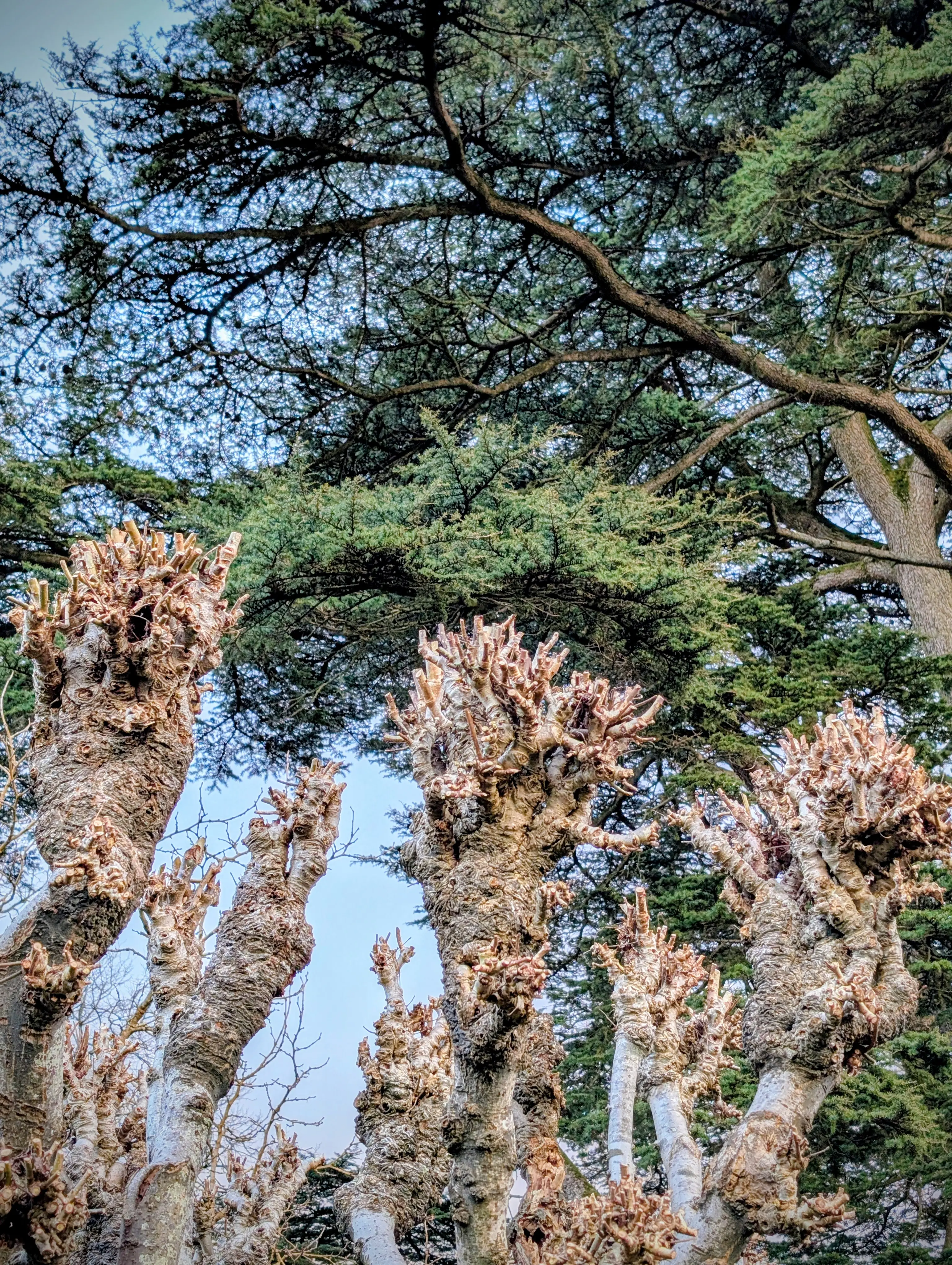
We also work on the avenue of lime trees leading to the castle, which were planted in 1901. These are pollarded - a special way of pruning that involves cutting off the upper branches while keeping the main trunk. It’s hard work, but it helps maintain their striking shape and keeps the trees looking much as they would have done over the past century.
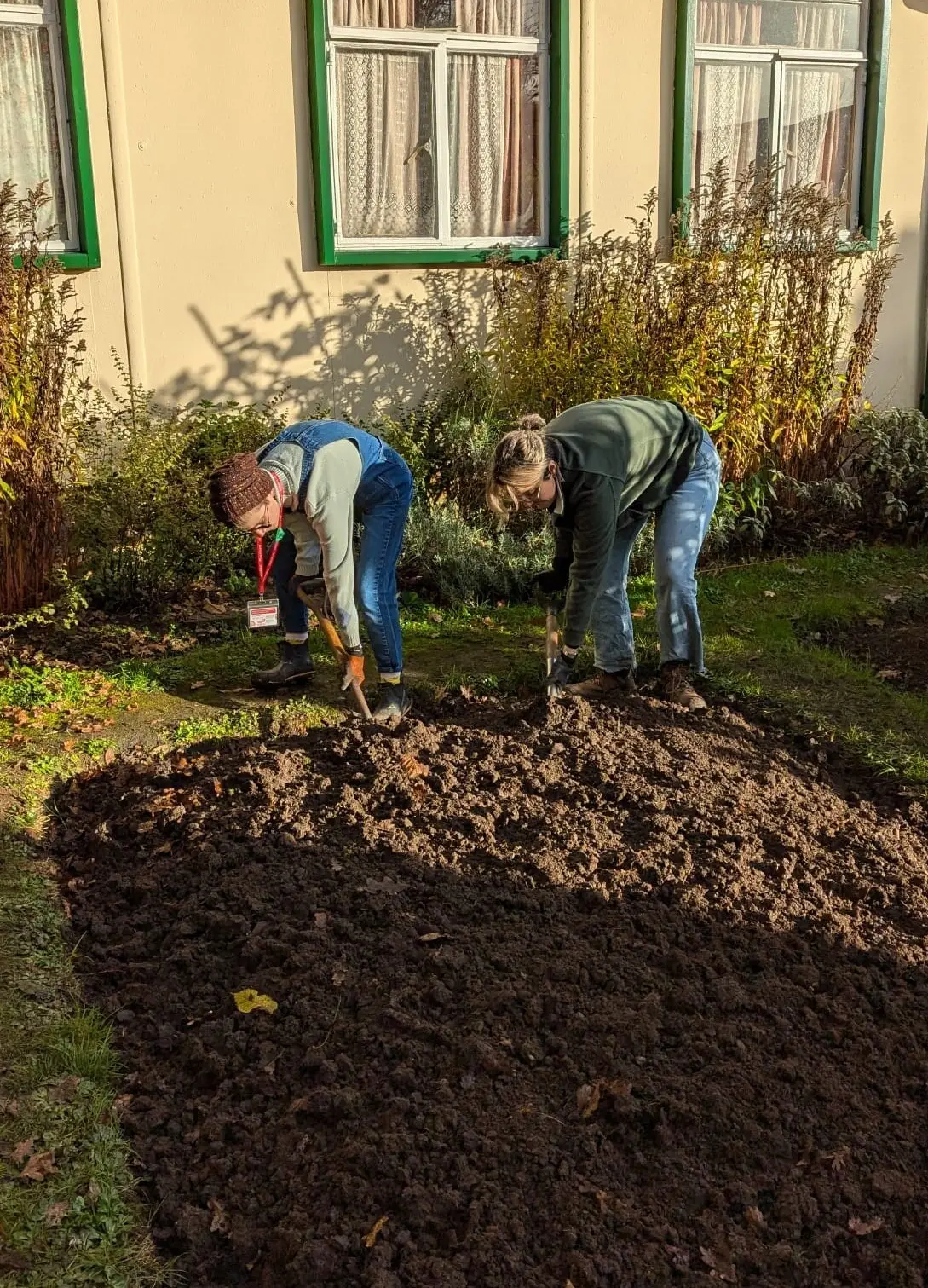
In the cottage gardens, we begin putting the gardens to bed for winter. This means cutting back spent plants, tidying the beds, and digging over the soil, much to the delight of the local robins, who follow us closely in the hope of finding a worm! We also add well-rotted manure to enrich the soil, helping us grow healthy, strong crops in the year ahead.
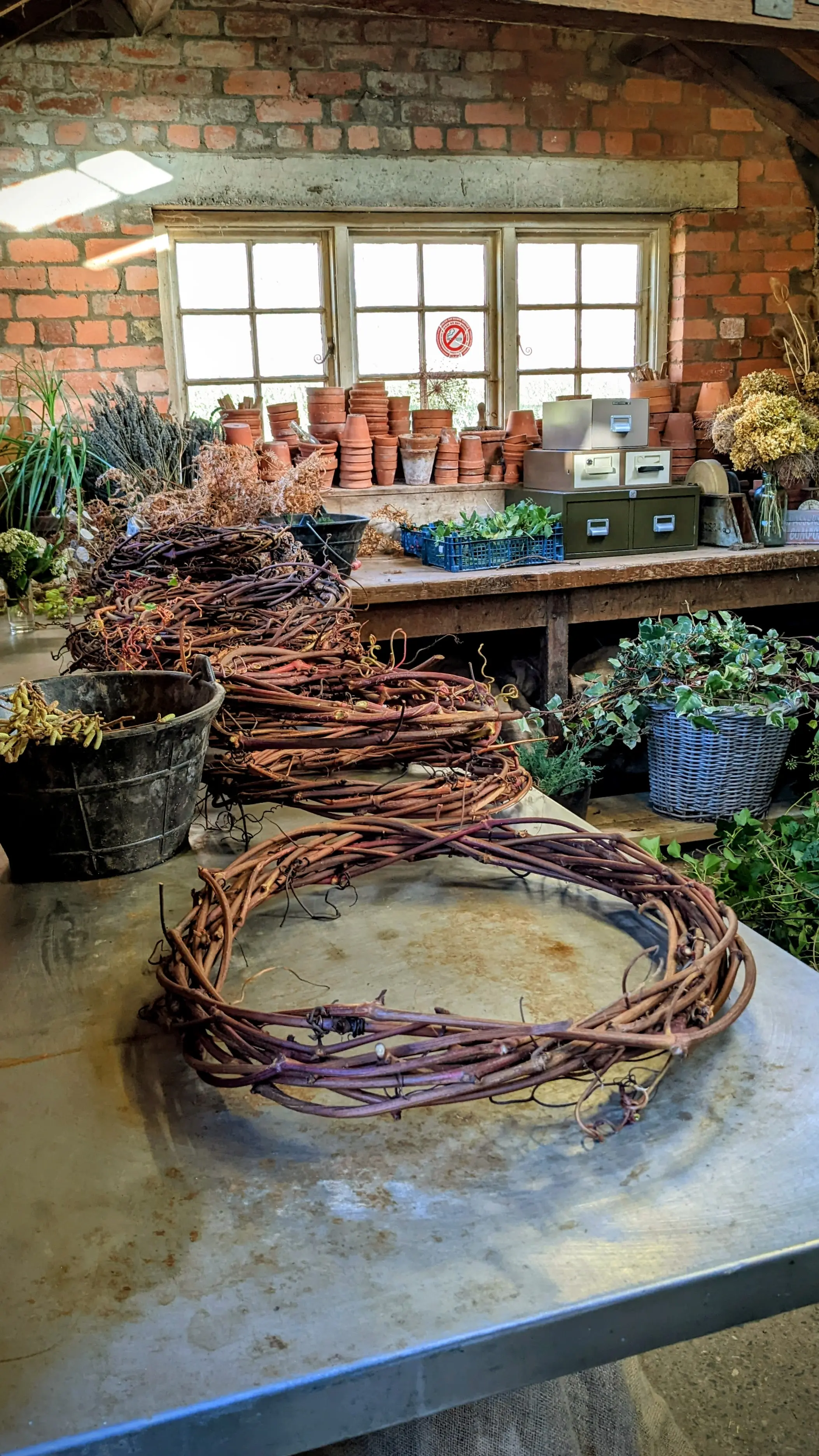
Another important job is harvesting materials for our Christmas wreaths. Each year, we make traditional wreaths to decorate the doors of our historic houses (you can read more about this in our online article from last Christmas!). To do this, we use natural materials gathered from around the museum grounds.
We coppice hazel and willow to make strong, flexible bases for the wreaths. Coppicing is a traditional and sustainable woodland practice, where young stems are cut back to ground level so that new shoots can grow. It was once a common method in Welsh gardens and woodlands. We also use other bendy plants like wisteria and crimson glory vine, which has beautiful curly tendrils that look lovely emerging from a wreath.
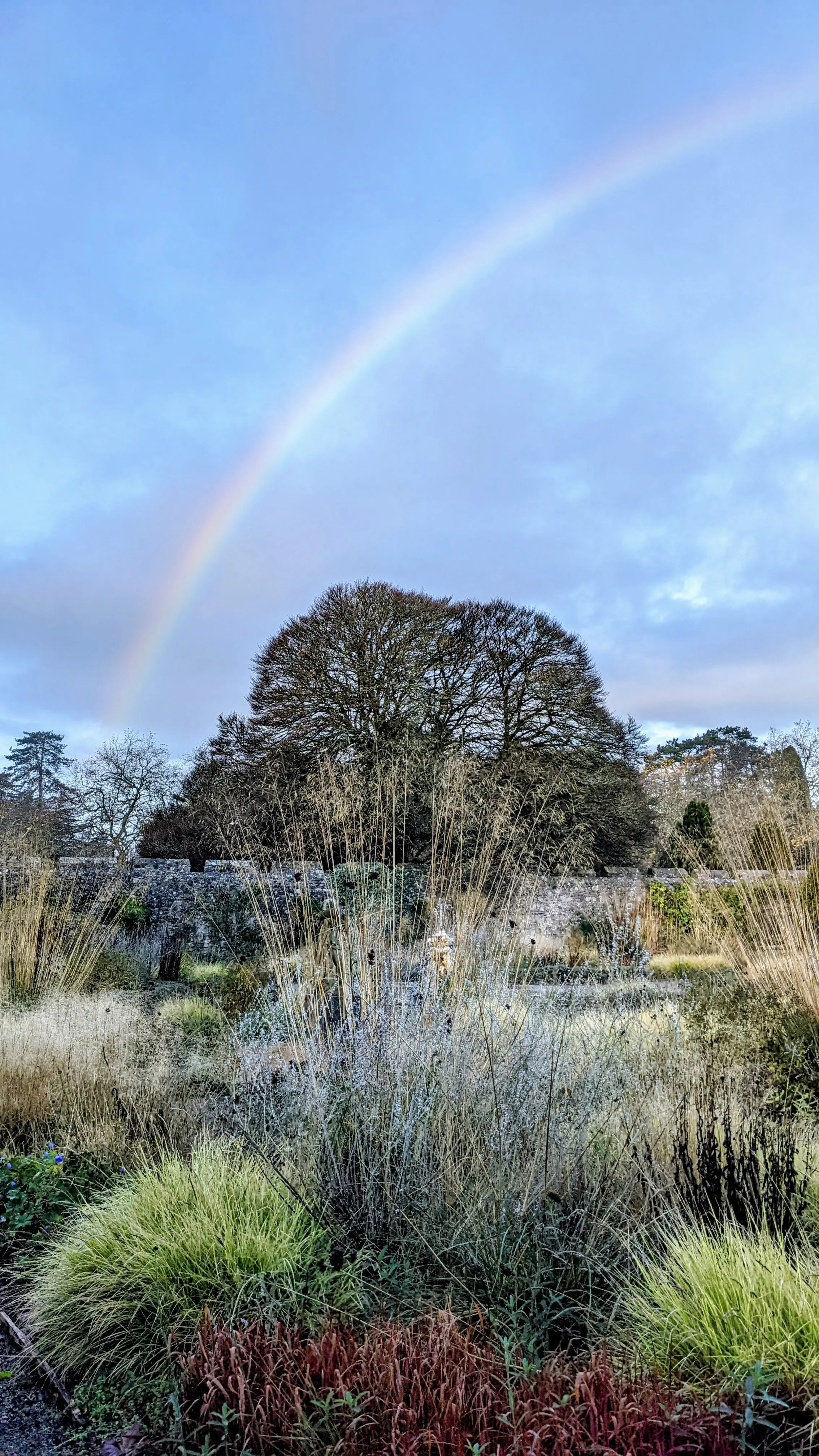
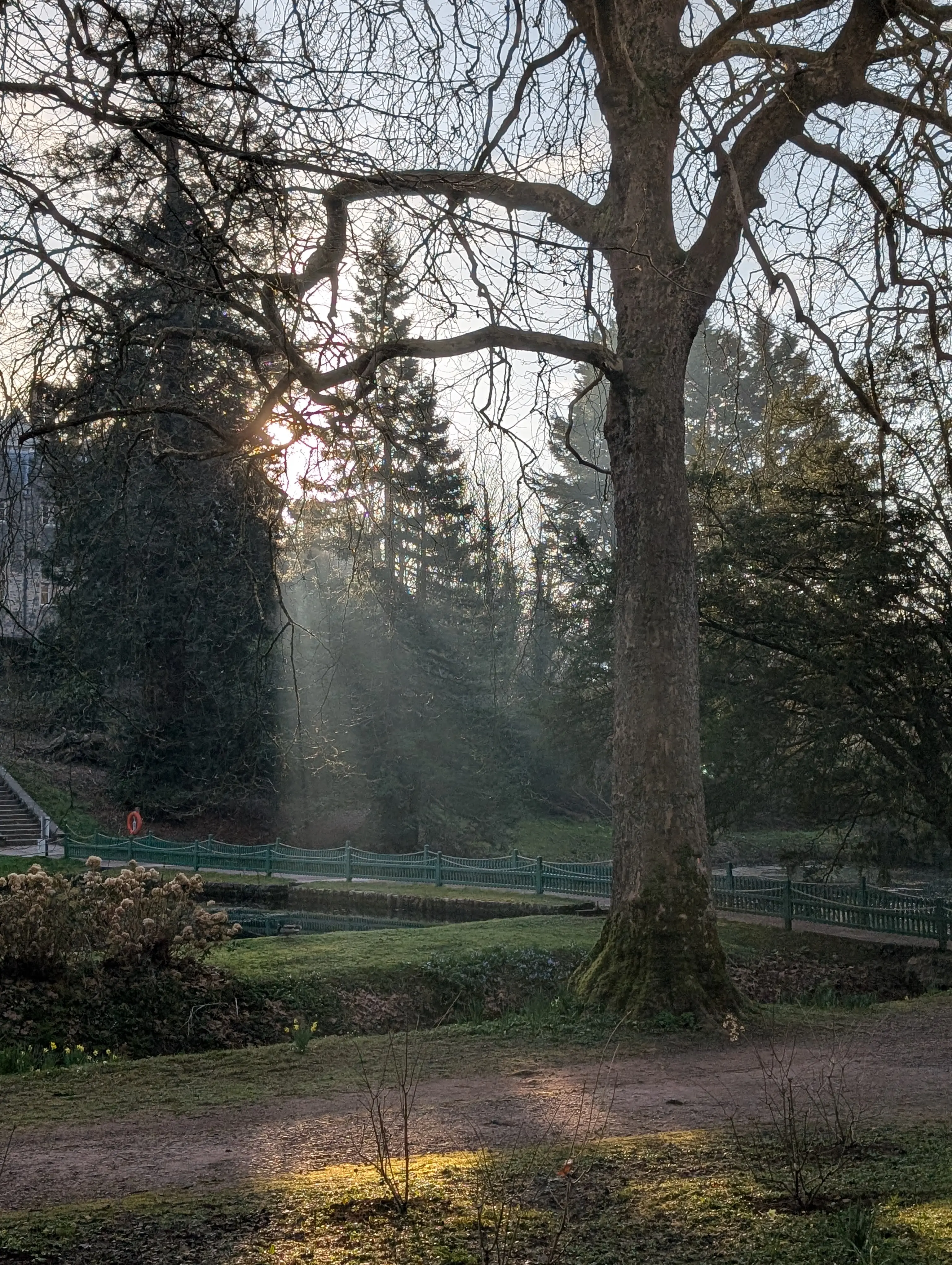
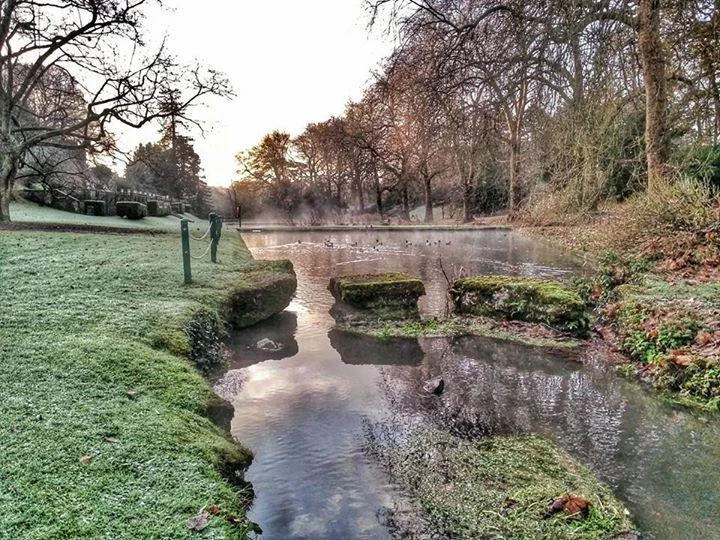
Even though the flowers have faded, there’s still plenty of magic in the gardens. Frost glitters on the seed heads and stems we’ve left standing to provide food and shelter for wildlife. Bare branches dusted with lichen create beautiful patterns against the winter sky. Red berries glow in the low sunlight. And if you’re lucky, you might even catch sight of a kingfisher swooping low over the ponds through the morning mist.
There’s still so much to see and enjoy as we head into winter in the St Fagans gardens.