Natural History

Scientific expedition to Rara Lake, Nepal

Kathmandu University, Norwegian University of Life Sciences and National Museum of Wales

Dr Ingrid Jüttner, Principal Curator Botany, has studied the biodiversity of diatoms, a group of microscopic algae, in the Nepalese Himalaya since the early 1990s. In spring 2016 she was invited by her colleagues from Kathmandu University to join their team on an expedition to Rara Lake, a protected Ramsar wetland in the high Himalaya.

Here is her blog about the visit and scientific work on Nepal’s largest lake in the remote mountains of north-western Nepal.

23 April.     In the morning our team met at Kathmandu Airport to take a flight to Nepalgunj, a town in the lowlands of western Nepal. The following day we flew with a small aircraft from Nepalgunj into the mountains of the Mugu district in north-western Nepal.

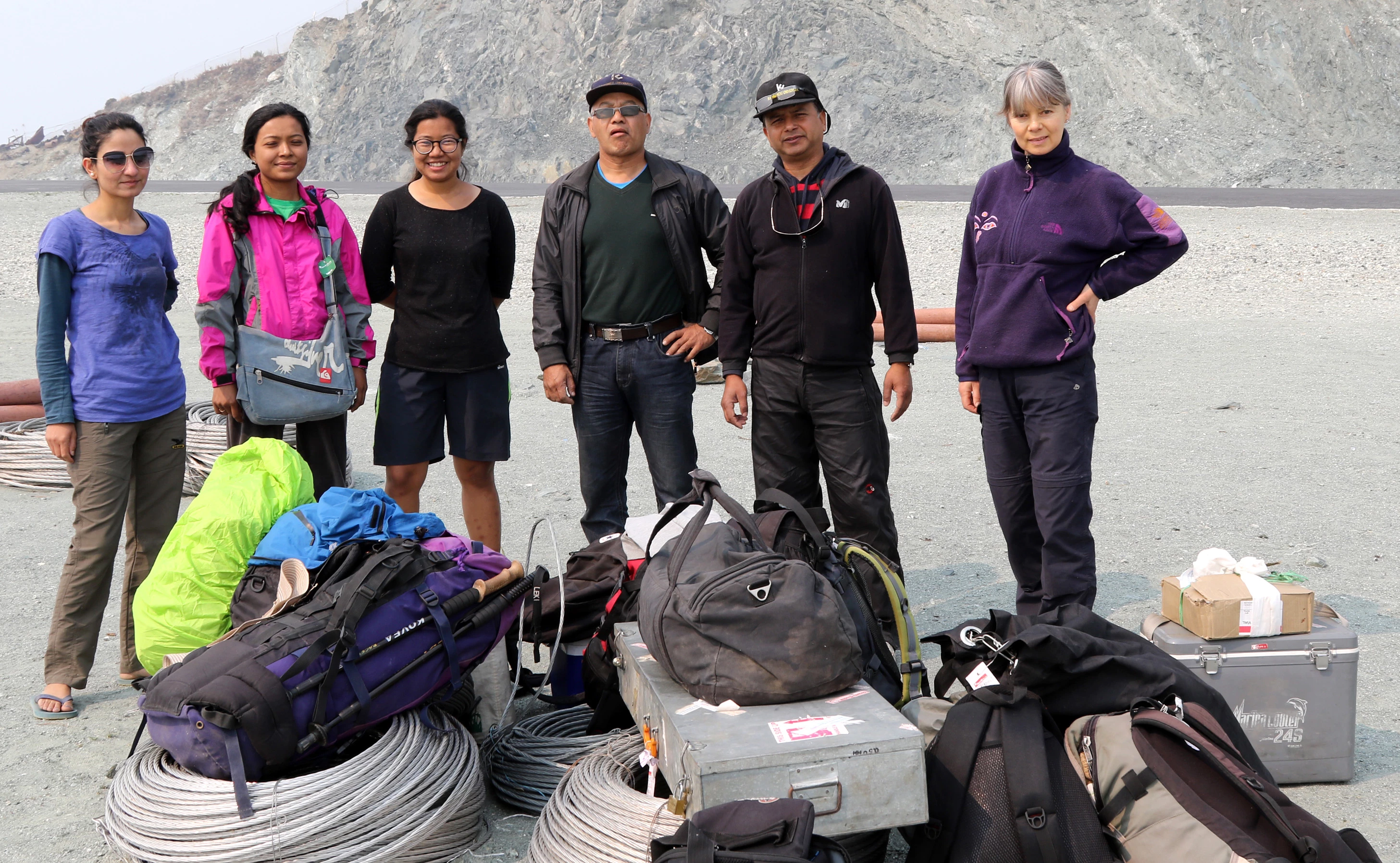
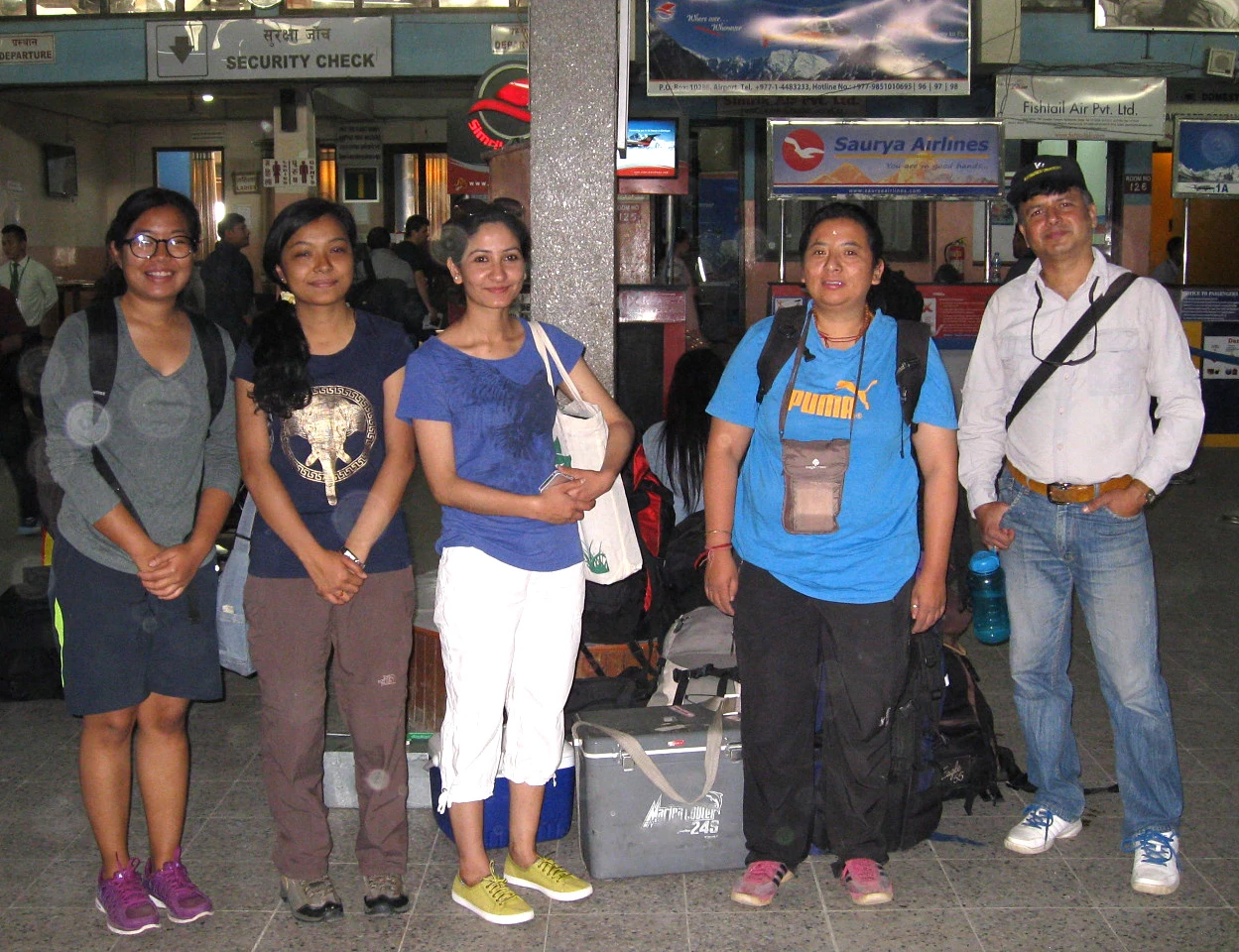
Anu Gurung, Preety Pradhananga, Nani Raut, Smriti Gurung, Chhatra Sharma from Kathmandu University at Kathmandu Airport

Our plane before take-off in Nepalgunj

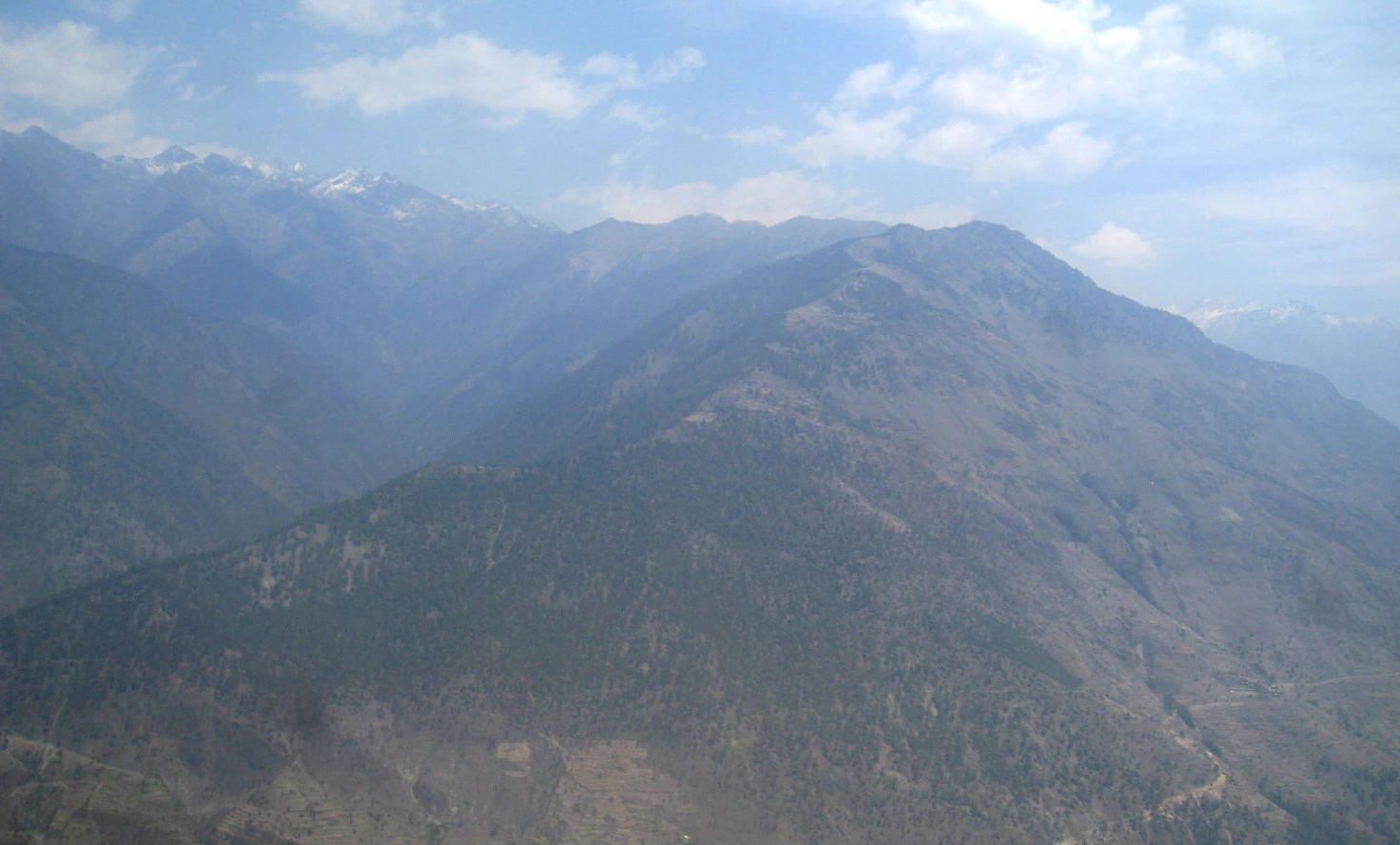
The mountains in the Mugu district of north-western Nepal

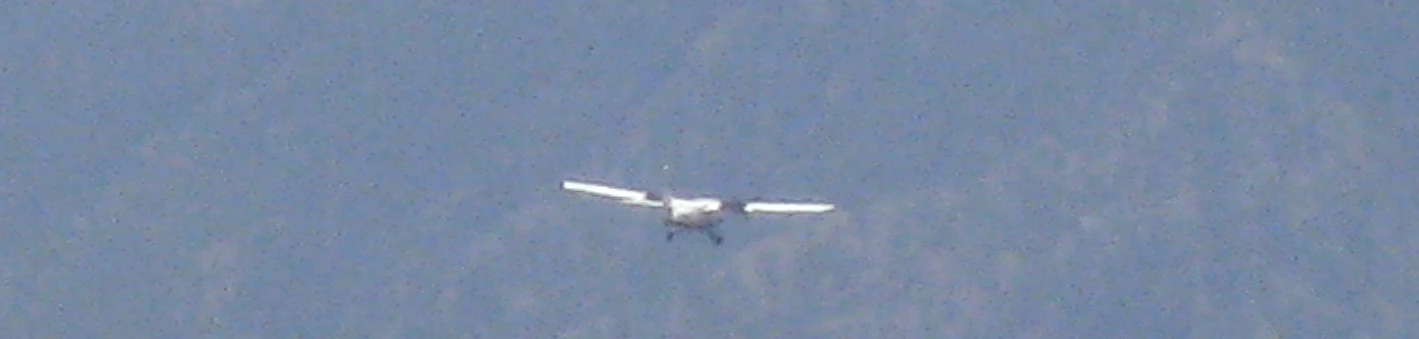
Our plane approaching the airstrip at Talcha

Our team was led by Dr Roshan M. Bajracharya, the project coordinator of the 5-year SUNREM-Himalaya Project at the School of Science, Department of Environmental Science and Engineering, Kathmandu University. This project is funded by NORHED, the Norwegian Research Council, with a grant held by the Norwegian University of Life Sciences in Ås (NMBU), under the leadership of Prof. Bishal K. Sitaula, International Environment and Development Studies (Noragric).

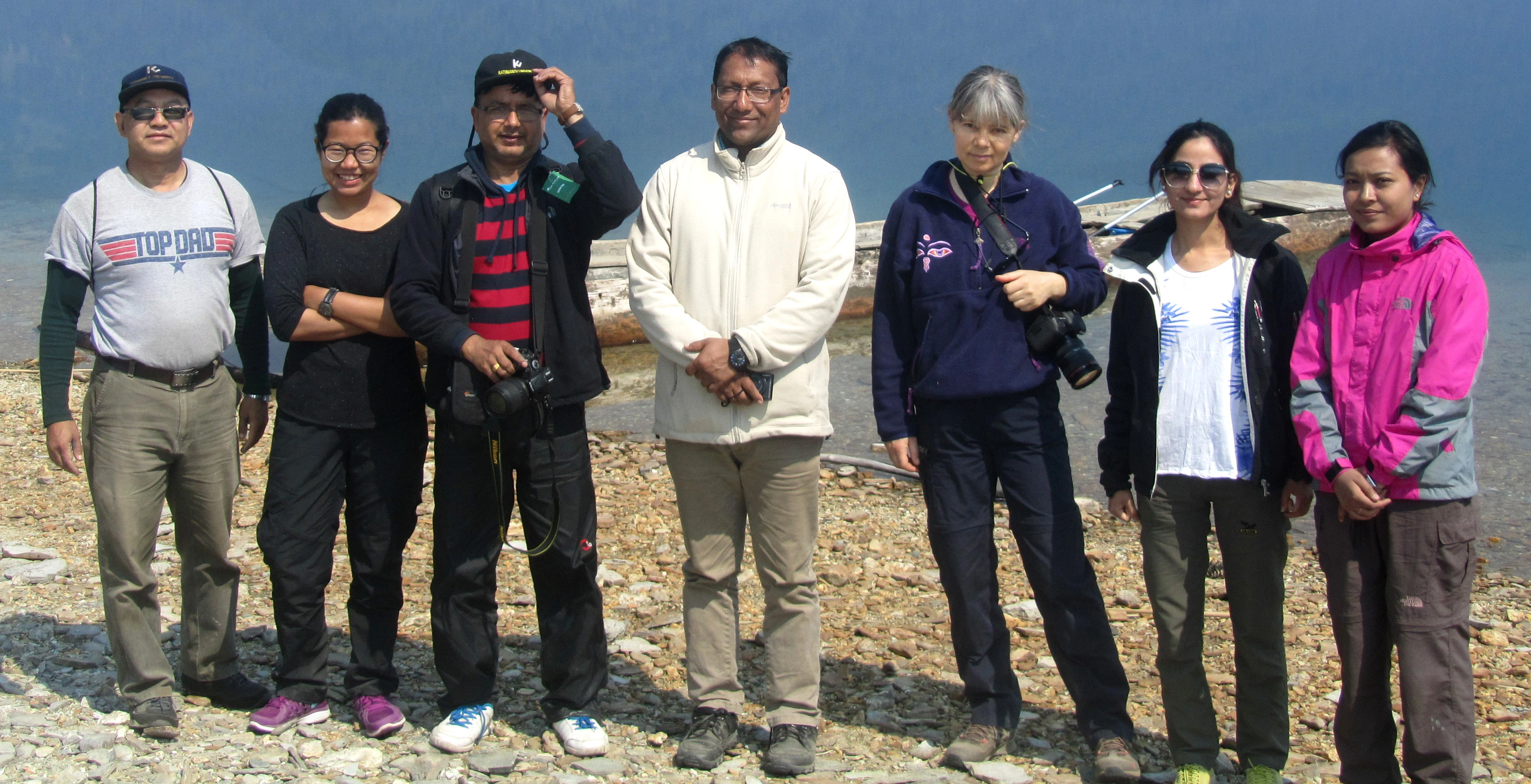
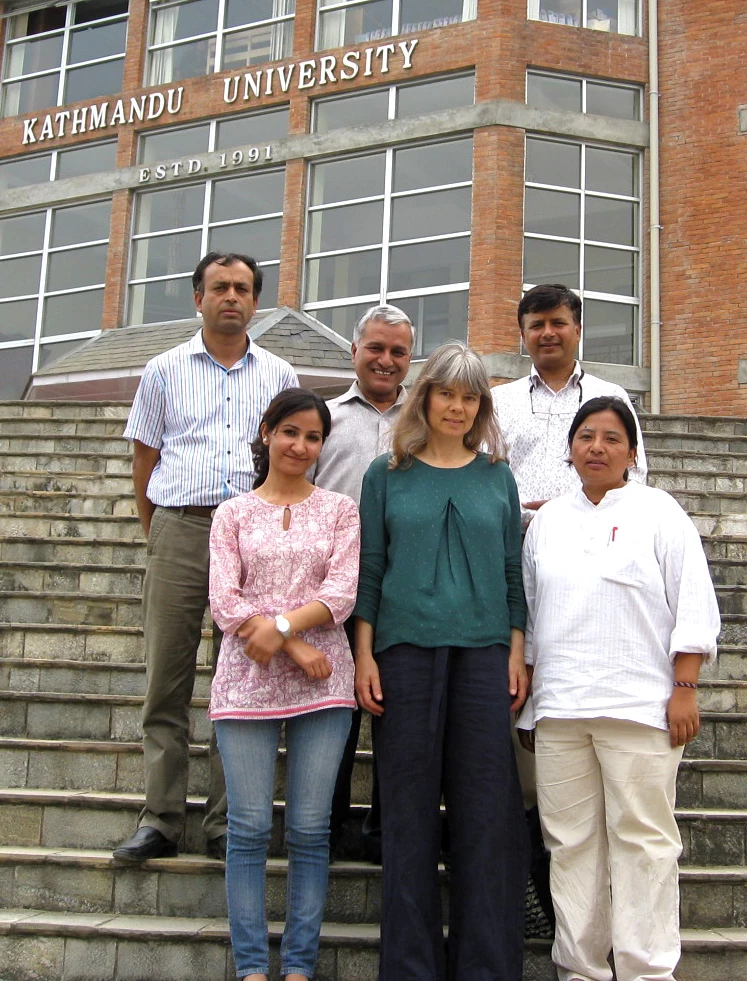
From left: Roshan M. Bajracharya, Anu Gurung, Chhatra Sharma, Bishal K. Sitaula, Ingrid Jüttner,  Nani Raut, Preety Pradhananga.

The aim of our expedition was to investigate Rara Lake, to learn about its history, water quality and how the lake relates to its surroundings. We studied sediments, soils, microscopic algae and water chemistry. This will help us to understand how Rara Lake may be affected by climate change and local human activities.

Our team included eight researchers, Prof. B.K. Sitaula from Norway, Prof. R.M. Bajracharya, Dr Chhatra Mani Sharma, Dr Smriti Gurung, Dr Nani Raut, two master students Anu Gurung and Preety Pradhananga from Kathmandu University, and myself.

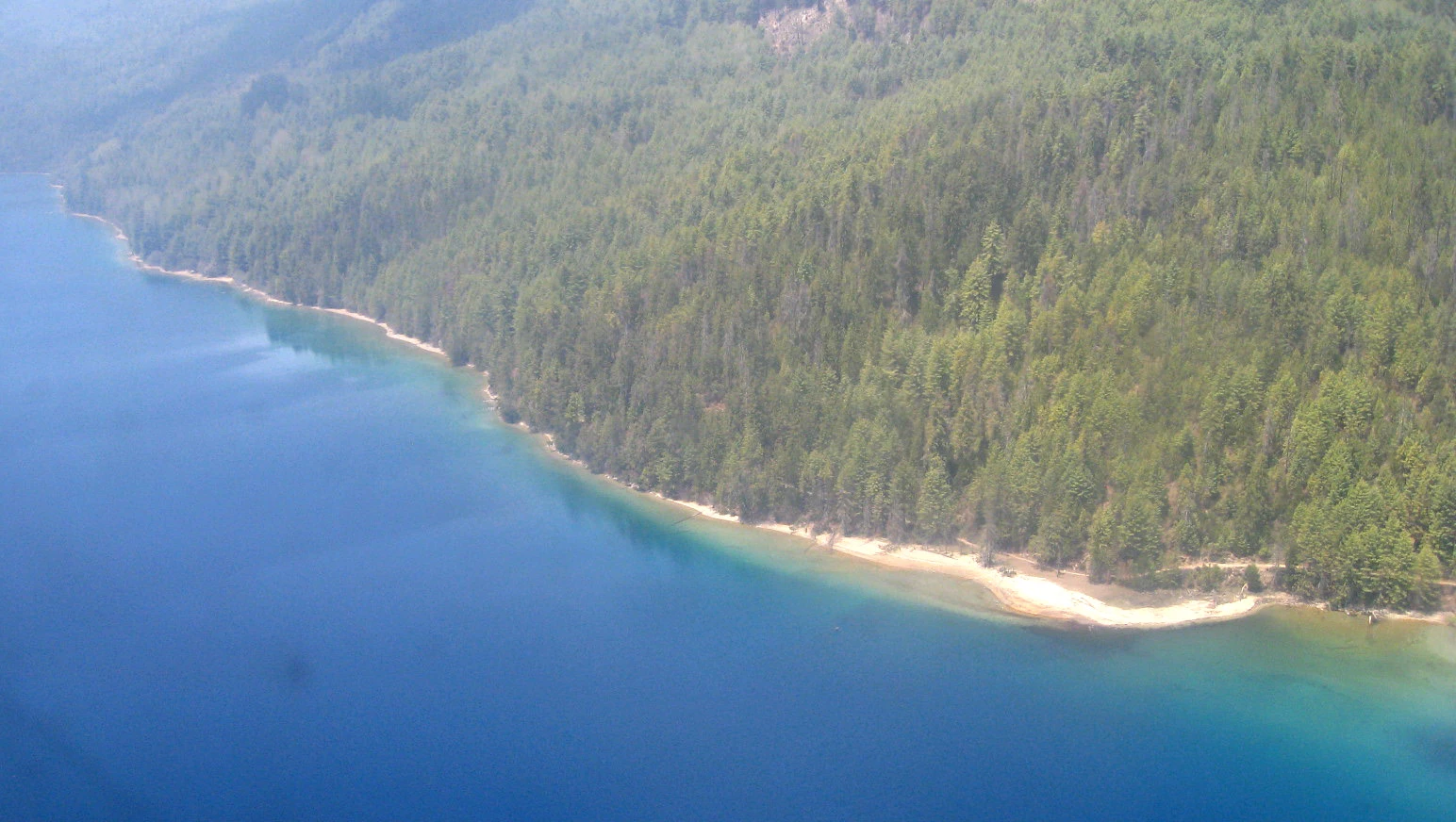
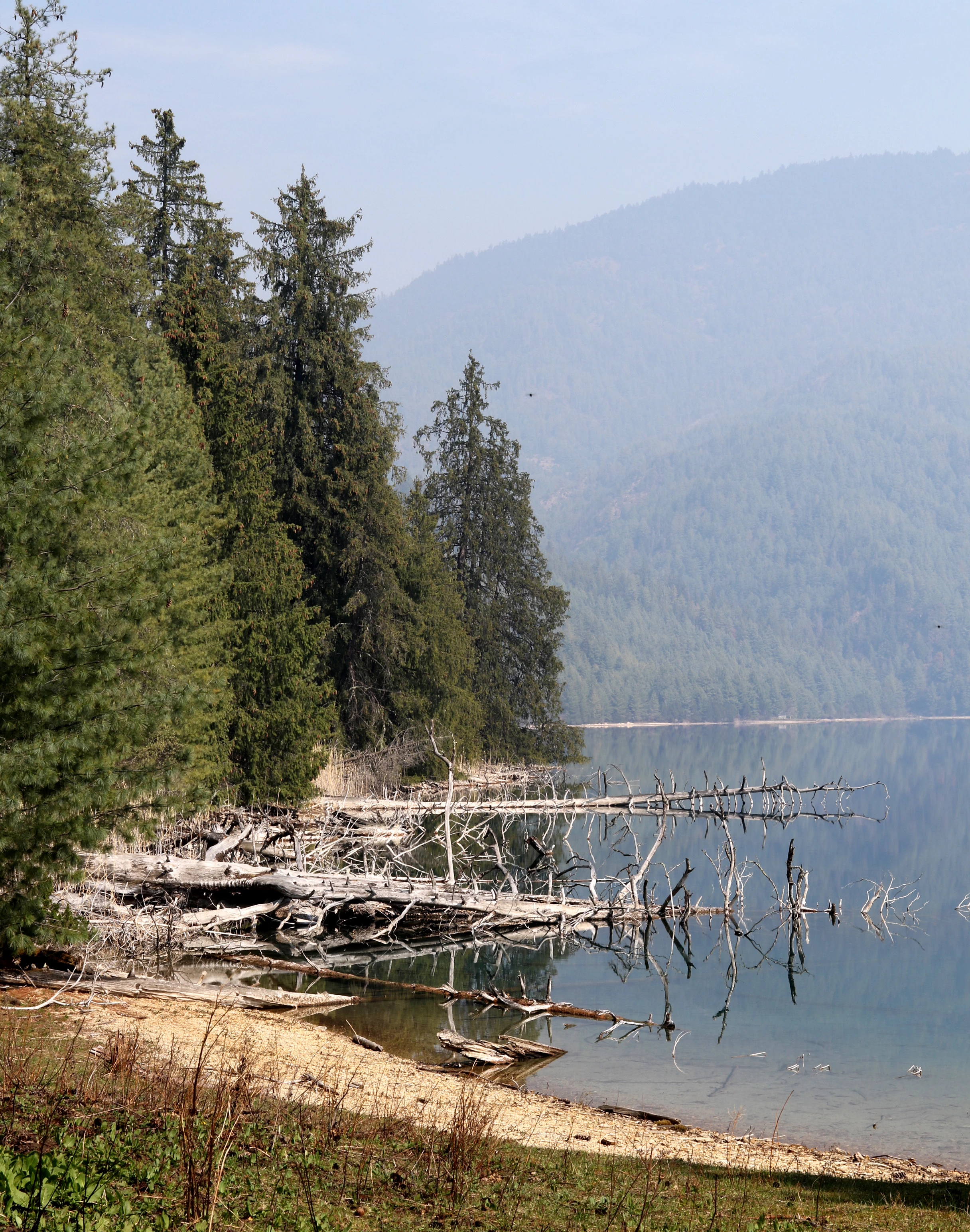
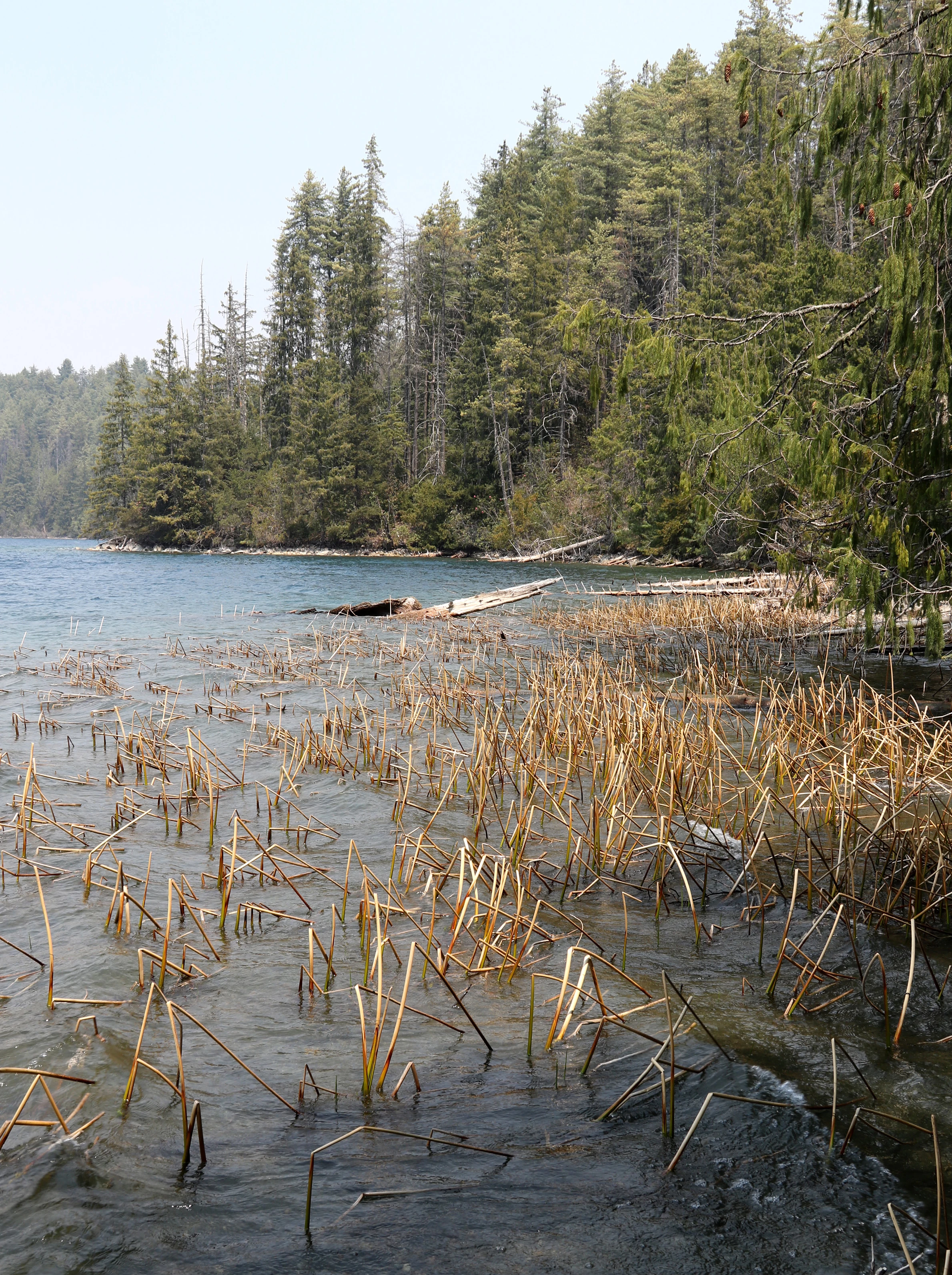
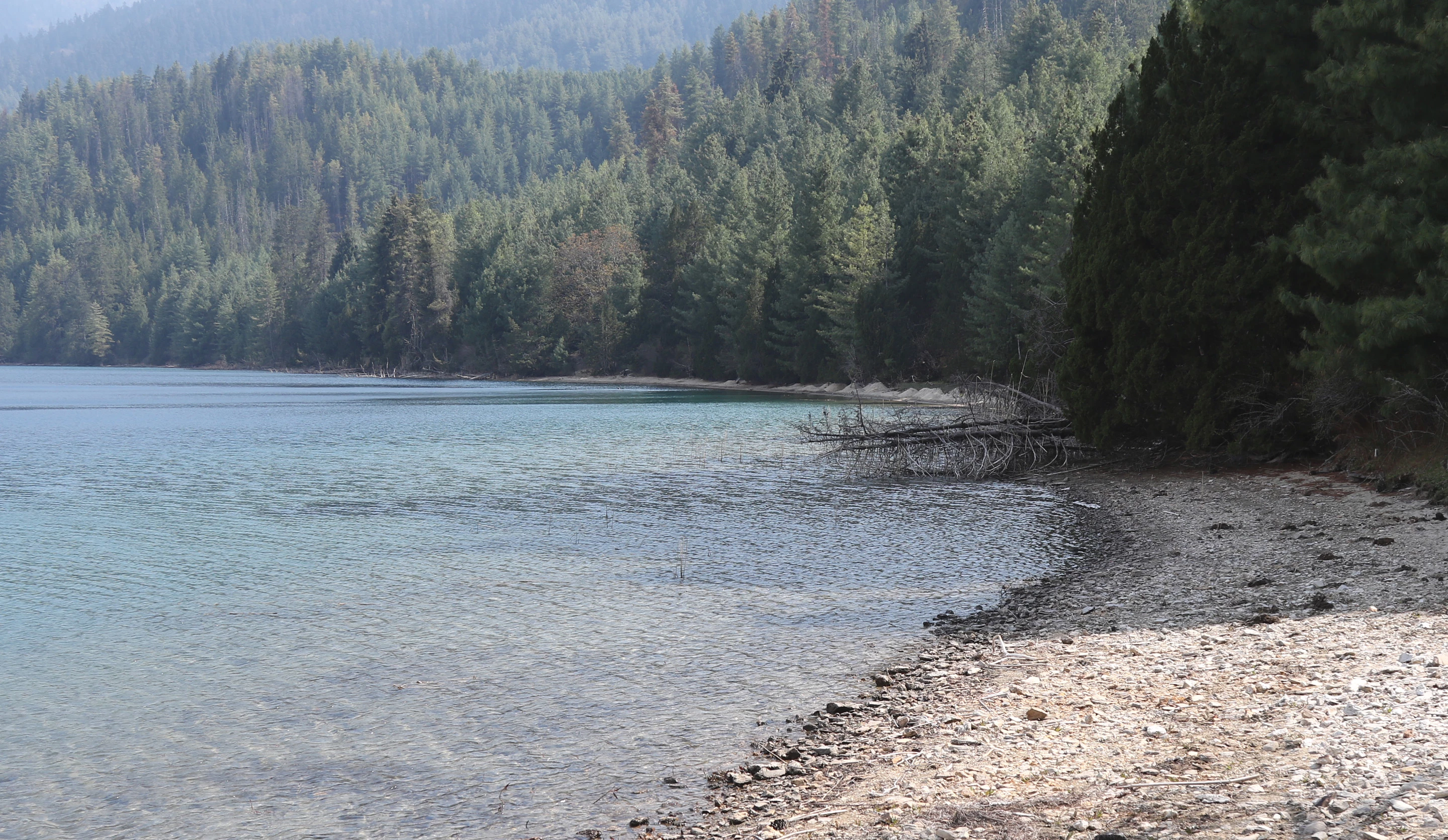
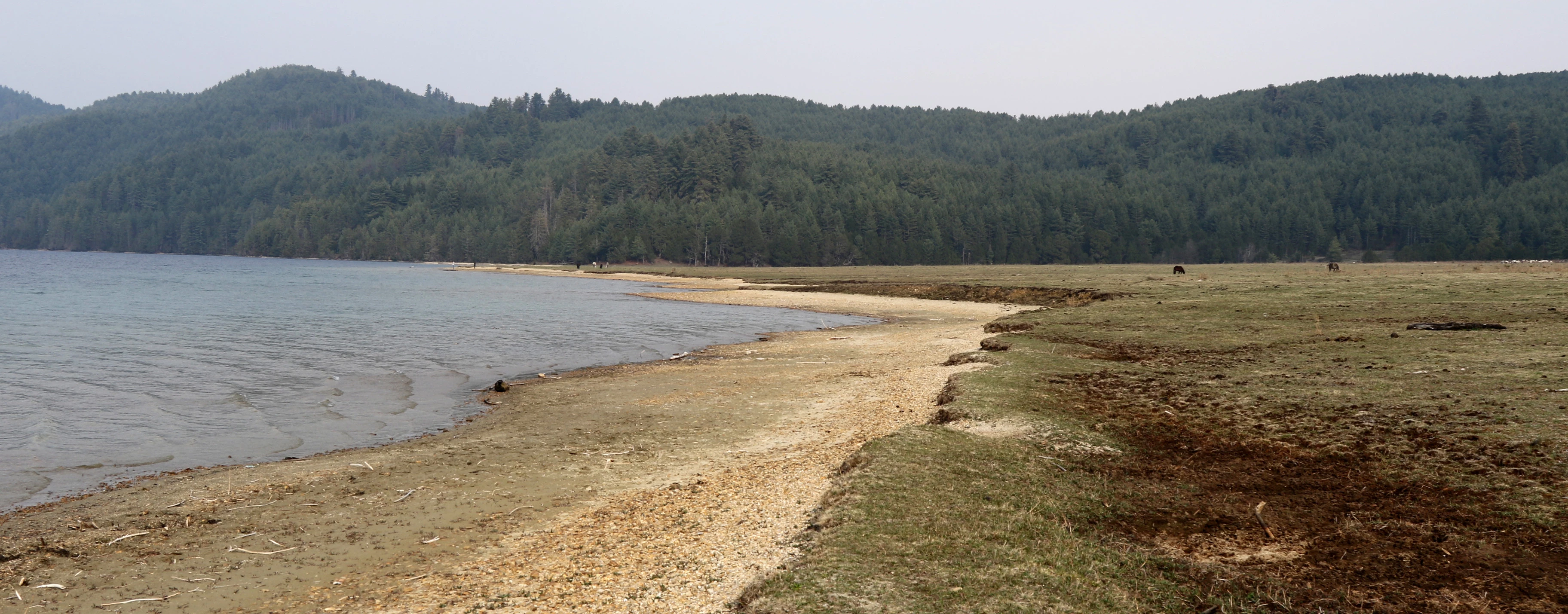
Rara Lake is the largest lake in Nepal with a 10.8 km2 surface area, a maximum length and width of 5 and 3 km, respectively, and a maximum depth of 167 m. It is situated at 2990 m altitude in the Rara National Park of the Mugu district in north-western Nepal.

Rara Lake from the air

The lake drains to the Mugu-Karnali river system via the Nijar Khola. Rara Lake is surrounded by conifer forest, dominated by blue pine associated with several species of Rhododendron, and by alpine meadows. The National Park is home to over 50 species of mammals, including the Himalayan Black Bear and the Red Panda, and to 272 bird species, with the lake itself being important for migrating birds. The lake is also home to three trout species, one of which is endemic.

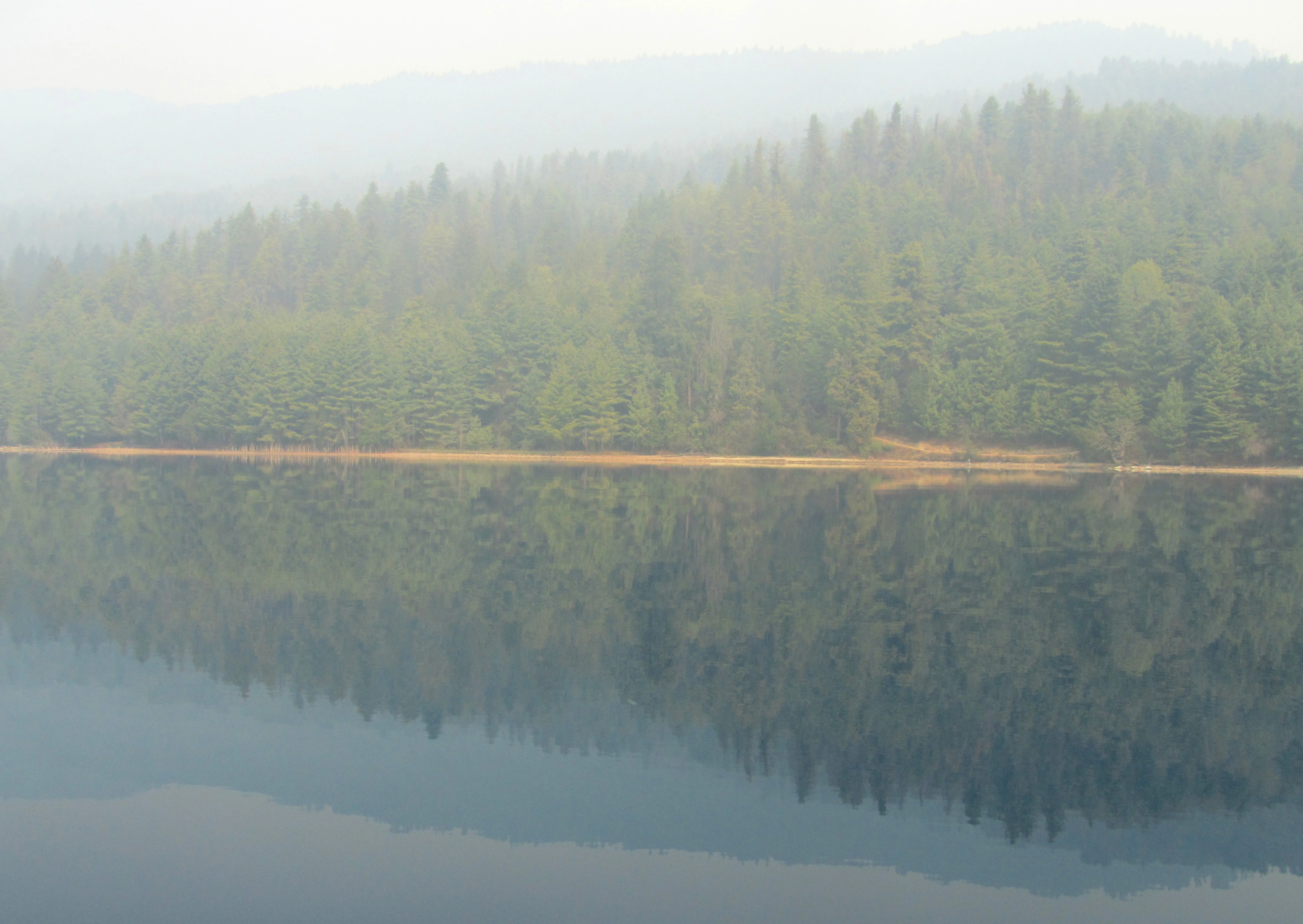
Rara Lake west shore

Rara Lake south shore

Rara Lake west shore


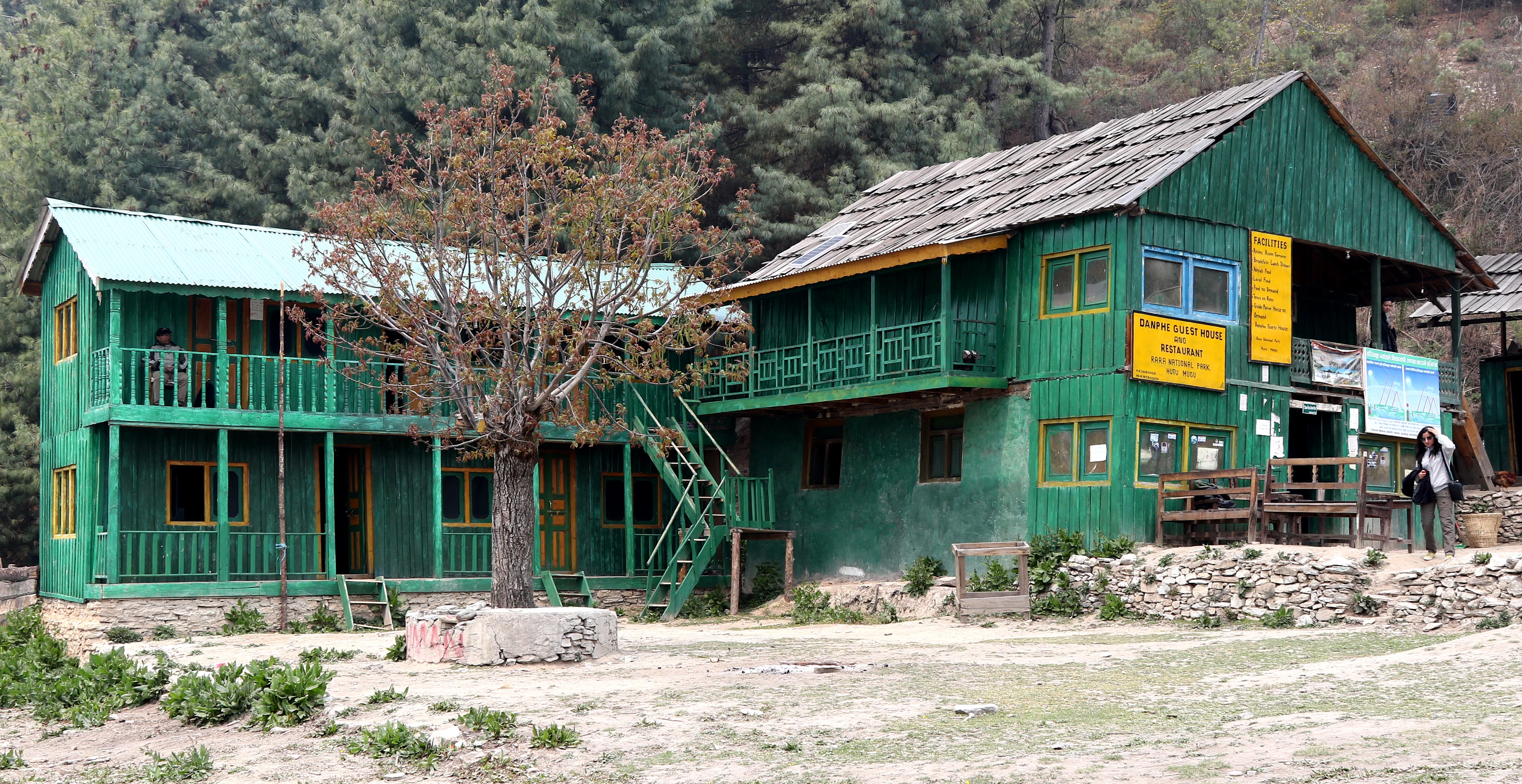
The area is sparsely populated, but a small settlement including a guesthouse, a health post and an army camp are located at the northern lake shore.

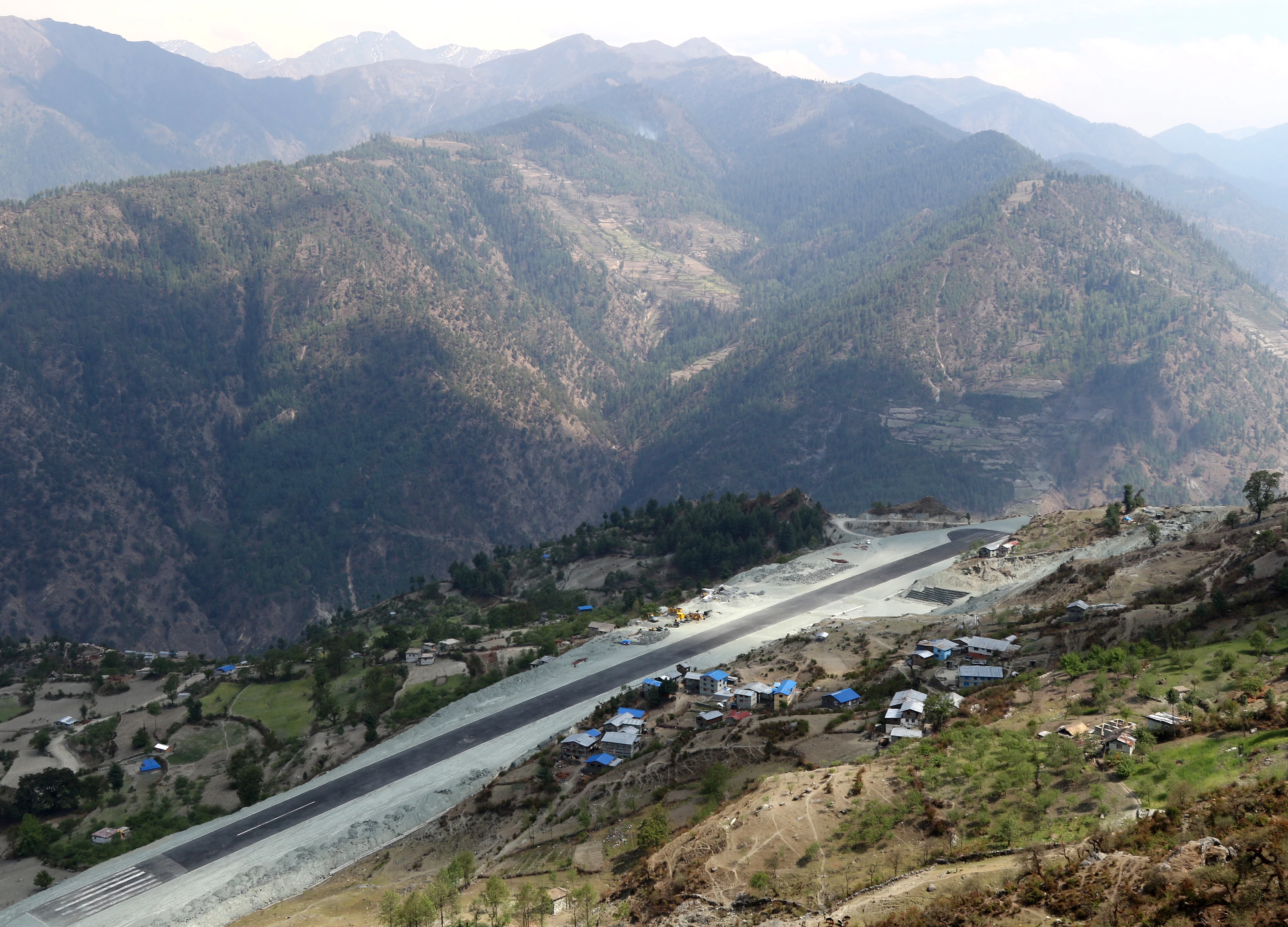
24 April.     After a 45 minutes flight from Nepalgunj with spectacular views of Rara Lake from the air our small plane landed at an airstrip in the village of Talcha at 2700 m altitude. From there we walked four hours to the lake.

25 April.     The aim of this year’s field visit was to resurvey all sites which were first studied in October 2015. The sites were located in the lake littoral along the entire shore, and also included a number of small inlets and the outlet.

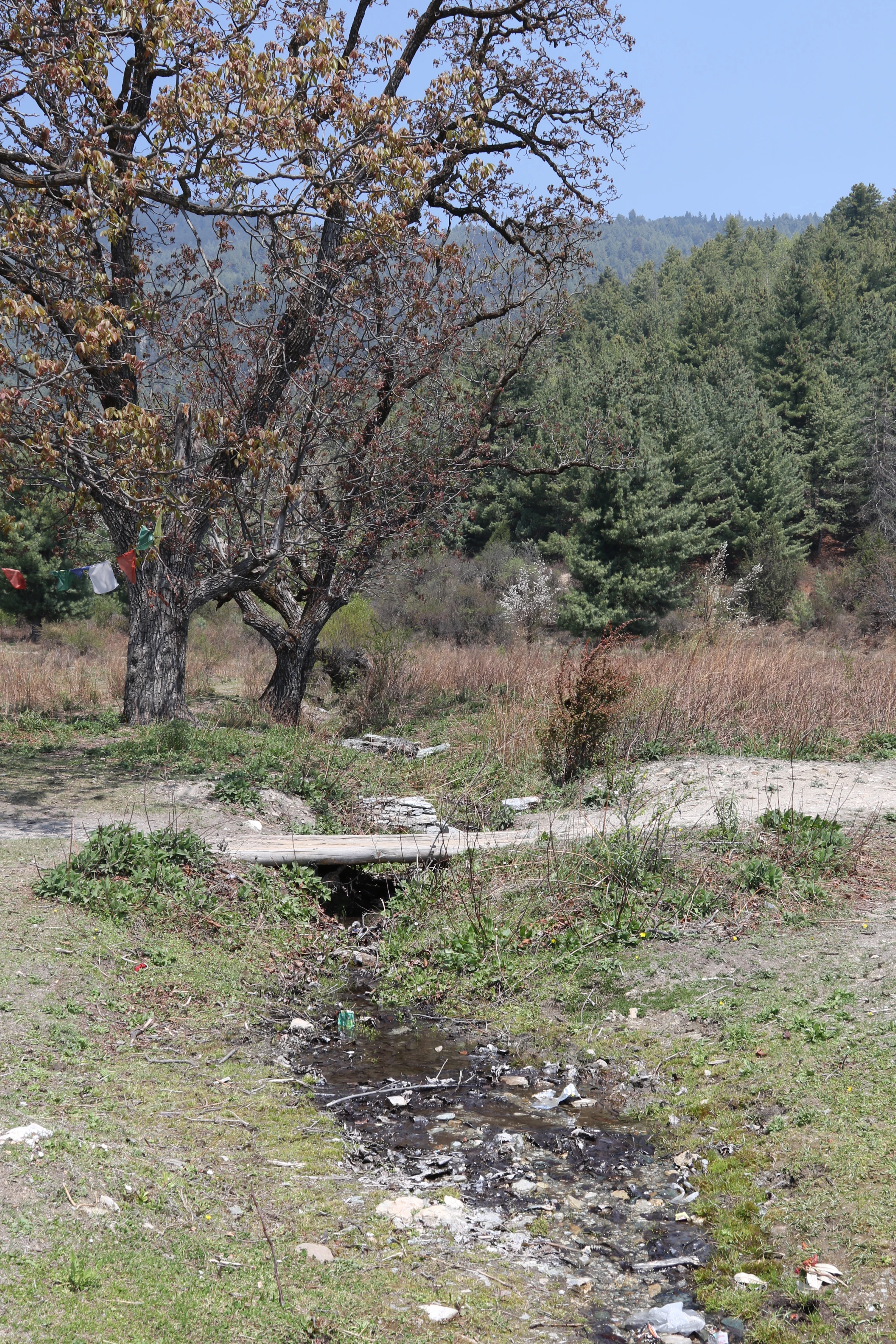
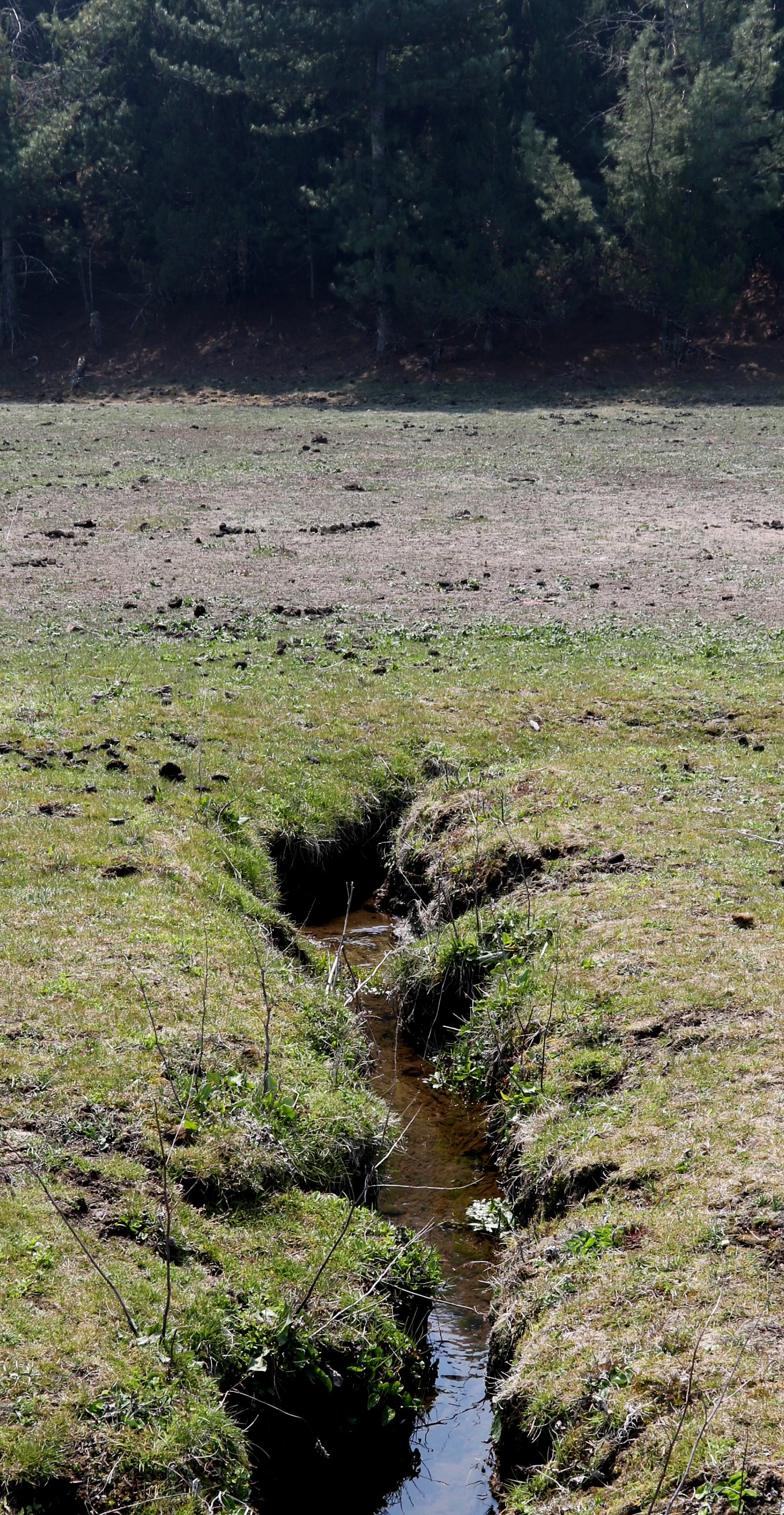
Inlets of Lake Rara at the north and south shore

Rara Lake south shore at Milichaur

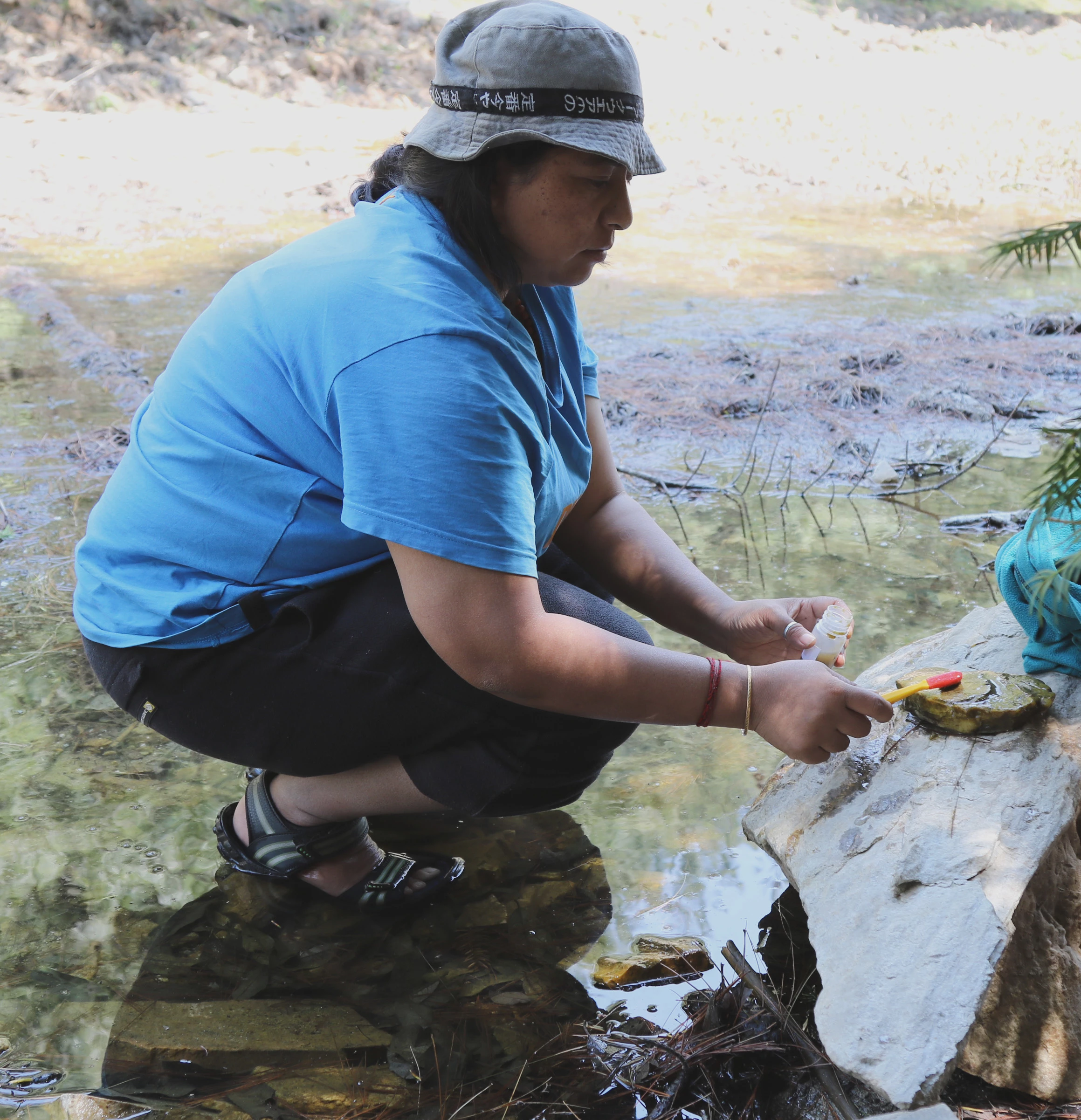
Diatom samples were taken at each site from all available substrata to study diversity and species composition in relation to water chemistry and habitat character. The collections from October and April will enable us to investigate possible seasonal differences between the post-monsoon season in the autumn and the pre-monsoon season in spring.

Smriti Gurung collecting diatoms from the outlet of Lake Rara

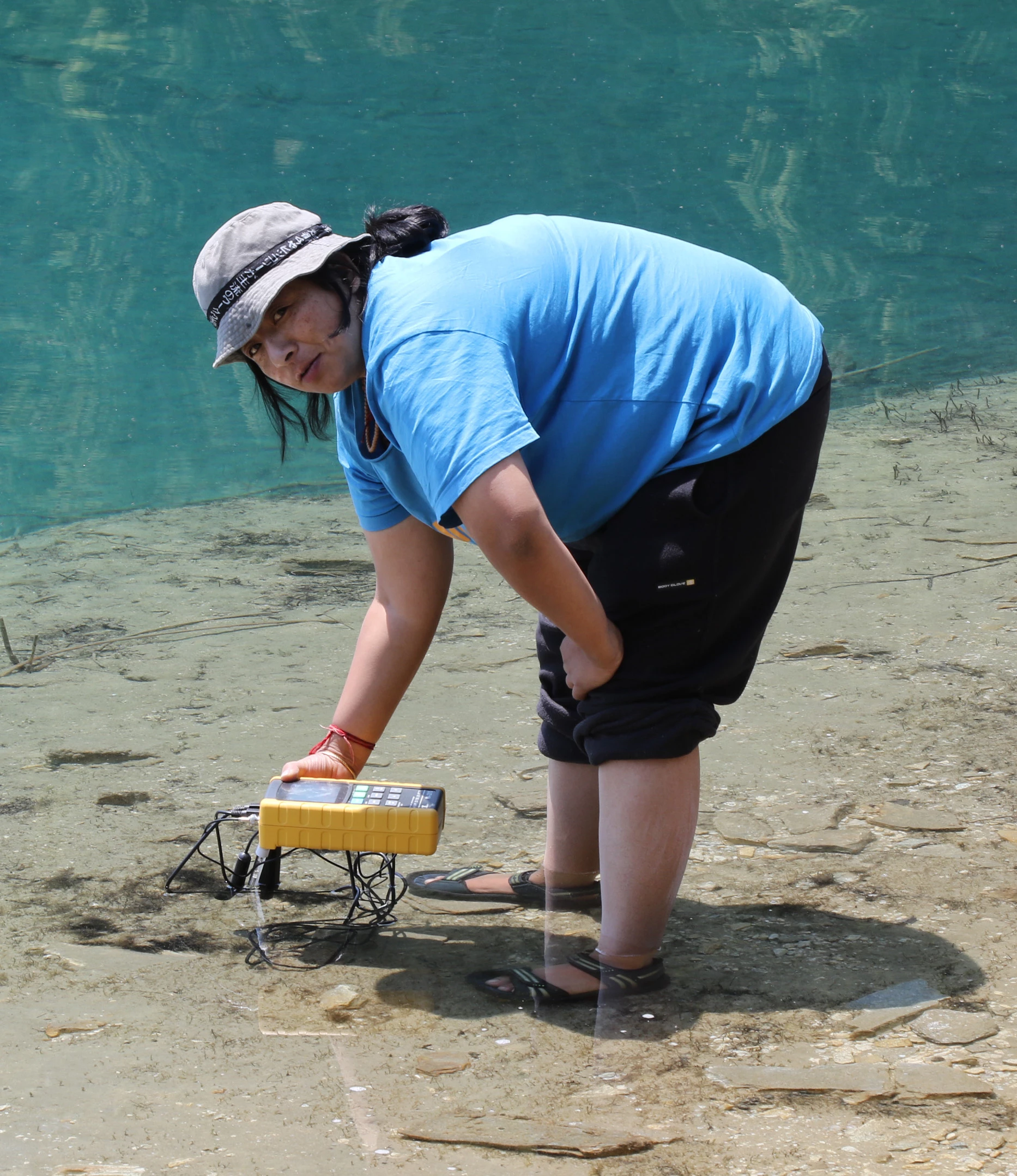
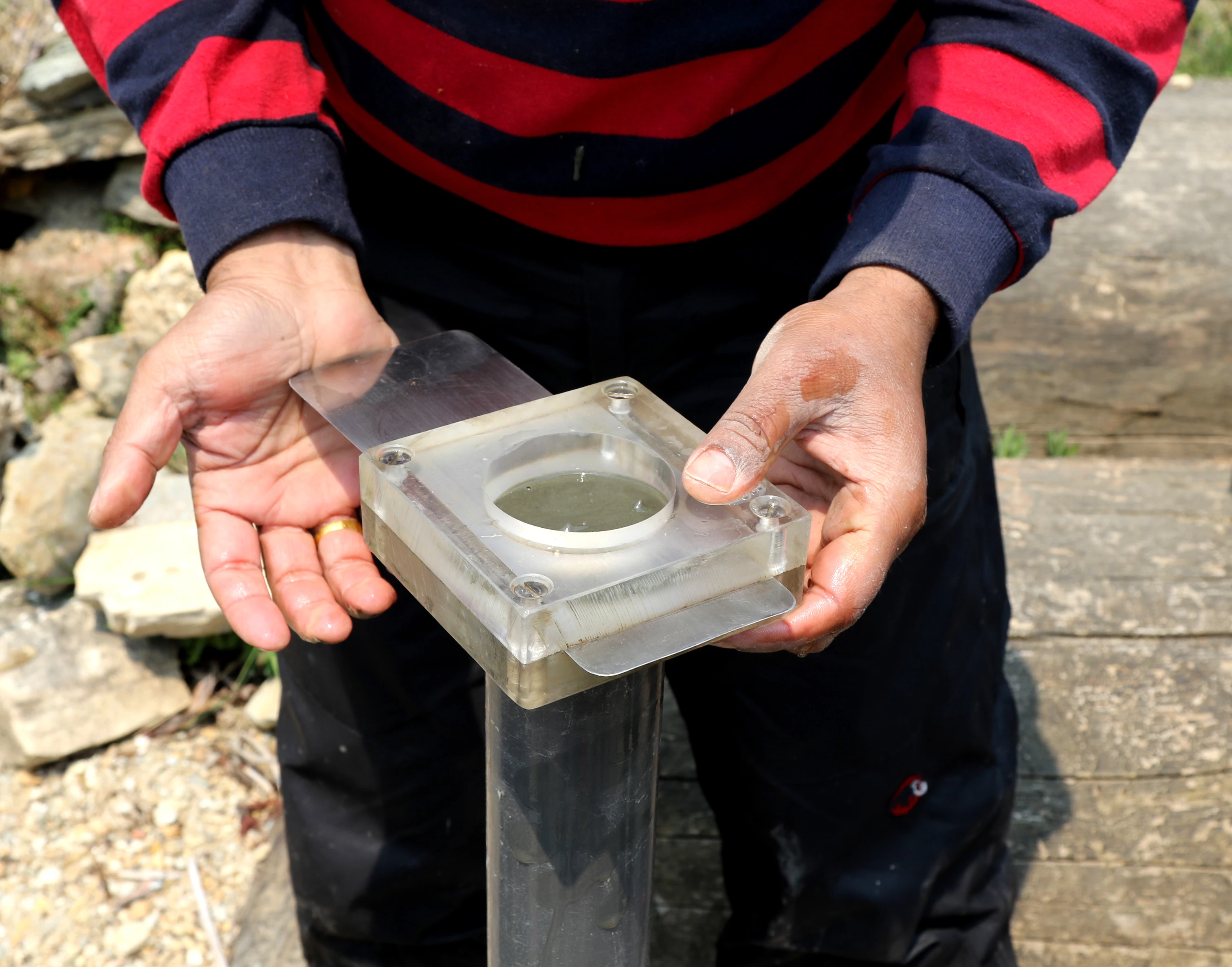
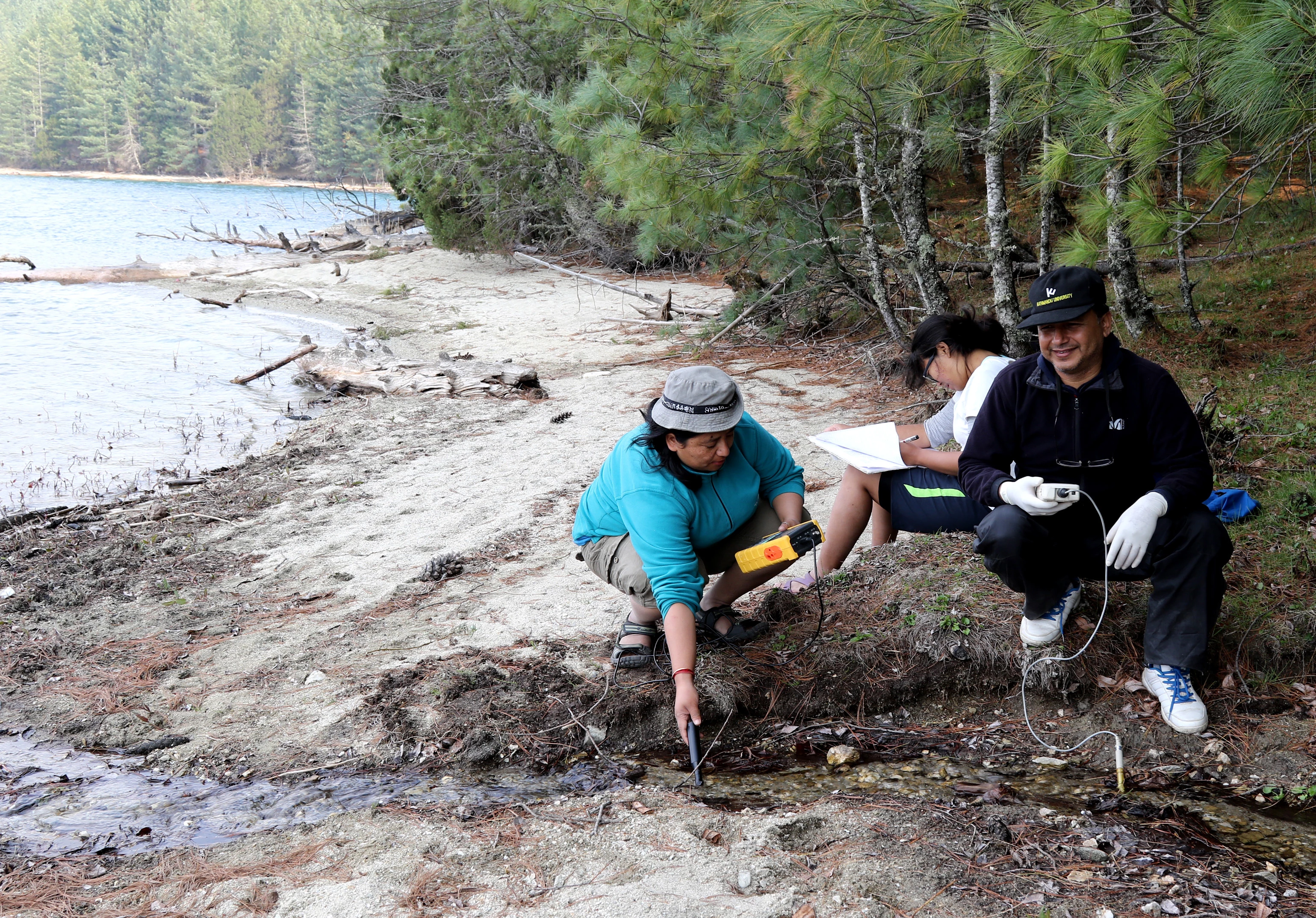
Physico-chemical parameters including temperature, pH, conductivity, turbidity were measured and water samples were taken for chemical analysis of nitrogen, phosphorus, sulphate, major ions such as silica, sodium, calcium and trace elements. Habitat features such as substratum composition and land use were recorded.

Smriti Gurung measuring pH and conductivity

Today we started our field work exploring the north-western shore of the lake and the area near its outlet.

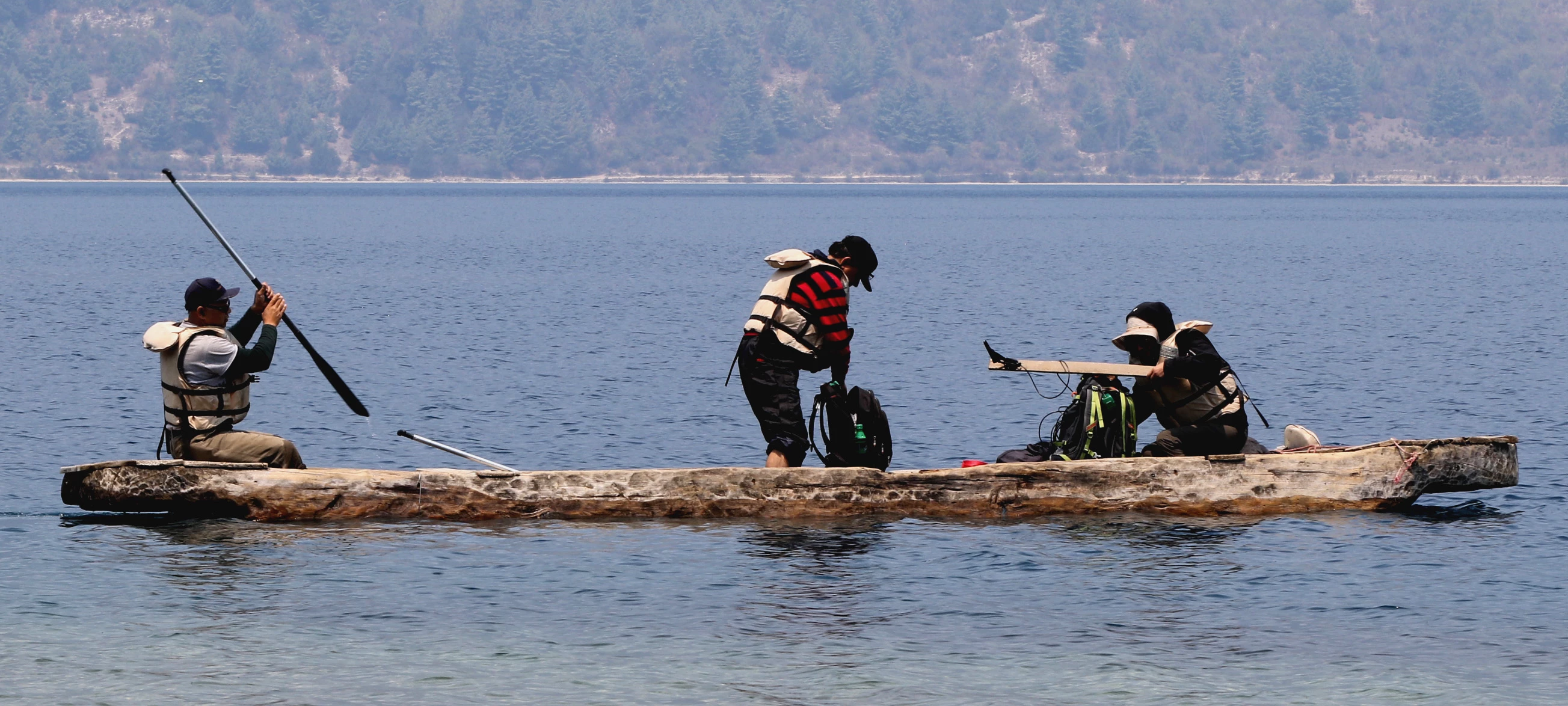
26 April.     Four members of our team rowed across the lake to take bathymetric measurements and to locate the deepest part of the lake in preparation for the collection of sediment cores on the following days. A large deep basin with a maximum depth of 167 m is present in the western part of the lake, the area most suitable for coring.

Roshan M. Bajracharya, Chhatra Sharma and Nani Raut taking bathymetric measurements

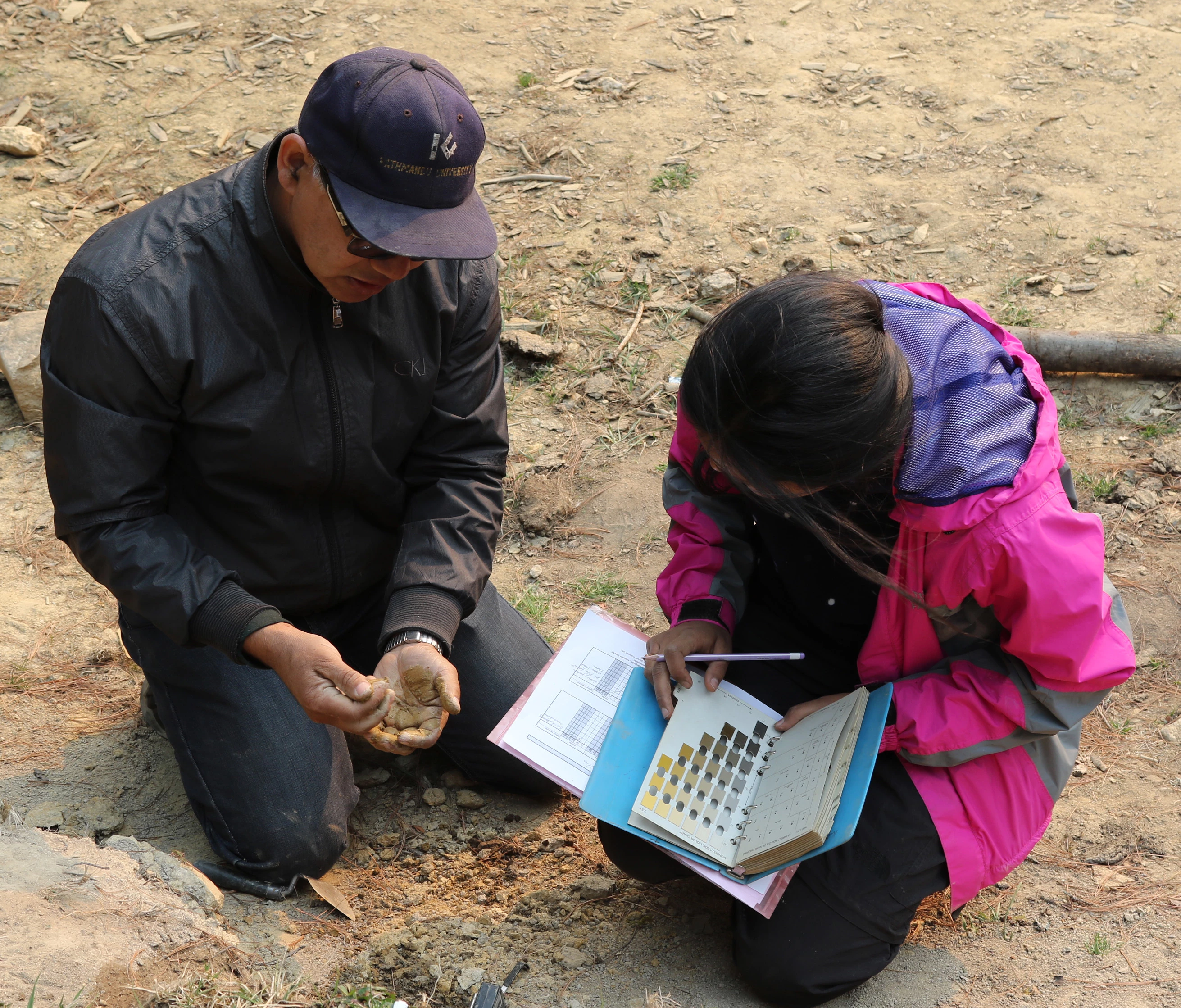
The other team members walked around the entire lake while taking diatom, water and soil samples along the southern shore. The soil investigations included studies of four transects with four sites per transect located along altitude gradients. Soil samples were collected to study physical parameters such as bulk density and texture, chemical parameters including nitrogen, phosphorus, potassium, organic carbon, pH and cation exchange capacity, and the soil fauna.

After ten hours we arrived back at the guesthouse, it took us approximately seven hours to walk around the entire lake during which we stopped at several sites to collect our samples.

Roshan M. Bajracharya and Preety Pradhananga investigating soil samples along transects near the shore of Rara Lake

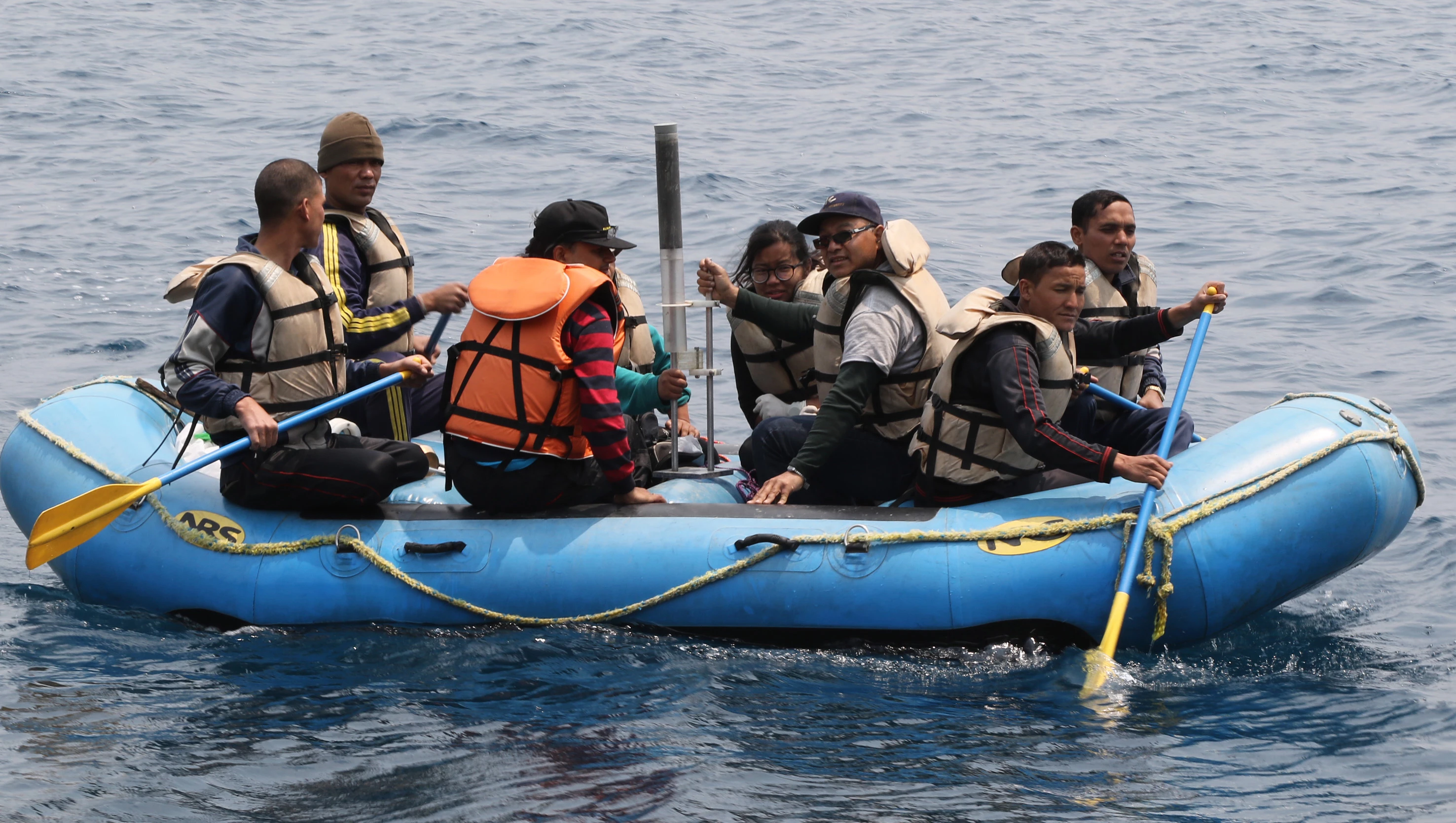
27 April.     The morning was taken up by sediment coring which had to be completed by lunch time: in the afternoon the winds are too strong and the waves too high to keep the boat steady in one place. The army camp near our guesthouse provided us with a large inflatable boat and four soldiers to row it.

Roshan M. Bajracharya, Chhatra Sharma, Smriti Gurung and Anu Gurung collecting sediment cores

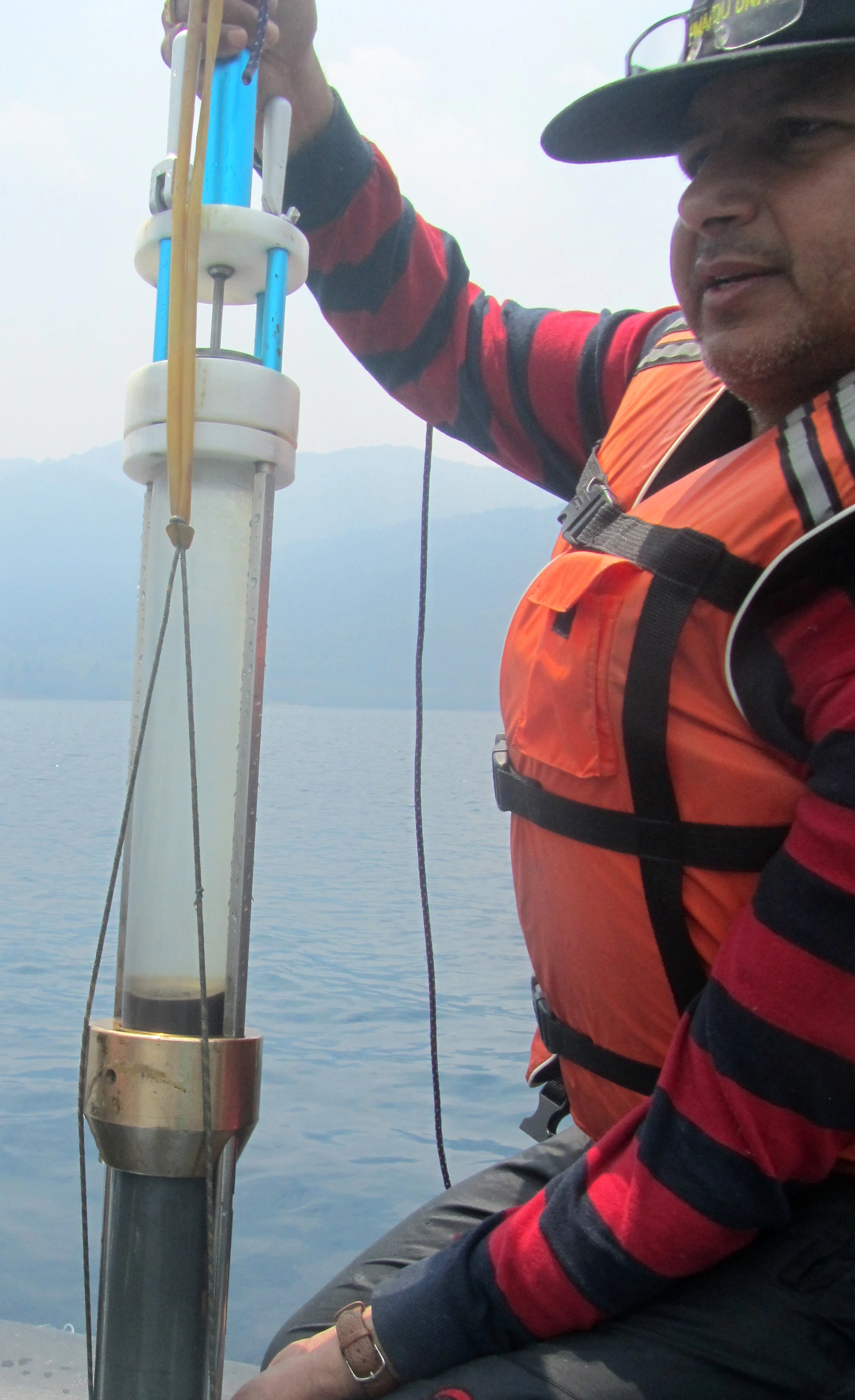
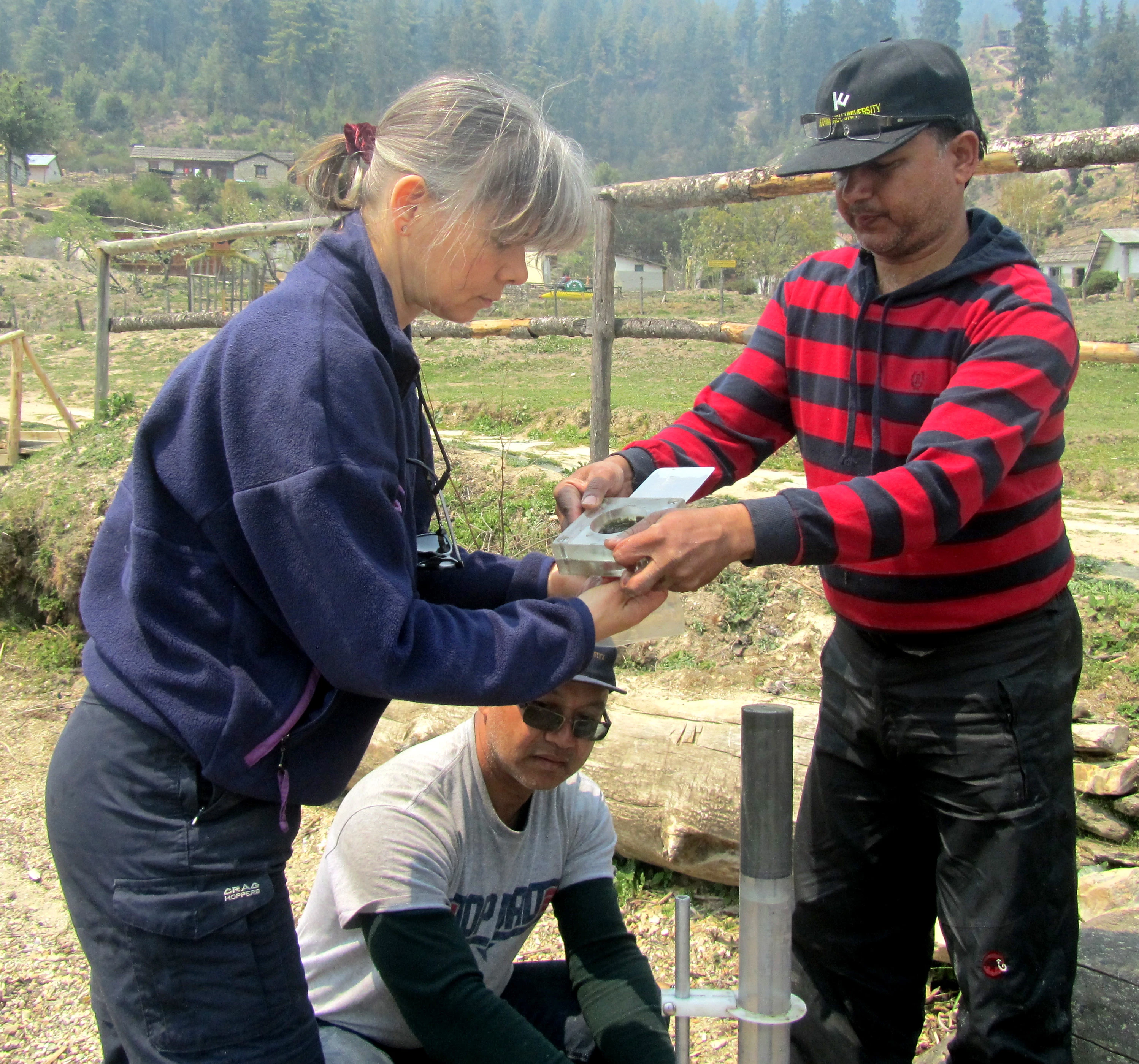
Lake sediment records contain remains of organisms and persistent chemicals which can be used to reconstruct environmental change over a period of time. Two 30 cm long sediment cores were extracted from a depth of 165 m. One of the cores was cut into 0.5 cm slices and will be used for dating. The second core was cut into 0.5 cm slices for the top 10 cm, and subsequently into 1 cm slices. Diatom assemblages will be investigated in each slice. Any major change in species composition along the core’s profile would indicate environmental change within the lake and in its catchment.

Ingrid Jüttner and Chhatra Sharma cutting a sediment core for diatom analysis

In the afternoon diatom and water samples were collected from several sites along the northern shore in the vicinity of the settlement and the army camp. It will be interesting to see whether negative impacts can be detected in this part of the lake due to polluting runoff.

28 April.     In the morning three additional sediment cores were collected, and further bathymetric measurements taken in the eastern part of the lake. The cores will be analysed for trace elements, metals, nutrients and organic contaminants including polycyclic aromatic hydrocarbons (PAH). After lunch we left the guesthouse to return to Talcha. On the way collections were made along one other soil transect, and water and diatom samples were collected from three sites on the north-eastern lake shore.                                                                     

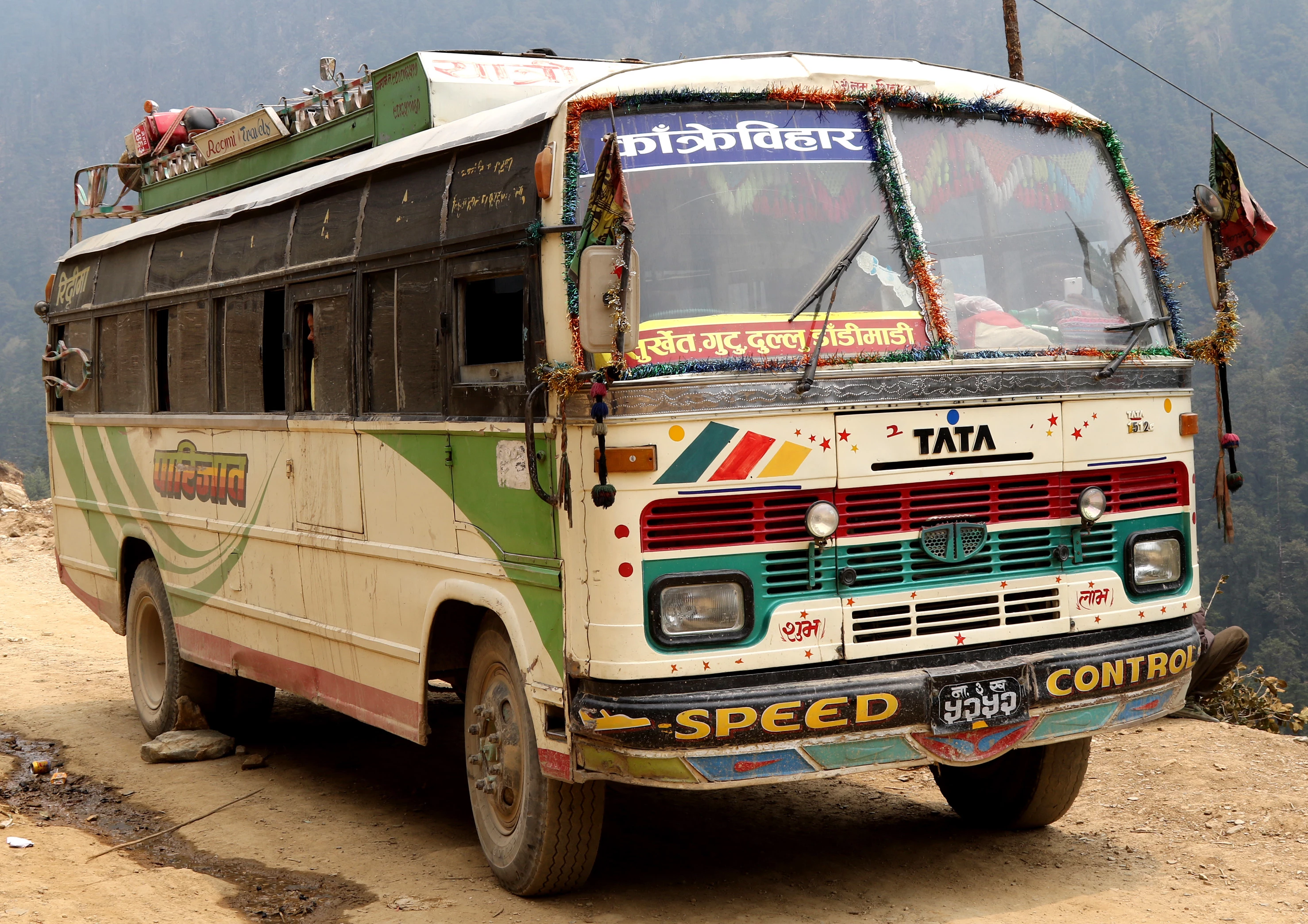
29/30 April/1 May.   Since our arrival at Rara Lake mist had fallen and eventually was so dense that planes could not fly any longer into the mountains. We had to take a two day, 400 km long adventurous bus journey along a winding mountain road to return to Nepalgunj. In the evening of 1 May we arrived back safely in Kathmandu.

On 3 May I gave some lectures at Kathmandu University about freshwater algae including diatoms and my research projects in the Himalaya and the United Kingdom.

It was a wonderful opportunity to work together at Rara Lake, to complete our fieldwork successfully and report about my research on diatoms. Our project gave us reason for optimism, and the time spent together was uplifting and encouraging after the devastating earthquakes which hit Nepal in April and May 2015.

Clockwise from upper left: Bed Mani Dahal, Subodh Sharma, Chhatra Sharma, Smriti Gurung, Ingrid Jüttner, Nani Raut
Original Rock Stars

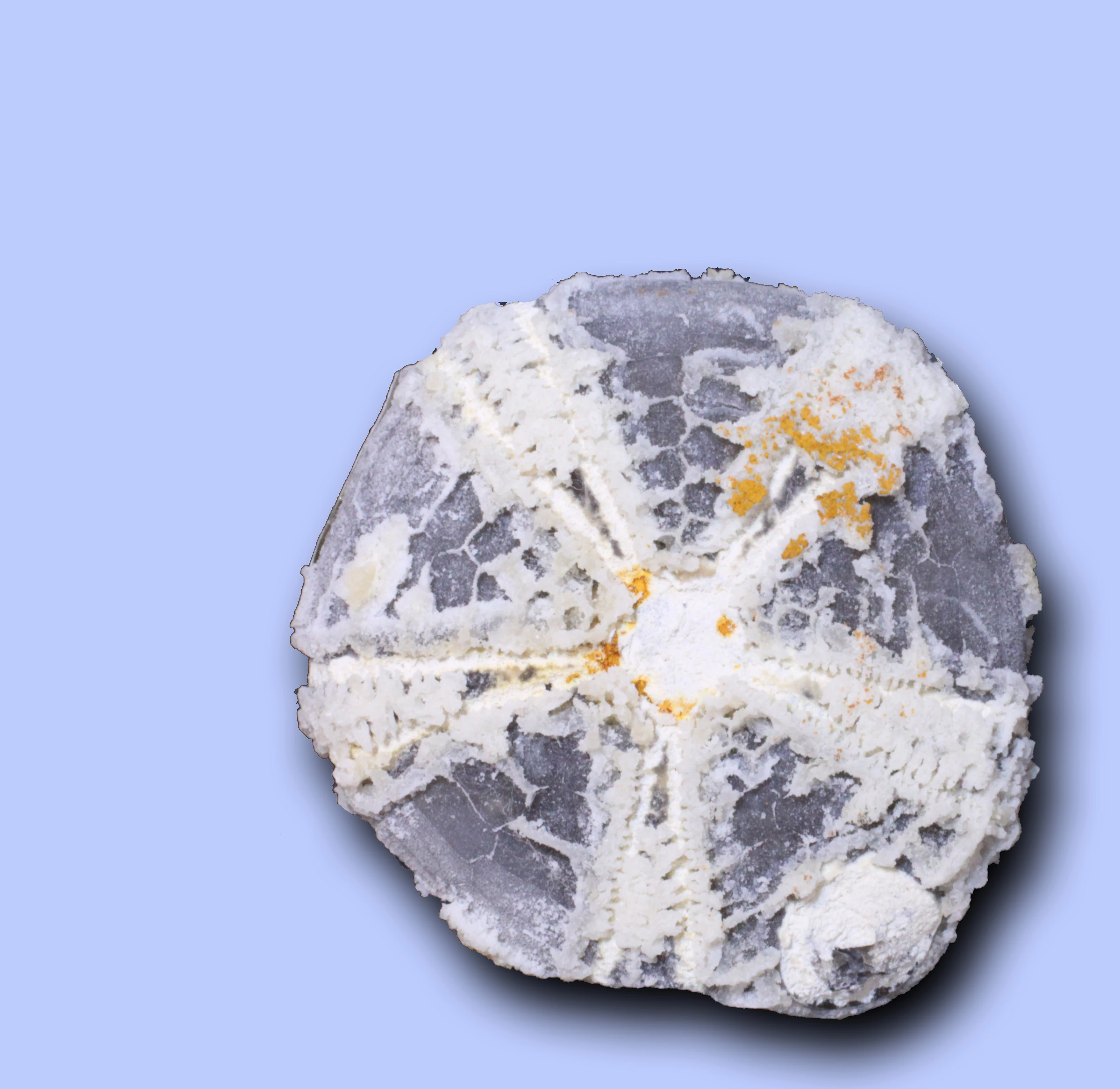
This blog is about fossils whose beautiful patterns have intrigued us for as long as we’ve been human. These animals survived the evolutionary power struggles of the past to leave their relatives in today’s oceans. They are the Sea Urchins, or to give them their scientific name, the Family Echinoidea - Echinoids to their friends.
A ‘Hedgehog’ by name, but not by nature

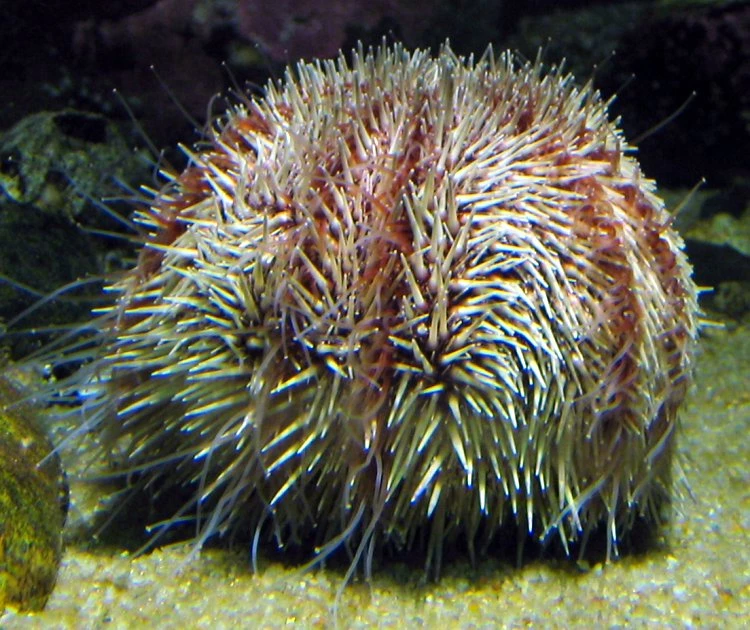
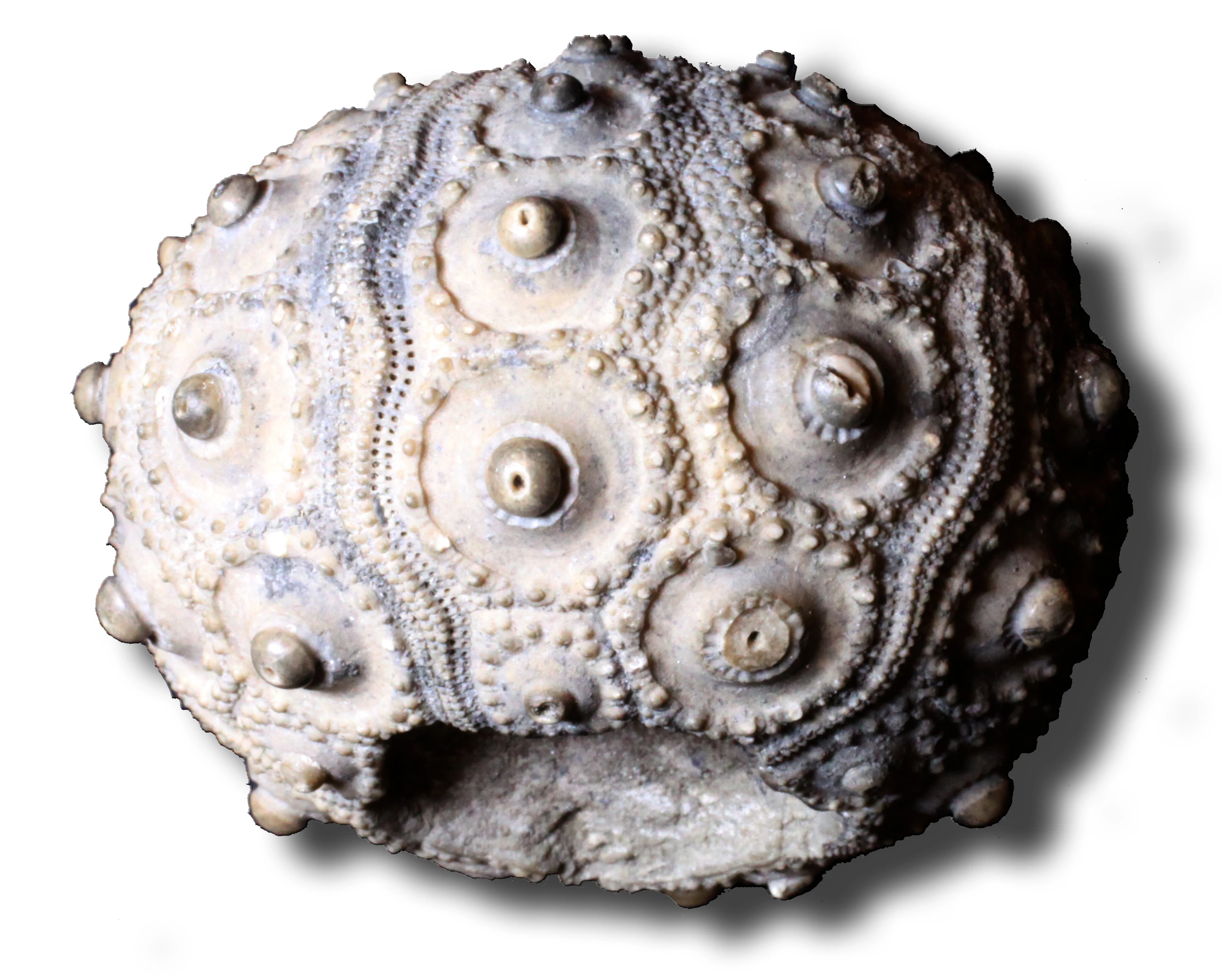
Their name comes from the Greek ‘Echinus’, meaning Hedgehog, because of their spines. People in the Middle Ages had the idea that each kind of land animal had a matching version living in the sea; sea-horses, sea-cows, and so on. So the spiky Echinoid was naturally called a Sea-Hedgehog. This might sound daft today, but we still call the Echinoids’ cousins “Starfish” though we know they’re nothing to do with fish at all !

Like little armoured aliens

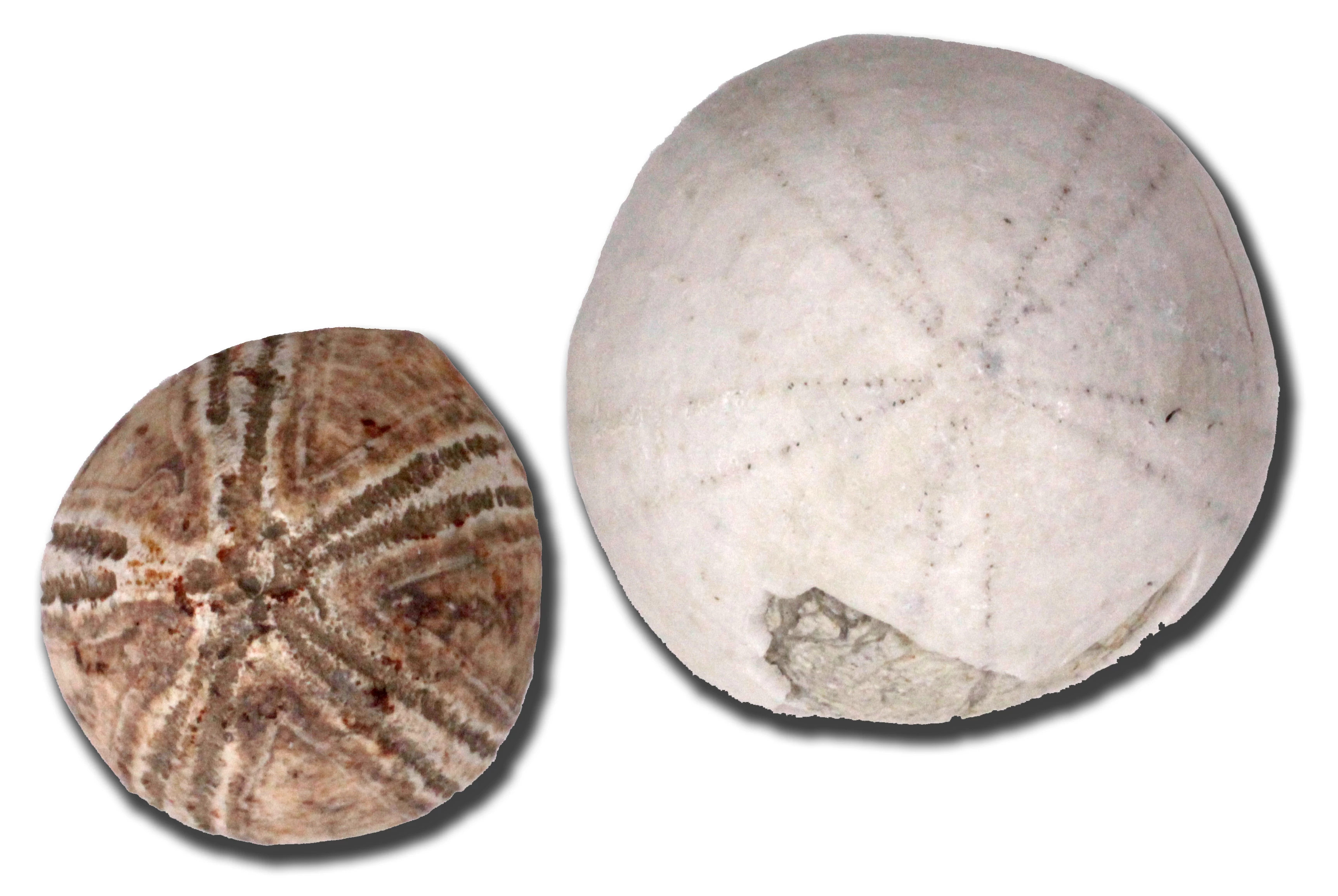
The bodies of echinoids are really strange, almost like something from science-fiction. Being covered in massive spiny stilts you can walk on is weird enough, but inside their box of a shell they’re even more peculiar. They have a multi-purpose organ called the water vascular system. It’s a central bag of fluid connected to five lobes which lead to many tiny tubes coming out through pores in the shell. These are its tube-feet. It can move them around by changing the pressure inside the bag. They’re very handy for dragging itself along the sea floor, sensing the surroundings, and for getting food to its mouth. Some burrowing echinoids can even stick a tube foot up above the sand to get oxygen from the water.

Their basic body plan has proved to be very well adapted to a life of sea-bed scavenging. They move along like armoured tanks eating up whatever they can find; mostly algae, but their set of five toothed jaws can deal with a varied diet.

Cherished by the Ancients

The beautiful shells of echinoids have fascinated humans for a very long time indeed, maybe because they’re so different from other animals on the planet. Most animals have just one line of symmetry and an even number of limbs. But echinoids and their cousins the starfish can show star-like five-fold symmetry.

We know that this struck many people in the past. Ken McNamara gives the following two examples in his book “The star-crossed Stone” about the rich folklore of echinoids.

The oldest example of a collected and labelled fossil, is an echinoid with Egyptian hieroglyphics inscribed on it about 4000 years ago. It was found “in the south of the quarry of Sopdu, by the god’s father Tja-Nefer”. Sopdu was called the god of the morning star - he was a kind of border-guard god, and it’s been suggested that echinoids were important to the Egyptians in some way in their travels to the afterlife.

But human fascination with echinoids stretches back much, much further than that; long enough for the great ice sheets to have advanced and retreated across Britain four times since. About four hundred thousand years ago in what is now Kent, someone chose to make a tool from a flint containing a fossil echinoid. Most flint tools have two cutting edges, but this one may have been left unfinished on purpose. If the maker had chipped the flint to make the other edge, the fossil would have been destroyed. What is amazing is that this person was not a Homo sapiens like you or I, but either a Homo heidelbergensis or a very early Neanderthal (Homo neanderthalensis). Other humans were collecting fossils before members of our own species left Africa.

Trevor Bailey, Senior Curator – Palaeontology. This blog was adapted from a gallery tour I gave at the National Museum Cardiff.

Studying the Abyss

Often, people announce - with a knowing look in their eye – that Science knows more of the surface of the moon than it does of the deep oceans of our own planet. This platitude is probably vague enough to be considered accurate, but it ignores a salient fact about Earth: a lot more is happening here, especially in the oceans, and even the smallest sample of abyssal mud contains a wealth of life sufficient for years of study. Oceanographic missions are rare because each one produces a superabundance of data and specimens that require decades of work to describe and interpret. The simple problem of man-hours and scarcity of expertise in niche fields is what limits the scope of modern oceanography (and the funding available to it).

Blue-sky thinking

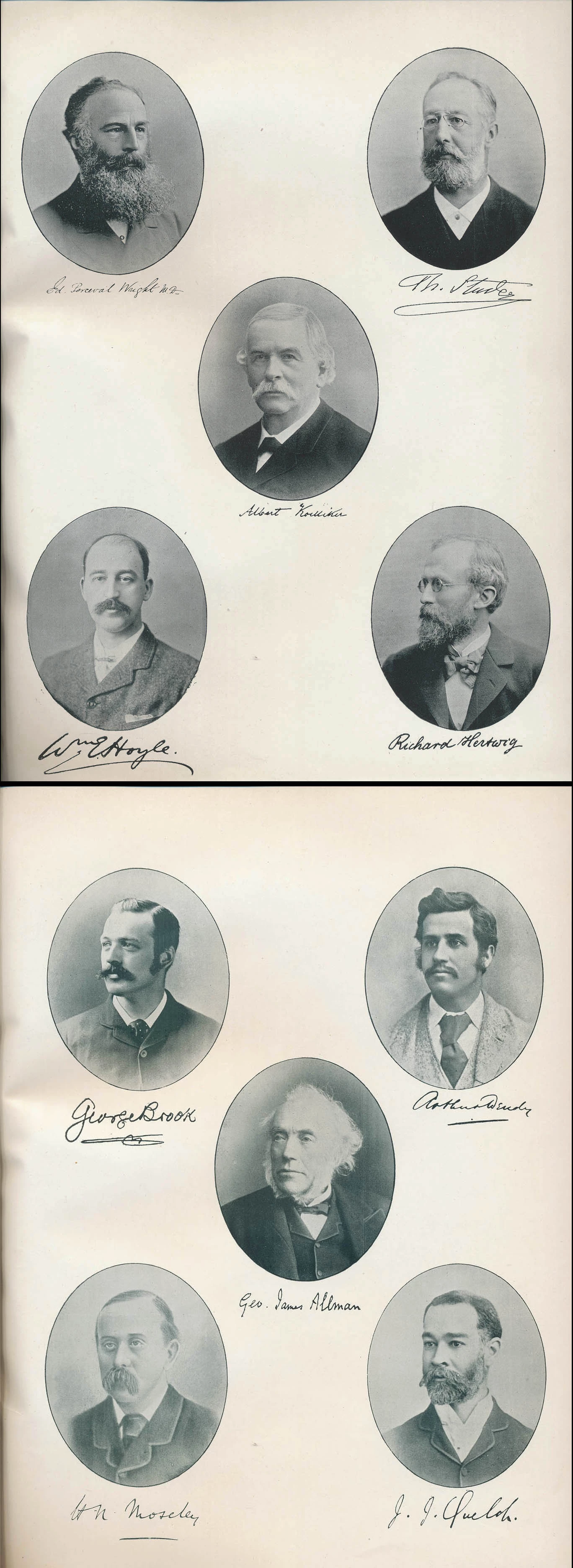
The index case for this problem was that of the Challenger expedition of 1872-76, a sprawling endeavor to “investigate the physical conditions of the deep sea in the great ocean basins” - scarcely has an expedition brief been bolder or more vague – with a navy vessel and a small group of gentleman-scientists headed by Charles Wyville Thomson. Wyville Thomson had headed earlier voyages to chart the waters around the British Isles, discovering life down to depths of 1200 metres; he had become the patriarch of the nascent discipline of oceanography, which – before Challenger – was limited to a hazy understanding that a lot of the oceans were very deep indeed. The vessel set out with a complement of around 250 men of all ranks and stations, weighing anchor in Portsmouth in December 1872 and zigzagging down the Atlantic coast of Europe before striking out towards the Caribbean. She would sail on for almost eighty thousand miles, crossing and re-crossing the Atlantic before swooping down to the sub Antarctic Kerguelen archipelago, circling Australia and the Pacific, and finally passing through the Straits of Magellan at the tip of South America on her way home.

A challenging legacy

This, however, is not the end of the story. On her voyage, the Challenger measured depth and temperature and collected biota, samples of living organisms from the sea floor, at 360 stations along the route of her voyage. The vessel was fitted with a fully-equipped laboratory, and vast volumes of specimens, data, and readings were amassed during the three years at sea; sediment samples sealed in meticulously-labelled bottles and countless specimens steeped in alcohol, volumes upon volumes of log-books and charts, water samples, and photographic negatives. There is a limit to the amount of useful scientific study that can be done by half-a-dozen scientists on a ship, so the massed volume of potential information was stored for the journey before being distributed across the country upon the ship’s return, each major grouping of specimens going to an organisation or individual most proficient in the study of that given group. Thus began the process of documentation, interpretation, and publication which follows any respectable scientific endeavour; but from the start it was fraught with difficulty, and the project would outstrip the length of the voyage six fold in terms of years spent upon it.

Tome after tome…

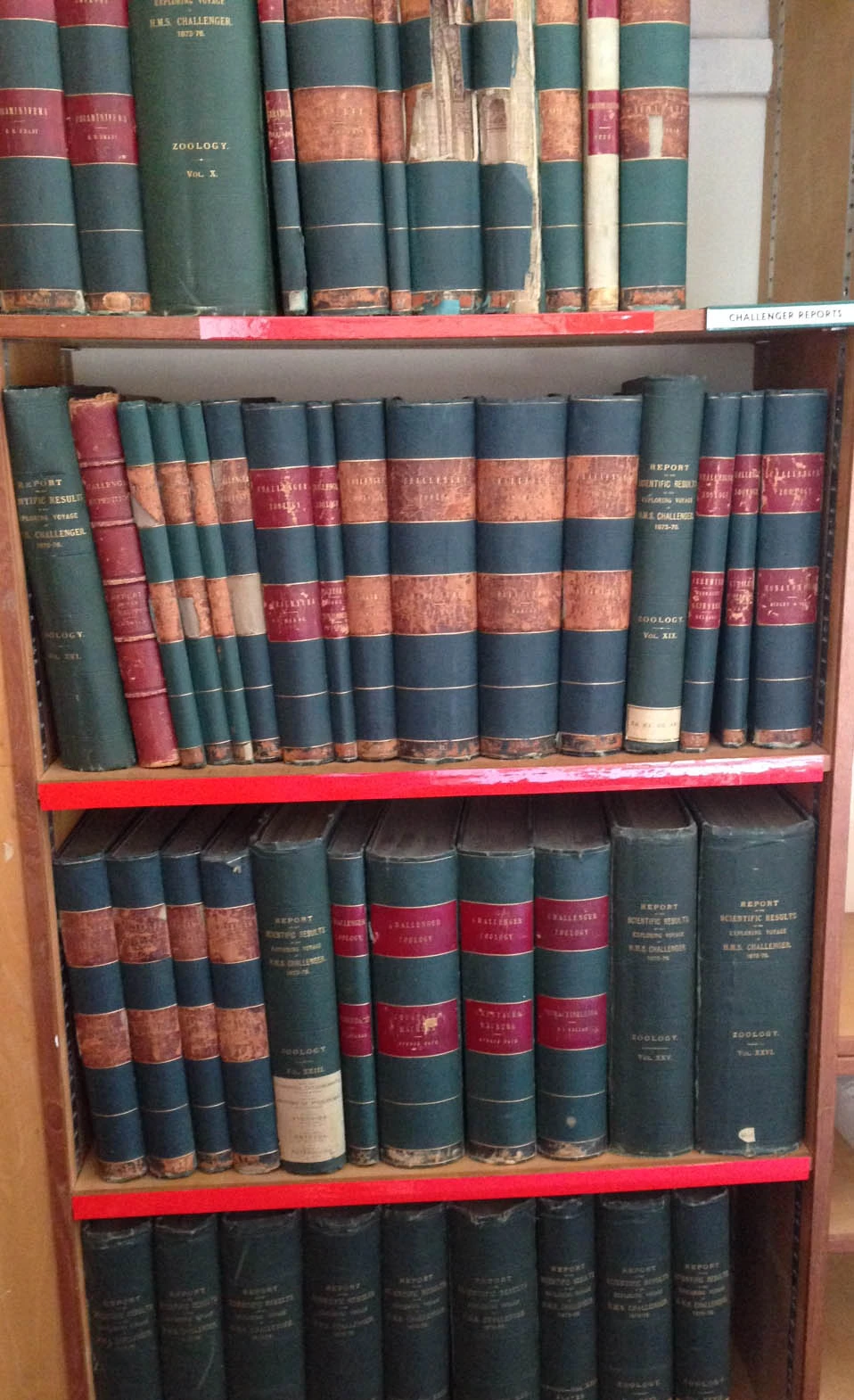
The grandly-titled ‘Report of the Scientific Results of the Voyage of H.M.S. Challenger during the Years 1873-76’, and its associated texts, started trickling from the presses almost as soon as the ship returned to port, but publication would drag on across fifty volumes and more than 29,500 pages. These shelves of heavy tomes contained the distilled data of the expedition, beautifully illustrated with hand-coloured lithographs depicting the litany of species which described as new to science. Wyville Thomson oversaw the publications, but the stress of the project overwhelmed him and he withdrew in 1881, dying shortly afterwards. His place was taken by John Murray, his friend and fellow oceanographer on the voyage; the Report would not be completed until nineteen years after the Challenger docked, a vast, sprawling and prohibitively expensive manuscript which has yet to be matched in terms of vision, boldness and scope (and quite possibly cost) to this day. In the current climate of meandering austerity and profit-motivated science, it seems inconceivable that such a dedicated blue-skies expedition, and the years of follow-up, could be mounted in the 21st century; modern oceanography exists as a passenger, travelling alongside the oil industry and the world’s navies, everywhere studying the workings of nature through the lens of humanity’s impact upon it.

Echoes of Challenger

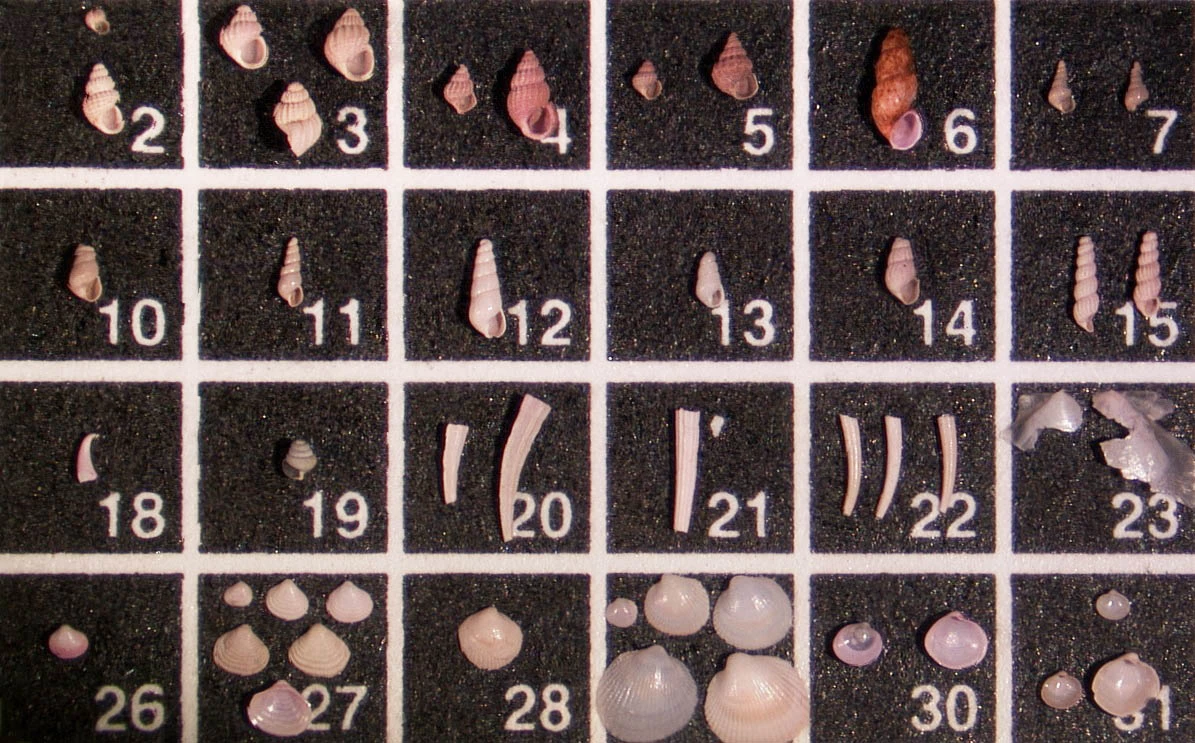
Echoes of Challenger appear everywhere in the study of samples from the deep ocean. Besides the heavy, leather-bound volumes that sit in the Mollusca Library at the Museum, the Ted Phorson collection which I’m currently working on contains swathes of sub-millimetre-sized mollusc shells (and other, stranger things) sampled from the North Atlantic by a remote vehicle (R.V.) designated vessel named Challenger, and Phorson himself worked on some of Charles Wyville Thomson’s still-unsorted specimens in the late 1970s, almost a hundred years on from when they were first collected. Modern scientific literature on the fauna of the deep oceans refers frequently to the Challenger Report, as so few works have tackled these organisms at the same level of detail since, and it seems unlikely that the oceanographers of the future will be able to; the days of the explorers are surely long gone. It is easy to feel a twinge of nostalgia for the scientific buccaneers of Challenger and, before it, the Beagle voyage – free from want for time and money, invested not with a desire for the wealth of nature, nor with a noble wish to save the oceans from man’s depredations, but instead willing to cast themselves out into the boundless wastes of the sea in search of the heady drug of knowledge, a pure and stupefying substance that raises one above the clouds, denied to us pragmatic, modern mortals. It is comforting to think of the vast mines of secrets that remain undreamt amid the vastness of the abyss, waiting for the explorers of the far future to uncover. Perhaps it is just as well that the days of the old sojourners are over, for now – after all, they have left the better part of their work undone.

Invertebrate Invasion: dispatches from the front line

The last year has been a busy one for the Department of Natural Sciences on the front line against invasive non-native species (INNS) in the UK.

INNS are introduced (or "alien") species that can spread and cause damage. Some INNS, like Japanese Knotweed and the Grey Squirrel, are all too familiar. Others, like most invertebrates, are unidentified and obscure when they first arrive.

It is often down to taxonomic specialists like us to identify these newly detected animals – with the help of museum collections – and to explain how they can be recognised.

In the last 12 months our Invertebrate Biodiversity team helped discover several more species new to the UK, and reported these in the Journal of Conchology and Aquatic Invasions. These are detailed peer-reviewed research papers, but such publications are not merely useful for specialists. They are referred to by agencies, policy-makers, and the public concerned about the spread and impacts of INNS in the UK and throughout Europe, as the range of other organisations we worked with shows.

The relevant specimens are accessioned at the Museum for future reference, and help ensure the national collections stay up-to-date with the changing fauna of Wales.The discoveries also make great stories about the surprises Britain’s wildlife still holds in store. We just hope that some will have happy endings!


1. Rogue Alsatian loose in Caerphilly

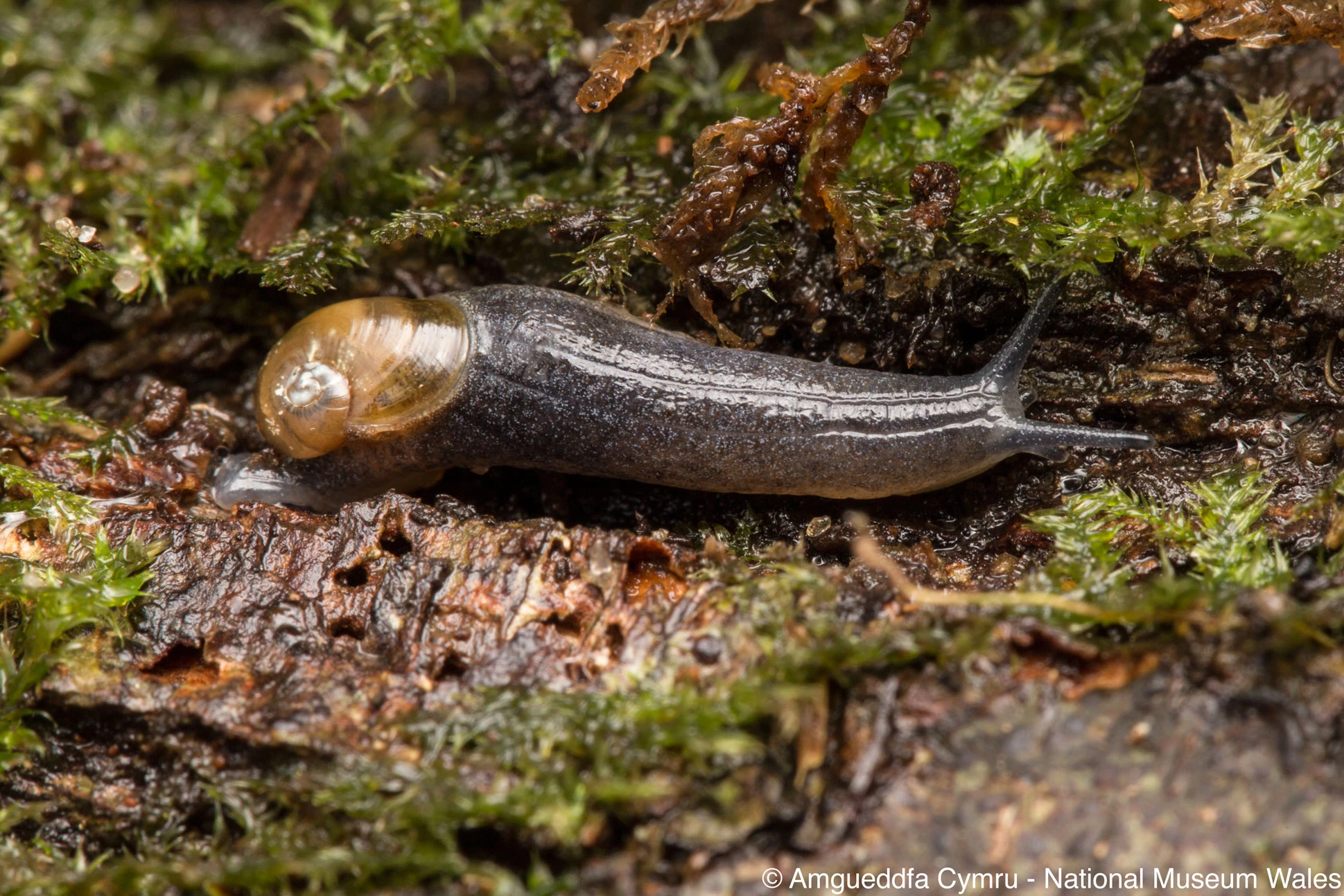
Aberbargoed naturalist Christian Owen spotted something weird during a meeting of the Glamorgan Fungus Group near Wern Ddu Claypits, Caerphilly (a noted geological and industrial site). Crawling under moss in the forestry plantations were several strange, small creatures, like overweight snails poking out of shells that are several sizes too small.

Using the Museum’s collections, we identified the species as the “Alsatian Semi-slug” Daudebardia rufa. This is a central European mollusc that has never been seen in the UK before. Despite being rather cute, it could be a nuisance since it feeds on other, wood-decaying invertebrates. We obtained forestry data for the area from partners from Natural Resources Wales, and our visits to the area so far suggest that the species is associated with certain conifer stands only.This story was featured in the Caerphilly Observer newspaper on 19 February 2016.

Reference: Owen, C, Rowson, B & Wilkinson, K. 2016. First record of the predatory semi-slug Daudebardia rufa (Draparnaud, 1805) from the UK (Eupulmonata: Daudebardiidae). Journal of Conchology 42(3) 119-121.

2. Sicilian Slug reaches Dublin and Swansea

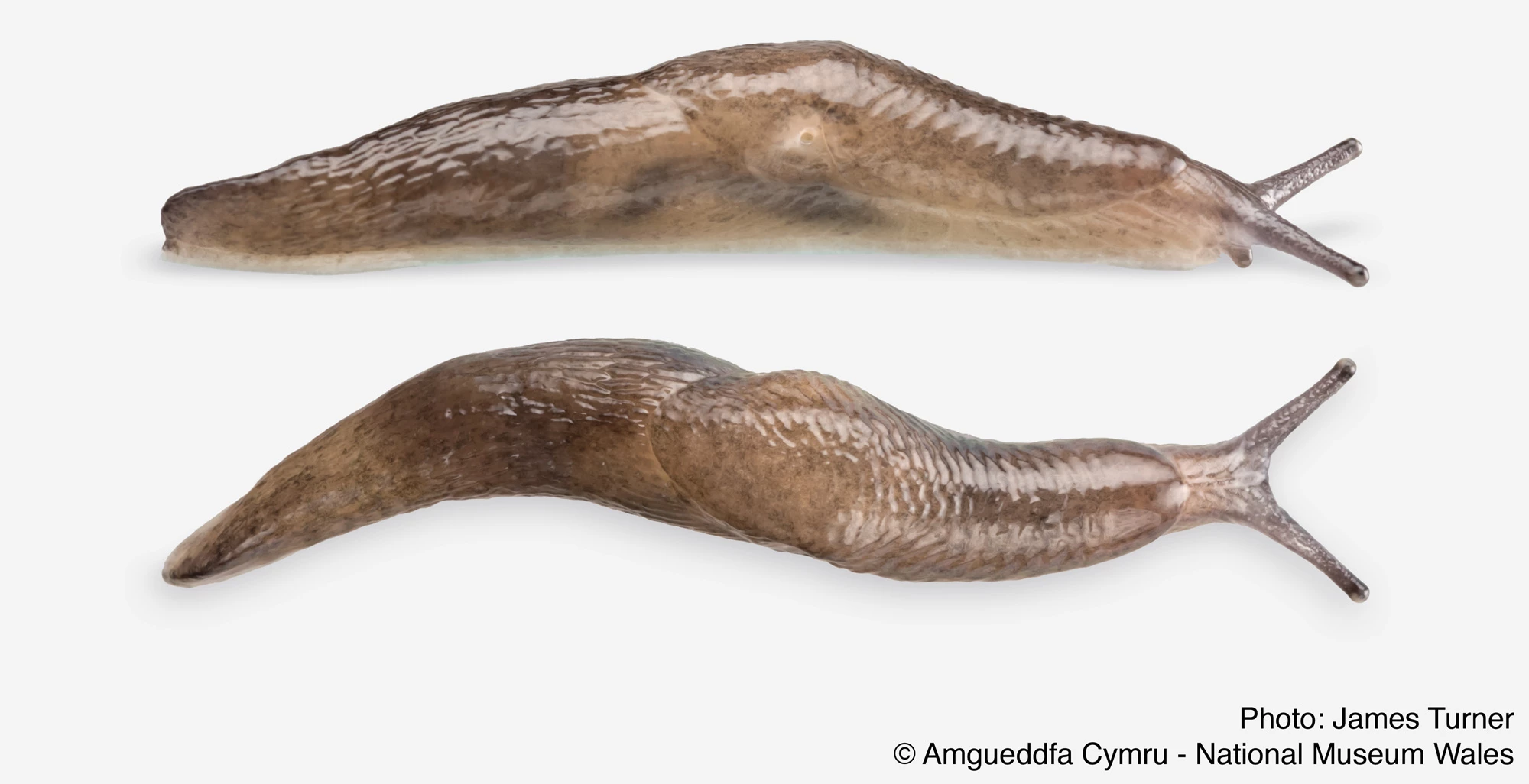
We discovered the Sicilian Slug Deroceras panormitanum as new to Britain in central Cardiff in 2012. It is evidently rare, so we were surprised to find a large population during a night-time survey in Swansea in April 2015. They were infesting flowerbeds in Cwmdonkin Park (famous from Dylan Thomas’ “The Hunchback in the Park”), which we were investigating as part of a study with Swansea University and Bristol University.Our partner in the Conchological Society also found the species among plants at a garden centre in Dublin, the first record of this species in Ireland. Searches at Welsh garden centres have so far proved negative, but this species now seems very likely to spread.

Reference: Rowson, B, Anderson, R, Allen, S, Forman, D, Greig, C & Aziz, NAA. 2016. Another wave of invasion? First record of the true Sicilian Slug Deroceras panormitanum sensu stricto from Ireland, and another from Wales (Eupulmonata: Agriolimacidae). Journal of Conchology 42(3) 123-125.

3. Piggy-backing American worms in Abergavenny river

The introduced and prolific North American Signal Crayfish Pacifastacus leniusculus is a major threat to our native White-clawed Crayfish Austropotamobius pallipes through transmission of crayfish plague. Now, a new potential danger has been found. Joanna James, a PhD student at Cardiff University, discovered two species of crayfish worm (small leech-like annelids) living on the claws and carapaces of signals in the River Gavenny. These were identified in collaborative research with the Museum and a paper published in the journal Aquatic Invasions. University research is continuing into the impact these worms could have on invasive and native crayfish populations.

Reference: James, J, Cable, J, Richardson, G, Davidson, KE & Mackie, ASY. 2015. Two alien species of Branchiobdellida (Annelida: Clitellata) new to the British Isles: a morphological and molecular study. Aquatic Invasions 10(4) 371-383.

4. Big winter storms cast up trans-Atlantic migrants

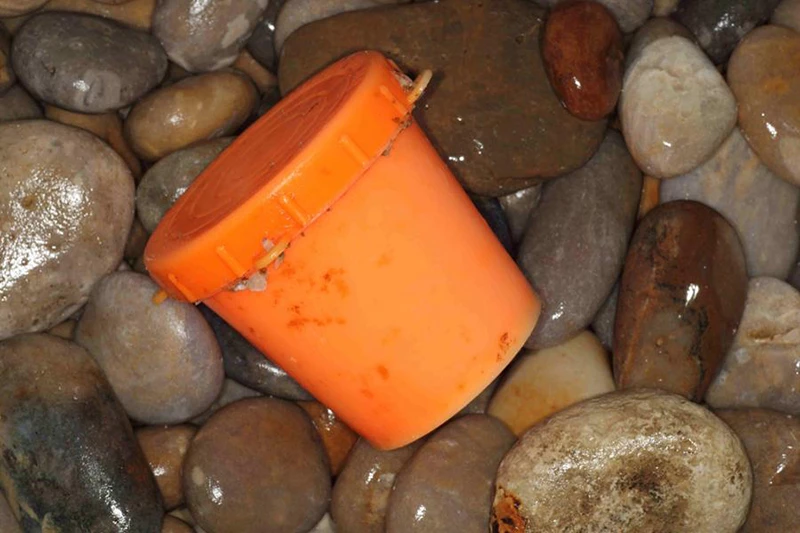
Old buoys, fishing bait buckets and plastic spools double as rafts for many American invertebrates washed ashore on southwest coasts of the UK in recent years. UK Coastal Wildlife and APhotomarine often send images or specimens to the museum for identification. The newly-arrived bivalves had crossed the Atlantic inside buckets, or attached to the outside with byssus threads (as our native mussels attach to rocks).

One of these hitchhikers is considered an INNS in Brazil, where it outcompetes local bivalves for food and space. The Bicolor Purse Oyster Isognomon bicolor is native to the southern United States and parts of the Caribbean. Our current sea temperatures are slightly too low for it to reproduce, but if they continue to rise this and perhaps other American molluscs will need to be closely monitored.

Since reporting these finds in Journal of Conchology last year, further discoveries of yet more American species have been made and sent for identification. We thank the beachcombers who brave our shores every week to hunt for these potential invasives.

Reference: Holmes, AM, Oliver, PG, Trewhella, S, Hill, R & Quigley, DTG. 2015. Trans-Atlantic rafting of inshore Mollusca on macro-litter: American molluscs on British and Irish shores, new records. Journal of Conchology 42(1) 41-49.

5. Coconut conceals “shy” stowaways

Cornish writer and beachcomer, Tracey Williams, discovered a beached coconut near Newquay, Cornwall.  On closer inspection, Paul Gainey found molluscs inside - small white shells that had bored into the husk. These were later identified by Dave Fenwick as the “Fragile Piddock” Martesia fragilis. They must have floated right across the Atlantic from the southeastern United States and washed ashore after the winter storms of 2013-14.

Notoriously difficult to identify, we searched the extensive shell collection at the Museum for other piddocks. We found that one more lot of the same species had been washed ashore at Galway in the late 1800’s but had been misidentified! Fragile piddocks are related to shipworms and can bore into wood, nuts and seeds, although thankfully are less destructive than their shipwrecking cousins.

Reference: Holmes, AM, Fenwick, D, Gainey, P & Williams, T. 2015. Martesia fragilis Verrill & Bush, 1898 in the north-east Atlantic. Overlooked and a recent new discovery. Journal of Conchology 42(2) 183-187.

How the Welsh landscape was transformed by events in Turkey – 300 million years ago

Turkey may seem a long way away to the people of Wales. But events there some 300 million year ago have had a profound and lasting effect, on our Welsh climate, landscape and wildlife.

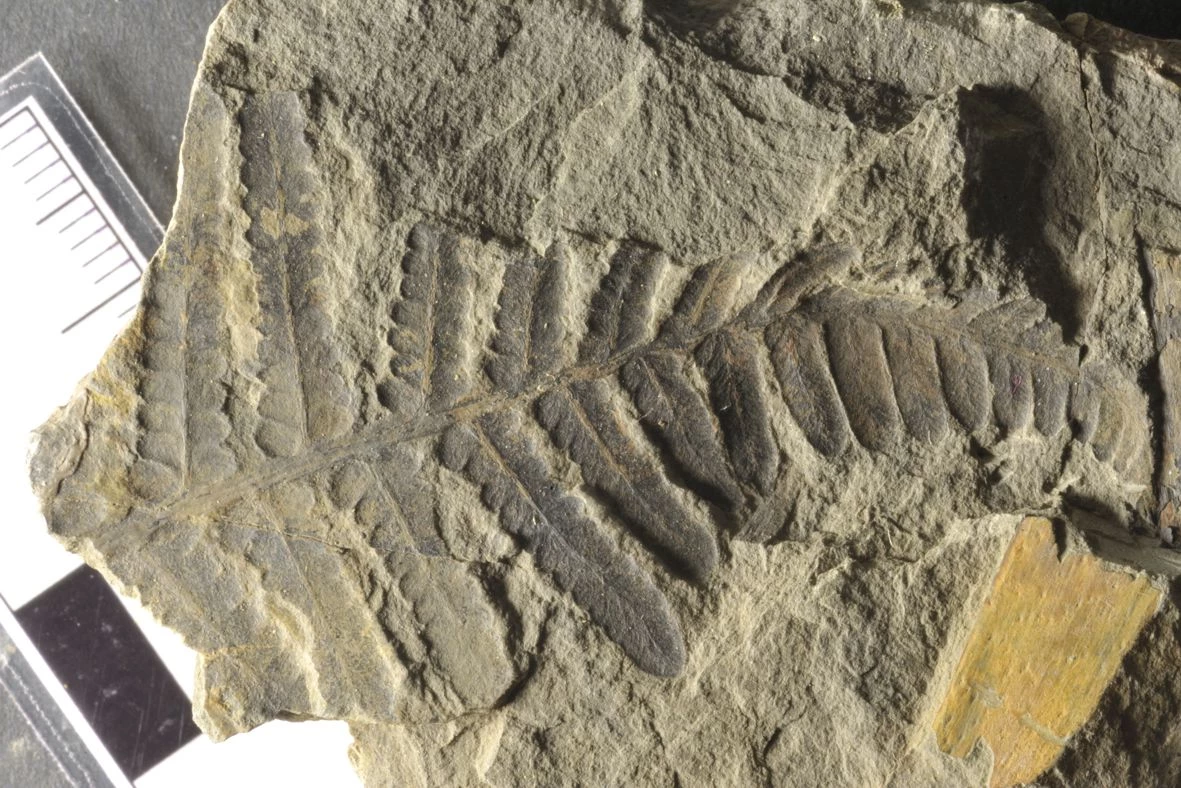
For about 10 million years, Wales was part of an enormous tropical swampland extending from eastern North America to Turkey and the Caucasus. The dead remains of the plants that grew there caused massive deposits of peat to build-up. This peat was then buried by mud and sand, and the resulting heat and pressure changed it into the coals on which much of the industrial growth of places such as Wales depended, especially in the 19th and early 20th centuries.

But nothing lasts for ever, and the swamps eventually dried up and the accumulation of the economically important coal-forming peat came to an end. What caused this profound change to the environment has been the subject of much scientific debate. Research co-ordinated from Amgueddfa Cymru–National Museum Wales (as part of the International Geoscience Programme project IGCP 575) suggests that it was due to the combination of two major factors.

  1. Landscape Change: The collision of two large continental plates (Euramerica and Gondwana) caused a massive upheaval of the landscape, with rivers changing direction and new mountain ranges forming. The effect of these changes was particularly felt in the areas where the swamps had been.
  2. Climate Change: The changing landscape caused a different type of vegetation to grow here, and this coincided with a significant warming of the climate and a reduction in rainfall.

Importantly, these environmental changes started first at the eastern end of these swamplands, in places such as northern Turkey, and then progressively moved westwards towards Wales.

So, in order to understand properly what caused the collapse of this ancient wetland in Wales, we need to study events in Turkey. To do this might have needed extensive (and expensive) field excursions to the area. Fortunately, we have a scientific resource nearer to hand that can provide at least a start to this work. In the years just before and after World War II, the great Dutch palaeobotanist Wilhelmius Jongmans led expeditions to northern Turkey to collect Carboniferous plant fossils. He sadly died before he could properly work on them. Fortunately, however, his collection of over 5,000 Turkish fossils is now stored safely in the Naturalis Museum in the Netherlands.

Chris Cleal from Amgueddfa Cymru–National Museum Wales is now leading a collaborative project with colleagues from the Netherlands, Germany and the UK, to research this collection – using expertise developed in Wales to bear on an internationally important problem. It will help us understand what controlled the formation of coal deposits such as those found in Wales, and how vegetation, atmosphere and climate interacted in Carboniferous times. 

The world 300 million years ago was in many ways similar to today (far more similar to what it was in the intervening millions of years ago, for instance in Mesozoic times, when the dinosaurs were roaming around). Studying how climate, vegetation and the atmosphere interacted in this ancient world therefore allows us to check some of the assumptions on which scientists have been basing their modern-day climate models.

This shows the importance of international collaboration between museums in scientific research – why it is vital for scientists in Wales to work with colleagues from across the world.