Artist in Residency: New Opportunities

Sian Lile-Pastore, 7 January 2017

Happy New Year!

I have previously been blogging about the artists Nils Norman, Fern Thomas and Imogen Higgins who have all been working on our new play area. This is still ongoing, but I hope to share some designs with you soon. Building on from these residencies around play, we have just advertised two new residency opportunities, one of which looks at how people navigate the site, and the other working more with schools and groups to create new creative workshops.

For information please see the brief, which can be found here:

http://museum.wales/takepart/artist-opportunities-stfagans/

199 Silver Pennies - the Abergavenny Hoard

Edward Besly, 6 January 2017

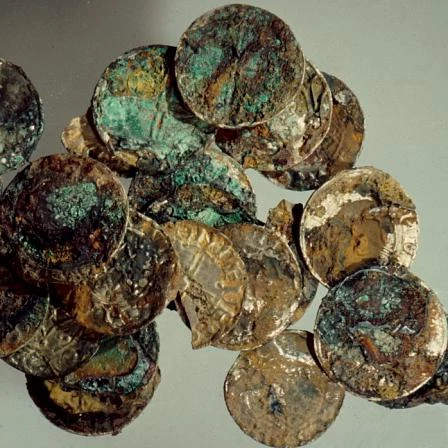
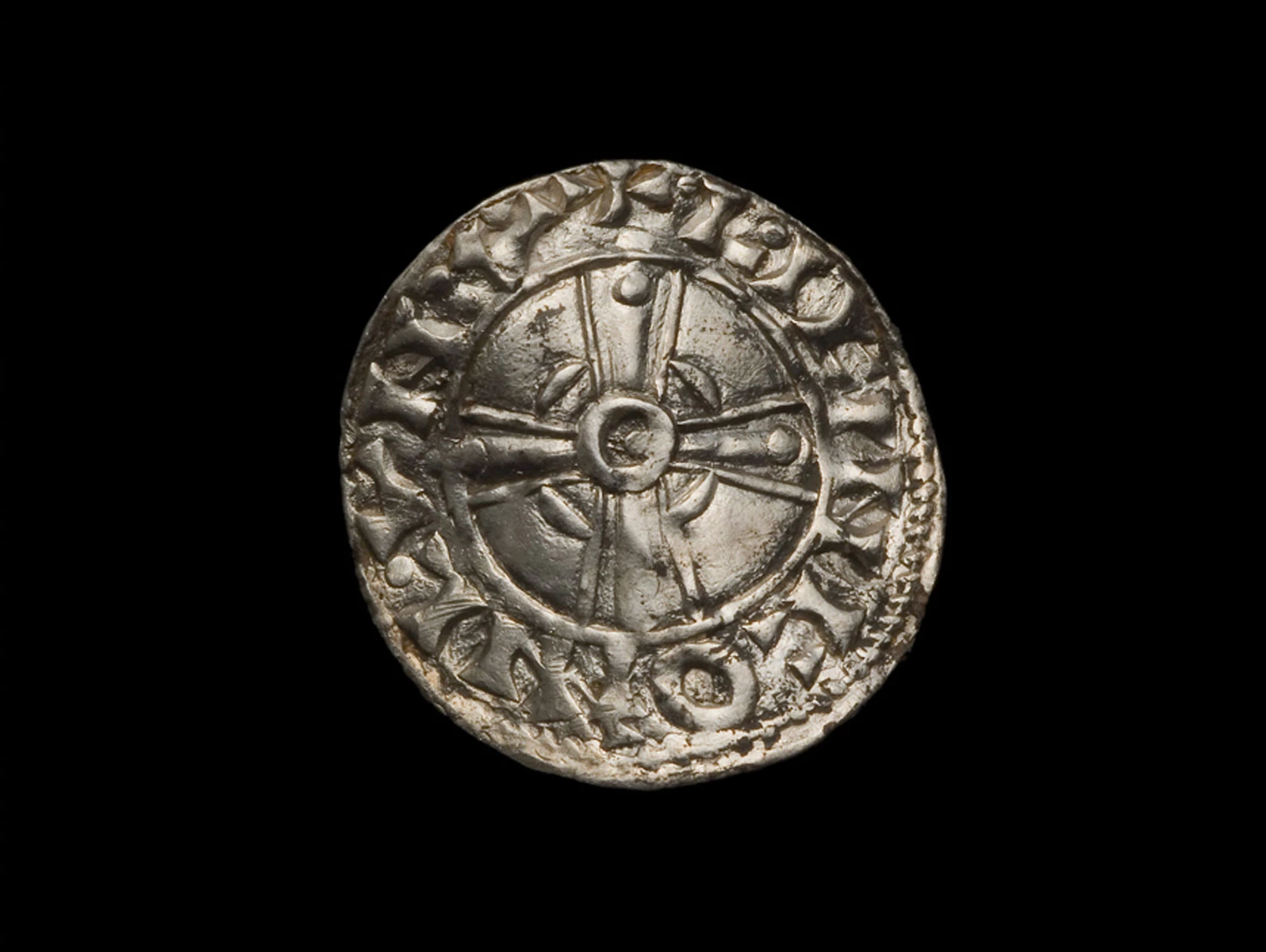
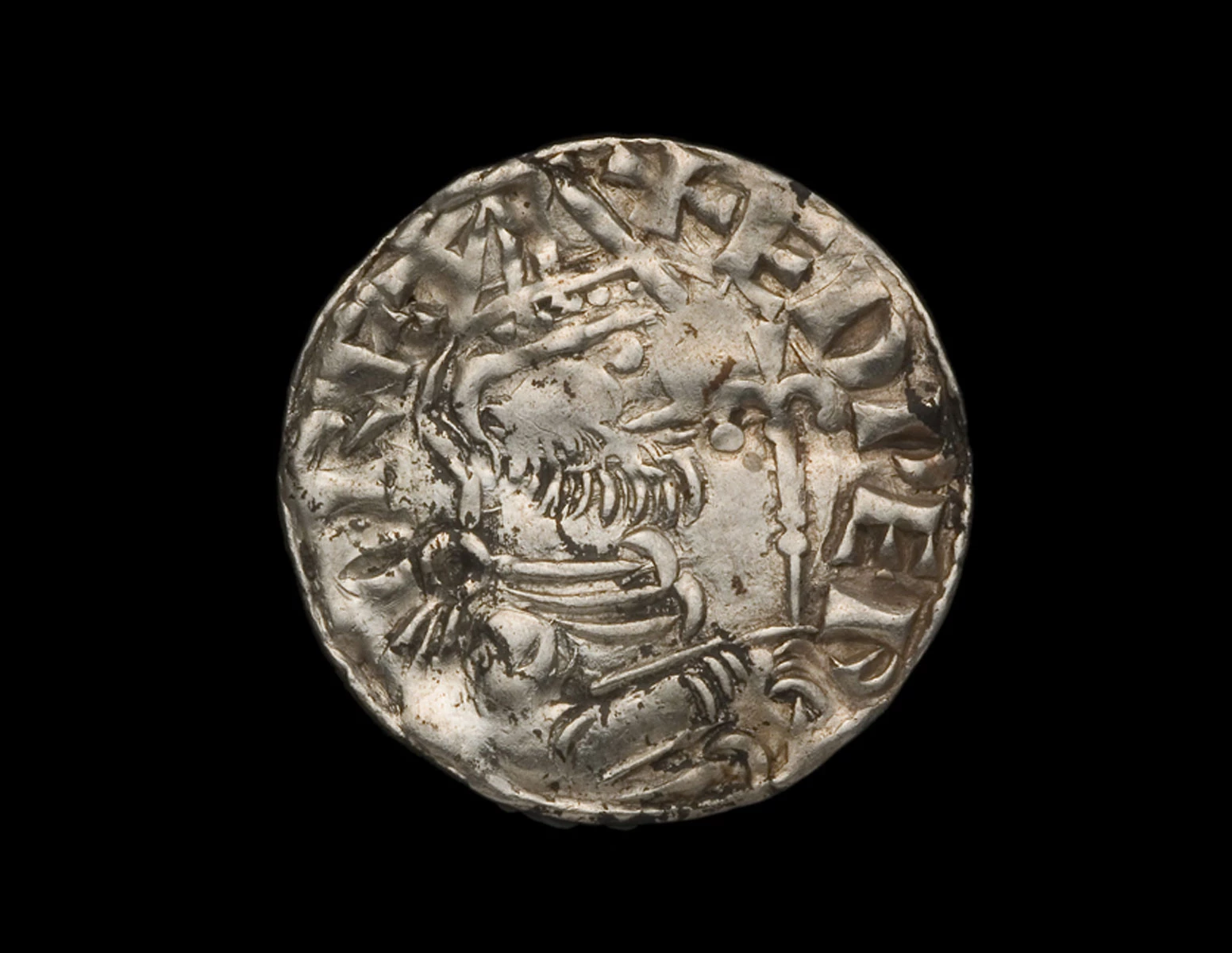
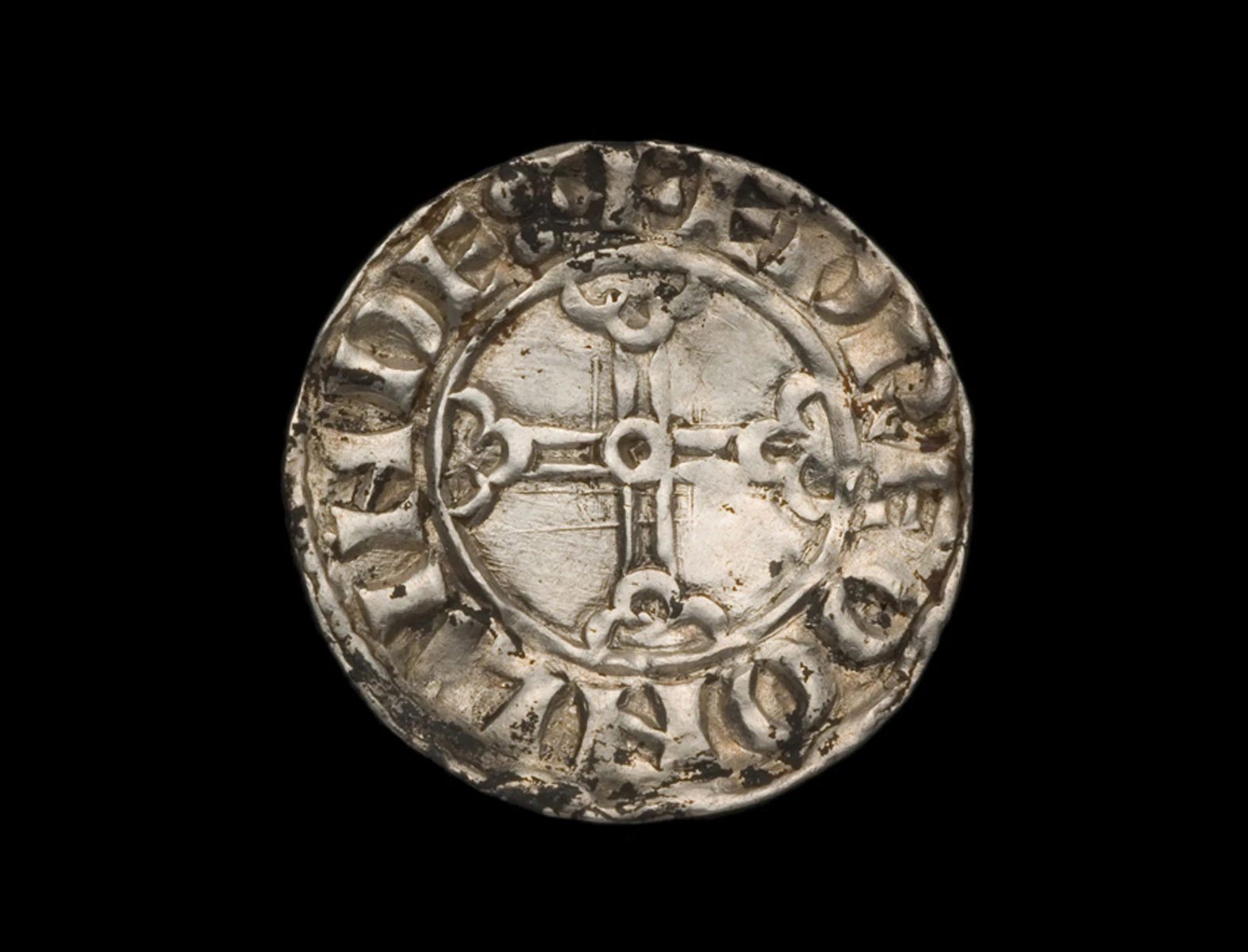
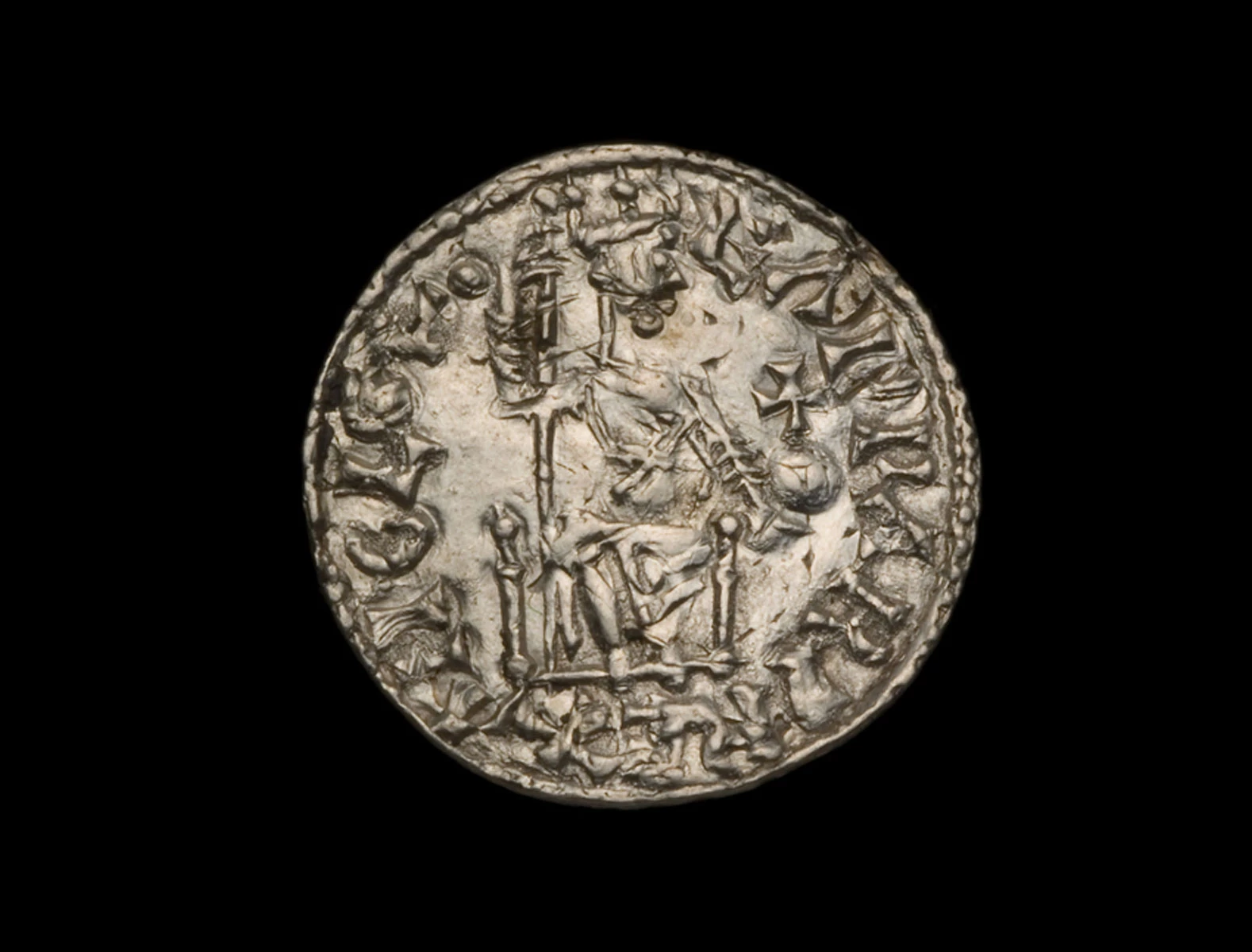
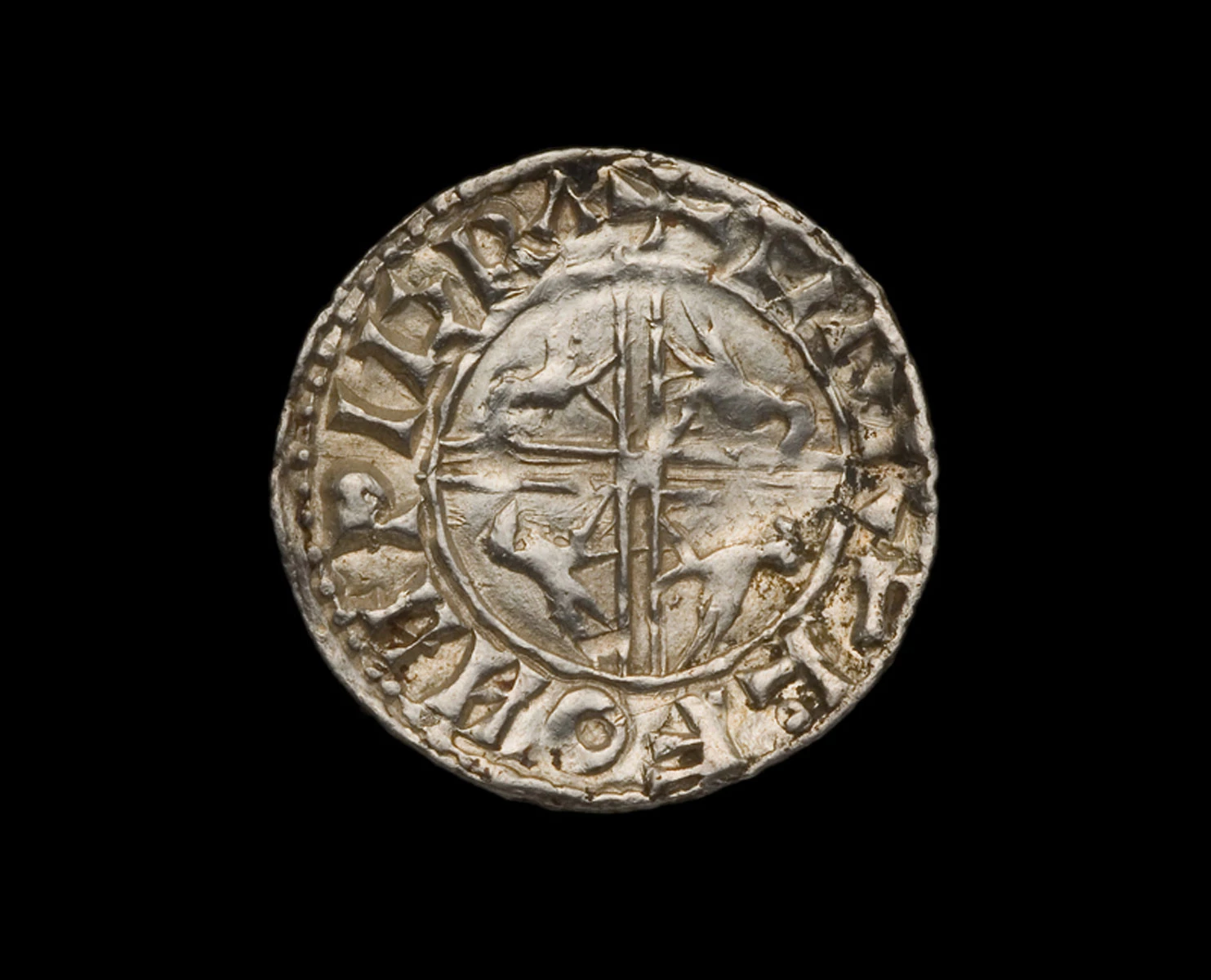
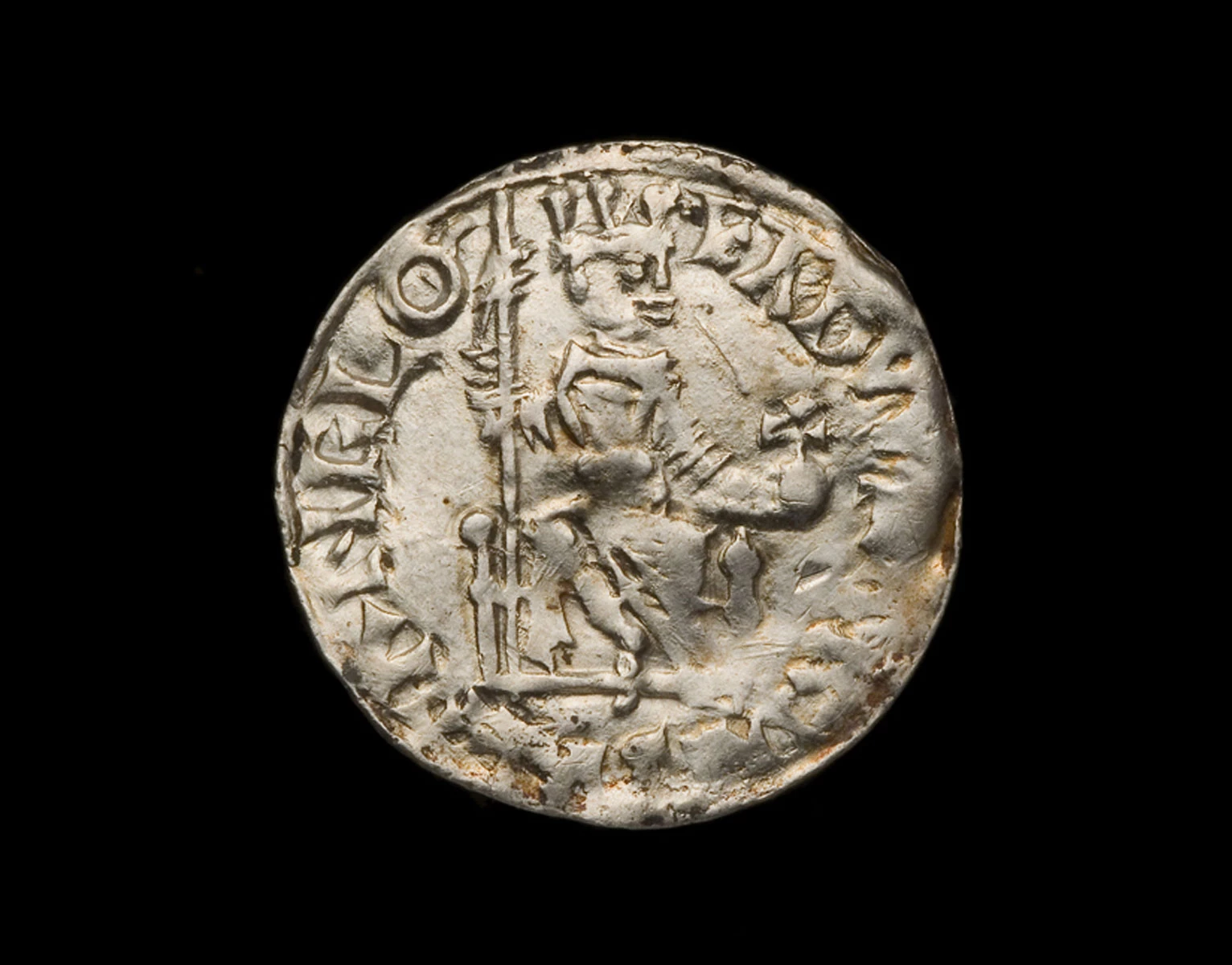
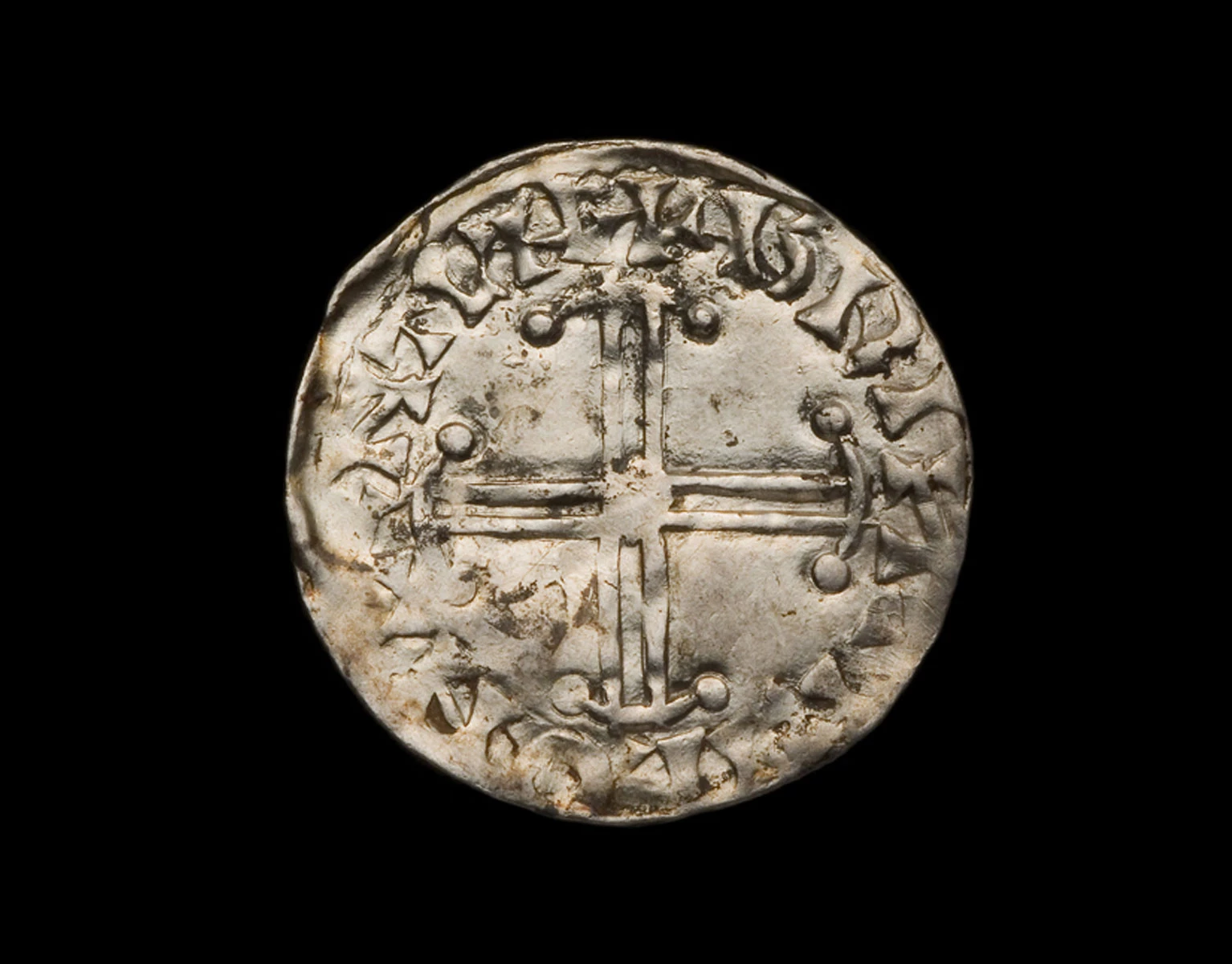
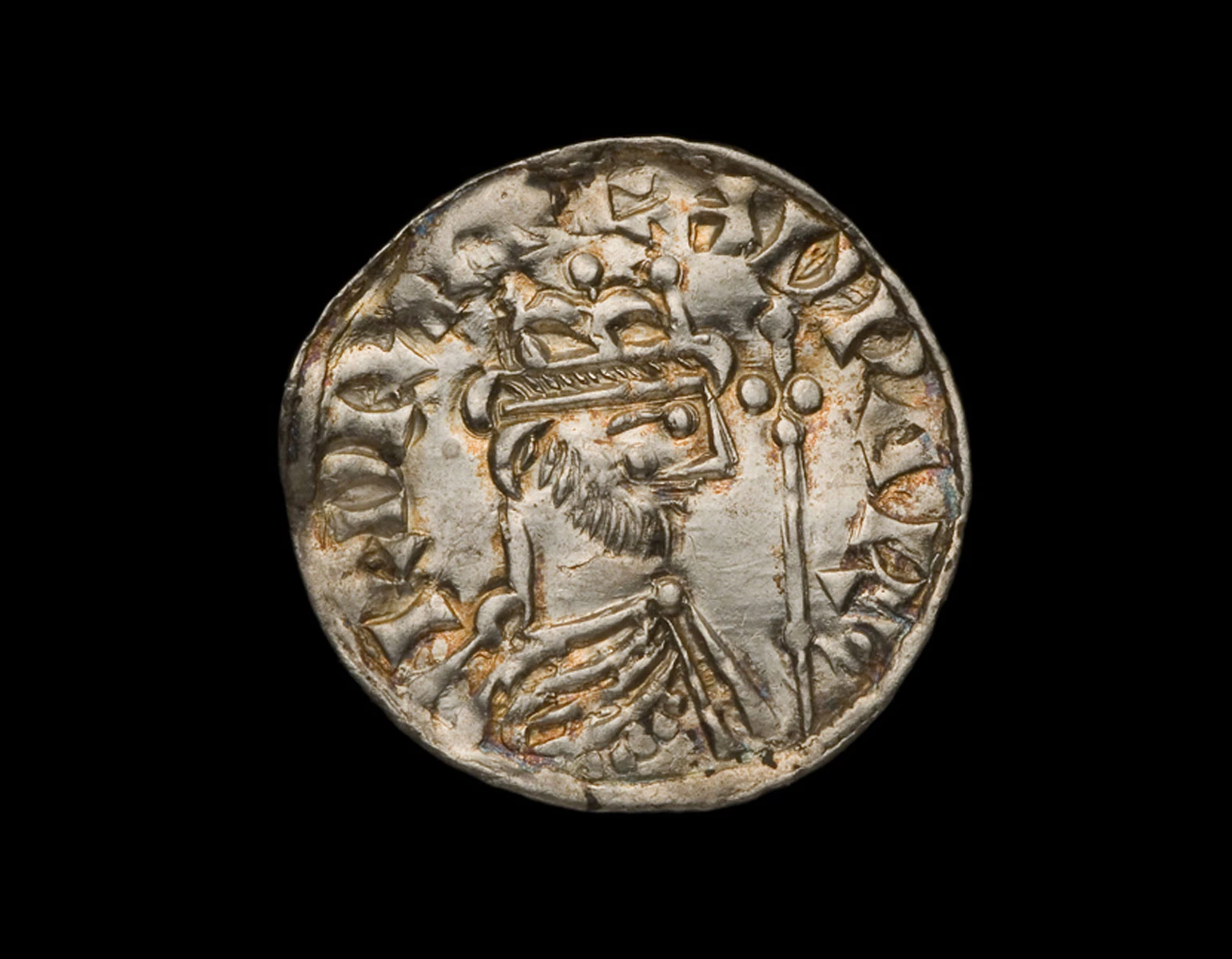
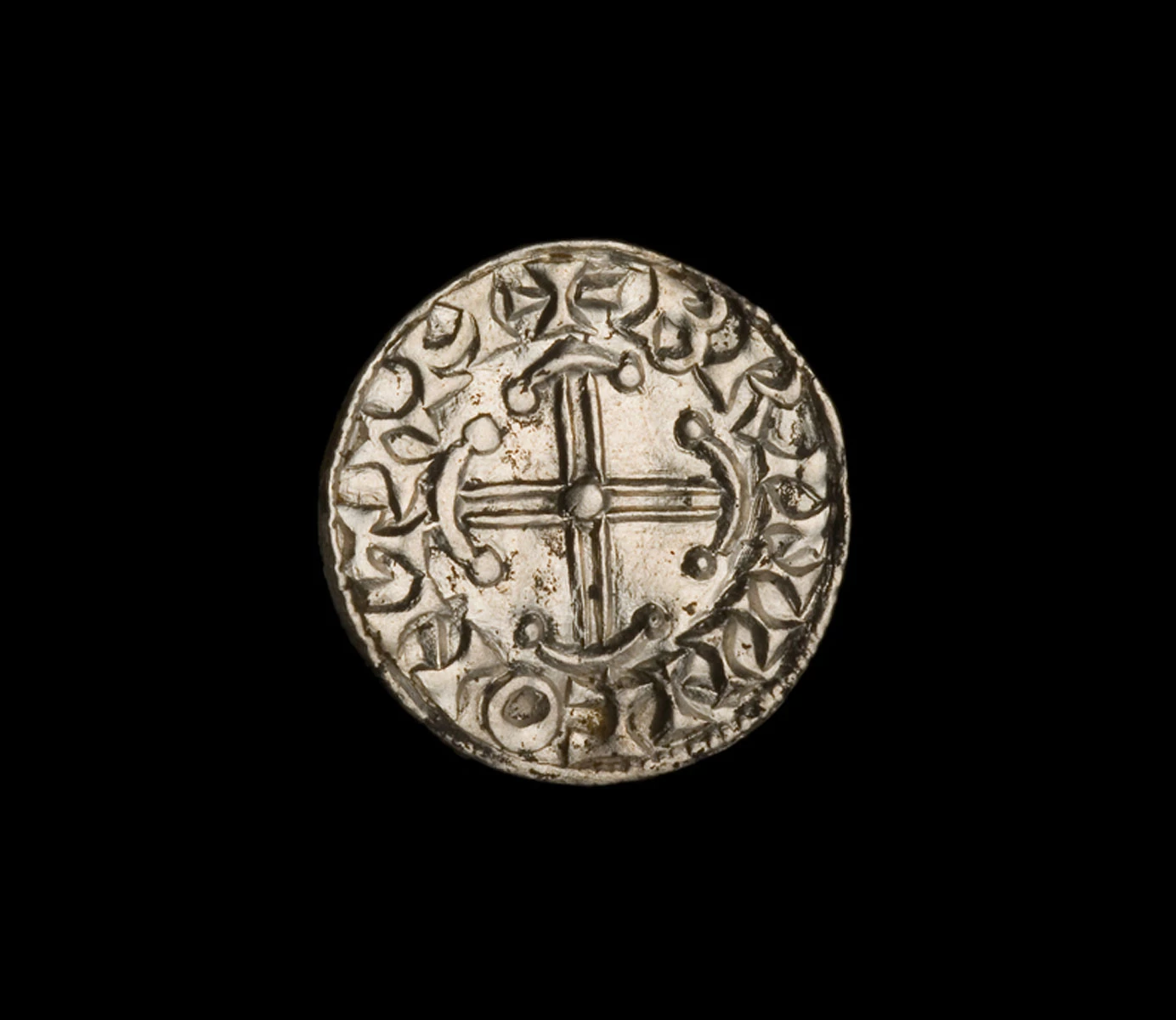
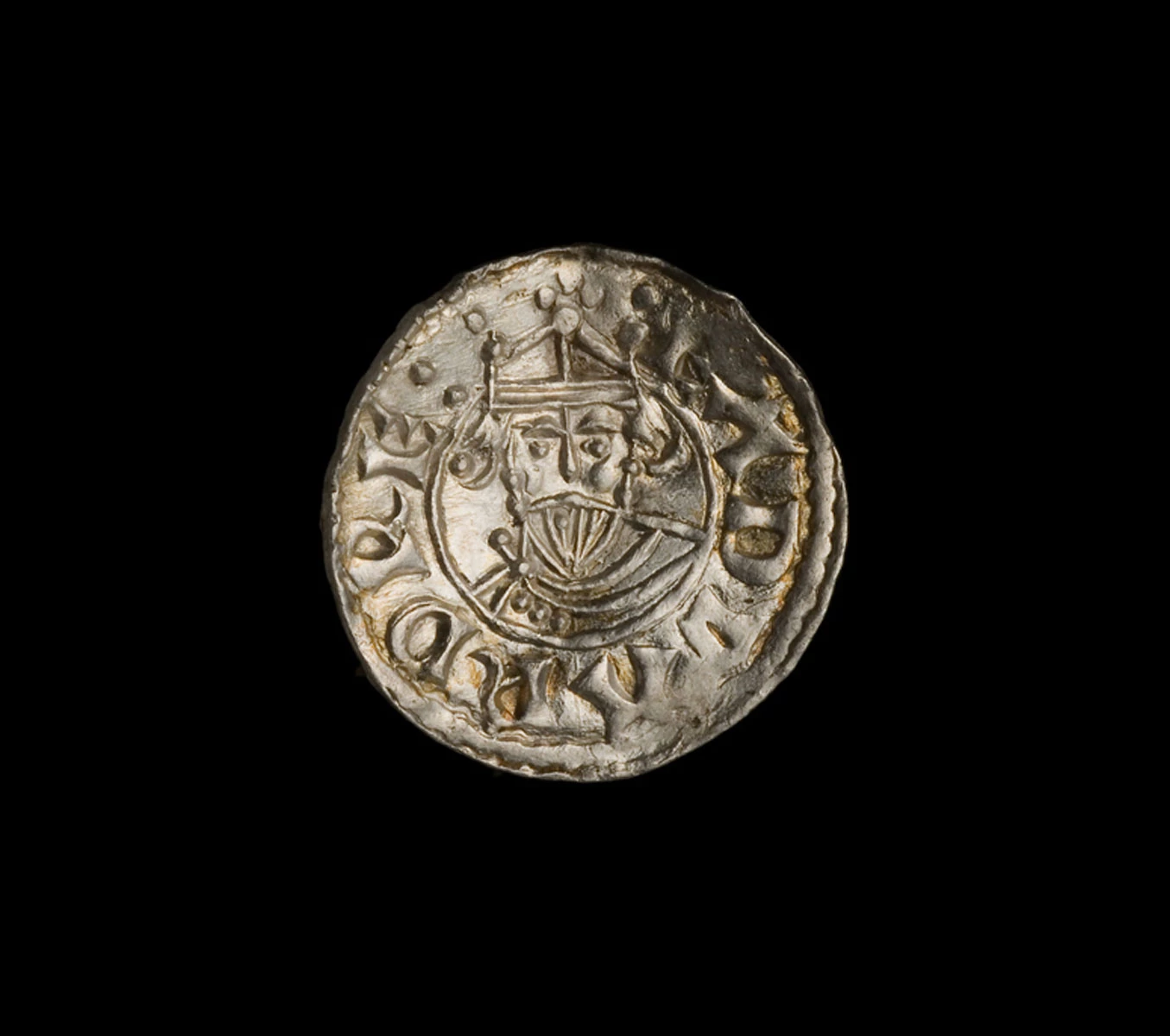
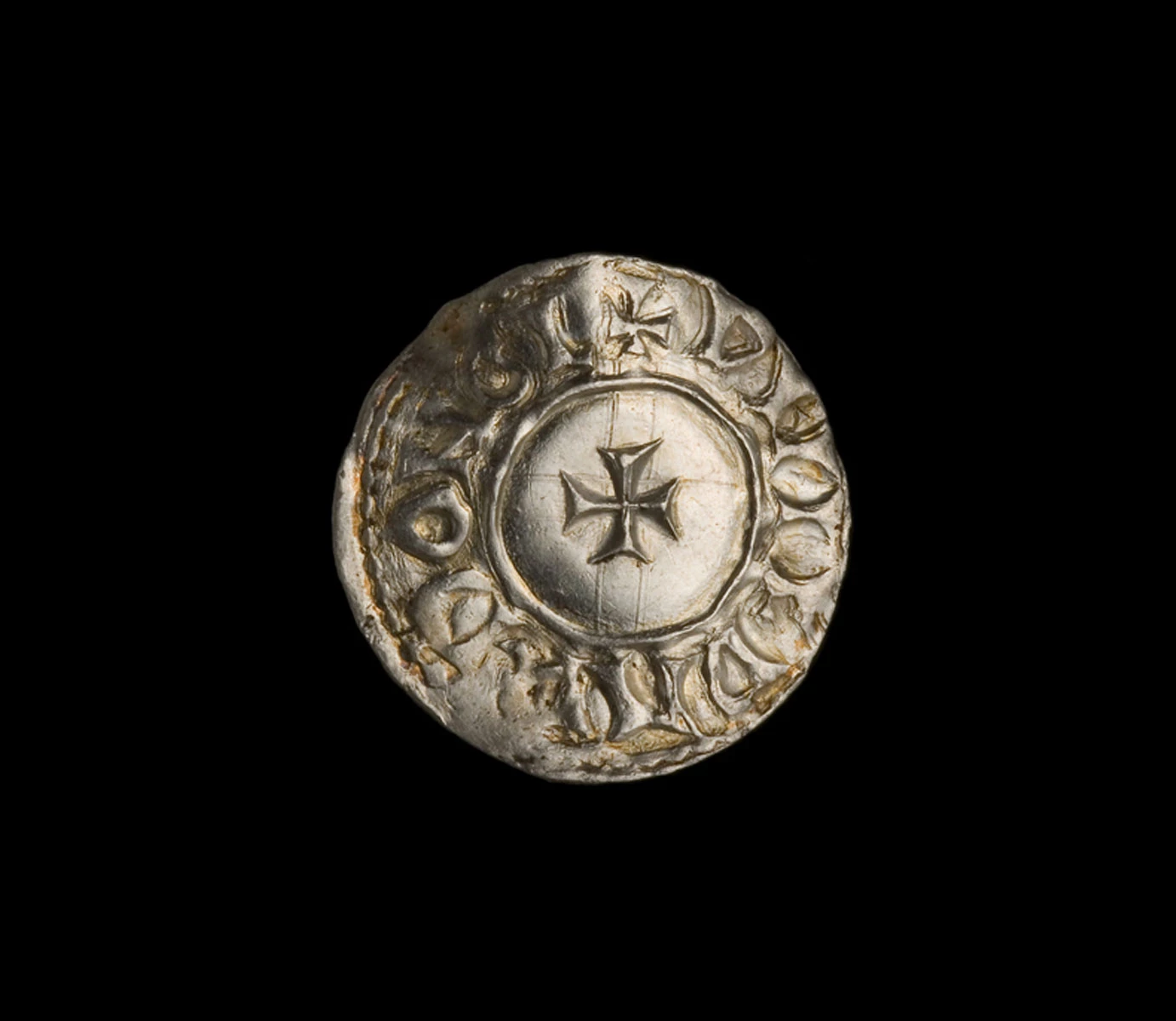
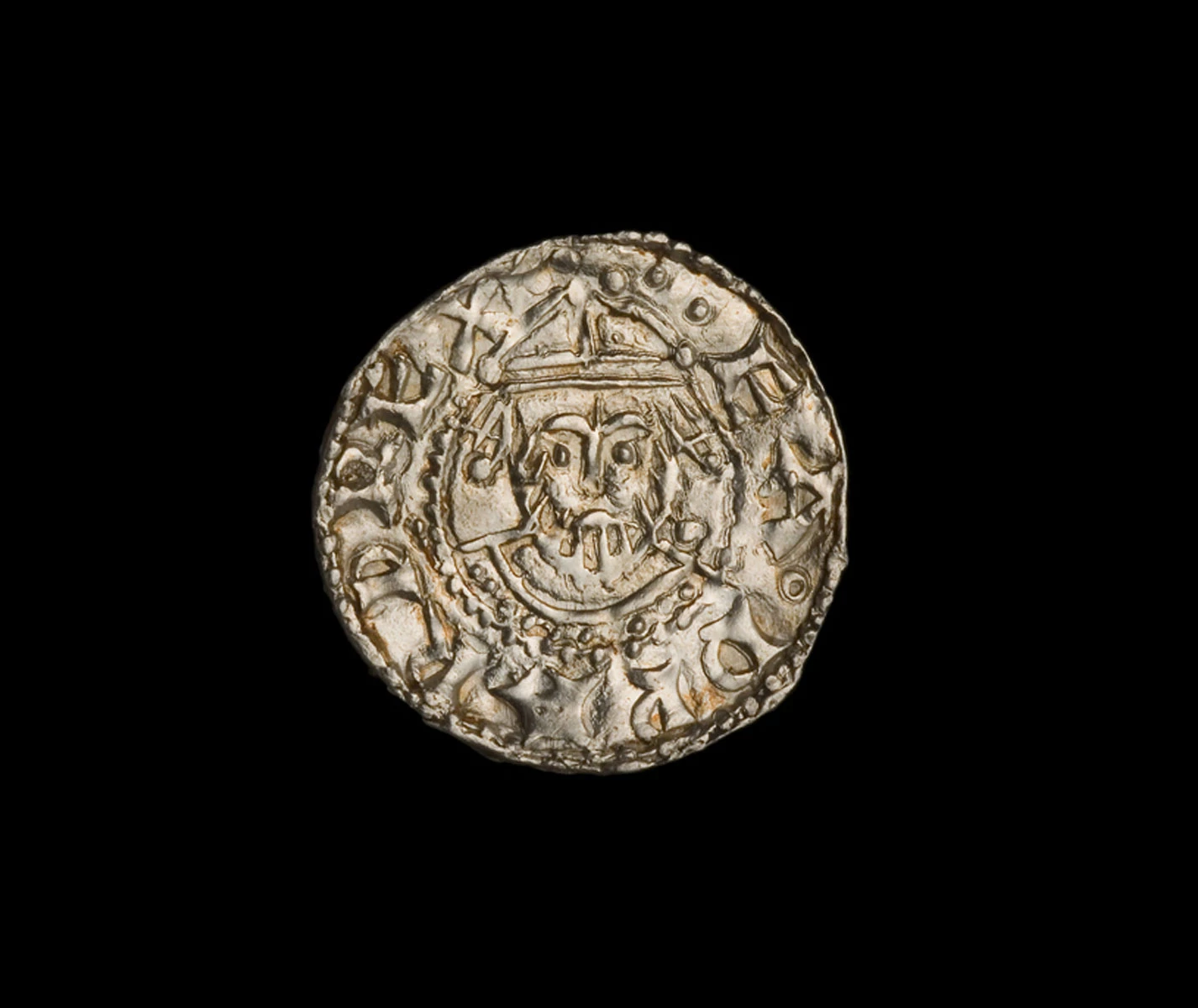
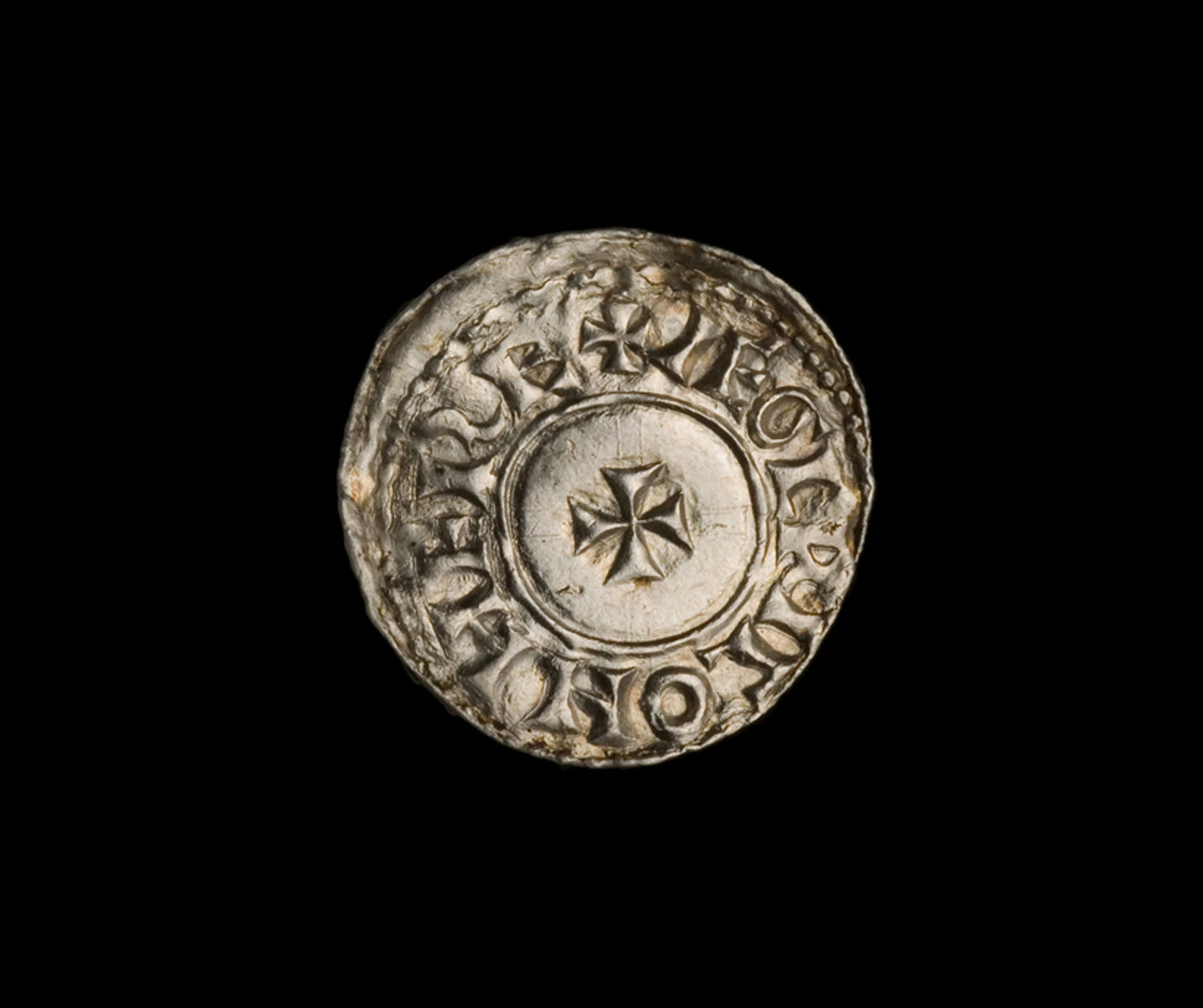
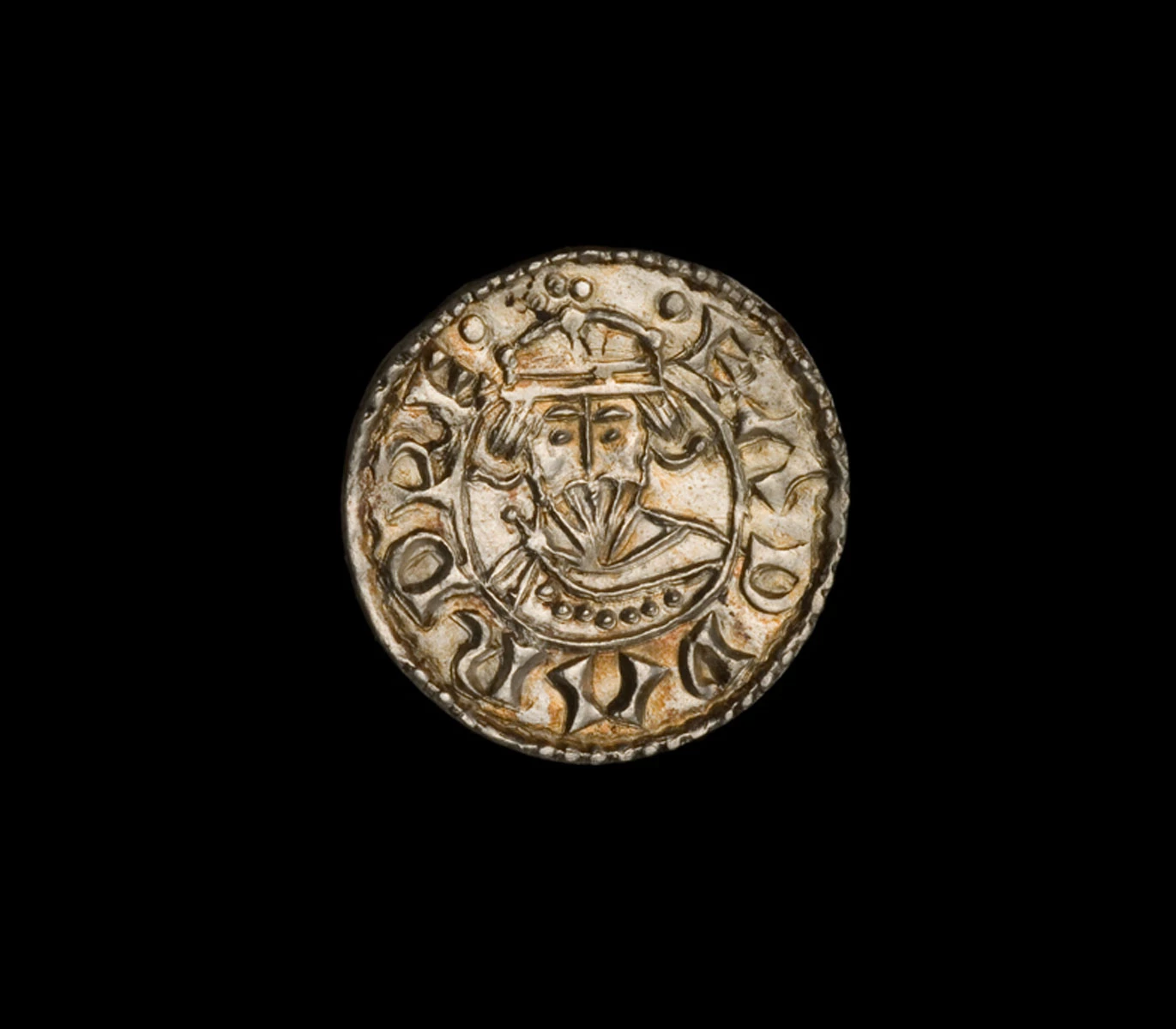
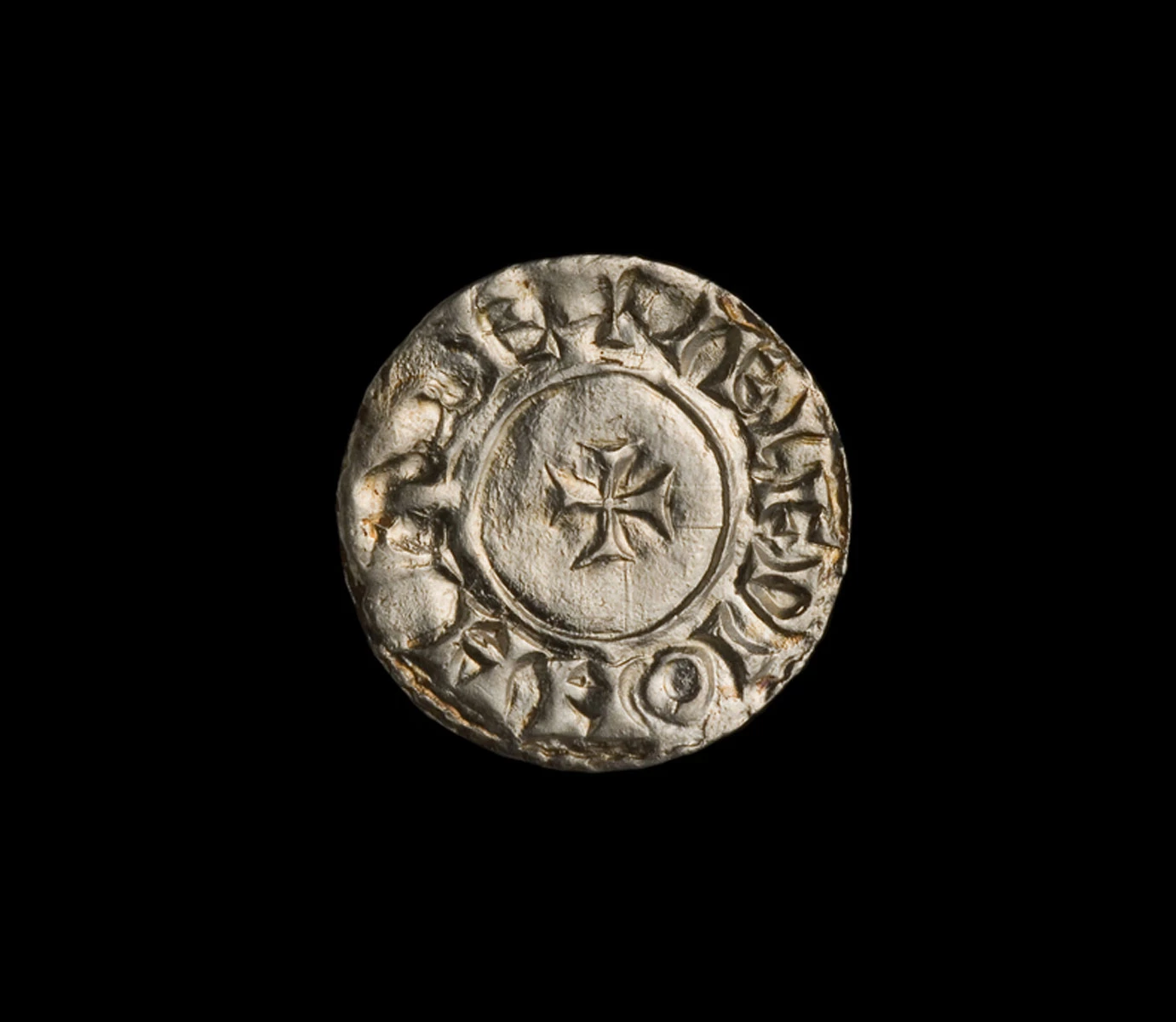
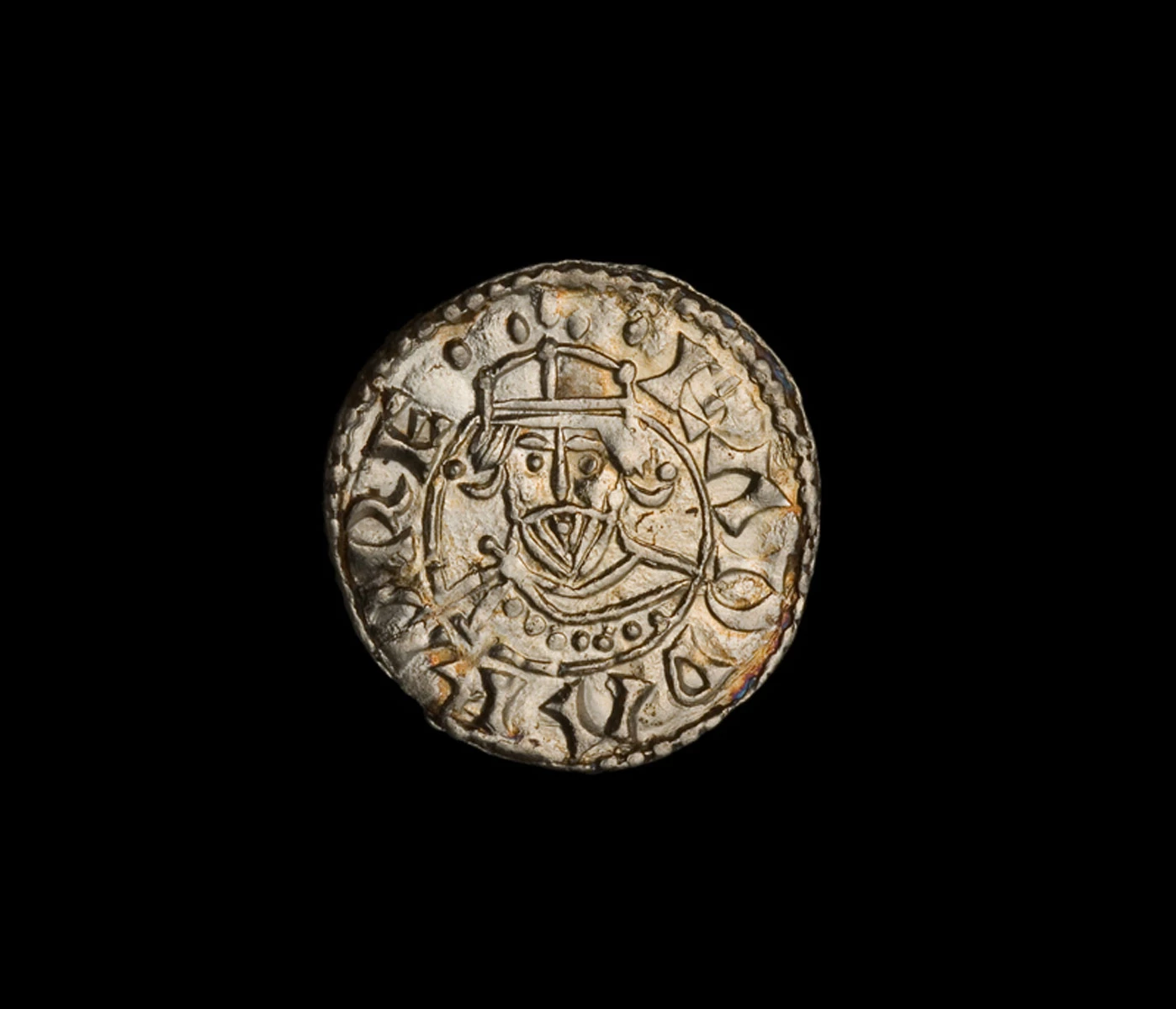
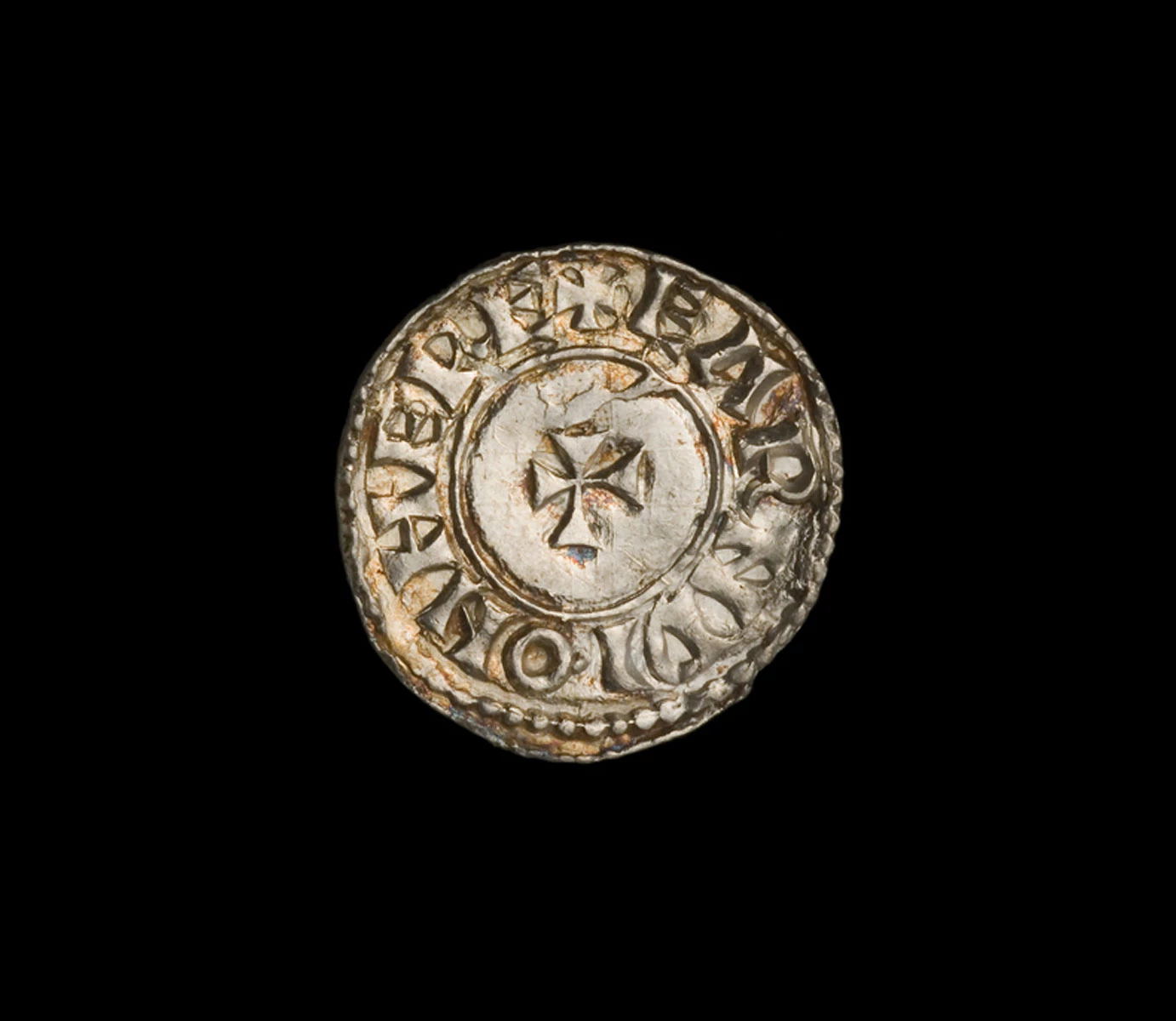
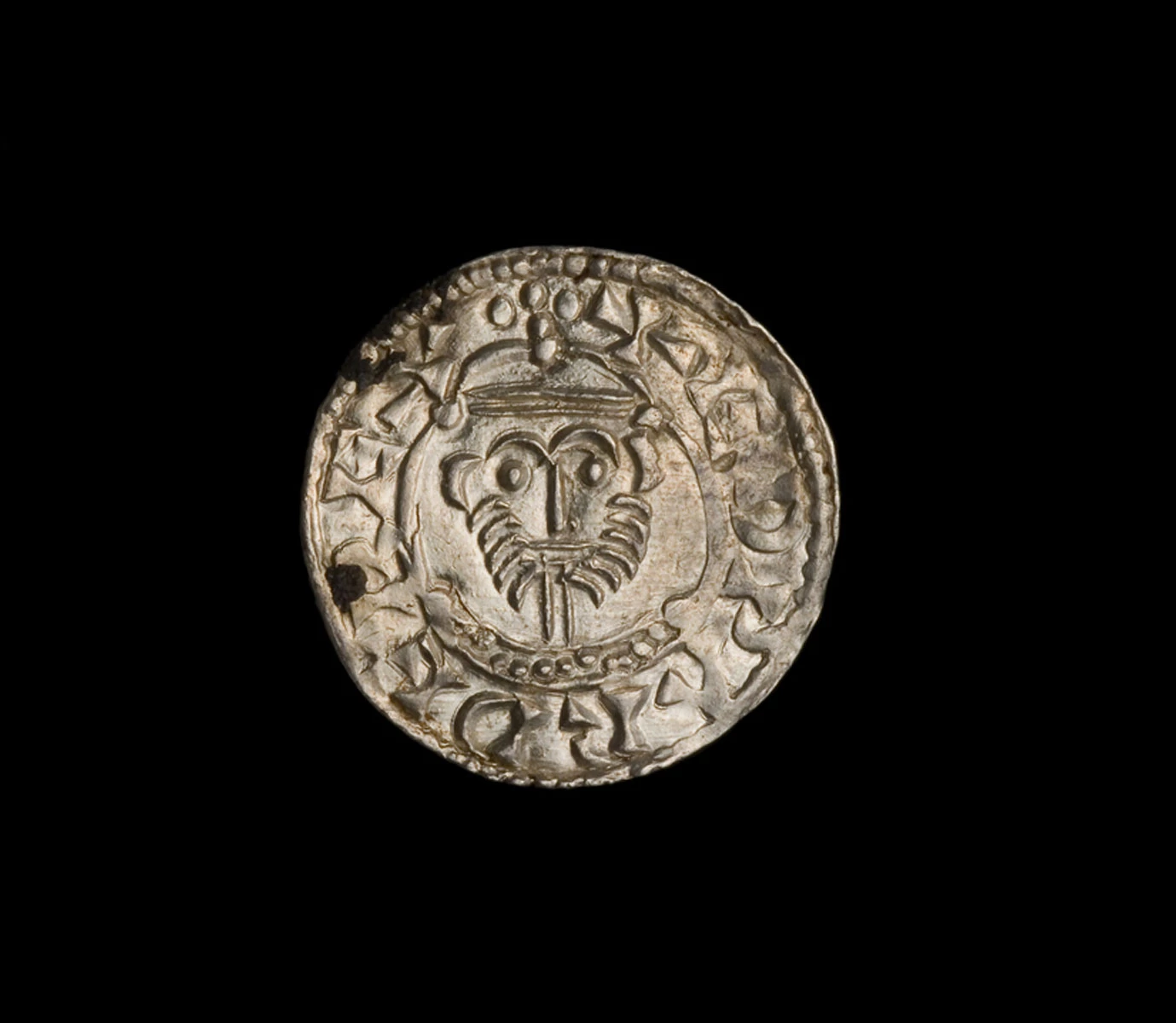
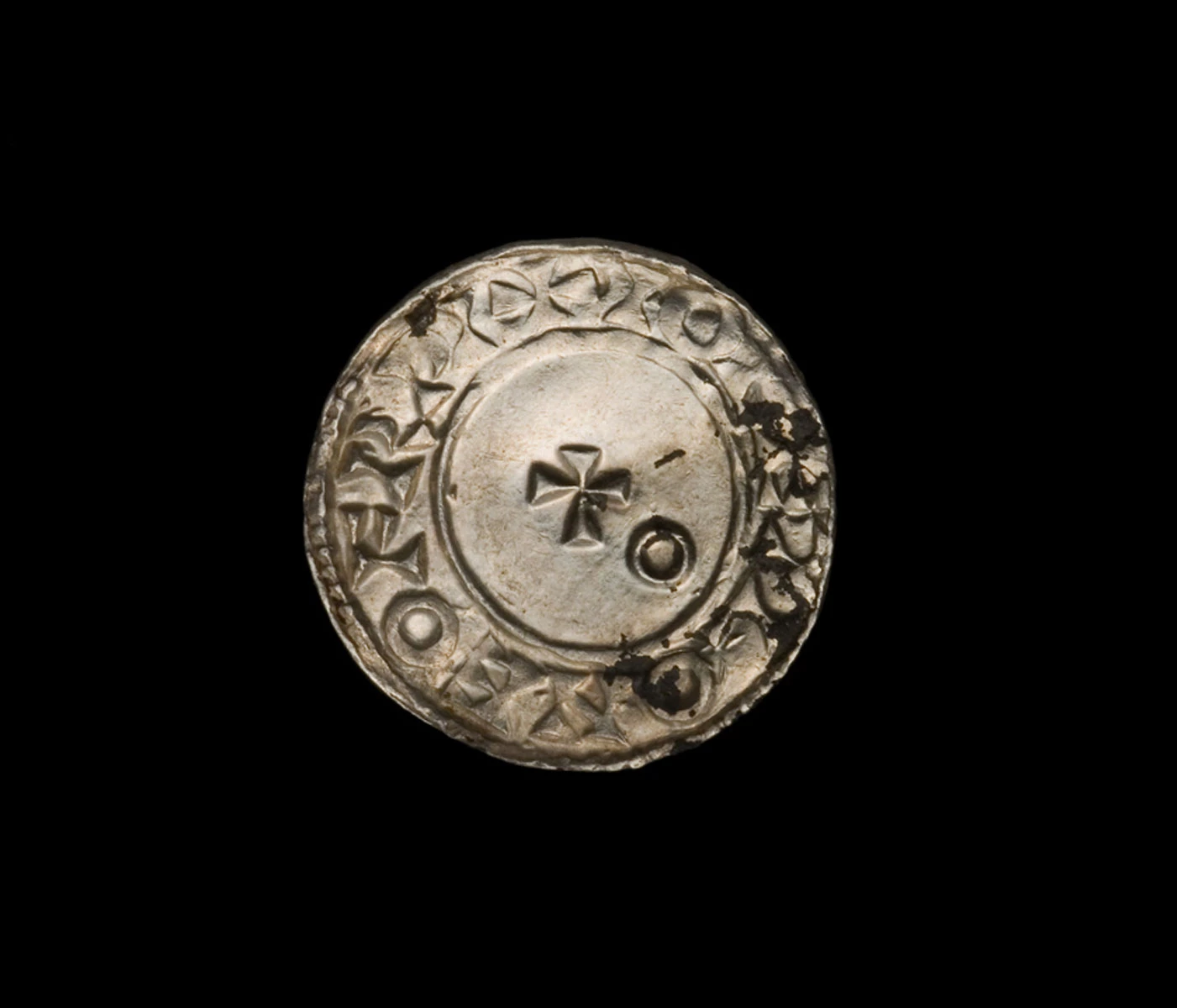
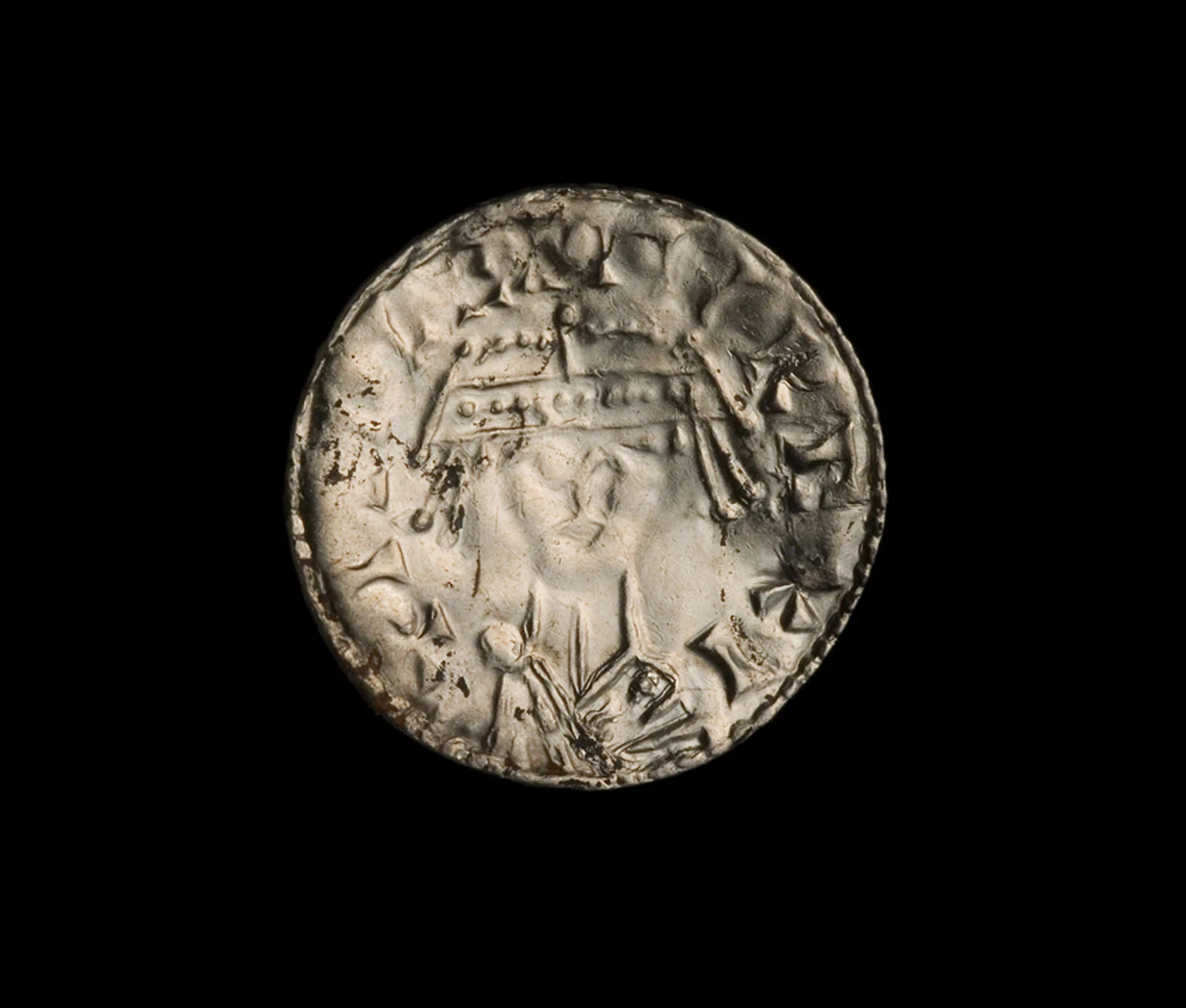
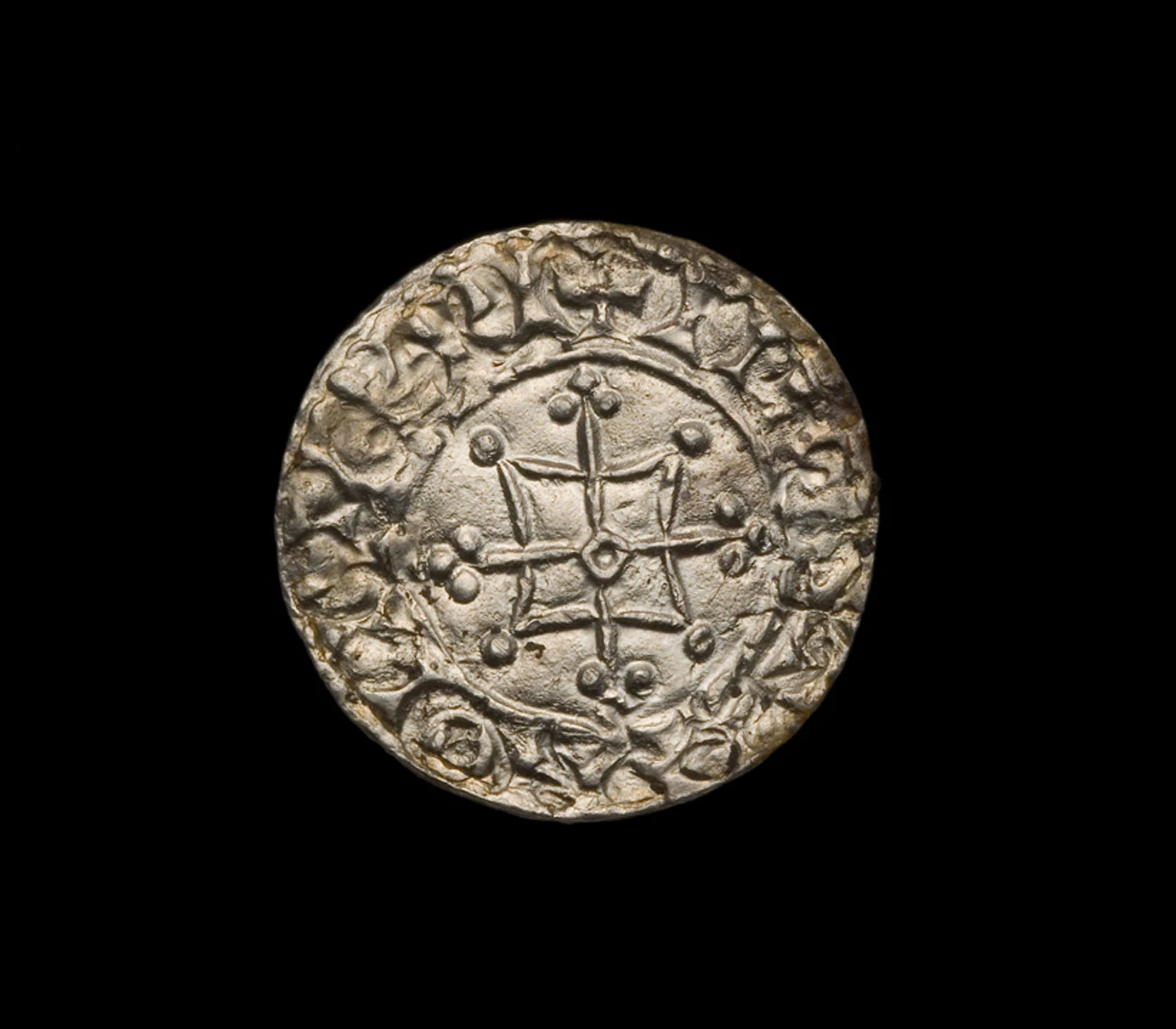
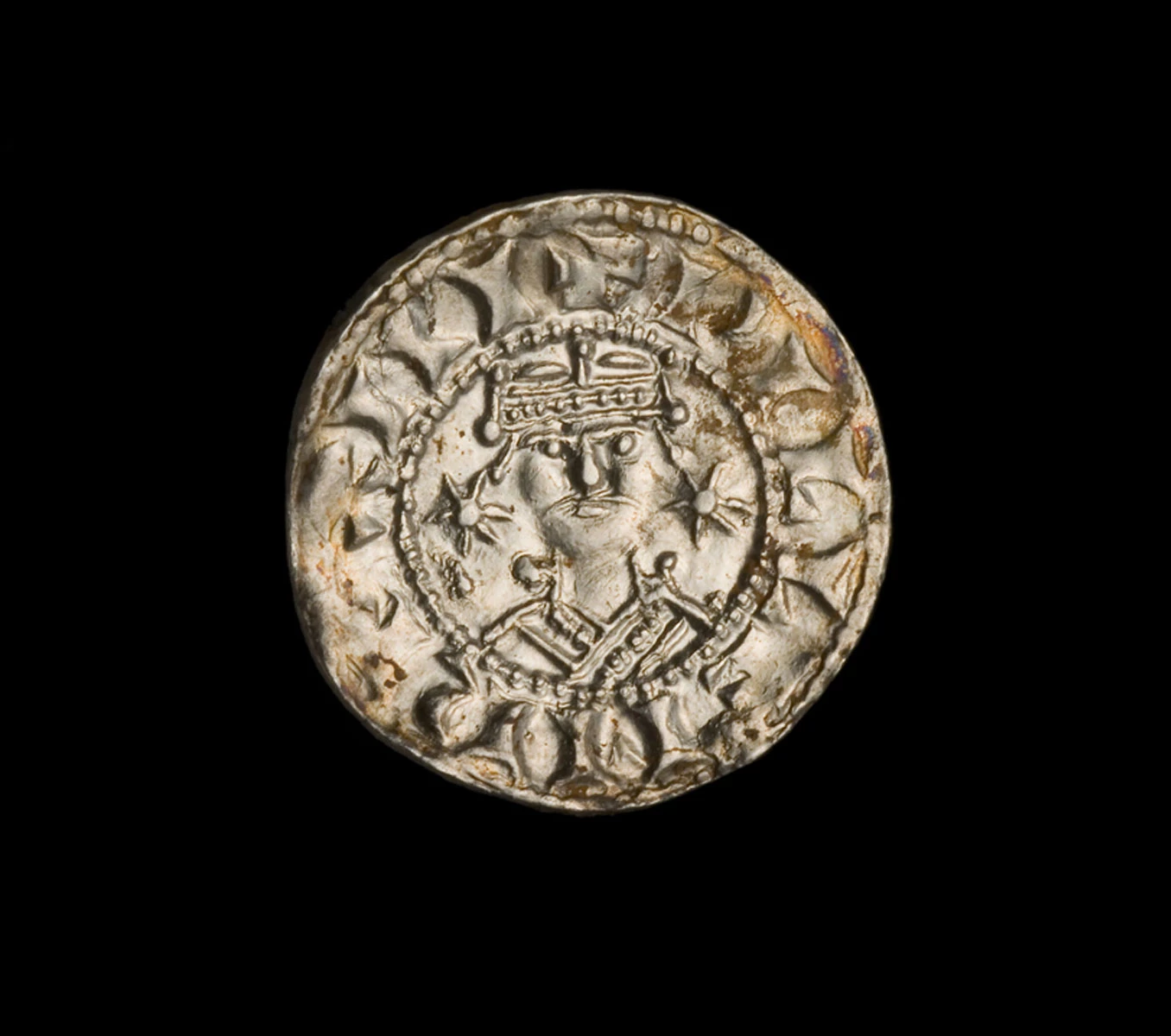
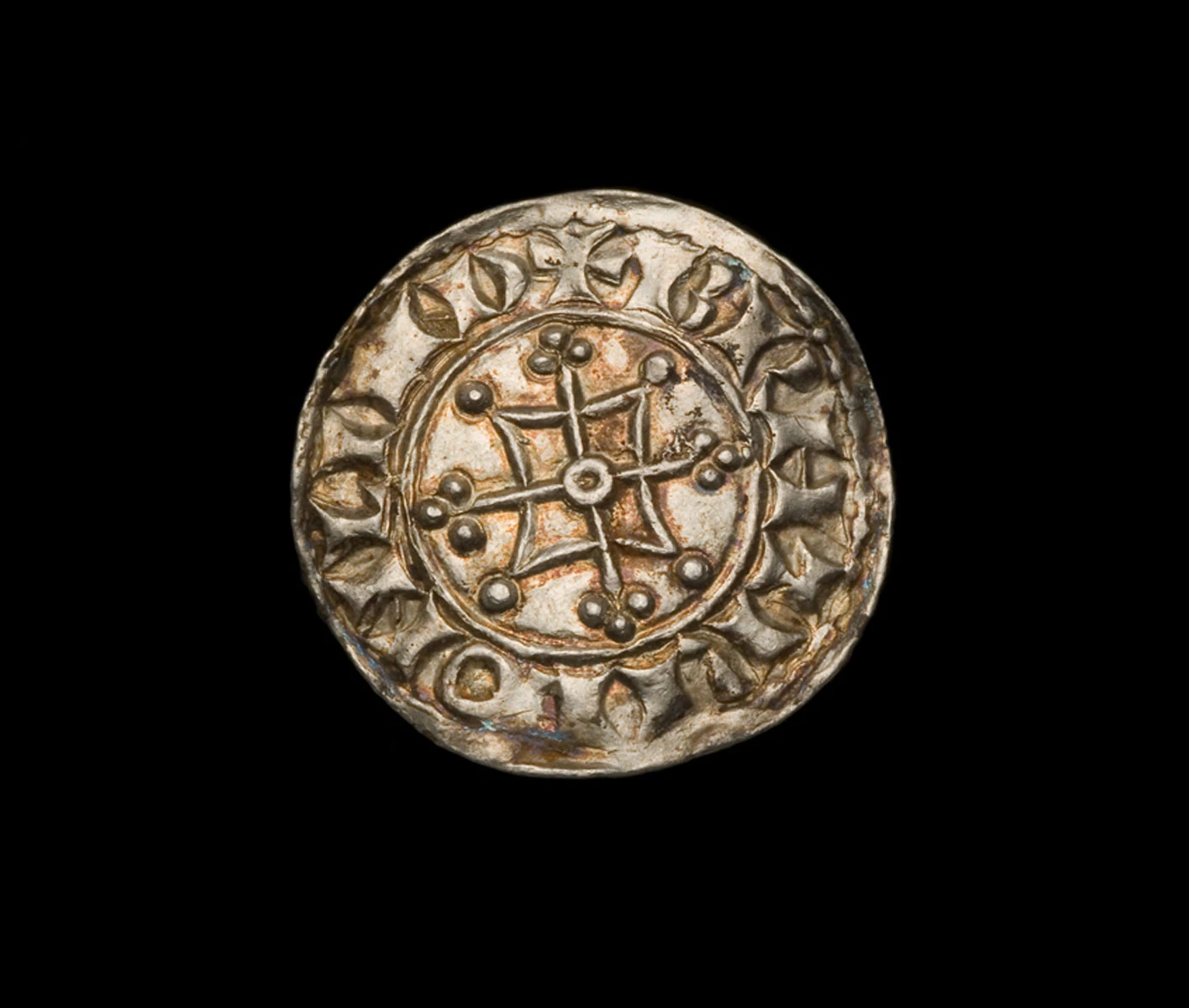
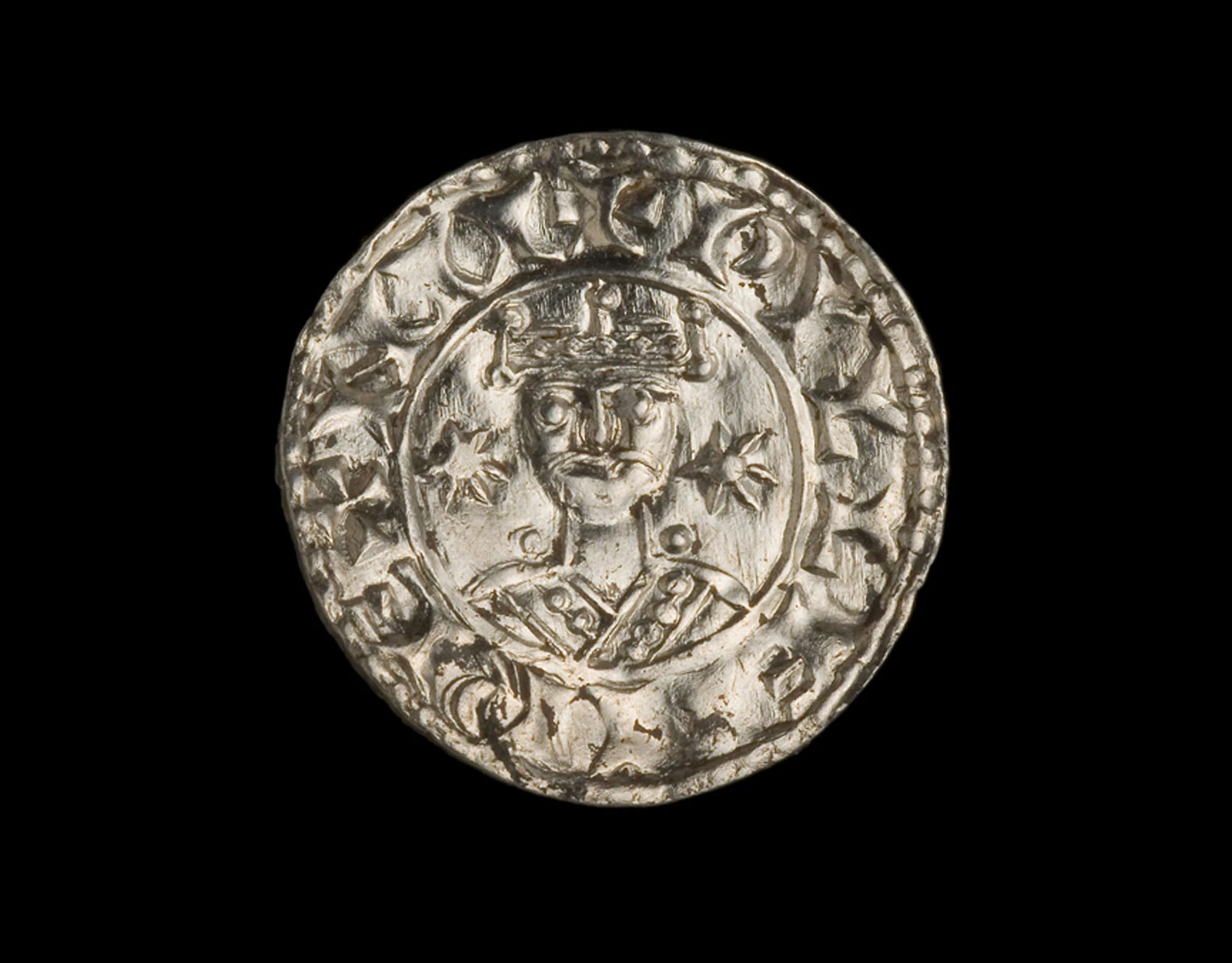
Part of the Abergavenny hoard as discovered.

Part of the Abergavenny hoard as discovered.

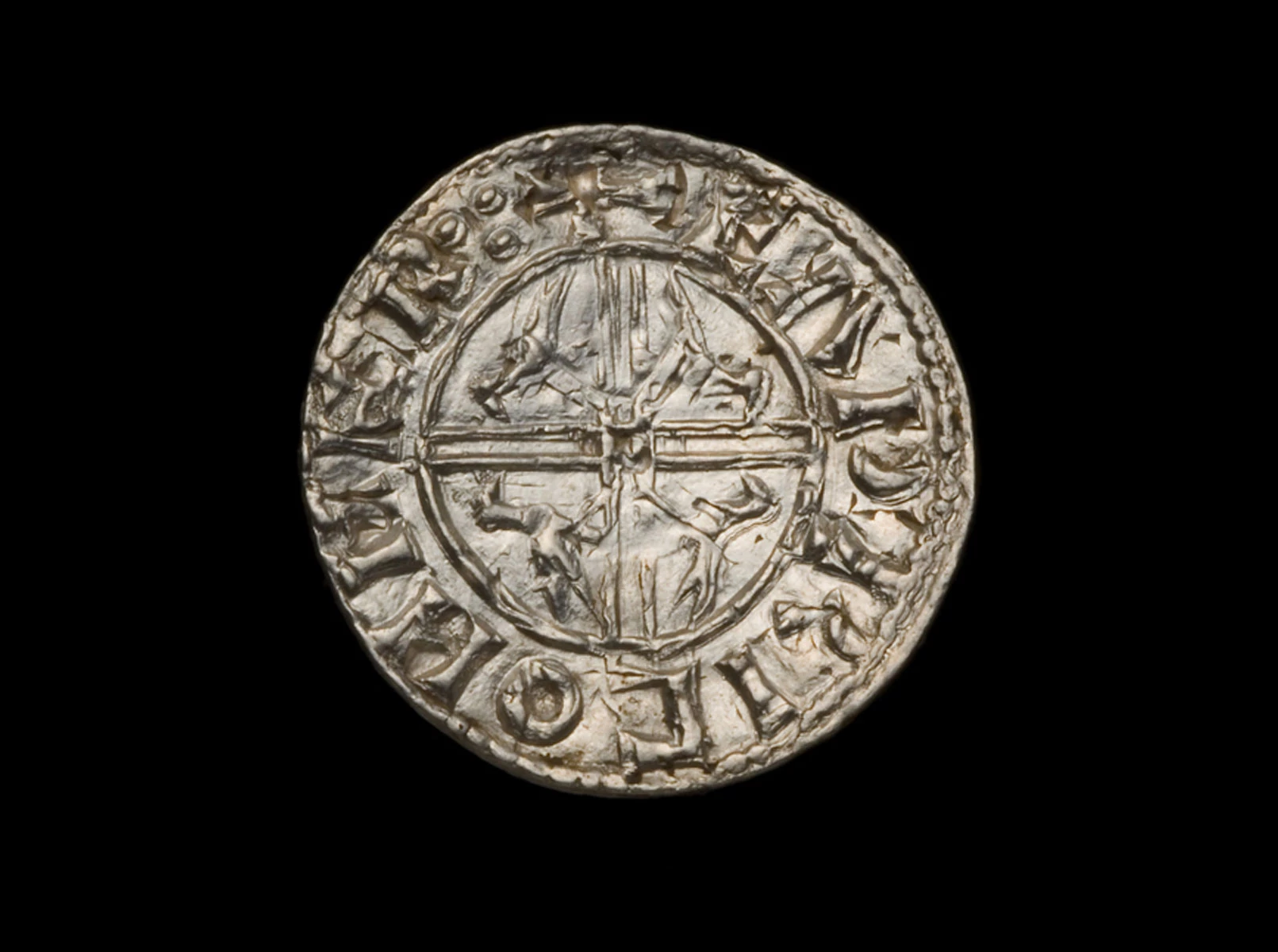
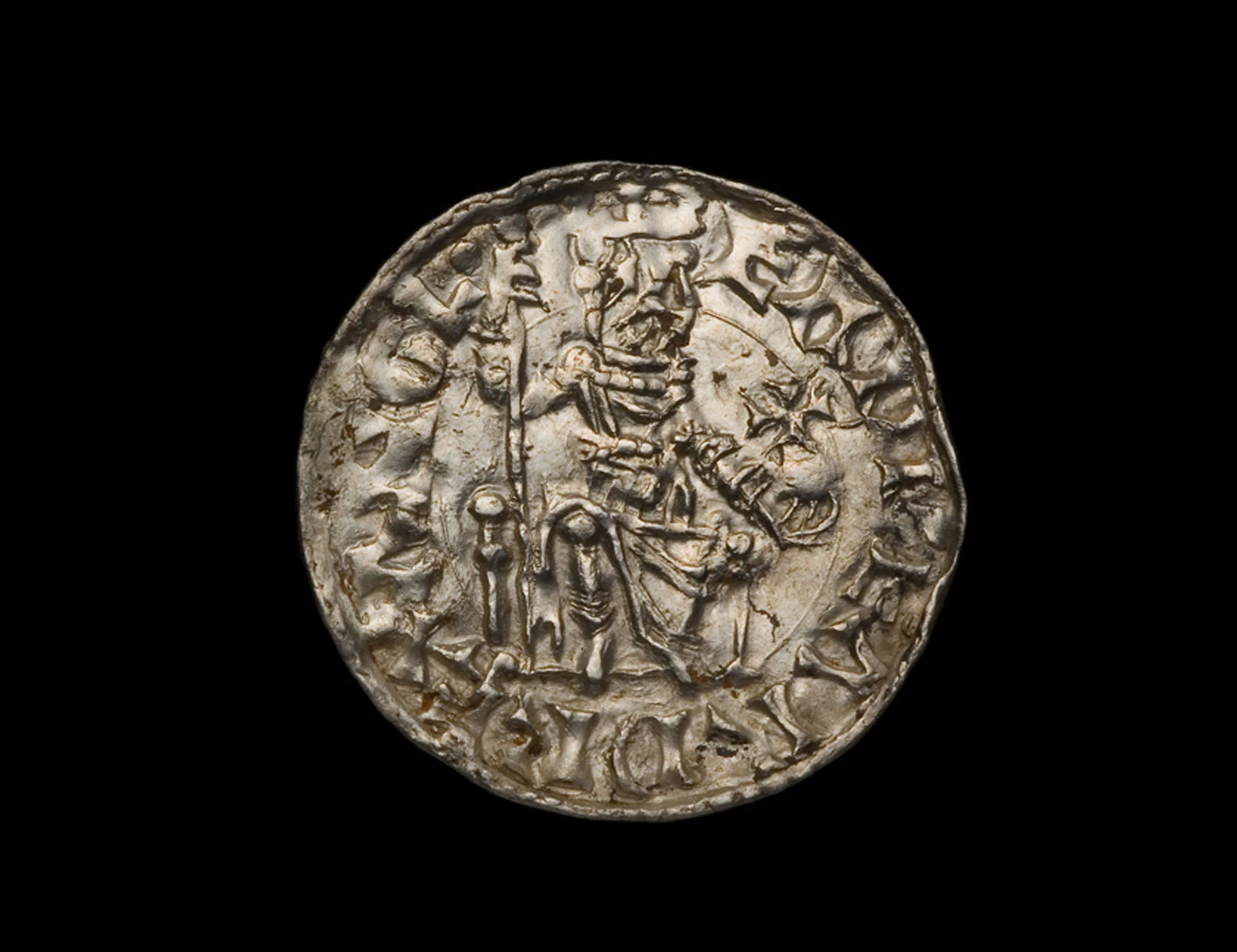
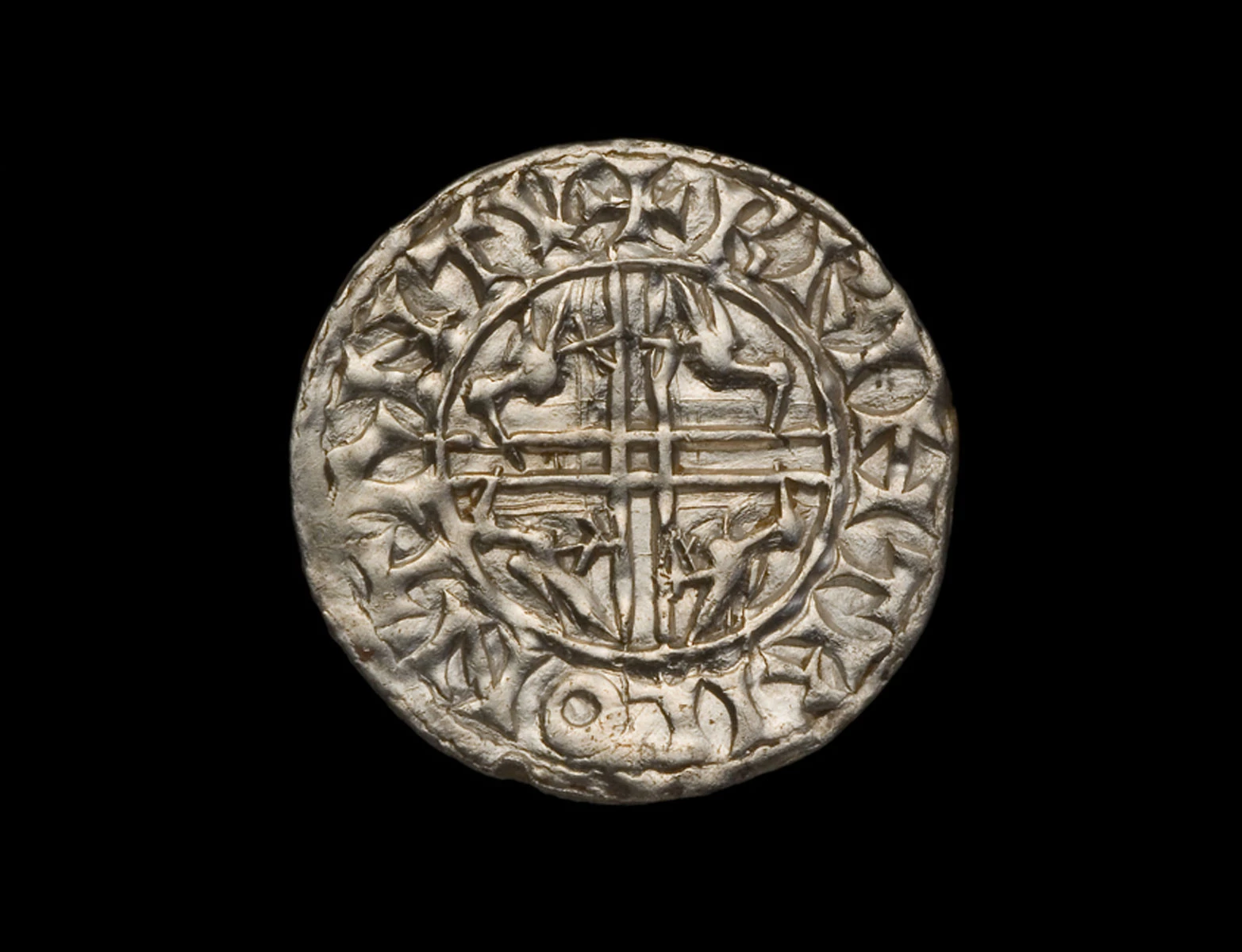
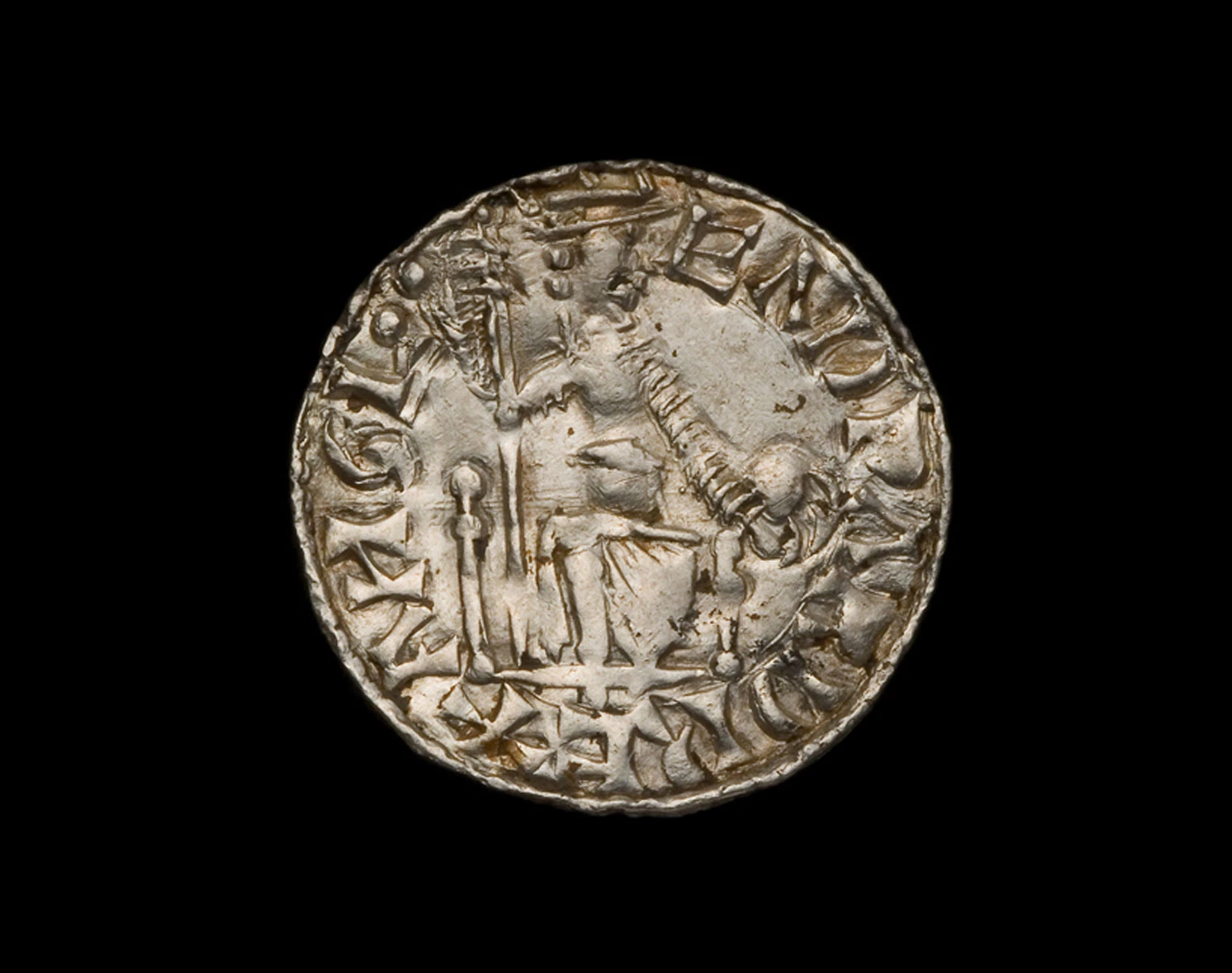
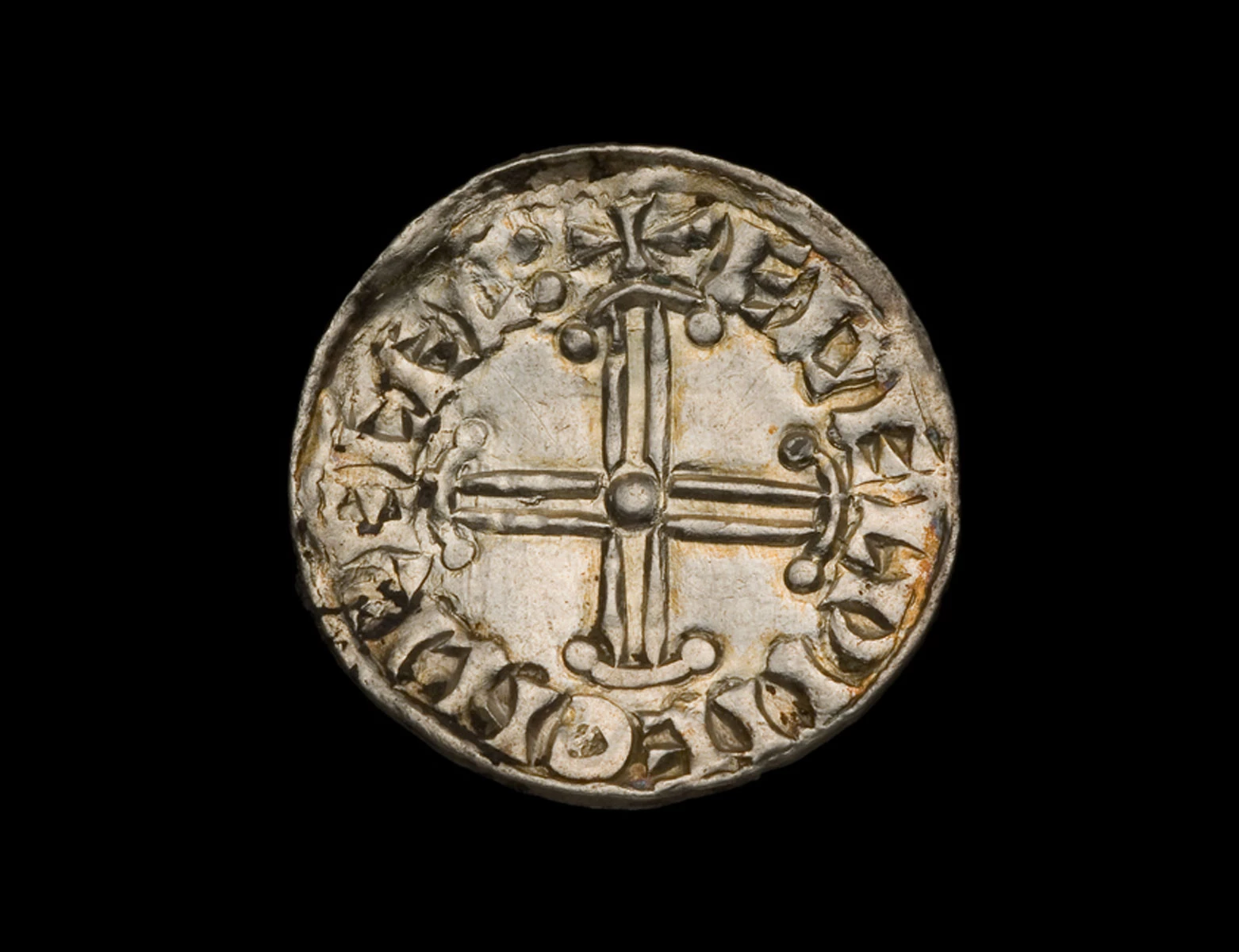
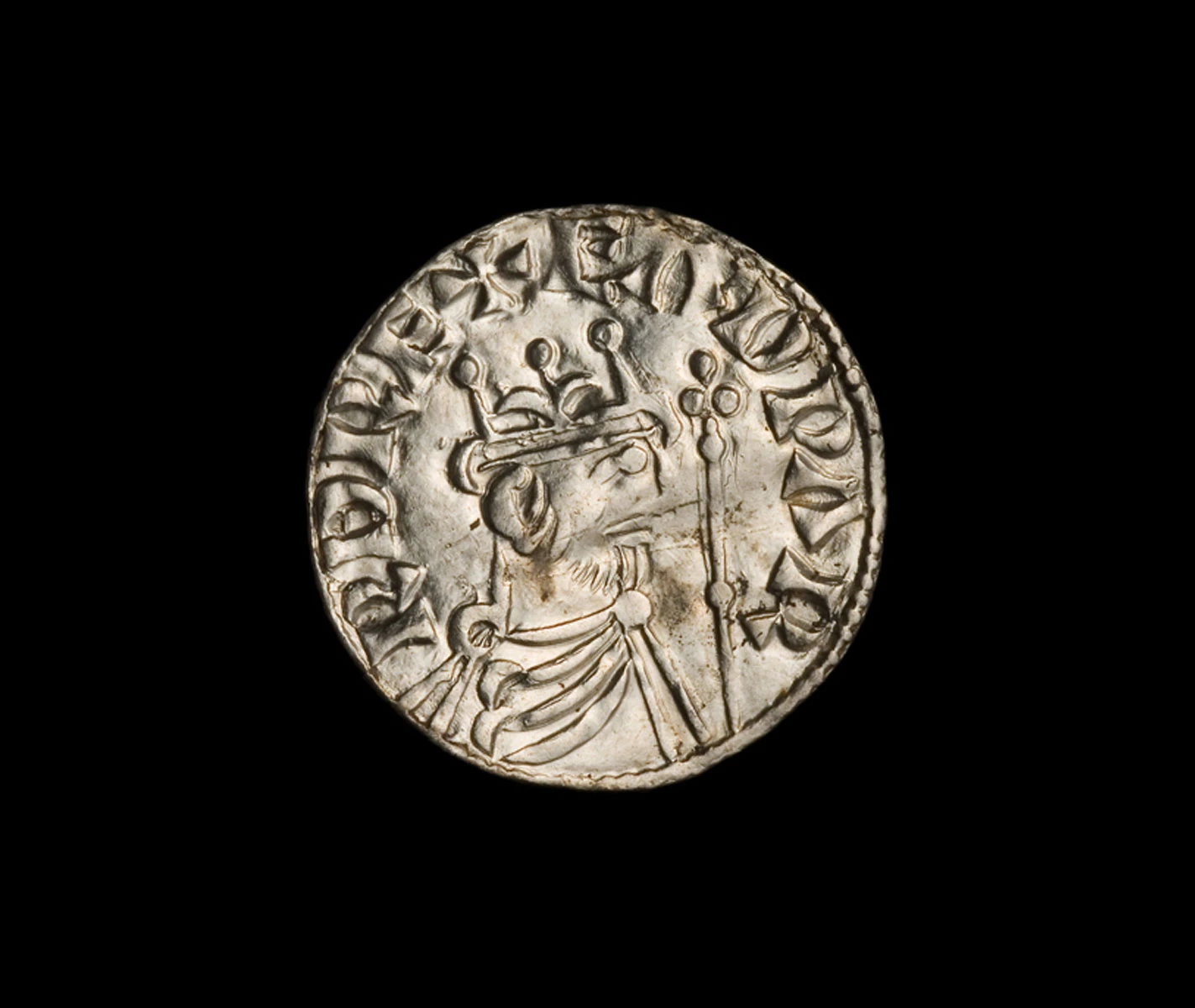
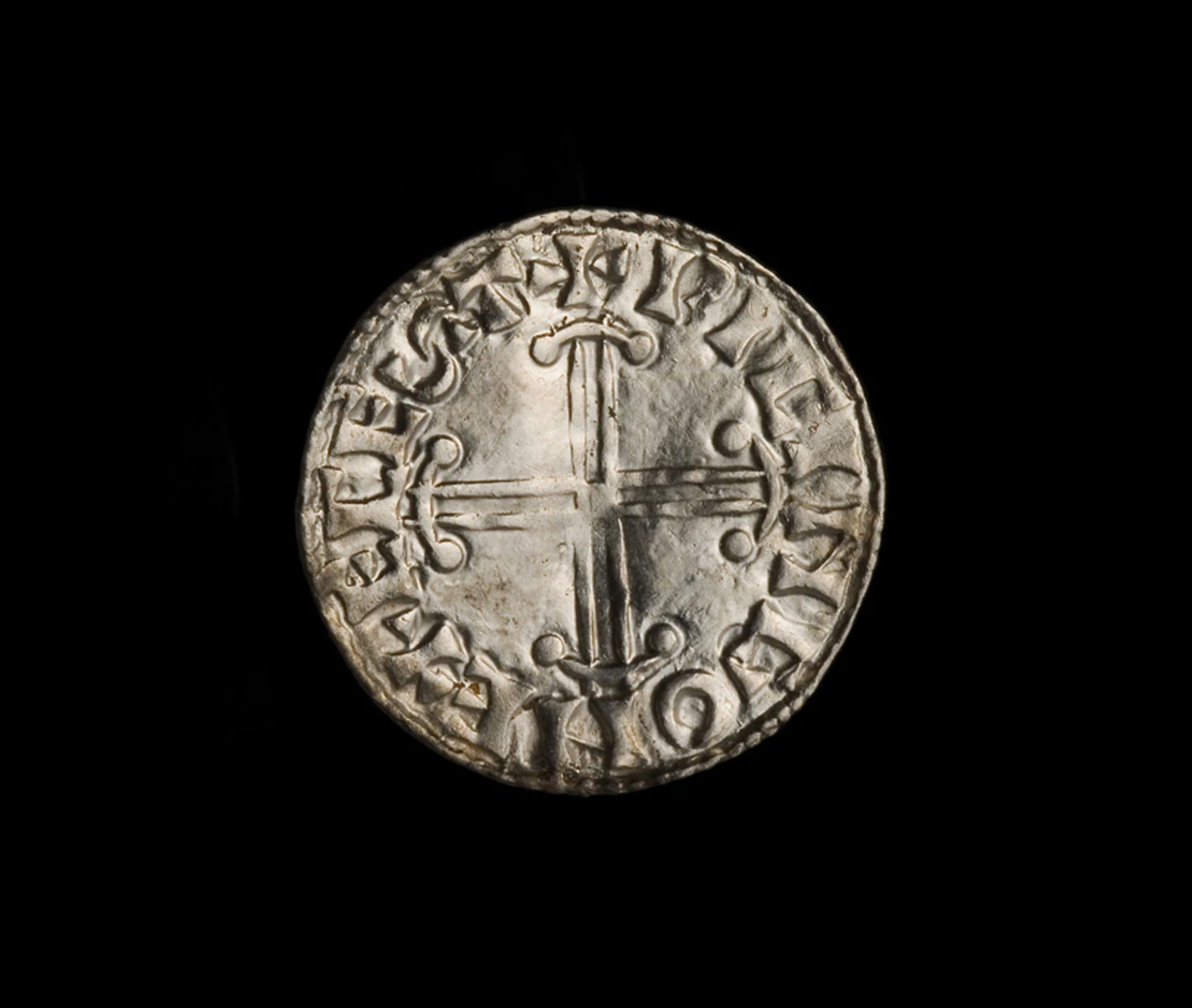
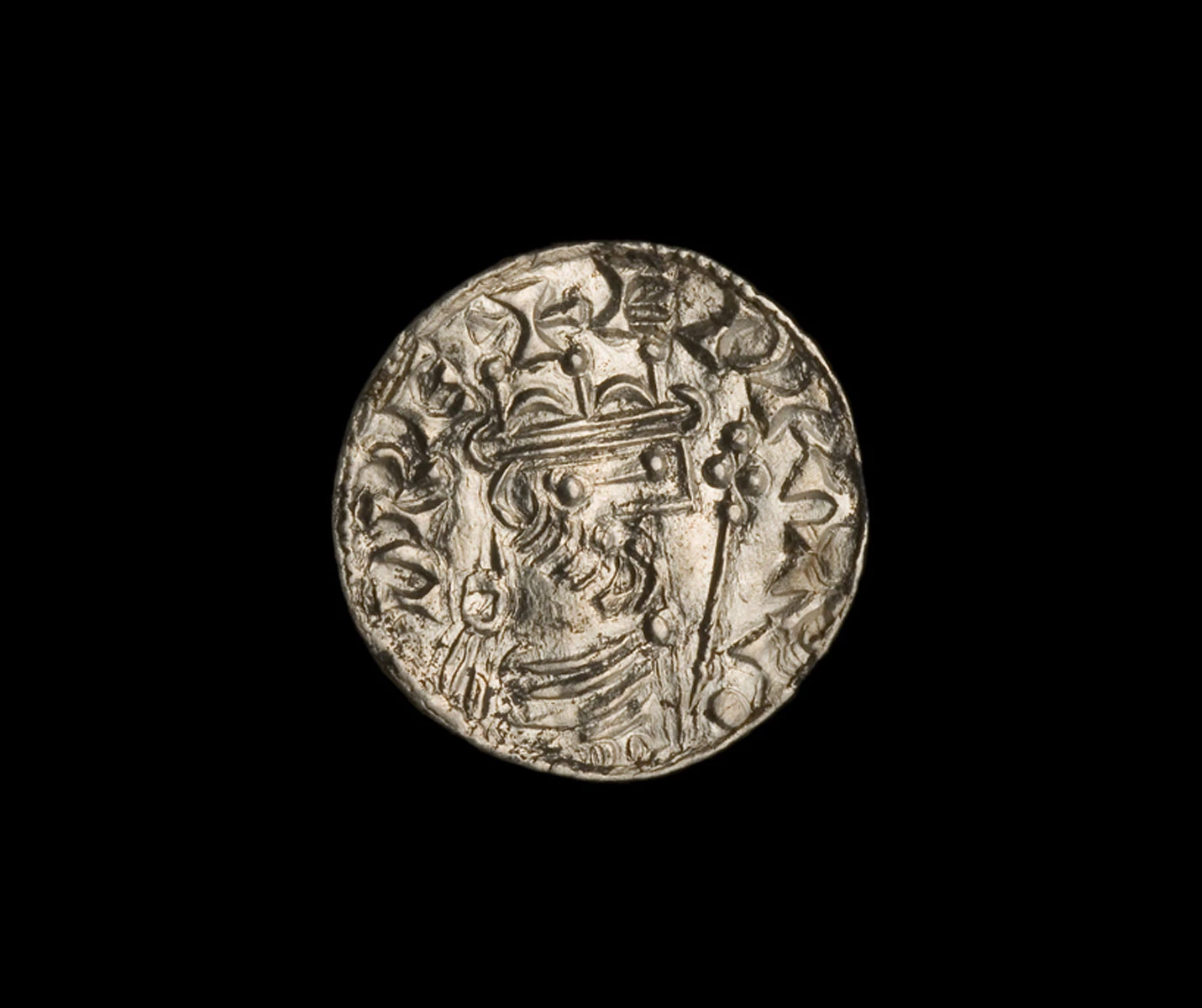
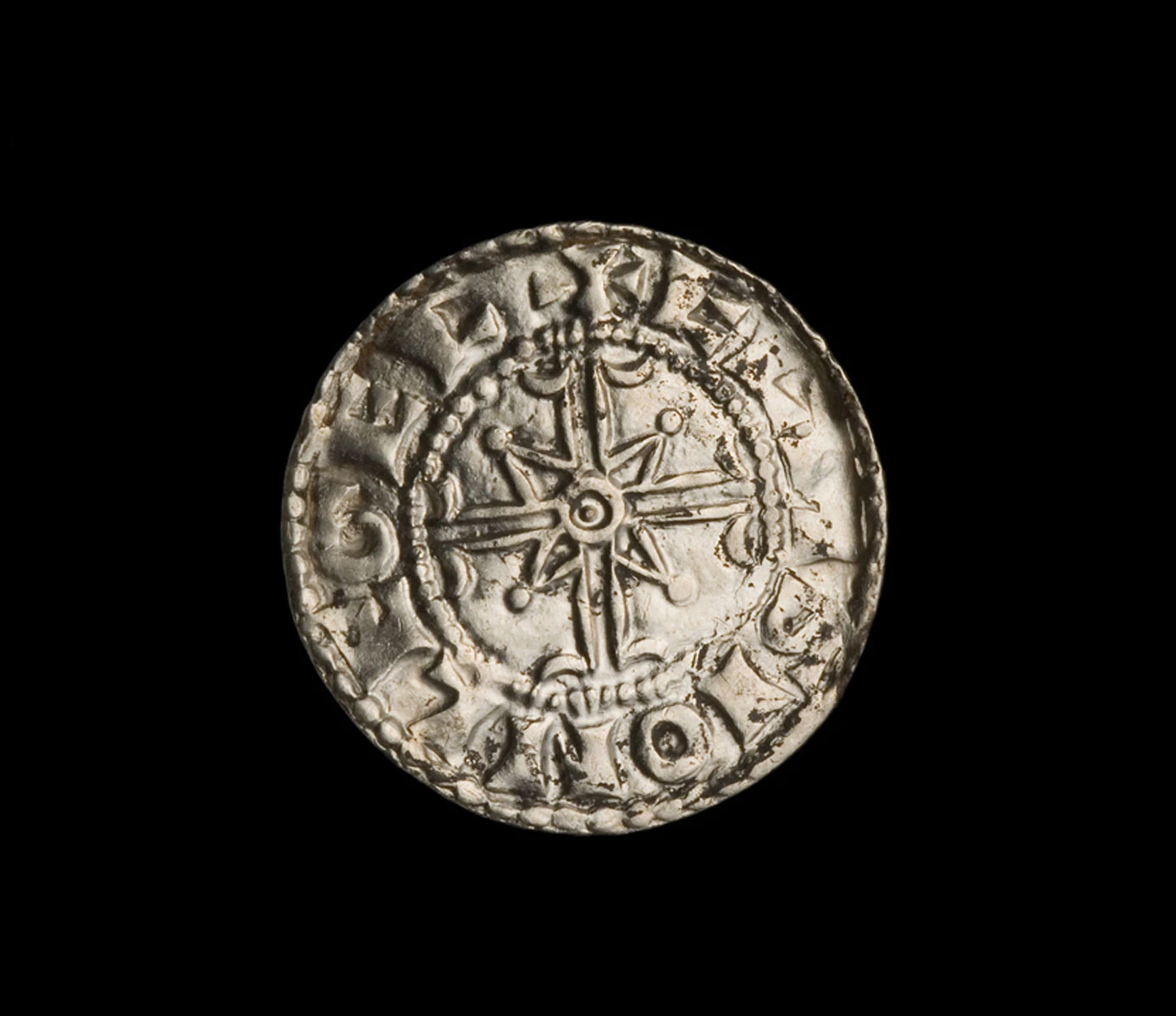
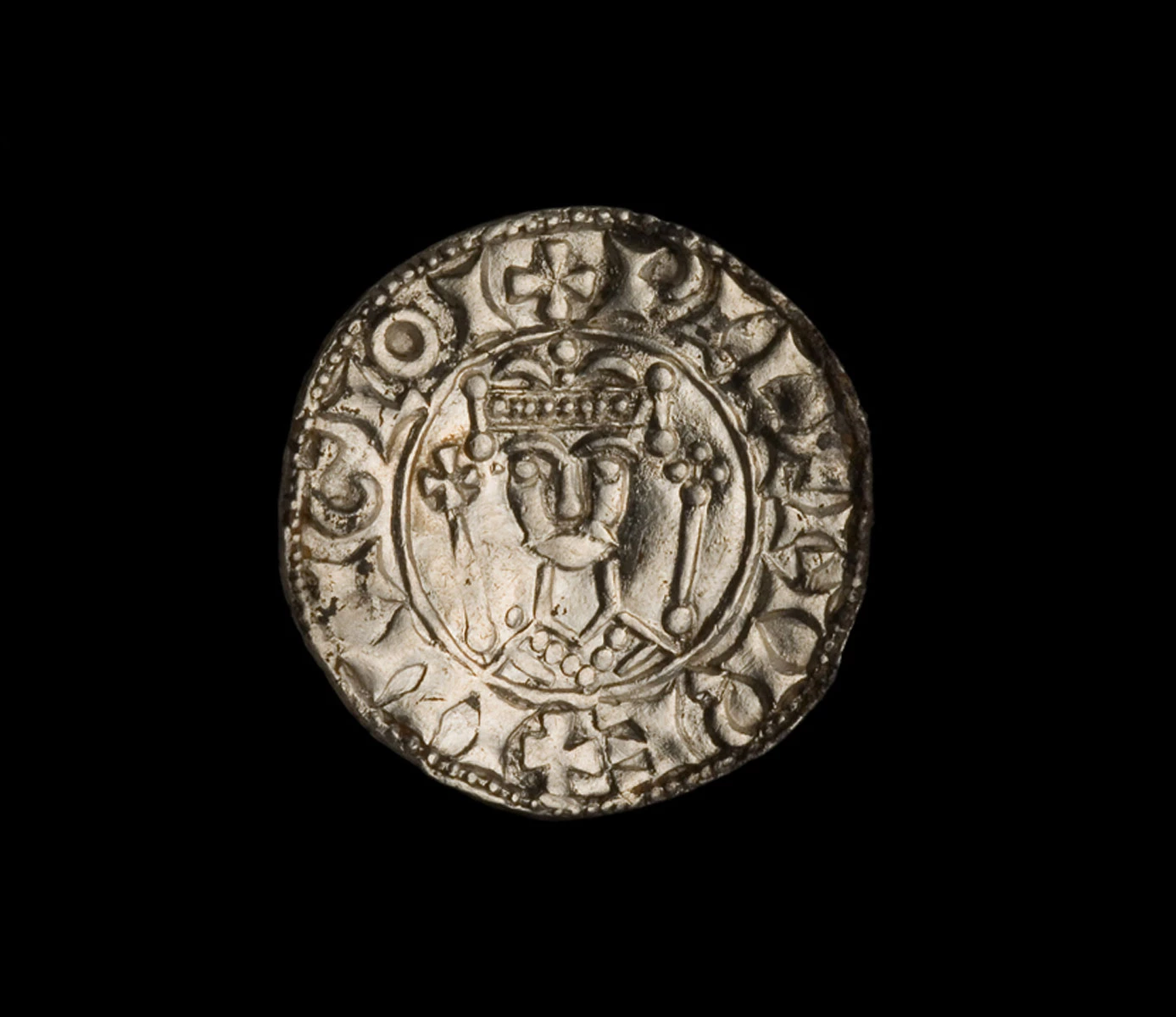
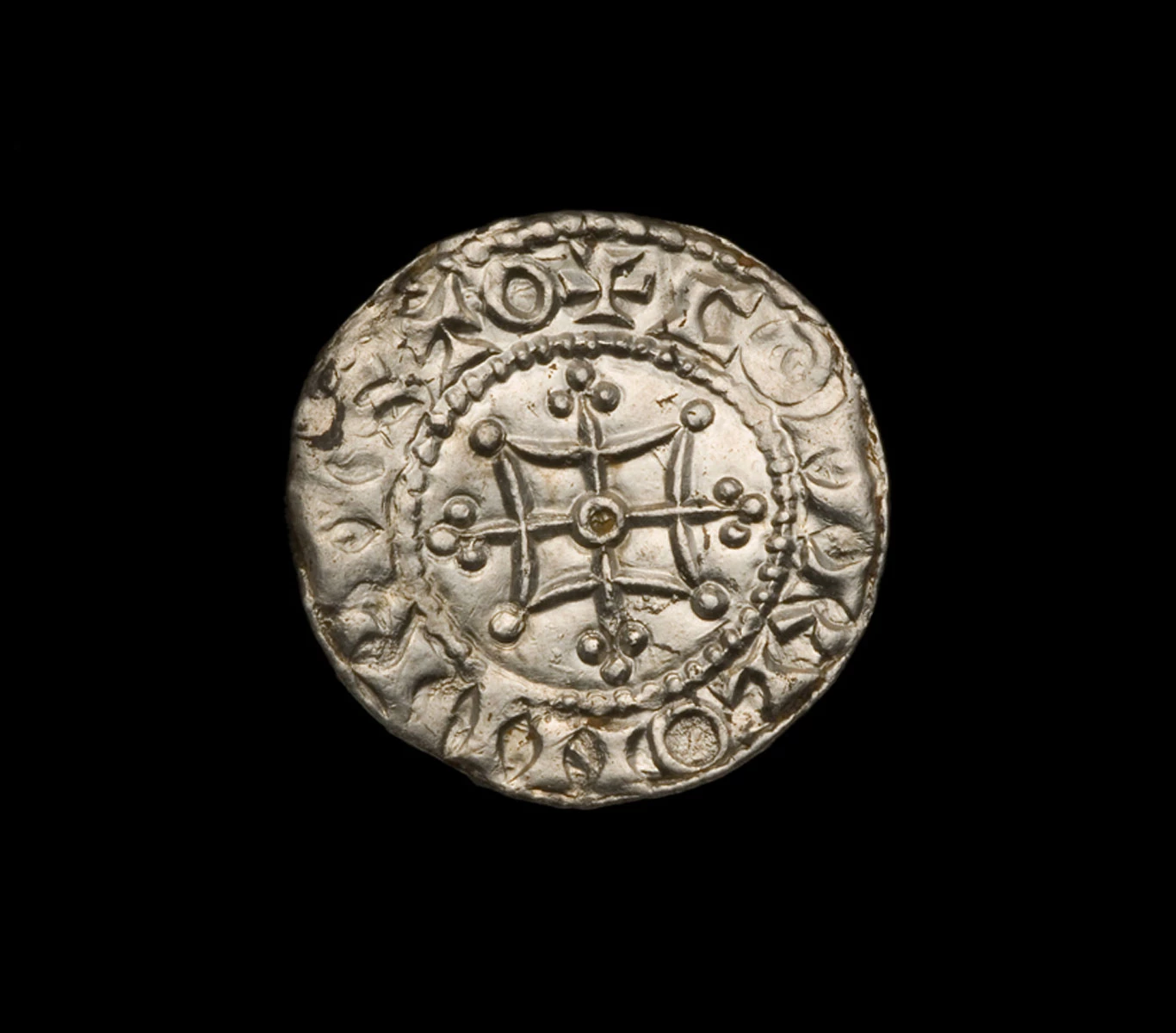
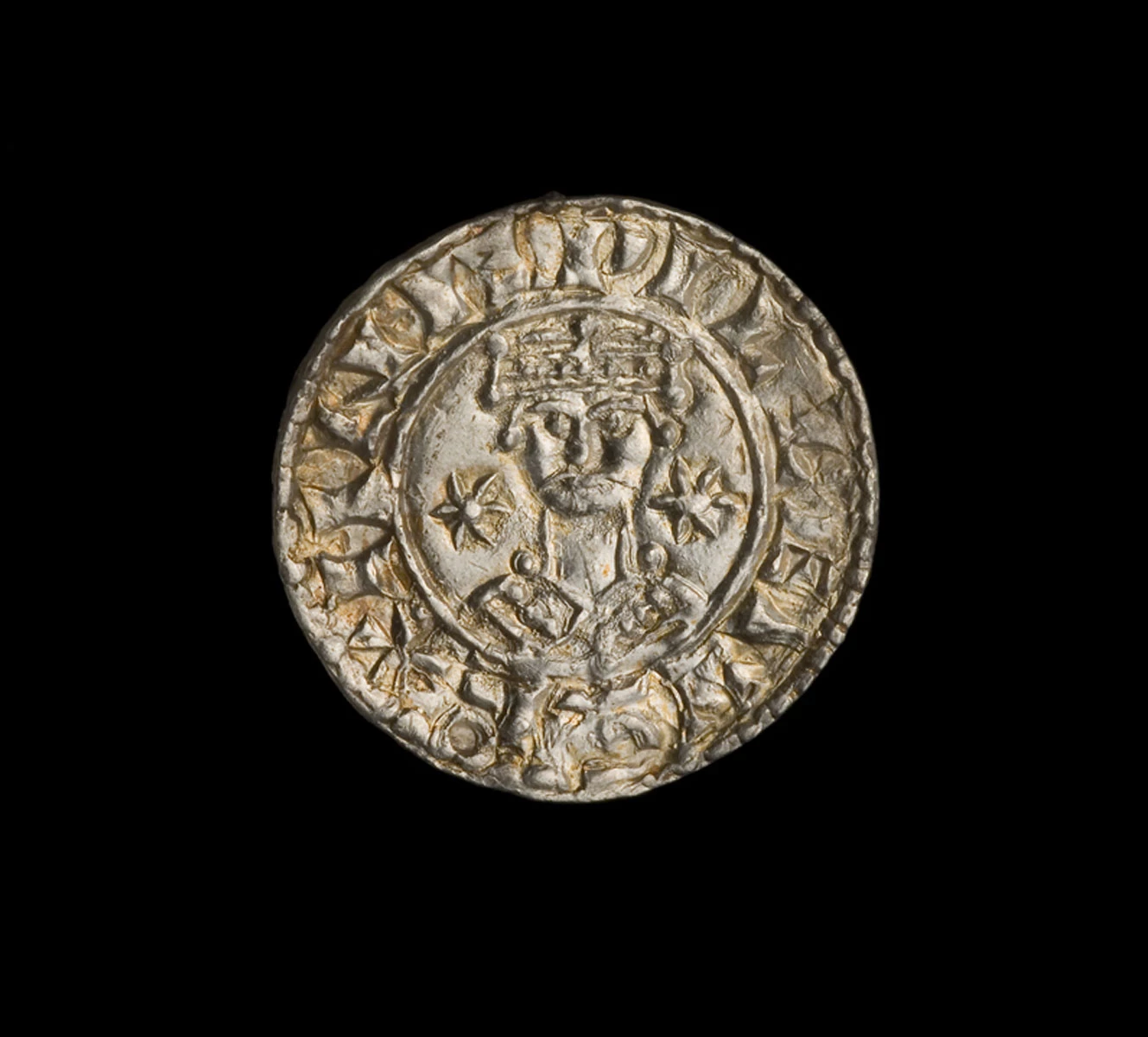
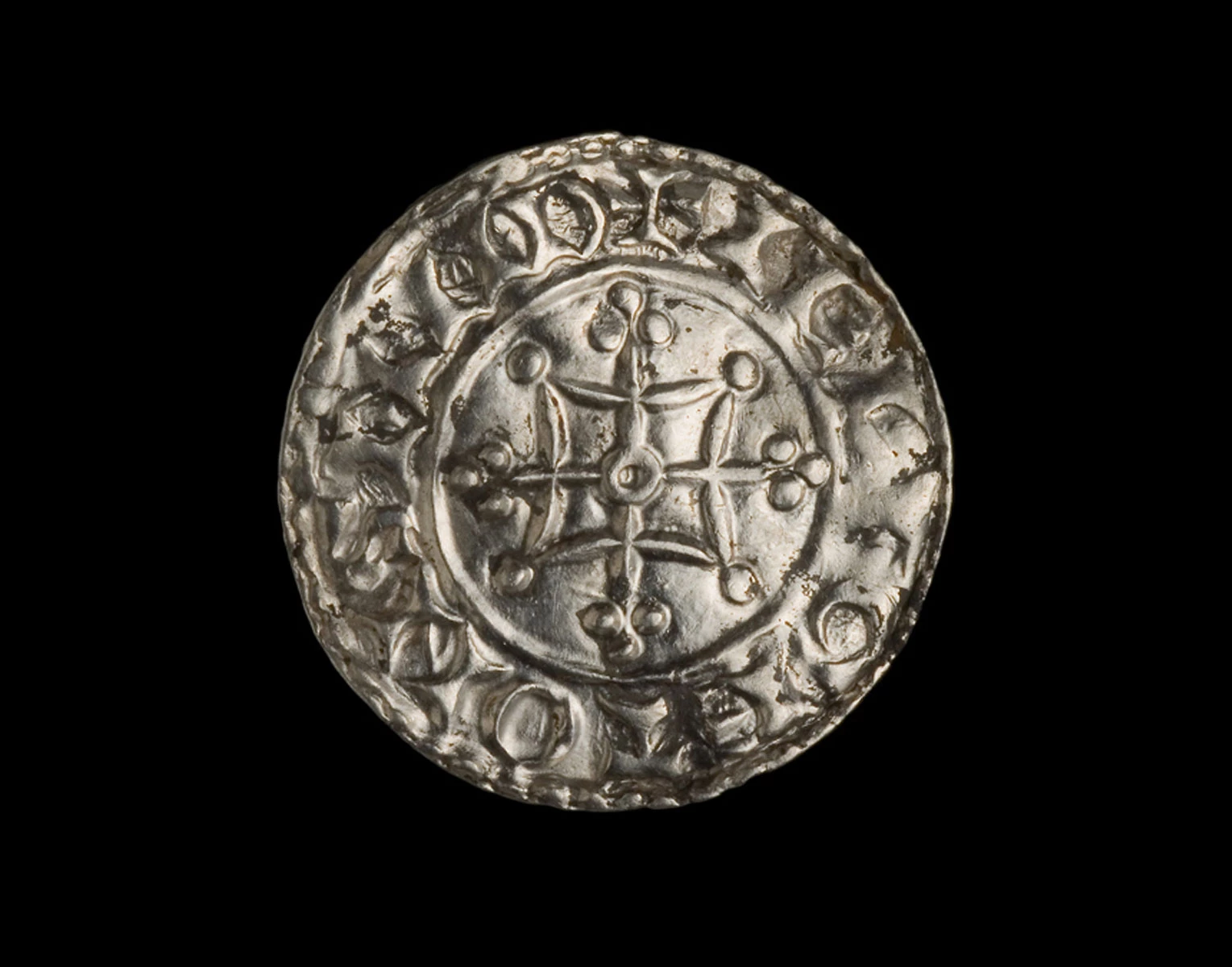
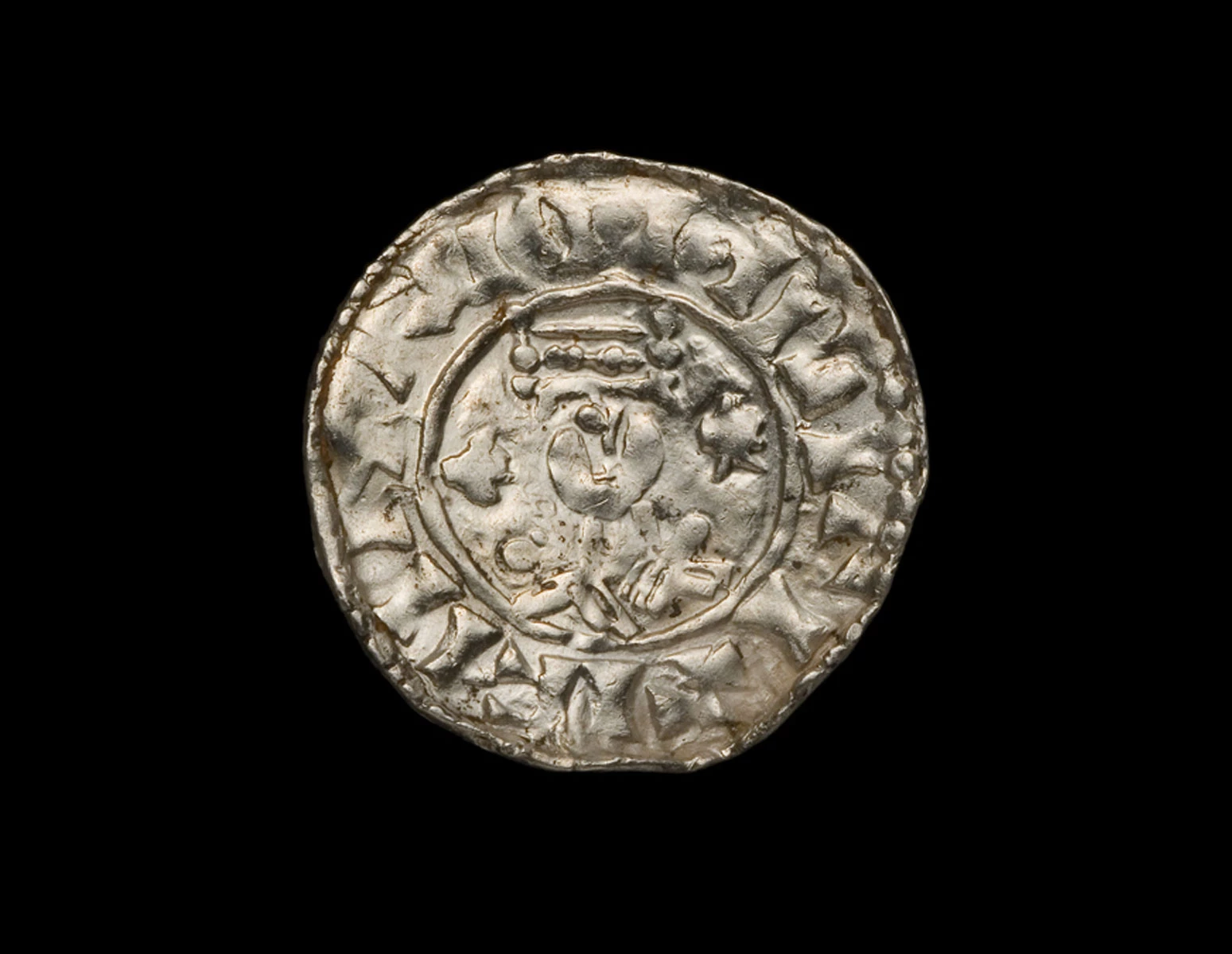
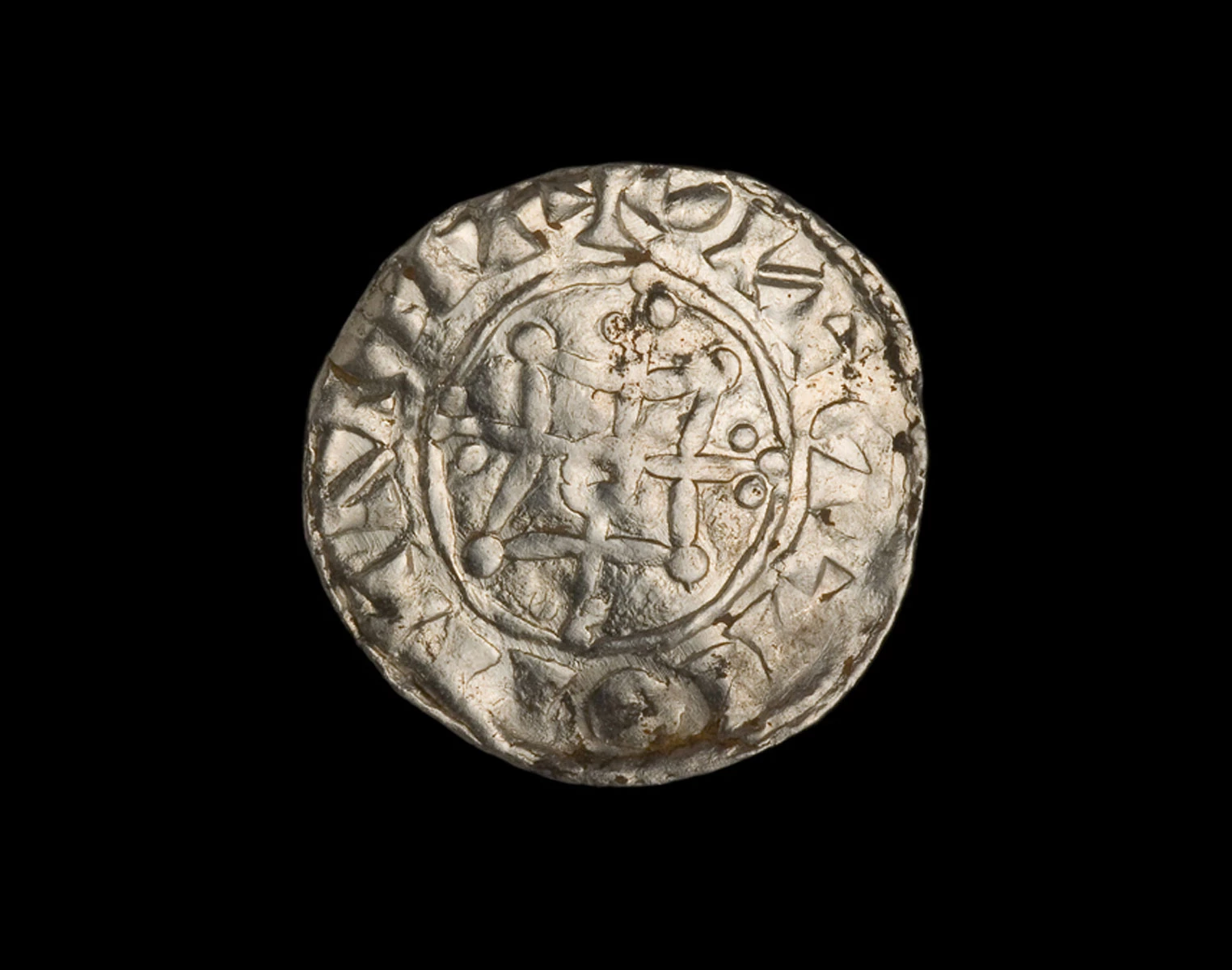
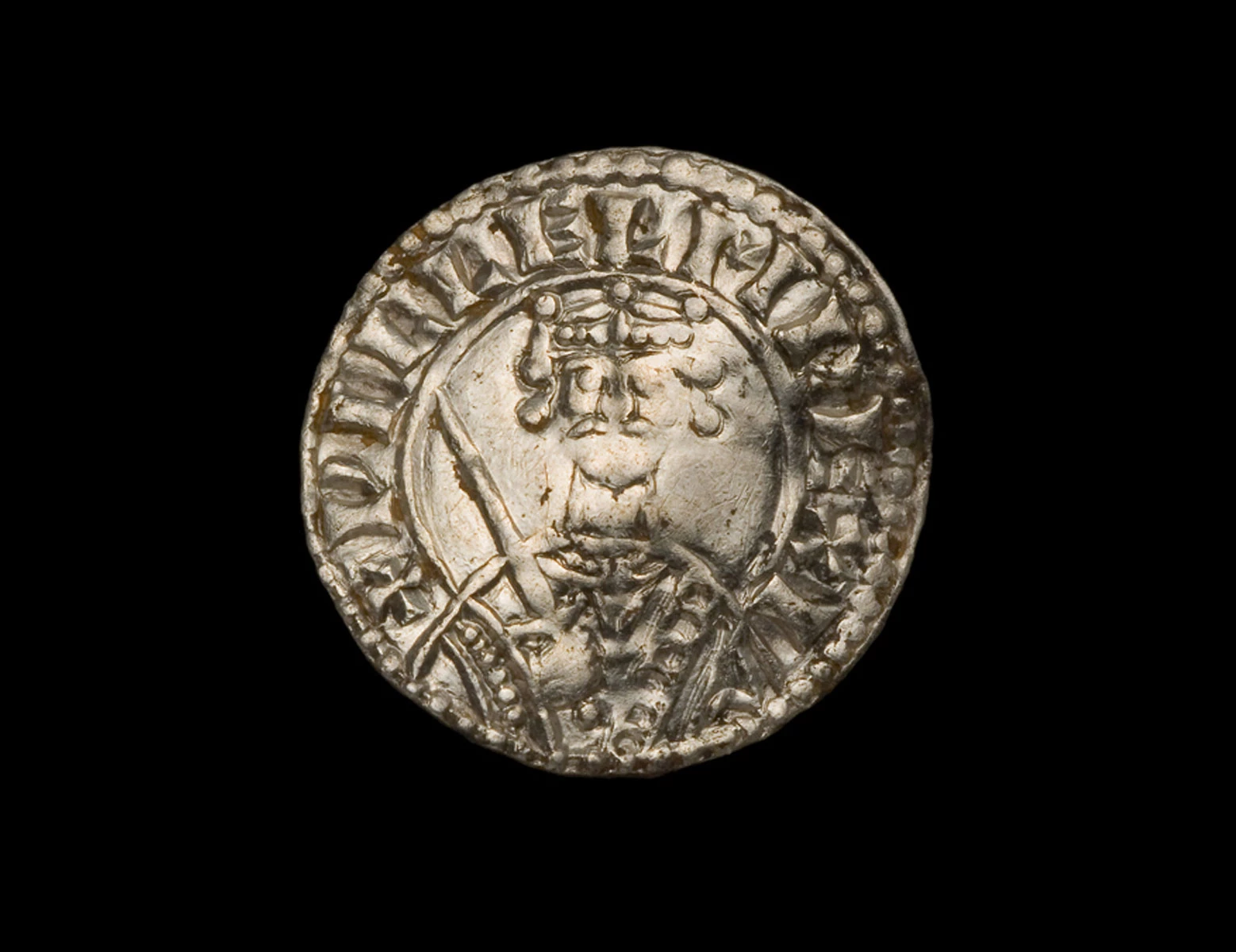
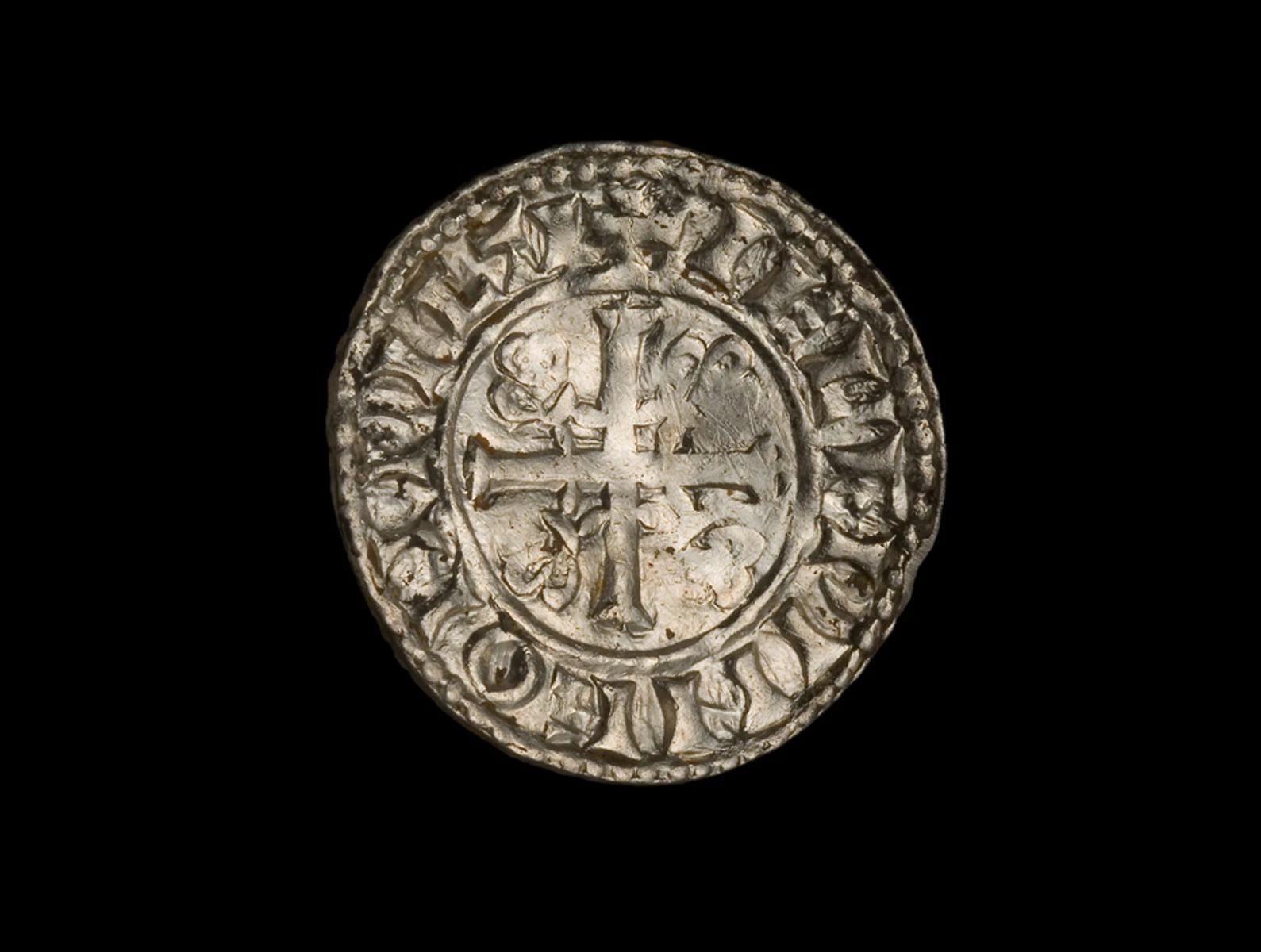
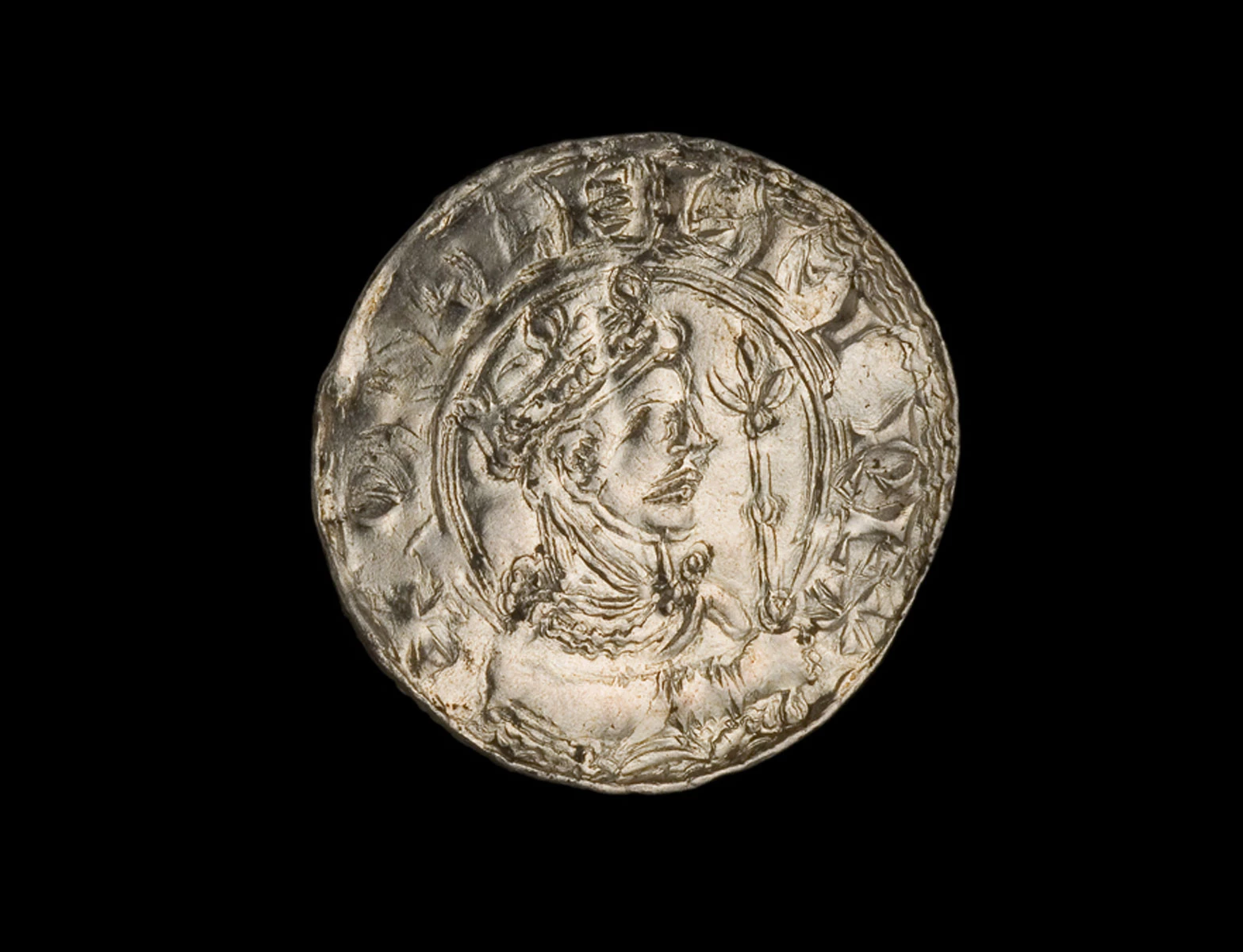
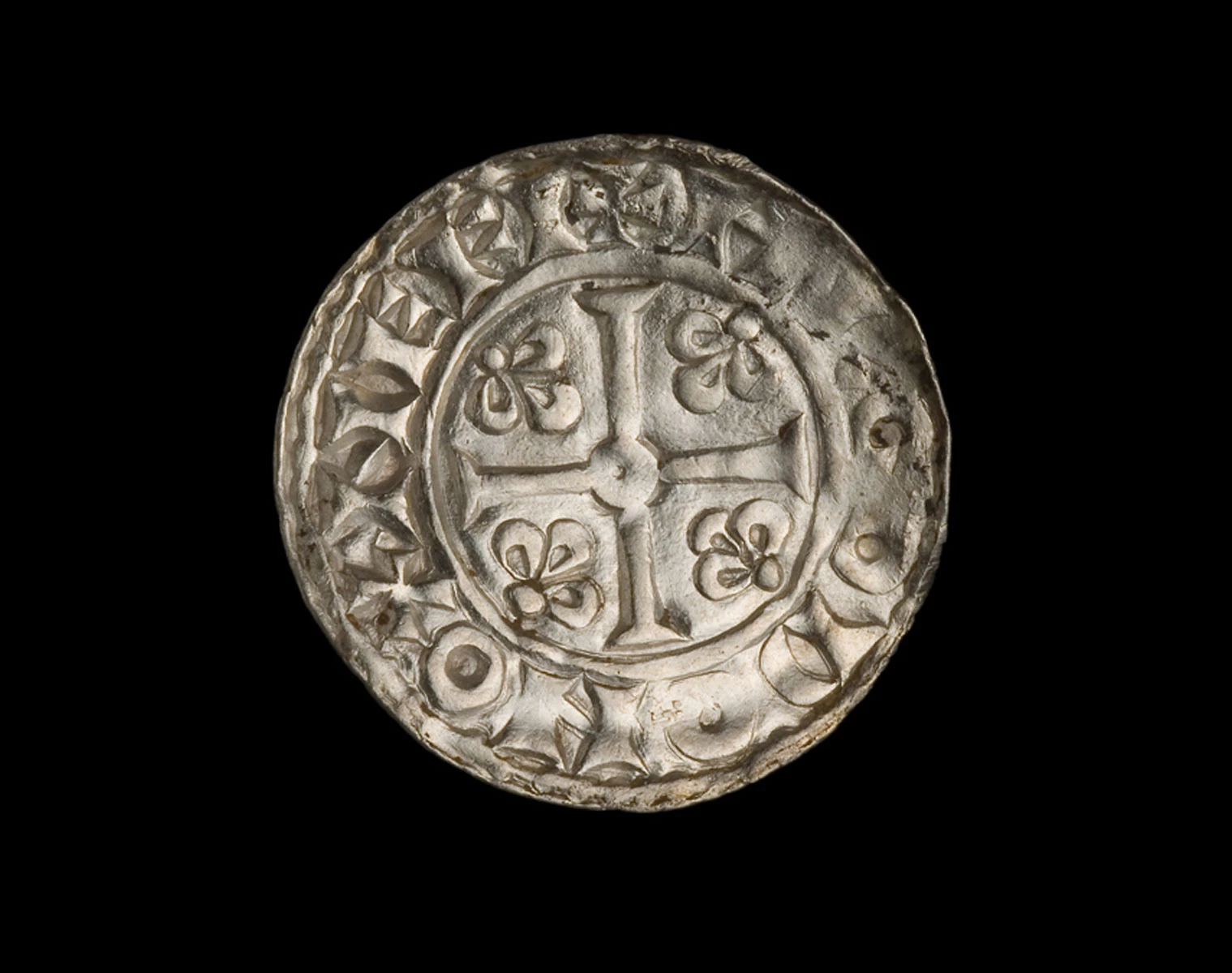
In April 2002 three metal-detectorists (John L Jones, Richard Johns and Fred Edwards) had the find of their lives in a field near Abergavenny, Monmouthshire: a scattered hoard of 199 silver pennies.

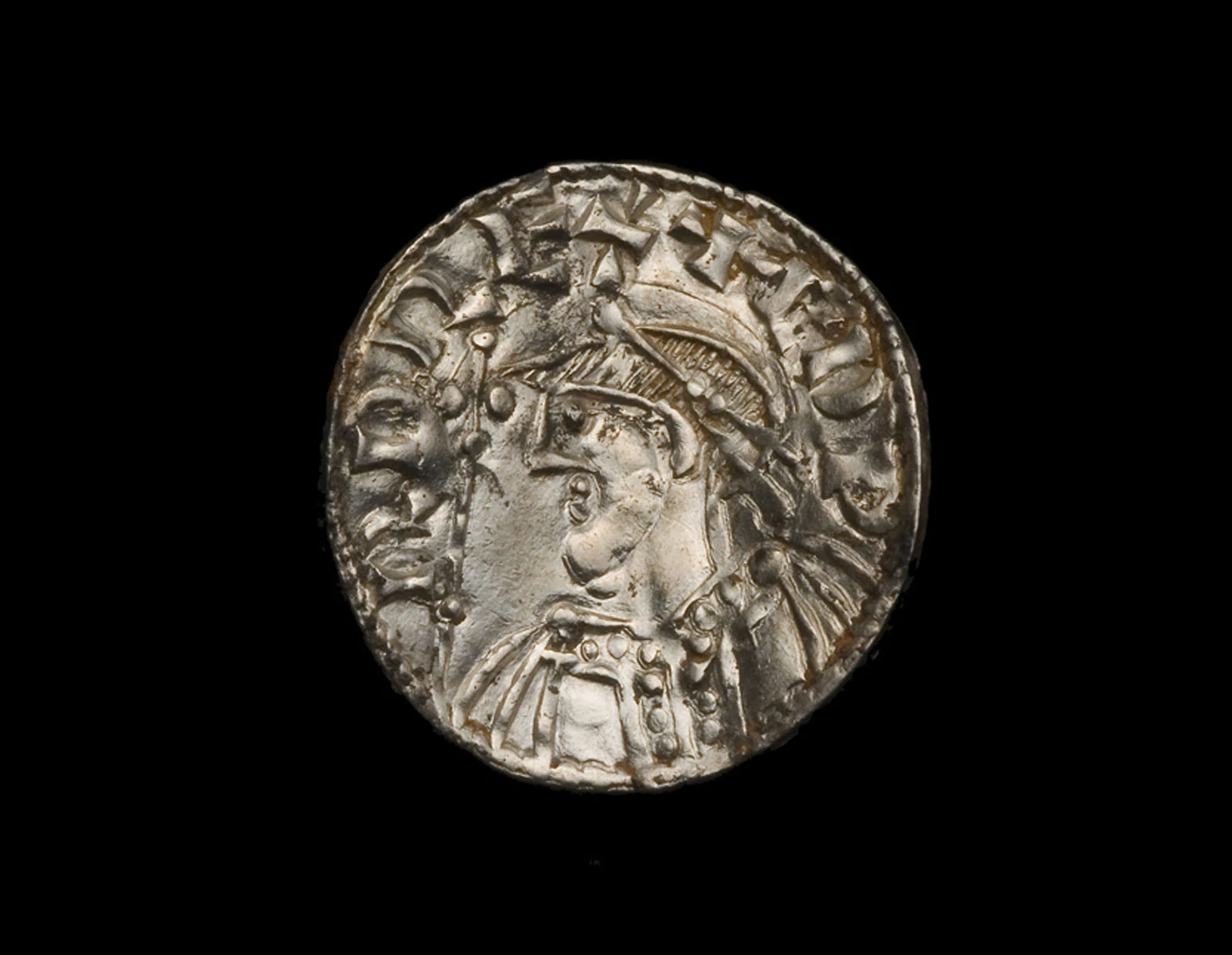
The hoard included coins of the Anglo-Saxon king Edward the Confessor (1042-66) and the Norman king William the Conqueror (1066-87). The hoard probably pre-dates the founding of Abergavenny near by in the 1080s.

The hoard was heavily encrusted with iron deposits, including traces of fabric, suggesting that the coins had originally been held in a cloth bag. It is not clear whether they had been deliberately hidden, or simply lost. Either way their owner was the poorer by a significant amount: sixteen shillings and seven pence (16s 7d, or £0.83p) would for most have represented several months' wages.

Minting coins

Anglo-Saxon and Norman coins form an unique historical source: each names its place of minting and the moneyer responsible. People had easy access to a network of mints across England (there were none in Wales) and every few years existing money was called in to be re-minted with a new design. The King, of course, took a cut on each occasion.

The Abergavenny hoard includes 36 identifiable mints, as well as some irregular issues which cannot at present be located. Coins from mints in the region, like Hereford (34 coins) and Bristol (24), are commonest, outweighing big mints such as London (19) and Winchester (20). At the other end of the scale there are single coins from small mints such as Bridport (Dorset), or distant ones such as Thetford (Norfolk) and Derby.

Hoards from western Britain are rare, so the Abergavenny Hoard has produced many previously unrecorded combinations of mint, moneyer, and issue.

We shall probably never know quite why these coins ended up in the corner of a field in Monmouthshire but, as well as expanding our knowledge of the coinage itself, they will cast new light on monetary conditions in the area after the Norman Conquest.

Conservation

The coins were found covered in iron concretions and many of them were stuck to each other. This disfigured the coins and obscured vital details. Removing this concretion with mechanical methods, such as using a scalpel, would have damaged the silver, and chemicals failed to shift the iron.

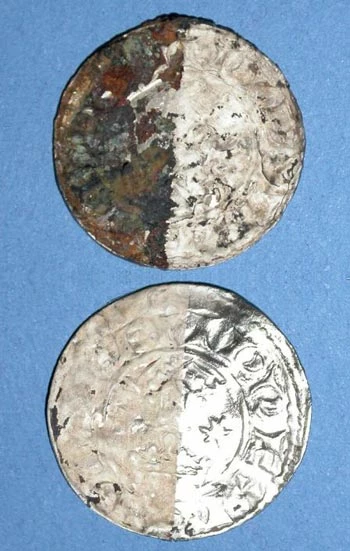
The solution to the problem was found in an unexpected, but thoroughly modern tool - the laser. A laser is a source of light providing energy in the form of a very intense single wavelength, with a narrow beam which only spreads a few millimetres.

As laser radiation is of a single colour (infrared light was used in this case) the beam will interact intensely with some materials, but hardly at all with others. This infrared source was absorbed better by the darker overlying iron corrosion than by the light silver metal.

The laser was successful at removing much of the iron crust, but initially left a very thin oxide film on the surface. When this was removed, the detail revealed on the underlying coin was excellent; it was possible to see rough out and polishing marks transferred to the coin from the original die, as well as the inscribed legend.

Background Reading

Conquest, Coexistence, and Change. Wales 1063-1415 by R. R. Davies. Published by Oxford University Press (1987).

The Norman Conquest and the English Coinage by Michael Dolley. Published by Spink and Son (1966).

A Place of Awe and Inspiration

Harriet Wood, 22 December 2016

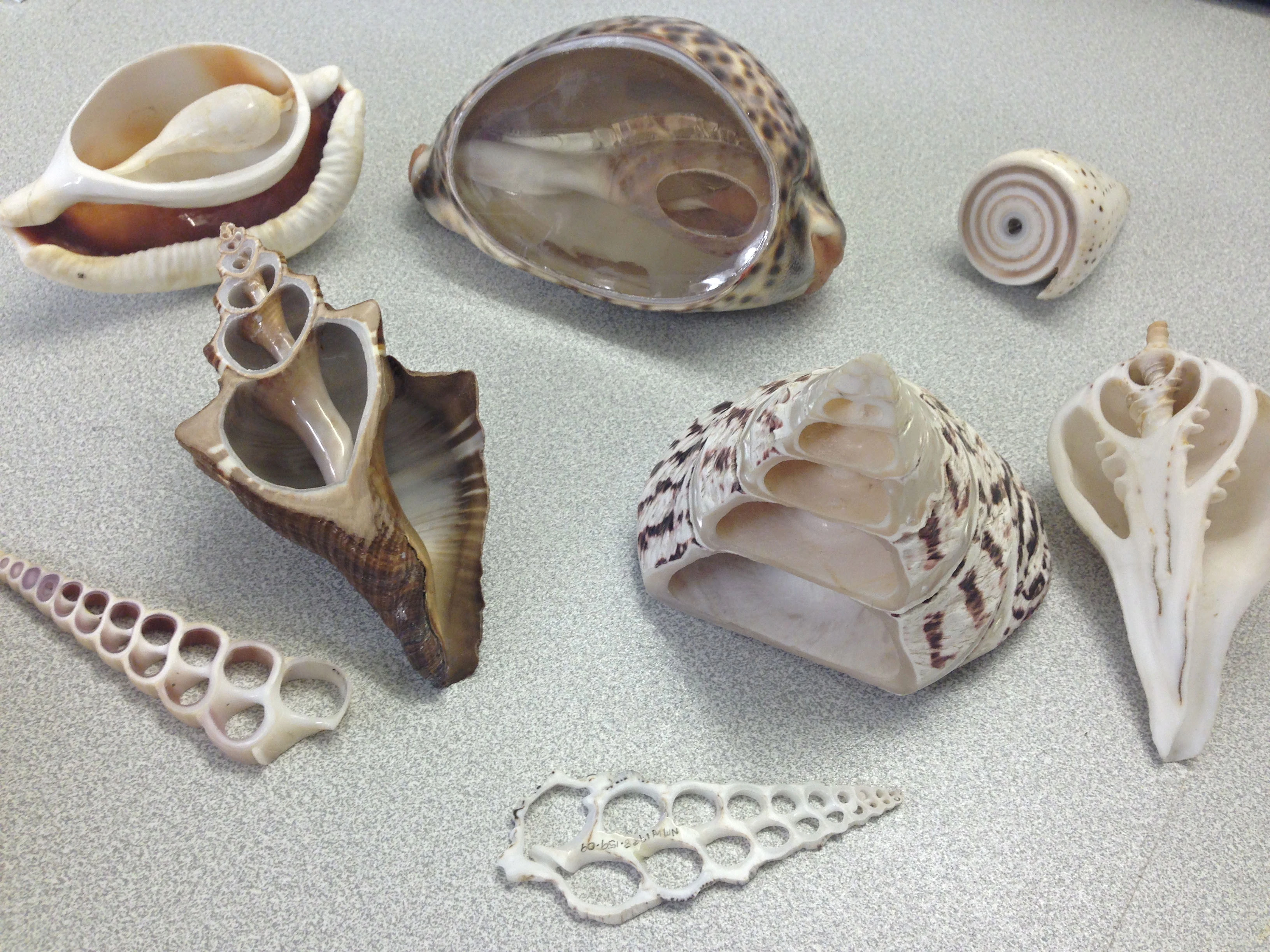
Opening up our collections to the public is a real treat for any curator. We are almost always welcomed with gasps of delight as they enter the treasure trove that is the shell collection at Amgueddfa Cymru - National Museum Wales. It is brimming with shells of beauty with stories to tell, century old books with hand painted pictures and letters from shell-lovers of the past. It is undoubtedly a place of inspiration and reminiscence and so perhaps it is not surprising that creative writing groups enjoy using it as their muse.

Looking inside shells - shell sections

Looking inside shells - shell sections

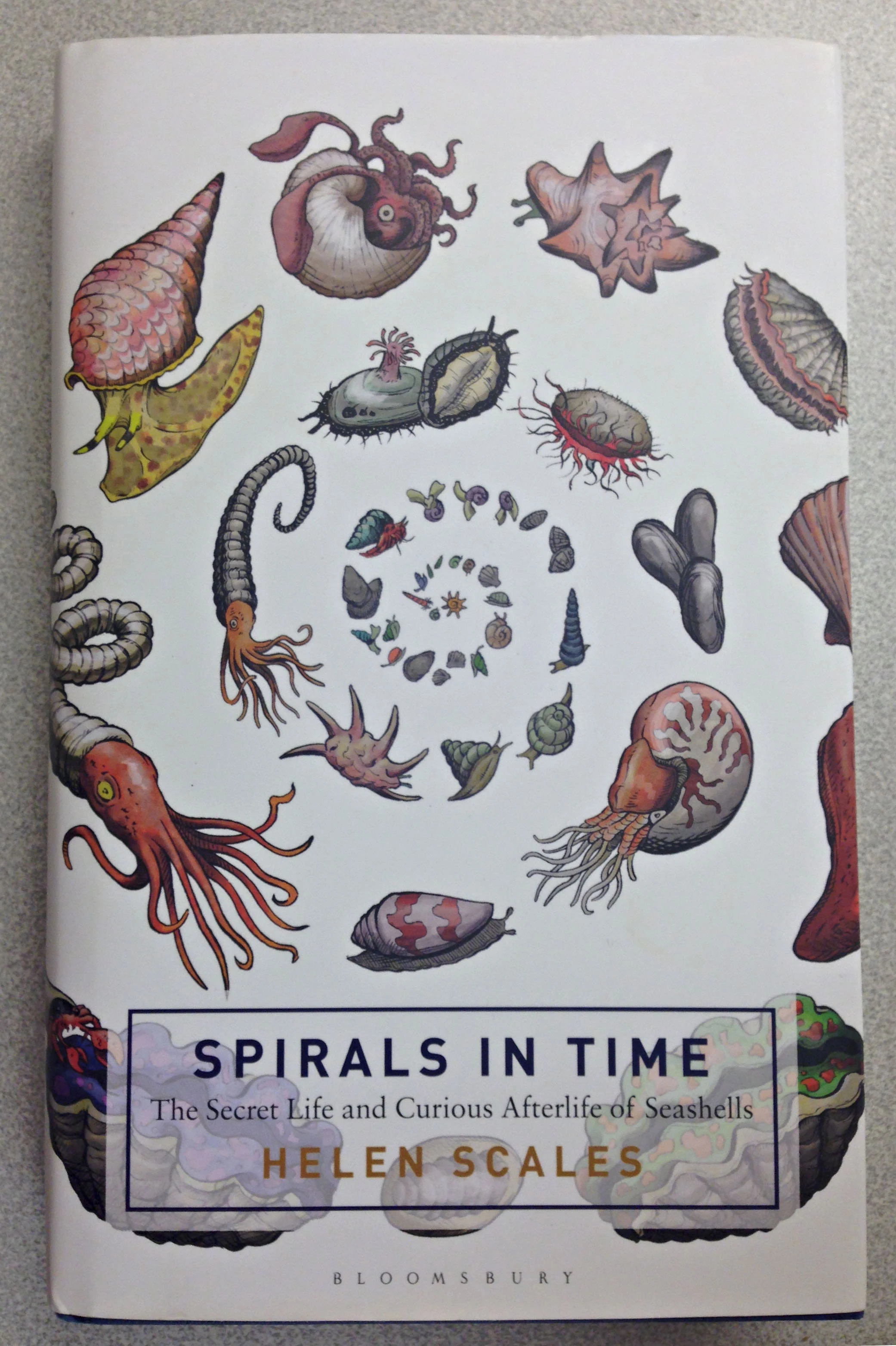
I recently had the pleasure of showing one such group around. A member had already read and loved Helen Scales’ beautiful book Spirals in Time and so I brought out some of her stories with the shells on show for the writers to witness first hand.

Spirals in Time by Helen Scales

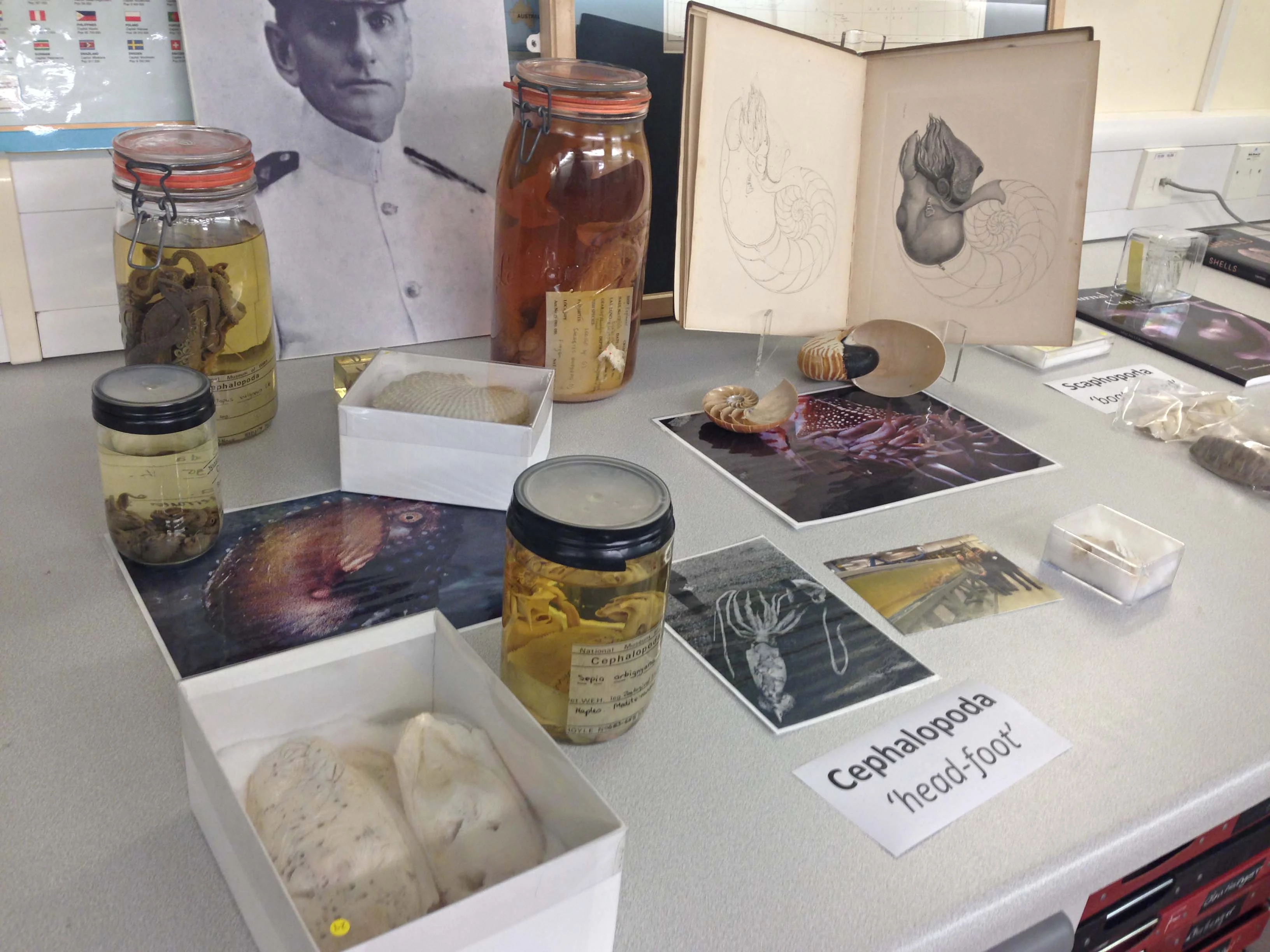
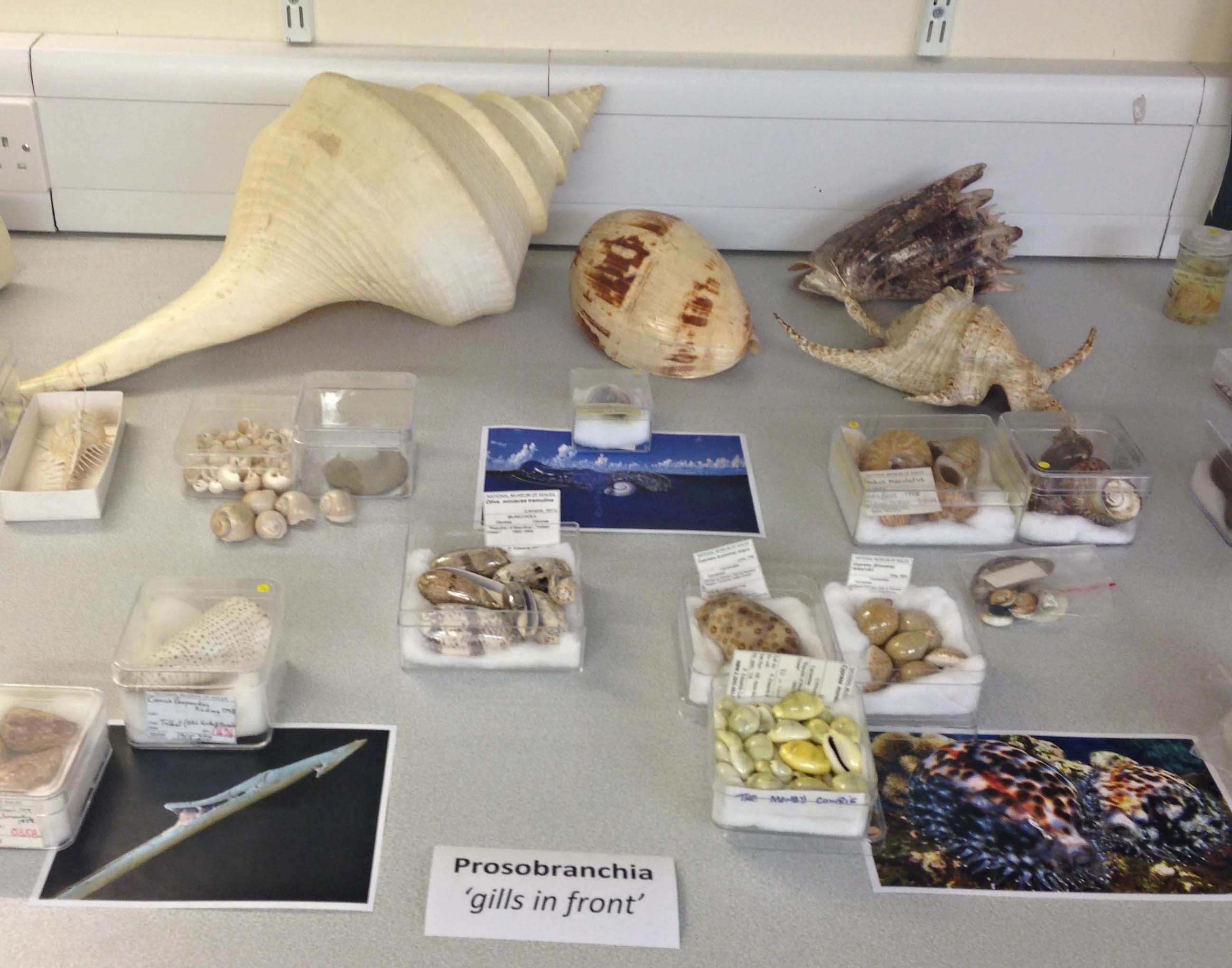
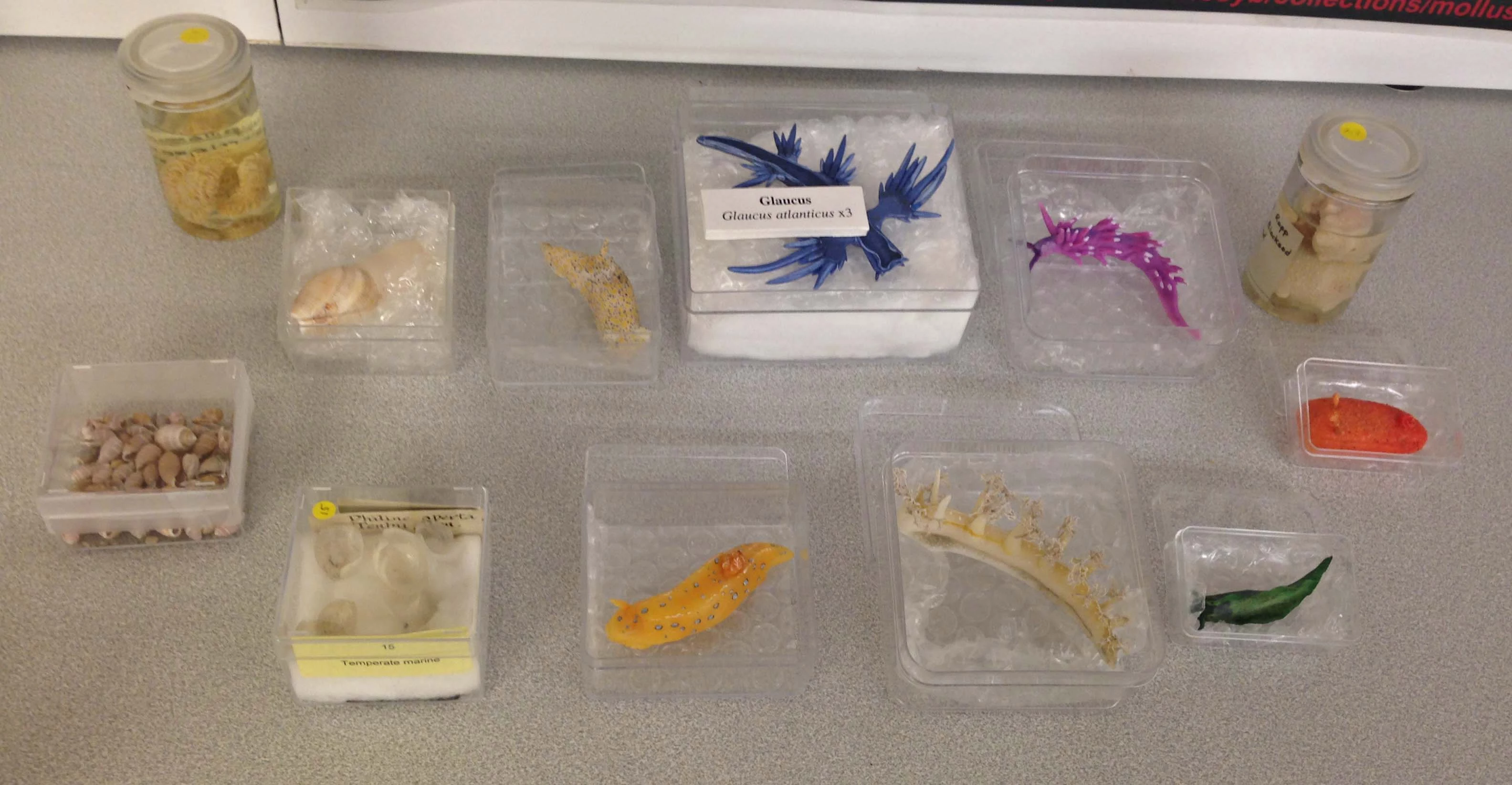
These tales of molluscs naturally unfold when going through the vast diversity of the group - where they live, how they live, what they eat – from metal armoured snails at the bottom of the Indian Ocean to ghost slugs rasping earthworms to a spaghetti-like death. The stories are endless and an hour simply isn’t enough! As well as inspiring them the shells evoked memories for the writers too, stories of happy hours spent eating cockles by the sea and of school days where each pupil had a tin of shells to use for counting.

Cephalopods - Octopus, Squid, Cuttlefish and Nautilus

Sea Snails

Sea Slugs

It seemed only right that the pieces the group produced should be shared with fellow creatives out there and so with their permission they are published here. I hope you enjoy them as much as I have.

A page from Melvill's hand-drawn register


Voices from the Archive – Christmas at St Fagans in the early 1900s

Elen Phillips, 19 December 2016

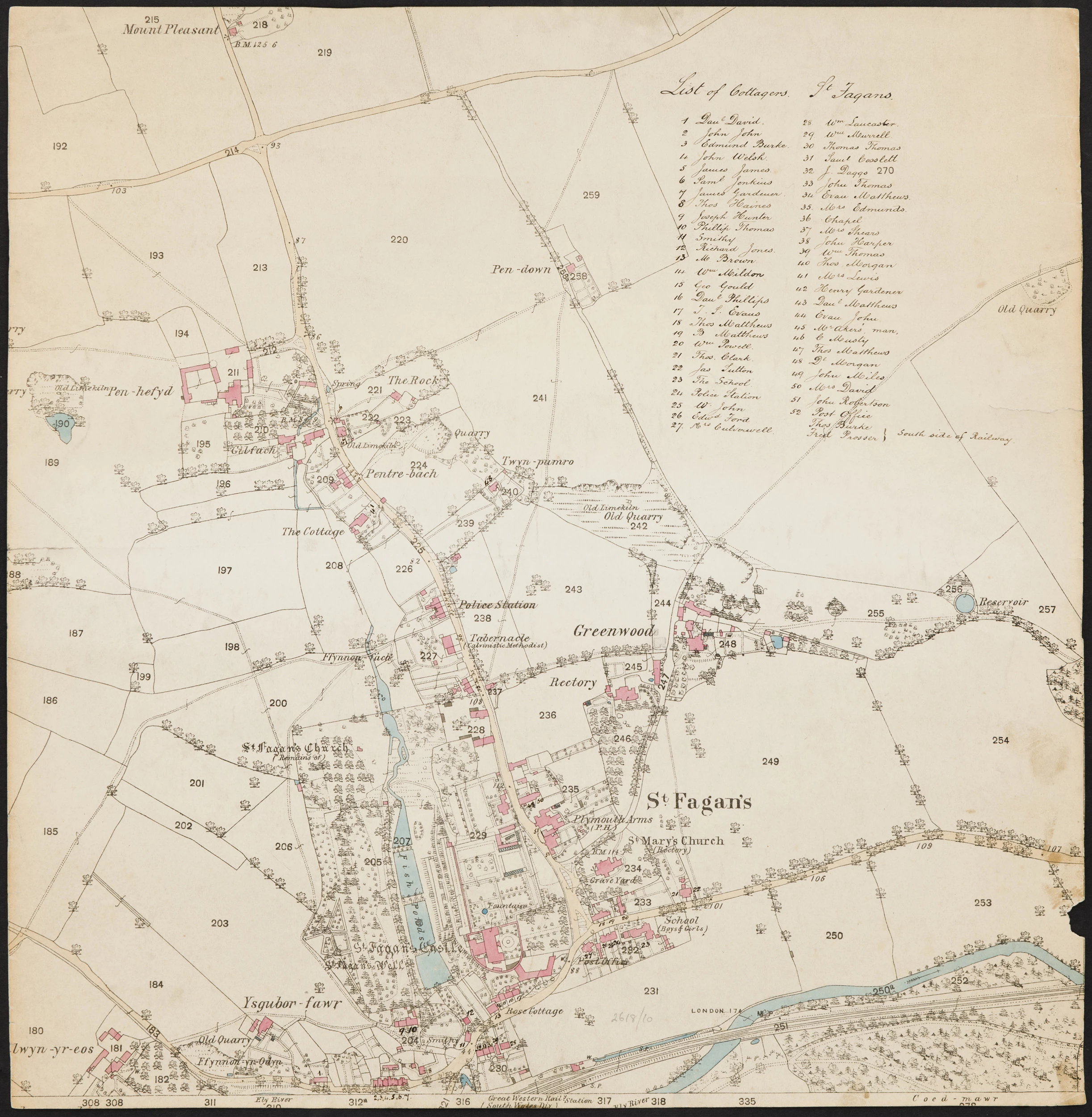
A few years ago, while researching the history of St Fagans Castle during the First World War, I came across a number of oral history interviews in the Sound Archive with former tenants of the Plymouth Estate. The recordings were made in the 1970s and 1980s with people who had, for the most part, lived all their lives in St Fagans village. Although very few of the recordings yielded information relevant to my research, they did provide a vivid insight into the workings of the estate during the first half of the twentieth century, when village life revolved around the Castle and its owners – the Earl and Countess of Plymouth. With Christmas almost upon us, I thought I'd use my last blogpost of 2016 to share some of the villagers' recollections of Christmas at St Fagans in the early 1900s. Nadolig llawen!

Christmas beast

Alexander ‘Bert’ Warden, born in Cirencester in 1910, moved with his family to St Fagans as a child. In an interview with the Museum in 1979, he remembered distributing meat to the villagers at Christmas:

Penhefyd Farm was the home farm in those days. Of course, the Plymouth people kept cattle there and all the rest of it. At Christmas time, they’d have a beast and it would be slaughtered, cut up into various chunks and each family in the village was allowed so much – I think it was about 5lb for a man, and 3lb for his wife and so much for each child. Now that was delivered around for the villagers by workmen from the estate. I did it myself when I was a boy. That was one of the Christmas boxes from the Plymouth Estate. Also a couple of rabbits – each person had a couple of rabbits and a load of logs. [6020/1]

Mary Ann Dodd, a housemaid for the Plymouth family at the turn of the century, remembered using the Christmas beast to make soup for the villagers. In the early 1960s, at the age of 96 and living at the Grange Home for the Blind in Hereford, she wrote an essay for the Museum about her 30 years working at St Fagans Castle:    

Every Christmas two animals were killed, and her Ladyship told Mrs Cousins to use the heads, legs and offal for soup. This was supervised by the Lady herself and was made in my biggest copper saucepan. It was so big I could almost stand in it. The Housekeeper put in the salt and seasoning, and my Lady was keen on plenty of parsley, and all five kitchen maids and myself prepared the vegetables. We cleaned celery, carrots and leeks. Once they knew that the soup was ready, the village folk came from breakfast time on with jugs and basins and all manner of things and they were all provided with meat and soup. [MS 1293]

Children’s party

Another festive tradition remembered with fondness was the children’s Christmas party. This was held in the Banqueting Hall – a large pavilion in the Castle grounds – before the end of the school term. Jessie Warden (née Mildon), who was born and brought-up in the village, described it as one of the 'perks' of living on the estate:

We were always a jolly lot. Lord Plymouth, every year, gave every child in the whole of the school – there could be a 100, there could be 50 – a Christmas party in the Banqueting Hall. Everything from the jelly to the Christmas presents at five shillings per child was paid by Lord Plymouth. And that was wonderful. It was a real Christmas party paid for by Lord Plymouth. There was a huge Christmas tree with your presents on the tree. Lady Plymouth was usually there and would give to the boys and Lord Plymouth would give to the girls. And they’d have a man with a ladder to get your particular present off the tree. The tree would then go to the Cardiff Royal Infirmary. [6020/1]

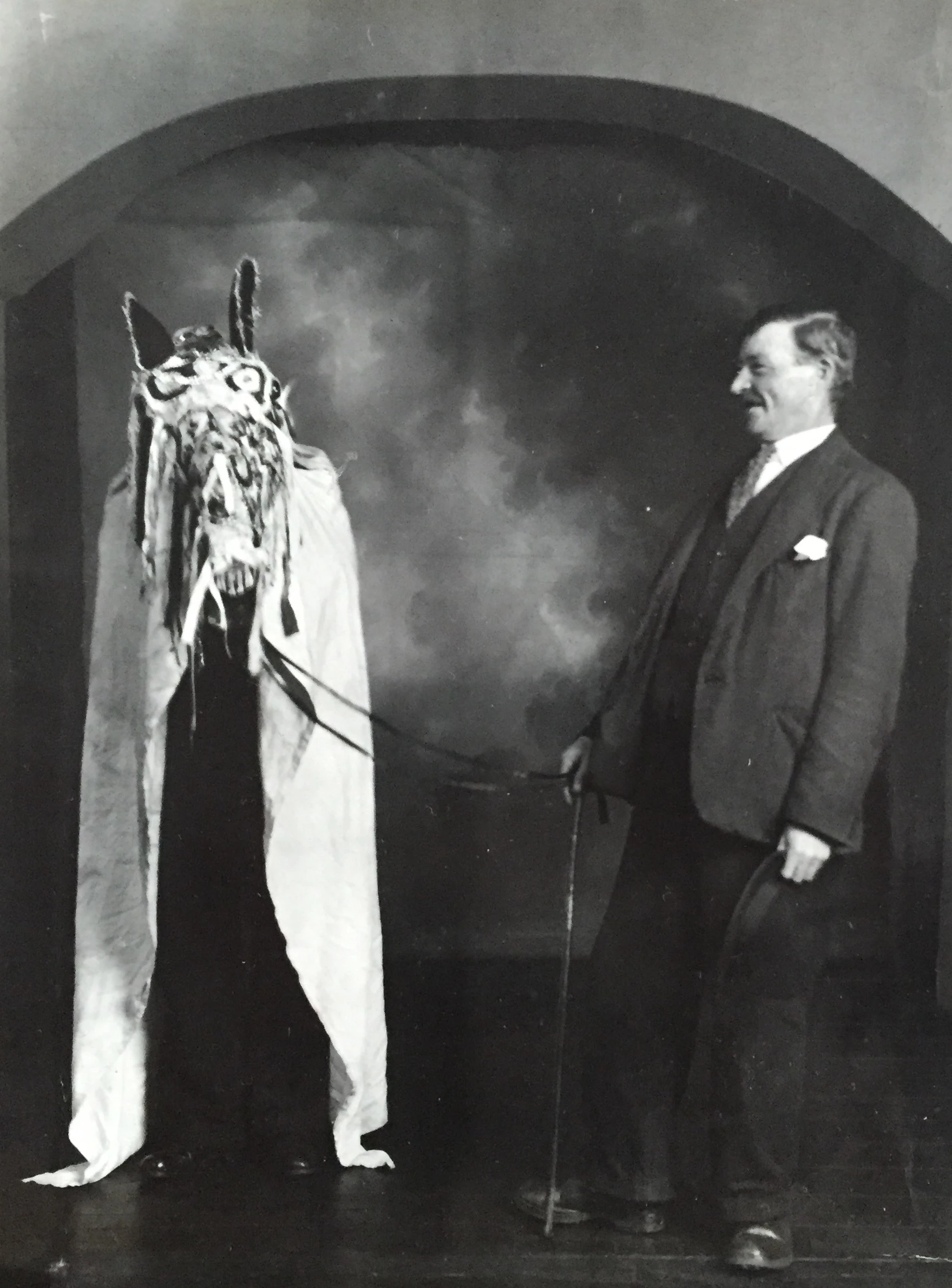
Mari Lwyd

Jessie Warden also recalled her childhood fear of the Mari Lwyd – a seasonal custom practiced without the patronage of the Plymouth Estate:

They had a Mari Lwyd every year. The Mari Lwyd used to come and that was a chap from Pentyrch, and there was one from Ely. There was one from the village, but then when he finished, his relatives in Ely came out in my day. When I was about ten. I can remember the Mari Lwyd. We were always petrified! The responses etc. were always in Welsh. [6020/1]

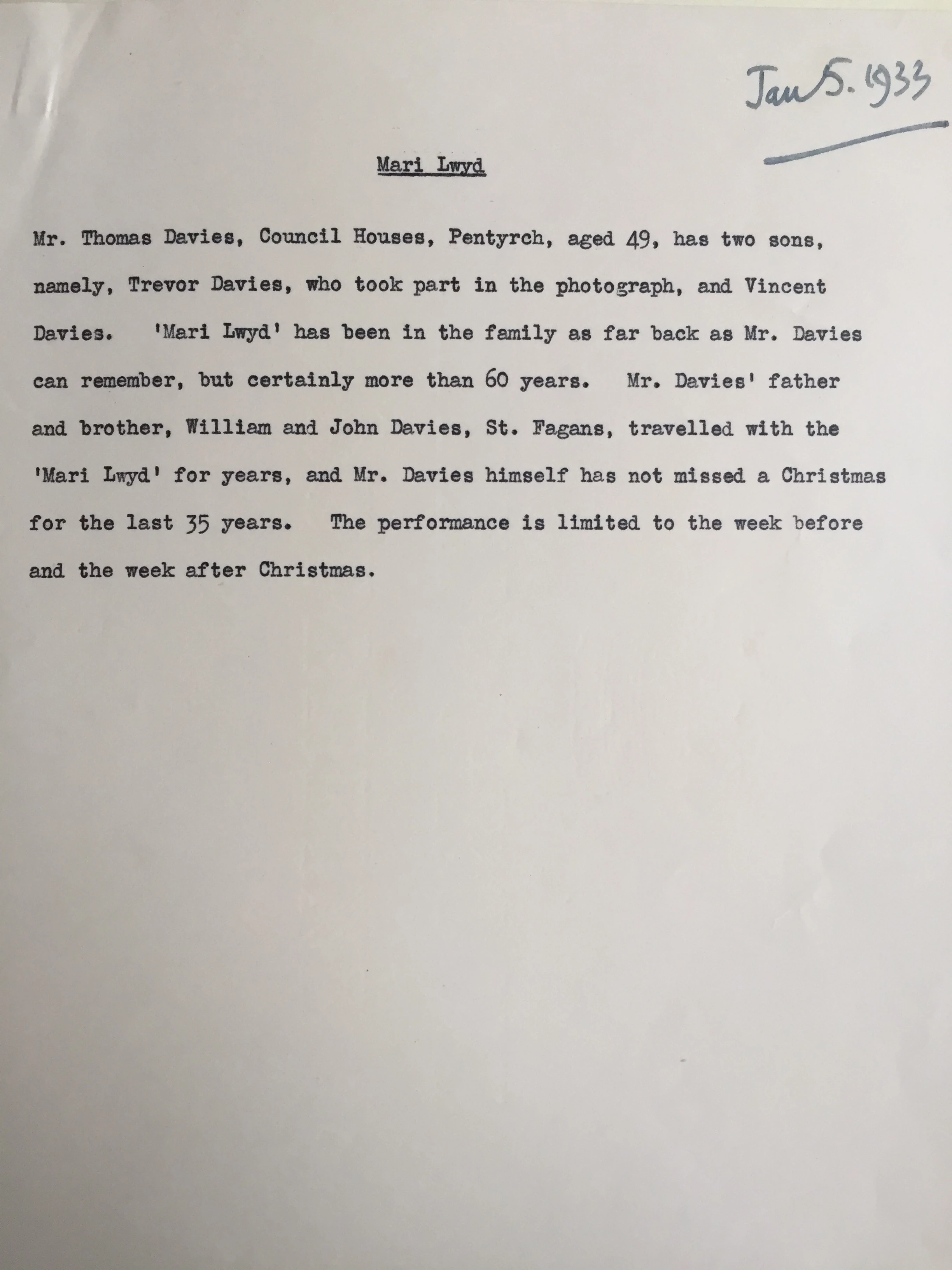
In 1933 the Museum acquired a Mari Lwyd for the collection from Thomas Davies of Pentyrch who would perform for one week either side of Christmas. At the time, the curator noted that he had been travelling with the Mari for 35 years and had connections with St Fagans. He probably visited the young Jessie Mildon and her family.


Off With His Head!
The Story of Commonwealth Coins

Rhianydd Biebrach, 16 December 2016

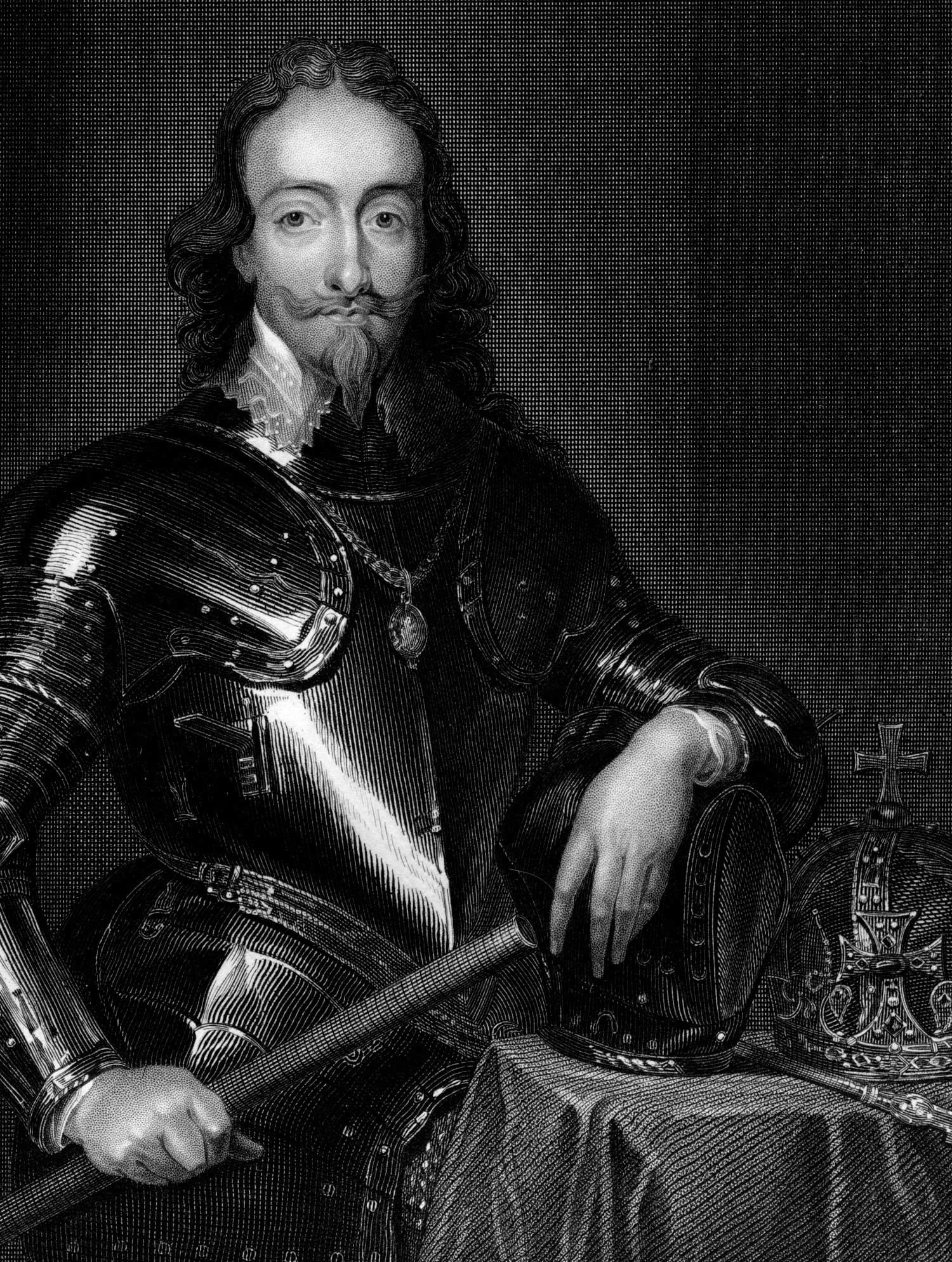
Portrait of King Charles I

Portrait of King Charles I

On the bitterly cold morning of 30 January 1649, following a long and brutal civil war between Crown and Parliament, King Charles I was beheaded in London and the monarchy was abolished.

Three years earlier, in 1646, Parliament had rid the Church of England of its bishops, and when the House of Lords was also abolished in March 1649, virtually the entire, centuries-old, basis of government in Britain had disappeared, seemingly for good. Little wonder people living at the time called it ‘a world turned upside down.’

In the end this uncertain Commonwealth period was to last only eleven years as the monarchy was restored in 1660, but the highly distinctive coins minted during this short stretch of time are sometimes unearthed by metal detectorists in Wales and reported via the

Portable Antiquities Scheme . They have been found in small numbers all over Wales, from Manorbier in Pembrokeshire to Cwm in Flintshire, and in various states of wear including one or two which were later reused for other purposes. So what makes them worth talking about?

Coins for the Commonwealth

It is not surprising that the radically new form of government ushered in so bloodily with the end of the monarchy in 1649 should have caused an upheaval in another enduring aspect of national identity – the coinage. Prior to this all coins had been issued in the monarch’s name and contained his or her image. Even during the Civil Wars (1642-48), Parliament – which was in control of London and therefore also of the Tower Mint - had continued to strike coins in the traditional style as long as the outcome of the war was uncertain. But now that Britain was a republic the centuries-old design of coins with the monarch’s head and Latin legend was clearly inappropriate. A new design, emphasising the legitimacy of the new republican regime, was needed.

Why do they look different?

Commonwealth half groat (twopence) found by R. W. Bevans in Manorbier, Pembrokeshire, 2009. The smaller denomination coins did not have a legend or date.

Commonwealth half groat (twopence) found by R. W. Bevans in Manorbier, Pembrokeshire, 2009. The smaller denomination coins did not have a legend or date.

You don’t need to be a coin expert to notice the obvious difference between the new coins and those we are all more familiar with - there is no king’s head! Of course, when the real king’s head was removed from his shoulders, its likeness also had to be removed from the coinage. With the king gone, the House of Commons claimed that it now exercised sovereign power on behalf of the people, and that God had given his approval to this new state of affairs by allowing Parliament to defeat the king in battle. This bold claim was bolstered by the imagery and lettering used on the new coinage.

On the obverse (heads) side, replacing the traditional monarch’s crowned head, there now appeared a shield containing the cross of St George, representing England. This was surrounded by a wreath of laurel and palm, symbolising Parliament’s victory and the peace it claimed it had brought. On the reverse (tails) side were the conjoined shields of England and Ireland, the latter represented by an Irish harp, along with the date of issue and denomination. Scotland, then a separate nation with its own coinage, was not represented, nor was Wales, which was thought of as part of the kingdom of England and so covered by the cross of St George – as is still the case in the modern Union Jack.

There were also changes to the legends, or lettering, appearing around the edge of the coin’s faces. Traditionally these would have been in Latin, giving the name of the monarch and an abbreviated list of their titles (including a claim to France!) as well as a Latin motto, but this was now replaced with ‘THE COMMONWEALTH OF ENGLAND’ on the obverse and ‘GOD WITH US’ on the reverse. These simple statements not only did away with all references to royal power, they also replaced Catholic-sounding Latin with good Protestant English, and in true Puritan style laid claim to God’s favour and support.

Royalist reaction and the ‘Rump Parliament’

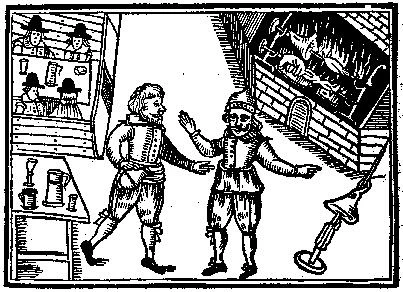
A seventeenth-century woodcut showing two men in a tavern, wearing the breeches said to resemble the conjoined shields of the Commonwealth coins

A seventeenth-century woodcut showing two men in a tavern, wearing the breeches said to resemble the conjoined shields of the Commonwealth coins. (Source: http://www.godecookery.com/mirth/mirth008.html)

Although Charles had been defeated and the monarchy abolished, there were still many people who had been against his execution and were fierce critics of the new republican regime, led by the so-called ‘Rump Parliament’ until 1653. Even the coins came in for ridicule, the royalists finding ways to attack the government by poking fun at the new designs. The wording of the legends on either side of the coins, for example, led royalists to observe that ‘God’ and ‘the Commonwealth’ were on opposite sides. The appearance of the conjoined shields of England and Ireland also caused amusement as they bore an uncanny resemblance to a pair of breeches, and were referred to in royalist circles as ‘breeches for the rump’, ‘rump’, being not only the name of the parliament but also a common term for someone’s backside.

Interestingly, in 1658 the government made an attempt to return to a more familiar design harking back to the royalist period. This featured the profile of the new head of state, Protector Oliver Cromwell, crowned with a laurel wreath on the obverse, and a coat of arms surmounted by – of all things – a crown on the reverse. Cromwell had earlier been offered the crown, but had refused it, so was it included in the new design in an attempt by the shaky government of the day to present an image of stability using the more familiar symbolism of times gone by? Cromwell died soon after this and the coins were never circulated so are not likely to be found by detectorists.

The Restoration and beyond

Worn commonwealth half groat reused as a love token, found by Gwyn Rees near Wenvoe, South Glamorgan, in 2012.

Worn commonwealth half groat reused as a love token, found by Gwyn Rees near Wenvoe, South Glamorgan, in 2012.

Commonwealth half groat found by Gwyn Rees near Wenvoe in 2015. The piercing may have been to take it out of circulation.

Commonwealth half groat found by Gwyn Rees near Wenvoe in 2015. The piercing may have been to take it out of circulation.

The republican experiment ultimately failed and the monarchy was restored under Charles II in 1660. Those who had signed his father’s death warrant, known as the regicides, were rounded up and executed; even the corpse of Oliver Cromwell was exhumed and hung in chains. A similar lack of mercy was shown to the Commonwealth coinage. It was suppressed and called in for recoining between 1661 and 1663, with an estimated two-thirds out of the total minted since 1649 being recovered. But what happened to the rest?

Most will have been taken abroad and some was hoarded, although the coins recovered by detectorists in Wales, which are all of the smaller denominations of penny and half-groat, suggest that some were accidentally lost. The wear and tear suffered by most of these finds may be a result of use or of subsequent damage while in the ground, although one found by Gwyn Rees near Wenvoe, South Glamorgan, in 2012, which has been bent and pierced with a hole at the top, seems to have been reused as a love token, possibly to have been suspended from a chain or ribbon. Was this discarded coin an accidental loss, or is it evidence of a failed relationship? Another Commonwealth half groat, also found near Wenvoe by Mr Rees in 2015, has been pierced in the centre, probably to demonetise it and take it out of circulation in the early 1660s. It is possible that the Restoration government did not bother to recall all the smaller denomination coins, which may therefore have continued in circulation beyond the early 1660s.

Historical significance

Commonwealth of England, half crown (2s 6d), 1649

Commonwealth of England, half crown (2s 6d), 1649

Although collectors see them as relatively uninteresting because of the plainness of the design and its uniformity across the denominations, Commonwealth coins are fascinating from a historical and archaeological point of view. In circulation for such a short period of time they are survivors of a troubled period in British history, when a bloody and divisive war was followed first by the shock of the king’s execution and then by years of political and religious upheaval as the country tried to find an acceptable alternative to monarchical rule. Just as all the political alternatives failed in turn, the new coins’ design was also shortlived – Charles II reverting to the familiar, centuries-old monarch’s head format, which continues in use today. The radical changes in design show how the new republican government tried to heal the ruptures of the Civil Wars and bolster its legitimacy in the absence of the king. Are they best seen as signs of life continuing much as it always had, or relics of a world turned upside down?
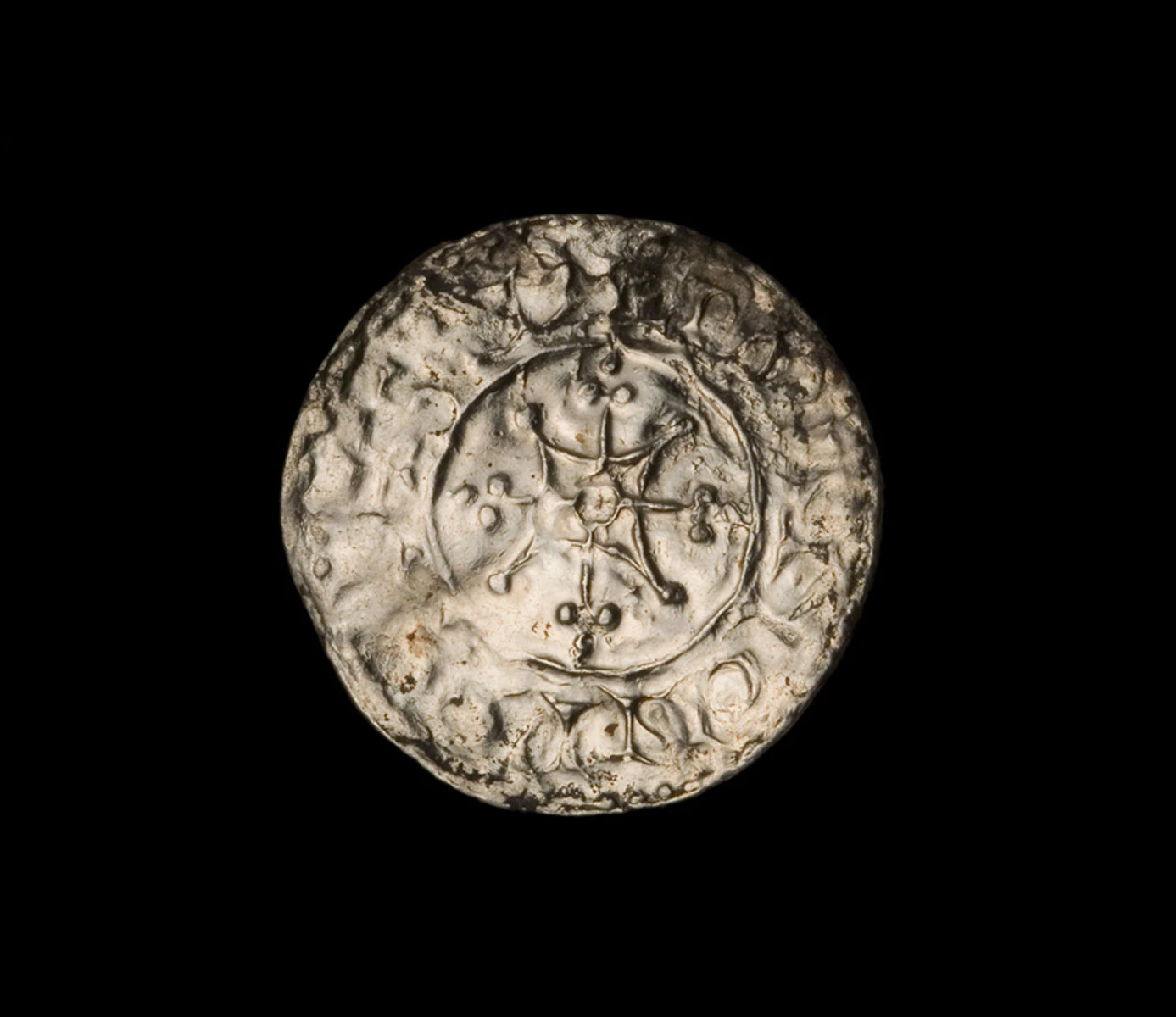
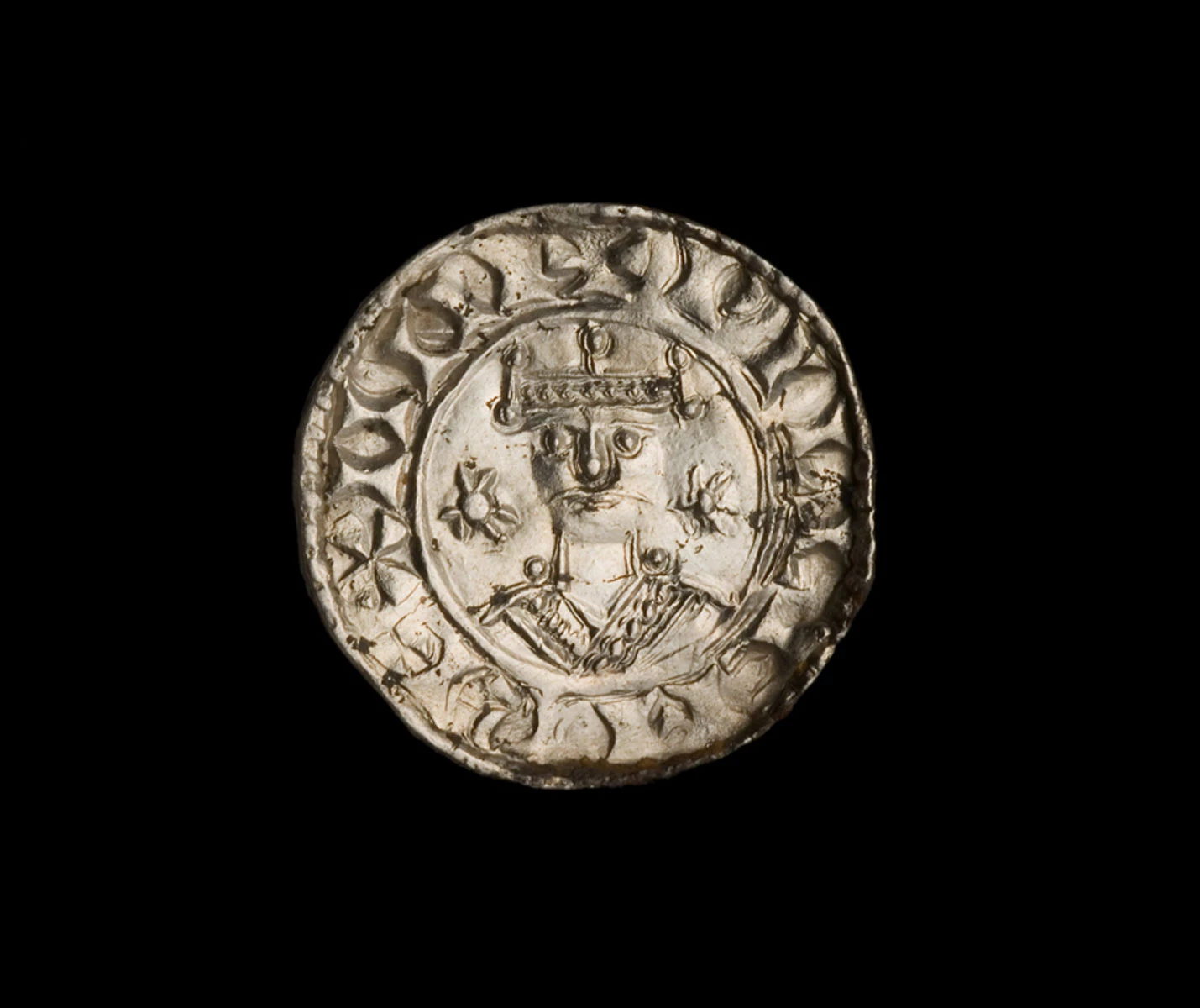
Oliver Cromwell, pattern half crown, 1658

Oliver Cromwell, pattern half crown, 1658