Discovered in Time, at Hay

Finally, only a year or so later, we launch fab new archaeology book Discovered in Time. We had a lovely event on the Hay Festival programme - pretty small in scale, but all the more enjoyable for it.

I knew the author, Mark Redknap, was a bit nervous and I felt suitably guilty. But I also knew he'd be great. He's articulate, knowledgeable, engaging and can throw in a soupcon of humour - ideal speaker material.

We'd pitched the event as a discussion on issues like who are we (museums) to decide what's 'treasure', or are we the natural authors of the national 'story', or de we hand over the 'voice' to communities (yes we do), and how do we relate to amateur archaeologists - all stuff I think is fascinating. Mark talked about those issues and illustrated them with some gems of stories related to various objects featured in the book. However the audience were also clearly drawn by the archaeology, and wanted some good old-fashioned archaeologists 'in the field' stories.

BBC journalist Sian Lloyd was our host for the event and she brought a fresh face and a sound journalistic approach, keeping the whole event expertly on track. The Q&A at the end included questions ranging from 'what was your Howard Carter moment?', which Mark gently explained can happen many times either with discovering a new find or with a new discovery about an old find, as we keep studying the collections and applying new technology, to the role of science in archaeology - see point about new technology. (And, is archaeology itself a science? Hmmm...).

I was really pleased that the audience comprised a healthy mixture of men and women, and all ages. What they had in common was that enduring fascination, which perhaps we all have, with the light objects that survive from antiquity can shed on our shared human past. And that, I hope, is just what our new book conveys.

Discovered in Time is available now. Available in Welsh, Darganfod y Gymru Gynnar. Both just £14.99. Order online.

Fossils in stone: acid preparation of fossils

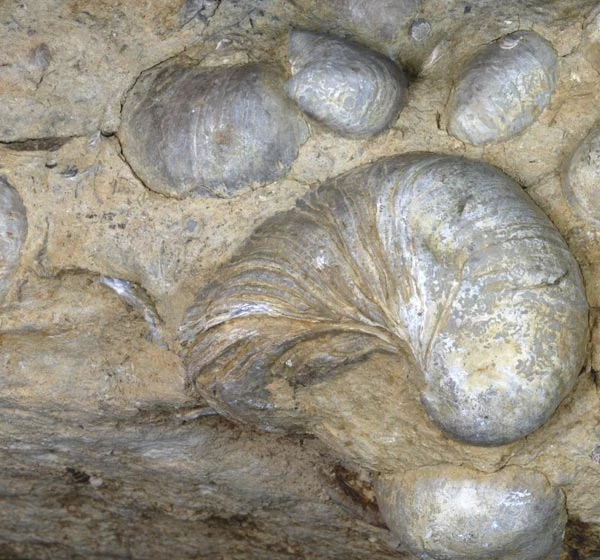
<em>Gryphaea arcuata</em> — Devil's toenails

A limestone rock, from Southerndown in south Wales, containing fossil shells. (Gryphaea arcuata — Devil's toenails).

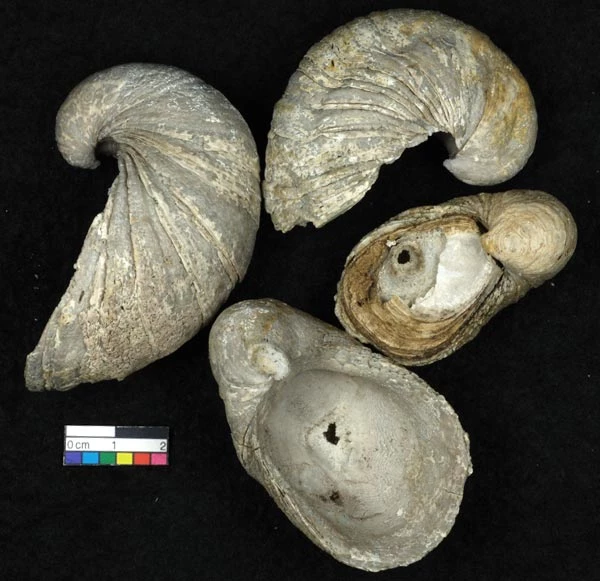
Fossil shells (<em>Gryphaea arcuata</em> – Devil's toenails) after the rock has been dissolved in acid.

Fossil shells (Gryphaea arcuata – Devil's toenails) after the rock has been dissolved in acid.

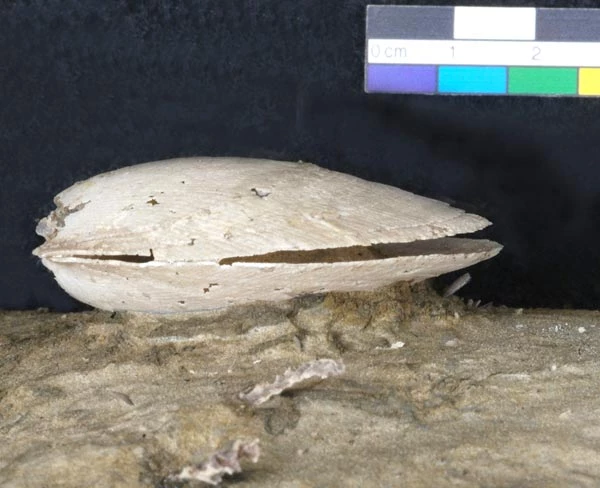
A fossil bivalve shell that has been partially prepared using acid

A fossil bivalve shell that has been partially prepared using acid. The two parts of the shell (the valves) are still attached to each other, and the bottom valve is still attached to the rock.

We rarely find fossils in perfect condition. When we collect them, most of them are partially or almost completely concealed in rock. To study them in detail, or to prepare them to be displayed, we must carefully remove the rock.

It's not easy to remove the rock from the fossils, which are sometimes extremely delicate. It can be a long and painstaking process. Sometimes we use hand tools, like pins, scrapers or little chisels. We can also use specialist tools, like pneumatic pens similar to engraving devices. A third option is to use an air-abrasive machine that is little like a miniature sandblaster.

An alternative is to dissolve the rock in acid. Most fossil shells were composed originally of calcium carbonate, and many are preserved in

limestone , which is the same chemical make-up. In some circumstances, however, the calcium carbonate of the shells dissolves away and is replaced by silica, but the enclosing limestone remains unchanged. Because limestone dissolves readily in acid, but silica doesn't, we can extract these specimens with chemicals.

Vinegar, no salt please

The acid we commonly use is acetic acid — the same acid that is in vinegar. We use highly concentrated acetic acid, 80%, but dilute it with water to about 5%.

We immerse the rock sample containing fossils in the diluted acetic acid, which almost immediately starts to fizz as it reacts with the limestone.

The rock can take anything from a few days to many months to dissolve completely, depending on its specific composition. The reaction with the rock gradually neutralizes the acid, which needs to be refreshed from time to time. At the end of the process all that remains is some slushy rock residue, and the silicified fossils.

Many silicified fossils are very delicate; they have to be handled with extreme care, and we often need to strengthen them with adhesives.

The fossils are now ready for research or for displaying. Many are exquisitely preserved: 450-million-year-old silicified shells sometimes look as if they have just been picked up from a modern beach!

Art Cart -Coins

Just a quick post to show you a few pictures of the things we have been making in the Art Cart this half term. The activities run until Sunday, so there is still time to visit and take part. I have also got some Tudor style outfits for children to try on and have painted a backdrop for them to pose by.

The coin theme has come about as we have a fantastic display of coins in the gallery at the moment as part of the Creu Hanes exhibition. The coins are otherwise known as the 'Tregwynt Treasure Hoard' and were buried around 1647 and finally dug up in 1996!

For the art cart activities we have been colouring and decorating Tudor style coins and using string and silver foil for a more 3d feel.

I think they look pretty splendid.

Taking Stock of the Block

After documentation, the next step was to take stock of the overall condition of the block, and to make a preliminary inventory of the types of archaeological materials I could see.


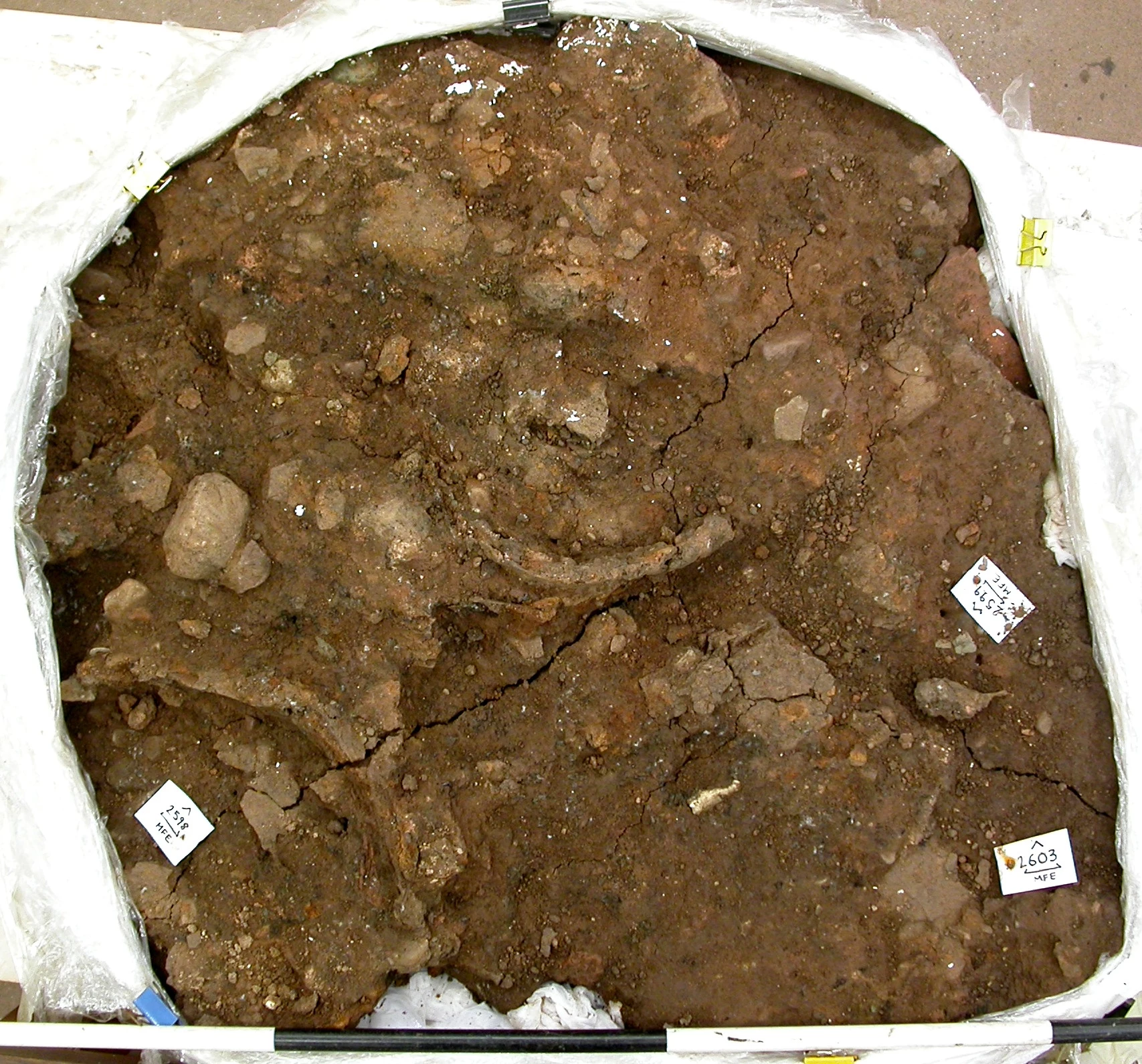
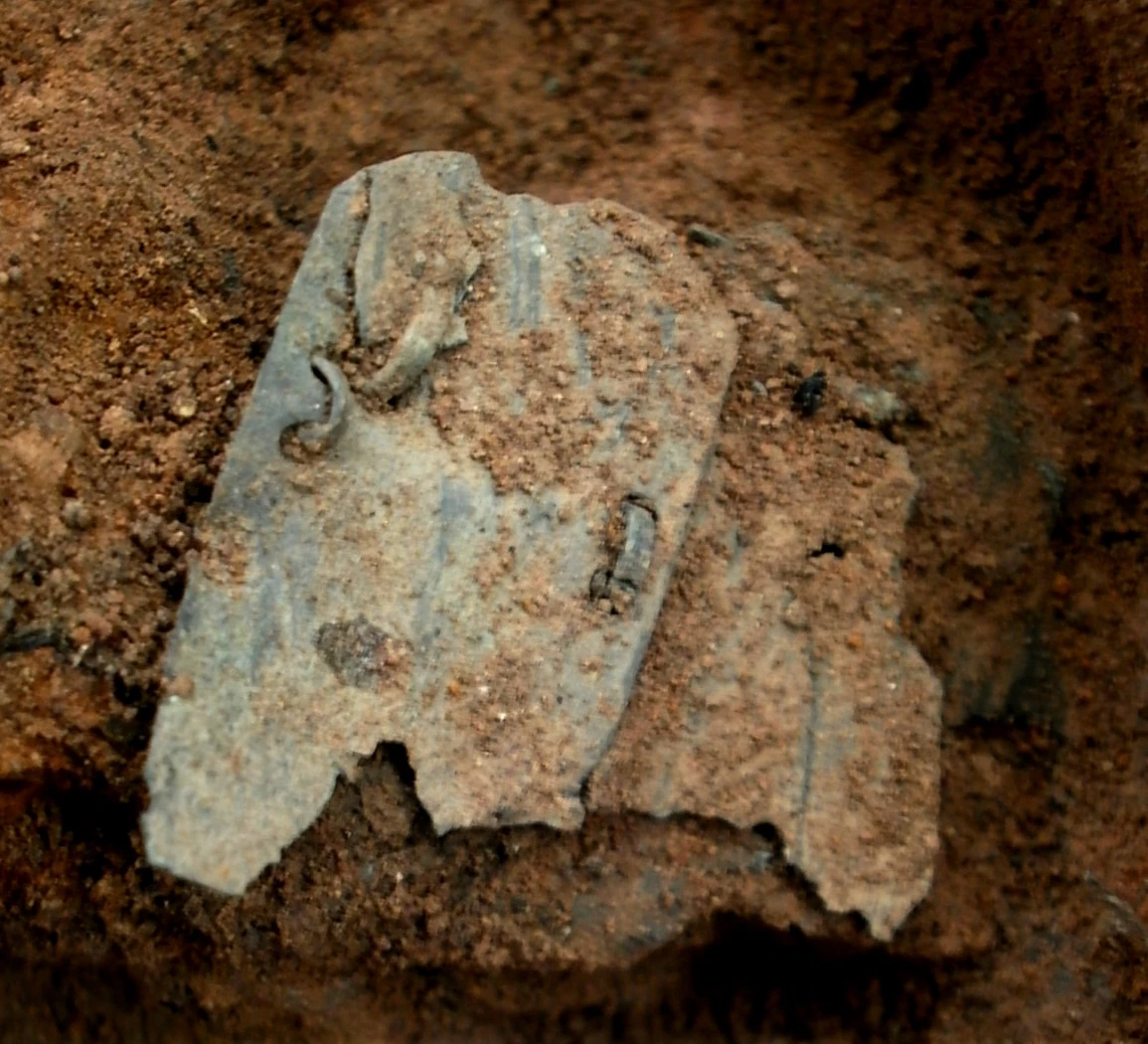
As can be seen in the birds-eye-view photograph, there are some large cracks running across the block: these most likely occurred during lifting and transportation from the site to the museum. Unfortunately, these extend through some of the exposed armour, and areas of thin, mineralized iron plate have broken. This kind of damage, whilst regrettable, couldn’t have been avoided.


I wanted to keep the broken pieces in place for as long as possible, as the positioning of the remains is important to our interpretation of the events taking place in these two rooms of the warehouse. In order to ensure that fragments stayed together (at least for the interim) I used a wax-like substance called Cyclododecane, which I melted and brushed onto the artefacts. The Cyclododecane will eventually sublime altogether, and so I will not have to remove it later.


In addition to the iron plates, there are also a range of other interesting artefacts visible on the surface of the block. There appears to be a scattering of copper alloy scale armour (see photograph for an example), which would also have been worn by a soldier.


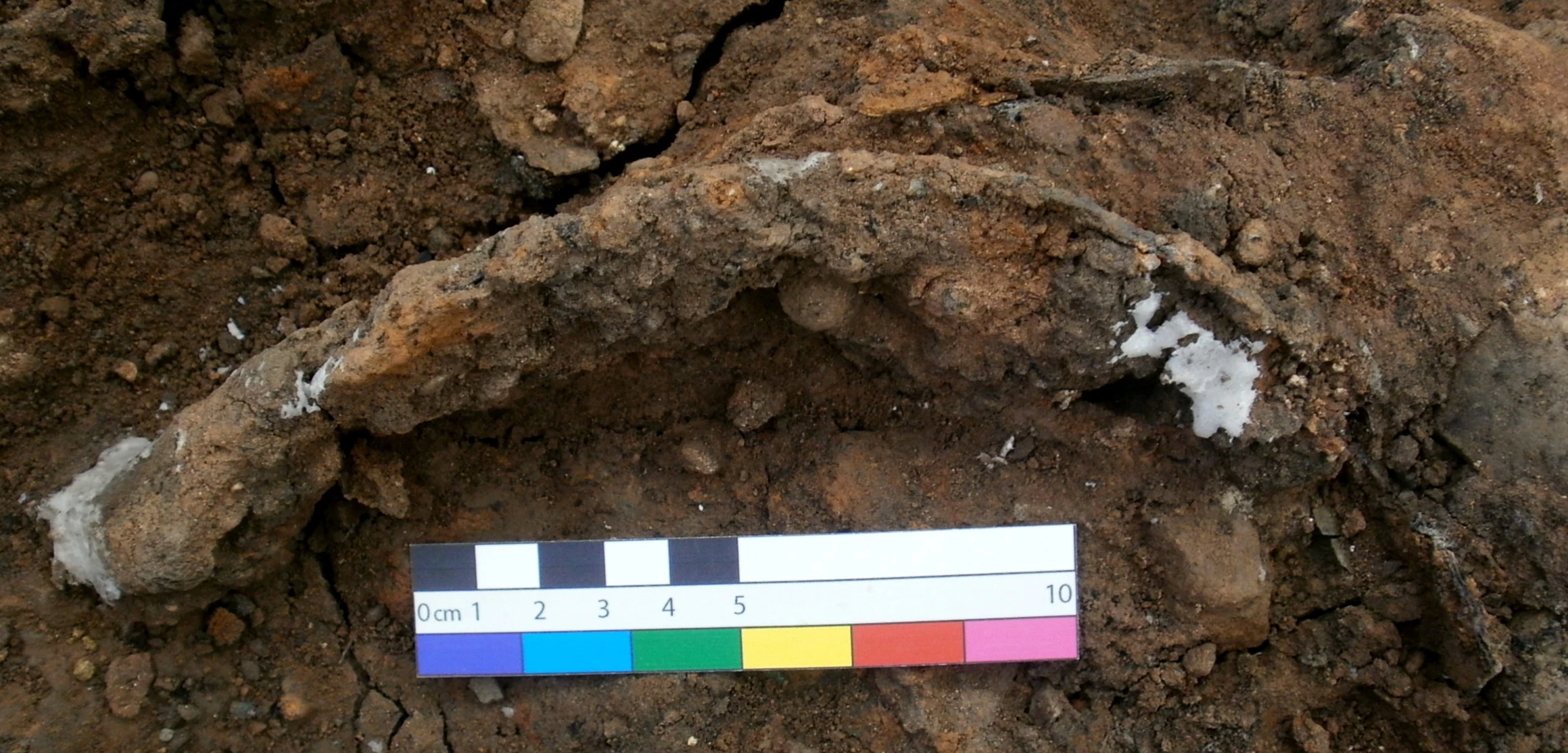
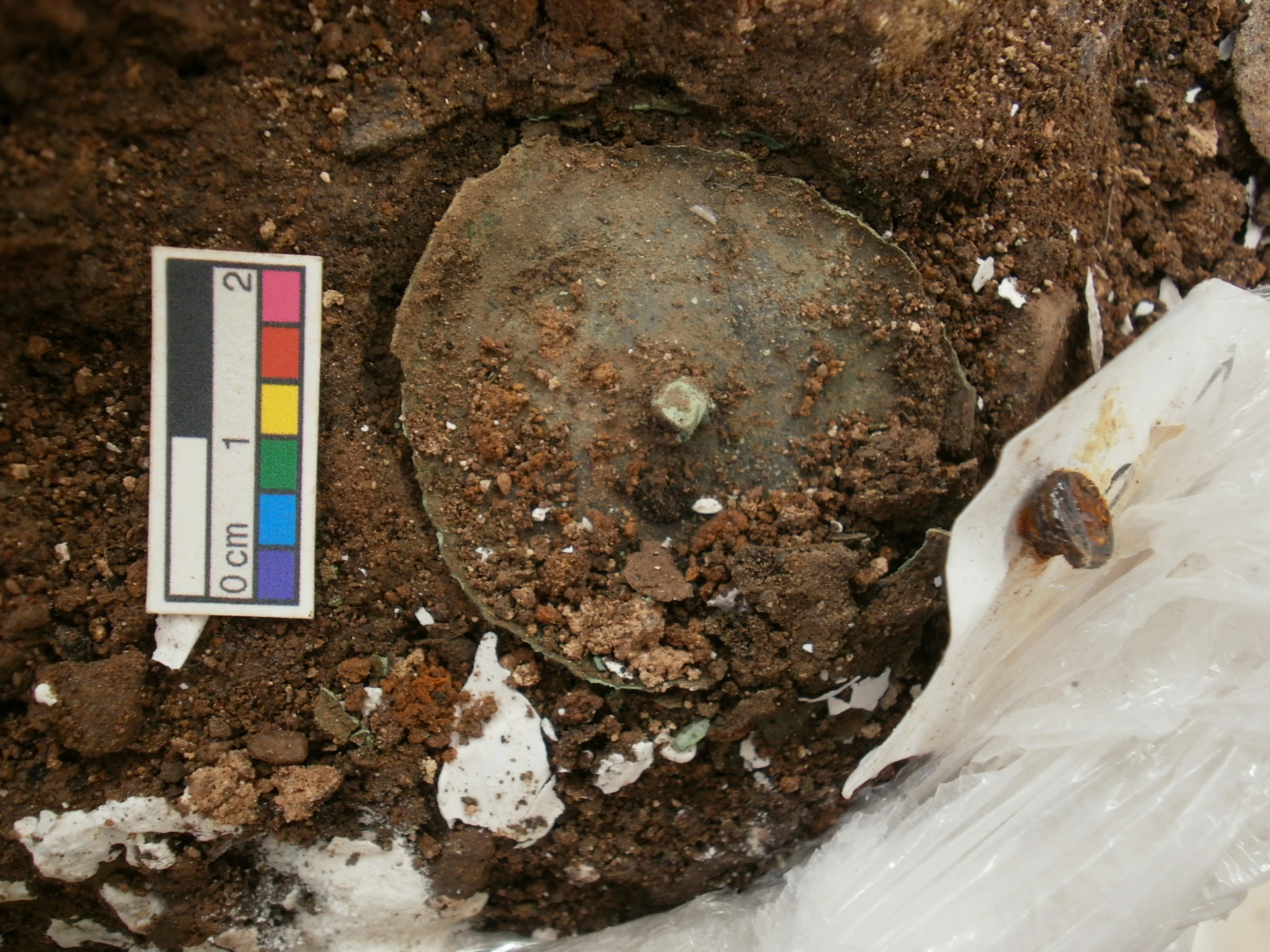
At the edge of the block is a large copper alloy stud, its use in antiquity currently unknown: it is not an artefact which has been associated with lorica segmentata. As the photograph shows, the copper has corroded considerably and is very thin.


Scattered amongst these exciting finds are the usual types of artefacts found during archaeological excavations: pieces of red ceramic tile, fragments of pottery, bits of animal bone, and crumbly lumps of white plaster (from the building itself).


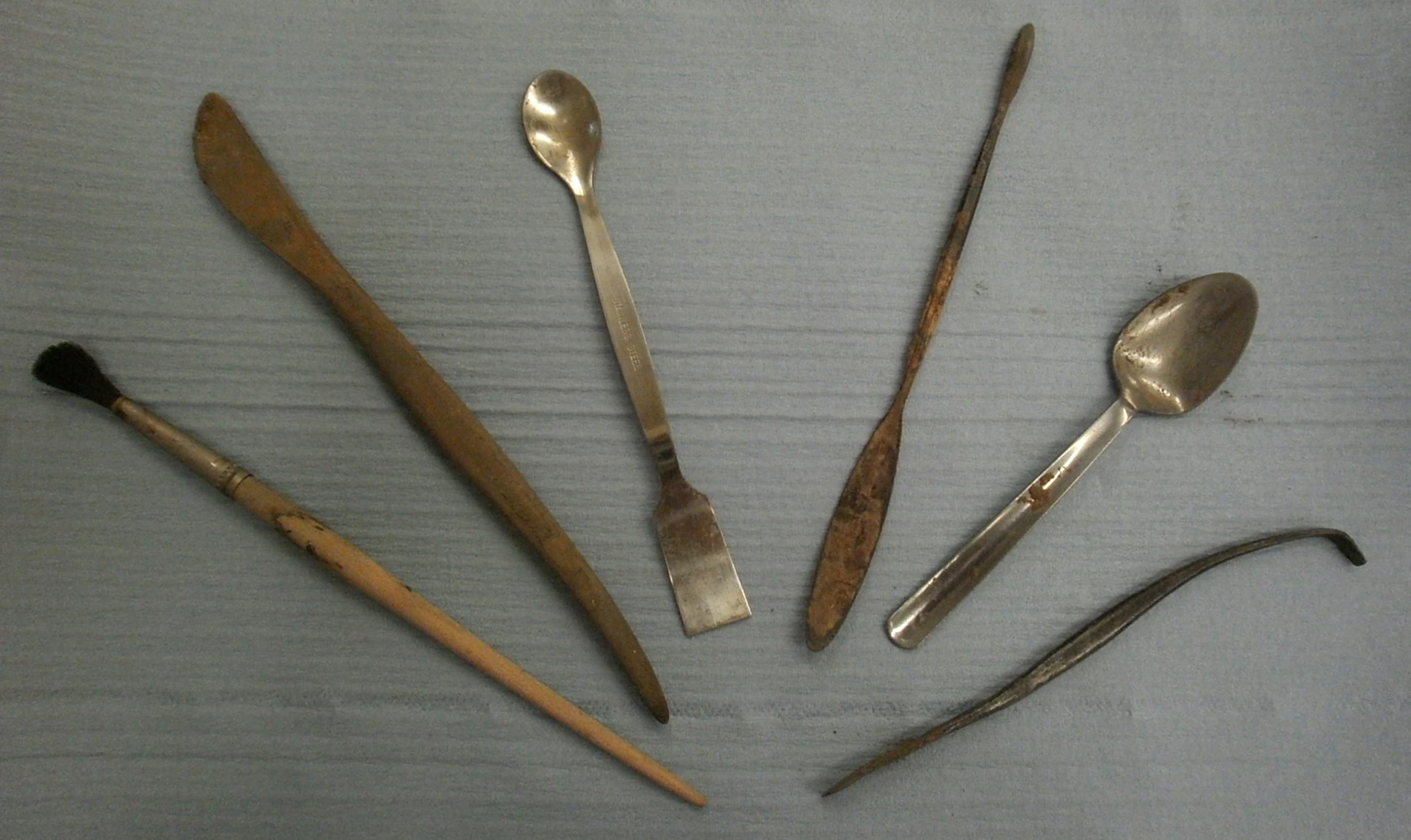
Excavating the block will be both time consuming and challenging: I have selected a number of small tools to use. I am unable to place a microscope over the block, and so will be using an optimizer (a visor with magnification lenses) instead- I do not want to miss any small artefacts or details during the excavation.

Revolting women

The battle for the right to vote

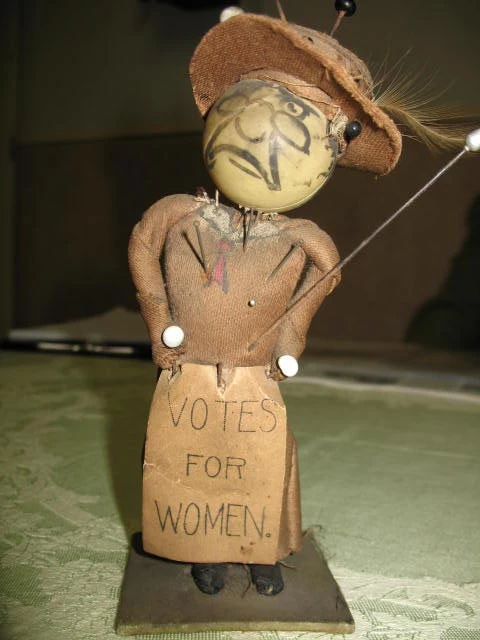
Anti-suffragette 'voodoo' doll

This anti-suffragette 'voodoo' doll is an unflattering and grotesque caricature of a suffrage campaigner. The anti-suffrage movement used images such as this in cartoons and posters to ridicule and insult women who wanted the right to vote.

Like many people around the world, women in Britain had to fight for the right to vote. Today we take this privilege for granted but it was not always the case.

During the late 19th and early 20th centuries the women's suffrage movement fought for the right for women to vote in General Elections.

These mainly female campaigners were known as Suffragettes or Suffragists. There have been many books written about them. What has received less attention however is the existence of an anti-suffrage movement, which sought to prevent women from getting the vote.

Objectors to votes for women tried to convince people that the female mind was unable to understand politics. When they failed in this they resorted to tactics such as sending this 'voodoo doll'. Some of them went as far as attacking or spitting on women activists in the streets.

The doll is an unflattering and grotesque caricature of a suffrage campaigner. The anti-suffrage movement used images such as this in cartoons and posters. They ridiculed and insulted women who wanted the right to vote.

These views were an extension of the idea that 'a woman's place is in the home'. Women were frequently shown as needing protection from the 'man's world' of work and politics. Their role was to look after their husbands, homes and children.

During the First World War the role of women in society changed. While men were away fighting, women took on many of their jobs. They were able to disprove the stereotype of being the weaker sex and prove their equality to men. This gave them another strong argument for having the vote.

Despite the strength of opposition shown in this doll, hundreds of thousands of women in Wales were eventually empowered to express their political views at the ballot box. It is due to the commitment of the suffrage movement that every British adult has the right to use their vote in elections.

View this item in 3D on the People's Collection Wales