
More 1950s patterns from the artcart
Sian Lile-Pastore, 2 March 2010

Detail from 1950s dress
Detail from the prefab
Detail from 1950s dress
Detail from the prefab
The specimen after preparation, revealing the delicate spines
Ammonites in the collections at Amgueddfa Cymru
Section through an ammonite showing the chambers
Underside of the prepared specimen
Delicate spines on the inner whorls. Similar spines would originally have been present on the outer part of the ammonite as well, but these had been worn away by erosion
Scientists have managed to dissolve the rock surrounding the fossil of a 190-million-year-old ammonite, revealing, for the first time its intricate pattern of spines.
When you pick up a fossil on a beach it is often broken or eroded. You might discard it because it is poorly preserved or incomplete. But most fossils are found partially concealed in rock, and in these cases they can carry hidden secrets.
One such ammonite fossil had been lying in a drawer in the Geology Department at the Museum for 50 years. It is part of a collection of almost 6,000 fossils donated by James Frederick Jackson in 1960.
Jackson lived in a small cottage at Charmouth near Lyme Regis, and spent his spare time collecting rocks and fossils around the Dorset coast. From 1914 to 1919 he worked at the Museum, and over his lifetime he donated almost 21,000 specimens.
Palaeontologists regularly consult the Jackson collection because it contains a complete and valuable record of Dorset's Jurassic fossils. A few years ago, one such researcher noticed that a particular ammonite was unusual. However, much of it remained concealed in rock, which needed to be carefully removed by specialists to reveal the fossil.
After a year of painstaking work, the specimen was finally returned to the Museum to take pride of place in the collections. The limestone sediment had been completely removed with a solution of weak acid and, for the first time, the detail of delicate spines on the inner whorls could be seen. Similar spines would originally have been present on the outer part of the ammonite as well, but these had been worn away by erosion.
The specimen features in a recently published monograph of the Palaeontographical Society, in a series devoted to the scientific description and illustration of British fossils, under the formal scientific name of Eoderoceras obesum (Spath).
Ammonites lived in the Mesozoic Era (251-65.5 million years ago) and were marine animals related to the Nautilus. They swam in the sea, preying on smaller marine animals. They usually had a spiral shell which could be from 5mm to 2m across. Their shells could be smooth, ribbed or knobbly, or even spiny. They lived in the outer whorl of their shell, while the inner part consisted of gas-filled chambers used for buoyancy. You can often see an intricate pattern on the surface of ammonite shells, which marks the division between each chamber. All these features are used by palaeontologists to identify different species of ammonites.
The Museum has large and scientifically important collections of ammonites, mainly from south-west Britain. They are a valuable tool in helping scientists understand the geology and palaeontology of Britain.
The half term workshops looked at pattern and design from the 1950s (which tied in with the current Italians in Wales exhibition). We looked at numerous examples of design from Italy (such as Bruno Munari) and other famous designers such as Lucienne Day as well as clothing and fabrics from our collection.
Taking these patterns as inspriation everyone created fantastic artwork using collage and print (potato prints, monoprints and stencils) and some of the pictures that were made are shown below.
Detail from a 1950s dress from our handling collection which was used as inspiration for the workshops
Monoprint based on the flowered pattern
Drawing developed from flowered pattern and the monoprint
Images from nature were often used in 1950s designs, so we made a leaf potato print which looks fantastic in this picure!
This picture is beautiful. I love the use of collage, stencil and monoprinting here and the colours are great too.
We also looked at the artists Rex Ray who is a contemporary artist influenced by 1950s design. This fantastic collage was based on one of Ray's paingtings.
More pictures to come!
In early December we looked forward to an early spring but then the cold weather slowed everything down. Now, with temperatures slowly rising, school scientists are reporting new signs of spring across Wales! My shoots have also started to come through!
In Pentrepoeth Junior School, Swansea. Pupils were very excited to find crocus, daffodil and mystery bulbs peeping through the soil. They were surprised how some of their shoots varied in size and love recording the temperature and rainfall.
On the really Welsh farm, in Bridgend. Farmers have finally started picking daffodils and sending them out across South Wales. They report: 'Still not huge volumes really, we are extremely disappointed at how slow the daffodils are growing this year. We are about 5 weeks behind for the earliest varieties and are keeping our fingers crossed that we will have plenty of daffodils for St.Davids Day'.
Professor Plant's bulb blog:
20/02/10 My crocus opened today! First the flower bud appeared, then when the sun came out at lunch time - the flower popped open. The colours were amazing, bright purple petals and bright orange anthers & stigma. It's so nice to finally have some colour in the garden. Later in the afternoon, when the sunshine disappeared the flower closed again. I'll upload my pictures tomorrow. Does your crocus do this? Why not try out some of my investigation ideas. See link below.
15/02/10 Both my daffodil and crocus shoots have started to come through. They are no taller than 2cms which is quiet small for this time of year. In 2008, when the winter was mild my crocus flowers had already opened and the daffodils were 11cms tall!
Which shoot is which? The daffodil shoots have smooth curved, light green tips. They are much broader than the crocus tips. The crocus shoots have narrow pointed shoots that normally appear in clusters of five. They have dark green edges - making them look slightly stripey.
Crocus - 13/02/10
Daffodil 10/02/10
Daffodil 10/02/10
25/01/10 Pentrepoeth Junior School, Morriston, Swansea.
Crocus - 10/02/10
I received the call on Monday. "It's in the post. Should be with you in three-to-five working days". The words put me in a geeky flutter: finally, the Thurible was on its way here!
Now, for those of you wondering, a thurible is basically a very nice incense burner indeed. It comes attached to a chain, meaning the incense can be swung at arm's length.
Still used in many churches, temples and shrines across the world, incense can play a very important role in a worshipper's experience of a sacred place. Smell, we are often reminded, is a short-circuit to our memories. The mixture of Frankinsence, Myrrh, and citrus oils usually favoured by the Catholic Church - though perhaps not as evocative as mothballs or freshly-baked bread - is a heavy mix which can transport you to some quite fantastical places. Some of these smells have been used in ceremonies and perfumes since the age of the ancient Egyptians and beyond. It is no surprise, then, that one's imagination can wander quite far off its leash when this stuff is burning.
Now, before i get too Herbal Essences, I should probably 'fess up - i'm an incense fiend. Not just any incense either. I'll snobbishly breeze past the day-glo, wood based tendrils and cones, and go straight for the resin. Usually made from sap collected from trees, each kind has its own history and associations. Frankinsence comes in rounded, amber-coloured blobs. Myrrh looks a bit more like the discarded pupae of a creepy-crawly. Damar looks like pear drops, and smells like a delicate, citrussy nectar...
Anyway, back to the thurible. Ours is replica, to be used in St Teilo's Church. Past experiments (using a thurible kindly loaned from St David's College) have yielded mixed results. Some enjoyed the experience, saying it gave an air of religious calm to the building. Others took two huffs and turned on their heels, coughing. Some just felt uncomfortable, perhaps due to their own religious instruction or beliefs about worship. We propose to use the thurible during re-enactments at first (more on those later...), along with period music and liturgy, to see whether we can really re-create the atmosphere of a Mass in 1500.
Only problem is that the Curator who commissioned the replica is on holiday. The parcel sits tantalisingly intact in the strong room. I'm trying my best not to take a peek - though, it would take considerable effort, seeing as I don't have the keys. We will have to wait, then, until Monday, when we'll have a very different unboxing video to show you!
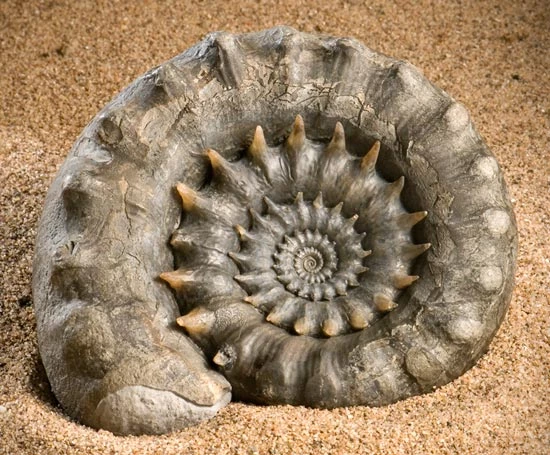
The specimen after preparation, revealing the delicate spines
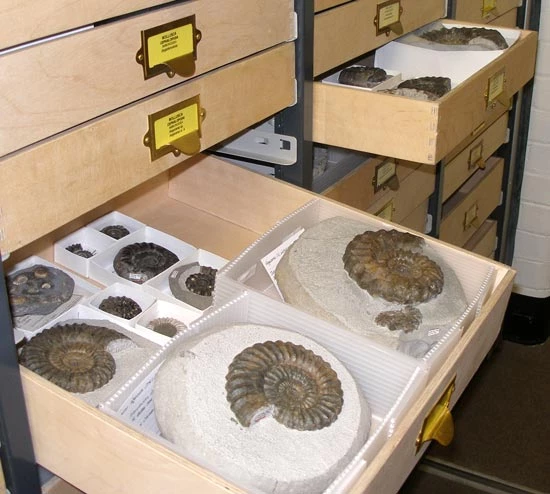
Ammonites in the collections at Amgueddfa Cymru
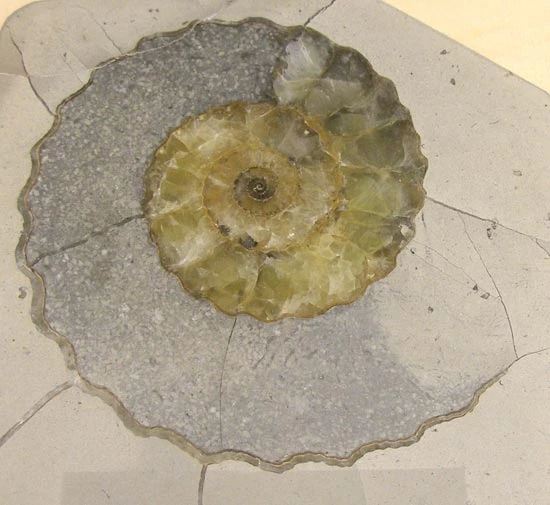
Section through an ammonite showing the chambers

Underside of the prepared specimen
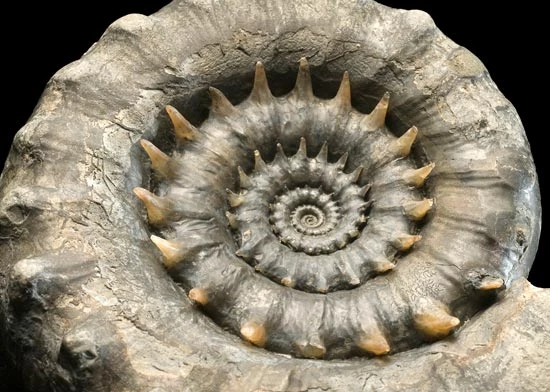
Delicate spines on the inner whorls. Similar spines would originally have been present on the outer part of the ammonite as well, but these had been worn away by erosion

20/02/10 All my crocus are very short. They popped up very quickly and opened on a sunny afternoon. Since, we have had more cold weather and snow and they have had to close again.

10/02/10 When the sun is out the petals fully open out - this is the view from above.

20/02/10 First Crocus. See how transparent the stem is.

Crocus - 13/02/10

Daffodil 14/02/10

