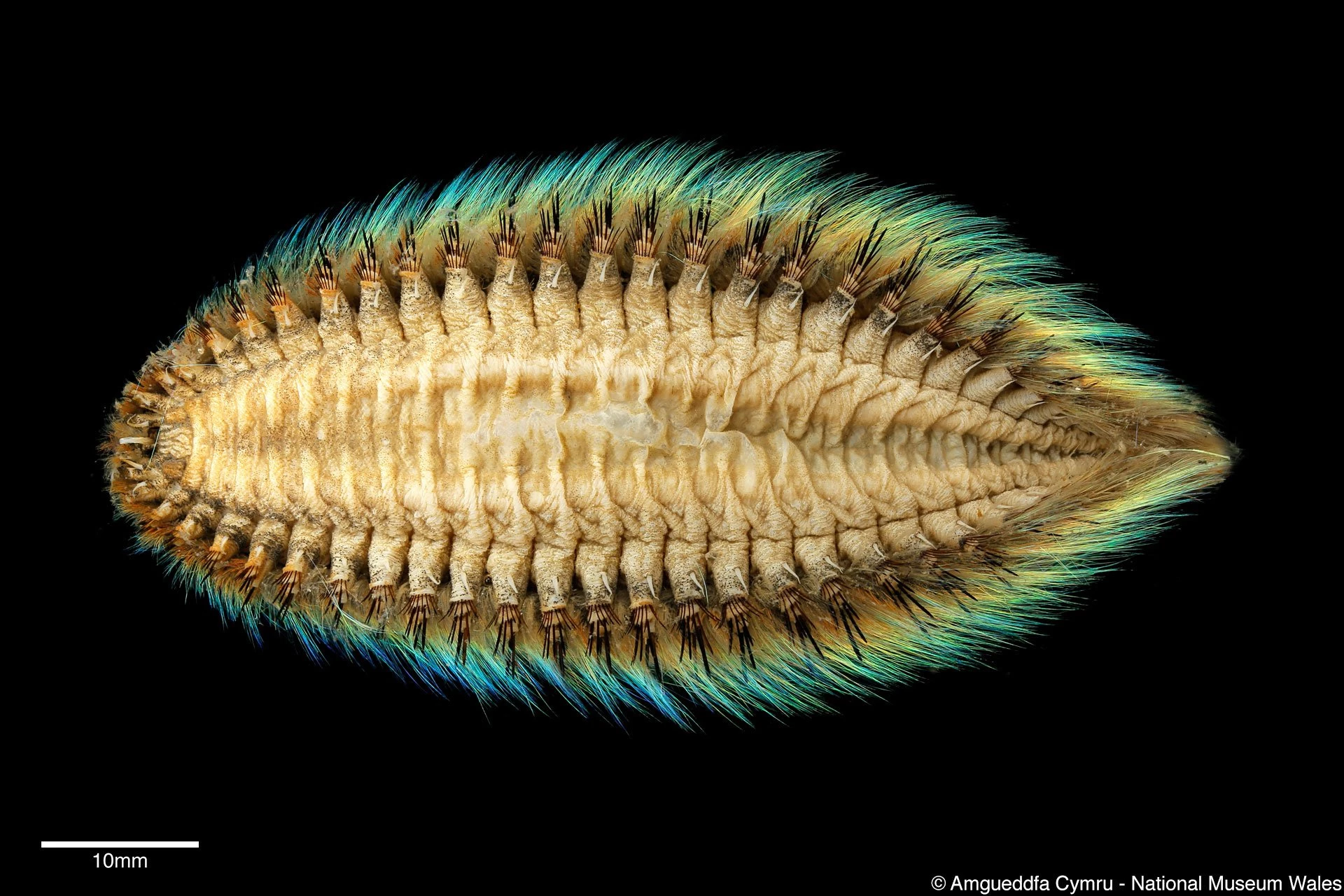
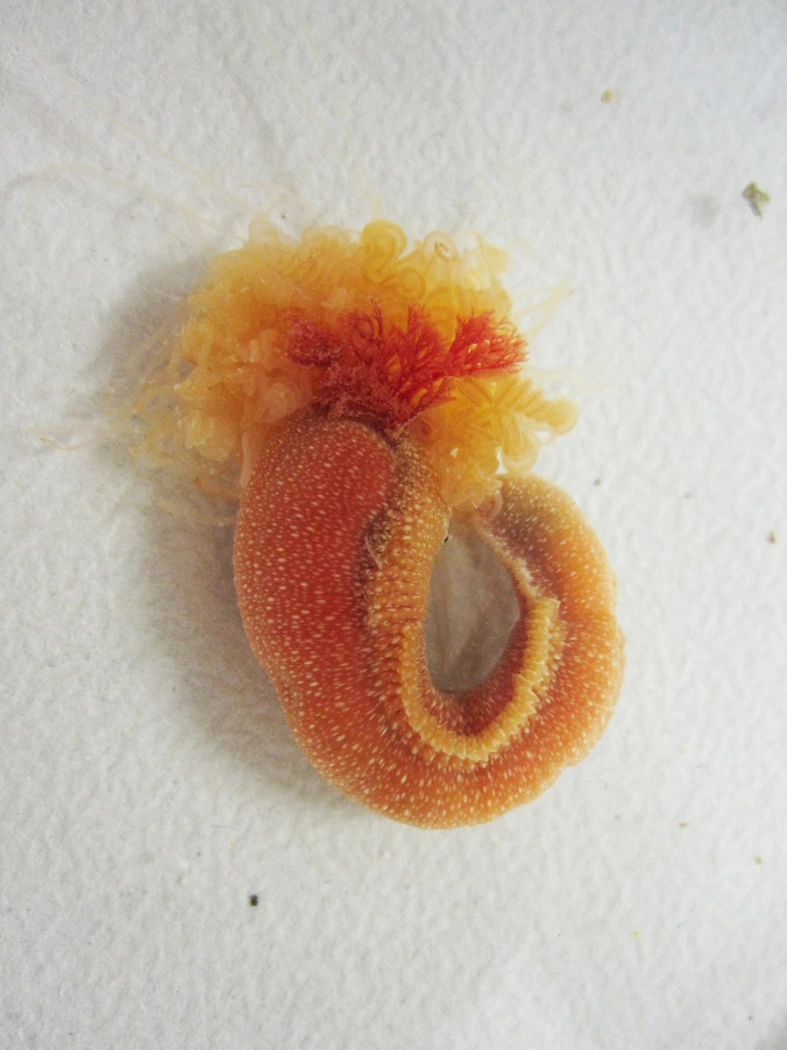
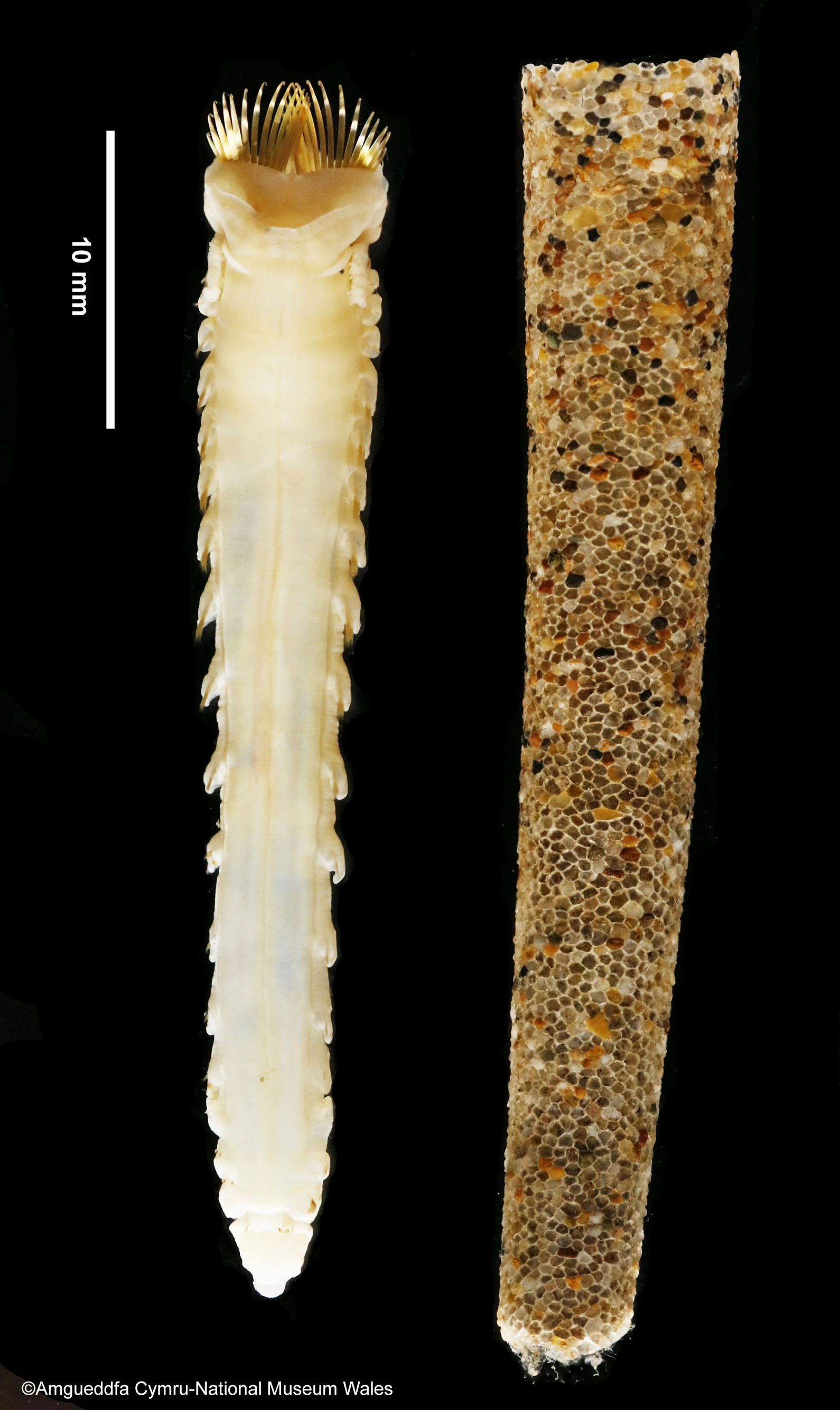
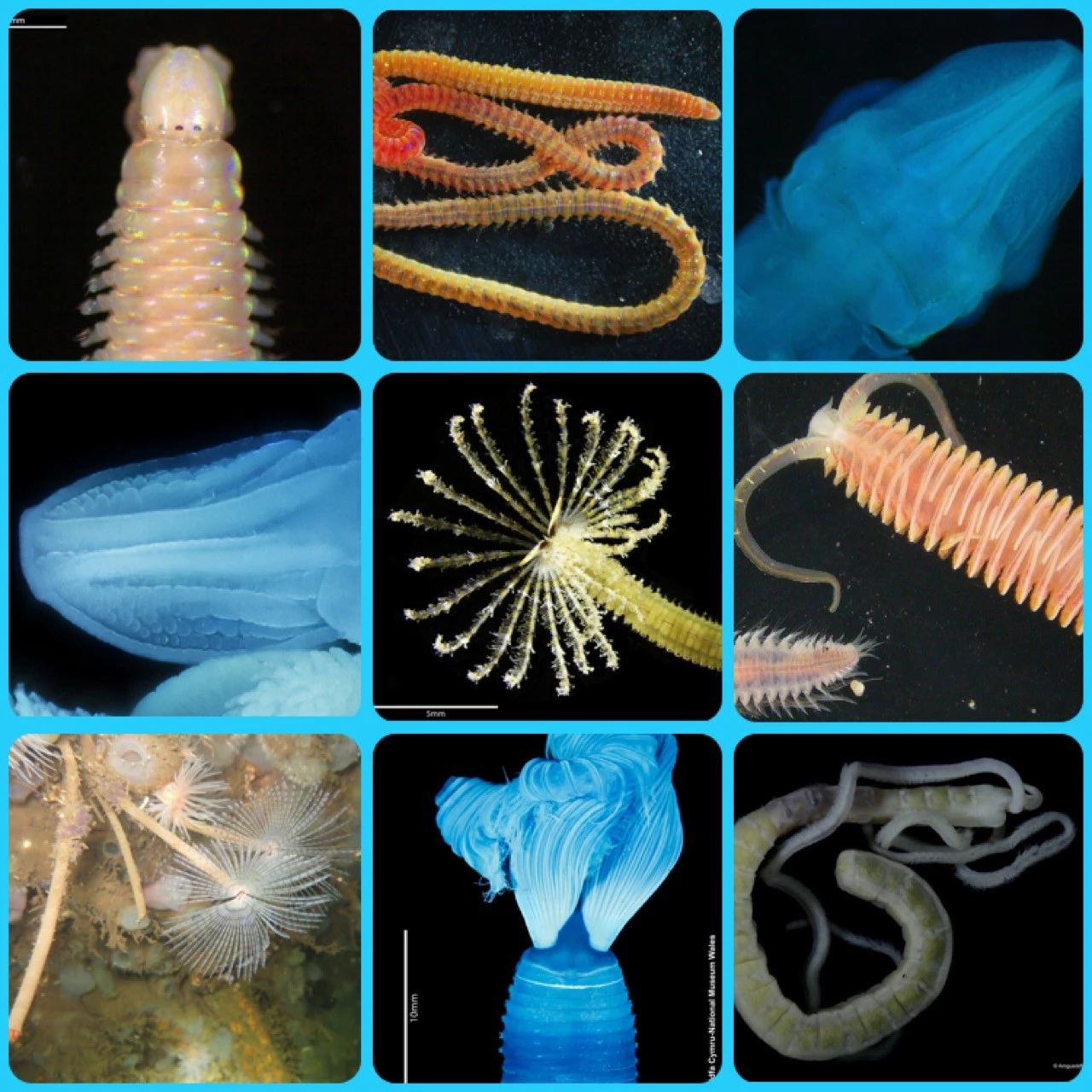
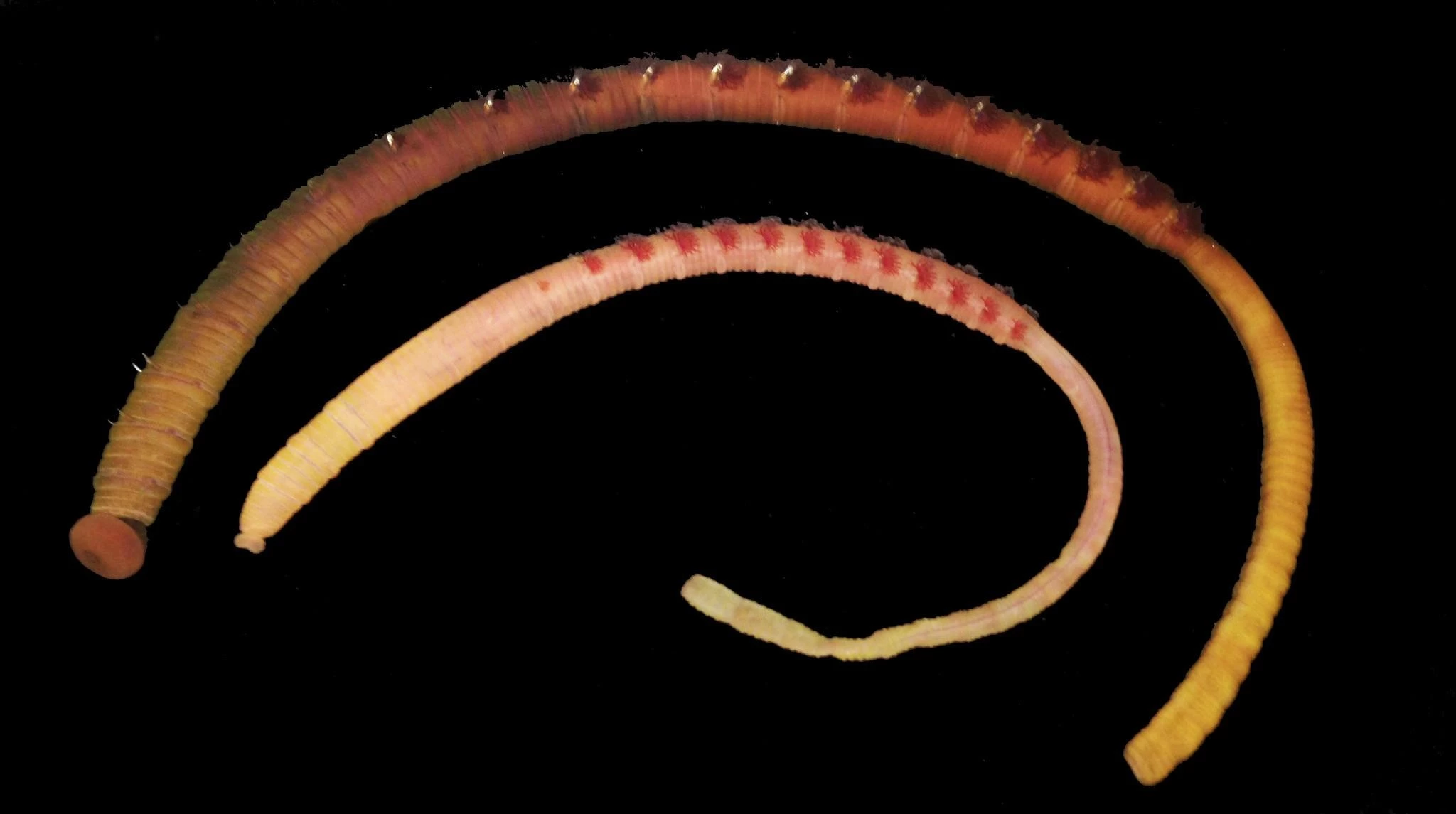
A can of worms – what are marine bristleworms and why are they so important? Katie Mortimer-Jones & Teresa Darbyshire, 7 August 2024 The two species of lugworm, Arenicola marina and Arenicola defodiens that we find around the UK. King Ragworm, Alitta virens often used by fisherman as bait! Can you see the beautiful colourful bristles along the edges of this Sea Mouse, Aphrodita aculeata? You can see the body is made up of lots of segments, which show that it is a worm. Strawberry Spaghetti Worm, Eupolymnia nebulosa which occurs commonly around the UK gets its name from its red body with white spots. Can you see the bright red gills? The Ice-cream Cone Worm, Lagis koreni, builds an intricate tube made of sand and pieces of shell. They live upside down and use the beautiful gold bristles to dig in the sand. Montage of some of the amazing bristle worms that we find around the world. Think you know worms? These might surprise you. Marine worms can be beautiful, ferocious, wondrous and spectacularMarine worms are vitally important for the health of our oceans, they play important roles in food webs, and are the ‘gardeners of the oceans’Amgueddfa Cymru has two experts in sea worms, discovering new species both at home and abroadYou might never have heard of marine bristleworms, but they are amazingly important and often surprisingly beautiful creatures. That’s what we as museum curators think, and hopefully you will agree after reading this article!Amgueddfa Cymru – Museum Wales has a vast collection of marine invertebrates, animals that live in the sea, and which, unlike you and me, don’t have a backbone. Most come from waters around Wales, but some were collected from all around the world. They include the sea creatures you may be more familiar with, such as lobsters, crabs, starfish, clams, mussels, corals and anemones, but also contain many more that you may not have heard of.What are bristleworms?One such group is the sea worms, or more specifically marine bristleworms. The scientific name for marine bristleworms is polychaetes, a name which translates to “many bristles”, as they have many hair-like bristles along their bodies for movement or attachment. They are related to earthworms and leeches, in a group called ‘Annelida’, the segmented worms. If you have ever studied an earthworm closely in your garden, you will have seen the body is made up of many segments, which give the group its name. Where can I see bristleworms?Have you ever seen the squiggles of sand across the surface of the beach and wondered what made these strange sandy ‘casts’? Well, they are made by lugworms, a common type of marine bristleworm often used by fishermen to catch fish. The lugworms live beneath the surface of the sand in burrows, munching on the sand to gain nutrients. They then need to get rid of the sand, which they release from their tails, almost like a tube of toothpaste. So, what you are seeing is actually the waste products from the worm – yes, worm poo!Another type of marine bristleworm that you may have heard of are ragworms, also used by fisherman as bait. The King Ragworm, Alitta virens, can grow up to a metre long, and is a scavenger, often feeding on other animals! But don’t worry, you don’t often see one on the beach.Why are marine bristleworms important?Firstly, they often make up a large proportion of the animals that live in the seabed, sometimes as much as 50-80%! This makes them an important part of ocean food webs, providing food for other animals such as crabs, lobsters, fish, sea birds and even other types of worms. Without them, whole food webs would collapse. Secondly, they are the ‘gardeners of the ocean’, doing a similar job to earthworms on land. They are constantly turning over the sediments within the seabed, getting oxygen down into them. Scientists often call them good ‘indicator species’, which means that they can often tell us about the health and well-being of the oceans. For example, the presence of some bristleworms tells us that the seabed is healthy, whilst others may indicate the environment is polluted. Other worms can build reef-like structures which can be home to all sorts of other animals.What do bristleworms look like?So hopefully we have convinced you of how important marine bristleworms are, but what about convincing you just how pretty they are? Well, there are over 12,000 different species of marine bristleworms across the world, and we are finding new species all the time. We have well over 1,000 species here in the UK, and that number is growing, too. So, what do they look like? Marine bristleworms have adapted to live in almost all marine habitats and environments and so they are really variable in their shape, size and colour. A few are really small, so small in fact that they live between the sand grains on the beach, whilst others are said to reach over 4 metres in length! Some can look very similar to earthworms but many look very different, and a few don’t even look like worms at all. Some are brightly coloured, looking almost like flowers, others are almost iridescent and shiny, and some even look a little scary! So, let’s tell you about several fascinating worms……The so-called Sea Mouse, Aphrodite aciculata, looks furry but it is actually a worm. They live all around the UK and you can sometimes see them washed up on the beach. Turn one upside down and you can see the segments which tell you that is the case. It is a predator, often eating other worms. However, look at those beautiful and colourful bristles along its body!The Strawberry Spaghetti Worm, Eupolymnia nebulosa, gets its name from its strawberry red body with white spots, and the mass of spaghetti-like tentacles on its head used to capture its food. Despite its name, we are not sure it would go well with cream! You can find them hiding underneath rocks on the beach, all around the UK.Speaking of food, how about an Ice-cream Cone Worm, Lagis koreni. These beautiful worms build intricate cone shaped tubes out of sand grains and small fragments of shells. The worms live upside down, digging in the sand using golden bristles, which look a little like eyelashes! You may come across an empty tube on UK beaches.Why do museums have collections of marine bristleworms?So, hopefully we have convinced you that worms can be wonderous creatures but why do museums have collections of them? These collections provide an amazing snapshot of which species have lived in different places at different times. This is important so that we can map any changes that might occur due to things like climate change.Are new species of bristle worm still being found?Amgueddfa Cymru has two specialists in marine bristleworms who study these amazing animals. They are taxonomists, scientists who find, describe and name new species and inform others across the world what to look out for. Museum collections are an extremely important resource for this type of research, helping us to learn more about biodiversity on Earth and record and investigate changes to it. You can find out more about the museum’s work on describing species here and keep an eye out on the museum’s blog pages for updates.
Arthur the Arthropleura Lucy McCobb, 23 March 2022 Who is Arthur the Arthropleura? Arthur is a model of the biggest invertebrate that has ever lived on land, a millipede-like creature called Arthropleura. Where did Arthur the Arthropleura come from? The model was originally on display in Kew Garden’s Evolution House but when the space was dismantled in preparation for the HLF funded restoration of the Temperate House, it was no longer needed and Kew kindly donated it to Amgueddfa Cymru – National Museum Wales. The Arthropleura model was in need of some substantial conservation work when it arrived at Amgueddfa Cymru – National Museum Wales. It had been on open display for many years in a glass house alongside living plants and was damaged and rusty. The humid display environment had caused the surface paint to flake away and several spiders and snails had taken up residence on the underside of the model! Arthur the Arthropleura before conservation The first job was to give the model a good wash with hot soapy water and remove the dirt and cobwebs! Arthur the Arthropleura has a bath Then all the flaking paint was scrubbed off, the damaged areas on the legs and head were rebuilt with an epoxy putty and the surface textures recreated. The nuts and bolts of the removable antennae had rusted together, so the metal parts were replaced with new stainless steel threaded rods. Once the repairs were complete the model was carefully painted with acrylics and then coated in a durable varnish, making it once again suitable for public display. Arthur the Arthropleura after conservation Who named the Arthropleura - Arthur? Some of the Natural Sciences staff had become rather attached to the impressive 1.5m long millipede model whilst it underwent conservation work in the lab and named it Arthur the Arthropleura. We have also had fun with Arthur; he has “escaped” and been on the run around the museum galleries! Arthur the Arthropleura visits the Impressionists We posted pictures of his adventures on the @CardiffCurator Natural Sciences Twitter account and had a fantastic response from our followers. Arthur the Arthropleura is now a social media star and is a really wonderful addition to our collections! What did Arthropleura look like? Arthropleura looked a lot like millipedes do today. It had a long, narrow body made up of lots of segments, and its back was covered in hard plates. On the underside of the body, there were lots of pairs of jointed legs, around 8 pairs for every six body segments, which is similar to the number of legs modern millipedes have. Recently, palaeontologists realised that what they had previously thought was the head of Arthropleura, is actually just the front segment of its body. The head was tucked underneath this segment, just like it is in millipedes today. So our model Arthur is a bit out-of-date, and he shouldn’t be looking straight ahead quite as much as he does. How big was Arthropleura? There are two types of evidence that tell us how big Arthropleura was. Fossils of the animal’s body, or parts of it, have been found in Germany, Belgium, France, the Czech Republic, and the U.K., but these are relatively rare. More common are fossils of the long trackways made by the many feet of the Arthropleura as it scuttled over damp ground. Its fossilised footprints are known from the USA, Canada, Germany, France and Scotland. Measuring the trackways tells us how wide the animals that made them must have been, and we can calculate from that how long the animals likely were. Arthur the Arthropleura next to a fox for size Some places have several trackways in different sizes, showing that different sized (and probably aged) Arthropleuras were moving around in that area. The widest trackway known is 50cm wide, and the biggest Arthropleura is estimated to have been over 2m long. Where did Arthropleura like to live? Arthropleura fossils and trackways have been found in various locations that would have been fairly close to the equator 300 million years ago, including modern-day North America and the U.K. Many of the first fossils were found in roof shales overlying coal seams, so it was thought for a long time that the giant creepy-crawlies just lived in humid coal swamps. Since then, evidence of Arthropleura has been found from a wider range of environments, including footprints walking along drier river banks. It appears that they felt at home in a variety of landscapes with some vegetation cover. Would Arthopleura have eaten me? We can’t be certain what Arthropleura liked to eat, because its mouthparts have never been found in any fossils. However, if it did have tough, strong jaws for biting prey with, they would probably have survived and become fossilised. That may be circular reasoning, but there are other reasons why we think it probably ate plants rather than meat. An Arthropleura fossil was found in Scotland in 1967, which had the remains of plants called giant clubmosses in the area where its gut would have been. It’s possible that the fossils were just preserved together by accident, so we can’t be certain the plants were actually Arthropleura’s last meal. However, if its diet was similar to that of modern-day millipedes, it is likely to have lived on plant remains, seeds and spores. Which other animals did Arthropleura share its home with? If you looked around at the animals that shared Arthropleura’s world, you would see a very different view of life from today. There were no birds or mammals, because they hadn’t evolved yet. Scout around for our nearest relative, and you would eventually spy, lurking in the water, a large, squat amphibian called Eryops. Animals with backbones were yet to gain a dominant foothold on dry land. Instead, creepy-crawlies accounted for most of the life you would have seen around you. There were large cockroaches (up to 9cm long) scuttling around, and spider-like creatures that would fill the palm of your hand. These weren't exactly like modern spiders - their fat bodies were divided up into segments rather than consisting of a single rounded piece, and they hadn't yet evolved the ability to spin webs - but they were well on their way to becoming the arachnids we see today. fossil of a primitive spider-like creature (Maiocercus celticus) The air would have been filled with a distinct hum from the most awesome animals around – huge dragonfly-like insects called griffinflies, whose wingspans could exceed 70cm. Griffinflies were among the top predators of their day, and were some of the first creatures on Earth ever to fly, around 150 million years before the first birds took to the wing. Even our amphibian kin Eryops had to share its home with arthropods; horseshoe crabs that also liked to divide their time between dry land and water. Why don’t we get such huge invertebrates on land today? The Carboniferous Period, around 300 million years ago, was undoubtedly the era of huge invertebrates. At that time, giant Arthopleura, the biggest creepy-crawly that has ever lived on land, was joined by large cockroaches, arachnids and dragonfly-like insects. How was that possible, and why don't we see invertebrates as big as Arthur today? Our atmosphere has around 21% oxygen. The evidence suggests that 300 million years ago, oxygen levels approached 35%. That would have made a huge difference to the amount of energy that insects and other arthropods could generate. Insects and millipedes don't have lungs to actively breathe in air like we do. Instead, their exoskeletons have lots of tiny tubes passing through them called spiracles. Oxygen diffuses in through the tubes from the outside into a blood-filled cavity, from where it gets distributed around the animal's body, fuelling everything it does. More oxygen available meant more fuel, which enabled creepy-crawlies to grow bigger, and which would have been especially important in generating enough energy to get large flying insects off the ground. Such giants could not get airborne under today's atmospheric conditions. Arthur in one of his natural habitats, the coal swamp in our Evolution of Wales gallery Oxygen levels aside, there are mechanical limitations to having an exoskeleton, which make it unlikely that such large invertebrates could exist today. In order to grow bigger, all arthropods need to moult off their old exoskeleton and grow a new larger one. There is a period of time after moulting when the new exoskeleton is soft, and the arthropod must wait for it to harden before it can carry on with its normal life. Not only is this a dangerous time when the animal is vulnerable to predators, but it places a limit on size – if the exoskeleton becomes too big and heavy, it risks collapsing under its own weight. That is one reason why the largest arthropods today live in the ocean, where the water helps to support their weight. There is also a limit on how big creepy-crawly legs can get, as the bigger they get, the thicker the cuticle they're made of becomes. They can only get to a certain size before the thick cuticle doesn't leave enough room inside for the muscles needed to operate the legs. Another factor allowing Arthur and others to grow so huge may have been the lack of large vertebrate predators. For a variety of reasons, it just isn't possible for such giant creepy-crawlies to exist today. Lucy McCobb, Caroline Buttler & Annette Townsend Glossary: Arthropod – an invertebrate animal with a hard exoskeleton and jointed limbs. Invertebrate – an animal without a backbone. Exoskeleton – a tough outer skin, which provides support and protection to animals without an internal skeleton.
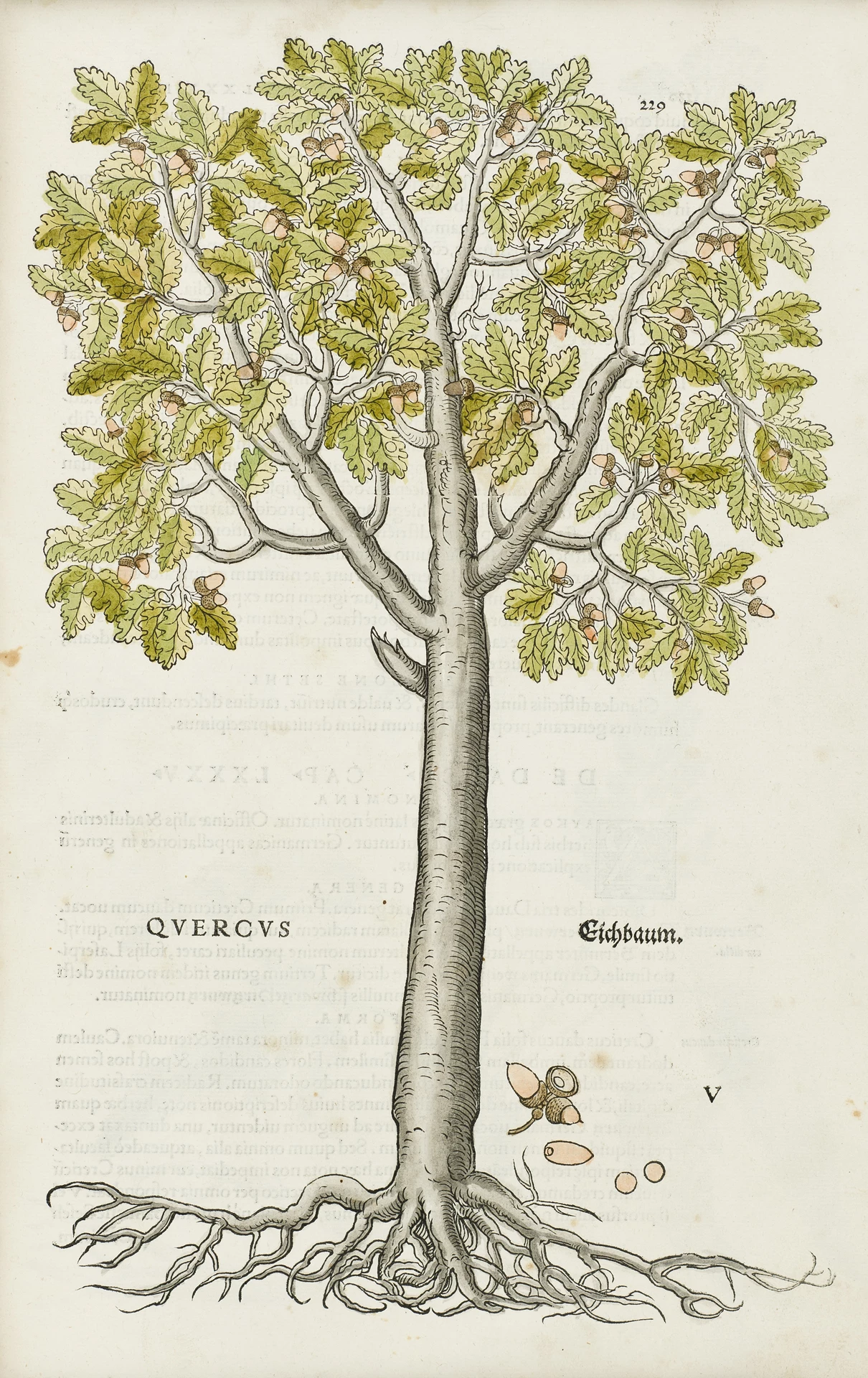
16th century books in the Willoughby Gardner Library Kristine Chapman, 14 August 2017 Pierre Belon - L’histoire de la nature des oyseaux (1555) In 1953 Amgueddfa Cymru - National Museum Wales received the donation of a significant collection of over 300 natural history books, early and modern, from Dr Willoughby Gardner of Deganwy, north Wales. Dr Gardner was born in Cheshire in 1860, but ill health forced him to take early retirement. He went to live in Deganwy in the early 1900s, where he was able to dedicate his time to pursuing his interests, which spanned archaeology, entomology and numismatics. Because of these interests, he had a close relationship with the Museum, for example, he did a great deal of work on surveying hill forts in Wales, and a number of finds from those digs were donated to the Archaeology department. And a few years before his death he donated his collection of British Aculeate Hymenoptera to the Zoology department. However his donation of a substantial library of early natural history books, ranging from the 15th to the 18th centuries was by far his most generous bequest, and contains a number of rare treasures, especially those from the 16th century. Books from this period illustrate the widespread and confident use of printing since the invention of the movable type printing press in 1450 by Gutenberg revolutionised the industry. The innovation spread from Germany throughout the rest of Europe, and by 1500 the number of printer’s workshops had dramatically increased, and they had refined their processes enough to produce books in ever greater quantities. This allowed for an increased exchange of information and ideas that resulted in significant advances in the fields of natural history during the 16th century. Herbals While early subjects for printing tended toward reprints of works from classical antiquity, by the mid-16th century a much wider range of subjects were covered. Very popular at this time were herbals, guides to plants that primarily focused on their properties as medicinal aids. The plants were listed, along with full descriptions and details as to what illnesses they could cure. They were often written by leading physicians and were aimed at the layman rather than the scholar. The descriptions would often include illustrations of the plants, known as woodcuts. A woodcut is a form of relief printing that takes its name from the method of creation, a block of wood is carved away to reveal a raised design. This is inserted into the printing form alongside the text, inked up and printed as one. Afterwards the illustrations can be coloured by hand if required, although a book with coloured illustrations would have been much more expensive. The collection of herbals from the 16th century in the Willoughby Gardner collection covers many of the leading publications of the time, including works by Otto Brunfels, Leonhard Fuchs, and Hieronymous Bock, often known as the ‘Fathers of German Botany’. The Herbarum vivae eicones of Otto Brunfels was influential in that its drawings were primarily taken from life rather than copied from existing works, as was the standard practice of the time. They were also rendered as lifelike as possible instead of the more stylised designs which had been more common in German herbals. First published in 1530, the copy held in the Willoughby Gardner collection is a later volume from 1532. In 1539 Hieronymus Bock published a herbal in his native language, German, which was later translated into Latin and made more widely available. Willoughby Gardner had a copy of the Latin translation, called De stirpium maxime, published in 1552, with hand coloured illustrations. What makes his copy special, is that at some point someone has gone through and written the English names for some of the plants next to the illustrations. De historia stirpium by Leonhard Fuchs was published in 1542, the copy held in the Willoughby Gardner collection also has coloured illustrations, although sadly is incomplete as a section of pages from the middle of the book are missing. Also included in the collection is A niewe herball, or historie of plantes by Rembert Dodoens, an English translation of 1578 taken from an earlier French edition. Originally published in Flemish in 1554, with the French version soon after, many of the illustrations were based on those of Fuchs, although the text was original. Leonhard Fuchs - De historia stirpium (1542) Conrad Gesner - Historiae animalium (1551-58) Zoology As well as the herbals, there are a number of other significant books in the collection dating from the mid-16th century, although these focus more on the field of zoology. Works in this area include; Edward Wotton’s De differentiis animalium libri decem from 1552, a bibliography of the work of classical authors, he was considered to be the first naturalist to make a systematic study of natural history. Guillaume Rondelet’s Libri de piscibus marinis, from 1554. Rondelet was a physician and professor based at the University of Montpelier in the south of France. Libri de piscibus marinis is his most famous work, and covers the full range of aquatic animals as scholars of this period made no distinction between fish and sea mammals. The book was a standard reference for students for nearly a century afterwards. Pierre Belon’s L’histoire de la nature des oyseaux from 1555. Belon was a French explorer, naturalist, writer and diplomat who had been in a position to travel extensively throughout Europe and often recorded the wildlife he encountered in situ. Like many others of the Renaissance period, he studied and wrote on a range of topics including ornithology, botany, comparative anatomy, architecture and Egyptology. And, multiple copies of Conrad Gesner’s Historiae animalium a five volume work, the first four volumes covering quadrupeds, birds and fish was produced in 1551–1558, while the fifth volume on snakes was issued posthumously in 1587. It was Gesner’s intention that his great encyclopaedia should record all of known life both real and mythological, which is why sea monsters, manticores and unicorns are also covered! Gesner was a doctor and professor in Zurich, and unlike Belon he was not in a position to travel as much, relying instead on submissions from friends and colleagues across Europe. First hand observation was not always possible, and because Gesner had decided to include everything written on the animals he featured, he wasn’t always able to guarantee the accuracy of the information. But as he explained himself he: “[thought] it best to record everything that he has been able to meet with, in order that future specialists in the various branches of natural history should have everything placed before them and draw their own conclusions in each case”. Further reading Arber, Agnes. Herbals: their origin and evolution, 3rd edition. Cambridge University Press, 1986 Kenyon, John R. The Willoughby Gardner Library: a collection of early printed books on natural history. National museum of Wales, 1982 A version of this article was first featured in the Friends newsletter.
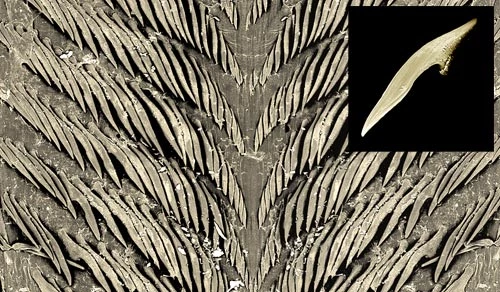
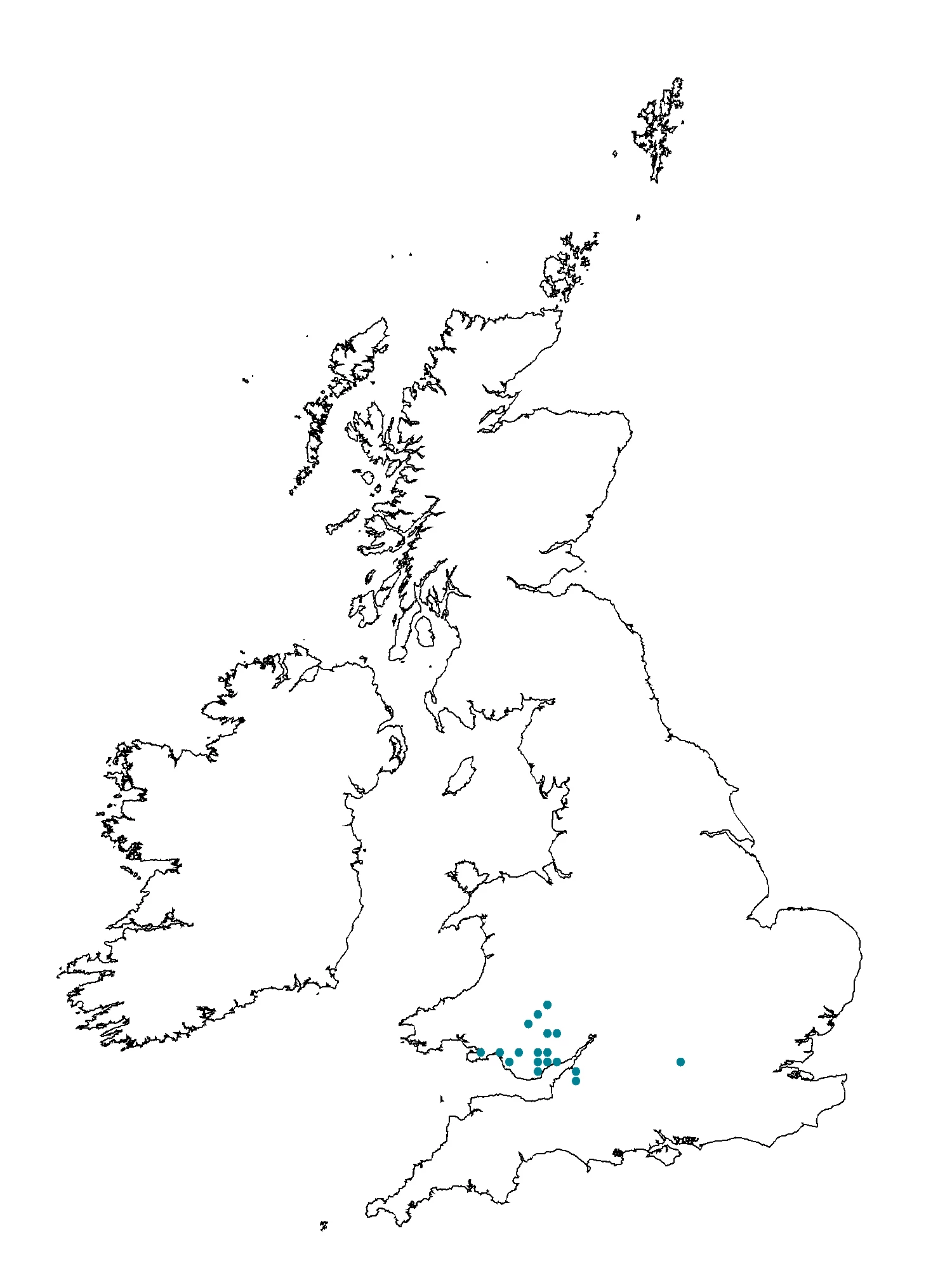
The Long Reach of the Ghost Slug Ben Rowson, 11 August 2014 An adult Ghost Slug, about 7cms long. The Ghost Slug's blade-like teeth, each about half a millimetre long. These are much longer and sharper than those of herbivorous species. Close-up of the Ghost Slug's head. The eyes, if present, would normally be at the tips of the two upper (longer) tentacles. Verified Ghost Slug records received until Autumn 2013. The bizarre Ghost Slug made headlines in 2008 when described as a new species from a Cardiff garden. When the first specimens were found, very little was known about this animal. The story since then connects our collections and specialist expertise with sharp-eyed members of the British public, recording networks, other taxonomists in Europe, and the media to show how a picture is emerging. The species Emphasizing its spooky nature, we gave the species the scientific name Selenochlamys ysbryda, based on the Welsh word ysbryd, meaning a ghost or spirit. The common name “Ghost Slug” soon became popular. Identifying it with the obscure genus Selenochlamys was a specialist task and required dissection of several specimens including our holotype. (Incidentally, Selenochlamys already combines the Greek words for a cloak, and Selene, goddess of the moon, but “Moon-Cloaked Ghost Slug” sounded a little too melodramatic.) The Ghost Slug is strange in many ways. It is extremely elusive, living up to a metre deep in soil, only rarely visiting the surface. It seldom occurs in large numbers. This makes it an unusually difficult slug to look for, especially in other people’s gardens or other places that cannot be dug up. It is also very distinctive. After having examined one, most agree that it is unmistakeable in future (haunting, perhaps?). The slug is ghostly white, and almost eyeless. It does not eat plants, but kills and eats earthworms, whose burrows it can enter with its extremely extensible body. This differs from that of most other slugs in having the breathing hole right at the tail, and in retracting like the finger of a glove, appearing to suck its own head inside-out. Unlike some British slugs, it can be identified with certainty from a good photograph. The photos here show some similar species often confused with it. This combination of being elusive and distinctive makes the species perfect for a public recording project. We needed to know more, not just out of curiosity, but because the species might pose a threat to earthworm populations. It appeared to have been introduced from overseas, i.e. to be an alien or non-native species, whose spread might cause concern. We thank the then Countryside Council for Wales (now part of Natural Resources Wales) for funding early survey work and information dissemination in 2009, and others who have spread the word. Contributions from the public Since 2008, responses from over 300 people all over the UK (and a few from overseas) have been received and replied to. A large proportion were misidentifications, but many were correct and over 25 populations of Ghost Slugs are now known. These verified records have been submitted to the National Biodiversity Network via the Conchological Society of Great Britain and Ireland. We thank all respondents for their efforts, without which almost none of the populations would have been identified. As the map shows, the Ghost Slug is widespread in south-east Wales, occurring in all the main Valleys and in the cities of Cardiff and Newport, and at two sites in Bristol. It remains, however, rare or absent in some nearby areas (such as Swansea) and by no means occurs throughout this region. Virtually all the records are from gardens, allotments, or nearby roads and riversides in populated areas. This is also true of an unexpected outlier, reported in May 2013 from Wallingford, Oxfordshire, which might indicate an eastward spread. The species is evidently firmly established in Britain and has survived the unusually cold, dry, or wet winters of the last five years. Contributions from specialists This species has had at least 10 years to be spread around Britain, but has not yet been seen elsewhere in Western Europe. The earliest records are from Brecon Cathedral in 2004 (in a 2009 paper by German-based taxonomists) and from Caerphilly in 2006 (on a pet invertebrates forum). We expected its origin to be in the Caucasus Mountains of Georgia and Russia or in northern Turkey, where other Selenochlamys occur. However, a 2012 paper by a Ukraine-based taxonomist described a museum specimen of S. ysbryda collected in Crimea in 1989. This makes some sense – Crimea has a number of endemic molluscs, and several alien species now in Britain were originally described from the region. The UK also has a history of conflict and trade with Crimea (there is even a Sebastopol near a slug population in Cwmbran!) making a direct, accidental introduction plausible. DNA was sequenced from six specimens of the Ghost Slug, from Cardiff, Newport, Bristol, and Talgarth as part of our recent studies on British Slugs. The sequences were all but identical, supporting the theory that the species is not native to the UK. If you are going to report a sighting, please ensure that your slug is a true Ghost Slug (Selenochlamys ysbryda). This can be done by looking at the mantle and the eyes. The mantle (indicated by the grey lines) looks like a layer of skin through which the breathing hole is often visible. This Ghost Slug has a tiny, disc-shaped mantle at the rear end of its body. It has no eye spots on its tentacles (indicated by the arrow). Other white or pale slug species have a large, cloak-like mantle over their “shoulders” near the front of their body. They have black eye spots at the tips of two of their tentacles. The two shown here are the Netted Field Slug (Deroceras reticulatum) and Worm Slug (Boettgerilla pal lens). These species are very common in gardens, so there is no need to report them to us. The media The Ghost Slug was named one of the "Top 10 New Species of the Year" for 2009 by the US International Institute for Species Exploration. It has featured in exhibitions in Cardiff and Bristol, and even in school exam questions. It has also appeared in several books including Animal (Dorling Kindersley, 2011) and, most recently, in our own 2014 guide to the slug species of Britain and Ireland. Further sightings To monitor any spread or document behaviours we are still interested in future observations of Selenochlamys ysbryda, verified with a specimen or photograph. Please ensure that they are not the Netted Field Slug Deroceras reticulatum, shown above. To report a Ghost Slug, email Ben Rowson .
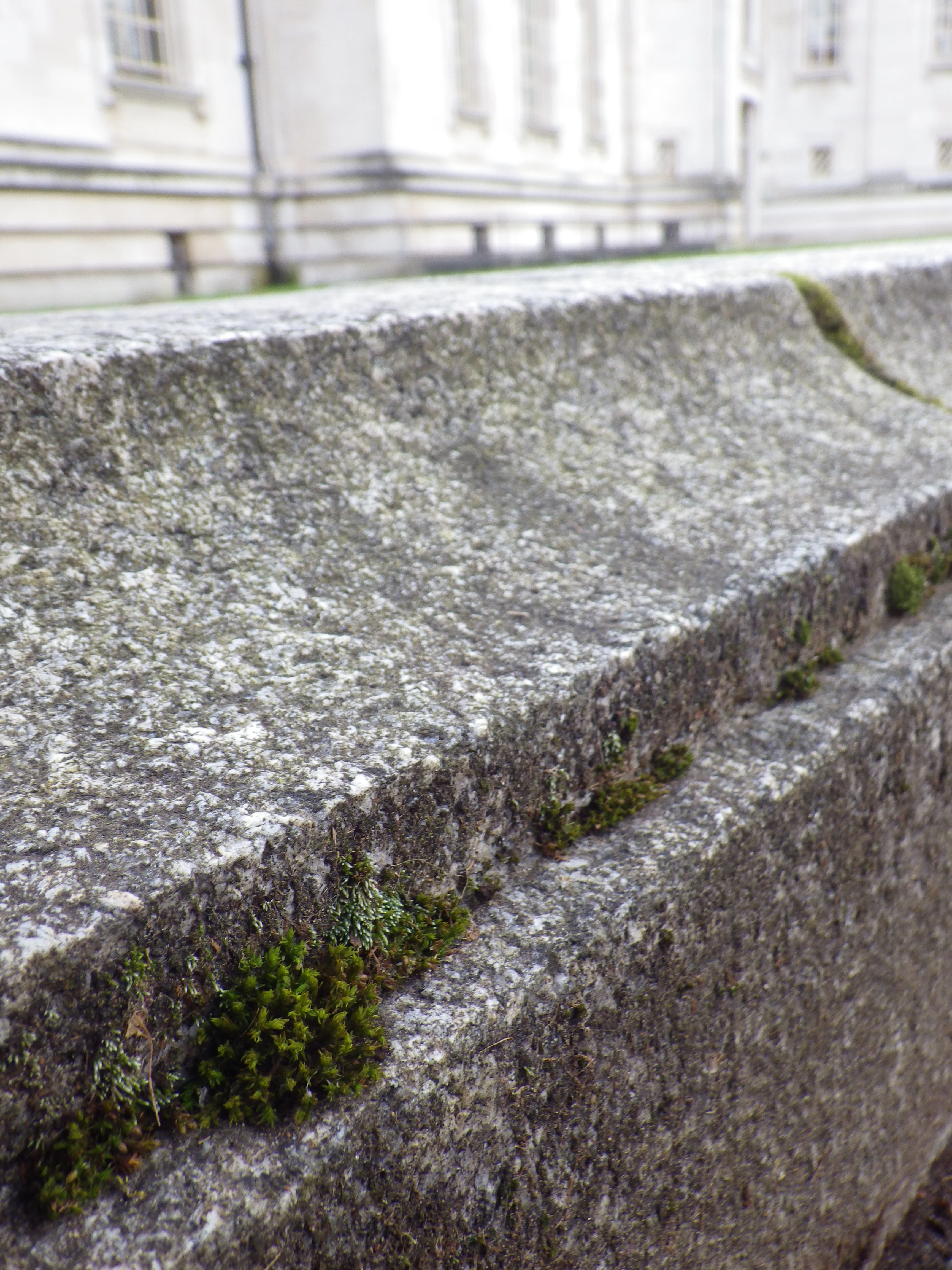
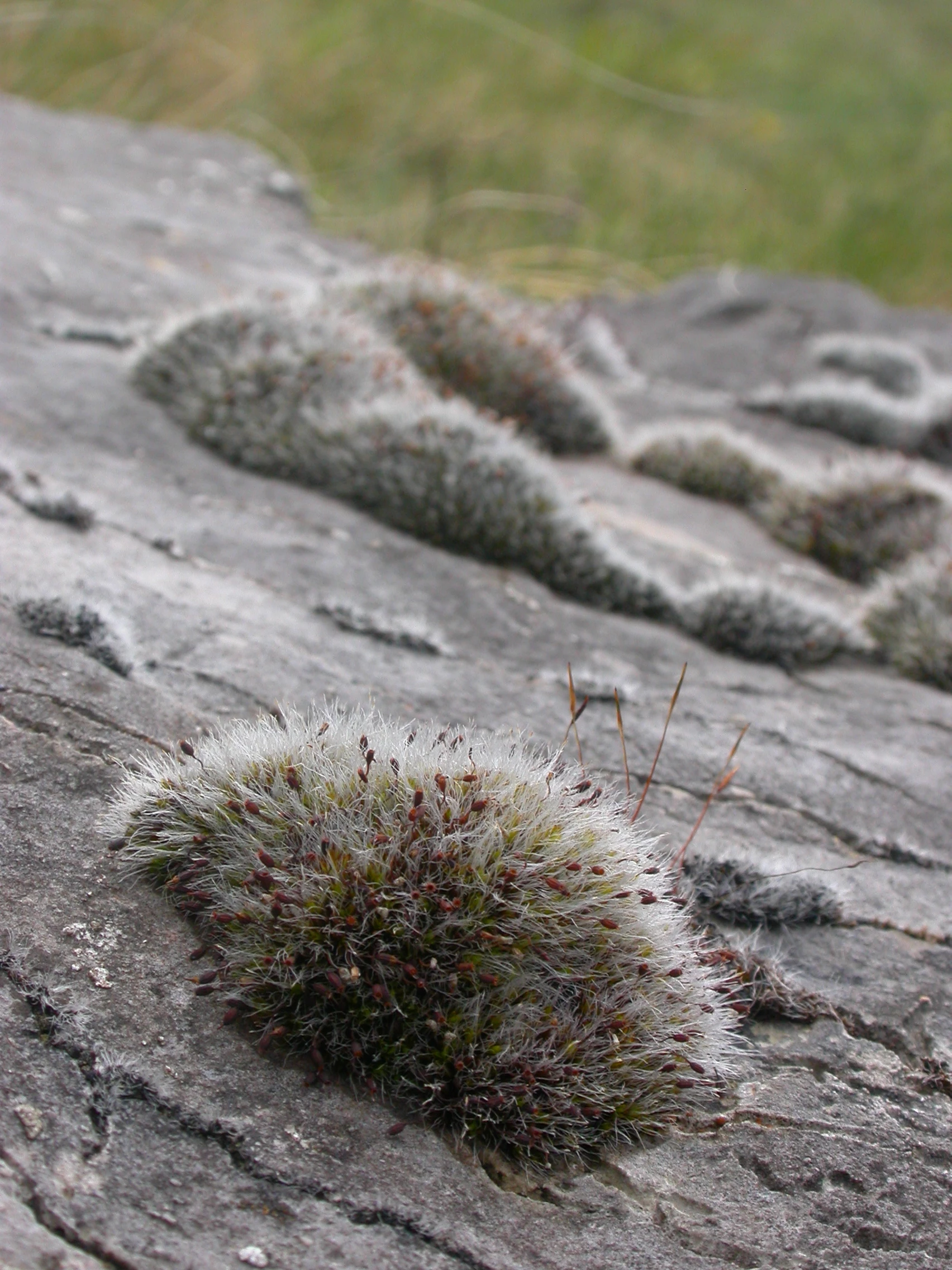
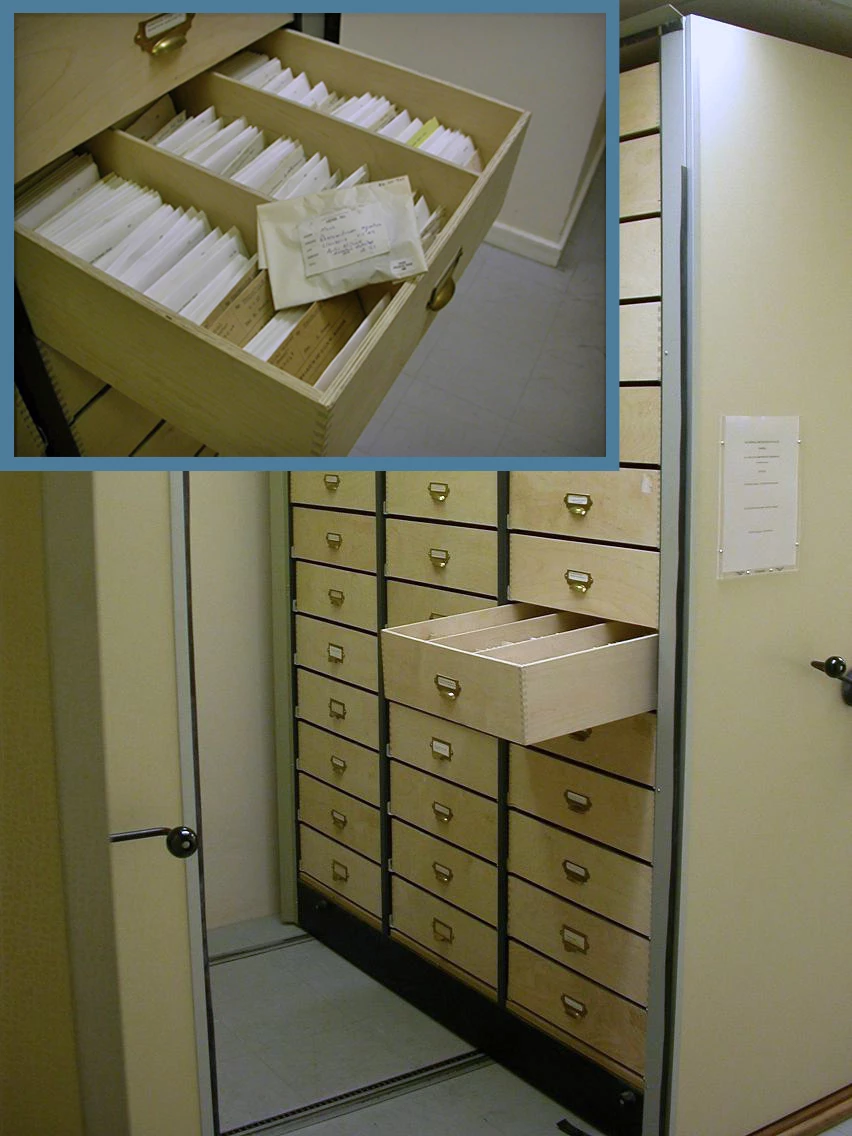
Alive or Dead? Resurrection Plants Katherine Slade, 14 May 2014 Mosses in their extreme environment on the wall surrounding National Museum Cardiff. Grey-cushioned Grimmia moss (Grimmia pulvinata) with white hair points, seen here on a rock face on the Great Orme in North Wales. © Kath Slade So how long do you think you can survive without breathing? Humans generally last only six minutes without oxygen before brain damage occurs. But what about 25 years? Some plants can live without respiring for that long. How could this exceptional resurrection ability be used to help thousands of people? Or perhaps even help us to colonise new worlds?All plants need water to survive. They combine water with carbon dioxide during photosynthesis to create sugar for energy. But what happens in extreme environments when water is not available?The Antarctic is an extreme environment where water is unavailable to plants as it is locked up as solid ice. But you don’t have to look as far as the Antarctic for an extreme environment for a plant. Your roof, sheer rock faces and the tops of walls are habitats where many plants would struggle to get water. Yet mosses grow in these habitats all around us. So how do they do it?Some plants have adapted to dry habitats or drought conditions by holding onto water when it is available. They may have waxy leaf surfaces or store water in cells in a similar way to a cactus. Mosses and liverworts take water from the surrounding atmosphere, often relying less on water from the ground. Some mosses also have white hair points to their leaves. These hair points improve take up of water from the air by increasing surface area, as well as acting to catch water droplets.Other plants show an amazing ability to survive despite being completely dried out. This is not the same as not watering your cactus for a few months, where it is using stored water to stay alive. This is when a plant fully dries out AND all life processes such as photosynthesis and respiration stop. On adding water, life processes begin and the plant revives. This is known as desiccation tolerance.Desiccation tolerance was first observed in animals over 300 years ago. Dirt from a dried-out river was put in water under a microscope. Tiny rotifers were seen swimming about, much to the surprise of the observer! It took science another 150 years to confirm that resurrection of life was even possible.This resurrection ability is common in adult mosses and liverworts as well as in seeds, spores and pollen. It is rare in adult flowering plants and ferns (a notable exception being the Resurrection Plant (Selaginella lepidophylla), a plant related to ferns). Scientists have managed to grow seeds from the flowering Lotus that were 1100 years old.One liverwort has been revived after 25 years of being completely dried out. The resurrection of this liverwort after so long was particularly interesting as it was an adult plant rather than a spore or seed. It’s a strange thought that the dried specimens of mosses and liverworts in the National Museum Wales collections behind me as I’m writing this, may be more alive than I thought! The National Museum Wales collections - more alive than they first appear? Heath Star-moss (Campylopus introflexus) with white hair points. First seen in the UK in the 1940s and now fairly common, perhaps helped by its desiccation-tolerant ability? © Kath SladeThe ability to revive depends on how fast the plant dried out, how long for, the intensity of drying and the temperature. The plant may be better able to cope if it has experienced drying out before and become ‘hardened’. Mosses have a number of adaptations that enable them to revive, they can:quickly take up waterquickly repair cell contentsswitch particular genes on and offgo into protein production overdriveThese mosses contribute to biodiversity in their own right and create habitats for other species. But how could a reviving wall-top moss be useful? The secrets mosses hold in their resurrection abilities can help us understand how plants managed to colonise the land around 470 million years ago.More relevant to humans may be the discovery of how to translate this desiccation tolerance into crop plants in the future. Thousands of people starve every year when crops fail in drought conditions. If we can help crop plants to survive droughts by programming them to lie dormant until rain returns, we could create a more stable food supply.An intriguing thought is that desiccation tolerant plants could be used to help terraform other planets. Resurrection abilities helped plants to colonise the land 470 million years ago, maybe one day it could help us colonise new worlds.Further reading:J. Graham (2003) Stages in the Terraforming of Mars: the Transition to Flowering Plants. AIP Conference ProceedingsPeter Alpert (2005) The limits and frontiers of desiccation-tolerant life. Integrative and Comparative Biology 45:685-695Black, M. and H.W. Pritchard (editors) (2002) Desiccation and survival in plants: Drying without dying, pp. 207–237Proctor et al. (2007) Desiccation-Tolerance in Bryophytes: A Review. The Bryologist, 110:4, 595-621How Long can Seeds Live? Millenium Seed Bank at Kew Gardens