Winter Warmer at the National Wool Museum: Wrap Yourself in the Magic of Wool

Dafydd Newton-Evans, 26 November 2025

There’s a familiar hush in the air as winter settles in – a soft woolly quiet that signals the arrival of our favourite season here at the National Wool Museum. The temperatures outside might be dropping, but inside, everything is warm and welcoming. 

Step into the museum and straight into a celebration of heritage, craft and comfort. The museum is adorned with hand-knitted Christmas decorations, lovingly crafted by our talented craftspeople. From plump stockings to a menagerie of woollen animals, every piece carries the charm of handmade warmth.

Our craftspeople have also been busy weaving this year’s exquisite Christmas blankets in the newly renovated Weaving Shed, and trust us they are as cosy as they are beautiful. Each blanket is a blend of traditional techniques, design and festive flair. They’re selling fast, so if you’re on the hunt for a gift that feels like a hug, make sure you visit the shop before they all disappear!

Speaking of gifts… there’s something special for every kind of wool-lover in our shop. Choose from beautiful soft scarves, produced right here on our Hattersley Loom, thick woven socks and a variety of beautiful textile and woollen gifts. Treat the crafter in your life to a place on our Learn to Spin courses – always popular and a perfect present for hands eager to create something unique.

This year, we’re delighted to offer even more festive fun for the whole family! Little ones (and big fans too) will be thrilled to meet Bluey, who’s popping in for a festive visit and special story time. Bring your best smiles and snap a photo or two with everyone’s favourite character. 

And for those with a sweet tooth, don’t miss the chance to decorate your own Christmas Cookie activity – a delightful way to spark creativity and festive joy with your children. This hands-on activity is available at an extra cost and includes everything you need to craft your own tasty masterpiece. 

Once your cookies are decorated and your woolly shopping bags are full, take a moment to unwind in our cosy café. Warm up with a steaming hot chocolate, treat yourself to a slice of delicious cake and enjoy the company of friends and family as the winter winds swirl outside. 

So, come in from the cold and get wrapped up in wool. With magical decorations, heartwarming crafts, family fun, and delicious treats, the National Wool Museum has something for everyone this Christmas. 

We can’t wait to welcome you – wrapped in warmth, laughter and woolly magic!

An extraordinary year! One year on since closing the National Slate Museum temporarily for redevelopment!

Helen Goddard, Project Director National Slate Museum Redevelopment Project, 3 November 2025

It's been an extraordinary twelve months for the National Slate Museum Redevelopment Project. 

Since we temporarily closed our doors in November 2024, the team has undertaken the incredible feat of preparing the museum for redevelopment. 

We've been successful with a hugely ambitious £12m grant from the National Lottery Heritage Fund. This, together with the investment from our other supporters, has finally enabled us to realise the full ambition of the project.  

We've safely packaged  and moved our collections to their temporary home at Llandygai Collections Centre and we've appointed MPH Ltd as lead contractor and started the exciting and highly specialised work of conservation and repair on site. 

During the enabling works phase, we've seen the demolition of the old shop and café buildings in preparation for the new developments on site. It has been incredible to see these parts of the site temporarily returned to how they looked when the workshops were in operation.

Our staff and collections have taken the museum experience beyond the museum walls into partner locations across the World Heritage Site with our ambitious 'Museum on the Move' campaign. Some of our staff are located at the Quarry Hospital here in Llanberis where we've introduced a new Museum character - Margaret the Matron!  Our slate quarrymen have made themselves at home in their temporary location at Penrhyn Castle, a powerful and symbolic moment for the story of slate and its place in the history of our local communities here in northwest Wales. Our Blacksmith meanwhile has a space at Crefft Migldi Magldi in the slate quay in Caernarfon working alongside another young Blacksmith. 

We've also been working very hard on designs for some of the key areas for reinterpretation in the Museum which has been very exciting. 

Below is a list of some of the things that have taken place thanks to the dedication of our extraordinary team and wider partners. 

  • 123 people attended our Silent Spaces Tours of the Museum before closing. 
  • 27,643 people have visited our semi-permanent locations
  • We’ve been to 19 community events where we’ve met and engaged with 1068 people. 
  • 1,115 children have enjoyed our digital and in person Learning activities including the Quarryman’s Day, the waterwheel challenge and 'Strike!' 
  • We used 1,734 cable ties to label all the original nails in the walls of the Museum. 
  • 165 objects have been boxed up at the Museum to protect them from damage.
  • We've packed away 13,208 objects to our new collections centre in Llandygai by 
  • The collections team have hosted 13 visits to the Llandygai Collections Centre and provided guided tours to 119 people.

It feels like a good time to pause, reflect and celebrate what we have achieved over the last year but the pace of the project shows no signs of slowing! 

Over the next two years we will continue to evolve the visitor experience on site including the exhibitions that will define a truly world-class gateway to the world heritage site of the Slate Landscapes of North-West Wales alongside our partners across this special region. Watch this space! 

Museum Voices: Penny Dacey – Spring Bulbs Project Coordinator

31 October 2025

A person with shoulder-length hair wearing a blue top stands before a leafy green background, facing the camera.

Hi Penny, can you tell us a bit about yourself and your role at Amgueddfa Cymru?

Hi, I have a lovely role as the Spring Bulbs for Schools Project Coordinator. I’m line-managed by Danielle Cowell, who established the project in 2005. The project engages primary schools in outdoor learning through a scientific climate investigation. My role involves being the primary contact for schools, supporting them to engage with the investigation.

The investigation runs throughout the full academic year. Schools receive resource packs in late September, adopt and plant their bulbs in October, and take weather readings every school day from November through to the end of March. From January, they monitor their flowers, recording the flowering date and the height of their plants on that date. All this data is shared on our website.

In May, we send prizes to schools for their contributions. The winning school for Wales receives a trip to their nearest Amgueddfa Cymru museum, with coach hire and facilitated workshops included. There’s also a Planting Day Photo Competition and a Bulbcast video competition, with additional prizes for schools. In July we share an end-of-year report exploring that year's data and the project’s overall findings.

A child wearing glasses with muddy hands smiles beside a pot of soil, with other children visible in the background.

Working on the project is extremely rewarding, and the comments shared by pupils about the weather and their plants are often heart-warming.

This year we’re celebrating 20 years of the Spring Bulbs for Schools Investigation; tell us more about that!

Certainly. The Spring Bulbs for Schools Investigation began in 2005 with a handful of schools local to National Museum Cardiff. It steadily grew to cover all of Wales, offering a digital engagement project that allowed schools across Wales to connect with us. Thanks to external funding from The Edina Trust, the investigation expanded further. Since 2011, the project has included schools in England and Scotland, and since 2017, schools in Northern Ireland.

To celebrate this 20-year milestone, we aim to raise awareness of the investigation and its impact, as well as highlight Amgueddfa Cymru’s legacy in climate and sustainability education. Although the organisation declared a Climate and Ecological Emergency in 2018, it has a much longer history working in this area, as demonstrated by the longevity and reach of this project.

Five children's hands hold flower bulbs over a blue surface with soil scattered around.

The Edina Trust have provided additional funding for this year’s celebrations. This has included recruiting a Celebration Officer to support this year’s enhanced activities. The celebrations include new virtual workshops for participating schools, the creation and naming of a new daffodil variety, and the establishment of a nature-themed workshop at St Fagans National Museum of History (free to the first 20 participating schools). We are also collaborating with our enterprises team to develop displays linked to the project themes in museum shops. The new daffodil variety will be planted as part of displays at St Fagans and National Museum Cardiff, and family activities related to the project will run over the October half-term at both sites.

It's a busy time for our small team, but we’re all very excited about what’s ahead.

Can you introduce us to Professor Plant and Baby Bulb, our favourite unofficial Amgueddfa Cymru team members?

Of course! Professor Plant is the project’s mascot, and Baby Bulb is their helpful, more spontaneous sidekick. We engage with schools through Professor Plant, who writes the resources and blog updates for the project. There have been four Project Coordinators over the years, with a fifth joining soon, so this helps maintain consistency. It’s also a fun way to engage younger pupils, as many comments and questions from schools are addressed to the Professor.

What can we learn about climate change from the data schools send us?

A hand uses a ruler to measure purple crocus flowers growing in black pots, with grass visible in the background.

The data submitted by schools’ feeds into our end-of-year reports. Each academic year, we produce a report comparing MET Office weather data since the investigation began with the flower data collected by schools. The report is a handy tool for teaching maths and numeracy, as it introduces different tables and graphs and highlights trends and patterns. The focus of the report is often on why plants might have flowered earlier or later than expected, and how that year’s weather may have impacted on this.

The Edina Trust also produces a report that uses weather data collected by schools and compares flowering dates of plants planted in the ground to those planted in pots. These reports support learning by introducing the concepts of hypothesis formation, fair experimentation, and data analysis. We also create digital quizzes to make exploring the data engaging and fun.

Our focus is on encouraging pupils to connect with nature, develop data interpretation skills, deepen their understanding of climate issues, and build the confidence to advocate on these topics. While there is still much to explore in the data, the main insight I have gleaned from working on the investigation has been through witnessing the value of giving ownership to the children and creating immersive experiences that connect them to nature; this fosters a genuine love for their plants and encourages them to pay closer attention to the natural world. This is an approach which recent studies have shown significantly enhances pupil engagement, personal development, mental wellbeing, and long-term environmental stewardship.

Several pots of yellow daffodils and purple crocuses in bloom arranged on a stone surface, seen from above.

How important is scientific work like this to Amgueddfa Cymru, and for the future of Wales?

Scientific research and educational projects are fundamental to our mission and vision as a national institution dedicated to inspiring people and changing lives. Central to the museum’s priorities is acting as a steward of both Wales’s cultural and natural heritage for the benefit of future generations. The museum’s 2030 Strategy highlights a strong focus on sustainability and public understanding of environmental issues, aiming to develop lifelong learning and promote wellbeing through connection with nature. Projects like this enable Amgueddfa Cymru to fulfil its remit to advance public education, contribute to knowledge about Wales’s biodiversity and climate, and support communities to actively participate in shaping a sustainable future.

By supporting citizen science and encouraging pupils ownership of data collection and analysis, Amgueddfa Cymru not only teaches scientific skills but inspires a deeper emotional connection to nature, fostering a lasting connection and feeling of responsibility towards the environment that will prove important for the future of Wales.

How can we get involved this Autumn?

A child's colourful drawing of a daffodil with labels naming the stigma, trumpet, stem, leaf, bulb and roots.

We are inviting people to ‘plant along’ with us. Schools will plant their bulbs on 20 October, and anyone interested can plant bulbs simultaneously and monitor their growth alongside our Super Scientists.

As part of this, we will run Family Planting activities at St Fagans National Museum of History on 27 and 28 October, and at National Museum Cardiff on 30 and 31 October. Bulb packs will be available for purchase in the shops at both sites, complete with information about the project and how to follow it online.

Every year, schools that miss out on places still follow the project through the Bulb Blog and social media pages. We also signpost to the MET Office WOW website, which allows citizen scientists to upload weather data that they have collected. Anyone can participate in this way and can then compare their results with those of schools from across the UK and the findings in the end-of-year reports.

So, to get involved…get planting! Visit the project website for fun activities, resources and updates from schools across the country.

And our final question is always fun—what’s your favourite piece in the collection?

That’s a tough one! I think it has to be the leatherback turtle on display at National Museum Cardiff. Not only was this beautiful specimen found on the shores of my hometown of Harlech, but its story powerfully illustrates human impact on the natural world and the small actions we can all take to make a difference.

The turtle was discovered in 1988, 23 years before the introduction of the plastic bag charge and 35 years before legislation limiting single-use plastics. Amgueddfa Cymru moved the turtle to the 'Man and the Environment' display in 2006, telling the story of this giant 100-year-old turtle that died after becoming tangled in fishing wires and was found to have a stomach full of plastic bags. It’s a harrowing but impactful story.

Another favourite aspect of the collections is the natural environment at St Fagans. The woods and gardens are beautiful and home to protected species such as horseshoe bats and great crested newts, alongside kingfishers, woodpeckers, dragonflies and on occasion otters. I’ve been fortunate to assist with family bat walks and school visits that include pond dipping and mini-beast hunting. It’s fantastic to highlight aspects of the site that surprise and captivate groups, and to work for an organisation that actively prioritises conservation.

Treftadaeth Byw: Living Heritage in Dyffryn Nantlle - Wales REACH

Lotti Mai Jones, 30 October 2025

As part of the Wales REACH project, we’ve had the pleasure of collaborating with a range of housing associations and community organisations across Wales. Among these are Adra and Yr Orsaf, both dedicated to supporting people in North Wales with housing and community initiatives.

Discover what Lotti, Yr Orsaf’s Heritage Officer, has been organising and delivering in Dyffryn Nantlle as part of the Wales REACH programme.

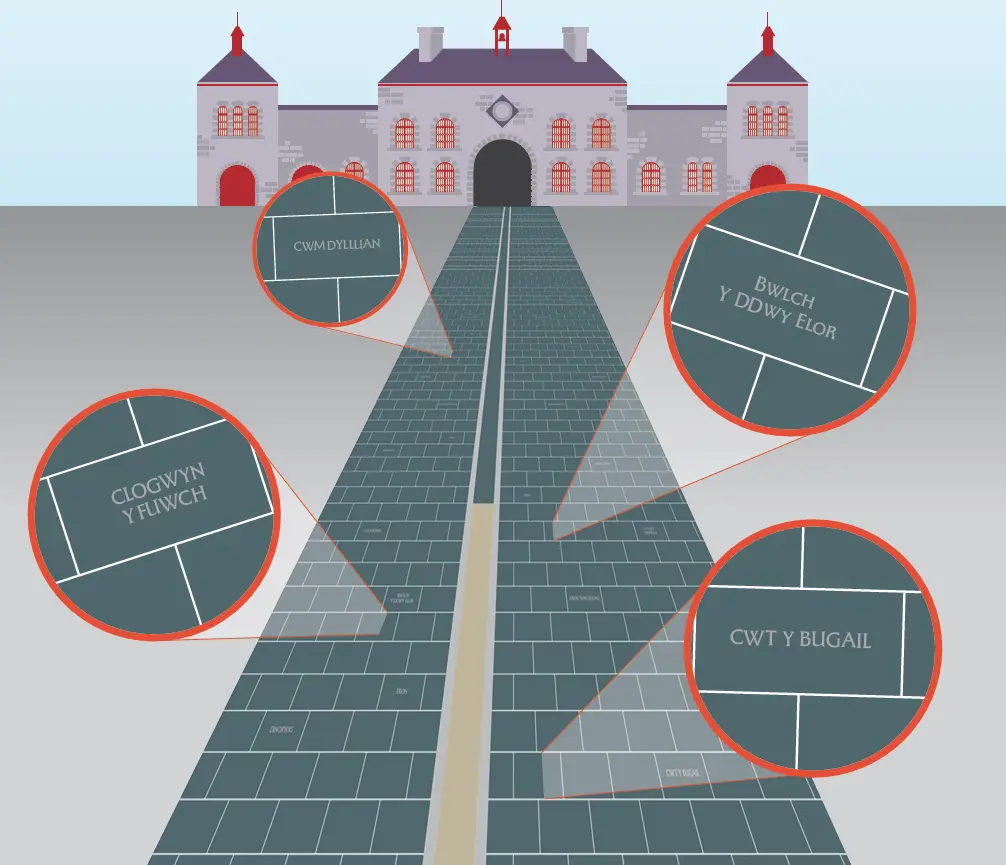
How do cultures, histories, and language sit within the open arms of this valley, swim with the rivers, and dance across the etched cliff faces? These are some of the things I have been ruminating on as a Heritage Officer - neu Swyddog Treftadaeth - in Dyffryn Nantlle over the past few months. See Fig 1.

I arrived to this role at Yr Orsaf community hub feeling a post-uni-lostness; I had returned to my childhood home near Clynnog after spending time away in Oxford and felt pretty rusty in my Welsh. Thus, working as a heritage officer in Dyffryn Nantlle was a time re-turn and re-connection. 

Our first session - Noson Hen lunia/Old Pictures Evening - was a chance to open up conversations about heritage. It was golden to hear people’s pride and passion for their sense of place, and to see such care that people had for material pieces relating to their past.  See Fig 2.

Seeing old images of Penygroes shocked me: a bustling place of independent shops, trains, quarrying, a cinema, when compared to its relative understatedness now. Someone told me about the fun they had dancing and singing at farms for Noson Lawen and the excitement of meeting people from different towns at Clynnog disco. Beyond nostalgia, seeing how Dyffryn Nantlle has changed over time also gave me excitement at the feeling of possibility and was a reminder of the importance of ongoing community work happening at places like Yr Orsaf. See Fig 3.

Our Noson Streuon - storytelling night - was bustling with eager listeners for Gwynn and Gethin’s tales. I was mesmerised by Gethin’ delicate, unfurling image of the oak sampling sprouting up before the grand tale of Blodeuwedd and Lleu Llaw Gyffes. What felt most meaningful were that the stories were rooted in this landscape - that the story of the tylwyth teg unfolded on a farm just across from the top of the high street and another one just down at the river I cycled passed on the way to work. It added cultural depth to my internal map of home. I had never been to a storytelling yn Gymraeg. It felt right to hear these stories in the language of which they had been borne, the language of this land; a powerful holder of heritage. 

Heritage is a personal thing, where complex feelings towards it are shaped by particular moments and experiences. As a heritage officer, this means a humble approach that recognises that people already have their own heritages and connect to them in a range of personal ways.

Our collaging afternoon with year 6 from Ysgol Bro Lleu and our fortnightly coffee club for older members of the community - BeNawnNi - was an example of the reciprocal learning that can emerge from intergenerational exchange. Many of the older members were unsure about collaging since it was something that they did not have much experience of. Meanwhile, the primary school kids got stuck right in and took up the opportunity to show their older counterparts what they were doing. They worked together to collage their favourite places in Dyffryn Nantlle and talk about what it meant to them. See Fig 4. 

Our three open evenings in May - Nosweithiau Treftadaeth - provided a space for people to share their knowledge and experiences of living in Dyffryn Nantlle. I got to hear about captivating things that have punctuated people’s lives: the trembling cupboards of the 1984 Llŷn Peninsula earthquake (5.4 Richter scale!), traces of old ways of land ownership in the landscape such as names carved on rocks, and a familial pride at the sight of old farming equipment such as maen melin (millstones). Even mysterious, ghostly musings of a flying circus act that once came to Dorothea Quarry. See Fig 5. 

From these heritage events arose particular challenges. How, for example, to engage secondary school age people in heritage? I found the recent work by Gwyrddni with local schools on the theme of climate change very inspiring. Their work culminated in a bright, big book and a beautiful range of singing and poetry performances for the crew at BeNawnNi. What struck me was that their work not only touched on themes of climate change but were also deeply rooted in a sense of place and heritage. This performance showed me the opportunities that arise when we approach heritage with loosened meanings, one that does not wholly have to be fixed on the past, but is an ongoing process; a conversation that encompasses practices and ways of living that are important for the future. 

Following this theme of heritage as an ongoing process, later workshops explored heritage by actively doing arts and crafts. We had weaving and natural dyeing sessions with the artist Ella Jones, made sculptural portraits of local famous figures with Luned Rhys Parri, and braided willow baskets with Eirian Muse while listening to Welsh folk on BBC Radio Cymru. See Fig 6. 

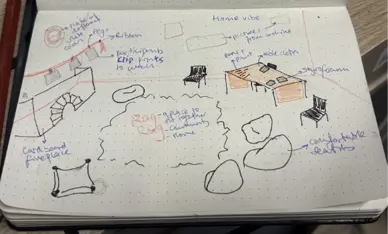
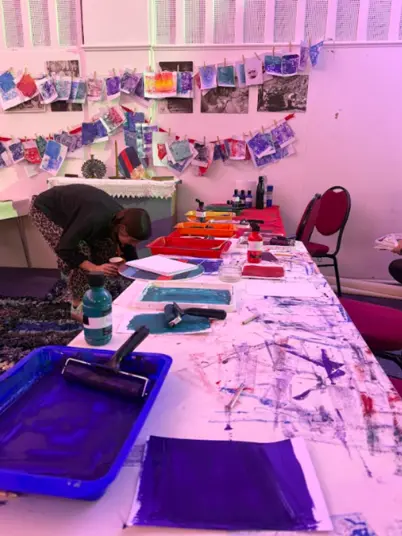
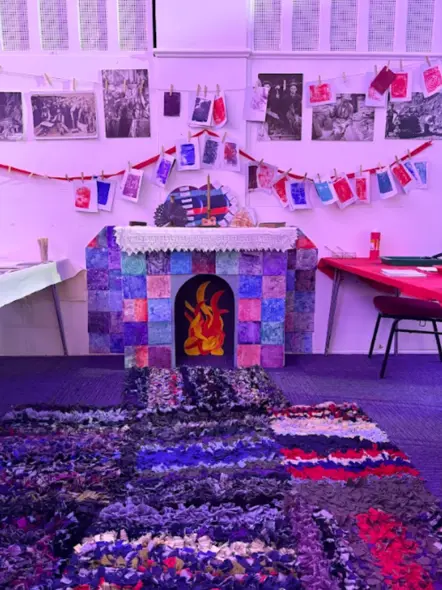
Following a theme of wool, we had a series of sessions on natural dyeing woollen embroidery threads with a local community textiles company called Tecstiliau, and a bowl felting workshop with Nicole LeMaire. Angharad Tomos kindly showed me poems along the way which were relevant to the agricultural love of place that has been nurtured in this area. Reading them during the workshop provided a lovely framing for reflecting on the relationship between wool and this landscape while working with our hands. Many people mentioned grandmothers who had been skilled quilters, embroiderers and makers of clothing. See Fig 7 and 8. 

Heritage will continue to be cultivated in Dyffryn Nantlle. The very active ‘Criw Kate’ group in Penygroes are organising a festival for the prominent writer - Kate Roberts - at Cae’r Gors in September. I am particularly excited about an old place names project which we started off in August with a session for collecting field names from farmers. Place names - like ‘mini pdf files’ - give interesting and surprising clues about past land use, topographical features like water sources, or can even connect to folktales. Names can change with different ownership or be passed down for generations. Elinor Gwynn and Carwyn Graves - who recently did a talk about the ‘Iaith Yn Y Tir/Language in The Land’ at Yr Orsaf - have been particularly inspiring in this regards; attending to the ways relationships with land have been carried in Cymraeg - is key to making a more just future which respects the beautiful ways that people have inhabited places across time. 

I am grateful to have been entrusted with people’s memories and stories over the past few months. To braid these strands together, I hope that we can make something creative and collaborative with these place names, such as a quilt or an embroidery piece, to celebrate their beauty and rootedness in this landscape.

Keep an eye out for others upcoming blogs, showcasing the amazing work that’s been happening across all our participating communities. 

Wales REACH is made possible with The National Lottery Heritage Fund. It is a partnership between thirteen organisations and is led by The Open University and Amgueddfa Cymru. It is funded with a grant from the National Lottery Heritage Fund. The current phase started in autumn 2024 and is scheduled to run until autumn 2026.