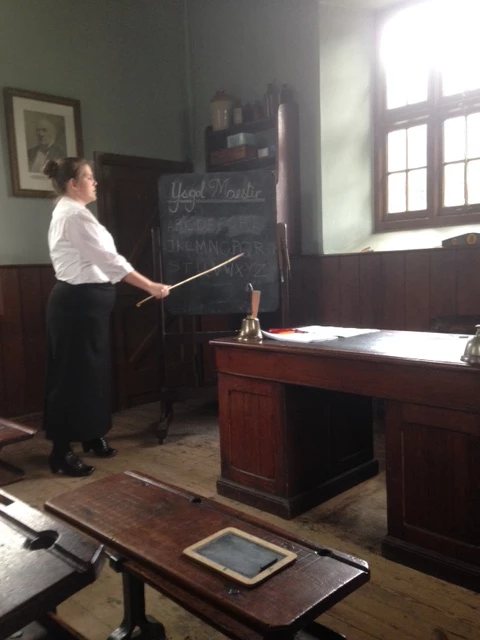
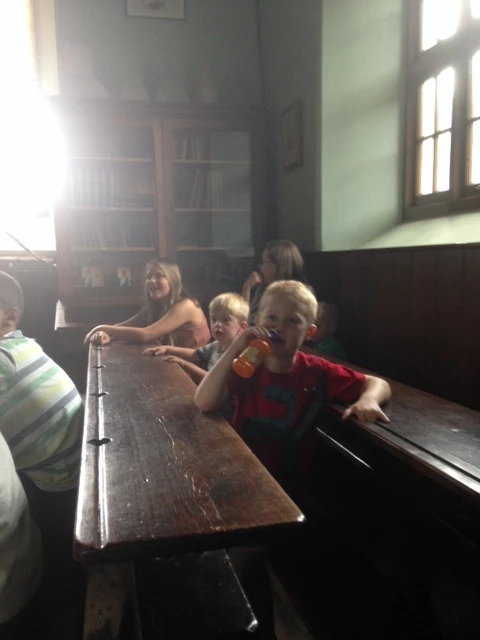
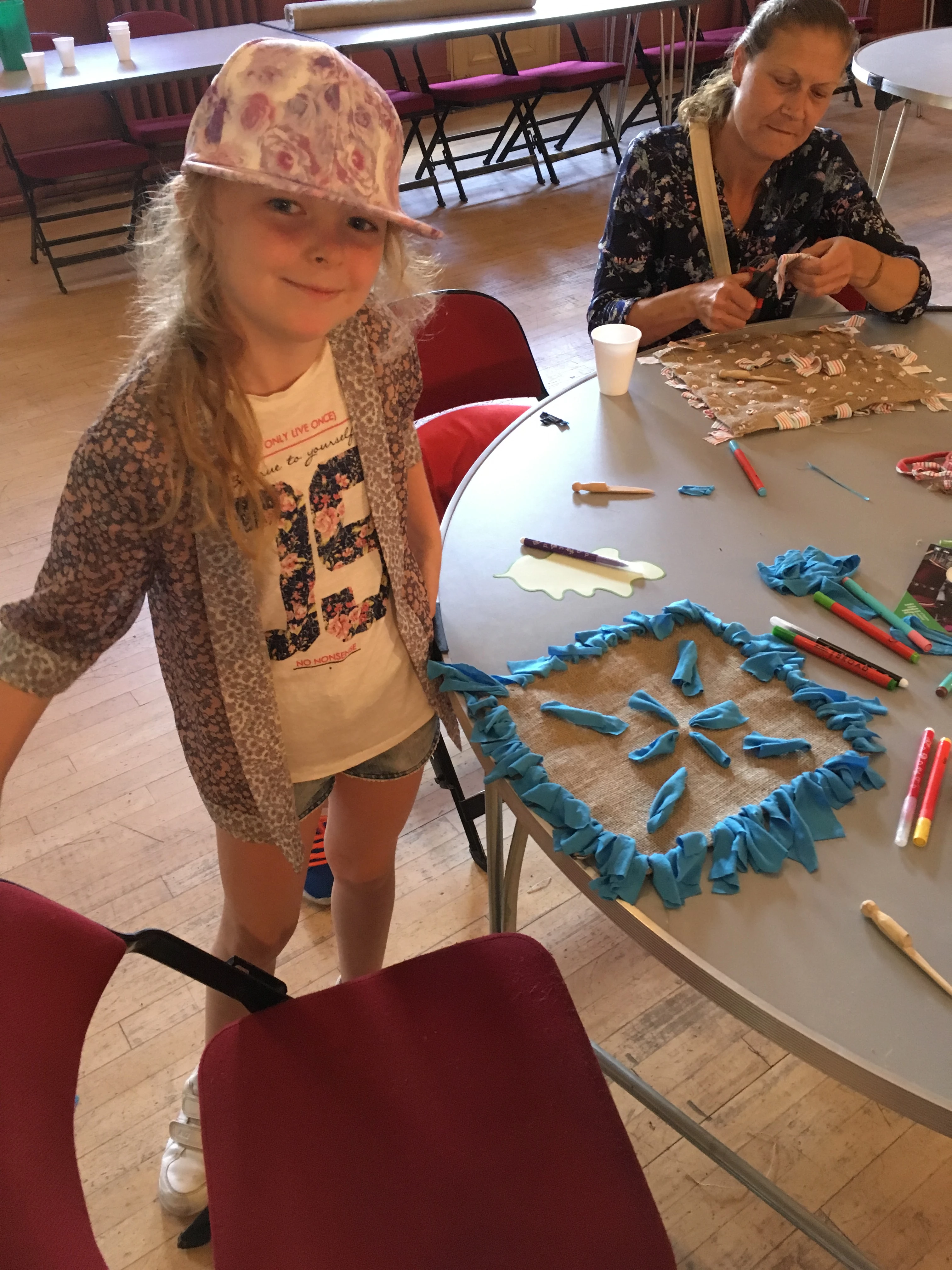
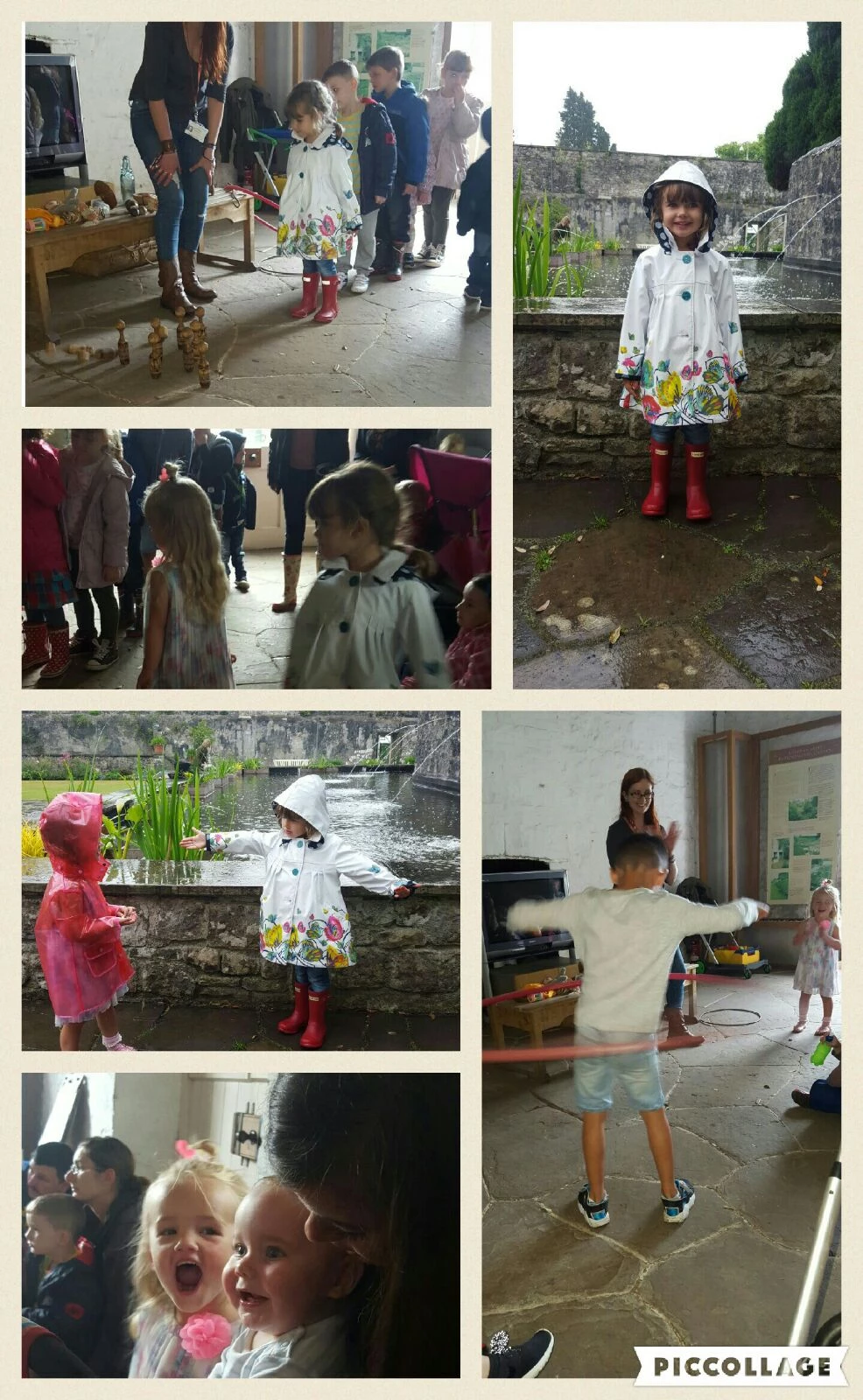
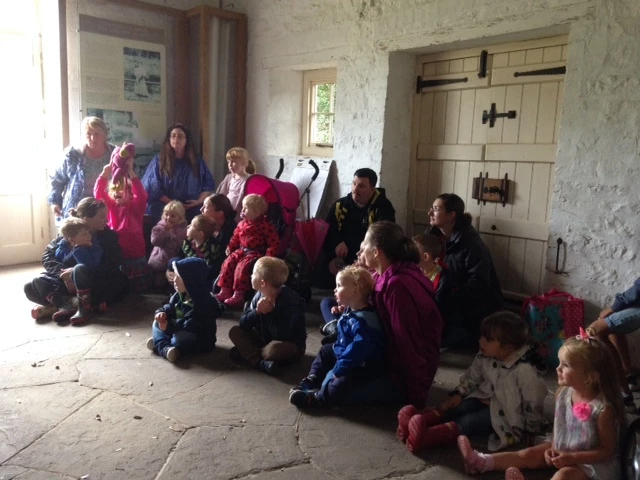
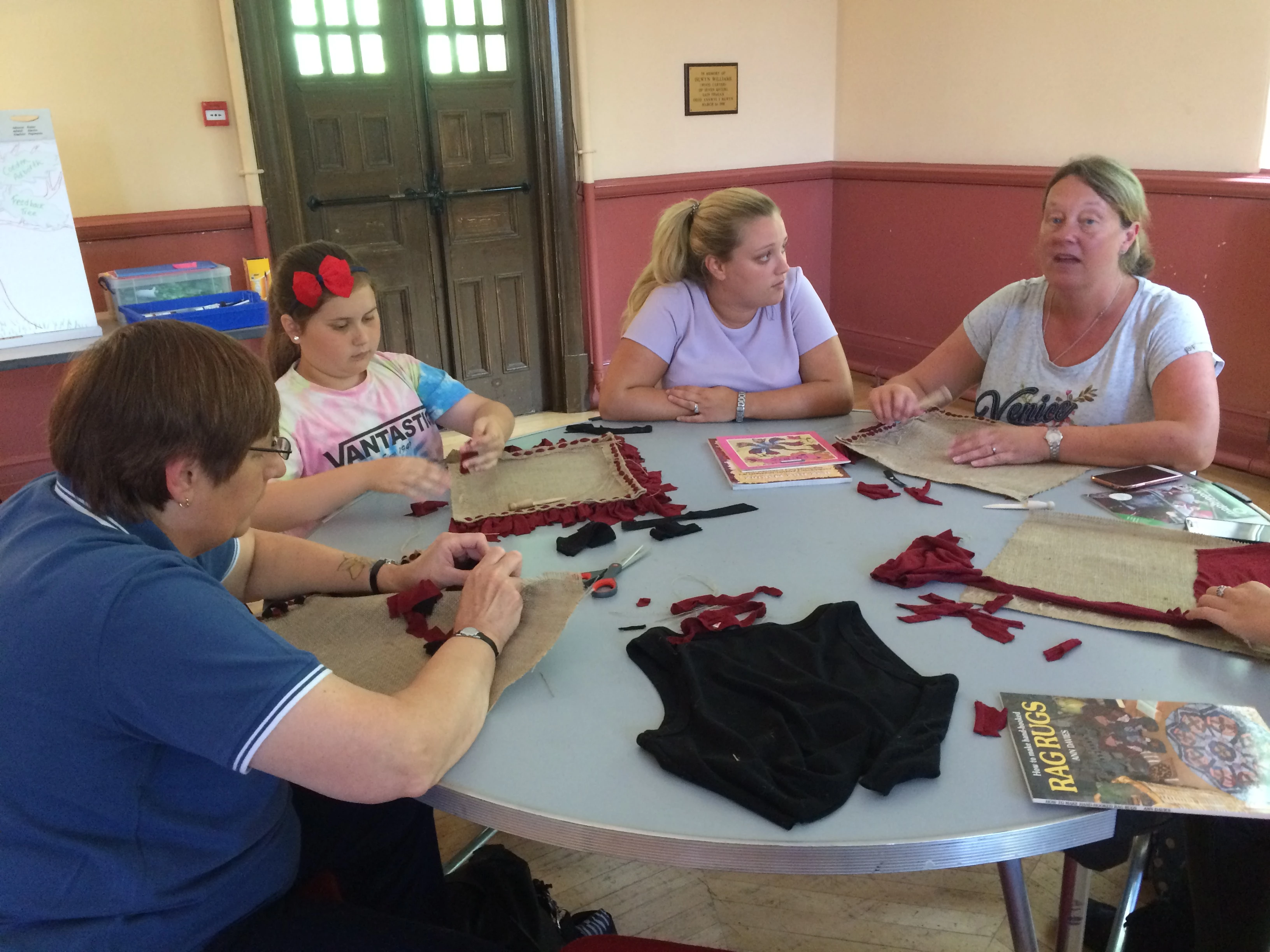
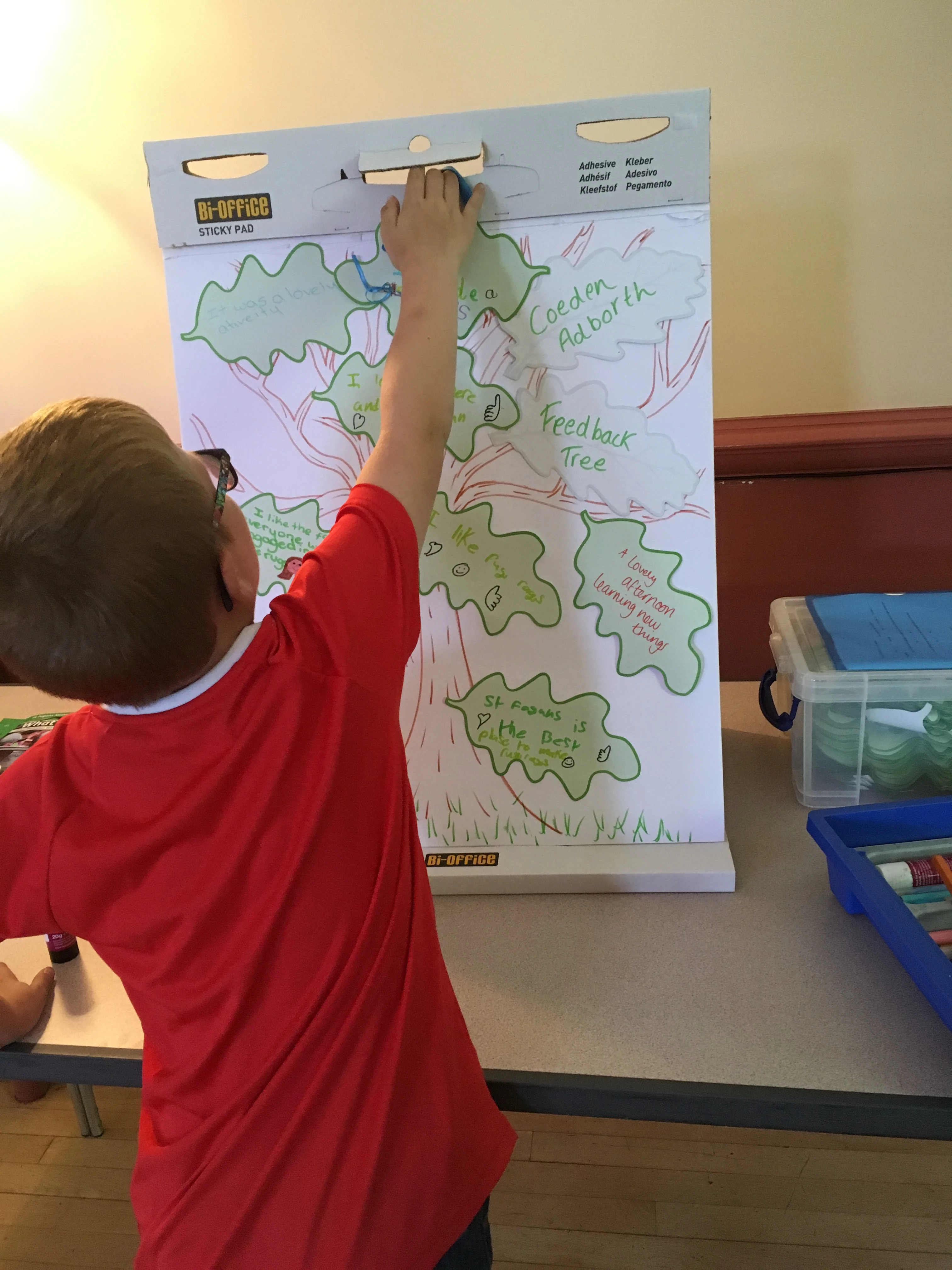
Community Family Learning at St Fagans Loveday Williams, 9 August 2016 Over the summer we are working with ACE Action Ely Caerau (Communities First) to put together a series of fun and accessible family workshops and activities for local families. The programme was developed ahead of time with ACE and includes sessions such as:Traditional ToysWash Day with Beti BwtRag Rug MakingLife in the Iron AgePond Dipping PotterySo far we have had lots of fun making rag rugs, learning about and playing with traditional toys, discovering what life was like for our ancestors living in the Iron Age and experiencing what it was like to go to school in Victorian Wales. Making Rag Rugs
National Museum Cardiff’s 1980 sculpture exhibition for blind visitors Stephanie Roberts, 8 August 2016 Did you know that an exhibition of sculpture for the blind was held at National Museum Cardiff in 1980?Neither did I until a colleague of mine mentioned it recently. Intrigued, I did some digging to find out more.The exhibition was the first of its kind in the Museum. It brought together 10 sculptures of different materials and textures which blind and visually impaired visitors were invited to touch. Rodin's 'Illusions Fallen to Earth', and Frederic Leighton's 'Needless Alarm', which shows a nude female figure startled by a frog, were among the works on display.To protect the works, a thin layer of burnished wax was applied and visitors wore gloves with the fingertips cut off to reduce the risk of damage from rings or watches. It would be interesting to know what conservators today would advise!Rubber mats and carpets were used to help lead visitors to the plinths, and the Museum's Friends were on hand to guide visitors around and engage them in conversation about the works.To complement the exhibition and add a multisensory dimension there was also a display of seasonal scented plants and spices from the Botany collection!Even though this exhibition was held almost 40 years ago, it is interesting how little has changed. All of the challenges they faced back then – how to strike a balance between conservation and accessibility, how to help orientate visitors, and introducing a multi-sensory element – are ones we’ve been thinking about recently.We haven’t got a new exhibition planned (although it’s something to think about for the future!), but we have been working with members of Cardiff Institute for the Blind on a series of audio description tours. These tours will be offered to blind and visually impaired visitors starting this October.
Building on strong foundations: Oakdale Workmen’s Institute Sioned Williams, 1 July 2016 In 2017 St Fagans National History Museum will be celebrating the 100th anniversary of the Oakdale Workmen’s Institute. The building was at the heart of Oakdale village community for 80 years until it closed in 1987 and then moved to St Fagans. Exactly 100 years ago, on 3 July 1916, the work of building the Institute in Oakdale began when a ceremony was held to lay the first foundation stones. This type of ceremony is common when large public buildings are built to mark the beginning of the main construction phase. During the ceremony, a trowel is used to place the mortar where the foundation stone is laid and a trowel is then engraved to commemorate the ceremony.Two foundation stones were laid at the ceremony for the Oakdale Workmen’s Institute in 1916, one on either side of the main entrance door. The stone on the left was laid by Harry Blount on behalf of the workmen of Oakdale Colliery and the stone on the right by Alfred S. Tallis representing the Tredegar Iron and Coal Company, owners of the colliery.Harry Blount was one of the original members of the Oakdale Workmen’s Institute Committee, formed in 1913. Their meeting place in the early years was in the ‘Huts’, the old barracks which once accommodated the workers of the Oakdale Colliery shafts. In the minutes of the Committee it notes that on 6 January 1914, Harry Blount proposed that they should ‘proceed with the new Institute at once’. At the same meeting Arthur Webb was appointed as the architect and within a month his sketch plan had been accepted by the Committee.Alfred S Tallis, Managing Director of the Tredegar Iron and Coal Company, was involved with the Institute from the beginning with the promise of a financial loan for the building work. He was also the main promoter of the idea of a model village at Oakdale for the company’s workforce with modern housing built in a rural area, away from the colliery. The work of building the new village began in 1909 and the first street, Syr Dafydd Avenue, was completed in 1913 and designed by the Institute’s architect, Arthur Webb, Tallis’s brother-in-law. The minutes of the Committee briefly mentions the arrangements for the ceremony held on Monday 3 July 1916; there was to be a cold lunch at the Oakdale Hotel with the full Committee attending and the Oakdale Colliery Band were to play around the village half an hour before to advertise the event. The ceremony itself was at 5 o’clock and Sir Charles Edwards, M.P. was asked to attend and to speak. The two foundation stones can still be seen either side of the Institute’s main door at St Fagans and the commemorative trowels from the ceremony are displayed on the wall of the Institute Committee Room. Both trowels were donated to the Museum in the months before the Institute re-opened at St Fagans in 1995, by Harry Blount’s grandson and by Alfred Tallis’s grand-daughters.In 2017, the year of the centenary of Oakdale Workmen’s Institute, the Museum is planning to bring the building alive once again, to reflect its original purpose as a place for the community. We’ll be updating you on the project as we go so look out for #Oakdale100 news in the coming weeks and months.This project is supported by the Armed Forces Community Covenant Grant Scheme.
Museum Visitors and Their Fingers - Gallery Touchscreen Statistics (VADU part III) David Thorpe, 28 June 2016 Visual Audio Display Units (VADUs) still exist in the National Museum Cardiff galleries. We know, because with almost every finger touch on the touchscreen, it sends a little signal to the web server that includes a piece of information describing the last interaction (i.e. ‘please play the video’, ‘please display the menu list’). We record all those messages, firstly to make sure the kiosk is actually working day-to-day and secondly to find out which aspects are popular or not popular, knowledge that is useful to guide future kiosk development. Figure 1, a cartoon of kiosk development process - an attempt to show the separation from the web server, while maintaining rudimental communication from the gallery space (satellite to mothership). Each message is sent as an AJAX call (asynchronous JavaScript and XML) from the kiosk, which is usually a standalone bundle of files running through a web browser (HTML, CSS & Javascript files). The main bulk of the kiosk development is carried out through our in-house web CMS (called Amgueddfa CMS) on a computer that mirrors the public web server, it’s only before the launch that all the necessary files are copied over to the computer in the exhibition space (wrapped up as an ‘App’), where it remains like a satellite away from its mothership (the web server). Beep beep, beep beep.Patterns of FrequencyA single recorded kiosk command is not particularly exciting by itself but when there are greater numbers, patterns emerge. For instance, if we record each time a video is started on the kiosk we get a round number to how many people were interested in the subject matter of the video (information gathered before they had seen the video). If we also record when people stop playing the video we can start to distinguish patterns in their viewing behaviour. Judging by the average video length played the majority of the visitors saw less than 39% of the total video length, with the longest average being three minutes 17 seconds. Of course, there were also lots of visitors who watch the videos until the end; as you can tell by the 'happy-tail' patterns formed by visitors reaching the film credits at the end of the film (figure 2). Figure 2 shows all video stop points for five videos presented as scatter plots against the video length in minutes. Judging by the average video length played, which is shown in green - the majority of the visitors saw less than 39% of the total video length, with the longest average being three minutes 17 seconds. Of course, the there were also lots of visitors who watch the videos until the end (as you can see by the 'happy-tail' patterns formed as they reach the film credits at the end of the video), but on the whole I wouldn't recommending placing feature length films on kiosks. Figure 2 shows the raw data stored within a database table on the web server. Overview of the NumbersI signed-off my last blog with a promise of data relating to the Wi-Fi audio tour during the Chalkie Davies exhibition last year, which I’m including below. To placing the Wi-Fi statistics within the gallery space, I’ve also gathered data from the four large screen kiosks in the exhibition against the monthly visitor figures.It is immediately clear that the four large kiosks were very popular - they contained a great deal of curated content which included a composite NME magazine, Chalkie Davies film, Youth Forum audio interviews, a comments section and What’s On calendar. I can imagine the relative attraction and easy access of the kiosks goes a long way to explain the comparatively lower figures of the Wi-Fi audio tour, but let us not be downbeat - the feedback received from the visitor survey about the Wi-Fi was positive. 93% of survey monkey results either felt they ‘learnt a lot about the exhibition’ or ‘it improved their experience as a visitor’ - it must be noted that the number of people who filled in the survey and used the Wi-Fi audio tour was extremely low compared to the overall gallery visitor figures (12 / 42,000), but the survey morsel is still very positive. However, I would be cautious in suggesting an Wi-Fi audio tour for short-run exhibitions, mainly due to the diminished numbers compared to the insitu kiosks - the Wi-Fi audio tour could gain popularity following a less exhibition-specific avenue (e.g. providing audio descriptions for the top ten popular objects), which would allow the audio catalog to be built gradually and remain available all year around throughout the museum.Future BeepsTo conclude, we have been collecting kiosk statistics since 2011. The storage method may change, we could additionally store the data on Google servers via Google Analytics, but however the beeps are stored the way visitor interact with museum kiosks will continue to guide the future kiosk development. Table showing all the touchscreen events for the Chalkie Davies exhibition with visitor figures for the gallery: Large touch screen x 4 Language 7 May 2015 June 2015 July 2015 Aug 2015 7 Sept 2015 Video (film plays) 1717 1085 1735 2833 352 7722 Chalkie Interview EN 1280 1044 1362 1953 338 5977 Chalkie Interview CY 124 123 164 237 38 686 NME magazine EN 1209 961 1205 1841 355 5571 NME magazine CY 60 56 72 148 17 353 NME Next Page 1974 2119 2099 2324 530 9046 NME Previous Page 1303 1025 1098 1666 463 5555 NME Zoom Photograph 985 681 909 1317 430 4322 Music Memories EN 1409 1076 1464 2311 378 6638 Music Memories CY 71 60 95 138 17 381 Music Audio (track plays) 1766 1583 1806 2410 486 8051 Comments EN 881 702 840 1383 230 4036 Comments CY 71 54 78 105 11 319 Comments submitted 124 131 168 260 30 713 What's On EN 783 684 847 1335 241 3890 What's On CY 55 50 63 126 12 306 Totals 12509 10409 12907 18721 3465 63,566 Wi-Fi Audio Tour Using their own mobile devices Language 7 May 2015 June 2015 July 2015 Aug 2015 7 Sept 2015 Audio (plays) EN 316 212 262 394 124 1308 Audio (plays) CY 10 3 4 4 1 22 Totals 326 215 266 398 125 1,330 Number Gallery Visitors 7 May 2015 June 2015 July 2015 Aug 2015 7 Sept 2015 Totals 9108 7107 10688 14130 1961 42,994
The Recent Story of Bryn Eryr! Ffion Davies, 7 June 2016 Our new Iron Age farmstead, Bryn Eryr, holds a recent story as well as the fantastic histories connected to it. Over the last few years over 2,000 volunteers have been working quietly at St Fagans Museum building it from the ground up. Our volunteers, with our staff, have debarked the wood for the walls and roof, built the clay walls, grown the spelt for the thatch and have even thatched the roof. It has truly been built from the ground up by the volunteers!You may think we have finished, but that’s only half the story; since the building has been completed many volunteers have been helping us decorate the inside: our Youth Forum have recently helped us build an Iron Age bread oven, staff from across different departments have helped us build a loom, and over 1,000 visitors have helped us make string out of stinging nettles. Our current project involves volunteers from The Wallich who are helping us to create a garden that will grow vegetables and herbs that we can use in school workshops and events.Our old Celtic Village was a favourite for many of our visitors and we hope that Bryn Eryr will become a favourite too! So the next time you come and visit the Museum just remember that the history of Bryn Eryr also holds a recent story that involves over 2,000 people donating their time to help tell the history of the Iron Age!Bryn Eryr wouldn’t be possible without our volunteers and so in the spirit of Volunteers’ Week we wanted to say Diolch - Thank You to all 2,000 of you!(Bryn Eryr is currently open during weekends and school holidays and for school groups)