First World War

A Night at the Opera: The Gown of Madame Leila Megàne

On 7 July 2015, here at St Fagans, students from the Royal Welsh College of Music and Drama will perform a series of 5 operatic arias inspired by the story of St Fagans Castle during the First World War, as part of MAKE AN ARIA.  

Unlike today, early twentieth century Wales was not considered a hotbed for operatic endeavour, musical Wales was associated with male voice choirs, brass bands and eisteddfodau.

One report on the subject of opera from 1910 even went so far as to say:

It has been frequently said that really good music is not appreciated by the people of Wales, for whom erotic musical comedy represents their highest tastes. Carmarthen Journal and South Wales Weekly Advertiser, 4 February 1910

Another newspaper reported a few years later:

The opera is of the theatre, and Wales still has its prejudice, I do think that Wales misses much by this attitude of aloofness…Wales has no further to go in choral singing. What we have to do now is to launch out, to widen our horizon. Cambrian Daily Leader, 11 April, 1913

However, on the global, cosmopolitan opera scene of the early decades of the century, there was one Welsh name on everyone’s lips, the mezzo-soprano, Madame Leila Megàne, known to her friends and family as Margaret Jones. Born in Bethesda in 1891, later to live in Pwllheli and Caernarfon, her roots were firmly planted in Wales.

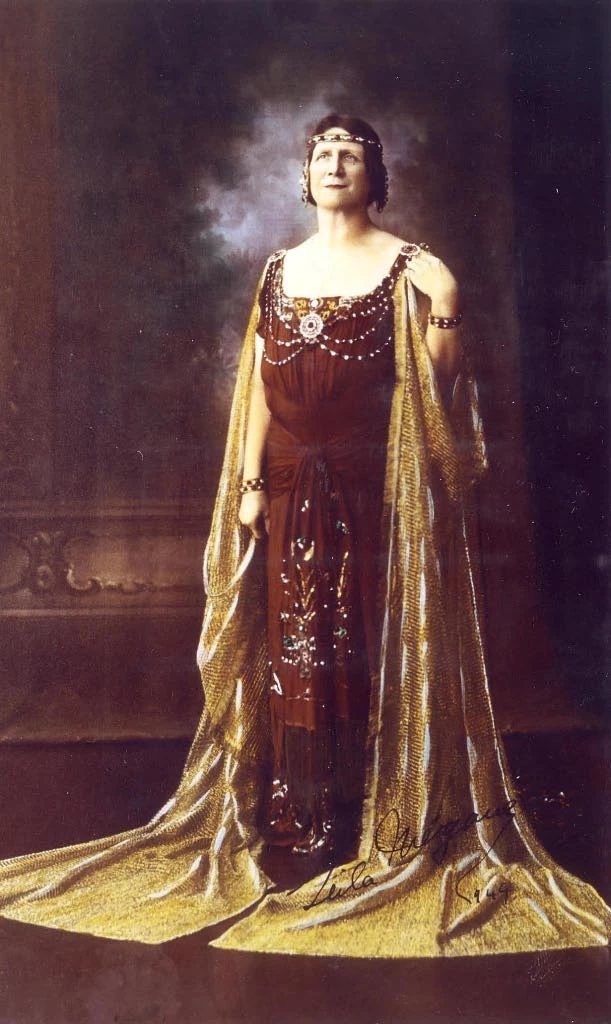
She was trained in London and Paris before the First World War and later joined the company of the Grand Opera and toured extensively with them. For the Grand Opera’s production of Samson and Delilah in 1919 a new gown was commissioned for Leila. Before her death she gave the gown and its accessories to St Fagans National History Museum. As seen in the picture, the gown is a vivid orange with elaborate embroidery of purple, red, green and yellow.

The dress was made by Marie Muélle, arguably one of the best theatrical costumiers of the time. It was Muélle who made the iconic Ballets Russes costumes designed by the legendary artist Henri Matisse in 1920.

The New York Times reported in 1915:  

Muélle was known to every singer and every other stage favourite, too, who wants a distinctive Paris costume in which to create a new role. The New York Times, April 25, 1915.

Following the war, Leila returned to Pwllheli to perform at a special victory concert, much to the excitement and delight of the town. According to the newspapers of the time, the residents of Pwllheli were in such admiration of her that they queued eagerly for hours just to shake her hand.

Her professional career which captured the imagination of the world, was unfortunately short lived and soon after the First World War had ended she returned to Wales to live in comparative obscurity.

The bespoke Muélle gown however, remained very special to Leila throughout her life, and when she’d sing at concerts at local venues later in her life, she would always wear the dress whenever she sang arias from Samson and Delilah.

If Leila’s story has whet your appetite for opera, free tickets are now available for MAKE AN ARIA on 7 July 2015. Experimenting with opera and performance in the grounds of St Fagans Castle. An opportunity not to be missed. See What's On for further details.
@DyddiadurKate - Golchi Gwrthbannau

Yn ei dyddiadur heddiw, cyfeiria @DyddiadurKate fod “Win yn mynd i’r Pentre i help Grace olchi gwithbannau.”

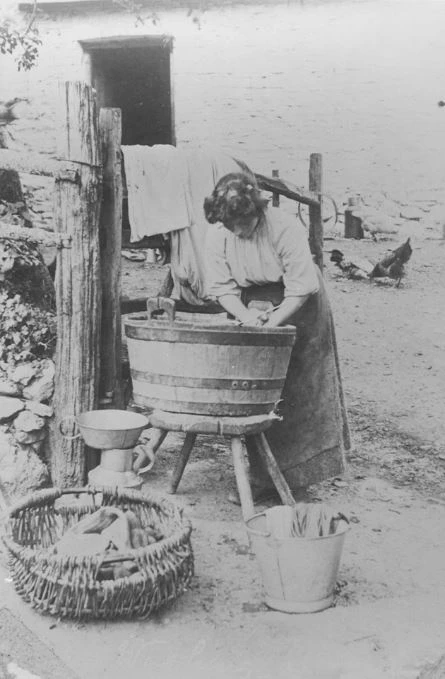
Gorchwyl tymhorol oedd golchi gwrthbannau (blancedi). Tasg gweddol hawdd i ni heddiw â pheiriant golchi wrth law, ond nid felly yng nghyfnod Kate. Yn anffodus, ni ddisgrifiwyd y dasg arbennig hon wrth i Kate drafod prosesau golchi gyda Minwel Tibbot, nôl ym 1970. Fodd bynnag, ceir cyfeiriadau lu yn yr archif sain at y dasg o olchi blancedi, cwrlidau a llenni.

Gan fod gofyn am gymaint o ddŵr i’w golchi, byddai nifer fawr o wragedd mewn ardaloedd gwledig yn golchi’r blancedi yn yr afon, fel yr hen Beti Bwt druan. A pham lai? Roedd hi dipyn haws mynd â’r offer a’r eitemau oedd angen eu golchi i’r afon, yn hytrach na chario bwcedi di-ri o ddŵr i’r tŷ. Wedi cynnau tân i gynhesu’r dŵr, byddai’r blancedi’n cael eu golchi dwywaith mewn dŵr cynnes, gan eu rhwbio’n ofalus gyda sebon golchi. Dodwyd y blancedi yn yr afon i gael gwared ar y sebon, yna’r cam nesaf oedd gwasgu’r dŵr. Roedd angen bôn braich dau berson i wneud hyn, y naill yn gafael ym mhob pen ac yn gwasgu yn groes i’w gilydd. Wedi’r gwasgu, ysgwyd y blancedi i adfer y gweadedd gwlanog a’i rwystro rhag ‘matio’ wrth sychu ar lwyni gerllaw.

Does ryfedd fod angen help ar Grace heddiw ‘ma!


Dyddiadur Kate: ‘Oes y dillad gore’

Ar 18 Mehefin 1915, cynhaliwyd ‘Sassiwn Plant’ yn Llidiardau, ger y Bala. Er nad oedd hi’n bresennol, fe wnaeth Kate Rowlands nodyn o’r achlysur yn ei dyddiadur:

Anfon dipyn o bysgod adref. Sassiwn Plant Llidiardau. Emrys yn cael mynd yno. Anwen ag Ella yno yn y Sassiwn Plant. Diwrnod hynod o braf. Mary Lizzie Pandy yn cael tarawiad o appendicitis.

Ar wefan Papurau Newydd Cymru Arlein, mae modd dod o hyd i erthyglau di-ri am gyfarfodydd o’u math yng nghapeli’r ardal. Yn Sasiwn Plant Moel-y-garnedd a’r Parc yn Mehefin 1914 holwyd y plant yn ‘fedrus ac i bwrpas’ am y 6ed a’r 7fed bennod o’r Rhodd Mam. Gyda’r nos, rhanwyd gwobrau a thystysgrifau, a chyn gorffen ‘anrhegwyd bob un o’r plant a ‘bun’ cyn iddynt gychwyn adref.’ Trît derbyniol ar ddiwedd diwrnod hir ddywedwn i!

Mewn cyfweliad llafar â’r Amgueddfa yn 1969, cyfeiriodd Kate Rowlands at bwysigrwydd cael dillad newydd ar gyfer rhai o brif ddigwyddiadau blynyddol y capel. Dyma ddyfyniad o’r cyfweliad dan sylw, gyda chyfeiriad penodol at un Sasiwn Plant cofiadwy o'i phlentyndod:

Lynn Davies: Oedd hi’n arferiad cael dillad newydd ar gyfer achlysuron arbennig?

Kate Rowlands: Diar oedd! A chadw dillad fyddech chi’n gael at achlysuron felly. Cadw nhw’n ddillad gore ynde. Oedd hi’n oes y dillad gore yn siwr yn de. Fydde nhw ond yn dod allan ar gyfer rwbeth hynod o bwysig ynde… cwarfodydd yn y Bala a rwbeth felly yn de… gwyl yr ysgol sul, sassiwn plant a rwbeth felly ynde wch chi… Dw i’n cofio ni’n dod i fyny ryw sassiwn plant o Llantisilio a wedi cael popeth ynde, a het wen reit smart. A wedyn mewn wageni o nhw’n mynd … a mi ddoth hi’n law mawr. Pan o’n i’n mynd adre, het goch o’genai. O’dd y papure’r trimmings wedi colli lliw i gyd! Dyne fo, dodd honno dda i ddim byd wedyn ynde.

A ninnau bron ar ddiwedd hanner cyntaf @DyddiadurKate, gobeithio eich bod yn mwynhau'r cynnwys hyd yn hyn. Mae llawer mwy i ddod, y llon a'r lleddf, felly lledaenwch y gair a chadwch lygad ar y blog.


Dyddiadur Kate: ‘Week end’ yn Rhyduchaf

Yn ei dyddiadur echddoe, soniodd Kate ei bod yn mynd i fferm y Fedwarian, Rhyduchaf, am y ‘week end’. Yn ddiweddar mae hi hefyd wedi bod yn 'white washio' ei llofft ac yn gwibio o le i le ar ei 'bike'. Ar yr olwg gyntaf, mae geiriau fel hyn yn edrych yn chwithig mewn dyddiadur wedi ei leoli mewn cymuned a chyfnod o'i fath. Ond o gofio cefndir Kate, efallai nad yw hi’n syndod iddi fabwysiadu rhai ymadroddion Saesneg fel rhan o’i iaith bob dydd.

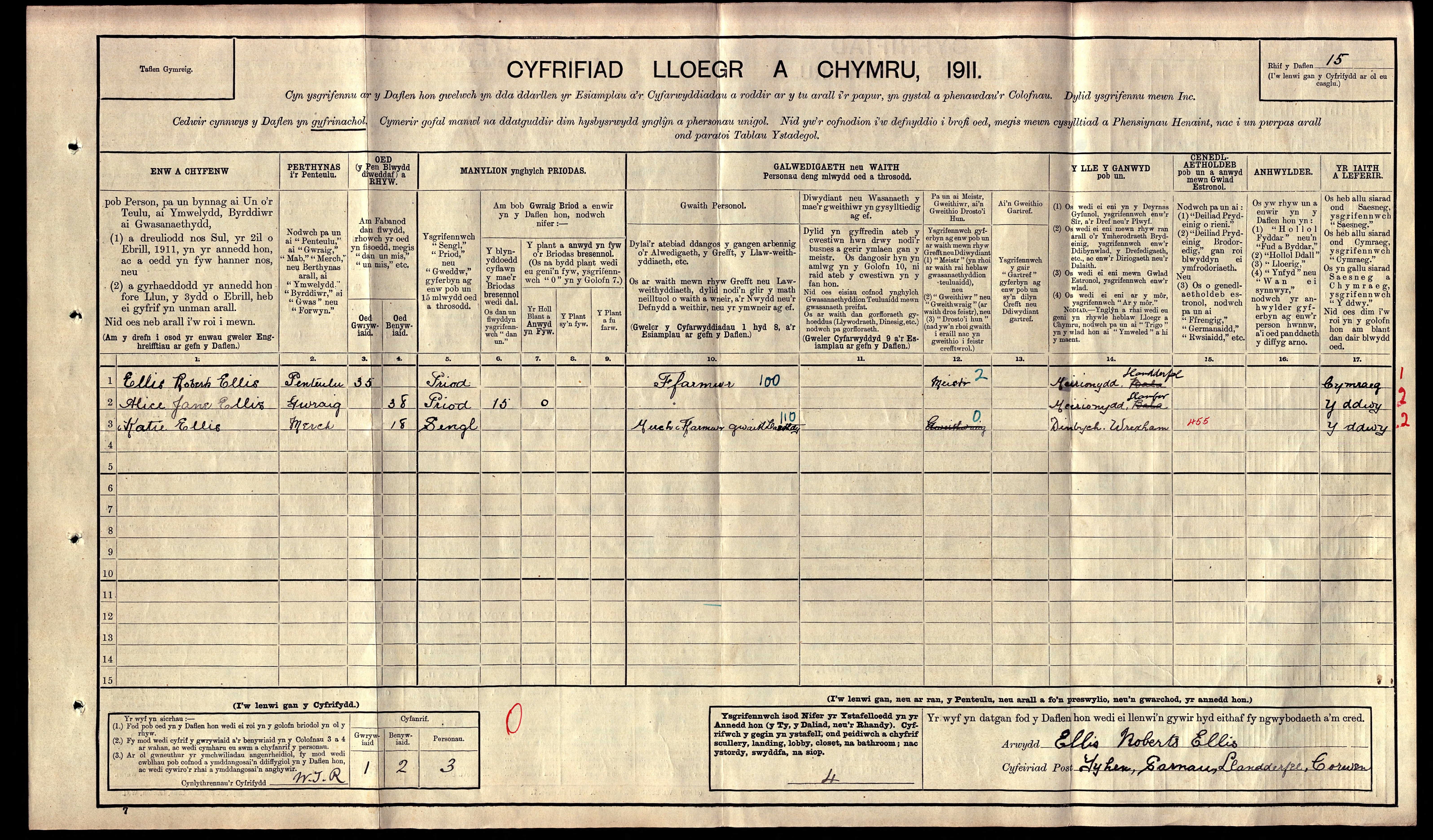
Mae cyfrifiad 1911 yn dangos ei bod yn medru’r ddwy iaith – y Gymraeg a’r Saesneg. Felly hefyd ei mam, Alice Jane Ellis. Er hyn, Cymraeg yn unig oedd iaith ei llys-dad, Ellis Roberts Ellis. Os gofiwch chi, ganwyd Kate yn y Brymbo, ger Wrecsam, ble roedd ei thad – David Williams – yn gweithio yn y diwydiant dur. Fel ei mam, roedd yntau hefyd yn frodor o Gefnddwysarn, ond bu farw mewn damwain yn y gweithle pan roedd hi’n naw mis oed. Yn ddiweddarach, ailbriododd ei mam ac aeth y teulu bach newydd i fyw i Lantisilio yn 1897. Roedd Kate yn bum mlwydd oed ar y pryd, ac yn ddeuddeg pan ddychwelodd y teulu i Feirionnydd. Dyma ei hatgofion o’r cyfnod:

Mi ailbriododd mam a mi athon ni i fyw i Llantisilio i ochor Llangollen wedyn yn de… Sisnigedd iawn o’dd fano. A dw i’n diolch am hynny heddiw hefyd ynde, i mi gael yn nhrwytho yn y Saesneg i fynd drwy’r byd… Doedd dim [Cymraeg] tu allan i’r ty.

Wrth wrando ar lais Kate Rowlands ar y tapiau sain sydd yma yn Sain Ffagan, mae’n rhyfedd meddwl amdani’n siarad Saesneg o gwbl! Yn ôl ei theulu, bu Kate yn gweini yn Lerpwl yn y blynyddoedd cyn 1915 a chafodd flas mawr ar fywyd dinesig. Roedd hi’n canlyn Bob Price Rowlands ar y pryd (ei gwr yn ddiweddarach) a bu yntau hefyd yn gweithio yn nociau Lerpwl am sbel. Mae ei ddyddiadur o'r cyfnod ym meddiant y teulu. Yn ôl bob sôn, mae'r iaith yn troi i'r Saesneg yn fwya' sydyn - dylanwad y ddinas mae'n siwr.

Bydd cyfle eto i ysgrifennu blog ehangach am iaith dyddiadur Kate, ond am y tro mwynhewch eich weekend.


WW1 flag day badges - a blog by volunteer Lydia Griffiths

To celebrate Volunteers' Week, Lydia Griffiths, a volunteer and Youth Forum member at Amgueddfa Cymru, talks about her research into British charity and voluntary action during the First World War through studying a collection of Flag Day badges at St Fagans National History Museum.

Voluntary action made a significant contribution to the First World War, not only in the numbers of soldiers who volunteered to fight but also the civilians on the Home Front who donated food and clothing in addition to providing medical and financial support. As part of my Art History Degree at the University of Bristol, I embarked on a dissertation to research a collection of Flag Day badges at St Fagans National History Museum and discovered a fascinating legacy of British voluntary action that can be traced to the present day.

Flag Day badges consist of paper and sometimes silk flags attached to metal pins that were simple to produce and sold for as little as a penny. They tended to be sold on specific days and in addition to being easily adapted to suit any cause, they were quickly and efficiently produced offering the contributor the opportunity to display their commitments to the war effort by simply purchasing and wearing a Flag Day badge. Many thousands of volunteers contributed to the war effort by selling and producing these badges which generated an impressive amount of money. It has been estimated that during the First World War, the Red Cross alone raised £22 million - the equivalent to £1.75 billion today - which included the selling of Flag Day badges.

The collection of Flag Day badges at St Fagans could be regarded as social signifiers indicative of a nation committed to supporting and helping those in need, a trend that continues today. There are hundreds of flags in the collection and all have their own specific purpose and underlying story, such as those that reference St Dunstan’s Day, a charity based in London which was set-up to help the blinded soldiers which is still functioning today under the title Blind Veteran UK. There are also many Red Cross related Flag Day badges and some bear the words ‘Our Days’ that reference a day dedicated specifically to fundraising for the Red Cross which has been described as the equivalent to our modern day Comic Relief and Children in Need.

Personally, I found the Russian Flag Day badges featuring the symbol of the Red Cross the most inspiring as they were established by a London based Russian Petroleum Scientist, Dr Paul Dvorkovitz, who wanted to improve the allied relationship between Russia and Great Britain. The archives in the Imperial War Museum currently have all his telegrams and diaries and they reveal that he proposed the idea that British towns across the country could hold ‘Russian Days,’ where Russian themed Flag Day badges would be sold to generate funds for the Russian war effort and in return certain Russian cities would hold similar English or British Flag Days to raise funds for Britain. In Wales, Welsh newspapers from the period report that many Russian Flag Days were held in Swansea and Cardiff which is why they appear in the collection at St Fagans. Nationally the movement raised £50,000 in 1916 that prompted the Tsarina to send a telegram to The Times newspaper thanking the British for their generosity.

Since the Great War, voluntary action and charities have emerged as hugely significant assets to British society and their importance has certainly not wavered. Without the work of volunteers many institutions across the country would struggle to survive and it is interesting to note that many of today’s volunteers could be viewed simply as following in the footsteps of our ancestors from the First World War who took it upon themselves to volunteer to fight, fundraise and work to ensure a better future for their country.     

Happy Volunteers Week!

LYDIA GRIFFITHS @lydiabranweng

References:

Adrian Gregory, The Last Great War: British Society and the First World War (Cambridge, 2008)

Carol Harris, '1914-1918: How charities helped to win WW1' Third Sector

Imperial War Museum Archives

Peter Grant, Philanthropy and Voluntary Action in the First World War (New York, 2014)

The Times Newspaper Archives