Hi Penny, can you tell us a bit about yourself and your role at Amgueddfa Cymru?
Hi, I have a lovely role as the Spring Bulbs for Schools Project Coordinator. I’m line-managed by Danielle Cowell, who established the project in 2005. The project engages primary schools in outdoor learning through a scientific climate investigation. My role involves being the primary contact for schools, supporting them to engage with the investigation.
The investigation runs throughout the full academic year. Schools receive resource packs in late September, adopt and plant their bulbs in October, and take weather readings every school day from November through to the end of March. From January, they monitor their flowers, recording the flowering date and the height of their plants on that date. All this data is shared on our website.
In May, we send prizes to schools for their contributions. The winning school for Wales receives a trip to their nearest Amgueddfa Cymru museum, with coach hire and facilitated workshops included. There’s also a Planting Day Photo Competition and a Bulbcast video competition, with additional prizes for schools. In July we share an end-of-year report exploring that year's data and the project’s overall findings.
Working on the project is extremely rewarding, and the comments shared by pupils about the weather and their plants are often heart-warming.
This year we’re celebrating 20 years of the Spring Bulbs for Schools Investigation; tell us more about that!
Certainly. The Spring Bulbs for Schools Investigation began in 2005 with a handful of schools local to National Museum Cardiff. It steadily grew to cover all of Wales, offering a digital engagement project that allowed schools across Wales to connect with us. Thanks to external funding from The Edina Trust, the investigation expanded further. Since 2011, the project has included schools in England and Scotland, and since 2017, schools in Northern Ireland.
To celebrate this 20-year milestone, we aim to raise awareness of the investigation and its impact, as well as highlight Amgueddfa Cymru’s legacy in climate and sustainability education. Although the organisation declared a Climate and Ecological Emergency in 2018, it has a much longer history working in this area, as demonstrated by the longevity and reach of this project.
The Edina Trust have provided additional funding for this year’s celebrations. This has included recruiting a Celebration Officer to support this year’s enhanced activities. The celebrations include new virtual workshops for participating schools, the creation and naming of a new daffodil variety, and the establishment of a nature-themed workshop at St Fagans National Museum of History (free to the first 20 participating schools). We are also collaborating with our enterprises team to develop displays linked to the project themes in museum shops. The new daffodil variety will be planted as part of displays at St Fagans and National Museum Cardiff, and family activities related to the project will run over the October half-term at both sites.
It's a busy time for our small team, but we’re all very excited about what’s ahead.
Can you introduce us to Professor Plant and Baby Bulb, our favourite unofficial Amgueddfa Cymru team members?
Of course! Professor Plant is the project’s mascot, and Baby Bulb is their helpful, more spontaneous sidekick. We engage with schools through Professor Plant, who writes the resources and blog updates for the project. There have been four Project Coordinators over the years, with a fifth joining soon, so this helps maintain consistency. It’s also a fun way to engage younger pupils, as many comments and questions from schools are addressed to the Professor.
What can we learn about climate change from the data schools send us?
The data submitted by schools’ feeds into our end-of-year reports. Each academic year, we produce a report comparing MET Office weather data since the investigation began with the flower data collected by schools. The report is a handy tool for teaching maths and numeracy, as it introduces different tables and graphs and highlights trends and patterns. The focus of the report is often on why plants might have flowered earlier or later than expected, and how that year’s weather may have impacted on this.
The Edina Trust also produces a report that uses weather data collected by schools and compares flowering dates of plants planted in the ground to those planted in pots. These reports support learning by introducing the concepts of hypothesis formation, fair experimentation, and data analysis. We also create digital quizzes to make exploring the data engaging and fun.
Our focus is on encouraging pupils to connect with nature, develop data interpretation skills, deepen their understanding of climate issues, and build the confidence to advocate on these topics. While there is still much to explore in the data, the main insight I have gleaned from working on the investigation has been through witnessing the value of giving ownership to the children and creating immersive experiences that connect them to nature; this fosters a genuine love for their plants and encourages them to pay closer attention to the natural world. This is an approach which recent studies have shown significantly enhances pupil engagement, personal development, mental wellbeing, and long-term environmental stewardship.
How important is scientific work like this to Amgueddfa Cymru, and for the future of Wales?
Scientific research and educational projects are fundamental to our mission and vision as a national institution dedicated to inspiring people and changing lives. Central to the museum’s priorities is acting as a steward of both Wales’s cultural and natural heritage for the benefit of future generations. The museum’s 2030 Strategy highlights a strong focus on sustainability and public understanding of environmental issues, aiming to develop lifelong learning and promote wellbeing through connection with nature. Projects like this enable Amgueddfa Cymru to fulfil its remit to advance public education, contribute to knowledge about Wales’s biodiversity and climate, and support communities to actively participate in shaping a sustainable future.
By supporting citizen science and encouraging pupils ownership of data collection and analysis, Amgueddfa Cymru not only teaches scientific skills but inspires a deeper emotional connection to nature, fostering a lasting connection and feeling of responsibility towards the environment that will prove important for the future of Wales.
How can we get involved this Autumn?
We are inviting people to ‘plant along’ with us. Schools will plant their bulbs on 20 October, and anyone interested can plant bulbs simultaneously and monitor their growth alongside our Super Scientists.
As part of this, we will run Family Planting activities at St Fagans National Museum of History on 27 and 28 October, and at National Museum Cardiff on 30 and 31 October. Bulb packs will be available for purchase in the shops at both sites, complete with information about the project and how to follow it online.
Every year, schools that miss out on places still follow the project through the Bulb Blog and social media pages. We also signpost to the MET Office WOW website, which allows citizen scientists to upload weather data that they have collected. Anyone can participate in this way and can then compare their results with those of schools from across the UK and the findings in the end-of-year reports.
So, to get involved…get planting! Visit the project website for fun activities, resources and updates from schools across the country.
And our final question is always fun—what’s your favourite piece in the collection?
That’s a tough one! I think it has to be the leatherback turtle on display at National Museum Cardiff. Not only was this beautiful specimen found on the shores of my hometown of Harlech, but its story powerfully illustrates human impact on the natural world and the small actions we can all take to make a difference.
The turtle was discovered in 1988, 23 years before the introduction of the plastic bag charge and 35 years before legislation limiting single-use plastics. Amgueddfa Cymru moved the turtle to the 'Man and the Environment' display in 2006, telling the story of this giant 100-year-old turtle that died after becoming tangled in fishing wires and was found to have a stomach full of plastic bags. It’s a harrowing but impactful story.
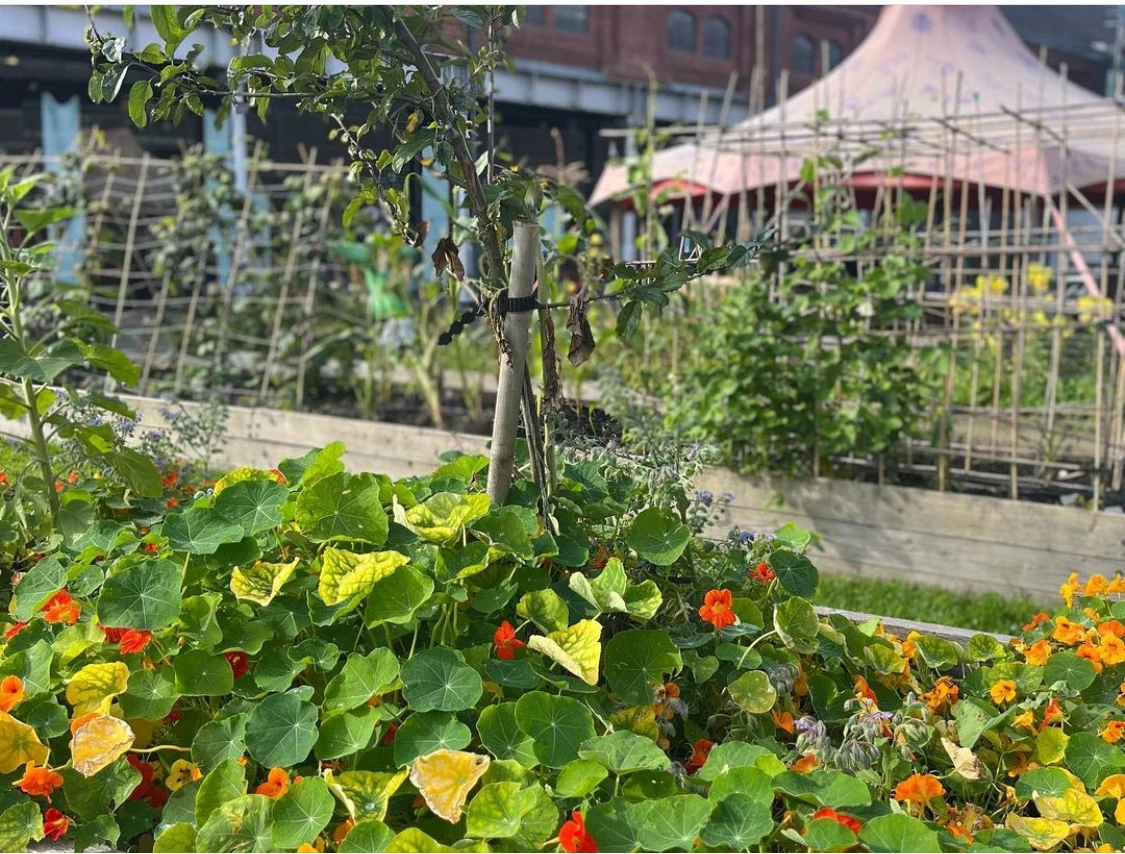
Another favourite aspect of the collections is the natural environment at St Fagans. The woods and gardens are beautiful and home to protected species such as horseshoe bats and great crested newts, alongside kingfishers, woodpeckers, dragonflies and on occasion otters. I’ve been fortunate to assist with family bat walks and school visits that include pond dipping and mini-beast hunting. It’s fantastic to highlight aspects of the site that surprise and captivate groups, and to work for an organisation that actively prioritises conservation.