National Meadows Day 4th July 2026 Hannah Jenkins, 8 July 2026 In celebration of National Meadows Day, we’re sharing the story of the Urban Meadow at National Museum Cardiff, which is 13 years old this year!Meadows are habitats dominated by native grasses and flowers, traditionally managed by a single annual hay cut and grazed by animals during the autumn and winter. They are diverse habitats that support a wide range of plants, animals and fungi however, the amount of land managed in this way has significantly decreased. In Wales, meadows are an example of a priority habitat of principle importance as they are under threat from changes to management, climate change and invasive species.The urban meadow beside National Museum Cardiff was created in 2013. This patch of grass has been transformed from an area once described as species poor to one full of different species of grass and native wildflowers. It provides a haven for wildlife, enhancing the biodiversity around our site and, within the city, it also helps to form a green corridor for nature, linking up other green spaces across Cardiff and beyond. Early ransformation of the meadow Early transformation of the meadow The meadow is now a lovely example of neutral semi-improved grassland in the centre of Cardiff. Cowslips (Primula veris), daffodils (Narcissus) and cuckoo flower (Cardamine pratensis) in spring are followed by familiar meadow species such as ox-eye daisy (Leucanthemum vulgare), clovers (Trifolium spp.), meadow buttercup (Ranunculus acris) and knapweed (Centaurea) along with grasses such as sweet vernal grass (Anthoxanthum odoratum), crested dog’s-tail (Cynosurus cristatus) and Yorkshire fog (Holcus lanatus). Last year we recorded, corky-fruited water-dropwort (Oenanthe pimpinelloides), a new species for the Urban Meadow, and one which is uncommon in Wales. The Urban Meadow in Summer Hoverfly on buttercup flower All meadows need some annual maintenance to keep them in good condition and although we have followed the traditional regime of a single annual cut, as the years have gone by, we have seen some dominant grasses such as false oat grass (Arrhenatherum elatius) start to establish.In autumn 2024, we added yellow rattle seed (Rhinanthus minor) with the help of funding from the National Heritage Lottery Fund GROW project. This annual plant is semi-parasitic and can play an important role in helping to keep a healthy balance between grass and wildflowers. As it grows, it takes nutrients from the roots of surrounding grasses, in turn weakening and reducing their dominance and allowing space for wildflower species to spread.The common name comes from its yellow flowers, forming round seed pods in summer which rattle when the seeds are ripe! It is also known as “the Meadow Maker” owing to its reputation for increasing floral diversity. Yellow rattle seedling in May 2025 Yellow rattle flower in June 2025 The native wildflowers found on the meadow provide an important source of pollen and nectar for insects and butterflies, but it is the variety of grasses and flowers together that ensure it provides food, shelter and habitat for many other species too! The leaves, stems and roots can be just as important.In recent years we have recorded pollinators including hoverflies, bees – solitary, honey and bumble, wasps, butterflies, moths and beetles. We have also spotted spiders, grasshoppers, caterpillars, dragonflies, woodlice, slugs and snails… the list could go on! A male swollen thighed beetle They are good pollinators, visiting a variety of open faced flowers such as this ox-eye daisy. Some recent records include Swollen thighed beetle (Oedemera nobilis), Cinnabar moth caterpillars (Tyria jacobaeae) which feed primarily on Ragwort leaves (Jacobaea vulgaris) and Essex Skipper Butterfly (Thymelicus lineola). Day flying moth visitors include Six spot burnet moth (Zygaena filipendulae) and spotted on different occasions last year Hummingbird Hawk Moth (Macroglossum stellatarum), which visits Wales from southern Europe in the summer. Cinnabar moth caterpillars Essex skipper butterfly Six spot burnet moth A number of different habitats have also been created to provide more opportunities for wildlife around the meadow. It’s not just insects that visit the meadow, groups of Starlings (Sturnus vulgaris) can often be seen wandering through searching for insects and one evening recently, a hedgehog (Erinaceus europaeus) was spotted beside the meadow.Our Natural Science Curators have created resources to help you identify plants, animals, rocks and fossils on your doorstep. You can find them on our website: Spotter’s Guide | Museum Wales
The Gwen John Studio Collection at Amgueddfa Cymru Helena Anderson, 3 March 2026 Introduction: The Journey of Gwen John’s Studio CollectionIn 1976, one hundred years after Gwen John’s birth, the National Museum of Wales purchased nearly 1,000 works by the artist from her nephew, Edwin. This collection comprised a handful of oil paintings and hundreds of works on paper that were all part of John’s studio collection.What Is a Studio Collection?A studio collection is all the artworks left in an artist’s studio after their death.When Gwen John died suddenly in September 1939, she left all her property, including her unsold artworks, to her nephew. War had just been declared in Europe and Edwin hurried across the Channel to gather what he could and bring it to the UK for safekeeping, returning after the war to collect the rest. The collection now belonging to Amgueddfa Cymru is the bulk of what remained in Gwen John’s studio, though many works were sold at Matthiesen’s Gallery on Bond Street in London in 1946 and in subsequent exhibitions in the 1950s and 1960s.How the Collection Came to Amgueddfa CymruBy purchasing the remaining studio collection, the museum became home to the largest public collection of John’s work anywhere in the world. The studio collection at Amgueddfa Cymru includes over 900 drawings as well as six oil paintings and a number of sketchbooks. Before the museum purchased the studio collection, it owned just three drawings and four oil paintings by Gwen John.Unfinished Paintings That Reveal Her TechniqueThe Gwen John studio collection gives an insight into the many different subjects the artist depicted and the different styles with which she experimented. John is best known for her close-toned oil paintings of women and girls seated in quiet interiors. The examples in the studio collection are unfinished, giving us an insight into her painting technique. For example, Girl in Profile (NMW A 148) shows where John has scraped back the paint surface where the girl’s hairbow would have been. Presumably, she was unhappy with her first attempt and scraped it away to try painting it again. Study of a Seated Nude (NMW A 4928) is unusual because it shows John has worked from the outer of the edges inwards, leaving the face of the sitter until last. Both paintings give us a glimpse of the unusual chalky ground (the pale base layer she put on the canvas first before painting over it in oil paint). She mixed this herself using a unique recipe for which we still don’t know the exact ingredients.A Vast Body of Drawings and Works on PaperThe most notable feature of the studio collection though is the sheer number of drawings and watercolours in it. While John was more focused in her choice of subjects and technique in her paintings, her works on paper are much more varied. They include landscapes and street views, studies of flowers and trees, sketches of cats and horses, and drawings after portrait photographs. Many works are made in series or sets which repeat the same subject. These can be almost identical (NMW A 15751, NMW A 15752, NMW A 15753), or vary in colour and medium (NMW A 15303, NMW A 15304, NMW A 15305).Recurring Subjects: Churches, Figures, and Everyday LifeThe most frequent subject in her works on paper are figures in church (NMW A 3811). She drew the congregants of her local parish church in Meudon, then copied out these images again and again in her studio before adding watercolour and white pigment (NMW A 3611). The single image repeated the most often is Saint Thérèse of Lisieux and her sister, Céline, as children (NMW A 3536, NMW A 15563, NMW A 15565). It was inspired by a photograph of them, of which Gwen John owned a copy. In each version she drew, John changed the composition slightly, adding and removing curtains, wallpaper, and toys from the background, playing with scale, and changing the colours and patterns of every surface. John used much more vivid colours in her works on paper than she ever did in her oil paintings.What the Collection Reveals About Gwen JohnThe Gwen John studio collection gives us an insight into the artistic practice of one of Wales’s best-loved artists. Containing unfinished oil paintings, sketchbooks, and works on paper, it shows how methodical and experimental she was. It also gives us a glimpse into her world: the places where she lived, her friends and neighbours, her pets, her interest in nature and religion, and her art training. This collection is an invaluable resource, befitting of one of the most famous Welsh artists of the twentieth century.
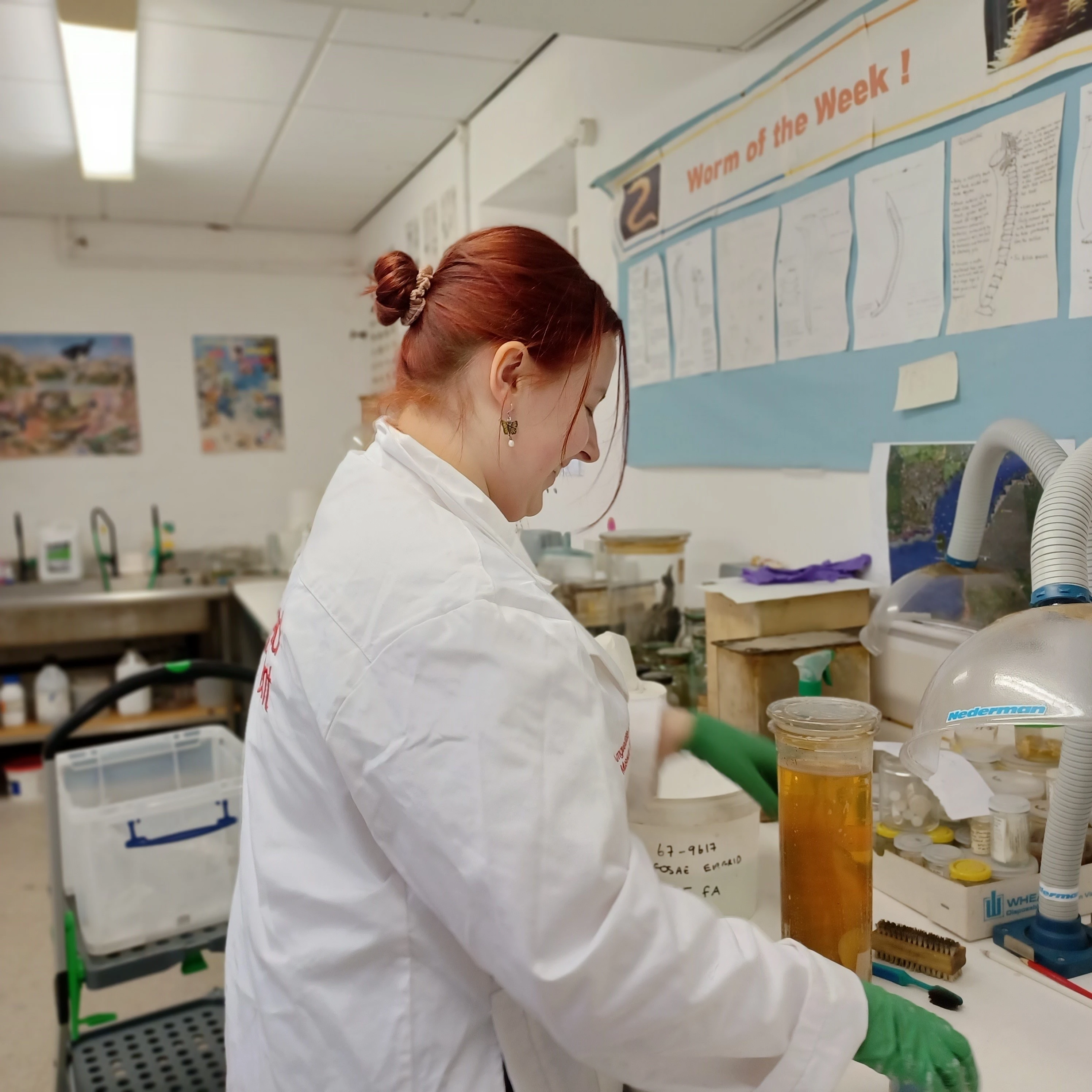
My experience: Collections Care volunteering across the Museum Anna Watson - Collections Care Volunteer, 30 September 2025 My name is Anna Watson and I’ve been volunteering with the National Museum of Wales since November 2024. I volunteer every week as a collection care assistant in the conservation department. I have enjoyed the experience immensely as every week is different, so I am always learning something new and developing my skills. I began this volunteering role after finishing my MSc in Care of Collections with Cardiff University and this opportunity has been fantastic for putting the skills I gained from that course into practice. So far, I have been able to help with exhibition maintenance in the art galleries and natural histories department, microclimate maintenance in archaeology, collection audits in entomology and have helped clean and relocate the fluid store (pictured here)! The opportunity to work in multiple departments and meet so many different curators, conservators and technicians who are all specialists in their fields has been invaluable and each week I am excited to see what we will do next.
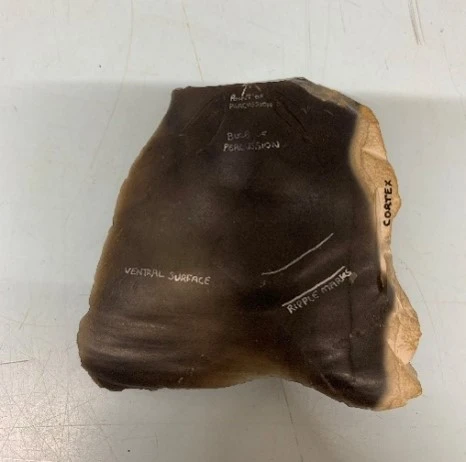
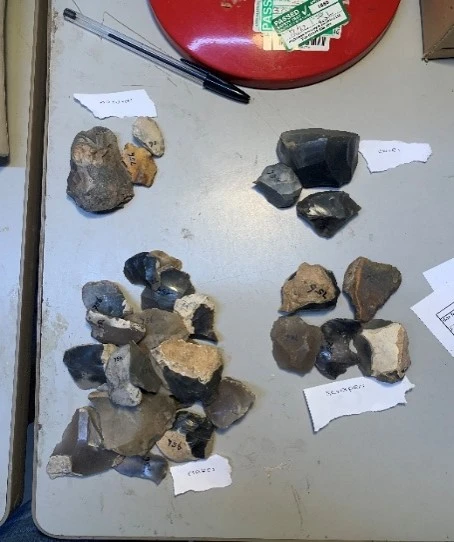
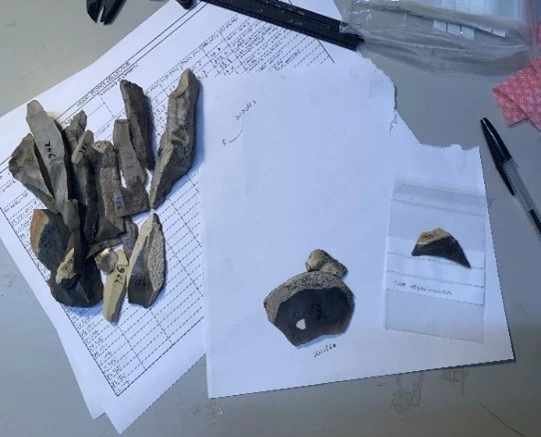
Exploring Prehistory: My Volunteer Experience with Stone Tools at National Museum Cardiff Rebecca Mahon - Prehistoric Stone Tools Volunteer, 10 September 2025 Between October 2024 and May 2025, I have been lucky enough to volunteer within the archaeological collections of Amgueddfa Cymru. Every Thursday, myself and my fellow volunteers were able to handle, identify and catalogue a vast collection of prehistoric stone tools gathered by Henry Stopes in the late 19th century. During our weekly sessions, we were encouraged by our supervisor, Principal Curator Elizabeth Walker, to understand and recognise the uses that these tools had within their communities across the globe. Beginning with this identification, we learnt how to categorise the tool’s usage based on their markings. We then numbered and categorised the tools using Stopes’ system so that they could be inputted onto the online database.Our work as volunteers meant that Amgueddfa Cymru could succeed in completing its counting of the Stopes collection, which was acquired by the museum in 1912, allowing the collection to become fully accessible to the public. As a Cardiff University student, volunteering at Amgueddfa Cymru allowed me to gain experience relevant to my degree and work hands-on with artefacts ranging from flint arrowheads to jewellery made from bone! I feel fortunate to have had the opportunity to explore the inner workings of this amazing institution and meet the dedicated professionals and volunteers that work within it. Being a volunteer has truly been an enriching and valuable experience!
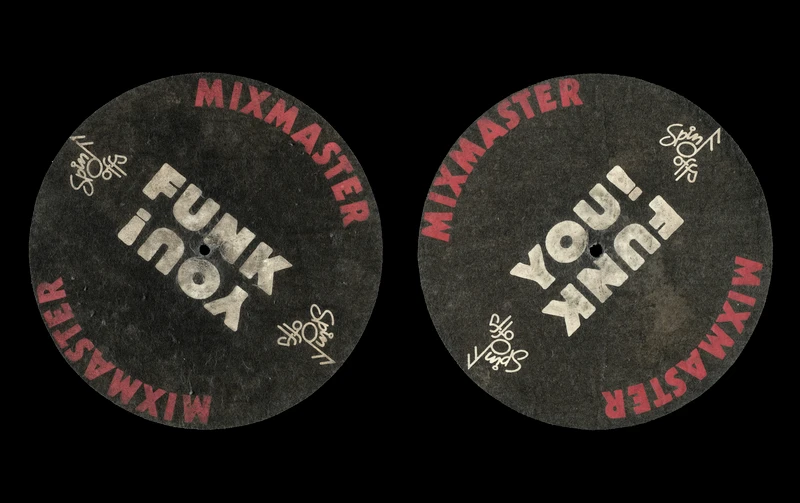
DJ Jaffa's Slipmats Kieron Barrett, 15 July 2025 Slipmats are an essential component for DJing when using vinyl. Even more so for Hip Hop DJs who also scratch or do 'turntablist’ tricks. Many, including Jaffa, found out early on that using the home hi-fi system to learn how to scratch might soon ruin your parents record collection. Rather than rubbing the vinyl against the rubber or plastic of the turntable, a slipmat allows you to move the record back and force gracefully without damage. For this reason alone it would make sense for us to include a pair of slipmats in the exhibition, but the fact that we have the first pair purchased by DJ Jaffa is a huge bonus for us.If you’re not already engaged with the Hip Hop scene in Wales then you might not be familiar with the name, so here’s a little extra context for this particular item. As I go through some of Jaffa's history, it will relate to a few other pieces we have included in the exhibition. I’ll also explore more about the actual slipmats themselves.Like many people in Wales and the rest of the UK, Jason Farrell, more widely known as Jaffa, first got a taste for Hip Hop after seeing the music video to Malcolm McLaren’s ‘Buffalo Gals’ which showcased graffiti, breaking, scratching and rapping from New York artists. He also remembers seeing snatches of the culture on the BBC 2 show ‘Entertainment USA’ in 1983.It wasn’t the World Famous Supreme Team DJs that he tried to emulate from the video first though, it was the Rock Steady Crew breakers. He started practicing as often as he could, both at home and school, using any pictures or clips from the television that he could find. When the ‘breakdance’ craze hit its peak after films such as ‘Beat Street’ and ‘Breakdance The Movie’ in 1984 he was already advanced for the time and entered his first proper battle against a crew from Port Talbot in Cardiff city centre.I don’t have the space to give you Jaffa’s whole history here, but this is integral to the next stage of his development because it was after battling a crew from Bristol that he became friendly with them all and started to spend his weekends hanging out across the bridge. He would go to Wild Bunch parties and witnessed the rise of the Bristol scene, noting how the future Massive Attack members approached the art of DJing.But it was while hanging out at St Paul’s Carnival, watching his friend Dennis Murray performing turntable tricks on the Galaxy Affair sound system, that he realised he wanted to become a DJ himself. Dennis Murray incidentally would go on to become an important pioneer of the rave movement as DJ Easygroove.The DJ at his local Whitchurch Youth Centre would occasionally allow him to play records and as I mentioned above, he developed a way to learn scratching on the home hi-fi system, using crude homemade slipmats made of cardboard. He had to learn mostly by ear, dissecting live audio recordings of the DMC Championships, where the world’s top turntablists would compete. However, when he got his first set of professional record decks in 1986 he was able to take his DJ skills to the next level.Of course this meant buying a proper set of slipmats. He had already been purchasing records from the Spin-Offs record shop on Fulham Palace Road in Hammersmith, West London, mostly via mail order at the time. Spin-Offs was a shop opened by New York DJ Greg James, who had moved to London to help open The Embassy night club in 1978. Greg is widely credited as being the first DJ to bring the disco style of DJing - seamlessly mixing the records together - to the UK.Spin-Offs was also known for selling the latest DJ equipment, so it was the perfect place to find the right slipmats. Jaffa remembers that it was DJ Richie Rich who served him that day. He was a well-respected DJ at the time with his own show on Kiss FM, back when it was a pirate radio station. He also had some underground Hip Hop and Hip House hits in the 80s and 90s and started the Gee Street record label.I’m personally intrigued that these slipmats say Mixmaster on them. There would have only been a few DJs known for the name ‘Mixmaster’ at the time. Mix Master Mike had not yet joined the Beastie Boys or started his career. Mixmaster Spade was still only making underground tapes in Compton, California. The three that come to mind around 1986 would be: Mixmaster Morris with his Mongolian Hip Hop Show on London’s Network 21 pirate radio station; Mixmaster Ice of the New York group U.T.F.O; and Mixmaster Gee And The Turntable Orchestra from Long Beach who had a couple of underground hits on MCA Records. But I’m getting slightly off tangent here.Jaffa locked himself in his room and practiced. Eventually he was coaxed out with his decks to set them up outside Rudi’s Donut store at the Capitol Centre end of Queen Street in Cardiff. Although there were some club DJs playing Hip Hop locally at the time, such as Paul Lyons in Lloyds, this is widely viewed as the first proper Hip Hop jam in the city. Jaffa brought along a microphone which was picked up by just one rapper from Gabalfa called Dike (pron. Dee-Kay).After that there were regular Saturday afternoon Hip Hop jams at Grassroots youth centre. Jaffa would DJ and rappers such as Dike, Mello Dee (later known as 4Dee) and MC Eric (later known as Me-One) would jump on the mic. A crew formed around them called Hardrock Concept, made up of rappers, graffiti artists and Jaffa. This was a period where collectives were more prominent than individuals, but towards the end of the 80s Jaffa and Eric would break off from the rest and move to London. A major label deal with Jive Records followed and their tracks featured on the compilations Def Reggae and Word Four under the name Just The Duce. These are both in the exhibition as well.Jaffa eventually returned to Cardiff and Eric went on to global chart success with Technotronic. During the early 90s many people left Hip Hop behind when the rave scene exploded, but Jaffa helped to keep the culture going through his work alongside 4Dee and his sister Berta Williams (RIP) with The Underdogs – a youth organisation based in St Mellons that was focussed around developing skills such as Hip Hop dance, rapping and DJing. He has remained a cornerstone of the scene here ever since and has been involved in countless projects from Rounda Records to groups such as Tystion, Manchild, Erban Poets and Kidz With Toyz – right up to Xenith today.He once deejayed for 70 hours, breaking the UK record for longest set, but just missing the World Record by 4 hours. He supported Snoop Dogg on his UK tour and he still DJs every weekend. He hosts the show This That & The Third on the Paris based station Radio Raptz, showcasing countless releases from Welsh artists. He has featured on various releases across the world as both a DJ and producer, including The Yellow Album from The Simpsons (his scratches are on the track ‘The Ten Commandments of Bart’ which Dike co-wrote the lyrics for).Jaffa has also been integral in putting this exhibition together and is the main face on our posters, so it seems fitting that we should focus on his slipmats here. Hopefully, now you can see why we are so excited to include them. Do revisit this blog as we look into other items you will find in Hip Hop: A Welsh Story.