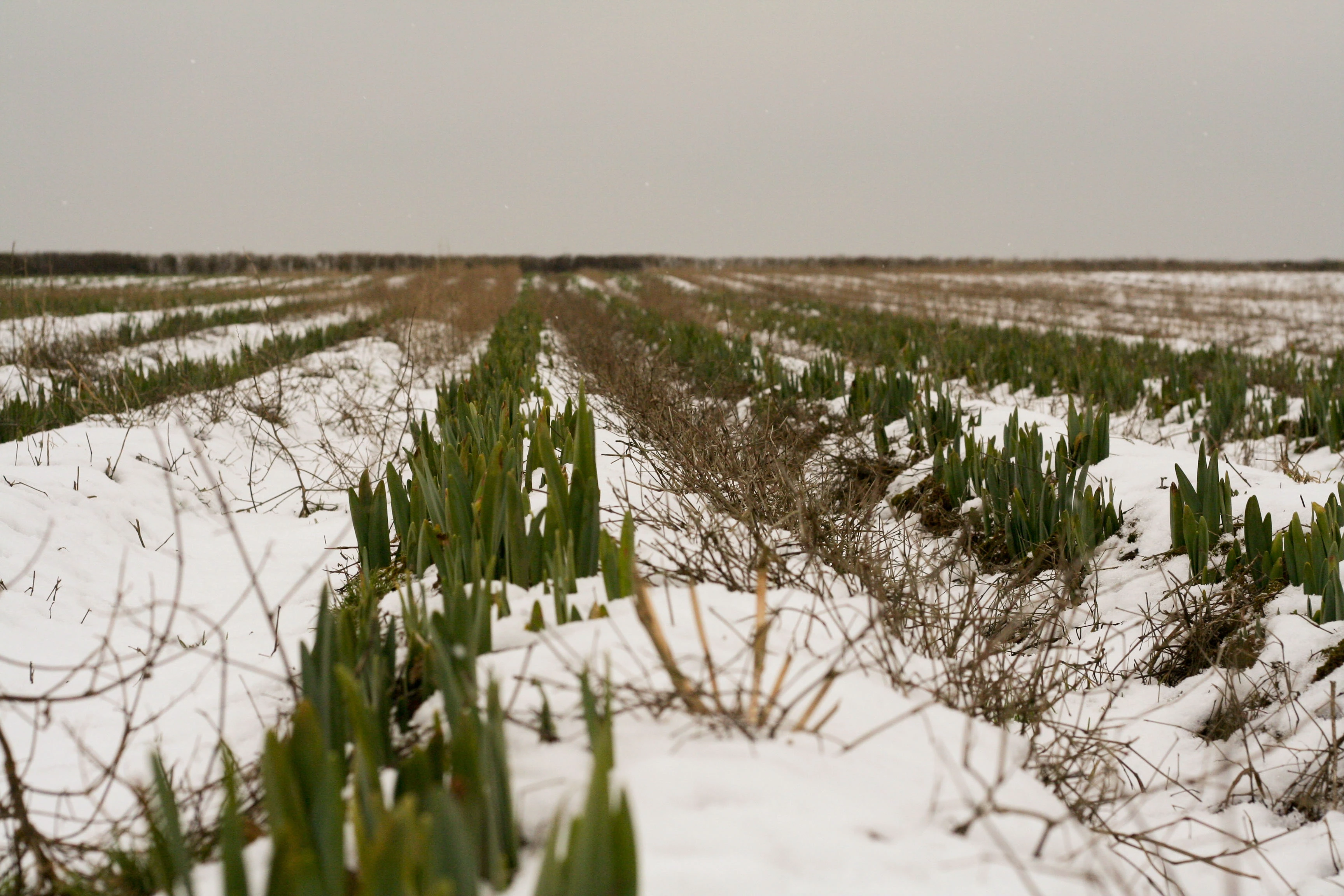
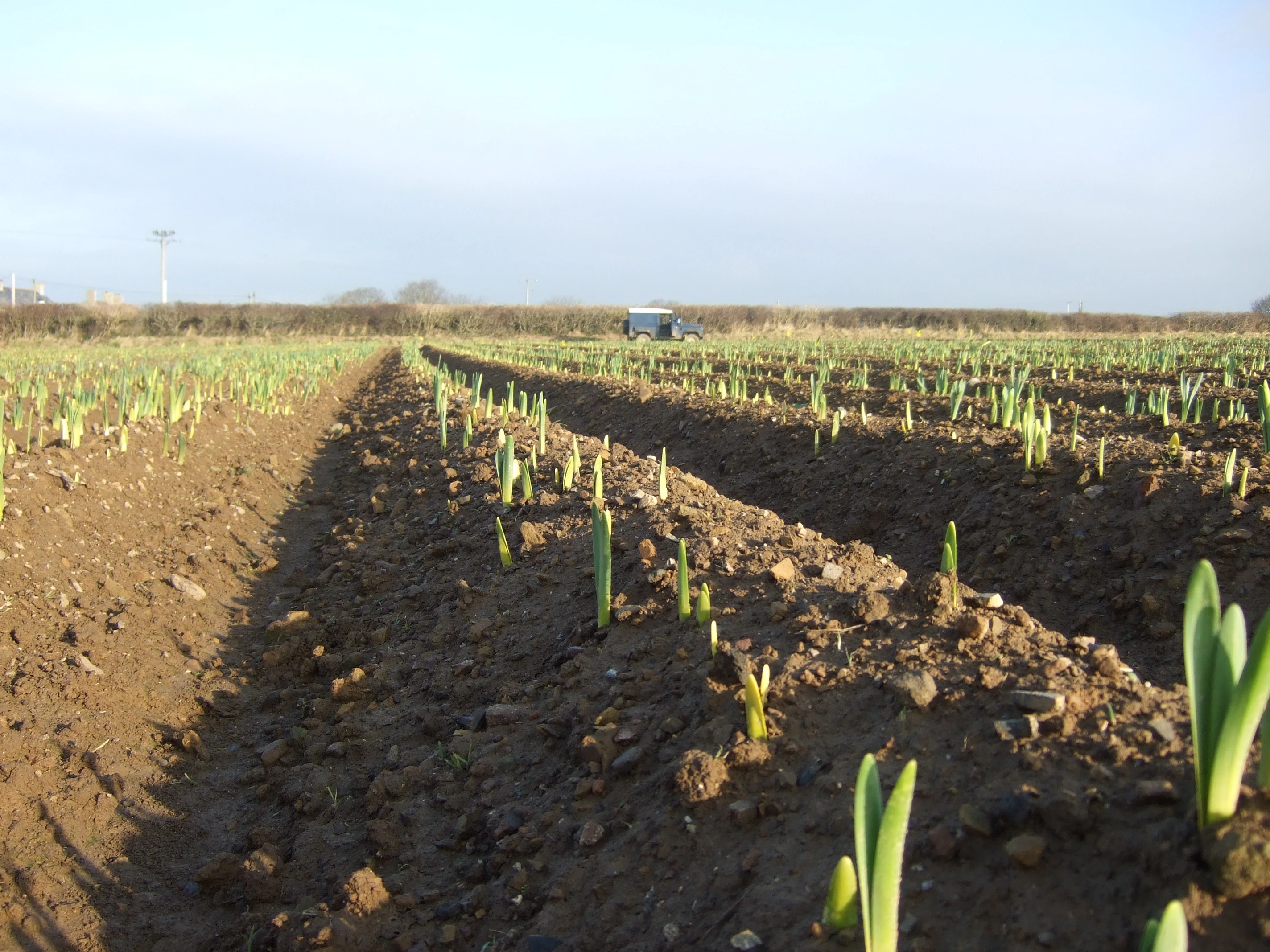
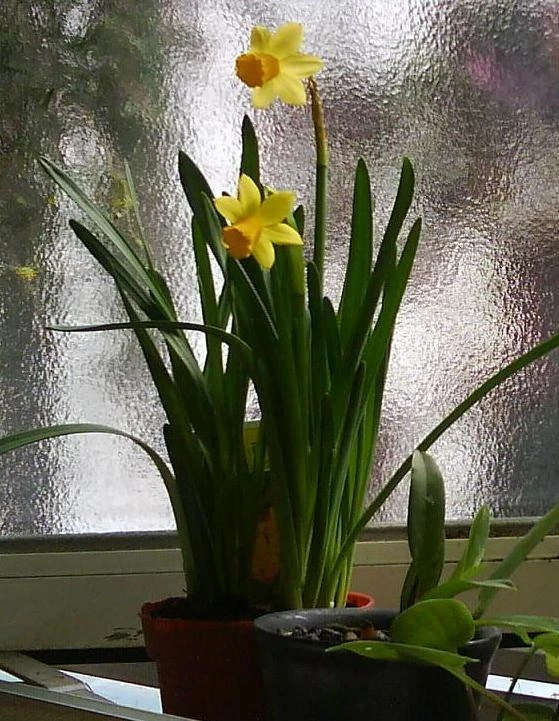
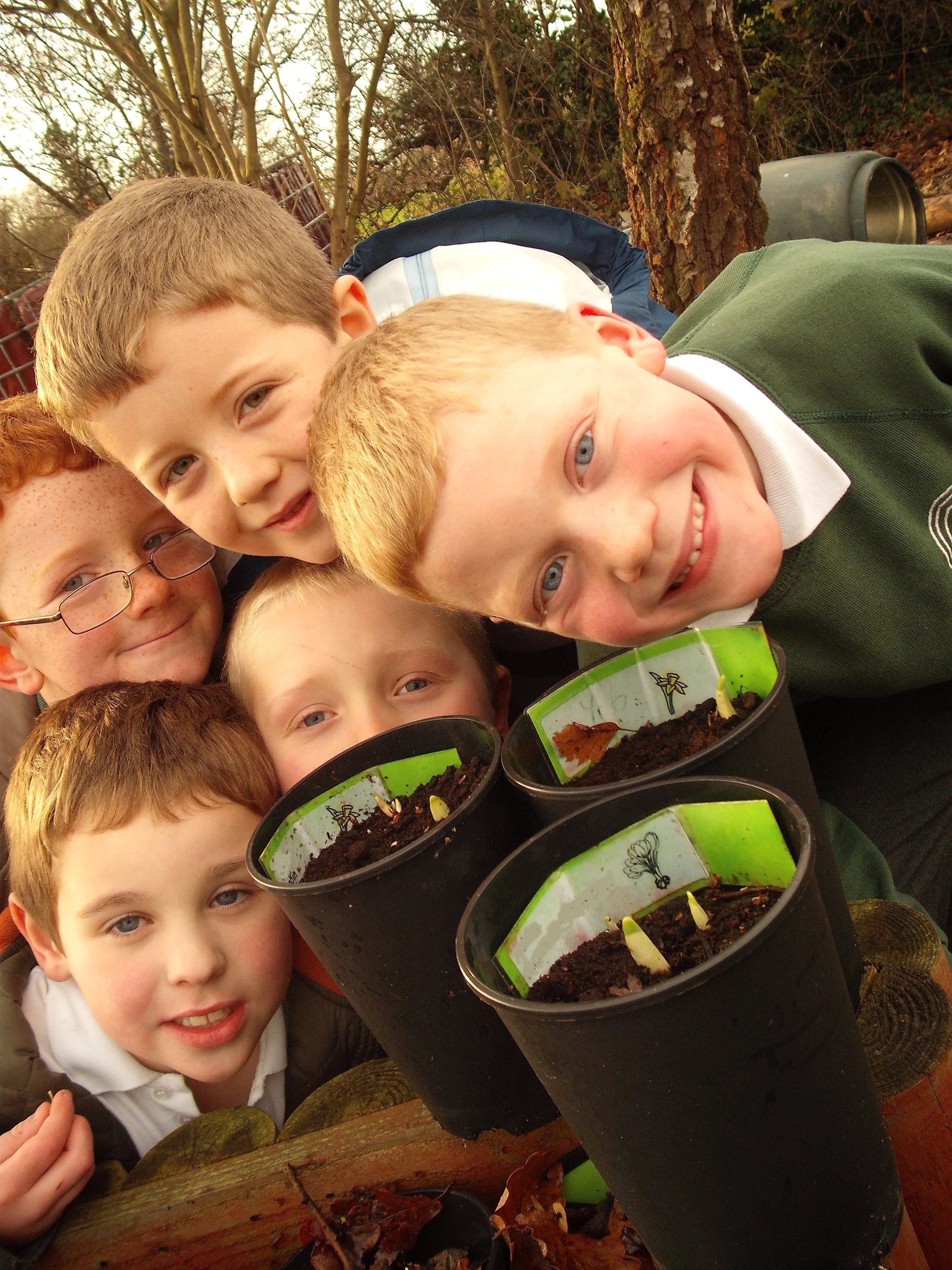
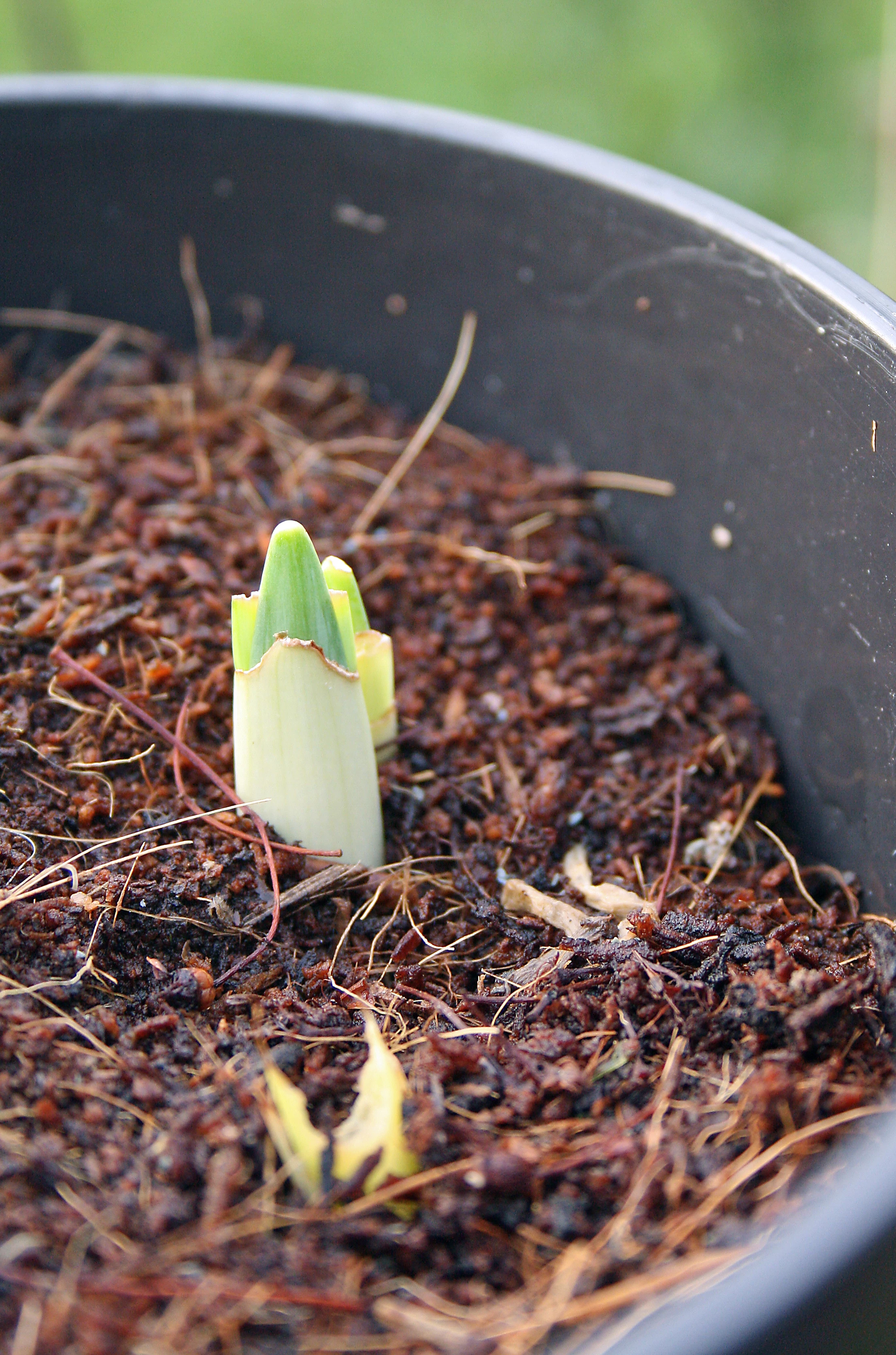
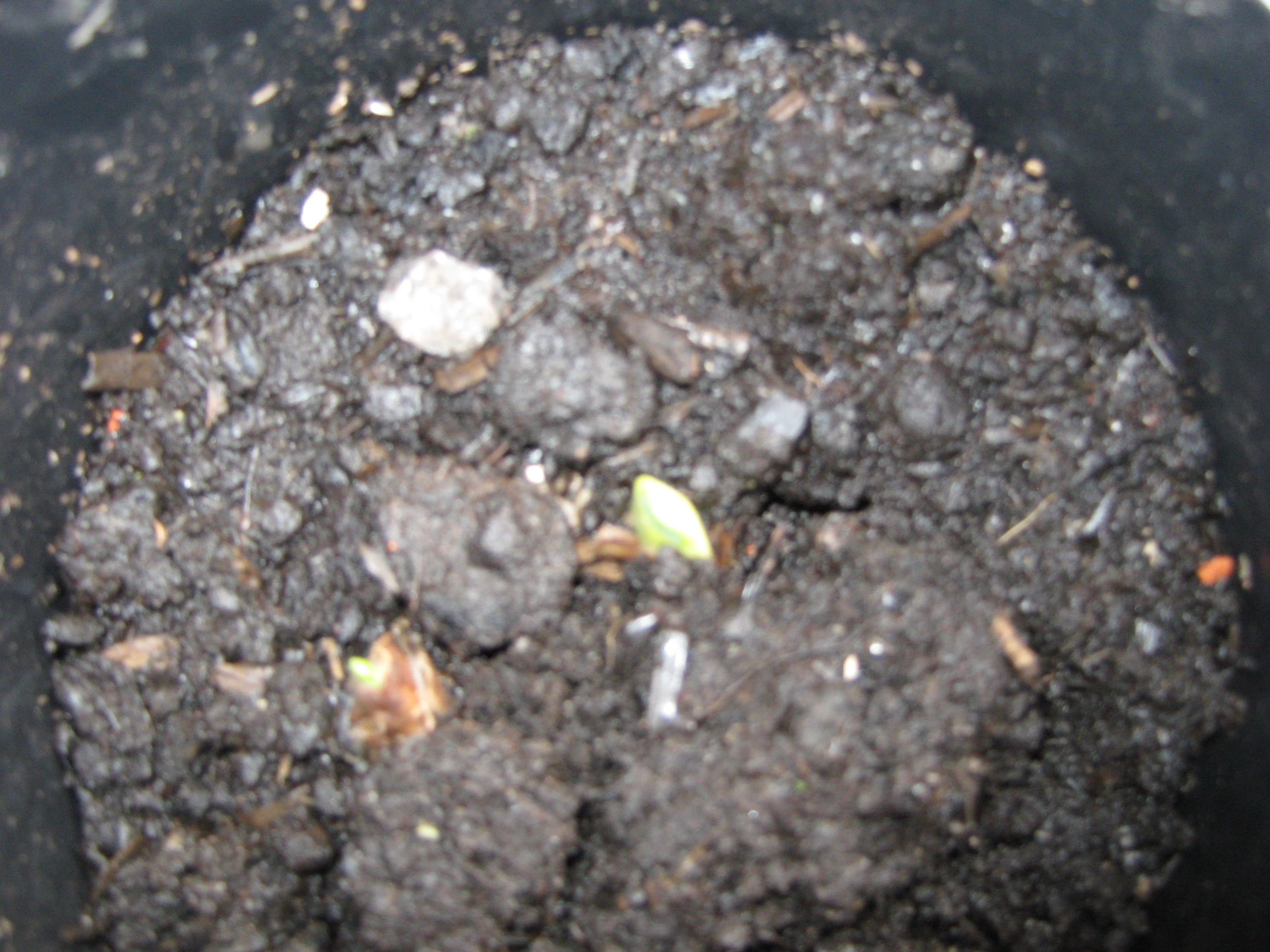
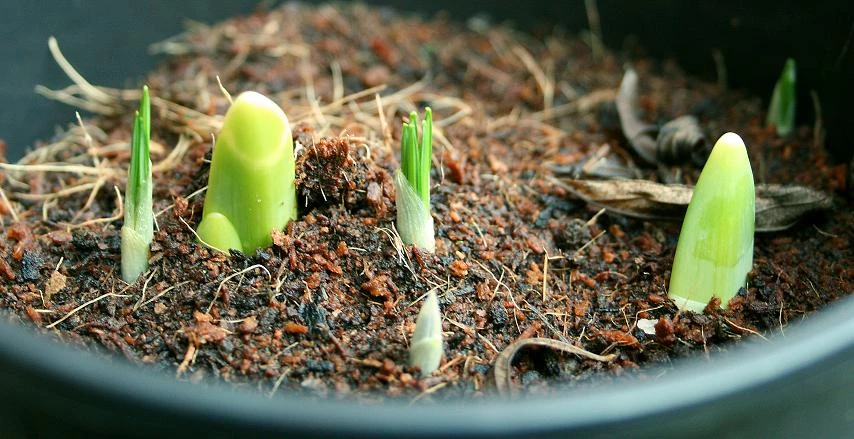
Shoots already? Danielle Cowell, 19 November 2009 Pupils from Oakfield Primary School asked: 'When will the bulbs sprout?'Normally, I would say 'nothing much will happen until after Christmas', but some bulbs have already decided to pop up through the soil!Pupils from Pentrepoeth Junior School reported: 'We were very surprised to find the shoots and we have now noticed a few more in our flowerbeds. I am attaching a photo for you to see.'From studying the photograph, although I can't be 100% sure, they certainly look like daffodil shoots. Compare my photograph from last year - what do you think?Please leave a comment if you see any early shoots or email any photographs to scan@nmgw.ac.ukMany Thanks, Professor Plant
Thousands of young scientists study climate change Danielle Cowell, 9 November 2009 National Museum Wales is working with 3,600 young scientists to investigate and understand climate change.Over the past few weeks bulbs and pots have been delivered to schools and home educators all across Wales - ready for the big planting day on the 20th October. Some schools have sent in some lovely pictures and reported on how excited the children are to be taking part.From now until the end of March 2010 each young scientist will be recording the weather and flowering dates of their Daffodil and Crocus bulbs as part or a long-term study looking at the effects of temperature changes on spring bulbs.The study started in 2005, and will hopefully continue for many years to come. To see the results so far or to sign up for next year please visit Spring Bulbs for Schools Each pupil will work through Professor Plant's tasks to be awarded a Super Scientist Certificate and the most dedicated school will win a trip to the Really Welsh Daffodil Farm and Kenfig Nature Reserve. The Really Welsh company kindly donated all the daffodils for this experiment - which are grown in good Welsh soil at Kenfig, near Bridgend.Watch this blog to see some of the schools reports & observations - or watch the picture diary in the spring.If you are taking part and would like to send Professor Plant a question - then please get in touch. Professor Plant would love to hear from you.
National Poetry Day 2009 at Big Pit 2 November 2009 On National Poetry Day in October 2009, Big Pit’s poet-in-residence Mike Jenkins encouraged visitors to contribute to a ‘BIG Big Pit poem’. The theme of National Poetry Day was ‘Heroes and Heroines,’ and contributors wrote about the heroic people who worked in difficult conditions and jobs in coal mines.Contributions came from 3 schools: Goetre Junior School, Merthyr, Queen Street Primary School, Abertillery and Oldbury Wells High School in Shropshire. Mike awarded a signed copy of his children’s poetry book ‘Poems for Underage Thinkers’ to the junior classes for their inspired efforts.Adult poets were:Mike Tanner from Blaenavon, Justin Hamilton from Kilbirnie, Derek Edmondson from Woodford, and Mr and Mrs Gilbert from Little Witcombe, as well as Big Pit staff.Find out more about Mike’s award-winning poetry and prose by visiting his website: www.mikejenkins.net.BIG BIG PIT POEM A communal poem created at Big Pit on National Poetry Day 2009 Underground what will we see? Underground is dangerous Ponies hauled dram after dram Thrusters and hurriers pushing tram after tram Pickers hitting as hard as they can Children crying and crying. The canary was a warning. Lots of water on the ground It was leaking into the pit Getting deeper and deeper. It was dark like night when the lights went out, It was scary. Slippery like water. The cage went fast then slow. Down the pit there were tracks. Struggling by the light of lamps. The axes and sledgehammers were dirty as muddy water. Some were very old. The men were heroes because they worked twelve hard hours. The fireman who risked himself to save his workmate’s face, After a fall, threw himself down to protect his friend. The horses were heroes because they saved people. Masks protected the ponies’ faces, some of the ponies died. Seventy two worked down the mine. Many of them became blind. The miner had to pull the drams. The girls were heroines because they helped. Dad and son worked side by side Deprived of sunlight from day to day. Some men died. Some men cried. Coughing up black dust Working like navvies from dawn till dusk. Mothers sad when there was an explosion. A message home when there’s no hope left Scratched into a bottle. Day and night death always occurred. But everyone pulled together Washing away the day’s toil. A hot bath, joke and a laugh. To the hole in the wall, have a fag Desperate for that first drag. Figures hunched against the driving rain Thirsting for the hoppy nectar To soothe away the pain.
Autumn adventure Gareth Bonello, 17 September 2009 Firstly, apologies for my extended absence from these pages. I don’t have an excuse other than the summer activities kept me very busy this year! However, I find myself in a bit of a calm period at the moment so I thought I’d update you on what’s coming up over the next few months.The autumn is fast approaching and the evidence is all around St Fagans. A quick walk about the site reveals bursts of bright red berries on hawthorn bushes and rowan trees and delicate highlights of yellow and orange edging into the green leaves of the beech woodland. A walk in the woods is accompanied by the steady sound of beech mast dropping with the breeze. The horse chestnuts have already begun to fall too, and the acorns and sweet chestnuts look like they won’t be long to follow.In October activities will focus on this season of change. For Seed Gathering Sunday we will be looking at the variety of tactics trees use to disperse their seed during an enjoyable walk about the grounds.On October the 24th there’s a real treat in store as the Ty Gwyrdd kitchen will be in action for the first time in years to demonstrate some traditional apple recipes.The apple theme continues in the Ty Gwyrdd on the 25th of October where you can take part in Feed the Birds Day with the RSPB, and learn how to use apples to make great bird feeders.During October half term we will be running Autumn Feast activities looking at traditional foods grown in the autumn as well as the wild food that grows in our woods, fields and hedges.And right at the end of November I will be running activities alongside the RSPB that look at ways of telling trees apart and the importance of trees for wildlife. If that appeals to you why not join us on the 5th of December when we'll be working with the BBC to try and break the world record for the most amount of trees planted in one hour!So I hope to see you at an event this autumn, and in the meantime get out there and enjoy the sunshine!
Muddy knees, bumblebees and anemones! Gareth Bonello, 9 April 2009 Wood Anemones at St Fagans After a prolonged and cold winter I am sure that many of you are as relieved as I am that spring is finally here! Although it is now the start of April, the early signs of spring have been with us for a while. This March was the driest in Wales since 2002 and almost everywhere in the UK had higher than average levels of sunshine. This resulted in an explosion of colour as the woods have blossomed with flowers such as lesser celandines, wood anemones and primroses. Bumblebees too have woken up from their winter sleep and emerged from burrows below ground to begin collecting pollen and nectar to feed the colony.Throughout March we ran activities at St Fagans encouraging you to get involved in bee conservation. Over 400 visitors planted native British wildflowers to attract bees and butterflies and I am happy to report that they are doing very well! If you want to know more about bee conservation why not visit the Save Our Bees website? A Song Thrush sits on her nest safely hidden in a Holly bush A quick trip down to the local park or wood will tell you that the birds are in full swing at the moment. Our songbirds are all pairing up and nesting at this time of year. Most have struggled through the harsh British winter but not all. Chiffchaff arrive on our shores in early March from Southern Europe and North Africa. Their distinctive two-note 'chiff-chaff' call can be heard echoing around woodlands, parks and gardens as males compete for females and territory. Next time you're out and about why not see if you can hear one or why not come along to our Dawn Chorus Walk on May the 3rd? A bright carpet of Wood Anemones on the forest floor We have plenty of activities coming up this spring, with Compost Awareness Week taking centre stage in early May and signs of spring during the May half term. Visit the events page for more details. In the meantime feel free to let me know what spring wonders you've seen recently in the comments box below - any bluebells yet?