Voices from the archive – Remembering Lambing Time

Gareth Beech, 20 March 2016

In the early 1970s Museum staff set out to record older and retired farmers describing farming in Wales in the first half of the twentieth century, before the large-scale mechanisation and expansion from the 1950s onwards. The recordings are kept in our Sound Archive.

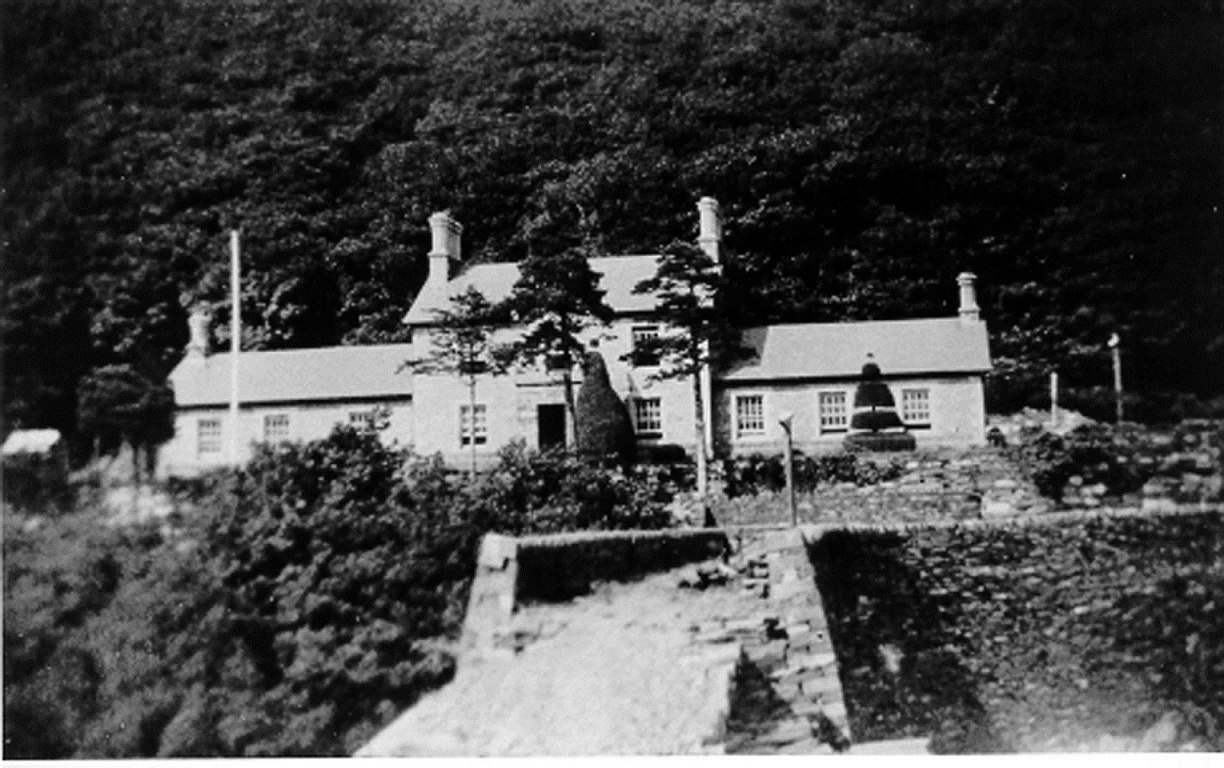
In April 1977 Earnest Thomas Ruell, then aged 76, was interviewed about sheep farming in Radnorshire, mid-Wales, in the early decades of the twentieth century. Born in 1901, he lived at The Pant farm, Llanfihangel Rhydithon, in the hills north east of Llandrindod Wells.  After marrying in 1924 he farmed at Dolyfelin near Knighton for thirty four years.

In this short compilation of selected clips, Thomas Ruell describes lambing time, speaking in the distinctive accent of Radnorshire, one of the most rural Welsh counties, bordering Herefordshire.

Earnest Thomas Ruell - Radnorshire farmer

The flock comprised 120 ewes and 4 or 5 rams. The breed of sheep was the local Kerry Hill, regarded as excellent mothers. Lambing took place outside, the only space available under cover was by emptying the wainhouse (cart shed) during heavy snow. Treatments for illnesses were limited and often based on local remedies. The flock producing a lambing figure of 125% was considered a good outcome. Female lambs grew into ewes and were kept for just over two years then sold, during which time they would have produced lambs themselves.

Large sheds allow lambing to be a lot less dependent upon weather conditions and the seasons, often starting as early as January. Here at Llwyn-yr-eos farm our ewes were all undercover well before lambing even began. Most flocks and farms now have to be considerably larger in order to be viable. Treatments for illnesses have advanced considerably, most of which can be applied by farmers themselves. Some similarities remain between lambing in the 1920s and the 1930s and the present, though, and a great deal of time, care and attention from the farmer are still fundamental elements for successful lambing today.

Easter Island

Jeannette Rose Marxen, 17 March 2016

The wonders of Easter Island feature in Treasures: Adventures in Archaeology. 

Easter Island, in the Pacific Ocean, is the most isolated inhabited island; its closest neighbour being over 1,200 miles away.  The first inhabitants of Easter Island were explorers who sailed from the Polynesian islands to the west.  There is still a debate as to when they first arrived but they would have been settled by AD 1100 or 1200.  Over the next several centuries the Rapa Nui, as the island and the people were known, created the iconic moai statues out of the volcanic rock.  It wasn’t until 1722 when the first recorded Europeans visited that the island received the name we all know it by today.  Dutch explorer Jacob Roggeveen arrived to the island on Easter Sunday in 1722 and thought what better name for an island than Easter, or more correctly Paaseiland in Dutch.  Today, Easter Island is part of Chile and is officially referred to as Isla de Pascua.

Easter Island moai (by Mary Davis)


The Rapa Nui created almost 900 statues during their centuries of isolation from the rest of the world.  There was a central quarry and it appears that the statues were to line the coast of the island.  Despite the large number, only a quarter were erected on stone platforms along the coast.  About half of the statues never left the quarry and others look as if they were left along the side of the paths towards the coastal areas.  The statues ranged in size, the largest being 32 feet tall and weighing 82 tons. 

Easter Island moai (by Mary Davis)

It wasn't until the early 20th century that historians and archaeologists first arrived to study the enigmatic statues.  They wanted to know what the moai symbolised and how they were moved.  Since there is no written record to shed light on the motivation behind the statues, archaeologists had to look to the more recent Rapa Nui culture.  Like many other civilisations, worship of ancestors was part of the islanders' culture.  Most agree that the moai were probably symbols of important ancestors and that the erecting of the statues would ensure luck or success.  In trying to understand how these massive moai were transported around the island, the most obvious theory seemed to be that they used logs and a sledge to roll them.  This was a technique thought to have been used to move the stones at Stonehenge and the blocks for the Pyramids.  However, this theory has been challenged because it would have required hundreds of people to operate the sledge and logs and the population of the island appears to have been always rather small.  According to Rapa Nui tradition, the statues walked to their final resting place.   Archaeologists recently experimented with this theory using a replica statue.  By tying ropes around the head and rocking it back and forth it was possible to move the statue forward; almost like it was walking!

Easter Island moai in Rano Raraku quarry (by Mary Davis)


Release your inner Indie...

Sara Maidment, 17 March 2016

The days are getting longer and we’re feeling inspired by our great new Treasures exhibition. Let us help you begin your adventure with our top 5 exhibition gifts. 

1. Fire starter

Need to get things burning? Gentlemen's Hardware makes things easier with their glorious firestarter gadget – a safe and simple tool that creates a spark to start your fire when camping or out in the wild.

2. Lost Cities board game

The research teams are outfitted and ready to embark on their adventures to find five forgotten cities. Who will lead the way to fantastic discoveries?

3. Food flask

The adventure can begin with this black flask that provides ample room to keep soups or smoothies warm or cool. With a stainless steel lid hiding a screw top lid that keeps the contents secure and prevents heat loss, making the perfect gift.

4. Archaeology Kit

Learn the basics of carefully recording and unearthing treasures of the past.

Archaeology

5. Prisoners of the Sun (The Adventures of Tintin)

The Adventures of Tintin continue to charm more than 80 years after they first found their way into publication. Since then an estimated 230 million copies have been sold, proving that comic books have the same power to entertain children and adults in the 21st century as they did in the early 20th.


A guide to lamb presentation - aka ‘what’s going on in there?’

Bernice Parker, 13 March 2016

If you've been watching lambcam you'll have seen that sometimes our sheep get a little bit of help to give birth from our farm team. So for those of you who might be wondering what's actually going on in there...

As the ewe goes in to labour, her contractions push the lamb towards the outside world. The position of the lamb is known as ‘presentation’.  It affects whether the ewe will be able to manage the birth on her own or might need some help from the shepherd.


  1. Ideal: Head and forelegs first. The most streamlined position – usually no help needed.
  2. One leg back aka ‘Superman’: May need help to push the lamb back and straighten the leg.
  3. Two legs back: Needs help to push the head back and bring the legs forward.
  4. Head Back: Needs help to push the lamb back and bring the head forward.
  5. Backwards: Although the ewe can deliver the lamb herself, there is a risk of the umbilical cord breaking before the head is out. This may result in the lamb drowning before birth.
  6. Breech (bottom first): Help will always be needed to sort this one out.
  7. Multiple mix ups: Twins, triplets and even quads can be no problem to deliver if they come one at a time. But sometimes things get tangled up in there and help is needed!

Thanks to Wynfford the Training Lamb and Flat Eric for their modelling work

St Fagans Youth Forum: Make your own bread oven

Elen Phillips, 12 March 2016

Guest blog by St Fagans Youth Forum members - Amy Gifford, Kate Gregory & Beth Ivey-Williams - live from Bryn Eryr!

Hello everyone. We’re the St Fagans Youth Forum and today (12 March) we’re helping to build an Iron Age bread oven at Bryn Eryr. Ian, the Museum’s Interpreter, has been busy researching traditional building methods and the history of bread ovens through time. In this blog, we’ll take you through part one of the process. So if you fancy building your own pizza oven for your garden at home, follow our guide below.

Step 1

Use wooden stakes to mix local ‘clom’ (clay), water and sand to a thick dough. Patience and perseverance essential! Some would say it’s quite therapeutic; a weird kind of stress buster!

Tip from Amy: “Go with your gut instinct. You’ll know when the dough is at the right consistency.”

Step 2

Mix dry sand with water. Use the mixture to build a dome (former) in the centre of the oven base. Ian pre-made the base out of clay and a flat stone. When building the dome, even out the sides for a rounded finish. Don’t use too much water.

Tip from Beth: “You’ll have to get your hands dirty, but it’s just like building a sand castle.”

Step 3

Build-up your dome to a rounded arch.

Tip from Kate: “Keep warm as you work. Your hands will get very cold as you sculpt the wet material.”

Step 4

Smooth off all the sand and cover your dome with strips of damp newspaper. This is a bit like papier mâché.

Step 5

Cover the dome with the clay mixture you prepared earlier in step 1. Let it set for two days.

Step 6

To be continued!