Spring Bulbs for Schools: Results 2005-2015

Penny Dacey, 1 June 2015

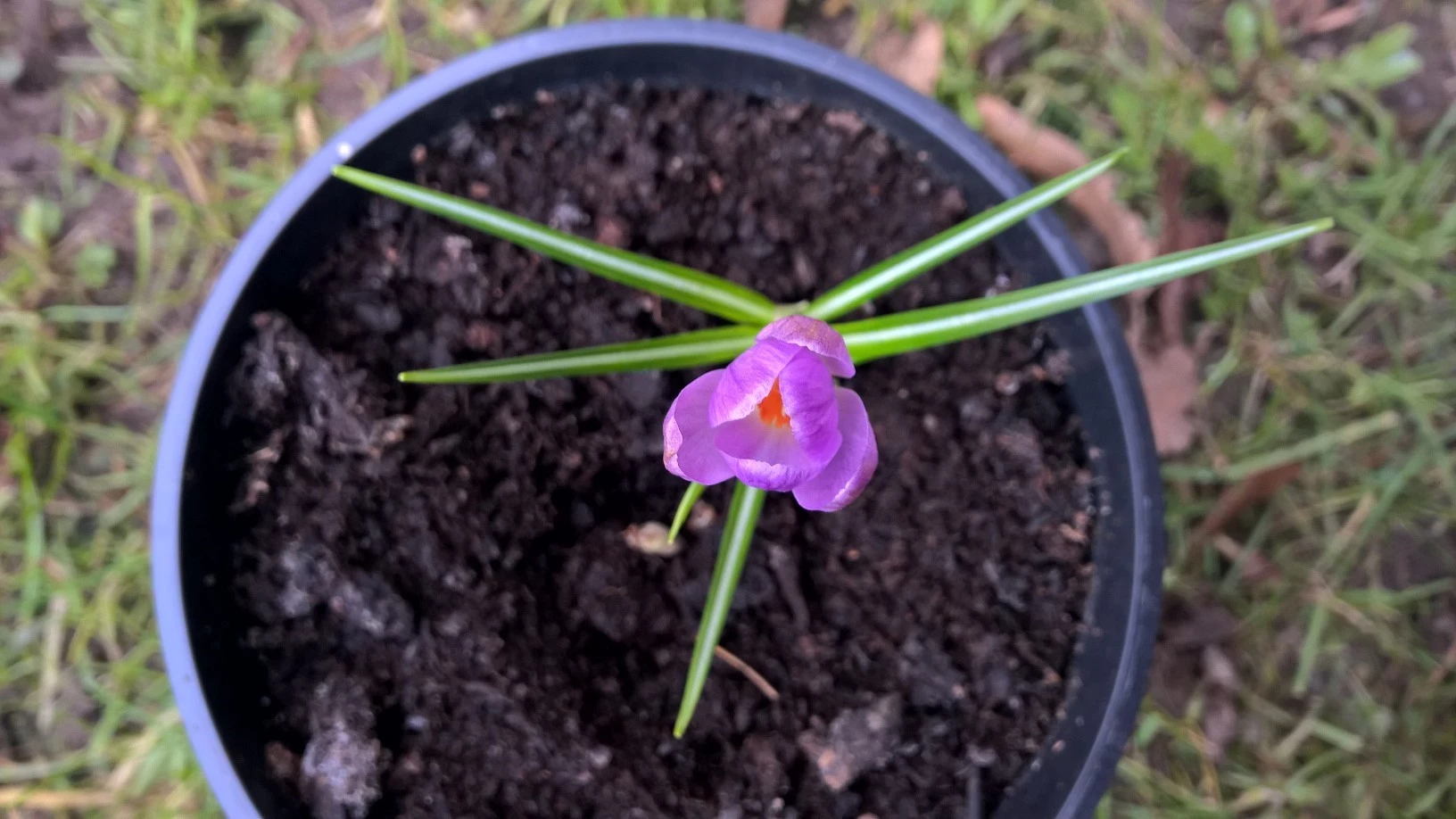
The Spring Bulbs for Schools project allows 1000s of school scientists to work with Amgueddfa Cymru - National Museum Wales to investigate and understand climate change. School scientists have been keeping weather records and noting when their flowers open since October 2005, as part of a long-term study looking at the effects of temperature on spring bulbs.

Certificates have now been sent out to all of the 4,596 pupils that completed the project this year. See Professor Plant's report to view the finsings so far.

  • Make graphs & frequency charts or calculate the mean.
  • See if the flowers opened late in schools that recorded cold weather.
  • See how temperature, sunshine and rainfall affect the average flowering dates.
  • Look for trends between different locations.

I would like to thank all of the Super Scientists that participated this year!

Applications are now open for Spring Bulbs 2015-16.

Professor Plant www.museumwales.ac.uk/spring-bulbs/

Twitter http://twitter.com/Professor_Plant

Wi-Fi Audio Tour using Museum Visitors' Mobiles

David Thorpe, 31 May 2015

A lot of people wander around exhibitions with phones in their pockets or handbags. We decided to utilise this idea and serve up a Wi-Fi audio tour for the Chalkie Davies: the NME Years exhibition (9 May - 6 September 2015) - the museum has a web-server and there is Wi-Fi broadcasting in the exhibition gallery, allowing us to give it a whirl. 

  • We wanted to give access to the maximum number of people with phones from this decade (HTML5 compatible devices). 
  • We didn’t want an ‘app' because it creates a lot of hoops for developers and the museum to jump through, plus visitors probably don't want excessive fuss when entering an exhibition especially as they might only use it for five minutes in total. 
  • We didn’t want to bring in traditional audio tour guides because of the hire price for the museum and we weren't going to ask the visitors to pay, as it's free entry to the exhibition.
  • We might want to use it again and would hope to do so with the minimum amount of technical fuss.

Free Wi-Fi but not sitting a Coffee Shop

Once the visitor has connected to the free Wi-Fi audio tour ‘Chalkie' the Wi-Fi capture software will direct them to the correct web page with the name of the exhibition and a choice of languages (see picture 1). All is going well. 

Language Choice

The english audio tour was written and recorded by Chalkie Davies and his team - it provides his personal insights into each of the photographs on display and some back stories. The welsh audio version was recorded in-house by Rhodri Viney (recording and editing) and Telor Gwyn (voice), using the Chalkie Davies translated transcript.

Choose a Number between One and Nine

The visitor is given a choice of nine numbers, each matching a number on the gallery wall which refers to a selection of photographs (see picture 2). Once the person selects one of these numbers the audio tour begins...

"Listen To What The Man Said"

For the best experience the visitor should have headphones, but it's not the end of the world if they don't, they can still listen through their devices' built-in speaker, although this can look and feel a little awkward. Alternatively they could hand over £1.50 for headphones in the museum shop downstairs.

If they don’t want to walk around with a mobile phone protruding from their head, or leave the exhibition and come back in again to buy headphones downstairs, or find that their mobile phone has a low battery percentage - there is a printed version of the audio tour available within the gallery. They are the same words.

A Perfect Circle

I used to have an analogue watch, but I left it accidentally next to the squash courts in the University - if anyone picked it up, could they hand it back please? Anyway, time can be measured within a circle. I like circles, so I built a large circle to indicate the progress of the audio track playing. The animated graphic uses SVG (Scalable Vector Graphics), which meant the page avoided the usual graphical software - it's all written in code: HTML5, javascript and CSS [Well, I find it mildly exciting] (see picture 3 and 4).  

Pressing the circle will pause the audio. If the visitor listening to the audio tour wants to change to another number they can press the ‘Home’ button and the page will scroll up to the nine numbered keypad again. Another loop, of sorts…and repeat.

Before we go any further, maybe we could pause for a short film clip...  

Additional Details You Might Enjoy 

  • The gallery has a capacity of 40 people at one time.
  • There are two Wi-Fi hubs at each end of the gallery broadcasting wireless-N.
  • A web-server streaming the audio.
  • Each of the audio tracks are compressed to less than 2MB (MP3).
  • It takes less than ten seconds to download the whole MP3 on a iPhone 5S and the audio plays almost immediately.
  • We’ve tested it with various phones including one of the first Android audio HTML5 compatible phones (Gingerbread 2.3.6 ~ circa 2011) and Windows 8 phones.
  • If the device is not capable of displaying a SVG there is a fallback to similar looking GIFs.

Media Monitoring

The web-server records each time a track is requested. Therefore, we will have some data to indicate how much the audio tour is being used - thinking about it, we shoud gather additional information about the type of browser requesting the audio (it's a closed network so we can't involve Google Analytics, which is the usual goto reference for 'what kind of computer has visited the website recently'). We will monitor things during the exhibition and conduct evaluation once it has closed. 

Dyddiadur Kate: Bwydo’r boblogaeth

Elen Phillips, 29 May 2015

Ym Mawrth 1915, agorwyd gwersyll i garcharorion rhyfel yn y Frongoch, gerllaw’r Bala. Mewn blog blaenorol, fues i’n trafod ymateb Kate a’r wasg leol i ddyfodiad yr Almaenwyr i Sir Feirionnydd. Er gwaetha’r gofid cychwynol, erbyn canol 1915 penderfynwyd y dylid defnyddio’r carcharorion er budd yr ymgyrch rhyfel. Yn wyneb prinder llafur, ym Mehefin 1915 rhoddod Ynadon Penllyn ganiatad i’r carcharorion weithio ar ffermydd cyfagos:

Yr ydym ni Ynadon Dosbarth Penllyn, yn dymuno datgan ein barn y bydd prinder llafurwyr amaethyddol yn y dosbarth yn ystod y cynhauaf agoshaol, a gorchwyl ereill, ac felly yn dymuno datgan ein barn mai da fyddai i’r awdurdodau milwrol ganiatau i’r Germaniaid sy’n garcharorion yn Frongoch gael eu llogi at wasanaeth ffermwyr y dosbarth. Yr Adsain 22 Mehefin 1915

Yn ôl Robin Barlow, bu dros 1,000 o garcharorion Almaenaidd o’r Frongoch yn gweithio ar ffermydd yr ardal. Wrth chwilota drwy wefan Papurau Newydd Cymru Arlein, daw hi’n amlwg nad menter leol yn unig oedd hon. Er enghraifft, mae’r Denbighshire Free Press yn nodi’r canlynol yn Nhachwedd 1919:

REPATRIATION OF GERMANS: On Monday, the 24th October, all the Germans prisoners at Bathafarn Hall, with the exception of ten left behind to clean up, were returned to the Migrating Camp at Fron Goch, near Bala, and the others have since followed. Captain Bennet, camp commandant for Denbighshire, who has been in charge at Bathafarn, reports that farmers testify to the very good work done on farms by the prisoners.

Ond pam fod angen cymorth y carcharorion ar ffermydd ardal y Bala? Yn ei dyddiadur, mae Kate eisoes wedi nodi ymadawiad Robert Daniel Jones o’r Derwgoed. Ymunodd ef â’r Ffiwsilwyr Brenhinol Cymreig ym Mawrth 1915. Roedd Bobbie Penyffordd wedi ymrestru yn Awst 1914, a chyn diwedd 1915 roedd o leiaf dau arall o gymdogion Kate wedi ymuno â’r lluoedd – Tomi’r Hendre ac Ivor Erwfeirig.

Erbyn 1916, roedd y Bwrdd Masnach yn amcangyfrif fod gweithlu amaethyddol Cymru a Lloegr wedi gostwng 33% ers dechrau’r rhyfel (nid yw’r ffigwr hwn yn cymryd menywod i ystyriaeth). Yn ogystal â’r prinder llafur, daeth bwydo’r boblogaeth yn boen meddwl wrth i’r rhyfel lusgo yn ei flaen. Roedd gaeaf 1915 a gwanwyn 1916 yn ddychrynllyd o oer a gwlyb, ac fe gafodd hyn effaith andwyol ar gynhaeaf y flwyddyn honno. Ar ben y cwbl, roedd si ar led fod yr Almaenwyr yn cynllunio i dargedu mewnforion gyda’u llongau tanfor. O ganlyniad i hyn oll, ymatebodd y llywodraeth drwy annog y boblogaeth i dyfu cnydau a bod yn ddyfeisgar gyda chynhyrchu bwyd. Mae’r fowlen siwgr hon o gasgliad yr Amgueddfa yn cynnwys neges o anogaeth gan David Lloyd George:

I HAVE NO HESITATION IN SAYING THAT ECONOMY IN THE CONSUMPTION & USE OF FOOD IN THIS COUNTRY IS A MATTER OF THE GREATEST POSSIBLE IMPORTANCE TO THE EMPIRE AT THE PRESENT TIME

Mae modd gweld rhagor o wrthrychau sy’n gysylltiedig â bwyd ac amaethyddiaeth yn ystod y Rhyfel Byd Cyntaf ar ein gwefan.


Through the Keyhole in the Prefab

Heulwen Thomas, 28 May 2015

For my take on the “Through the Keyhole” event I decided to approach it with a hands on activity. Having spent a lot of time recently learning to produce ragrugs for use within the historic properties here at St Fagans, I thought this would be an excellent opportunity to mix a demonstration of the technique with allowing our visitors to come and have a go too.

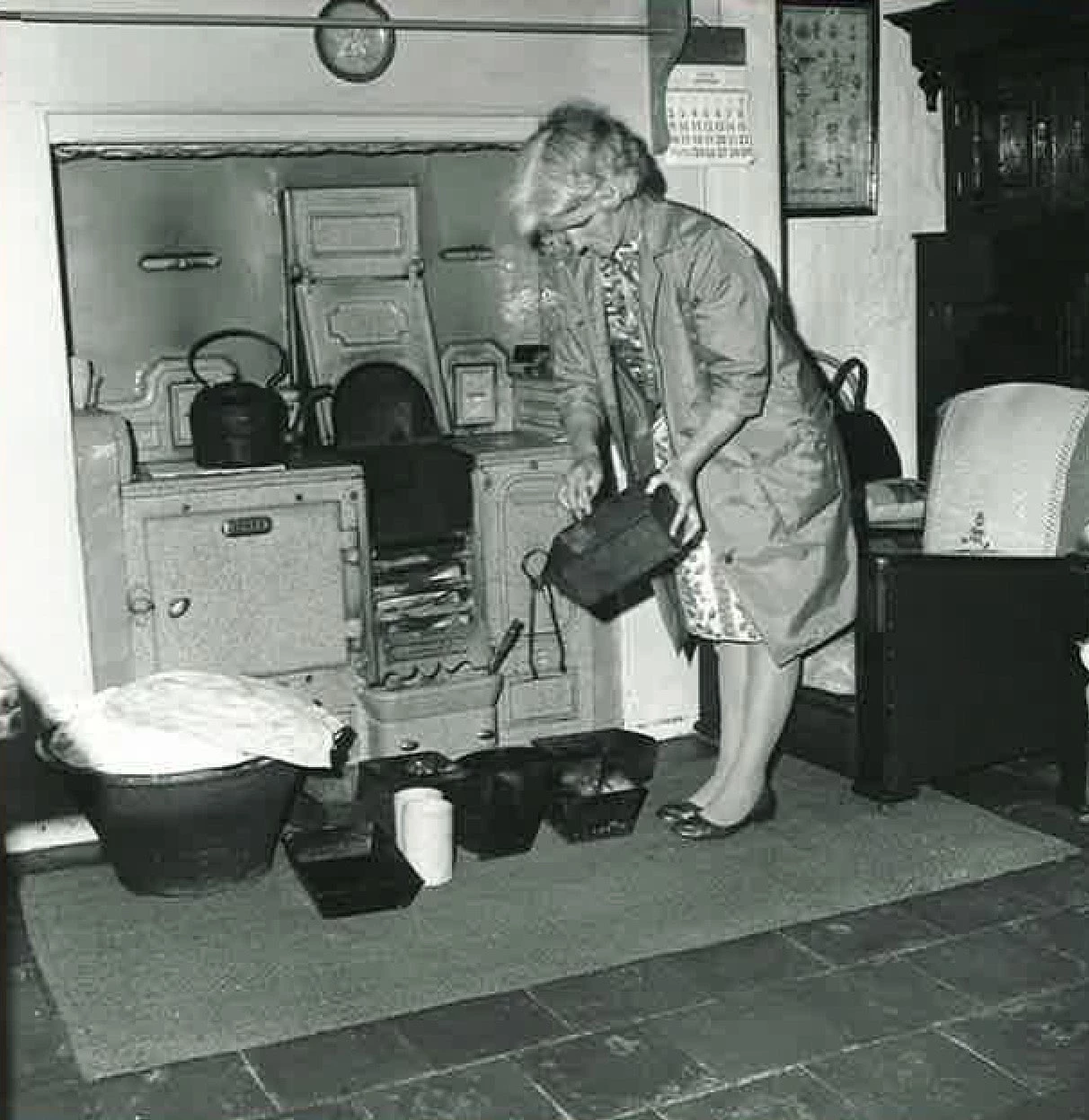
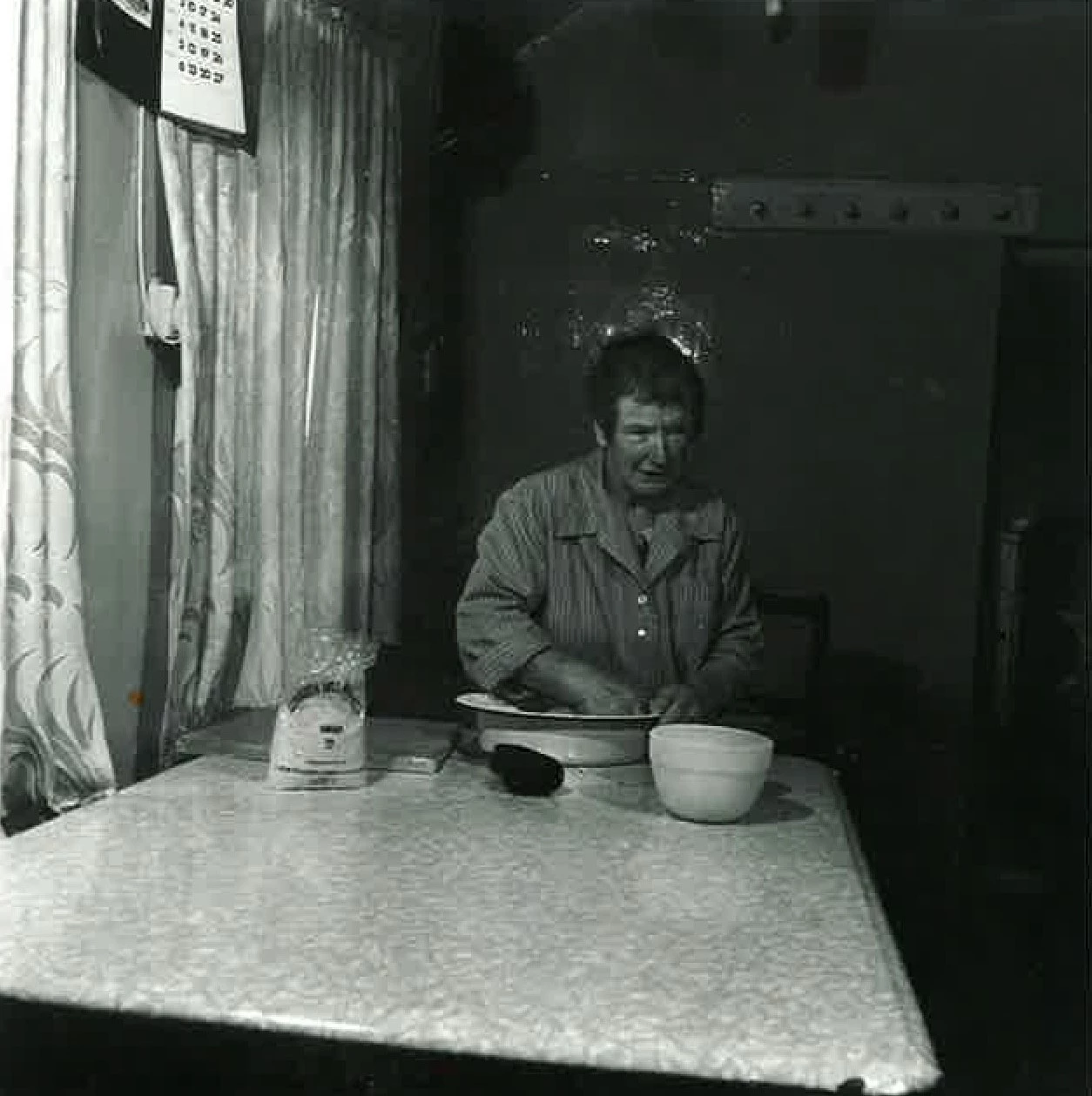
With the idea of reusing and recycling fabrics to create new rugs in mind I decided that the Prefab, built as a response to housing shortage after the Second World War and furnished as it was during the early 1950s, would be an ideal backdrop to showcase the ethos of “make do and mend” which had carried on after War. In order to deal with shortages that took place during the War, the Ministry of Food introduced a system of rationing. As well as food rationing, clothing, soap, fuel and paper were affected. It was not until the early 1950s that most commodities came 'off the ration'. Clothing was rationed from 1941 to 1949. Importing clothes from the Continent was not an option, and factories usually producing clothes now had military demands to deal with. Each person received a rations book – items were purchased with money and tokens from the book. The rationing of clothing prompted a movement of “make do and mend”, in order to make the most of all clothes and materials individuals had. A booklet to encourage women to be creative and inventive with their clothes was produced, and magazines and newspapers began featuring a character named Miss Sew and Sew to promote the message.

I set up my table outside the Prefab with all the equipment I needed – hessian sacking, dolly pegs filed into points (known as a bodger) and plenty of scraps of fabric. A display of Wartime posters and music from the era helped to draw in visitors, and create a nice atmosphere. I continued work on my ragrug, using the peg to thread strips of material through gaps in the sacking, building a pattern up layer by layer. I use natural materials such as wool and cotton so that the rugs will be in keeping with the historic properties they end up furnishing. I had prepared some small sections of sacking for visitors dropping by to work on. I was pleased that I met a really wide variety of people - children who wanted to have a hands on go at making something, parents who were looking for craft-based activities that they could do with their children at home, and visitors who remembered doing ragrugs themselves, or their parents or grandparents. I was able to offer tips and advice to those who wanted to have a go at home. Many of them already had the items needed to make a rug, but were unsure how to go about it. Older visitors were able to give me further information on what knowledge I already have, and interesting stories and anecdotes. They really enjoyed reminiscing about it, and talking about the era in general. It was really lovely to hear their tales throughout my time at the Prefab.

A Window into the Industry Collections – May 2015

Mark Etheridge, 27 May 2015

Preserved within the collections is a Cardiff horse drawn tram. The tram was built by the Falcon Works, Loughborough in the 1880s and run by Cardiff Tramways Co. When the Cardiff Tramways Company was taken over by the City in 1902 the routes were electrified and the horse-tram was sold to the Cardiff Ladies Temperance Guild and used in the Docks as a snack-bar selling non-alcoholic beverages. About 1930 ownership passed to Mrs Elizabeth Leach of Tremorfa who ran it as 'Walters' Tavern' and in due course this ladies daughter, Mrs Walters, took it over. In 1955 her brother Mr Ekstrom, took it over and ran it for a further ten years until it closed in 1966. It was removed in Summer 1968.

This slide, recently accessioned into the collection, shows the tram in use as a refreshment stall at Roath Dock, Cardiff.


The tram is currently on loan to the National Tramway Museum in Crich were it is on display.

These photographs show the tram awaiting restoration in 1979, and then after restoration work was carried out by Amgueddfa Cymru – National Museum Wales.


The final photograph shows a similar tram on Newport Road, Cardiff c.1890. It ran on the The Royal Oak - Newport Road - Pier head service.


A recent donation was this wooden board with a paper roster/list attached. The roster lists information about locomotives, winding engines, and saw mills at Dinorwic Slate Quarries. Unfortunately it is in poor condition and will need some conservation work carried out on it. The board had three headings, ‘locomotives’, ‘winding engines’ and ‘saw mills’.
Under the heading ‘locomotives’ the following information is recorded: old name of locomotive; present name of locomotive; location of locomotive; works number; date; remarks e.g. firebox renewed; firebox and tubes material. The roster records information about 20 locomotives.
Under the heading ‘winding engines’ the following information is recorded: place; started working; drive; circ & length of winding rope; circ &  length of standing rope; remarks. The roster records information about 11 winding engines.
Under the heading ‘saw mills’ the following information is recorded: place; started working; drive; no of dressing machines; no of tables; kind; diar of line shaft; revs line shaft. The roster records information about 10 saw mills.


Last year we were donated this painting by John Uzzell Edwards. It was on display at the National Waterfront Museum for a while and has just come off display to be accessioned and stored at the National Collections Centre in Nantgarw. The painting is acrylic and mixed media on canvas. It was painted on 2011 and is titled ‘Swansea Quilt’. The painting was inspired by a quilt made in Swansea by a woman who worked in the milliners department of a Swansea shop (she used fabric off-cuts from the shop).


This print shows the quilt which inspired John Uzzell Edwards.


This month we also acquired another painting. Probably gouache on board/paper it shows Merthyr Vale Colliery from Aberfan, and is dated 1902. It is signed by an artist called David John Evans. We haven’t yet been able to find anything out about him, so if anyone has any information on this artist we would love to hear from you.


The sinking of Merthyr Vale No. 1 Colliery began in 1869, and coal was first produced in 1875. Merthyr Vale Colliery No 2 was sunk some years later. In 1902 the colliery employed 3,064 men and produced 830,000 tons of coal. Reaching its peak in 1913 , when it was the largest colliery in the South Wales coalfield, manpower and output reduced over the years until the colliery eventually closed by British Coal in August  1989.


This photograph shows Merthyr Vale Colliery in 1960 showing tips on the hillside. It was the spoil from Merthyr Vale Colliery that slipped down the mountainside onto the community of Aberfan on the 21st October 1966. Engulfing Pantglass Junior School and a number of houses 144 people were killed, 116 of whom were children.


‘J. Eurof Martin Collection’


Mark Etheridge
Curator: Industry & Transport
Follow us on Twitter - @IndustryACNMW