: Collectors & Collections

Welsh colliery horses

Ceri Thompson, 6 October 2023

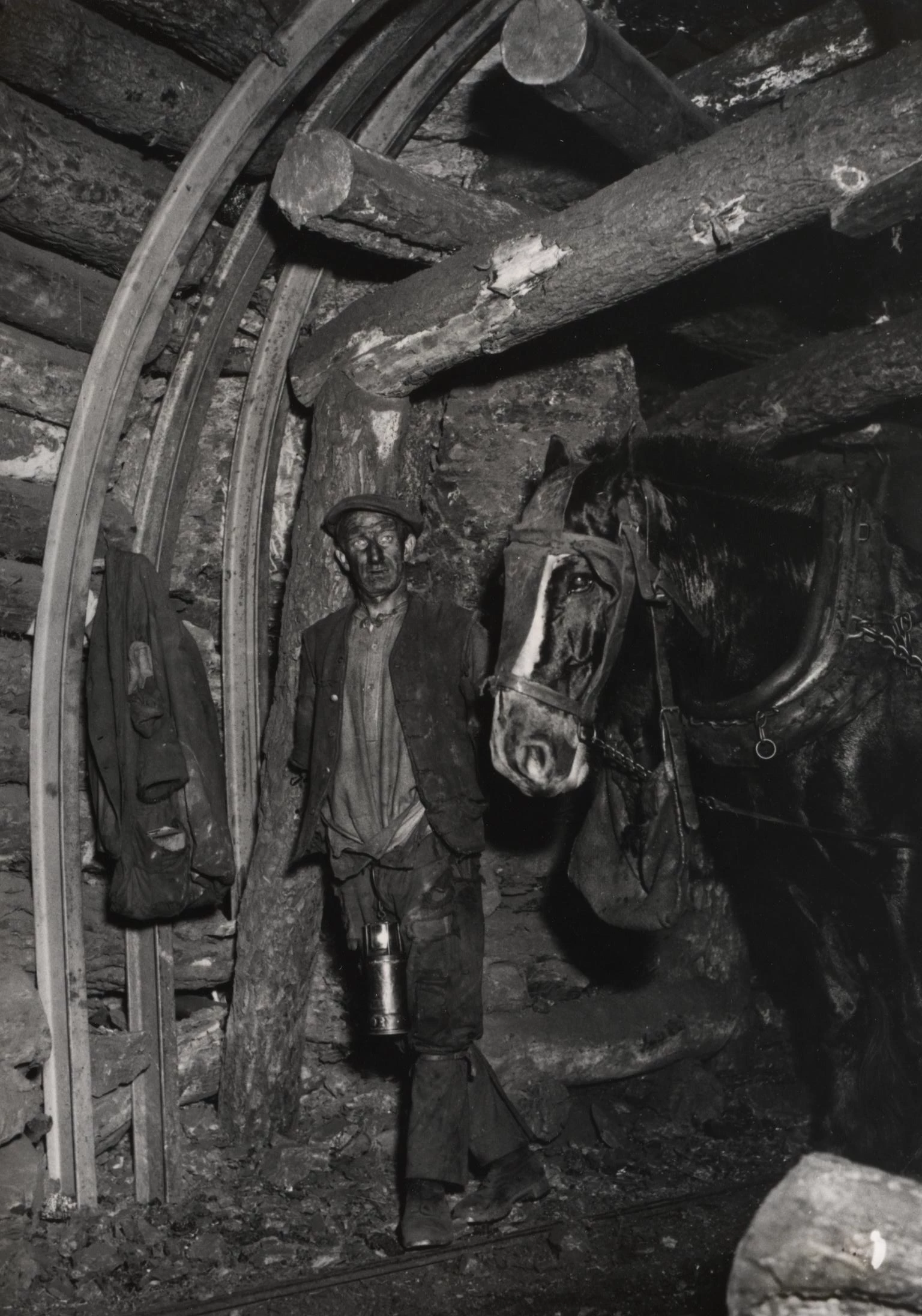
A miner stands by wooden beams in a coal mine; he stands next to a Welsh Colliery Horse
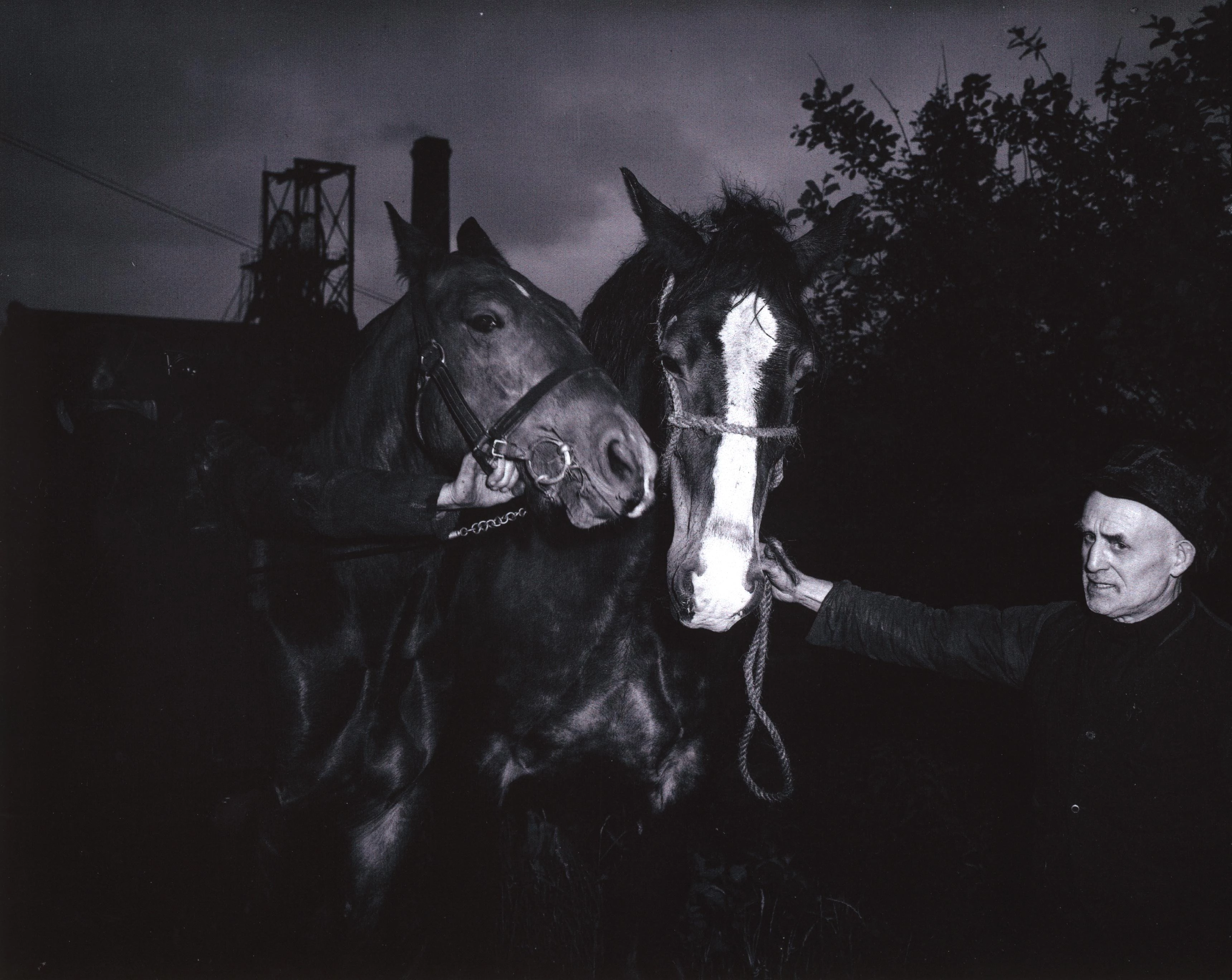
Two men hold the reins of two hourses. It’s night-time but the big pit wheel can be seen in the background; the man has a serious look on his face
A brown horse stands on a track; he has a mask covering his face and is pulling a cart behind him and there's a green shed to one side
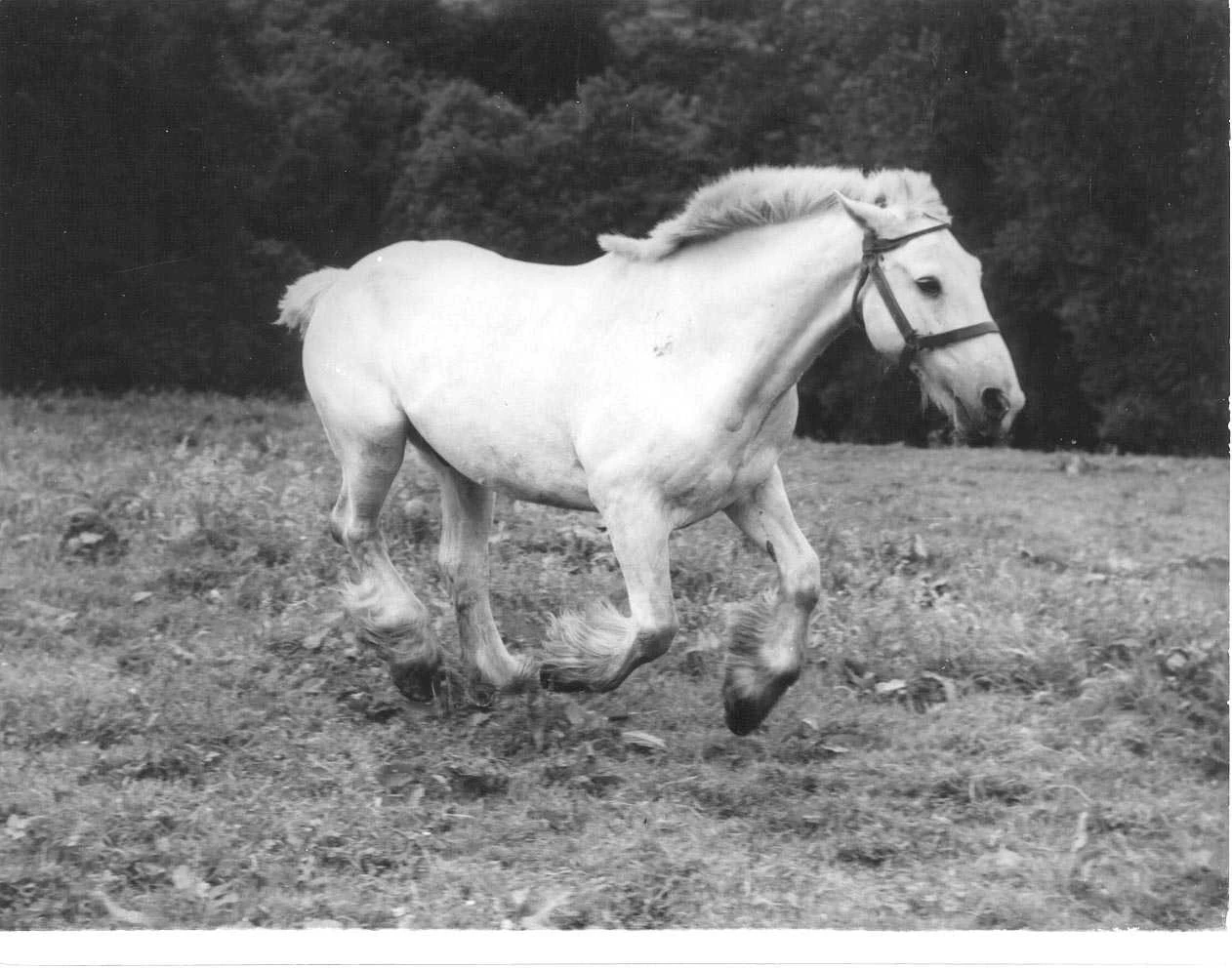
A white horse galloping in a field; there are trees in the background


Horses have been closely connected with coal mining since the early days of the industry.  They have been used to transport coal from the collieries to the customer, have been used to power winding and pumping engines and, most importantly to move coal from the coalface to the shaft.

In 1878 the RSPCA calculated that there were over 200,000 horses at work in British mines. The numbers decreased as mechanisation became more common, but they continued to be used throughout the twentieth century. The last Welsh colliery horse was probably Robbie who retired from Pant y Gasseg Mine in 1999.

Most commonly known as ‘pit ponies’ by the general public but Welsh colliery horses were usually around 15 hands high – the same size as Henry VIII’s warhorses.  It is often claimed that they went blind, but a blind horse would not have been very useful underground and any animal which did lose its sight was usually brought to the surface as soon as possible.

Although they were essential for the production of coal before introduction mechanised haulage, use horses in industry has often been highly controversial. The owners argued that vital economic process winning while animal lovers regarded their as inhuman.

In between these opposing sides were the mineworkers, who may have felt sympathy for these animals. However, they could turn a blind eye to any callousness, or even be cruel themselves, if their pay packets were under threat.

Welsh colliery horses were usually around 15 hands high and males, mostly geldings but some stallions were kept.  The majority were of the Welsh Cob type but larger horses such as Shires and imported Belgian horses were also kept, especially on the surface or in main haulage roads. When stocks of horses were low, they could be obtained from as far away as America and Russia.  Smaller ponies, around 13 hands, were sometimes used for light haulage duties.

They had to be at least 4 years old before being accepted into colliery work. In 1893, the average life expectancy of a horse was between eight and nine years, with around 6% killed in accidents. By 1950s this risen ten fifteen although there were some on ‘light jobs’ still employment over twenty age.

By the 1930s, most horses worked between forty-five and sixty hours a week. After 1949 the maximum working hours were to be not more than forty-eight hours, and no more than seven shifts, per week.  They were also entitled to the same twenty-minute break as the men.

In 1938, colliers were entitled to an annual week’s paid holiday and the horses were usually allowed above ground as well. By 1948 both the colliers and horses got a two-week annual holiday.

By 1878, the RSPCA estimated that there were around 200,000 horses working in British mines.  By 1913 this had decreased to 70,000, because of improved mechanical haulage methods. In 1930 it was reported that 25 Welsh collieries had no horses at all. In 1947 there were some 8,000 Welsh colliery horses, by 1967 there were only 417. By the 1980s National Coal Board horses were being retired but, in smaller, ‘private mines’ horses were in use for a few years to come.

The last Welsh colliery horses, ‘Gremlin’ and ‘Robbie’ retired from Pant y Gasseg (‘Horses’ Hollow’) Mine, Pontypool, in 1999. They were sent to a RSPCA rest home in Milton Keynes, but Robbie found that boring and was loaned to the National Coal Mining Museum for England in Wakefield where he pulled light tubs of visitors around the site.  Robbie died on the 27th April 2009, probably the last working Welsh colliery horse.

For many visitors to Big Pit, the most memorable parts are the underground and surface stables, still bearing the names of the horses that worked there. By the start of the 20th century, there were around 300 horses working in Blaenafon coal mines with 72 working in Big Pit alone.

The last underground horse at Big Pit was brought up in 1972, but two horses continued to work on the surface until 1974.

Whether he was a ‘willing pet’ or ‘wretched pit pony’ the colliery horse shared the same conditions and dangers as the coalminer. They died in their hundreds from mistreatment, accident and explosion. We owe them a great deal, including the success of the industrial revolution.
Herbarium

Katherine Slade and Sally Whyman, 2 April 2022

Introduction

Did you know that National Museum Wales houses the Welsh National Herbarium?

Welsh National Herbarium at National Museum Wales

Welsh National Herbarium at National Museum Wales

Here we explore the herbarium and what it means. We discuss how the herbarium is stored and what can be found there as well as who can benefit from it.

What is a Herbarium?

A herbarium is a collection of preserved (mostly dried) plant specimens that have been stored appropriately and arranged systematically to ensure quick access for curators, artists, students, researchers and the general public for scientific research and education.

The Welsh National Herbarium contains vascular plants (such as flowering plants, conifers, ferns and club-mosses), bryophytes (mosses, liverworts and hornworts), lichens, fungi, slime moulds and algae. There are also botanical illustrations, models and collections relating to the use of plants by people such as spices, herbs, crops, wood and fibres. Specimens are also kept of diseased plants, keeping a record of plant infections and pest damage over time.

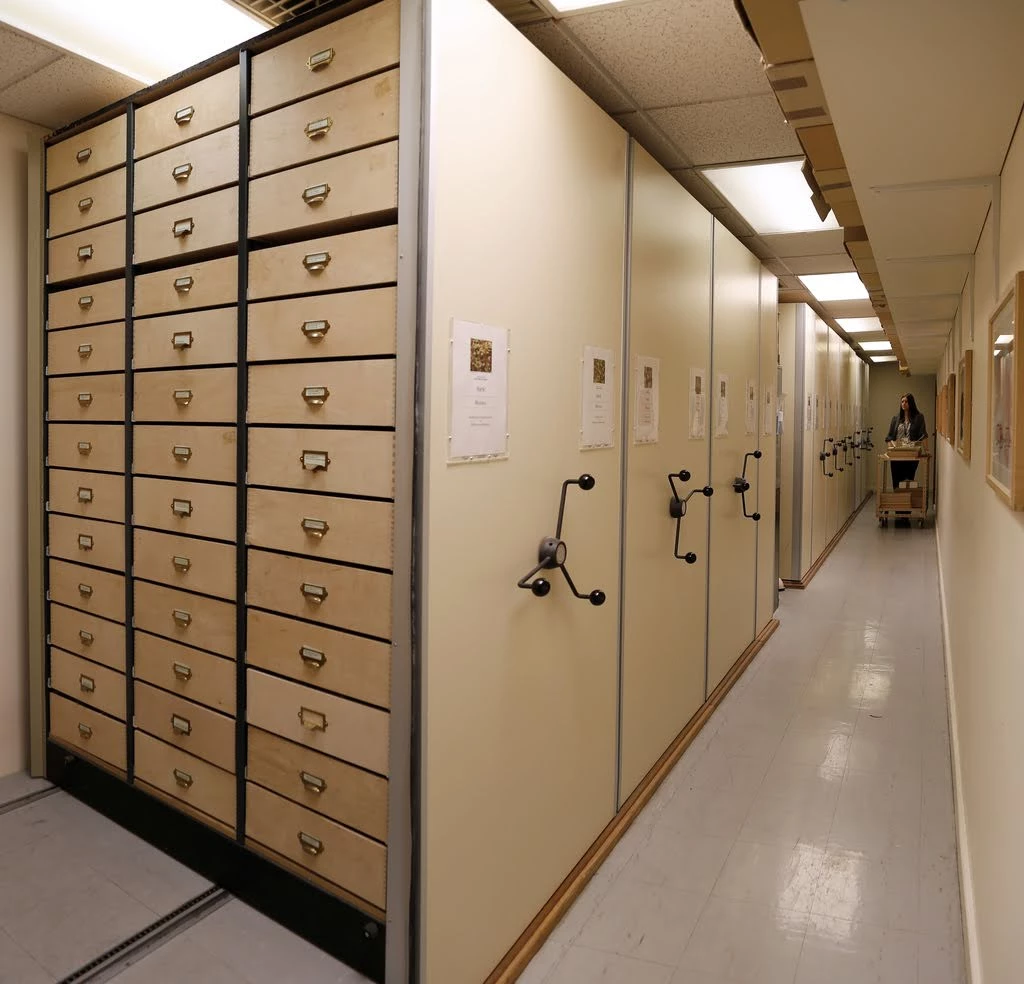
In the vascular herbarium, specimens are arranged by plant family and genus while other plant groups such as mosses are arranged alphabetically. Specimens are stored in tall metal cabinets and in wooden drawers on roller racking, within the herbarium, which is kept at an even temperature and humidity.

Move from herbarium cabinet to herbarium cabinet, and you can delve into a huge array of plant diversity world-wide. For example one cabinet might have Black Raspberry (Rubus occidentalis from North America, and the next cabinet you open might have Laver seaweed (Porphyra species) from Pembrokeshire.

A herbarium is the only place to be if you want to study the world’s plants in one place, or even ‘just’ all plants that live across Wales!

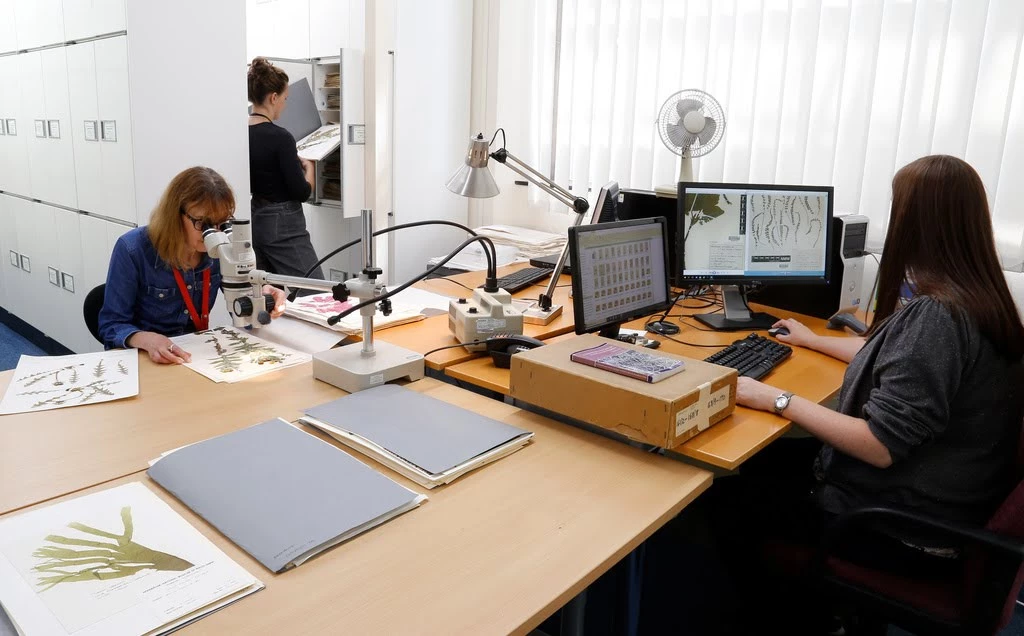
Curators are working to scan all specimens, making accessing data and sharing specimen images and information with other institutions easier.

Difference between a Herbarium and Herbaria

Herbaria is the plural and herbarium is the singular, so you have one herbarium and many herbaria. There are thousands of herbaria around the world and each one is the home of historical plant records covering hundreds of years to the present day. The oldest plants in National Museum Wales are 300 years old. They are plant time capsules containing unique information that would otherwise be lost.

The herbarium is checked regularly for infestations, and strict guidelines are put in place to ensure all specimens remain in pristine condition. Any loss or damage to specimens would be catastrophic because of the irreplaceable nature of collections.

It is the curator’s role to ensure that all specimens are kept in good condition indefinitely, stored according to the correct guidelines. The herbarium is checked regularly for infestations, and strict guidelines are put in place to ensure all specimens remain in pristine condition. Herbaria contain ‘type specimens’, individual specimens that a scientist has used to base their description on when describing a new species. Any loss or damage to specimens would be catastrophic because of the irreplaceable nature of collections.

Who benefits from herbaria?

Botanists

The most obvious field that benefits from herbaria is botany; botanists are plant scientists that study and perform experiments on plants. Some herbarium specimens are hundreds of years old, so this gives botanists a unique chance to look at how plant life has changed over time.

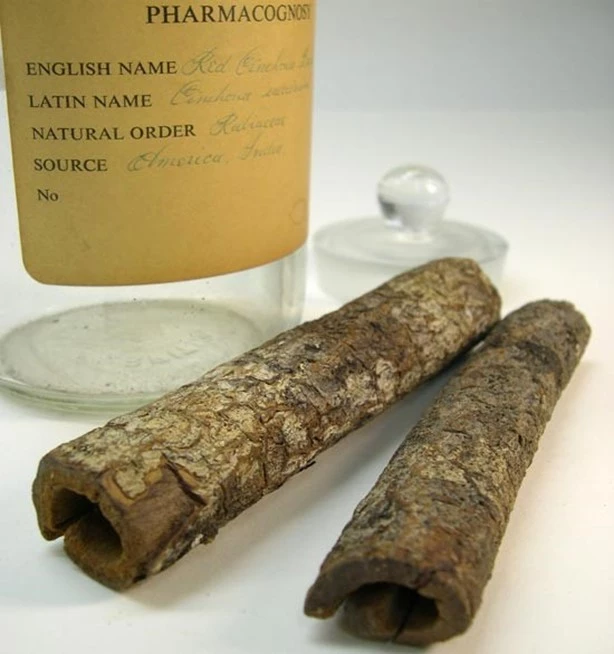
Cinchona bark which contains quinine, from the economic botany collection

Cinchona bark which contains quinine, from the economic botany collection

There are many studies that can be performed on herbarium entries, and these usually depend on the specialist skills of the researcher looking at them. Botanists can use herbaria and botanical specimens to answer questions such as:

  • Where do plants live and how does this change over time?
  • What is the diversity and abundance of a certain plant species?
  • Where can you find rare plants? An important question for conservation.
  • How have plants changed their flowering time (phenology) in response to climate change? For example some plants flower earlier due to climate change that’s occurred since the industrial revolution.
  • When were invasive non-native species first recorded in, for example, Wales?
  • How have plants changed their morphology over time? For example the density of stomata when cross referenced to fossil plants in the museum, shows evidence for adaptation by plants to changes in carbon dioxide in our atmosphere millions of years ago.

Other Scientists

It’s not exclusively botanists that benefit from herbaria, other branches of science can also use the botanical collections in their research. Biologists, climate scientists, conservationists and ecologists can benefit from the specimens found in herbarium and frequently use collections for ongoing research.

Herbaria can answer questions such as:

  • When did a plant pest first arrive in Wales?
  • How do plants respond to climate change?
  • Has a plant been found in a particular habitat?

Historians

Specimens stored in the herbarium can give insights into the daily life of people in history. Collections like the economic botanic collection contain plants and botanical items that have had an important domestic, medicinal or cultural use to society. This collection contains herbs, dyes, textiles and culturally important items that are kept to demonstrate their importance to world culture through displays, museum visits and exhibitions. Historians can also use herbarium collections for project collaborations, for records of discoveries and for exploration.

Artists

Artists have, and continue to draw inspiration from herbaria, using the unique perspective from nature that only a herbarium collection can give.

Teachers / People in education

Herbaria and museums are a great resource for education. Curators at National Museum Wales use the collections to help tell stories of history, culture and science in the museum galleries, exhibitions, for behind the scenes tours, at events and online.

What can be found in Herbaria?

Vascular Plants

Vascular plant herbarium cabinets at Welsh National Herbarium, part of National Museum Wales

Vascular plant herbarium cabinets at Welsh National Herbarium, part of National Museum Wales

Vascular plants also sometimes known as ‘higher plants’ are composed of all individuals that have water conducting tissue in their stems. Flowers, conifers, grasses, trees, ferns, club-mosses, horsetails, herbs, succulents, etc. are all types of vascular plants. These types of plants are usually stored on archival herbarium sheets, but the exact method of preparation and storage may depend on the specimen. Plants that are easily pressed are mounted onto acid free herbaria sheets, with a descriptive label for each specimen.

Curators aim to preserve all the reproductive (eg fruits, seeds) and vegetative organs (eg stems, leaves) of each plant, which are critical for species identification. Any plant parts that can’t be easily pressed, e.g. tubers, bulbs, fleshy stems, large flowers, cones, fruits, etc are usually dried and placed in boxes and then cross referenced with the pressed specimen.

Bryophytes (Mosses and Liverworts)

Bryophyte herbarium storage at the Welsh National Herbarium, part of National Museum Wales

Bryophyte herbarium storage at the Welsh National Herbarium, part of National Museum Wales

Bryophytes include liverworts, hornworts and mosses and are sometimes also known as ‘lower plants’ and represent some of the oldest organisms on Earth. Bryophytes often grow closely packed together on rocks, soil or trees. These types of plant don’t have regular water conducting tissue (a vascular system), so rely heavily on their environment to regulate their water levels. In National Museum Wales, mosses, liverworts and hornworts are not pressed onto herbarium sheets. Instead, specimens are air dried and placed in packets or boxes to ensure their long-term storage.

Algae

Algae are a very diverse group of non-flowering aquatic organisms that contain chlorophyll, so can photosynthesise to produce energy for themselves. Some can cause algal blooms in lakes and the sea as well as forming ‘pond scum’. However, algae are very important to the Earth, and it’s estimated that they produce 70-80% of the Earth’s atmospheric oxygen. The term ‘algae’ covers a wide range of organisms including seaweed such as kelp, filamentous species and microscopic algae such as diatoms and dinoflagellates. These groups are not all related and can exist in a huge range of different forms! In Wales, red laver seaweed (Porphyra) is collected to make laverbread which is often served as part of a Welsh breakfast.

Collecting and preserving algae can be done in a few different ways; storing them in liquid, on a microscope slide or dry preserving the specimen onto herbarium paper. What method is best usually depends on the species being collected and its properties.

Fungi

Fungi are organisms with often highly complex chemical makeups that occupy almost every habitat on Earth. Fungi are studied by mycologists and are not related to plants so are placed in their own kingdom.

Surprisingly, most fungi are hidden to us, many dwelling underground connected by a network of long thin cells called hyphae. It is only a small portion of fungi that produce fruiting bodies we know as toadstools and mushrooms. For the herbarium, the best way to preserve fungi fruiting bodies is to air dry them (cutting them into slices first if they are large), and then store in packets or boxes. Without fungi we wouldn’t have beer, cheese or perhaps many plants. Fungi help decomposition, making nutrients available to plants in the soil. Many trees have symbiotic relationships with fungi with nutrients and water transported directly into the tree roots. Fungi even help plants to communicate with each other within the soil using their underground networks.

Lichens

Lichens are unique in plant taxonomy because they are an organism composed of two separate organisms in a symbiotic relationship. A lichen is composed of a fungus, and either an algal cell or bacterial cell. The fungal portion of the organism extracts organic carbohydrates and nutrients from the environment, and the algal/bacterial portion of the organism undergoes photosynthesis to capture energy from the sun.  Because lichen are difficult to extract from their environment, commonly they are collected still attached to their substrate (rocks, bark, soil crusts) and stored in boxes.

How to make a Herbarium

Making your own herbarium is a fairly simple process, it doesn’t require many materials.

Please note that the following instructions are for preparing pressing plants such as ferns and flowers. Different preservation techniques are used for seaweeds, fungi and mosses.

Step #1: Head out to a local field or forest, or even your back garden and look for interesting specimens to use. Never pick rare or endangered plants and always get permission from the landowner. Use the rule of 1 in 20 - only take a plant if there are another 19 in the same place. Always follow the Botanical Society of Britain and Ireland’s code of conduct.

Step #2: Once you’ve found something to add to your collection, take lots of photos for future reference showing where the plant is growing and features that could help with identification. Make notes about its appearance that may be lost in the preservation process such as colour, stem shape and overall height. Also note down the date, where the plant was found including map reference and the habitat; is it in the shade, sheltered by trees or on a slope?

Step #3: Once you’re happy you’ve captured all the details, carefully take a few cuttings of the plant, make sure you don’t damage it unnecessarily. Take care to select parts that contain as many plant parts as possible eg. leaves showing different shapes, stems, flowers and seeds.

Step #4: Use a thick bag or container to carry your cuttings home. There you can start the process of pressing your plants.

How to press plants for a Herbarium

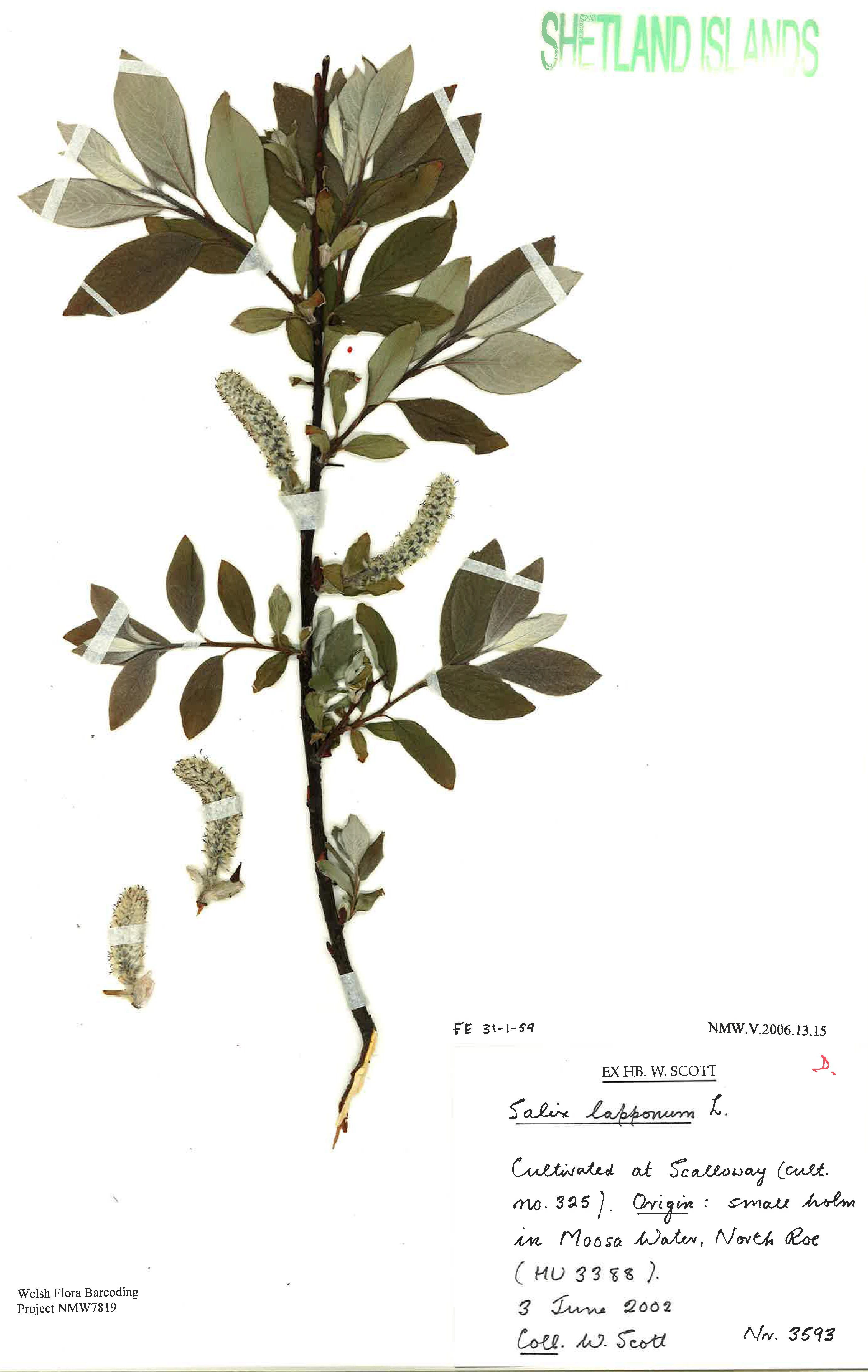
Herbarium specimen showing strips of card attaching the plant to the sheet

Herbarium specimen showing strips of card attaching the plant to the sheet

Once you’ve arrived home with your plants you can start preparing them for pressing.

Step #1: Create a homemade plant press (you can use hardboard or plywood). Place one board flat on a hard level surface and place several sheets of newspaper on top, then add a sheet of blotting paper.

Step #2: Prune and brush clean your cuttings. Remove larger fleshy fruits which will not press well.

Step #3: Place your specimen on top of the blotting paper. Arrange it so that as little as possible is overlapping to aid the drying process, removing spare branches if needed. If possible, turn over a leaf so that the underside can be easily seen on the herbarium specimen once it is pressed.

Step #4: Place another layer of blotting paper on top of your plant, and another layer of newspaper on top of that.

Step #5: Close the press by putting another piece of hardboard or plywood on top of your specimen. Use books/bricks or similar heavy items to press your cutting flat.

Step #6: You will need to keep the plant in the press for between 2-21 days, depending on the thickness and type of plant you’ve chosen to press. Check the plant once a day to keep an eye on progress. Replace the newspaper and blotting paper within the press if they’re damp.

How to make a Herbarium sheet

Once you’re happy that your specimen is dry and pressed you can create your herbarium sheet.

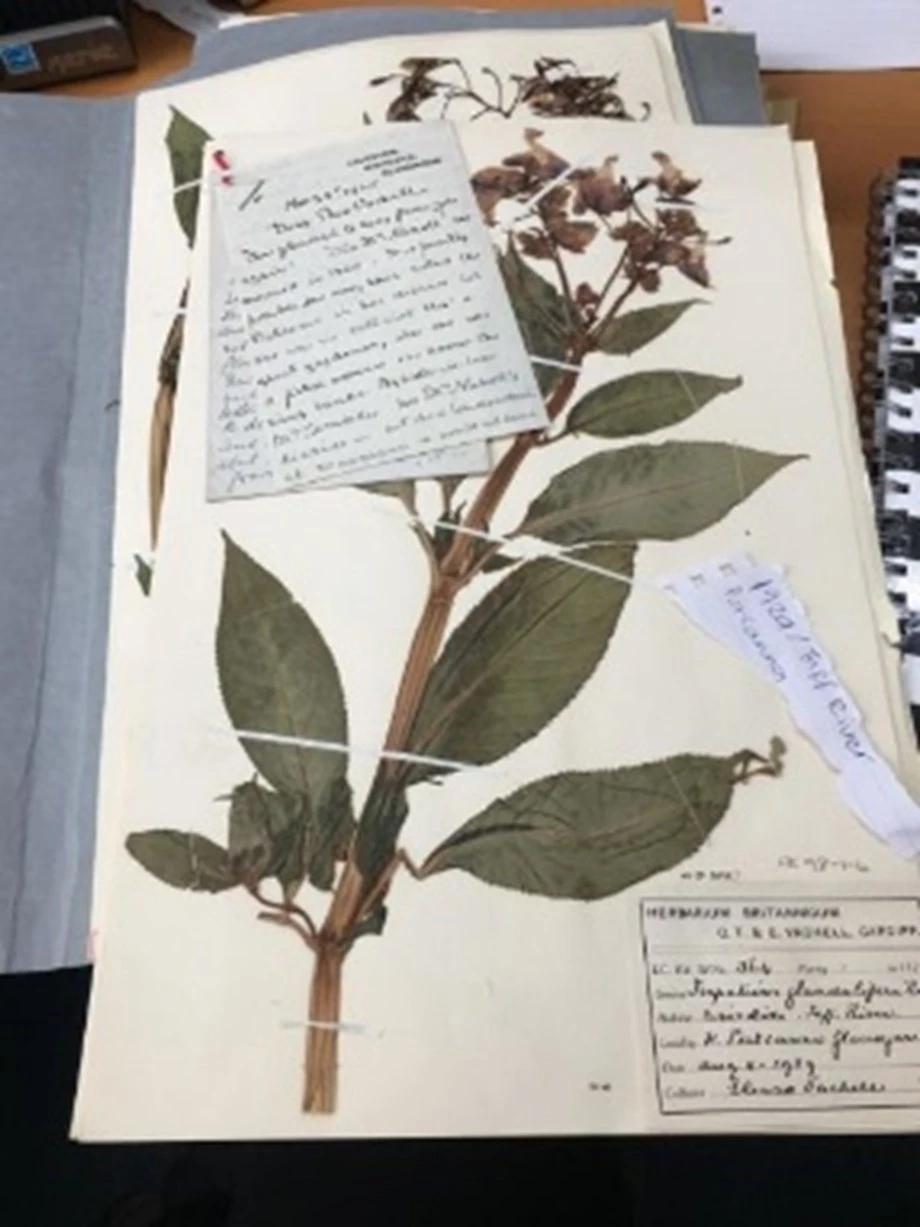
Himalayan Balsam (Impatiens glandulifera) mounted on a herbarium sheet in Cardiff 1929

Himalayan Balsam (Impatiens glandulifera) specimen collected in 1929 in Cardiff. This specimen has been mounted onto a herbarium sheet, complete with detailed notes of the habitat in which it was found.

Step #1: Place your plants on a sheet of card . (Top tip: If possible, use conservation-grade or acid free card, it doesn’t break down as quickly as ordinary types of paper, which means your herbarium will last for much longer).

Step #2: Attach the plant to the sheets of paper at strategic points with short thin strips of acid free card (see image). Cut the strips to roughly 2-4mm width – so that they are relatively easy to cut and handle but won’t cover too much of the plant. Place a small amount of glue at either end of the strip so that the plant itself doesn’t get glue on. Then place the strip over a stem or leaf tip and press the glued ends onto the sheet. (Top tip: PVA glue will work for this or use conservation grade EVA that lasts forever).

Step #3: In the bottom right hand corner using a pencil or a pen with colour fast, fade proof ink, write the name of the plant along with all the information you recorded when collecting it. Don’t forget to add your name as the collector, if the specimen is sent to a herbarium this is very valuable information.

You have now completed your first herbarium sheet.

How to prepare a Herbarium file

Repeat the above process and build on your collection of herbarium sheets to create a herbarium.

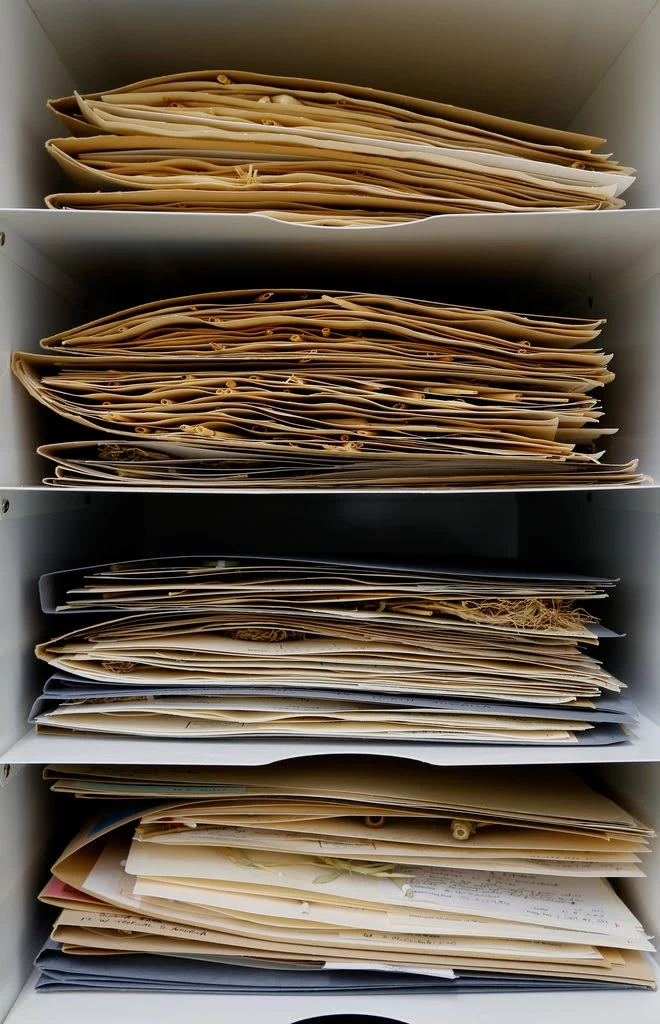
File the specimens away flat in boxes and never turn them upside down as pieces may fall off.

Make sure you create labels for each sheet and use the information you collected when picking your plants to add names to and classify each specimen.

As you add to the collection, decide how to organise it.

You could arrange it alphabetically or keep plants that related to each other together in their families.

Herbarium files at the Welsh National Herbarium, part of National Museum Wales

Herbarium files at the Welsh National Herbarium, part of National Museum Wales

Whichever arrangement you choose, make sure it’s the right one for you as it will become much more time consuming to rearrange as your collection grows. Imagine trying to rearrange the 750,000 specimens in National Museum Wales!

“This article includes material written originally by Amy Wyatt, a Professional Training Year student at Amgueddfa Cymru in 2018, and was extended by botany curators Katherine Slade & Sally Whyman.”

Uncovering our Collections: Half a Million Records now Online

26 March 2018

As we reveal half a million collection records for the first time, we look at some of the strangest and most fascinating objects from National Museum Wales Collections Online.

This article contains photos of human skeletal fragments.

The Biggest

We have some real whoppers in our collections - including a full-size Cardiff Tram and a sea rescue helicopter - but the biggest item in our collection is actually Oakdale Workmen's Institute.

Built in 1917, the Institute features a billiard room, dance hall and library - and is nowadays found in St Fagans National Museum of History.

Photograph from 1908 showing Horace Watkins in a very early, precarious-looking monoplane

Horace Watkins testing his monoplane in 1908

Many of the buildings in St Fagans are part of the national collection - meaning they have the same legal status as one of our masterpiece Monets or this coin hoard. The buildings are dismantled, moved, rebuilt - and cared for using traditional techniques, by the museum's legendary Historic Buildings Unit.
 

The Oldest


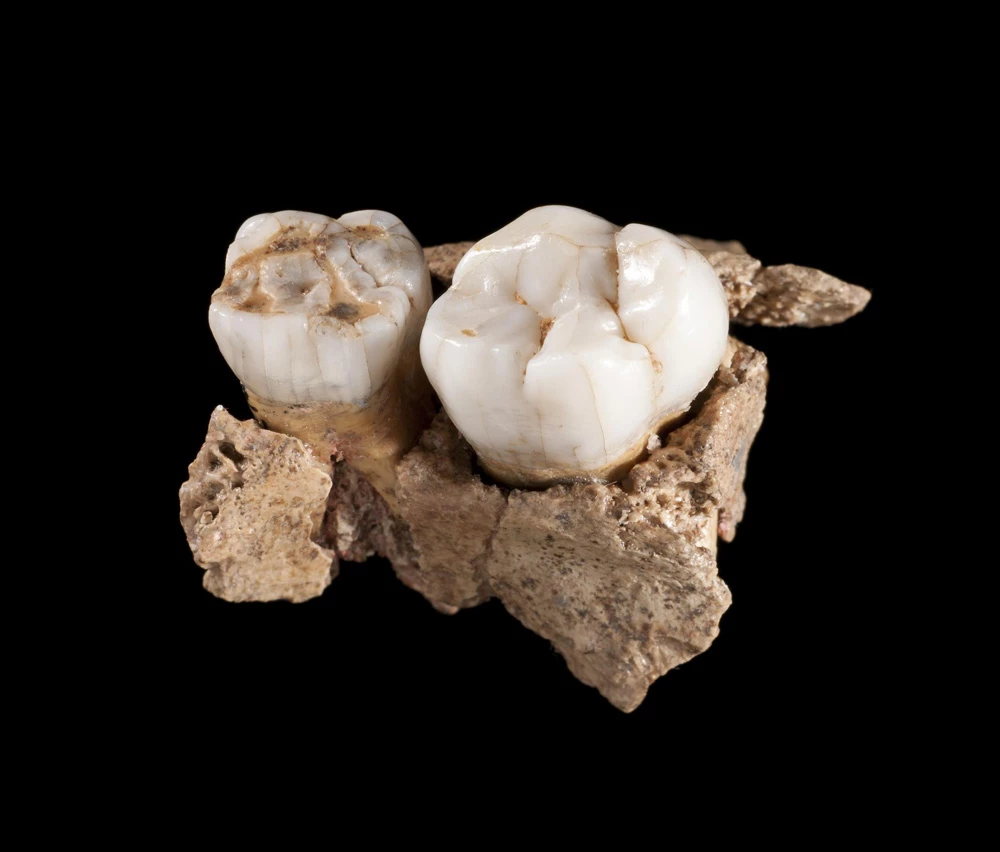
photograph of two teeth, belonging to a Neanderthal boy aged 8

The oldest human remains ever discovered in Wales

These teeth belonged to an eight year-old Neanderthal boy - and at 230,000 years old, they are the oldest human remains in Wales.

They were discovered in a cave near Cefn Meiriadog in Denbighshire, along with a trove of other prehistoric finds, including stone tools and the remains of a bear, a lion, a leopard and a rhinocerous tooth.

These teeth are among some of the incredible objects on display at St Fagans National Museum of History
 

The Shiniest

People in Wales have been making, trading and wearing beautiful treasures from gold for thousands of years - like this Bronze Age hair ornament and this extremely blingy Medieval signet.


photograph of gold disc with repousse design

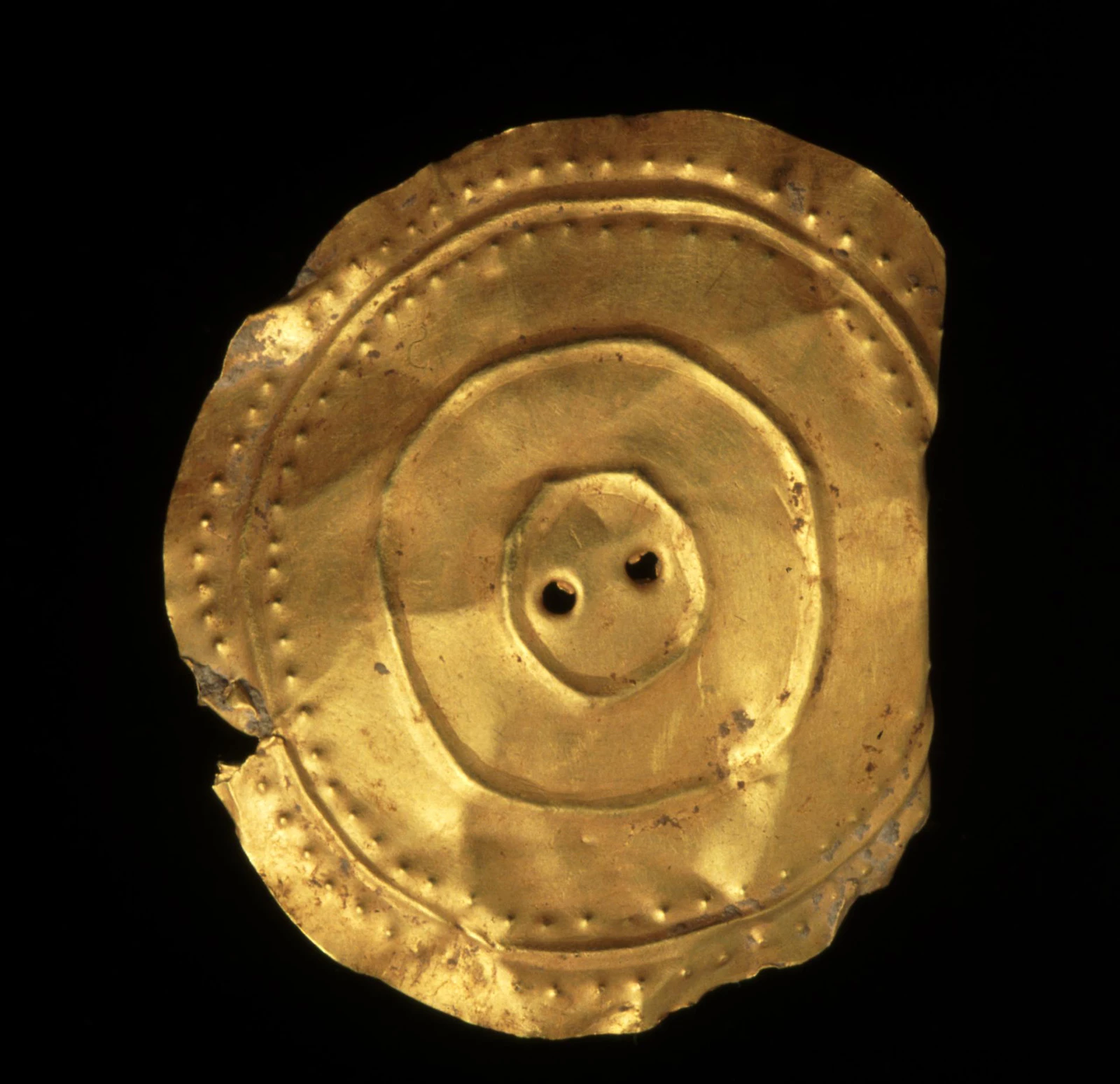
At around 4000 years old, this sun disc is one of the earliest and rarest examples of Welsh bling

One of the earliest examples of Welsh bling is this so-called 'sun disc', found near Cwmystwyth in Ceredigion.

Current research suggests that these 'sun discs' were part of ancient funeral practice, most likely sewn onto the clothes of the dead before their funerals. Only six have ever been found in the UK.
 

Most Controversial

At first glance, an ordinary Chapel tea service - used by congregations as they enjoyed a 'paned o de' after a service. A closer look reveals the words - 'Capel Celyn'. The chapel, its graveyard and surrounding village are now under water.


Photograph showing a cup and saucer with 'Capel Celyn' and a ribbon scroll design

Capel Celyn, in the Tryweryn Valley, is now underwater

Flooded in 1965 by the Liverpool Corporation, the Tryweryn valley became a flashpoint for Welsh political activism - creating a new generation of campaigners who pushed for change in how Welsh communities were treated by government and corporations.

Curators from St Fagans collected these as an example of life in Capel Celyn - to serve as a poignant reminder of a displaced community, and to commemorate one of the most politically charged moments of the 20th century in Wales.
 

Honourable Mention: an Airplane made from a Dining Room Chair

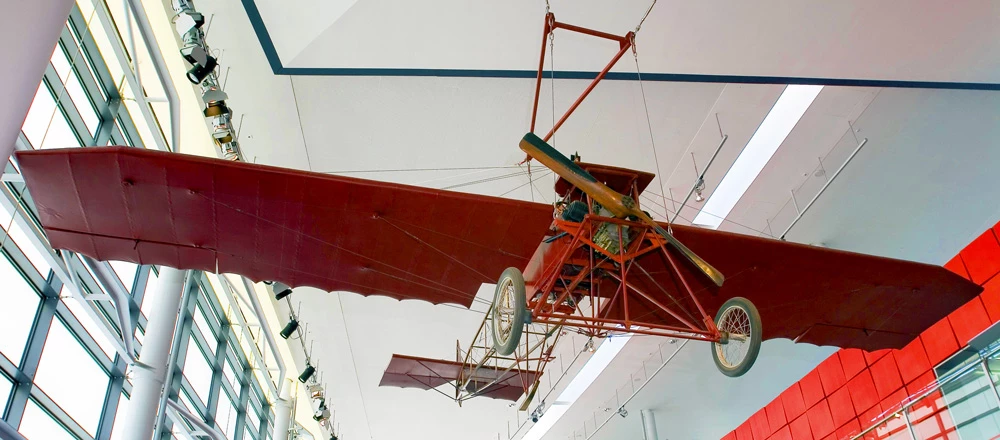
Made from a dining room chair, piano wire and a 40 horsepower engine, the Robin Goch (Red Robin) was built in 1909 - and also features a fuel gauge made from an egg timer.


photograph of a small, early twentieth century airplane with red wings

The Robin Goch (Red Robin) on display at the National Waterfront Museum

Its builder, Horace Watkins, was the son of a Cardiff printer - here he is pictured with an earlier, even more rickety version of his famous monoplane.
 

Photograph from 1908 showing Horace Watkins in a very early, precarious-looking monoplane

Horace Watkins testing his monoplane in 1908

Our collections are full of stories which reflect Wales' unique character and history. The Robin Goch is one of the treasures of the collection, and is an example of Welsh ingenuity at its best.

Half a Million Searchable Items

The launch of Collections Online uncovers half a million records, which are now searchable online for the first time.

“Collections Online represents a huge milestone in our work, to bring more of our collections online and to reach the widest possible audience.

It’s also just the beginning. It’s exciting to think how people in Wales and beyond will explore these objects, form connections, build stories around them, and add to our store of knowledge." – Chris Owen, Web Manager
 

Search Collections Online

Plans for the future

Our next project will be to work through these 500,000 records, adding information and images as we go.

We'll be measuring how people use the collections, to see which objects provoke debate or are popular with our visitors. That way, we can work out what items to photograph next, or which items to consider for display in our seven national museums.

Preparing and photographing the collections can take time, as some items are very fragile and sensitive to light. If you would like to support us as we bring the nation's collections online, please donate today - every donation counts.


Donate Today


We are incredibly grateful to the People's Postcode Lottery for their support in making this collection available online.
 

Counterfeit Coins

Rhianydd Biebrach, 16 March 2017

The last execution for forgery took place in 1830 and Victorian forgers were punished by transportation, imprisonment and hard labour. The punishment for counterfeiting today is several years’ imprisonment.

Have you ever been guilty of passing fake coins?
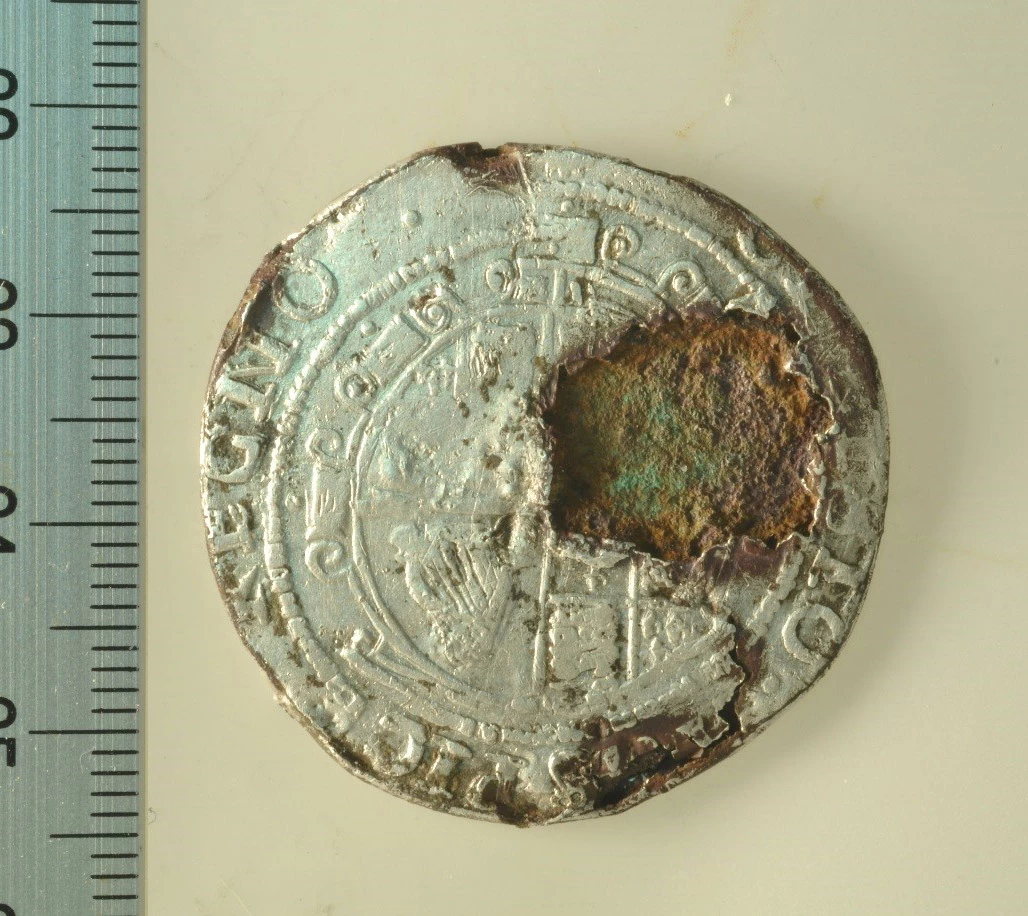
A forged Charles I half-crown. The corroded base metal core can clearly be seen through the thin silver plating.

A forged Charles I half-crown. The corroded base metal core can clearly be seen through the thin silver plating.

Your answer will hopefully be, “no, of course not!”, but would you be able to spot one if you saw one?

According to the Royal Mint, just over 2.5% of the £1 coins circulating in 2015 were counterfeit, so how many of us have unwittingly broken the law by handling fake money? But far from being a modern problem, you may be surprised to learn that counterfeit coins have been causing headaches for the authorities for thousands of years – for as long as we have been using money, in fact.

Occasionally, metal detectorists who unearth coins and report them to the Portable Antiquities Scheme in Wales (PAS Cymru), are told that what they have found is not what it seems to be – it is in fact a fake. In 2015, out of 679 coins reported, seven were judged by experts at Amgueddfa Cymru-National Museum Wales to be contemporary counterfeits. Many more were described as ‘irregular’ and therefore also produced under suspicious circumstances.

One of the fakes was a Charles I half crown, discovered by Mr Nick Mensikov at Miskin, Rhondda Cynon Taf. A half crown is a silver coin, but Mr Mensikov’s example gave itself away as a fake because corrosion revealed it to have only a thin coating of silver over a copper alloy core. In ‘mint’ condition it would have looked sound enough to the untrained eye, but its real value would have been well below the two shillings and sixpence (or one-eighth of a pound) that the half crown represented.

Twelve fake coins from the reign of Charles I found in Wales have been reported to PAS Cymru since 2009, far outweighing those of any other monarch, but the great majority are much older than this and date from the period of Roman occupation, from the first to the early fifth century AD.

One of these Charles I half-crowns is also a fake. Can you tell which one?

One of these Charles I half-crowns is also a fake. Can you tell which one?

Who made counterfeits, and why?

Counterfeit coins were made for several reasons in the past. Sometimes, when supplies of the smaller denomination coins were inadequate, unofficial production took place to make up the shortfall. In Roman Britain this happened to such an extent that at some periods there may have been as many fake coins in circulation as real ones. After Claudius’s invasion in AD 43 the Roman army itself may have been responsible for much of this ‘irregular’ coinage, which was sometimes tolerated by governments as being something of a necessary evil.

In other cases, people forged coins purely and simply for monetary gain. Of course, this was not an easy process. It required access to supplies of metals, a furnace or crucible, and various other bits and pieces of equipment, including dies or moulds on which had been engraved a passable copy of the coin to be reproduced. This meant that forgery operations generally involved more than one person, as well as some initial financial outlay, and so they were not the last resort of a poor man or woman with no other way of getting cash.

Some ‘coiners’, as forgers were sometimes called, were already wealthy individuals. In 1603 a coining operation was uncovered at Duncannon Fort in Ireland. Moulds, pieces of brass, crucibles, as well as chemicals and charcoal, were discovered in the desk of the fort’s commander, Sir John Brockett. Sir John had been producing counterfeit English and Spanish coins, for which he was put on trial for treason.

Some forgeries were never intended for use as cash, however. As early as the sixteenth century antiquaries and collectors began to be interested in old coins, and consequently some unscrupulous individuals went into business supplying fakes to tempt the unsuspecting or naïve. In early Victorian London, one Edward Emery was responsible for passing a possible 5-700 fake medieval and Tudor coins onto the collectors’ market. Roman coins were also highly collectable, and a modern era replica of one was found by a Mr Rogers in Usk in 2007. Made of a white base metal alloy designed to look like silver, was it thrown away in disgust by its owner when he realised what he had bought?

How were counterfeit coins made?

There were two main methods of producing fake coins – striking them from stolen or forged dies, or casting them in moulds. A coining operation in Ireland in 1601 used metal and chalk dies to strike the coins, which were made of an alloy which included enough tin to create the necessary silver colour, although the coins, of course, contained no precious metal. This was obviously a noisy activity and so coining dens were often located either in busy areas such as town centres where the noise and activity would be masked by the hustle and bustle of the streets, or in out-of-the-way places where people were unlikely to go. The latter option was chosen by the Roman forgers at work in the lead mine at Draethen, near Caerphilly. Discovered here were coins, the ‘flans’, or blanks, from which the false coins were struck, as well as the metal rods from which the flans were cut. These items were found around a hearth, and we can only guess at the hot, unpleasant and dangerous atmosphere that this subterranean forging operation would have created.

Casting was a different process, but it still required access to a powerful heat source as molten metal was required. An impression of both sides of a genuine coin was made in clay, wax or ashes. The hardened moulds were then fixed together and filled with molten metal alloy. Some cast coins are given away by the tell-tale remains of the channel through which the metal was poured and which wasn’t properly broken off or filed down. There has been plenty of evidence for this forging method from Roman London, consisting of both the cast coins themselves (often in a silvery-looking alloy of bronze and tin) as well as hundreds of moulds.

The appearance of precious metal necessary to pass off a fake coin was not only achieved by cunning uses of alloys (some of which included arsenic for a whitening effect!). Some coins – like the Charles I half-crown mentioned earlier – were made from base metals which were then plated with a thin coating of silver or gold to achieve the desired effect. Medieval forgeries often used a technique called fire gilding. A base metal blank was rubbed with a mixture of gold and mercury which was then heated. The mercury was evaporated and the gold was bonded to the surface. The coin could then be struck between the dies.

This process obviously required some technical skill, and there is evidence that forgers were experimenting with methods that would later be used for more legitimate purposes. A counterfeit coin of William III (1689–1702) was found to have been made by an early example of the Sheffield plating technique. A copper plate was rolled or hammered between two thin sheets of silver from which blank coins were then cut out. The edges were covered with a copper and silver alloy and the blanks were then struck with official dies smuggled out of the London mint.

The gold and silver necessary for the plating were sourced by clipping real coins (an offence in itself) as well as melting down pieces of plate or other coins.

Punishments

The severity of the punishments for counterfeiting have reflected both the seriousness of the crime but also the difficulty of detecting those responsible. Like many penalties of the pre-modern era, they were physical in nature. In ancient Rome it was a capital offence, equated with treason, and could be punished by banishment or slavery if you were lucky, or crucifixion if you weren’t. In the early 4th century, Emperor Constantine – who is more famous for making Christianity the official religion of the Roman Empire – introduced burning for forgers.

In 10th-century England, under King Athelstan (927–939), the forger would lose a hand, but one of his Norman successors, Henry I (1100–1135), went one better. Suspecting his official mint workers of producing irregular coinage on the side and unhappy with the standard of the regular issues, he summoned them to a Christmas gathering at Winchester where he took the right hand and both testicles from each of them.

Under Edward I and later kings, death by hanging was the usual punishment for men, with burning and strangulation reserved for women. Three unfortunate 16th century Edinburgh women suffered this appalling punishment, while in 1560 Robert Jacke, a Dundee merchant, was hanged and quartered merely for importing forgeries. Nineteen executions for counterfeiting took place in 1697 when Sir Isaac Newton was Warden of the Royal Mint.

Off With His Head!
The Story of Commonwealth Coins

Rhianydd Biebrach, 16 December 2016

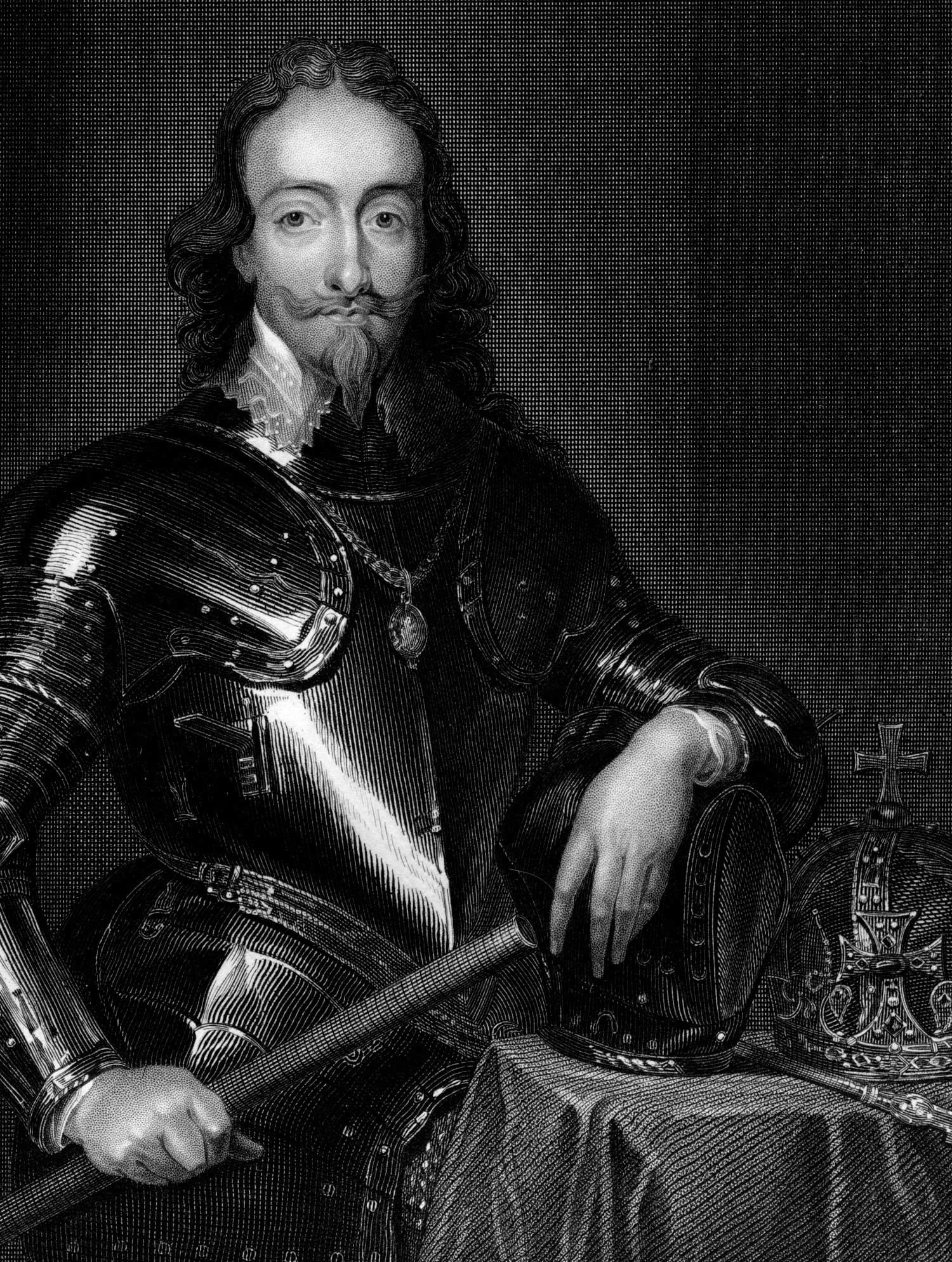
Portrait of King Charles I

Portrait of King Charles I

On the bitterly cold morning of 30 January 1649, following a long and brutal civil war between Crown and Parliament, King Charles I was beheaded in London and the monarchy was abolished.

Three years earlier, in 1646, Parliament had rid the Church of England of its bishops, and when the House of Lords was also abolished in March 1649, virtually the entire, centuries-old, basis of government in Britain had disappeared, seemingly for good. Little wonder people living at the time called it ‘a world turned upside down.’

In the end this uncertain Commonwealth period was to last only eleven years as the monarchy was restored in 1660, but the highly distinctive coins minted during this short stretch of time are sometimes unearthed by metal detectorists in Wales and reported via the

Portable Antiquities Scheme . They have been found in small numbers all over Wales, from Manorbier in Pembrokeshire to Cwm in Flintshire, and in various states of wear including one or two which were later reused for other purposes. So what makes them worth talking about?

Coins for the Commonwealth

It is not surprising that the radically new form of government ushered in so bloodily with the end of the monarchy in 1649 should have caused an upheaval in another enduring aspect of national identity – the coinage. Prior to this all coins had been issued in the monarch’s name and contained his or her image. Even during the Civil Wars (1642-48), Parliament – which was in control of London and therefore also of the Tower Mint - had continued to strike coins in the traditional style as long as the outcome of the war was uncertain. But now that Britain was a republic the centuries-old design of coins with the monarch’s head and Latin legend was clearly inappropriate. A new design, emphasising the legitimacy of the new republican regime, was needed.

Why do they look different?

Commonwealth half groat (twopence) found by R. W. Bevans in Manorbier, Pembrokeshire, 2009. The smaller denomination coins did not have a legend or date.

Commonwealth half groat (twopence) found by R. W. Bevans in Manorbier, Pembrokeshire, 2009. The smaller denomination coins did not have a legend or date.

You don’t need to be a coin expert to notice the obvious difference between the new coins and those we are all more familiar with - there is no king’s head! Of course, when the real king’s head was removed from his shoulders, its likeness also had to be removed from the coinage. With the king gone, the House of Commons claimed that it now exercised sovereign power on behalf of the people, and that God had given his approval to this new state of affairs by allowing Parliament to defeat the king in battle. This bold claim was bolstered by the imagery and lettering used on the new coinage.

On the obverse (heads) side, replacing the traditional monarch’s crowned head, there now appeared a shield containing the cross of St George, representing England. This was surrounded by a wreath of laurel and palm, symbolising Parliament’s victory and the peace it claimed it had brought. On the reverse (tails) side were the conjoined shields of England and Ireland, the latter represented by an Irish harp, along with the date of issue and denomination. Scotland, then a separate nation with its own coinage, was not represented, nor was Wales, which was thought of as part of the kingdom of England and so covered by the cross of St George – as is still the case in the modern Union Jack.

There were also changes to the legends, or lettering, appearing around the edge of the coin’s faces. Traditionally these would have been in Latin, giving the name of the monarch and an abbreviated list of their titles (including a claim to France!) as well as a Latin motto, but this was now replaced with ‘THE COMMONWEALTH OF ENGLAND’ on the obverse and ‘GOD WITH US’ on the reverse. These simple statements not only did away with all references to royal power, they also replaced Catholic-sounding Latin with good Protestant English, and in true Puritan style laid claim to God’s favour and support.

Royalist reaction and the ‘Rump Parliament’

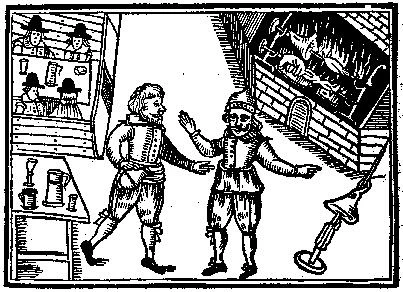
A seventeenth-century woodcut showing two men in a tavern, wearing the breeches said to resemble the conjoined shields of the Commonwealth coins

A seventeenth-century woodcut showing two men in a tavern, wearing the breeches said to resemble the conjoined shields of the Commonwealth coins. (Source: http://www.godecookery.com/mirth/mirth008.html)

Although Charles had been defeated and the monarchy abolished, there were still many people who had been against his execution and were fierce critics of the new republican regime, led by the so-called ‘Rump Parliament’ until 1653. Even the coins came in for ridicule, the royalists finding ways to attack the government by poking fun at the new designs. The wording of the legends on either side of the coins, for example, led royalists to observe that ‘God’ and ‘the Commonwealth’ were on opposite sides. The appearance of the conjoined shields of England and Ireland also caused amusement as they bore an uncanny resemblance to a pair of breeches, and were referred to in royalist circles as ‘breeches for the rump’, ‘rump’, being not only the name of the parliament but also a common term for someone’s backside.

Interestingly, in 1658 the government made an attempt to return to a more familiar design harking back to the royalist period. This featured the profile of the new head of state, Protector Oliver Cromwell, crowned with a laurel wreath on the obverse, and a coat of arms surmounted by – of all things – a crown on the reverse. Cromwell had earlier been offered the crown, but had refused it, so was it included in the new design in an attempt by the shaky government of the day to present an image of stability using the more familiar symbolism of times gone by? Cromwell died soon after this and the coins were never circulated so are not likely to be found by detectorists.

The Restoration and beyond

Worn commonwealth half groat reused as a love token, found by Gwyn Rees near Wenvoe, South Glamorgan, in 2012.

Worn commonwealth half groat reused as a love token, found by Gwyn Rees near Wenvoe, South Glamorgan, in 2012.

Commonwealth half groat found by Gwyn Rees near Wenvoe in 2015. The piercing may have been to take it out of circulation.

Commonwealth half groat found by Gwyn Rees near Wenvoe in 2015. The piercing may have been to take it out of circulation.

The republican experiment ultimately failed and the monarchy was restored under Charles II in 1660. Those who had signed his father’s death warrant, known as the regicides, were rounded up and executed; even the corpse of Oliver Cromwell was exhumed and hung in chains. A similar lack of mercy was shown to the Commonwealth coinage. It was suppressed and called in for recoining between 1661 and 1663, with an estimated two-thirds out of the total minted since 1649 being recovered. But what happened to the rest?

Most will have been taken abroad and some was hoarded, although the coins recovered by detectorists in Wales, which are all of the smaller denominations of penny and half-groat, suggest that some were accidentally lost. The wear and tear suffered by most of these finds may be a result of use or of subsequent damage while in the ground, although one found by Gwyn Rees near Wenvoe, South Glamorgan, in 2012, which has been bent and pierced with a hole at the top, seems to have been reused as a love token, possibly to have been suspended from a chain or ribbon. Was this discarded coin an accidental loss, or is it evidence of a failed relationship? Another Commonwealth half groat, also found near Wenvoe by Mr Rees in 2015, has been pierced in the centre, probably to demonetise it and take it out of circulation in the early 1660s. It is possible that the Restoration government did not bother to recall all the smaller denomination coins, which may therefore have continued in circulation beyond the early 1660s.

Historical significance

Commonwealth of England, half crown (2s 6d), 1649

Commonwealth of England, half crown (2s 6d), 1649

Although collectors see them as relatively uninteresting because of the plainness of the design and its uniformity across the denominations, Commonwealth coins are fascinating from a historical and archaeological point of view. In circulation for such a short period of time they are survivors of a troubled period in British history, when a bloody and divisive war was followed first by the shock of the king’s execution and then by years of political and religious upheaval as the country tried to find an acceptable alternative to monarchical rule. Just as all the political alternatives failed in turn, the new coins’ design was also shortlived – Charles II reverting to the familiar, centuries-old monarch’s head format, which continues in use today. The radical changes in design show how the new republican government tried to heal the ruptures of the Civil Wars and bolster its legitimacy in the absence of the king. Are they best seen as signs of life continuing much as it always had, or relics of a world turned upside down?

Oliver Cromwell, pattern half crown, 1658

Oliver Cromwell, pattern half crown, 1658