Sowing seeds of knowledge

Amgueddfa Cymru - National Museum Wales has been making preparations to send spring bulbs and pots to 2,621 primary school scientists across Wales, as part of an on-going study into the effects of climate change.

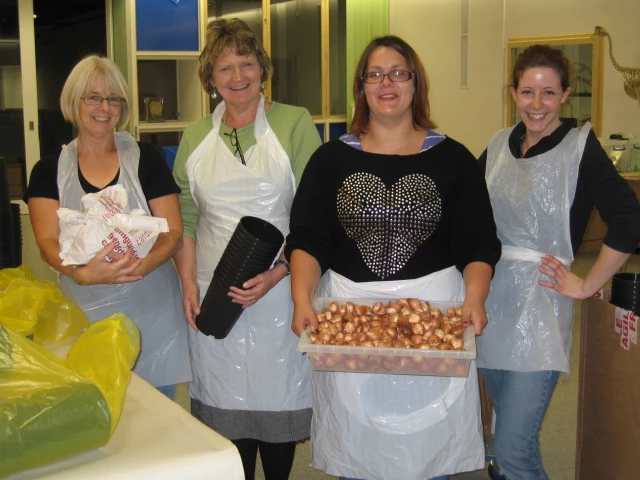
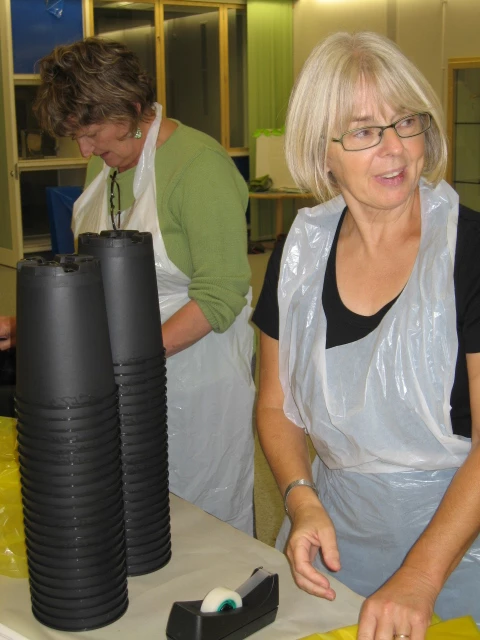
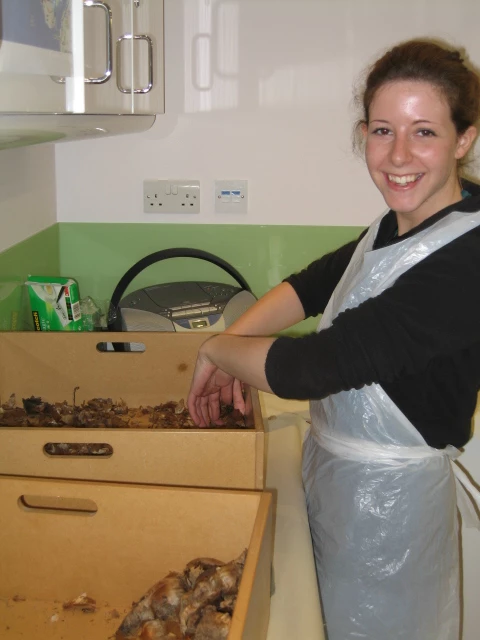
More than 3,000 bulbs were kindly donated by the Really Welsh company and then packed by a super efficient team of volunteers. The bulbs, pots and equipment will enable the schools to record the weather and flowering dates in 70 locations across Wales.

Each school will complete tasks and keep records through the winter and spring term to earn super scientist certificates that are awarded to pupils by the project leader - Professor Plant.  

The volunteers thoroughly enjoyed the experience and were happy to help with the logistics of this very worthwhile project, which enables the Museum to share its scientific knowledge with schools all over Wales - no matter how remote.

The most dedicated school will win a trip to a daffodil picking day with the farmers of Really Welsh who grow all their produce within Wales.

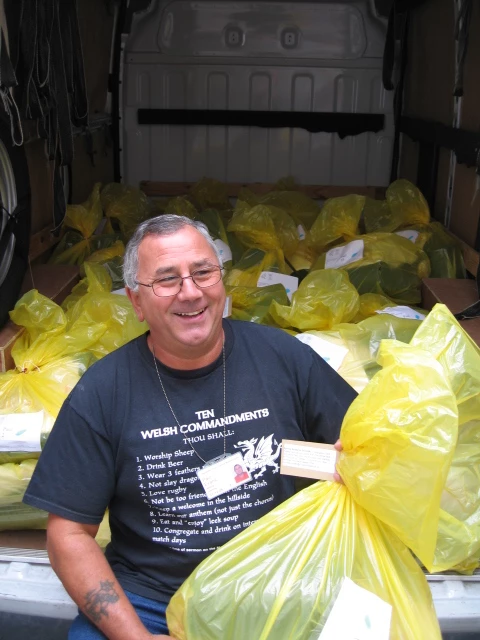
This week, van driver, Paul Evans will be delivering the investigation packs across the winding roads of Wales to ensure the schools have their bulbs in time for the big planting day which will take place on the 20th of October. Paul has worked for the Museum loan service for 20 years. 


A Roman belt-buckle that escaped the Edwardians

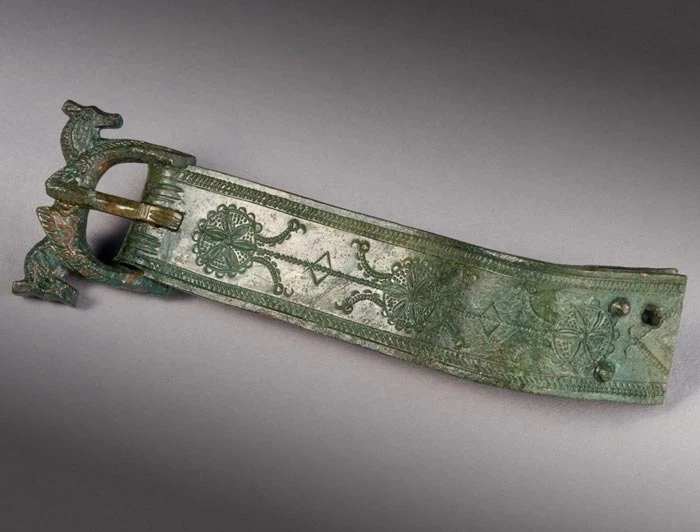
Late Roman Belt-buckle from Caerwent

Late Roman Belt-buckle from Caerwent

Belt-buckle decorated with fish and a pair of peacocks facing a stylised tree

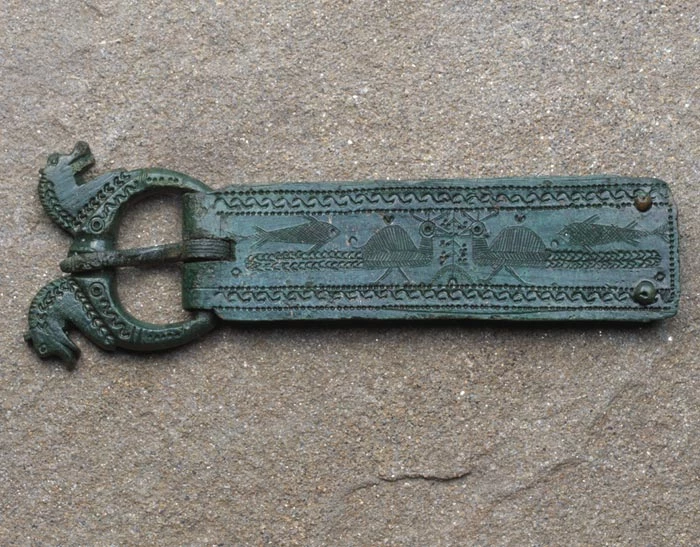
The only other example known from Wales — from Pen y Corddyn hillfort, Conwy. Decorated with fish and a pair of peacocks facing a stylised tree.

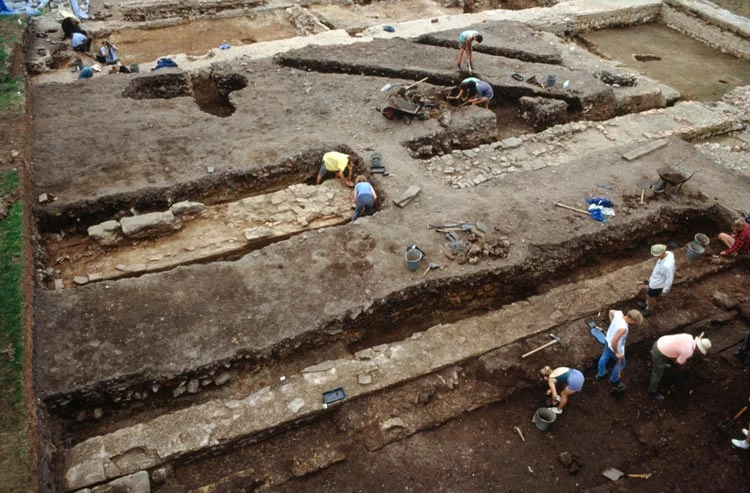
Excavation at Caerwent in the early 20th-century

Excavation at Caerwent in the early 20th-century

Re-excavating the Edwardian trenches at Caerwent

Re-excavating the Edwardian trenches at Caerwent

Archaeologists first excavated the forum-basilica at Caerwent in Monmouthshire early in the twentieth-century. When Museum staff returned to excavate the site again they found items that had previously been overlooked, including this late fourth-century copper alloy buckle and plate.

The buckle loop has a pair of dolphins' heads facing inward and a pair of horses' heads facing out. The sheet metal plate was originally fastened to a leather belt with two rivets at the end. It is decorated with a cable pattern border and three circular motifs with marigold-rosettes on a dotted background. The curving projections rising from these look like the heads and necks of birds, suggesting that the motifs could be peacocks.

Peacocks can be seen on the buckle plate from Pen y Corddyn hillfort, Conwy, the only other example of this type of buckle-plate known from Wales That example is decorated with fish and a pair of peacocks facing a stylised tree.

Immortal peacocks and a tree-of-life

Peacocks as a symbol of immortality (their flesh was said to be incorruptible), fish and trees-of-life can all be interpreted as Christian symbols. This has led some to connect these buckle-plates with Christianity, but they could simply be conventional decorative motifs.

Roman Military Belt

Buckle-plates like this have been seen as official issue military equipment. The 'military belt' was an important symbol of rank, although the style of belt was clearly adopted more widely. This example could be a more broadly official 'civil service' issue, rather than purely military. It seems likely, however, that their spread was wider, possibly as a sign of status among people who merely fancied that they were servants of the state. They have been found in a few female burials, which suggests they were worn by women.

The Caerwent belt-buckle should probably be regarded as no more than an item of dress that reveals the personal tastes of the owner. It does not directly reflect its owner's rank or even sex, although it may tell us a little about the wearer's aspirations to look like one of 'the Great and the Good' in society.

Reproducing Roman Arrowheads

Roman arrowhead with three ribs from Dinorben, north Wales

Roman arrowhead with three ribs from Dinorben, north Wales

Roman arrowhead with four ribs from Caerleon, south Wales

Roman arrowhead with four ribs from Caerleon, south Wales

replica arrowheads

Replica arrowheads

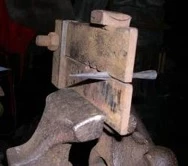
jig used to form a four-vane arrowhead

jig used to form a four-vane arrowhead

The Romans used many different types of arrowheads. The most characteristic had a series of vanes: the early type had three vanes, but by the 3rd century examples with four vanes are found. One possible reason for this change is that the four-vane type was easier to produce.

In 2008 St Fagans National History Museum hosted the World Field Archery Championship, and the Museum held a number of small exhibitions on archery. A number of replica Roman arrowheads were produced especially for the Roman archery display, to show what Roman arrowheads looked like when new.

Careful conservation work on some of the Museum's Roman arrowheads revealed enough original surface detail to help us work out how the Romans had made them. The Museum's blacksmith at St Fagans was keen to produce the replicas in the same way, and he experimented until he could produce copies that closely matched the originals.

This experimental work revealed that the four-vane type was easier and quicker to make, as the vanes could be formed in a jig. The vanes on the three-vane type, being more spread out, had to be individually hammered into shape. While doing this one vane tended to get in the way of working on another. Was this why four-vane types started to be produced?

If this is true, why did the Romans start off with three-vane arrowheads? Roman archery equipment was based on that developed in the Near East. There, the original metal arrowheads had been cast in bronze. The three-vane form of these bronze arrowheads was simply copied when iron arrowheads started to be made.

Further Reading

Andrew Murphy using the jig at St Fagans National Museum of History to recreate Roman arrowheads

Andrew Murphy, blacksmith at St Fagans National Museum of History using the jig to recreate Roman arrowheads

Bishop, M.C. & Coulston, J.C.N. 2006 Roman Military Equipment, from the Punic Wars to the Fall of Rome (Oxford: Oxbow Books)

Chapman, E.M. 2005 A Catalogue of Roman Military Equipment in the National Museum of Wales, BAR British Series 388 (Oxford)

Wales for Africa (Sept-10)

I've just found out the dates I'll be working in Zambia - I'm off on 2 October, and all of a sudden it feels very, very real!

I've got more jabs I need, I've got to sort my visa out, not to mention all the jobs I've been muttering to myself that 'I must do before I go...'. There are some things I really must do, like taking the cat to the vet and the car for its MOT (musn't get them mixed up). But I think painting the kitchen's off the list.

I've also got to publish our financial report, a 56-page discussion document and two books. All in two editions, Welsh and English. And carry on production of the 176-page book on our archaeology collections, and development of the brand new companion guide to the art collections. And recruit a new translator. And a few other things...

keepsakes

The Keepsakes exhibition opens on 11 September so we are busy getting the gallery ready. So far the walls have been freshly painted and we are waiting for the delivery of our lovely information panels.

The exhibition is in collaboration with Women's Arts Association (for some of the background have a look at my previous keepsakes blog!) who employed artists Becky Adams and Prue Thimbleby to work with community groups in and around Cardiff. The groups looked at objects from the collections in St Fagans: National History Museum and made their own art works inspired by what they saw.

We will be showing the women’s art work alongside the museum’s objects, and here’s a sneak preview of some of the objects that the women have made.