The Welsh Hat - Then and Now Niamh Rodda, 27 July 2023 Miniature hats from 1860’s by Welsh hatter, John Evans. The Welsh Hat is in middle row, centre. Hats are often political. Though it would be understandable for someone to assume that they are made to protect someone from inclement weather, it does not take a lot of thought to see that they are often much more. From a red ‘Make America Great Again’ baseball cap, to the bonnet rouge of the French Revolution, to any number of military hats, hats are regularly used to indicate which side you are on. Hats, along with all fashion, are used in a huge variety of ways to communicate with others and can tell us a variety of information: nationality, gender, interests, and identity. The hat specifically is often associated with group identity; in a crowd of people the hat can be a key identifier and if worn collectively can create a striking vision. The Welsh Hat does just this, its tall black crown and stiff brim, traditionally worn by Welsh woman creates a distinct and eye-catching look that has long been used as a symbol of Welshness.Before The Welsh HatThere is a prevailing myth that the Welsh hat and national costume was a Victorian invention, as part of imagined Welsh heritage and yet there are plenty of accounts going back a century earlier that tell us otherwise. The Victorians may have curated a specific version of Welsh dress and cemented the idea of it as ‘Welsh National Costume’ but the clothes themselves, including the hat, had indeed been around for much longer.Before the Welsh Hat was Welsh, it was just a hat. High crowned styled hats made of felt or beaver fur were once popular across many countries. Men and woman across Britain in the latter half of the Elizabethan period, wore such hats for travelling and riding, and a wider brimmed version of the hat, ‘cavalier style’, was then adopted by the middle class in the mid-part of the 17th century. At this time hats were an important status symbol. Beaver fur was the quality material used to felt hats, but felting the fur was difficult and costly and from 1670, the product was often imported from America. Samuel Pepys notes in his diary, in 1661, that a beaver hat had cost him 45 shillings. From around 1640 to 1660 a version of the beaver hat with a tall, tapered crown known as a ‘sugarloaf’ became popular and looked very similar to what we would think of as the Welsh hat today. Today hats of this style are heavily associated with the Puritans and pilgrims to America, for its simple, unadorned design. Thus, even 400 years ago, the hat was steeped in meaning, from wealth and class, to political and religious leanings.Us and ThemWhile the black Sugarloaf hat, along with other features that we today associate with Welsh National costume, were common across Europe and America in the 17th century, it is in the 18th century that we see a divergence in style. While elsewhere fashion trends moved on, these older looks appear to be retained by the Welsh peasantry. As fashion changed rapidly in the later half of the 18th century, this rejection of the new styles (be it intentional or through financial necessity) resulted in a notable difference in dress by the Welsh lower classes, from their English counterparts. This is documented through numerous accounts of English travellers that commented on the difference in clothing between the English and Welsh, among which are descriptions of a tall black hat worn by women. Painting by Julius Caesar Ibbetson, Newcastle Emlyn Costumes, 1792 Julius Caesar Ibbetson was an English painter who created a number of works depicting scenes of Welsh life at the end of the 18th century. Through these works, a distinct image of Welsh working-class women can be seen. The paintings depict an attire which is different from what was fashionable dress throughout Europe during the 1790s, and almost all the works include women wearing what we can think of as an early variation of the Welsh hat. In the work Newcastle Emlyn Costumes from 1792, all 14 women from the scene, as well as 2 children, are depicted wearing almost identical, black brimmed hats. While the hats may be shorter and less rigid from what we think of today as the Welsh hat, there is still a clear resemblance in style. In the inscription beneath the watercolour, Ibbetson writes “peculiar drefs and costume of the peasantry, in the district around Newcastle Emlyn in Pembrokeshire.” Here the English painter highlights that to him, the dress of women in Wales is distinctly different “peculiar” from English standards of dress. These outfits also have clear similarities to what one would think of as the Welsh national costume today, with their striped and checked patterns, and their shawls and aprons. In addition to its distinctive look, what is remarkable is the hats uniformity across all the wearers. At this time there was a large variety of styles in hats, bonnets, caps, turbans, hair accessories, wigs and hair styles and a huge choice in frippery to be added including flowers, ribbons and feathers. However in the works of Ibbetson, we see a singular black and unadorned style.The striking uniformity of the Welsh dress was not lost on the Welsh, rather it became a strategic symbol of collective power. Famously it is even said to have helped defeat invading military powers. In 1797, French warships descended on Pembrokeshire in what is known as the Battle of Fishguard. Numerous reports document how hundreds of Welsh women in red shawls and black beaver hats, flanked the coastline behind the British military; creating the illusion from afar that they too were soldiers, and so leading to the unconditional surrender of the invading force. Thus the Welsh national dress as a symbol of strength and unity, and part of proud Welsh heritage, was embedded into the nation’s history.National Costume 1931 Postcard reproductions of "Dull-wisgoedd Cymru/Cambrian Costumes" by Lady Llanover in 1834 (cropped) Over the course of the 19th century, the Welsh hat along with the rest of the Welsh dress, would shift into an even more defined style. Previously, the Welsh hat was by no means the only hat being worn, partially as they were more expensive than other felt or straw hats. There were also many local variations on the Welsh hat; the tall hat was popular in larger towns such as Cardiff, Bangor and Carmarthen, while lower, flat-topped straw hats were popular in the Gower, as they allowed woman to carry cockle-baskets on their head and were better suited to the windy climate. But over the century, the hat would be consolidated into the more singular, standardised and uniform look that we think of today as the Welsh hat.Lady Llanover (1802 to 1896) was the influential philanthropist who greatly influenced the uptake of traditional Welsh dress and worked tirelessly to promote Welsh language and culture. She wrote extensively on the matters of Welsh costume, as well as producing a series of illustrations on the subject and it is from her that we get the tradition of wearing the national costume on St David’s Day. While Lady Llanover certainly did not invent the Welsh national dress, she worked hard to bring it from the confines of the working class, into upper class society, even so far as to insist that guests to her parties were to wear the national costume.In 1832 the then Princess Victoria (not yet queen) and her mother visited North Wales and on their carriage ride wore Welsh hats, when passing through Bangor ‘in compliment to the fair maids of Cambria'. Thus by this point we can see the complete transition from the traditional working wear of the peasantry, to the fashionable National costume for all classes. It is in that century then, that the hat and national dress becomes smart formal wear. Women chose to wear their best costume when selling their goods at market, as well as on Sunday to Church and Chapel. Throughout the 19th century, many Eisteddfod competitions would even have a prize for best Welsh hat. In this century, the Welsh hat has become a point of national pride. The 19th century writer, Marie Trevelyan, writes in an account of West Wales in 1893,“There the tall beaver hat is still worn by some of the prettiest and most handsome woman of the principality. Very spick and span these woman look”.It is hard to pinpoint when the Welsh hat fell out of authentic regular use, due to the tremendous popularity of the image of the ‘Welsh Lady’. By the mid 19th and 20th century there was a transition from genuine regular attire, to a costume of Welshness for public events and in the tourism trade. The Image of Welsh National Dress became a prolific theme in postcards, souvenirs, and tourism in the Welsh seaside towns. Thus people continued to wear the Welsh Hat but its meaning had once again shifted.A Hat For Everyone Throughout the centuries, the use of the Welsh hat, like a swinging pendulum, shifted backwards and forwards in style from peasantry to royalty. Class was not the only cultural boundary that the hat crossed. The hat has also defied the boundaries of gendered clothing. During the 17th and 18th century, this style of hat was largely considered to be a man’s hat, socially acceptable for women only in the context of riding and traveling (acts which themselves were often seen as male activities) and yet in Wales, this binary was seemingly being ignored. In the 18th century, there were many English accounts of Welsh women described dressing in a ‘peculiar’ manner, and stating that they wore ‘men’s hats’. Mary Yorke, a traveler to Wales in 1774, attended a service at St David’s Cathedral and noted seeing an old woman with a “kerchief over her head and a hat like a man’s”. Despite this, during the following 19th and 20th century, the Welsh hat had become an item strongly associated with Welsh womanhood. Despite the Welsh hats’ tradition as a piece of Welsh women’s clothing, more and more it is a piece which defies the binary, with contemporary queer artists in particular using the hat in their work as a national symbol, that can be worn by anyone. Thus, the hat that likely originated as a man’s hat in the 17th century, and was subsequently adopted by women, once again alludes a gender binary in its wearers today. And so as the pendulum of fashion swings from one end of the spectrum to the other, so today we see it starting to swing back.This dynamic relationship between the Welsh, clothing, and gender is nothing new. In the 1800’s, girls who worked in the mines dressed in boys clothing, including trousers, to be able to crawl through the mines. While the infamous Rebecca Riots saw men dressed in women’s clothing in violent protest, and as mentioned previously, Welsh women were mistaken as British military at the Battle of Fishguard. The Hat itself is in many ways is an androgynous item, its smooth black and angular features are much closer to many typical male items of dress such as a suit and top-hat, then much traditional female attire. Its angular features often sit juxtaposed with the frilly and lacy white cap underneath. This is perhaps partly why it makes for such an interesting subject for many queer artists today. Photograph of performers from the Contemporary Dance group Qwerin. Photograph credited to Sioned Birchall. In the contemporary dance performance group Qwerin, directed and choreographed by Osian Meilir, performers fuse traditional Welsh folk dance with the energy of the queer nightlife. The performers wear an adapted form of the national dress, complete with exaggeratedly large Welsh hats, which hang over and obscure much of the performers face, leaving them to peer out through cut out holes in the crown of the hat. These costumes, designed by Becky Davies, tell a striking visual story. In a quote from Meilir on the performance they say:“The hat creates a looming presence, making our appearance sinister and mysterious. The hats, a symbol of Welsh culture, become the very things that restricts us from physically moving forward into more vigorous and joyful dancing. By removing these hats we shed away the years of shame, burden and oppression, cutting ties with social expectations and constrictions. However, reuniting and greeting the hats towards end of the work is an act of acceptance, an acceptance of our own identity. We welcome these hats back into our arms as a symbol of progression, unity, harmony and change; moving together into a new future, a queer Wales.”In other words, the hat has become a symbol of an old Welsh Culture, but a symbol that rather than being allowed to slip away, can be reinvigorated with the zeitgeist of a new era of Welsh identity.The Psychology of HatsThe Hat sits in a prominent position on the wearer, it frames the face and is often seen in the peripheries of the wearer’s view. This means they can become powerful tools in the way we view ourselves. The Fashion editor and prolific hat wearer Isabella Blow said on the subject of hats"Fashion is a vampiric thing, it's the hoover on your brain. That's why I wear the hats, to keep everyone away from me.” Blow touches on the sometimes oppressive societal demands of fashion and conformity and how it can play on the mind; as an antidote to this, the hat performs the role of a mental and physical shield. The brimmed hat creates and demands a physical distance between people, while psychologically doing the same, creating a distinct difference between wearer and non-wearer. In essence, a hat has the potential to create a sense of separation and independent identity between the wearer and the other. This may provide some insight into the success of the Welsh hat, like a protective shield, it symbolises the protection of one’s Welsh culture and heritage. Finally In another quote from Blow, the intrinsic sense of identity associated with the hat is reinforced. “I don't use a hat as a prop, I use it as a part of me. If I am feeling really low, I go and see Philip (Treacy), cover my face, and feel fantastic”. Thus how one dresses effects not just how others view you, but how we view and feel about ourselves. If clothing is an extension of ourselves, then loving the clothing we wear has the potential to help us view ourselves differently. For the Welsh hat it can be a symbol of strength, nationality, and pride. For wearers of the Welsh Hat today, whether it be a St David’s Day celebration, as part of dance costume, at Eisteddfod, or just for fun, allow wearing the Hat to help you feel fantastic and to connect you with 400 years of history and Welsh heritage. Reference / Further ReadingBritish Vogue, Isabella Blow, Bibby Sowray. 4 November (2011)Folk life, Welsh Peasant Costume, F. G. Payne. volume II (1964) Textile history, Welsh peasant dress-workwear or national costume?, Christine Stevens. 33 (I) (2002)The costume accessories series, Hats, Fiona Clark. (1982)Welsh Costume, Ken Ethridge. (1958)Women in Welsh History, Derek Draisey.(2004)Women's Headdress and Hairstyles in England from A.D.600 to the Present Day, Georgine de Courtais.(1986)Web linkshttps://www.osianmeilir.com/qwerinBBC Two - Welsh Icons, The Welsh hat in historyWelsh Costume / Gwisg Gymreig | Welsh costume – descriptions, illustrations, surviving examples, 1700-1950 (wordpress.com)
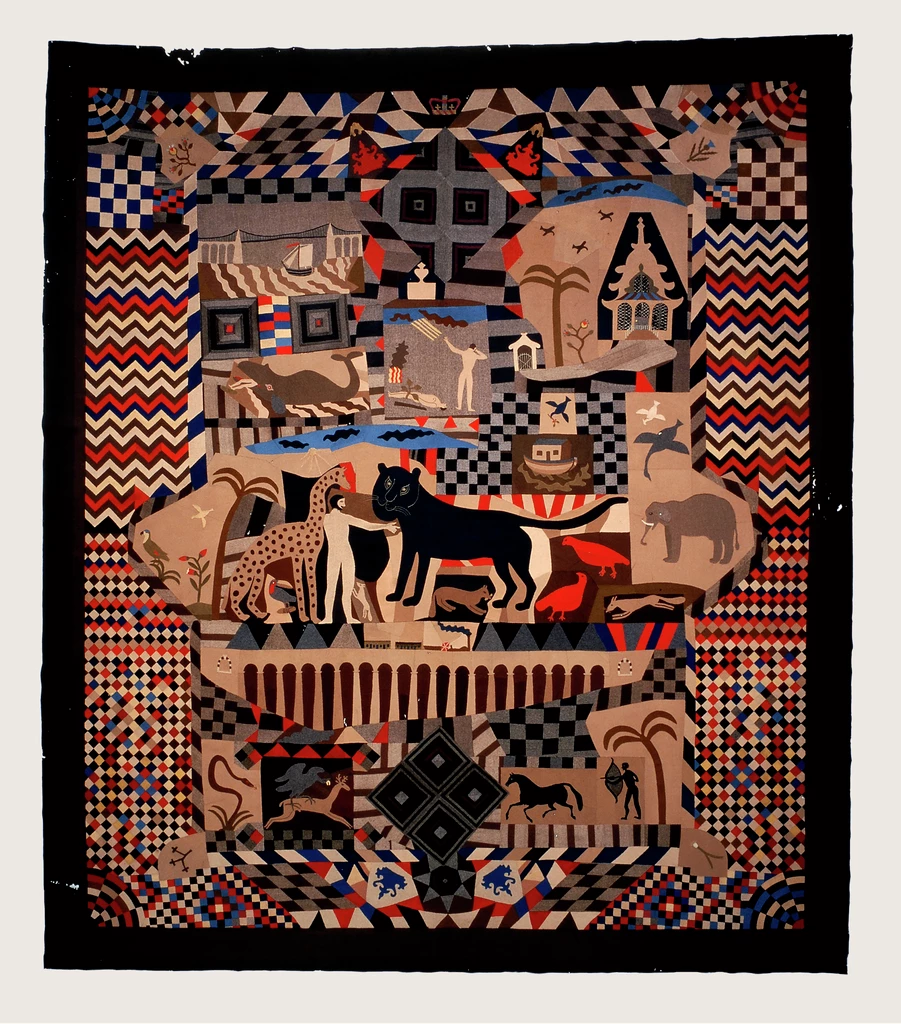
The Wrexham Tailor’s Quilt, 1842–52 Elen Phillips, 2 March 2020 Wrexham Tailor’s Quilt, 1842–52 Collections Online: Patchwork Bedcover Amgueddfa Cymru – National Museum Wales is home to over two hundred examples of quilting and patchwork. This vast collection includes a wide variety of styles and techniques, ranging in date from the early 1700s to the present day. The Wrexham Tailor’s Quilt is probably one of the most well-known patchworks produced in Wales. Made by James Williams – a military master tailor from 8 College Street, Wrexham – its design is unlike any other in the Museum’s collection. The quilt’s background is a pieced composition of diamond patches, chevrons, squares and rhomboids. Biblical scenes dominate the centre – Adam naming the animals, Jonah and the Whale, Noah’s Ark with a dove bearing an olive branch, and Cain and Abel. Other figurative motifs include Thomas Telford’s Menai Suspension Bridge (opened in 1826), a Chinese pagoda, and Cefn Viaduct, complete with a crossing steam train. Details are picked out through embroidery in silk thread. Meticulously pieced, James Williams made his quilt by recycling a variety of felted woollen cloths, possibly off-cuts of broadcloth from military uniforms. In total, it consists of 4,525 separate pieces of cloth, butt-joined with overcast stitches worked from the reverse. Examples of this type of inlaid (‘intarsia’) patchwork found in museum collections are usually the work of professional tailors. The technique requires a high degree of skill and the use of thick cloth that does not fray to accommodate the oversewing required. According to family history, James Williams spent a decade completing the piece, the work being done in his leisure hours between 1842 and 1852. The quilt soon became an exhibition piece; it was displayed at the Art Treasures Exhibition in Wrexham in 1876, at the Palace of Arts in Wembley in 1925, and to much public acclaim at the Wrexham National Eisteddfod of 1933. Census returns for the Wrexham area suggest that James Williams was born in 1818. His tailoring establishment appears in numerous trade directories from the 1850s onwards. He died in 1895, leaving his son to inherit the family business. Forty years after his death, the economic depression of the 1930s prompted Williams’s grandson to sell the quilt to the Museum, stating that “it has always been my wish that the quilt should be sent to [the] National Museum of Wales so as my fellow countrymen should have the opportunity to admire a work of art that today could not be done if you were to pay the most skilful craftsman £1 a minute to do”.
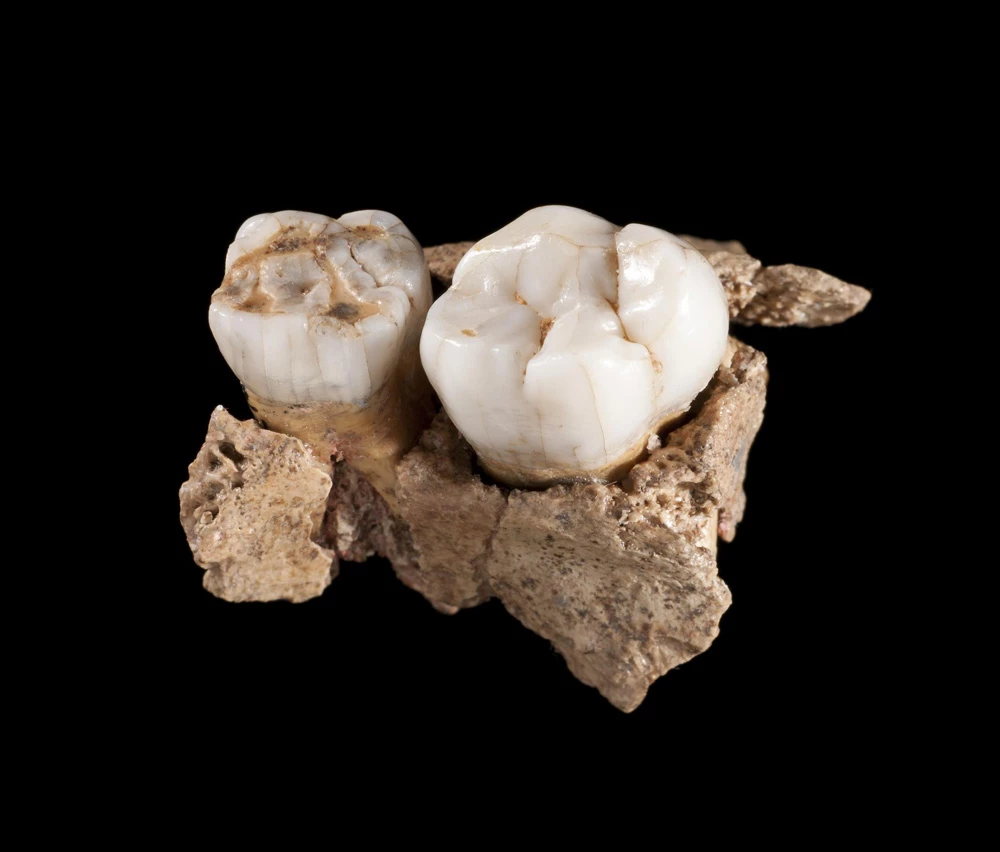
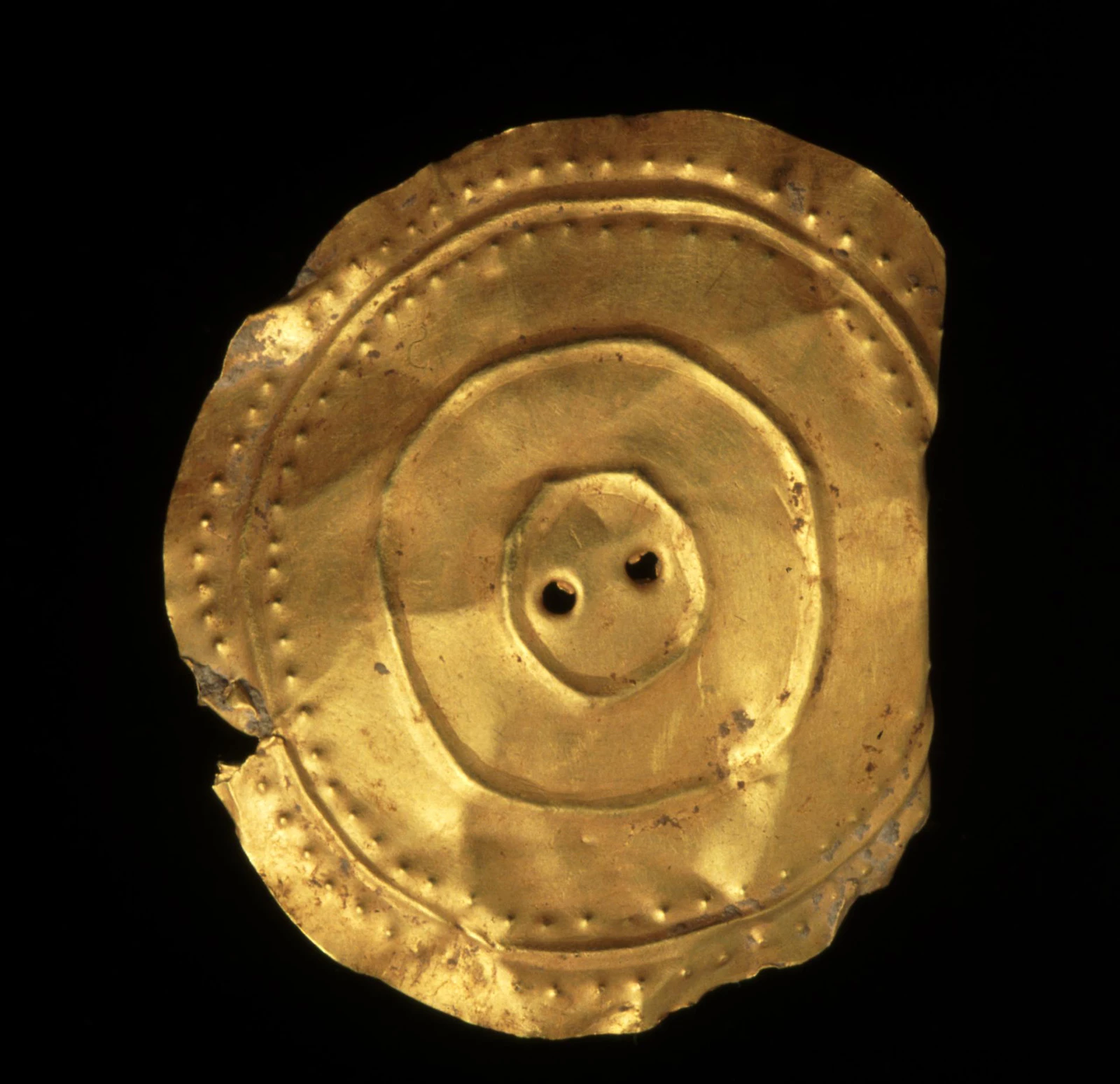
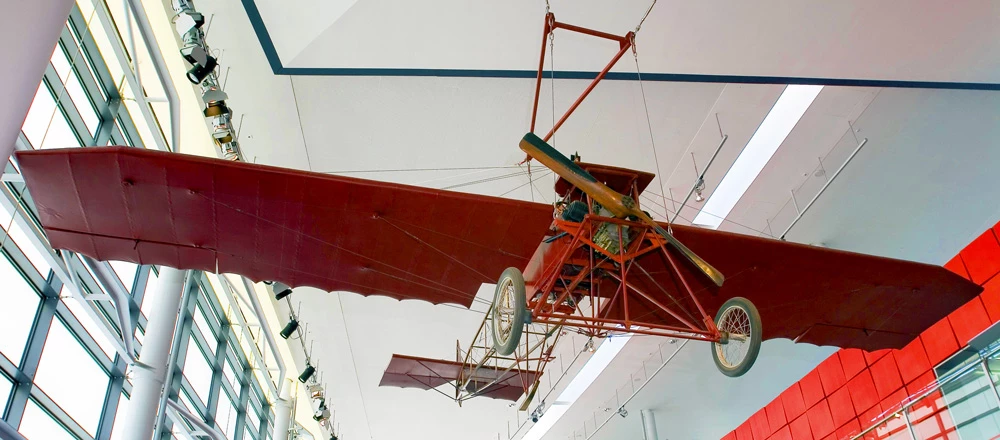
Uncovering our Collections: Half a Million Records now Online 26 March 2018 As we reveal half a million collection records for the first time, we look at some of the strangest and most fascinating objects from National Museum Wales Collections Online. This article contains photos of human skeletal fragments. The Biggest We have some real whoppers in our collections - including a full-size Cardiff Tram and a sea rescue helicopter - but the biggest item in our collection is actually Oakdale Workmen's Institute. Built in 1917, the Institute features a billiard room, dance hall and library - and is nowadays found in St Fagans National Museum of History. Horace Watkins testing his monoplane in 1908 Many of the buildings in St Fagans are part of the national collection - meaning they have the same legal status as one of our masterpiece Monets or this coin hoard. The buildings are dismantled, moved, rebuilt - and cared for using traditional techniques, by the museum's legendary Historic Buildings Unit. The Oldest The oldest human remains ever discovered in Wales These teeth belonged to an eight year-old Neanderthal boy - and at 230,000 years old, they are the oldest human remains in Wales. They were discovered in a cave near Cefn Meiriadog in Denbighshire, along with a trove of other prehistoric finds, including stone tools and the remains of a bear, a lion, a leopard and a rhinocerous tooth. These teeth are among some of the incredible objects on display at St Fagans National Museum of History The Shiniest People in Wales have been making, trading and wearing beautiful treasures from gold for thousands of years - like this Bronze Age hair ornament and this extremely blingy Medieval signet. At around 4000 years old, this sun disc is one of the earliest and rarest examples of Welsh bling One of the earliest examples of Welsh bling is this so-called 'sun disc', found near Cwmystwyth in Ceredigion. Current research suggests that these 'sun discs' were part of ancient funeral practice, most likely sewn onto the clothes of the dead before their funerals. Only six have ever been found in the UK. Most Controversial At first glance, an ordinary Chapel tea service - used by congregations as they enjoyed a 'paned o de' after a service. A closer look reveals the words - 'Capel Celyn'. The chapel, its graveyard and surrounding village are now under water. Capel Celyn, in the Tryweryn Valley, is now underwater Flooded in 1965 by the Liverpool Corporation, the Tryweryn valley became a flashpoint for Welsh political activism - creating a new generation of campaigners who pushed for change in how Welsh communities were treated by government and corporations. Curators from St Fagans collected these as an example of life in Capel Celyn - to serve as a poignant reminder of a displaced community, and to commemorate one of the most politically charged moments of the 20th century in Wales. Honourable Mention: an Airplane made from a Dining Room Chair Made from a dining room chair, piano wire and a 40 horsepower engine, the Robin Goch (Red Robin) was built in 1909 - and also features a fuel gauge made from an egg timer. The Robin Goch (Red Robin) on display at the National Waterfront Museum Its builder, Horace Watkins, was the son of a Cardiff printer - here he is pictured with an earlier, even more rickety version of his famous monoplane. Horace Watkins testing his monoplane in 1908 Our collections are full of stories which reflect Wales' unique character and history. The Robin Goch is one of the treasures of the collection, and is an example of Welsh ingenuity at its best. Half a Million Searchable Items The launch of Collections Online uncovers half a million records, which are now searchable online for the first time. “Collections Online represents a huge milestone in our work, to bring more of our collections online and to reach the widest possible audience. It’s also just the beginning. It’s exciting to think how people in Wales and beyond will explore these objects, form connections, build stories around them, and add to our store of knowledge." – Chris Owen, Web Manager Search Collections Online Plans for the future Our next project will be to work through these 500,000 records, adding information and images as we go. We'll be measuring how people use the collections, to see which objects provoke debate or are popular with our visitors. That way, we can work out what items to photograph next, or which items to consider for display in our seven national museums. Preparing and photographing the collections can take time, as some items are very fragile and sensitive to light. If you would like to support us as we bring the nation's collections online, please donate today - every donation counts. Donate Today We are incredibly grateful to the People's Postcode Lottery for their support in making this collection available online.
Welsh National Dress (FAQ) 14 June 2014 What does Welsh national dress look like?The popular image of Welsh ‘national’ dress, of a woman in a red woollen cloak and tall black hat, is one which largely developed during the nineteenth century. It was part of a conscious revival of Welsh culture during a period when traditional values were under threat.Where did the style come from?The costume regarded as national dress is based on clothing worn by Welsh countrywomen during the early nineteenth century, which was a striped flannel petticoat worn under a flannel open-fronted bedgown, with an apron, shawl and kerchief or cap. Style of bedgown varied, with loose coat-like gowns, gowns with a fitted bodice and long skirts and also the short gown, which was very similar to a riding habit style. Did Welsh women really wear tall black hats?The hats generally worn were the same as hats worn by men at the period. The tall ‘chimney’ hat did not appear until the late 1840s and seems to be based on an amalgamation of men’s top hats and a form of high hat worn during the 1790–1820 period in country areas. Who made the Welsh ‘national’ style popular?Augusta Hall, known as Lady Llanover, was the wife of an ironmaster in Gwent, and was very influential in encouraging the wearing of a ‘national’ dress, both in her own home and at eisteddfodau. She considered it important to encourage the use of the Welsh language and the wearing of an identifiable Welsh costume. She succeeded in her aim mainly because people felt that their national identity was under threat and the wearing of a national costume was one way to promote that identity.A further influence was the work of artists producing prints for the rising tourist trade, which had the effect of popularising the idea of a typical Welsh costume, and later the work of photographers who produced thousands of postcards. This contributed to the stereotyping of one style of costume, as opposed to the various styles which were worn earlier in the century. Where did the patterns on a ‘Welsh shawl’ come from?Shawls were the most fashionable of accessories between 1840 and 1870. The most popular were the Paisley shawls whose pattern originally came from Kashmir in India.At first plain shawls with a woven patterned border attached were the most common. Later many fine examples with allover and border patterns were woven in Norfolk, Scotland and Paris. Shawls of the middle of the century were very large and complemented the full skirts of the period.Shawls were made in other fabrics and patterns, including Cantonese silk and fine machine lace, though it was the paisley pattern which became very popular in Wales, along with home-produced woollen shawls with checked patterns.Did Welsh women really wear a shawl?In later years, although fashionable women no longer wore shawls, smaller shawls were still made and worn by countrywomen and working women in the towns. By the 1870s, cheaper shawls were produced by printing the designs on fine wools or cotton. Even during the early years of the twentieth century woollen, knitted and paisley shawls were widely worn in rural Wales. The paisley shawl even became accepted as part of ‘Welsh’ costume, though there is nothing traditionally Welsh about it at all.Was the Welsh shawl used in babywearing? One tradition of shawl-wearing which is truly Welsh is the practice of carrying babies in a shawl. Illustrations showing this have survived from the late eighteenth century when Welsh women wore a simple length of cloth wrapped around their body. When shawls became popular, they were adapted to the same use, and some women even today still keep up the tradition. Read more about Welsh Women’s History.
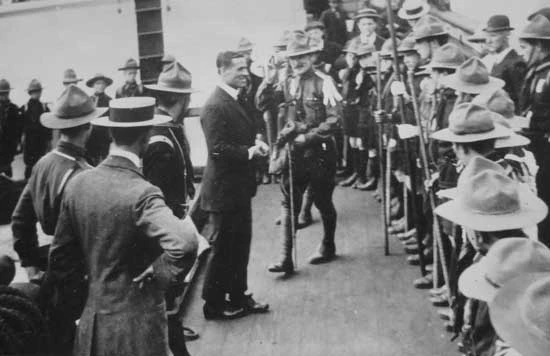
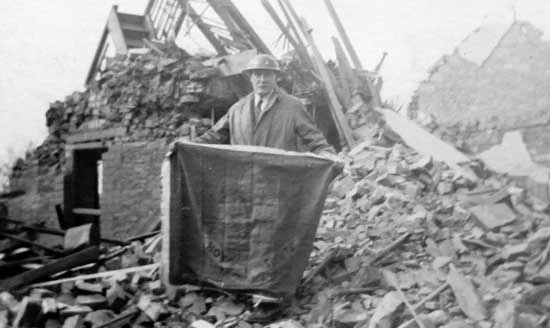
The scout flag that went South with Scott Jennifer Barsby, Department of Conservation, Elen Phillips, Department of Social and Cultural History, and Tom Sharpe, 14 June 2013 Commander Evans returns the flag to Scoutmaster T.W. Harvey on board the Terra Nova on 17 June 1913. The flag being retrieved from the rubble of the scout hall in Wyverne Road, Cathays, Cardiff after the German bombing raid of 30 April 1941 When Captain Scott's Antarctic Expedition ship, the Terra Nova, sailed into her home port of Cardiff on 14 June 1913, she had not only the White Ensign flying at the stern, the Welsh flag on the mainmast and the Cardiff City coat of arms on the foremast, but another, much smaller flag fluttering at the bow. Bearing the colour of the 4th Cardiff Scout Troop, this little green flag had accompanied the expedition to the Antarctic and back. The 4th Cardiff (St Andrews) Troop had been set up in the Cathays district of Cardiff in October 1908, just five months after the first publication in book form of Scouting for boys by the organisation's founder, Robert Baden-Powell. Despite its title as the 4th Cardiff, it was the first scout troop established in Wales. In March 1910, their Scoutmaster, T.W. Harvey, ordered a flag from the Boy Scouts headquarters in London, with the intention of presenting it to Scott's upcoming expedition to the South Pole. The flag cost six shillings, plus threepence postage, and the invoice, which was returned with the payment by postal order, he marked "Urgent. For Captain Scott Terra Nova for South Pole". The flag was presented to the expedition in June 1910 when the Terra Nova was in Cardiff to take on coal and other supplies prior to sailing for Antarctica on 15 June. It was one of several flags given to the expedition in Cardiff with requests that they be taken to the South Pole. The flags certainly made it to the expedition's base hut at Cape Evans on McMurdo Sound in the Ross Sea, but it is unlikely that they were taken by Scott to the South Pole itself. The 4th Cardiff scouts formed a guard of honour on the quayside at the Roath Dock when the Terra Nova sailed back into Cardiff on Saturday 14 June 1913. Three days later, on 17 June, some fifty members of the troop gathered on the deck of the Terra Nova to see their colour handed back to their Scoutmaster, T.W. Harvey, by Commander Teddy Evans who had assumed command of the ship after the death of Scott. Addressing the boys, Evans said, "Well, boys, here's your flag, and I hope you will treasure it. It has been a long way. If you become such good soldiers as Captain Oates, you will be good men." Following the flag's return to the scouts, it hung, framed, in a place of honour in the scout hall in Wyverne Road in Cardiff until the night of 30 April 1941 when a German land mine, dropped during an air raid, destroyed the building. A search of the ruins soon afterwards revealed that, remarkably, the flag had survived intact. But that wasn't the last of the flag's adventures. The rebuilt hut in which it later hung burnt down, and yet the flag survived. Replacement premises in Cathays flooded when a pipe burst, but still the flag came through unscathed. Now in the textile collections of Amgueddfa Cymru, the flag of the 4th Cardiff (St Andrews) Scout Troop has been reunited with two of the other Terra Nova flags which flew on the ship when she returned to Cardiff, the White Ensign and the Welsh flag. The flag of the 4th Cardiff Scout Troop Boy Scouts Be Prepared The flag is made from two pieces of coarse green, plain weave, woollen cloth, machine sewn across the centre with a double line of stitching in black cotton thread. Its sides have been turned to the reverse and machine sewn using the same black thread. The centre features the yellow fleur-de-lis motif of the Boy Scouts with a painted outline in black and brown. The green cloth has been cut-away and the edges turned in, the motif laid on the front, and the edges turned under and machine sewn with double line of stitching. This technique enables the motif to be seen from both sides when flying, although the text can only be viewed from the front. Below the fleur-de-lis is a scroll, also in yellow wool, with the motto BOY SCOUTS BE PREPARED painted in black capital letters. The troop's name is painted in white in the bottom left corner. It measures 92.5 cm x 115cm, making it the smallest of the Terra Nova flags in the Museum's collection. The edge which would have been exposed to the wind is quite frayed. This type of damage is often found on flags. There are also lines of black soiling on the front, the source of which has not yet been identified, but is comparable to the soiling found on the other two Terra Nova flags in the collection. Small rust marks, pin holes and long tacking stitches indicate that it was previously displayed on a stiff board inside a frame. It has also suffered substantial light damage to its front side. Unfortunately, light damage cannot be reversed, but the physical structure of the flag will be supported with the use of conservation-grade materials. Faded areas, stains and tears help us to understand how the flag has been used, stored and displayed during its 103 year history. Our goal is to preserve as much information about its past as possible.