‘Who’s who in Magelona’ is a question I have asked myself for the 20 years or more that I have worked with marine bristleworms, but are we closer to knowing the answer?
Marine bristleworms, as the name suggests, are a group of worms that are predominately found in our seas and oceans. They are related to earthworms and leeches and can make up to 50-80% of the animals that live in the seabed.
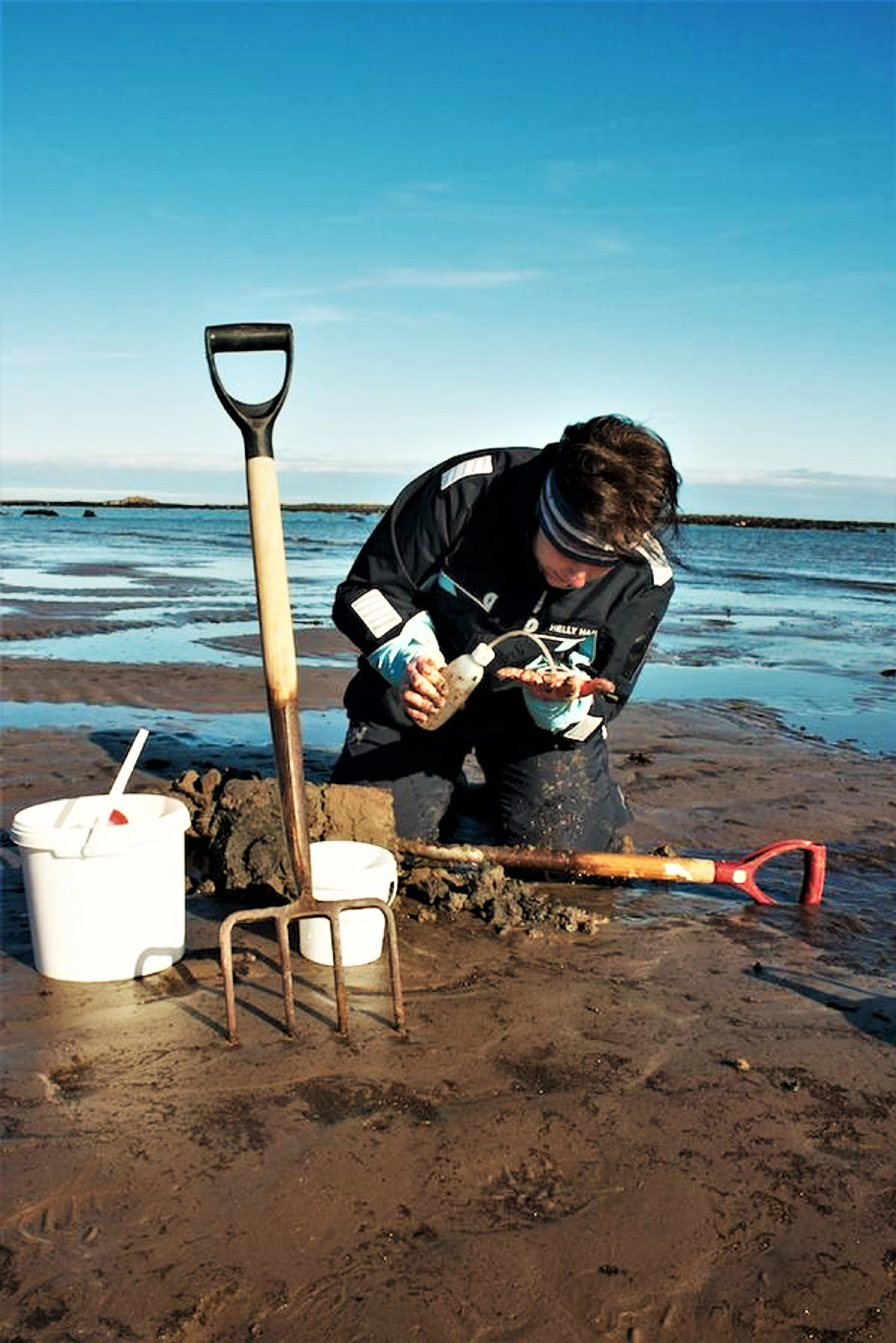
Collecting marine bristleworms at Berwick-upon-Tweed
I am a taxonomist, and as such, part of my role is to discover new species that have never been seen before, which I then get to name and describe, so other scientists can identify the newly discovered species. I may also rediscover new things about species we have long known about. Although people may not know much about marine bristleworms they are vital to the health of our seas, so understanding what species we have and where they live is an important part of protecting our oceans.
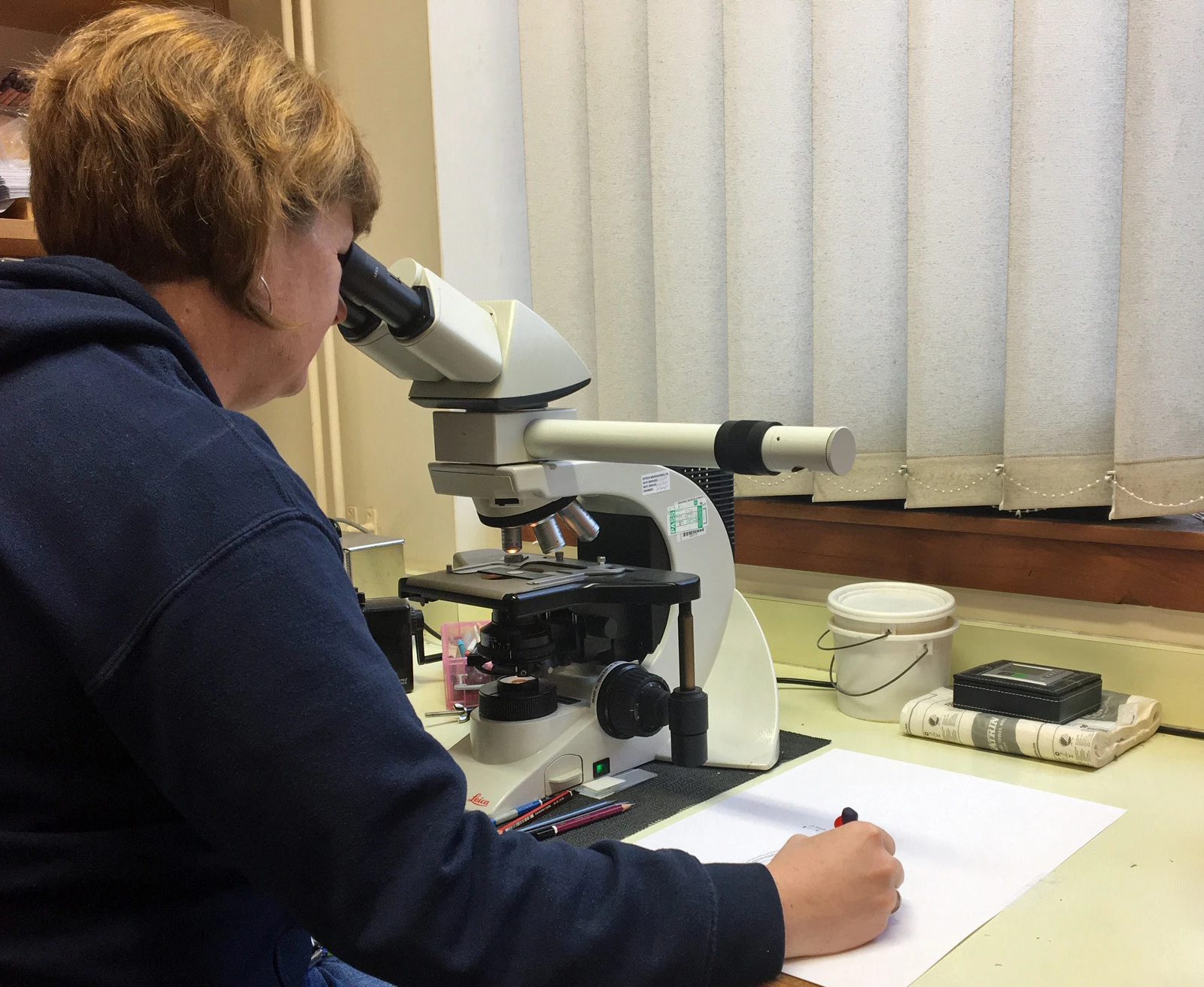
Drawing marine bristleworms down the microscope using a Camera Lucida which helps us "trace" what we see
Magelonids, or shovel head worms to give their common name, are a beautiful group of worms, whose spade-shaped heads are used for digging in sands and muds at the bottom of the sea. Of course, I may be biased in thinking they are beautiful, having spent over two decades studying them, I shall let you decide! They are unusual, even amongst bristleworms, and it is for this reason that we have often had trouble relating them to other marine bristleworm groups, or even understanding how they are related to one another. As part of my job, I have discovered and named species from around the world, including species from Europe. I am currently investigating up to 20 new species off West Africa, and the similarities they share with those here in Wales, but that is a story for another day!
A plate taken from the journal article 'Who’s who in Magelona’
We cannot understand the natural world without first understanding how life on earth is related to one another. With this in mind, we have been looking at shovel head worms and the relationships between them. We have been working with colleagues in the USA and Brazil to answer this question, looking at different characteristics, for example, the size and proportions of the head and body, whether they have pigment patterns or whether they are known to build tubes. Due to the number of different characters and the numbers of species studied it has taken a long time to process the results. However, the results have just been published in the journal PeerJ, so we can share with others our findings. If you want to read more about ‘Who’s who in Magelona’ then the article can be downloaded here from their web-site.
Explore the collections at National Museum Cardiff with our team of volunteers! In this video you will learn more about ammonites with our volunteer Sue.
The Museum holds three architectural models of the National Museum Cardiff building.
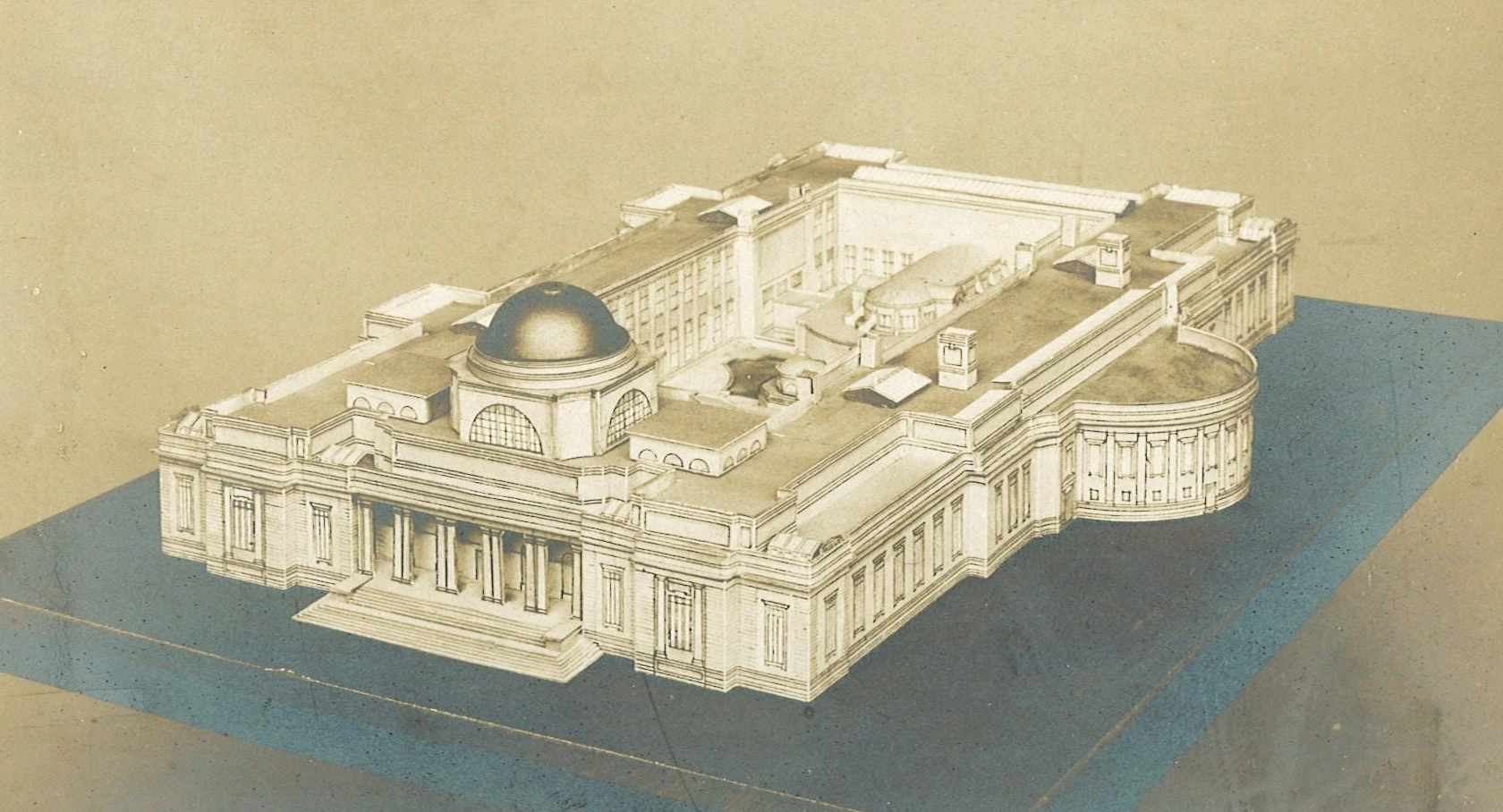
Four models were made but, the oldest now only exists in a faded sepia photograph, not surprising as it was a fragile paper prototype. The next oldest, the model proper and referred to in hushed tones of reverence as the “original”, is so precious [and enormous] it has been dismantled and packed away in secure, safe storage. The next model is a cool 1960s minimalist Perspex cube with playful, removable plates representing the various floors in the museum building. This is currently in the process of conservation. The fourth and final model, complete with tiny plastic figures, cars, and greenery, was created in 1988 to illustrate the museum’s Courtyard Extension by the Alex Gordon Partnership.
Founded by Royal Charter in 1907, and with location established at Cathays Park in Cardiff, the Museum set an open competition in 1909 for the building’s design. Out of 130 design submissions, the competition was won by the London based architects A.Dunbar Smith & Cecil C. Brewer. The Museum did not intend that the entire building be constructed at once and, favoured a design which would allow parts to be added as funds allowed. The foundation stone was laid by King George V and Queen Mary on 26 June 1912 and in 1913, the building of the superstructure began. As there is no mention of it in the Museum Council Minutes, we can only surmise that most likely this delicate paper model was created and presented to the Museum Council for review by Smith & Brewer.
The original model of the National Museum Wales building on display in the Main Hall in 1957
First mention of the original model appears in the Museum Council Minutes for 1November 1910 – 31 October 1911. They state that a Sub-Committee consisting of the then Chairman, Sir E. Vincent Evans, and the celebrated Welsh sculptor, W. Goscombe John was appointed to begin organising the creation of the model, with power to accept a tender of no more than £200 for its making. Further on, we learn that an estimate of £165 from a Mr. J. Lambert [of London]was accepted. The model was to be of the complete building, built of wood and to a scale of a quarter-of-an-inch to a foot. Further on there is mention that Mr Lambert was working too slowly so he was presented with a deadline for completion of 1 October 1912!
In the Minutes for 27 October 1911 to 22 October 1912, it is stated that the finished model spent two weeks during May 1912 on display in the Petition-room at Westminster Hall and in July was on view in the Temporary Museum, City Hall, Cardiff. The Temporary Museum was a construction erected in the courtyard behind City Hall and used by the Museum for exhibitions until the new building was finished and able to house the collections. It was also sent to the National Eisteddfod [held in Wrexham during 1912]. This burst of marketing and promotion illustrates the importance which was placed on it, the culmination of decades of exhaustive labour leading up to the establishment of Wales’ National Museum. Moreover, it prepared the inhabitants of Cardiff for how extensively the new Museum would physically alter the landscape of the Cathays Park area, nestling between City Hall [built in 1906] on its right and the University [opened in 1883] at its rear.
One of the best photographs of the original model was taken when it was displayed in the Main Hall fifty years later to commemorate the Museum’s Jubilee anniversary in 1957. This photo appears in the Annual Report with the caption, “The Jubilee Exhibition in the centre of the Main Hall. A model showing the museum as it will be when complete is to be seen on the left…”. This appears to be the last time the model was publicly on display.
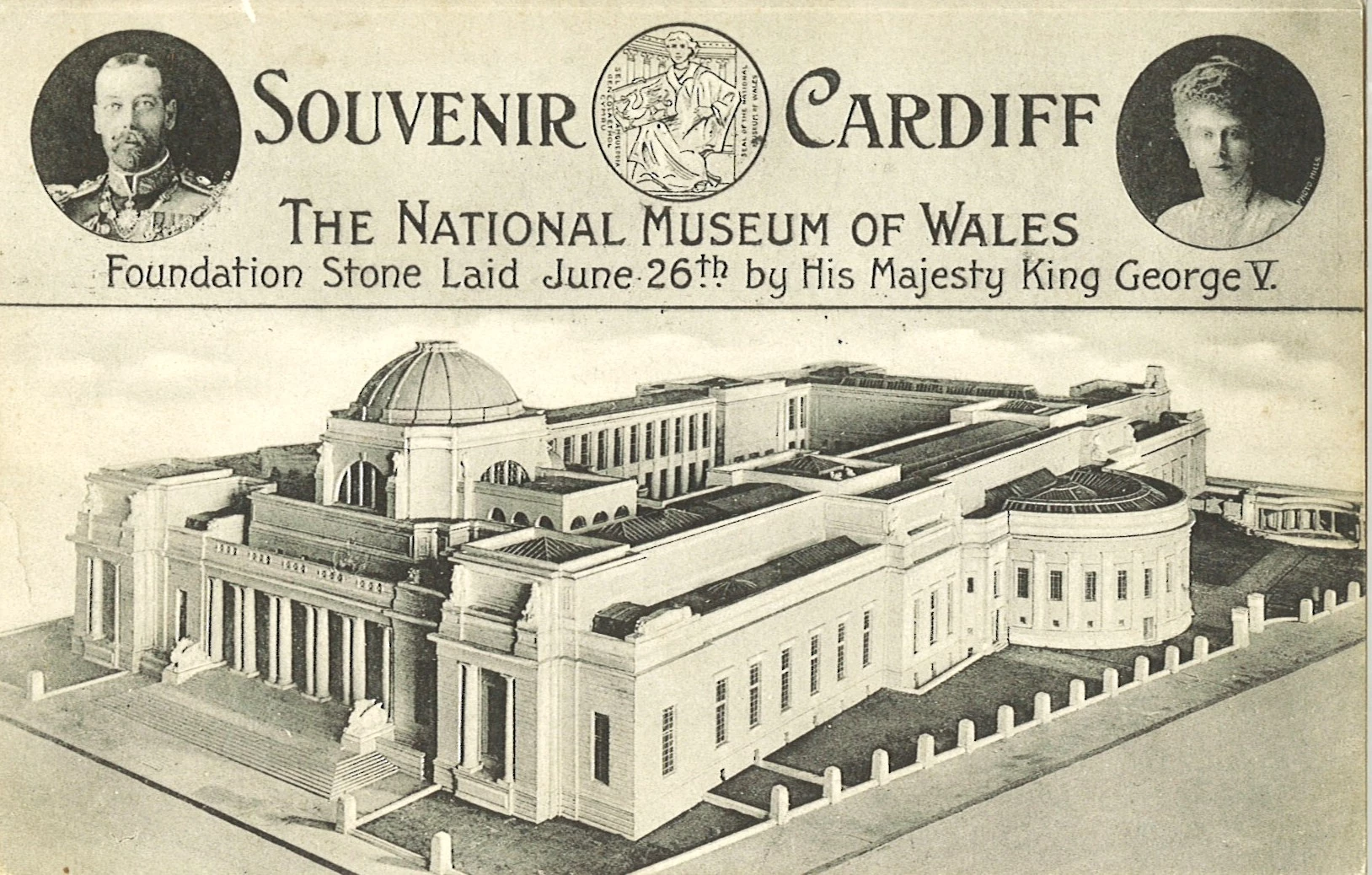
Images of the original model were used to illustrate various postcards, including this one commemorating the Laying of the Foundation Stone in 1912
Perspex box model shown in process of conservation [images courtesy of Jennifer Griffiths, Conservator]
Now, let’s fast forward to the swinging 60s and this next model couldn’t be more different! A clear Perspex box measuring approx. 2 ft square and around 5 inches high, showing the lay-out of floors of the museum building. Commissioned by the Friends of the National Museum Wales as a gift to the Museum Schools Services in 1969 [at a cost of £173] to facilitate explaining the lay-out of the building to groups of school children.
Detail of Perspex box model of National Museum Wales building in Cathays Park shown in process of conservation [images courtesy of Jennifer Griffiths, Conservator]
Model of National Museum Wales [courtyard extension] by the Alex Gordon Partnership 1988
The staff of the Museum Schools Service often give talks to large groups of school children in which they explain the purpose and lay-out of the Museum. On these occasions it has proved difficult to give a clear idea of the location of the principal galleries to a seated audience. The new model provides an admirable aid for this purpose. It is made of clear Perspex and is constructed in such a way so that each “floor” can be re-moved separately for explanatory comments. Each Museum Department has been given a colour code to distinguish it when the model is fully assembled.
Friends of the National Museum Wales, Fifteenth Annual Report, 1969 [page 9].
The designer was Christopher Shurrock [b. 1939], British painter, printmaker, and sculptor who was at that time teaching Foundation Studies in Art at the Cardiff Institute of Higher Education. A prolific a member of the 56 Group Wales and the Royal West of England Academy, during the 1960s his interests lay in researching perception, colour and drawn structures and breaking them down to their most basic form. The model is exemplified in Shurrock’s own words ‘...superficial appearances and mechanisms can delude with too much arbitrary stuff, integral content is often fragile, co-incidence is not necessarily proof, the recurring dilemma is what really needs to be shown...’.
Our final model, as already mentioned, was created to illustrate the museum’s courtyard extension designed by the Alex Gordon Partnership in 1988.
Model of National Museum Wales by the Alex Gordon Partnership 1988 showing courtyard extension [filled-in garden area]
Sir Alexander John Gordon, CBE (1917 – 1999) was a Welsh architect who designed several major buildings in South Wales, notably the Sherman Theatre in Cardiff [1973] and the Telephone exchange extension in Swansea [1971]. He also served as President of the Royal Institute of British Architects from 1971 – 1973. His design for the ‘courtyard extension’ was so named because it involved the filling-in of the space in between the two wings that, in the original architect’s designs was to contain an exterior courtyard garden. However, it was decided instead, in the most basic of terms, to roof over the central area as you can see here.
Architect's paper model of National Museum Wales building in Cathays Park [circa 1910]
Now compare with the original paper model showing the central area open
Architect's paper model of National Museum Wales building in Cathays Park [circa 1910]
These models hold a significant place in our hearts, the earlier ones represent the culmination of the hopes and dreams of the move towards the creation of a Welsh national identity, while the later models celebrate the ever-evolving vision that epitomizes the Museum today.
We are happy to report that the spirit of model making is currently alive and well here at the museum! During lockdown Museum Assistant Jade Fox began recreating in miniature, some of the galleries at National Museum Cardiff. Take a look at this short film where she explains how she began with time on her hands and an old pizza box…
The 30th of September is National Sporting Heritage Day, an opportunity to celebrate sporting heritage and use the stories it holds to educate and inspire.
This year, Amgueddfa Cymru – National Museum Wales in partnership with the Welsh Sports Hall of Fame has celebrated Wales’ sporting heritage with a new exhibition, Wales is...Olympics. The exhibition features iconic objects from Wales’ top Olympians and Paralympians and opened in July 2021 to mark the 2020 Tokyo Summer Olympics.
The exhibition explores the stories of some of Wales’ greatest sportspeople, including Paulo Radmilovic, Wales’ most successful Olympian, Irene Steer, the first Welsh woman to win a gold medal, and Lynn Davies who won gold in the long jump at the 1964 Tokyo Olympics.
To celebrate National Sporting Heritage Day, here’s a taster of some of the highlights of the exhibition:
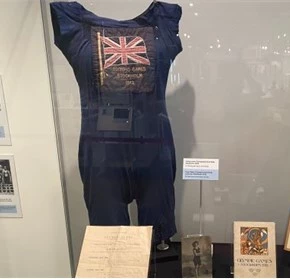
Irene Steer’s swimming costume
Irene Steer’s Olympic swimming costume, 1912.
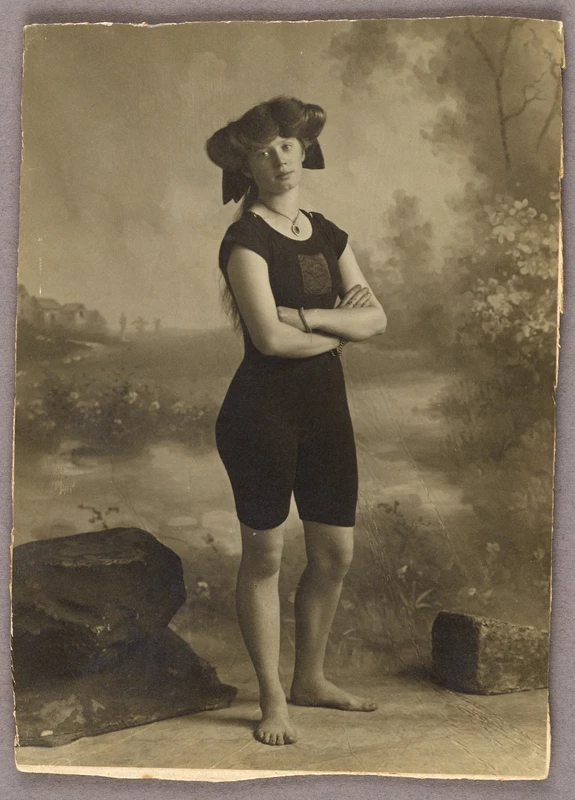
Gold medallist, Irene Steer.
This is Irene Steer’s swimming outfit from the 1912 Olympic Games in Stockholm.
The daughter of working-class parents, Steer's competitive swimming career began in her hometown of Cardiff, in Roath Park Lake. She struck gold in Stockholm in 1912 as the anchor leg swimmer in the world record breaking British 4x100 yards freestyle relay team.
The 19212 women’s relay team wore racing suits similar to those worn in previous Olympic competitions by the male swimmers. The suit is made of silk, which meant once wet, the swimsuits became see-through, so female athletes would often wear underwear underneath their swimwear. The swimsuits were clearly designed for competition rather than protecting the modesty of the women.
At the Tokyo Games this year, Welsh swimming had its first gold medal in the pool since Irene Steer in 1912, with Matt Richards and Calum Jarvis winning gold medals with a magnificent victory in the 4x200m freestyle relay.
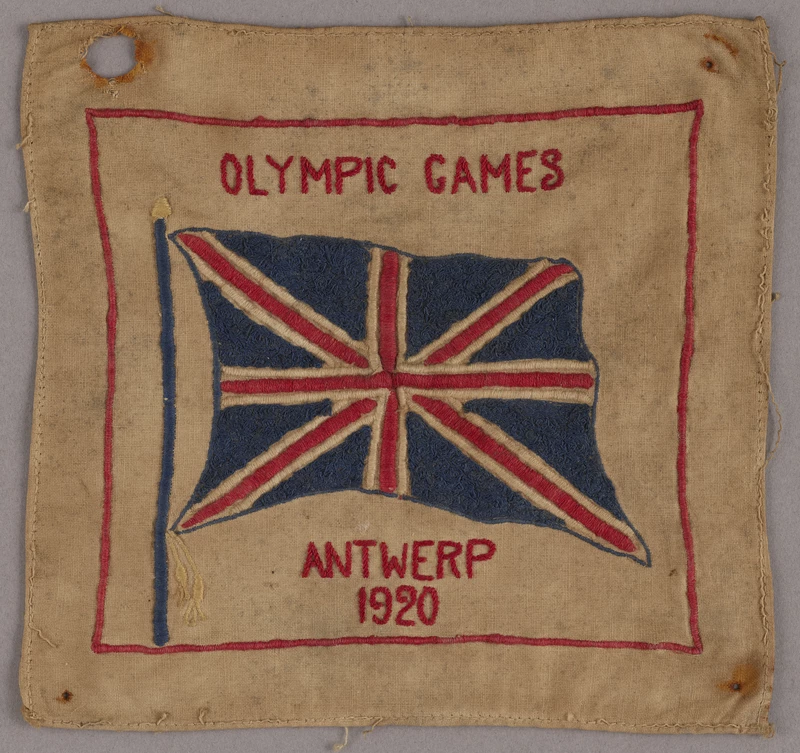
Olympic Games badge, worn by Paulo Radmilovic
Paulo Radmilovic’s Olympic Games badge, 1920.
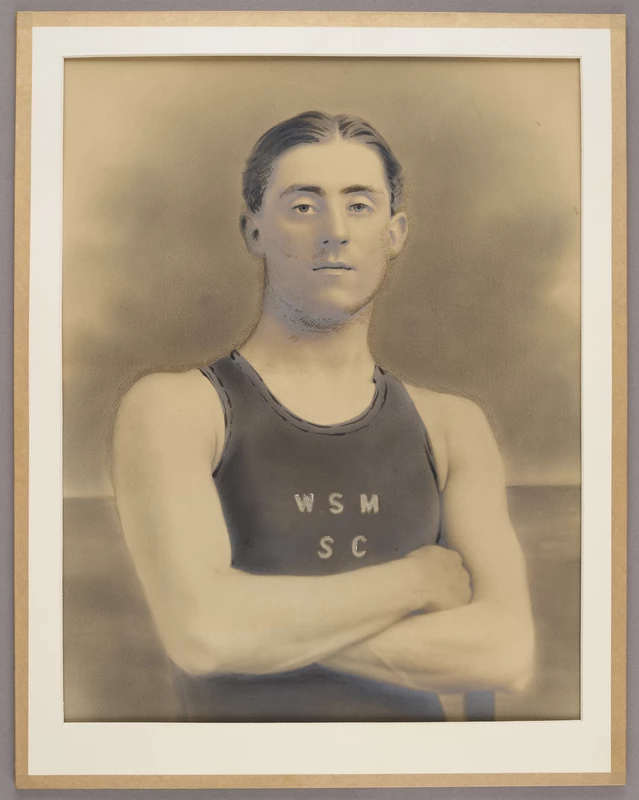
Olympian, Paulo Radmilovic.
This is the badge worn by swimmer and water polo player, Paulo Radmilovic on his swimsuit whilst competing at the 1920 Antwerp Olympic Games. His finest moment came at these games, when he scored the gold winning goal against Belgium, three minutes from time.
Paulo was born in Tiger Bay, Cardiff, his father was a Croatian who moved to Wales in the 1860s and his mother was born in Wales to Irish parents. He remains Wales' greatest ever Olympian, with four golds from six Olympic appearances. For 80 years he was also Britain's most successful until rower Sir Steve Redgrave won a fifth gold medal at the 2000 Games in Sydney.
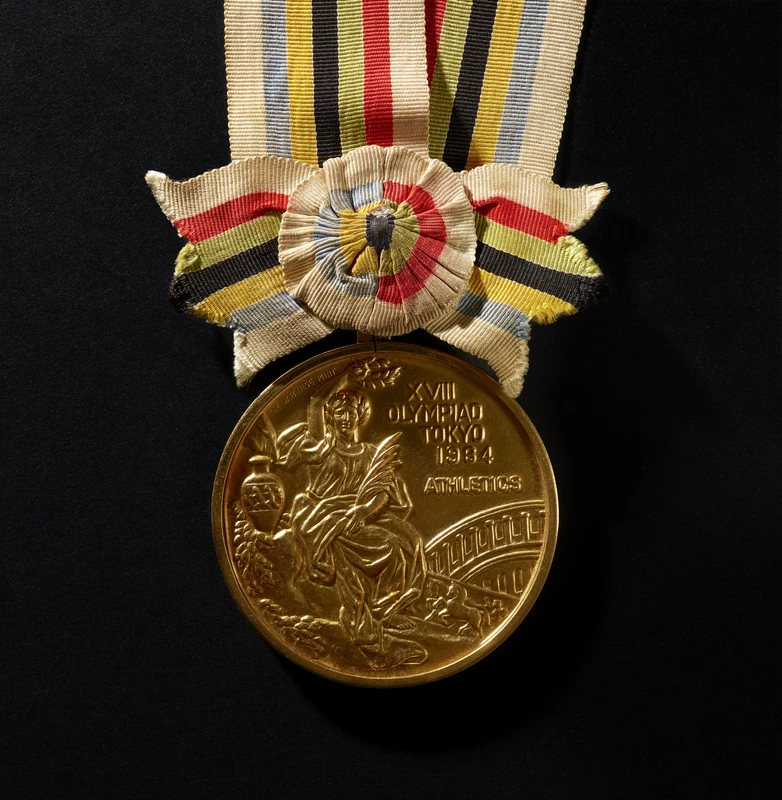
Lynn Davies’ Olympic gold medal
Lynn Davies’ Olympic Gold Medal, 1964.
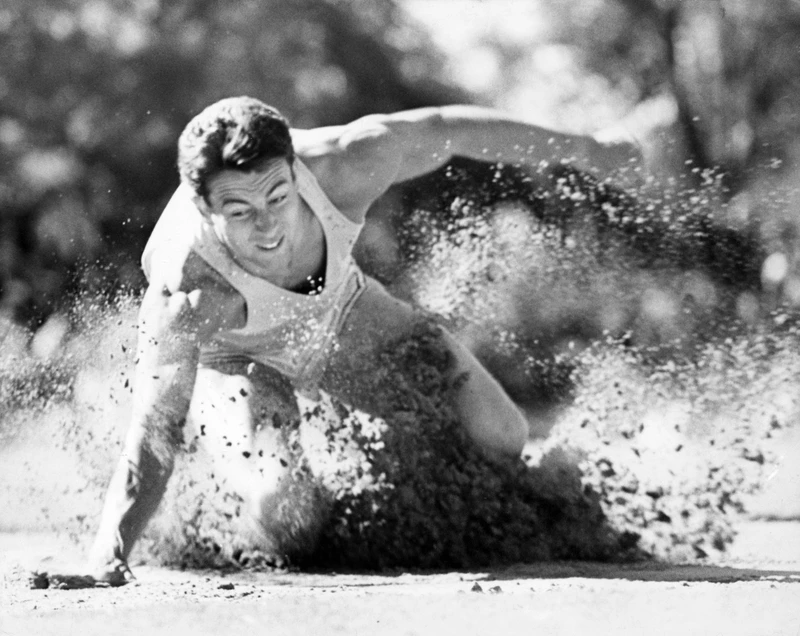
God medallist, Lynn Davies.
On display, is Lynn ‘The Leap’ Davies’ gold medal, which he won in the long jump at the 1964 Tokyo Olympics. This was probably one of Wales’ most memorable sporting moments. He was not expected to reach the final, let alone win the title. But the wet and windy conditions, favoured the Welshman better than the defending champion, Ralph Boston. Davies won with a jump of 8.07m, becoming the only Welshman to win an individual athletics Olympic gold medal.
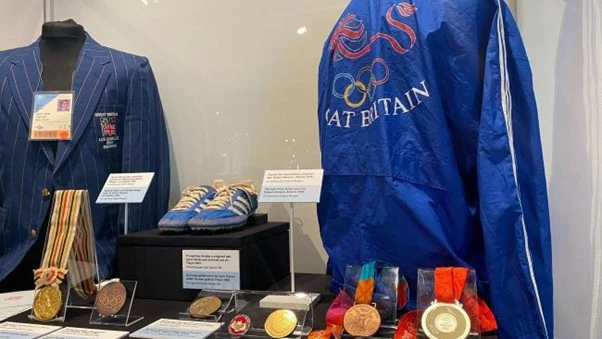
Wales Is…Olympics Exhibition at St Fagans National Museum of History.
Other notable objects in the exhibition include one of Richard Meade’s equestrian gold medals, the silver and bronze medal won by swimmer David Davies, diver Robert Morgan’s Olympic team jacket, and participation medals awarded to Paralympians, John Gronow and David Winters.
Welsh athletes have a long tradition of success at the Olympic and Paralympic Games, and this year was no exception. The Welsh athletes in Tokyo this summer won 22 medals - eight at the Olympics and 14 at the Paralympics. History was made when Ystrad Mynach's Lauren Price became Wales’ first Olympic boxing champion and Cardiff born, Hannah Mills become the most successful female Olympic sailor of all time. In the Paralympic Games, Welshpool's Jim Roberts helped Britain to its first wheelchair rugby gold, and Swansea’s David Smith retained his BC1 title, becoming Britain's most successful boccia player.
Welsh Olympians have made an immense contribution to Welsh sport, life and culture, and they continue to inspire generations of athletes to follow in their footsteps.
The objects will be on display until January 2022. Entry to St Fagans National Museum of History is free, but all visitors must pre-book their tickets via the museum website.
Explore the collections at National Museum Cardiff with our team of volunteers! In this video you will learn more about trilobites with our volunteer Macy.
Collecting marine bristleworms at Berwick-upon-Tweed
Drawing marine bristleworms down the microscope using a Camera Lucida which helps us "trace" what we see
A plate taken from the journal article 'Who’s who in Magelona’
The original model of the National Museum Wales building on display in the Main Hall in 1957
Images of the original model were used to illustrate various postcards, including this one commemorating the Laying of the Foundation Stone in 1912
Perspex box model shown in process of conservation [images courtesy of Jennifer Griffiths, Conservator]
Detail of Perspex box model of National Museum Wales building in Cathays Park shown in process of conservation [images courtesy of Jennifer Griffiths, Conservator]
Model of National Museum Wales [courtyard extension] by the Alex Gordon Partnership 1988
Model of National Museum Wales by the Alex Gordon Partnership 1988 showing courtyard extension [filled-in garden area]
Architect's paper model of National Museum Wales building in Cathays Park [circa 1910]
Architect's paper model of National Museum Wales building in Cathays Park [circa 1910]
Irene Steer’s Olympic swimming costume, 1912.
Gold medallist, Irene Steer.
Paulo Radmilovic’s Olympic Games badge, 1920.
Olympian, Paulo Radmilovic.
Lynn Davies’ Olympic Gold Medal, 1964.
God medallist, Lynn Davies.
Wales Is…Olympics Exhibition at St Fagans National Museum of History.




![Perspex box model of National Museum Wales building in Cathays Park shown in process of conservation, designed by Christopher Shurrock [images courtesy of Jennifer Griffiths, Conservator]](/media/52914/version-full/Perspex-box-model-images-courtesy-of-Jennifer-Griffiths-Conservator.webp)
![Detail of Perspex box model of National Museum Wales building in Cathays Park shown in process of conservation, designed by Christopher Shurrock [images courtesy of Jennifer Griffiths, Conservator]](/media/52915/version-full/Perspex-box-model-detail-images-courtesy-of-Jennifer-Griffiths-Conservator.webp)
![Model of National Museum Wales building in Cathays Park [courtyard extension] by the Alex Gordon Partnership 1988](/media/52916/version-full/Model-of-National-Museum-Wales-courtyard-extension-by-Alex-Gordon-Partnership-1988.webp)
![Model of National Museum Wales building in Cathays Park by the Alex Gordon Partnership 1988 showing courtyard extension [filled-in garden area]](/media/52917/version-full/Model-NMW-courtyard-extension-by-Alex-Gordon-Partnership-1988-6-2.webp)