In my previous blog I explained what rafting bivalve shells are and how Caribbean bivalves are ending up on British and Irish shores attached to plastics. There are numerous records of non-native bivalves on plastics in the southwest of Ireland and England but nothing has yet been reported in Wales, which is something that I’m trying to rectify. To encourage recording I’m enlisting citizen scientists – volunteers from the general public – who can help to spot and identify these rafting species in Wales. But first of all, I want to check to see if there are rafting species turning up on our shores so I began talking to groups who already go out on the shores to survey, beach clean or educate.
Presenting the rafting project at the annual Porcupine Marine Natural History Society Conference at SAMS (Scottish Association for Marine Science).
In December 2019 I met with a fantastic group of people at PLANED in Narbeth. PLANED have excellent coastal community links and everyone I spoke to was enthusiastic and willing to incorporate the rafting bivalves project into their usual activities of beach cleans, foraging, outdoor activities or education. They were keen to help record any rafting species that they discover and we talked about how to identify any bivalves found. Since then I have been working on an identification guide that I plan to develop with the help of these community groups.
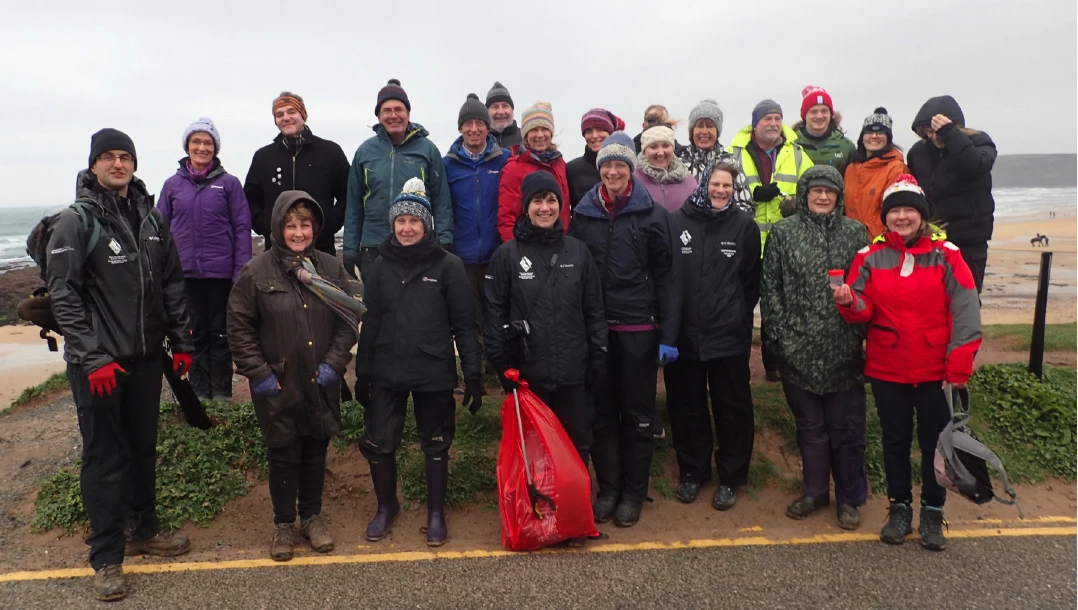
Pembrokeshire National Parks staff and volunteers looking for plastics at Freshwater West beach
Can you imagine how you would feel today if you were told that you couldn't buy your favourite food?
Or, if you could, you could only buy a small amount that would have to last you a week and you would have to queue up for it?
This is what happened to people during the Second World War (1939 -45) when rationing was introduced in Britain.
Why was rationing introduced in Britain during the Second World War?
Adolf Hitler, Germany's dictator, tried to force an early end to the war by attacking ships carrying food and other resources heading for Britain.
He wanted to starve the nation into defeat and his weapon was a fleet of submarines or U boats which travelled across the Atlantic.
In Wales, as in other parts of the country, their planes also targeted ports and docks, as well as goods trains in industrial places such as Newport, Swansea and Cardiff.
What was Rationing in the Second World War?
Certain items, in particular food, were in very short supply and difficult to buy in people's usual shops.
People started to panic buy in a manner similar to recent times as in the petrol or Covid crisis.
So, the Government introduced rationing as a fair system to allow people to have a certain amount of food each week.
Other countries involved in the war such as America had rationing too. Some people remembered rationing as it had also taken place during the First World War (1914 -18).
When did Food Rationing start in Britain in the Second World War?
With the shortage of food during the First World War still fresh in the memory, the government introduced the food rationing scheme in January 1940.
How did the rationing system work?
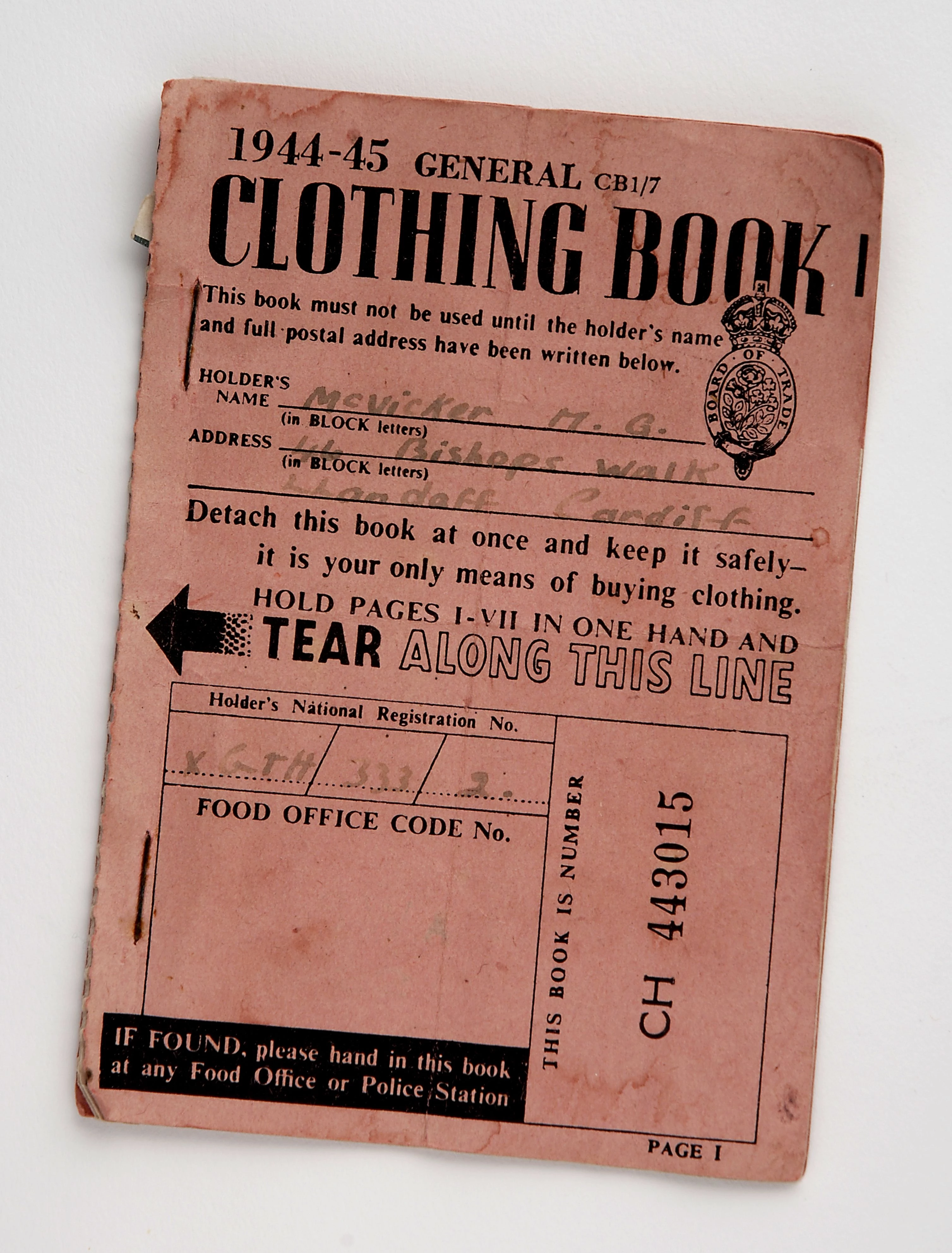
Every person in the country, including children, received a ration book and each home had to register with a local butcher, grocer and milkman who had to ensure they had enough food for their customers.
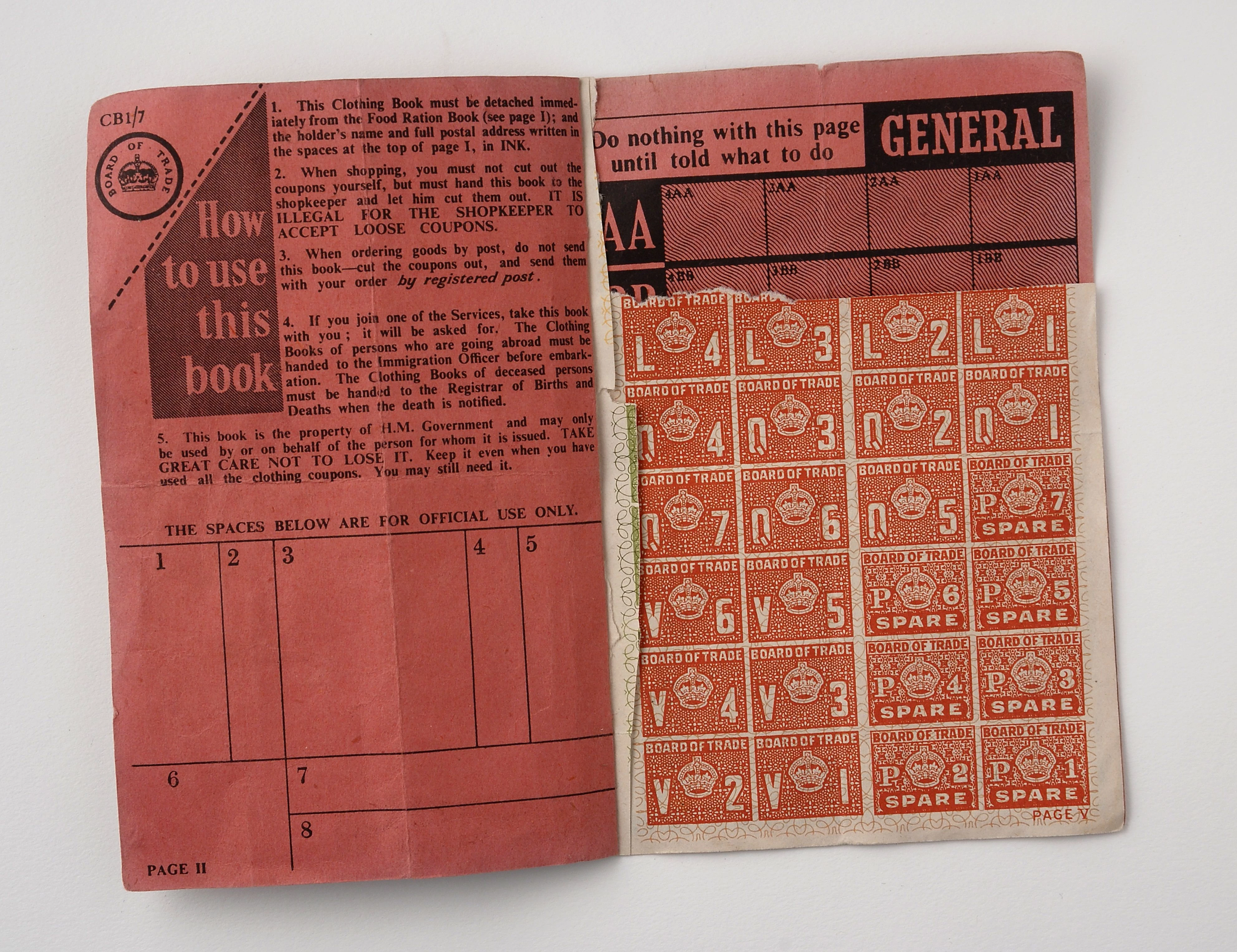
The ration books contained coupons which had to be presented when items were bought. Everyone had a ration book, including members of the Royal Family.
The list of foods which were rationed grew as the war continued.
The rules were very strict and people who were caught trying to cheat were fined or sent to prison.
Often people who were poor or unemployed and undernourished in the pre-war years were much better fed in wartime because of rationing.
How did rationing affect people's lives in the Second World War?
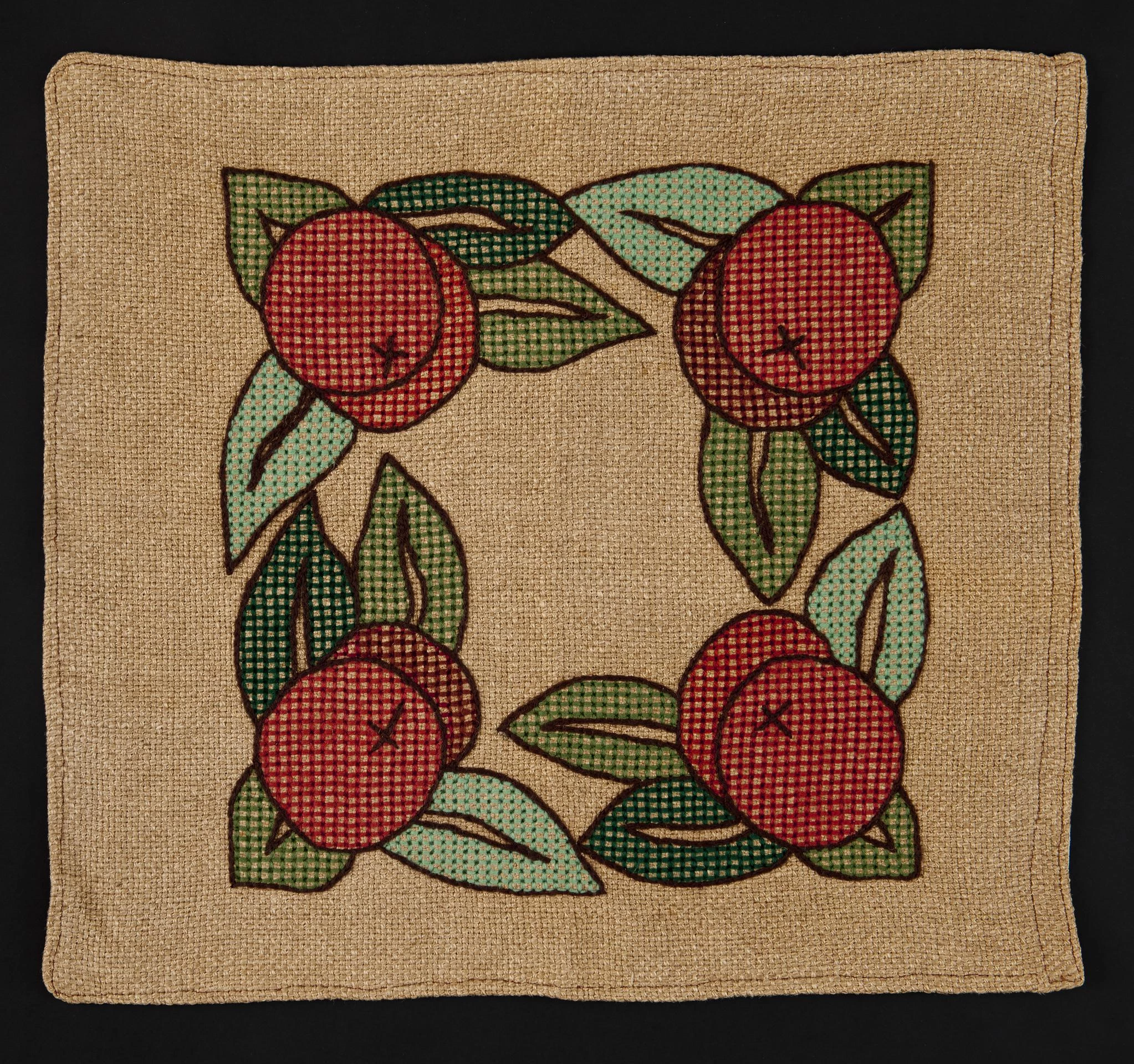
Dig for Victory, by Mary Tunbridge.
In 1939 the government began its "Dig for Victory" campaign and it issued a series of colourful posters to encourage people to grow their own fruit and vegetables.
Some of these posters can be seen in Blaenwaun Post Office and the tailor's shop at the Museum.
Surplus products were made into jam, pickles or chutney which could be eaten in the winter.
People also kept goats, chickens, rabbit and pigs. Pigs were particularly popular as they would eat virtually anything and could be fattened up quickly to be killed for their meat.
Woolton Pie was a pastry dish of vegetables and was widely served in the war.
It enabled people to use the both the vegetables they grew and those which were rationed, thus giving them a nutritious diet.
Who were Potato Pete and Doctor Carrot?
To make the campaign appealing, two characters, Potato Pete and Doctor Carrot were created to promote eating vegetables.
They appeared in most recipes in books and magazines.
What sort of food was rationed in Britain during the Second World War?
Here is an example of a ration for one adult during the war:
Bacon and ham 4oz
Butter 2oz
Cheese 2oz
Margarine 4oz
Cooking fat 4oz
Milk 3 pints
Sugar 8oz
Jam 1lb every two months
Tea 2oz
Eggs, 1 a week, if available powdered egg packet every four weeks.
Children, because they were still growing, received extra milk, orange juice and cod liver oil.
Many non - food items were also rationed such as soap, clothing, petrol and paper.
When did rationing end after the Second World War?
In 1945 the war ended but rationing continued.
Because of poor weather conditions, bread was rationed until 1948 and potatoes were also in short supply.
Some food was not restricted at all e.g. whale meat but, not surprisingly, this never proved popular with British people!
It was only in the early 50s that some foods were no longer rationed i.e. tea in 1952, eggs, cream, sugar and sweets in 1953 cheese, and butter, cheese and cooking oil in 1954 and meat and bacon in 1954.
Here is a photo of Mrs. Barbara Donaldson from Aberdare, Mid Glamorgan.
She remembered rationing quite clearly as she was 13 years old when war broke out.
The dried egg was quite tasty and had a great deal of uses, she said.
After the war, she always refused to buy margarine as she said it had an artificial taste and reminded her of the war years and "The White Cliffs of Dover" a song she was never keen on!
Lesser known facts about Rationing in the Second World War.
Whale meat was 'off ration', i.e. it was available for people to buy without ration books.
It was not popular with the British public as they thought it had an unpleasant smell and tasted bland even when spices were added to it.
Because bananas were imported i.e. brought from countries abroad, they were one food item which was not available at all during the Second World War.
Some fruiterers would put sign in their windows stating, "Yes, we have no bananas!" to raise people's spirits. This was inspired by a 1920s American catchy and fun song of the same name.
Other fruits which many children never saw until the war was over were oranges, lemons, pineapples and grapes all of which were also imported.
Reusing, recycling and make do and mend was part of life during the harsh rationing of the Second World War. Everyday materials that would have once been in abundance were scarce so buying from new wasn’t an option for many. The only new furniture produced during the war came under a government rationing scheme.
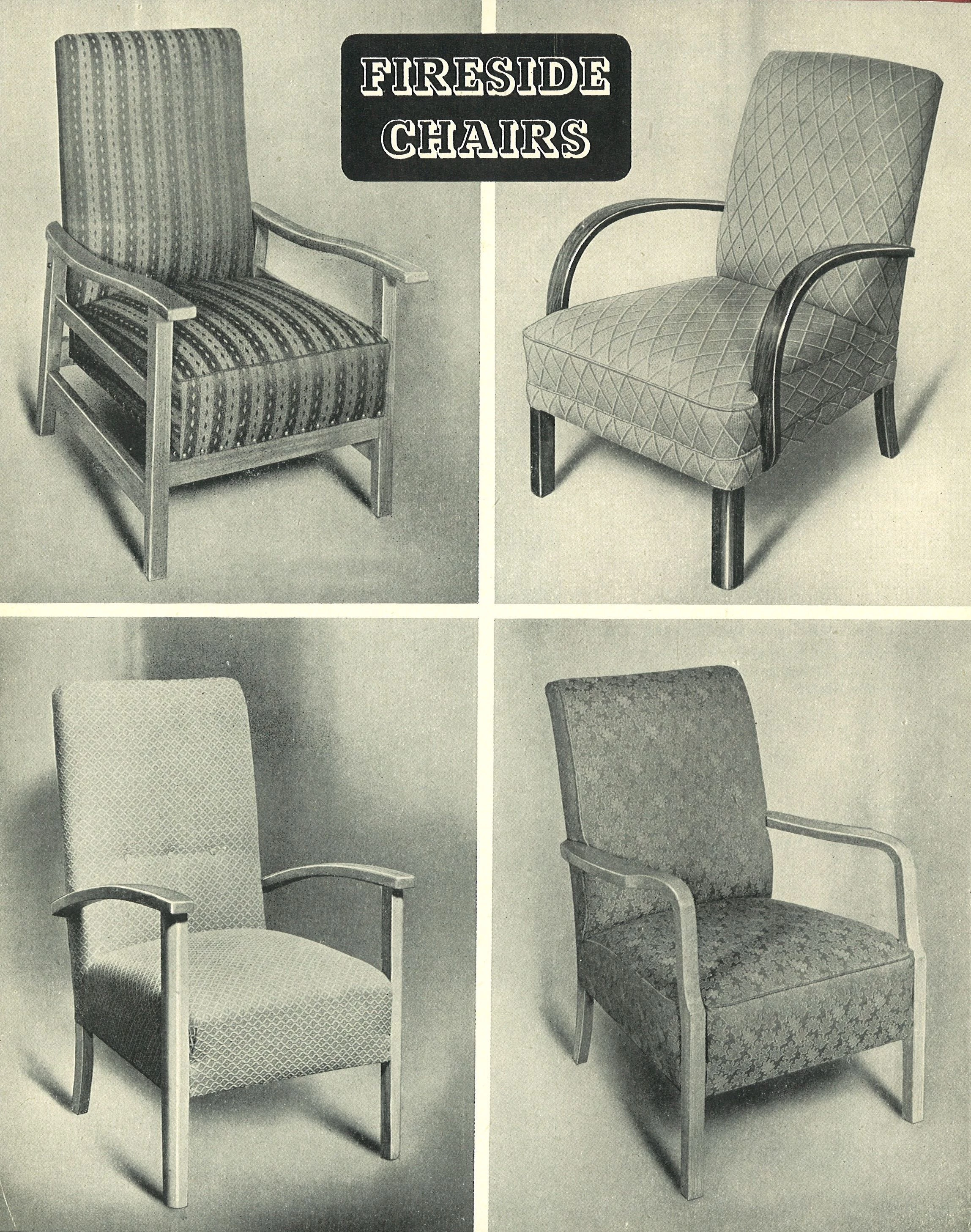
In 1941, the Board of Trade designed a collection of furniture of simple design that could be produced cheaply, which was referred to as ‘utility furniture’. In 1942, Sir Hugh Dalton, the Chair of the Board of Trade announced their aim:
To secure the production of furniture of sound construction, in simple but agreeable designs and at reasonable prices.
The first utility furniture catalogue was published in 1943 with a collection of around 30 pieces. They were designed by the advisory committee headed by furniture designer, Gordon Russell. The pieces were simple and modern, with a nod to the arts and crafts style. Every piece produced had to conform to the utility scheme standards and was stamped with the logo, ‘CC41’ (Controlled Commodity 1941).
Utility furniture was available to order either from the catalogue or local shops and was paid for through a voucher scheme. Every piece was valued in units, for example a fireside chair was worth 6 units and a sideboard was worth 8 units. Not everyone was elegible and people would apply for a permit before receiving up to 30 units worth of vouchers. Priority was given to those who had lost their homes during the war and to young couples moving to new homes such as the prefabs.
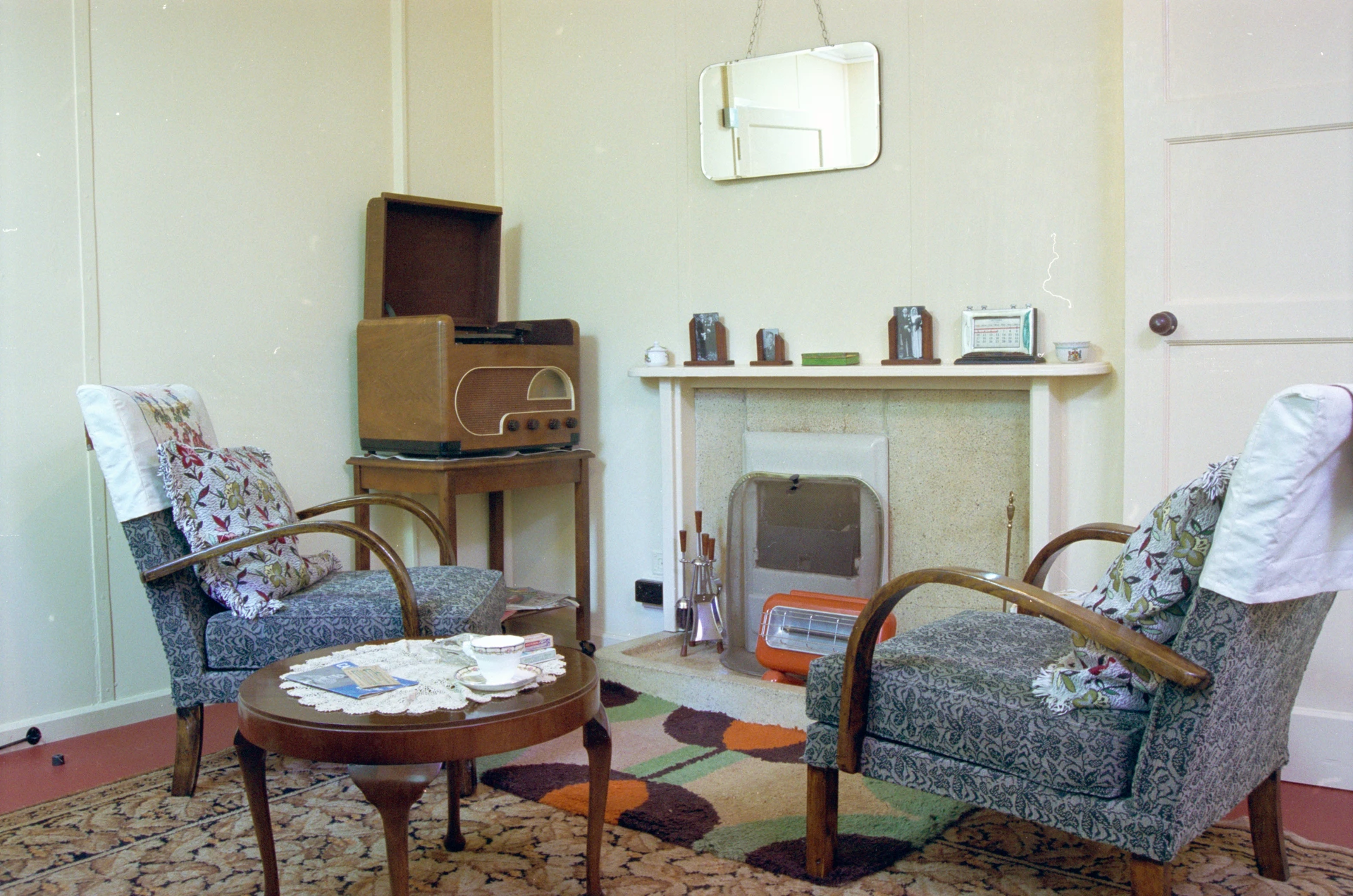
A few pieces of utility furniture are on display in the Prefab at St Fagans National Museum of History. The prefabs were built in response to the housing shortage after the war. They were cleverly designed to include fitted storage cupboards in every room in order to limit the amount of new furniture needed. The end of the war in 1945 wasn’t the end of rationing and the utility scheme persisted through the years of austerity until 1952.
The National Wool Museum in Drefach Felindre is home to a comprehensive collection of tools and machinery involved throughout history in the processing of woollen fleece into cloth. It also holds the national flat textile collection and the best collection of Welsh Woollen blankets with documented providence dating back to the 1850s. These range from large double cloth tapestry blankets that are now very collectable, to plain white single utility blankets from WWII. In this blog, Mark Lucas, Curator of the Woollen Industry Collection for Amgueddfa Cymru – National Museum Wales, shares his knowledge of the heritage of Welsh blankets and some fine examples from this important collection.
Welsh Blankets traditionally formed part of the bottom draw for Welsh brides. A pair of Welsh blankets was also commonly given as a wedding gift. The would have travelled great distances with people moving during the Industrial Revolution looking for work, but wanting to keep a small piece of home with them. Thus, Welsh blankets have found their way across the world, adding a touch of homely aesthetic to a room by day and providing warmth at night.
Narrow Width Blankets
Narrow Width Blanket - two narrow lengths stitched together.
Narrow width blankets were the earliest, woven on a single loom. They were made of two narrow widths hand sewn together to form a larger blanket. Single loom blankets of this type were the norm before the turn of the twentieth century when the introduction of the double loom enabled the weaving of broader widths of fabric. However, many of the smaller mills, as well as individual weavers, did not convert to wider looms and, as a result, narrow-loom blankets continued to be produced in significant quantities during the 1920s, 30s and even later.
Plaid Blankets
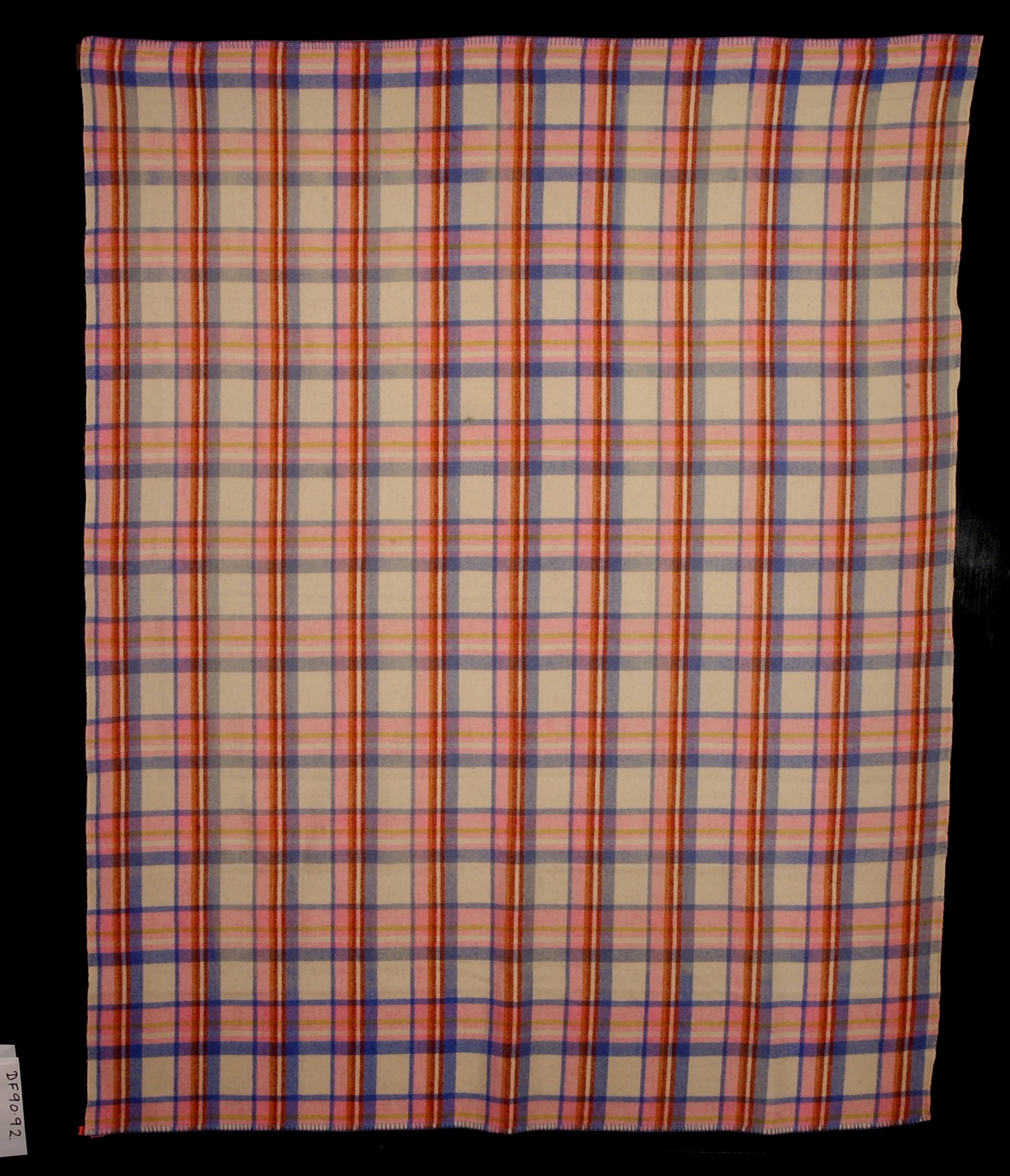
Plaid Blanket
Plaids were popular during the nineteenth century, usually featuring strong colours against a natural cream background. The introduction of synthetic dyes in the late 19th century allowed weavers to mix more coloured yarns into the designs, although some colour combinations were subtle, others could be gaudy. Many smaller mills continued the use of natural dyes well into the 20th century. The natural dyes were made from madder and cochineal for reds, woad and indigo for blues, and various berries and lichens for other shades. The National Wool Museum has its own natural dye garden and hosts courses and talks throughout the year on natural dyeing
Tapestry Blankets
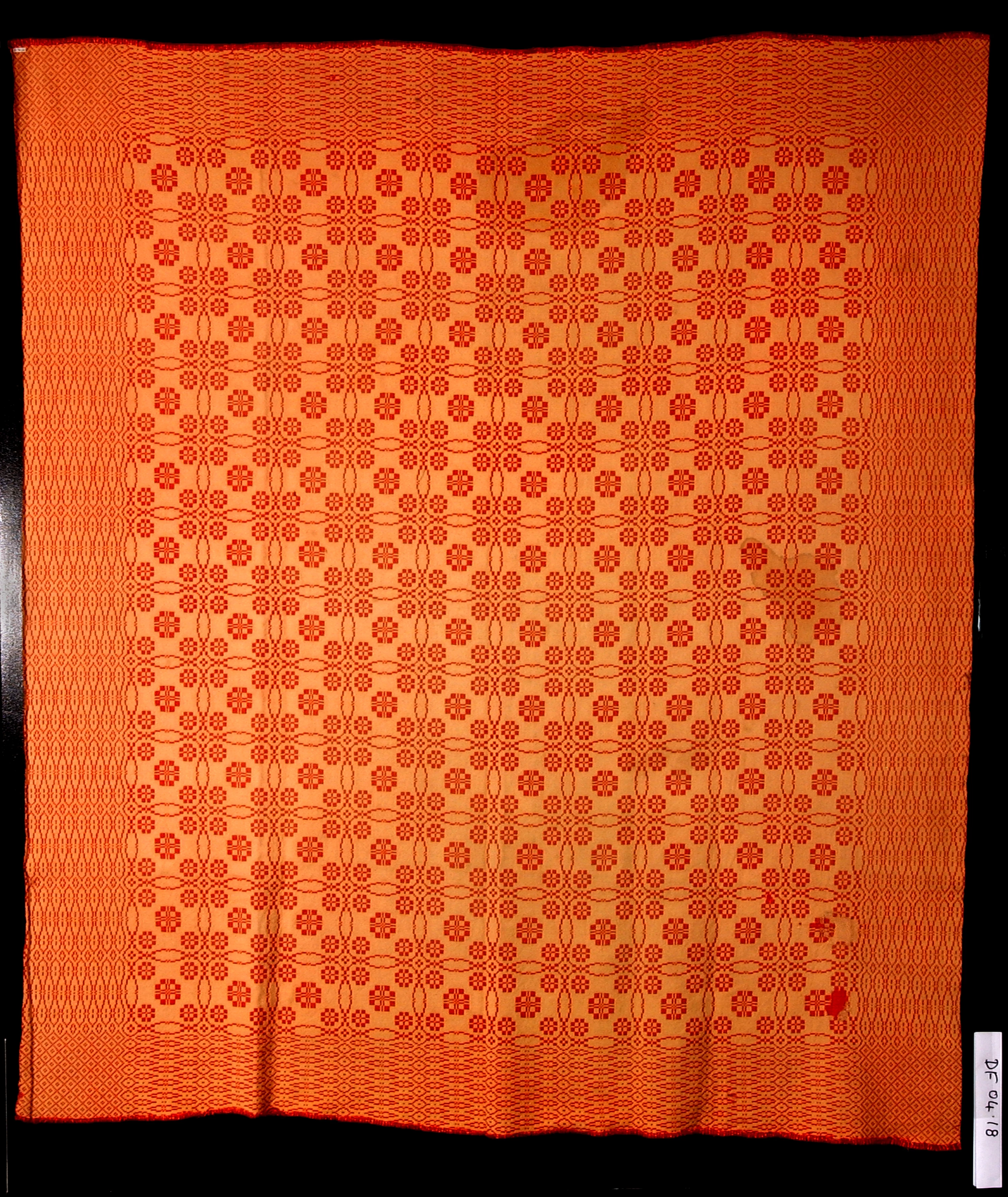
Tapestry Blanket
Welsh Tapestry is the term applied to double cloth woven blankets, producing a pattern on both sides that is reversible and is the icon of the Welsh woollen industry. Examples of Welsh tapestry blankets survive from the eighteenth century and a pattern book from 1775 by William Jones of Holt in Denbighshire, shows many different examples of tapestry patterns. Double cloth was first used to make blankets, but its success as a product for sale to tourists in the 1960s led to its use as clothing, placemats, coasters, bookmarkers, tea cozies, purses, handbags and spectacle cases. Because of the hardwearing quality of the double cloth weave the material has also been used for reversible rugs and carpeting.
Honeycomb blankets
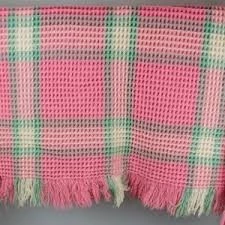
Honeycomb Blanket
Honeycomb blankets are a mixture of bright and soft colours. As the name implies the surface is woven to produce deep square waffle effect giving the blanket a honeycomb appearance. This type of weave produces a blanket that is warm and light.
With the current resurgence of Welsh blankets for a decorative home-style item there is much interest in old blankets and the designs patterns. Antique blankets have become very popular with interior designers and feature heavily in home décor magazines. They are used as throws and bed coverings in modern homes with many high-end textile designers as well as students researching old patterns for inspiration for their new designs.
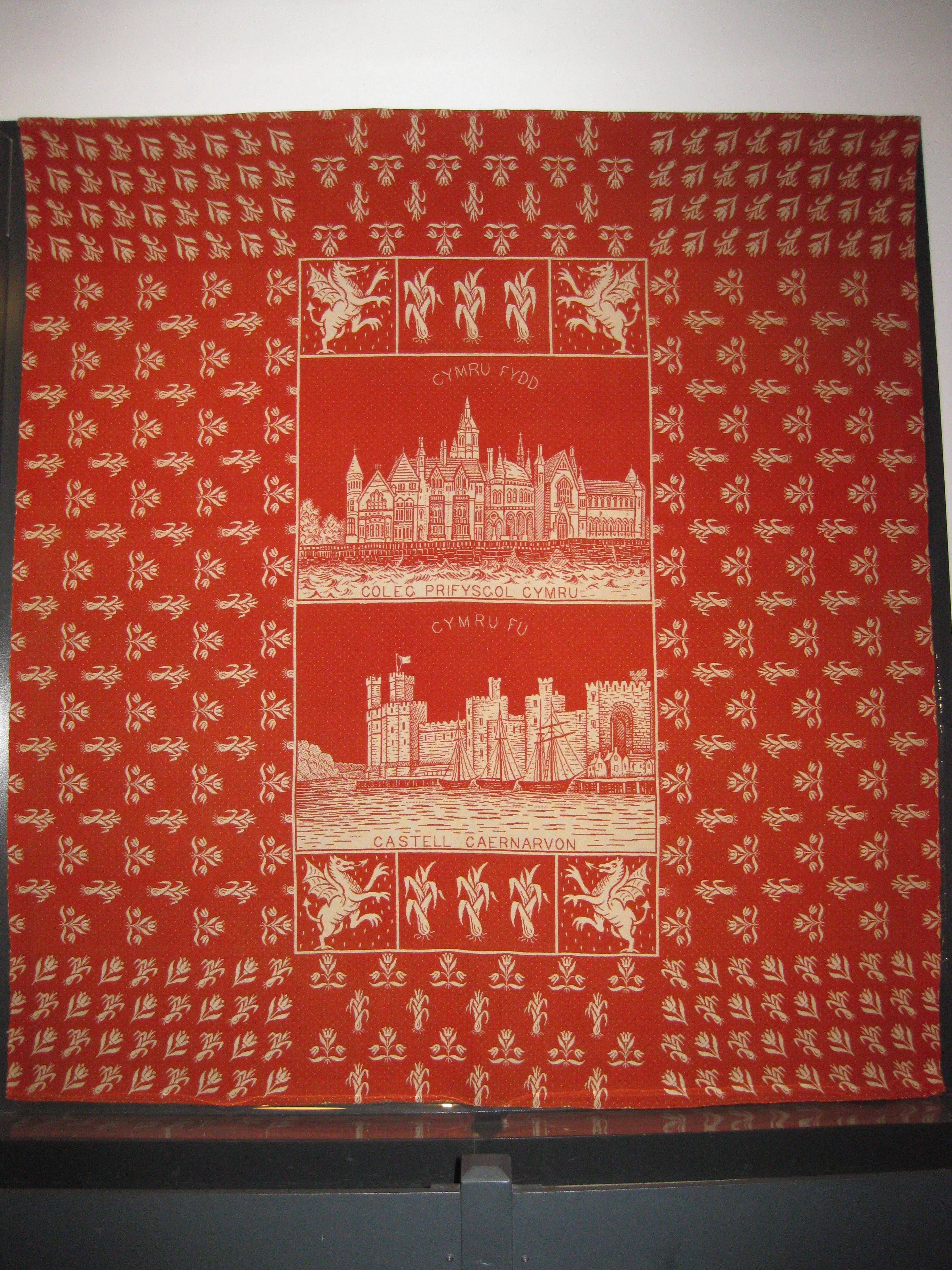
Caernarfon Blanket
Many of the fine examples in the Museums’ blanket collection come from mills across Wales that ceased production long ago. A highlight is the collection of Caernarfon Blankets. These were produced on Jacquard looms in a range of colourways. Only a few mills used Jacquard looms, which can make complicated designs and pictures. The Caernarfon blankets show two pictures one with Caernarfon Castle with the words CYMRU FU (Wales was) and a picture of Aberystwyth University with the words CYMRU FYDD (Wales Will Be). It is believed that these blankets were first been made in the 1860s, and last produced for the investiture of Prince Charles in 1969. A recent donation to the museum is an earlier example of the blanket featuring two images of Caernarfon castle. Woven by hand it contains a critical spelling error - Anglicising the name to Carnarvon.