: Museums, Exhibitions and Events

Artist in Residency: Building a Play Area

Sian Lile-Pastore, 1 February 2016

If you are a regular visitor to St Fagans you may have noticed:

a. The big red crane

and

b. the play area has gone.

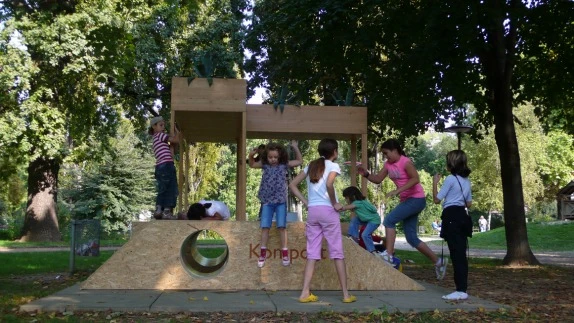
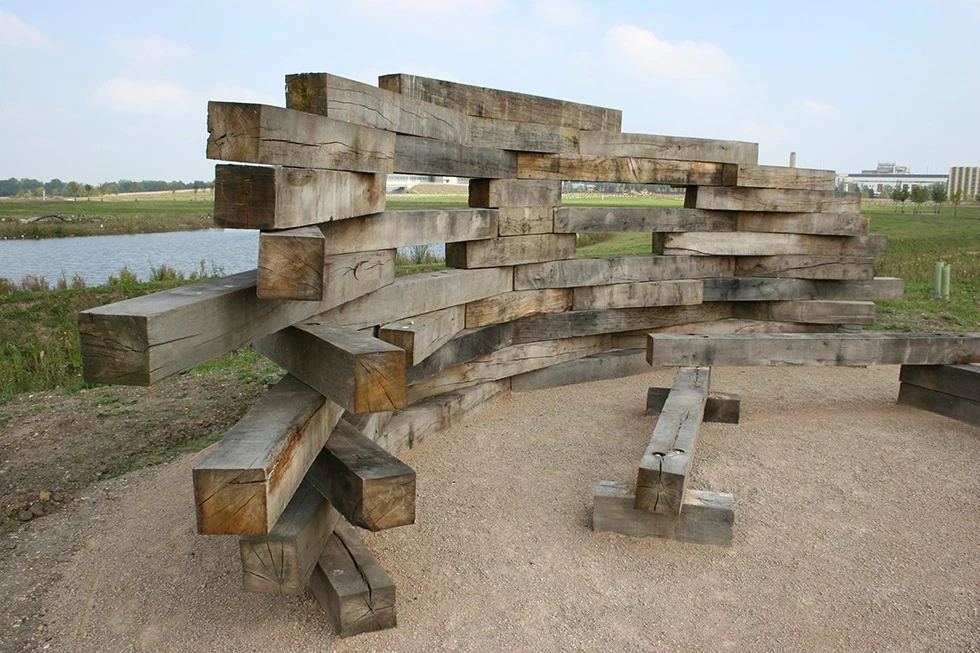
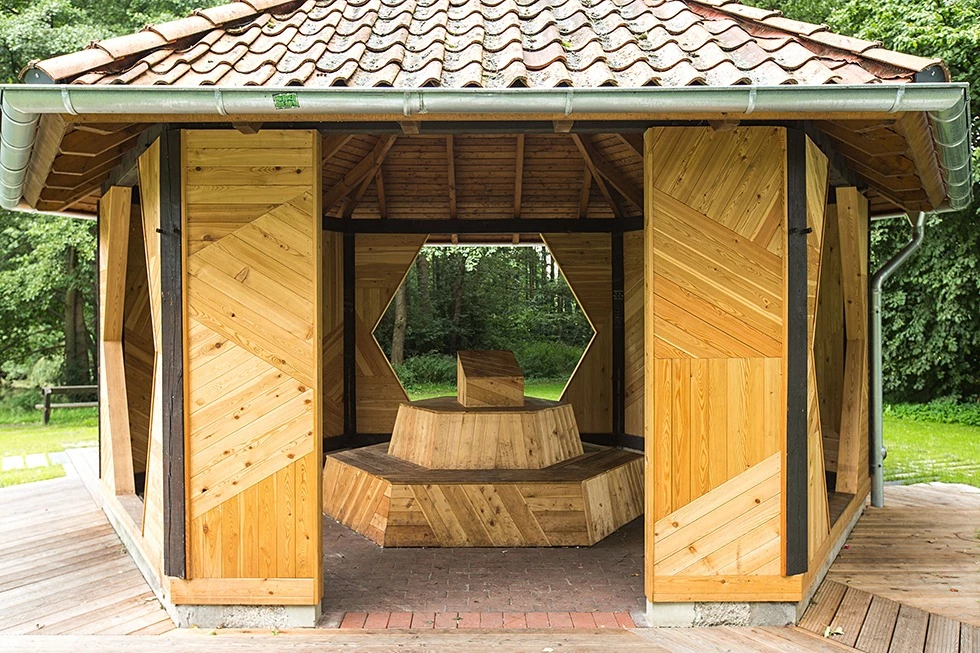
The big red crane is obviously temporary as all the building work goes on for the new and improved St Fagans, and luckily the lack of a play area is also temporary as we are BUILDING A NEW ONE! not only that we are building a new one with Nils Norman - an artist who has been working extensively around play for a number of years.

Although Nils has been on board for a good few months now (with support from Arts Council Wales and the Heritage Lottery Fund), it has taken a while for the project to get going as there is so much organising to do beforehand!

We also needed to appoint two supporting artists to work on the project with Nils which we did at the end of last year. These support artists will be helping with research as well as community engagement. We want the play are to be unique, bespoke to St Fagans, accessible to all ages and abilities, create links with the collections, is fun and is also a work of art. To do this the artists will be undertaking lots of research - looking through our archive and stores, as well as holding workshops for community groups and visitors into what kind of play area they would like to see.

They are currently at the research stage which will take a few months, Nils will then provide some drawings, we will *all* have a look at them and report back and then all going to plan the actual construction will start towards the end of this year, with a finished play area for spring next year! (don't hold me to those dates)

If you have any ideas, or if you have seen some great play areas, please let me know. This is such an exciting project which I will keep you updated on as it progresses. Next post, i'll introduce you to our supporting artists.

For more information about Nils Norman's work, visit his website

Enwau’r Bysedd

Meinwen Ruddock-Jones, 29 January 2016

Un o’m hoff bleserau fel Archifydd Clyweledol yw cael eistedd mewn heddwch am awr neu ddwy gyda phaned o goffi (ac efallai ddarn neu ddau o siocled) yn gwrando ar ddetholiad o’r 12,000 o recordiadau sain sydd yn ei harchif bellach.  Â drws fy swyddfa ar gau ac â’r clustffonau yn eu lle mae modd dianc i ffermdai a ffatrïoedd, i iard yr ysgol, i sedd y diaconiaid, i waelodion y pwll glo, i uchelderau y fferm fynydd neu i ble bynnag y mynnoch i gael cip ar fywydau Cymru’r gorffennol.

Cefais gyfle i wneud hyn y diwrnod o’r blaen ac mae’n rhyfeddol weithiau fel mae clywed pwt o stori, o ddywediad neu bennill yn dod ag atgofion yn llifo nôl.  Roeddwn i yn gwrando ar ŵr yn sôn am ei blentyndod yn Llanwddyn ac am y rhigymau a glywodd ar aelwyd y cartref.  Roedd yn un o wyth o blant ac mae’n sôn am y rhigwm y byddai ei fam yn ei ddweud wrth geisio tawelu’r plant trwy enwi bysedd eu traed.

Bowden, Gwas y Fowden, Dibyl Dabal, Gwas y Stabal, Bys Bach druan gŵr, dorrodd ei ben wrth gario dŵr. 

Recordiwyd yn Llanwddyn (1971)

Mae creu rhigymau am enwau bysedd y traed neu’r llaw yn arferiad byd-eang.   Mewn rhai gwledydd, arferir dechrau gyda’r bys bach a gorffen gyda’r bys bawd, ond ymddengys mai’r traddodiad yng Nghymru yw dechrau gyda’r bawd (bawd y droed fel arfer) a gweithio eich ffordd i lawr y bysedd gan roi siglad bach i bob un nes cyrraedd y bys bach.

Pan oeddwn i yn ifanc rwy’n cofio mam (sy’n dod o Trap, ger Llandeilo) yn tynnu fy hosan ac yn enwi bysedd fy nhraed un wrth un.  Dyma’r enwau oedd ganddi hi ar y bysedd:

Bys Bowtyn, Twm Sgotyn, Lloyd Harris, Charles Dafis a Stiwart Bach y cwmni.

Mae dwsinau o fersiynau o’r rhigwm hwn i’r bysedd yn Archif Sain Amgueddfa Werin Cymru yn amrywio o ardal i ardal ac weithiau o deulu i deulu.  Mae rhai enwau fel “Modryb Bawd” yn ymddangos mewn llawer i ardal a rhai enwau yn unigryw i bentref neu i gymdeithas arbennig.  Weithiau ceir ail ddarn i’r rhigwm fel y gwelir isod.

Dyma rai o’m ffefrynnau i o gasgliad yr archif:


Bys Bwstyn, Twm Swglyn, Long Harris, Jac Dafis a Bili Bach.

Hwn yn mynd i’r farchnad; Hwn yn aros gartre; Hwn yn neud cawl; Hwn yn bwyta’r cwbwl a Bili Bach yn starfo.

Recordiwyd yn Nhal-sarn (1969)


Modryb Bawd, Bys yr Uwd, Hirfys, Pwtfys, Dingw.

Recordiwyd yn Llangoed (1967)


Hen Fawd Fawr yn mynd i’r mynydd.

“I be?” medda Bys yr Uwd

“I ladd defaid”, medda’r Hirfys

“Mi gawn ni ddrwg”, medda’r Cwtfys

“Llechwn, llechwn o dan y llechi”, medda’r peth bach.

Recordiwyd yn Nyffryn Ardudwy (1972)


Fenni Fenni, Cefnder Fenni Fenni, Fenni Dapwr, Dic y Crogwr, Bys Bach druan gŵr, dynnodd y drain trwy’r dŵr.

Recordiwyd yn Llantrisant (1976)


Modryb Bawd, Bys yr Uwd, Pen y Gogor, Bys y Pibar, Robin Gewin Bach.

Recordiwyd yn Nefyn (1968)


Roedd hi hefyd yn arfer ymysg merched i adrodd y rhigymau hyn wrth dynnu bysedd eu dwylo neu fysedd dwylo eu ffrindiau.  Byddai nifer y bysedd a fyddai’n clicio wrth eu tynnu yn darogan y nifer o blant y byddai perchennog y bysedd yn eu cael yn y dyfodol. 

Felly’r tro nesaf mae’r plant yn rhedeg fel corwynt trwy’r tŷ, yn rhoi darnau o fanana yn y peiriant DVD neu’n tynnu llun ar wal y gegin, anghofiwch am y teledu, am gemau’r tabled neu gil-dwrn o losin.  I dawelu'r cariadon bach ac i adfer heddwch, eisteddwch nhw i lawr, tynnwch eu hosannau a chyfrwch fysedd eu traed.

"An extreme historical adventure" - #MakingHistory co-curation update

Elen Phillips, 22 January 2016

A belated happy New Year to you all! In the weeks since I posted my last co-curation update, we’ve been on the road again co-producing audio-visual content for the Making History project. Working with various community groups and individuals, we've been creating short films based on the collections selected for display. These films will form part of the interpretation in the new galleries. Here's a quick overview of what we've been up to.

First World War

In December, I was invited behind the wired walls of Maindy Barracks to interview two serving members of 3rd Battalion The Royal Welsh. One of the new galleries will include a display about the First World War, focusing on voluntary action, healing and remembrance. My brief was to capture a glimpse into Army life today and to record contemporary responses to century-old collections. Inevitably, the interviews touched on difficult subjects – separation, injury and death. Hearing first-hand testimony from the soldiers was a fascinating experience. It's going to be a challenge to combine and edit the interviews into a three minute film.

Miners’ Strike

Earlier this month, we shifted our attention to the 1984-5 Miners’ Strike. Working with colleagues from Big Pit National Coal Museum, we asked a group of Youth Ambassadors from Blaenavon to interview individuals who were involved in the Strike.

After a morning learning about the ethics and techniques of oral history, the young people formulated their own questions and spent the afternoon recording the interviews. We were conscious of the need to represent a diverse range of experiences; to give the young people the opportunity to challenge their preconceptions. With this in mind, we invited an ex-police officer to join the workshop, as well as former miners and others affected by the dispute.

You’ll have to wait until the new galleries open to see the results! Needless to say, the Young Ambassadors were natural interviewers – curious, probing and balanced. When asked to reflect on the process, Owen from Blaenavon said he'd been on “an extreme historical adventure”. I'll second that.

#MakingHistory #CreuHanes

The work with 3rd Battalion The Royal Welsh is supported by the Armed Forces Community Covenant Grant Scheme.

Llys Llywelyn: framing the past

Dafydd Wiliam, 6 January 2016

Spare a thought for our stonemasons who have been working tirelessly re-creating a 13th century royal hall from Anglesey. Our team have mortar mixers and steel scaffolding which weren’t available at the time, but in truth the process has changed very little. It is simply a case of laying one stone at a time. The long walls of the main hall have reached their full height and all ground-level window reveals have been finished. Wooden formers were made to hold the arching stones in place until the mortar had hardened. The masons will continue to build the nine meter gables until the Carpenters Fellowship are ready to install the internal timber frame that will help take the load of the roof.

The drawing on the right provided by Tim Potts from the Carpenters Fellowship allows us see what the interior of the hall will look like after the frame has been installed. This frame along with the stonework will form an aisled hall typical of the period. The design of the frame features semi-circular arched bracing which was informed by research into two surviving buildings: the Bishops Palace at Hereford and the Great Hall at Leicester Castle), while the stonework recreates that of the royal court at Rhosyr, Anglesey. For more info visit: https://museum.wales/blog/2015-11-09/The-Bishops-Palace-Hereford and https://museum.wales/stfagans/buildings/llys-llywellyn/. The oak frame will look wonderful, but be prepared for it to be painted in typical Romanesque patterns such as chevrons in alternating colours.

Our research work currently focuses on recreating period wall-hangings and furnishings. One of the more challenging aspects of this build is successfully meshing two disparate worlds. On the one hand we are tasked with re-creating the world of Llywelyn the Great, ruler of Gwynedd 1200–1240 and owner of the court at Rhosyr. On the other hand we have to comply with the requirements of our own 21st century world: visitor/staff well-being and hazard mitigation. No doubt this will be the first Welsh hall with underfloor heating and an emergency lighting system.

Our Museum during the Great War

Jennifer Evans, 5 January 2016

This post is a synopsis of a Behind the Scenes event I presented on September 30th 2014. It consisted of looking at a “snapshot” of Amgueddfa Cymru – National Museum Wales’ activities during the WWI period. Information was obtained through scanning our scrap books, publication archives and photographic collections for the years 1914 to 1918 and extracting interesting items of news concerning  staff and exhibitions.

However, the first thing I did was to warn everyone that in 1914 this is what we looked like….

Archibald H. Lee

Archibald H. Lee

We still existed of course, established by Royal Charter back in 1907 but, without a finished building to call our own.

Therefore, during this time while construction of the building was in progress, administration was carried out in offices close by at Park Place and the Kingsway area while exhibitions were held in temporary galleries next door in City Hall.

Cyril Mortimer Green

Cyril Mortimer Green

I centred the staff news on three people...

Eleanor Vachell

Eleanor Vachell

Archibald H. Lee, the Museum Secretary, who saw active military service and was decorated with the Military Cross after fighting at Gaza. He returned to work after the war and remained Museum Secretary for 44 years, finally retiring in 1953. He appears in many photographs of special events and royal visits over the years. 

Cyril Mortimer Green, who had been appointed as Botanical Assistant in 1914, but never got to take up his post. He held a Commission in the 3rd Royal Sussex Regiment, went abroad to fight early on in the war and was eventually killed on active duty in November 1917. 
His death is all the more poignant because, not only did never take up his position at Museum, his brother Hugh Mortimer Green had also been killed on active duty in 1915.

Click the link below and scroll down for more information on Cyril and his brother.

http://www.wwwmp.co.uk/ceredigion/aberystwyth-st-david-s-church/

Eleanor Vachell, spirited and outstanding amateur botanist who stepped in to take charge of the botany collections, while Cyril Mortimer Green was absent on military duty. She did this, with the help of pupils from Cardiff High School for Girls, whilst also supporting the war effort as one of the ‘Committee Ladies of the Auxiliary Workers Territorial Forces Nursing Association’ at the hospital set up in Howard Gardens, working as both nurse and librarian.

Eleanor was the daughter of Charles Tanfield Vachell [1848-1914], a member of the Cardiff Naturalists Society, serving as its secretary and president for many years, he was also behind the creation of the Cardiff Municipal Museum and was a member of the National Museum Wales council.
    

Eleanor compiled, with her father, the Vachell herbarium that contains 6,705 dried specimens and is one of the most complete herbaria ever collected by a private individual. This is now held here at the Museum along with a very large collection of their own personal library on British floras.

I also looked at the problems faced in the construction of the building due to a lack of basic materials that had been re-allocated for the war effort. The progress must have been excruciatingly slow and all material orders had to apply via license applications to The Ministry of Munitions and the Report for 1917/18 it is stated that work was suspended completely for a time…

Unfortunately it has become necessary to suspend work on the New Building, and an agreement terminating the contract has been entered into with the builders, Messrs J. Willcock & Son. The roof had already been completed and the windows have been filled with oiled canvas so that the structure is now weather proof… Some of the rooms in the New Building are already in use for storage of specimens. NMW Annual Report p. 9

One of the most enjoyable parts of researching this talk was looking at the exhibitions that were held through the war years and there were plenty of them! Because even though the country was at war, the Museum still had an obligation to the public to carry on programming exhibitions and events. Here are just a few of the many exhibitions held at City Hall and for which we hold the original catalogues...

Turner's Welsh Drawings

Open from Oct 26th 1914 to Jan 30th 1915 and visited by over 8,000 people

Exhibition of Modern Belgian Art

Held in 1915 from March 17th to April 15th….visited by over 6,000 people.

Exhibition of Topographical Prints and Engravings 

An exhibition of Prints and Engravings of places in Wales was opened on July 27th 1915 and closed on October 30th The number of visitors to the exhibition was in excess of 7,000.


Lovett Collection of Toys

A unique collection of children’s toys and playthings lent to the Museum by Mr. Edward Lovett, of the Folklore Society. The exhibition was originally intended to close on August 16th 1915 but in view of the interest it aroused, and to give school children an opportunity of visiting it during the whole of their holidays, the date of closing was postponed to September 2nd. The total attendance was 21, 889.

I also found mention of a number of war related exhibitions held at City Hall but for which we do not hold the catalogues…

Exhibitions of Women’s War Work 

A Ministry of Munitions exhibition of photographs illustrating women’s war work during February 1916

Exhibition of Allied War Photographs 

An Exhibition of Allied War Photographs held in 1917 from August 4th to 20thand visited by nearly 4,000 people.

British Battle Photographs [in colour]

An exhibition lent by the Ministry of Information. This was opened in November 1918 closed on the 11th December, and visited by about 3,500 people. 

I concluded the talk by showing two other WWI related items held here in the Library. The first was a volume of military portraits of soldiers from the Welsh Horse Yeomanry. This regiment did not exist before the Great War; it was formed in August 1914 under the administration of the Glamorgan Territorial Force Association and headquartered in Cardiff [Sophia Gardens]. The title page states that the album was presented to Alderman J. Robinson, who was Lord Mayor of Cardiff (1913–1914) and it was donated to the Library on the 27th April 1932 by Councillor R. G. Robinson.

More information on this regiment can be found on this page recounting the history of the Welsh Horse Yeomanry.