Lambcam 2016

Bernice Parker, 18 February 2016


Everyone knows that baby animals rule the internet – and this St David’s Day sees the return of #lambcam, a live web feed giving a 24/7 view of all the action in the lambing shed at St Fagans National History Museum in Cardiff. The project launched in 2015 and became an instant hit on social media – but underneath the cuteness there’s a serious educational message…


“#lambcam allowed us to share our expertise in traditional skills with people the world over, as we brought lambing season to the web through a series of articles, events and live camera feeds. In doing so, we tripled the amount of time visitors spent on our website, on average, and increased visitor participation in public debate around Welsh produce, natural resources, animal welfare and agriculture.”    
Sara Huws- Digital Content Officer, National Museum Wales
But hey – never mind about that! BABY LAAAAAAMBS RIGHT???!!!
As well as giving 24 hr access to the lambing shed, #lambcam gives an up to date running total of births on the lamb-o-meter (which comes with an associated health warning – ‘Counting sheep may cause drowsiness!’). There’s also a gallery of video highlights from the shed and regular updates on the progress of the new mums and babies on the Museum’s blog. Visitors will also be able to drop by in person when the farm is open on weekends and during school holidays throughout March. Or, for those would like to get really hands-on, there’s a chance to experience the magic of a full day in the lambing shed on one of the Museum’s new Lambing Experience Day courses.

So whether you’re a social media superstar, wannabe shepherd or a St Fagans frequent flyer, there’s no excuse not to get involved in this year’s baby boom at the Museum.

#lambcam #instalamb @StFagans_Museum

Keeping Flower Records

Penny Dacey, 15 February 2016

Hello Bulb Buddies,

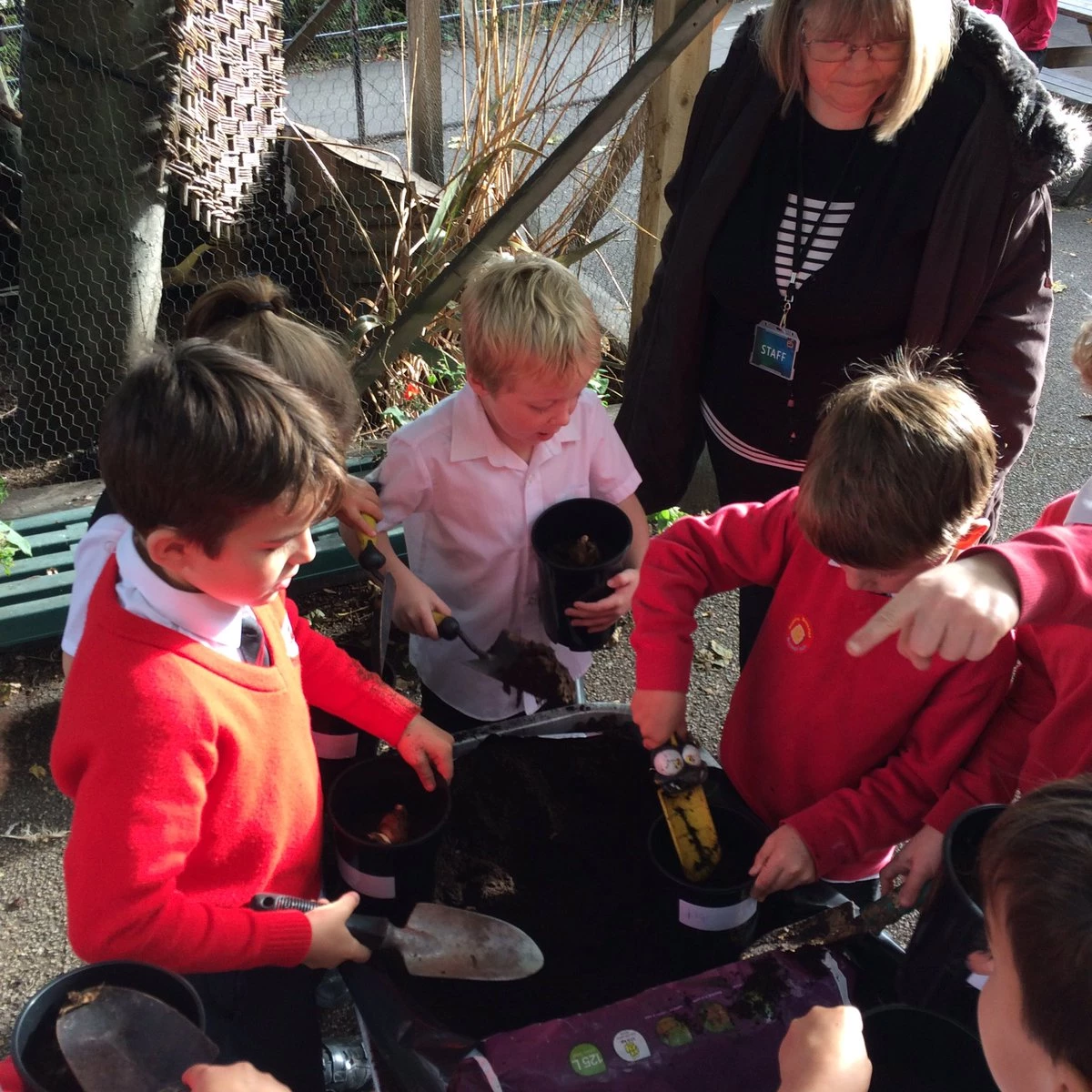
An exciting number of schools have reported that their Daffodil and Crocus plants are growing. Some schools have noted that their plants look close to flowering. With that in mind it is a good time to discuss the next part of the project – flowering records! There is a resource on the Spring Bulbs for Schools website entitled ‘keeping flowering records’. This document tells you how to keep flower records, the equipment you must use and the methods for collecting information.

The resource pack sent to your school in October contained a Crocus flowering chart and a Daffodil flowering chart. You can use these to record the dates that your flowers open and the height of your plants on these dates. You can then enter your flowering date and the height of your plant on this date to the National Museum Wales website. Once the first flowering date has been entered for your school, a flower will appear on the map on the Museum website to show where your school is!

Last year some schools were confused and entered the height of their flowers weekly. You can monitor how tall your plants are growing each week and let me know in the ‘comments’ section when you enter your weekly weather records. But, the ‘flowering date’ and the height of your plant on the day it flowers are to be entered on the NMW website only once the flower has opened. 

Look at the picture of Daffodils at St Fagans National History Museum. This picture was taken on a cold day, so the flowers haven’t fully opened. But you can still tell which ones have flowered by looking closely at the picture. If you can clearly see all of the petals then your plant has flowered. Before flowering the petals are held tight in a protective casing and look like this: 

The picture to the right shows a flower bud. Once the flower has matured inside the bud (and the weather is warm enough) the casing will begin to open. This can take a few hours or a few days! If you watch your plants carefully you might see this happening! Once you can see all of your petals and the casing isn’t restricting them at all you can measure the flowers height and enter your findings on the website.

Have you compared the heights of the flowers in your class? Are there big differences in the size and maturity of the plants, or are they all very similar? What about the plants planted in the ground? Are these any bigger than the ones in your plant pots? Why do you think this is? You can let me know your thoughts in the ‘comments’ section when you enter your weekly weather records!

Once the bulbs start to grow send your stories and pictures to our bulb-blog and follow Professor Plant on Twitter

Keep up the good work Bulb Buddies!


Thank you for updating me on how your plants are doing Bulb Buddies:


Ysgol Pentrefoelas: Dim llawer o law ond yn gynnes. Aethom am dro i weld y lili wen fach yn nghoed y Foelas ac roedd miloedd yno fel carped gwyn. Dim swn am bennau ar ein bylbiau ond maent yn dechrau tyfu. 4 pot heb ddim byd yn y golwg!

The Blessed Sacrament Catholic Primary School: Not so much rain this week but some frost at night. Almost all the crocuses have shoots now.

Arkholme CE Primary School: Warmer week than usual. Rainfall was less than last week. Bulbs are growing well. Some of last year’s bulbs are flowered.

Bacup Thorn Primary School: We have noticed a real growth in our bulbs and shoots. We have also observed a faster growth in our experimental plants indoors. Our crocus bulbs are around 9cm high and dafs are around 12cm indoors and 10cms outdoors.

Maesycoed Primary: A few crocuses are popping through the surface, yay!

East Fulton Primary School: Some of our bulbs are starting to sprout.

The Blessed Sacrament Catholic Primary School: Variable weather, mostly windy with a little rain. The daffodils are growing well and 22 of the 30 crocuses are showing shoots. They still don't need watering.

Silverdale St. John's CE School: One of the daffodils has nearly opened - it might happen over the weekend!

Darran Park Primary: This week, the growth of the Spring Bulbs was 5cm. Last week it was 2.5cm, therefore it has gone up 2.5cm

Grange Primary School: We have lots of shoots appearing! Children very excited to see their first flower.

Braidwood Primary School: Still no signs at all of any growth in the bulbs planted in the ground. The bulbs in pots show some growth in the form of shoots.

The Blessed Sacrament Catholic Primary School: This week has been quite windy with rain at times; the end of storm Jonah! The bulbs still don't need watering! It is quite warm outside for this time of year. We have noticed that 2 crocuses have now got shoots and the daffodils are growing quickly. It is very exciting.

Darran Park Primary: Last week, the growth of the spring bulbs, was 1cm but it has increased by 2 cm this week, and is now, 3 cm.

Stanford in the Vale Primary School: Very windy week observed and we have 3 daffodil flowers in the ground out in flower!

Castlepark Learning Centre: The crocus are starting to appear.

Castlepark Learning Centre: The first daffodils are showing.

Arkholme CE Primary School: It was not very wet this week, mild temperatures as well. Some snow on Saturday and Sunday. Our bulbs are growing well because it is very mild weather.

Ysgol Esgob Morgan: We have had a very windy week, but the daffodils are starting to grow now. From W.

Darran Park Primary: The majority of the pots the spring bulbs have sprouted around 1-2 cm.


Drumpark Primary ASN School: We can see the leaves sticking out but not all of them yet.

Stanford in the Vale Primary School: Starting to feel like spring....

Artist in Residence: Building a Play Area

Sian Lile-Pastore, 12 February 2016

While Nils, Fern and Imogen get stuck into searching archives and stores, looking at the Museum's collections and working with visitors and groups to get their ideas, how about we think about what play areas we like? what local ones have you played in or taken children to and they loved? what ones have you been to that you didn't like? have you seen play areas that just look amazing? What makes a playground good? what do want from a playground? does it have to look nice? does it have to look like a playground? I'd be really interested in hearing your thoughts and ideas.

Meanwhile, I have been collecting images of play areas which I think are good design, look fun, are imaginative, look exciting... i'm not suggesting we have a play area exactly like these in St Fagans, but it wouldn't it be great to have something different and unexpected?

How the Welsh landscape was transformed by events in Turkey – 300 million years ago

Christopher Cleal, 11 February 2016

Turkey may seem a long way away to the people of Wales. But events there some 300 million year ago have had a profound and lasting effect, on our Welsh climate, landscape and wildlife.

For about 10 million years, Wales was part of an enormous tropical swampland extending from eastern North America to Turkey and the Caucasus. The dead remains of the plants that grew there caused massive deposits of peat to build-up. This peat was then buried by mud and sand, and the resulting heat and pressure changed it into the coals on which much of the industrial growth of places such as Wales depended, especially in the 19th and early 20th centuries.

But nothing lasts for ever, and the swamps eventually dried up and the accumulation of the economically important coal-forming peat came to an end. What caused this profound change to the environment has been the subject of much scientific debate. Research co-ordinated from Amgueddfa Cymru–National Museum Wales (as part of the International Geoscience Programme project IGCP 575) suggests that it was due to the combination of two major factors.

  1. Landscape Change: The collision of two large continental plates (Euramerica and Gondwana) caused a massive upheaval of the landscape, with rivers changing direction and new mountain ranges forming. The effect of these changes was particularly felt in the areas where the swamps had been.
  2. Climate Change: The changing landscape caused a different type of vegetation to grow here, and this coincided with a significant warming of the climate and a reduction in rainfall.

Importantly, these environmental changes started first at the eastern end of these swamplands, in places such as northern Turkey, and then progressively moved westwards towards Wales.

So, in order to understand properly what caused the collapse of this ancient wetland in Wales, we need to study events in Turkey. To do this might have needed extensive (and expensive) field excursions to the area. Fortunately, we have a scientific resource nearer to hand that can provide at least a start to this work. In the years just before and after World War II, the great Dutch palaeobotanist Wilhelmius Jongmans led expeditions to northern Turkey to collect Carboniferous plant fossils. He sadly died before he could properly work on them. Fortunately, however, his collection of over 5,000 Turkish fossils is now stored safely in the Naturalis Museum in the Netherlands.

Chris Cleal from Amgueddfa Cymru–National Museum Wales is now leading a collaborative project with colleagues from the Netherlands, Germany and the UK, to research this collection – using expertise developed in Wales to bear on an internationally important problem. It will help us understand what controlled the formation of coal deposits such as those found in Wales, and how vegetation, atmosphere and climate interacted in Carboniferous times. 

The world 300 million years ago was in many ways similar to today (far more similar to what it was in the intervening millions of years ago, for instance in Mesozoic times, when the dinosaurs were roaming around). Studying how climate, vegetation and the atmosphere interacted in this ancient world therefore allows us to check some of the assumptions on which scientists have been basing their modern-day climate models.

This shows the importance of international collaboration between museums in scientific research – why it is vital for scientists in Wales to work with colleagues from across the world.

Artist in Residency: Building a Play Area

Sian Lile-Pastore, 10 February 2016

Here are some images of the work of Nils Norman who is designing our new play area in St Fagans. For more information about his work and other projects, please check out his website