Beachwatch

Katie Mortimer-Jones, 25 September 2014

Last Saturday 20th September we ran our annual Beachwatch event at Ogmore Beach in the Vale of Glamorgan. This was part of the national campaign run by the Marine Conservation Society encouraging communities to get out and about to care for their local shorelines. This is the 10th year that museum staff have been organising a Great British Beach Clean at this beach.

In the morning families took part in workshops with museum curators finding out about different types of seaweeds and animals in the strandline and in rock pools. There were fossil hunts where people discovered lots of fossilised bivalve shells and sily lilies (crinoids) in the rocks. Families also helped create our ‘Beach Museum’ making Landart, inspired by the works of artists like Richard Long.

After lunch the serious work began, museum staff and families scoured a 150m stretch of beach near to the slipway searching for rubbish. Sadly this wasn’t a challenge, we collected over 35kg of litter in an hour!  Each piece of rubbish found was logged and all this data will be sent on to the Marine Conservation Society who will use it to find out where beach litter comes from and contribute to marine conservation. Over the last 10 years we have seen a change in the rubbish that we have collected on this beach. During initial cleans one of the greatest problems encountered were cotton bud sticks, however these have declined over the years. Sadly one of the greatest problems encountered this year was dog poo in plastic bags and hypodermic needles. Over 65 people took part in the day’s activities and we look forward to taking part in Beachwatch the same time next year.

#popupmuseum - The story so far

22 September 2014

Here’s an update on our pop up museum project. 

We’re creating a pop up museum about Cardiff with the Cardiff Story, helped by the HLF, for the Welsh Museums Festival and the Museums Association Conference at the Wales Millennium Centre on 9-10 October. Before we set it up, we’ve asked the people of Cardiff and beyond to help us collect stories and objects to get it up and running.

So far, we’ve held 3 workshops at The Cardiff Story.  We’ve collected over 30 Cardiff stories on film and story cards and seen weird and wonderful objects that all say something about Cardiff in their own unique way! The process has brought people together in conversation by sharing their Cardiff story.

The latest workshop was held at the Cardiff Story between 6-8pm on 11 September. Cheese, wine and soft drinks were on offer to add to the social feel of the evening. By the end of the session 20 people had popped in to share their stories. We also took a video camera out on to the streets and filmed 20 voxpops from a very diverse range of passers-by! Some of them are hilariously funny and will be shown at the pop up museum at Wales Millennium Centre.

The First Object

A polystyrene corgi was the first object to make an entrance. It had been left out with the rubbish on a street in Roath – but was rescued, given a wash, and now lives happily with its new owners in a Cardiff living room.

Designing the pop up museum

As the number of Cardiff stories and objects grow, so too does the need to think about how we will display the material we’ve generated. The pop up museum will move to the Wales Millennium Centre on 9-10 October for the Museums Association Conference so it will have to be very flexible and easy to put up.

We’ve started rummaging around in the depths of National Museum Cardiff’s stores for cases, shelves, seats, anything! Here’s a selection of what we found:

  • A lovely big table where people can sit and chat about their stories. One idea we had about displaying objects was to place them in Perspex boxes on this table and pile them on top of each other as the display grows over the two days.
  • A couple of lovely cases currently in the contemporary art space at National Museum Cardiff. These will allow us to show objects from the Cardiff Story collections and national collections that reveal something about Cardiff at the Wales Millennium Centre.
  • More seats! Some rather nice grey square fabric cubes.
  • And finally…..Billy the Seal!

We’re not sure yet if Billy can come with us to the Wales Millennium Centre, but we’re looking into what’s possible. Billy’s skeleton has been part of National Museum Wales’ collections since the 1940s. Billy came to Cardiff in 1912, when fishermen aboard a trawler found him in their nets. He was given the name Billy and brought to Cardiff where he set up home in the Victoria Park Lake.

Billy apparently escaped during flooding and swam down Cowbridge Road. On the way he stopped at a local fish shop and ordered ‘no chips, just the haddock thanks.’ He then made his way to the Admiral Napier for a pint, ‘half a dark’ to be precise, but was captured and taken back to the lake.

We don’t know if these events actually happened, but many local residents swear the story is completely true.

Follow this blog to find out if Billy can escape again!

Further information

Next pop up museum workshop:
27 September 11.00-1.00pm, Cardiff Story

For more on setting up your own pop up museum follow this link:

http://popupmuseum.org/pop-up-museum-how-to-kit/

Is Content still King?

Graham Davies, 20 September 2014

Graham Davies, Digital Programmes Manager, Amgueddfa Cymru - National Museum Wales

"Content is King". The phrase is strong, infallible, sitting proud on his pedestal, a little like the Queen Mother, or the National Health Service. Sacrosanct. But has the time come to question some of our long held adages in the world of digital content and web design? Is content actually 'King' anymore?

Fresh back from an energising few days with the fab team at Culture24 at the Let's Get Real workshops and conference, I am determined not to let the enthusiasm and momentum get buried by the squillions of things in my inbox that greet me now that I am not 'Out of Office' anymore.

The discussions of the last few days have left me pondering over our constantly evolving digital landscape.

Which direction, and how high do we have to throw our digital content ball to get it successfully into the constantly moving net of engagement?

Jessica Riches, in her talk on 'Learning from Brands' seemed very surprised that she was the first of the day to mention the phrase ‘Content is King’

This made me think. And think again. About the shift in focus to be more about platforms, the importance of audiences and what channels those audiences use and reside in.

So has the time come to update or even rewrite the rulebook?

1. Content is King?

Surely it's not just raw content that is king anymore. Who your content is intended for significantly alters how it should be written and where it should be published. What is the intent of those people reading it? (as apposed to the intentions of those writing it). So I give you rule rewrite number 1:

Content, Intent and Purpose are the new King, Queen and Jack

By thinking of it this way, you are reminded that content on its own doesn't stand any more. It's equally important to also think of why you are writing it and where the people are who want to read it?

2. Build it and They Will Come?

This fell off its pedestal a long time ago, but if we were to prop it back in place the stonemasons would need to re-carve the plinth to read: 

Write it and take it to where they are. Or perhaps better still: Go pay them a visit and have a chat

This helps reinforce the idea that we can't be institutional broadcasters anymore, we should be working with our audience to help them answer what they want to know, rather than what we want to tell them.

To demonstrate this, Shelley Bernstein provided us with a superb keynote speech at the Let's Get Real conference on how the Brooklyn Museum are trusting the audience and developing a wholly user-centric approach to their new responsive museum.

3. Design Responsive Websites

Great, Yes, very good. Although a revision of this phrase can encompass web design by default whilst primarily focussing on content:

Optimise your content to be platform independent

4. Think Mobile First

Yes, we must, and we should make this behaviour ingrained. By turning this rule upside-down, our new banner proclaims (and by its very nature automatically assumes mobile first):

Remember to check the desktop

Think back to those good old days where everything had to be retrofitted to work in IE 6. Who now retrospectively checks that everything reads and works well on a desktop? Not many I'm guessing.

But beware. Herein lies the paradox: Remember, people looking to visit one of our venues are more likely to be looking us up through a mobile device. However, people looking at in-depth long-form curatorial and academic material are predominantly still using desktops.

This is where headline metrics can be misleading, if your website as a whole shows a rise in mobile, that doesn't mean that all the content on the site is being accessed through mobiles. This is why metric analysis is so crucial before we apply blanket statements based on overall trends.

This brings me onto to something bigger I have been mulling over recently...

"Can we put it on the website please"?

Quite frankly, I dislike the term "Website". I often ask what section or area people are actually referring to, for websites these days have come to contain many distinct areas and functions, serving completely separate and different audiences and requirements. Maybe this is the crux of the problem? At the moment we are all busy working on a 'one solution fits all approach'. Shouldn't we be thinking of applying separate templates and content strategies based on different audience requirements within our own websites?

Going back to our rewritten rule number one, and this should be applied within (and throughout) our own organisational websites too.

All this can help us ensure that we consistently put the users needs at the centre of our goals and ambitions. Just by thinking a little differently about our assumptions, we have the ability to take a quicker, more direct route to successful engagement.

Demonstrations from the Historic Buildings Unit

Gareth Bonello, 17 September 2014

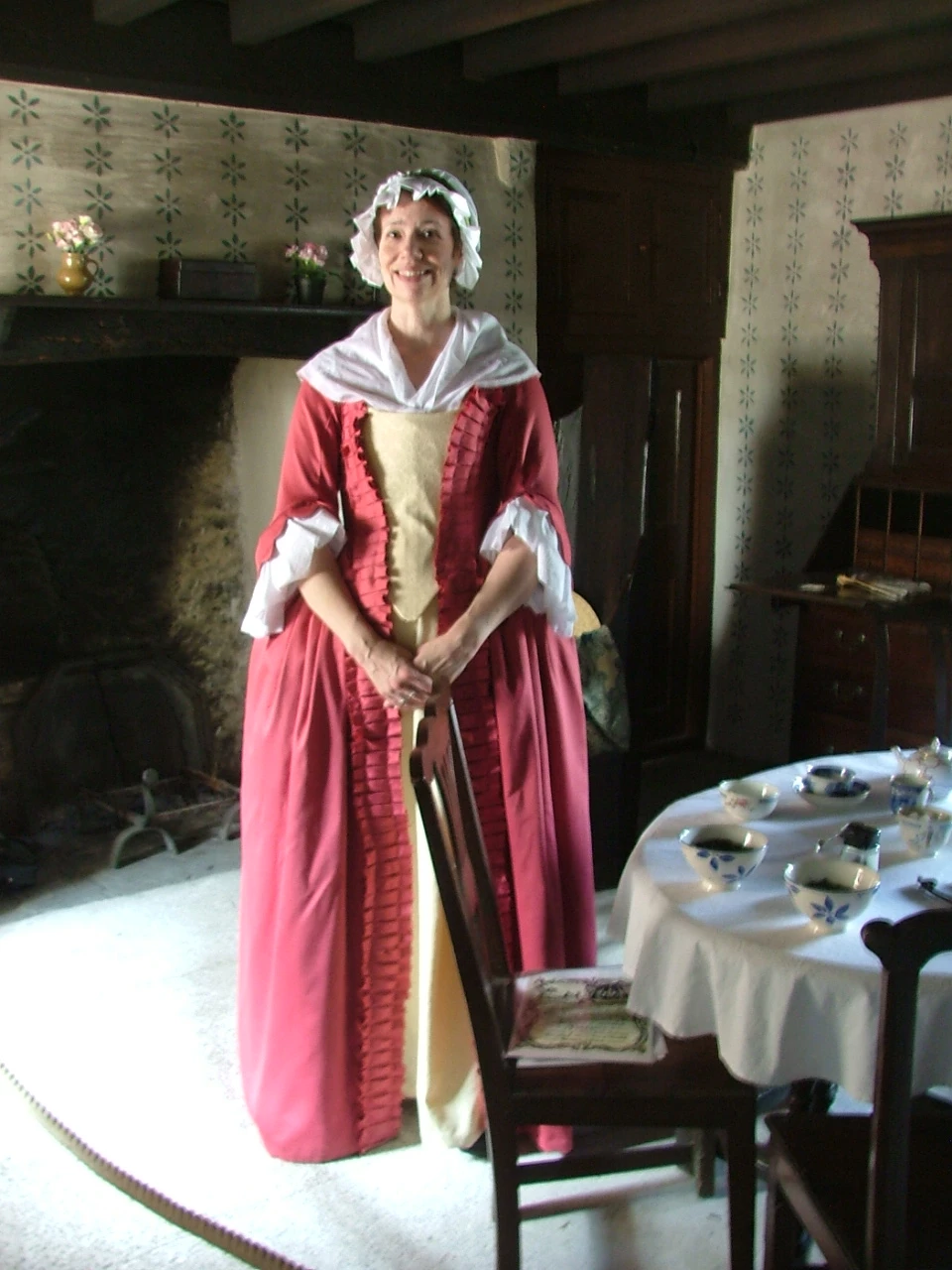
Hendre'r Ywydd Uchaf Farmhouse

Elan volunteers with the St Fagans Youth Forum and spent some time with the Museum's Historic Buildings Unit and has blogged about her experience below;

Demonstrations from the Histioric Buildings Unit

As part of the Historic Buildings Demonstrations at Sain Ffagan, I visited Hendre’r Ywydd Uchaf to see a carpenter at his work. When I arrived, he was busy working on a head of a door frame for the new Iron Age Village with wood that was sourced on site and freshly cut that morning. The work had to be done by hand without any aid from machines. He was more than happy to talk to us about his work and answer any of our questions. He talked about how he has done an NVQ in Historic Carpentry and that he has just finished his apprentiship after working at the museum for five years. His admiration towards the knowledge of the more experienced craftsmen was clear and he was aware that this knowledge came from experience not from qualifications.

He later explained how they brought buildings to the museum desribing the finished result as ‘flatpack buildings’ as they numbered the bricks around the sides before taking the building down and rebuilding it in Sain Ffagan using the Havorfordwest House and the Raglan Train Station as examples of this. The importance of conservation in this process was evident as he talked of only taking away what you needed whilst repairing historic buildings in order to keep their authenticity. He explained how the new developments happening in Sain Ffagan would lead to new work such as the Prince’s Palace from Anglesey where they would need to handle 480kg of timber! This was time well spent in order to understand how the building happens in Sain Ffagan.

blog gan Elan Llwyd

I Spy...Nature Competition Winners

Katie Mortimer-Jones, 12 September 2014

We ran an ‘I Spy…Nature’ drawing competition across the summer to celebrate our natural sciences pop-up museum and launch of a new exhibition at National Museum Cardiff. Our young visitors used some of the specimens from the museum collections as inspiration for their drawings. We had some fantastic entries and it was extremely difficult to choose the best nine drawings. However, after much deliberation we have chosen first, second and third places in 3 age categories (under 6, 6-9 and 10-13). The winners will be receiving natural history goodies from the museum shop. Many thanks to everyone who took part, we have really enjoyed seeing all of your wonderful drawings.