What a lot of weather!

Catalena Angele, 12 February 2013

What mixed weather reports you have sent me over the last few weeks! Some schools had lots of snow but others had none at all! Well done to all of you for sending in your weather station records despite the frosty weather.

Some snowy comments …

We had reports of snow from lots of schools…St. Mary's Catholic Primary School, Bwlchgwyn C P School, Glyncollen Primary School, Stanford in the Vale Primary School, Thorneyholme RC Primary School, Coppull Parish Primary School, Freuchie Primary School, Balcurvie Primary School, Gladestry C.I.W. School and RAF Benson Primary School all reported that they had snow.

Some schools, including Manor Primary School, St Joseph's Primary School, Henllys CIW Primary,  Ysgol Nant Y Coed, Rhydypenau Primary School and Rogiet Primary School told me that their schools were closed due to snow!

However some schools had very little or no snow. Thanks Stepping Stones Short Stay School and Milford Haven Junior School for your reports.

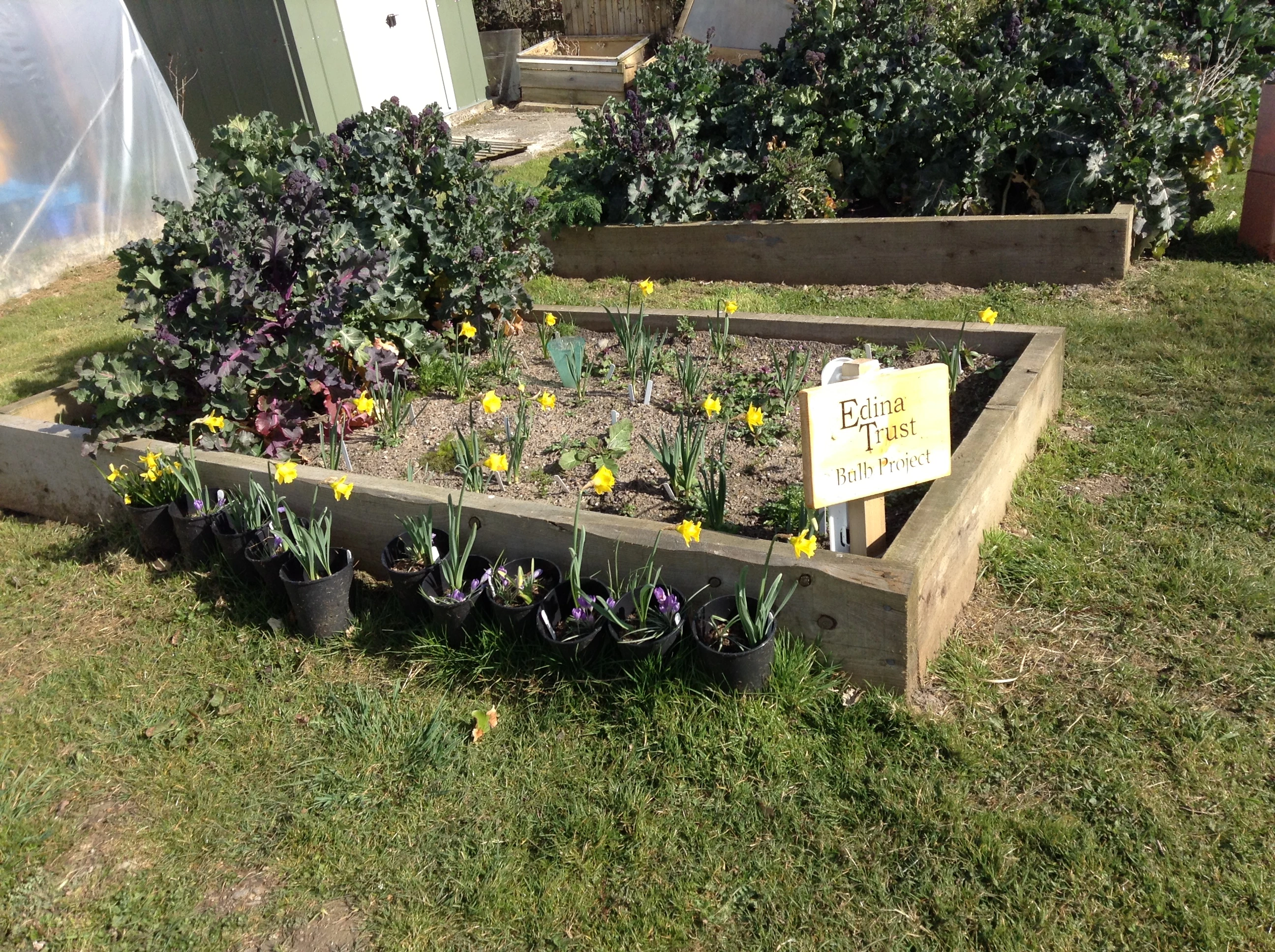
Since the snow many schools have also reported high winds, storms and lots of rain, and as I look out of my window today the sun is shining – what varied weather over a few short weeks! The shoots on my tallest daffodil and crocus bulbs are now 7cm tall! How tall are your shoots?

Top Tip in frosty weather: If you have snow or ice in your rain gauge, bring it into the classroom to melt and then record it on your sheet. Don’t forget to tip the water away after it has melted and then put your rain gauge back outside!

Your questions, my answers:

St Joseph's Primary School (Penarth) Our school was closed last Friday because of snow so we couldn't get in to check on our freezing bulbs. We have noticed, however, that one of our bulbs has started growing whilst the others are snug underneath the compost in their pots. We tried to think about why this might have happened and wondered whether it is because that particular bulb was planted by you, Prof. Plant and maybe you have encouraged it to grow!?    We are pleased to see that the weather has got a bit warmer and are hoping that this means that our bulbs will start to grow. We are very keen to see them flowering!  Prof P: Thanks St Joseph’s! Well, I am very green fingered! It’s very exciting waiting for your flowers to arrive isn’t it?

Rogiet Primary School The bulb pots were full of snow this week, we were worried they would die but Mrs Carter said they would be all right!  Prof P: Don’t worry, Mrs Carter is right, they are very hardy little plants so I’m sure they will be okay.

Ysgol Nant Y Coed We are sorry for sending the records late because school was closed because of the snow last Friday.  Prof P: No problem! Thank you for sending them in when you could.

Stanford in the Vale Primary School Wow... what a bitter cold week, and all the snow we have had! All our bulbs are completely covered in snow... and more snow is expected tonight! Monday's snow/rainfall was frozen, so we brought the recordings inside and allowed to melt! (We hope this was the correct thing to do!) :-)  Prof P: Well done Stanford in the Vale that was exactly the right thing to do!

Gladestry C.I.W. School We have started measuring the few bulbs that have come out. The daffodils and mystery bulbs have come out; we think the mystery bulbs are snowdrops, as they have grown very fast.  Prof P: That’s a very good guess!Keep watching them and let me know if your guess is right.

Balcurvie Primary School One of the extra bulbs that we planted in a pot and left it in the classroom has began to sprout! We were all very excited. We have also had a very wet week!  Prof P: That is exciting Balcurvie! I hope you enjoy watching it grow. I wonder when your outdoor bulbs will catch up?

SS Philip and James Primary School We thought it went well except we forgot to pour out the water once so we counted the amount of water added on the next day. We enjoy doing it, Phil and Jim Team.  Prof P: That’s okay, thanks for letting me know and keep up the good work. I’m glad you’re enjoying it.

Ysgol Y Ffridd Dim Record Dydd Iau oherwydd ysgol wedi cau (Dim Dwr yn yr ysgol).  Prof P:  Athro’r Ardd: Diolch am y wybodaeth gan Ysgol Y Ffridd. Gobeithio bod y d?r wedi trwsio erbyn hyn.

Darran Park Primary 42 of the bulbs have sprouted.  Prof P:  Gosh that’s a lot! Well done Darran Park Primary.

Ysgol Porth Y Felin To pp, plants are all ok the temperature rised alot on Tuesday! there was a storm on Saturday night so there was loads of rain on Monday. Happy planting!!!  Prof P: Great reporting Ysgol Porth Y Felin, hopefully all that rain will help your plants to grow.

Rhydypenau Primary School A very interesting week of weather!  Prof P: I agree!

Many thanks,

Prof. P

Falkland Islands 2013: February 4th update

Peter Howlett, 5 February 2013

04.02.13
I ended up sampling two different shores at Hill Cove, one below the main settlement and the other at the far east end of Byron Sound by the West Lagoons area (Photo 1). Each was slightly different although fairly low in diversity with clean fine sand. In between those I also went to Shallow Bay (Photo 2) which was further east and north and very rocky. Here I found some interesting worms that I don’t think I had seen elsewhere under the rocks and in crevices. As the tides have been getting later the morning tides have been gradually creeping towards more viable times themselves. The second shore in Hill Cove was actually visited very early in the morning although I must admit my dedication to getting up before breakfast nearly waned when I heard rain lashing against the window. Luckily that passed and I did make it out.

Saturday morning dawned bright and still and the tide was slightly more sociable at 9am and, being a 5 minute walk down the hill, did not require too early a start. This was Port Howard where we were due to get the ferry back to the east in the afternoon, so a last easy site was a good way to finish. By mid-morning the wind had picked up and by lunchtime I had a feeling the ferry ride might be a little ‘lumpy’ but so long as we got back across the sound I didn’t care. Commerson’s Dolphins saw us off, playing in the waves alongside the ferry, a nice farewell (Photo 3). The trip was indeed lumpy but less than 2 hours later we were back in New Haven and after another 2 hours were in a very wet and blowy Stanley. Photo 4 shows the locations of the sampling sites.

The tour around West Falkland has been very successful with a range of different sites visited from all a around the coastline and I have collected some very good samples. Highlights that stand out were the large lugworms at Port Stephens (Photo 5) and the densely packed onuphidae colonies that occur in patches on many of the sandy shores (Photo 6). I have also seen many animals that I am sure I did not collect on the previous trip so that bodes well for the final species list.

Back at the office I set to finishing packing the precious samples. I had been regularly keeping up with changing the fluids in the pots while I was travelling and even sealing them up and putting them into small bags ready so as to make the packing process quicker. In no time at all I had 6 boxes packed and taped up. This was more than I had been expecting to have considering I have already sent 3 boxes back and I didn’t think the lady in the post office would be very happy to see me! Certainly I don’t think I gave her a good start to a Monday morning.

With my flight early tomorrow morning I only have today left here to wrap everything up. I’ve visited 23 different sites around both East and West Falkland over the last four weeks and after this second trip my map of sites looks much more comprehensive with points all around the coastline. Hopefully the eventual species list, together with a voucher collection that will be returned to the islands, that will come out of the project will enable future researchers out here to make better and more accurate identifications of this important group.

I have a radio interview this afternoon with the local station to talk about the research I am doing so that will be a good opportunity to explain to more people the purpose behind the visit.

So it just remains for me thank all of the islanders out here for their help, support and cups of tea during the trip (particularly those that helped and supported my car and supplied brake fluid).

The project also could not have continued without the support and assistance of the Shackleton Scholarship Fund and the Amgueddfa Cymru - National Museum Wales

Thank you all!

Teresa

Crocus countdown!

Danielle Cowell, 1 February 2013

Crocuses bloom from January onwards, so your crocus plants could be flowering any time now! How exciting! Please check your crocus plants every day to see if their flowers have opened and remember to record the date they opened and the height of the plant.

Your crocus flowers will be purple in colour with orange anther and stigma (the parts inside the flower). They can grow to a height of 10cm.

 If you have no flowers yet then don’t worry! The recent cold weather and all the snow may have slowed them down. As the weather warms up the flowers may come out all of a sudden, so keep an eye on them!

Many thanks,

Prof. P

How more sales can mean less revenue

Mari Gordon, 1 February 2013

And they're here: for the first time, we have figures for a year of e-book sales, supplied directly by publishers. It's still far from the whole picture, as not all e-book figures are available. But we now have a much better idea of what the book-buying landscape looks like in the UK.

The figure that stands out is that e-book sales are now up to 13%-14% of all book sales. However, as their prices are cheaper, that's only 6%-7% of revenue. Print book sales are down again, by 3.4% on 2011, as are average prices.

The e-book market is still dominated by fiction, and those e-book figures track the print figures. That is, if a book sells well in print, it also does well in e-book. The stand-out example is a particularly, shall we say, shady trilogy, whose e-book sales are about 36% of the print sales. Could the success of the e-book version of these titles lie, I wonder, in the fact that no-one can see what you're reading on your Kindle...?

So, it's mixed news: more books were bought in 2012, but because more of them were e-books, publishers made less money. Good news for reading, less so for publishing.

Meanwhile, here at Amgueddfa Cymru our journey into 'e' continues...


With thanks to The Bookseller for the sales figures.

Falkland Islands 2013: January 30th update

Peter Howlett, 31 January 2013

30.01.13
Communication with the outside world has been sadly lacking for the last few days as I drive around West Falkland. Mobile coverage only extends to Port Howard and Fox Bay which is where I was able to send a text update from. Since then, mobile and internet access haven’t existed. I am now in Hill Cove, on the north coast of West Falkland where my hosts have been generous enough to allow me access to their broadband.

Getting here has been a long journey in more ways than one. From Fox Bay, I travelled to Port Stephens on the far southwest tip of the island and visited the charmingly named Moonlight Bay. A flat sandy bay with a rich array of animals in both sand and rocky outcrops I then encountered the largest lugworm I have ever seen, measuring 30cm in length!
Only slightly further north but with an opposing aspect, I went to South Harbour. Mostly rocky but with a small soft sandy section enclosed by the rocks I found some interesting crevices to explore as well as a bright orange sponge growing on the surface of many of the shaded overhangs which had fanworms embedded in it.

A long drive back north, past Fox Bay, brought me to Little Chartres Farm, the only place I have stayed in that was not part of my sampling list. The farm is located at the top of the Chartres River which then heads west widening into a large estuary which was my sampling target. A short drive took me to Chartres settlement where I could walk down on to a large open shore with large areas of flat rocky ridges as well as a lot of very soft muddy sand, soft enough to sink into slightly but not disappear! Again, the variety of habitats on the shore provided me with lots of sampling opportunity. The soft sediment harboured some large mobile animals as well as many tubes with worms inside. There were so many animals to try and lok at that I sieved a few spadefuls of the sediment and kept everything retained so I could be sure of making as good an account of what was living there as possible. After leaving the shore at Chartres I then also stopped off on my way back to Little Chartres to have a look at the shore further up the river. There were some worms here but as far as I could tell only of a genus called Boccardia. These worms I have commonly found in most high shore regions and areas closer to freshwater input where the salt content is much more variable than further down a creek or estuary. I did of course collect a few for comparison anyway just to be sure they really were the same!

Northward travel resumed and I headed towards the northeastern tip of the island at Dunbar. The owners directed me further along the road to Hot Stone Cove Creek, a long, narrow bay which, as the tide receded, completely emptied out to leave an expanse of sand leading out to an exposed rocky point. The sand harboured an enormous population of lugworms (but not a population of enormous lugworms this time) but there was also a large diversity of other polychaetes squeezed in amongst them. The rocky headland was also interesting as on the exposed side the rocks were thickly covered in a pink encrusting alga which formed fairly loose crusts. Such crusts can provide a great habitat for animals such as worms so some sections of that went into a pot for investigation. After finishing on the shore my destination was the settlement at Hill Cove where I am staying now for a few days.

It was at this point however that circumstances went downhill rather disturbingly. Without going into long detail, the car I was driving started having a very bad day. This is not what you want when you are on a road that probably sees an average of less than one car a day and the nearest house is several miles away. In a stressful drive involving leaking brake fluid and an overheating engine I limped into Hill Cove which I knew would be the best place to be for help as I would have access to phones, internet and importantly an airstrip for help and, if necessary, car parts to get to me. Magically, the person who hired me the car turned out to have a partner here in the settlement who has taken the car away fixed one problem and is getting a part flown in to fix the other and promised me a spare car to use this afternoon so I can keep my sampling on track as I head west and slightly south to Crooked Inlet. Tomorrow my plan was to stay by the settlement to sample here so a car is not essential and hopefully by then the car will be well again!

Teresa