Exactly one month ago to today, Amgueddfa Cymru launched two publications which set out how museums and other arts and heritage organisations can help achieve the essential goal of equity of opportunity for all children to develop their talents. In this blog, David Anderson, Director General of Amgueddfa Cymru, shares his views about both publications and why this work is important.
A few years ago, I was involved in a project run jointly with a children's charity to offer creative design projects for children in care. Their work was exhibited in the galleries of a museum. One girl made a quilt that I still vividly remember. On it she had sewn the words, "Why does he get everything and I get nothing?”. I never learnt the story behind the words on that quilt, and perhaps it was too personal to share.
The earliest evidence of a child in Wales is the teeth of a girl aged 9 years, one of a group of Neanderthal humans whose remains had been washed into a cave in Pontnewydd, along with the bones of hyenas and other wild animals of that period. They have been dated to around 240,000 BC. Before her early death, this girl would have learnt her culture - making tools, cooking food, hunting, gathering flowers and burying her dead - from her parents and others in the group.
In a series he wrote and presented for Ulster Television in 1987-8 Professor John Blacking, the ethno-musicologist, said, "Every individual as a baby has thought in movement before thinking in words". Creativity is a movement of the body, he said. We are moved into thinking. For him, culture exists only in performance - for children as well as adults.
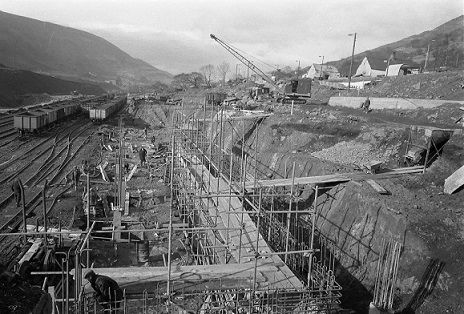
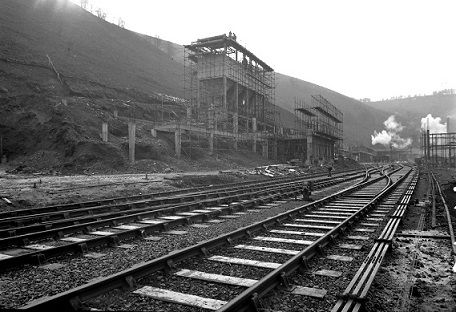
Not so long ago, children in Wales worked in workshops, factories and mines. They have always been makers of culture as well as recipients. Even today, children across the world make their own toys. Children in Western Asia still make carpets. The collections of museums are full of beautiful things made by children.
The extraordinarily fine Ardebil Carpet, that so awed and inspired William Morris, is believed by many to have been produced by the hands of children. The hardships endured by working children - in the past and today across the world - tell us what skills and creativity children are capable of, even under conditions of privation.
True creative cultural participation for children is not - or at least should not - be an option. The Universal Declaration of Human Rights includes the right to participation in the cultural life of the community as one of the five fundamental rights. Who are we to deny that right to children?
In 1942, the Beveridge report identified squalor, ignorance, want, idleness and disease as five giant evils that Britain should slay, and the Post-War Labour Government set out to do this. But Beveridge should have added a sixth giant to his list: cultural exclusion. In our own time, Kay Andrews and Dai Smith have between them written a modern Beveridge report for the cultural lives of children in Wales.
Among their many key messages are that we should commit to provide:
(i) full ongoing creative participation - not just occasional access;
(ii) as a right - not just an option;
(iii) for every child - not just the few.
The cultural sector is Wales' second education sector. It compliments and enriches the school, college and higher education system. Each year, the seven museums of Amgueddfa Cymru alone serve approximately 250,000 schoolchildren and 750,000 children and adults in family groups. The creative, experiential learning that museums can offer has been shown time and again over the years to inspire children who, for the school system alone, are hard to reach.
Museums and other arts and heritage organisations have a vital role in inspiring, extending and developing each child's engagement with their cultural offer. But children's cultural lives are far wider than than can be found even in our national and local cultural institutions.
Every child has their own talents and potential. Is it bringing people together and making friends, identifying plants, writing a diary, caring for older people, dancing, diagnosing faults and repairing machines, bee-keeping, telling stories, taking photographs, designing electronic circuits, playing sport, to studying birds and animals, shaping metal, writing and performing music, exploring, making others laugh, seeing patterns others miss, testing water quality, sharing skills, carving in wood and stone, and a thousand other ways to make the world a better place? Any of these, and a mind that is always curious, critical and open to new ideas and experiences.
Some children want to become Billy Elliott and they should be supported in doing so . But most want to be something else.
The industrialist John Harvey-Jones said that everyone has talent; it is the job of the educator to help them to find it. And it is particularly the role of museums and other arts and cultural organisations to help children to find their talents in the sciences, arts and humanities, in a welcoming and social environment.
If we limit ourselves to telling children what we ourselves know, we do them, and future society, a great disservice. That would be not education but counter-education. Yet far too often - through a conservative and anti-intellectual mis-appropriation of our historic public purpose - it is counter-education that we offer.
These two publications on Transforming Futures set out these new agendas for museums and other arts and heritage organisations in achieving the essential goal of equity of opportunity for all children to develop their talents. Amgueddfa Cymru - National Museum Wales began work on them in 2012. But they very much compliment and support the recommendations of Kay Andrews' and Dai Smith's reports.
But whereas those reports were - quite rightly - principally concerned with national policy and infrastructure, the Transforming Futures publications are intended more to support cultural institutions on the ground. Among the recommendations of the Transforming Futures reports are proposals for:
(i) fundamental changes in the work of cultural institutions themselves
(ii) new research on effective practice by cultural organisations
(iii) a new code of ethics for cultural organisations with principles to guide our work.
Poverty and exclusion in Wales - and across the UK - is growing year by year. We have an ethical responsibility to respond.
It is our task to create something new: a National Cultural Service for Children. Like health, education, housing and every other universal service, children's cultural participation must be developed locally, if it is to be effective, but within a national framework.
We should not say we cannot afford it. When the Beveridge Report was completed in 1942, the then Chancellor of the Exchequer tried to prevent its publication, saying that it was unaffordable. Yet, a few years later, the post-War Attlee Government implemented the most radical programme of equality that Wales and the UK has ever seen.
But decade by decade, as the NHS has provided health services free at the point of delivery, and comprehensive schools have given every child free education, the giant of cultural exclusion has continued to stalk the nation unchallenged.
We can change this. So that no child should need to say, "Why does he get everything, and I get nothing?".