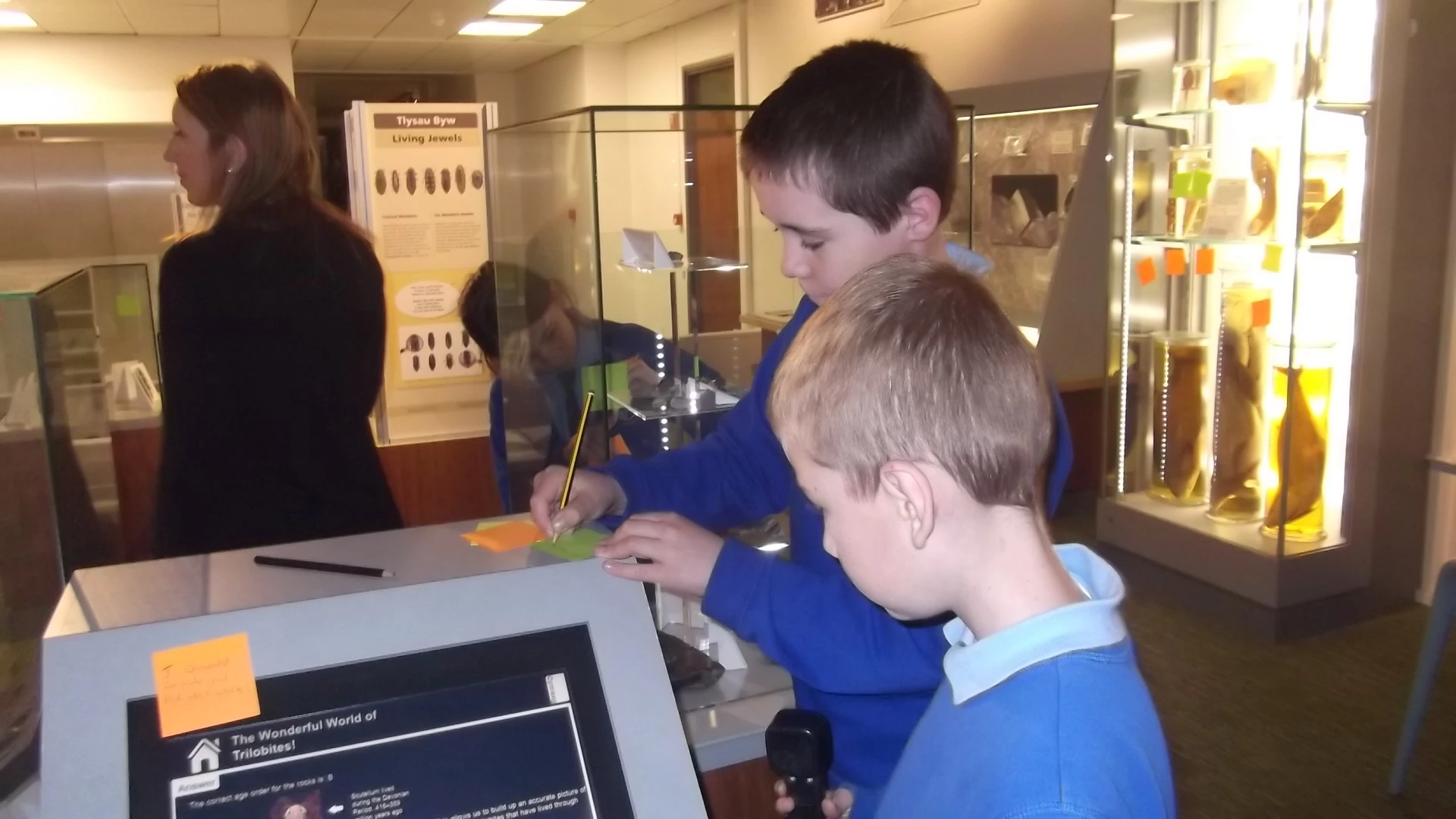
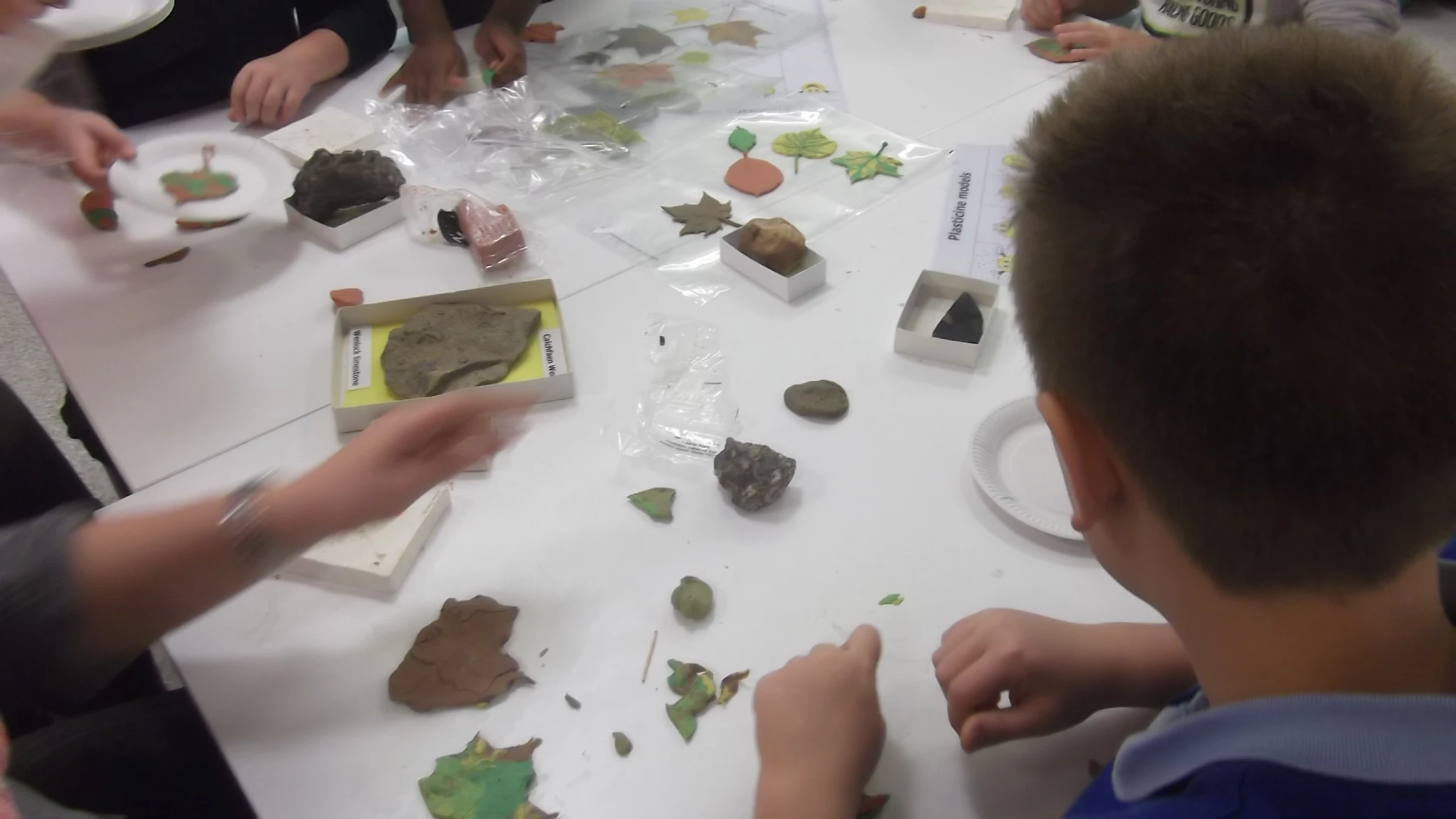
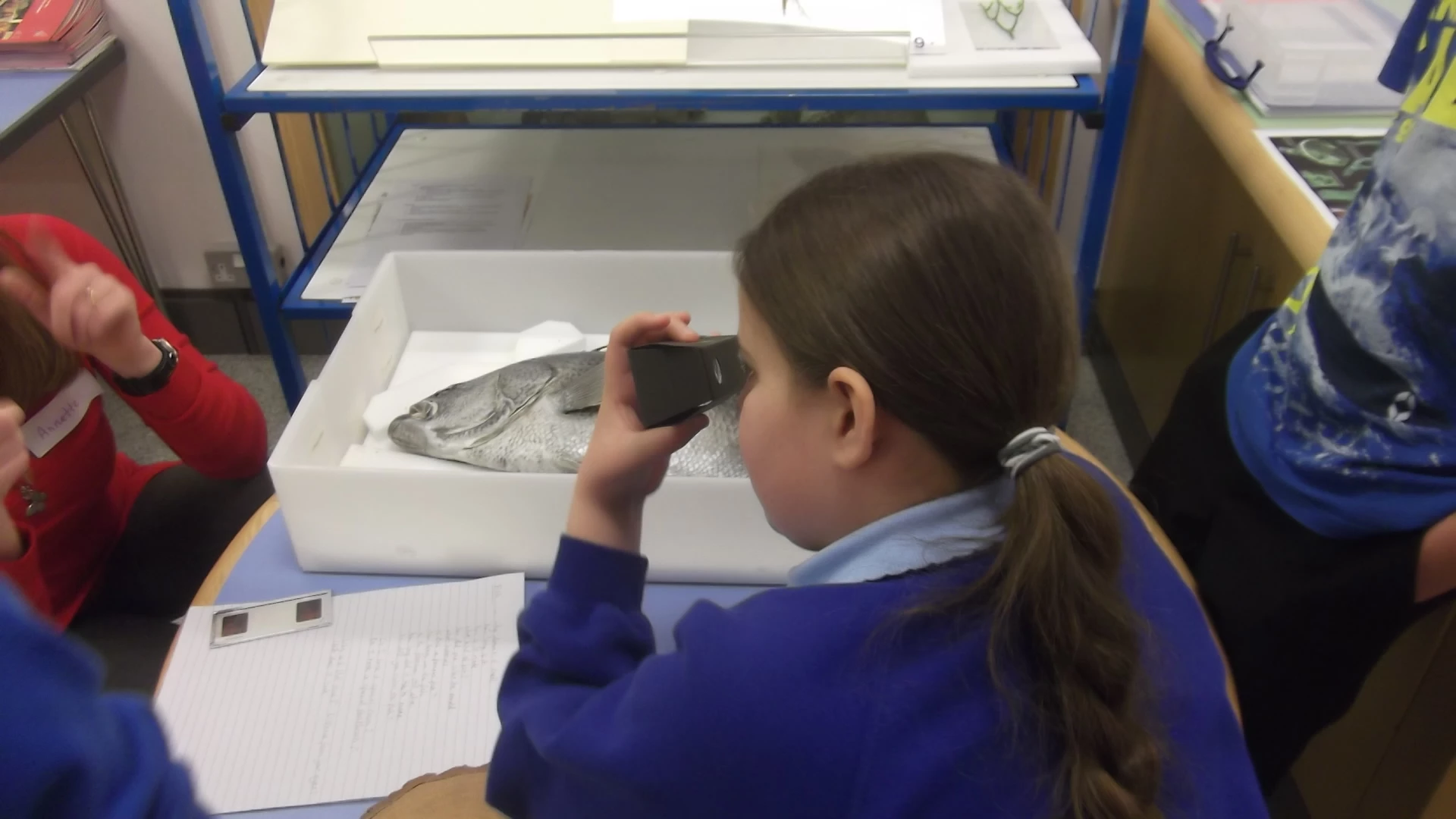
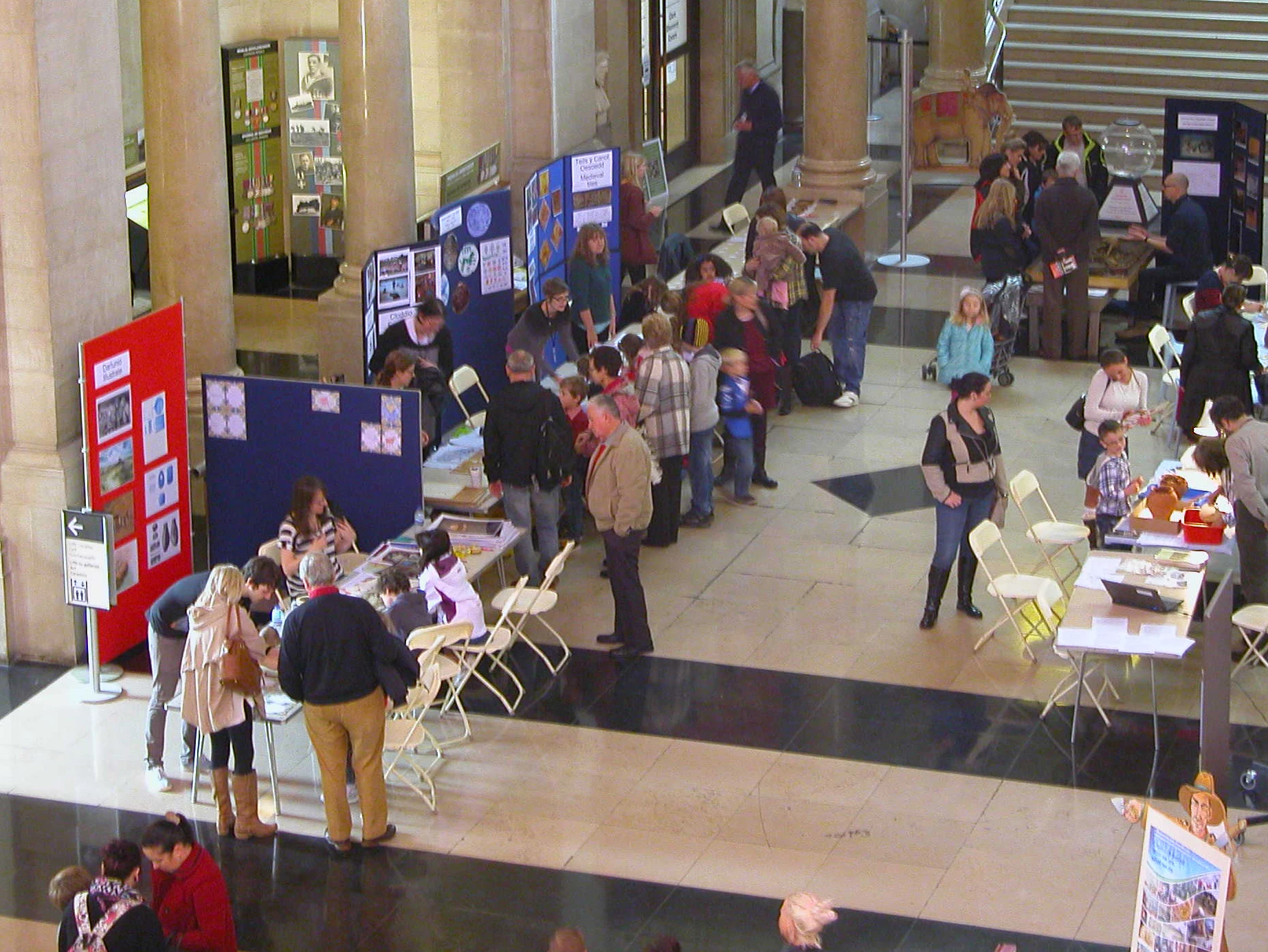
Tuesday 29th October saw many staff from Archaeology & Numismatics take over the Main Hall in National Museum Cardiff for our special half-term Discovery Day. We were overwhelmed with the positive response from all who visited us.
We wanted to give you an idea of a little of the vast range of work we do and see some hidden gems from our collections, which you might not otherwise get a chance to experience.
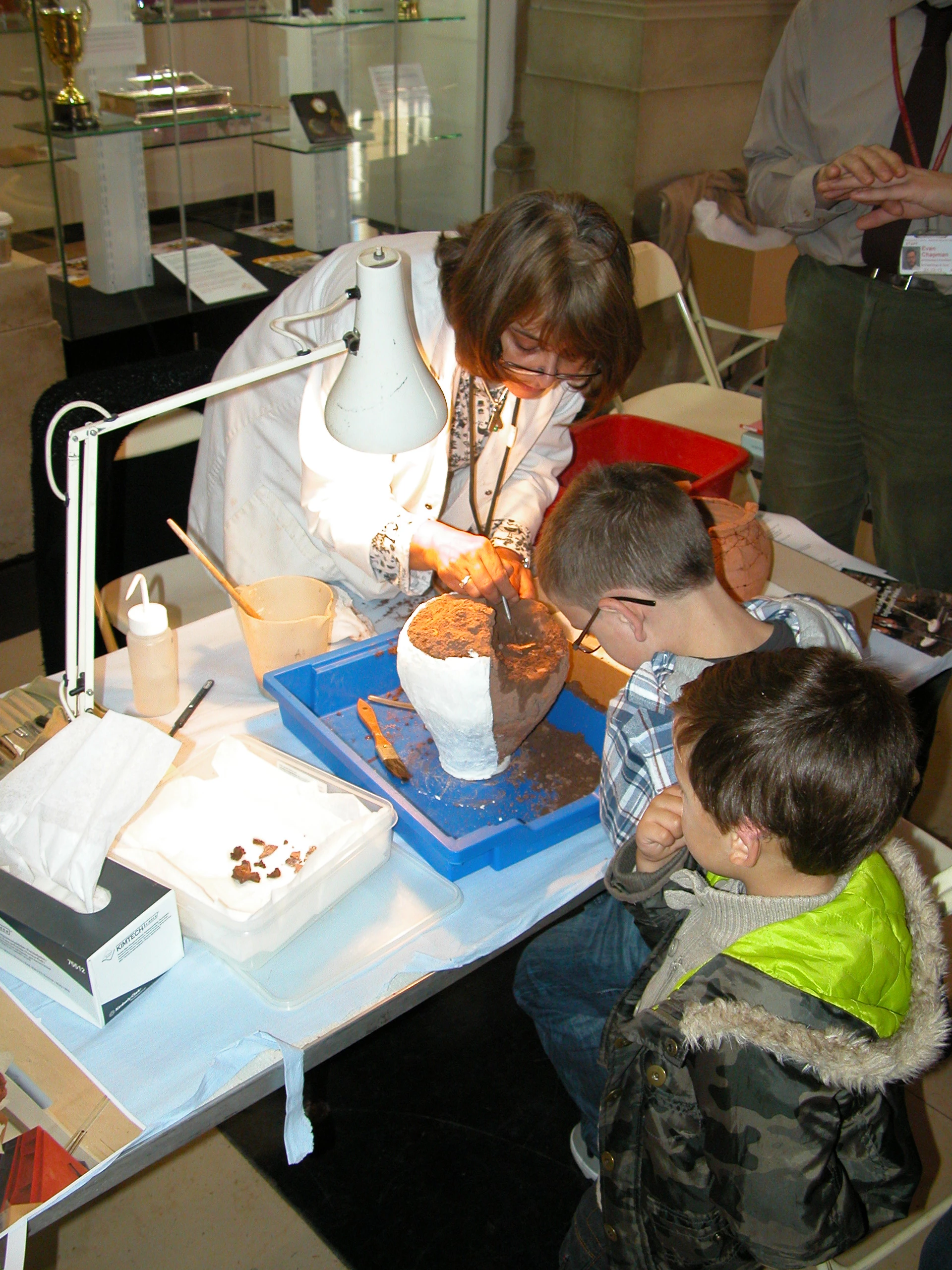
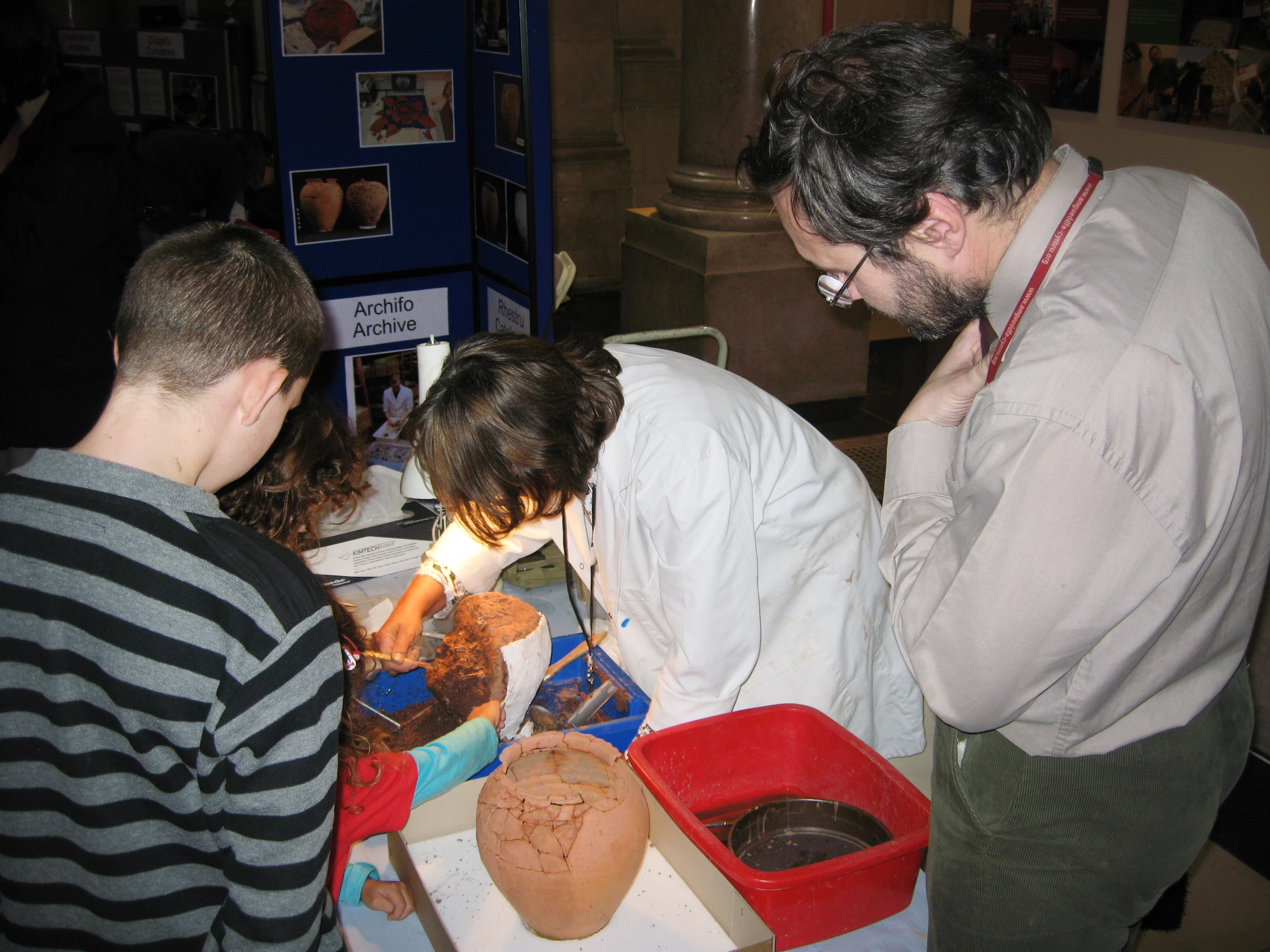
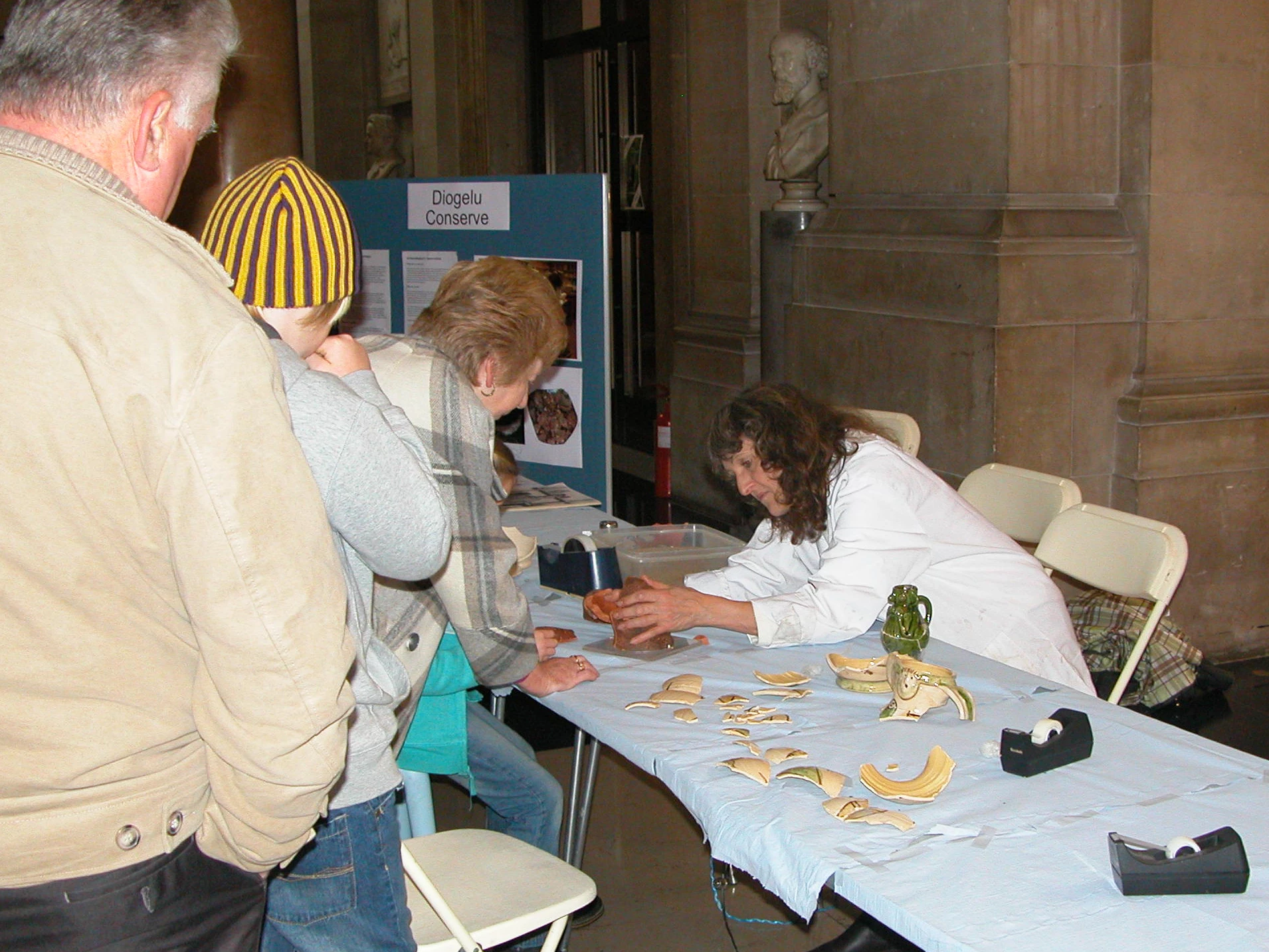
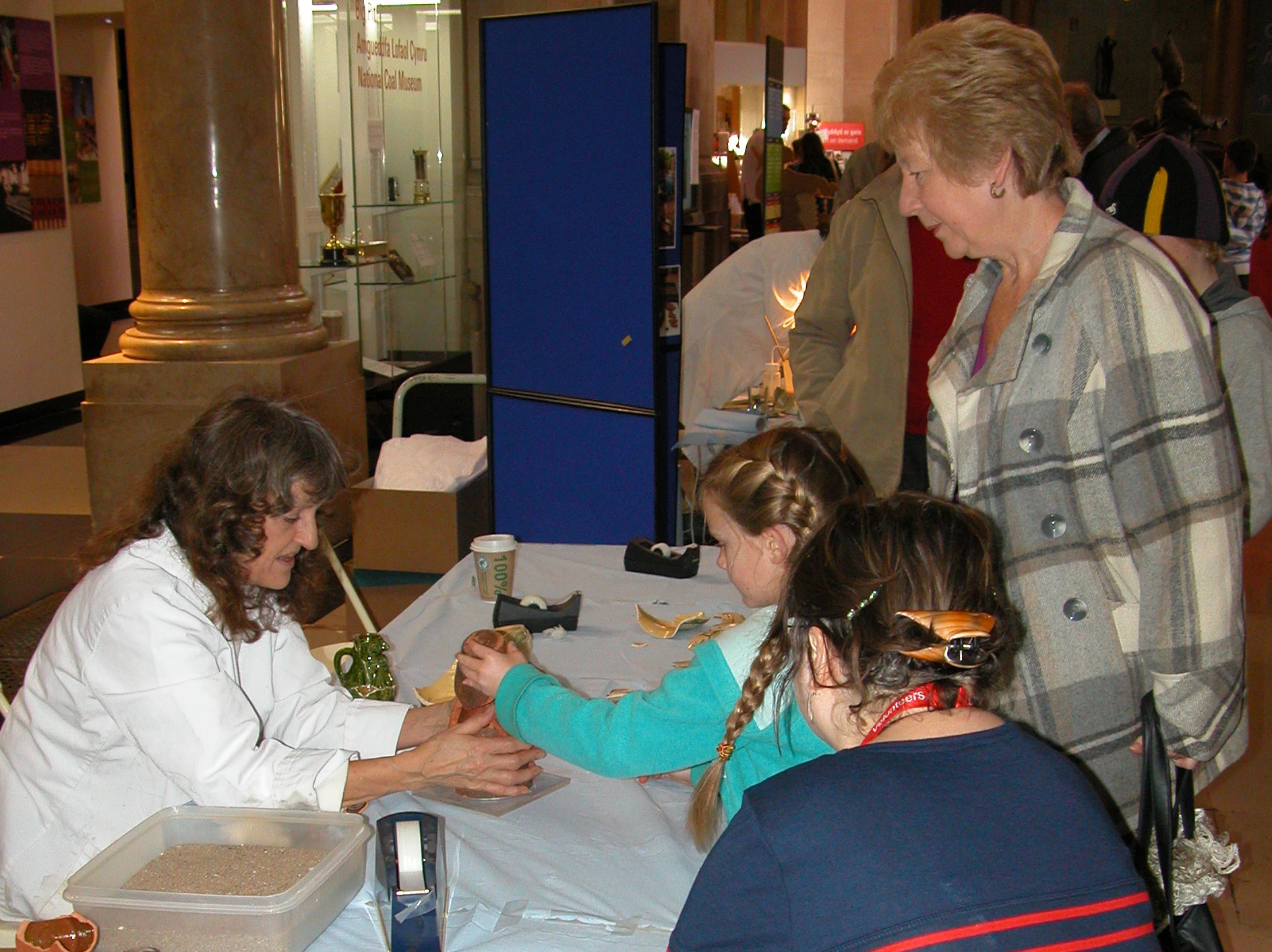
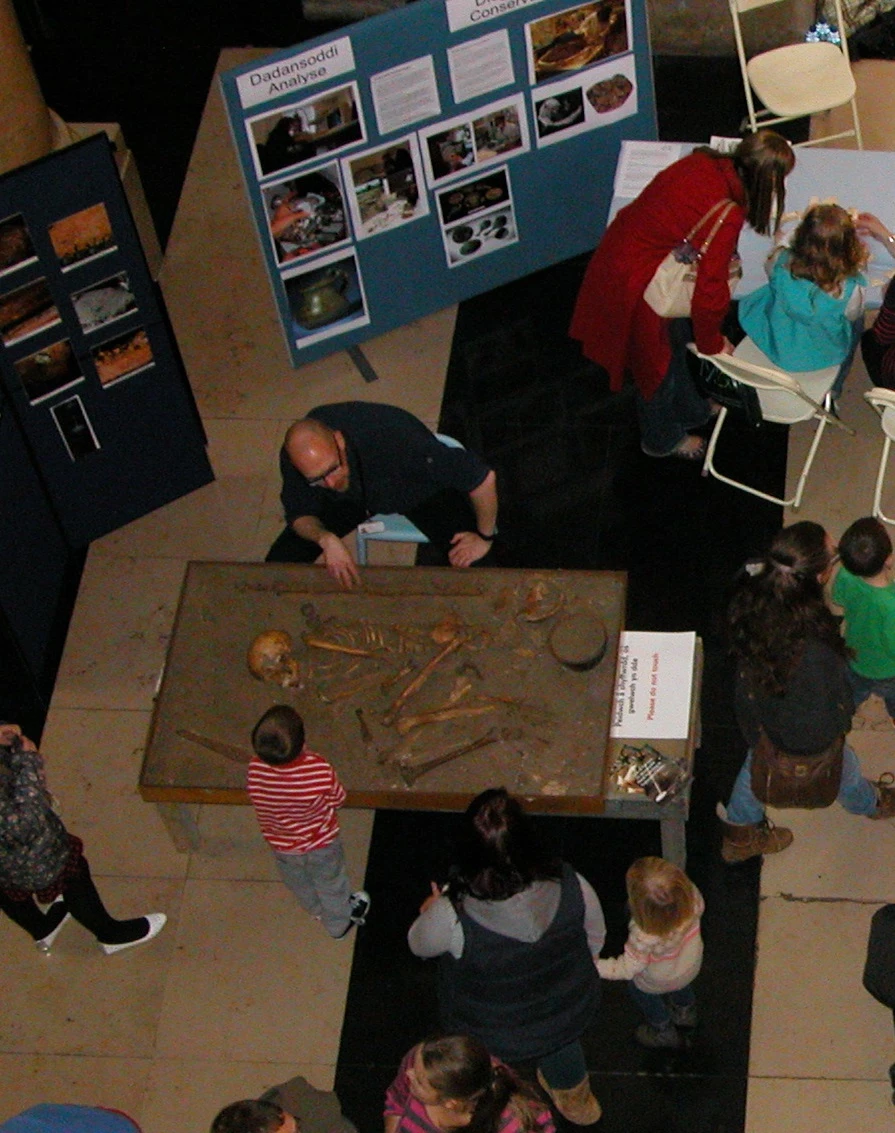
A special treat was one of our conservators, Penny Hill, working on a large Roman pot from the recent Caerleon excavations by Cardiff University. Normally the conservation work has to take place in a lab in our basement, but she managed to get this wonderful item upstairs for you to see the work being done on it. It was too fragile to be fully excavated in the field, so it was carefully lifted, mud and all, and brought to us. Penny was gently scraping off the centuries of dirt to reveal the pot and its contents of bone.
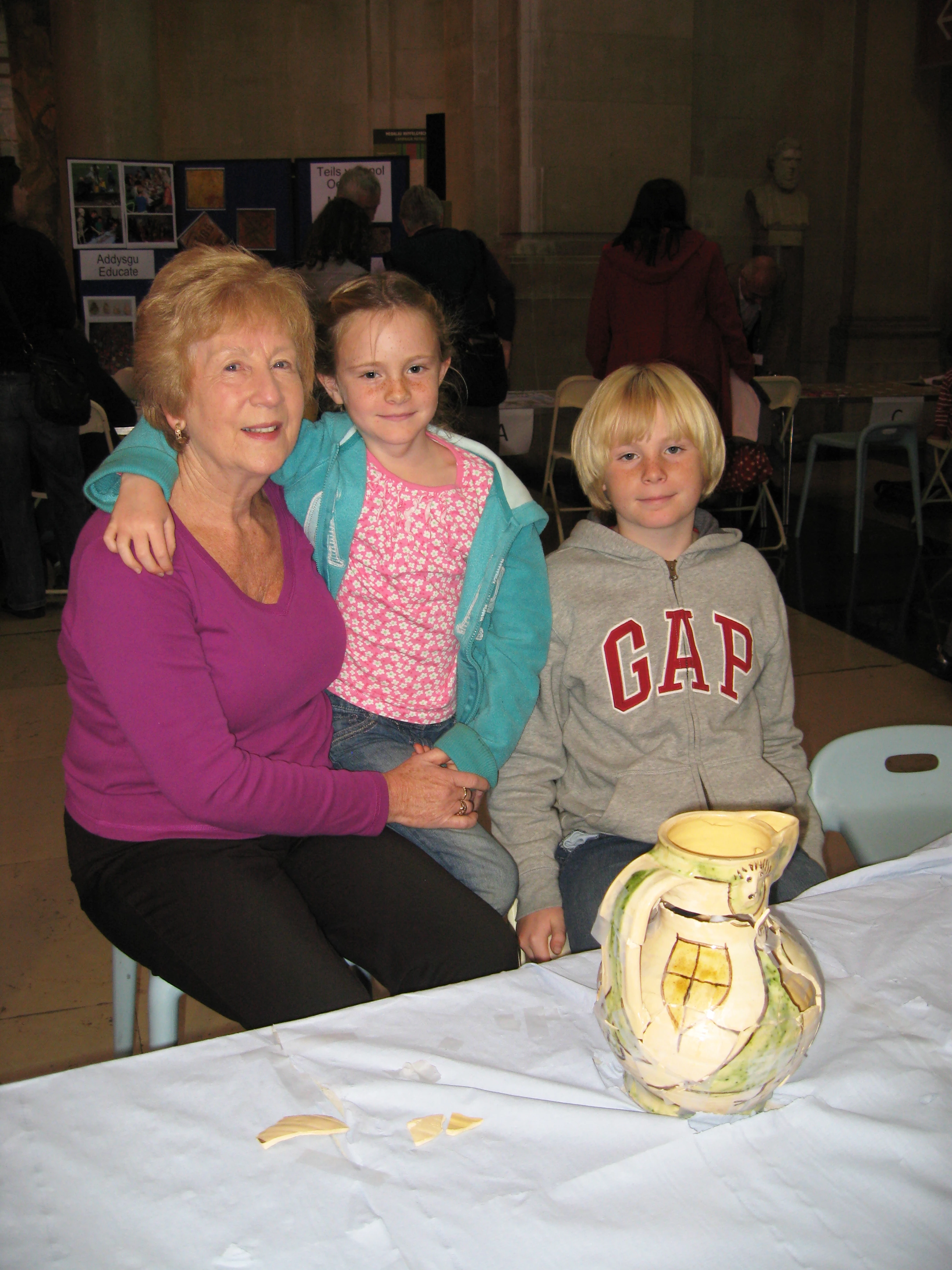
We’re not usually so lucky as to have a pot so intact. Usually they are broken into numerous pieces, with eroded edges and not all present. It’s like putting together a jigsaw, without the picture, lots of missing pieces, and with the existing pieces the wrong shape. Louise Mumford is also a conservator and brought along some replica pots to demonstrate how she works her magic on them. Our visitors learnt how to look for matching edges and assemble the pots. They also had advice on sticking back together their own broken treasures.
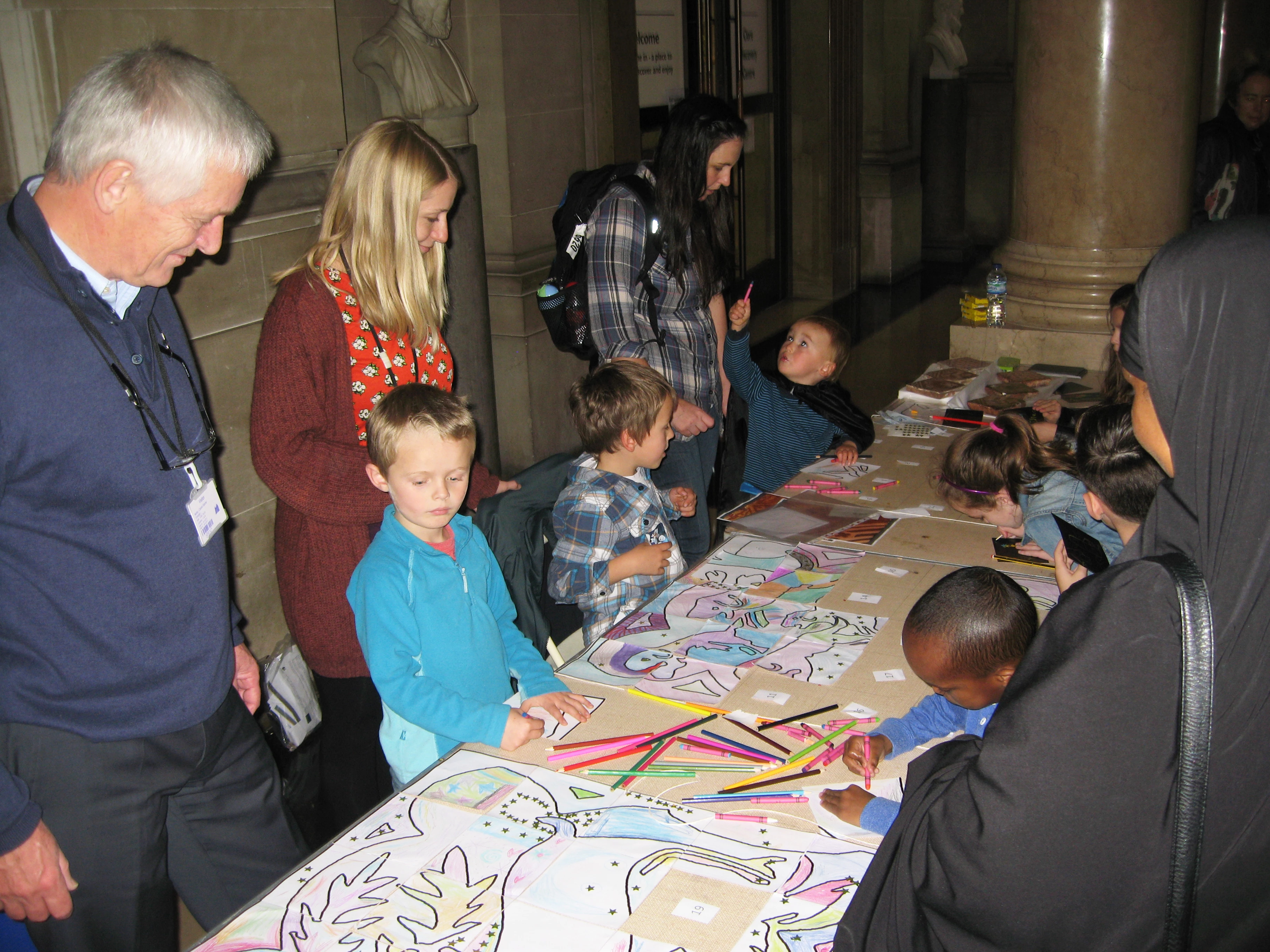
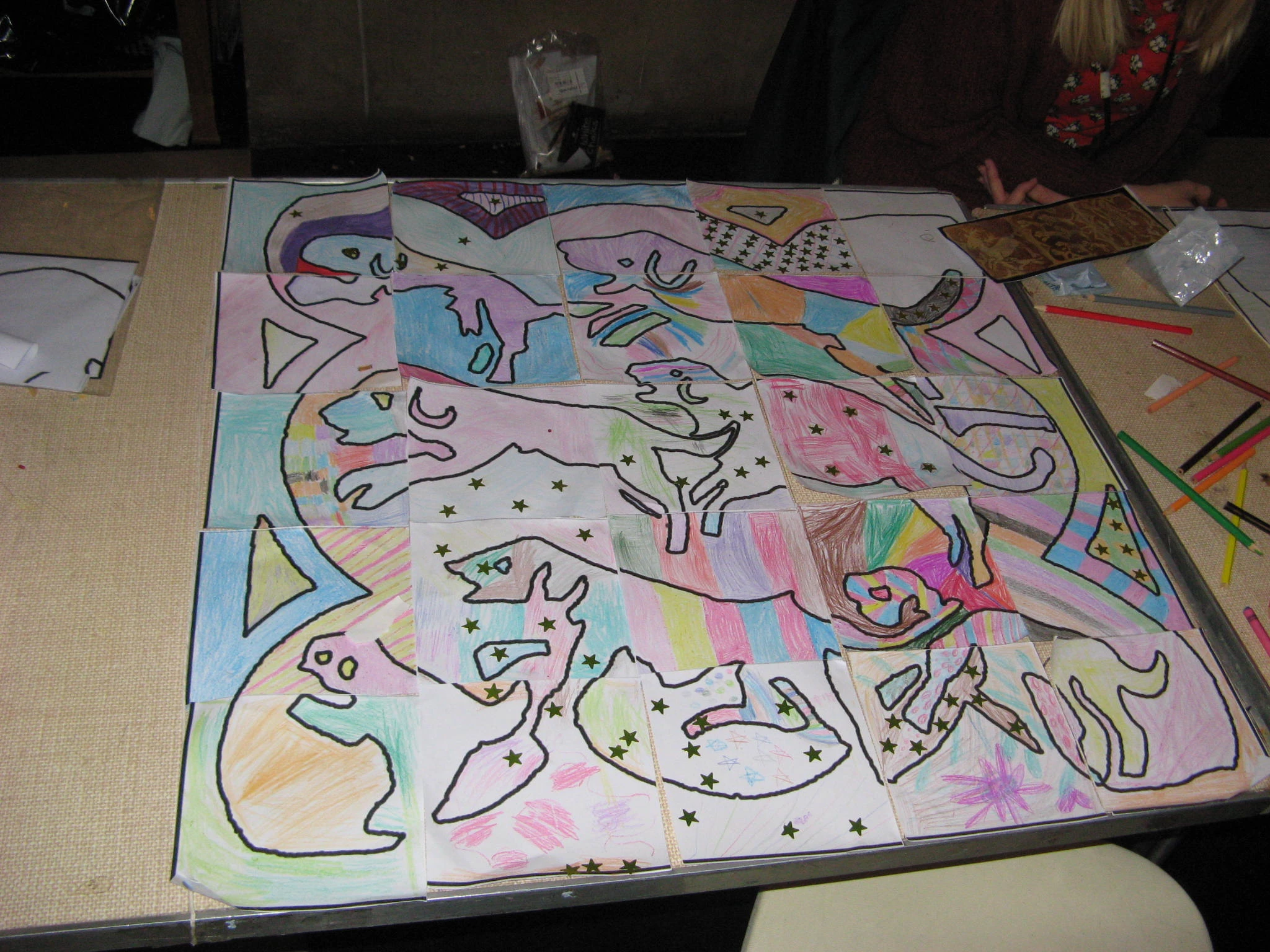
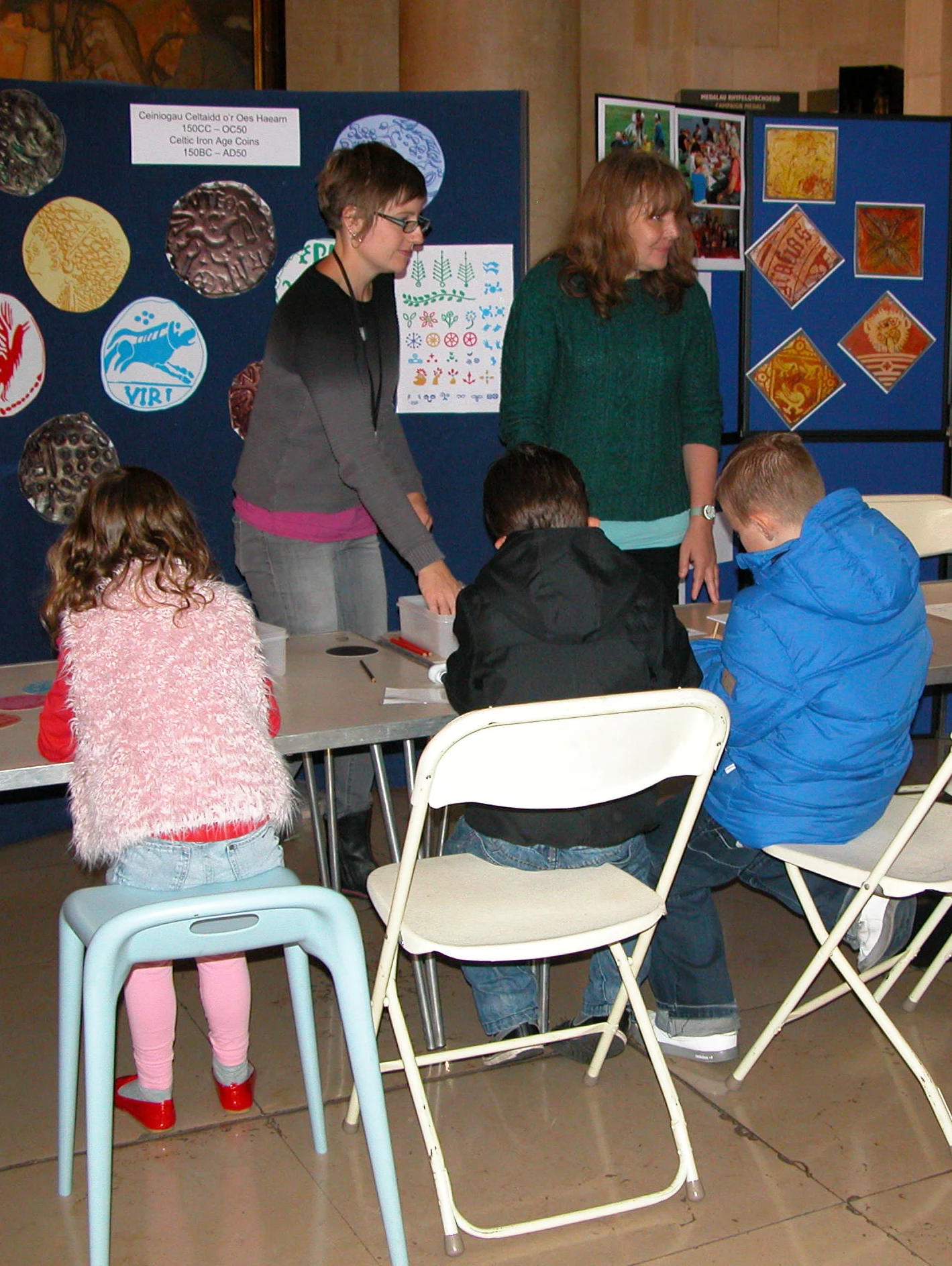
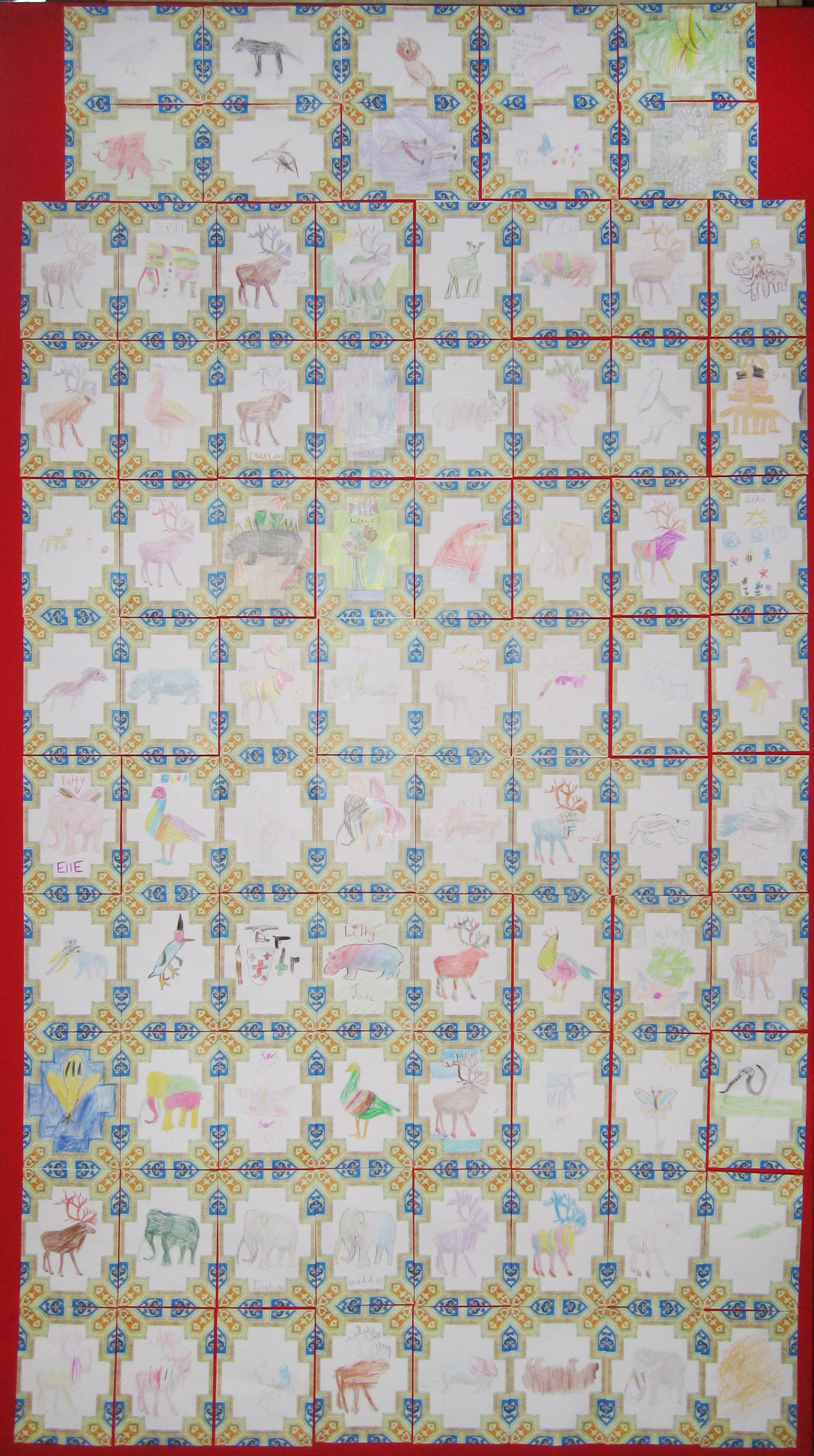
Siân, Jody, Mary, Julie and Alice led art activities based on pieces in our collection. Siân Iles’ specialism is medieval pottery, and she brought out some lovely examples of medieval tiles from our stores. Our visitors were able to see the wonderful designs on them, and how they built up across a floor to form a larger pattern. They then coloured in their own section of a “floor tile” on paper, to form part of a larger pattern which we displayed and added to throughout the day.
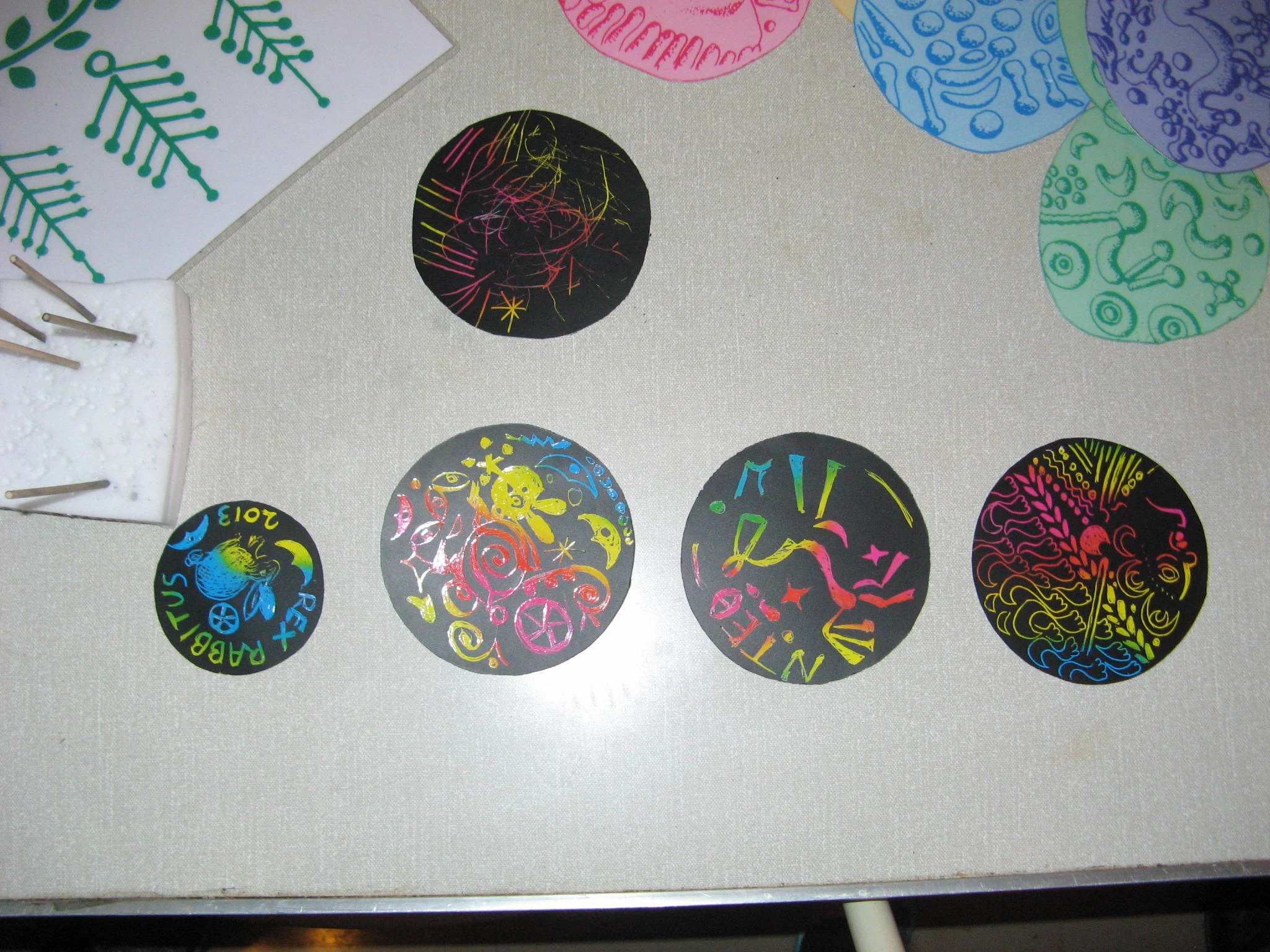
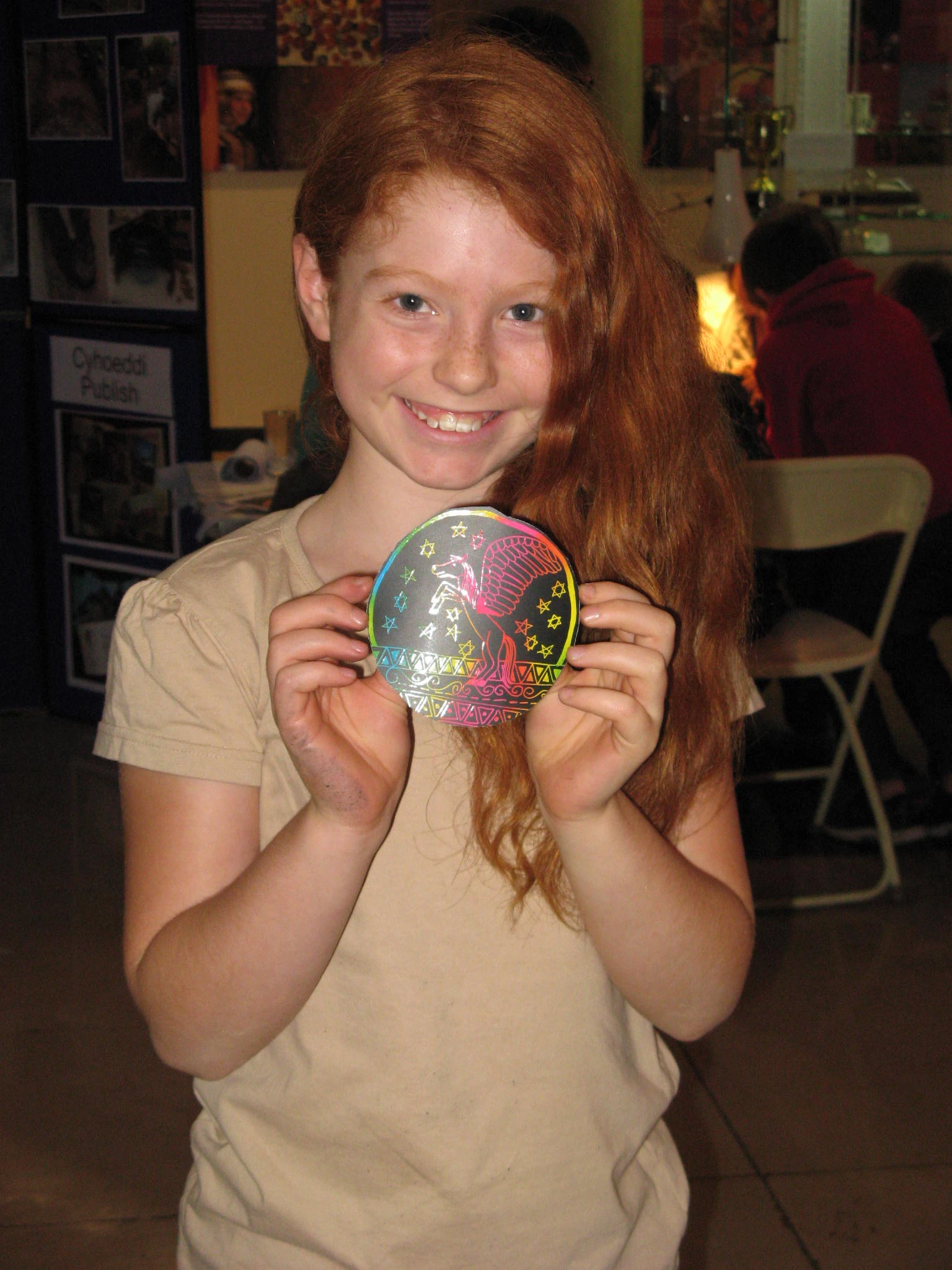
Jody Deacon works with prehistoric artefacts, and Mary Davis is a conservator with a particular interest in the analysis of materials, especially Iron Age and Bronze Age metals. They brought out some designs from Iron Age coins, and talked about how they were decorate with the symbols and patterns which meant something to the people of the time. Our visitors used multi-coloured scratch card to make their own beautiful designs.
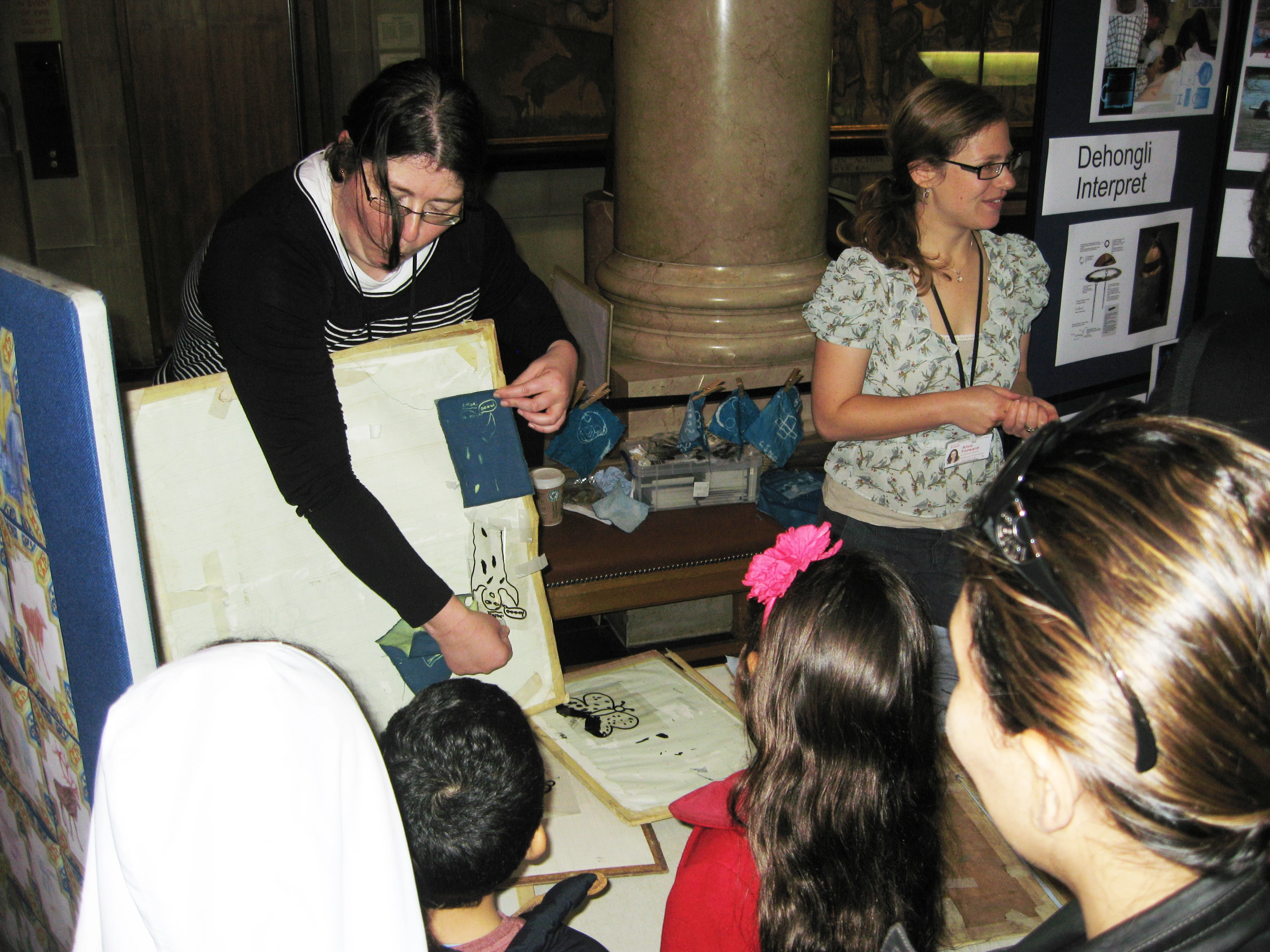
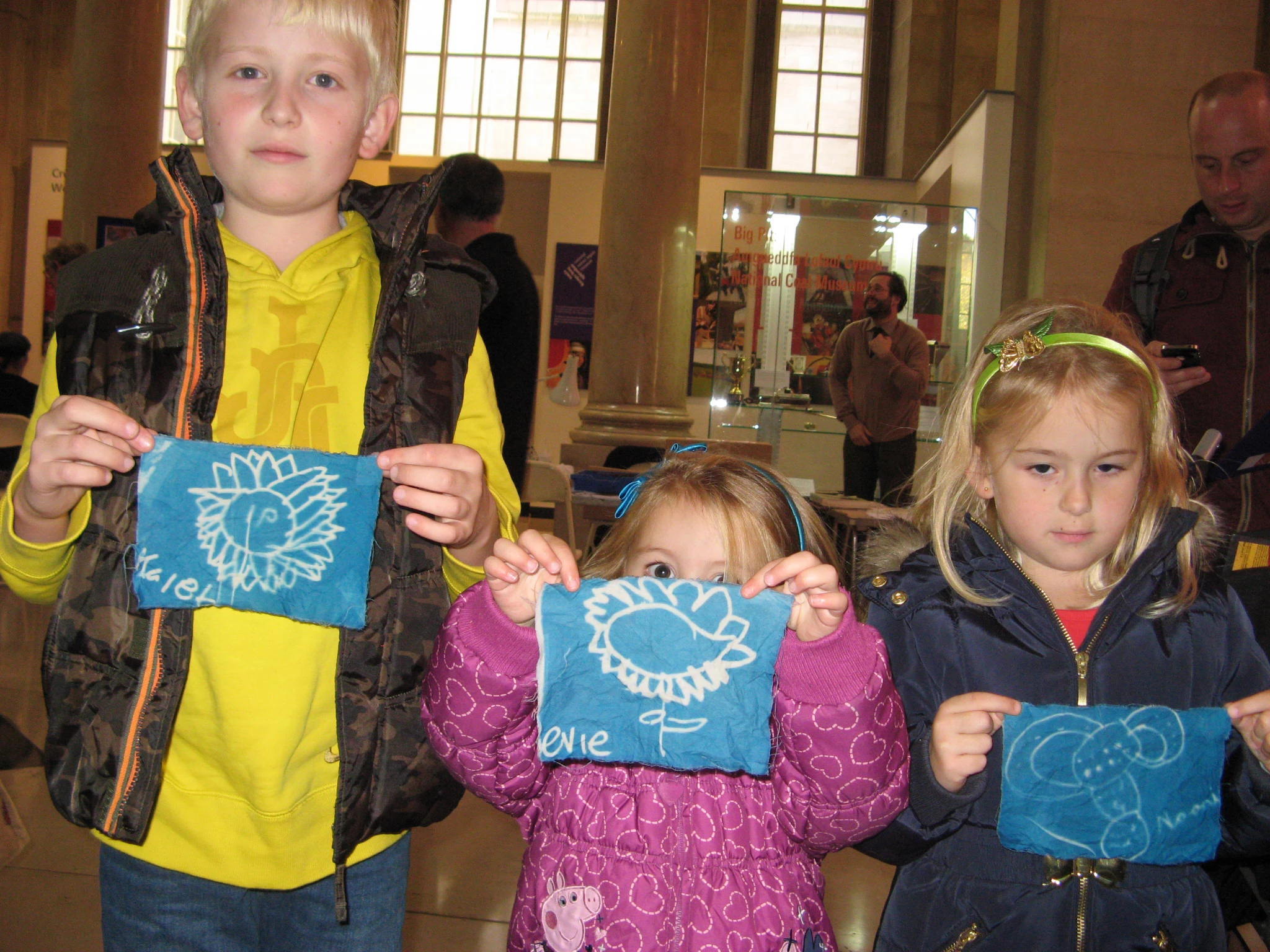
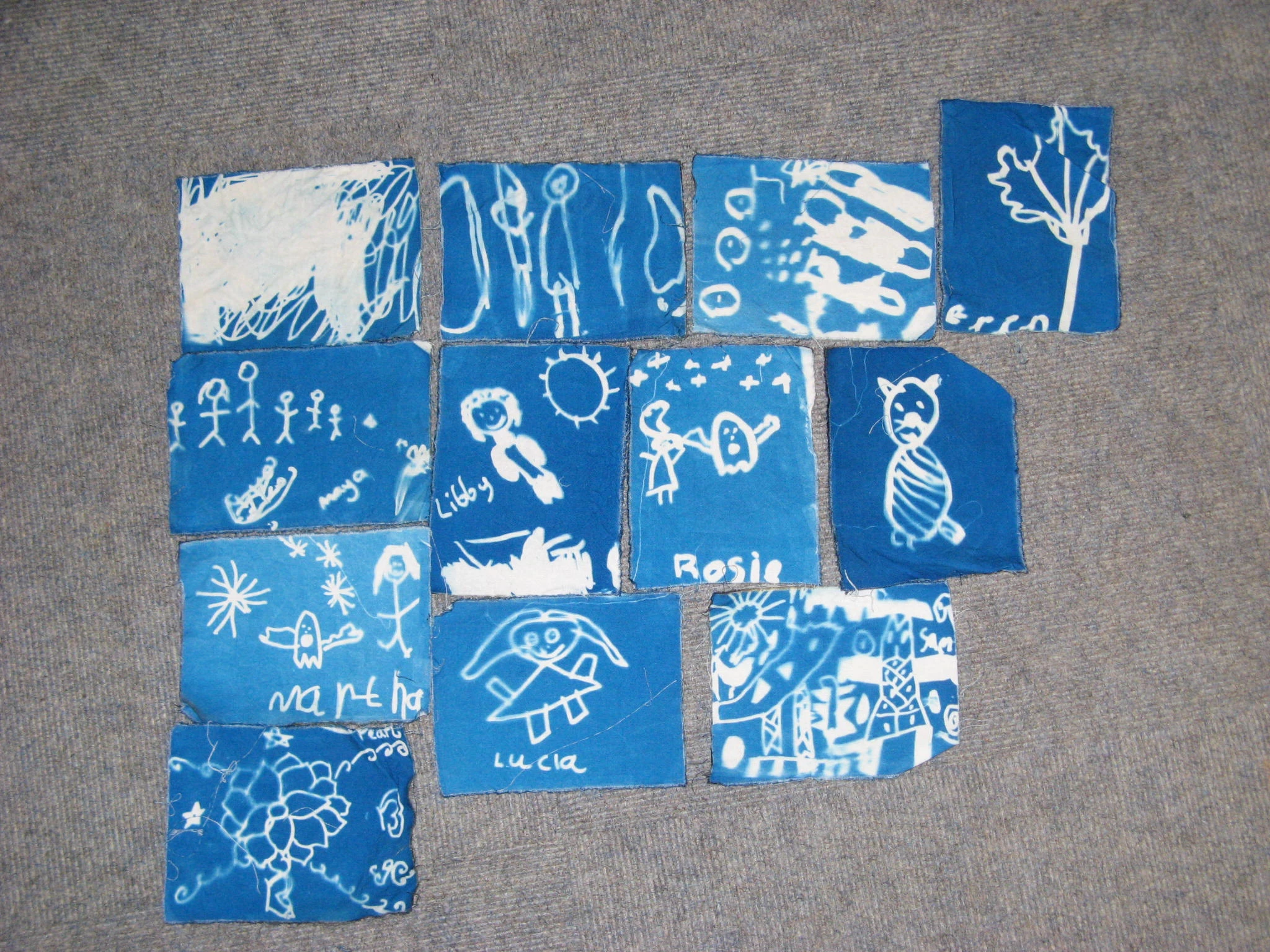
Julie Taylor does the admin for the section, and Alice Forward is with us for a year on a Community Archaeology placement. Julie is a textile artist in her spare time, and is interested in the memory of places. An archaeological excavation can be like digging up the ghosts of the past – a small trace of someone, a stain in the ground, an unclear, faint picture. Julie and Alice helped the visitors to make “ghost pictures” – the visitors chose an object from our Origins gallery to draw on acetate, which was then transferred to light-sensitive fabric, making an ephemeral image of what you had seen. We have a few pieces which were left behind, so if you see yours here and want it back, do call to collect it.
Del Elliott can normally be found helping you to use the Clore Discovery Gallery or as a Museum Assistant in the general exhibitions. He also volunteers with our handling collection in the Origins gallery. He used a model of the “Celtic Warrior Grave” to talk to the public about the burial traditions of the Iron Age, the artefacts found in the grave and how they have changed over time.
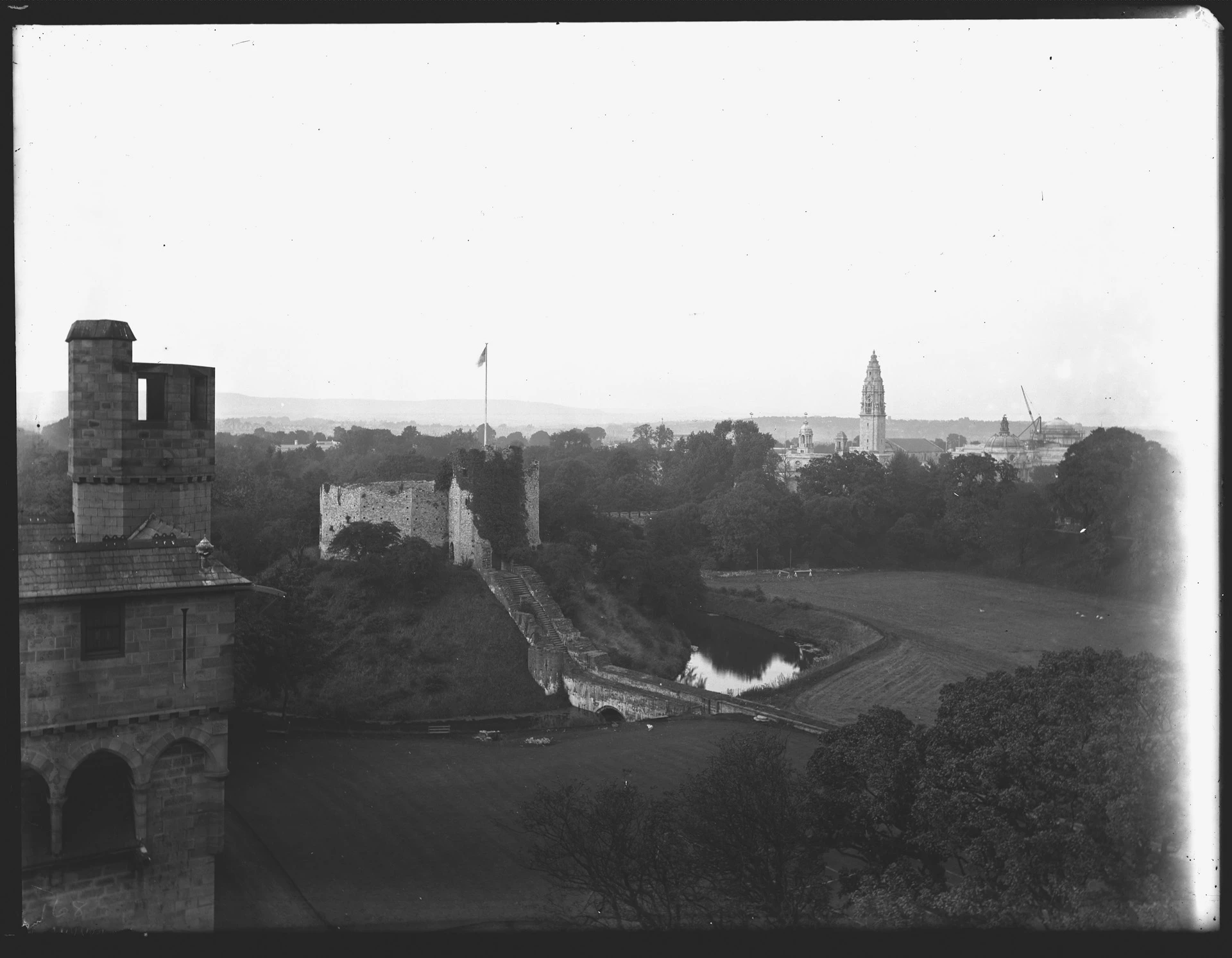
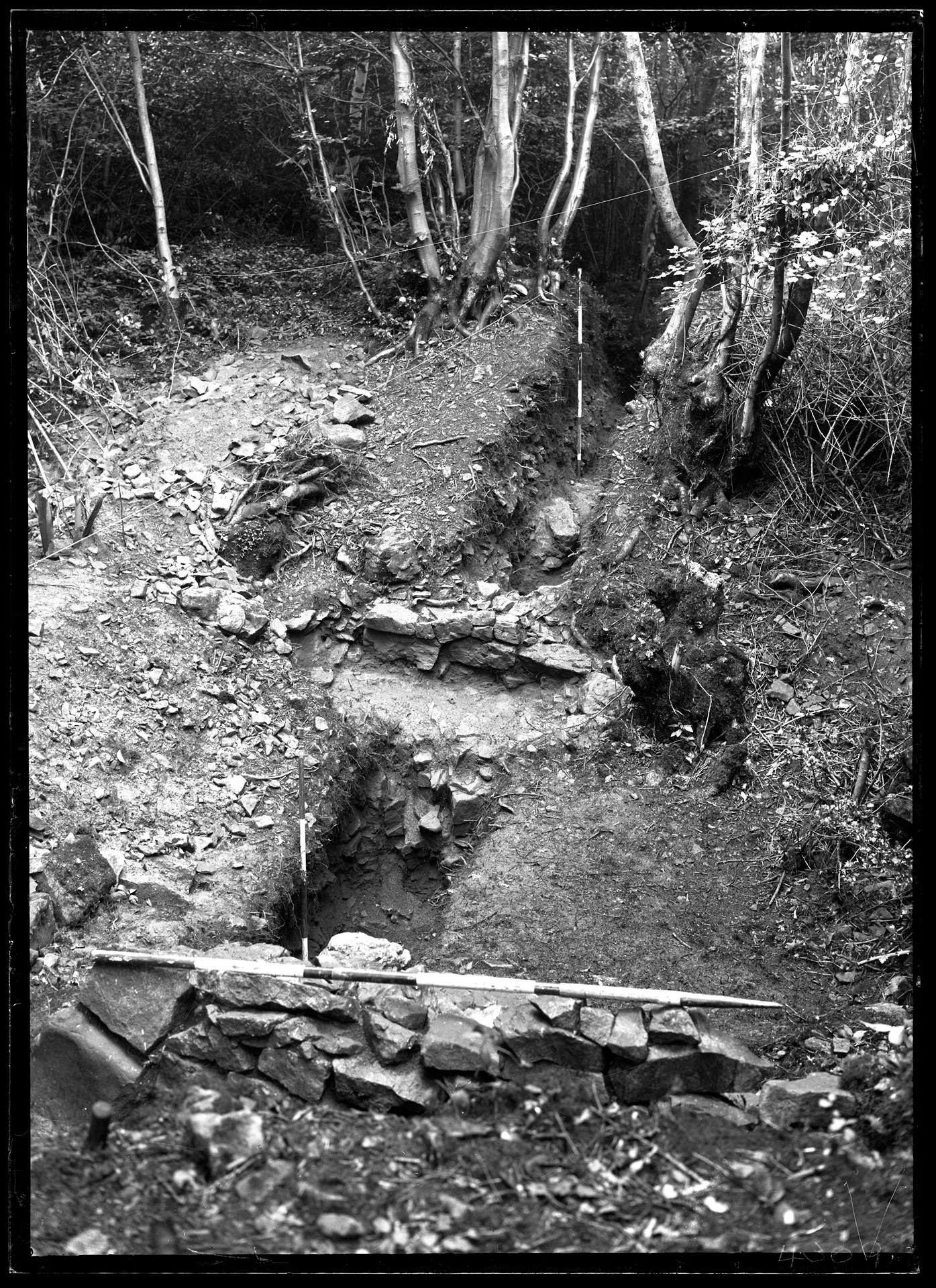
Evan Chapman works with our Roman archaeology, and also looks after the image archive in the department. Some of our earliest photographs only now exist on glass-plate negatives; extremely fragile and difficult for anyone to use. The Museum has received a grant from the Esmée Fairbairn foundation to enable us to digitise some of these negatives, and Evan brought along a wonderful presentation of old photographs of excavations in Cardiff Castle, Llanmelin Hillfort and Segontium, also an archive of Early Christian Monuments from Glamorgan.
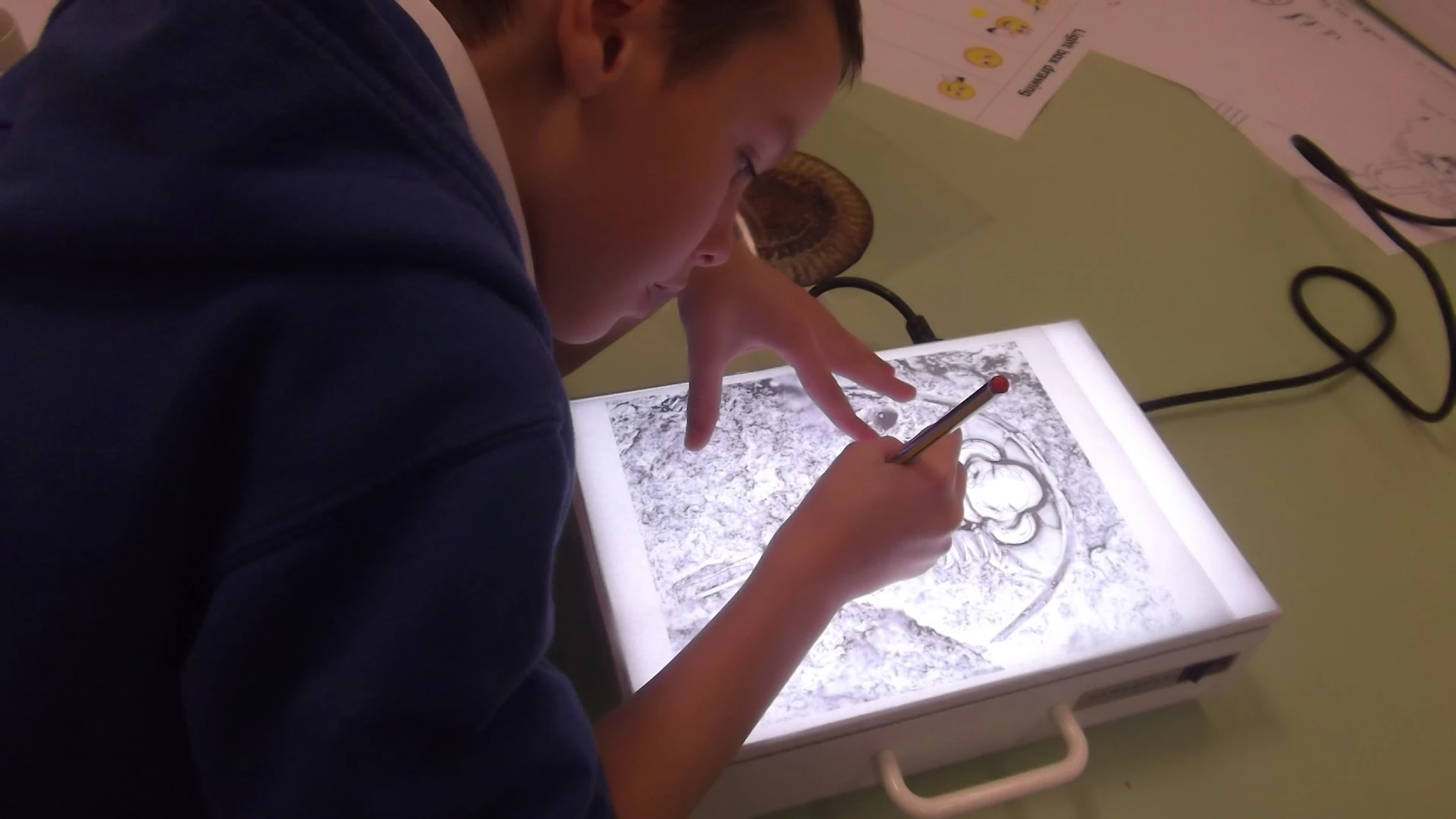
Last but not least, Jackie Chadwick and Tony Daly are the A&N illustrators. Photographs are a very useful record, but often a great deal of detail exists in the artefacts which simply cannot be picked up by the lens. Jackie and Tony have produced some incredible drawings, showing such things as the subtle marks left in the manufacturing process and the texture of an item. They also play a large part in the interpretation of a site or object, by illustrating how a site may have looked or an object used, based on the complex archaeological evidence. The visitors could chat to them about the process, see some of their work, and have a go at making their own illustrations.
We could not have done the day without our fabulous volunteers. Kym, Luke and Ciaran generously gave up their time and worked so hard with us to run the activities. A huge thank you to all of you!
The day was a bit of a swan-song for the Origins gallery – the gallery will close in February next year and the collection prepared for the new displays planned for St Fagans National History Museum. Archaeology & Numismatics is now part of the larger History and Archaeology Department, and the new displays are intended to cover the prehistory and history of Wales at a single site.
Archaeology will still have a strong programme of events in this new structure – look out in the What’s On guide for our regular series of lunchtime talks and Behind The Scenes tours. Another Discovery Day is on the cards during the CBA’s Festival of British Archaeology next July, and we are planning a one-day conference for next autumn; dates to be confirmed.
If you want to volunteer with us, you can get in touch with the Museum’s volunteer co-ordinator Ffion Davies.
We’d love to hear your thoughts – what did you think of the day, what would you like to see at the next one, what can we do better? Just comment below.
Bye for now
Julie