New year, new shoots!

Happy New Year Super Scientists! Hope you had a great break and are ready to get investigating!

At this time of year things start to get really exciting. Now is the time to watch your pots to see if anything is starting to grow. My daffodil shoots have already appeared! Anyone else got any yet? Please send me photographs if you do.

It could take another month or even six weeks until my flowers appear. It all depends on our weather - if it turns really cold then the growth will slow down. If it stays warm they will grow faster.

The next step... Please use my PowerPoint presentation to find out how to keep flower records. Remember each of you must let me know when your flowers open in order to receive your Super Scientist Certificates.

2012 was the second wettest year on record in the UK and the wettest ever in England, the Met Office announced.

The downpours that caused more than 8,000 homes and businesses to suffer flooding led to a total of 1,330.7mm of rain for the year, just 6.6mm short of the wettest UK year recorded in 2000 (1337.3mm).

Analysis by the Met Office suggests that the UK may be getting increasingly wetter as climate change causes warmer air to carry more water. Days of extreme rainfall – downpours expected once every 100 days – occurred every 70 days in 2012. For more info on this see this report from the Guardian.

Many Thanks

Prof.P


ExArc 2013 Conference

It's been a while since I last blogged from St Fagans - there's been a glitch in the matrix and we still haven't quite got to the bottom of it. But we'll get there.

That's one way of apologising that there won't be any pictures with this post. Anyway, onwards:

This week, Amgueddfa Cymru and Cardiff University will be hosting the annual ExArc conference. ExArc, in this context, refers to Experimental Archaeology; a hands-on approach to learning about the past, which looks at the 'how?' of history, as well as the 'when?'.

ExArcers' work is in raw materials, painstaking detail and learning from mistakes as well as triumphs. The research they take part in can range from bronze-casting or iron-smelting using rudimentary tools; to recreating underwear or researching the practicalities of life in the past.

I have been lucky enough to learn a lot from ExArcers over the last few years, and so am very proud that St Fagans will feature in their visit down to Cardiff. We're known here for our hands-on approach, and I suspect we could learn an awful lot from these trailblazers!

While the conference is completely full, you can follow the discussion online using the hashtag #eauk2013.

The twitter stream is already full of interesting people, travelling here from all around as I type. If you're planning to attend, please do come and say hello. You will know me by my, erm, museum name badge?

Species new to science: Shovelhead Worms from around the world

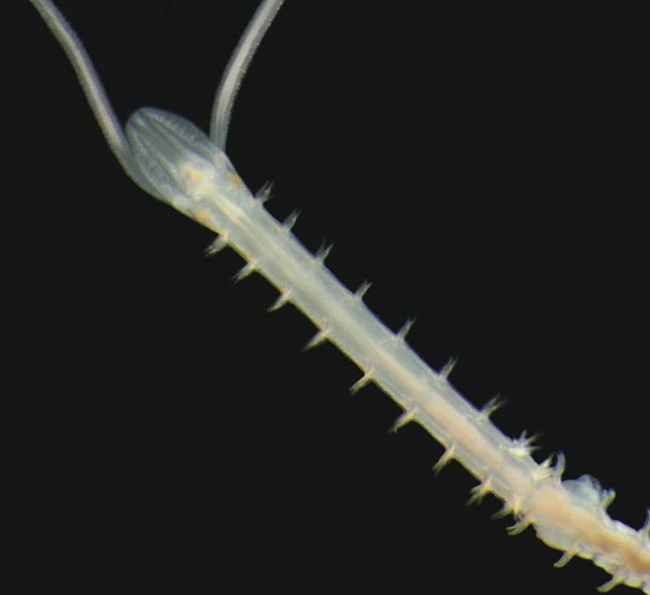
A British species of Shovelhead worm (<em>Magelona johnstoni</em>). Image: Andy Mackie.

A British species of Shovelhead worm (Magelona johnstoni). Image: Andy Mackie.

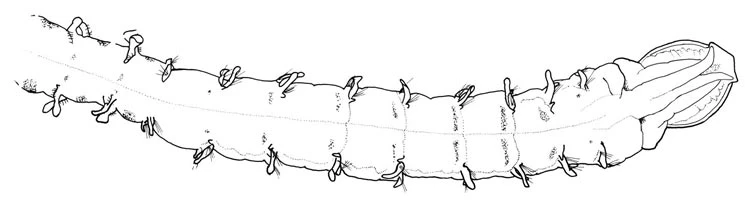
A Portuguese species of Shovelhead worm (<em>Magelona lusitanica</em>)

A Portuguese species of Shovelhead worm (Magelona lusitanica)

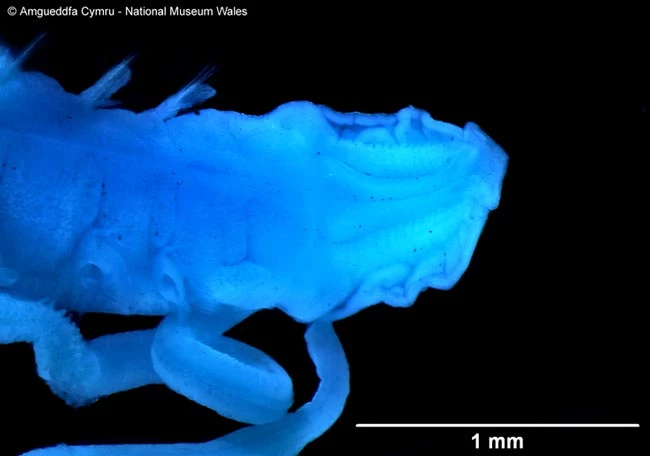
Head end of <em>Magelona montera</em> from the Red Sea, stained with methyl green. Image: James Turner

Head end of Magelona montera from the Red Sea, stained with methyl green. Image: James Turner

<em>Magelona obockensis</em> from the Gulf of Aden
Magelona obockensis

from the Gulf of Aden

Head end of <em>Magelona sinbadi</em> from the Persian Gulf, stained with methyl green. Image: James Turner

Head end of Magelona sinbadi from the Persian Gulf, stained with methyl green. Image: James Turner

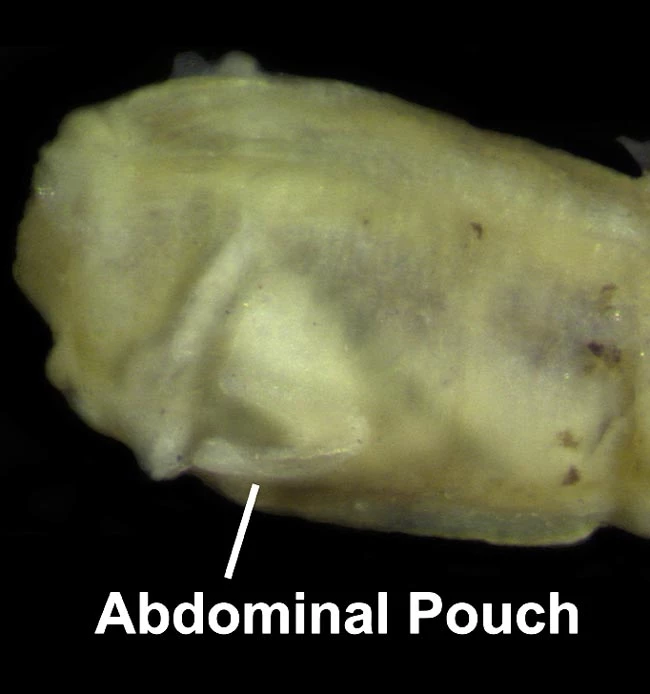
An example of a magelonid pouch

An example of a magelonid pouch

Marine bristle-worms (Polychaetes) are related to earthworms and leeches - well known examples are lugworms and ragworms used by sea fisherman as bait. The Magelonidae is a small family of polychaetes that have a unique flattened head, used for digging, giving them the common name, the shovelhead worms. There are over 70 species of shovelhead worms, 11 of which were first described by marine biologists from Amgueddfa Cymru.

Polychaetes are found in nearly every marine habitat and often make up a large proportion of the animals living in and on the seabed. There may be 9000 species worldwide, although estimates vary widely and new species are being discovered constantly (even in British waters).

Polychaetes can vary hugely in their form and size, how mobile they are, and how they obtain their food.

What are Shovelhead Worms (Polychaeta: Magelonidae)?

The Magelonidae is a small family of polychaetes, found all over the world. They burrow in muds and sands, and are generally found at water depths of less than 100 m. They are slender, beautiful worms, usually less than 10 cm long. They have a unique flattened head, used for digging in sediments, giving the group its common name, the shovelhead worms. The have two long feeding tentacles (palps) that are adorned with small 'bumps' (papillae). Over 70 species are known worldwide, 11 of which were first described by marine biologists from Amgueddfa Cymru, including one British species, Magelona johnstoni Fiege, Licher & Mackie, (2000).

Marine biologists at Amgueddfa Cymru have studied the shovelhead worms in the seas surrounding the Arabian Peninsula and confirmed the presence there of Magelona cornuta, Magelona obockensis, Magelona pulchella, Magelona crenulifrons and an undescribed species from the Red Sea (Mortimer, 2010). This research led to collaboration with scientists from the Spanish Centre d'Estudis Avançats de Blanes (CEAB) who made Magelona specimens available from over 100 locations in the same region.

A worm with horns

The undescribed species highlighted in 2010, was first noticed in the collections of the Muséum National d'Histoire Naturelle in Paris. It is a particularly interesting species as it has uniquely shaped horns on its head, giving it the appearance of wearing a bullfighter's hat! It has now been named Magelona montera, after the Spanish word for a matador's hat (Mortimer et al., 2012).

A further six species of Magelona have now been identified from seas surrounding the Arabian Peninsula, including another new species from Iran named after the fictional sailor, Sinbad (M. sinbadi, M. cf. agoensis, M. conversa, M. cf. falcifera, M. symmetrica, and M. cf. cincta). This raises the total number of species known from the Red Sea/Gulf region to eleven, three of which were originally described from the Seychelles by Museum staff (Mortimer & Mackie, 2003; 2006).

The partnership between Amgueddfa Cymru and CEAB has proven to be successful and also led to a review of the shovelhead worms from Portugal, including the description of a new species, Magelona lusitanica. This work was published in the proceedings of the 10th International Polychaete Conference, held in Italy, June 2010 (Mortimer, Gil & Fiege, 2011). In 2013, Museum staff worked with scientists from the East China Sea Fisheries Research Institute, Shanghai to describe a new species from the Yellow Sea, China (Zhou & Mortimer, 2013).

Amgueddfa Cymru taxonomists have now studied 30% of all known Magelona species. However, it doesn't stop there. Work is now starting on British species as part of the museum's review of the British Polychaete Fauna. We will also investigate the distinctive abdominal pouches present in some magelonid species, whose function remains a mystery.

References:

Fiege, D., Licher, F. & Mackie, A.S.Y. 2000. A partial review of the European Magelonidae (Annelida: Polychaeta): Magelona mirabilis redefined and M. johnstoni sp. nov. distinguished. Journal of the Marine Biological Association of the United Kingdom, 80, 215-234.

Mortimer, K. 2010. Magelonidae (Polychaeta) from the Arabian Peninsula: a review of known species, with notes on Magelona tinae from Thailand. Zootaxa, 2628, 1-26.

Mortimer, K., Cassà, S., Martin, D. & Gil, J. 2012. New records and new species of Magelonidae (Polychaeta) from the Arabian Peninsula, with a re-description of Magelona pacifica and a discussion on the magelonid buccal region. Zootaxa, 3331, 1-43.

Mortimer, K., Gil, J. & Fiege, D. 2011. Portuguese Magelona (Annelida: Magelonidae) with a description of a new species, a re-description of Magelona wilsoni Glémarec, 1966 and a key to adult Magelonidae from European waters. Italian Journal of Zoology, 78(S1), 124-139.

Mortimer, K. & Mackie, A.S.Y. 2003. The Magelonidae (Annelida: Polychaeta) from the Seychelles, with the description of three new species. In: Sigvaldadóttir, E., Mackie, A.S.Y., Helgason, G.V., Reish, D.J., Svavarsson, J., Steingrímsson, S.A. & Gudmundsson, G. (eds). Advances in polychaete research. Hydrobiologia, 496(1-3), 163-173.

Mortimer, K. & Mackie, A.S.Y. 2006. The Magelonidae (Annelida: Polychaeta) from the Seychelles. 2. Description of four additional species, three new to science. In: Sardá, R,. San Martín, G., López, E., Martin, D. & George, D. (eds). Scientific advances in polychaete research. Scientia Marina, 70(S3), 125-137.

Zhou, J. & Mortimer, K. 2013. A new species of Magelona (Polychaeta: Magelonidae) from Chinese coastal waters . Journal of the Marine Biological Association, U.K, 93(6):1503-1510.

Penblwydd hapus to Alfred Russel Wallace!

Today, 8 January, marks the 190th birthday of the intrepid explorer and brilliant naturalist Alfred Russel Wallace. Born in 1823 in the village of Llanbadoc near Usk, Wallace went on to be one of the most celebrated scientists of his era.

Wallace spent much of his early working years as a civil engineer in the south Wales area, particularly in the Vale of Neath. This involved spending a great deal of time working outdoors, which allowed him to indulge in his growing passion for natural history.

Soon, inspired by the writings of traveling naturalists such as Alexander von Humboldt and Charles Darwin, Wallace set out on his own intrepid travels. These adventures started in the Amazon Basin and were followed later by his explorations of the Malay Archipelgo.

During these trips Wallace collected many thousands of birds, butterflies and beetles, many of which were new to science. The biological diversity he encountered inspired his thinking in many areas of biology such as the distribution and evolution of species. His brilliance did not go un-noticed and in 1858 he famously co-published the theory of evolution by natural selection with Charles Darwin.

During 2013 Amgueddfa Cymru – National Museum Wales, along with other museums and institutions across the world, will be marking the centenary of the death of A R Wallace in a celebration of his life and legacy. Keep an eye on our web site and blog for further information as we finalise details and dates. You will also be able to follow other events and exhibitions on the Wallace100 website.

Oriel 1: the final days....

Hello!

Just in case you don't know - Oriel 1 will be closing on 31 December, so make sure you visit us before then, there's not much time!

The gallery is full of such great objects - my favourites are the good luck charms, the (previously) concealed shoe and the Victorian brooches and jewellery made with woven human hair.

I've pretty much finished my duties for the year! This month we've been busy making Christmas decorations - tissue paper pom poms, paperchains and christmas tree decorations made out of felt - it's been lots of fun.

Next year I'll be starting up two new things - a craft group for adults and a reading group for adults, and we'll also be carrying on with our old favourites - quilt club, craftivism, art cart... it's going to be great!

Wishing you a happy Christmas and wonderful new year!

best wishes, sian.