Feeding Frenzy!

It has been a successful week, with the birds showing well for the museum visitors.  The most spectacular moment came on Friday morning when the adult male peregrine (Gavin to his friends!) returned to the Clock Tower with a tasty seagull to eat!  As you can imagine, this didn't go down too well with the local gulls, who attempted to mob Gavin as he arrived home.  Luckily, he made it to a nice comfortable ledge where he was able to enjoy his meal in peace. 

For the lucky people down below watching through scopes, it really was a WOW moment.  And there will be more to come!  Our eggs are due to hatch very soon (last year the first chick appeared on the 1st of May) which means more action on the nest ledge, more hunting trips for the adults and lots many more gory feeds to watch!

So why not come along and have your own RSPB WOW moment?!  We will be at the Museum Tuesday-Sunday, 10am-4pm.

Next Webology

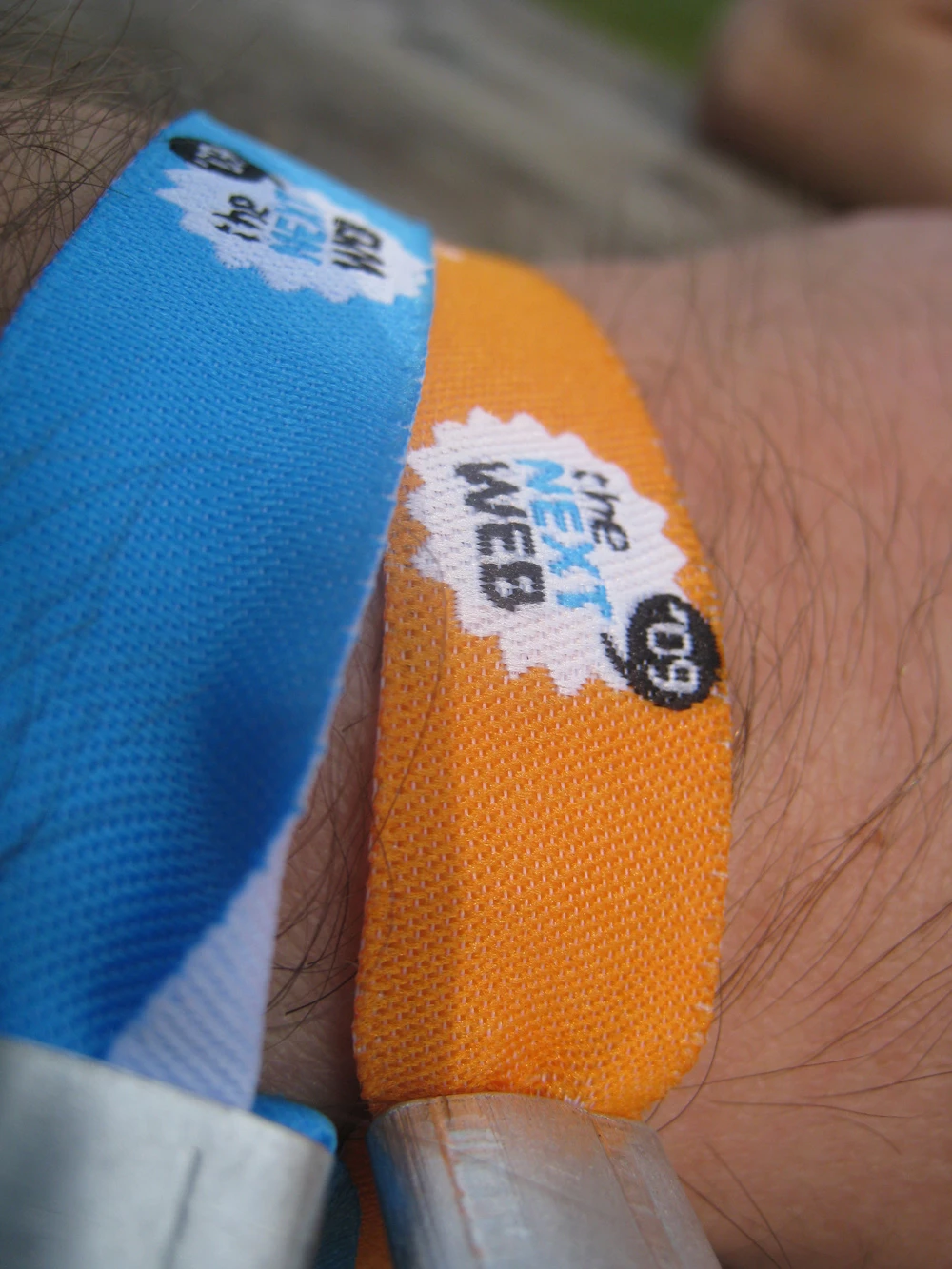
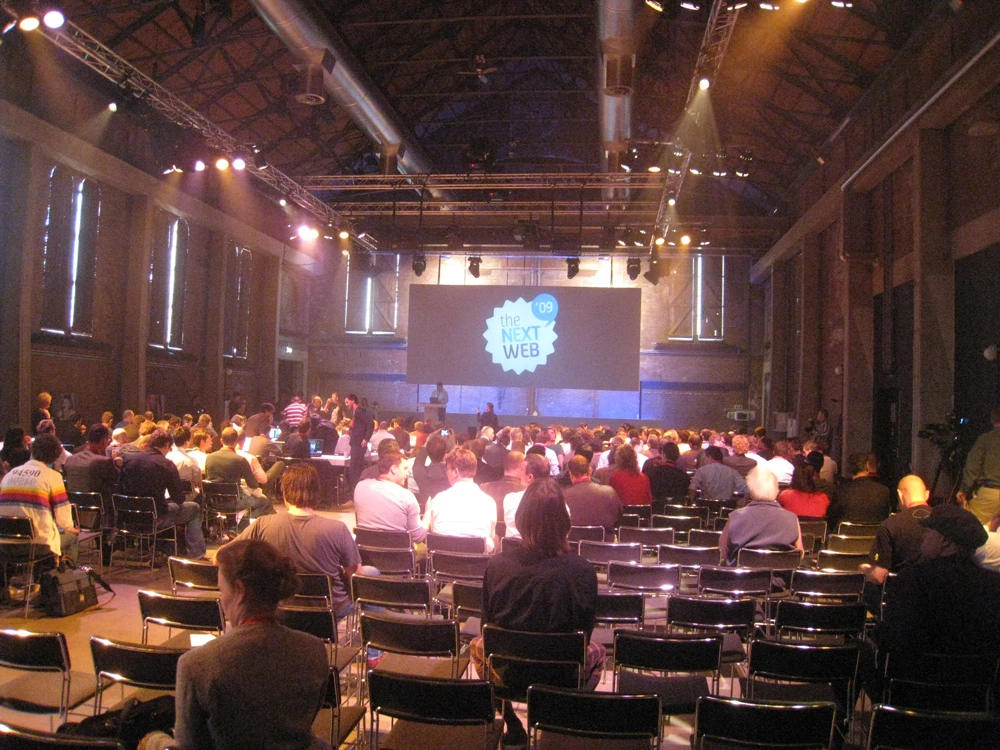
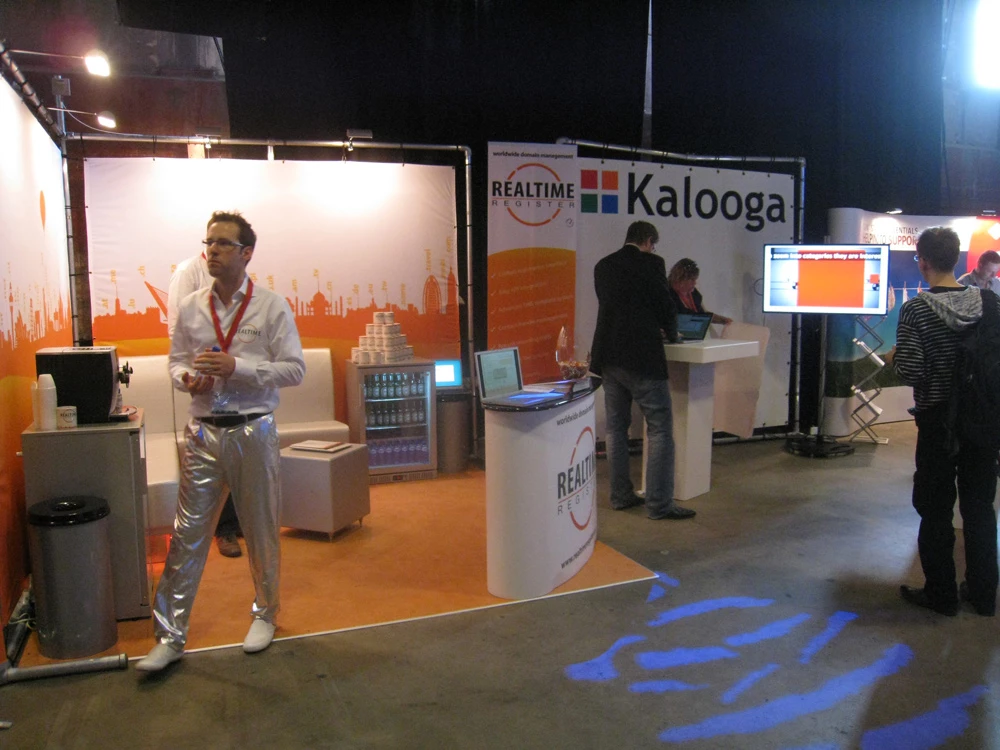
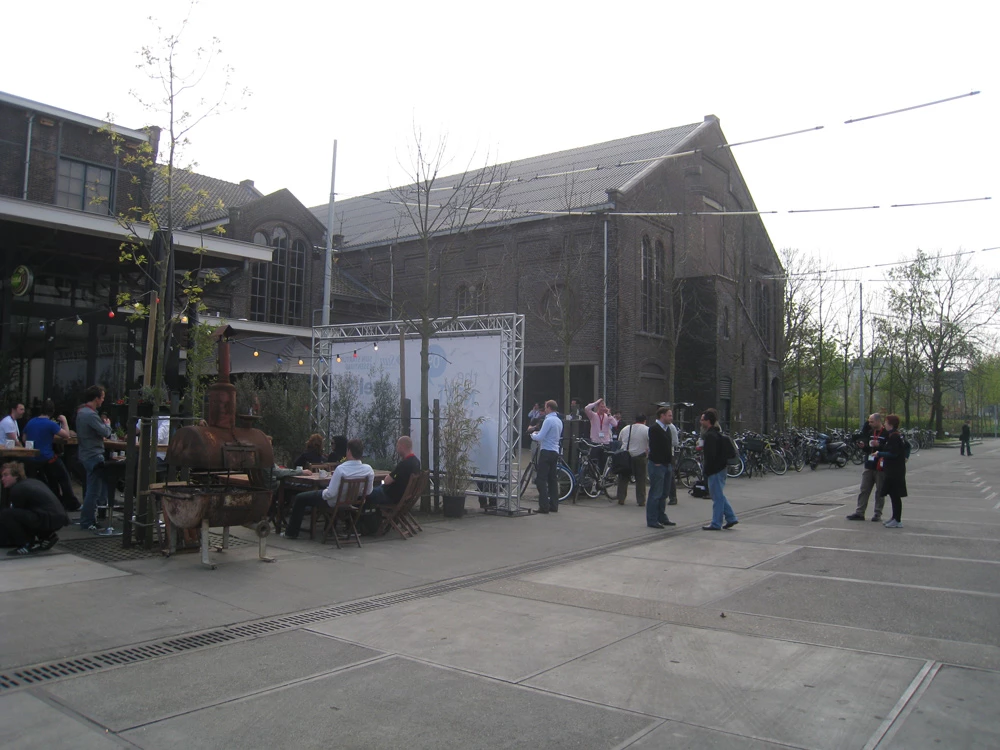
I am an Intranet & Web Developer working for Amgueddfa Cymru and this blog entry is about The Next Web Conference held in Amsterdam 15th - 17th April.

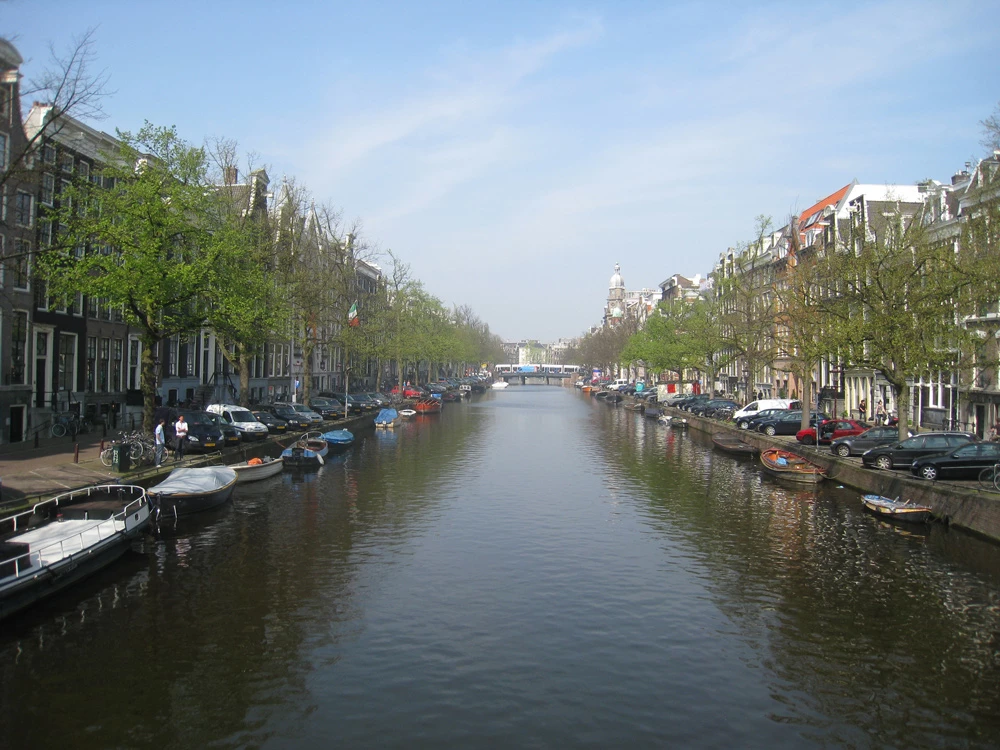
If you avoid the tourist areas after 9pm, Amsterdam is a calm and laid back city. People are friendly and the only dangers are the thousands of cyclists criss-crossing pavements and over-enthusiastic refuse collection trucks spinning three-sixty at road junctions – I believe the trams are there to provide safe passage over longer distances.

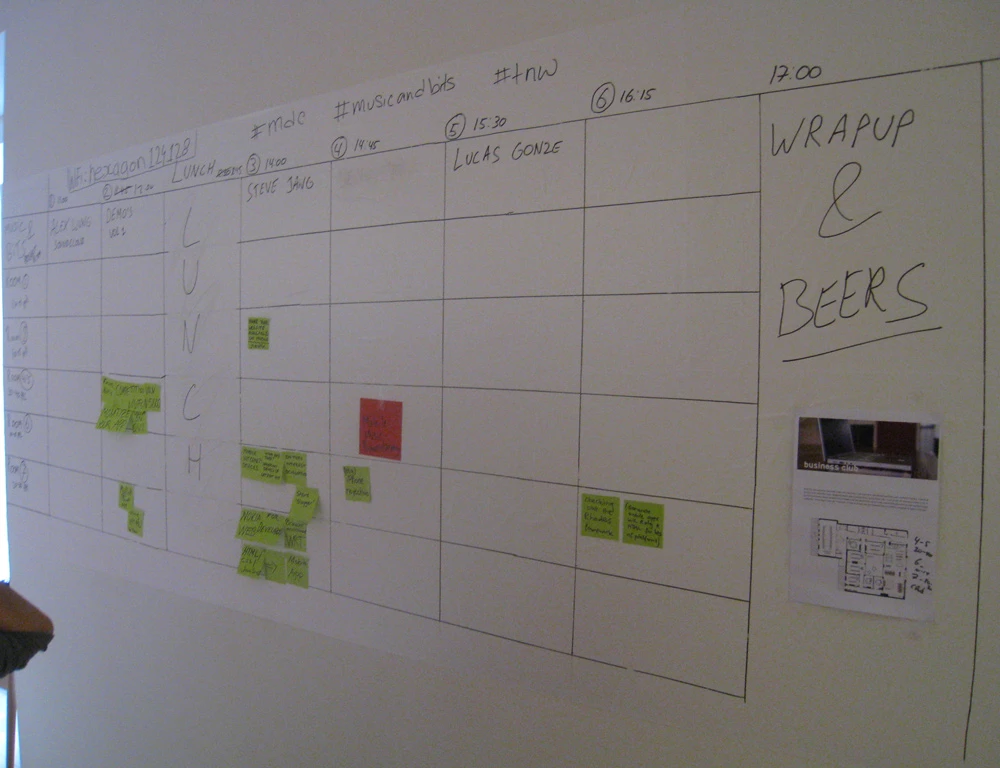
Anyhow, the first “unConference” day was a little loose in how it was arranged, but intentionally so. I ventured to the Mobile DevCamp and Music & Bits sessions:

Steve Jang, CMO of social music service iMeem gave away one of his insights: despite Apple’s current dominance in the market, Google’s Android shouldn’t be underestimated and would provide decent mobile development/financial opportunities - I should clarify that this conference had money iconography and business models roaming all over it. 

Continuing with the music theme, Lucas Gonze presented one of the infrequent talks of the three days that tried to avoid direct business model chatter. His main reference point was Fresh Hot Radio, which allows people to propagate musical playlists and tracks in a sympathetic manor. Most of his selections appeared to be demos, third drafts found on web forums and such (all good); but his point was that the original author information was not lost through web propagation (embeds and share links). The website pages were simple, but they always tried to use the sometimes-scarce sources of artwork from the actual musician - it’s about the music after all. Jolly good.

Other sessions discussed and demonstrated musical ideas using mobile phones to aid interaction between the user and music. One example used an accelerometer as part of a university project, Mustick (PDF) - interesting because the development time was short.

There were Sun Microsystem start-up presentations intermittently throughout the next couple of days. The Mendeley pitch was engaging in that it approached the research world: organise your research papers across multiple computers and help find trends within your particular research field (museum's are full of curators and researchers). It is built on Adobe Air, I believe - the proliferation continues.

Andrew Keen conceptualised the state/ideal state of the web using both flamboyant and succinct language. I enjoyed his enthusiastic approach, even if certain conclusions appeared to be driven by the need for a good sound bite, rather than firm logic - "web 2.0 is dead, long live Twitter".

A Dave sidetrack: Andrew Keen used a Johannes Vermeer painting to demonstrate a particular intensity of human interaction: Woman reading a letter. I couldn’t recall the artist Jonathan Janson at the time, a fact that you wouldn't have known, but he created a humorous painting influenced by Vermeer: A young girl writing an email.

Turn on the radio, read a web article, visit the next web conference, Twitter is doing the rounds - that is fine and dandy. It can be used for good (twestival.com), it has an open API  - aggregate this source into your website/application. A conference recommendation to help control your Twitter action appeared to be: Tweet Deck, another Adobe Air application.

Matt Mullenweg, WordPress guy, had a similar vibe to the Jonathon Harris’ chat at the FOTB ’08, which I didn’t object to at all. The word “why” was mentioned. Fair enough I say.

Eric A. Meyer shared his love of JavaScript and how it allows developers to control browser standards: for instance, using JavaScript and CSS to enable keyboard control of flash media players. Cleaning up Microsoft Internet Explorer to make it a standards-compliant browser, from IE5 - IE8 – see Dean Edwards work. Meyer's conclusion: web standards can be forced on the web browsers without the need for plug-ins, and backward compatibly could be maintained.

Another Dave sidetrack: since leaving the conference I have wandered through the saveIE6 website. My web developer love of IE6 has been restored, I have seen the light - I shouldn’t fight it. SaveIE6

Michael J. Brown, an architectural theorist and practitioner (nice), completed the conference. He pointed out that current 3D environments have a little too much benzoic sulfinide (artificial sweetener) [Mr. Brown didn't use this kind of language] -  they fail because they are merely trying to replicate the real world. Who needs hardware? He finished with the cocoon concept, a learning pod.

Exhibition ideas:

A scaled back research project of the cocoon: It would involve three back-projected screens, a touch screen and/or blue-toothed mobile phone with an accelerometer (you’re missing the point Dave - my head is in my hands) - Minority Report on a shoe-string.

Based on the MiNiBar in Amsterdam, where you have a key to your own fridge, create an installation where you have key to a locked cabinet and people are only allowed to explore the particular contents of their chosen cabinet.

Yes, I think I’ve been affected.

Conference take-aways:

  • JavaScript is still great
  • The world of APIs and data aggregation wont stop tomorrow - disparate sources are being published somewhere as one
  • You can’t create communities, they already exist
  • The world wide web is the social network

Egg-static for Cardiff Peregrines

Peregrines on the Clocktower 2009 is up and running!  The birds are back and were observed mating around City Hall in late March. 


It was on the opening day of the project (4th April) that volunteer Peter Elkington noticed that the birds had chosen a nest site for 2009-the same spot as last year!  For those of you new to PoCT, the eyrie (nest) is located in an old raven's nest on the north-facing side of City Hall Clock Tower, just above the clock face. 


Since early April, the birds have barely left the nest unattended, which suggests that they are incubating eggs.  Unfortunately, due to the height of the tower, we can't see in to count them.  It will be another 2 weeks before we see the chicks appear and the mystery is revealed! 


At the moment, the adult birds are taking turns incubating the eggs.  If you are lucky you may see a change over at the nest site.  Occasionally, one of the birds will return to the tower with prey and give us a gory treat as they devour their hard earned meal.


We estimate that hatching will occur in the first week of May (last year the first egg hatched on 1st May) and then the real fun will start!  Rearing hungry chicks is demanding and both mum and dad will have to work really hard to keep the food coming.  Until then, however, it's a waiting game...

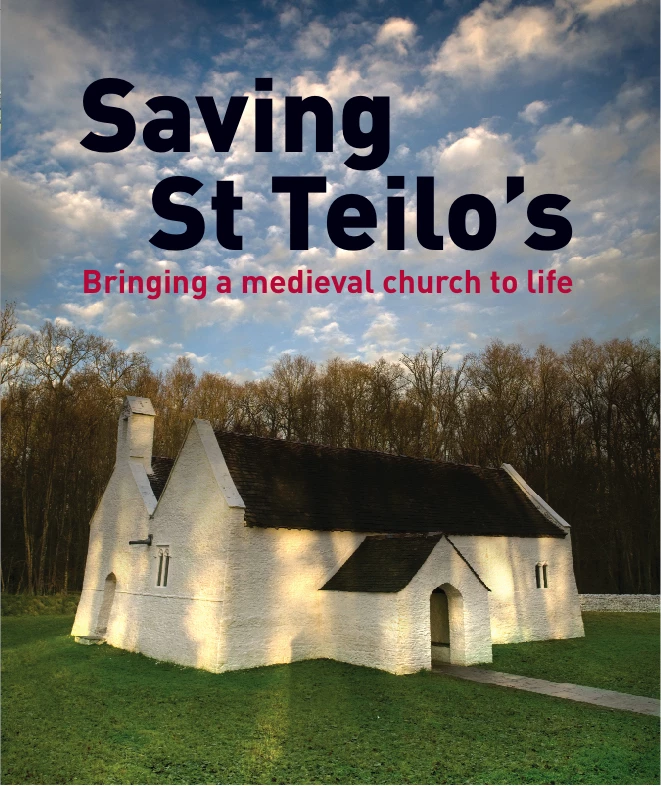
St Teilo's Church - the book

No blogs for a while now - but mostly because we've been working full tilt on the book (also because I've been off for a week...).

So, it's now at the printers, and there's nothing - well, hardly anything - more we can do now. If all is well the books will be in Cardiff this Friday, and we'll all be at St Fagans launching it on Sunday. If the weather is anywhere as good as it has been this last week or so then it'll be a truly lovely afternoon.

As exciting as it is to look forward to seeing the actual book (no matter how many proofs, dummies etc you've seen - the real thing always looks different!) this bit always makes me a bit nervous too. After it arrives, and I spot the inevitable typo that got away, or something I wish we'd changed when we had the chance, or... and after the launch event, I'll be able to reflect on what a pleasure it was to work on and how lovely everybody was to work with. It's a real privilege to have been able to learn so much about the whole project - one of the very best bits of my job is being able to get involved with such a variety of different projects that might otherwise have passed me by. But with this one in particular, I think, the depth of people's knowledge and skills, and their committment, is inspiring.


Anyway, look out for it, available in all good bookshops - soon!


The De la Beche archive at Amgueddfa Cymru

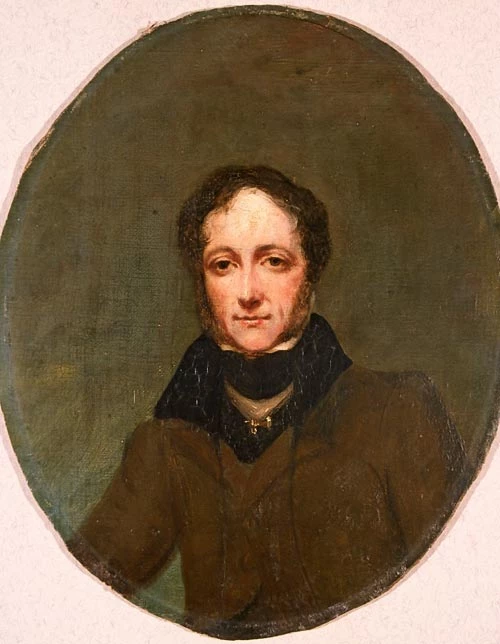
Sir Henry Thomas De la Beche (1796-1855)

Sir Henry Thomas De la Beche (1796-1855)

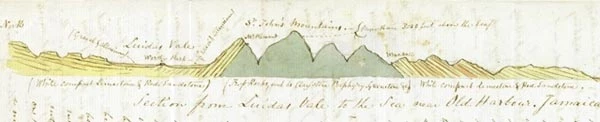
De la Beche's sketch of the Geology of Jamaica

The first geological map of Jamaica

Duria Antiquior - A more Ancient Dorset
Duria Antiquior

- A more Ancient Dorset. A watercolour painted in 1830 by Henry De la Beche. This was the first portrayal of a fossil environment in its entirety, showing the interactions of the various elements of the fossil fauna and flora, in particular the large marine reptiles of the early Jurassic Period.

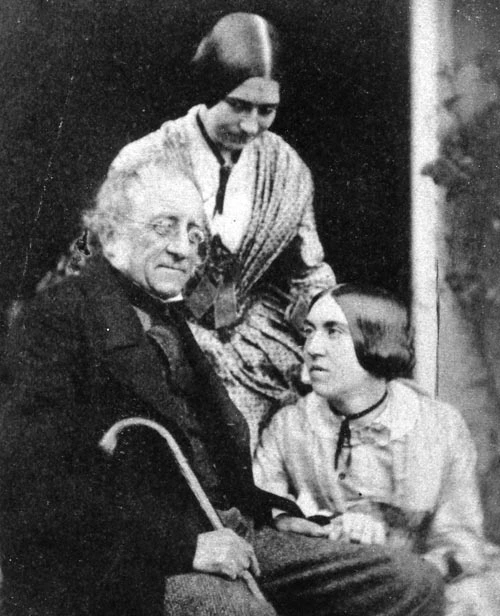
De la Beche and his daughters in Swansea in 1853

De la Beche and his daughters in Swansea, 1853

The Department of Geology at Amgueddfa Cymru houses one of the most important geological archives in the world. It contains over 2,000 items - letters, diaries, journals, sketches and photographs - of one of the leading geologists of the early 19th century, Sir Henry Thomas De la Beche (1796-1855).

During the first half of the 19th century De la Beche played an important role in the new science of geology. In addition to his own scientific contributions, he established geology as a profession and founded several of Britain's major geological institutions, including

  • the British Geological Survey
  • the Museum of Practical Geology (later the Geological Museum and now part of the Natural History Museum in London)
  • the School of Mines (now part of Imperial College London)
  • and the Mining Record Office (now part of the Coal Authority).

De la Beche was born in London and brought up in Devon and in Lyme Regis in Dorset, where he developed an interest in geology through his friendship with a local fossil collector, Mary Anning (1799-1847).

Jamaica

His family wealth came from slavery, and a sugar plantation in Jamaica, and in 1823-4 he spent 12 months on the estate. He toured the island, examining its rock outcrops. On his return to England he published the first description of the geology of Jamaica and its first geological map. De la Beche is regarded as the 'Father of Jamaican geology'.

De la Beche began mapping the rocks of Devon in the early 1830s. However unrest in Jamaica, related to the abolition of slavery and the collapse of the sugar market, left him in financial difficulties and unable to continue his work. He wrote to the Board of Ordnance offering to complete the geological mapping of Devon for the Government for £300. His application was successful and he was appointed Geologist to the Ordnance Trigonometrical Survey.

Founding the British Geological Survey

Once the Devon work was completed, he successfully applied to continue with the geological mapping of Cornwall, and in 1835 the Ordnance Geological Survey was established. From this grew today's British Geological Survey. When most geologists were clerics or interested amateurs of private means, De la Beche was one of the first professionals.

In 1837, De la Beche moved his Geological Survey to Swansea, recognising the economic importance of the Welsh coalfield. He soon became involved in the local scientific scene as a member of the Swansea Philosophical and Literary Institution and a friend of the Swansea naturalist Lewis Weston Dillwyn.

De la Beche was accompanied by his 18-year-old daughter Elizabeth (Bessie). She soon got to know one of Dillwyn's sons,

Lewis Llewelyn Dillwyn , and they married in August 1838. It is from their descendants that the Museum acquired the bulk of the De la Beche archive in the 1930s.

Spectacular fossils discovered

The papers contain a wealth of information about the developing science of geology in the first half of the 19th century. The names of the geological timescale (Cambrian, Ordovician and so on) that we now take so much for granted were being proposed and argued over, new and spectacular fossils were being discovered and evidence of the Ice Age was being recognised for the first time.

De la Beche himself worked on the first descriptions of the large fossil marine reptiles, the ichthyosaurs and the plesiosaurs, and there is much in the papers on the formation of the Geological Survey and the other organizations he established.

Darwin writes to De la Beche

De la Beche corresponded with the leading geologists of the day and, with his experience of Jamaica, was often called on for advice relating to that island. One letter of 1842 in the collection quizzes him about the colours of horses, cattle and other animals bred for a number of generations on the island, and how they had changed. The author was Charles Darwin, at that time formulating his theory of evolution.

De la Beche was a skilled draughtsman and this is evident in the archive, for in addition to faithful landscape views, fossil illustrations and geological cross-sections, he sketched many caricatures and cartoons. Through these he would comment on developments in the science, or on his activities and those of his contemporaries.

The archive is an important resource for the history of geology and is frequently consulted by researchers from Britain and abroad - to arrange a visit, please

contact us .

Editor's note: this article was amended on 28/06/17 to remove a reference to de la Beche being a "fair slave-owner".