United Nations International Year of the Periodic Table of Chemical Elements: October – Sulphur

Christian Baars, 23 October 2019

2019 is the 150th anniversary of the Periodic Table of Chemical Elements (see UNESCO https://www.iypt2019.org/). The "International Year of the Periodic Table of Chemical Elements (IYPT2019)" is an opportunity to reflect upon many aspects of the periodic table, including the social and economic impacts of chemical elements.

Sulphur is the fifth most common element (by mass) on Earth and one of the most widely used chemical substances. But sulphur is common beyond Earth: the innermost of the four Galilean moons of the planet Jupiter, Io, has more than 400 active volcanoes which deposit lava so rich in sulphur that its surface is actually yellow.

Alchemy

The sulphate salts of iron, copper and aluminium were referred to as “vitriols”, which occurred in lists of minerals compiled by the Sumerians 4,000 years ago. Sulfuric acid was known as “oil of vitriol”, a term coined by the 8th-century Arabian alchemist Jabir ibn Hayyan. Burning sulphur used to be referred to as “brimstone”, giving rise to the biblical notion that hell apparently smelled of sulphur.

Mineralogy

Sulphur rarely occurs in its pure form but usually as sulphide and sulphate minerals. Elemental sulphur can be found near hot springs, hydrothermal vents and in volcanic regions where it may be mined, but the major industrial source of sulphur is the iron sulphide mineral pyrite. Other important sulphur minerals include cinnabar (mercury sulphide), galena (lead sulphide), sphalerite (zinc sulphide), stibnite (antimony sulphide), gypsum (calcium sulphate), alunite (potassium aluminium sulphate), and barite (barium sulphate). Accordingly, the Mindat (a wonderful database for all things mineral) entry for sulphur is rather extensive: https://www.mindat.org/min-3826.html.

Chemistry

Sulphur is the basic constituent of sulfuric acid, referred as universal chemical, ‘King of Chemicals’ due to the numerous applications as a raw material or processing agent. Sulfuric acid is the most commonly used chemical in the world and used in almost all industries; its multiple industrial uses include the refining of crude oil and as an electrolyte in lead acid batteries. World production of sulfuric acid stands at more than 230 million tonnes per year.

Warfare

Gunpowder, a mixture of sulphur, charcoal and potassium nitrate invented in 9th century China, is the earliest known explosive. Chinese military engineers realised the obvious potential of gunpowder and by 904 CE were hurling lumps of burning gunpowder with catapults during a siege. In chemical warfare, 2,400 years ago, the Spartans used sulphur fumes against enemy soldiers. Sulphur is an important component of mustard gas, used since WWI as an incapacitating agent.

Pharmacy

Sulphur-based compounds have a huge range of therapeutic applications, such as antimicrobial, anti-inflammatory, antiviral, antidiabetic, antimalarial, anticancer and other medicinal agents. Many drugs contain sulphur; early examples include antibacterial sulphonamides, known as “sulfa drugs”. Sulphur is a part of many antibiotics, including the penicillins, cephalosporins and monolactams.

Biology

Sulphur is an essential element for life. Some amino acids (cysteine and methionine; amino acids are the structural components of proteins) and vitamins (biotin and thiamine) are organosulfur compounds. Disulphides (sulphur–sulphur bonds) confer mechanical strength and insolubility of the protein keratin (found in skin, hair, and feathers). Many sulphur compounds have a strong smell: the scent of grapefruit and garlic are due to organosulfur compounds. The gas hydrogen sulphide gives the characteristic odour to rotting eggs.

Farming

Sulphur is one of the essential nutrients for crop growth. Sulphur is important to help with nutrient uptake, chlorophyll production and seed development. Hence, one of the greatest commercial uses of sulfuric acid is for fertilizers. About 60% of pyrite mined for sulphur is used for fertilizer manufacture – you could say that the mineral pyrite literally feeds the world.

Environment

Use of sulphur is not without problems: burning sulphur-containing coal and oil generates sulphur dioxide, which reacts with water in the atmosphere to form sulfuric acid, one of the main causes of acid rain, which acidifies lakes and soil, and causes weathering to buildings and structures. Acid mine drainage, a consequence of pyrite oxidation during mining operations, is a real and large environmental problem, killing much life in many rivers across the world. Recently, the use of a calcareous mudstone rock containing a high proportion of pyrite as backfill for housing estates in the area around Dublin caused damage to many houses when the pyrite oxidised; the case was eventually resolved with the “Pyrite Resolution Act 2013” allocating compensation to house owners.

Conservation of museum specimens

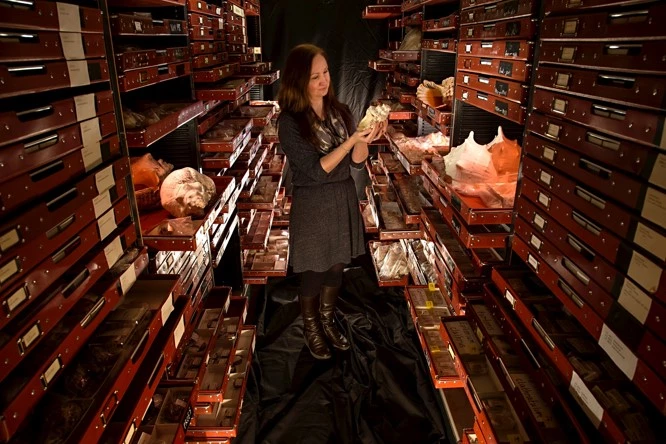
Because iron sulphides are highly reactive minerals, their conservation in museum collections poses significant challenges. Because we care for our collections, which involves constantly improving conservation practice, we are always researching novel ways of protecting vulnerable minerals. Our current project, jointly with University of Oxford, is undertaken by our doctoral research student Kathryn Royce https://www.geog.ox.ac.uk/graduate/research/kroyce.html.

Come and see us!

If all this has wetted your appetite for chemistry and minerals, come and see the sulphur and pyrite specimens we display at National Museum Cardiff https://museum.wales/cardiff/, or learn about mining and related industries at Big Pit National Coal Museum https://museum.wales/bigpit/ and National Slate Museum https://museum.wales/slate/.

The Romans have returned!

Sarah Parsons, 23 October 2019

The National Roman Legion Museum in Caerleon will be open from 24th October 2019 – just in time for the half term holidays!

Getting a new roof is never straightforward, especially for a museum with 1,700 objects on display.

We’ve been closed to the public for a year while the gallery was turned into a building site. We now have a brand new roof, new lights, display panels and a lick of paint; everything’s looking shiny and new! Now all we need is visitors to come and enjoy it.

What happened to the artefacts?

While the builders have been working, the artefacts have been looked after at National Museum Cardiff.

For some of these objects, it’s the first time they have been out of the display cases for 30 years, so now is the ideal opportunity to have them checked and treated by the archaeology conservator, and photographed so that they can go into Collections Online – our online catalogue where you will be able to see images and details of all of the objects that are on display.

Museum photographer Robin Maggs photographing a Roman glass bottle

Some objects are too big to move and had to stay where they are, so they have been boxed in and kept safe throughout the building work.

Gallery during the works

Before the objects were returned, those display cases needed a thoroughly good clean, and there’s only one way to really clean the inside of a case – that is to get inside it!

Museum Assistant Paul cleaning inside a display case

Ever looked closely at how objects in museums have been held up, or positioned on display? Hopefully not! It’s thanks to the curators that you don’t notice these things, so that your attention is drawn to the objects themselves. It can be painstaking work, but it’s worth it in the end.

Curator Jody Deacon placing the skeleton back in his coffin

Curator Alastair Willis re-displaying Roman coins

What next?

Now the objects are back in their display cases, back home where they belong, ready for you to come and enjoy them. We’re really looking forward to sharing our wonderful collections with you.

We also have all manner of activities, crafts and storytelling going on in half term, not to mention, of course, your opportunity to meet a Roman soldier.

United Nations international year of the periodic table of chemical elements: August - arsenic

Julian Carter and Jennifer Gallichan, 21 October 2019

Continuing the international year of the periodic table of chemical elements, for August we have selected arsenic.

Preserving the Beasts – The Use of Arsenic in Taxidermy

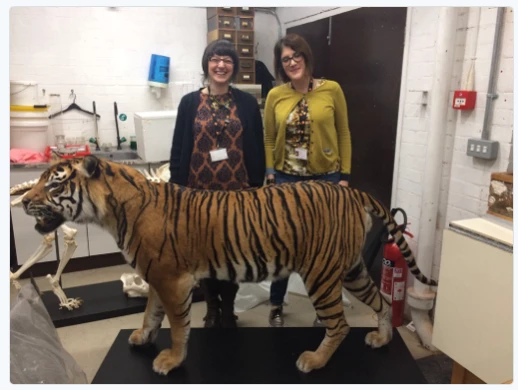
The taxidermy animals are a much loved and visited part of displays at the Museum. The word ‘taxidermy’ itself comes from taxis ‘arrangement’ and derma ‘skin’, and is the art of mounting or replicating animal specimens in a lifelike way for display or study.

The development of the methods used to create taxidermy date back over three hundred years. Initially these didn’t preserve the prepared specimens very well, and the taxidermy mounts were usually lost to decay and insects.

Various attempts were made to improve preservation methods and these used a wide variety of materials such as herbs, spices and various salts, applied as powders, pastes and solutions. However these methods were not generally successful.

During the 1700s’ some taxidermists started to use more poisonous chemicals such as arsenic minerals or mercuric chloride to help preserve their taxidermy. Due to their toxic nature these treatments helped prevent decay and insect damage, greatly improving the long term preservation of the taxidermy.

The success of these chemicals soon led to the development of the ‘arsenical soap’ treatment to aid preservation of the animal skin. The soap was a mix of camphor, powdered arsenic, salt of tartar, bar soap and powder lime – I wouldn’t use this for washing yourself though! The soap enable the arsenic to be applied in a practical way by rubbing into the underside of a cleaned and prepared skin. This method proved very popular and remained in use up until as recently as the 1970s’.

The use of arsenic as part of the preservation treatment has since stopped. This is mainly because of its toxic nature and the associated risks to human health, but it is also due to better practices in the taxidermy techniques used today.

Inorganic arsenic (As) is a grey-appearing chemical element with the atomic number 33 on the atomic table. It is a metalloid meaning that it has both metallic and non-metallic properties. Its properties have long been used by humankind in a variety of ways such as a medicinal agent, a pigment and as a pesticide. Arsenic and its compounds are especially potent poisons and hence harmful to the environment and considered carcinogenic. Its toxicity to living things is due to the way it disrupts the function of enzymes involved in the energy cycle of living cells.

Does this then mean that our older taxidermy specimens containing arsenic are harmful in some way? Potentially yes if a specimen is damaged and the underside of the skin is exposed, but an intact specimen poses little risk provided sensible precautions are taken such as appropriate protective equipment when moving or conserving an affected specimens.

Besides, today most of the specimens we have on open display are preserved without the use of toxic chemicals, but such specimens are at greater risk of damage by insects. We thus monitor our collections to look out for the signs of insect infestation, and treat with safe and sustainable methods such as freezing if they occur.

But a good reason not to touch the specimens…..

Planting Day 2019

Penny Dacey, 18 October 2019

Hello Bulb Buddies,

It's planting day for schools in Wales, England and Northern Ireland! Schools in Scotland will be planting next Friday.

Click here for activities and resources that will help you with this part of the project and with looking after your bulbs over the coming months! 

These resources will help you on planting day:

  • Adopt your Bulb (an overview of the care your Bulbs will need)
  • Planting your Bulbs (guidelines for ensuring a fair experiment)

And these activities are fun to complete:

  • Bulb Adoption Certificate
  • Make Bulb Labels

Please read these as they contain important information! For example, do you know to label your pot so that you know where the Daffodil and Crocus are planted?

Remember to take photos of your planting day to enter the Planting Day Photo Competition!

Keep an eye on Professor Plant's Twitter page to see photos from other schools.

Best of luck Bulb Buddies! Let us know how you get on!

Professor Plant & Baby Bulb

Artists Project: Robin’s time as artist in residence

Robin Bonar-Law, 17 October 2019

Earlier this year I was presented with the chance of a lifetime, a paid opportunity to develop my professional career and expand my portfolio. I applied for an artist in residency with Amgueddfa Cymru - National Museum Wales, to work with their museum volunteers up and down the country, to create a project that would celebrate 10 years of the volunteering program. After a thoroughly exciting interview process, I was asked to join the team.

Fast forward 6 months and my Artist Residency has now reached a close. I’m very happy with the work I have created; it showers the volunteering hub in colour and celebrates the amazing contribution volunteers have given to the museum. It fills me with joy to share my work with such an enthusiastic cohort of volunteers from all walks of life.

I started designing the mural at the same time as touring the country and running creative workshops with volunteers. I had collected a long list of volunteer roles but understanding them in a way that helped me generate genuine visuals required meeting volunteers in person, visiting the sites and experiencing what they do first hand. Over a month or two, I managed to construct flowing imagery to turn into celebratory hanging banners - a design format that stood out during my research.

I created the design by hand, as I feel more comfortable using traditional techniques, then started the daunting task of rendering a digital copy of the work using Adobe Illustrator. Including this step was somewhat of a learning curve for me, but it’s been a valuable experience. Having a digital copy of the design meant that we could create prints for all the museum sites and a printed gift for each of the volunteers. It also sped up the painting process because it allowed me to use a projector.

Using string, pins and painters tape I divided the wall up into segments. Piece by piece I projected and copied details of the design upon the walls rough surface. The wall is made of lime rendering, which it turns out is not a very cooperative surface to paint on. It’s dry, so moisture from the paint is quickly absorbed which increases the amount of paint needed, the stroke count and the time it takes. It’s also rough, which slowly ruins brushes and pens.

Once the design was cartooned upon the wall, I chose to fill in large areas using low-pressure spray paint. This part of the process saved time and had the lucky benefit of creating a smoother plastic wrap over the wall. After filling the space with basic flat shapes I used brushes and pens to add details and definition with regular acrylic paints.

My goal was to create a design that was not only on brief, but functional, aesthetically pleasing and contained other layers of depth hidden below the surface. The hanging banner format is supposed to connote a sense of celebration and heraldry. The colour palette is reminiscent of the dyes used in the tapestries sewn by volunteers for Llys Llewelyn. I wanted the illustration style to be subtly influenced by welsh traditional craft and contain subtle suggestions of embroidery, slip-on cast tiles patchwork etc. I created the typeface used for the quotes contained in the artwork from some of the earliest welsh stone carvings found on a cross near Ogmore.

I’d been looking forward to the painting process since the very beginning, it was long and laborious but oh-so rewarding. Despite the fact that a large percentage of my wardrobe is speckled with a rainbow of vibrant acrylic, I really enjoyed physically crafting something.

I want to say the biggest thank you to everyone in the volunteering & community engagement department - especially Ffion & Haf - for checking in on me and giving me guidance and support, thank you to all the kind staff at St Fagans for making me feel welcome, thank you to the National Lottery Heritage Fund for providing the funding for this amazing opportunity, thank you to my partner Elin for driving me everywhere, but most of all the volunteers who have truly enriched my experience.

The last 6 months have been the best of my life. It has been so rewarding to work in a creative role where I feel valued. I’m going to miss working at Amgueddfa Cymru. 


If you'd like to know more about the project as it was happening you can have a look at Robin's previous blog https://museum.wales/blog/2019-06-20/ARTISTS-PROJECT-Celebrating-10-Years-of-Volunteering/