Museums, Exhibitions and Events

Heritage 'Gardener's Questiontime' from St Fagans Gardens

Juliet Hodgkiss, 28 April 2020

Juliet Hodgkiss is Senior Garden Conservator for Amgueddfa Cymru – National Museum Wales. She leads a dedicated team of gardeners and volunteers at St Fagans, who care for the gardens and their special heritage plant collections. In response to an increased interest our own gardens and a growing yearning for the beauty of some of our nations’ magnificent great gardens during lockdown, over the past few days we’ve been collecting your questions for Juliet about her work. Here are her answers in our ‘heritage’ version of Gardener’s Questiontime.

What's the best thing about your job?

The best thing about my job is being paid to work in such beautiful gardens.We have such a great variety of gardens, I’m doing something different every day. I also get to meet so many great people through my work - staff, volunteers, visitors, fellow gardeners and more.

Which of St Fagans' gardens is your favourite and why?

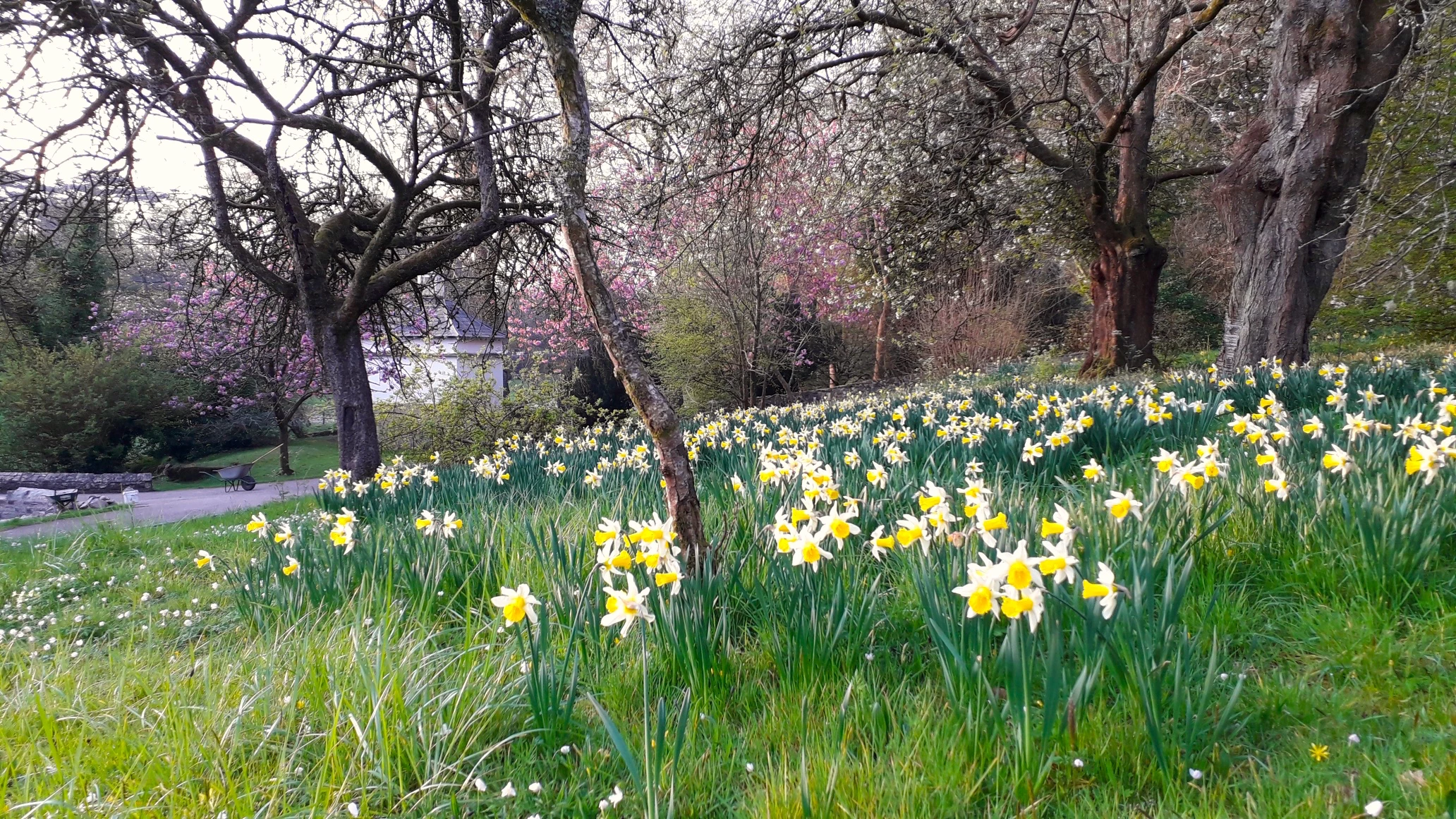
This time of year, my favourite part of the gardens is the area by the ponds. Throughout spring, the terrace banks are covered with spring bulbs; daffodils, bluebells and fritillaries, all above a carpet of anemones.  The magnificent Magnolia ‘Isca’ comes into flower first, followed by the cherries and the apples. The latest tree to flower is the Davidia with its giant white bracts, which sway in the breeze, giving its name of the handkerchief tree.​

​Which is the rarest plant in the collection?

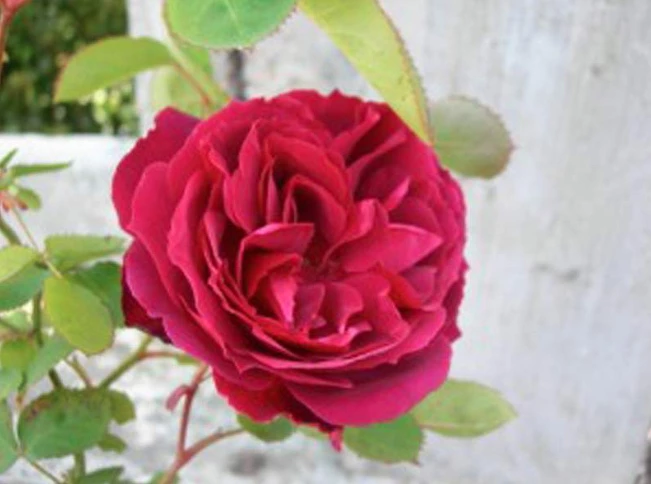
One of the rarest plants we have is the Bardou Job rose, which was one of the original roses in the Rosery. This was thought to be extinct, then it was re-discovered by a group of rose enthusiasts growing in the old garden of the head warder on Alcatraz! They propagated from it, and sent us over 6 roses to grow in our gardens.

We also have a collection of heritage potatoes, donated to us by the Scottish Agricultural Research Agency. One of the potatoes we grow is the Lumper, the potato grown at the time of the Irish potato famine. These cannot be bought, so we have to grow them each year to maintain our collection.

Which is the most difficult plant you have to tackle - one that is hardest to maintain?

The most difficult plants to keep are the heritage potatoes. We have to grow these every year to maintain our collection, and most of these old varieties are very susceptible to blight, so require careful management to ensure a good crop.

Which is the most difficult plant to control?

The hardest plant to control is Oxalis, a persistent weed with a clover-like leaf, which multiplies by means of bulbils. These bulbils are spread when the soil is cultivated. It is virtually impossible to eradicate. After years spent trying to weed it out, we now keep it under control with ground cover planting and mulching.

Which is your favourite time of the year in the garden?

My favourite time of year is spring, with the spring bulbs, blossoming trees, the ferns unfurling their fronds, and all the plants in the garden bursting into growth. Everything looks fresh and new, and we gardeners are full of hope for a great year ahead in the garden.

National Waterfront Museum's GRAFT Team Spread Seeds and Sunflowers During Lockdown

Angharad Wynne, 28 April 2020

While The National Waterfront Museum’s GRAFT team and volunteers cannot gather to garden the Museum’s courtyard garden at this time, they are nonetheless keeping busy setting up ‘Seeds Out in the Community’ and encouraging us all to grow sunflowers in visible and public spaces to show support for key workers. Here’s a little more about this innovative community project and how it’s grown from a seed of an idea to a flourishing project that grows plants, food and people.

GRAFT: a soil based syllabus is the National Waterfront Museum's edible land and educational project, and a permanent piece of green infrastructure within Swansea City Centre. The project is also a socially engaged work of art by artist Owen Griffiths, and was originally commissioned as part of Now the Hero / Nawr Yr Arwr in 2018 funded by 1418NOW as part of a huge UK wide cultural project commemorating the first World War.

GRAFT works with community groups from a wide range of backgrounds across the city who came together, to transform the Museum's once industrial courtyard into a beautiful, sustainable, organic growing environment; creating an edible landscape to encourage participation and conversation around land use, food and sustainability in an accessible and empowering way.

Owen and Senior Learning Officer Zoe Gealy develop the ongoing program at GRAFT around these ideas of collaboration, sustainability and community. Every Friday, (other than during this lockdown), volunteers young and old work alongside one another to share skills working in wood and metal, learning how to grow plants, gaining qualifications and supporting each other along the way. The project has seen successful apprenticeships develop as a result of its program as well as seeing the long-term mental health benefits of working outside together. New friendships are formed, and people, as well as plants, flourish. During GRAFT’s development, in addition to raised beds, a pergola and benches from local timber, a cob pizza oven and beehives have been introduced to the garden. GRAFT's youngest volunteers come from Cefn Saeson School in Neath and work with Alyson Williams, the resident Beekeeper, learning about biodiversity, the environment and working together to care for the bees.

Some of the produce grown in the garden usually makes its way into delicious meals at the Museum's café whilst some is used for community meals at GRAFT. A portion of produce is used by volunteers, and some is donated to projects and groups throughout the area who provide food for those in need, such as Matts House, Ogof Adullam and the Swansea refugee drop in centre.

SPREADING SEEDS AND SUNSHINE DURING LOCKDOWN

Over the coming weeks GRAFT will be posting seeds through City and County of Swansea’s food parcel scheme and to community groups they regularly work with such as Roots Foundation and CRISIS. The seeds include squash and sunflowers, which were harvested by the gardeners last season.

Another initiative GRAFT is developing in the coming weeks is encouraging people to plant sunflowers in visible and public spaces, to show support for key workers alongside rainbow paintings. People are also invited to post pictures of their successful growing on GRAFT’s social media pages.

To request seeds contact zoe.gealy@museumwales.ac.uk

07810 657170

During lock-down, the GRAFT garden continues to need some tending and so  The National Waterfront Museum's on-site team are watering the GRAFT garden and seedlings during their daily shifts.

With thanks to players of the People’s Postcode Lottery for supporting Amgueddfa Cymru’s public programme of activities and events.

FOLLOW GRAFT:

www.facebook.com/graft.a.soil.based.syllabus

INSTAGRAM: Graft____

Essential Gardening Work Continues During Lockdown

Juliet Hodgkiss, 27 April 2020

We may be in lockdown, but nature continues to thrive, plants continue to need tending and borders weeding. Just as the nation is tending to its gardens, so are the Amgueddfa Cymru – National Museum Wales Historic Gardens Unit team, albeit at a reduced working schedule. Here, Juliet Hodgkiss who maintains St Fagans’ beautiful and varied gardens shares a little about what’s going on there.

To keep safe and maintain distance during the pandemic, each of our team are working one day a week to do essential gardening.  With only one gardener in at any one time we are in total isolation, keeping both ourselves and others safe.  One of the most important jobs we have to do is the planting and maintenance of our collection of heritage potato varieties. These potatoes were donated to the Museum over twenty years ago by the Scottish Agricultural Science Agency. As a living object, these potatoes must be grown every year to produce seed potato for the following year. Our collection includes the Lumper, the potato grown at the time of the Irish potato famine, which we grow in Nant Wallter and Rhyd-y-car gardens. We also grow Yam, Myatt’s Ashleaf, Skerry Blue and Fortyfold, all varieties from the 18th and 19th century.

This winter we had a great time planting many new trees in the Gardens, to replace lost trees, add new interest for the visitors and for attracting wildlife. We’ve added four new mulberry trees to the Mulberry Lawn, several species of hawthorn, rowan trees and Berberis shrubs to the terrace banks, three whitebeam, a katsura tree, a snakebark maple and a snowy mespilus by the ponds, crab apples to the Castle Orchard and a variety of native species for future coppicing. While we’re enjoying the warm, dry spring, it does mean that all these new trees need a lot of watering to keep them alive. Many are planted a long distance from the nearest tap, so have to be watered with watering cans.

We are also keeping the plants in our greenhouses and nursery alive. We have many plants which are either rare or unique to St Fagans.  These include two offspring of our fern-leaved beech and seedlings from a pine which was lost in a storm a few years ago. These require daily watering this time of year. Spring is the time of year we replant our beds and borders, filling the gaps left by plants lost over winter. We didn’t get around to planting all the plants we ordered over the winter months before the lockdown, so we’re keeping these plants alive while trying to get as many as possible in the ground, with our greatly reduced staff.

The Vulcan façade

Dafydd Wiliam, 16 April 2020

The Vulcan Hotel was first registered as an ‘ale house’ in 1853. By the time it was dismantled by the Museum in 2012 it had seen several phases of alterations. The scale of the 1901 and 1914 alterations required approval by the County Planning Authority and these plans are held today by the Glamorgan Archives. Further work was undertaken in 1925 and 1941.

The planning application from 1914 features two drawings of the façade (the 1901 application doesn’t show the façade). A drawing in black and white was labelled ‘At present’ while a drawing in colour was labelled ‘Proposed’. No written text survives to accompany the drawings, but careful study can shed more light on the proposed changes. The most obvious alteration was the number of windows on the first floor was increased from two to four, which were flanked by new, raised pilasters of red brick. The parapet fronting the roof, depicted as a series of horizontal lines above the windows was removed, the chimneys were altered, and the roof was tiled in new, grey slate. Another change - which is quite subtle on these drawings - is the most dramatic in The Vulcan’s history. The whole building was increased in height. The drawing labelled ‘At present’ shows a roof of the same height as its neighbours, while the drawing labelled ‘Proposed’ shows The Vulcan being taller than those either side of it.

The configuration of the ground floor façade remained unchanged – two doorways and two windows, each divided into two large panes with fanlights above. Looking closely, however, there are several key differences which suggest that they are in fact, two different facades. The ‘At present’ drawing depicts two fielded panels under each window, while the ‘Proposed’ drawing has only one. The number of door panels are different. The pilasters on either side of the windows, depicted in the ‘At present’ drawing, are fluted and stop short of the frieze, while the pilasters in the ‘Proposed’ drawing aren’t fluted and continue through the frieze to the cornice above. There are seven fanlights above each windowpane in the ‘At present’ drawing, while the ‘Proposed’ drawing shows only three. The decorative finial above the cornice was removed and last but not least, only the ‘proposed’ drawing features the inscriptions THE VULCAN HOTEL, WINES & SPIRITS and ALES & STOUT.

Although not made clear by the plans, we assume that the drawing labelled ‘Present’ depicts a ground floor façade made of timber - just like a traditional Victorian shop front - and that the façade proposed in 1914 was of glazed earthenware tiles - which remained in place until 2012.