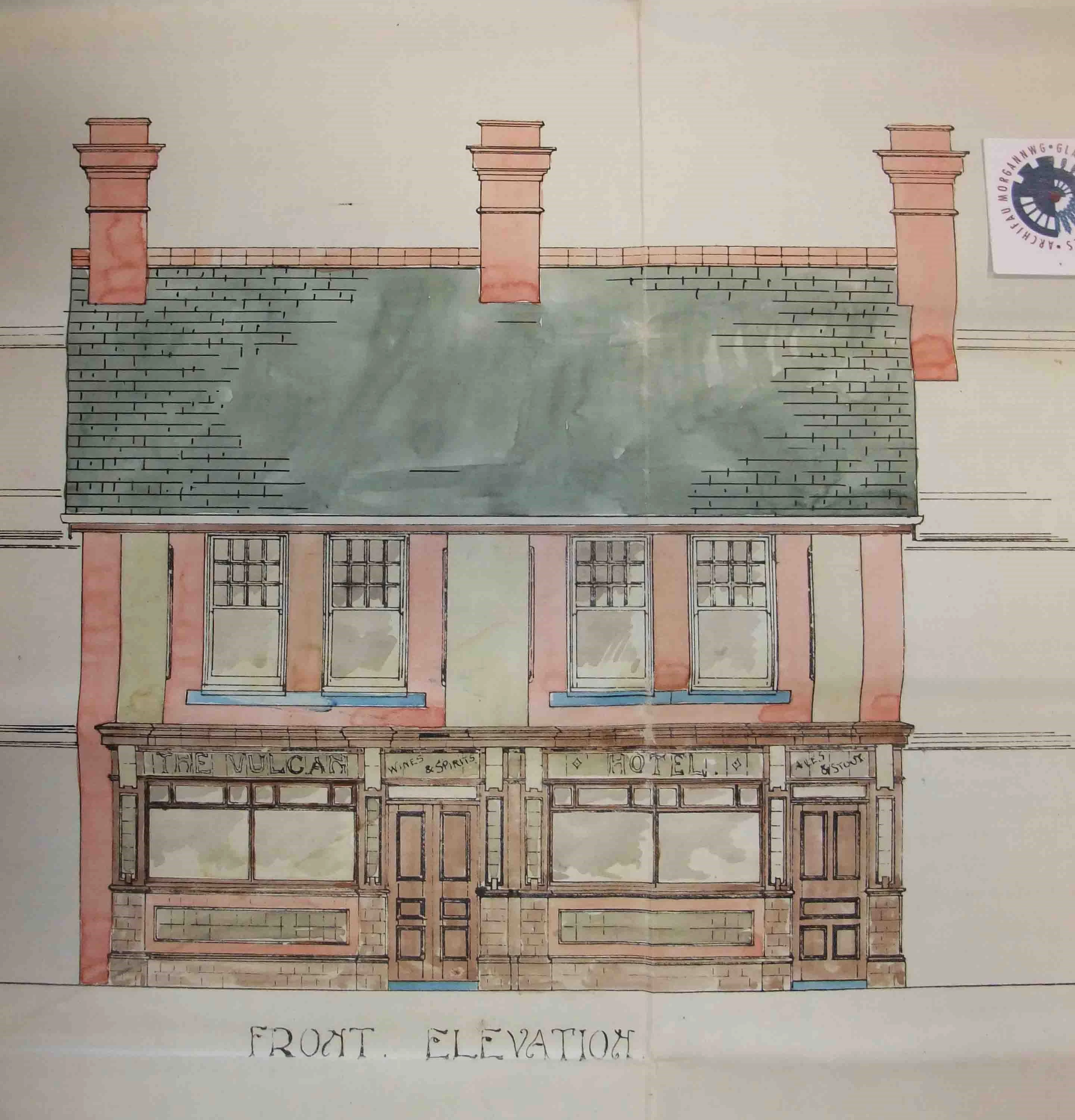
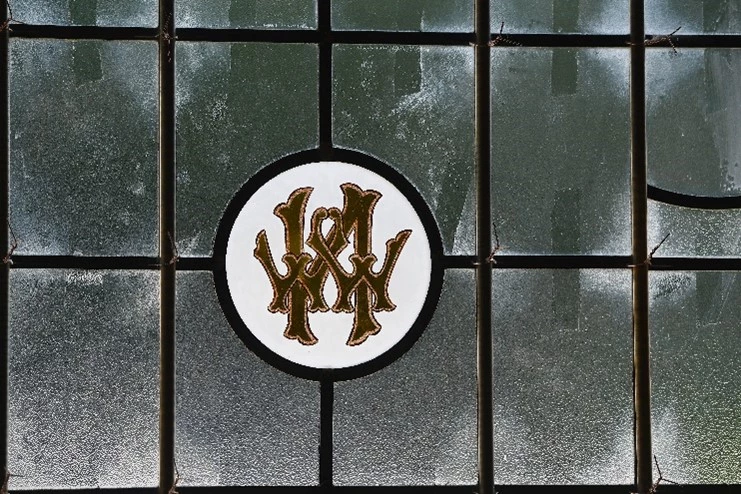
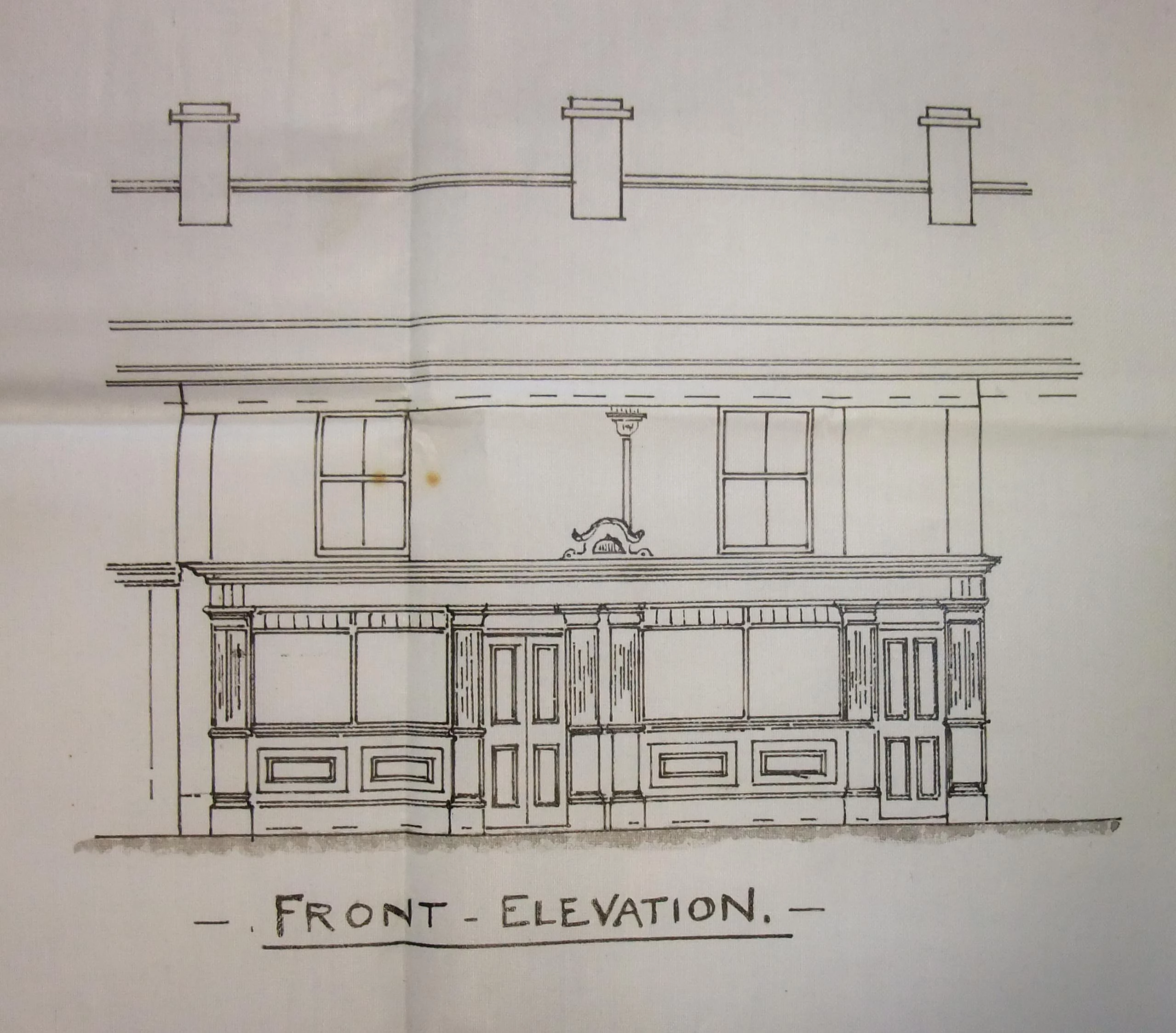
Rebuilding The Vulcan Hotel Dafydd Wiliam, 15 June 2023 Support the Vulcan Hotel project. Please Donate The Vulcan façade, labelled 'At present' in 1914. The Vulcan façade labelled 'Proposed' in 1914. The façadeThe Vulcan Hotel was first registered as an ‘ale house’ in 1853. By the time it was dismantled by the Museum in 2012 it had seen several phases of alterations. The scale of the 1901 and 1914 alterations required approval by the County Planning Authority and these plans are held today by the Glamorgan Archives. Further work was undertaken in 1925 and 1941.The planning application from 1914 features two drawings of the façade (the 1901 application doesn’t show the façade). A drawing in black and white was labelled ‘Present’ while a drawing in colour was labelled ‘Proposed’. No written text survives to accompany the drawings, but careful study can shed more light on the proposed changes. The most obvious alteration was the number of windows on the first floor was increased from two to four, which were flanked by new, raised pilasters of red brick. The parapet fronting the roof, depicted as a series of horizontal lines above the windows was removed, the chimneys were altered, and the roof was tiled in new, grey slate. Another change - which is quite subtle on these drawings - is the most dramatic in The Vulcan’s history. The whole building was increased in height. The ‘at present’ drawing shows a roof of the same height as its neighbours, while the ‘proposed’ drawing shows The Vulcan being taller than those either side of it.The configuration of the ground floor façade remained unchanged – two doorways and two windows, each divided into two large panes with fanlights above. Looking closely, however, there are several key differences which suggest that they are in fact, two different facades. The ‘at present’ drawing depicts two fielded panels under each window, while the ‘proposed’ drawing has only one. The number of door panels are different. The pilasters on either side of the windows, depicted in the ‘at present’ drawing, are fluted and stop short of the frieze, while the pilasters in the ‘proposed’ drawing aren’t fluted and continue through the frieze to the cornice above. There are seven fanlights above each windowpane in the ‘at present’ drawing, while the ‘proposed’ drawing shows only three. The decorative finial above the cornice was removed and last but not least, only the ‘proposed’ drawing features the inscriptions THE VULCAN HOTEL, WINES & SPIRITS and ALES & STOUT. Although not made clear by the plans, we assume that the drawing labelled ‘Present’ depicts a ground floor façade made of timber, and that the façade proposed in 1914 was of glazed earthenware tiles - which remained in place until 2012. The tilesBy the time the Museum dismantled The Vulcan in 2012, the colourful brown and green tiles of the façade had had been in place for 97 years, and as a result many were so damaged that they could not be reused. Many more wouldn’t separate from the cement that was used to bond them in place. The tiles bearing the Vulcan’s name fared much better as they were higher up the building, and they will be kept for future display. The tiles were manufactured by Craven Dunnill, of Ironbridge, Shropshire – fortunately, their name was stamped on the back of the tiles. As the company is still going, we decided to commission a whole new set of tiles for the rebuilt Vulcan – and these were cast from the very same wooden moulds that were used to cast the originals.The windowsThe leaded windows of The Vulcan were installed at the same time as the tiles – as part of the major refurbishment completed in 1915. Looking closely, they are to be seen in a photograph depicting the Vulcan that was taken in 1919. An article published in The Western Mail on 16 December, 1914 stated:‘Broke Public House WindowPaul Begley (46), a cripple, was fined 10s and costs at Cardiff on Tuesday…for disorderly conduct in Adam Street and for wilfully breaking two panes of plate glass in the bar window of The Vulcan Inn. Although the damage amounted to £3, the landlord…made no claim.’The pre-refurbishment façade featured two large windows with two large panes in each. If we presume that this article relates to one of those, then perhaps the Landlord ‘made a claim’ as he knew the windows were due to get replaced within the coming weeks or months. The switch from plate glass to small-paned leaded glass may have also been an attempt to lessen the impact of such damage in the future. It appears that the window frames fared better, as one was re-used as the rear bar window – the old opening being enlarged to fit. When Brains Brewery bought the pub in the 1950s, they renovated the windows and installed their Red Dragon logo in a roundel in the centre of each of the four large panes. By 2012, only one of these remained. As the rebuilt Vulcan will be set in 1915, it isn’t appropriate to include the Brains logo as they didn’t own the pub at that time. It was owned by William Walter Nell and supplied by his Eagle Brewery, based in St John’s Square, The Hayes, in Cardiff City Centre. As his W.W.N. monogram survives on a building in Merthyr Tydfil, we were able to replicate it to replace the Red Dragon. The work of reconditioning these leaded windows was undertaken by specialists from the Swansea College of Art, in the Centre for Architectural Glass. They sourced the correct glass to replace damaged panes, cleaned each individual pane of glass before putting them back in their original position, and re-leaded the windows ready for the next 97 years. Support the Vulcan Hotel projectPlease Donate
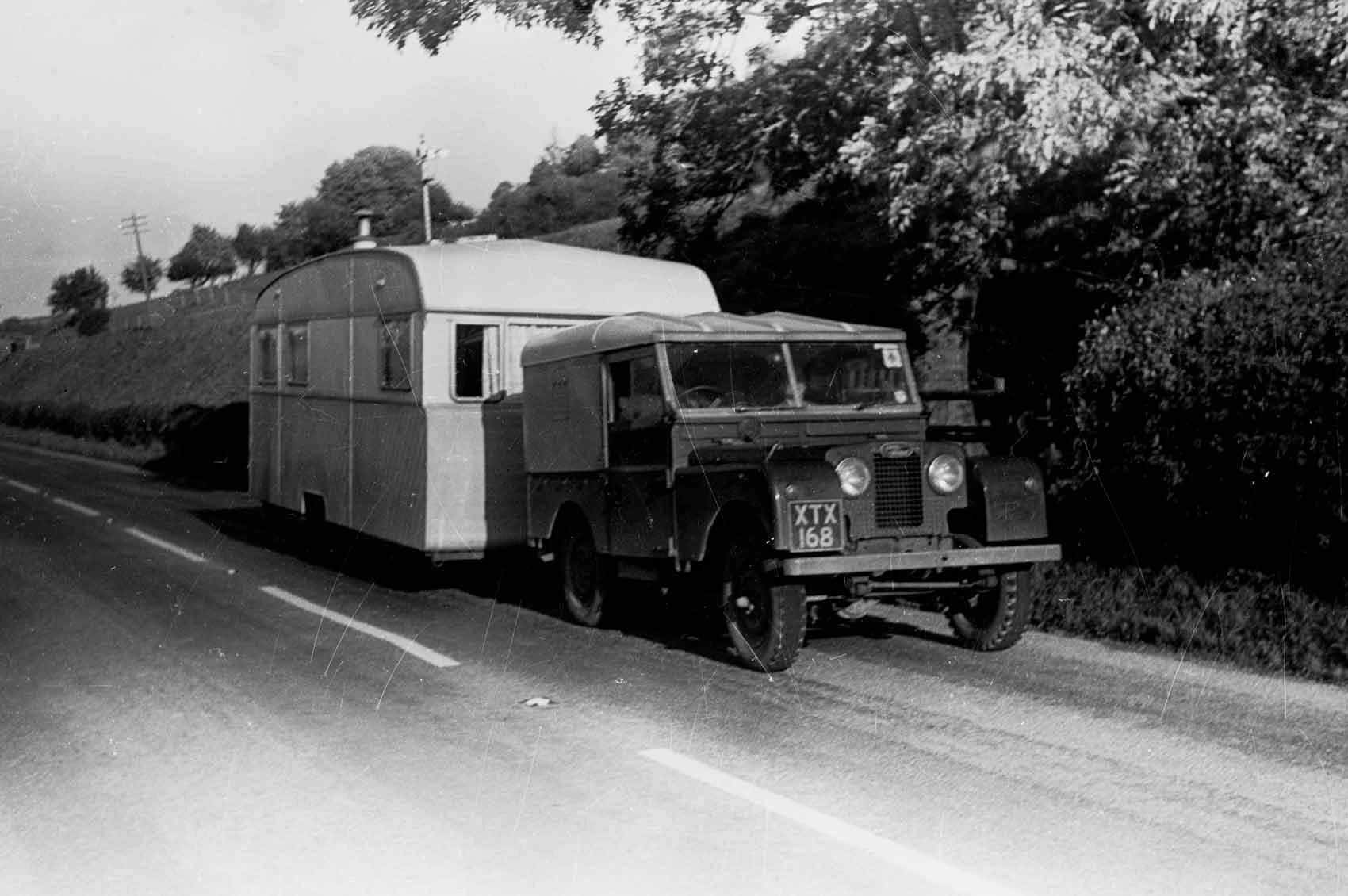
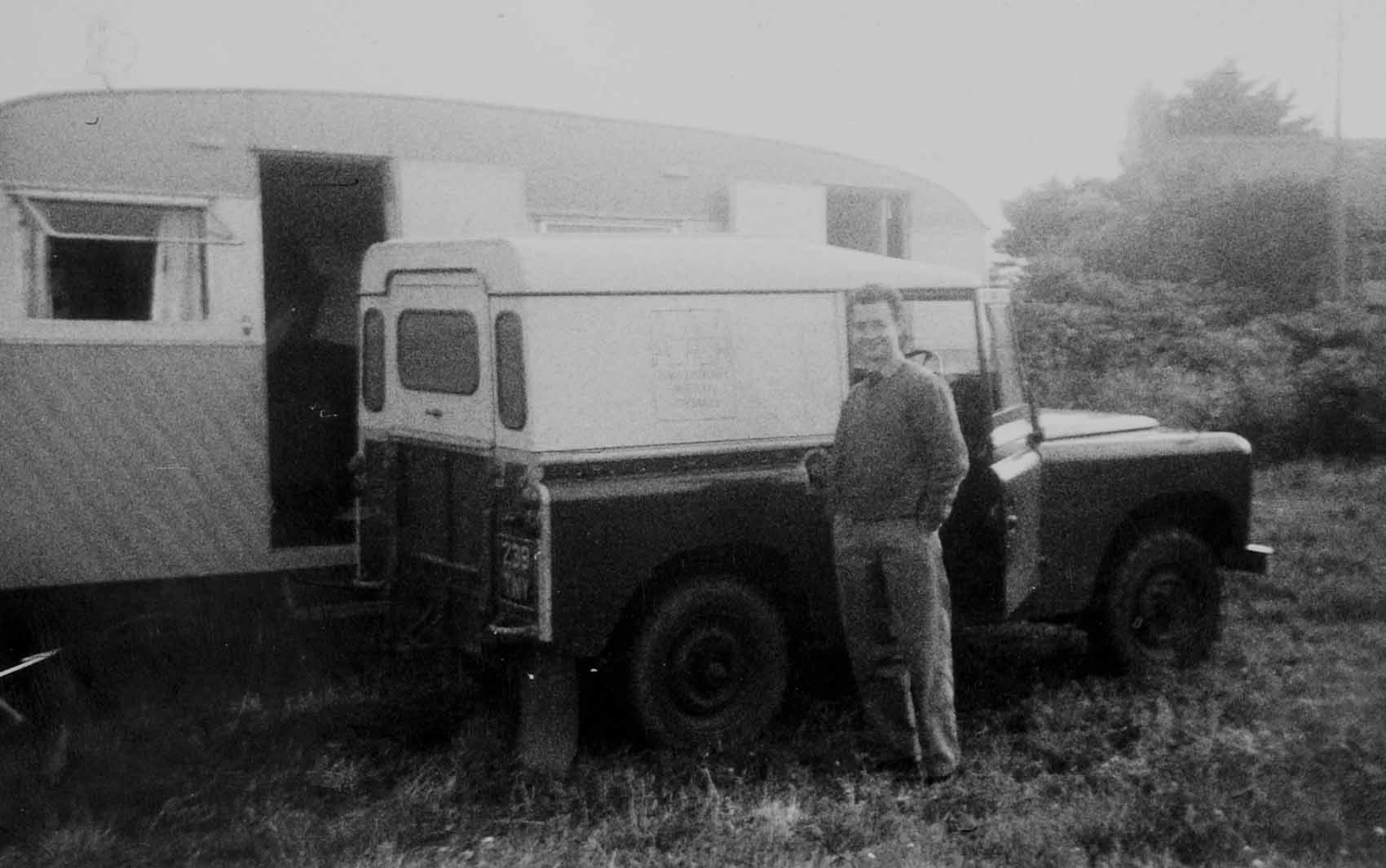
Casglu Cof y Genedl Meinwen Ruddock-Jones, 14 May 2020 Pan agorodd Amgueddfa Werin Cymru ei drysau i’r cyhoedd am y tro cyntaf ar Orffennaf 1af 1948, dyma oedd amgueddfa awyr agored genedlaethol gyntaf y Deyrnas Unedig. Pennaeth yr Amgueddfa ar y pryd oedd Dr Iorwerth C. Peate. O’r cychwyn cyntaf, o dan ei arweinyddiaeth arloesol, bu Amgueddfa Werin Cymru ar flaen y gâd yn cofnodi, yn casglu, ac yn astudio bywydau dyddiol pobl Cymru: “[Bydd Sain Ffagan] yn ddarlun byw o’r gorffennol, yn ddrych o elfennau ein Cymreictod presennol, ac yn ysbrydoliaeth i ddyfodol ein gwlad.” (Iorwerth C. Peate, 1948). Dechrau Casglu Yn y 1940au, â’r wlad yn profi cyfnod o newidiadau cymdeithasol a datblygiadau nas gwelwyd eu math o’r blaen, dechreuodd yr Amgueddfa ar brosiect casglu gwybodaeth er mwyn creu darlun byw o fywydau trigolion Cymru. O’r cyfnod hwn hyd at yr 1980au, dosbarthwyd holiaduron i unigolion mewn cymunedau dros y wlad yn y gobaith o ddefnyddio’r wybodaeth leol oedd ganddynt i lywio gwaith casglu’r Amgueddfa yn y dyfodol. Mae Archif Sain Ffagan Amgueddfa Werin Cymru bellach yn gartref i’r holiaduron hyn, a’r atgofion rhwng eu cloriau yn ffenestr amhrisiadwy i’r gorffennol. Sefydlu Archif Sain Ers y dechrau cyntaf, bu recordio siaradwyr ar bob agwedd o fywyd gwerin yn rhan bwysig o waith yr Amgueddfa. Dechreuwyd casglu yn y maes yn niwedd y 1950au, gan roi'r pwyslais ar yr ardaloedd hynny lle'r oedd yr iaith a'r bywyd traddodiadol fwyaf mewn perygl. Sefydlwyd yr Adran Traddodiadau Llafar a Thafodieithoedd dan arweiniad yr ysgolhaig a’r tafodieithegydd Vincent H. Phillips, ac yn 1958 cafwyd apêl radio gan G. J. Williams, Athro Cymraeg Coleg y Brifysgol, Caerdydd, yn gofyn am roddion i ariannu’r gwaith hollbwysig hwn. Yn dilyn yr apêl, llwyddwyd i brynu peiriant recordio newydd sbon (yr EMI TR51) ac ymhen tipyn Land Rover ar gyfer y gwaith maes, a hyd yn oed carafan fel lloches i’r ymchwilwyr dros nos. Aeth saer yr Amgueddfa ati i wneud blychau yng nghefn y Land Rover i ddal y peiriant recordio, a rhaid hefyd oedd i’r cerbyd gario dau fatri asid, teclyn a elwid yn “vibroverter”(trawsnewidydd AC/DC) a thua 300 i 400 llath o gebl rhag ofn na fyddai trydan ar gael yn rhwydd wedi cyrraedd cartrefi’r siaradwyr. Roedd casglu tystiolaeth lafar ar y pryd yn waith hanfodol i gofnodi ffordd o fyw a oedd yn prysur ddiflannu ac wrth i amser fynd yn ei flaen, penodwyd tîm o staff, pob un â’i frwdfrydedd a’i arbenigedd dihafal ei hun, i deithio ledled Cymru yn holi ac yn recordio pobl yn trafod pob agwedd ar eu bywydau. Pynciau Ymysg y pynciau a drafodwyd yn y dyddiau cynnar ceid sôn am amaethyddiaeth, crefftau a geirfâu crefft, gwaith tŷ, bwydydd traddodiadol, meddyginiaethau gwerin, chwaraeon, storïau gwerin, canu gwerin, arferion tymhorol, arferion marw a chladdu a charu a phriodi, diwydiannau, tafodieithoedd y Gymraeg a diddordebau hamdden. Siaradwyr Recordiwyd dros bum mil a hanner o siaradwyr dros y blynyddoedd o Gaergybi i Gasnewydd, ac o Dyddewi i Dreffynnon, gan ddiogelu gwybodaeth heb ei hail ar gyfer y dyfodol. I’r ystadegwyr yn eich plith ceir 798 siaradwr â’r cyfenw Jones yn yr archif, 415 Williams, 375 Davies, 297 Evans, 246 Thomas a 224 Roberts. Yr enw cyntaf mwyaf poblogaidd ymysg y dynion yw John (272 siaradwr) ac ymysg y merched ceir 144 Mary a 138 Margaret. Ffilm a Ffotograffau Yn ogytal â recordiadau sain, recordiwyd cyfres o ffilmiau 16mm gan aelodau o staff curadurol yr Amgueddfa. Ffilmiau mud lliw yw’r rhan fwyaf ohonynt yn dangos hen ddulliau o amaethu, o baratoi a choginio bwydydd, ac o weithio crefftau traddodiadol. Mae'r Archif Ffotograffiaeth yn cynnwys tua 250,000 o negyddion a phrintiau, a thua 15,000 o dafluniau. Ceir hefyd gyfoeth o luniau llawer hŷn a gaffaeliwyd yn rhoddion, neu a gopïwyd o luniau gwreiddiol a fenthyciwyd i'r Amgueddfa i'r perwyl hwn. Apêl o’r Newydd: Casglu COVID-19 Gyda newidiadau mawr eto yn effeithio ar ein bywydau pob dydd, mae Amgueddfa Cymru yn lawnsio apêl gyhoeddus o’r newydd er mwyn casglu gwybodaeth ac atgofion trigolion Cymru am eu profiadau yn ystod cyfnod pandemig COVID-19. Gyda holiaduron papur, efallai erbyn hyn, yn perthyn i’r gorffennol a’r Land Rover a’r carafan wedi teithio eu taith olaf, rydym wedi lawnsio holiadur digidol torfol sy’n rhoi’r cyfle i unigolion, i gymunedau ac i sefydliadau ar draws Cymru i gofnodi eu profiadau am fyw o dan y cyfyngiadau presennol. Ein nod yw creu cofnod hollbwysig o’r cyfnod trawsnewidiol hwn ar gyfer cenedlaethau’r dyfodol. Casglu Covid
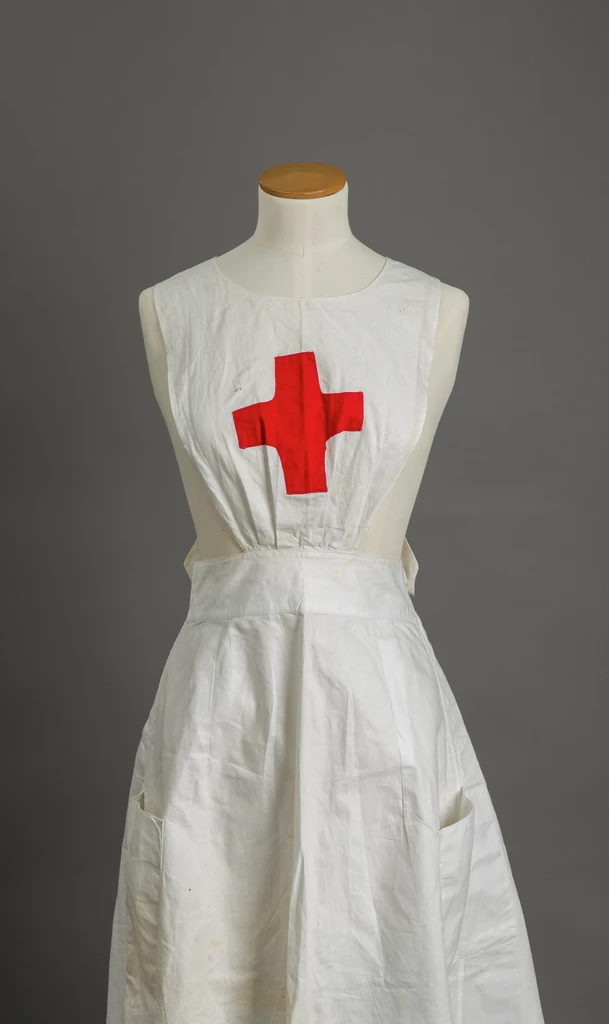
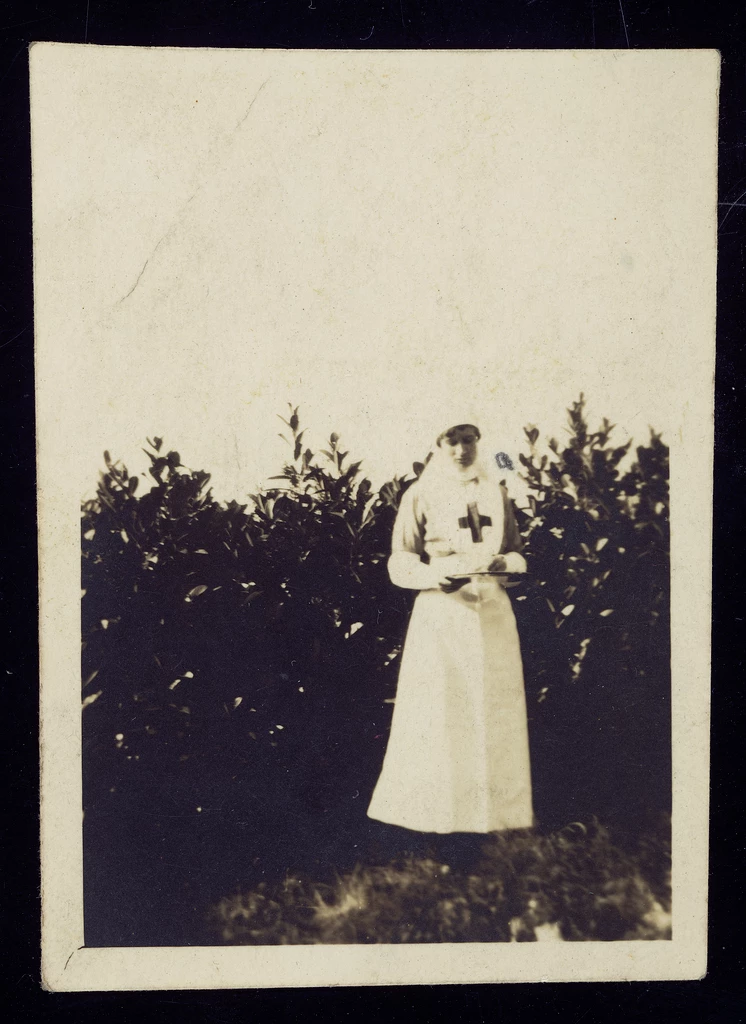
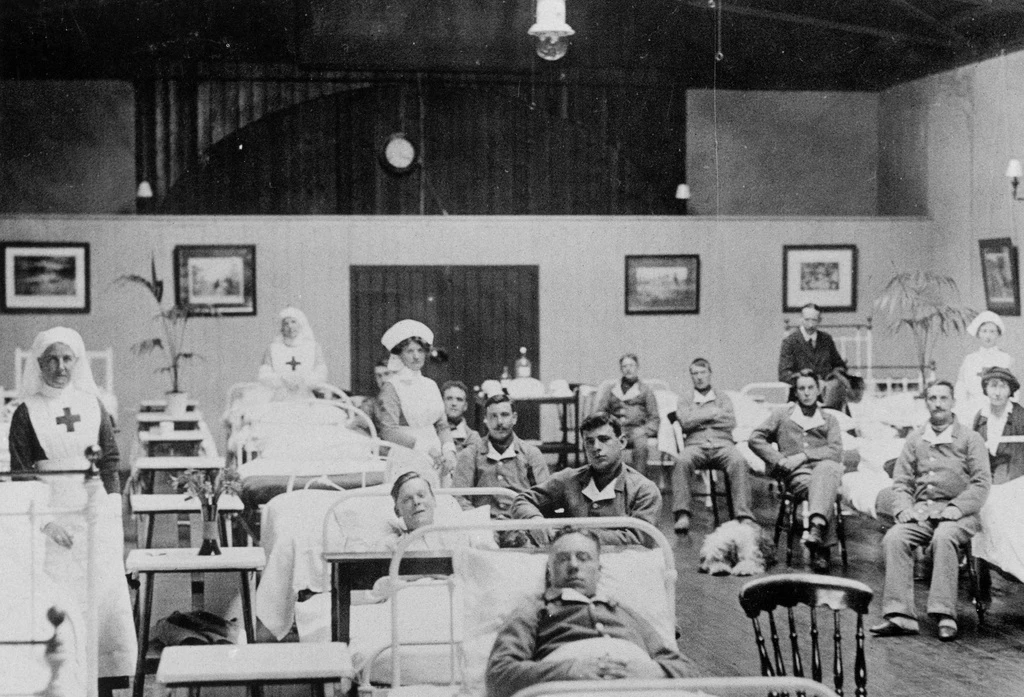
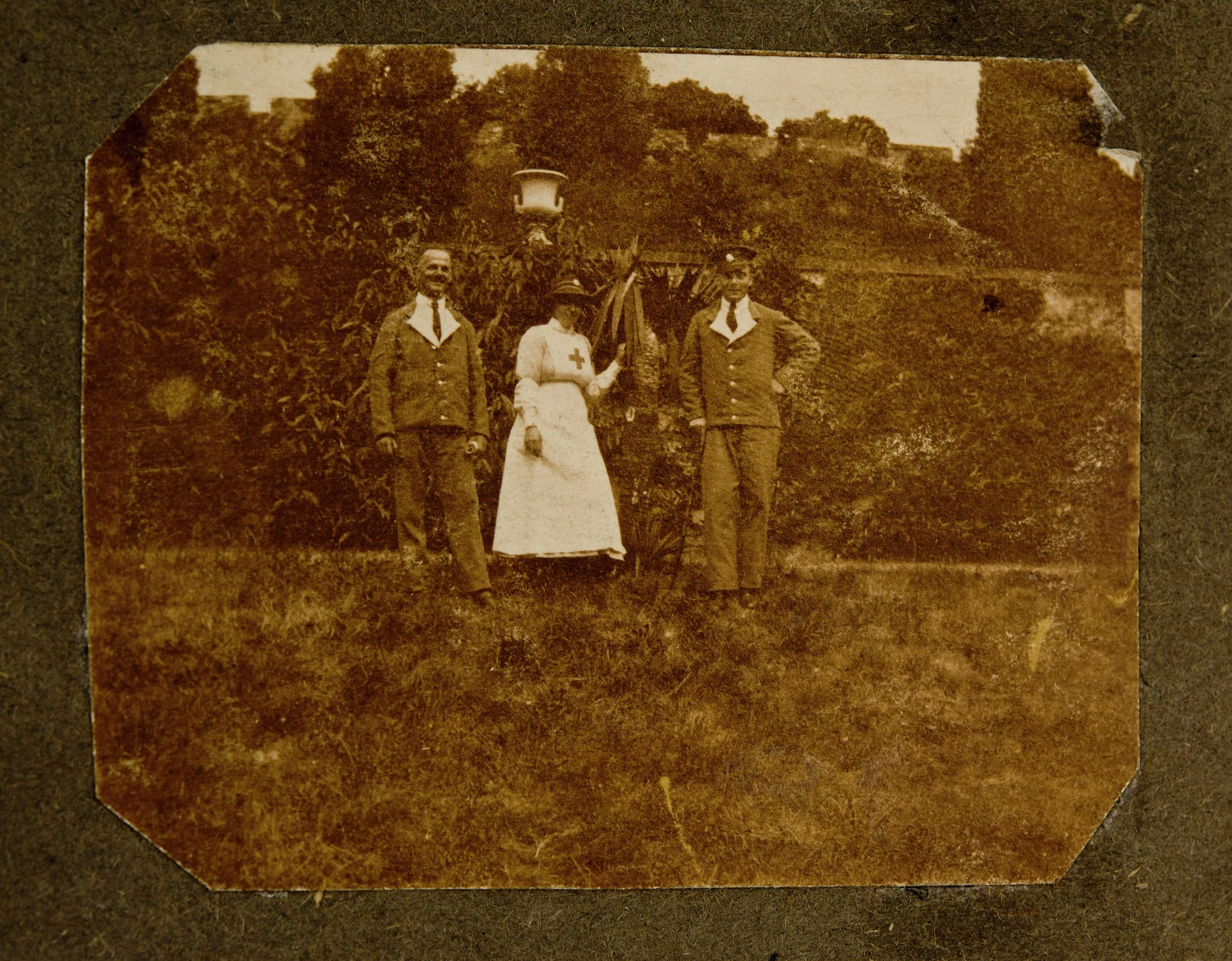
Diwrnod Rhyngwladol y Nyrsys – stori Elizabeth Radcliffe Elen Phillips, 11 May 2020 Red Cross apron worn by Elizabeth Radcliffe, 1916-19 Heddiw (12 Mai 2020) yw Diwrnod Rhyngwladol y Nyrsys – diwrnod sy’n cael ei nodi’n flynyddol, ond sydd ag arwyddocâd arbennig eleni wrth i ni ddiolch i ofalwyr a nyrsys ledled Cymru am eu gofal a’u gwasanaeth yn ystod y cyfnod dihafal hwn. Ychydig dros ganrif yn ôl, yn debyg i heddiw, roedd aberth ac ymdrechion nyrsys a gofalwyr ar flaen meddwl y boblogaeth, ond o dan amgylchiadau gwahanol iawn wrth gwrs. Yn ystod y Rhyfel Byd Cyntaf, sefydlwyd bron i 18,000 o elusennau newydd ym Mhrydain ac fe welwyd ymgyrchu gwirfoddol ar raddfa heb ei debyg o'r blaen. Ynghyd ag Urdd Sant Ioan, roedd y Groes Goch Brydeinig yn ganolog i'r ymgyrch hon. Yn 1909, daeth y ddwy elusen ynghyd i sefydlu cynllun y Voluntary Aid Detachment (VAD), gyda'r bwriad o roi hyfforddiant meddygol i wirfoddolwyr a'u paratoi i wasanaethu gartref a thramor mewn cyfnodau o ryfel. Yn ôl ystadegau'r Groes Goch, erbyn diwedd y Rhyfel Byd Cyntaf roedd 90,000 o bobl wedi cymryd rhan yn y cynllun - yn eu plith Elizabeth Radcliffe o bentref Sain Ffagan. Yn ferch i ofalwr capel y pentref, roedd Elizabeth a’i theulu yn denantiaid i’r Arglwydd Plymouth o Gastell Sain Ffagan. Ganwyd chwech o blant i William a Catherine Radcliffe – pedwar mab (William, Thomas, Robert a Taliesin) a dwy ferch (Elizabeth a Mary). Cyn y Rhyfel, bu Elizabeth yn gofalu am blant James Howell – un o berchnogion y siop enwog yng Nghaerdydd. Ond erbyn 1916, roedd hi nôl yn Sain Ffagan ac yn gwirfoddoli fel nyrs VAD yn yr ysbyty ategol a agorwyd ar dir y Castell ym Mawrth y flwyddyn honno. Ar y pryd, roedd hi’n 28 mlwydd oed. Roedd y rhan fwyaf o nyrsys Ysbyty Sain Ffagan yn wirfoddolwyr lleol – menywod o’r pentref, yn anad dim, a oedd wedi derbyn hyfforddiant sylfaenol gan y Groes Goch. Dim ond 70 o wlâu a dwy ward oedd yn yr ysbyty, felly milwyr ag anafiadau ysgafn oedd yn cael eu trin yno. Roedd gofyn i’r gwirfoddolwyr wisgo iwnifform swyddogol y mudiad, sef ffrog las a ffedog wen gyda chroes goch wedi ei phwytho ar y frest. Mae llyfrau cyfrifon Ystâd Plymouth yn cynnwys sawl cyfaniad ariannol at gostau prynu gwisgoedd i staff yr ysbyty. Mae’n debyg fod siop J. Howell & Co. ymhlith y cyflenwyr. Yn ffodus iawn, mae gwisg Elizabeth Radcliffe o’r cyfnod hwn wedi goroesi, ynghyd â llun ohoni yn ei lifrai. Rhoddwyd ei ffedog a'i llewys i gasgliad yr Amgueddfa yn 1978, ac yn ddiweddar cawsom ragor o wybodaeth amdani a’i brodyr gan aelodau’r teulu. O’r pedwar brawd aeth i’r ffrynt, dim ond un ohonynt – Taliesin – ddaeth adref i Sain Ffagan yn fyw. Mae enwau William, Thomas a Robert Radcliffe i’w canfod ar gofeb rhyfel y pentref, ynghyd ag Archer Windsor-Clive - mab ieuengaf yr Arglwydd Plymouth - a laddwyd ym Mrwydr Mons. Mae’n amhosibl i ni amgyffred â mawredd y golled i Elizabeth a’i rhieni – un teulu ymysg y miliynau a rwygwyd gan erchyllterau’r Rhyfel Mawr. Os hoffech ddarganfod mwy am waith y Groes Goch yn ystod y Rhyfel Byd Cyntaf, mae adnoddau gwych ar wefan y mudiad. Mae llu o wrthrychau a delweddau perthnasol yn y casgliad yma yn Sain Ffagan hefyd. Ewch draw i'r catalog digidol i ddarganfod mwy.
International Nurses Day Sioned Williams, 11 May 2020 Nurses and soldiers at the St Fagans Red Cross VAD Hospital, 1916
Traditional Medicines Lowri Jenkins, 28 April 2020 It is hard to envisage a time, especially at the moment, when we didn’t have the National Health Service to rely on to treat our illnesses. Before the establishment of the NHS in 1948, access to medical treatment was ad hoc and those who could afford private doctors tried to avoid treatment in hospitals. Health insurance was available but again it was not a comprehensive system. No wonder that many people in Wales turned to nature, plants and flowers, and any other ingredients they had available to them to treat everyday ailments that afflicted themselves and their animals. During the 1970s and 1980s St Fagans National Museum of History and specifically a young researcher named Anne Elizabeth Williams, collected oral testimony from hundreds of people around Wales as a record of those traditional remedies. To mark National Gardening Week here is a selection of the different plants and flowers that were used. Flowers and Plants Onions for Earache – Put an onion in the oven and heat it. Take the core out of the onion and place it in the ear. Olive Evans, The Rhos. Dandelion in the treatment for Warts – use the white liquid from the stalk of the dandelion and rub it on the wart. Merthyr. Wax model of a Dandelion from National Museum Wales collection Garlic was used in a few remedies. In Llanfallteg near Carmarthen garlic was put in the bottom of the socks and worn overnight to ward off coughs and colds. It was thought that the aroma would ward off the cold symptoms. Two women from Llandysul recalled how they were made as children to wear garlic around the neck as a prevention for worms. It was also considered a remedy for snake bites. Tansy (Tanacetum Vulgare) is a perennial, herbaceous flowering plant of the Aster family, native to Europe and Asia. It’s listed in Nicholas Culpeper’s Complete Herbal. It was used in Merionethshire for the treatment of tape worms. In Pembrokeshire it was boiled in milk to treat loose bowels. Bogbean (Ffa Corsydd) In Trawsfynydd and Llandysul Bogbean was used in treating water infections but in Cwm Main it was used to treat aching joints or arthritis. Agrimony (Llysiau’r Dryw) was also used to treat water infections in Cwm Main as were Yellow Flag (Gelaets) and Wood Sage (Chwerwlys yr Eithin) in other areas. Many had considerable faith in the healing powers of Common Centaury (Yr Ysgol Fair) and Milk Thistle (Ysgallen Fraith) for kidney and bladder infections. Trees The Physicians of Myddfai mention the many healing powers of trees in the Red Book of Hergest, written shortly after 1382 (Llyfr Coch Hergest, held at the Bodleian Libraries, MS 111). Much oral testimony collected documents how people in Wales used them to cure many afflictions. A woman from Llandecwyn in Merionethshire remembers creating a drink from the bark of the Mountain Ash (Criafolen) and it being used to treat someone of a nervous disposition. Pouring water on the bark of The Hawthorn (Y Ddraenen Ddu) and drinking the water was used by a gentleman in Maenclochog as a remedy for stomach upsets. The Elder Tree (Ysgawen) was thought to have many healing properties. The leaves would be dried to make an infusion and used as necessary and the berries for wine, both a remedy for colds. A salve could also be made from the leaves or the branches mixed with pig fat or mouldy butter (Menyn Gwyrdd). Fruit and Fruit Trees A drink made with blackberry leaves to treat loose bowels and stomach upsets and the flowers used as a drink to treat haemorrhoids. Rhubarb was considered effective for constipation and the leaves used for joint pain. Potatoes had many uses – a slice on aching joints and as a poultice on the neck when suffering from Quinsy. The most unusual? A remedy from Swansea: the slime from a snail was used to cure a stye on the eye! Materia Medica Collection, National Museum Wales