We are excited to launch our sleepover programme at Llys Llywelyn this summer.
Llys Llywelyn is a recreation of a Royal Court of the Princes of Gwynedd used during the 13th century. It is based on the surviving remains of Llys Rhosyr in the south-western corner of Anglesey.
Schools have the opportunity to stay at the hall for our Llys Llywelyn sleepovers, which are running from April until October. During the day the group will take part in a in a role play workshop to find out more about life in the Court of Llywelyn. In the evening the group will be able to explore St Fagans after hours, play medieval games and sleep under the painted eves of this magnificent building.
The package includes an hour long workshop, self-facilitated evening activities, evening meal, hot chocolate, breakfast and overnight accommodation.
Looking for funding to attend a Llys Llywelyn sleepover? Schools can apply to the Go and See grant for funding to visit cultural organisations.
Classroom Resources
As well as the exciting Llys Llywelyn we have also launched a package of classroom resources to help teach the Age of the Princes.
We have worked in partnership with National Library Wales, Cadw and the Royal Commission on the Ancient and Historic Monuments of Wales to create the resources. The Age of the Princes resources are split into 6 themes to explore, with suggested classroom activities for up to 5 lessons per theme. The themes include: Overview, Evidence, Every Day Life, Castles and Courts, Welsh Rulers, and Conquest of Wales. All the resources use collections from each of the partner organisations to bring to life the Age of the Princes.
Rediscover Roman treasure found in Caerleon in 1926!
Use the App to explore the Amphitheatre & Barracks at Caerleon. Follow clues and meet historical characters to help you discover the Museum’s treasures - where they were once found. If you find them all you will unlock a virtual National Roman Legion Museum. This App is a partnership project between Amgueddfa Cymru - National Museum Wales and Cadw. It links museum treasures to the places where they were once found at the historic sites maintained by Cadw in Caerleon.
How to play:
Use your device & the treasure map to find the six hidden clues in the Amphitheatre and barracks.
You must walk to each of the six picture clues in the grid.
When you are near the treasure a coin will appear on your device. Each coin reveals a treasure & activity.
Find them all to unlock a virtual National Roman Legion Museum!
FAQ
The app requires Android 4.3 or iOS 9.1 or later. Please note the app is not compatible with some budget smartphones.
You will need a data connection during the experience.
If you are having a problem downloading the app make sure you have a good internet connection and that you have enough storage space on your phone.
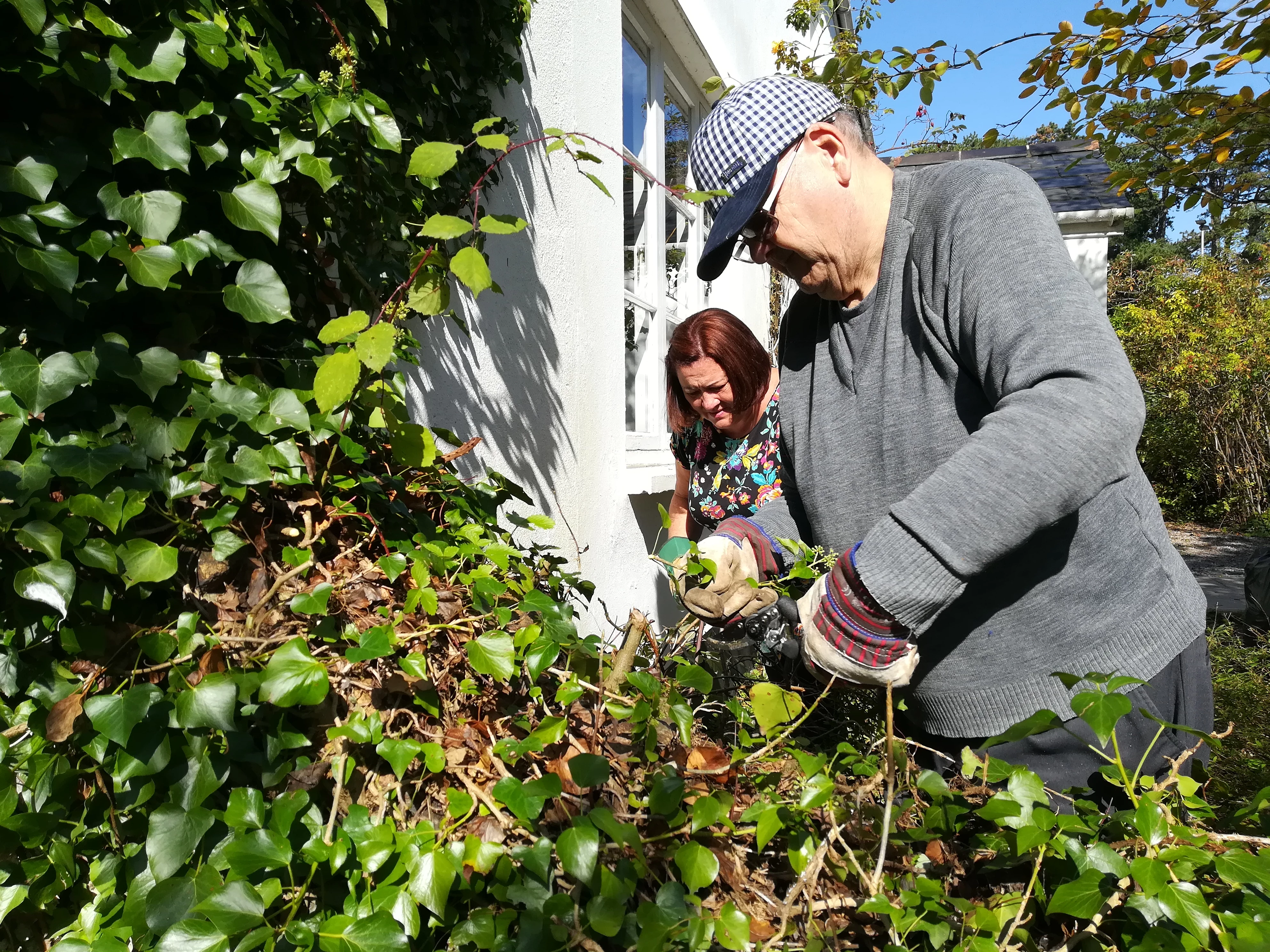
My name is Brian and I live in Talbot Green. When I was in school I used to do gardening in Y Pant. In the winter I used to help my dad in the garden.
I worked in Remploy in Tonyrefail for ten years starting in 1974. We used to do all sorts of jobs. Then I did four years in Llantrisant, and twenty five years in Porth. On Fridays we finished early and went to the pub for lunch. I retired in 2013. I have the opening plaque from when Remploy opened in Porth in 1988. The building has been demolished.
Since I retired I have done a computer course and a photography course. I have also done pottery and pop art, and I have a big collection of paintings that I have done.
I came to the Take Charge coffee morning in August 2018 and found out about the chance to help at The Secret Garden at St Fagans National Museum of History. That’s when I decided to start gardening again. I’ve learned about teamwork, we work here in a team.
I enjoy doing it, I feel happy. I look forward to coming out and abought especially. I feel tired after, but good tired. My favourite job is raking. I’ve learnt that I enjoy volunteering.
The Secret Garden is maintain and developed by Innovate Trust whose main work is to support people with learning disabilities, mental health issues and people with physical impairments.
Hi pawb, my name is Joe Lewis and I am a Learning Officer at St Fagans National Museum of History. I have been working for Amgueddfa Cymry - National Museum Wales for 10 years this year.
This year is also 10 years since the volunteering department was set up in National Museum Wales.
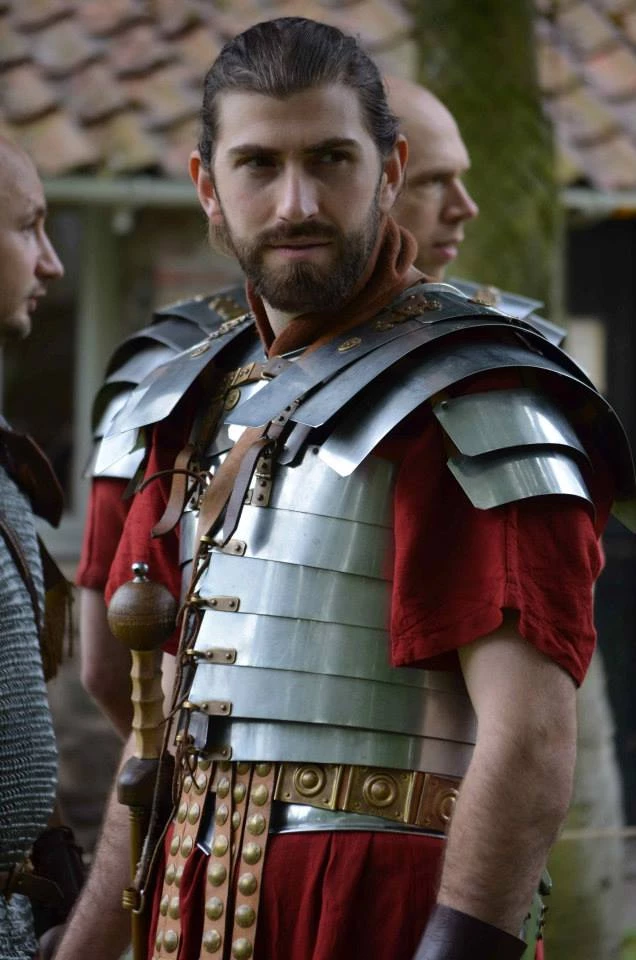
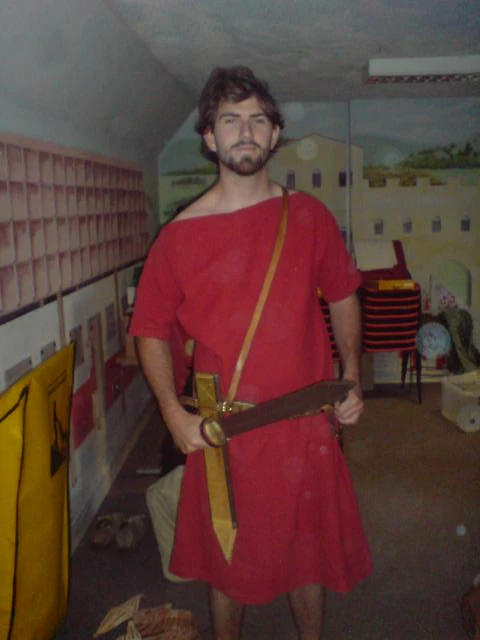
I began my career in Amgueddfa Cymru as a volunteer in the summer of 2009. I volunteered at the National Roman Legion Museum in Caerleon where I spent the summer dressed as a Roman and engaging with the public. After this experience I was asked to join the pool staff to help facilitate school sessions and public events.
Between 2009 – 2011 I did a part-time Masters in Archaeology and volunteered for the Portable Antiquities Scheme, based at National Museum Cardiff. This volunteering role gave me experience in object photography and identification. It was through this experience that I was given the opportunity to catalogue an assemblage of Roman artefacts from Brecon Gaer Roman Fort. This gave me my dissertation topic and later the opportunity to publish 2 papers on Brecon Gaer.
Before I started volunteering at National Museum Wales I had been unemployed for several months and was suffering with depression. Volunteering helped to give me vital work and academic experience that helped me get a job and out of depression.
I owe a great deal to the volunteering department for giving me the opportunities I’ve had to lead me to where I am today. A massive thanks to them and a Happy 10th Anniversary!
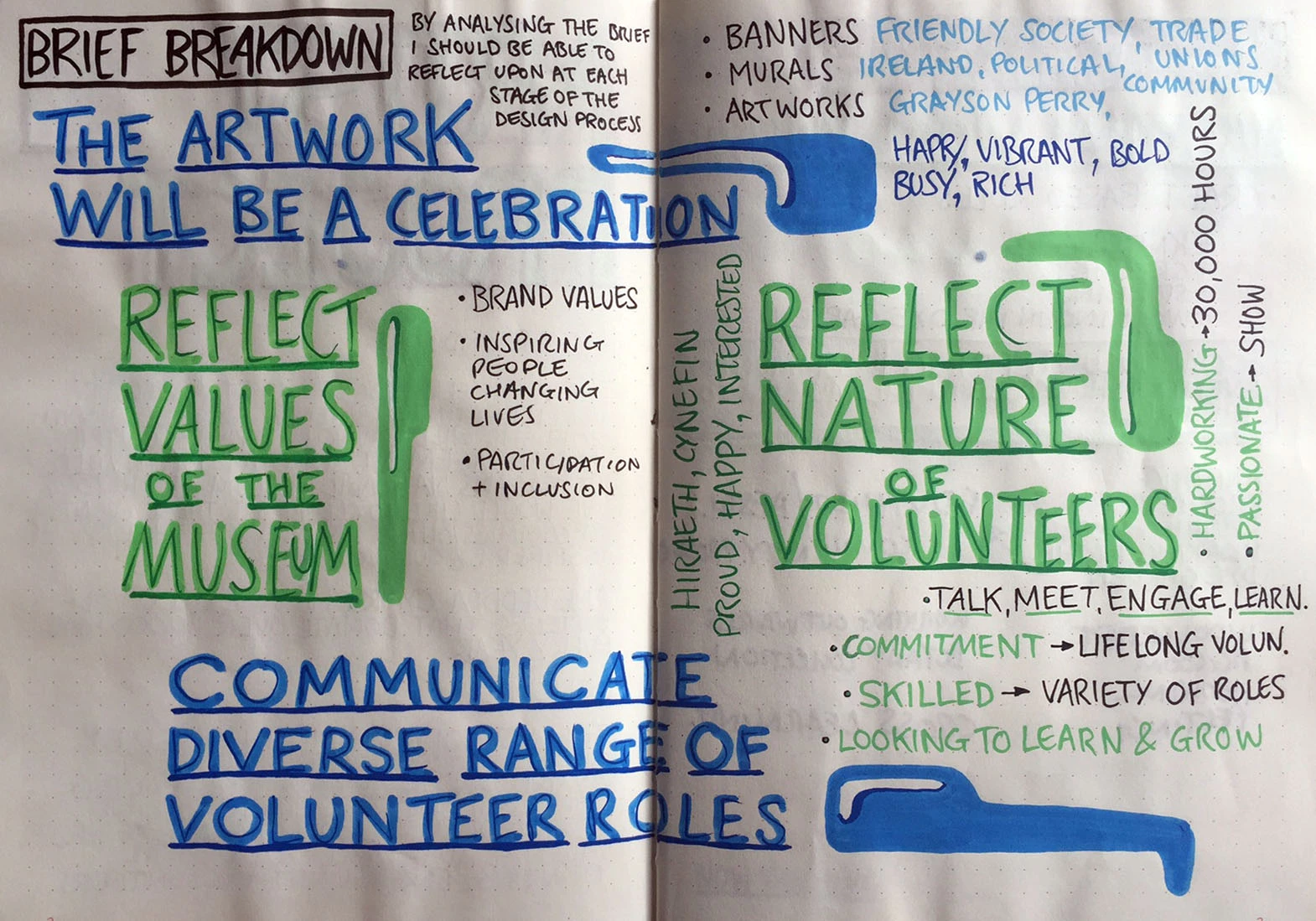
A few months ago, I was given the opportunity of a lifetime. I was invited to work at Amgueddfa Cymru as an artist in residence and asked to organise a project to celebrate 10 years of the volunteer programme. The project has consisted of a series of creative workshops with volunteers at sites across the country, which have fed into the creation of a celebratory artwork.
My name’s Robin Bonar-Law, I’m a self-taught artist and graphic design graduate of Falmouth University. From the time of my graduation up until my residency, I have been working in the catering industry so my artistic outlet has been primarily restricted to latte art. The creative industries are incredibly competitive and coming from a low-income family I have often felt stifled by a lack of social mobility. I take portrait commissions and enter competitions when I can but over the coming years, I would like to make the rewarding leap into self-employment by becoming a freelance mural artist.
Early this year I applied to an artist opportunity based at St Fagan’s. After a thoroughly exciting interview process, I was asked to join the team and given an open brief, ‘Create an artwork that is inspired by the volunteers and showcases the amazing contribution they have given to the museum. The process should also include a series of creative workshops with volunteers.’ With over 900 volunteers this year alone this was no small task, nonetheless, overflowing with unbounded enthusiasm and a sense of freedom (from the coffee shop) I got to work planning.
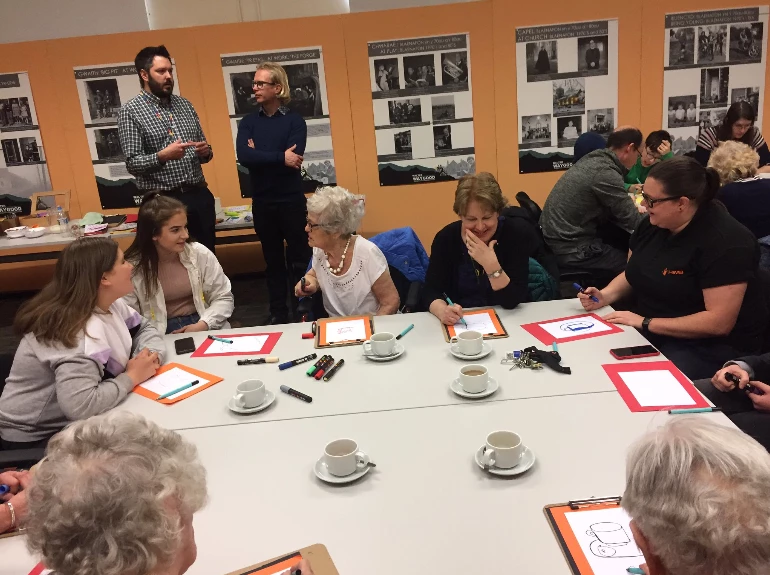
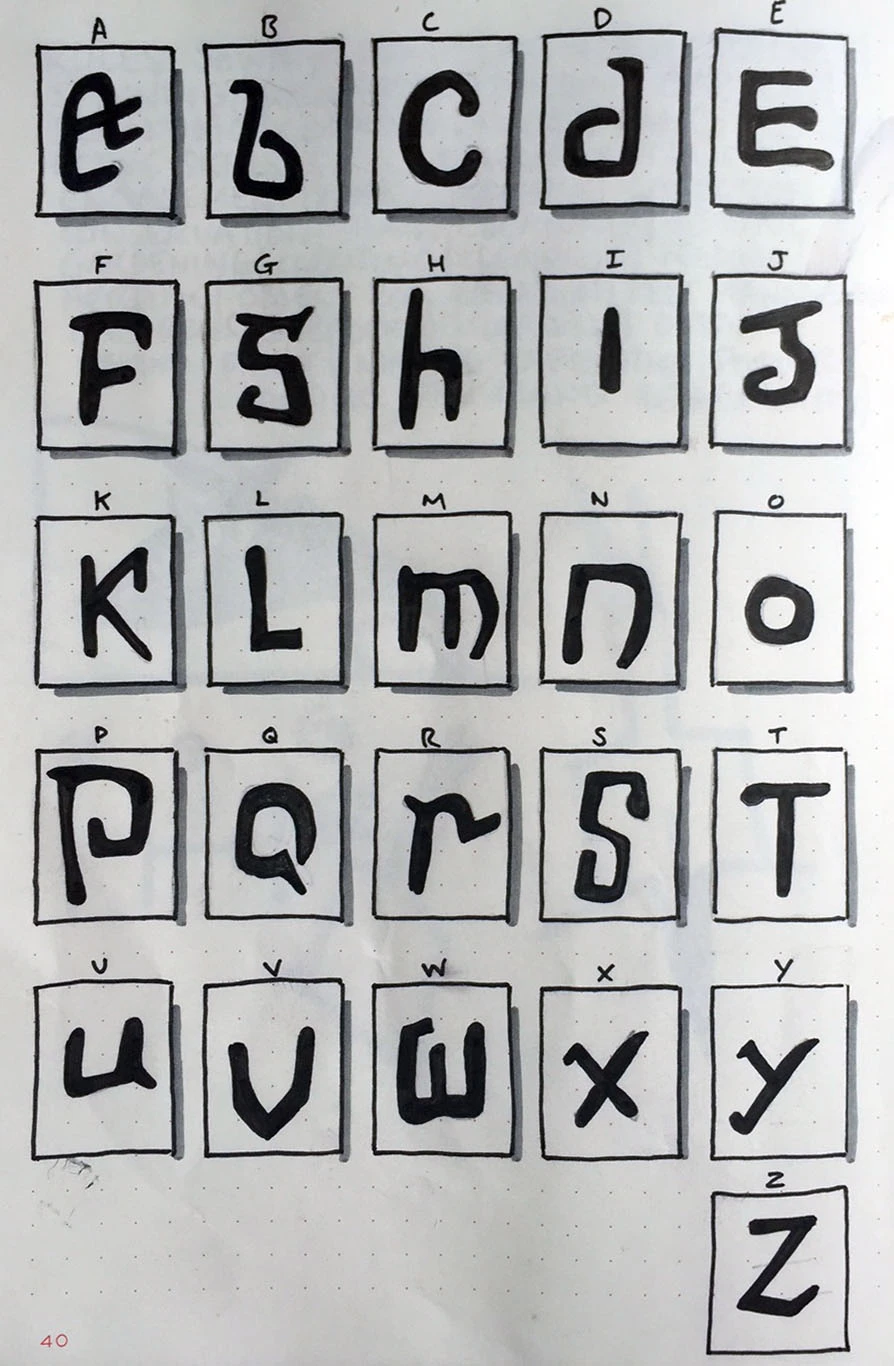
The project is split into two main components; the workshops and the final artwork. I love drawing and wanted to run a series of ‘mark-making’ workshops that help re-introduce the volunteers to the idea of drawing as something that’s fun and relaxing. By normalising and simplifying drawing through a series of games and activities, I hoped to make it less daunting and something relaxing that they may enjoy doing brief moments of spare time.
As well as allowing me to teach the volunteers new drawing techniques the workshops served as a time for the volunteers to teach me about their roles and experiences at the museum. From the beginning of the project, I have wanted to create an authentic artwork that represents the true collaborative spirit of the volunteer workforce and the best way to do that is to meet them and get their personal input. Visiting the sites and talking to members of staff was another valuable resource.
I have met such a large number of enthusiastic and happy volunteers, they are all equally passionate and have truly enriched my experience. The workshops have been far more rewarding than I could ever have expected, I hope the volunteers enjoyed them as much as I did.
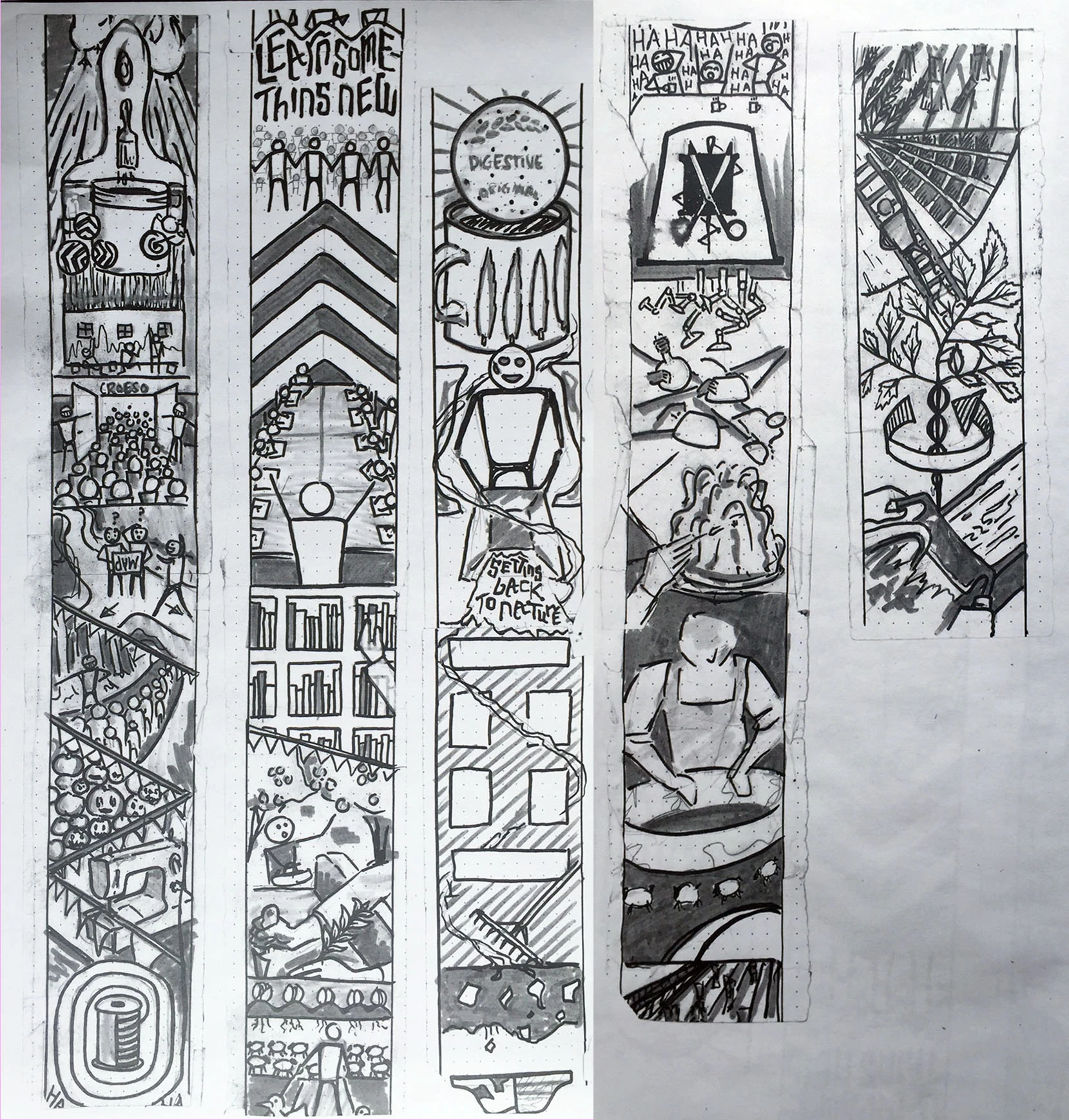
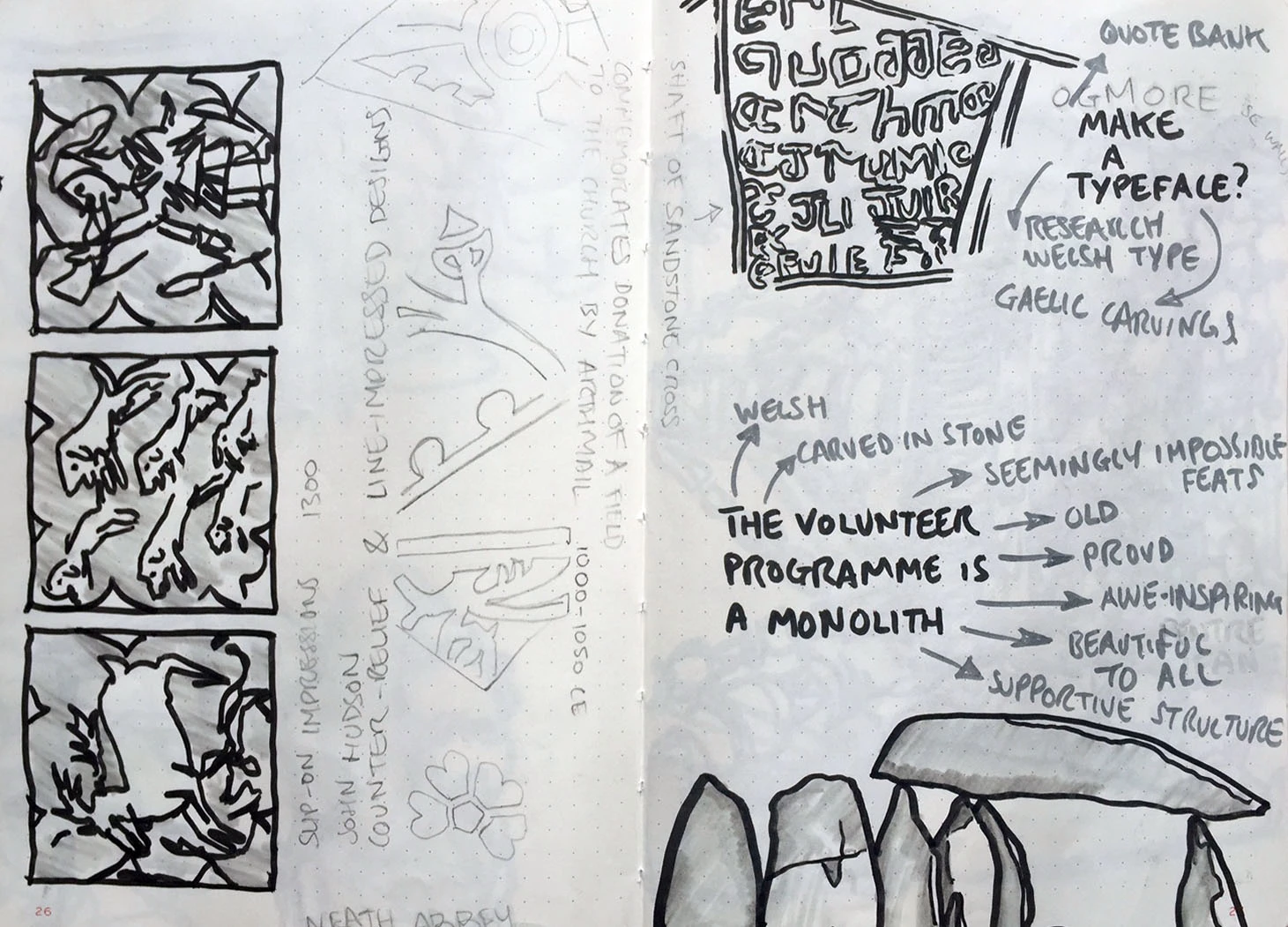
My favourite part of any project like this is the final, hands-on crafting of a design, but there’s no point rushing into it without a strong design process as a foundation. Alongside the workshops, I started amassing a large pool of research to help shape the direction of the artwork. I gathered inspiration from celebratory imagery such as friendly society banners, religious artworks, Flags, political/social murals etc. I also furthered my knowledge of Welsh craft and traditions by meeting with curators, visiting volunteers outside of workshops and making use of the information on display to the public. I wanted to create a final piece with mulitple layers of complexity; representing the wildly diverse range of roles, having that celebratory feel and being reminiscent of the traditional craft that imbues each site.
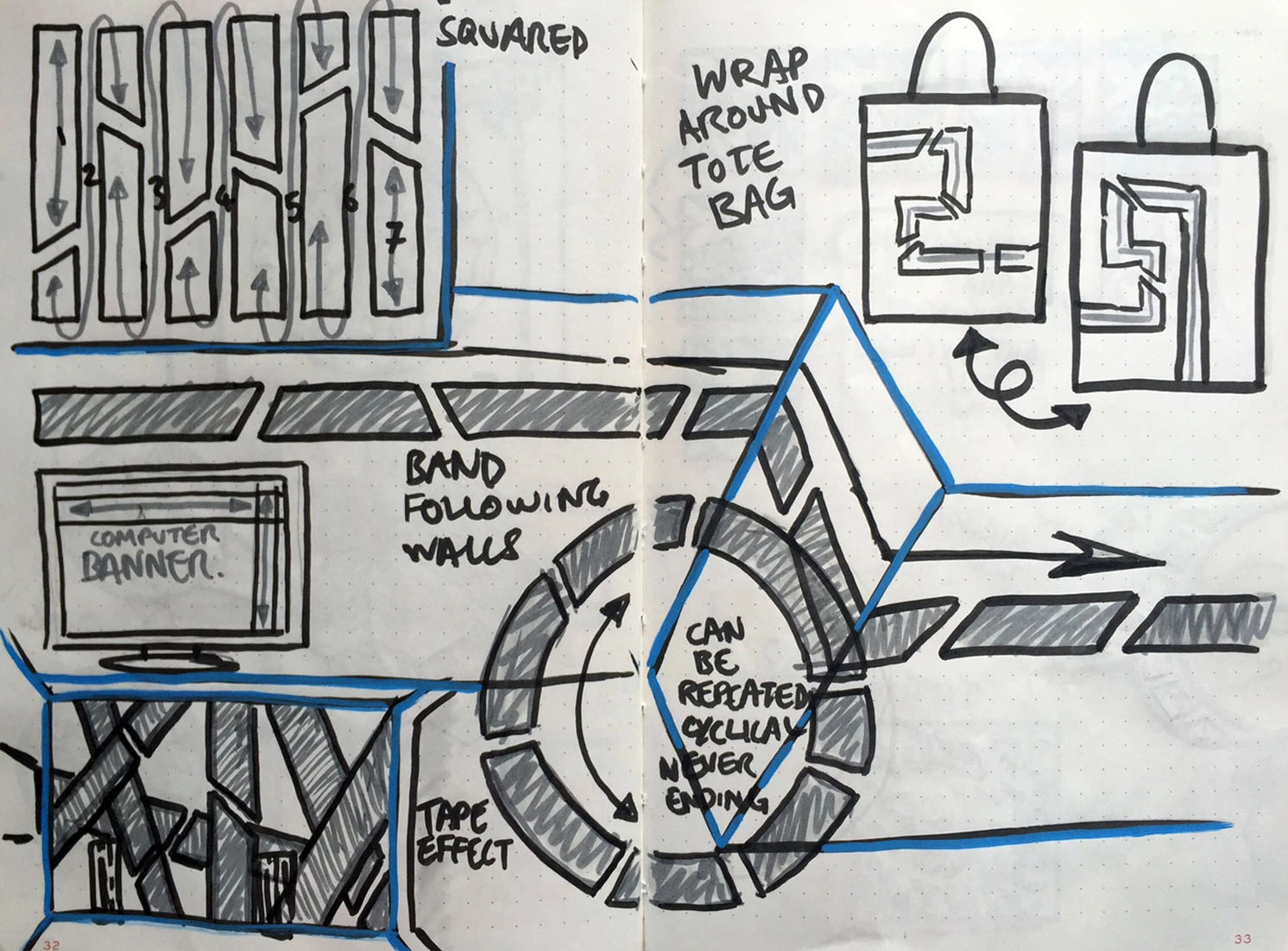
I am in the final stages of the design process and putting the finishing touches to my artwork. Once complete, the modular, hanging banner inspired artwork will be transformed into a majestic, megalithic and meaningful mural adorning the walls of Tŷ Gwyrdd (the new volunteer hub) and made into a digital print for each of the 7 museums around Wales. It will also be made into tote bags and given to each of the volunteers. From the very beginning, I have wanted to create a purposeful artwork that rejuvenates and enriches the volunteer spaces, fostering an environment that helps individuals find a sense of well-being, pride and identity. I can’t wait to show you all the finished product.
I am incredibly grateful for the museum and all the staff that have given me this once-in-a-lifetime opportunity.