Learning

Walking With Romans

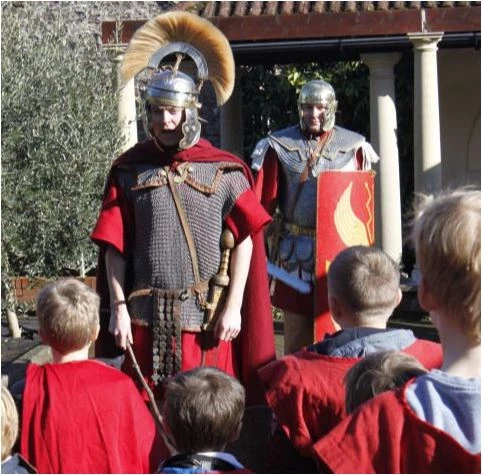
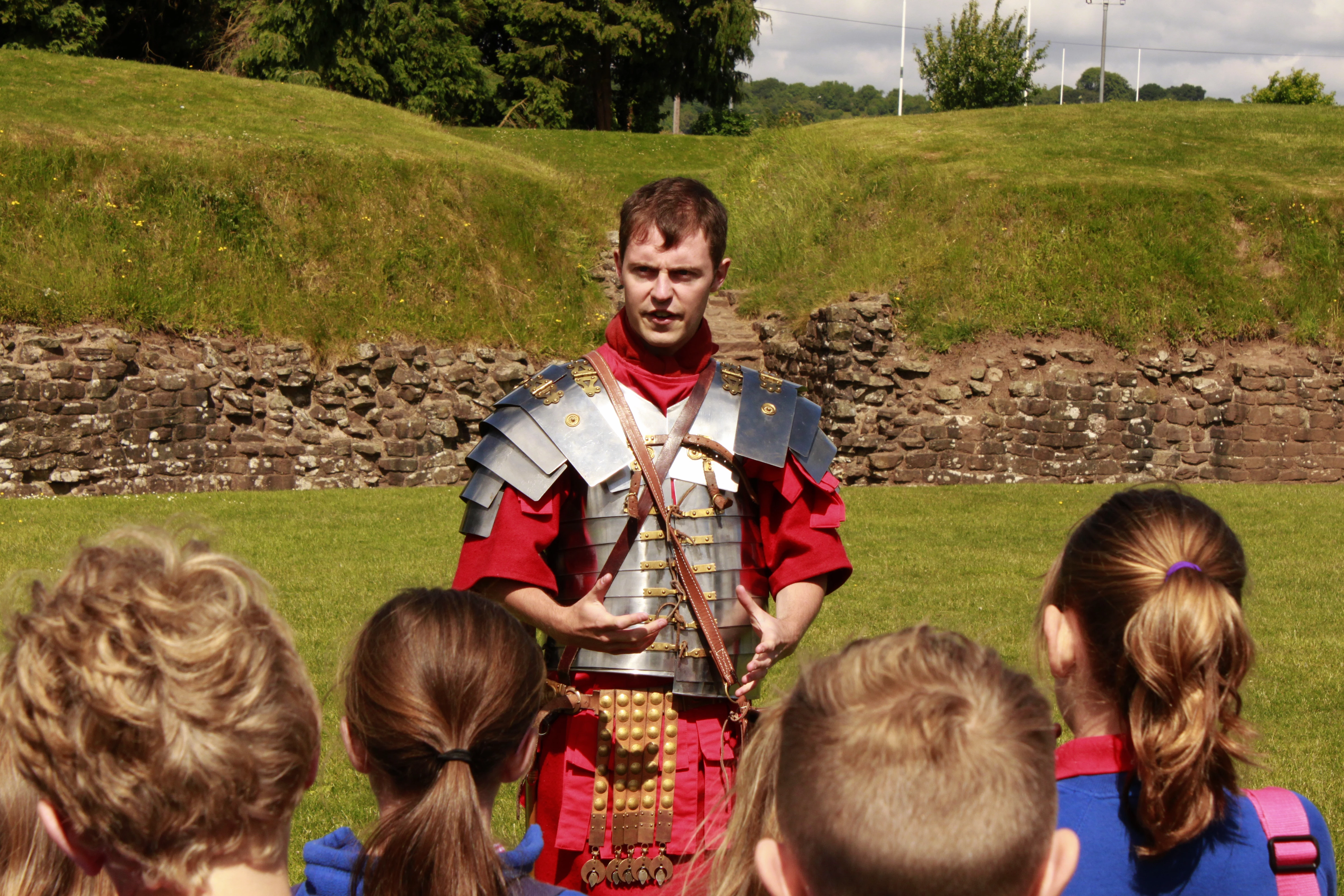
For one week only, Key Stage Two pupils enjoyed the Walking with Romans session at the National Roman Legion Museum.

As well as their usual facilitated session with one of our Roman teachers, they were also taken on a tour of the Amphitheatre with a Roman guide.

Under the strict instructions of their new Roman leader, they learned how to march in the centre of the Amphitheatre. Once they had perfected their pace, a couple of the pupils even got the chance to run out as gladiators with their classmates cheering them on.

Every year, the most popular part of the session proves to be when the children learn how to charge as a unit, using their teachers as the target! 

The outdoor environment of the Amphitheatre and Barracks, steeped in rich and ancient history, continues to capture children’s attention more effectively than a standard classroom session.

This is a fantastic opportunity for learners to not only see the history around them, but to experience what it was like to be a part of it.

A recent study by HAPPEN Wales found that outdoor learning sessions like these provide “a variety of benefits for both the child and the teacher and for improving health, wellbeing, education and engagement in school.” So if schools are disappointed at missing out on our Walking with Romans week, we have another outdoor session on the horizon.

Starting on Monday 1st July and running until the end of term, schools can book in for our Roman Boot Camp. Pupils will hear about what the Romans looked for in a soldier, discover if they have what it takes to join the Roman army and even compete in teams to test their pace on the marching square! Email learning.romans@museumwales.ac.uk for booking information.

While the museum is still closed for essential maintenance, the National Roman Legion Museum’s education programme is still running successfully.

Focussing on Key Stage Two learning, the programme offers each school group a full day of activities - from exploring the ancient ruins of the Amphitheatre, Baths and Barracks, to trying on armour in our reconstructed Barrack Room and learning Latin in our iBook.

The National Roman Legion Museum will be reopening to the public in Autumn 2019 .
Lleisiau o’r Archifau

Eitem arall yn y gyfres Lleisiau o’r Archifau o Archif Sain, Sain Ffagan Amgueddfa Werin Cymru. Mae’r gyfres hon yn cyd-redeg â gweithgareddau a digwyddiadau amaethyddol yr Amgueddfa. Ffermwyr oedd y siaradwyr, a oedd, fel arfer, wedi byw yn yr un ardal trwy gydol eu hoes. Mae’r disgrifiadau, y profiadau, yr atgofion, y lleisiau a’r acenion yn wreiddiol ac unigryw, o wahanol ardaloedd, ac o wahanol gyfnodau.

I gyd-fynd gyda’r wyna yn Llwyn-yr-eos, fferm yr Amgueddfa, dyma ddarn o recordiad o Dan Theophilus, Allt yr erw, Rhandir-mwyn, a recordiwyd ym mis Gorffennaf 1975, pan yn 65 oed. Mae’n sôn am wahanol agweddau ar wyna: gofalu am y defaid; delio gyda thrafferthion ac afiechydon; mabwysiadu oen; marcio clustiau; a throi’r defaid a’r wyn i’r mynydd.

Work Experience with the Saving Treasures; Telling Stories Project (mar-19)

Each week, hundreds of people will walk through the front doors of the National Museum Cardiff. Yet despite visiting the exhibitions on display, many will be oblivious to what goes on in the background. Conducting a work experience placement at the museum gave us a rare insight into how much work and effort goes on behind closed doors.


With the intention of creating a video for the Saving Treasures, Telling Stories project, we were taken on a tour around the archaeology department on our first day of placement. We were fortunate to be shown around the stores, where many remarkable items were kept for preservation and research. Some of the items we viewed were Roman and prehistoric pots, vases and burial urns, which allowed us to explore how communities and cultures operated thousands of years ago.


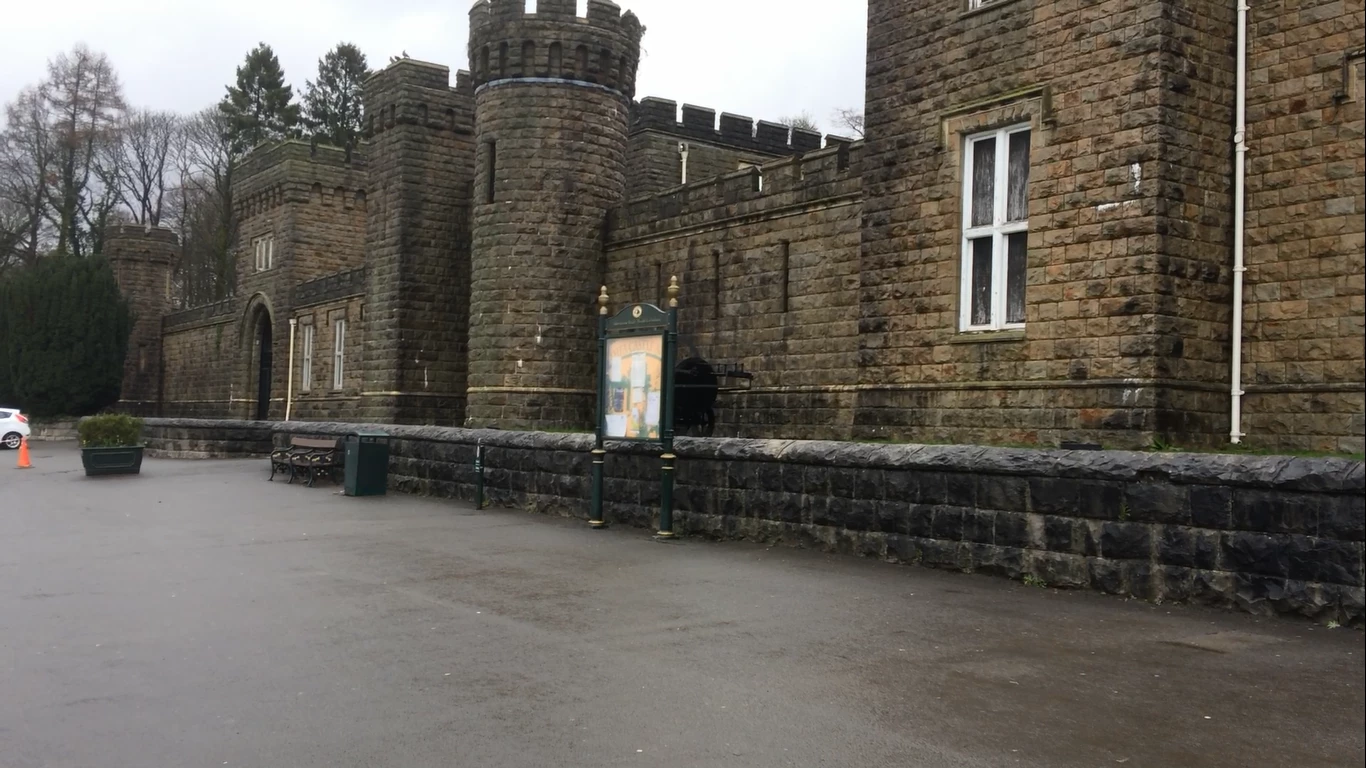
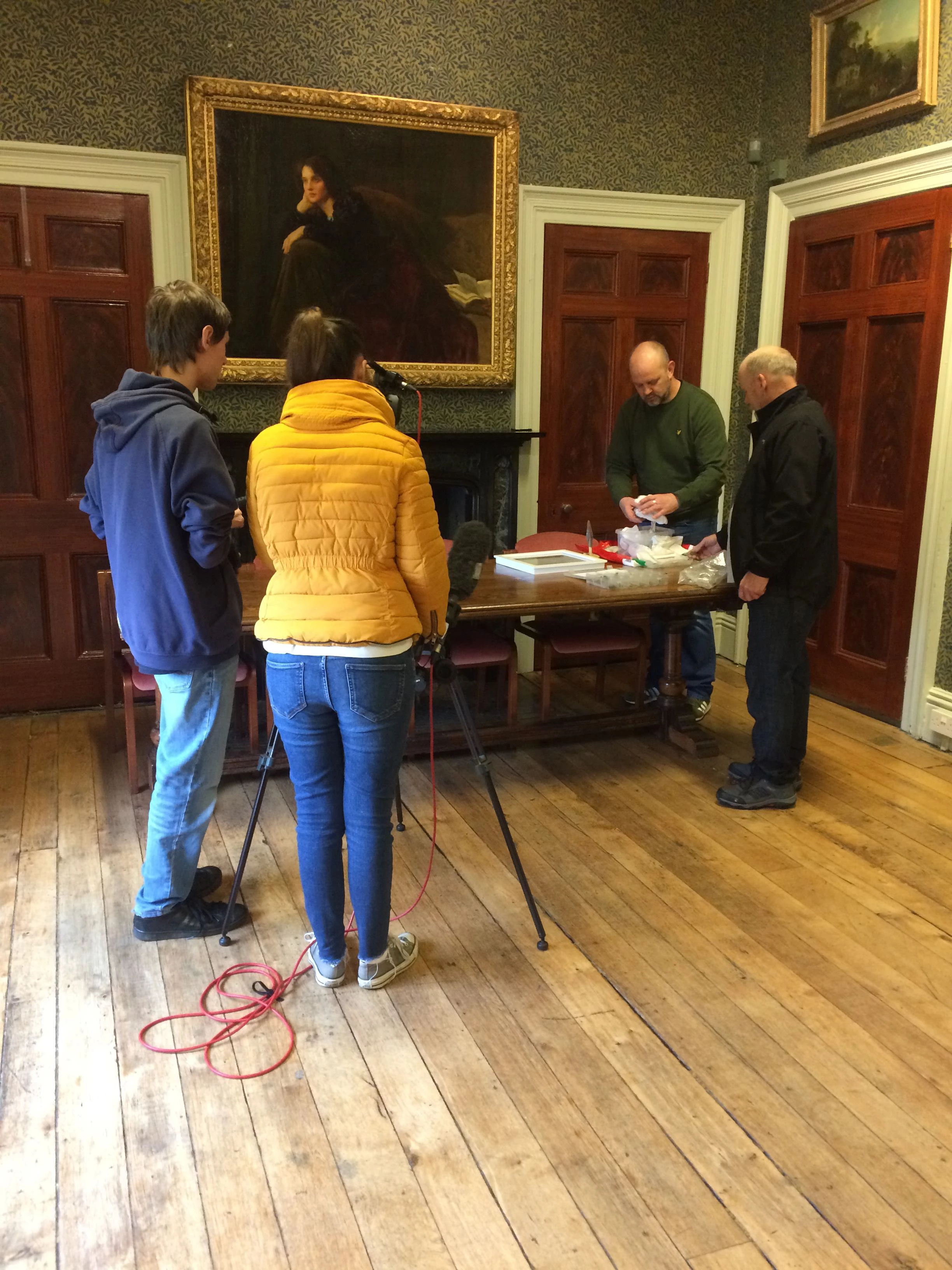
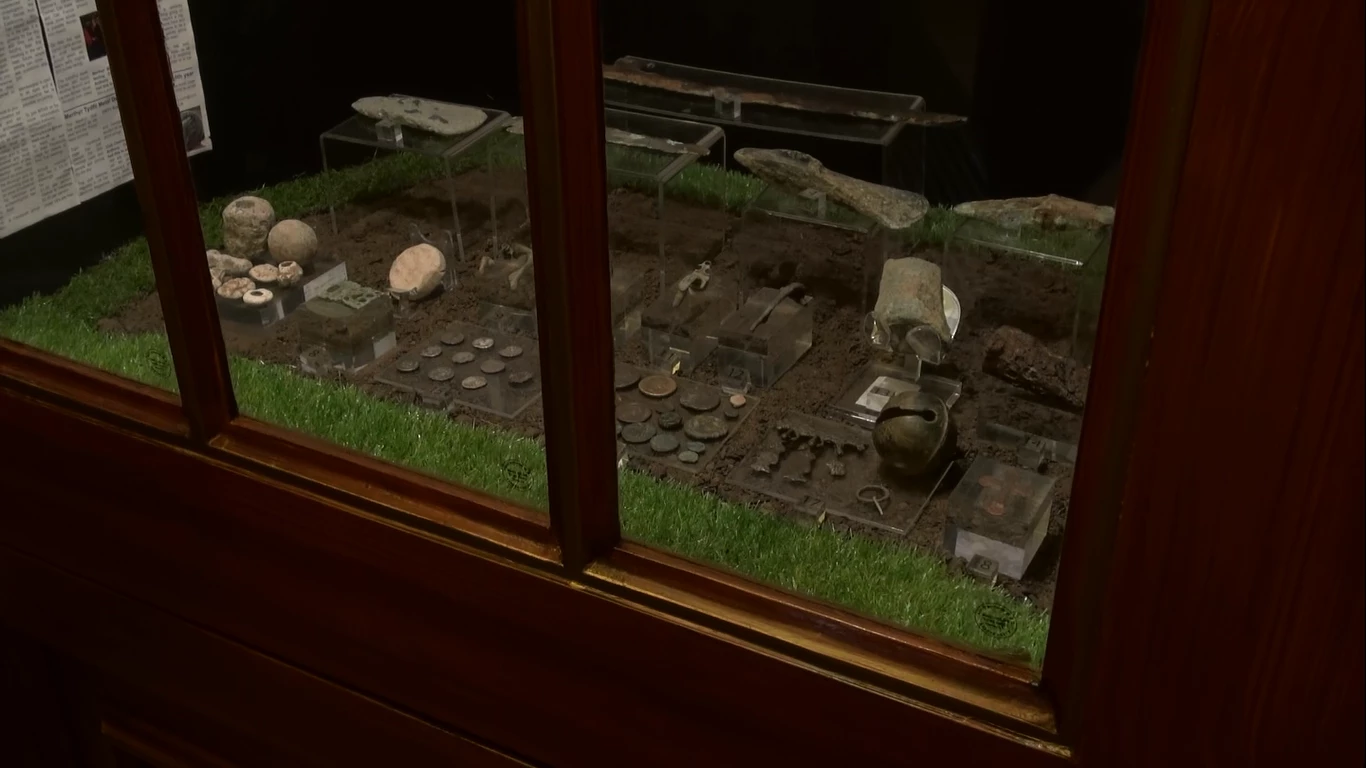
The following day we attended Cyfarthfa Museum in Merthyr Tydfil, which is to acquire a hoard of five Roman Denarii, with thanks to funding from the Saving Treasures project. We filmed museum staff and the finders of the hoard, and heard about its significance. It was great to see the enthusiasm of the metal detectorists who discovered the hoard, and how proud they were of their achievement.


We spent the next few days editing the video together back at the University of South Wales campus. This proved to be a difficult job, as there were so many great shots to choose from, so it was difficult to decide which to cut out. However, the staff were always on hand to answer any questions we had and help out where possible.


Working at the National Museum Cardiff was a wonderful experience, and we were able to appreciate just how much work goes on behind closed doors to create the exhibitions we see. This work and research has helped us to understand history and past cultures in greater detail, and we would like to thank all the staff for their friendliness and a great week.

Fossil Folklore in the Clore Discovery Centre

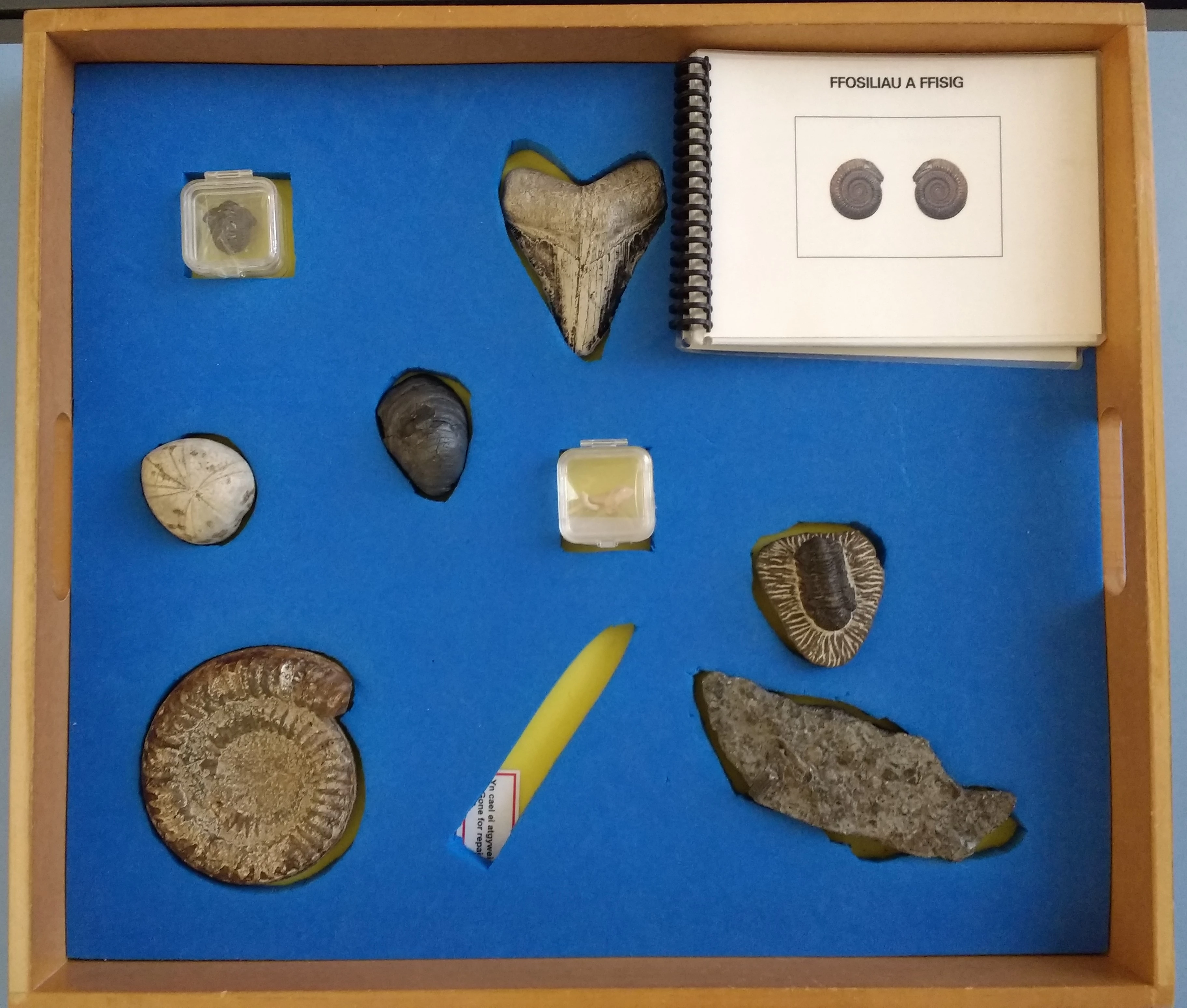
The National Museum of Wales is home to the Clore Discovery Centre, a hands-on gallery full of exciting treasures. This gallery offers visitors the opportunity to get up close and personal with hundreds of objects from The Museum’s collections, from whale bones to Tudor fabrics. 

I have been working at the Discovery Centre for over two years. As a Learning Facilitator, my role is to help visitors of all ages and backgrounds enjoy and learn about our collections. I help people do this in many ways, including handling the objects (carefully!), examining them up close, making connections between objects, and using supporting materials such as books and toys to find out more.

I have become very familiar with our collections, which are housed in drawers with booklets that help us to discover more. Something that I find very interesting about the work of museums is the decisions that are made around how to interpret and talk about objects. One of my favourite drawers illustrates a perfect example of this.

If you were a museum curator and you had a fossil specimen, which collection would you put it into? Maybe the easiest answer is that you would look at it scientifically, and house it in the Geology collection…

However, my favourite drawer, ‘Fossil Folklore’, may help you to think of fossils in a different way, not as science but as part of the stories and local cultures of Britain many generations ago. 

When you think about fossils, what do you think about?

Maybe you think about fossils in a museum cabinet, or fossils on a beach such as nearby Penarth (where the odd dinosaur bone has been dug up over the years)!

What would you think if you found a fossil but didn’t know what it was? What if you had never seen one before?

‘Fossil Folklore’ is a drawer in the Clore Discovery Centre that perfectly addresses this question. Over time, people from different countries and cultures have made their own stories about fossils, what they are, and where they come from. 

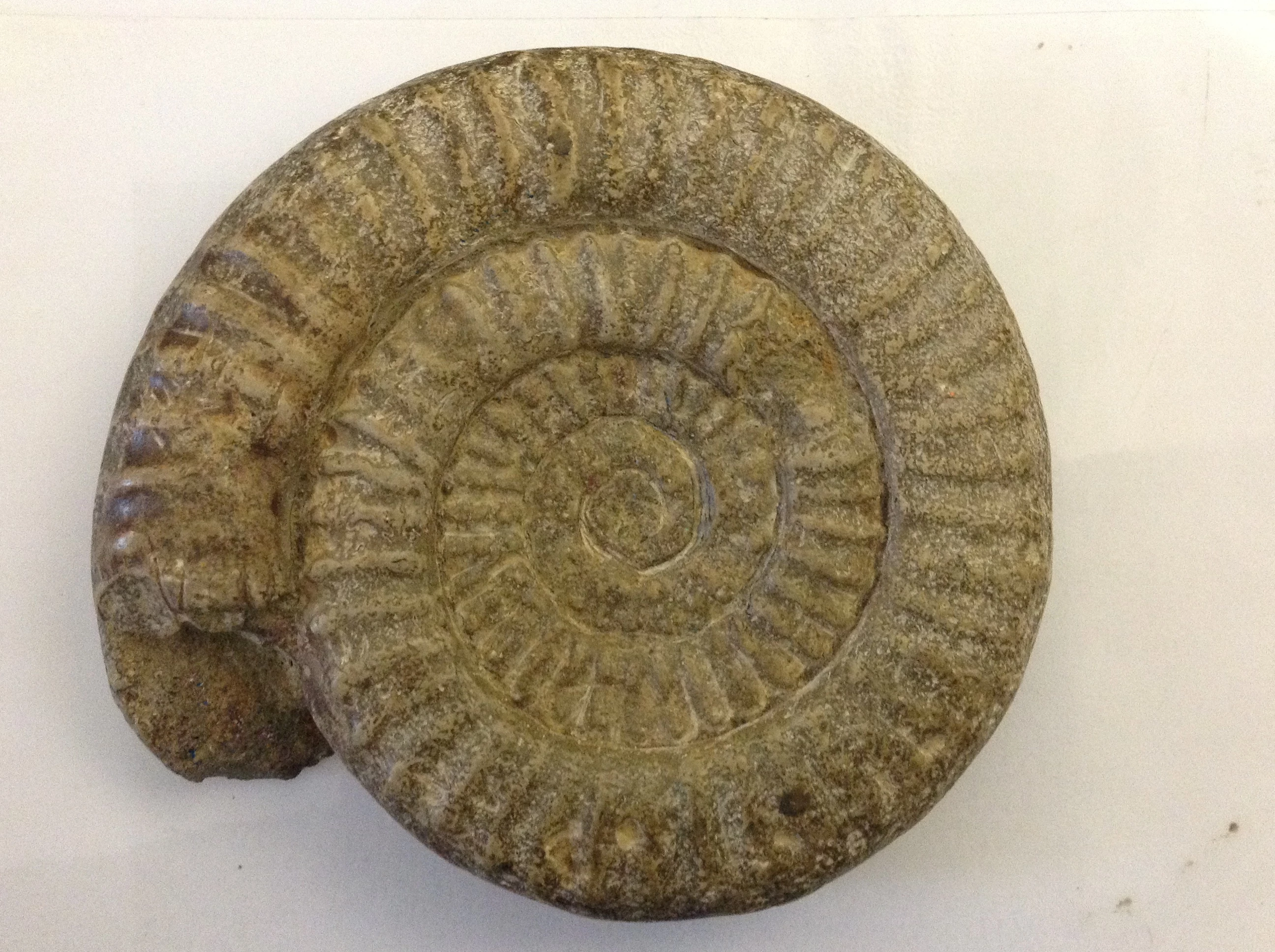
You may be familiar with the ammonite, a round spiral fossil with ridges. The ammonite was a sea creature that lived around the coasts of Britain about 100 million years ago. It is related to the modern nautilus and even squid. Its soft body has decayed with time, and the ridges that we trace our fingers over are the animal’s hard shell. 

But what if you found an ammonite and you had never seen one before? 

Maybe you would guess that it was a snail, or a long, thin creature curled up into a spiral? Maybe you would think of a story explaining what you thought the ammonite was. 

When you look at an ammonite, you can imagine it as a snake curled up into a spiral. For this reason, ammonite fossils were often referred to as “snakestones”. The people of Whitby in Yorkshire have passed down the Legend of St. Hilda to explain their ideas about ammonites and their origin. St. Hilda, a spirited Northumbrian royal, is said to have uttered a mighty prayer and cut off the heads of all the local snakes before turning them into stone. In Christianity, snakes are often seen as symbols of evil, so St. Hilda’s triumph is celebrated. Local craftspeople in Whitby often carved the head of a snake into the ammonite fossils.

One of the reasons that I find this drawer so fascinating is that I love stories. Stories help us to make bonds with each other and to make sense of the world around us. The snakestone story gives us a glimpse into the lives of people living in the Britain many generations ago and helps us to understand how they made sense of their world. Scientific discoveries are always being made, and our understanding of the world is always evolving and changing. Why not come and explore at our Discovery Centre and see if you can find out more about our understanding of the world in which we live?

The Clore Discovery Centre at the National Museum is open at weekends and during school holidays (10am until 4:45pm). The Museum is closed on Mondays.

Schools enjoy Tim Peake's Spacecraft activities

This winter at National Museum Cardiff, visitors can get close to a genuine spaceship. The Soyuz TMA-19M capsule, the spacecraft that brought British astronaut Tim Peake back to Earth from the International Space Station, has crash landed in our gallery. The free exhibition is part of a national tour presented by global technology company Samsung and the Science Museum Group.

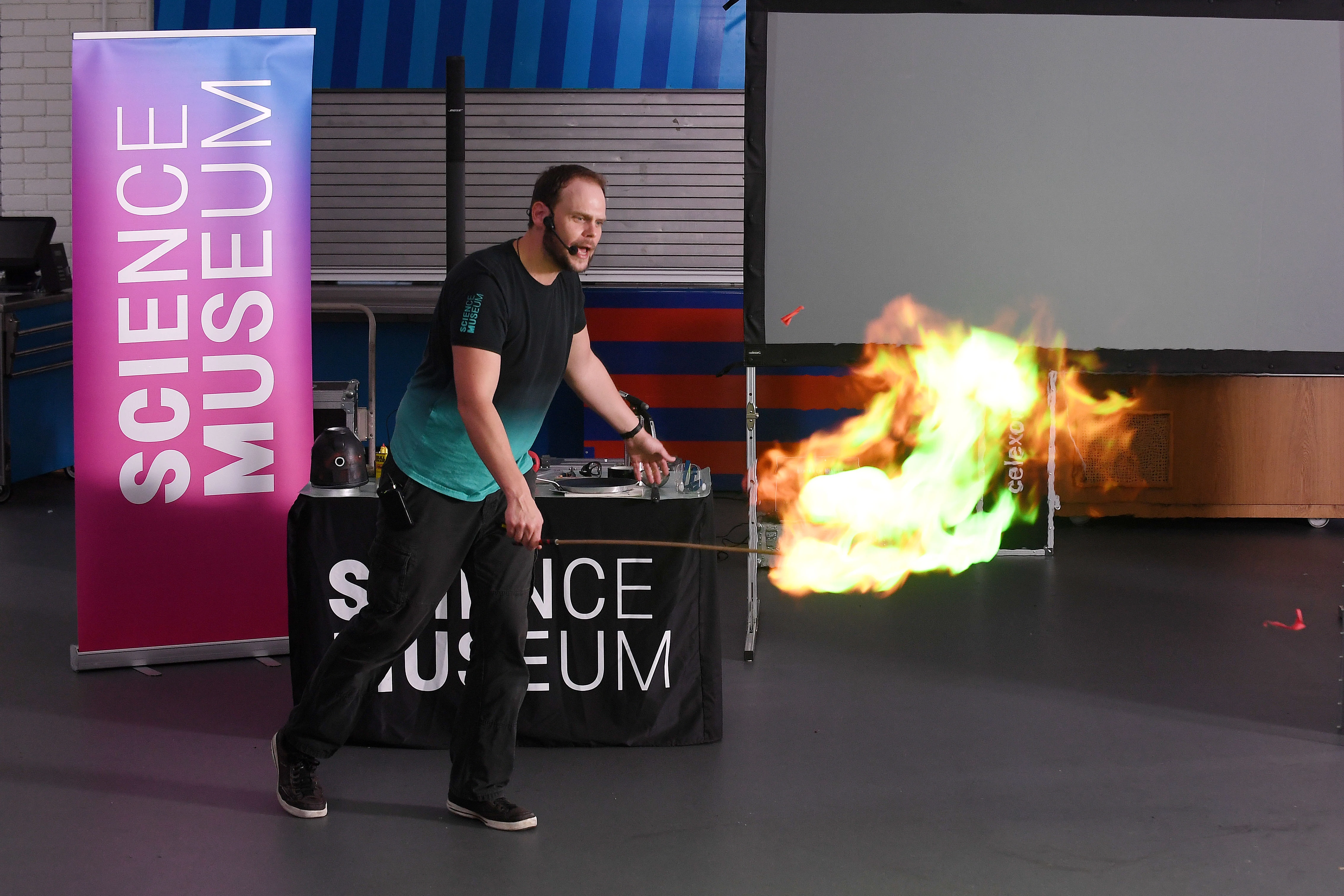
In association with the exhibition, several lucky secondary schools from across south Wales experienced an exciting science show from the Science Museum Outreach team. The Soyuz Rocket Show combined interactive science demonstrations with stunning visuals to explore the physics of rockets and Tim Peake’s spacecraft.

Beginning with take-off in the Vostok Rocket, the show took students along on Tim Peake’s journey to space. They experienced everything, including docking on the ISS and life aboard. Finally it discussed the perilous re-entry into the Earth’s atmosphere (which you can learn more about in the exhibition’s Space Descent Virtual Reality Experience). The demonstrations included rockets made from Pringles tubes, screaming jelly babies, dry ice clouds and liquid nitrogen ice cream. And of course explosions. Lots of explosions.

A few weeks later, the schools visited the museum to see the spacecraft itself. They also took part in workshops that explored different elements of space travel. Cardiff University School of Computer Science and Informatics delivered coding workshops using Scratch, while AstroCymru put pupils through their paces by testing skills required to be an astronaut. Finally, we did a session on spacesuit engineering, which developed ways to protect astronauts from both harmful UV radiation and the call of nature! One lucky school even got to meet real-life astronaut Steven Swanson, a retired commander of the ISS.

We hope these experiences will inspire the next generation of physicists, engineers and astronauts. Let's hope that soon we will have Welsh astronauts following Tim into space!

The Tim Peake's Spacecraft exhibition runs until 10th February. Admission is free, Space Descent Virtual Reality Experience costs £6.