: Excavation & Discovery

Caerleon - City of the Legion

9 May 2007

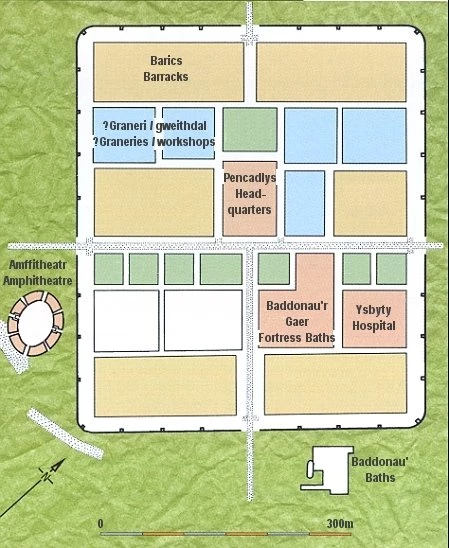
Plan of Caerleon Roman fortress.

Plan of Caerleon Roman fortress.

Marble inscription, probably from the south-west gate at Caerleon.

Marble inscription, probably from the south-west gate at Caerleon.

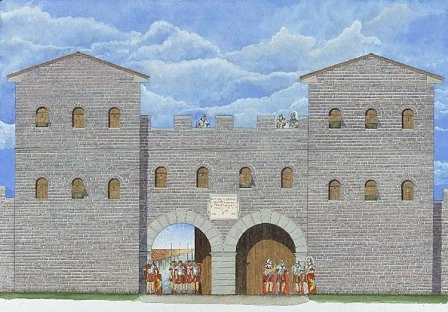
Reconstruction of the south-west gate, Caerleon.

Reconstruction of the south-west gate, Caerleon.

Reconstruction of the Roman fortress baths (Caerleon) in about AD80.

Reconstruction of the Roman fortress baths (Caerleon) in about AD80.

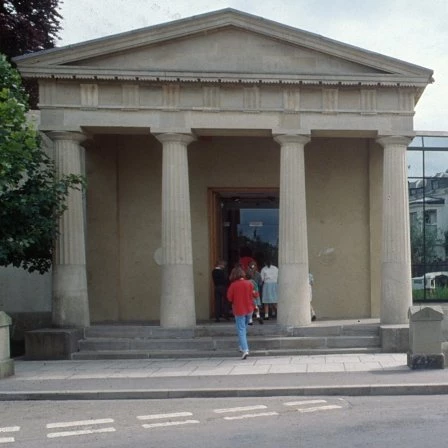
Finds from the excavations at Caerleon are on display at the Roman Legionary Museum, Caerleon.

Finds from the excavations at Caerleon are on display at the Roman Legionary Museum, Caerleon.

Home to Rome's 2nd Augustan Legion for over two centuries, Caerleon is the best preserved Roman fortress in Wales.

Caerleon (Newport) is the only permanent Roman base within the borders of modern Wales. It was founded in AD 74 or 75, and used by the Second Augustan Legion, which had been stationed in various parts of southern Britain since the Roman invasion of AD43.

Caerleon remained the headquarters of the Second Augustan Legion for more than 200 years.

The fortress was known to the Romans as Isca, taking its name from the nearby River Usk.

Excavations at Caerleon since the 1920s have allowed us to build up a good understanding of the fortress.

The site

The fortress is a rectangular enclosure 490m by 418m (535 × 457 yards) giving an area of 20.5ha (50 acres). To the south-west lie a parade-ground and an amphitheatre and, beyond, various buildings of a civilian settlement have been found.

The defences were first built in earth and timber but were replaced in stone about AD 100. At the centre of the fortress, beneath the present parish church, was the headquarters building (principia) and next to it the commanding officer’s house. Remains of the fortress baths (the baths are now in the care of Cadw, who have restored them as a visitor attraction), a hospital, officers’ houses and various workshops have also been found. But over half the area would have contained barrack blocks to house the ordinary soldiers – over 5,000 of them. Most of these buildings were first constructed in wood; they were gradually rebuilt in stone from the 2nd century onwards.

Activity at the fortress appears to have been at its peak at the close of the first and beginning of the 2nd century. After this the legion was involved in the building of Hadrian’s Wall across northern England. During the reign of Antoninus Pius (AD 138–161) the occupation of Caerleon decreased dramatically, probably indicating a more major commitment to the north.

Around AD 300 the legion left Caerleon for good, with many of the main fortress buildings being demolished. This is probably related to the seizure of power in Britain by Carausius and Allectus (AD 287–96) and their need to defend the south of England from expected invasion by the official emperors Diocletian and Constantius.

Some buildings at Caerleon were certainly in use up to the mid 4th century and some streets were resurfaced after AD 346–8, but post-350 coins are sparse, suggesting little activity on the site after this date.

By AD 1188, when Gerald of Wales visited the fortress, it had been reduced to a stately ruin.
Roman glazed pottery from North Wales

9 May 2007

Pottery

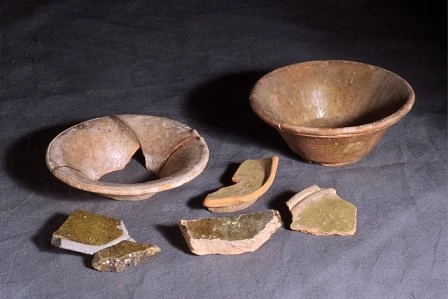
Green glazed pottery from Holt (Wrexham).

Excavations

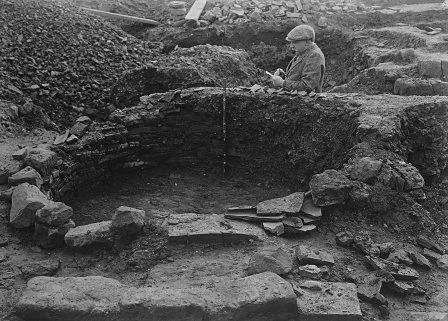
Excavations at Holt before the First World War. In this photograph Mr Acton stands beside the remains of one of the pottery kilns he discovered.

Ceramic plaque

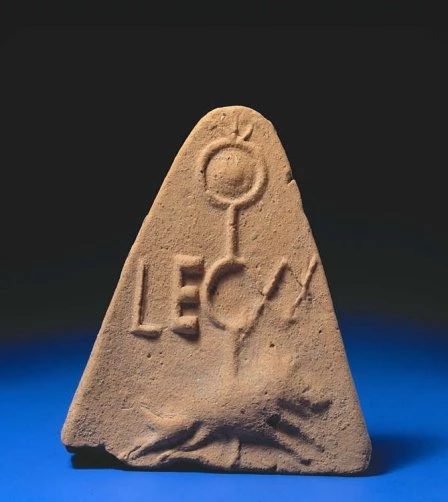
This ceramic plaque (known as an antefix) was used to cover the end of a line of roof tiles. It was produced at Holt and bears the stamp of the 20th Legion (LEG XX), as well as their emblem (a wild boar), and a standard.

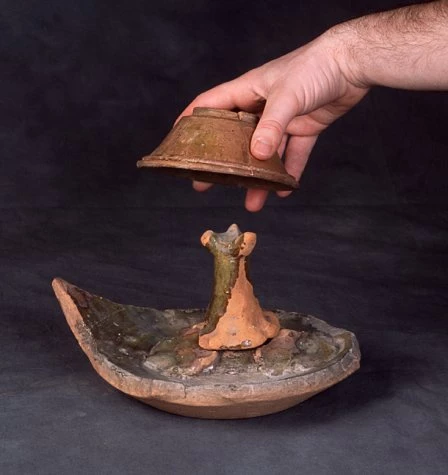
Illustration of how green glazed vessels were fired.

Illustration of how green glazed vessels were fired.

Shortly after the Roman conquest, potters in North Wales were using a technology first developed in Egypt in the 1st millennium BC.

Holt, near Wrexham, North Wales produced pottery and building materials for the legionary fortress at Chester. The main period of production at Holt appears to have been between AD87 and AD135 - when the fort at Chester was rebuilt. However, production probably continued into the 3rd century AD.

Holt specialized in a number of different shapes and styles of pottery, some of which show a remarkable degree of technological sophistication on the part of the potters - none more so than the Green Glazed ware.

Glazed wares of any type are difficult to produce and are rare in Britain prior to the medieval period, however, limited numbers of vessels were produced at Holt and at Caerleon in the Roman period. They were made by dipping a vessel into a 'frit' (a raw glaze suspended in water). In the Roman world this frit was normally based on a lead oxide.

When the vessel was fired this reacted with silica in the pot, to form a hard impermeable glazed surface that can range in colour from light yellow to olive green to dark brown.

During the firing the Holt potters would have faced two major problems.

First, during the firing, the glaze liquifies and, if over-heated, could run excessively; if this happened the pots could become fused together. Second, hot, dirty gases in the kiln could affect the chemical reaction and cause blisters to the glaze or change its colour.

The Holt potters overcame these problems by firing their pots on a prop set within a 'saggar' (a fired clay box). A lid sealed the top of the saggar, keeping the vessel inside protected from the kiln gases and running glaze from other pots.

The technology to produce glazed pots in this way was developed in the Near East and Egypt during the early first millennium BC and was not known in Britain prior to the arrival of the Romans.

Presumably it was introduced at Holt to enable the soldiers to continue to enjoy luxuries they had grown familiar with elsewhere in the empire.

Background Reading

'A collection of samian from the legionary works-depot at Holt' by M. Ward. In Form and Fabric: Studies in Rome's material past in honour of B. R. Hartley by J. Bird, p133-43. Published by Oxbow Books (1998).

'Holt, Denbighshire: the works depot of the twentieth Legion at Castle Lyons' by W. F. Grimes. In Y Cymmrodor, vol. 41. Published by The Society of Cymmrodorion (1930).

'The Lead Glazed Wares of Roman Britain' by P. Arthur. In Early Fine Wares in Roman Britain by P. Arthur and G. Marsh, p293-356. Published by British Archaeological Reports (1978).

Gelligaer Roman fort

9 May 2007

Roman Military network

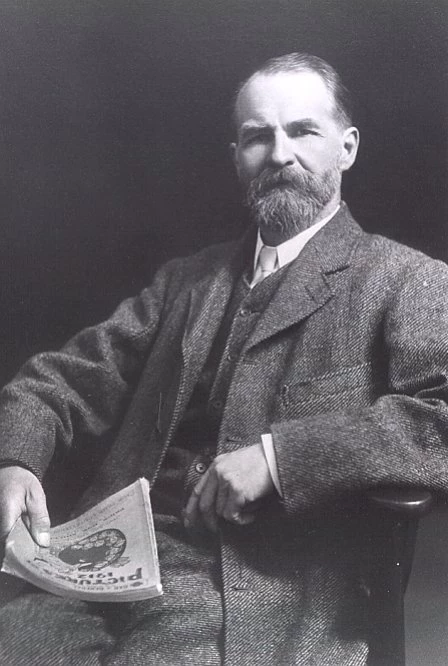
John Ward, Curator of Cardiff Museum and Art Gallery (1893-1912) and first Keeper of Archaeology in the National Museum of Wales (1912-14).

John Ward, Curator of Cardiff Museum and Art Gallery (1893-1912) and first Keeper of Archaeology in the National Museum of Wales (1912-14).

For over 40 years Gelligaer was a cornerstone of the Roman military network that controlled south-east Wales.

The fort at Gelligaer is sited on a ridge between the Taff and Rhymney valleys. It commands an extensive view of this upland region, which was heavily wooded in Roman times.

The fort, constructed in stone, is almost square and occupies an area of 1.4ha (3.5 acres), making it one of the smallest Roman forts in Wales.

Initial excavations

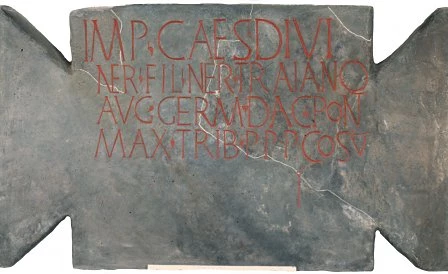
Building inscription from the south-east gateway.

Building inscription from the south-east gateway.

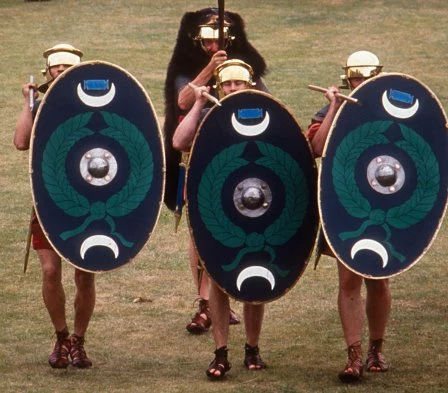
The site was explored in 1899-1901 by the Cardiff Naturalists' Society and then by John Ward, Curator of Cardiff Museum and Art Gallery, who undertook further excavations outside the fort between 1908 and 1913. The results established that the site was a Roman fort garrisoned by a cohors quingenaria (an auxiliary infantry unit of 500 men. The auxiliary infantry who garrisoned Gelligaer would have worn a simple mail shirt over a tunic, perhaps with trousers of wool or leather, and helmet. They would have carried a flat oval shield and been equipped with sword, dagger and stabbing-spear.)

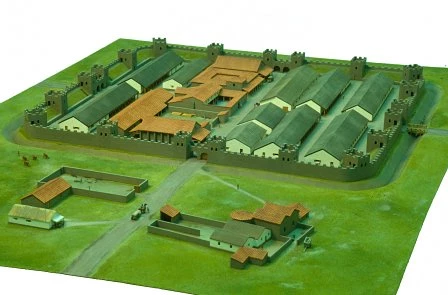
The fort was defended by a wide outer ditch and an earth rampart faced on both sides by a stone wall. There were corner and interval towers and four double-arched gateways. The impressive headquarters building stood at the centre of the fort and next to it lay the residence of the unit's commander. A workshop with a yard and two granaries completed the central range of buildings. The men lived in six barrack blocks, one for each century of 80 men and their centurion. Other buildings within the fort were probably used for stores and a stable for the baggage animals belonging to the unit.

Outside the fort on the south-east side was a walled extension containing a bathhouse, where the soldiers could relax when off duty. Attached to the fort was the parade ground, used for drill, weapons training and religious festivals.

Roman conquest

Model of the stone fort at Gelligaer in the early 2nd century AD.

Model of the stone fort at Gelligaer in the early 2nd century AD.

The stone fort was not the first military base at Gelligaer. A large earthwork to the north-west was an earlier earth and timber fort, probably built at the time of the Roman conquest of Wales in AD74-8. It was replaced by the smaller stone fort sometime between AD103-111. We know this date because of the inscription from the south-east gateway was found during the excavations. It records the construction of the fort between AD103 and 111 during the reign of the Emperor Trajan. The text reads:

"For the Emperor Caesar Nerva Trajan Augustus, conqueror of Germany, conqueror of Dacia, son of the deified Nerva, High Priest, with Tribunician Power, father of his country, five times Consul, four times acclaimed Imperator, (the Second Augustan Legion [built this])."

Native rebellions

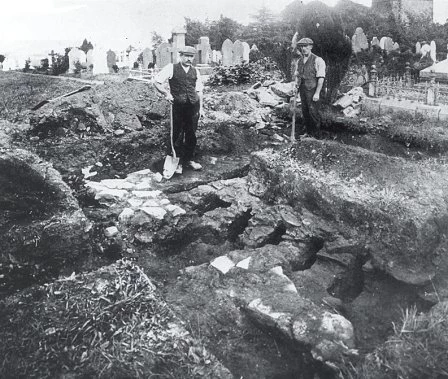
Excavation of the tile kiln at Gelligaer in 1913. Large quantities of brick and tile would have been needed during the construction of the fort.

Excavation of the tile kiln at Gelligaer in 1913. Large quantities of brick and tile would have been needed during the construction of the fort.

The forts at Gelligaer were part of a military network across Wales which prevented any native rebellion. Gelligaer's nearest neighbours were forts at Pen-y-Darren to the north and Caerphilly to the south. Recent research indicates that the garrison was probably withdrawn at the time of the Emperor Hadrian (AD117-38), by which time the Silures had been pacified. There is evidence for later activity at the site, but its nature is unclear.

Background Reading

The Ermine Street Guard kitted as auxiliary infantryman. The auxiliary infantryman who garrisoned Gelligaer would have a simple mail shirt over a tunic, perhaps with trousers of wool or leather, and helmet.

The Ermine Street Guard kitted as auxiliary infantryman.

The Roman fort of Gellygaer in the county of Glamorgan by John Ward. Published by Bemrose & Sons (1903).

Gelligaer Roman fort by Richard Brewer. Published by the National Museums & Galleries of Wales (1980).

Exquisite Roman treasure gives up its secrets

9 May 2007

The leopard cup.

The leopard cup. 11.5cm (4.5 inches) tall.

Detail of the leopard handle

Detail of the leopard handle, showing its finely worked features and silver spots.

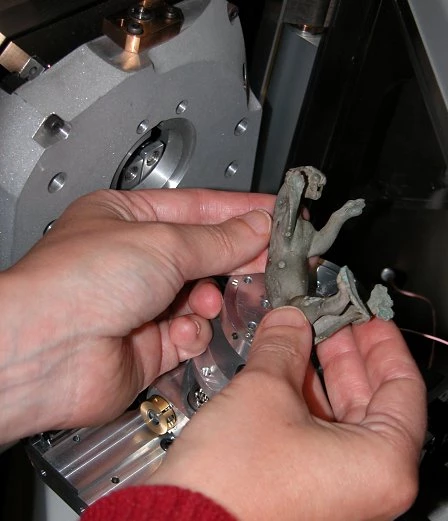
Leopard cup being placed in the Scanning Electron Microscope.

Leopard cup being placed in the Scanning Electron Microscope.

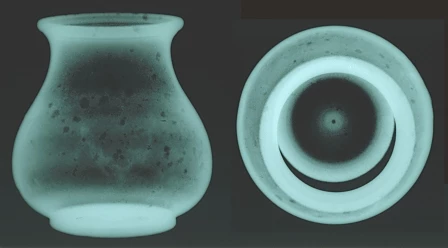
X-rays of the cup.

X-rays of the cup.

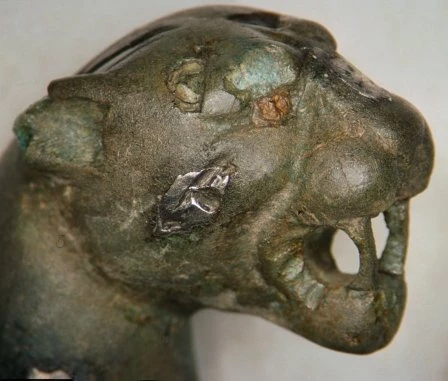
Microphoto of the leopard's face.

Microphoto of the leopard's face.

Discovered in 2003, this exquisite Roman vessel has been the subject of detailed study at Amgueddfa Cymru - National Museum Wales.

The bronze cup is one of the finest Roman vessels to have been found in Wales. It was discovered by Mr Gary Mapps near Abergavenny (Monmouthshire). It was reported to the Portable Antiquities Scheme, enabling the finds spot to be investigated.

Excavation of the site revealed that the cup had been placed upside down in a small pit containing a cremation. This cremation was part of a cemetery beside a Roman Road some distance from the mid 1st to early 2nd century fort at Abergavenny (Roman Gobannium). There is also a growing amount of evidence for a civilian settlement dating from the 2nd to 4th centuries in the neighbourhood of this cemetery.

The cup displays craftsmanship of a high standard and it was almost certainly manufactured in Italy during the 1st century AD. Very similar cups have been found at the doomed city of Pompeii, which was destroyed after the eruption of Vesuvius in AD79.

X-rays of the cup revealed that it was first cast in a mould using leaded bronze. Lead was added to help the molten bronze (principally copper and tin) flow more easily and improve the quality of the casting. Once this casting had been made the vessel was turned on a lathe with the use of a sharp cutting tool to produce its final shape.

The cup's decorative handle depicts a leopard which, in Roman mythology, appears as the draught-beast and companion of Bacchus, the god of wine. His worship involved feasting, drinking, music and dancing. Leopards, captured in both Africa and Asia, were also popular with the Romans for display and fighting in the amphitheatre arena.

The leopard handle was made separately using 'lost wax' casting. The first process was to make a wax model of the leopard. A clay mould was formed around the model and then heated to run off the wax. Leaded bronze was poured in to fill the space left by the wax and, after cooling, the mould was broken to remove the bronze handle.

Further work was undertaken on the finished casting: for example the tail and canine teeth, originally cast thicker, were cut away to form finer features. The spots were also chiselled out from the body after casting and inlaid with silver. The leopard was then attached to the cup using solder. The leopard's eyes, measuring about a millimetre in diameter, were also inlaid. Analysis of the remaining traces of inlay indicate that the eyes may have been of amber.

It is unknown whether the cup belonged to a member of the Roman army, or a native Briton from the nearby civilian settlement. Whichever is the case, this 1st century cup was a costly import and probably belonged to someone of status, who cherished it sufficiently to want it buried with them on their death.

Background Reading

Things Fall Apart: museum conservation in practice. National Museum Wales Books, 2006

The wreck of the Ann Francis

8 May 2007

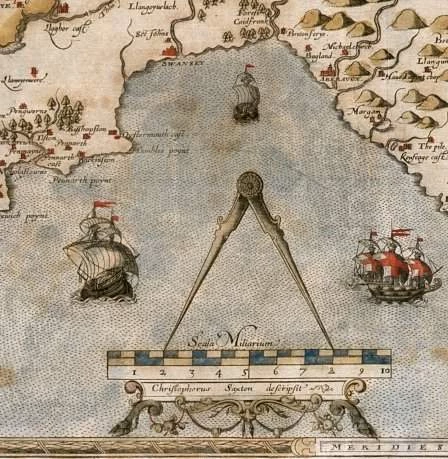
A detail of Christopher Saxton's Map of Glamorgan, 1578

A detail of Christopher Saxton's Map of Glamorgan, 1578, showing the coastline from Oxwich on Gower (left) to Margam (upper right).

Spanish gold and silver coins of Ferdinand and Isabella (1479-1504)

Spanish gold and silver coins of Ferdinand and Isabella (1479-1504). Coins continued to be minted in their names long after their deaths, until the 1550s.

Talers: large silver coins from Germany.
Talers

: large silver coins from Germany. This group includes issues of the Electors of Saxony, Counts of Stolberg, Langraves of Leuchtenberg and the cities of Cologne and Herford. The modern word 'Dollar' originates from Talers

A gold San Vicente of John III of Portugal (1527-57); the reverse (right side of image) depicts the saint holding a martyr's palm and a model ship.

A gold San Vicente of John III of Portugal (1527-57); the reverse (right side of image) depicts the saint holding a martyr's palm and a model ship.

Navigational dividers from the wreck of the Ann Francis.

Navigational dividers from the wreck of the Ann Francis.

Spanish coins, navigational tools and a whistle- are these the remains of the 16th-century vessel, the Ann Francis?

For many years, coins and other objects have been found on Margam Beach in Glamorgan. Many are of relatively recent date, but there is a noticeable concentration of coins dating from the middle of the 16th century.

Most of these coins are silver: of Ferdinand and Isabella of Spain and from a number of states of the German Holy Roman Empire. There are a few copper coins of John III of Portugal (1521-57) and even two spectacular gold coins - one Spanish and one Portuguese. Throw in sets of navigational dividers, lead sounding weights and a bosun's call (whistle) and what have you got? A shipwreck.

Most of the coins date from the 1530-1557. It is known that a French ship was lost in December 1557 at Oxwich on the Gower, 21km (14 miles) to the west - but is there no suitable wreck closer to Margam?

Well, a 16th-century wreck is known at Margam, but not in 1557. On 28 December 1583, the Ann Francis, the newest and biggest ship belonging to the King's Lynn merchant Francis Shaxton, ran aground on Margam Beach.

The ship was promptly plundered by the local inhabitants, until agents of the local landowners restored order and themselves laid claim to the goods. In due course Shaxton learnt of his ship's fate and after lengthy legal battles recovered some of his goods - anchors, cannon, cables and money.

Usually, coins are a good pointer to the dates of wrecks, so why do they suggest a much earlier date here? One answer, of course, may be that there really was a separate wreck at Margam in 1557, though we have no other evidence for one. But it is known that the Ann Francis carried a lot of money, probably the proceeds of selling a cargo of grain in Spain and/or Portugal.

The coins, of types that were by now obsolete, acted simply as silver bullion, which in normal circumstances would have been taken to the Mint in London to be converted into coin of the British realm. The ship lost its way on the return leg of the voyage and the silver never made it to London.

Background Reading

'Wreck de Mer and dispersed wreck sites: the case of the Ann Francis (1583)' by M. Redknap and E. Besly. In Artefacts from Wrecks edited by M. Redknap, p191-208. Published by Oxbow Books (1997).