: Gems & Precious Metals

Uncovering our Collections: Half a Million Records now Online

26 March 2018

As we reveal half a million collection records for the first time, we look at some of the strangest and most fascinating objects from National Museum Wales Collections Online.

This article contains photos of human skeletal fragments.

The Biggest

We have some real whoppers in our collections - including a full-size Cardiff Tram and a sea rescue helicopter - but the biggest item in our collection is actually Oakdale Workmen's Institute.

Built in 1917, the Institute features a billiard room, dance hall and library - and is nowadays found in St Fagans National Museum of History.

Photograph from 1908 showing Horace Watkins in a very early, precarious-looking monoplane

Horace Watkins testing his monoplane in 1908

Many of the buildings in St Fagans are part of the national collection - meaning they have the same legal status as one of our masterpiece Monets or this coin hoard. The buildings are dismantled, moved, rebuilt - and cared for using traditional techniques, by the museum's legendary Historic Buildings Unit.
 

The Oldest


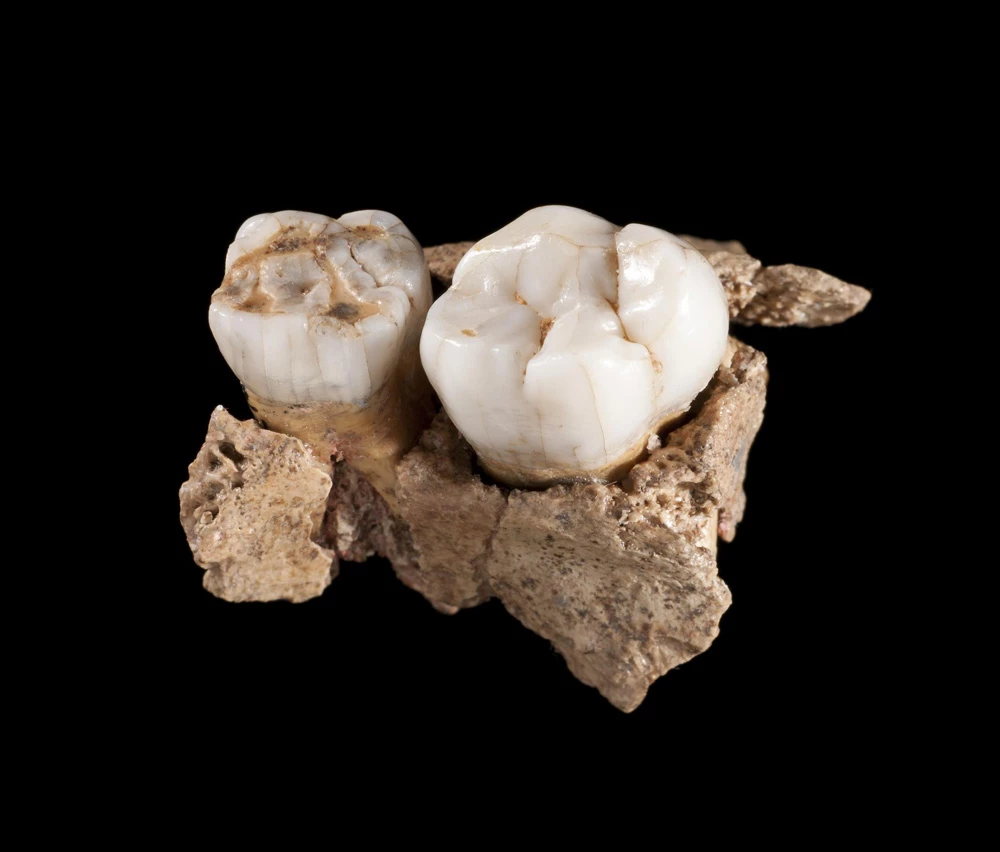
photograph of two teeth, belonging to a Neanderthal boy aged 8

The oldest human remains ever discovered in Wales

These teeth belonged to an eight year-old Neanderthal boy - and at 230,000 years old, they are the oldest human remains in Wales.

They were discovered in a cave near Cefn Meiriadog in Denbighshire, along with a trove of other prehistoric finds, including stone tools and the remains of a bear, a lion, a leopard and a rhinocerous tooth.

These teeth are among some of the incredible objects on display at St Fagans National Museum of History
 

The Shiniest

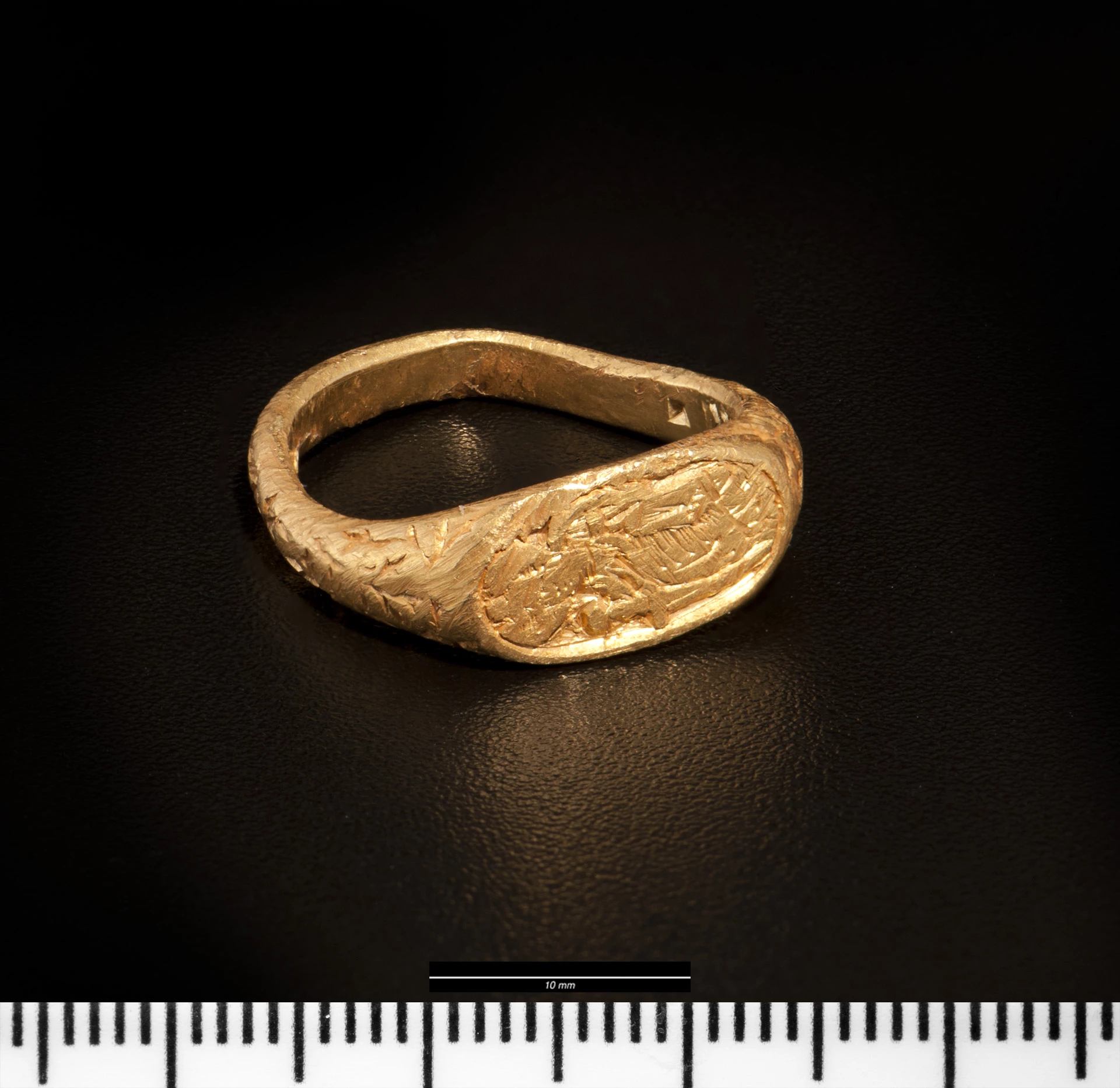
People in Wales have been making, trading and wearing beautiful treasures from gold for thousands of years - like this Bronze Age hair ornament and this extremely blingy Medieval signet.


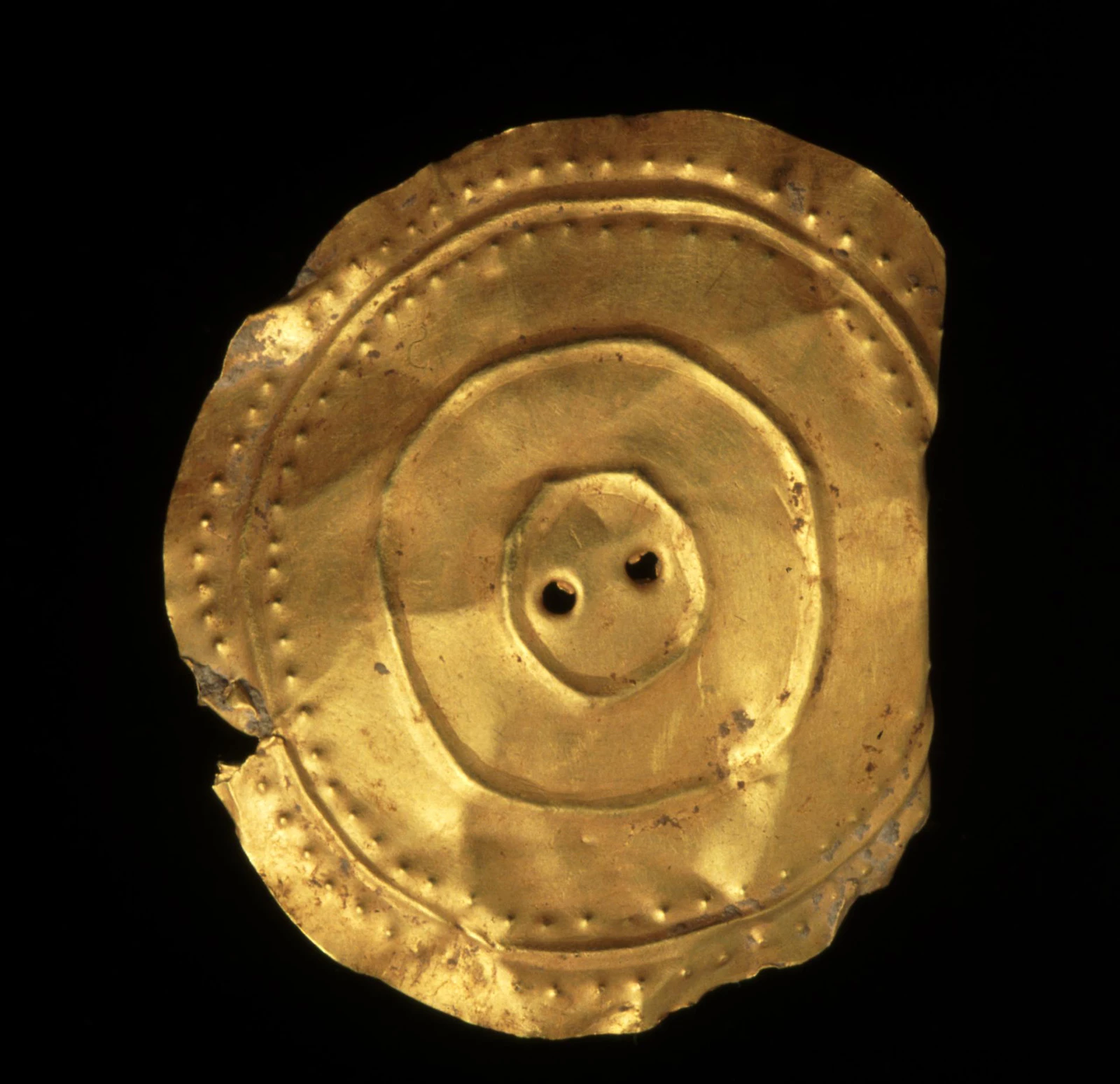
photograph of gold disc with repousse design

At around 4000 years old, this sun disc is one of the earliest and rarest examples of Welsh bling

One of the earliest examples of Welsh bling is this so-called 'sun disc', found near Cwmystwyth in Ceredigion.

Current research suggests that these 'sun discs' were part of ancient funeral practice, most likely sewn onto the clothes of the dead before their funerals. Only six have ever been found in the UK.
 

Most Controversial

At first glance, an ordinary Chapel tea service - used by congregations as they enjoyed a 'paned o de' after a service. A closer look reveals the words - 'Capel Celyn'. The chapel, its graveyard and surrounding village are now under water.


Photograph showing a cup and saucer with 'Capel Celyn' and a ribbon scroll design

Capel Celyn, in the Tryweryn Valley, is now underwater

Flooded in 1965 by the Liverpool Corporation, the Tryweryn valley became a flashpoint for Welsh political activism - creating a new generation of campaigners who pushed for change in how Welsh communities were treated by government and corporations.

Curators from St Fagans collected these as an example of life in Capel Celyn - to serve as a poignant reminder of a displaced community, and to commemorate one of the most politically charged moments of the 20th century in Wales.
 

Honourable Mention: an Airplane made from a Dining Room Chair

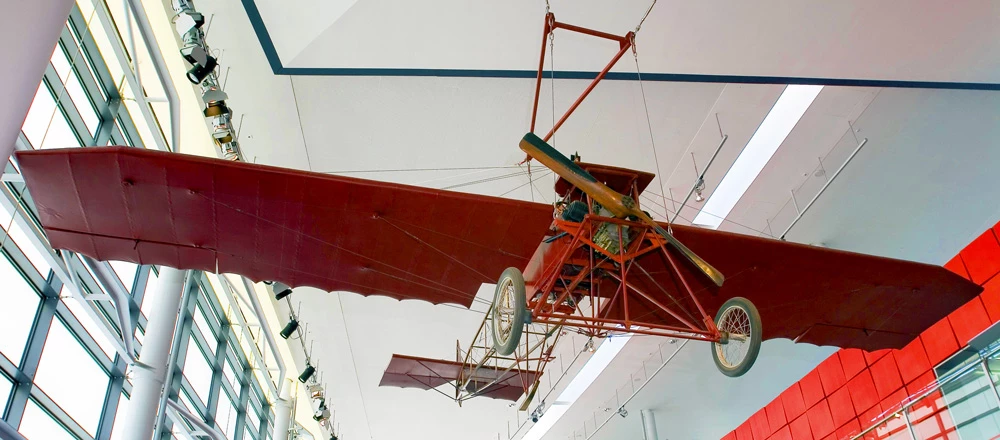
Made from a dining room chair, piano wire and a 40 horsepower engine, the Robin Goch (Red Robin) was built in 1909 - and also features a fuel gauge made from an egg timer.


photograph of a small, early twentieth century airplane with red wings

The Robin Goch (Red Robin) on display at the National Waterfront Museum

Its builder, Horace Watkins, was the son of a Cardiff printer - here he is pictured with an earlier, even more rickety version of his famous monoplane.
 

Photograph from 1908 showing Horace Watkins in a very early, precarious-looking monoplane

Horace Watkins testing his monoplane in 1908

Our collections are full of stories which reflect Wales' unique character and history. The Robin Goch is one of the treasures of the collection, and is an example of Welsh ingenuity at its best.

Half a Million Searchable Items

The launch of Collections Online uncovers half a million records, which are now searchable online for the first time.

“Collections Online represents a huge milestone in our work, to bring more of our collections online and to reach the widest possible audience.

It’s also just the beginning. It’s exciting to think how people in Wales and beyond will explore these objects, form connections, build stories around them, and add to our store of knowledge." – Chris Owen, Web Manager
 

Search Collections Online

Plans for the future

Our next project will be to work through these 500,000 records, adding information and images as we go.

We'll be measuring how people use the collections, to see which objects provoke debate or are popular with our visitors. That way, we can work out what items to photograph next, or which items to consider for display in our seven national museums.

Preparing and photographing the collections can take time, as some items are very fragile and sensitive to light. If you would like to support us as we bring the nation's collections online, please donate today - every donation counts.


Donate Today


We are incredibly grateful to the People's Postcode Lottery for their support in making this collection available online.
 

‘Love the Beautiful' - Discovering the Meaning of Finger Rings

Rhianydd Biebrach, 9 May 2017

Finger rings, made from precious or base metals, plain and decorated, or inset with gems or enamels, were commonly worn by rich and poor alike in the past. Medieval and Renaissance paintings show that several could be worn on the same hand, sometimes above the middle knuckle, and by both sexes. From time to time examples once worn by long dead Welsh men and women are discovered by metal detectorists and reported via the Portable Antiquities Scheme Cymru. If made of precious metal these are declared treasure and are usually acquired by museums across Wales, allowing local communities and visitors to benefit from having these precious remnants of our past on public display. Even now we can appreciate their beauty and craftsmanship, and make connections with the people who lost them long ago.

But beauty is not their only quality, nor does their value lie merely in the gold and silver they are made from. Today we talk about items of jewellery as having ‘sentimental value’, carrying an emotional significance personal to the owner which goes beyond their material or aesthetic qualities. This is also true of the past. For centuries finger rings have been imbued with a range of specific meanings which would have been highly significant for both the wearer and the giver of the ring. Some of these meanings - and the rings themselves - are explored here:

All of these rings, as well as many others which have been unearthed by metal detectorists or found by chance, can be thought of as fragments of intense human emotion. In the

posy , mourning and iconographic rings this is clearly communicated in their designs, which still give us a sense of the love, grief and spirituality which moved their wearers. The signet rings can also be thought of as embodying something of the personal identity of their original owners. Even the purely decorative rings may well have held what we would now describe as ‘sentimental value’ as well as the financial value of the material. In the case of the sapphire, we are reminded that Wales, although on the very edge of Europe, was connected to the Far East through trade.

Perhaps the most important thing to remember is that each ring found represents an individual loss. People do not generally throw away gold and silver objects or precious stones, even if they no longer hold any emotional significance for them. So it is assumed that these rings were accidentally lost, perhaps slipping off a finger or falling out of a purse, and not missed until it was too late. Despite the distance of the centuries it is easy for us to imagine the anguish felt at the loss of a wedding ring, or of a reminder of a dead loved one, or a ring which brought spiritual comfort. These shared emotions bring us into direct contact with the long-dead owners of these lost treasures.

+ ieme la belle, or love the beautiful, which gives name to this article is inscribed on the outside of the 15th century Ewenni Ring, discovered near Ewenni Priory by Mr. G. Gregory in 1988 and now held in the collections of Amgueddfa Cymru).

Posy Rings

Rhianydd Biebrach, 9 May 2017

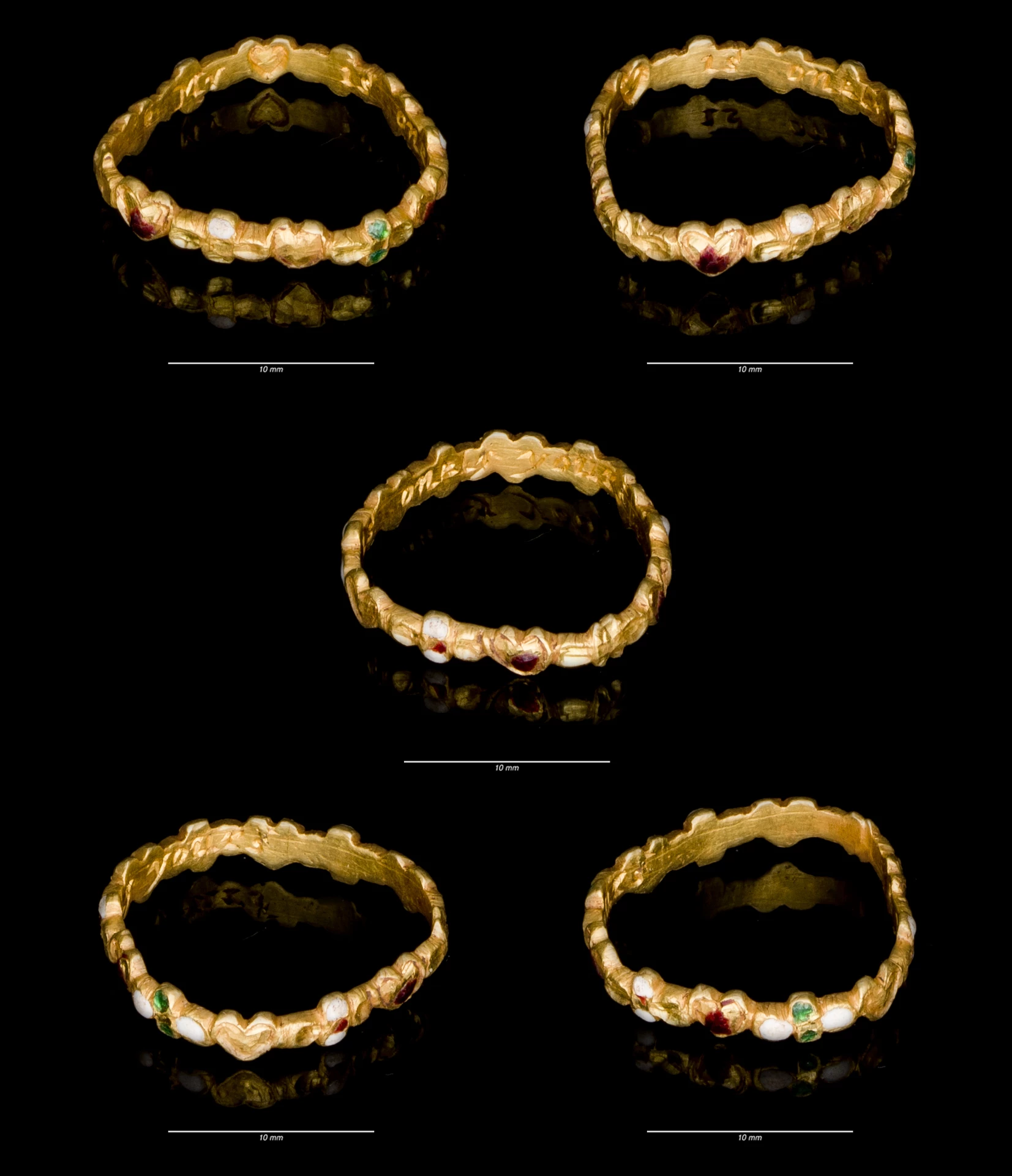
Posy ring from Henllys

Posy ring from Henllys

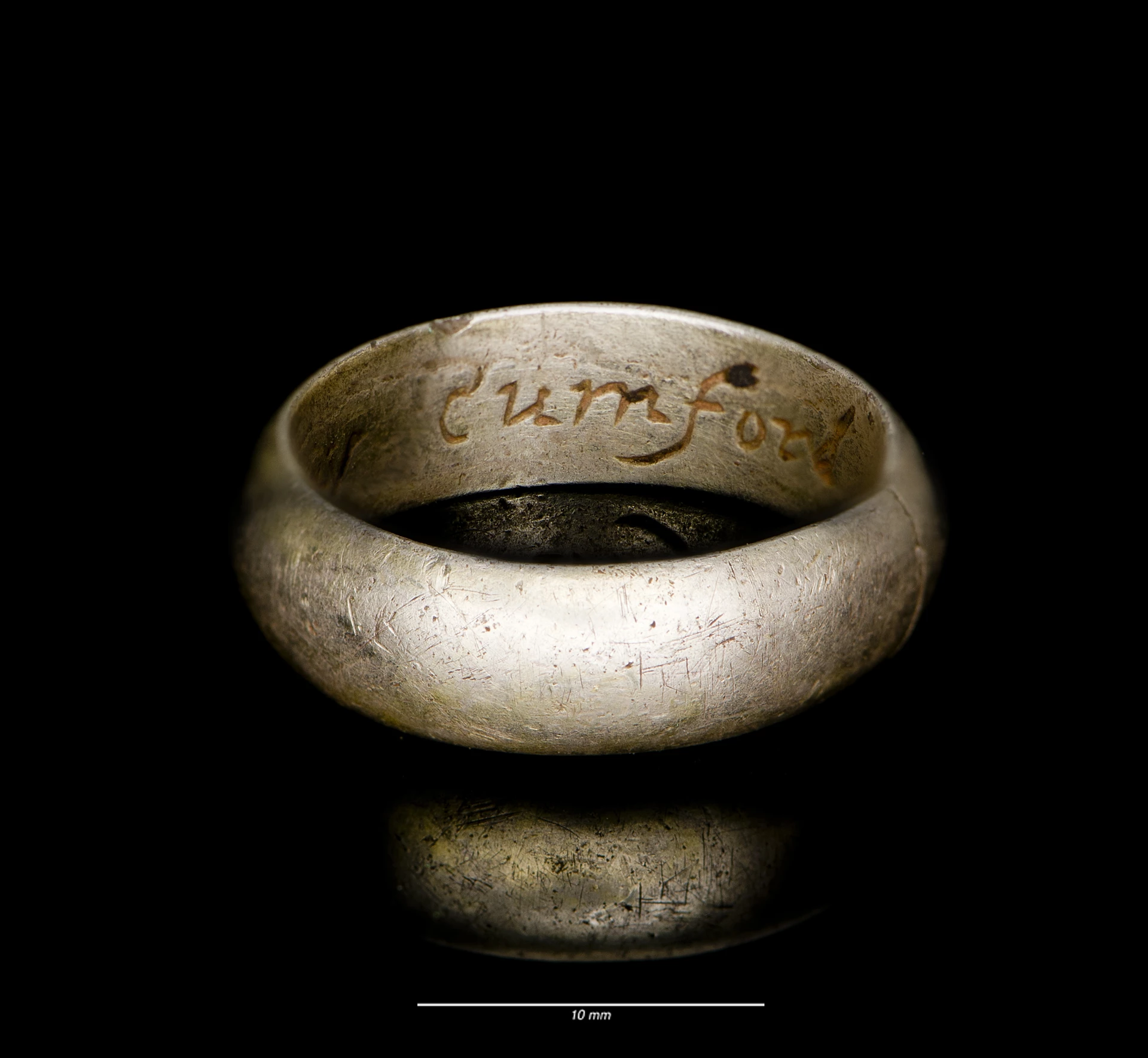
Posy ring 'God is my Cumford'

Posy ring 'God is my Cumford'

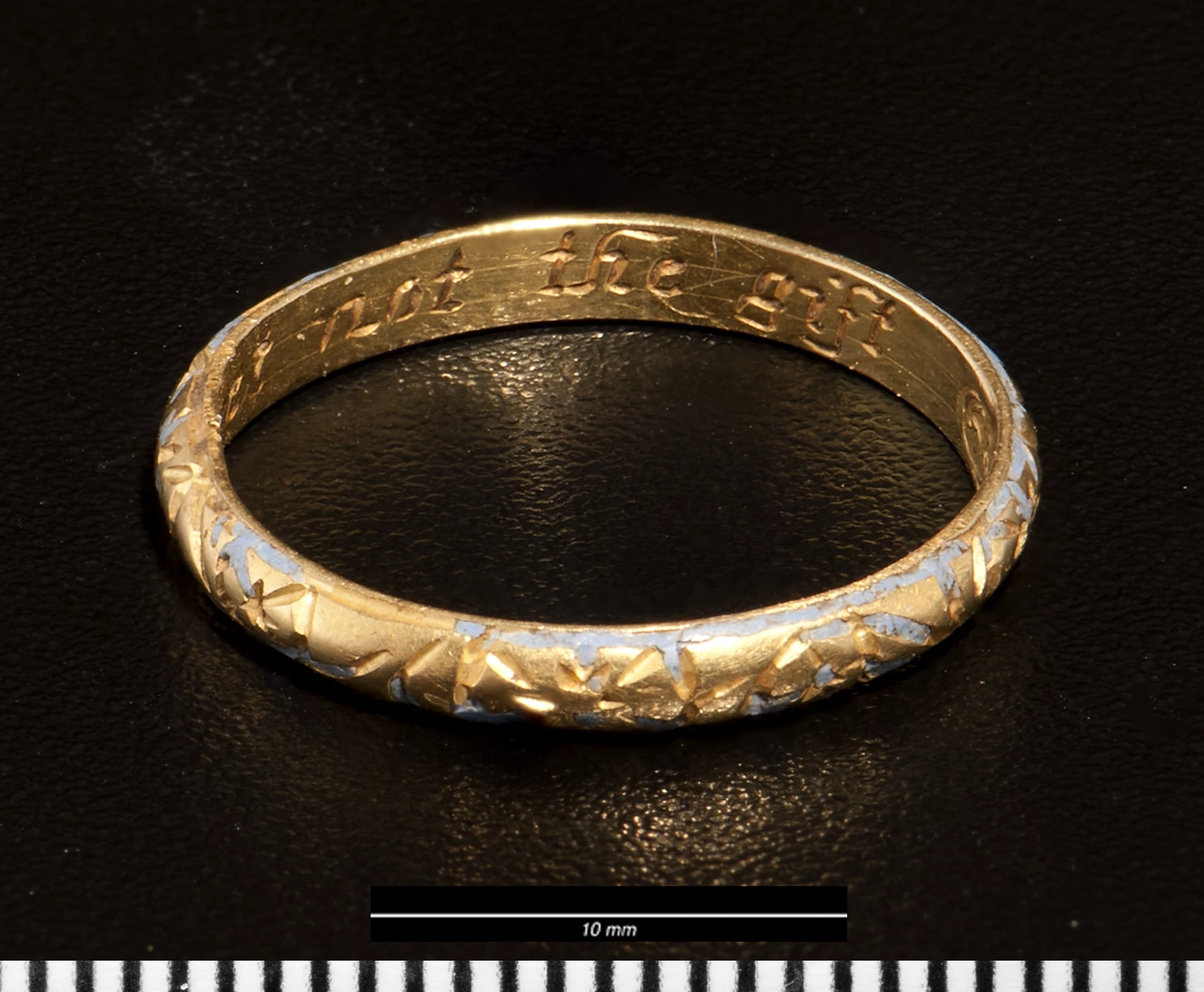
Posy Ring form St Dogmaels

Posy Ring form St Dogmaels

The exchanging of rings as tokens of love is not just a modern practice. Posy rings, inscribed with mottoes or short phrases indicating love or fidelity have been popular from the Middle Ages. Though we now associate the giving of rings with the formal occasion of an engagement or wedding, historically posy rings may have been given at any stage of the relationship, and by either partner. They may be plain bands, or decorated in a variety of ways, but their most important aspect was not so much their outer appearance as the carefully chosen message they contained, which was intended as a personal and constant reminder of the giver’s feelings towards the recipient. Some mottoes are in Latin or French, the latter being associated with chivalry and courtly love, but many of those discovered recently by metal detectorists in Wales have English phrases, most of which play on the theme of fidelity and constancy.

A particularly delicate and decorative example, from the late 16th or early 17th century was discovered in August 2013 by Mr Simon Harrison at Henllys, Monmouthshire. Made of linked gold roundels and hearts filled with red, white and green enamel, the inner surface is inscribed with the words ‘My ♥ is onely yours’. Several other rings, four of which have been recently acquired by the Saving Treasures; Telling Stories project for national and local collections, have inscriptions communicating a variety of sentiments, but not all of them are as straightforwardly romantic as the Henllys example. ‘Forget not the gift’ urges the decorated gold ring found near St Dogmael’s, Pembrokeshire, by Mr Tom Baxter-Campbell in June 2011. This suggests that the ‘gift’ of the ring should act as a reminder of the giver: was he or she about to go away? Was there perhaps some doubt that their feelings might not be returned?

A similar ring, also of gold and dated to the late 16th or early 17th century, found at Llantwit Major by Mr David Hughes in April 2013, bears the enigmatic legend ‘Such is my love.’ The precise meaning of this phrase is unclear, but the intention could be that the giver’s love is enduring and precious, like gold, and eternal, a quality associated with the ring’s shape, which has no beginning and no end. Presumably the receiver of the ring understood exactly how to interpret the message.

Although posy rings are associated with messages of love, some examples recently discovered in Wales strike a decidedly sober tone. A late 17th or early 18th century silver-gilt ring found near Caerphilly in June 2013 by Mr T.M. Davies, and now in the collection of the Winding House Museum in Tredegar, looks very much like a modern plain wedding band. On the inner surface is the inscription ‘Keep faith tell [till] death’, a rather sombre sentiment somewhat out of step with lighter modern endearments but utterly in keeping with past understandings of the indissolubility of marriage. In an age when divorce was virtually impossible, marital relationships were for life. Not all posy rings carried statements of love, however: a plain silver-gilt band discovered at Llangibby, Monmouthshire, by Mr Glen Flynn in 2012 declares ‘God is my cumford [comfort]’. Does this suggest that the ring was given at a time of personal distress, sorrow or illness for the wearer, or does it merely reflect their personal piety?

A notable feature of all of these rings, as with some of those featured below, is that these mottoes are inscribed on the inside, rather than the outside, of the band. But why would these ardent suitors want to hide their declarations of love instead of setting them where all could see? The likely reason is that the messages were private, intended to have significance only for the giver and for the wearer, who bore the message next to the skin, emphasising the intimacy of the relationship.

Mourning Rings

Rhianydd Biebrach, 9 May 2017

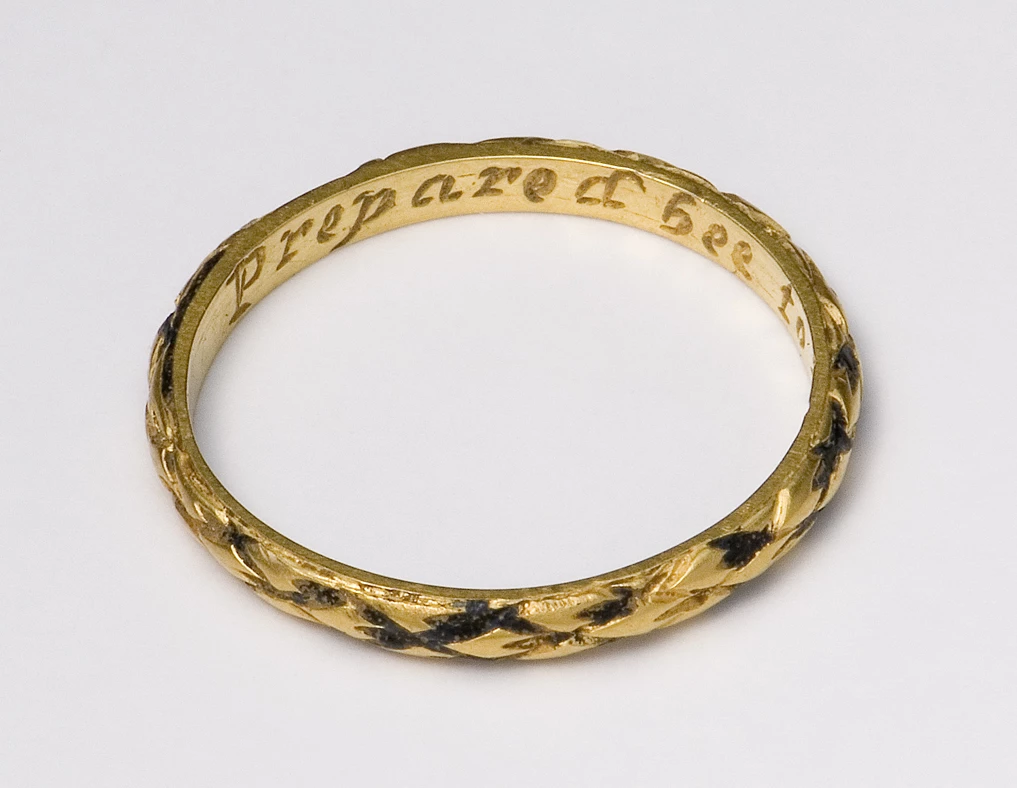
Mourning ring from Pennard

Mourning ring from Pennard

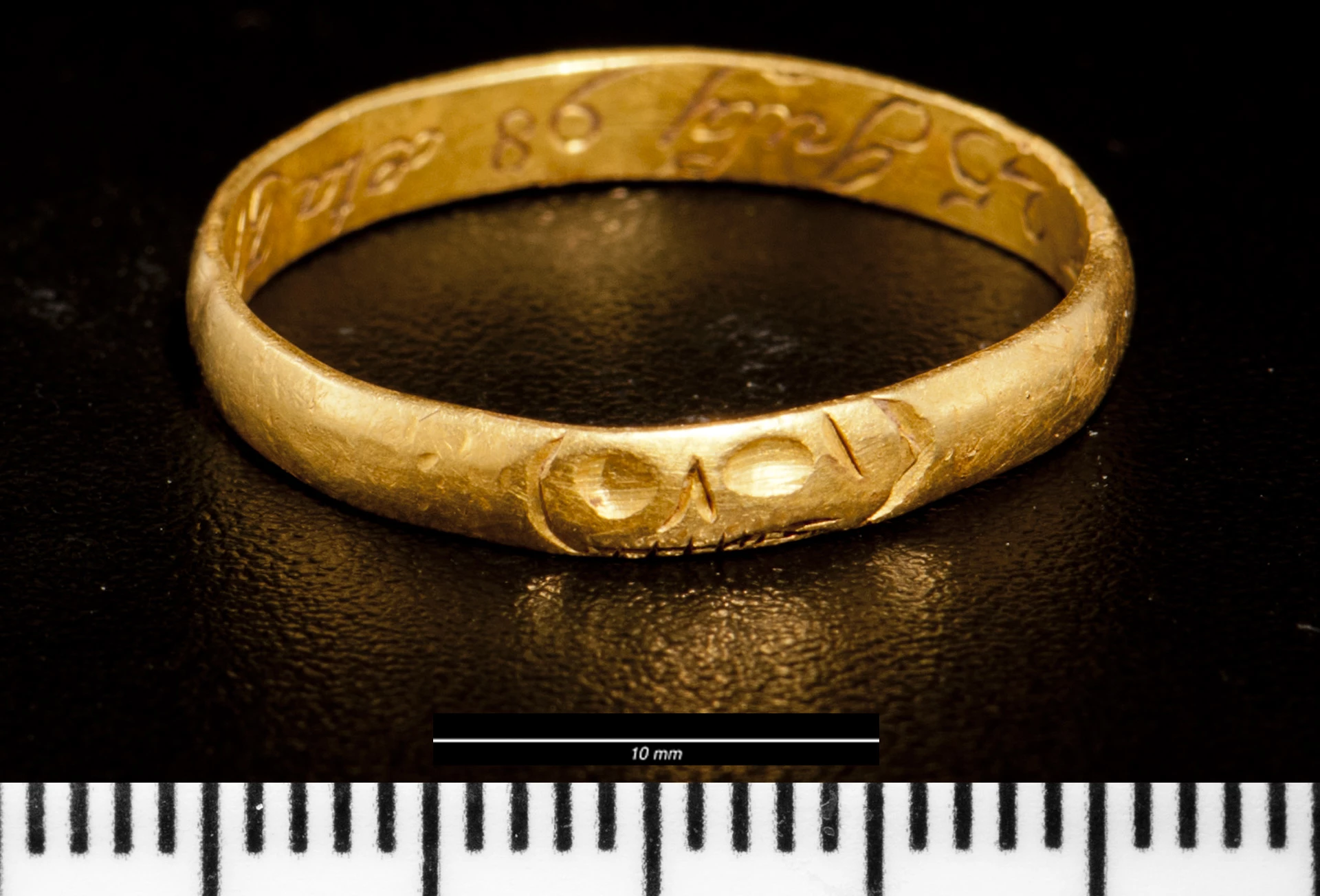
Mourning ring from Kidwelly

Mourning ring from Kidwelly

Mourning ring from Hundleton, Pembrokeshire

Mourning ring from Hundleton, Pembrokeshire

Intense personal feelings were also encapsulated in mourning rings, but here it was the fractured relationship between the living and the dead that was at the heart of the ring’s purpose. In the Middle Ages the living retained some form of contact with the dead through the offering of prayers for the soul, but this practice was stopped at the Reformation and from the mid-16th century the dead could only be remembered, not helped. Mourning rings were sometimes distributed at funerals as a way of aiding this remembrance among the deceased’s family and friends. Often bearing their initials and date of death, they fuse the natural human need to keep in mind the presence of a dead loved one with the old tradition of the memento mori motif. This was a decorative reminder of the nearness of death, highly relevant to societies where epidemic disease, childbirth and simple infections were everyday dangers.

Often in the form of a skull or death’s head, memento mori motifs were common throughout many forms of late medieval and Early Modern material culture, and can be found in paintings and books, on tombstones and jewellery. In the 16th century portraits of Edward and Gawen Goodman of Ruthin, which can be seen in the National Museum of Wales, Cardiff, the men are wearing large gold mourning rings on their index fingers, both featuring a grinning skull. Intended as reminders of the brevity of life, they may also have had inscriptions with a more personal meaning, bringing to mind a specific dead loved one.

None of the mourning rings recently discovered by Welsh detectorists are quite as elaborate as those shown in the Goodman portraits, but the principles behind them are exactly the same. In October 2010 Mr R. Pitman unearthed a gold mourning ring at Pennard, Swansea. Dated to the late 17th century and decorated with a trellis-style pattern inlaid in dark blue enamel, the ring is one of several acquired by the Saving Treasures; Telling Stories project and is now in Swansea Museum. On its inner surface is inscribed ‘Prepared bee to follow me’ – a reminder that death could come at any time and that it was proper for a good Christian to be spiritually and mentally prepared for the inevitable. We can never know who the ‘me’ was: perhaps a dead loved one; perhaps Death himself.

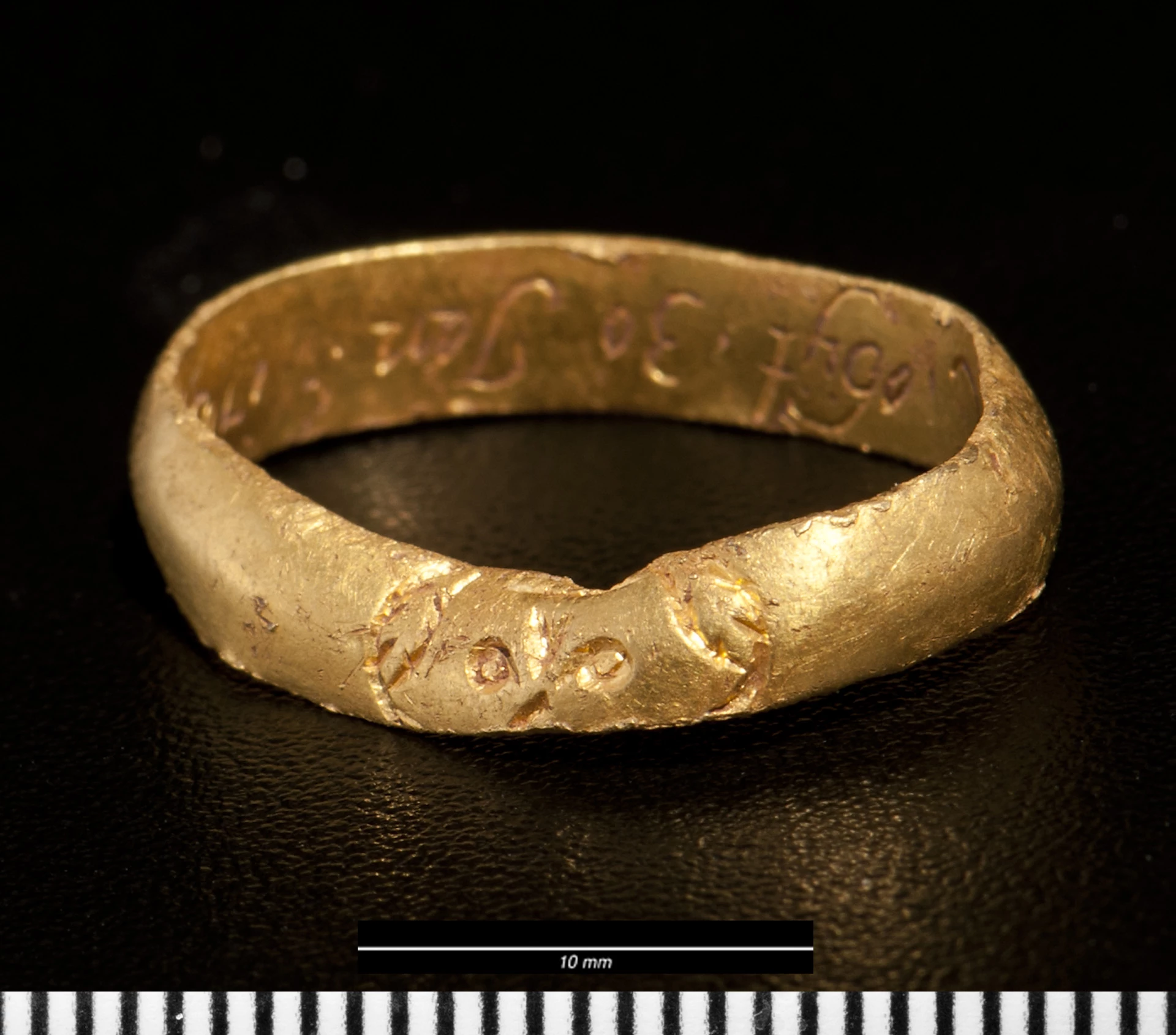
Three other examples are clearer in this respect. They contain the initials and death dates of the people commemorated by the rings in Latin inscriptions on their inner surfaces. The oldest, found by Mr D. Raven in May 2013 at Kidwelly and now in Carmarthen Museum, records the death of ‘J. A. ob 25 July 98 aeta 37’ [J. A. died 25 July 1698, aged 37]. The outer surface is plain apart from an engraved death’s head and is very similar to another gold ring found in Hundleton, Pembrokeshire, by Mr K. Lunn in November 2013, now in Milford Haven Maritime and Heritage Museum. Here the death’s head is rather more crudely cut and the inscription records ‘A. E. obijt 30 Jan’ 17034’ [A. E. died 30 January 1703/4]1.

Another example, found further to the east in Caerwent, Monmouthshire, by Mr Colin Price in July 2011, is slightly different in form, having a floral pattern rather than a death’s head on the outside. The inscription marks the ring as commemorating ‘G. K. obt 26 March 1702’ [G. K. died 26 March 1702]. Scant though these details are, it is still possible to get a sense of the personal loss and grief the rings embody, and the need bereaved family members felt to sustain the remembrance of their loved ones long into the future.

1 The apparent confusion over the year of death is due to the old style of dating prior to the adoption of the Gregorian Calendar by England and Wales in 1752. Before this the new year officially began on 25 March, not 1 January. Therefore 31 December 1703 would have been followed by 1 January 1703, not 1 January 1704.

Iconographic Rings

Rhianydd Biebrach, 8 May 2017

Iconographic ring with image of St Catherine

Iconographic ring with image of St Catherine

Iconographic ring from Maes y Groes

Iconographic ring from Maes y Groes

The starkness of the inscriptions on these mourning rings is largely a consequence of the Reformation, which did away with prayers for the dead and to the saints. In contrast, earlier medieval rings sometimes depicted saints or contained religious formulas such as extracts from prayers, and a small number of these have been recently found in Wales. A fine example is the late 15th century silver gilt ring discovered by Mr Phil Jenkins at Carew in October 2013. Decorated all around with a twisted design, the bezel is divided into three facets, each engraved with a separate word, together making the formula ‘ihs ave maria’ [Jesus. Hail Mary]. Such rings were more than just decorative statements of faith, they could also be used as devotional aids.

In the later Middle Ages there was a new emphasis on a more mystic, personal relationship with God, to be achieved through prayer and contemplation, and which could be aided by objects such as books and images. The Carew ring could also have been used in this way as the name of Jesus (‘ihs’) prompted the contemplation of Christ’s life and death. ‘Ave Maria’ is the opening statement of the Latin prayer derived from the words used by the Angel Gabriel at the Annunciation, when he appeared to Mary to tell her that she was carrying Jesus. In this way the ring encapsulated in three short words the central beliefs of the Christian religion – that Christ was sent to earth to save mankind.

Does the presence of the Latin words on the Carew ring mean that the owner of this ring was an educated person, or maybe even a cleric? Not necessarily. Although literacy rates were low at this time common Latin phrases such as those used in religious ceremonies and prayers would have been easily recognised, much as ‘post mortem’ and ‘et cetera’ are today. Even if their literal translation was not understood, their general meaning and significance as religious terms was important and would have given them a certain spiritual power. They may also have been thought to have a protective effect in the manner of a charm, although the church would have officially frowned on this as straying too closely into the realm of magic! Other iconographic rings found in Wales contain images of saints, which may have been specifically chosen for particular reasons. In October 2014 Mr Philip Jenkins discovered a late medieval gold ring bearing an engraved image of St Catherine at Llandissilio West, Pembrokeshire. As one of the virgin martyrs she held a special significance for young, unmarried girls, and she was also the patron of scholars, wheelwrights and various other groups.

Medieval saints can often be recognised by their ‘attributes’, such as objects they hold or items of dress. Catherine is often shown with a wheel and sword, the instruments of her torture and death (and the rather gruesome inspiration for the Catherine Wheel firework). Like many of the other rings described here the St Catherine ring also carries an inscription on the inside of the hoop. This reads ‘en bon eure’ [In good year], which suggests it might have been a New Year’s gift for someone with a particular devotion to this very popular saint.

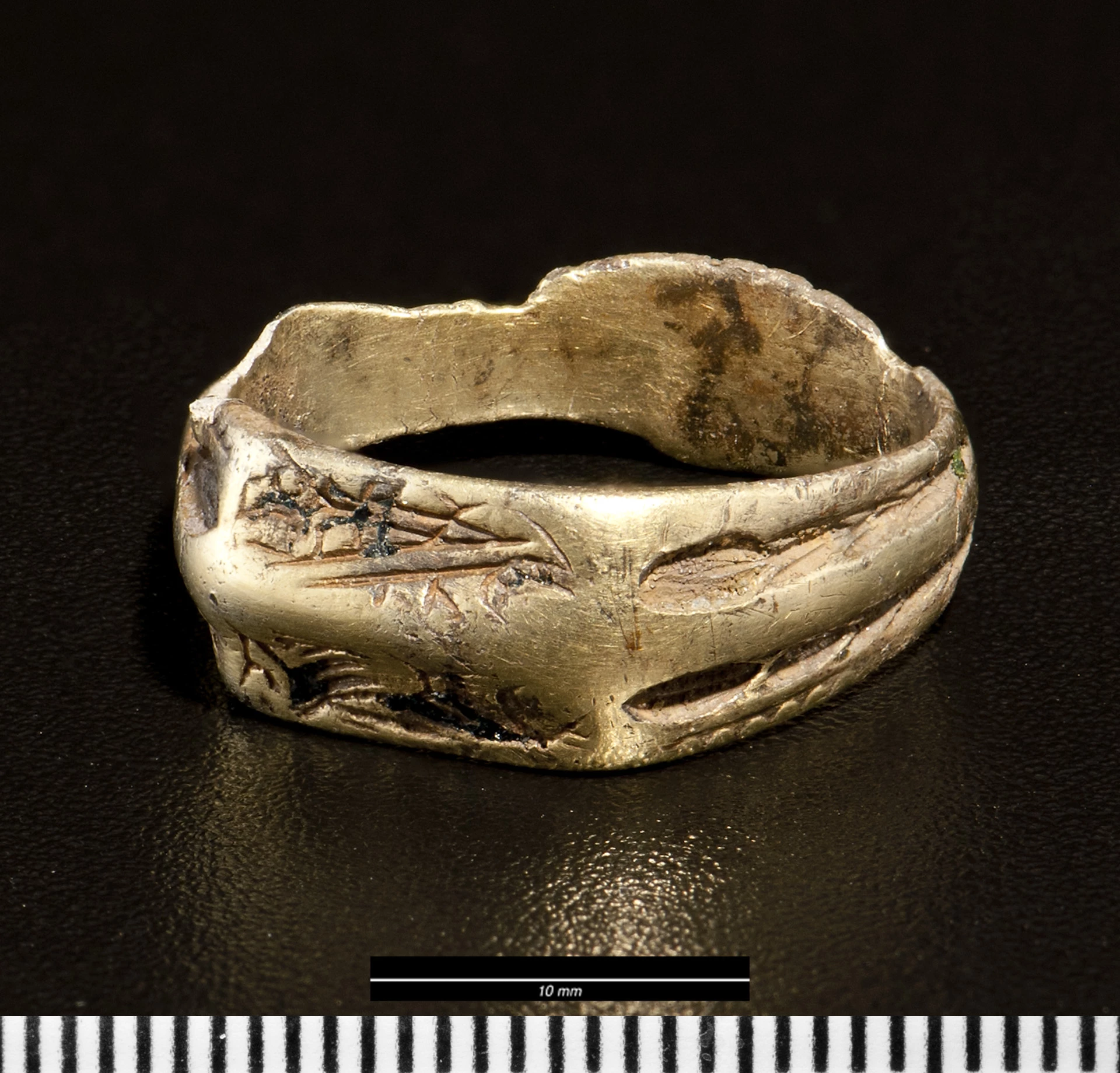
Although images of medieval saints are often easy to recognise, this is not the case with the late 15th century gold iconographic ring found by Mr Paul Anthony Byrne at Maes-y-Groes, near Wrexham. The ring has two images engraved on its double-faceted bezel, but both are worn and very little can now be made out other than a wing. This could therefore be an image of the Archangel Gabriel, St Michael (generally shown as winged), or even of St George.

It may seem strange for St George to appear on a ring found in Wales, but he was not exclusively associated with England at this time and, in any case, the owner may well not have been Welsh. Another interesting feature of this ring is the clasped hands which appear at the base of the hoop. These can signify love, trust or marriage and were a common symbol on medieval rings, known as ‘fede’ (faith) rings. Do the clasped hands suggest that this was also a lover’s gift like the posy rings described earlier?