The most ambitious print project of the First World War
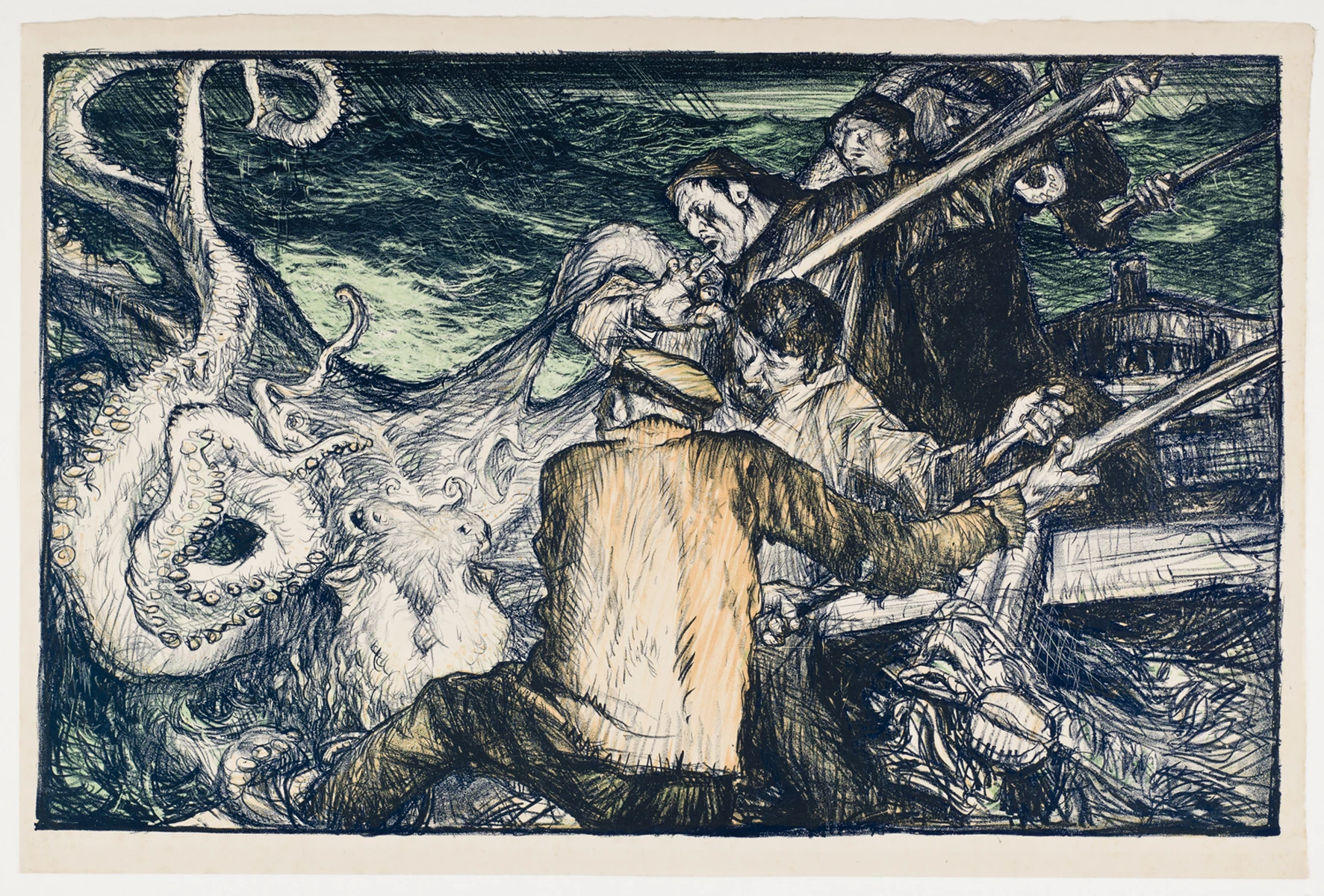
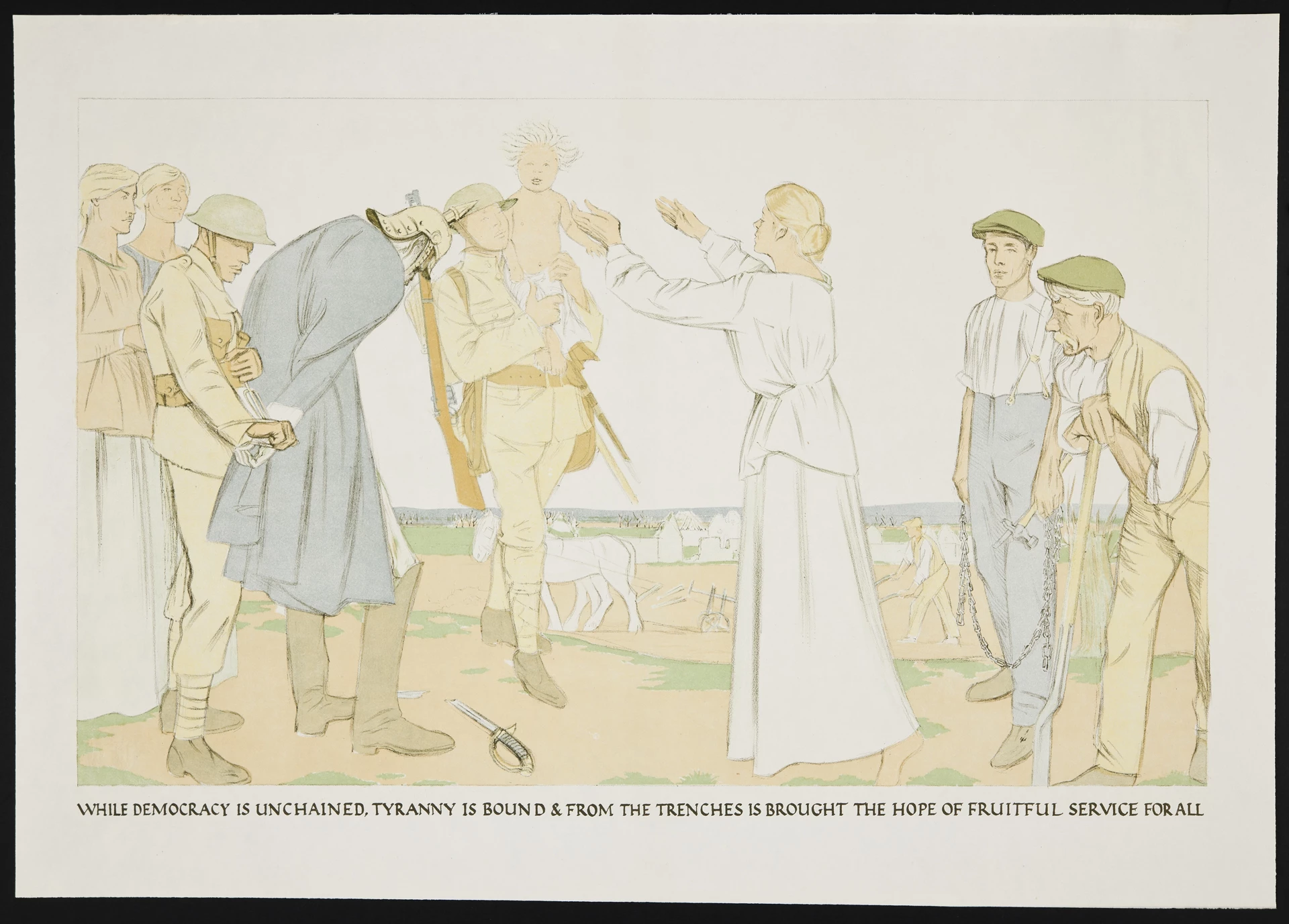
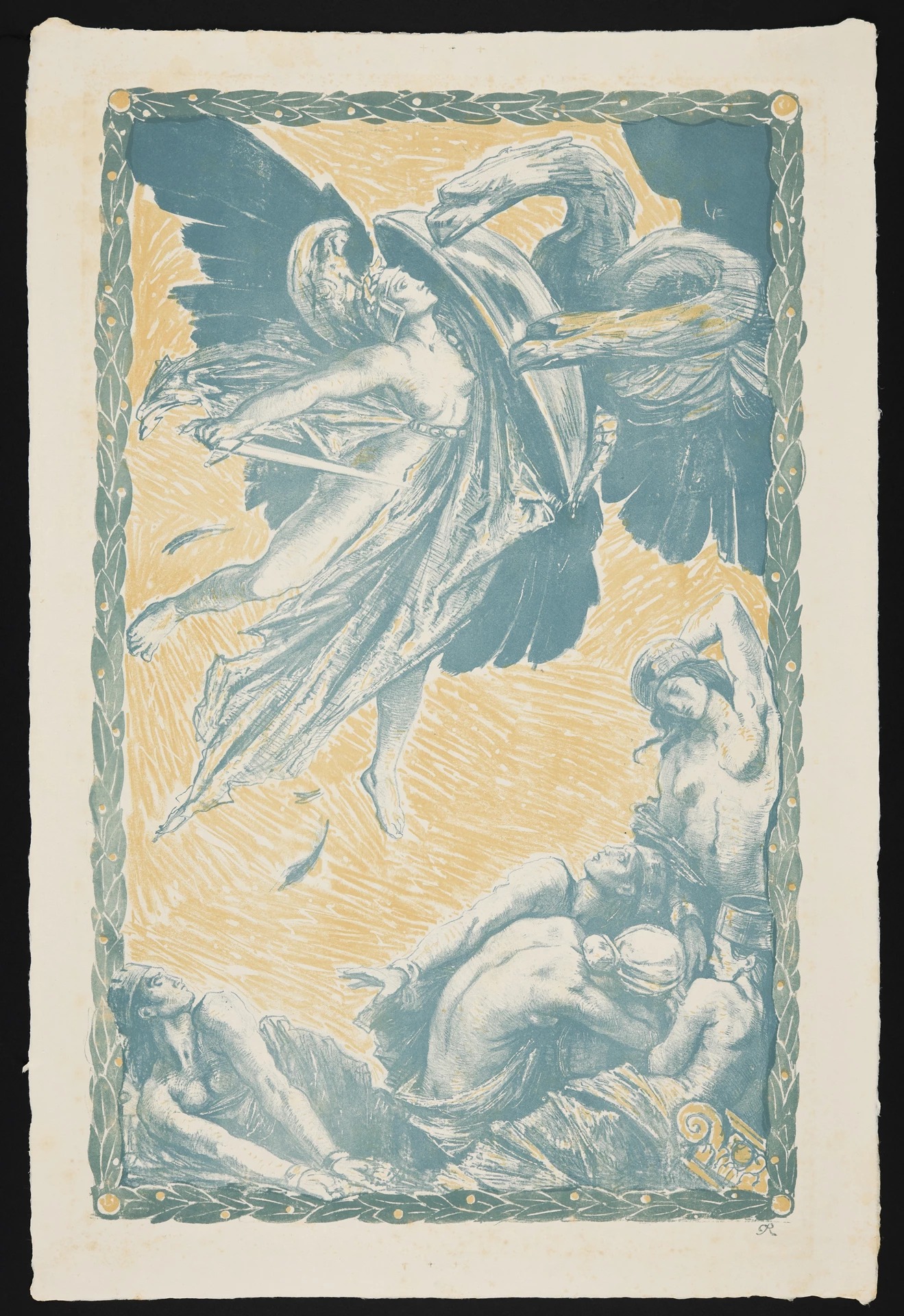
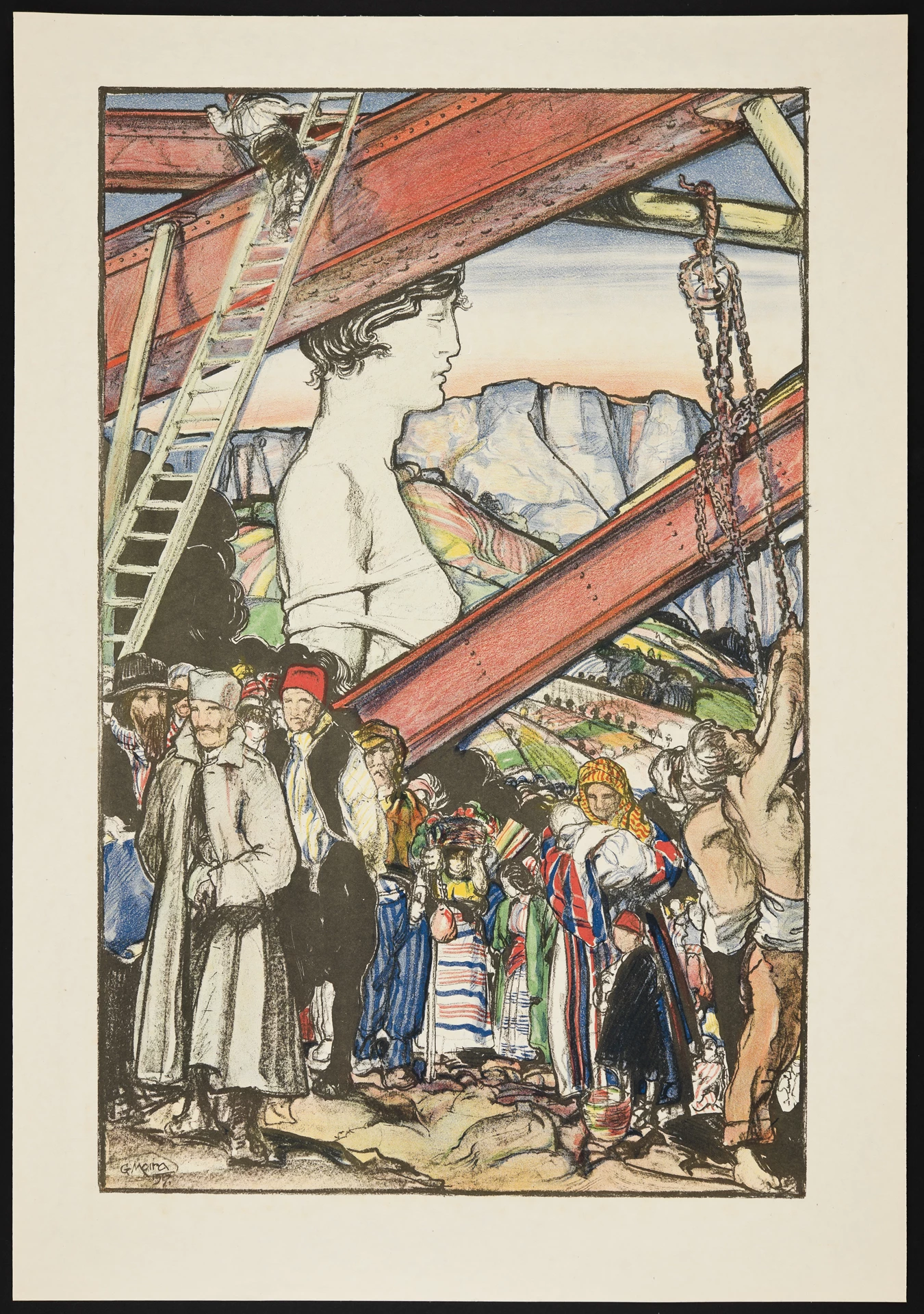
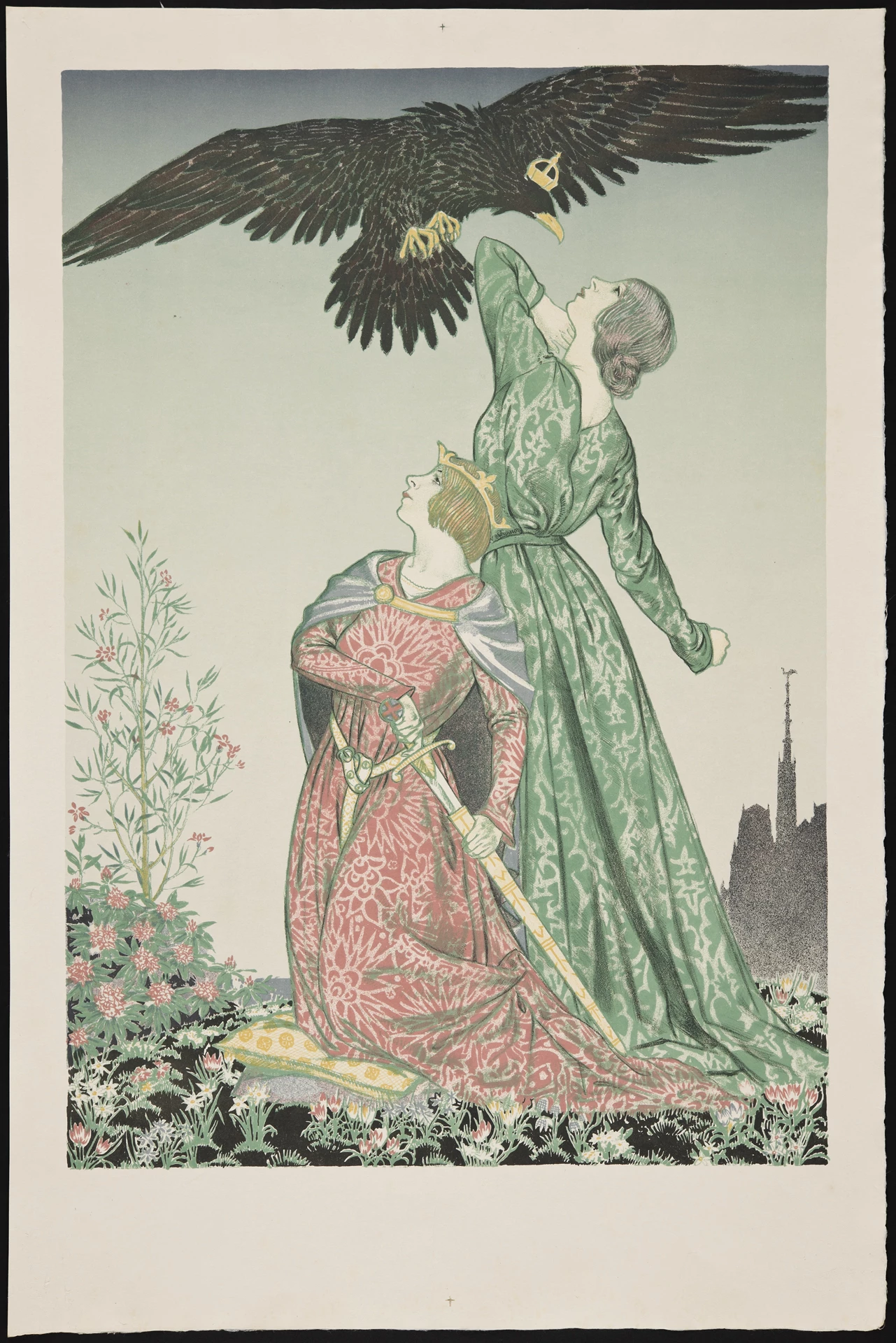
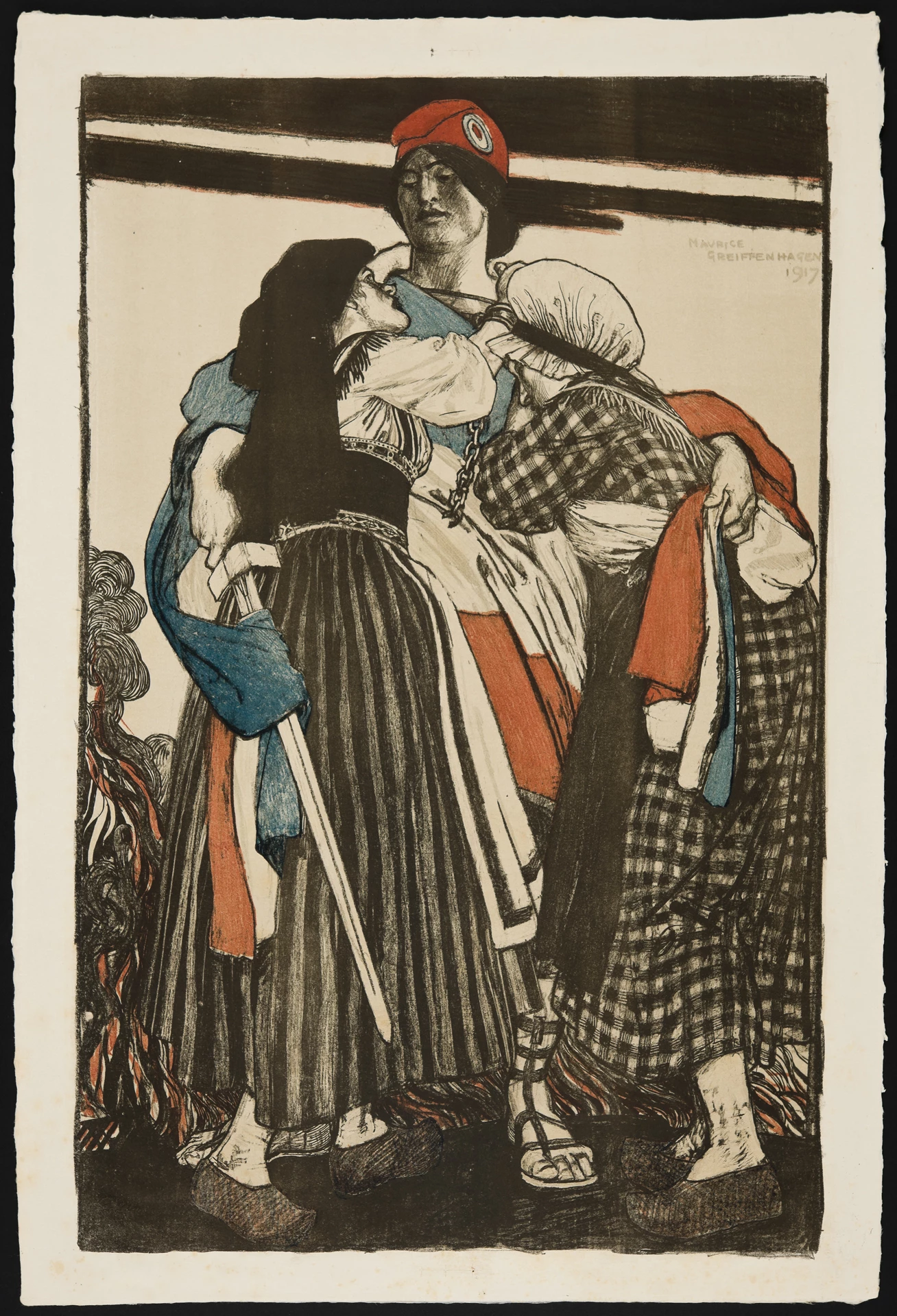
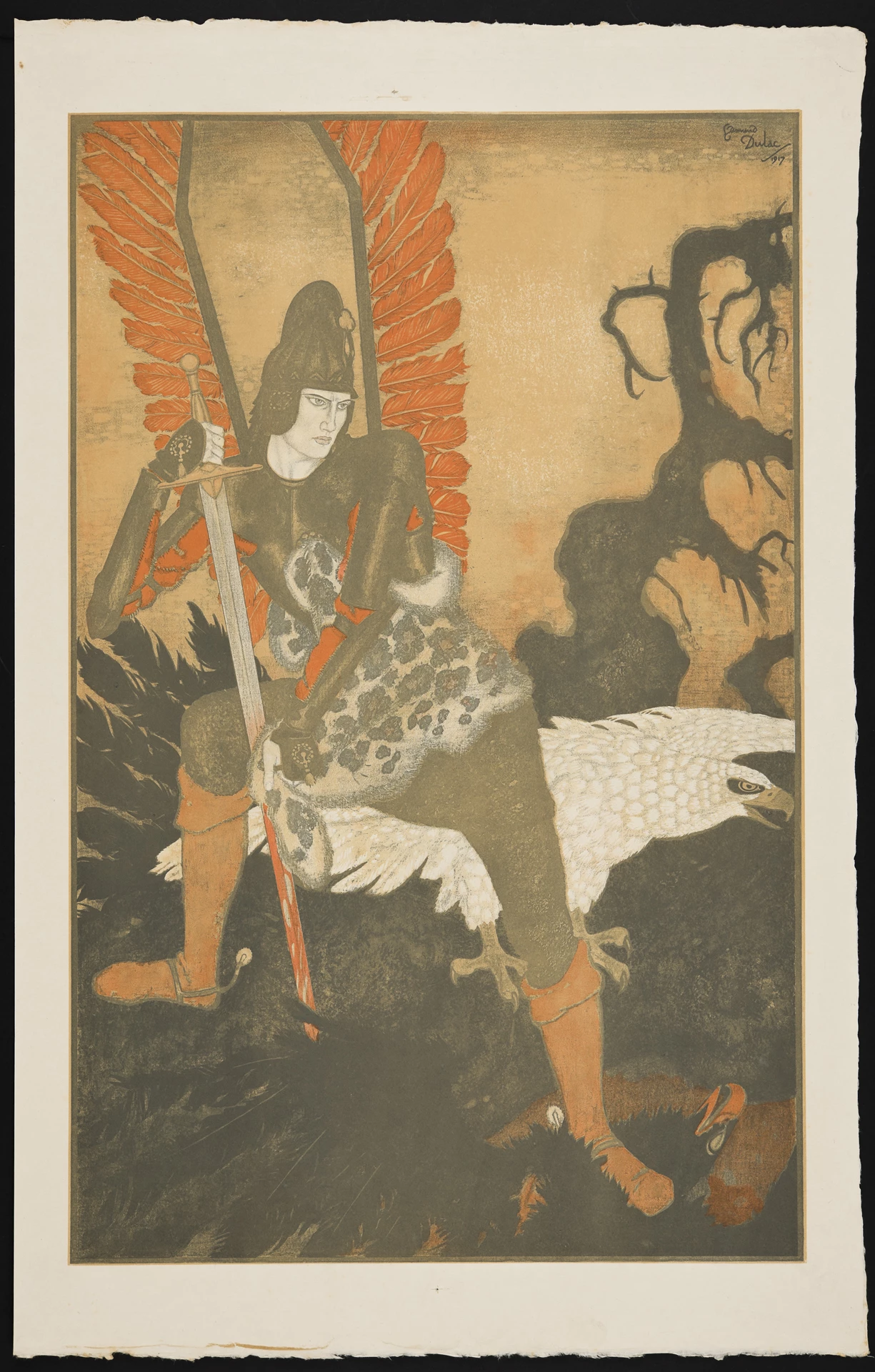
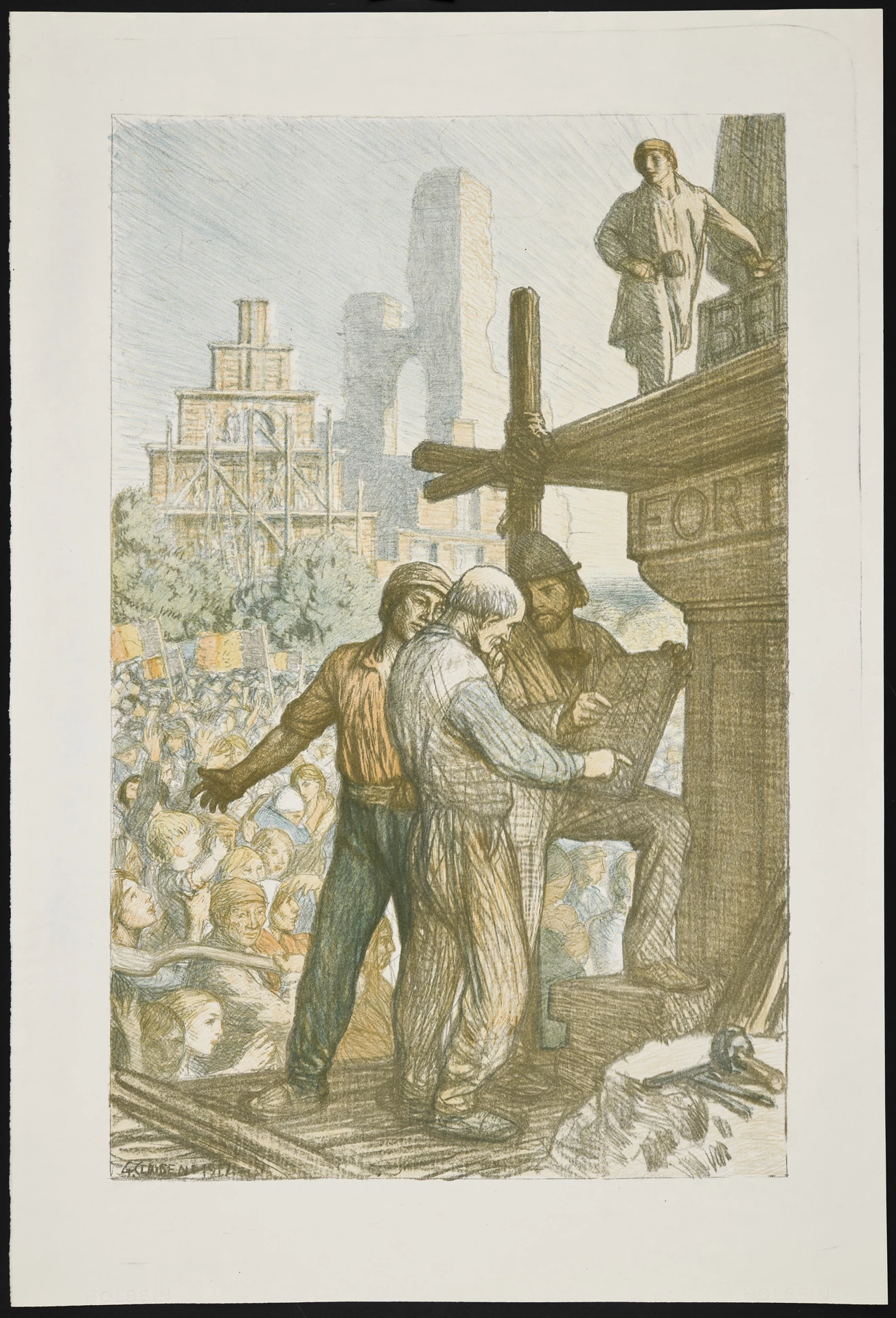
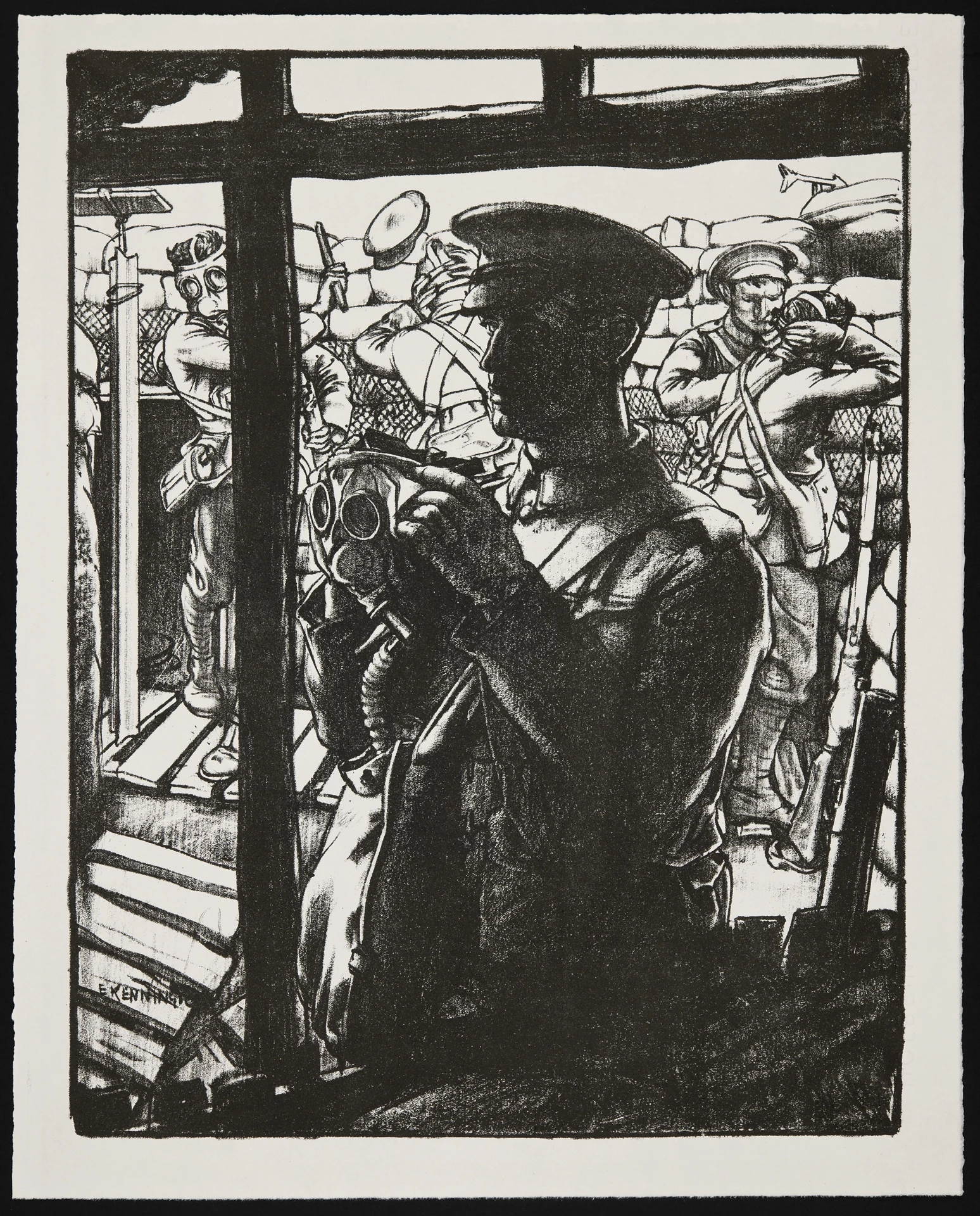
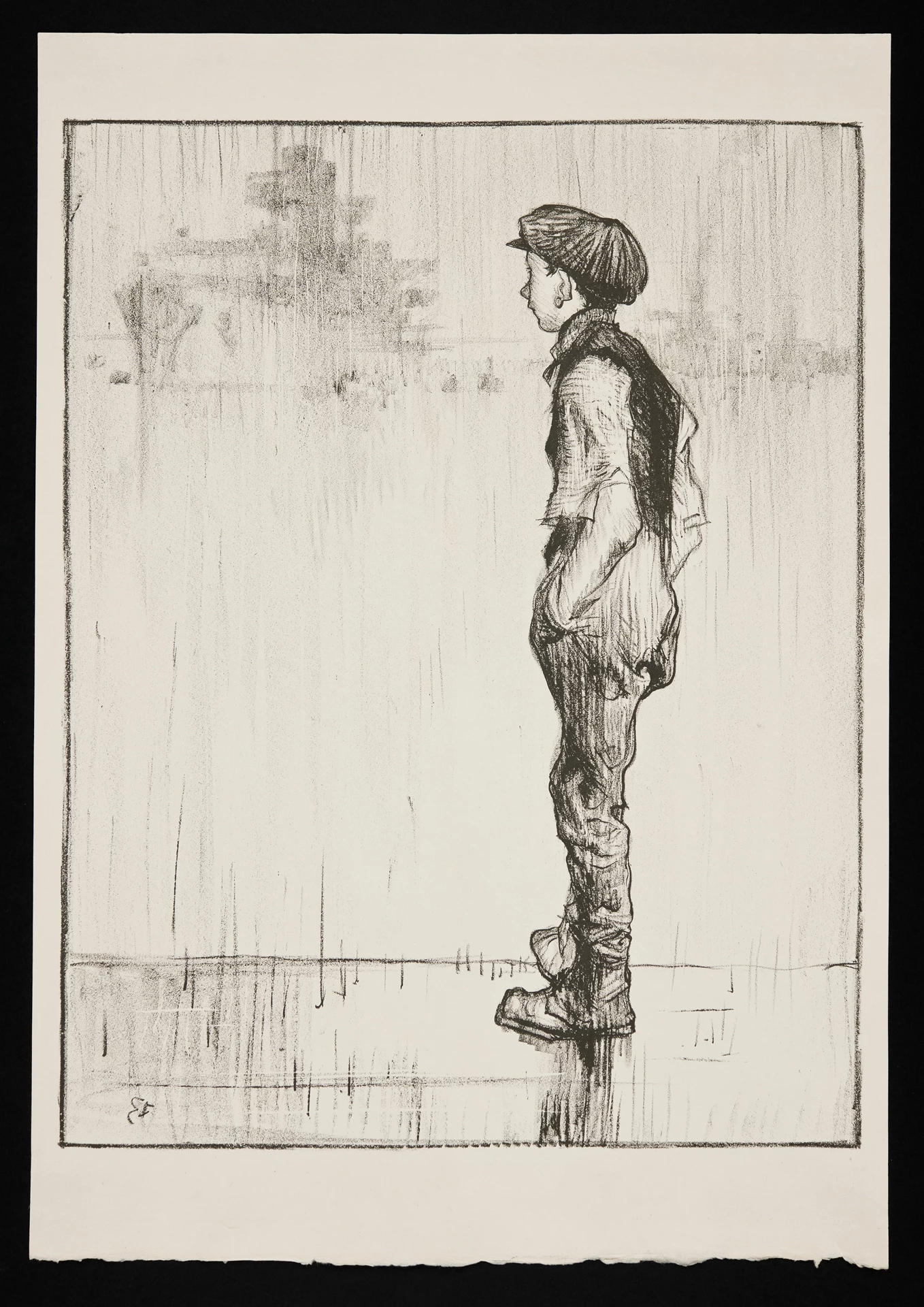
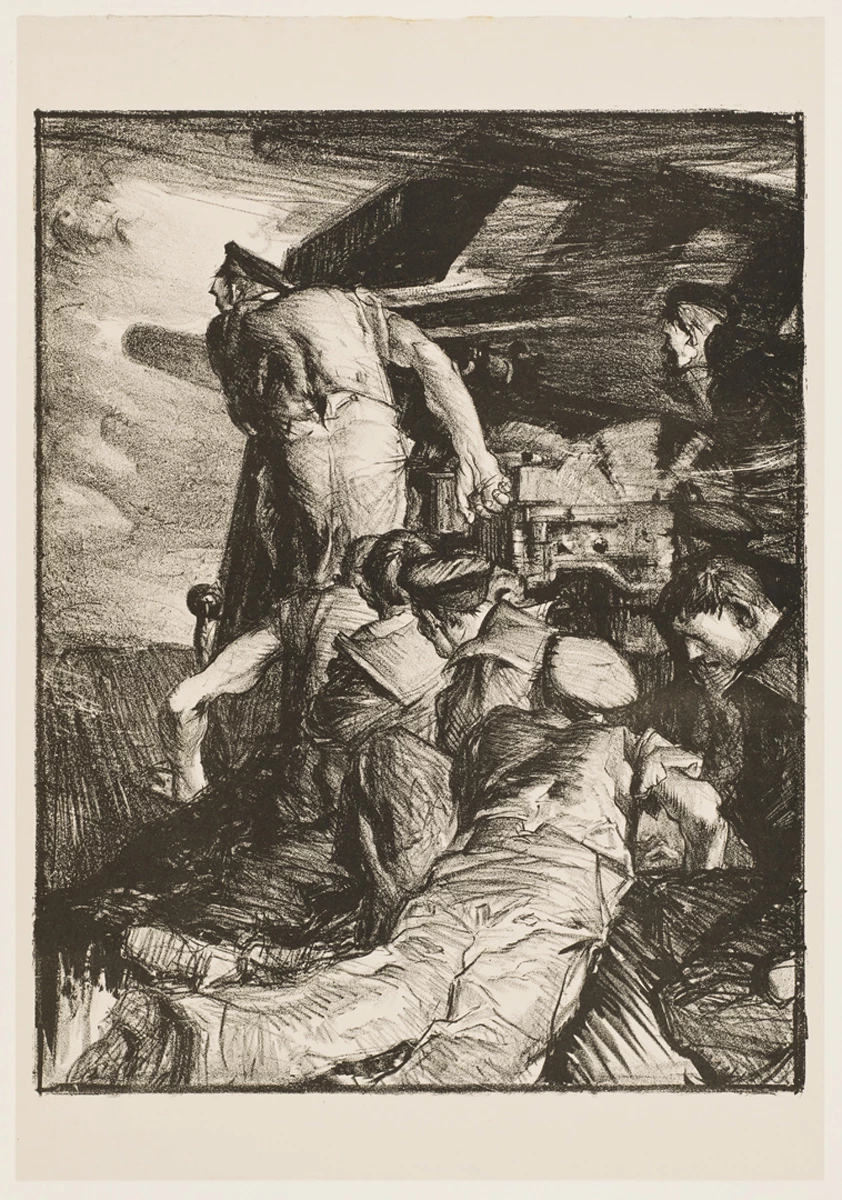
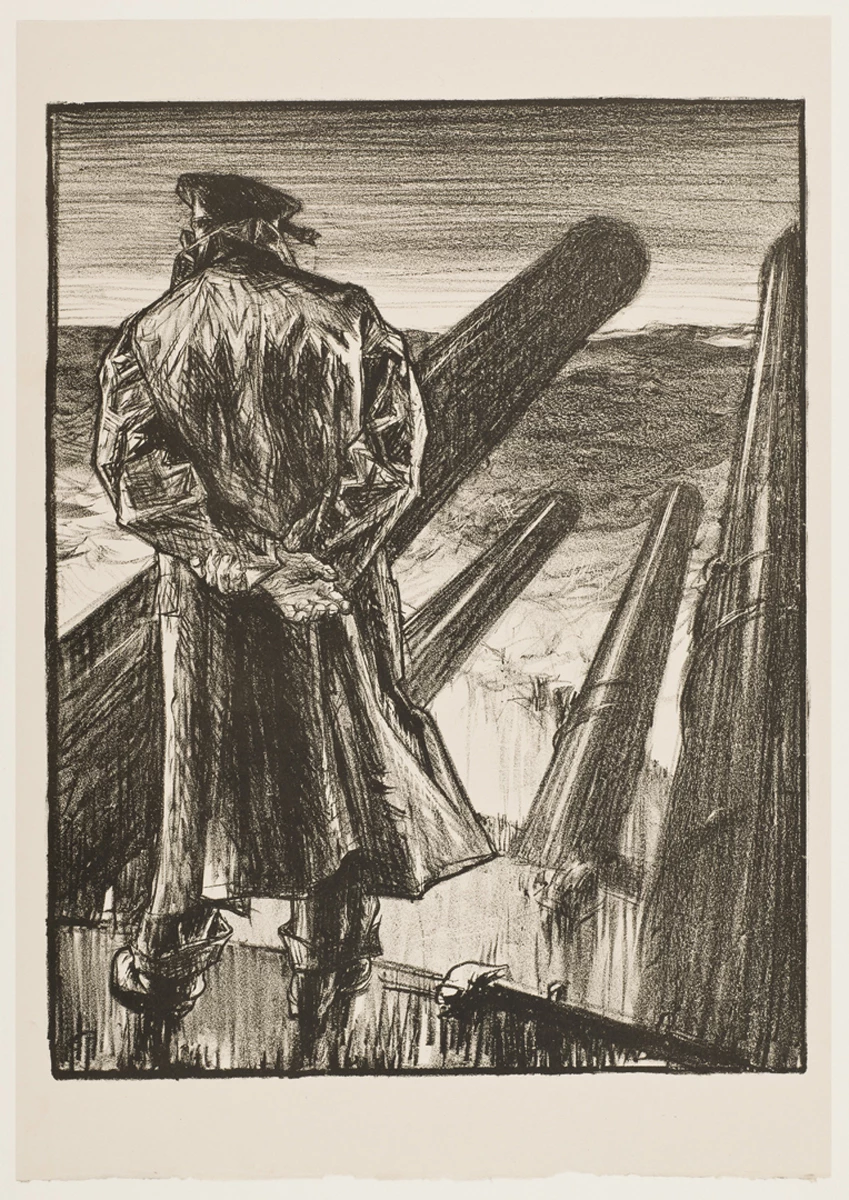
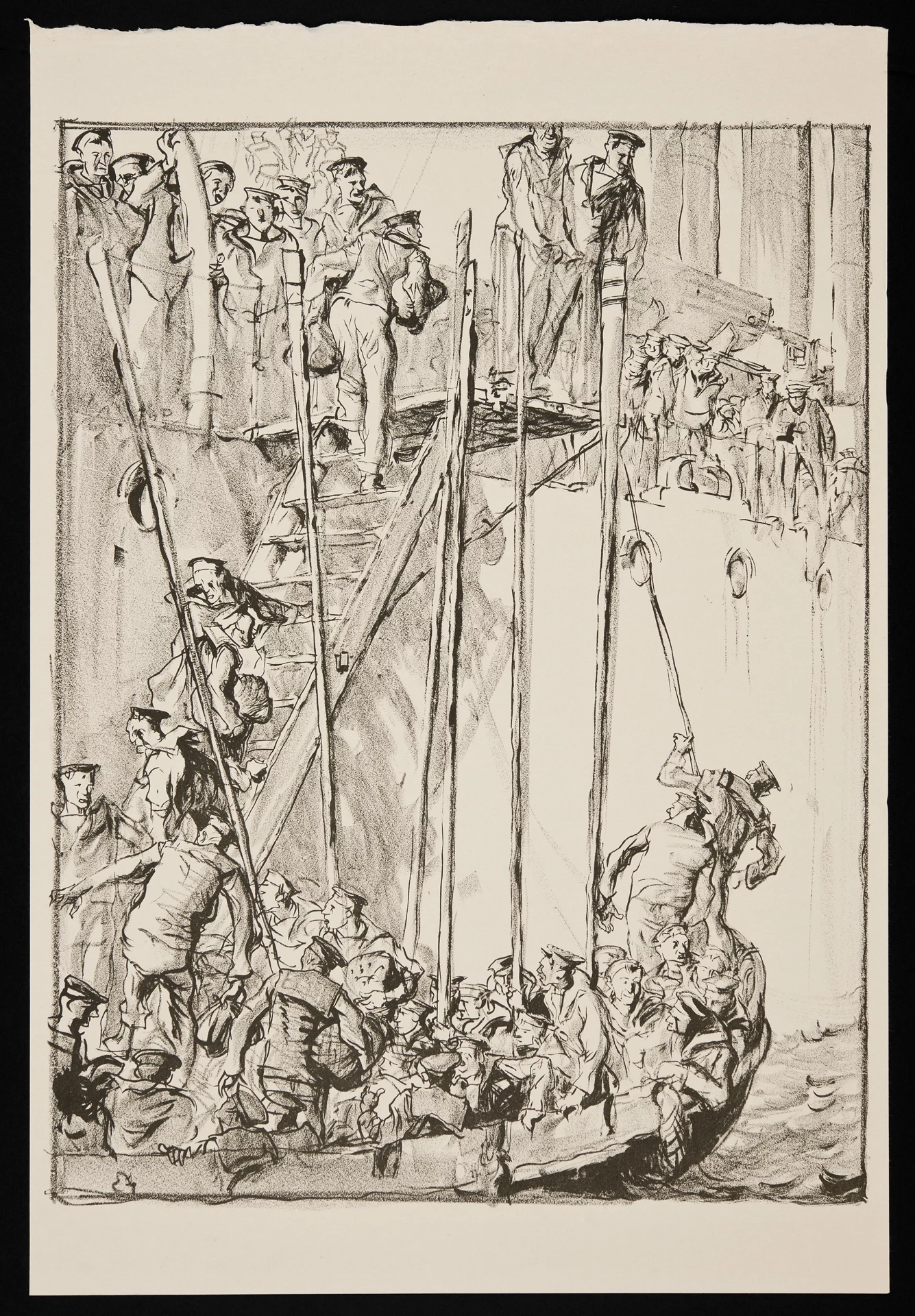
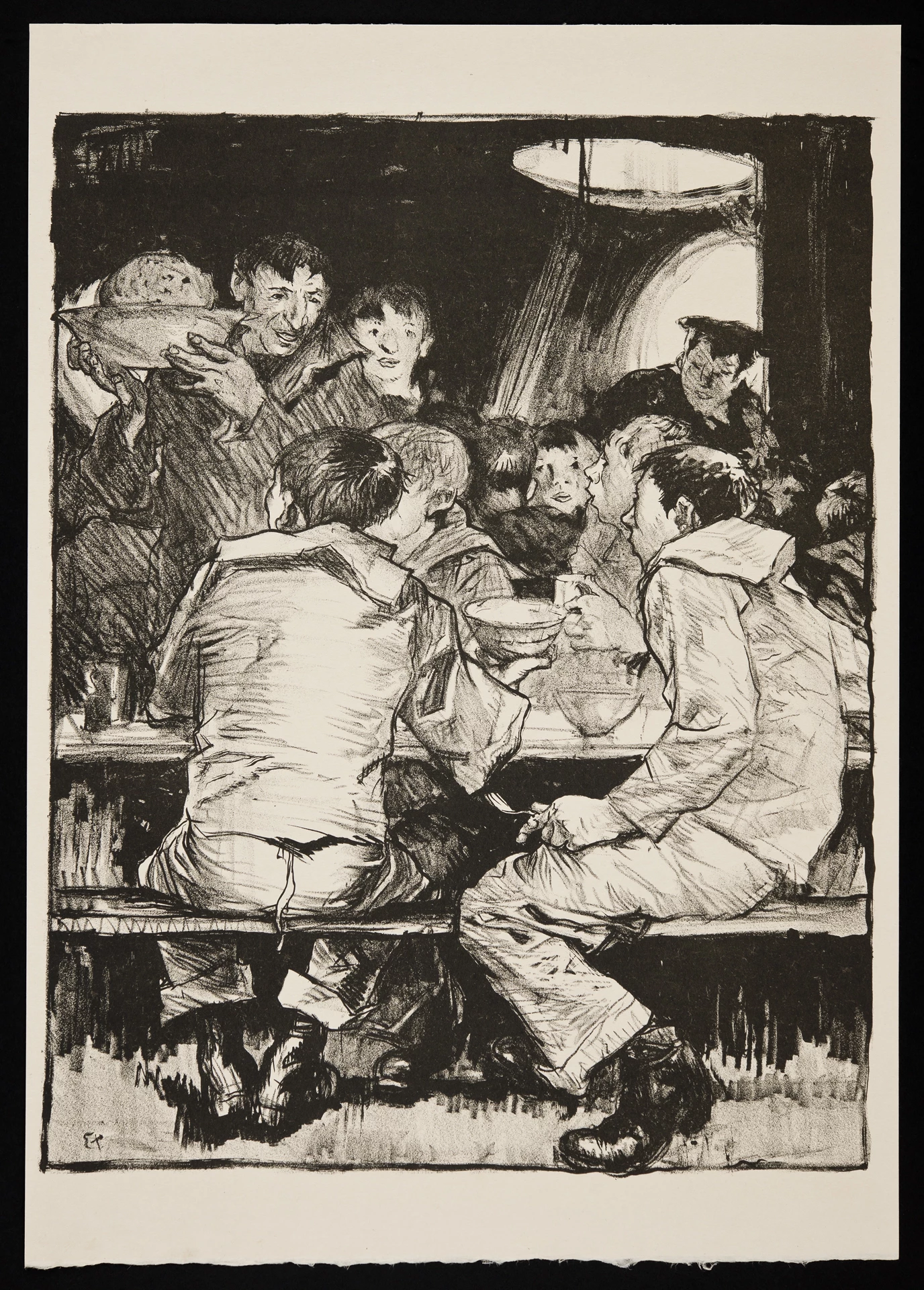
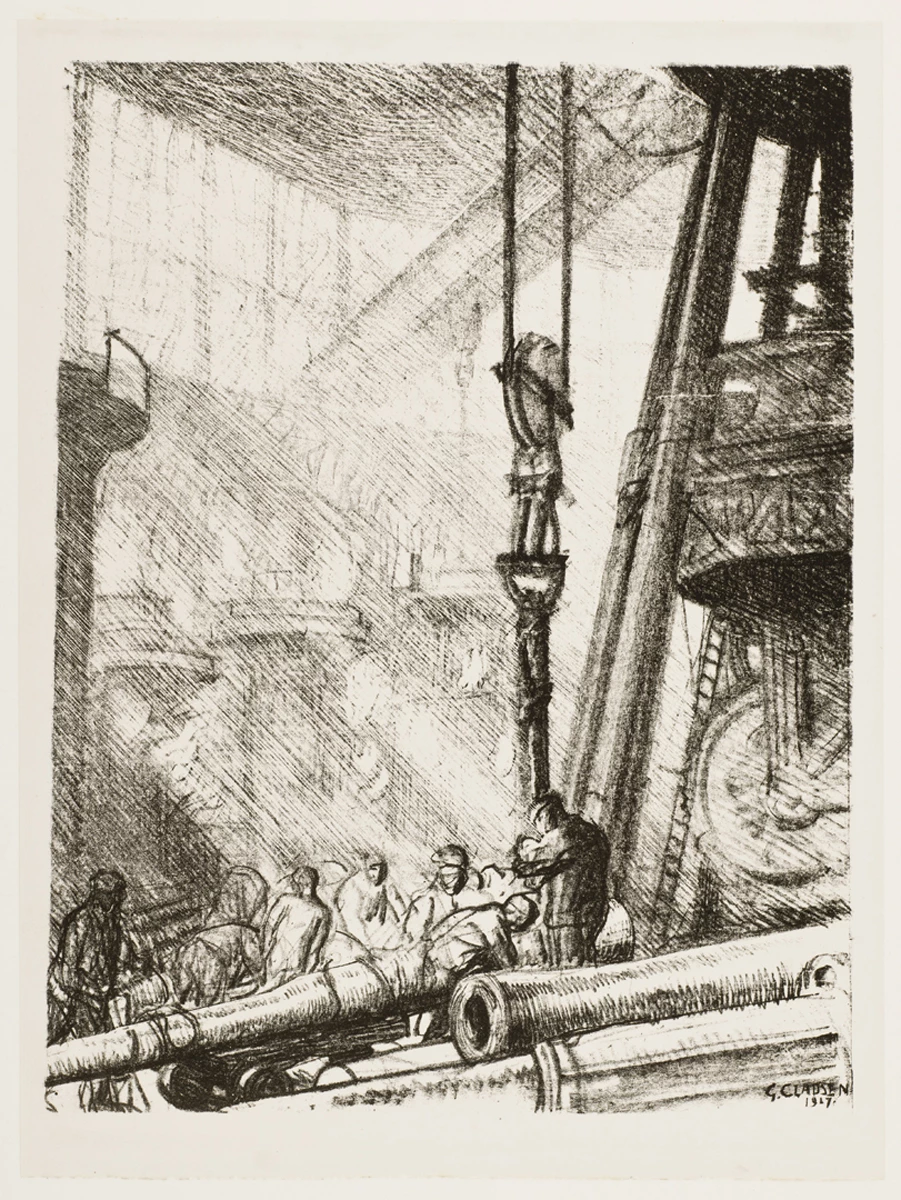
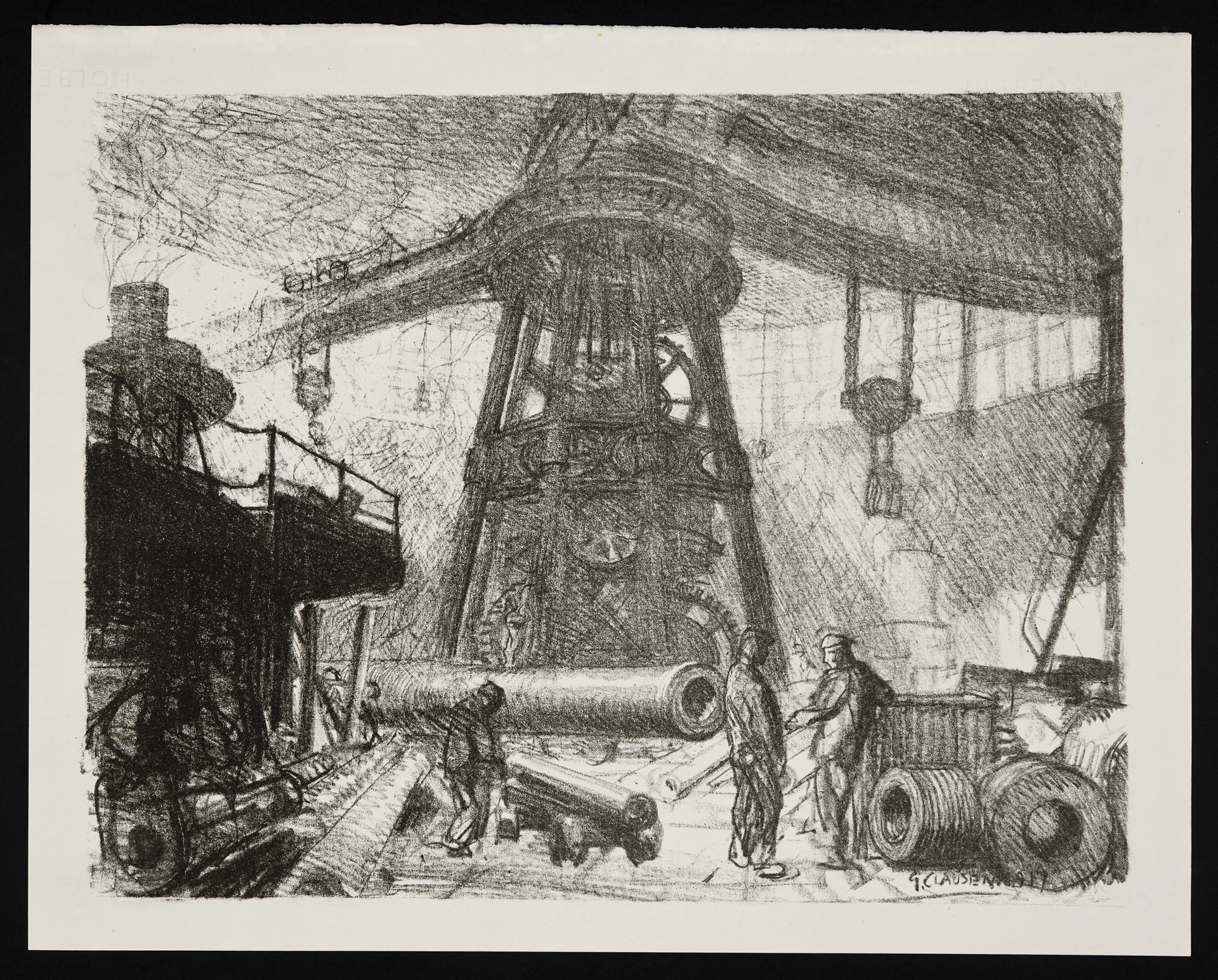
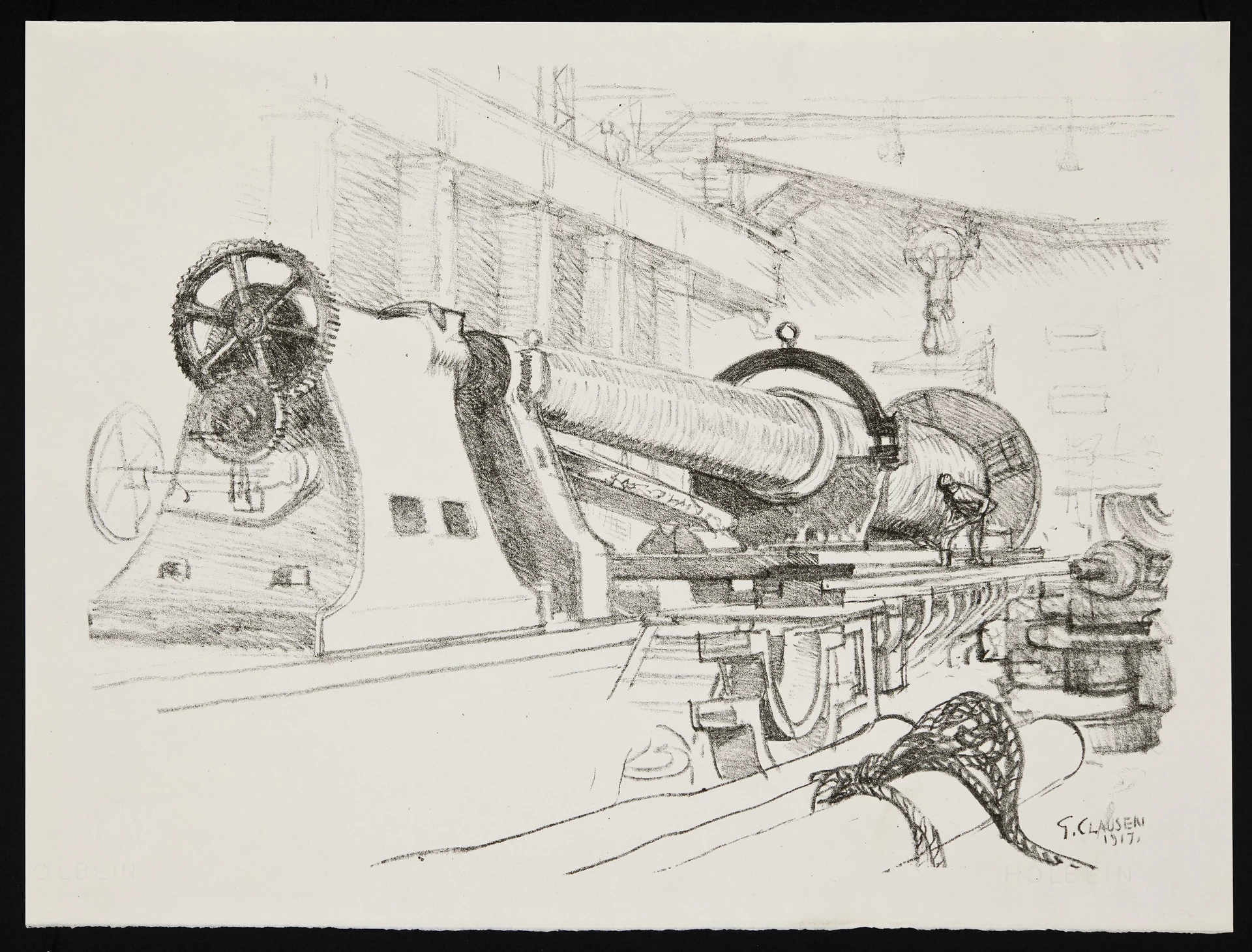
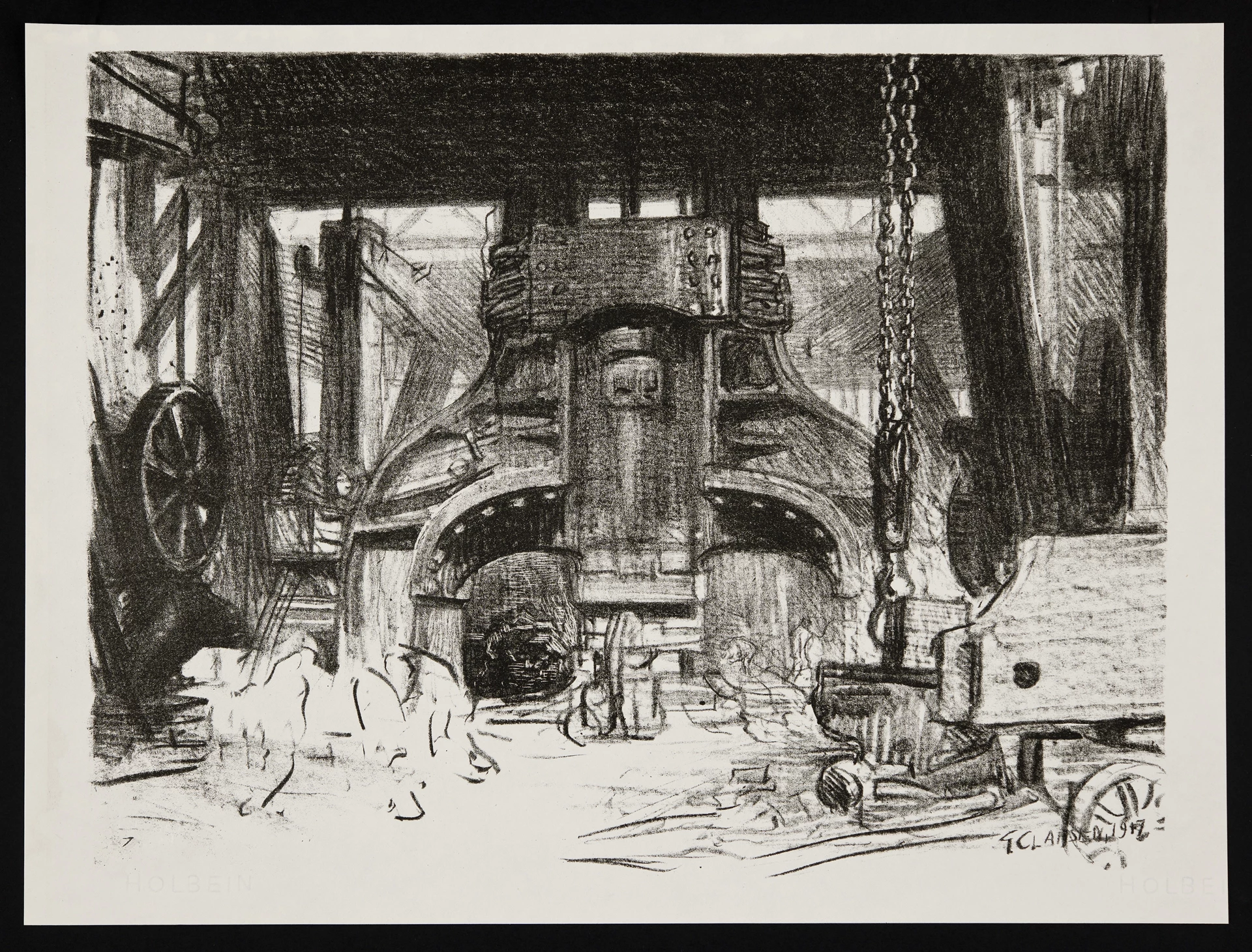
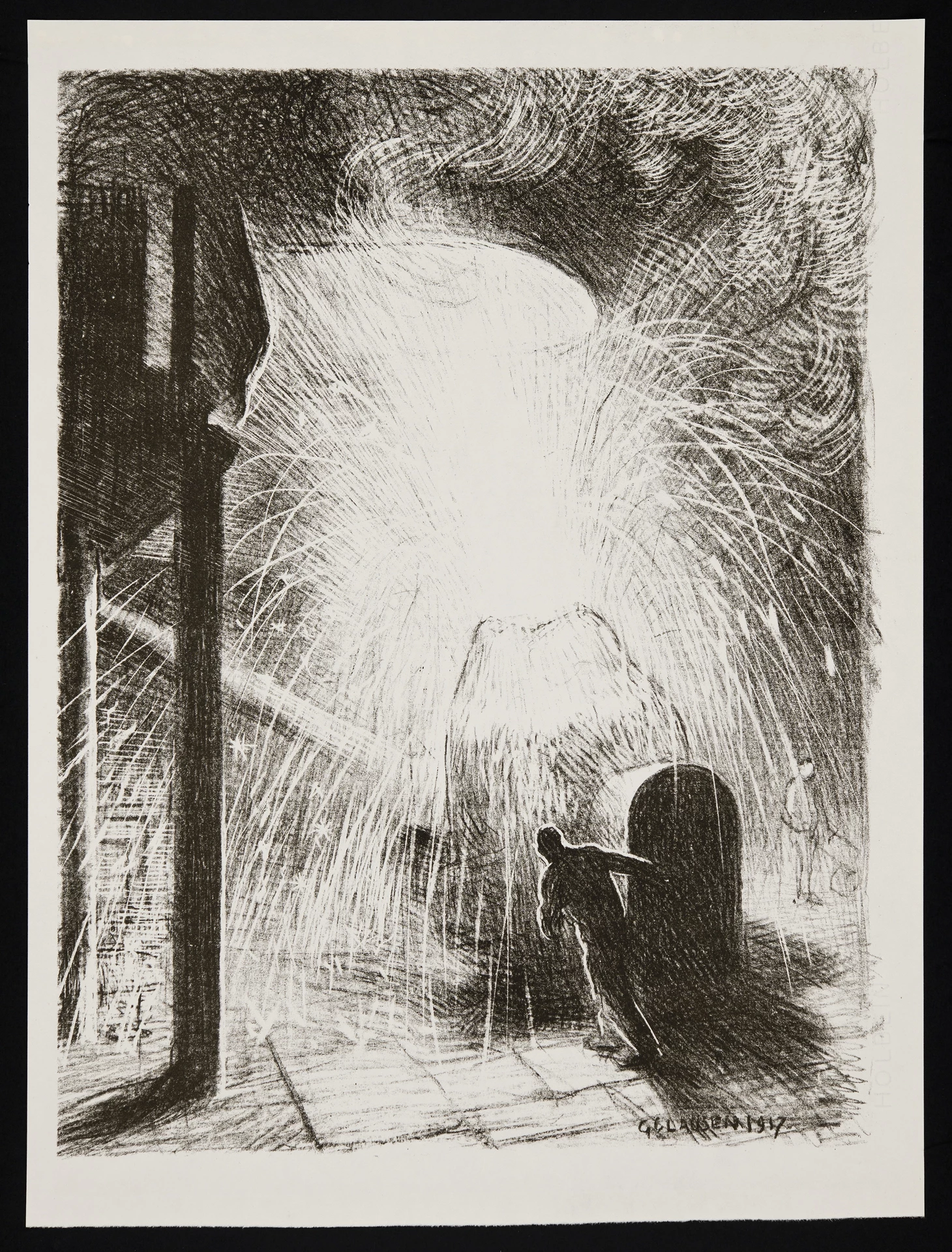
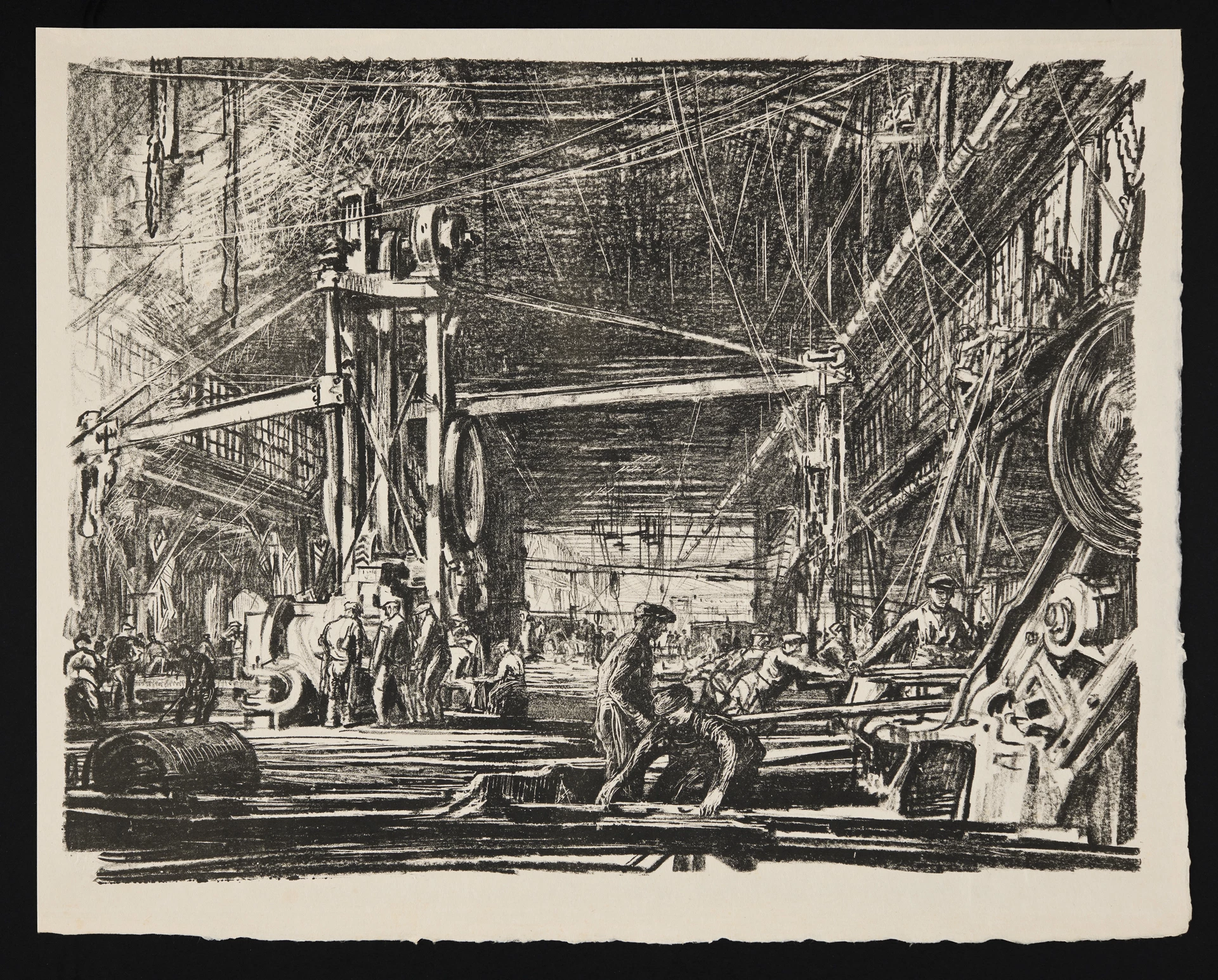
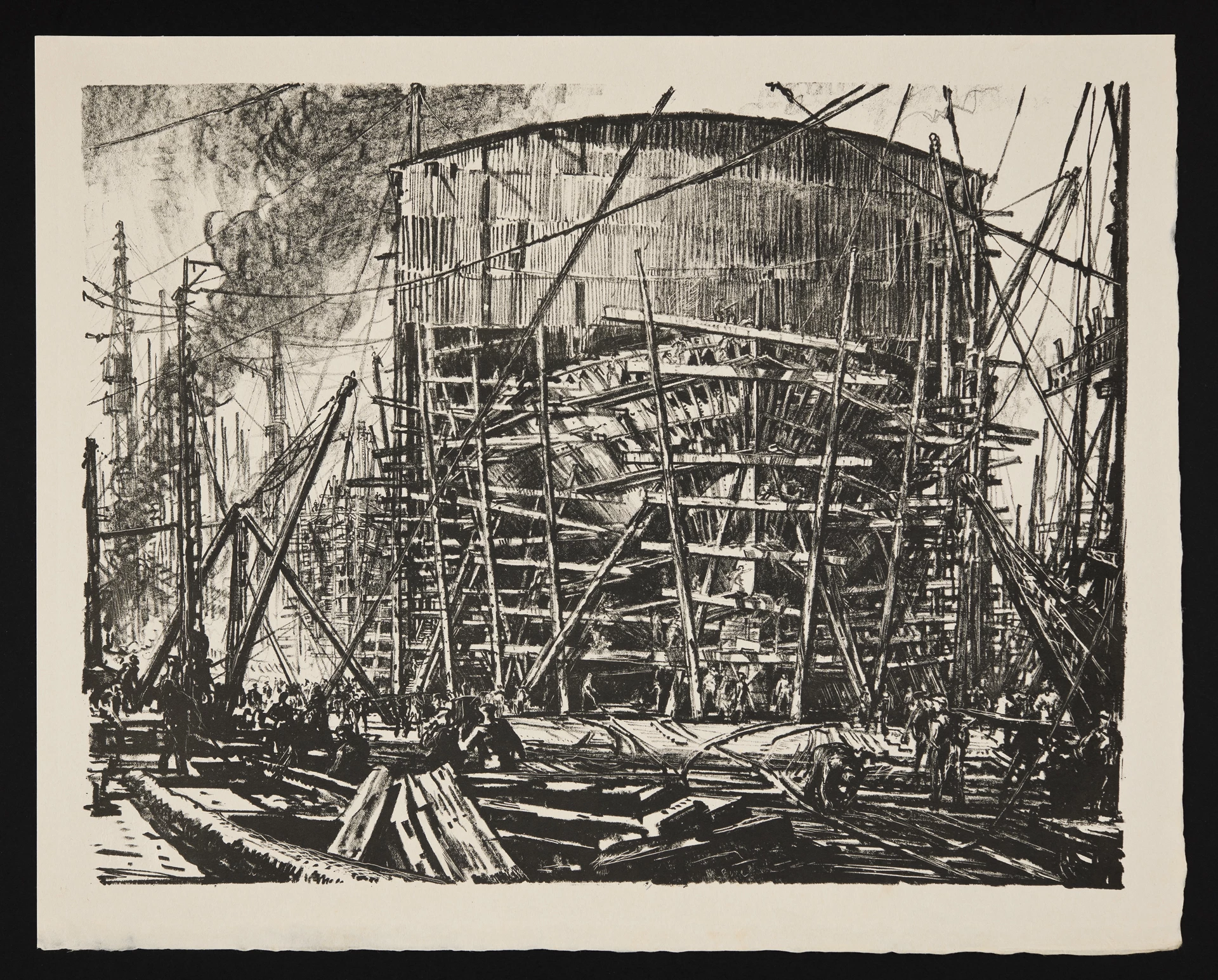
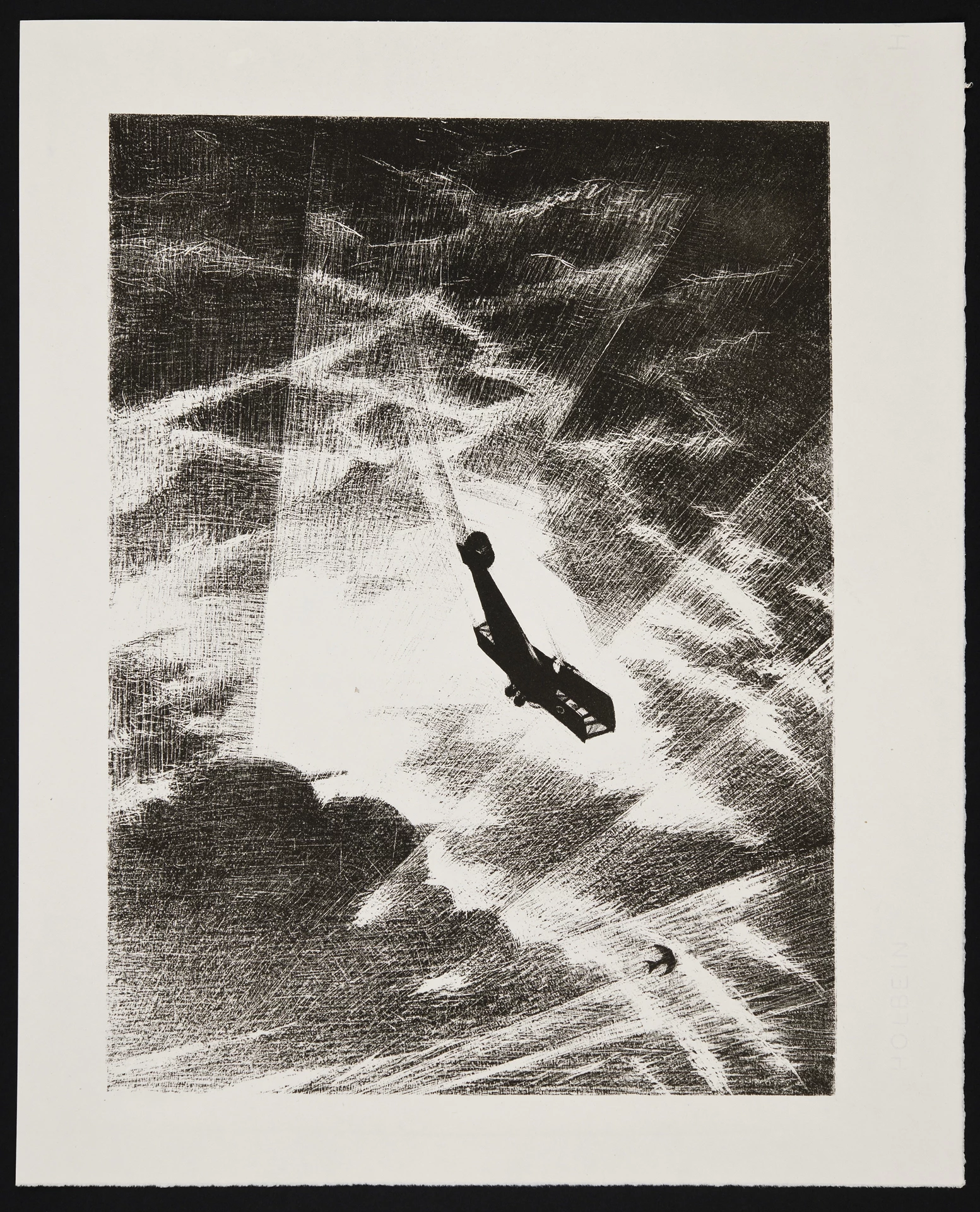
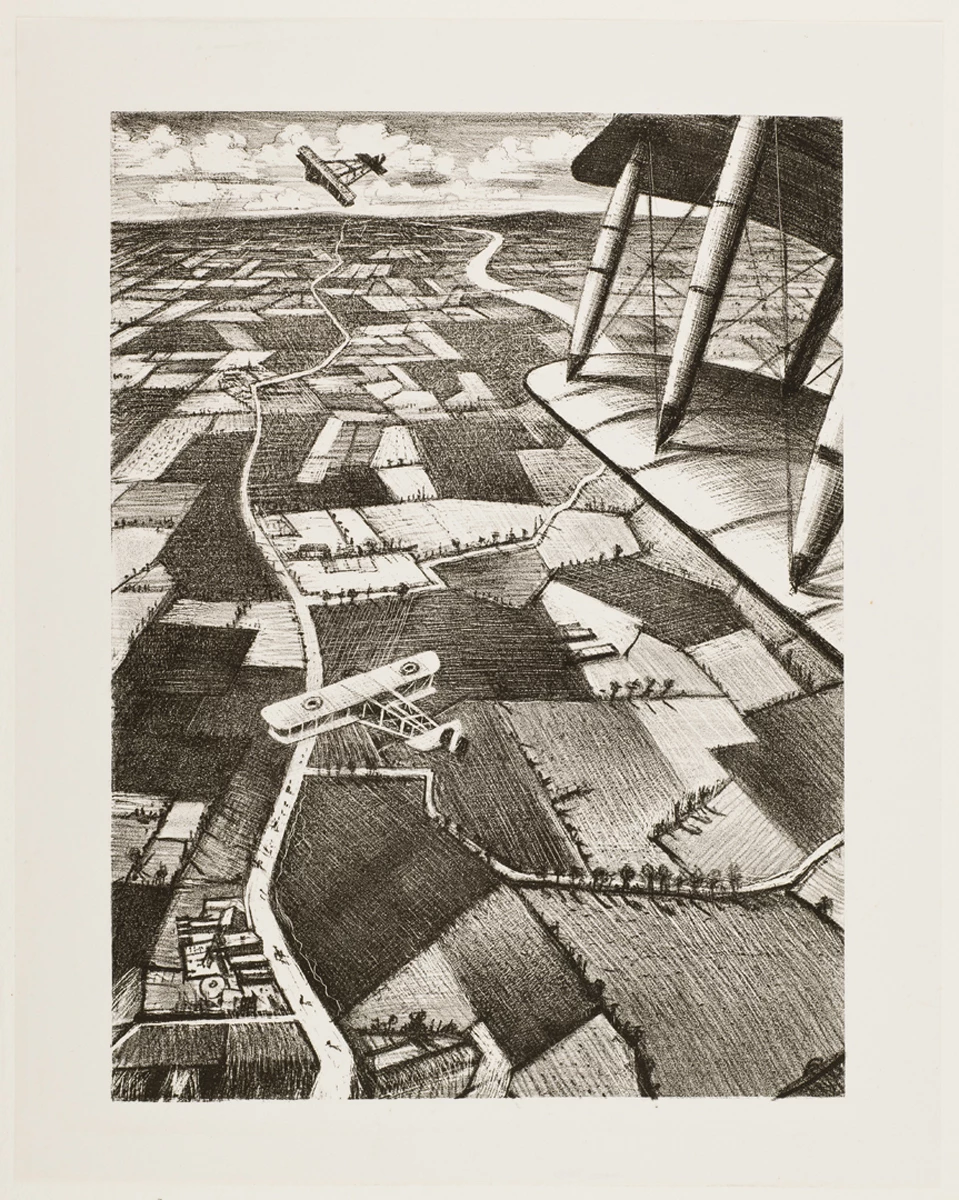
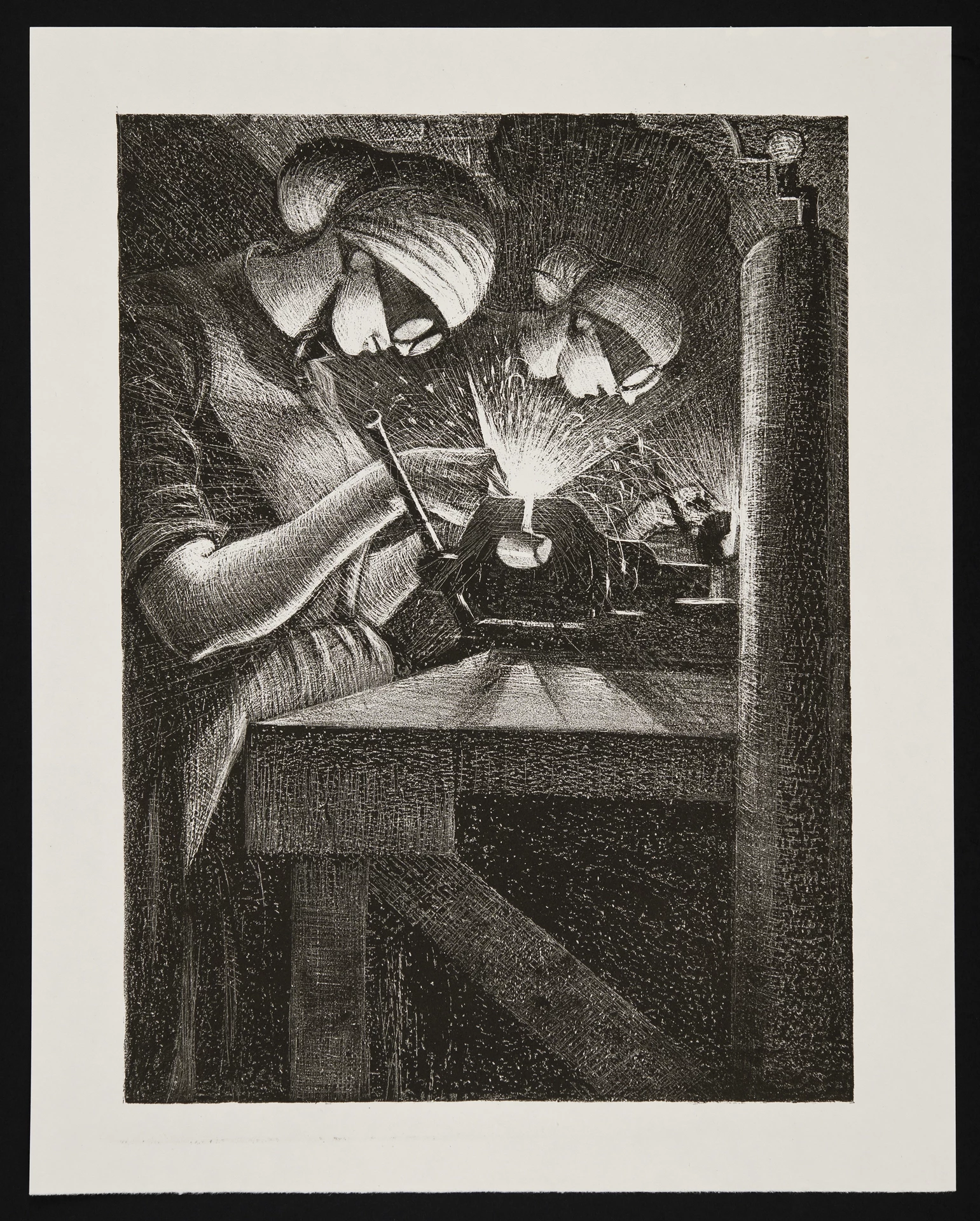
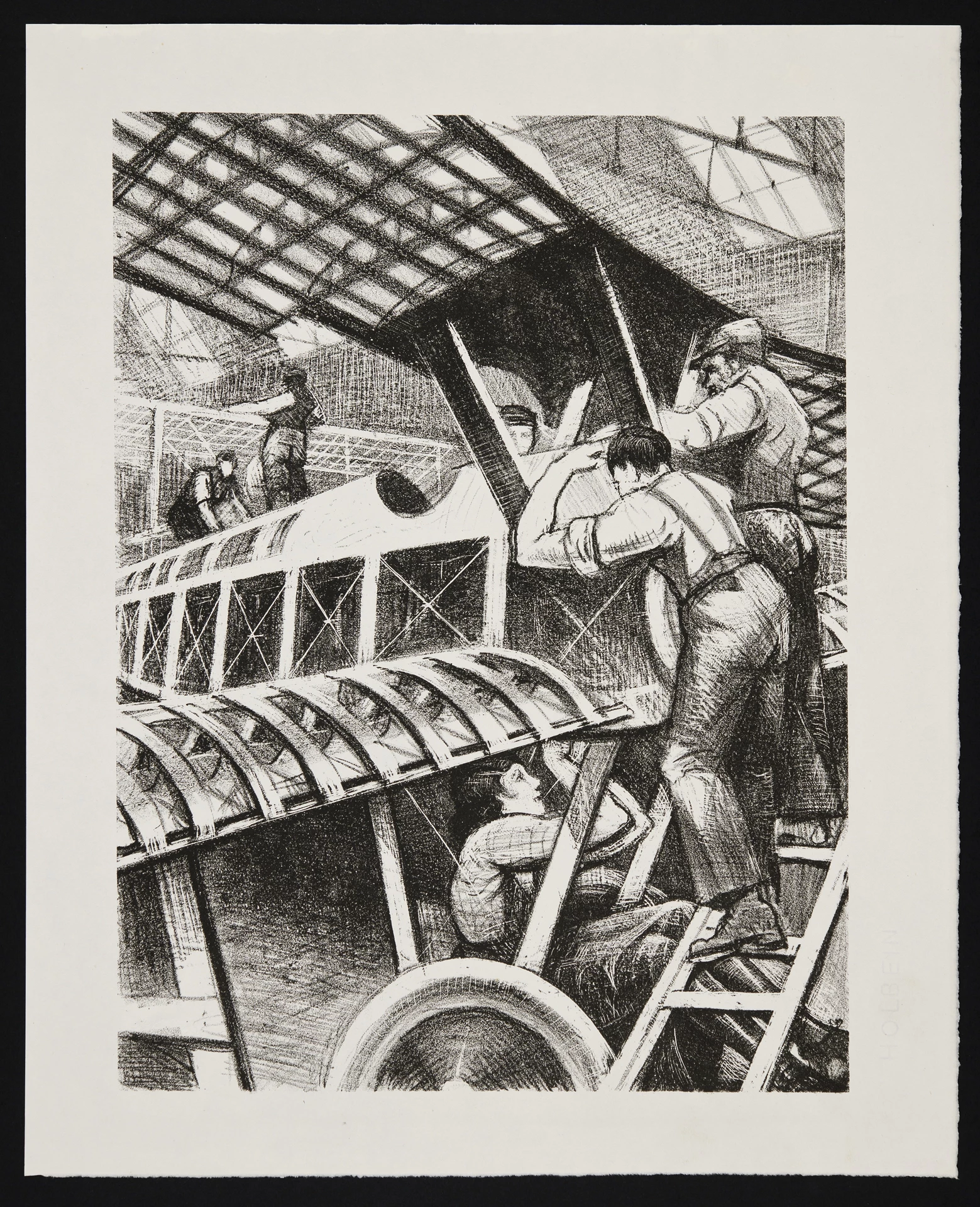
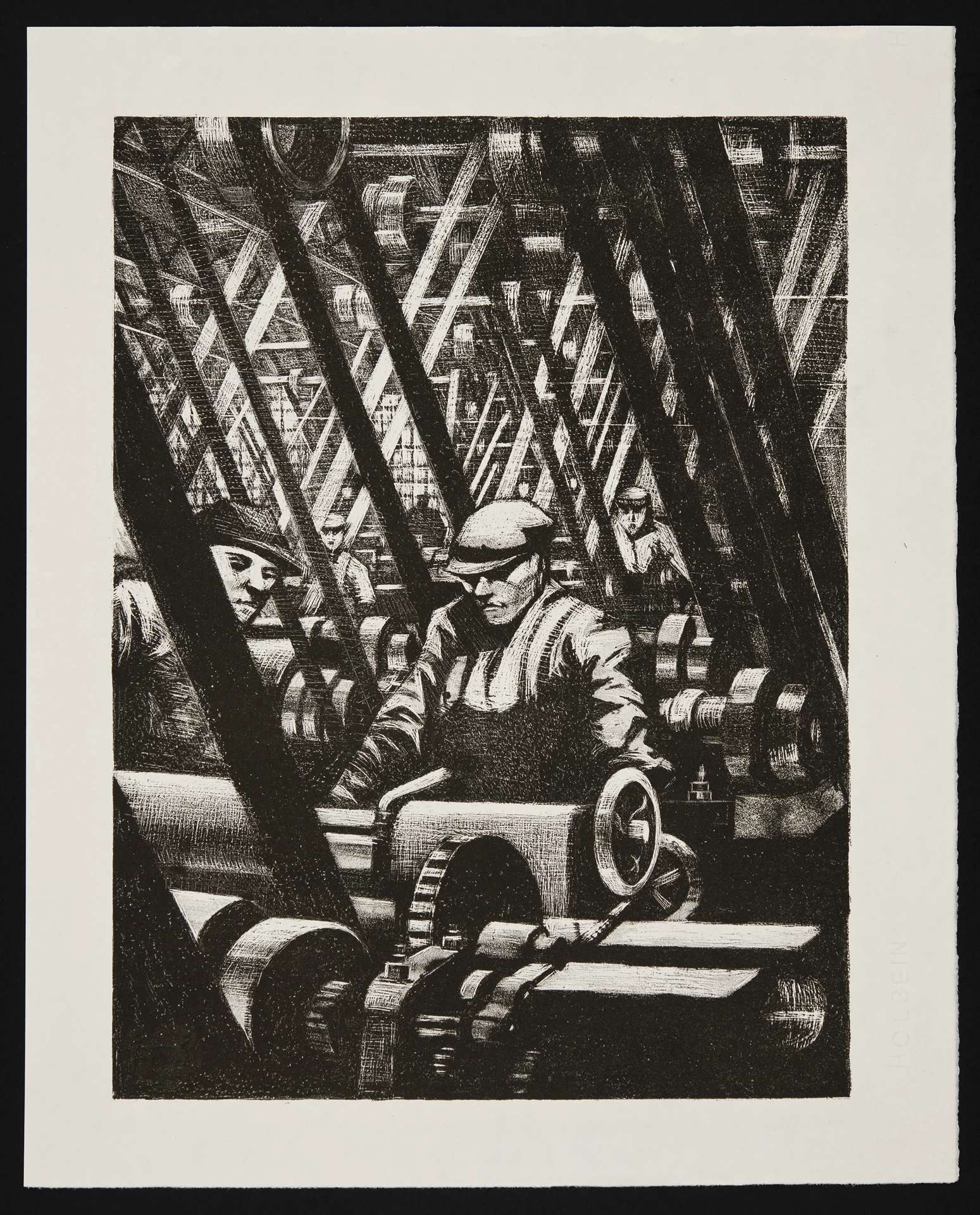
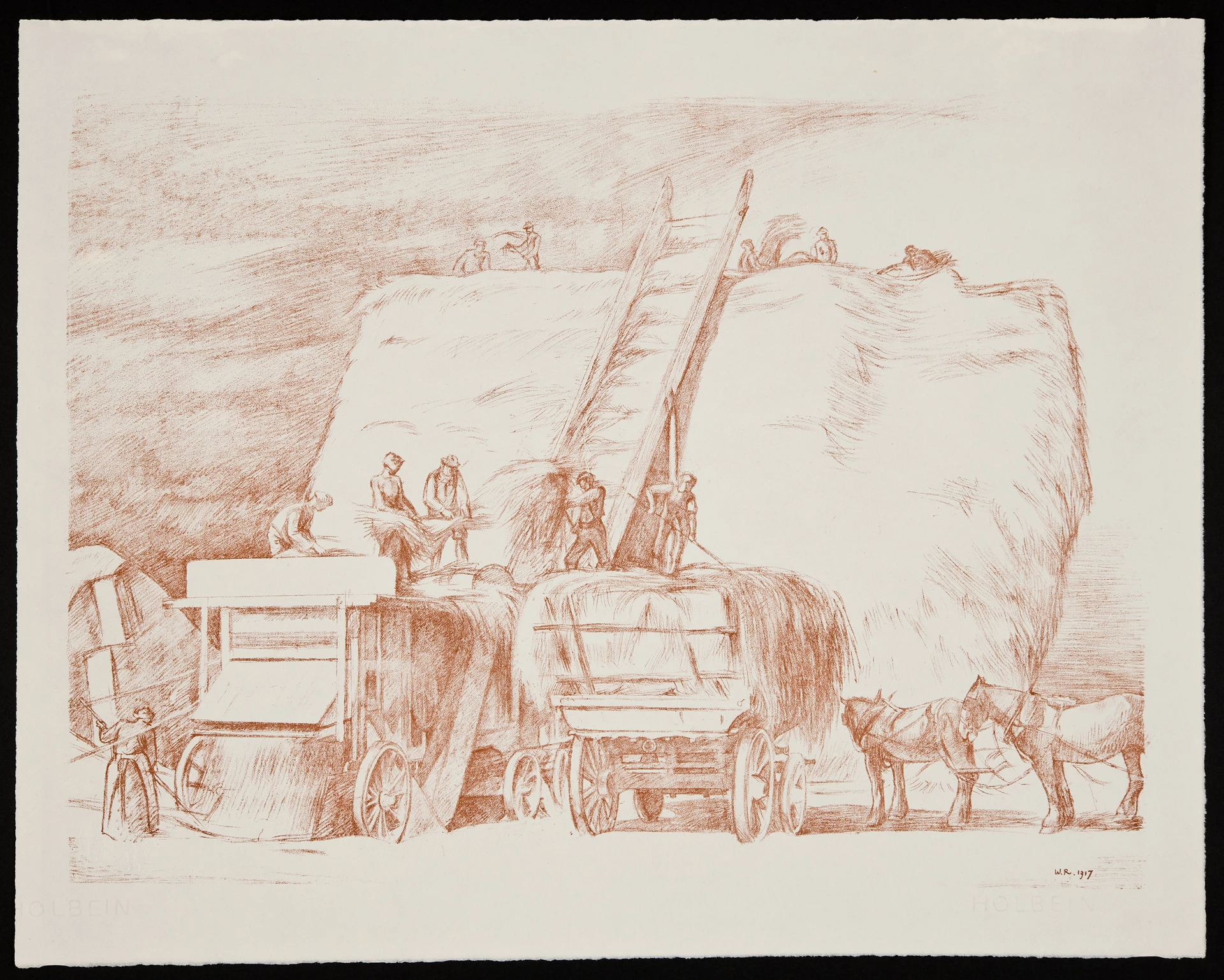
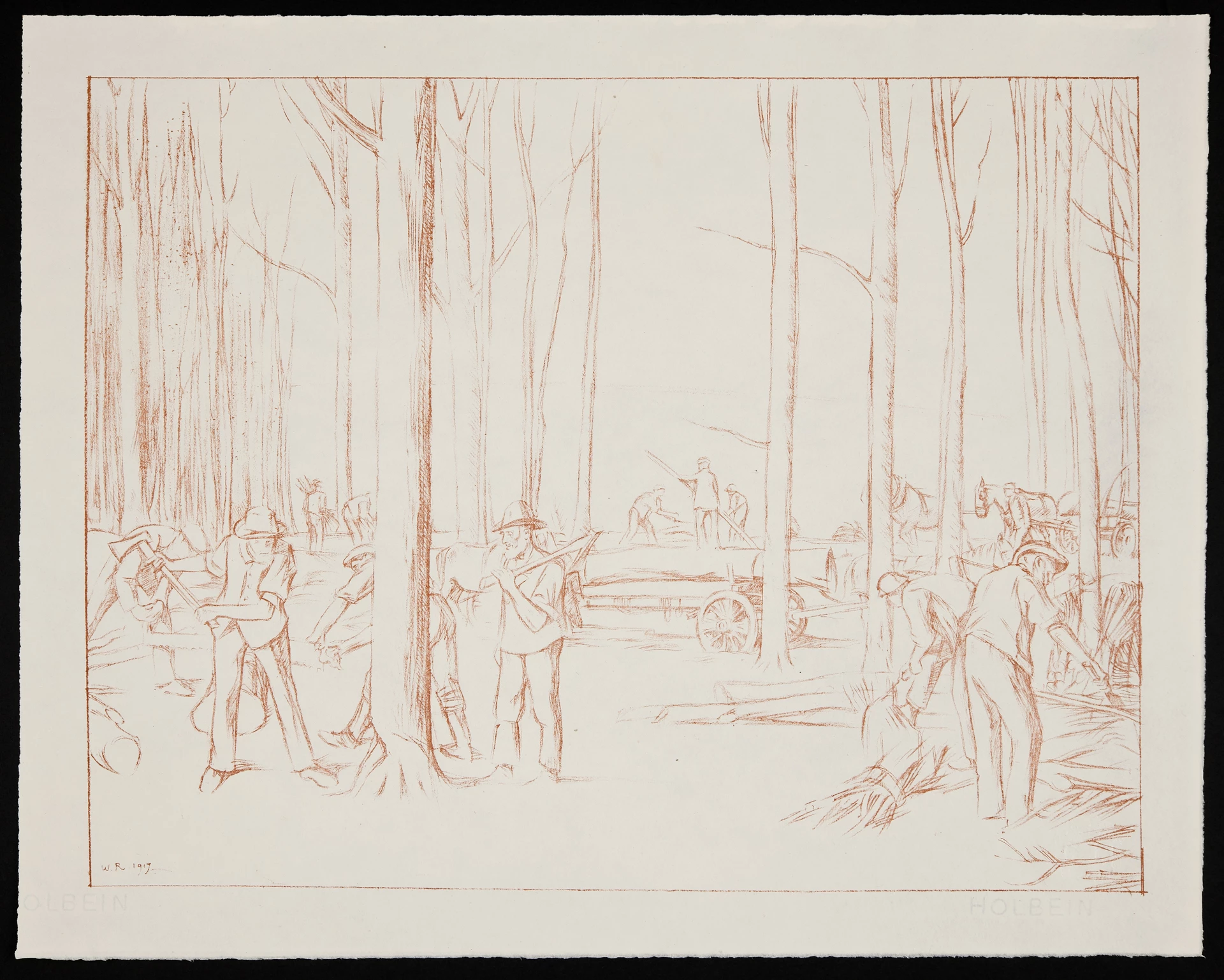
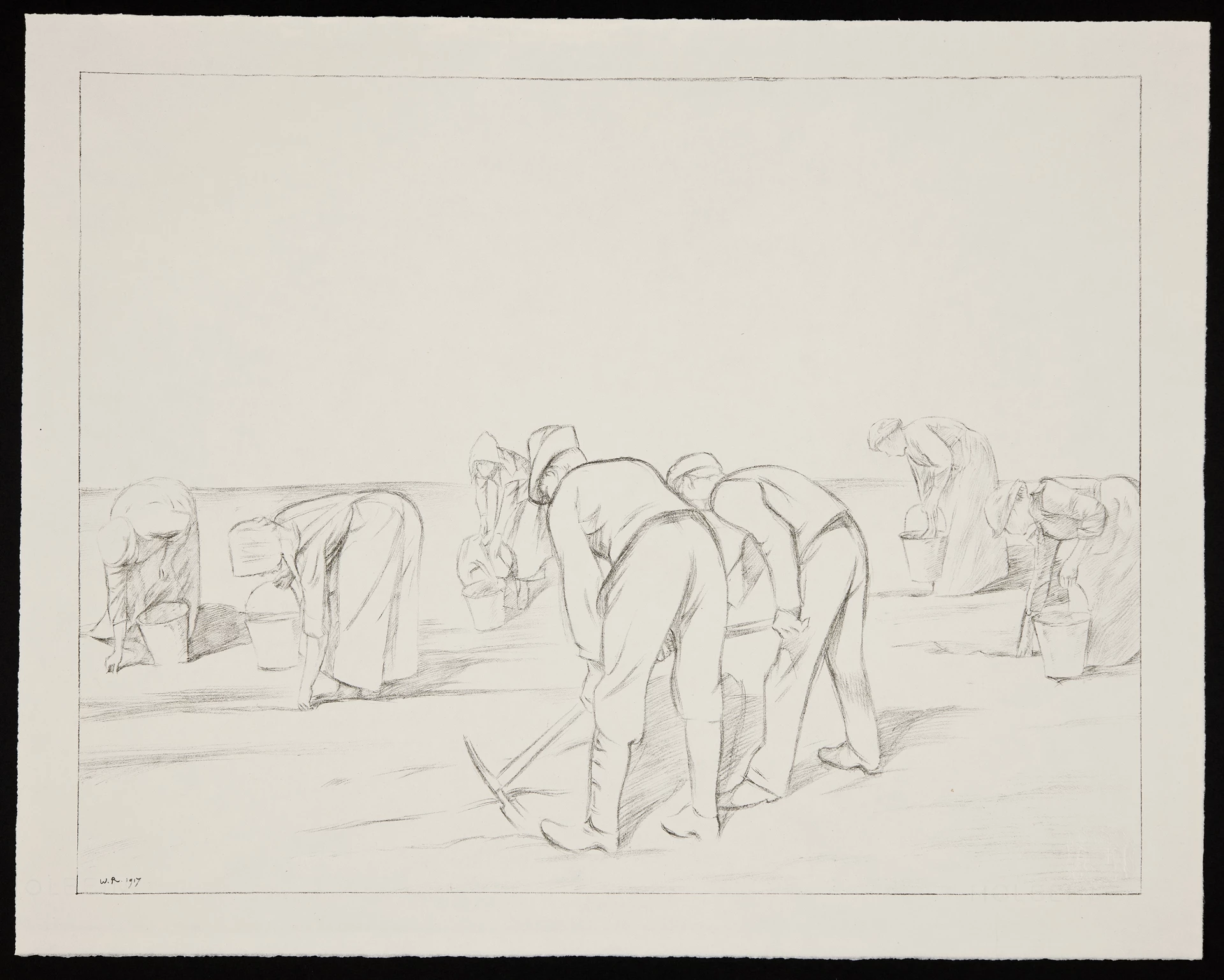
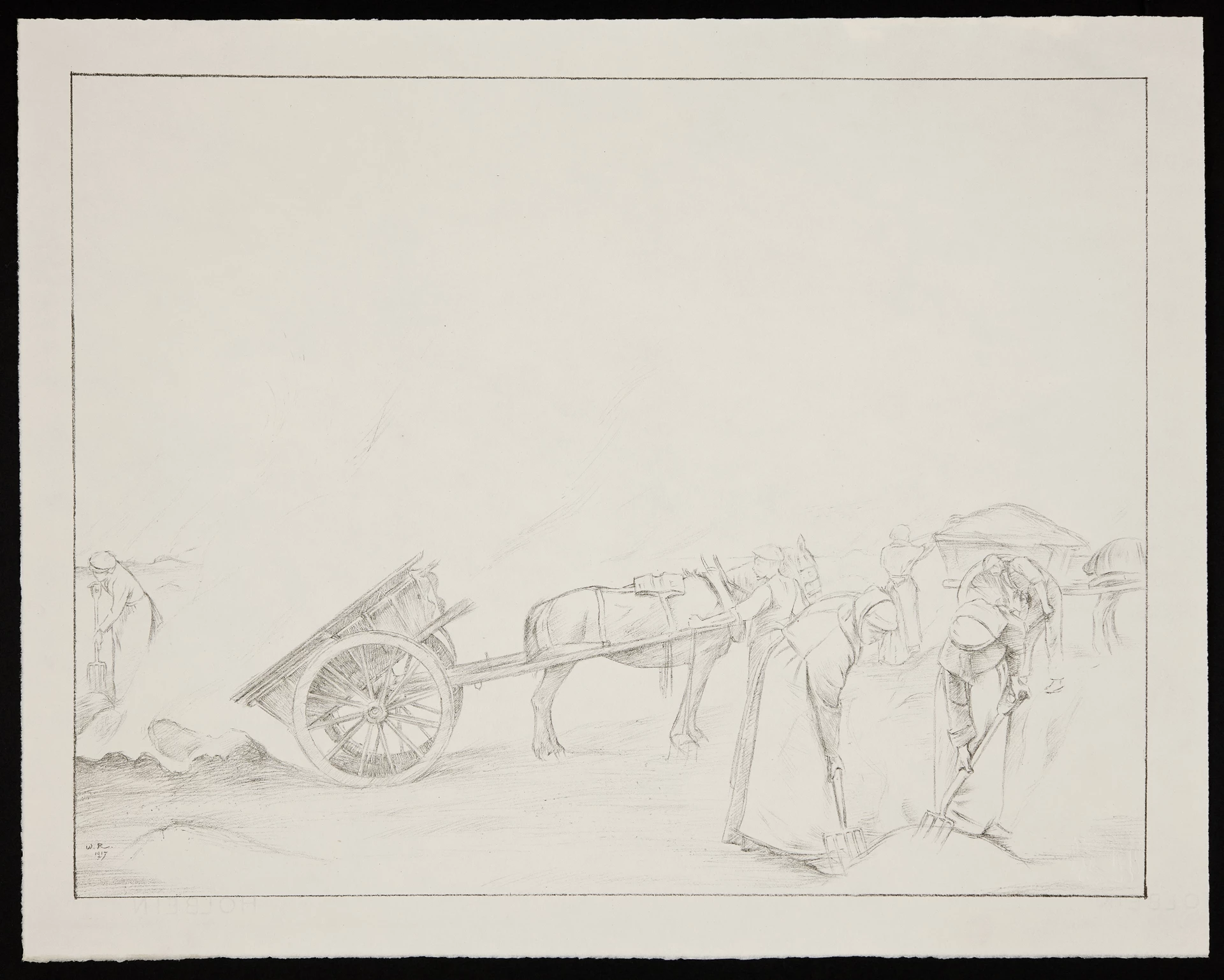
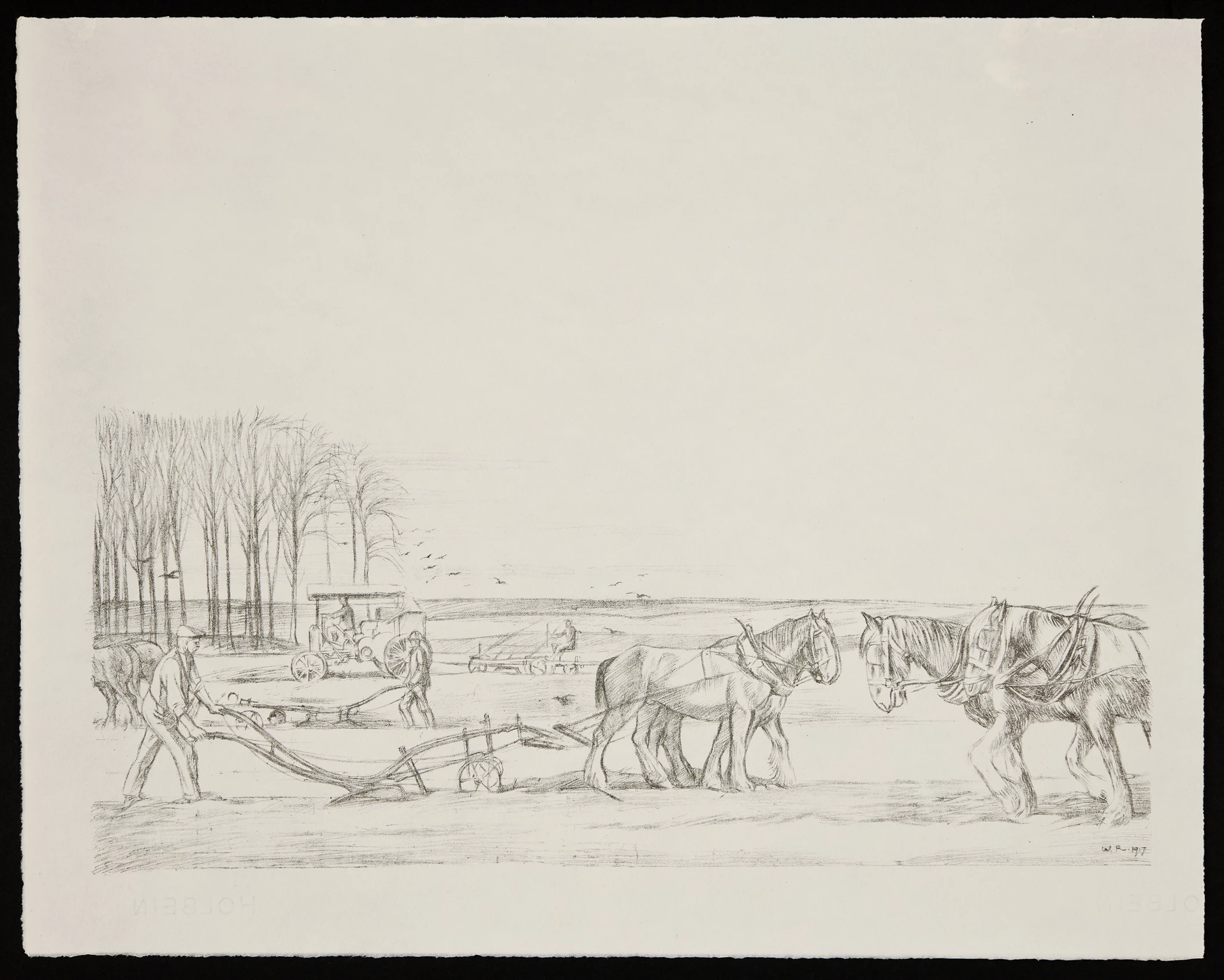
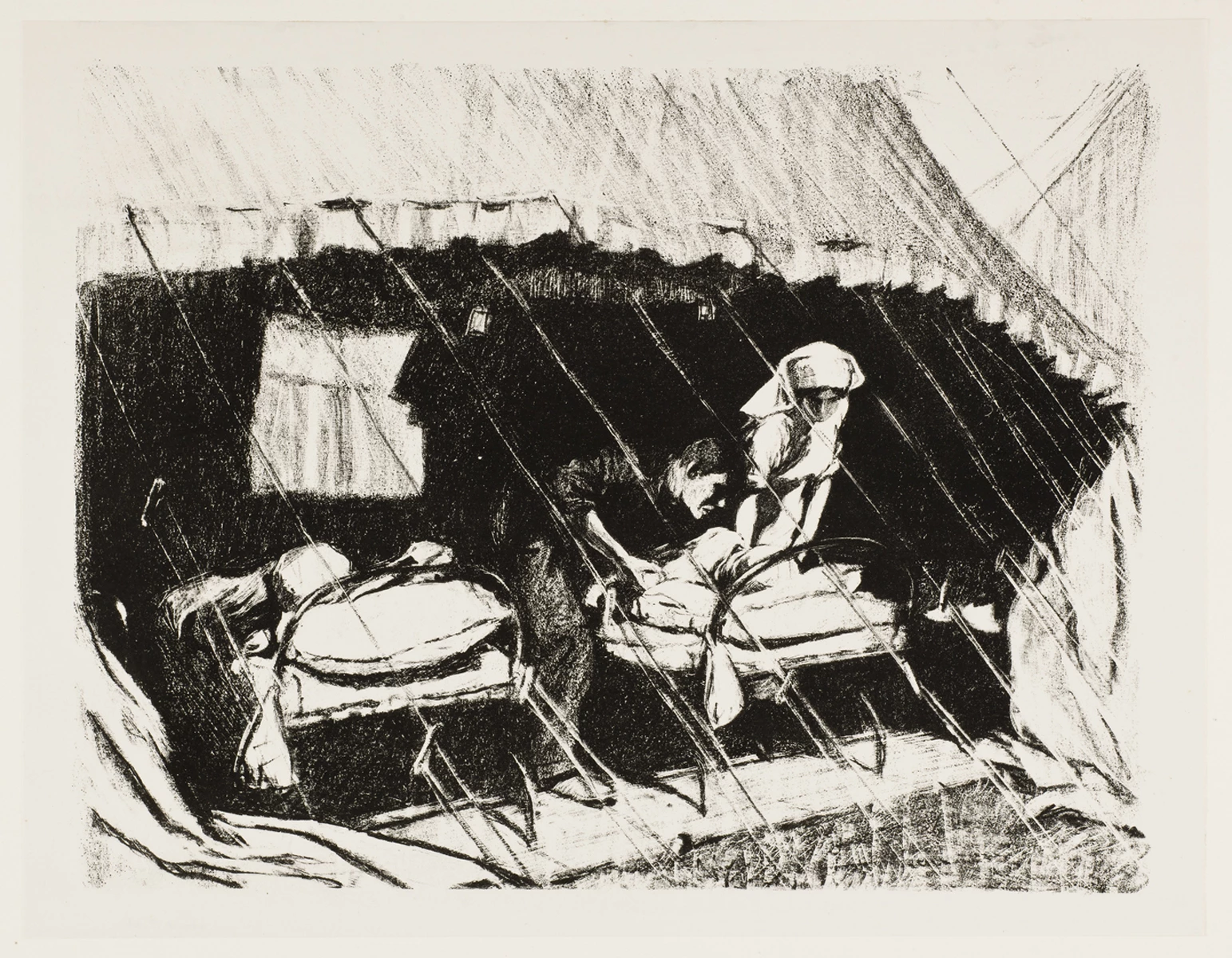
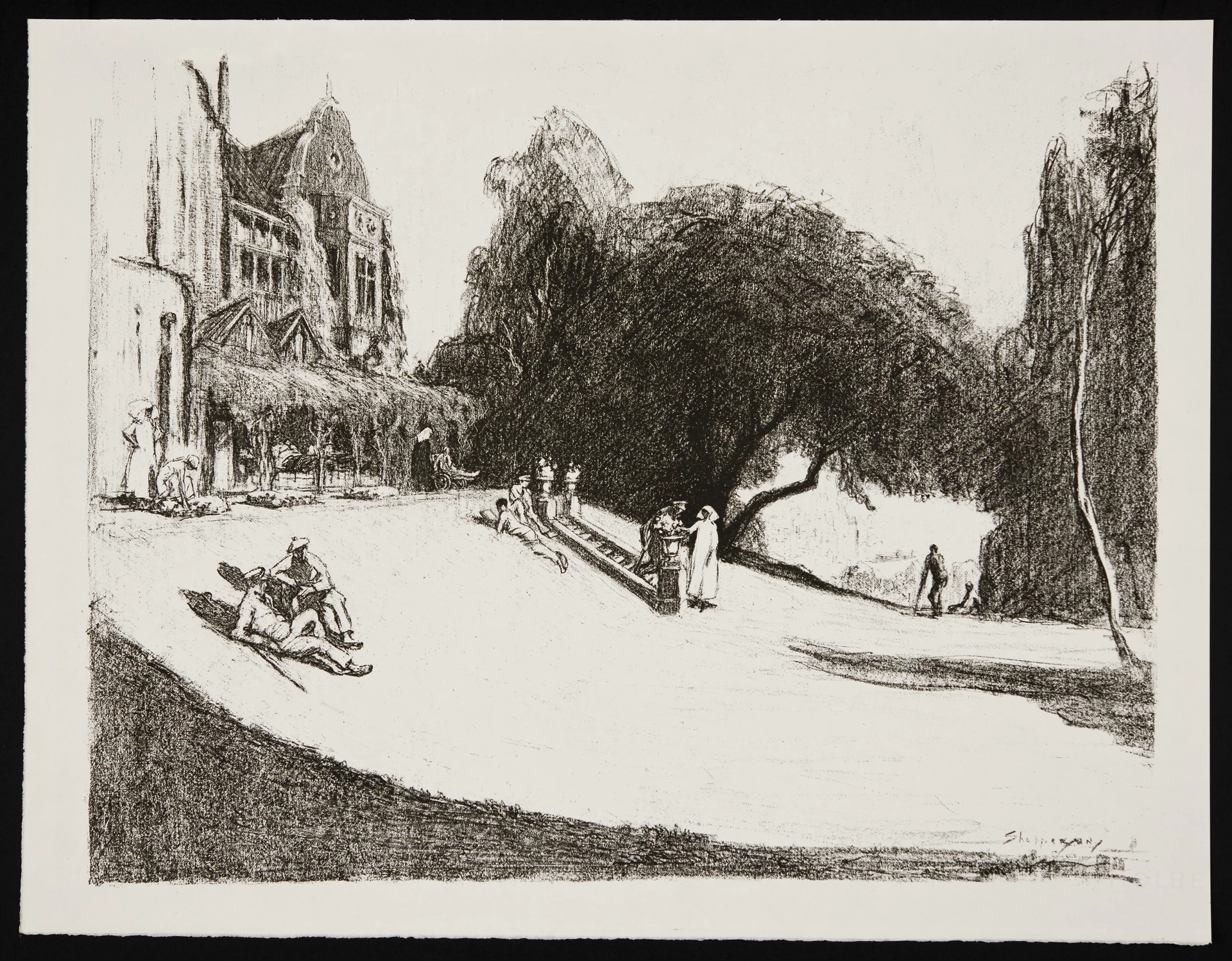
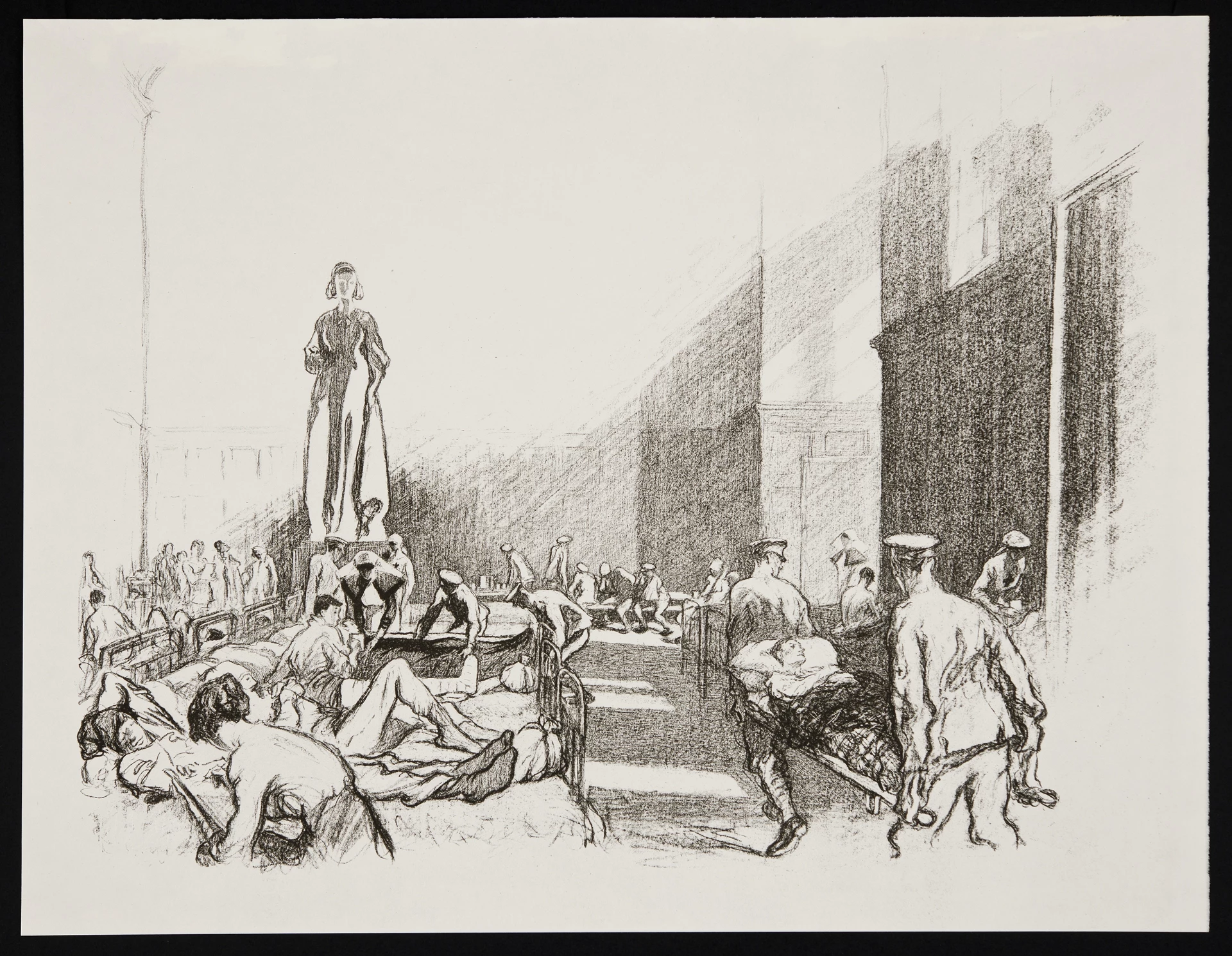
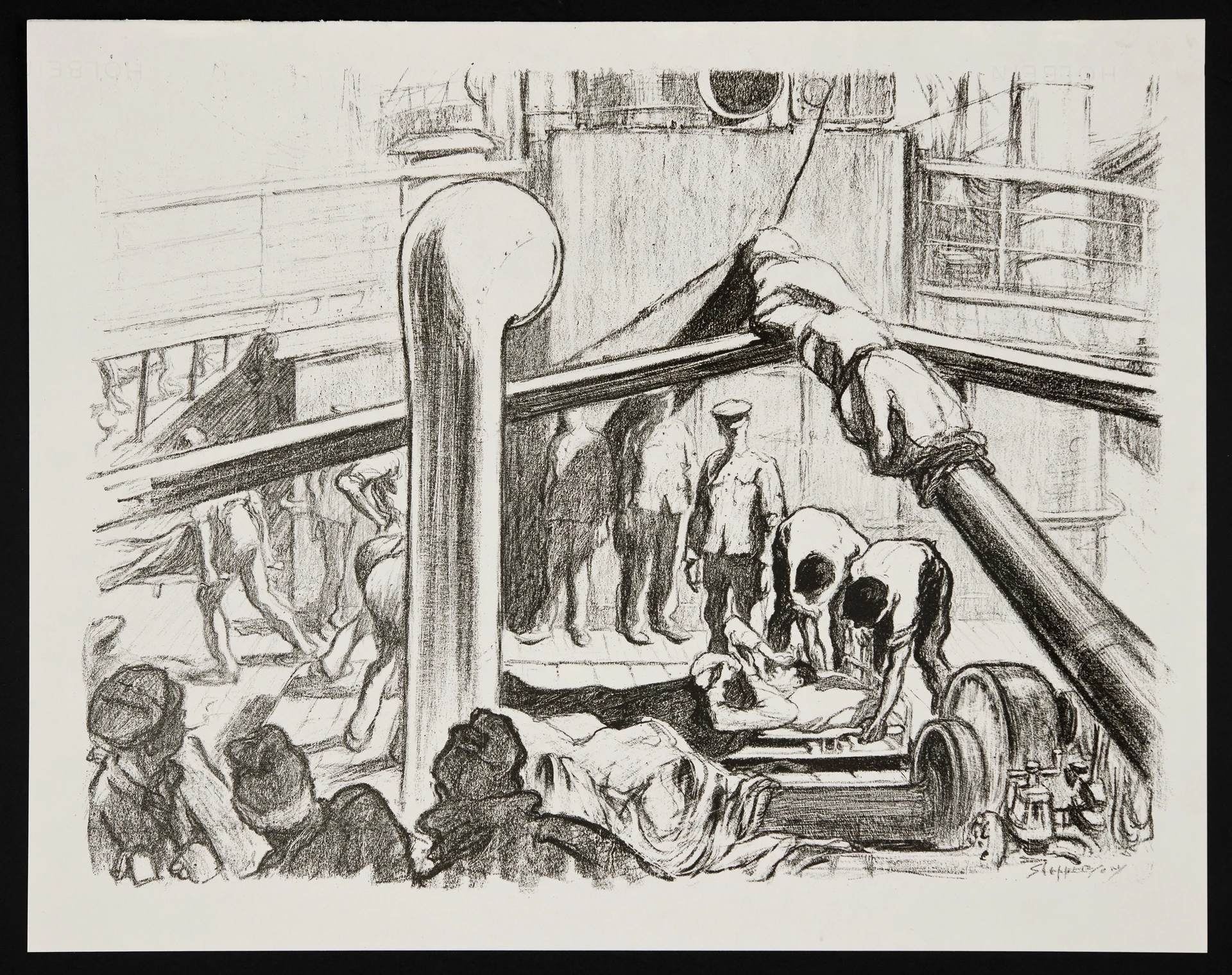
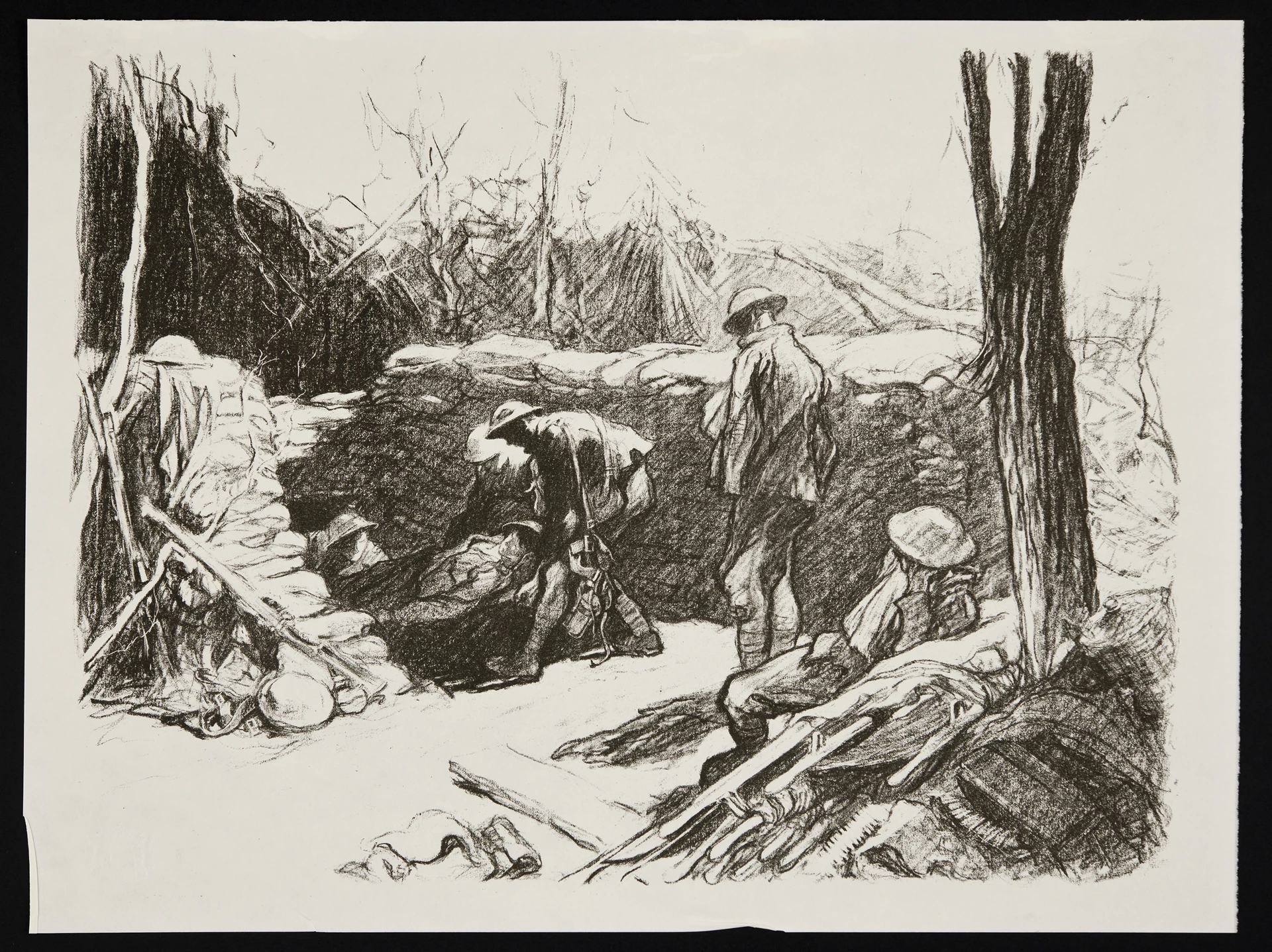
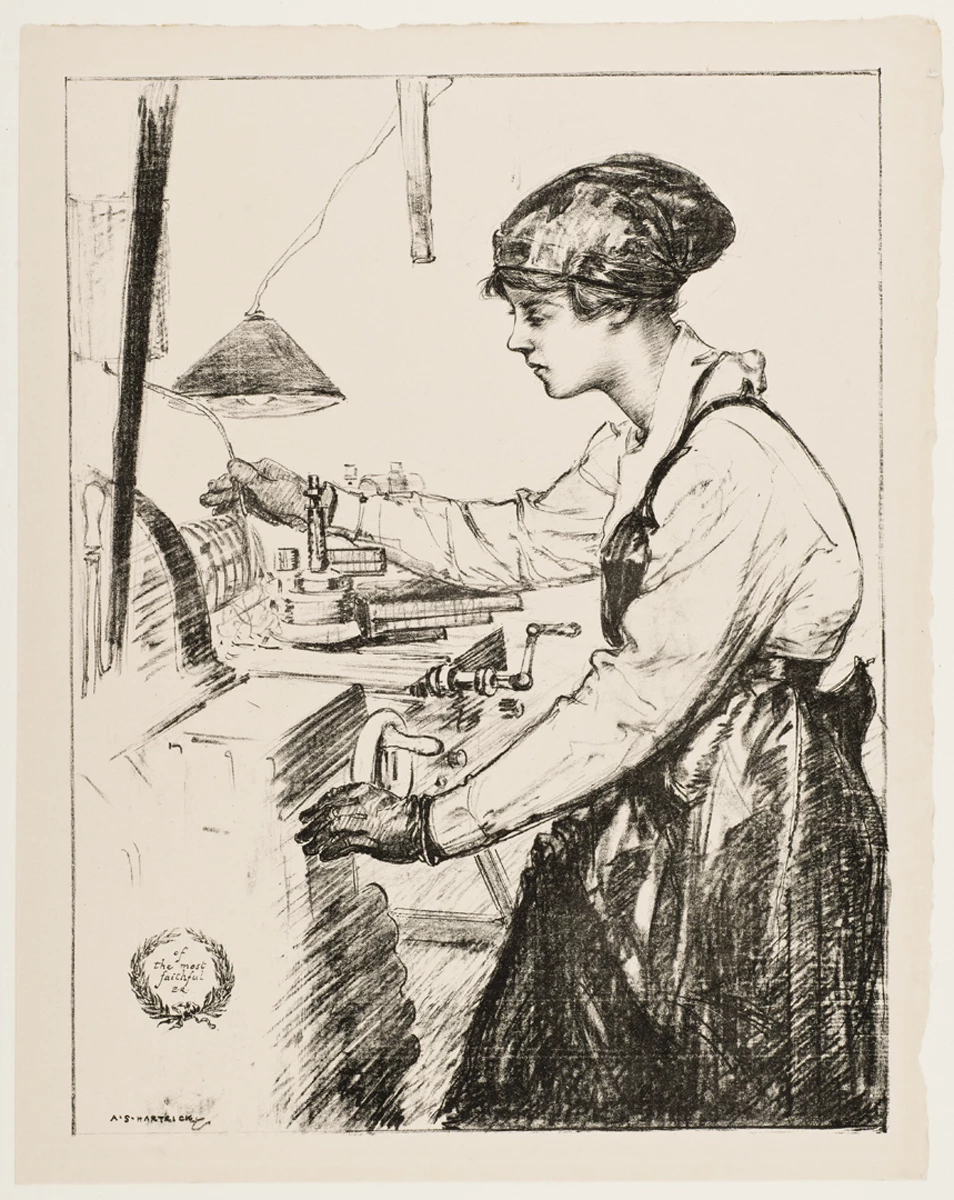
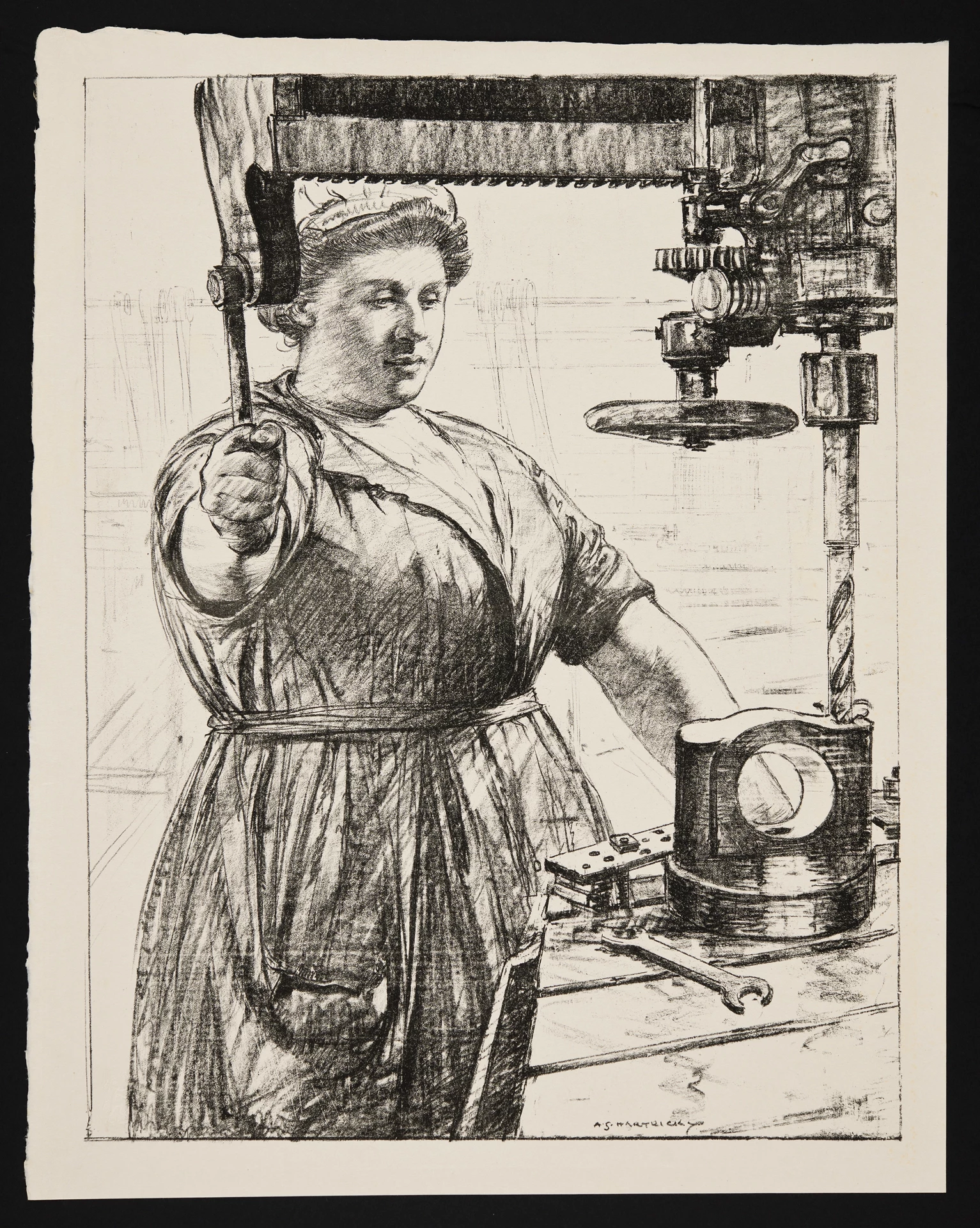
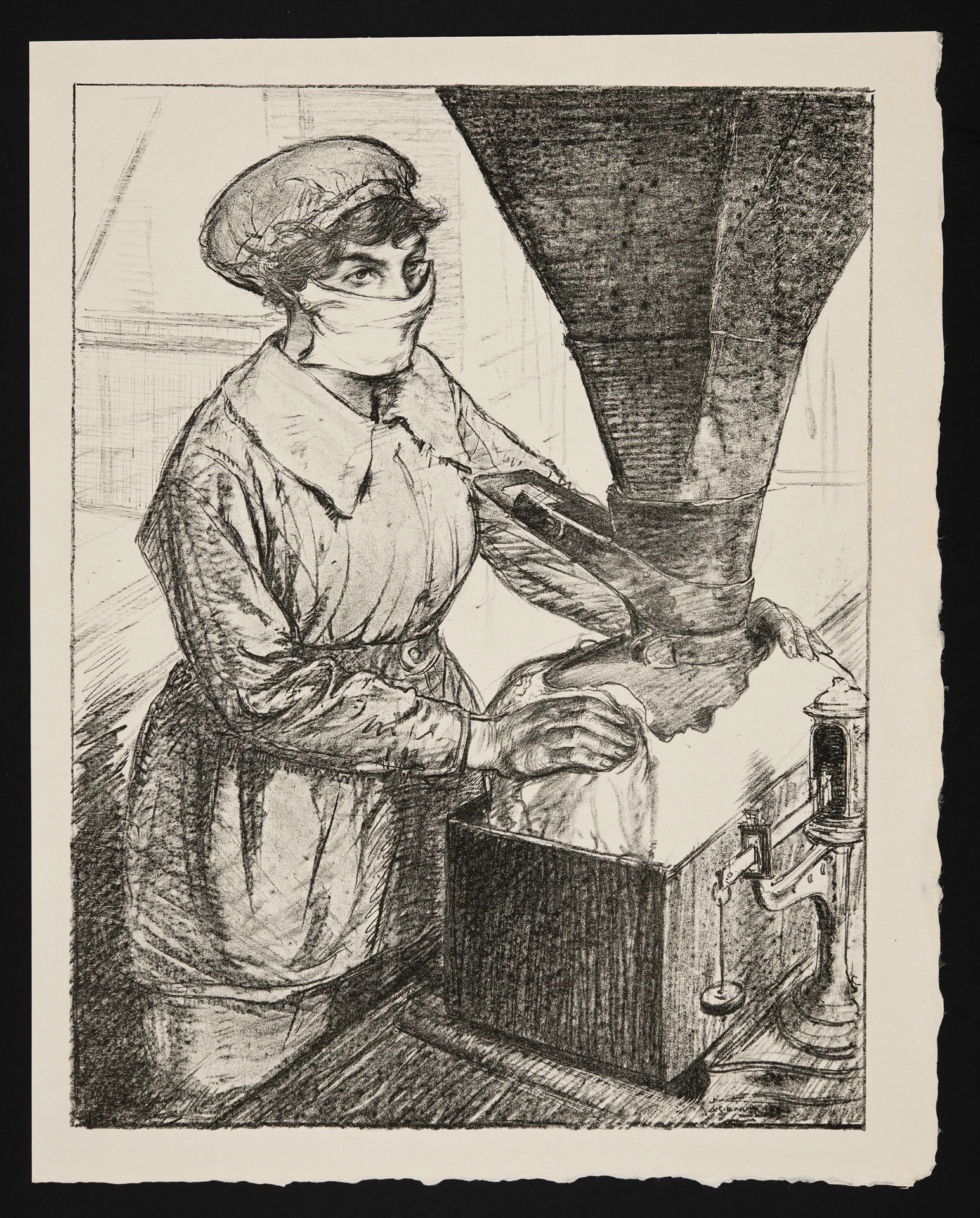
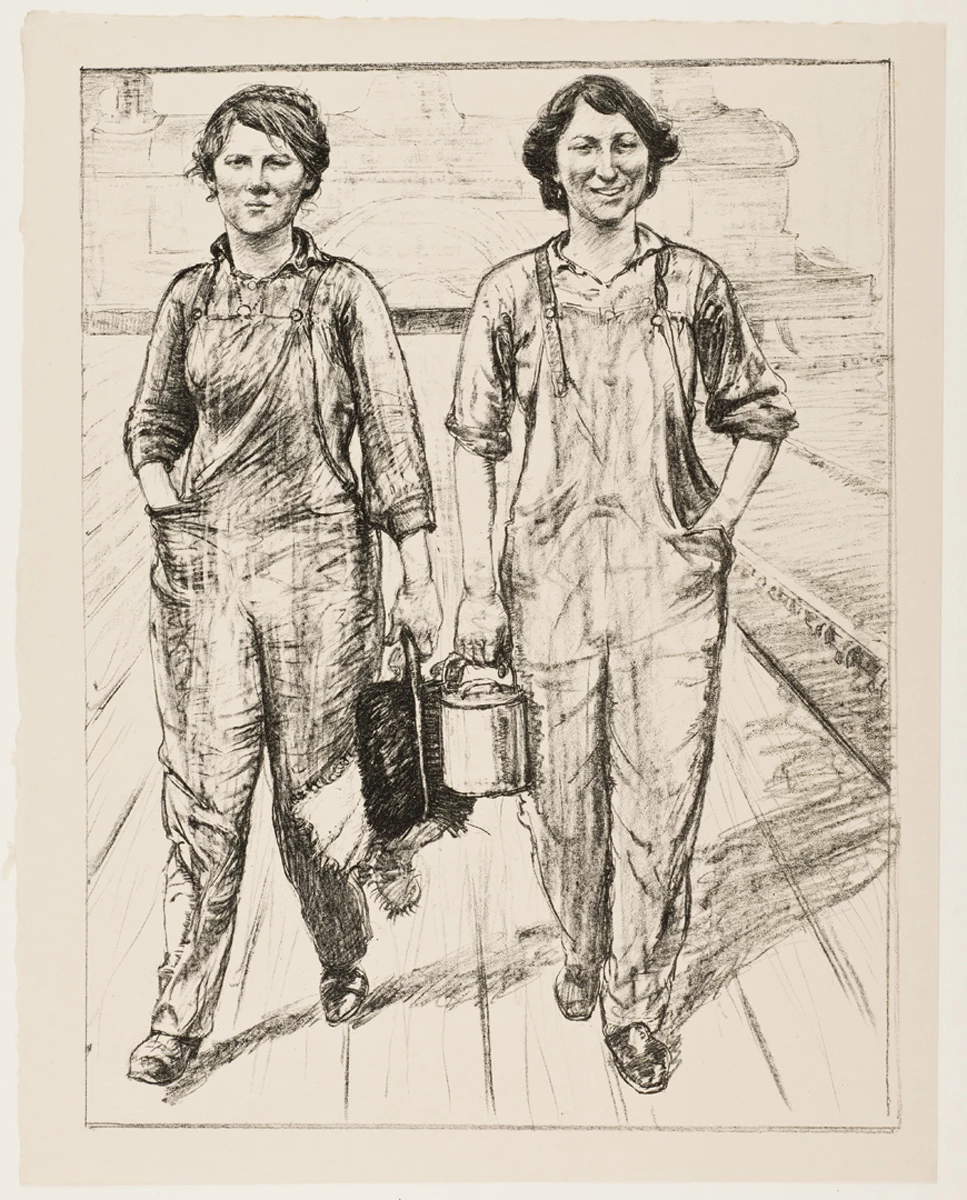
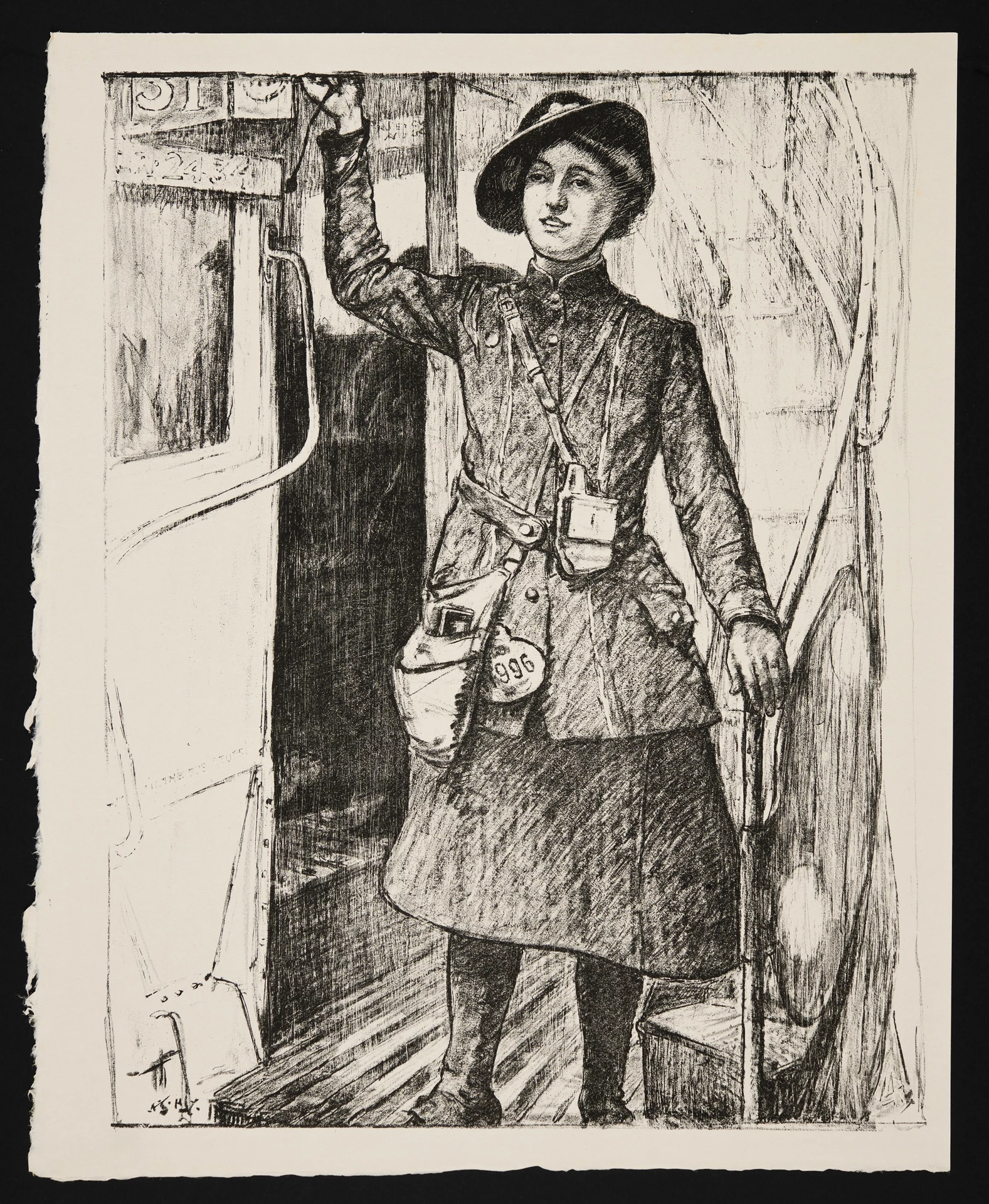
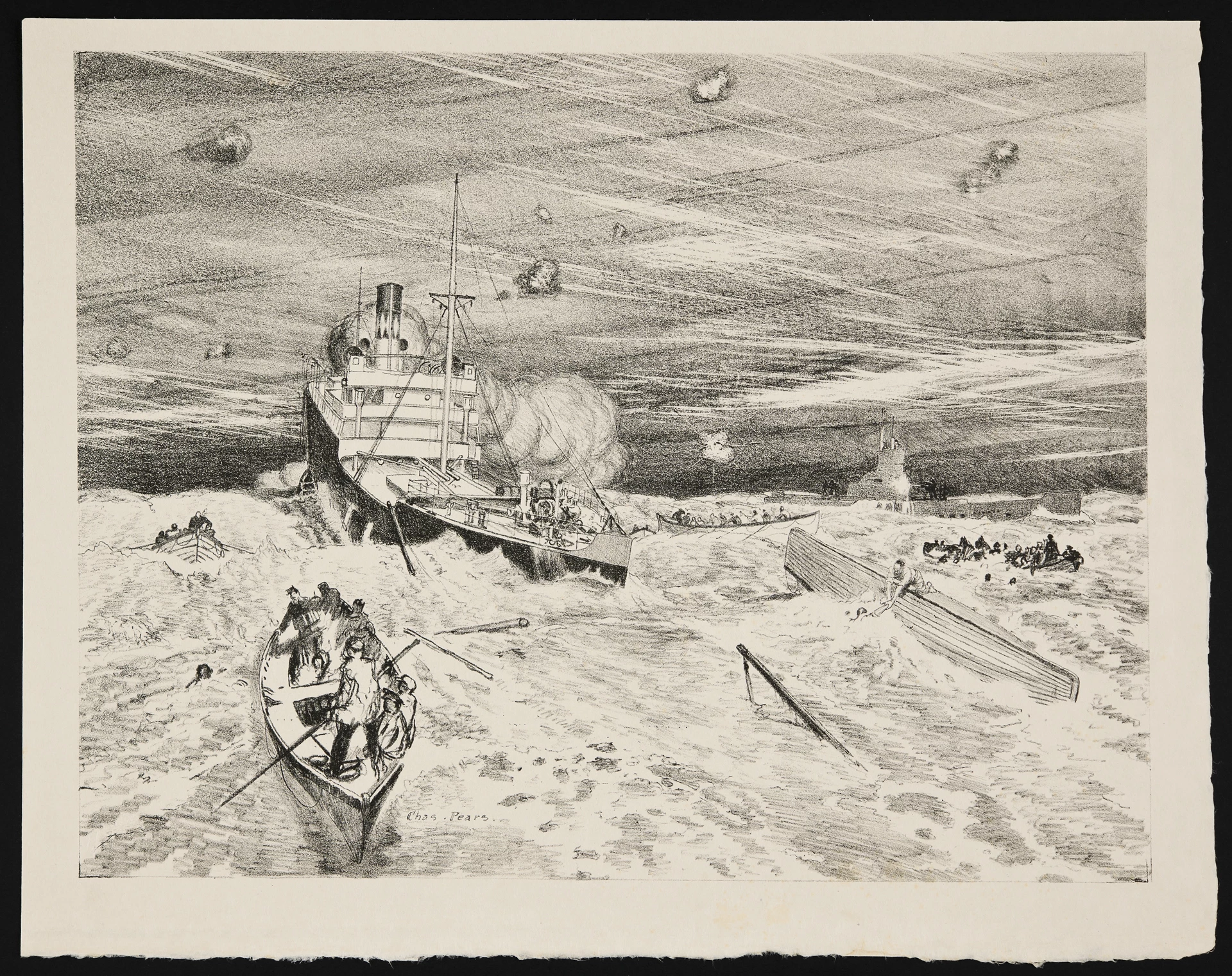
This exhibition presents the complete print series, The Great War: Britain’s Efforts and Ideals. These sixty-six prints were produced by the British government in 1917 as artistic propaganda with the aim of encouraging a war-weary public and raising support for the war effort.
Eighteen artists contributed to the series, including Augustus John, George Clausen and Frank Brangwyn – some of the most celebrated artists of the time.
As a government commission, the artists did not have full artistic freedom. They were given their subjects and each image had to pass censorship regulations.
The prints are divided into two sets of portfolios, ‘Ideals’ and ‘Efforts’. The ‘Ideals’ address the question of why Britain was at war and what it aimed to achieve. These images are dramatic and symbolic, such as The Freedom of the Seas and The Triumph of Democracy. The ‘Efforts’ illustrate some of the activities of the war effort, the means by which Britain was to achieve the ‘Ideals’. The Efforts are separated into nine subject headings, each depicting a different activity or theme.
Producing and Exhibiting
These prints were commissioned by Wellington House, a government department secretly set up to produce propaganda. The project was managed by the artist Thomas Derrick (1885–1954), and the printing carried out under the direction of the artist and contributor F. Ernest Jackson (1872–1945). The printer was Avenue Press, London.
The contributing artists were paid well, each receiving £210 (about £10,000 today) with the possibility of further royalties from sales. The prints were a limited edition of two hundred. The ‘Efforts’ were sold for £2 2s 0d (£100) each and the ‘Ideals’ for £10 10s 0d (£500).
As a government commission, the artists did not have full artistic freedom. They were given their subjects and each image had to pass censorship regulations.
The series was first exhibited at the Fine Art Society, London in July 1917, followed by regional art galleries around Britain. It was also shown in France and in America, where the majority of the portfolios were sent to be exhibited and sold.
Contemporary Reaction to Prints
“The very soul of the war is to be read in the set of sixty-six brilliant lithographs.”
(The Illustrated London News, 1917)
These prints were commissioned as propaganda with the specific aim of raising civilian morale and manipulating public opinion towards the First World War in Britain and abroad. In 1917, after three years of hard fighting and unprecedented loss of life, the government needed a new way to maintain public support for the war. These prints were designed to remind people of the aims and objectives, and emphasise the importance of patriotic duty.
It is hard to know whether the prints were successful as propaganda. They were widely published when first exhibited in 1917. Some journalists supported the message, “To see these lithographs is a patriotic as well as an artistic duty” (Burton Daily Mail, Feb 15, 1918). Others were not so positive, “their efforts are in almost every instance sincere; yet the result is, on the whole, meagre and unsatisfying.” (The Daily Telegraph, 20 July 1917). In America, the reaction initially seemed positive, ‘they have been a revelation to American Fifth Avenue art patrons, dealer, critics…They put up British prestige’. However, prints sales there did not meet expectations and a loss was made on the project as a whole.
Lithography and the Senefelder Club
‘The most brilliant of the younger men are all now making remarkable lithographs…there is a genuine renaissance of the art’ (Joseph Pennell, 1914)
Lithography is a printing technique based on the principle that oil and water do not mix. An artist draws an image onto a smooth surface, traditionally a limestone, with a greasy material. Ink is then rolled onto the surface, it is attracted to the drawing, but repelled by the dampened un-drawn areas. Paper is laid down on the stone and run through a press. Different effects can be achieved using different greasy materials to draw. These can imitate a chalk or pencil drawing or even watercolour. Many of these prints were produced using a ‘transfer’ method, where a drawing made on special paper is transferred to the stone, rather than working on it directly. For colour lithographs, the artist begins with the design on a key-stone using one colour. Any further colours require a different stone, inked up and printed one on top of another.
Many of the contributing artists were members of the Senefelder club, a small club set up in 1908 to encourage and revive artistic lithography. It was named after the 18th century German inventor of the process. This portfolio was produced at a time of a revival of interest in the artistic opportunities of lithography.




















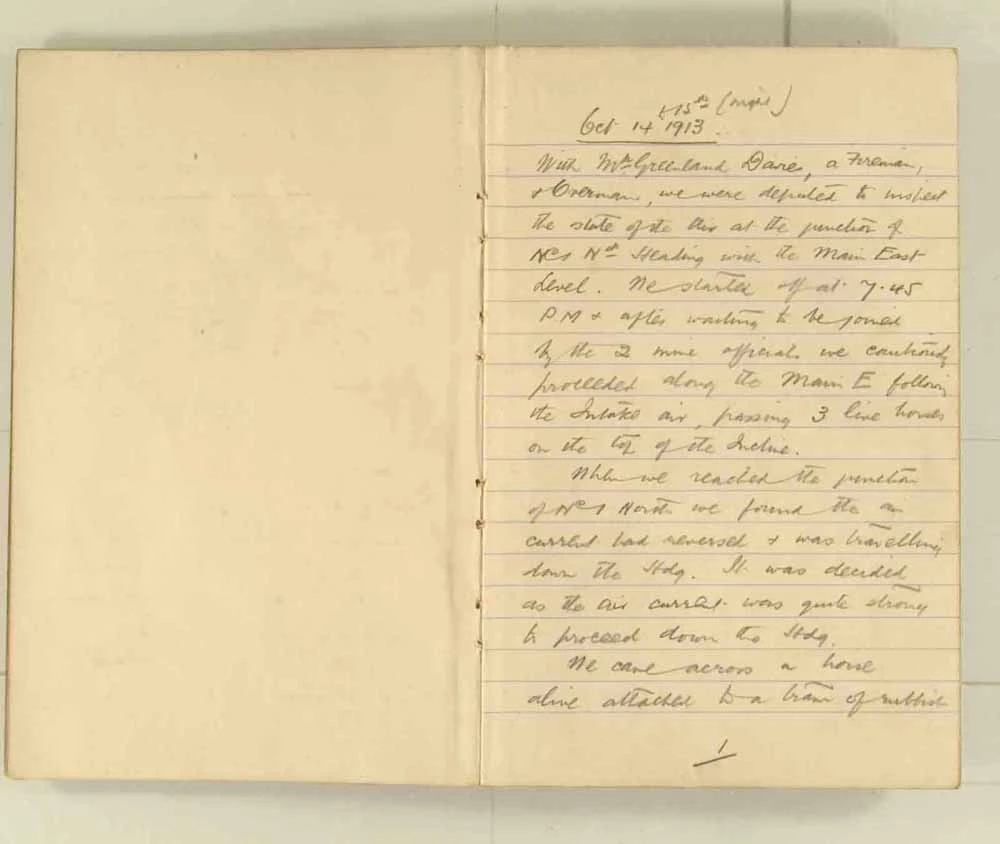
![Notes made by the Inspector of Mines as he travelled around the devastated underground workings following the Senghenydd mine explosion on 14th October 1913 that killed 439 men. Courtesy of the National Coal Mining Museum for England [Notebook 3/4]](/media/27264/version-full/note-books081.webp)
![Notes made by the Inspector of Mines as he travelled around the devastated underground workings following the Senghenydd mine explosion on 14th October 1913 that killed 439 men. Courtesy of the National Coal Mining Museum for England [Notebook 3/4]](/media/27263/version-full/note-books080.webp)
![Notes made by the Inspector of Mines as he travelled around the devastated underground workings following the Senghenydd mine explosion on 14th October 1913 that killed 439 men. Courtesy of the National Coal Mining Museum for England [Notebook 3/4]](/media/27262/version-full/note-books079.webp)
![Notes made by the Inspector of Mines as he travelled around the devastated underground workings following the Senghenydd mine explosion on 14th October 1913 that killed 439 men. Courtesy of the National Coal Mining Museum for England [Notebook 3/4]](/media/27261/version-full/note-books078.webp)
![Notes made by the Inspector of Mines as he travelled around the devastated underground workings following the Senghenydd mine explosion on 14th October 1913 that killed 439 men. Courtesy of the National Coal Mining Museum for England [Notebook 3/4]](/media/27260/version-full/note-books077.webp)
![Notes made by the Inspector of Mines as he travelled around the devastated underground workings following the Senghenydd mine explosion on 14th October 1913 that killed 439 men. Courtesy of the National Coal Mining Museum for England [Notebook 3/4]](/media/27259/version-full/note-books076.webp)
![Notes made by the Inspector of Mines as he travelled around the devastated underground workings following the Senghenydd mine explosion on 14th October 1913 that killed 439 men. Courtesy of the National Coal Mining Museum for England [Notebook 3/4]](/media/27258/version-full/note-books075.webp)
![Notes made by the Inspector of Mines as he travelled around the devastated underground workings following the Senghenydd mine explosion on 14th October 1913 that killed 439 men. Courtesy of the National Coal Mining Museum for England [Notebook 3/4]](/media/27256/version-full/note-books074.webp)
![Notes made by the Inspector of Mines as he travelled around the devastated underground workings following the Senghenydd mine explosion on 14th October 1913 that killed 439 men. Courtesy of the National Coal Mining Museum for England [Notebook 3/4]](/media/27255/version-full/note-books073.webp)
![Notes made by the Inspector of Mines as he travelled around the devastated underground workings following the Senghenydd mine explosion on 14th October 1913 that killed 439 men. Courtesy of the National Coal Mining Museum for England [Notebook 3/4]](/media/27253/version-full/note-books072.webp)
![Notes made by the Inspector of Mines as he travelled around the devastated underground workings following the Senghenydd mine explosion on 14th October 1913 that killed 439 men. Courtesy of the National Coal Mining Museum for England [Notebook 3/4]](/media/27251/version-full/note-books071.webp)
![Notes made by the Inspector of Mines as he travelled around the devastated underground workings following the Senghenydd mine explosion on 14th October 1913 that killed 439 men. Courtesy of the National Coal Mining Museum for England [Notebook 3/4]](/media/27249/version-full/note-books070.webp)
![Notes made by the Inspector of Mines as he travelled around the devastated underground workings following the Senghenydd mine explosion on 14th October 1913 that killed 439 men. Courtesy of the National Coal Mining Museum for England [Notebook 3/4]](/media/27248/version-full/note-books069.webp)
![Notes made by the Inspector of Mines as he travelled around the devastated underground workings following the Senghenydd mine explosion on 14th October 1913 that killed 439 men. Courtesy of the National Coal Mining Museum for England [Notebook 3/4]](/media/27247/version-full/note-books068.webp)
![Notes made by the Inspector of Mines as he travelled around the devastated underground workings following the Senghenydd mine explosion on 14th October 1913 that killed 439 men. Courtesy of the National Coal Mining Museum for England [Notebook 3/4]](/media/27246/version-full/note-books067.webp)
![Notes made by the Inspector of Mines as he travelled around the devastated underground workings following the Senghenydd mine explosion on 14th October 1913 that killed 439 men. Courtesy of the National Coal Mining Museum for England [Notebook 3/4]](/media/27245/version-full/note-books066.webp)
![Notes made by the Inspector of Mines as he travelled around the devastated underground workings following the Senghenydd mine explosion on 14th October 1913 that killed 439 men. Courtesy of the National Coal Mining Museum for England [Notebook 3/4]](/media/27244/version-full/note-books065.webp)
![Notes made by the Inspector of Mines as he travelled around the devastated underground workings following the Senghenydd mine explosion on 14th October 1913 that killed 439 men. Courtesy of the National Coal Mining Museum for England [Notebook 3/4]](/media/27243/version-full/note-books064.webp)
![Notes made by the Inspector of Mines as he travelled around the devastated underground workings following the Senghenydd mine explosion on 14th October 1913 that killed 439 men. Courtesy of the National Coal Mining Museum for England [Notebook 3/4]](/media/27241/version-full/note-books063.webp)
![Notes made by the Inspector of Mines as he travelled around the devastated underground workings following the Senghenydd mine explosion on 14th October 1913 that killed 439 men. Courtesy of the National Coal Mining Museum for England [Notebook 3/4]](/media/27240/version-full/note-books062.webp)
![Notes made by the Inspector of Mines as he travelled around the devastated underground workings following the Senghenydd mine explosion on 14th October 1913 that killed 439 men. Courtesy of the National Coal Mining Museum for England [Notebook 3/4]](/media/27239/version-full/note-books061.webp)
![Notes made by the Inspector of Mines as he travelled around the devastated underground workings following the Senghenydd mine explosion on 14th October 1913 that killed 439 men. Courtesy of the National Coal Mining Museum for England [Notebook 3/4]](/media/27238/version-full/note-books060.webp)
![Notes made by the Inspector of Mines as he travelled around the devastated underground workings following the Senghenydd mine explosion on 14th October 1913 that killed 439 men. Courtesy of the National Coal Mining Museum for England [Notebook 3/4]](/media/27237/version-full/note-books059.webp)
![Notes made by the Inspector of Mines as he travelled around the devastated underground workings following the Senghenydd mine explosion on 14th October 1913 that killed 439 men. Courtesy of the National Coal Mining Museum for England [Notebook 3/4]](/media/27236/version-full/note-books058.webp)
![Notes made by the Inspector of Mines as he travelled around the devastated underground workings following the Senghenydd mine explosion on 14th October 1913 that killed 439 men. Courtesy of the National Coal Mining Museum for England [Notebook 3/4]](/media/27235/version-full/note-books057.webp)
![Notes made by the Inspector of Mines as he travelled around the devastated underground workings following the Senghenydd mine explosion on 14th October 1913 that killed 439 men. Courtesy of the National Coal Mining Museum for England [Notebook 3/4]](/media/27234/version-full/note-books056.webp)
![Notes made by the Inspector of Mines as he travelled around the devastated underground workings following the Senghenydd mine explosion on 14th October 1913 that killed 439 men. Courtesy of the National Coal Mining Museum for England [Notebook 3/4]](/media/27233/version-full/note-books055.webp)
![Notes made by the Inspector of Mines as he travelled around the devastated underground workings following the Senghenydd mine explosion on 14th October 1913 that killed 439 men. Courtesy of the National Coal Mining Museum for England [Notebook 3/4]](/media/27232/version-full/note-books054.webp)
![Notes made by the Inspector of Mines as he travelled around the devastated underground workings following the Senghenydd mine explosion on 14th October 1913 that killed 439 men. Courtesy of the National Coal Mining Museum for England [Notebook 3/4]](/media/27231/version-full/note-books053.webp)
![Notes made by the Inspector of Mines as he travelled around the devastated underground workings following the Senghenydd mine explosion on 14th October 1913 that killed 439 men. Courtesy of the National Coal Mining Museum for England [Notebook 3/4]](/media/27229/version-full/note-books052.webp)
![Notes made by the Inspector of Mines as he travelled around the devastated underground workings following the Senghenydd mine explosion on 14th October 1913 that killed 439 men. Courtesy of the National Coal Mining Museum for England [Notebook 3/4]](/media/27228/version-full/note-books051.webp)
![Notes made by the Inspector of Mines as he travelled around the devastated underground workings following the Senghenydd mine explosion on 14th October 1913 that killed 439 men. Courtesy of the National Coal Mining Museum for England [Notebook 3/4]](/media/27219/version-full/note-books050.webp)
![Notes made by the Inspector of Mines as he travelled around the devastated underground workings following the Senghenydd mine explosion on 14th October 1913 that killed 439 men. Courtesy of the National Coal Mining Museum for England [Notebook 3/4]](/media/27218/version-full/note-books049.webp)
![Notes made by the Inspector of Mines as he travelled around the devastated underground workings following the Senghenydd mine explosion on 14th October 1913 that killed 439 men. Courtesy of the National Coal Mining Museum for England [Notebook 3/4]](/media/27217/version-full/note-books048.webp)
![Notes made by the Inspector of Mines as he travelled around the devastated underground workings following the Senghenydd mine explosion on 14th October 1913 that killed 439 men. Courtesy of the National Coal Mining Museum for England [Notebook 3/4]](/media/27216/version-full/note-books047.webp)
![Notes made by the Inspector of Mines as he travelled around the devastated underground workings following the Senghenydd mine explosion on 14th October 1913 that killed 439 men. Courtesy of the National Coal Mining Museum for England [Notebook 3/4]](/media/27215/version-full/note-books046.webp)
![Notes made by the Inspector of Mines as he travelled around the devastated underground workings following the Senghenydd mine explosion on 14th October 1913 that killed 439 men. Courtesy of the National Coal Mining Museum for England [Notebook 3/4]](/media/27214/version-full/note-books045.webp)
![Notes made by the Inspector of Mines as he travelled around the devastated underground workings following the Senghenydd mine explosion on 14th October 1913 that killed 439 men. Courtesy of the National Coal Mining Museum for England [Notebook 3/4]](/media/27213/version-full/note-books044.webp)
![Notes made by the Inspector of Mines as he travelled around the devastated underground workings following the Senghenydd mine explosion on 14th October 1913 that killed 439 men. Courtesy of the National Coal Mining Museum for England [Notebook 3/4]](/media/27212/version-full/note-books043.webp)
![Notes made by the Inspector of Mines as he travelled around the devastated underground workings following the Senghenydd mine explosion on 14th October 1913 that killed 439 men. Courtesy of the National Coal Mining Museum for England [Notebook 3/4]](/media/27211/version-full/note-books042.webp)
![Notes made by the Inspector of Mines as he travelled around the devastated underground workings following the Senghenydd mine explosion on 14th October 1913 that killed 439 men. Courtesy of the National Coal Mining Museum for England [Notebook 3/4]](/media/27210/version-full/note-books041.webp)
![Notes made by the Inspector of Mines as he travelled around the devastated underground workings following the Senghenydd mine explosion on 14th October 1913 that killed 439 men. Courtesy of the National Coal Mining Museum for England [Notebook 3/4]](/media/27209/version-full/note-books040.webp)
![Notes made by the Inspector of Mines as he travelled around the devastated underground workings following the Senghenydd mine explosion on 14th October 1913 that killed 439 men. Courtesy of the National Coal Mining Museum for England [Notebook 3/4]](/media/27208/version-full/note-books039.webp)
![Notes made by the Inspector of Mines as he travelled around the devastated underground workings following the Senghenydd mine explosion on 14th October 1913 that killed 439 men. Courtesy of the National Coal Mining Museum for England [Notebook 3/4]](/media/27207/version-full/note-books038.webp)
![Notes made by the Inspector of Mines as he travelled around the devastated underground workings following the Senghenydd mine explosion on 14th October 1913 that killed 439 men. Courtesy of the National Coal Mining Museum for England [Notebook 3/4]](/media/27206/version-full/note-books037.webp)
![Notes made by the Inspector of Mines as he travelled around the devastated underground workings following the Senghenydd mine explosion on 14th October 1913 that killed 439 men. Courtesy of the National Coal Mining Museum for England [Notebook 3/4]](/media/27205/version-full/note-books036.webp)
![Notes made by the Inspector of Mines as he travelled around the devastated underground workings following the Senghenydd mine explosion on 14th October 1913 that killed 439 men. Courtesy of the National Coal Mining Museum for England [Notebook 3/4]](/media/27204/version-full/note-books035.webp)
![Notes made by the Inspector of Mines as he travelled around the devastated underground workings following the Senghenydd mine explosion on 14th October 1913 that killed 439 men. Courtesy of the National Coal Mining Museum for England [Notebook 3/4]](/media/27203/version-full/note-books034.webp)
![Notes made by the Inspector of Mines as he travelled around the devastated underground workings following the Senghenydd mine explosion on 14th October 1913 that killed 439 men. Courtesy of the National Coal Mining Museum for England [Notebook 3/4]](/media/27202/version-full/note-books033.webp)
![Notes made by the Inspector of Mines as he travelled around the devastated underground workings following the Senghenydd mine explosion on 14th October 1913 that killed 439 men. Courtesy of the National Coal Mining Museum for England [Notebook 3/4]](/media/27201/version-full/note-books032.webp)
![Notes made by the Inspector of Mines as he travelled around the devastated underground workings following the Senghenydd mine explosion on 14th October 1913 that killed 439 men. Courtesy of the National Coal Mining Museum for England [Notebook 3/4]](/media/27200/version-full/note-books031.webp)
![Notes made by the Inspector of Mines as he travelled around the devastated underground workings following the Senghenydd mine explosion on 14th October 1913 that killed 439 men. Courtesy of the National Coal Mining Museum for England [Notebook 3/4]](/media/27199/version-full/note-books030.webp)
![Notes made by the Inspector of Mines as he travelled around the devastated underground workings following the Senghenydd mine explosion on 14th October 1913 that killed 439 men. Courtesy of the National Coal Mining Museum for England [Notebook 3/4]](/media/27198/version-full/note-books029.webp)
![Notes made by the Inspector of Mines as he travelled around the devastated underground workings following the Senghenydd mine explosion on 14th October 1913 that killed 439 men. Courtesy of the National Coal Mining Museum for England [Notebook 3/4]](/media/27197/version-full/note-books028.webp)
![Notes made by the Inspector of Mines as he travelled around the devastated underground workings following the Senghenydd mine explosion on 14th October 1913 that killed 439 men. Courtesy of the National Coal Mining Museum for England [Notebook 3/4]](/media/27196/version-full/note-books027.webp)
![Notes made by the Inspector of Mines as he travelled around the devastated underground workings following the Senghenydd mine explosion on 14th October 1913 that killed 439 men. Courtesy of the National Coal Mining Museum for England [Notebook 3/4]](/media/27195/version-full/note-books026.webp)
![Notes made by the Inspector of Mines as he travelled around the devastated underground workings following the Senghenydd mine explosion on 14th October 1913 that killed 439 men. Courtesy of the National Coal Mining Museum for England [Notebook 3/4]](/media/27194/version-full/note-books025.webp)
![Notes made by the Inspector of Mines as he travelled around the devastated underground workings following the Senghenydd mine explosion on 14th October 1913 that killed 439 men. Courtesy of the National Coal Mining Museum for England [Notebook 3/4]](/media/27193/version-full/note-books024.webp)
![Notes made by the Inspector of Mines as he travelled around the devastated underground workings following the Senghenydd mine explosion on 14th October 1913 that killed 439 men. Courtesy of the National Coal Mining Museum for England [Notebook 3/4]](/media/27192/version-full/note-books023.webp)
![Notes made by the Inspector of Mines as he travelled around the devastated underground workings following the Senghenydd mine explosion on 14th October 1913 that killed 439 men. Courtesy of the National Coal Mining Museum for England [Notebook 3/4]](/media/27191/version-full/note-books022.webp)
![Notes made by the Inspector of Mines as he travelled around the devastated underground workings following the Senghenydd mine explosion on 14th October 1913 that killed 439 men. Courtesy of the National Coal Mining Museum for England [Notebook 3/4]](/media/27190/version-full/note-books021.webp)
![Notes made by the Inspector of Mines as he travelled around the devastated underground workings following the Senghenydd mine explosion on 14th October 1913 that killed 439 men. Courtesy of the National Coal Mining Museum for England [Notebook 3/4]](/media/27189/version-full/note-books020.webp)
![Notes made by the Inspector of Mines as he travelled around the devastated underground workings following the Senghenydd mine explosion on 14th October 1913 that killed 439 men. Courtesy of the National Coal Mining Museum for England [Notebook 3/4]](/media/27188/version-full/note-books019.webp)
![Notes made by the Inspector of Mines as he travelled around the devastated underground workings following the Senghenydd mine explosion on 14th October 1913 that killed 439 men. Courtesy of the National Coal Mining Museum for England [Notebook 3/4]](/media/27187/version-full/note-books018.webp)
![Notes made by the Inspector of Mines as he travelled around the devastated underground workings following the Senghenydd mine explosion on 14th October 1913 that killed 439 men. Courtesy of the National Coal Mining Museum for England [Notebook 3/4]](/media/27186/version-full/note-books017.webp)
![Notes made by the Inspector of Mines as he travelled around the devastated underground workings following the Senghenydd mine explosion on 14th October 1913 that killed 439 men. Courtesy of the National Coal Mining Museum for England [Notebook 3/4]](/media/27185/version-full/note-books016.webp)
![Notes made by the Inspector of Mines as he travelled around the devastated underground workings following the Senghenydd mine explosion on 14th October 1913 that killed 439 men. Courtesy of the National Coal Mining Museum for England [Notebook 3/4]](/media/27184/version-full/note-books015.webp)
![Notes made by the Inspector of Mines as he travelled around the devastated underground workings following the Senghenydd mine explosion on 14th October 1913 that killed 439 men. Courtesy of the National Coal Mining Museum for England [Notebook 3/4]](/media/27183/version-full/note-books014.webp)
![Notes made by the Inspector of Mines as he travelled around the devastated underground workings following the Senghenydd mine explosion on 14th October 1913 that killed 439 men. Courtesy of the National Coal Mining Museum for England [Notebook 3/4]](/media/27182/version-full/note-books013.webp)
![Notes made by the Inspector of Mines as he travelled around the devastated underground workings following the Senghenydd mine explosion on 14th October 1913 that killed 439 men. Courtesy of the National Coal Mining Museum for England [Notebook 3/4]](/media/27181/version-full/note-books012.webp)
![Notes made by the Inspector of Mines as he travelled around the devastated underground workings following the Senghenydd mine explosion on 14th October 1913 that killed 439 men. Courtesy of the National Coal Mining Museum for England [Notebook 3/4]](/media/27180/version-full/note-books011.webp)
![Notes made by the Inspector of Mines as he travelled around the devastated underground workings following the Senghenydd mine explosion on 14th October 1913 that killed 439 men. Courtesy of the National Coal Mining Museum for England [Notebook 3/4]](/media/27179/version-full/note-books010.webp)
![Notes made by the Inspector of Mines as he travelled around the devastated underground workings following the Senghenydd mine explosion on 14th October 1913 that killed 439 men. Courtesy of the National Coal Mining Museum for England [Notebook 3/4]](/media/27178/version-full/note-books009.webp)
![Notes made by the Inspector of Mines as he travelled around the devastated underground workings following the Senghenydd mine explosion on 14th October 1913 that killed 439 men. Courtesy of the National Coal Mining Museum for England [Notebook 3/4]](/media/27177/version-full/note-books008.webp)
![Notes made by the Inspector of Mines as he travelled around the devastated underground workings following the Senghenydd mine explosion on 14th October 1913 that killed 439 men. Courtesy of the National Coal Mining Museum for England [Notebook 3/4]](/media/27176/version-full/note-books007.webp)
![Notes made by the Inspector of Mines as he travelled around the devastated underground workings following the Senghenydd mine explosion on 14th October 1913 that killed 439 men. Courtesy of the National Coal Mining Museum for England [Notebook 3/4]](/media/27175/version-full/note-books006.webp)
![Notes made by the Inspector of Mines as he travelled around the devastated underground workings following the Senghenydd mine explosion on 14th October 1913 that killed 439 men. Courtesy of the National Coal Mining Museum for England [Notebook 3/4]](/media/27174/version-full/note-books005.webp)
![Notes made by the Inspector of Mines as he travelled around the devastated underground workings following the Senghenydd mine explosion on 14th October 1913 that killed 439 men. Courtesy of the National Coal Mining Museum for England [Notebook 3/4]](/media/27173/version-full/note-books004.webp)
![Notes made by the Inspector of Mines as he travelled around the devastated underground workings following the Senghenydd mine explosion on 14th October 1913 that killed 439 men. Courtesy of the National Coal Mining Museum for England [Notebook 3/4]](/media/27172/version-full/note-books003.webp)
![Notes made by the Inspector of Mines as he travelled around the devastated underground workings following the Senghenydd mine explosion on 14th October 1913 that killed 439 men. Courtesy of the National Coal Mining Museum for England [Notebook 3/4]](/media/27171/version-full/note-books002.webp)
![Notes made by the Inspector of Mines as he travelled around the devastated underground workings following the Senghenydd mine explosion on 14th October 1913 that killed 439 men. Courtesy of the National Coal Mining Museum for England [Notebook 1/2]](/media/27170/version-full/DSCF0054.webp)
![Notes made by the Inspector of Mines as he travelled around the devastated underground workings following the Senghenydd mine explosion on 14th October 1913 that killed 439 men. Courtesy of the National Coal Mining Museum for England [Notebook 1/2]](/media/27169/version-full/DSCF0053.webp)
![Notes made by the Inspector of Mines as he travelled around the devastated underground workings following the Senghenydd mine explosion on 14th October 1913 that killed 439 men. Courtesy of the National Coal Mining Museum for England [Notebook 1/2]](/media/27168/version-full/DSCF0052.webp)
![Notes made by the Inspector of Mines as he travelled around the devastated underground workings following the Senghenydd mine explosion on 14th October 1913 that killed 439 men. Courtesy of the National Coal Mining Museum for England [Notebook 1/2]](/media/27167/version-full/DSCF0051.webp)
![Notes made by the Inspector of Mines as he travelled around the devastated underground workings following the Senghenydd mine explosion on 14th October 1913 that killed 439 men. Courtesy of the National Coal Mining Museum for England [Notebook 1/2]](/media/27166/version-full/DSCF0050.webp)
![Notes made by the Inspector of Mines as he travelled around the devastated underground workings following the Senghenydd mine explosion on 14th October 1913 that killed 439 men. Courtesy of the National Coal Mining Museum for England [Notebook 1/2]](/media/27165/version-full/DSCF0049.webp)
![Notes made by the Inspector of Mines as he travelled around the devastated underground workings following the Senghenydd mine explosion on 14th October 1913 that killed 439 men. Courtesy of the National Coal Mining Museum for England [Notebook 1/2]](/media/27164/version-full/DSCF0048.webp)
![Notes made by the Inspector of Mines as he travelled around the devastated underground workings following the Senghenydd mine explosion on 14th October 1913 that killed 439 men. Courtesy of the National Coal Mining Museum for England [Notebook 1/2]](/media/27163/version-full/DSCF0047.webp)
![Notes made by the Inspector of Mines as he travelled around the devastated underground workings following the Senghenydd mine explosion on 14th October 1913 that killed 439 men. Courtesy of the National Coal Mining Museum for England [Notebook 1/2]](/media/27162/version-full/DSCF0046.webp)
![Notes made by the Inspector of Mines as he travelled around the devastated underground workings following the Senghenydd mine explosion on 14th October 1913 that killed 439 men. Courtesy of the National Coal Mining Museum for England [Notebook 1/2]](/media/27161/version-full/DSCF0045.webp)
![Notes made by the Inspector of Mines as he travelled around the devastated underground workings following the Senghenydd mine explosion on 14th October 1913 that killed 439 men. Courtesy of the National Coal Mining Museum for England [Notebook 1/2]](/media/27160/version-full/DSCF0044.webp)
![Notes made by the Inspector of Mines as he travelled around the devastated underground workings following the Senghenydd mine explosion on 14th October 1913 that killed 439 men. Courtesy of the National Coal Mining Museum for England [Notebook 1/2]](/media/27159/version-full/DSCF0043.webp)
![Notes made by the Inspector of Mines as he travelled around the devastated underground workings following the Senghenydd mine explosion on 14th October 1913 that killed 439 men. Courtesy of the National Coal Mining Museum for England [Notebook 1/2]](/media/27158/version-full/DSCF0042.webp)
![Notes made by the Inspector of Mines as he travelled around the devastated underground workings following the Senghenydd mine explosion on 14th October 1913 that killed 439 men. Courtesy of the National Coal Mining Museum for England [Notebook 1/2]](/media/27157/version-full/DSCF0041.webp)
![Notes made by the Inspector of Mines as he travelled around the devastated underground workings following the Senghenydd mine explosion on 14th October 1913 that killed 439 men. Courtesy of the National Coal Mining Museum for England [Notebook 1/2]](/media/27156/version-full/DSCF0040.webp)
![Notes made by the Inspector of Mines as he travelled around the devastated underground workings following the Senghenydd mine explosion on 14th October 1913 that killed 439 men. Courtesy of the National Coal Mining Museum for England [Notebook 1/2]](/media/27155/version-full/DSCF0039.webp)
![Notes made by the Inspector of Mines as he travelled around the devastated underground workings following the Senghenydd mine explosion on 14th October 1913 that killed 439 men. Courtesy of the National Coal Mining Museum for England [Notebook 1/2]](/media/27154/version-full/DSCF0038.webp)
![Notes made by the Inspector of Mines as he travelled around the devastated underground workings following the Senghenydd mine explosion on 14th October 1913 that killed 439 men. Courtesy of the National Coal Mining Museum for England [Notebook 1/2]](/media/27153/version-full/DSCF0037.webp)
![Notes made by the Inspector of Mines as he travelled around the devastated underground workings following the Senghenydd mine explosion on 14th October 1913 that killed 439 men. Courtesy of the National Coal Mining Museum for England [Notebook 1/2]](/media/27152/version-full/DSCF0036.webp)
![Notes made by the Inspector of Mines as he travelled around the devastated underground workings following the Senghenydd mine explosion on 14th October 1913 that killed 439 men. Courtesy of the National Coal Mining Museum for England [Notebook 1/2]](/media/27151/version-full/DSCF0035.webp)
![Notes made by the Inspector of Mines as he travelled around the devastated underground workings following the Senghenydd mine explosion on 14th October 1913 that killed 439 men. Courtesy of the National Coal Mining Museum for England [Notebook 1/2]](/media/27150/version-full/DSCF0034.webp)
![vNotes made by the Inspector of Mines as he travelled around the devastated underground workings following the Senghenydd mine explosion on 14th October 1913 that killed 439 men. Courtesy of the National Coal Mining Museum for England [Notebook 1/2]](/media/27149/version-full/DSCF0034.webp)
![Notes made by the Inspector of Mines as he travelled around the devastated underground workings following the Senghenydd mine explosion on 14th October 1913 that killed 439 men. Courtesy of the National Coal Mining Museum for England [Notebook 1/2]](/media/27148/version-full/DSCF0033.webp)
![Notes made by the Inspector of Mines as he travelled around the devastated underground workings following the Senghenydd mine explosion on 14th October 1913 that killed 439 men. Courtesy of the National Coal Mining Museum for England [Notebook 1/2]](/media/27147/version-full/DSCF0032.webp)
![Notes made by the Inspector of Mines as he travelled around the devastated underground workings following the Senghenydd mine explosion on 14th October 1913 that killed 439 men. Courtesy of the National Coal Mining Museum for England [Notebook 1/2]](/media/27146/version-full/DSCF0031.webp)
![Notes made by the Inspector of Mines as he travelled around the devastated underground workings following the Senghenydd mine explosion on 14th October 1913 that killed 439 men. Courtesy of the National Coal Mining Museum for England [Notebook 1/2]](/media/27145/version-full/DSCF0030.webp)
![Notes made by the Inspector of Mines as he travelled around the devastated underground workings following the Senghenydd mine explosion on 14th October 1913 that killed 439 men. Courtesy of the National Coal Mining Museum for England [Notebook 1/2]](/media/27144/version-full/DSCF0029.webp)
![Notes made by the Inspector of Mines as he travelled around the devastated underground workings following the Senghenydd mine explosion on 14th October 1913 that killed 439 men. Courtesy of the National Coal Mining Museum for England [Notebook 1/2]](/media/27143/version-full/DSCF0028.webp)
![Notes made by the Inspector of Mines as he travelled around the devastated underground workings following the Senghenydd mine explosion on 14th October 1913 that killed 439 men. Courtesy of the National Coal Mining Museum for England [Notebook 1/2]](/media/27142/version-full/DSCF0027.webp)
![Notes made by the Inspector of Mines as he travelled around the devastated underground workings following the Senghenydd mine explosion on 14th October 1913 that killed 439 men. Courtesy of the National Coal Mining Museum for England [Notebook 1/2]](/media/27141/version-full/DSCF0026.webp)
![Notes made by the Inspector of Mines as he travelled around the devastated underground workings following the Senghenydd mine explosion on 14th October 1913 that killed 439 men. Courtesy of the National Coal Mining Museum for England [Notebook 1/2]](/media/27140/version-full/DSCF0025.webp)
![Notes made by the Inspector of Mines as he travelled around the devastated underground workings following the Senghenydd mine explosion on 14th October 1913 that killed 439 men. Courtesy of the National Coal Mining Museum for England [Notebook 1/2]](/media/27139/version-full/DSCF0024.webp)
![Notes made by the Inspector of Mines as he travelled around the devastated underground workings following the Senghenydd mine explosion on 14th October 1913 that killed 439 men. Courtesy of the National Coal Mining Museum for England [Notebook 1/2]](/media/27138/version-full/DSCF0023.webp)
![Notes made by the Inspector of Mines as he travelled around the devastated underground workings following the Senghenydd mine explosion on 14th October 1913 that killed 439 men. Courtesy of the National Coal Mining Museum for England [Notebook 1/2]](/media/27137/version-full/DSCF0022.webp)
![Notes made by the Inspector of Mines as he travelled around the devastated underground workings following the Senghenydd mine explosion on 14th October 1913 that killed 439 men. Courtesy of the National Coal Mining Museum for England [Notebook 1/2]](/media/27136/version-full/DSCF0021.webp)
![Notes made by the Inspector of Mines as he travelled around the devastated underground workings following the Senghenydd mine explosion on 14th October 1913 that killed 439 men. Courtesy of the National Coal Mining Museum for England [Notebook 1/2]](/media/27135/version-full/DSCF0020.webp)
![Notes made by the Inspector of Mines as he travelled around the devastated underground workings following the Senghenydd mine explosion on 14th October 1913 that killed 439 men. Courtesy of the National Coal Mining Museum for England [Notebook 1/2]](/media/27134/version-full/DSCF0019.webp)
![Notes made by the Inspector of Mines as he travelled around the devastated underground workings following the Senghenydd mine explosion on 14th October 1913 that killed 439 men. Courtesy of the National Coal Mining Museum for England [Notebook 1/2]](/media/27133/version-full/DSCF0018.webp)
![Notes made by the Inspector of Mines as he travelled around the devastated underground workings following the Senghenydd mine explosion on 14th October 1913 that killed 439 men. Courtesy of the National Coal Mining Museum for England [Notebook 1/2]](/media/27132/version-full/DSCF0017.webp)
![Notes made by the Inspector of Mines as he travelled around the devastated underground workings following the Senghenydd mine explosion on 14th October 1913 that killed 439 men. Courtesy of the National Coal Mining Museum for England [Notebook 1/2]](/media/27131/version-full/DSCF0016.webp)
![Notes made by the Inspector of Mines as he travelled around the devastated underground workings following the Senghenydd mine explosion on 14th October 1913 that killed 439 men. Courtesy of the National Coal Mining Museum for England [Notebook 1/2]](/media/27130/version-full/DSCF0015.webp)
![Notes made by the Inspector of Mines as he travelled around the devastated underground workings following the Senghenydd mine explosion on 14th October 1913 that killed 439 men. Courtesy of the National Coal Mining Museum for England [Notebook 1/2]](/media/27129/version-full/DSCF0014.webp)
![Notes made by the Inspector of Mines as he travelled around the devastated underground workings following the Senghenydd mine explosion on 14th October 1913 that killed 439 men. Courtesy of the National Coal Mining Museum for England [Notebook 1/2]](/media/27128/version-full/DSCF0013.webp)
![Notes made by the Inspector of Mines as he travelled around the devastated underground workings following the Senghenydd mine explosion on 14th October 1913 that killed 439 men. Courtesy of the National Coal Mining Museum for England [Notebook 1/2]](/media/27127/version-full/DSCF0012.webp)
![Notes made by the Inspector of Mines as he travelled around the devastated underground workings following the Senghenydd mine explosion on 14th October 1913 that killed 439 men. Courtesy of the National Coal Mining Museum for England [Notebook 1/2]](/media/27126/version-full/DSCF0011.webp)
![Notes made by the Inspector of Mines as he travelled around the devastated underground workings following the Senghenydd mine explosion on 14th October 1913 that killed 439 men. Courtesy of the National Coal Mining Museum for England [Notebook 1/2]](/media/27125/version-full/DSCF0010.webp)
![Notes made by the Inspector of Mines as he travelled around the devastated underground workings following the Senghenydd mine explosion on 14th October 1913 that killed 439 men. Courtesy of the National Coal Mining Museum for England [Notebook 1/2]](/media/27124/version-full/DSCF0009.webp)
![Notes made by the Inspector of Mines as he travelled around the devastated underground workings following the Senghenydd mine explosion on 14th October 1913 that killed 439 men. Courtesy of the National Coal Mining Museum for England [Notebook 1/2]](/media/27123/version-full/DSCF0008.webp)
![Notes made by the Inspector of Mines as he travelled around the devastated underground workings following the Senghenydd mine explosion on 14th October 1913 that killed 439 men. Courtesy of the National Coal Mining Museum for England [Notebook 1/2]](/media/27122/version-full/DSCF0007.webp)
![Notes made by the Inspector of Mines as he travelled around the devastated underground workings following the Senghenydd mine explosion on 14th October 1913 that killed 439 men. Courtesy of the National Coal Mining Museum for England [Notebook 1/2]](/media/27121/version-full/DSCF0006.webp)
![Notes made by the Inspector of Mines as he travelled around the devastated underground workings following the Senghenydd mine explosion on 14th October 1913 that killed 439 men. Courtesy of the National Coal Mining Museum for England [Notebook 1/2]](/media/27120/version-full/DSCF0005.webp)
![Notes made by the Inspector of Mines as he travelled around the devastated underground workings following the Senghenydd mine explosion on 14th October 1913 that killed 439 men. Courtesy of the National Coal Mining Museum for England [Notebook 1/2]](/media/27119/version-full/DSCF0004.webp)
![Notes made by the Inspector of Mines as he travelled around the devastated underground workings following the Senghenydd mine explosion on 14th October 1913 that killed 439 men. Courtesy of the National Coal Mining Museum for England [Notebook 1/2]](/media/27118/version-full/DSCF0003.webp)