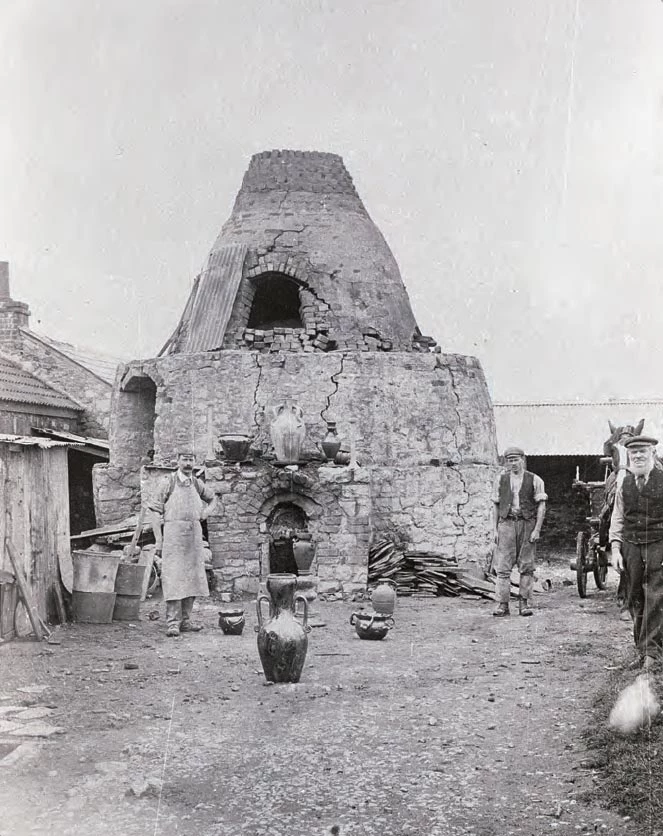
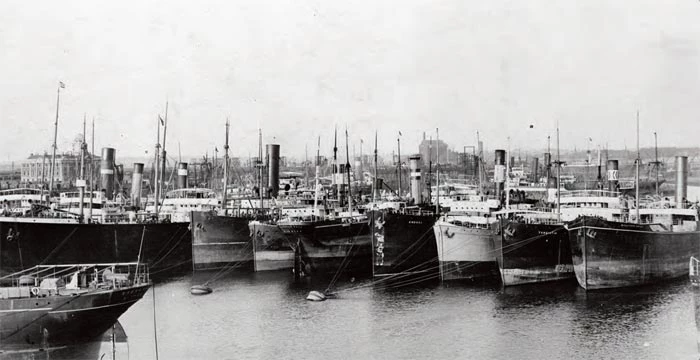
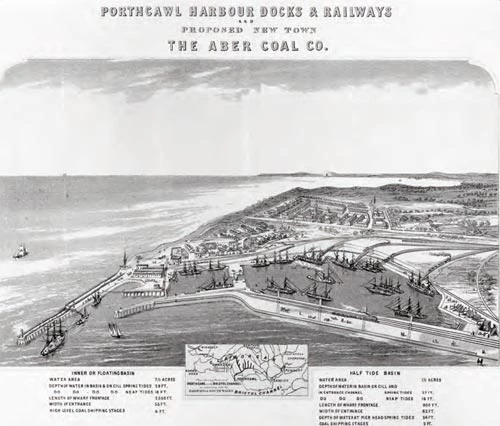
The Vale of Glamorgan - a hive of industry 31 July 2012 In the nineteenth century new docks were built at Porthcawl to help handle the worldwide demand for coal. This view of Ewenny Pottery dates from the early twentieth century. A limestone quarry near Aberthaw in the 1950s. Barry docks, c.1910, with ships moored to buoys waiting to load coal. The Vale of Glamorgan - a hive of industry Although the Vale of Glamorgan has been predominantly agricultural, there are a number of historically important industries in the area, some of which are still operational today. Some of those industries grew from the characteristic limestone geology of the area, while others are due to the area's lengthy coastline or relatively flat topography. Pottery There has been a pottery at Ewenny since the early fifteenth century. Successive generations of the Jenkins family have run it since 1610, and it remains a flourishing business today. Quarrying Limestone was widely quarried in this area. It was used for the building industry, and it was burnt to produce fertiliser and cement. It was also shipped across the Bristol Channel to Somerset and north Devon. Mining The valleys just north of the Vale Glamorgan held vast reserves of high-grade steam coal. Not even the huge, thriving docks at Cardiff could handle the worldwide demand for this premium fuel. In the nineteenth century new facilities were built at Porthcawl, Penarth and Barry - where just over 11 million tons were exported at its peak in 1913. Barry docks are still used today.
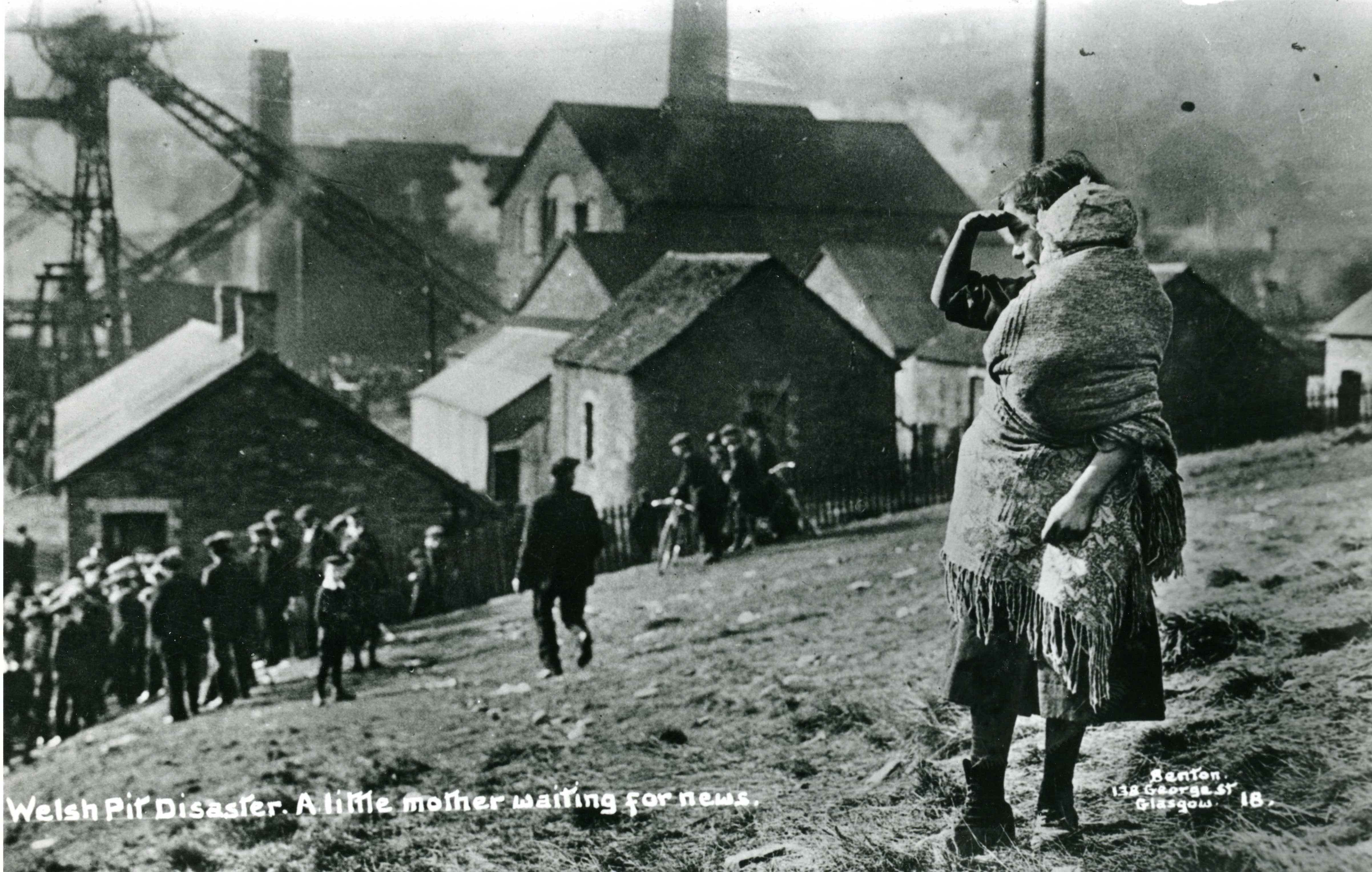
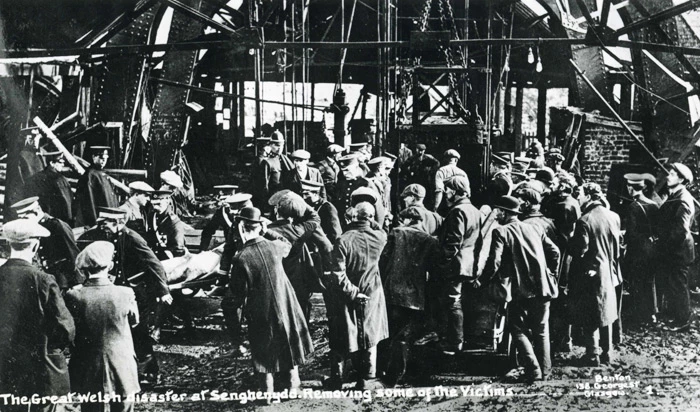
‘Miners’ lives at 5½p each’: The Government Enquiry into the 1913 Senghenydd mine disaster 6 July 2012 A young mother and baby wait for news
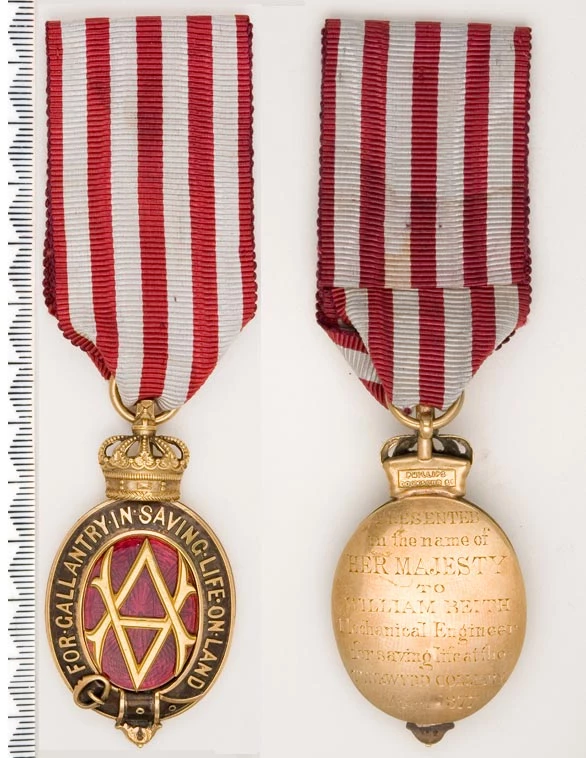
The Albert Medal and the Tynewydd Inundation Edward Besly, 25 June 2012 The reverse of Isaiah Thomas's Albert Medal.
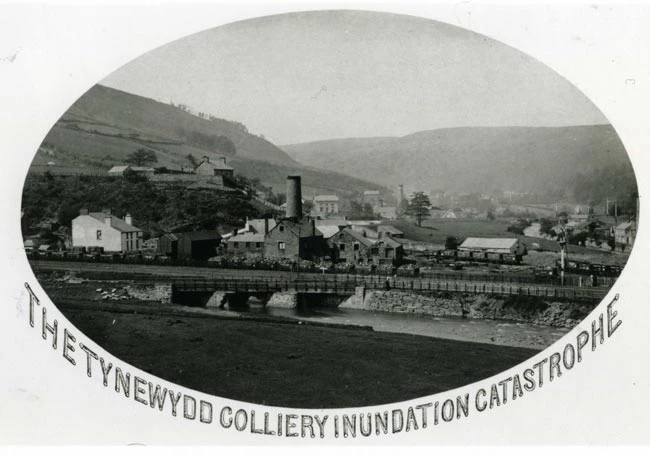
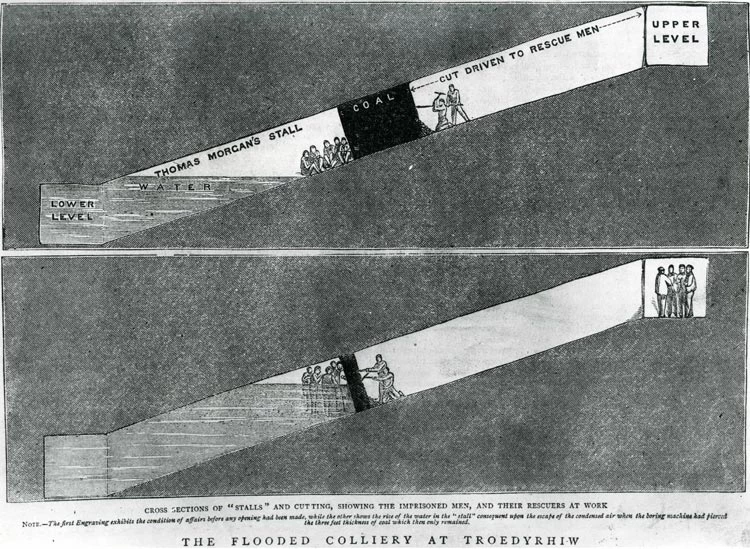
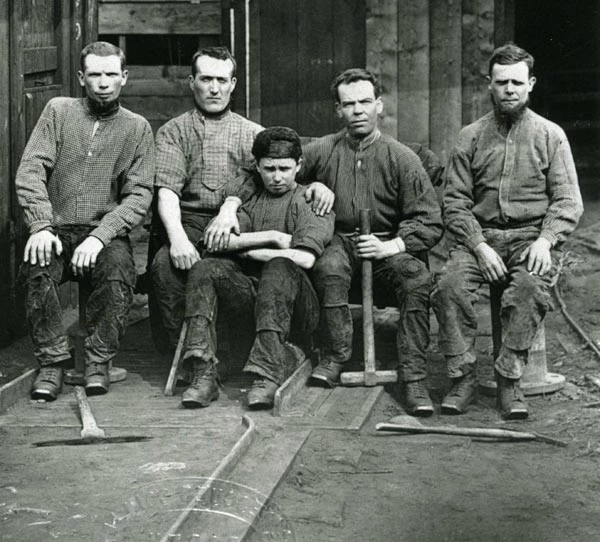
Mission accomplished Ceri Thompson, 19 June 2012 The team of rescuers Postcard commemorating the disaster Caption reads: 'Cross section of "stalls" and cutting, showing the imprisoned men, and their rescuers at work. Note: The first engraving exhibits the condition of the affairs before any opening had been made, while the other shows the rise of the water in the "stall" consequent upon the escape of the condensed air when the boring machine had pierced the three feet thickness of coal that only then remained.' Five of the survivors In August 2010 a roof fall at the San Jose copper/gold mine in Chile trapped 33 miners 700 metres underground. After 69 days underground and a massive rescue operation, which involved NASA and more than a dozen international corporations, all 33 men were rescued over a 24 hour period. After winching the last trapped miners to the surface the rescue workers held a placard up for the cameras reading "Mission accomplished Chile". This was seen by an estimated television audience of more than a billion viewers around the world. Tynewydd disaster The Chilean rescue reminded many of a similar incident which occurred in the Rhondda Valleys over 130 years before. On the 11th April 1877 Tynewydd Colliery in Porth became flooded by water from the abandoned workings of the nearby Cymmer Old Colliery. At the time of the inundation fourteen miners were underground at Tynewydd and rescue attempts were begun to find them. Five of the survivors were located after sounds of knocking were heard and rescuers had to cut through 12 yards of coal to reach them. Unfortunately, when the area was broken into, one of the trapped men was killed by the force of the air rushing out through the rescue hole. There were now nine men unaccounted for. Desperate rescue attempts Further sound of knocking were heard from working places beneath the water line which led to the rescuers assuming that there were other survivors trapped in an air pocket. An attempt was made by two divers from London to reach the men but the amount of debris blocking the roadways made this impossible. It was decided that the only way now was to cut a rescue heading through 38 yards of coal. During the ten days it took to reach the five trapped men, the rescue attracted the attention of the world's press and telegrams were even sent by Queen Victoria who was concerned about the men's plight. The trapped miners were reached on Friday, April 20th; they had been without food and had only mine water to drink for ten days. The five rescued miners were found to be suffering from 'the bends' because of the rapid decompression of their air pocket and had to spend time in hospital but otherwise recovered fully. The four other missing miners were all drowned. Brave and heroic rescues Although the incident was a minor one in terms of loss of life (an explosion at Cymmer Colliery had killed 114 men and boys in 1856), the perseverance of the rescue teams attracted great press and public interest. Twenty four First and Second Class and other presentation items were awarded to the rescuers in a ceremony held at the Rocking Stone above Pontypridd. It was estimated that up to forty thousand people attended. The Tynewydd rescue was the first time that Albert Medals had been awarded for bravery on land. Five of these medals are now held by Big Pit National Coal Museum along with examples of presentation silverware and other items connected with the rescue. Article by: Ceri Thompson, Curator, Big Pit National Coal Museum