: Sport, Recreation & Celebration

Cock fighting

14 August 2009

Introduction

Cockfighting

Cockfighting featured prominently on the rural calendar, and was popular with all sections of society throughout Wales until the early 19th century.

Originally introduced to Britain by the Romans, cockfighting was popular among all social classes in Wales from the Middle Ages until the mid nineteenth century. Cockpits were common in most villages and spectators travelled from near and far to attend the fights.

Cocks would be trained for many months before fighting, and were looked after by men called 'feeders'. Birds practised sparring every day and after exercise were fed and watered. The correct diet was extremely important, and each feeder followed his own secret feeding programme: brandy, raw steak, maggots and even urine were just some of the varied ingredients used.

The fight

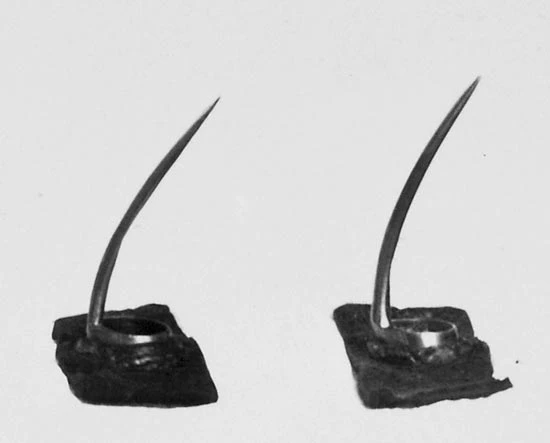
Spurs worn by fighting gamecocks.

Spurs worn by fighting gamecocks.

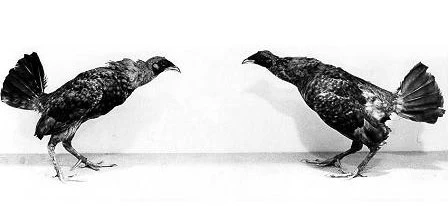
Before a fight the cock was fitted with sharp steel or silver spurs (which could fatally wound an opponent in a single strike) and then brought to the middle of the pit. Here it stood, facing its opponent, only inches apart. At a signal from the master of the match, the battle began, and continued until one bird was killed or badly injured. Charms thought to protect and safeguard fighting cocks were sometimes used. These included biblical verses or cryptic words and signs, which were written on pieces of paper small enough to be slotted into the spurs. Superstitious owners also believed that birds fed with soil from under the church altar would become unbeatable and capable of killing all opponents. Such spells and charms were annulled, however, if the fight took place on the hallowed ground of a churchyard, where it was thought that bouts could not be affected by external forces.

The Welsh Main

Glass rummer from Pontypridd, inscribed with an image of fighting cocks

Glass rummer from Pontypridd, inscribed with an image of fighting cocks, with the name J. Lewis. 1850.

A great number of cockfighting bouts were held during Easter. One of the severest tests on the cockfighting calendar was the Welsh Main, practised both in England and Wales, when only the best birds competed and large amounts of money were laid on the outcome. The Main usually featured over thirty birds, which fought each other head to head until only one was left standing. Other variants of cock fighting included 'shying at cocks', when spectators hurled pieces of wood at a bird in the pit, attempting to knock it over. 'Throwing at cocks' was particularly cruel and involved tying birds to a stake and shooting at them with staves.

The popularity of cock-fighting in Wales peaked during the eighteenth and early nineteenth centuries, at a time when a series of religious revivals nationwide condemned sports and pastimes as sinful activities which guaranteed hell and damnation for all involved. The Prevention of Cruelty to Animals Act in 1849 made cock-fighting illegal, both to protect the birds' welfare and to stop the gathering of frequently unruly spectators who so enjoyed the gambling and heavy drinking usually associated with the contests. We can be sure, however, that cock fights continued to be held illegally long afterwards, and as late as 1952 a cockfighting act was passed making it an offence to possess any instruments associated with the sport.

Cockpits

Both covered and open air pits were used for cockfights. The circular indoor cockpit re-erected at St Fagans National History Museum stood originally in the yard of the Hawk and Buckle Inn, Denbigh, and although its exact date is uncertain, may well have been built during the late seventeenth century.

Since none of the cockpit's original indoor fixtures remained when it was acquired by the Museum in 1965, the centre stage, surrounding gangway and two-tiered seating accommodation are all modern constructions.

Further reading

Owen, Elias, 'Churchyard Games in Wales', The Reliquary and Illustrated Archaeologist, vol 2 (1896), 154-161.

Peate, Iorwerth C., 'The Denbigh Cockpit and Cockfighting in Wales', Denbighshire Historical Society Transactions, vol.19 (1970), 125-132.

Author: Emma Lile, Curator: Traditional Music, Sports & Customs. Amgueddfa Cymru
The forgotten festivals of Wales

11 September 2007

Gŵyl mabsant

The game of 'fives'

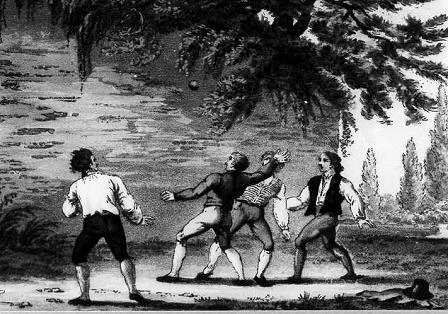
The game of 'fives', rather like a primitive form of squash, often took place against the church walls. Image from The Cambrian Popular Antiquities, Peter Roberts (1815).

The gŵyl mabsant was one of the most popular rural festivals in Wales. Commemorating the local parish saint, this annual celebration developed from a dedication through prayer to a programme of recreational activities, enjoyed by all.

Gŵylmabsantau was mentioned in writing as early as 1470, and the festival was common throughout Wales up until the end of the 19th century.

From cockfighting to grinning matches

Competitions at the festivals ranged from running races to old women's grinning matches and blindfolded wheelbarrow-driving. At the three day sports event held in Llangyfelach near Swansea in 1780, competitions and prizes included a women's race for a smock and petticoat and eating a hot pudding for a silver table spoon. Animal sports were a familiar scene, particularly cockfights, on which large amounts of money were wagered. Birds were specially trained for the contest, and the owner of a victorious cockerel was held in high esteem.

Early versions of Association Football were often played over Christmas, New Year and at Shrovetide. Large crowds of spectators gathered to witness the matches, which, owing to a lack of pre-determined rules, tended to degenerate into chaos, with injuries being common.

Bando

Bando was another favoured team sport and continued in some areas until the late 19th century. Particularly popular in Glamorgan, bando was similar to the modern game of hockey and teams used clubs to strike the ball towards a goal.

A rowdy reputation

Cockfighting

Cockfighting featured prominently on the rural calendar, and was popular with all sections of society throughout Wales until the early 19th century.

Owing to the combination of betting, feasting and alcohol consumption, it was not surprising that parish festivals built-up a reputation for their rowdiness. Publicans often played a significant role in organising and promoting sports events, many being arranged over the bar. The games contested were high-spirited and unwritten rules were often decided informally before the start of a match. As many sports were localised activities, rules usually differed from place to place, leading to disagreements between parishes.

Concern regarding the unlicensed revelry and alcoholic over-indulgence commonly occurring at the festivals, as well as the doubtful benefits of the games themselves, was increasingly voiced from the 18th century onwards, most noticeably by religious leaders.

Worthless and sinful

The Methodist and other religious revivals which swept across Wales from the mid 18th century until the turn of the 20th century, attacked sporting activities indiscriminately as worthless and sinful. Physical recreation was viewed by some as a great threat to the morals of the population. Eminent religious figures, such as Thomas Charles, tried to suppress impious fairs and festivals, in 1799 he described Wales as "sunk in superstition and vice". Consequently, parishioners turned increasingly to churches and chapels for release and salvation, and as prayer meetings were sometimes purposely arranged to clash with sports days, religion became a potent force in the eventual decline of the Gŵyl Mabsant.

Background Reading

"Gŵyl Mabsant" by T.Llew Jones. In Llafar Gwlad p10-11 (Winter, 1997), p8-9 (Spring, 1998).

"Festivals and social structure in early modern Wales" by Richard Suggett. In Past and Present, vol. 152, p79-112 (August, 1996).

A Journey through Wales in 1819

6 July 2007

A Grand Tour of Europe

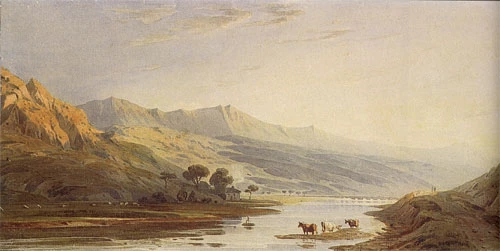
Cader Idris, a watercolour by John Varley in the Department of Art, Amgueddfa Cymru. The writer described Cadair Idris as 'rearing his dark majestic head above his gigantic brethren'.

Cader Idris, a watercolour by John Varley in the Department of Art, Amgueddfa Cymru. The writer described Cadair Idris as 'rearing his dark majestic head above his gigantic brethren'.

The Library at Amgueddfa Cymru contains a large number of historically important books, including a large number of accounts of tours of Wales published in the late 18th and early 19th centuries. Many of these were originally collected for their illustrations. Equally important, however, is the actual text that accompanies them.

In the 18th century, it was traditional for the aristocracy and the wealthy to go on a “Grand Tour of Europe” as the culmination of their classical education, visiting the cultural centres of Paris, Venice, Florence, and Rome. The Napoleonic Wars of 1790-1815 brought a temporary halt to this and instead they began to travel at home.

The accounts of such travels through Wales contain information on a very wide range of topics. They reveal information on the state of the roads, inns and hotels, descriptions of great houses and their contents, agriculture, industry, local customs and Welsh society in general. Many observers also commented on the natural history of Wales, sometimes giving lists of the plants and animals encountered.

A Grand Tour of Wales

The Library at the Museum has in its collections three 19th-century diaries dated 1819, 1841 and 1844, which were written by Lynn Dewing (1773-1854) from Norfolk

From Cardiff to Swansea

Two pages from the first part of the 1819 diary, describing the St Clears area in Carmarthenshire

Two pages from the first part of the 1819 diary, describing the St Clears area in Carmarthenshire

The first tour commenced at Bristol on 29th May 1819, with a journey by ship to Cardiff, a town with well planted walks about the castle, along with the iron foundries whose products were brought down the Glamorgan Canal.

The writer was one of the few visitors to Llandaff who had a kind word to say about John Wood's rebuilt cathedral, left incomplete in 1752.

He seemed very impressed with Swansea with its 'well-built & respectable houses, & shops, and several good streets'. In the areas around Cardiff and Swansea he wrote that the 'houses of the poor' were far neater in appearance, with their well-kept whitewashed walls, than their counterparts in England, although no comment was made on the state of the interiors.

Flowers in the Graveyards

At Kidwelly, the writer made a comment that also appears in other accounts of journeys through Wales and was about the decorating of graves with flowers, something that is taken for granted today. 'I observed in several of the Church-yards the old Welsh custom still prevails of planting flowers upon the graves of their relatives.' It was not until later in the 19th century that placing flowers on graves in England became common.

A lift to Aberystwyth

The time taken for the 1819 tour suggests that the diarist walked most of the way. He did ride in a fish-cart in order to reach Aberystwyth, and had to hire a man to carry his luggage for some 23 miles. Aberystwyth is described as 'a very neat sea-port & bathing place. The views from the Parade are very beautiful, both land & sea.'

A journey up Snowdon

The traveller then headed north. He went on to climb Snowdon on one of the few days in his diary that he actually dates.

'Friday 16th July 1819' from the inn at Glyn Gwyllyn [to the west of Snowdon] on my ten toes at half past four o'clock to ascent SNOWDEN [sic]. It was my intention to start at 2 o'clock, in order to reach the top in time to see the sun rise, which I am told is a fine sight indeed from Snowdon, but I was so annoyed with the noise of 4 or 5 welsh miners for 3 hours after I was in bed, that I could not get a wink of sleep before one o'clock.'

Near the summit he noted a recently opened copper mine which was being worked by six Cornish miners.

The extracts above are but a small sample from the beginning of the second volume for 1819. The diaries serve to contribute further to our understanding of Wales in the early 19th century.

Further reading

Crossley Evans, M. J., ‘Lynn Dewing, an unknown Lakeland traveller, and his journals 1817-1847, part 1., in Transactions of the Cumberland and Westmorland Antiquarian and Archaeological Society, 3rd ser., vol. IX, 2009, pp. 187-216

Inns and hostelries of 18th-century Wales

5 July 2007

'Nauseating ales' and 'filthy inns'

A view of Llangollen from Pugh's Cambria Depicta

A view of Llangollen from Pugh's Cambria Depicta, a town where the growth of the tourist industry led to improvements in inns such as The Hand.

The accounts of tours of Wales undertaken by well-to-do Englishmen in the late 18th and early 19th centuries have always been a major source of information for studying early modern Wales. The descriptions of towns and antiquities, regional costumes, customs, industries and the state of communications can prove very helpful and informative. The nature of the inns and hostelries encountered on the travels is yet another aspect full of interesting detail.

A warm Welsh welcome

When J.T. Barber published details of his tour of south Wales in 1803, among the inns at which he and his friend stayed was the Green Dragon at Carmarthen. It was described as 'comfortable', as was the Bridgewater Arms at Pontypridd and the Red Lion at Llanrhystud, which was a 'tolerably decent ale­house'.

However, not all the inns encountered by Barber and his companion provided pleasant memories. On reaching Carew, having got lost, the first inn he tried had no decent accommodation, nor stable for the horses. The second inn had even less, so the travellers returned to the first inn where at least a bed could be had.

'Nauseating ale'

The interior was discoloured, the landlord and his wife looked care-worn, and the meal consisted of hard barley bread and salt butter with 'nauseating ale'. The bed consisted of a bag of straw in a recess in a room the travellers shared with two of the landlord's children. The sheets were very damp, and the exhausted travellers found they were also sharing the room with fleas and rats.

Some of the inns on the main routes taken by the English tourist were excellent, particularly the one at Pile built by the Talbots of Margam. Barber's opinion of this inn was that it 'might be mistaken for a nobleman's seat', and that it catered well for all tourists. Henry Skrine's account of his tours in Wales, published in 1798, also mentions the inn at Pile, stating that it 'rather resembles a palace than an inn'.

North Wales

The Reverend W. Bingley's account of his 1798 tour of north Wales mentions the inn at Caernarfon built by the Earl of Uxbridge, stating that it had good views from its premises and excellent accommodation, and that few establishments in England could rival it.

A guide to the area published in 1827 confirms that this inn, the Uxbridge Arms, was 'large, handsome, and commodious', meeting all the needs of travellers at a reasonable cost. Bingley also refers to the Eagles Inn at Llanrwst as being comfortable and the only place there where post horses were kept. The disadvantage of the inn was that it was too popular, summer tourists making the atmosphere crowded and unpleasant.

It is apparent that the main hostelries on the tourist routes in Wales were, or had become out of necessity, suitable places to stay, notably those on the roads used by travellers heading for Ireland, such as The Hand in Llangollen, described by Bingley as tolerable, but too crowded and with an uncivil landlord. The Reverend G. J. Freeman who toured in the 1820s noticed the considerable changes The Hand had undergone since he had first visited Llangollen a year before Bingley.

Exceptions, such as the inn at Carew, were usually those where the tourist would not be expected to stop; for instance, the town of Tenby would have had the necessary hotels for this area of south-west Wales. However, there were occasions when travellers visiting towns were disappointed in the accommoda­tion that they found.

Filthy Inns

E. D. Clarke visited Haverfordwest in 1791 and commented that he had 'never felt more disposed to quit any place than Haverford', a feeling exacerbated by the filthy state of the inn.

He compared his room to a sty. The sheets were damp, and as the bed had not been changed since the last visitors it was full of sand from people's feet! Worse was to follow, for in the morning Clarke found that his carriage had four horses attached to it, not the two he had requested. He had no alternative but to take all four — 'Any inconvenience was better than staying with Pharaoh and all his host'.

Clarke was not alone in his experience of Haverfordwest, for Henry Penruddocke Wyndham tells a similar tale in his account of his travels made in the 1770s.

Dragons, zebras and doorstops - building a collection of Welsh computers

16 May 2007

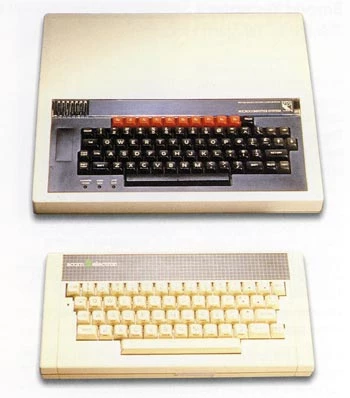
The BBC model B (top) and the Acorn Electron.

The BBC model B (top) and the Acorn Electron.

The Dragon 32 (left) and the Spectrum Plus.

The Dragon 32 (left) and the Spectrum Plus.

In the early 1980s Wales produced many of the world's home computers. Over the years, Amgueddfa Cymru has been trying to add an example of every computer manufactured in Wales to its collection.

In 1943, Thomas Watson snr, Chairman of IBM, imagined that the future world computer market would be made up of only five different computers. However, in the 1980s, there were at least six different models being manufactured in Wales alone.

Zebras and Dragons

The 'Zebra' and 'Dragon' were both types of early computers.

The 'Zebra' was produced in the 1960s. Only forty were ever made and most of them were exported overseas. The Zebra machine in the Museum's collection was manufactured in Newport, south Wales and was donated by Cardiff University.

The 'Dragon' was available in two versions, the thirty-two and the sixty-four. These numbers refer to the amount of memory each machine had. Although this is much less memory than computers today, this was considered very powerful in the 1980s.

Tracking down information about where early computers were made has proved difficult. However, a number of scrapbooks providing useful information were discovered in the Glamorgan Record Office, and were donated to the museum by 'AB Electronics' of Abercynon. The scrapbooks revealed that AB Electronics had produced most of the computer models made in Wales, and also provided information about other Welsh manufacturers.

The Electron & The BBC

The Electron was made by the Acorn Company, best known for producing the BBC computer. It was much cheaper and less powerful than the BBC, which was the most powerful and expensive home computer available in the 1980s. Although primarily used as an educational machine some of the games written for the BBC are some of the best produced for any computer of any era.

The scrapbooks showed that a number of Electron machines were manufactured by AB Electronics and a Welsh made machine was kindly given to the museum by the Chairman of the Electron User Group.

The books also showed that three firms had manufactured the BBC in Wales: AB Electronics of Abercynon, Race Electronics of Llantrisant and ICL of Kidsgrove. A dealer in vintage Acorn hardware gave the museum a BBC computer, for its collection, that had been manufactured by Race Electronics.

ZX Spectrum

Despite the Spectrum's popularity and availability, locating a Welsh-built model was difficult. Once again AB Electronics at Abercynon had made the Spectrum, but the majority had been produced by the Timex factory in Dundee. Eventually the Museum did manage to obtain an example of a Spectrum Plus built by AB Electronics and added it to its collection.

Torch Computers

The AB scrapbooks referred to 'Torch Computers of Cambridge' who had a factory in Caernarfon and built machines aimed at the business market. After contacting the company, they generously offered us an example of a machine built in North Wales.

The Museum now only needs three machines to complete its collection of computers made in Wales. One of these is the Apple iMac manufactured by the LG Corporation of Newport.

There are many websites on the internet which can give you more information about early computers. Some sites also offer software for the early machines and there are even programs to run on your modern PC which mimic the behaviour of the old machines, allowing you to see how much computers have moved on.