: Sport, Recreation & Celebration

A new discovery within an old instrument: was the Welsh crwth unique in possessing two soundboxes?

2 April 2012

The National Library of Wales crwth

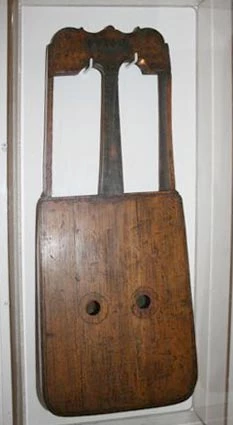
The National Library of Wales crwth. Image: National Library of Wales

The 18th century crwth housed at St Fagans National Museum of History

The 18th century crwth housed at St Fagans National Museum of History

Amgueddfa Cymru is fortunate enough to house one of only three surviving authentic Welsh crwths in Britain. Does the discovery of a hidden aperture make the crwth unique amongst bowed instruments by having two soundboxes?

An early stringed instrument first referred to in writing in the 12th century Laws of Hywel Dda (Hywel the Good), the crwth was popular in Wales throughout the Middle Ages, when it was enjoyed in aristocratic circles. The Laws of Hywel Dda mention the crwth, along with the harp and pipes, as instruments of status, played by noblemen and frequently providing musical entertainment.

Crwth competitions were contested in the first recorded eisteddfod, held by Lord Rhys at Cardigan Castle in 1176, while a cywydd poem by Rhys Goch Eryri c.1436, delights in the magicians, acrobats and musicians (crwth players included), who were welcomed into the households of wealthy patrons.

The emergence of the fiddle

The social role of the crwth altered significantly from around 1600 onwards however, when it became more associated with the folk music tradition. The emergence of the fiddle during the 18th century effectively brought crwth playing and crwth making to an end in Wales, closing over a thousand years of practice and development.

When an increase of interest in traditional music eventually took place during the late 20th century, the once common art of constructing a crwth, along with the most appropriate playing methods and performance techniques, had all but become a mystery.

The last remaining crwths

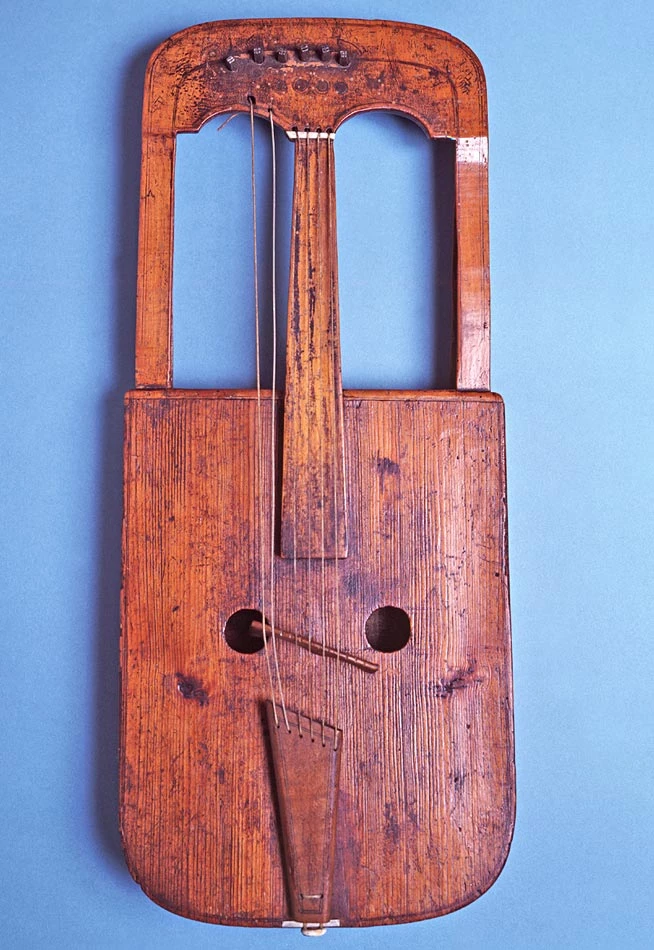
Of the three remaining historical examples in existence, each comprise a six-stringed instrument, oblong in shape and possessing a flat back, sides and soundboard, with the body and soundbox, as well as the main frame, being fashioned from a single piece of wood. A fingerboard divides a rectangular opening at one end while two holes can be seen in the soundboard.

The St Fagans crwth

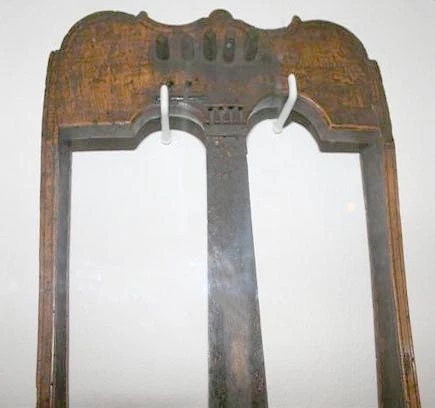
The crwth in the Museums collection is inscribed 1742 and was made by Richard Evans of Llanfihangel Bachellaeth, Caernarfonshire. It was originally loaned to the museum by Colonel J.C.Wynne Finch of Y Foelas, Caernarfonshire, in 1935; the family of whom retains ownership of the instrument to this day. Although complete there is a line of blocked off tuning pin holes slightly offset from the current set.

The Aberystwyth crwth

The National Library of Wales, Aberystwyth, houses a second crwth, which was donated on the library's opening in 1907 by its principal founder Sir John Williams. This instrument was possibly owned by the Reverend John Jenkins (1770-1829) of Ceri, Montgomeryshire. Although it is complete (with the exception of two missing drone strings), it has undergone restoration/repair at some point to the main framework.

The Warrington crwth

The final example is kept at Warrington Museum and Art Gallery, and although its date is unknown, it bears a likeness to an instrument described and drawn in the 1775 edition of the journal Archaeologia (volume III, plate vii). This crwth was bought in Wales in 1843 by Dr James Kendrick, one of Warrington's first local historians and a noted antiquarian. Kendrick donated the artefact to the town that same year and it became one of the earliest exhibits at the local museum.

The Warrington crwth is less complete than the other two, with missing tailpiece, strings, fingerboard and nut.

The St Fagans crwth under x-ray.

The St Fagans crwth under x-ray. The darkened area within the neck clearly shows a tapering void and at its widest point is an aperture concealed beneath the fingerboard.

The x-ray of the National Library crwth

The x-ray of the National Library crwth displaying the same tapering characteristics as the St Fagans example.

The crwth at Warrington Museum and Art Gallery

The crwth at Warrington Museum and Art Gallery. © Warrington Museum and Art Gallery

The missing fingerboard on the Warrington crwth allows the tapering void to be seen more clearly.

The missing fingerboard on the Warrington crwth allows the tapering void to be seen more clearly. This is visible on the photograph by the lighter bare wood which is bordered by a darker glue-lined impression.

Hidden aperture revealed

Conservation work on the St Fagans crwth uncovered a hidden aperture beneath an overhanging fingerboard. On further inspection this seemed to travel up the full length of the neck. X-rays of the instrument revealed a tapering, very purposeful cavity extending the full length of the fingerboard.

The effect of this void reduces the surface area available for the fingerboard to adhere to the neck. Consequently, it would have been much more difficult to construct than had a solid, flat surface been used - which would have better adhered to the neck upper surface.

What would have been the reason for constructing such an aperture? An increase in the tonal quality of the instrument? The aperture might well have performed in much the same way as the soundbox of an instrument or amplifier to provide a fuller sound to the vibration of the strings.

Unique among bowed instruments?

This second soundbox could possibly make the crwth unique amongst bowed instruments as such a design feature has no comparable legacy in the violin family.

Inspection of the Aberystwyth crwth revealed a similar aperture in the neck. As this surviving example contains different design features to that housed at St Fagans, (and presumably constructed by a different maker), it seems quite plausible that such a void might well have been a consistent characteristic for all crwths.

To confirm this hypothesis, close study of an image from the crwth at Warrington Museum revealed the tapering adhesive lines still visible on each side of the neck, with the bare wood area in the middle, showing the extent of the original aperture. Again, the variations in design suggest a different maker.

Therefore, the inclusion of an aperture in the crwth must have been a standard construction technique that crwth makers employed for the manufacture of the instrument.

The difference this aperture makes to the sound of the instrument could possibly be tested by recording the tonal scale of a replica crwth with a solid fingerboard, and then hollowing out the same instrument and recording the difference.

Ultraviolet discovery

Another aspect worth noting is an ink design that appears on the top surface of the St Fagans crwth's fingerboard, which only became apparent under ultraviolet light examination.

The linear graphic design found under ultraviolet light on the top surface of the fingerboard on the St Fagans crwth.

The linear graphic design found under ultraviolet light on the top surface of the fingerboard on the St Fagans crwth.

As the crwth was commonly held against the torso, the player could see down the instrument's neck and a design inked along the neck could possibly have aided the positioning of the fingers along the instrument's length. Interestingly, a vestige of this design also appears on the soundboard of a small harp which is also housed at St Fagans.

Article by: Emyr Davies, Conservator: Furniture, Musical Instruments and Horology, St Fagans National History Museum and Emma Lile, Curator: Music, Sports and Customs, St Fagans National History Museum

Hooks, wheels and rag dolls

16 December 2011

Home-made toys

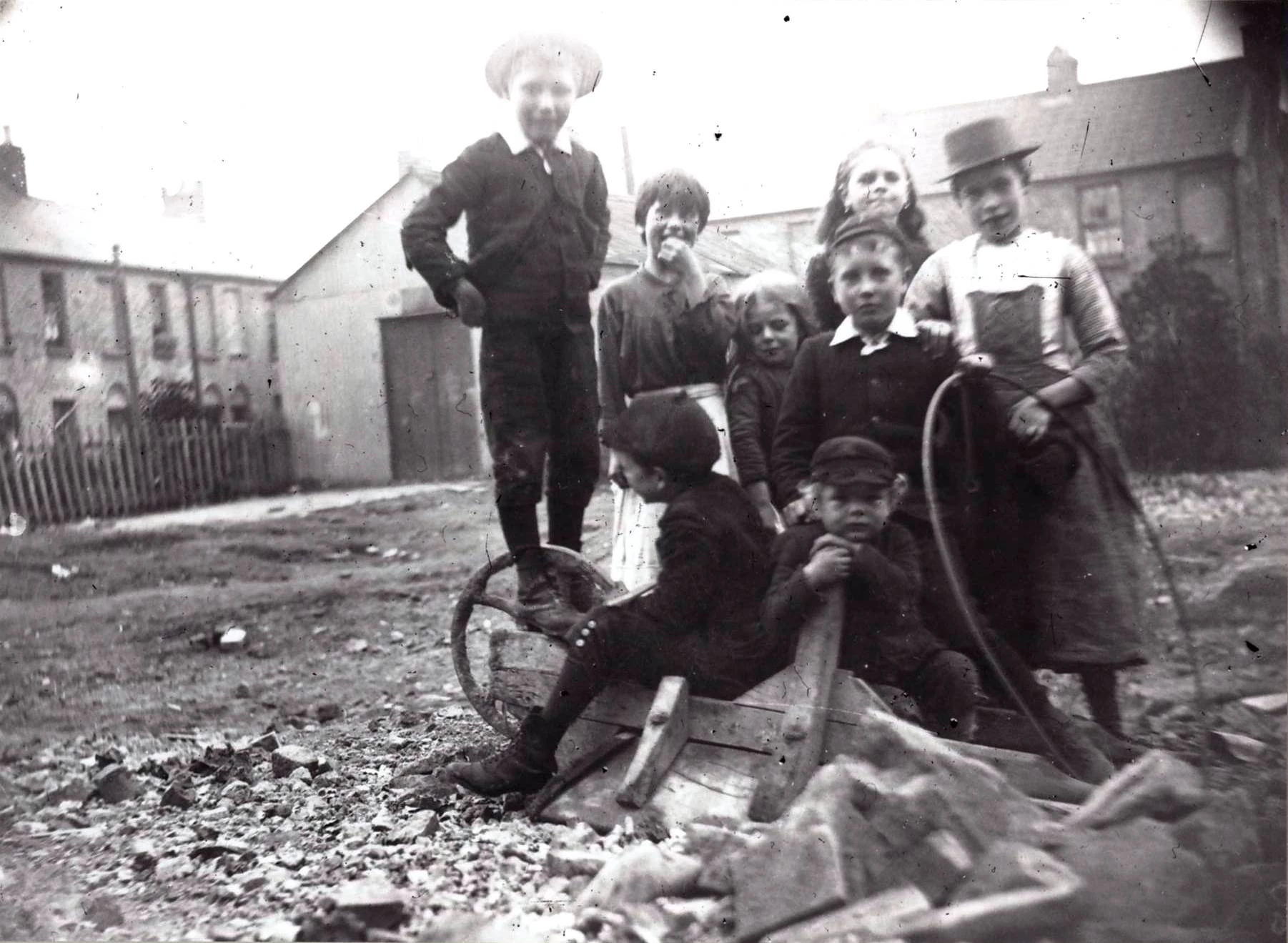
Children playing in Cardiff, c1892

A group of children, photographed around 1892 in Rowe Square, Cardiff, with one holding an iron hoop and two others sitting on what appears to be an upturned wheelbarrow.

In Wales, as in many parts of the world before the rise of factory-produced items, the toys of yesteryear consisted of unsophisticated, home-made objects, constructed from whichever raw materials were locally available. Wood was the main material used to make children's toys, as it could easily be shaped into a wide variety of objects such as dolls, spinning tops and rattles. Also popular were iron hooks and wheels and footballs made from pigs' bladders. These were commonplace at home and in schoolyards and would entertain children for hours. Being in possession of a ball opened the door to a host of exciting team games such as rounders, hand ball and football, especially for boys, while both boys and girls would roll wooden or iron hoops to their hearts' content, either on their own, or in competitions to see who could roll the fastest, the slowest or the furthest.

Treasured possessions

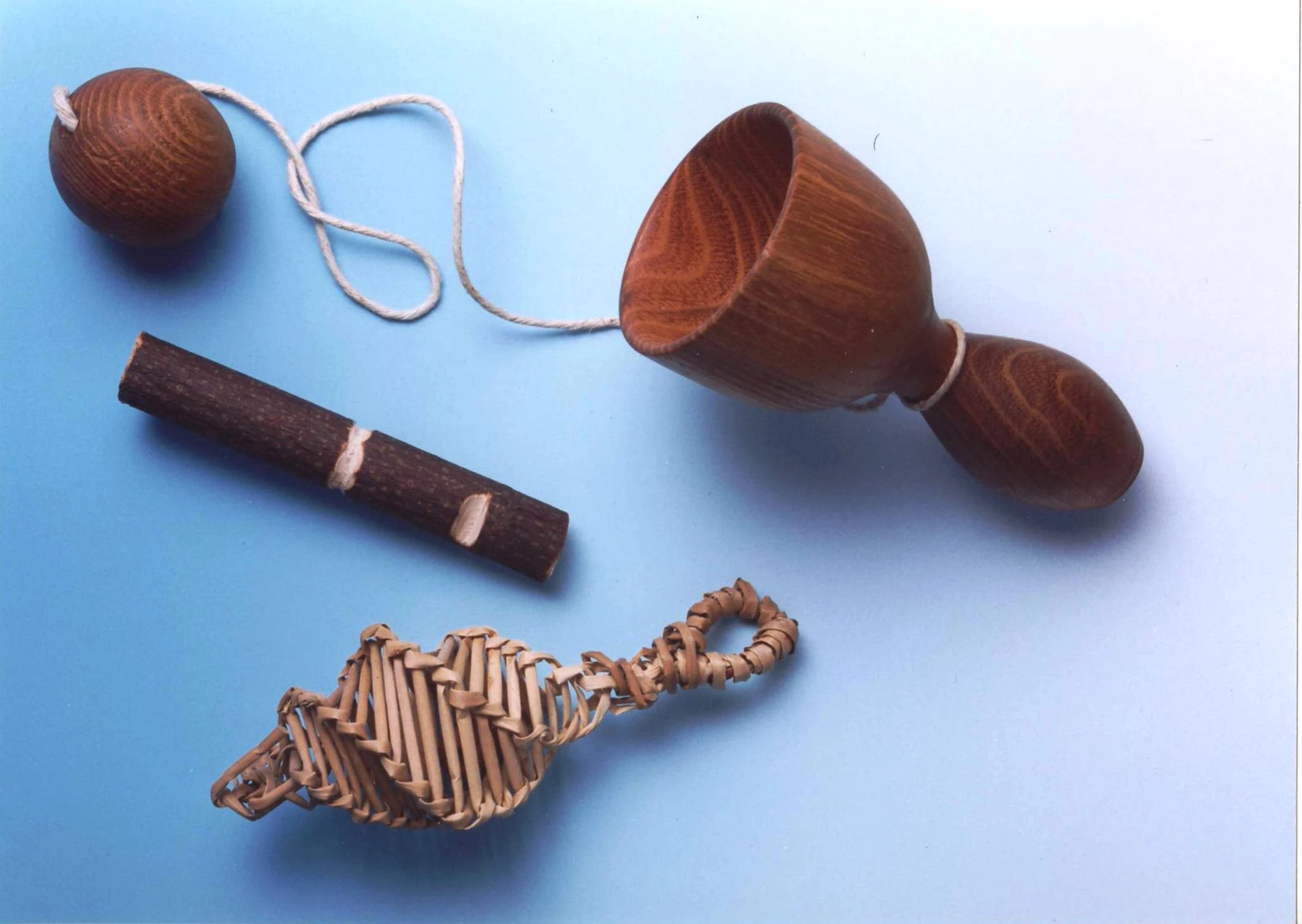
Cup and ball, whistle and rattle

Homemade toys such as these were played with in Wales before the rise of factory-made products. The cup and ball, whistle and rattle shown are modern replicas.

Folk toys describe playthings made either by the child, or by parents or craftspeople according to the child's wishes. In nineteenth-century Wales children from poor families where little money was available for life's essentials, let alone playthings, owned only the simplest of toys. These, however, would have been treasured possessions and a means of escaping the harshness of daily life. With poverty the reality for many families at this time, making one's own forms of entertainment and amusement was a necessity, and children were justifiably proud of fashioning their own toys out of nothing.

All that was needed for a paper kite, for example, was a light wooden frame and some paper, while even the youngest children could create a hobby horse from a stick and a considerable amount of imagination. For a see-saw, two wooden planks were often placed one over the other on a barrel. Two children would then sit either end, happily rocking up and down until they tired. Ropes could be used for skipping, or climbed by securing one end to a strong branch, leaving the other end free to be scaled by the brave and fearless. For boys, creating such objects as paper kites, toy boats or catapults was extremely satisfying, while girls could use their needlework skills to make rag dolls and dolls' house pieces, or play drapers' shops using little scraps of material.

Mass-produced toys

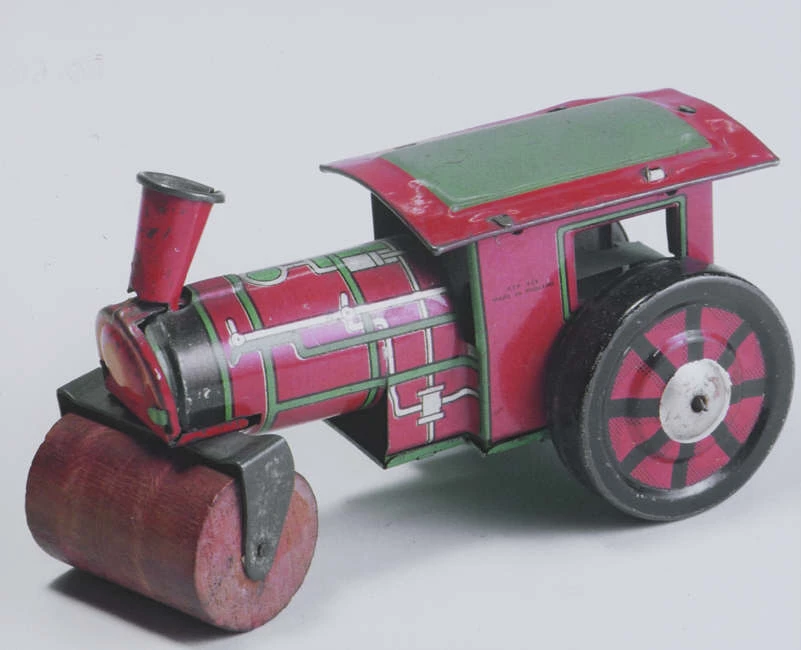
Toy steamroller made by Glamtoys Ltd

Toy steamroller, produced by Glamtoys Ltd at Treforest Industrial Estate, late 1950s

Until the early twentieth century, bought toys belonged almost exclusively to the wealthy. As methods of mass-production improved, however, more affordable toys were made available. These transformed the toy market in Wales and elsewhere. Toy factories were opened in great numbers, and as their marketing and advertising campaigns became increasingly high profile, they reached children of all social backgrounds. As a result the simple folk toy became surplus to the requirements of most youngsters, who stopped making their own toys and saved their pennies for the brightly-coloured, decorative and more fashionable shop-bought versions.Although home-made folk toys are often regarded today as somewhat quaint and quirky, in recent years a growing number of craftsmen have begun to turn their hand to toy-making, perhaps in reaction to the large number of factory-made items shipped into Britain from elsewhere. Despite the continuing dominance of commercially-made toys, most people would agree that home-made objects possess a more enduring appeal, for who could deny the innocent and timeless charms of such items as a knitted finger-puppet or a painted peg-doll? The unique individuality of hand-crafted pieces and the care and patience that have gone into their creation undoubtedly tell us more about the maker than a mass-produced Barbie or computer game ever could.

Drinking punch in the eighteenth century

Rachel Conroy, 28 January 2011

Silver punch ladle with mahogany handle

Figure 1: Silver punch ladle with mahogany handle, by Dorothy Mills and Thomas Sarbitt, London, 1752-3.

Silver gilt punch bowl 1771-2

Figure 2: Silver gilt punch bowl designed by Robert Adam and made by Thomas Heming, London, 1771-2.

Punch was first drunk in Britain in the 1650s. This was around the same time that tea, coffee and hot chocolate became available. By the turn of the eighteenth century, it was an incredibly popular drink.

Making punch

Punch was made using a mixture of expensive imported ingredients. The alcohol content was provided by rum or brandy, to which sugar, citrus fruit, spices – usually grated nutmeg – and water were added.

The Punch Bowl

Using an elegant ladle, punch was served from large communal bowls into individual glasses (Figure 1). One of the most important punch bowls in Amgueddfa Cymru’s collection is that designed by Robert Adam for Sir Watkin Williams-Wynn (Figure 2). It was commissioned to celebrate the success of Sir Watkin's horse, Fop, at the Chester Races and would have been displayed prominently on the sideboard at his fashionable London home.

Punch was often drunk at gatherings of clubs and societies, usually held in taverns, coffee houses, or special punch-houses (Figure 3). These were almost exclusively attended by men. Drinking punch seems to have been a highly sociable act that strengthened social ties. A letter published in 1736 describes this eloquently:

"…we hope nothing will ever hinder a Man drinking a Bowl of Punch with his Friend, that’s one of the greatest pleasures we enjoy in the Country, after our labour.

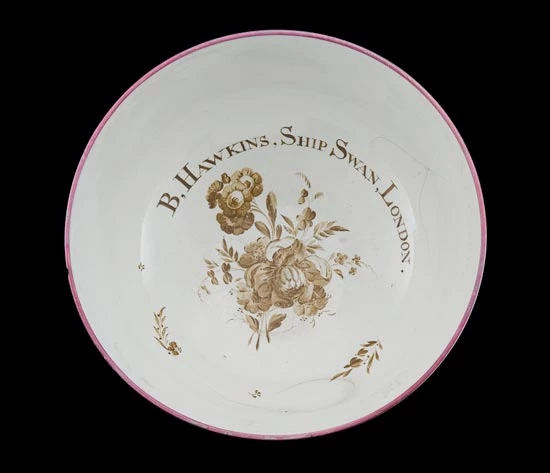
Earthenware punch bowl by the Cambrian Pottery, Swansea, about 1800-1810

Figure 3: Earthenware punch bowl by the Cambrian Pottery, Swansea, about 1800-1810. It is inscribed 'B, HAWKINS, SHIP SWAN, LONDON', suggesting it was used at a tavern or punch-house.

Delftware punch bowl inscribed 'Edward Jones Scoole Master 1751'

Figure 4: Delftware punch bowl inscribed 'Edward Jones Scoole Master 1751', probably Liverpool, 1751.

Large salt-glazed stoneware goblet

Figure 5: Large salt-glazed stoneware goblet, possibly by Mortlake, c. 1794-5.

Punch bowls were made to commemorate special events; they were decorated with the names of guilds or societies, or masculine symbols such as ships. An interesting example in Amgueddfa Cymru’s collection is inscribed ‘Edward Jones Scoole Master 1751’ (Figure 4). It has a painting of a school teacher and his pupils reading together. It is easy to imagine such a personal object being commissioned by Edward Jones, or perhaps given to him as a gift.

Raucous and uncivilised parties:

During the first half of the eighteenth century, there was widespread alarm about the dangers of alcoholism, particularly resulting from the widespread availability of cheap, home-distilled gin. Excessive punch drinking was often associated with bad behaviour.

Excessive drinking in general was often linked with moral decline, and punch parties were usually satirised by contemporary artists as raucous and uncivilised. William Hogarth’s A Midnight Modern Conversation, published in 1732/33, is perhaps the best known illustration of a punch party. It was immensely popular and was soon reproduced on punch bowls and other vessels for consuming and serving alcohol (Figure 5).

Eighteenth century binge drinking

Old Bailey records often support the linking of excessive punch drinking with unsociable, even criminal behaviour. This includes stealing expensive punch bowls from public houses and people’s homes and sharing a bowl of punch with a victim before swindling them.

From around the 1750s, punch also began to be served from porcelain and earthenware punch-pots. These are very similar in form and sometimes in decoration to teapots, but are much larger (Figure 6). Unlike open punch bowls, punch pots enabled the drink to be served in a controlled manner by one person – just like tea. This mediated form of serving might have been considered more civilised and refined than communal punch bowls, where people could help themselves and easily drink to excess.

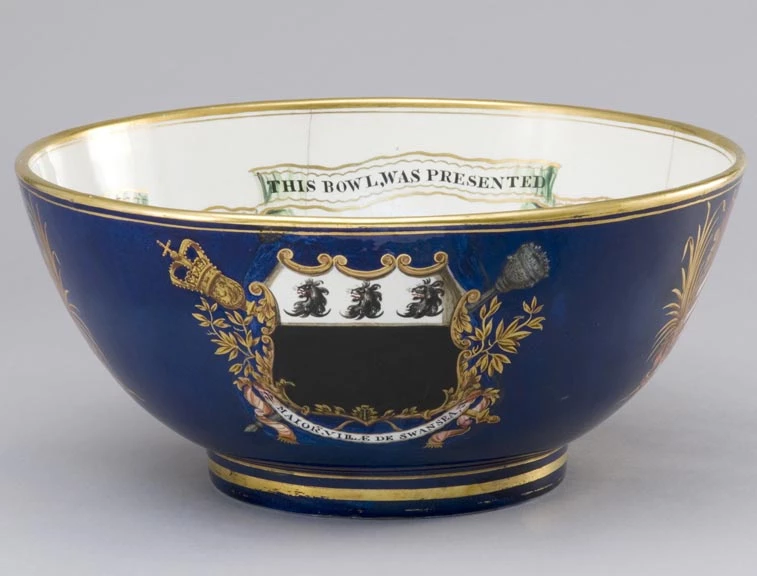
Punch drinking was at its most popular during the mid-eighteenth century, but it continued to be enjoyed into the nineteenth century. A fine earthenware punch bowl was made for John Richardson by the Cambrian Pottery in 1845, the same year that he served as Mayor of Swansea (Figure 7). Interestingly, he commissioned the bowl as a birthday gift for his infant grandson and it is decorated with several Richardson coats of arms. Part of the inscription reads ‘GAILY STILL OUR MOMENTS ROLL, WHILST WE QUAFF THE FLOWING BOWL’.

Soft-paste porcelain punch pot

Figure 6: Soft-paste porcelain punch pot, Derby, 1760-2

Earthenware punch bowl by the Cambrian Pottery

Figure 7: Earthenware punch bowl by the Cambrian Pottery, Swansea, 1845.

References:

Harvey, Karen. 'Barbarity in a tea-cup? Punch, domesticity and gender in the eighteenth century', Journal of Design History, 21 (3) (2008), pp. 205-21.

(unknown) 1736 A collection of all the pamphlets that were written pro and con on the British distillery, whilst the act for laying a duty upon the retailers of spirituous liquors, and for licensing the retailers thereof, was depending in Parliament. London. Eighteenth Century Collections Online. Web. 12 Jan 2010. http://galenet.galegroup.com/servlet/ECCO

http://www.oldbaileyonline.org

When tea-drinking was a fashionable, expensive habit

Rachel Conroy, 25 June 2010

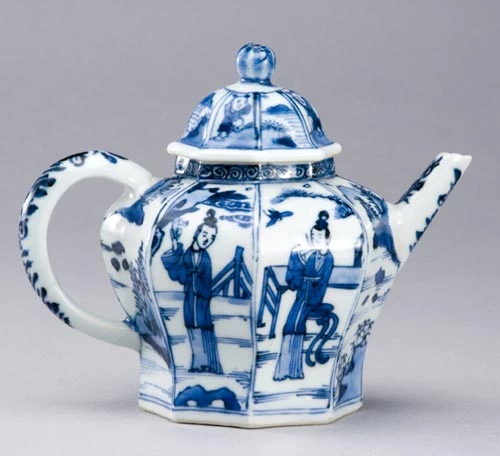
Chinese porcelain teapot, c. 1700-20

Figure 1: Chinese porcelain teapot, c. 1700-20

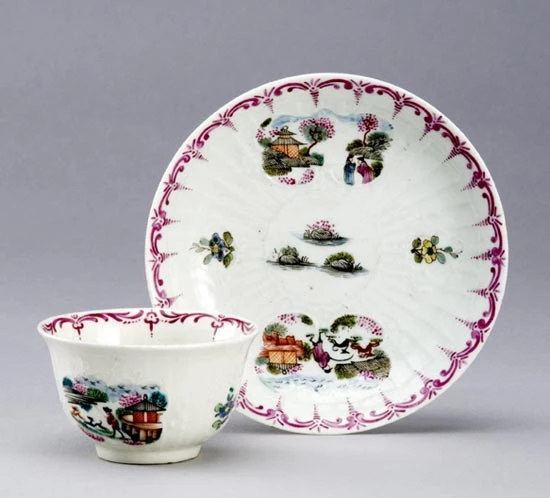
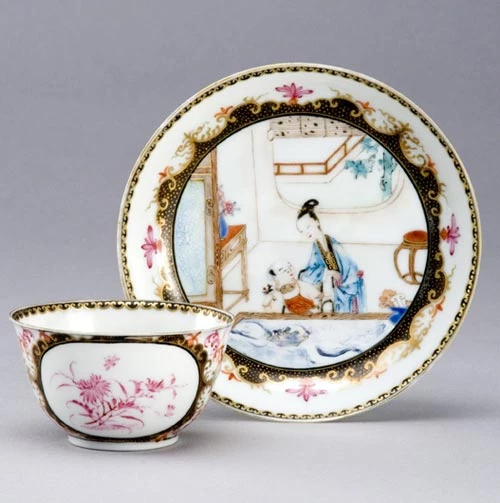
Chinese tea bowl and saucer, c. 1760-70

Figure 2: Chinese tea bowl and saucer, c. 1760-70

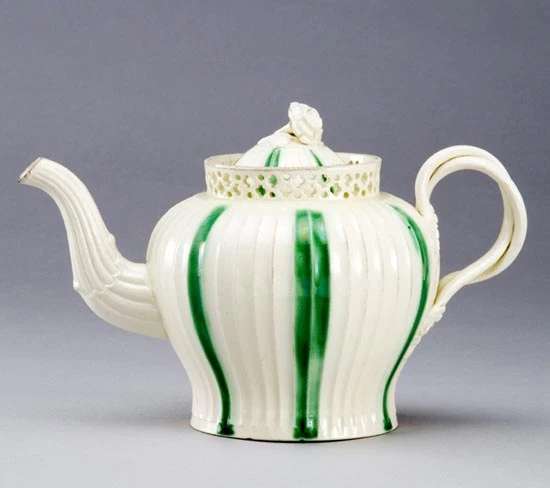
Creamware teapot, Leeds Pottery, c. 1775

Figure 3: Creamware teapot, Leeds Pottery, c. 1775

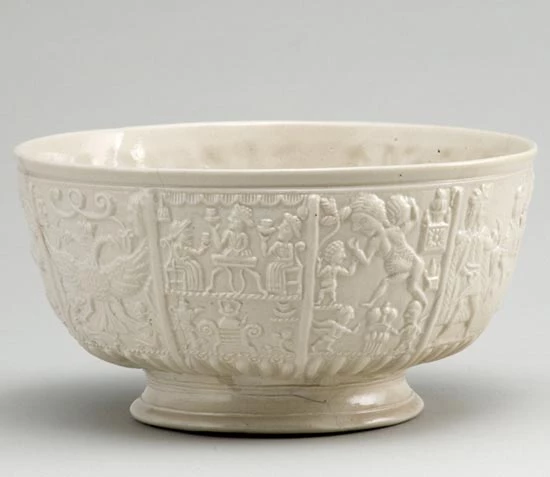
Slop bowl, Staffordshire, 1740s

Figure 4: Slop bowl, Staffordshire, 1740s

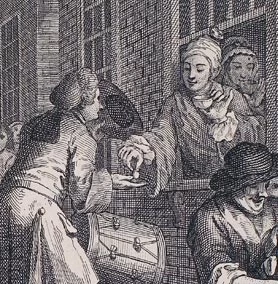
Detail of William Hogarth, 'Industry and Idleness: The Industrious 'Prentice Married', 1747

Figure 5: Detail of William Hogarth, 'Industry and Idleness: The Industrious 'Prentice Married', 1747

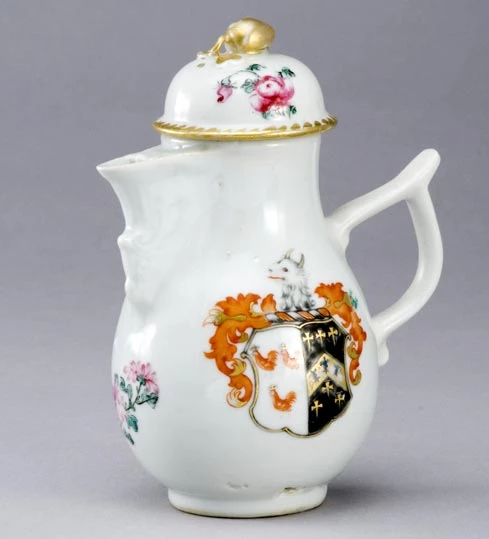
Cream jug, Chinese porcelain, c. 1771.

Figure 6: Cream jug, Chinese porcelain, c. 1771. Part of a tea service made for Penry Williams (1714-1781) of Penpont, Brecon

Porcelain tea bowl and saucer, Worcester, 1755-8

Figure 7: Porcelain tea bowl and saucer, Worcester, 1755-8

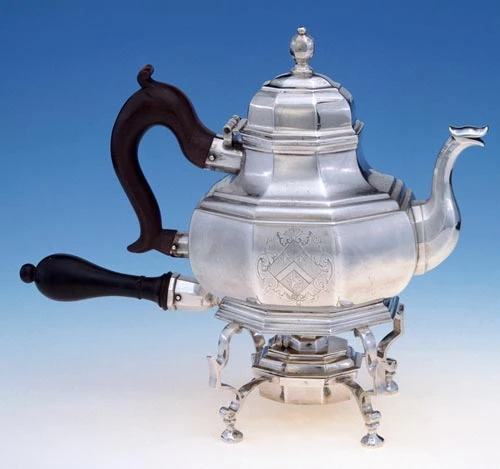
Tea kettle, stand and spirit lamp by Robert Watts, 1711-12.

Figure 8: Tea kettle, stand and spirit lamp by Robert Watts, 1711-12.

In the eighteenth century tea-drinking was a highly fashionable activity for the wealthy upper classes.

Tea was first imported into Britain from China in the mid-seventeenth century by the East India Company. At first it was considered as something of a novelty and was promoted for its health-giving properties.

Green tea

The most common tea was bohea, a type of black tea, but green tea was also popular. At first it was drunk weak and without milk, after the Chinese tradition. Later, milk or cream and sugar were added.

Teapots and (locked) teachests

Only the wealthy could afford tea. It was kept in locked teachests that were controlled by the lady of the house. Domestic servants received a tea allowance as part of their wages.

The eighteenth century saw an explosion in tea-related consumer goods, and there are many fine examples in the applied art collection at Amgueddfa Cymru. At first these were made from very expensive materials, particularly imported Chinese porcelain and silver (figs 1 & 2). Later, the production of cheaper ceramics and silver plate allowed the middle classes to follow the fashions of the very wealthy (fig. 3).

Drinking tea became more commonplace in the late eighteenth century. The abolition of import duties in 1784 meant it became recognized as an important part of the diet for the poor.

Taking afternoon tea

Entertaining friends by hosting afternoon tea was an important part of women's lives. The selection of objects for the tea table was crucial. Visiting England in 1784, the Duc de Rochefoucauld commented that tea drinking provided "the rich with an opportunity to display their magnificence in the matter of tea-pots, cups and so on" (cited in Clifford 1999: 161).

Guests were expected to conform to certain modes of behaviour and good manners, which included sticking to polite topics of conversation such as the arts, theatre and music.

Tea bowls

For most of the eighteenth century tea was drunk in the Chinese style, from a bowl without a handle. These were also known as "tea dishes" or "basons". A wonderful slop bowl, which was used at the table for rinsing dregs from used tea bowls, depicts three women enjoying tea together (fig. 4). The bowls are usually shown being held with the fingers at the rim and thumb under the base (fig. 5).

Chinese exports

Chinese porcelain teapots and bowls were exported along with the tea. They were prized for their translucency and white surface and were collected fanatically.

Chinese porcelain manufacturers began to make tea-related objects purely for the European market, such as teapot stands, milk jugs, sugar basins, spoon trays and slop bowls (figure 6). Once they had uncovered the secrets of producing porcelain, Chinese teawares were widely reproduced by Continental and English factories (fig. 7).

Kettles and urns

Teapots were filled by hot-water kettles on grand stands or smaller table-top versions, with burners to keep the water hot (fig. 8). The kettles were eventually replaced in about the 1760s by tea urns heated by charcoal burners and, from the 1770s, with heated iron bars that slotted into a "sleeve" inside the urn (fig. 9). These "tea kitchens" or "tea fountains" allowed people to help themselves at less formal gatherings such as breakfast. The most elaborate examples also had additional urns for coffee and hot water.

Moral and physical decline

Eighteenth-century attitudes towards tea-drinking were quite mixed and contradictory. The obsessive collection of teawares was criticised by social commentators, with women being the most frequent target. Furthermore, afternoon tea was often claimed to be no more than an opportunity for women to spread malicious gossip or boast about themselves. A satirical poem, The Tea-Table, by 'Moses Oldfashion' was published in Mist's Weekly Journal in 1722:

"...Chief Seat of Slander! Ever there we see
Thick scandal circulate with right Bohea.
There, source of black'ning Falshoods! Mint of Lies!
Each Dame th'Improvements of her Talent tries,
And at each Sip a Lady's Honour dies".

Although at first tea was thought to have many health benefits, some commentators began to fear its popularity could cause physical decline. In 1753 Mr Andree described the dangers of "intemperate", excessive tea drinking, describing it as "pernicious", worsening epilepsy and causing hysteric fits. He also tells of a young girl who had been eating tea for a number of weeks, causing her to suffer facial palsy and convulsions (fig. 10).

Thankfully, these objections did not diminish the British public's desire for tea and it has remained an important part of daily life. Although tea-drinking today is generally a far less formal affair than during the eighteenth century, it continues to be enjoyed and shared by millions of people everyday.

References

Andree, John. Cases of the epilepsy, Hysteric Fits, and St. Vitus's Dance, with the process of cure: interspersed with practical observations. To which are added, cases of the bite of a mad dog, and a method that has been found successful. The second edition, with emendations and additions in the introduction, and some new cases and Inspections of Dead Bodies (1753). London: printed for W. Meadows and J. Clarke, in Cornhill. Eighteenth Century Collections Online. Web. 12 Jan 2010. http://galenet.galegroup.com/servlet/ECCO

Clifford, Helen. 'A commerce with things: the value of precious metalwork in early modern England', in M. Berg and H. Clifford (eds.) (1999) Consumers and Luxury: Consumer Culture in Europe 1650-1850, pp. 147-169. Manchester: Manchester University Press.

Oldfashion, Moses. 'The Tea-Table', in (author unknown) A collection of miscellany letters, selected out of Mist's Weekly Journal (1722): 224-227. London: printed by N. Mist, in Great Carter-Lane. Eighteenth Century Collections Online. Web. 12 Jan 2010. http://galenet.galegroup.com/servlet/ECCO

Article author: Rachel Conroy. Assistant Curator - Applied Art

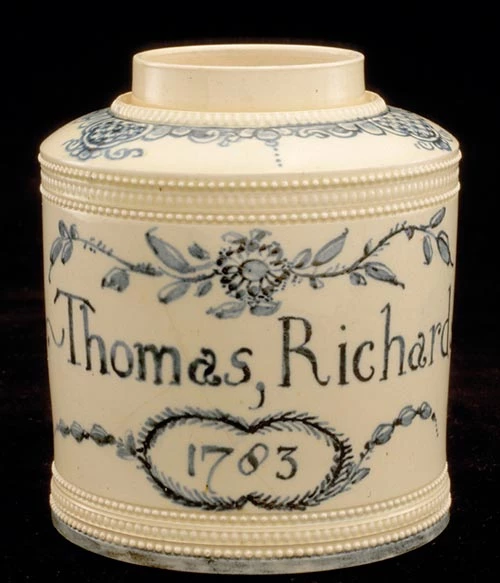
Tea jar or canister, Swansea, 1783

Figure 10: Tea jar or canister, Swansea, 1783

Tea jar or canister, Swansea, 1783

Figure 10: Tea jar or canister, Swansea, 1783

Bando - An ancient manly game

8 February 2010

An ancient manly game

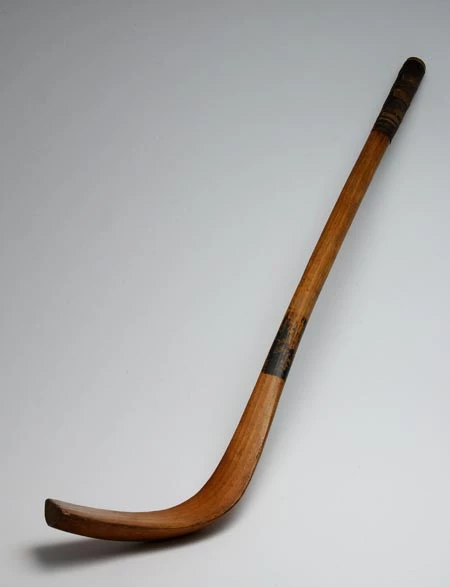
Bando stick from around 1845, belonging to Thomas Thomas, a member of the Margam Bando Boys

Bando stick from around 1845, belonging to Thomas Thomas, a member of the Margam Bando Boys

Popular across Wales, especially in Glamorgan, up until the late nineteenth century, the boisterous game of Bando was the cause of much local rivalry and violence.

Until the late nineteenth century Bando was a popular team game across Wales, especially in the county of Glamorgan. John Elias (1774-1841), the famous Calvinistic Methodist preacher from Pwllheli, Caernarvonshire, and politician David Lloyd George (1863-1945), raised in Llanystumdwy, Caernarvonshire, were both keen players in their youth, while a traveller from Cowbridge to Pyle in 1797 commented on the extreme barrenness of ash and elm on account of their being used to make bando sticks.

Bando resembled an early form of hockey, as it involved striking a ball with a curved club (called a 'bando') across a fixed area of play before attempting to drive it into the opponents' goal. The term 'bando' derives from the French 'bande', meaning 'bent stick', and the clubs used were made of hard local woods while the ball, similar in size to today's hockey ball, was often carved from holly or box.

Gambling, drink and boisterous behaviour

Bando stick from around 1845, belonging to Thomas Thomas, a member of the Margam Bando Boys

Bando stick from around 1845, belonging to Thomas Thomas, a member of the Margam Bando Boys

Matches were traditionally held between parishes, and the players often took them so seriously that they were known to train in advance. Although bando was usually played by men, women were keen spectators, and there is evidence that at a bando match played once in the Vale of Glamorgan the wife of one of the players concealed the ball with her petticoat until her spouse arrived to retrieve it. Games varied depending on the area, for there were no standardised rules, no set time limit to the play and no restrictions on the number of those taking part. Violence was commonplace, and even if a referee was present players were not deterred from hitting the opposition with their sticks. Spectators often placed bets on the final score, while local innkeepers ensured that there was always enough alcohol available. This lethal combination of gambling, drink and boisterous behaviour both on and off the pitch was eventually responsible for forcing bando out of existence.

The Margam Bando Boys

Glamorgan Volunteers Military Badge

The First Glamorgan Rifle Volunteers were formed in Margam, Port Talbot in 1859. This military badge, showing two bando sticks, was adopted by the Volunteers in 1875.

The prominence of the game in Margam, west Glamorgan, is celebrated in a nineteenth-century ballad entitled The Margam Bando Boys. This was also the year in which the Margam Volunteer Rifle Corps was formed. All the Margam Bando Boys followed their team captain Theodore Talbot into the Margam Volunteer Rifle Corps, which was formed in 1859. The badge design of this organisation included two crossed bandies or bando sticks.

Due praises I'll bestow
And all the world shall know
That Margam valour shall keep its colour
When Kenfig's waters flow

Our master, straight and tall
Is foremost with the ball;
He is, we know it, and must allow it,
The fastest man of all

Let cricket players blame,
And seek to slight our fame,
Their bat and wicket can never lick it,
This ancient manly game

Our fame shall always stand
Throughout Britannia's land;
What men can beat us? Who dare meet us?
Upon old Kenfig's sand?

Should Frenchmen raise a voice
To crush our peaceful joys,
They'll get by storming a precious warming
From Margam bando boys

Like lions we'll advance
To charge the sons of France;
The Straits of Dover we'll ferry over
And make the traitors dance

Napoleon shall repent,
If war is his intent;
He'll sadly rue it if he'll pursue it;
Proud Paris shall lament

Bold Britons rule the main,
And every hill and plain,
From every nation throughout creation
Our rights we will maintain