When you turn a corner in our Evolution of Wales galleries don’t be surprised if you find Dracoraptor hanigani, the new Welsh dinosaur, peering down on you from its perch on a rock.
The skeleton of this small meat eating dinosaur, currently on display in the Main Hall at National Museum Cardiff, has fascinated the public, but palaeontologists at Amgueddfa Cymru wanted a life-like model of the animal to really show how it looked when it was alive 200 million years ago in the Jurassic.
Bob Nicholls, a Bristol–based palaeo-artist, was commissioned to undertake this task. First Bob had to undertake extensive research to enable him reconstruct the dinosaur. He examined the bones and drew an anatomically accurate skeleton, comparing it to other species. He then added the soft tissue and considered how it would have lived before making an anatomically accurate model using steel, polystyrene, and clay. This was then moulded and a cast made of fibreglass and resin.
It was important to make sure that the reconstruction was as scientifically accurate as possible. Palaeontologists think that the body might have been covered in a feathery down, and possibly with quills along its back and Bob carefully applied feathers to the surface of the model and long quill-like feathers on the back, tail and neck. This was a meticulous process because they all had to be attached in a way that looked natural.
The project took over three months of painstaking work and after it was completed Bob said “There is no greater honour for a palaeo-artist than to be the first to show the world what a long extinct animal looked like”.
The result is incredible - you can imagine Dracoraptor jumping down into the gallery and running around.
During the early part of 2016 Big Pit received the donation of a Cambrian type flame safety lamp and a framed letter.
The Letter
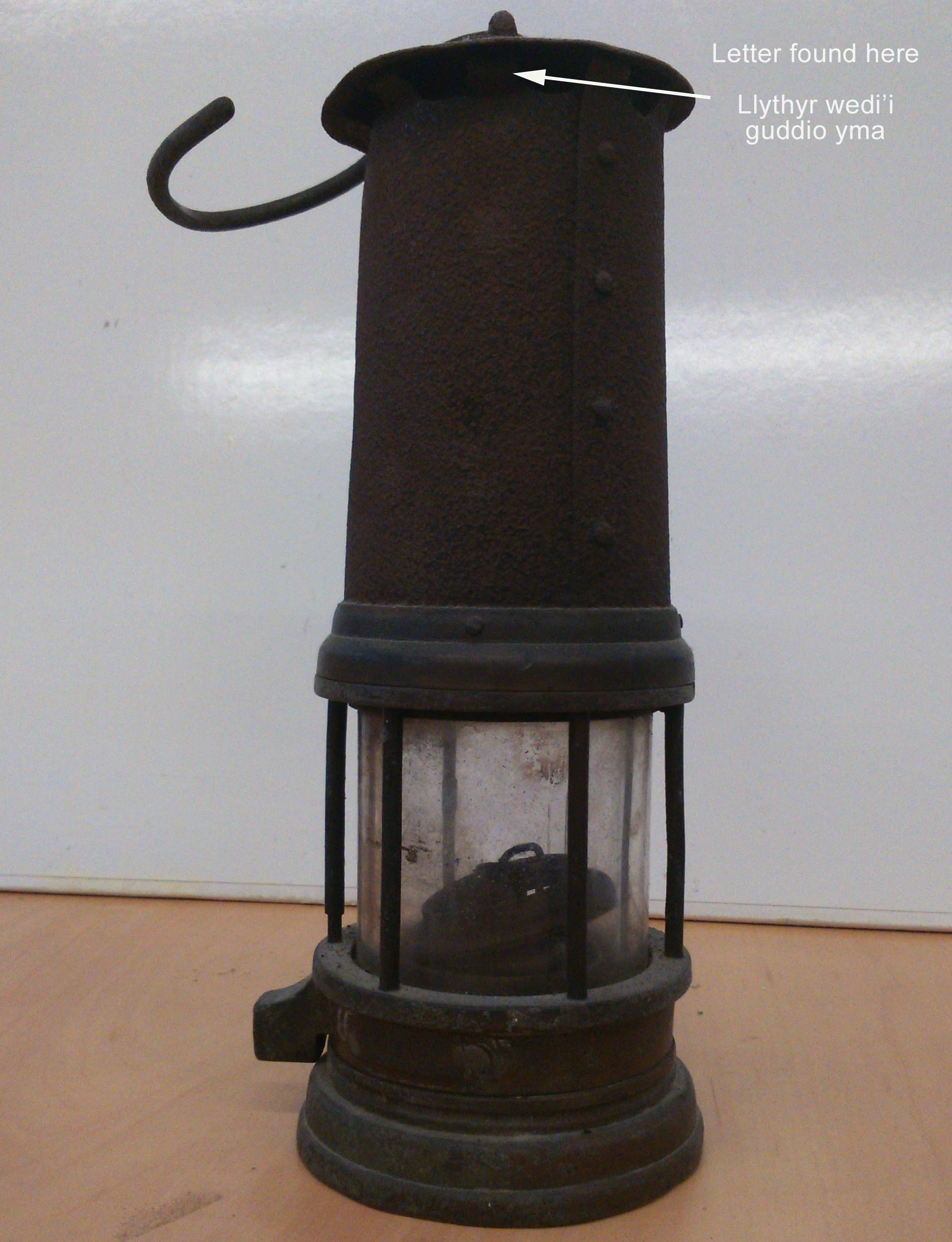
The letter, was found tucked into the bonnet of the lamp by the donor, dated 10th January 1928, and addressed to Mr J. Hawes – a relative of the donor – and signed by D. Lloyd Davies of Maerdy, Rhondda. In it, Mr Lloyd Davies apologises for the delay in sending a miner’s lamp to Mr Hawes because he was looking for one ‘of equal historical distinction for our friend the coroner’.
The letter describes the lamp, which was ready to be sent to Mr Hawes, as ‘one of the few that was recovered from the terrible Cilfynydd Explosion (June 1894)’. The letter goes on to say ‘that things continue very black in this Rhondda area and will confess that the last was the blackest Christmas I’ve ever spent.’
The letter’s recipient, James Hawes, had funeral businesses in at least four locations in London. I knew that a David ‘Dai’ Lloyd Davies was an official of the Maerdy Colliery Lodge of the South Wales Miners’ Federation around this time. Although it isn’t mentioned in the letter, the connection between the two gentlemen appears to be the 1927 Welsh Hunger March, when 270 unemployed south Wales miners marched to London. David ‘Dai’ Lloyd Davies had taken a leading part in that march.
The letter dated 10th January 1928, addressed to Mr J. Hawes and signed by D. Lloyd Davies of Maerdy, Rhondda.
The 1927 Hunger March
Among the aims of the 1927 Hunger March from south Wales was to draw attention to the plight of the unemployed in the coalfield and to the continuous closing of mines which was adding even further unemployment and poverty.
Many unemployed miners volunteered to march but the men actually recruited were drawn from those who had been denied Labour Exchange benefit and Poor Law relief. In order to give each man sufficient clothing and stout boots, the collection of money and clothes was organised in the mining villages. Every marcher was to carry a lit miner’s lamp.
The march began from Maerdy at the top of Rhondda Fach on 8th March 1927 and reached London less than a fortnight later, on the 20th. They had marched through many towns and villages including Bristol, Bath and Swindon were greeted by crowds of sympathisers along the way. At the end of the march, thousands gathered in pouring rain, as a huge demonstration took place in Trafalgar Square to express solidarity with the unemployed miners.
Unfortunately two of the miners died during the march. Mr Arthur Howe of Trealaw died in a traffic accident and Mr John Supple of Tonyrefail died of pneumonia which he contracted during the rain soaked rally in Trafalgar Square.
The lamp’s former owner, Mr Hawes was an undertaker, and a coroner is mentioned in the letter: it appears that they must have assisted the marchers during these tragic events.
Wal Hannington, a leader in the National Unemployed Workers Movement at the time, described the bodies being sent back to south Wales in his memoirs ‘Unemployed Struggles, 1919-1936’, (EP Publishing, 1973)
‘In the funeral procession which marched through London the coffins were covered with the red flag of the workers and on each stood an unlighted miner’s lamp. The silent march to Paddington Station was most impressive; thousands on that great station stood hushed in silence as the marchers bore the bodies of their dead comrades to the van of the train.’
Mr Hawes did eventually receive his lamp and the donor remembers him treasuring it all his life.
The Lamp
Cambrian type flame safety lamp.
The Albion Colliery, Cilfynydd, explosion occurred on the 23rd June 1894. It was estimated that over 290 men and boys died (no record of who was working underground had been kept), very few escaped and, of those that did, most died of their injuries.
A large number of the killed were from North and West Wales and were lodging in the village while working to raise enough money to bring their families to Cilfynydd. Another large section of the workforce had come there from Mountain Ash and had followed the manager of Albion, Mr Philip Jones, who was from that area. Albion was the second biggest mining disaster in Wales after the Universal Colliery, Senghenydd, explosion which killed 439 men and boys.
The lamp itself is a Cambrian type flame safety lamp, consistent with the type used in Albion Colliery, Cilfynydd at the time of the disaster. It appears that the Albion miners purchased their own lamps at that time, rather than their being supplied by the company and, in spite of the rule that the men were not to take their lamps home, many seem to have ignored that order.
The only markings on the lamp are ‘A 10C3’ stamped at the top of the oil vessel, and the same on an attached plate to the right of the lead plug lock. In spite of this, it seems unlikely that we will ever know who actually owned this lamp. The lamp has damage to the top of the bonnet, which has surface rust, and a large crack down the glass, it cannot be determined whether these were caused during the disaster or later. Apart from this damage, the lamp is complete and in good condition.
The mystery here is where Mr Lloyd Davies obtained the lamp. It is probable that the lamps of those killed were salvaged from the workings and brought up to the surface after the disaster. On the other hand, because these lamps were owned by the miners, perhaps the lamp was returned to the family. However, where this particular one was kept between 1894 and 1928, and how Mr Lloyd Davies obtained it, is a mystery.
Mae’n ganol Gorffennaf. Mae’r ardd yn ei blodau, y llysiau yn wyrdd ac yn iachus a brwydr flynyddol y garddwr (neu’r archifydd yn yr achos hwn) a’r falwoden ar ei hanterth.
Mae’n debyg bod gan y falwoden gyffredin tua 14,000 o ddannedd (neu rychau ar ei thafod i fod yn fanwl gywir) ac wedi iddi dywyllu, o dan olau lleuad, gall y gelyn gwancus hwn a’i ffrindiau achosi armagedon yn y borderi gan ddinistrio misoedd o dyfiant mewn un noson o wledda.
Rhaid cymryd camau dybryd i arbed hyn rhag digwydd!
Felly, i ymddiheurio i’r malwod hynny sydd efallai wedi cwrdd â’u crêwr ychydig yn gynharach na’r disgwyl trwy amryfal ffyrdd yn yr ardd eleni - dyma bedwar pwt diddorol o Archif Sain Amgueddfa Werin Cymru am y lladron llwglyd llithrig.
Sbaddu Malwod yn Abergorlech
Yn ôl Garfield Evans a anwyd yn Abergorlech yn 1909 ac a recordiwyd gan yr Amgueddfa yn 1977, roedd hi’n arfer yn yr ardal ar ddechrau’r ganrif i chwarae tric ar unrhyw blentyn dieithr a fyddai’n dod i’r ysgol. Byddent yn gofyn iddo “Wyt ti wedi gweld sbaddu malwed?”. “Na” fyddai’r ateb bob tro. Wedi dal sylw y plentyn newydd byddai un o’r bechgyn yn codi dau ddarn o bren ac yn mynd i chwilio am falwoden. Wedi dod o hyd i’r falwoden, byddai’r bachgen yn ei chodi a’i gosod i orwedd wyneb i waered ar y ddau ddarn o bren. Wrth i’r plentyn newydd syllu ar y falwoden, ac agosáu yn gegrwth ati, byddai’r daliwr yn taflu’r anifail druan yn sydyn i’w geg.
Llafarganu i’r Falwoden
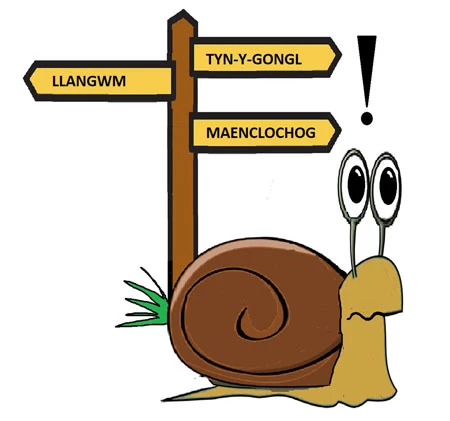
Yn ôl Sian Williams a anwyd yn Nhyn-y-gongl, Môn, yn 1896, ac a recordiwyd gan yr Amgueddfa yn 1973, nid oedd ganddi hi a’i ffrindiau lawer o deganau pan yn blant. “Efo malwod oeddan ni’n chwarae’n blant, toedd gynno ni ddim byd arall.” Byddent yn dal malwoden yr un, gosod y malwod ar garreg y drws a llafarganu iddynt: ”Horn, horn, estyn dy bedwar corn allan, neu mi tafla’i di i Bwllheli, at y neidr goch i foddi” . Y plentyn â’r falwoden a fyddai’n tynnu ei phedwar corn allan yn gyntaf oedd yr enillydd.
Meddyginiaeth ar gyfer Llyfrithen
Yn ôl Blodwen Gettings a anwyd yn 1911 yn Llangwm ac a recordiwyd yn Saesneg gan yr Archif yn 1983, roedd gan y gymuned hon ger Hwlffordd feddyginiaeth wahanol iawn i’r cyffredin ar gyfer cael gwared o lyfrithen ar y llygad. I ddechrau, gellid rhwbio’r llyfrithen â modrwy briodas neu â chynffon cath, ond os na fyddai hynny’n gweithio, roedd un awgrym arall. Rhaid oedd dod o hyd i ddraenen o lwyn y ddraenen wen ac un falwoden dew o’r ardd. Wedyn aed ati i bigo’r falwoden â’r ddraenen ac arllwys yr hylif a ddeuai allan ohoni i mewn i’r llygad.
Pennill i’r Falwoden
I gloi, dyma bennill i’r falwoden gan Robin Lewis y Craswr o Felin Glasfryn. Clywodd William John Edwards, a anwyd yn 1898 ac a fagwyd ym Mhentrellyncymer, y rhigwm hwn gan ei fam pam oedd tua 15 oed ac fe’i recordiwyd yn ei adrodd gan yr Amgueddfa yn 1973.
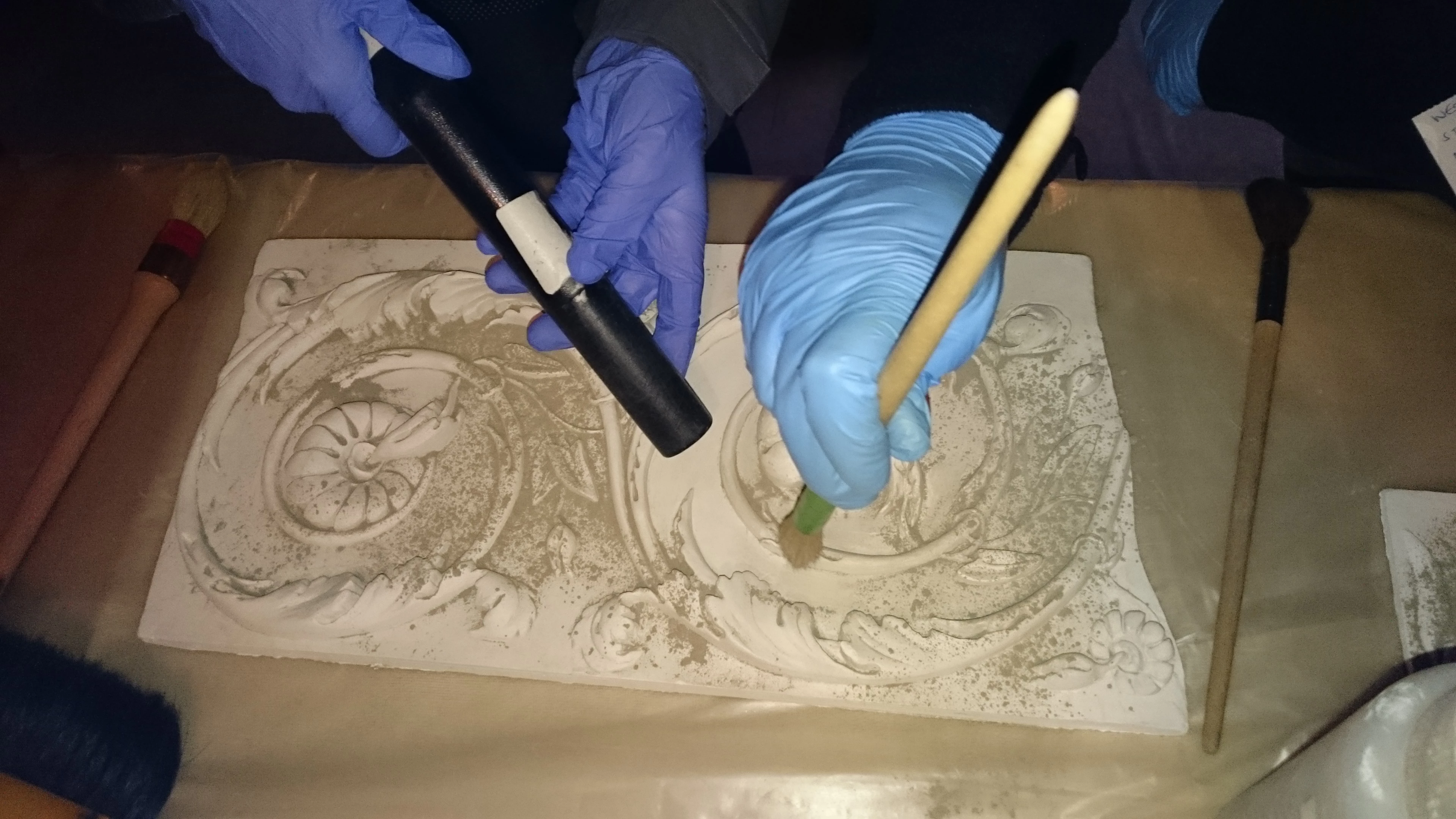
Keen-eyed visitors to National Museum Cardiff may have noticed recently the presence of little pieces of black card in some of the galleries. These pieces of card are there to serve an important purpose: to gather dust. And they are not only in the galleries; we distributed some in collection stores, too.
We want to know just how much dust is building up in parts of the museum. We also want to know what kinds of dust we are dealing with. We can only get this information by monitoring dust deposition.
So what’s the big deal with dust? What harm can a bit of dust do?
Well dust is unsightly from an aesthetic point of view. In addition, it can actually damage the museum’s collections. When dust sticks to a surface, it really sticks to it. Some types of particles can scratch and mark the surface of objects as they act like an abrasive; this is why when we clean museum objects we are extremely careful not to cause any scratching. Dust also attracts moisture, and surfaces covered in dust are at risk of wicking moisture onto the surface of object which can cause damage. This is especially the case on those horrible rainy days.
So both cleaning the dust and leaving it on risks damaging objects, but by monitoring the dust we can ensure that those risks are kept low and your enjoyment of the exhibits remains high.
Stefan is a student at Cardiff University and currently undertakes research for his MSc in Care of Collections at National Museum Cardiff in conjunction with the Preventive Conservation team.
Find out more about care of collections and Preventive Conservation at Amgueddfa Cymru - National Museum Wales here.
Archaeologists and adventurers have long been fascinated with “lost cities”. The fabled city of Atlantis is probably one of the first lost cities to catch the imagination of people. The Greek philosopher Plato wrote of the disappearing island in the 4th century BC. During the Age of Exploration, from the 15th to 17th centuries, European explorers went looking for fabled cities like Eldorado and the Fountain of Youth. Whether the interest is fueled by stories of catastrophic events or of hidden riches, people have been compelled to search for these places. While often times these places turn out to be more myth than fact, there have been several archaeological discoveries that have reintroduced the world to cities that had become lost to history, and some of these can be seen in Treasures: Adventures in Archaeology.
Machu Picchu
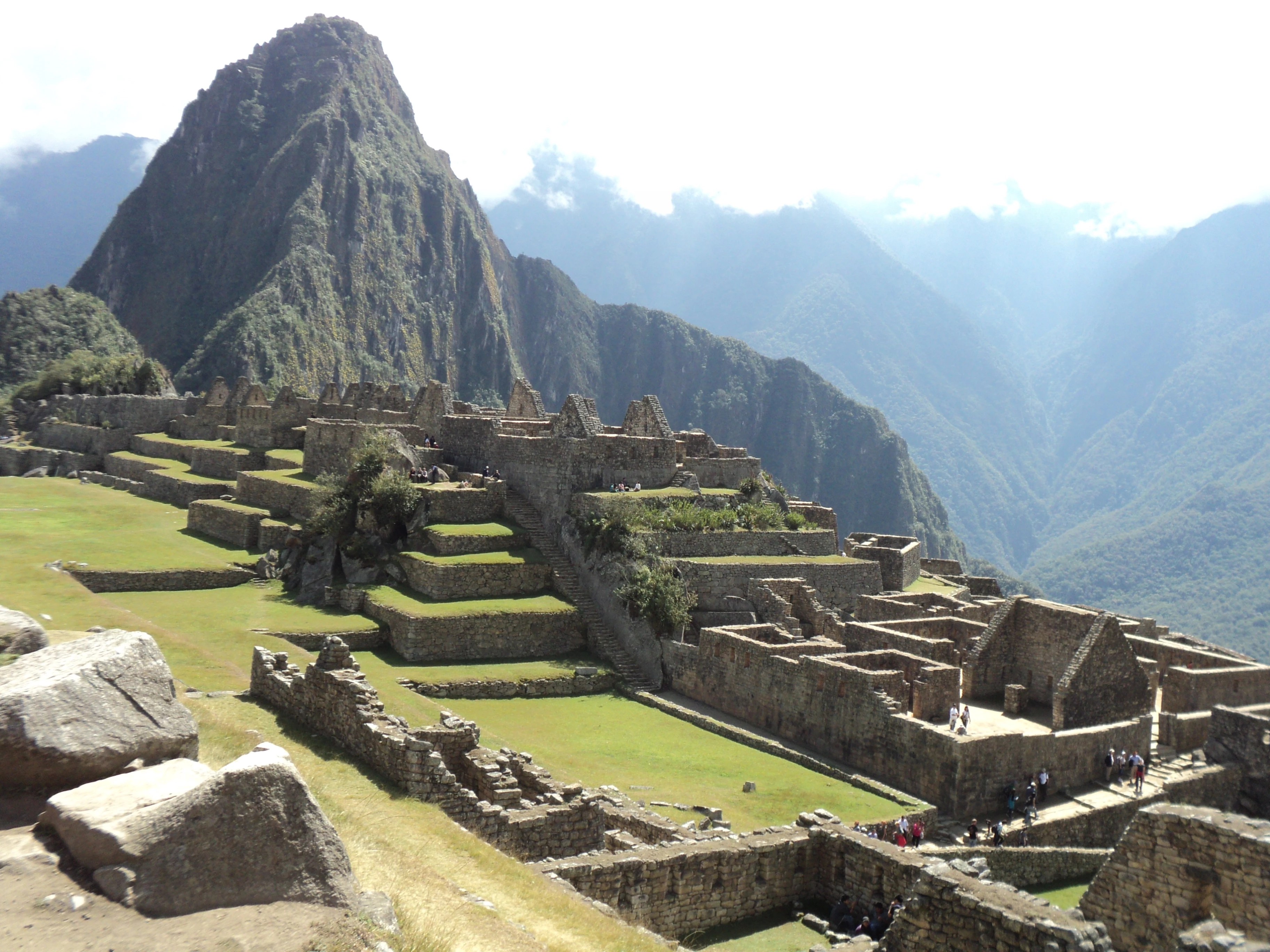
The Incas of South America had the largest empire in the Americas, spreading along most of the western coast. Much of their empire was located in difficult terrain, the vast mountains and valleys of the Andes. However, this did not stop them from building over 14,000 miles of paved road or constructing cities in remote areas. Machu Picchu was built in one of the most remote areas of their empire in the 15th century. It had been abandoned within a hundred years and became lost to all but the local indigenous people. On the 24th of July 1911, American historian and adventurer Hiram Bingham III was led to the site and reintroduced Machu Picchu to the world. The Spanish conquistadors had not found the mountaintop city and because of that the wealth of archaeological material remained intact for archaeologists to study. It was enshrined as a UNESCO World Heritage Site in 1983 and in 2007 it was voted as one of the New Seven Wonders of the World in a public poll.
Machu Picchu (by Mary Davis)
Skara Brae
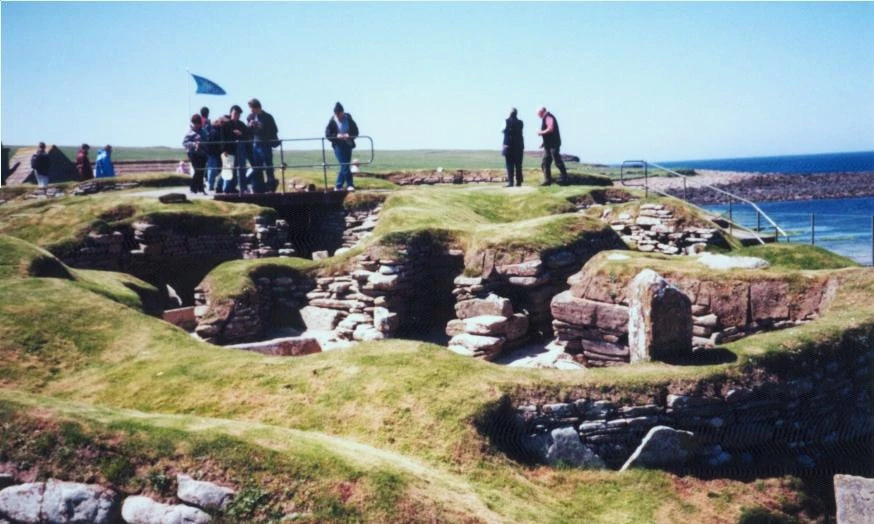
Population increase, dispute with neighbouring groups or changes in the environment can all lead groups to relocate. Skara Brae, on Mainland in the Orkneys, was a Neolithic settlement dating back almost 5,000 years. Located along the sandy coastline, it was a small settlement of only eight houses. It was most likely only occupied for a century before the residents decided to move further inland. Due to its location, once abandoned, it became buried beneath the ever blowing sands. Some 4,000 years later, in 1850, a winter storm battered the coast and exposed the outline of some of the buildings. It was not excavated until 1924 after one of the houses was damaged by another storm. It is one of the best preserved Neolithic villages in Europe and was enshrined as a UNESCO World Heritage Siteas part of the Heart of Neolithic Orkney group in 1999.
Skara Brae, Orkney (by Jeannette Marxen)
Mesa Verde
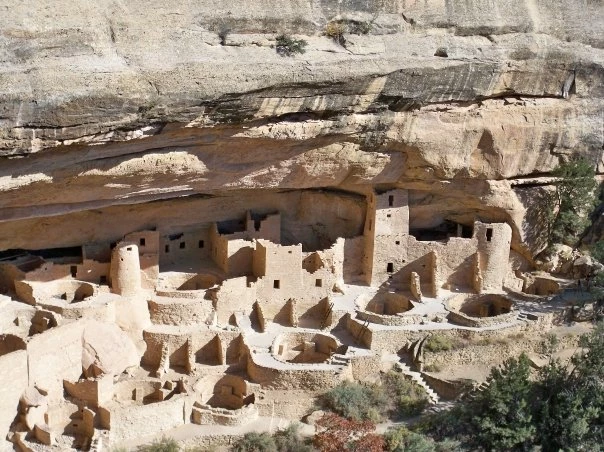
The Southwest region of the US is full of heritage sites linked to the indigenous people who first arrived in North America from Asia. The Ancestral Puebloan, or Anasazi, culture flourished in the Four Corners region (where Colorado, Utah, Arizona and New Mexico meet) between the 6th and 14th centuries AD. They farmed and hunted along the plateaus (or mesas) of the canyon. By the 12th century, they had moved from living on top of the mesas into the valleys where they built ornate cliff dwellings. At Mesa Verde, Colorado, there are over 4,700 archaeological sites, 600 of them cliff dwellings. The dwellings range in size from small rooms used for storage to multi-level villages. The Anasazis disappeared by the beginning of the 14th century and Mesa Verde was lost in its remote setting for over 500 years. It became a National Park in 1906 and a UNESCO World Heritage Site in 1978.
Cliff Palace, Mesa Verde, Colorado, USA (by Jeannette Marxen)
Cantre'r Gwaelod
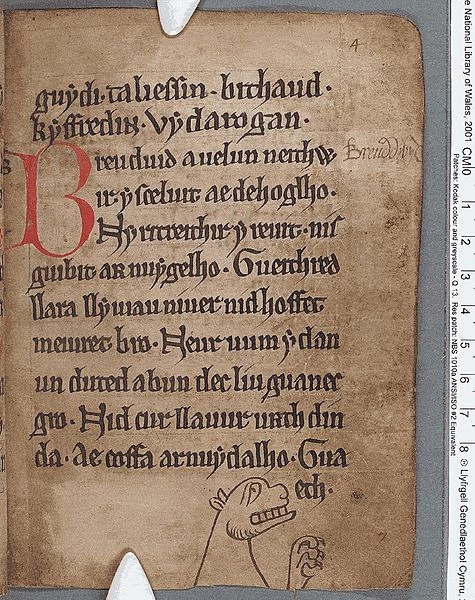
If you'd rather stay a little closer to home while searching out lost cities have no fear, Wales has its very own. Cantre’r Gwaelod was once a kingdom of fertile land which sat off the coast in Cardigan Bay. According to legend tragedy struck and the surrounding sea reclaimed the land. In the Black Book of Carmarthen, written in the 13th century, the blame is laid at the feet of a well maiden who was ignoring her duty and let the well overflow. In other tellings, it is the fault of a drunken guard who was in charge of closing the floodgates. While there is no definitive proof of Cantre’r Gwaelod’s existence there are curious clues along the coast. In several places between Aberystwyth and Harlech there is evidence of causeways stretching out into Cardigan Bay. The remains of a forest,now underwater, can also sometimes be seen.
Black Book of Carmarthen, from National Library of Wales